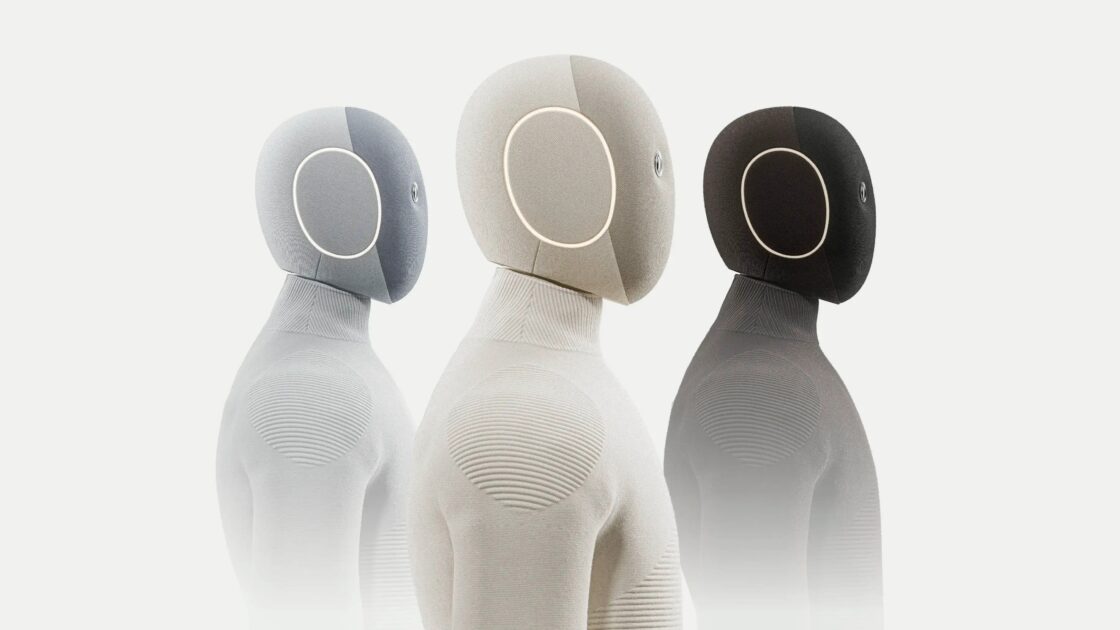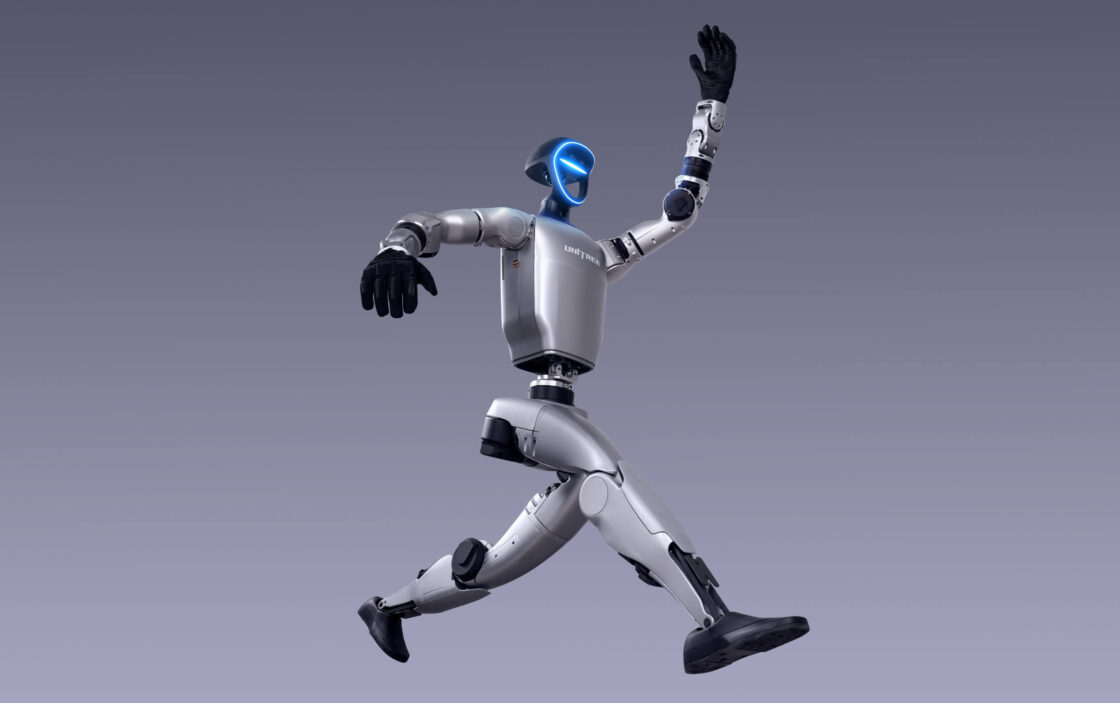
The future of humanoid robots is easy to caricature. Either they are treated as a near-mythical breakthrough that will suddenly flood homes, factories, and city streets, or they are dismissed as expensive demo machines built mainly for conference stages and viral clips. Both readings miss the more interesting reality.
Humanoid robots are not arriving all at once. They are arriving in layers.
That is the only prediction worth taking seriously in 2026. The first real wave is not a domestic revolution. It is an industrial one. The first durable successes are likely to come from narrow, repetitive, physically awkward tasks in spaces already designed for human movement, especially warehouses, manufacturing plants, and logistics operations. That assessment lines up with the current state of the industry: the International Federation of Robotics says there is still no massive use of humanoids today, that serial production is only now being prepared, that only a few commercial deployments have been announced, and that truly multipurpose humanoids remain far off.
That sounds modest, but it is not trivial. Once a machine can walk through a human-built facility, manipulate objects, work around existing infrastructure, and complete commercially useful tasks with acceptable safety and uptime, the category changes. It stops being primarily speculative. It becomes a deployment problem.
The real prediction starts by rejecting the wrong image
The strongest forecast for humanoid robots begins with a correction: the decisive question is not whether engineers can make a robot that looks human. That part has been solved many times over. The harder question is whether they can make one that is useful, reliable, safe, affordable to deploy, and economically preferable to alternative automation.
This is where current robotics development is more mature than the public conversation often admits. Agility Robotics describes Digit as the first humanoid robot in production deployment, and says it recently passed the one-year mark of full-time deployment at GXO, where it unloads totes from mobile robots onto conveyors in a commercial workflow. Figure says its Figure 02 robot completed an 11-month deployment at BMW’s Spartanburg plant, ran 10-hour weekday shifts, loaded more than 90,000 parts, and contributed to the production of more than 30,000 vehicles before lessons from that program were rolled into Figure 03. Boston Dynamics has now unveiled the product version of Atlas, said manufacturing begins immediately, and scheduled 2026 deployments with Hyundai and Google DeepMind. Tesla, for its part, says Optimus Gen 3 is its first design meant for mass production, with first-line production planned before the end of 2026.
Taken separately, each of those statements still contains a degree of corporate ambition and self-promotion. Taken together, they show something more important: the industry has moved past pure concept-stage rhetoric. Humanoids are no longer only being sold as future potential. They are increasingly being tested on cycle time, intervention rate, uptime, workflow integration, and return on deployment.
That is the pivot that matters.
Why this wave is different from earlier robot hype
The current humanoid moment is not just a hardware story. It is a convergence story.
On the hardware side, the machines are getting more robust, better packaged, more energy-aware, and more suitable for real facilities rather than lab environments. On the software side, the leap is even more consequential. NVIDIA released Isaac GR00T N1 in 2025 as an open foundation model for generalized humanoid reasoning and skills, with simulation and synthetic-data tools meant to speed development. Google DeepMind’s Gemini Robotics models are aimed at giving robots multimodal perception, reasoning, tool use, and the ability to handle complex real-world tasks, including tasks they have not been specifically trained on. Boston Dynamics has tied Atlas more tightly to these AI-development stacks, including NVIDIA Jetson Thor and Isaac Lab, in order to accelerate learning and deployment.
That combination changes the economics of progress. Earlier robotics eras often required painstaking manual engineering for each new skill. The new push is toward more general learning, more simulation, more synthetic data, more transfer from human demonstration, and faster reuse of capabilities across machines and fleets. That does not magically create general intelligence in a body. It does, however, make the path to useful competence less brittle than before.
This is why the industry feels different in 2026 than it did even three or four years ago. The bottleneck is no longer just locomotion. It is system integration: perception, manipulation, control, safety, planning, battery behavior, fleet management, and the ability to learn useful tasks at commercial speed.
The robots are still early. The stack is not.
Factories and warehouses will be the beachhead
If the question is where humanoid robots will take hold first, the answer is not mysterious. It is also not glamorous.
They will arrive first in places where the environment is semi-structured, the tasks are repetitive, labor is hard to hire or retain, and the cost of retooling a facility for fixed automation is too high or too slow. That is precisely why logistics and manufacturing keep showing up as the opening market. Agility argues that the beachhead for humanoids is semi-structured industrial settings such as logistics and manufacturing, then less structured back-room environments, with safety remaining the biggest barrier to broader adoption. Figure’s BMW deployment focused on sheet-metal loading, a classic constrained pick-and-place use case. Boston Dynamics is positioning Atlas for industrial material handling and order fulfillment. Tesla describes Optimus as a general-purpose bipedal autonomous robot for unsafe, repetitive, or boring tasks.
That industrial starting point is not a compromise. It is the logical market entry.
Factories and warehouses reward reliability more than charm. They do not need a robot to be socially impressive. They need it to move items, tolerate long shifts, recover from edge cases, dock and charge, avoid injuries, and fit into software systems that already manage inventory, execution, and workflow. A humanoid form becomes valuable here not because the world wants androids, but because the world was built around human reach, aisle widths, shelf heights, ladders, carts, bins, doors, tools, and workstations. Agility makes this case directly: a roughly humanoid configuration emerges from functional requirements such as narrow-footprint movement, floor-to-high reach, bimanual handling, sensor placement, and compatibility with human spaces.
That is the first major prediction: humanoid robots will not begin by replacing “workers” in the abstract. They will begin by absorbing a narrow set of bodily repetitive tasks in human-shaped infrastructure.
Homes will come much later than the headlines suggest
This is where forecasts usually become unserious.
The consumer vision is seductive: a general-purpose household humanoid that tidies rooms, loads dishwashers, helps older adults, handles laundry, carries groceries, and behaves as a safe physical assistant inside messy, dynamic, emotionally complex spaces. Technically, it is the most exciting use case. Commercially, it is also the hardest one.
Agility states the issue bluntly: the home requires a much higher bar for safety and capability, and mass adoption depends on proving that a robot will not harm people in unpredictable domestic situations. Its own roadmap frames the warehouse as the proving ground and says in-home robotics will be a long journey. The IFR’s 2025 outlook is equally sobering: true multipurpose humanoids are still far off, and application fields still have to be proven in practice.
That is why I expect household humanoids to lag industrial humanoids by years, not months. The challenge is not merely movement. It is trust. Homes contain children, pets, clutter, liquids, stairs, narrow spaces, fragile objects, privacy concerns, and a thousand small ambiguities that warehouses are designed to remove. A robot strong enough to be useful is also strong enough to be dangerous. A robot general enough to be helpful is also exposed to far more unpredictable edge cases.
The public often underestimates how difficult it is to certify physical intelligence in uncontrolled environments. The first home robots that matter are more likely to be limited-function systems or carefully constrained assistants than truly general humanoid servants. The dream will keep advancing. The timeline will keep slipping relative to the most theatrical predictions.
What the next decade probably looks like
The most defensible prediction is phased adoption.
From 2026 to 2028, humanoids will move deeper into pilot deployments and first commercial fleets in logistics and manufacturing. The important signals will not be stage demos or viral locomotion clips. They will be work-hour accumulation, intervention rates, safety cases, maintenance intervals, task libraries, software integrations, and whether customers expand deployments after the first trial. The evidence base for this phase is already visible in current deployments from Agility, Figure, Boston Dynamics, and the manufacturing plans disclosed by Tesla.
From 2028 to 2032, I expect a more decisive commercial sorting. Some vendors will prove that humanoids can handle enough recurring industrial tasks to justify small and then medium-size fleets. Others will discover that a humanoid body is too expensive or too complex for the tasks they targeted, and that simpler mobile robots, fixed automation, or human-assist systems win on economics. This period will not be about universal robots. It will be about identifying which task families really benefit from a humanoid form and which do not. The IFR’s current position that application fields still need to be determined and proven is the right baseline for reading this phase.
From the early 2030s onward, the category could become normal in specific commercial sectors: warehouse transfer, material handling, line-side support, overnight retail replenishment, parts movement, and certain inspection or utility tasks. At that point, humanoids would not need to be fully general to be economically significant. They would only need to be widespread enough in defined verticals to create scale effects in hardware, data, servicing, and financing.
The home, by contrast, is more likely a 2030s story than a 2020s one, and even then probably in staged form. First will come premium, constrained, carefully monitored deployments rather than mass consumer saturation. The reason is simple: the home demands a standard of safety, dexterity, and social reliability that even the most impressive industrial deployments do not yet prove.
That forecast is still ambitious. It just refuses the fantasy of instantaneous ubiquity.
The real bottleneck is not intelligence alone
A great deal of commentary around humanoid robots still sounds as if everything turns on AI capability. That is only half true.
Smarter models matter. Foundation models, world models, simulation, synthetic data, and language-conditioned control are clearly accelerating the field. NVIDIA and Google DeepMind are building exactly for that future, and the leading robot companies are aligning around those tools.
But the companies that win will not win because they can produce the most dazzling demo. They will win because they can solve a more stubborn set of problems at the same time: battery life, charging and swap logistics, hands that are dexterous enough without becoming fragile, falls that do not create injury, maintenance that does not destroy uptime, sensors that survive factory conditions, and deployment software that lets a fleet plug into real operations rather than sit beside them as a novelty.
This is why some of the most telling claims in current company materials are not cinematic at all. They are deeply operational. Figure highlights cycle time, placement accuracy, and interventions. Boston Dynamics emphasizes minimal supervision, workflow integration, and autonomous battery swapping. Agility focuses on coexistence with mobile robots, cloud orchestration, and safe behavior around humans. Those are not side details. They are the actual content of the market.
Humanoid robots will rise not when they can imitate humans beautifully, but when they can outperform alternative automation on useful work per dollar, per hour, per square meter, with acceptable safety.
That is a much harder standard than social media usually imposes. It is also the only one that matters.
The most likely outcome is big, but narrower than the loudest forecasts
So what is the real prediction?
Humanoid robots are not about to become an overnight mass consumer presence. The industry itself does not justify that conclusion. The best current evidence points instead to an industrial rollout first, a commercial proving period second, and a much slower expansion into unstructured public and domestic environments later. Current official signals from IFR, Agility, Figure, Boston Dynamics, Tesla, NVIDIA, and Google DeepMind all point in that direction: real momentum, real investment, real deployments, but still an early market with unresolved questions about task fit, safety, scale, and generality.
That should not be read as disappointment. It should be read as the beginning of seriousness.
The rise of humanoid robots will probably look less like a cinematic takeover than like the slow establishment of a new industrial category. A few tasks become workable. A few fleets become economical. A few vendors become credible. Then the infrastructure around them improves, the costs come down, the learning loops tighten, and the use cases widen.
That is how transformative technologies usually arrive once they leave the stage.
The humanoid era is starting now, but it is starting in steel racks, loading zones, fulfillment lines, and production floors long before it reaches the kitchen.
Sources
International Federation of Robotics — World Robotics 2025 presentation
Official industry outlook covering the current state of humanoid robotics, including deployment maturity, serial production readiness, and the limits of today’s multipurpose systems.
https://ifr.org/downloads/press_docs/PressConference2025_presentation.pdf
Agility Robotics — Digit’s Next Steps
Company update on Digit’s full-time deployment at GXO, with concrete detail on warehouse workflows and commercial operation.
https://www.agilityrobotics.com/content/digits-next-steps
Agility Robotics — Humanoid Robots: From the Warehouse to Your House
Agility’s explanation of why warehouses are the first viable environment for humanoid robots and why household deployment remains more difficult.
https://www.agilityrobotics.com/content/humanoid-robots-from-warehouse-to-your-house
Figure — F.02 Contributed to the Production of 30,000 Cars at BMW
Official report on Figure’s BMW deployment, including shift duration, handled parts, and production contribution.
https://www.figure.ai/news/production-at-bmw
Boston Dynamics — Boston Dynamics Unveils New Atlas Robot to Revolutionize Industry
Announcement covering the new Atlas product rollout, manufacturing start, and planned 2026 deployments.
https://bostondynamics.com/blog/boston-dynamics-unveils-new-atlas-robot-to-revolutionize-industry/
Boston Dynamics — Atlas humanoid robot product page
Product overview describing Atlas as an enterprise humanoid robot designed for industrial tasks and automation.
https://bostondynamics.com/products/atlas/
Tesla — 2025 Q4 Quarterly Update Deck
Investor materials including Tesla’s stated plans for Optimus Gen 3 and first-line production timing.
https://assets-ir.tesla.com/tesla-contents/IR/TSLA-Q4-2025-Update.pdf
NVIDIA — Isaac GR00T N1 announcement
Official release on NVIDIA’s humanoid robot foundation model and simulation framework for robotics development.
https://nvidianews.nvidia.com/news/nvidia-isaac-gr00t-n1-open-humanoid-robot-foundation-model-simulation-frameworks
Google DeepMind — Gemini Robotics brings AI into the physical world
Official introduction to Gemini Robotics and embodied AI systems designed for real-world robotic reasoning and action.
https://deepmind.google/blog/gemini-robotics-brings-ai-into-the-physical-world/
Boston Dynamics — Boston Dynamics & Google DeepMind Form New AI Partnership
Official announcement of the partnership connecting Atlas with Gemini Robotics foundation models.
https://bostondynamics.com/blog/boston-dynamics-google-deepmind-form-new-ai-partnership/
Author:
Jan Bielik
CEO & Founder of Webiano Digital & Marketing Agency