AI is moving from policy ambition to industrial scale
China’s latest official assessment of its artificial intelligence sector points to a market that is no longer defined primarily by experimentation. It is increasingly being framed as a core industrial capability with measurable economic weight. According to figures presented by industry minister Li Lecheng during the fourth session of the 14th National People’s Congress, China’s core AI industry reached 1.2 trillion yuan in 2025, supported by more than 6,200 related companies. The significance of those numbers lies not only in scale, but in what they suggest about direction: AI is being treated less as a frontier technology in isolation and more as a structural driver of economic modernization.
That shift is especially visible in the way Chinese policymakers now describe AI’s role. Li’s formulation of artificial intelligence as a “powerful engine” of high-quality development captures a broader change in emphasis, from technical promise to productive deployment. In this framing, the value of AI is no longer judged simply by breakthroughs in models or research visibility, but by how deeply it can be embedded in manufacturing systems, consumer devices, and strategically important industries.
Large models and manufacturing are reinforcing one another
One of the clearest messages from the latest disclosures is that China sees an advantage not only in building AI models, but in lowering the cost of using them. Li said Chinese companies’ open-source large models led the world in downloads in 2025, a sign that domestic developers are no longer just participating in the global open-source ecosystem but increasingly shaping it. This matters because open access can accelerate adoption across industry, compress development cycles, and broaden the commercial reach of AI beyond large technology firms.
That push is already feeding into manufacturing. By the end of 2025, more than 30% of industrial enterprises above designated size had adopted AI capabilities, according to the ministry’s figures. The number is notable because it suggests that industrial AI in China is moving beyond pilot projects and isolated showcases. The government’s language makes the priority even clearer: “AI plus manufacturing” is being positioned as a strategic necessity rather than an optional upgrade. For policymakers, the question is no longer whether AI should enter factory systems, but how quickly it can be scaled across sectors with meaningful impact.
Humanoid robots have become the most visible symbol of that strategy
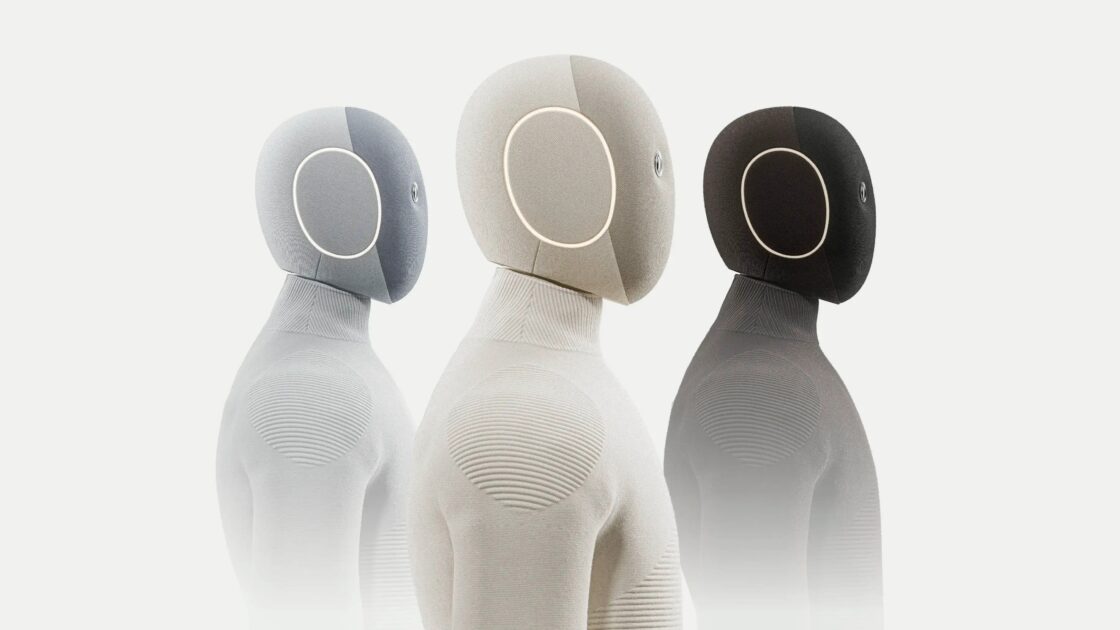
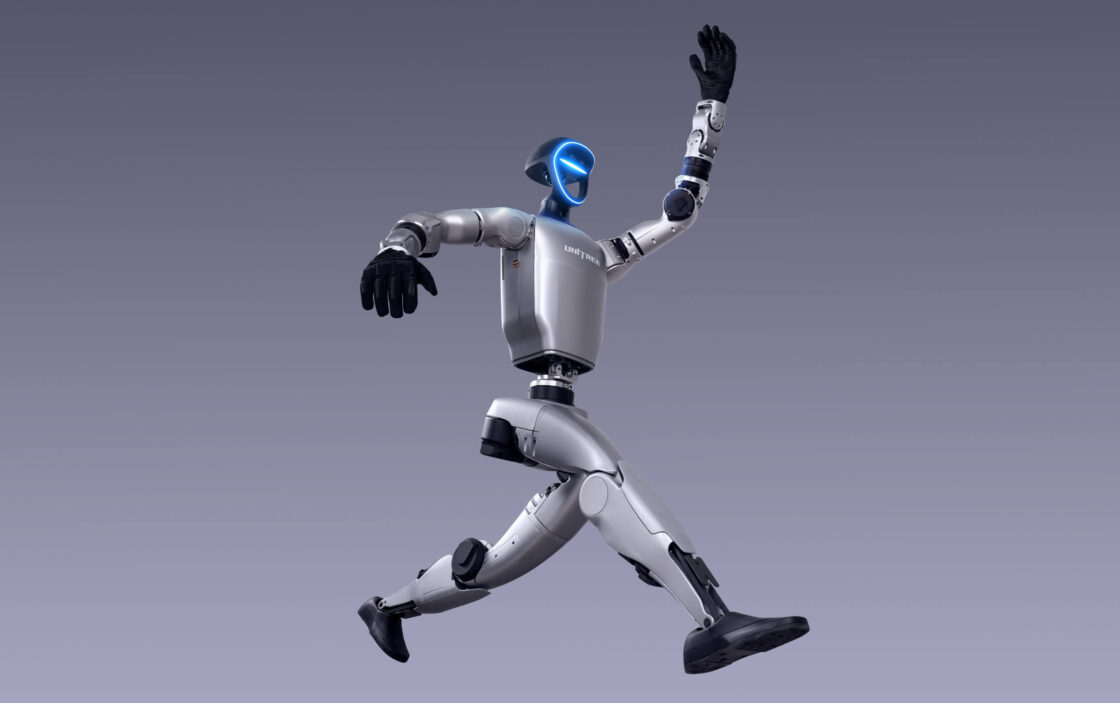
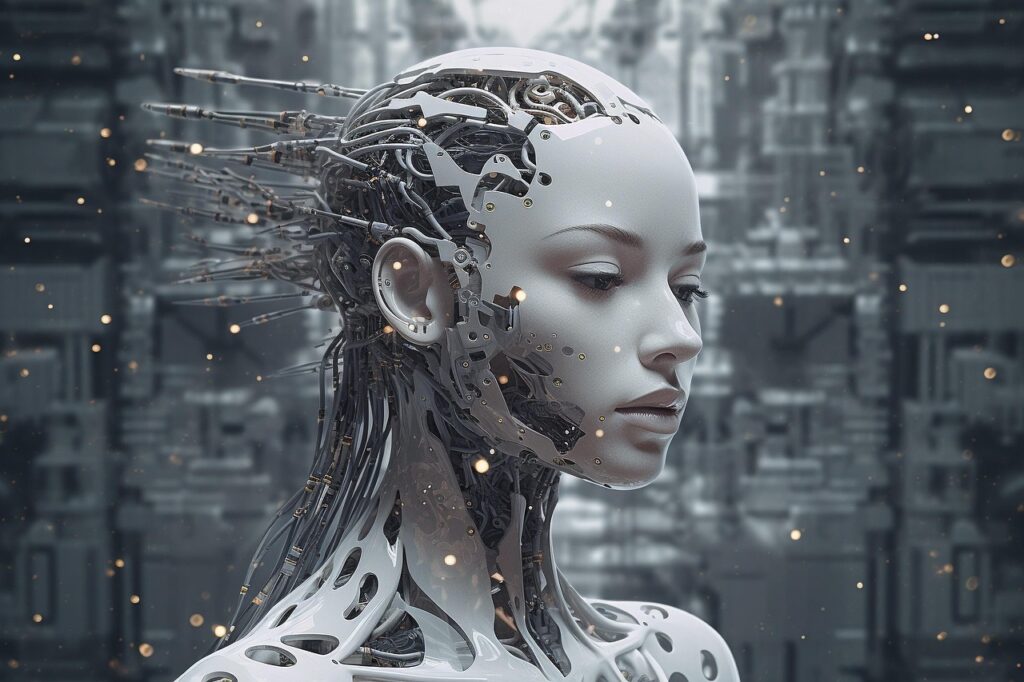
The headline figure that drew the most attention was the claim that Chinese companies released more than 300 humanoid robot models in 2025, accounting for over half of the global total. On its face, that is a striking measure of output. But its real importance is symbolic as much as statistical. Humanoid robots have emerged as a public-facing representation of China’s broader AI ambitions: they are complex, highly visible, and easy to present as evidence that software, hardware, sensors, and manufacturing capabilities are converging into marketable products.
Li’s reference to robots performing folk dance routines and stage skits during the Spring Festival Gala was therefore not a casual cultural aside. It underscored how the sector is being introduced to the public not merely as advanced machinery, but as proof that technical progress is crossing into everyday awareness. The performances were framed as demonstrations of industrial maturity, suggesting that China wants humanoid robotics to be understood as an applied capability rather than a speculative concept. In that sense, spectacle and strategy are working together: one captures attention, while the other builds the industrial logic behind it.
Consumer devices and frontier technologies are part of the same playbook
The expansion of AI glasses, AI smartphones, and AI computers also fits this pattern. These products are presented as consumer successes, but they serve a wider purpose in the policy narrative. They show how AI can diffuse through mainstream hardware categories while creating demand for domestic ecosystems of chips, models, software integration, and device manufacturing. The spread of smart terminals suggests that China’s AI strategy is not limited to headline technologies such as humanoid robots, but extends across the full stack of everyday digital products.
At the same time, the government is clearly looking beyond current momentum. Li said the Ministry of Industry and Information Technology will push further into brain-computer interfaces, autonomous driving, and humanoid robots, while science and technology minister Yin Hejun described the period of the 15th Five-Year Plan as a critical window for achieving higher levels of technological self-reliance. Together, those remarks point to a consistent strategic view: China intends to use AI not only to improve existing industries, but to strengthen control over future technological platforms. The deeper message is that scale alone is no longer the endpoint; integration, self-reliance, and industrial leverage are becoming the real tests of success.
Source: Over 300 Humanoid Robot Models Released in China in 2025, Accounting for Over Half of Global Total