

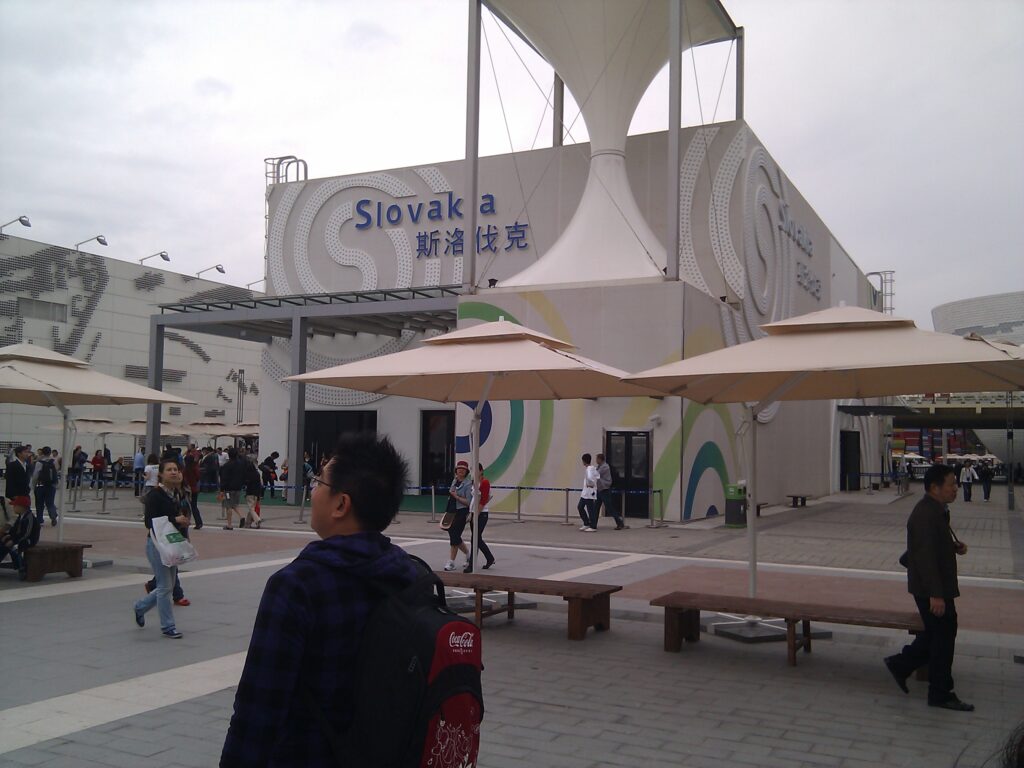
In 2009, we prepared the official web presence and public information platform for the Slovak Pavilion at Expo 2010 Shanghai. The project was published on expo2010shanghai.sk, and archived captures preserved in the Wayback Machine still confirm its existence today. That alone makes this reference unusually valuable: it is not only remembered, but publicly traceable.
This was not a minor supporting website around a secondary initiative. It was a public-facing digital environment connected to Slovakia’s participation in a globally recognized world exposition, where credibility, clarity and access to information had to be handled with seriousness from the outset.
The platform brought together a broad and carefully structured range of content around the exhibition and the Slovak Pavilion itself. It included official information about the Expo, practical visitor guidance, maps, ticket information, videos, image galleries, historical context, press-related material and public updates. In other words, it was not a single-purpose microsite, but a substantial digital information layer built to support visibility, orientation and communication around an internationally significant event.
The challenge was to turn a large amount of public, editorial and practical content into a digital platform that felt coherent, trustworthy and usable. The website had to present the Slovak Pavilion professionally while also serving visitors, media and the wider public looking for reliable information before and during the exhibition.
What makes this reference especially important is that it proves something larger than the project itself. It shows that already in 2009, we were delivering structured, professionally executed digital work for a public-facing initiative tied to one of the world’s most visible international events. Long before AI search, digital transformation and modern growth systems became standard industry language, we were already building platforms that required clear information architecture, public trust, strong content structure and dependable execution.
That is why this reference matters today. It is documented, verifiable proof that our history in digital platforms is real, traceable and built on actual work delivered in time, not on retrospective positioning.