The easy prediction was that once AI could generate convincing images and video at scale, authentic visual work would start to lose value. The opposite is closer to the truth. As synthetic media becomes cheap, fast, and endless, reality becomes the premium layer. The scarce thing is no longer the ability to make an image. The scarce thing is being able to prove that an image came from an actual moment, an actual place, and an actual person. Public anxiety is already there: Reuters Institute reported in 2025 that 58% of people were concerned about what is real and fake on the internet, and another Reuters Institute study found only 12% were comfortable with fully AI-generated news.
Table of Contents
That shift matters far beyond photography as an art form. It reaches into journalism, advertising, ecommerce, education, legal evidence, brand reputation, fraud prevention, and politics. Entrust’s 2025 Identity Fraud Report said a deepfake attempt happened every five minutes in 2024 and that digital document forgeries rose 244% year over year. Once that is the background noise of the internet, authentic visuals stop being just content. They become trust infrastructure.
The scarcity has moved from production to proof
For most of photography’s history, the value sat in access, equipment, timing, craft, distribution, and taste. AI weakens several of those barriers. A prompt can now generate a polished portrait, a product scene, a travel fantasy, or a cinematic clip in seconds. Surface quality is no longer a reliable signal of truth, effort, or cost.
That changes the function of authentic capture. A real photograph is no longer valuable merely because it looks good. It is valuable because it carries contact with reality. A real video still contains friction that synthetic media does not: weather, lighting limits, continuity, body language, location constraints, witness presence, context, and the possibility of corroboration. None of that guarantees truth on its own, but it creates a very different evidentiary base than a file assembled from generated pixels.
The market has started to respond in exactly that direction. The C2PA specification, which underpins Content Credentials, is built around cryptographically verifiable provenance and tamper-evidence, not around aesthetic judgment. It does not declare whether content is “good” or “bad.” It is designed to help people verify what claims about origin and editing can actually be validated.
Synthetic abundance changed the job of the image
The image used to do one primary job in many digital settings: catch attention. It still does that, but attention alone is no longer enough. In an AI-heavy media environment, visuals are being asked to do a second job at the same time — carry proof.
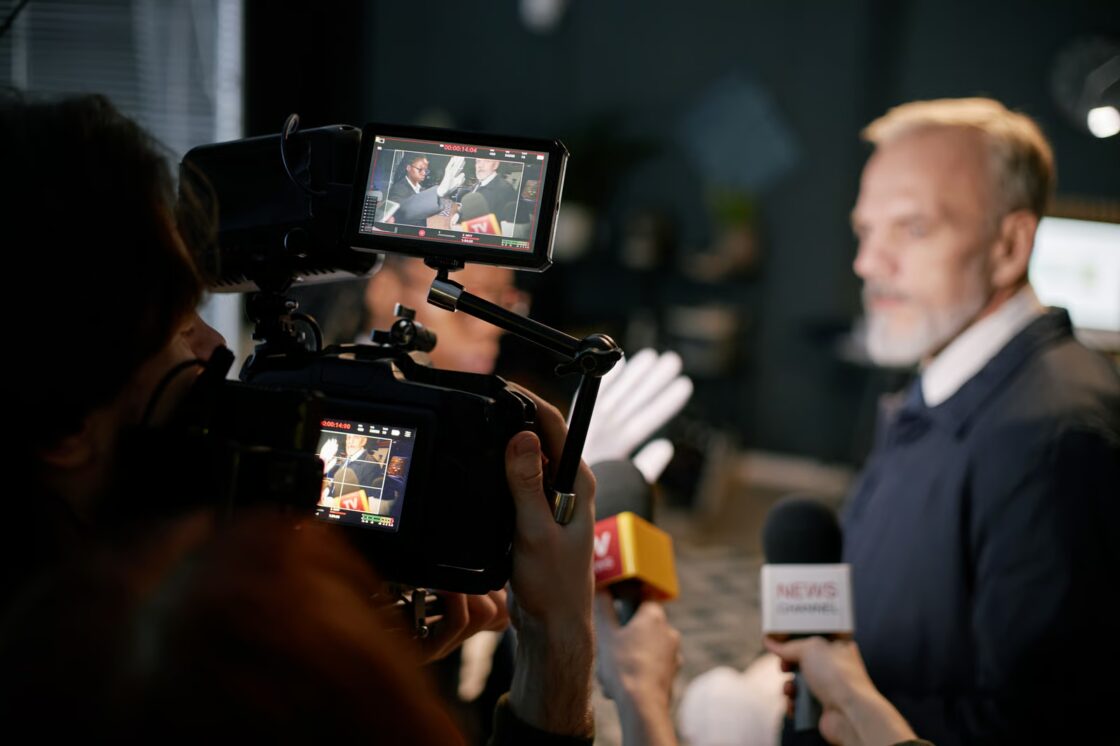
That is why serious newsrooms have drawn hard boundaries. The Associated Press states that it does not allow generative AI to add or subtract elements in photos, video, or audio, and that it will refrain from transmitting AI-generated images that falsely depict reality. That is not a quaint defense of older craft. It is an admission that visual integrity is part of editorial credibility itself.
The same logic applies outside journalism. A product demo, a founder interview, a factory walkthrough, a medical explainer, a real customer testimonial, a documentary sequence, or a behind-the-scenes clip all carry more than mood. They imply that something happened, someone was present, and a claim can be inspected. The closer the image gets to a promise, a transaction, or a public claim, the more authenticity matters.
Audiences notice the difference faster than many brands expect
A lot of brand teams still talk about AI visuals as if the only real question is cost savings. Audience research points somewhere else. Adobe reported in 2026 that one-third of customers would stop interacting with a brand if they discovered the content was AI-generated rather than human-made, and 37% would disengage if they learned they were interacting with AI when they expected a human. Adobe also found that most customers do not trust their own ability to tell when AI is involved, which helps explain why transparency has become so sensitive.
Peer-reviewed research is moving in the same direction. A 2025 study in the International Journal of Information Management found that consumers preferred hospitality services advertised with real images rather than AI-generated ones, with the negative effect stronger for hedonic services and high-involvement decisions. The study also found that consumers saw AI-generated images as less credible and potentially misleading because they made it harder to imagine the actual experience.
Another 2025 study in the Journal of Business Research found that AI disclosures lowered trust and ad attitudes in service advertising, especially where the ad emphasized more intangible, person-centered cues. Trust recovered more effectively when AI was used selectively for tangible attributes rather than for synthetic depictions of people. That is a useful distinction. People are often willing to accept AI as a production tool before they accept it as a substitute for human presence.
Where authenticity carries the highest premium
| Use case | What authentic visuals add |
|---|---|
| Journalism and reportage | A record that can be defended, contextualized, and audited |
| Product demos and testimonials | Stronger credibility around what is actually being sold or experienced |
| Documentary, events, and creator content | Evidence of time, place, presence, and human reaction |
| Regulated or high-stakes communication | Lower misrepresentation risk and better accountability |
That premium is not sentimental. It follows risk. Where the image is tied to evidence, reputation, money, or public trust, authentic capture has more weight than synthetic polish. Newsroom standards, brand-response data, and marketing research all point the same way.
Provenance is becoming part of the medium
There is another reason authentic photography and video still matter: authenticity is no longer only about capture. It is increasingly about provenance that can travel with the file.
Content Credentials, based on the C2PA standard, are designed to show where media came from and how it was edited. The initiative now involves 500+ companies, with participants and supporters including major technology, media, and platform firms.
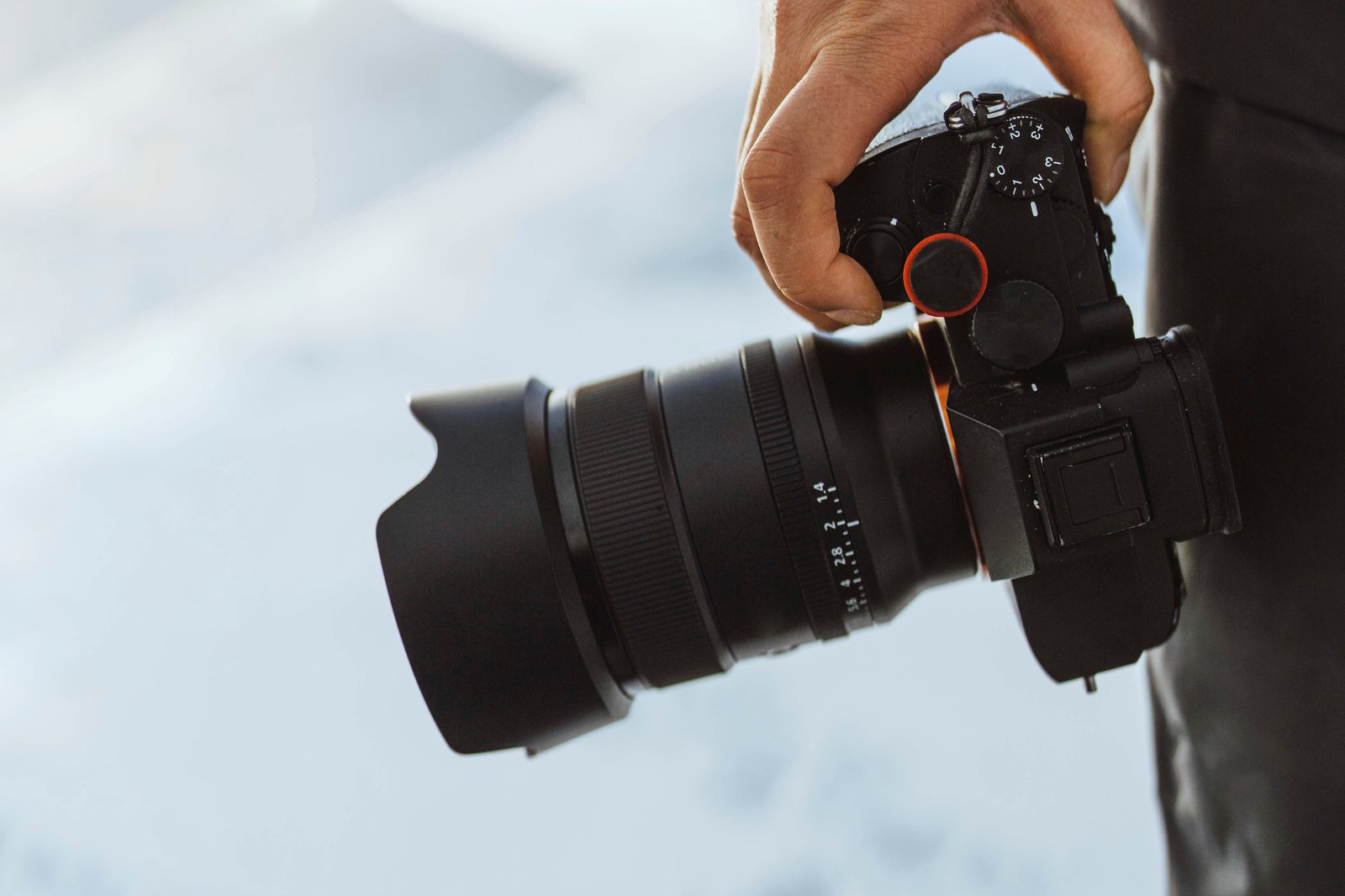
That standard is already moving closer to the point of capture. Leica says the M11-P was the first production camera to integrate Content Credentials, framing it as a way to strengthen trust in digital content and in the documentation of world events. Nikon now offers an Authenticity Service for select cameras, describing it as a way to protect photographers and news organizations from AI-generated misinformation and fabricated images.
This is a deeper shift than a new metadata feature. It turns verification into part of the photographic and video workflow itself. The authentic image of the near future will not just be “real.” It will increasingly be expected to show where it came from, whether it was edited, and whether those claims are tamper-evident.
Regulators are moving in the same direction. The European Commission’s AI Office says the Code of Practice on marking and labelling AI-generated content is meant to support compliance with the AI Act’s transparency obligations. Those obligations include machine-readable marking for AI-generated or manipulated outputs and disclosure for deepfakes and certain public-interest text, with the rules due to take effect in August 2026.
Authentic work will not win by nostalgia
None of this requires a romantic rejection of AI. AI is already useful in visual workflows. It can help with storyboards, previsualization, captions, localization, cleanup, logging, search, rough ideation, and certain background assets. The serious argument for authentic photography and video is not that AI is worthless. It is that some visual claims still require contact with the real world.
That distinction is going to shape stronger creative strategy. Synthetic visuals can work well for conceptual illustration, speculative worlds, mood pieces, abstract explainers, placeholder scenes, and rapid-volume variants. Real capture matters more where the content is making an implicit promise: this person exists, this place exists, this event happened, this product behaves like this, this reaction was genuine, this testimony belongs to someone who was actually there.
The smartest organizations will not frame this as an either-or war. They will separate illustration from documentation, simulation from evidence, and creative augmentation from factual representation. The confusion starts when those categories are blended for convenience.
The market is splitting rather than replacing
What the AI boom is really doing is splitting the visual market into two expanding lanes.
One lane is synthetic, fast, scalable, personalized, and cheap. It is useful for volume production and creative experimentation. The other lane is authenticated, accountable, slower, and more expensive. It is useful where trust has economic value. Both lanes will grow, but they are not interchangeable.
That has consequences for photographers, videographers, editors, agencies, publishers, and in-house teams. The old pitch was often craft plus style. The new premium pitch is broader: capture the real moment, preserve context, manage consent, document the workflow, and deliver files that can survive scrutiny. In that environment, visual professionals do not become obsolete. Many become more important, because they are no longer selling only images. They are selling reliability.
The strongest visual brands will understand this earlier than everyone else. They will use AI openly where synthetic media makes sense, and they will invest harder in authentic capture where proof matters. They will not treat a generated face as a casual substitute for a real customer, a real employee, a real place, or a real event. They will know that cheap abundance lowers the value of generic imagery and raises the value of documented reality.
Reality gains value when imitation gets easier
The AI boom did not make authentic photography and video irrelevant. It changed their job description.
A real image now has to do more than attract attention. It has to hold up under doubt. It has to anchor trust where the surrounding environment keeps eroding it. It has to tell a viewer, a customer, an editor, a regulator, or a court that there is still a meaningful difference between something that was rendered and something that was witnessed.
That is why authentic photography and video still matter. Not as a nostalgic holdout, and not as a moral badge. They matter because the more convincing synthetic media becomes, the more valuable verifiable reality becomes with it. In a feed full of fluent fabrication, an authentic image is no longer just content. It is proof with emotional force.
Author:
Jan Bielik
CEO & Founder of Webiano Digital & Marketing Agency
This article is an original analysis supported by the sources cited below
Overview and key findings of the 2025 Digital News Report
Reuters Institute summary page with 2025 findings on concern about what is real and fake online.
https://reutersinstitute.politics.ox.ac.uk/digital-news-report/2025/dnr-executive-summary
Generative AI and news report 2025 How people think about AI’s role in journalism and society
Reuters Institute report page summarizing public comfort levels with AI-generated news and journalism.
https://reutersinstitute.politics.ox.ac.uk/generative-ai-and-news-report-2025-how-people-think-about-ais-role-journalism-and-society
2025 Identity Fraud Report
Entrust report documenting deepfake frequency and the growth of digital document forgery.
https://www.entrust.com/sites/default/files/documentation/reports/2025-identity-fraud-report.pdf
Standards around generative AI
Associated Press standards page explaining its rules for AI use in photos, video, audio, and editorial workflows.
https://www.ap.org/the-definitive-source/behind-the-news/standards-around-generative-ai/
Code of Practice on marking and labelling of AI-generated content
European Commission page describing AI Act transparency obligations, machine-readable marking, and deepfake disclosure.
https://digital-strategy.ec.europa.eu/en/policies/code-practice-ai-generated-content
C2PA Technical Specification
Official specification describing the architecture for cryptographically verifiable provenance and tamper-evident media records.
https://spec.c2pa.org/specifications/specifications/2.3/specs/C2PA_Specification.html
Content Credentials
Official overview of the Content Credentials ecosystem and its adoption across hundreds of companies.
https://contentcredentials.org/
Nikon Authenticity Service
Nikon page explaining its C2PA and Content Credentials solution for supported cameras.
https://www.nikonusa.com/content/nikon-authenticity-service
Leica Content Credentials in the M11-P
Leica page describing the first production camera with integrated Content Credentials.
https://leica-camera.com/en-int/photography/content-credentials
Adobe 2026 AI and Digital Trends Customer Behaviors and AI
Adobe research on how customers respond to AI-generated brand interactions and disclosure.
https://business.adobe.com/resources/digital-trends-consumer-report.html
Customer reactions to generative AI vs. real images in high-involvement and hedonic services
Peer-reviewed study on consumer preference for real images over AI-generated ones in service marketing.
https://www.sciencedirect.com/science/article/pii/S0268401225000866
Service ads in the era of generative AI Disclosures, trust, and intangibility
Peer-reviewed study on how AI disclosure affects trust and ad attitudes in service advertising.
https://www.sciencedirect.com/science/article/abs/pii/S0969698925000104