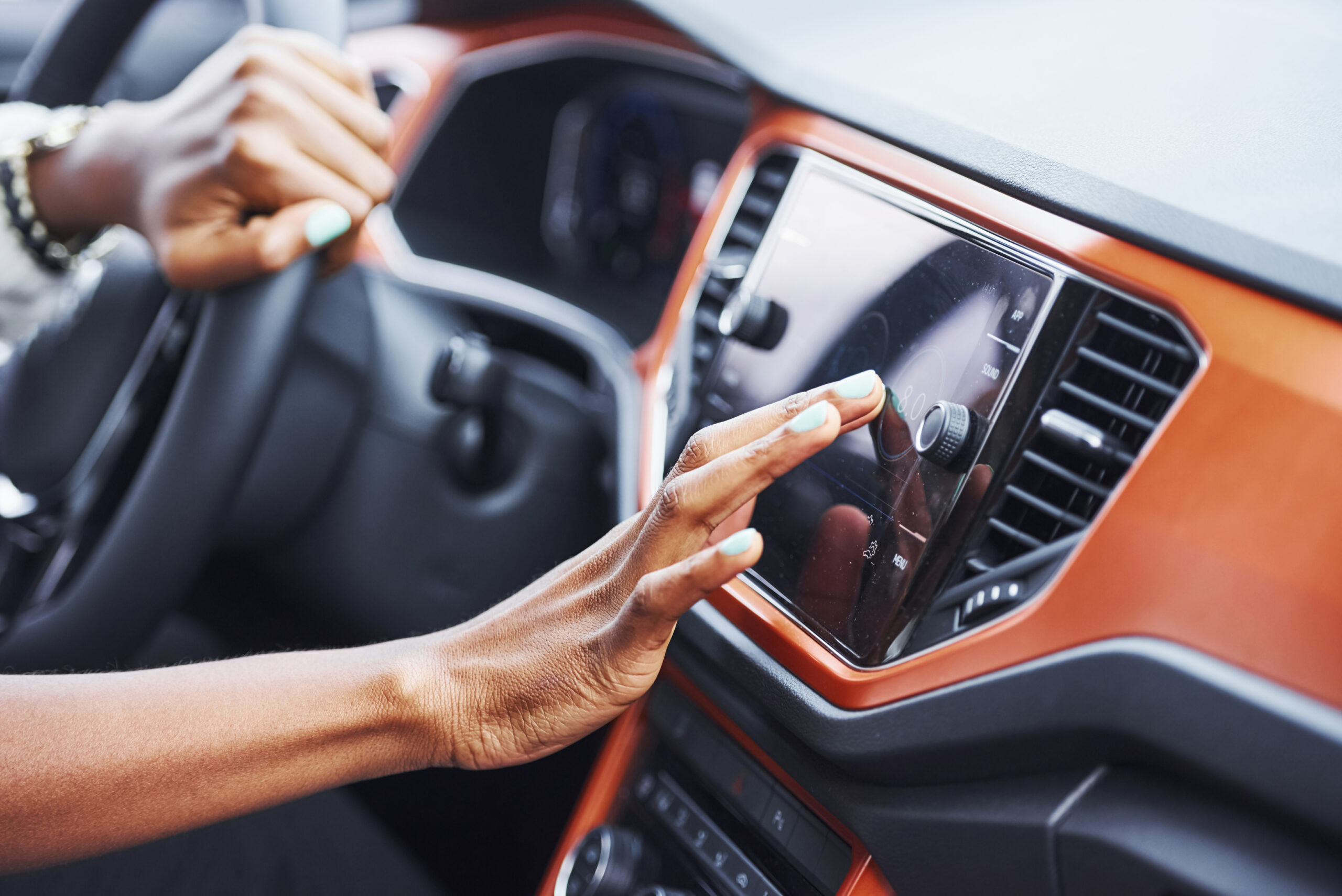
On March 27, 2026, OpenAI quietly shipped a feature with bigger implications than its modest release-note treatment suggested. ChatGPT is now rolling out in Apple CarPlay, giving drivers a voice-first way to start new conversations, resume earlier chats, and even continue work inside projects from the dashboard. The feature requires iOS 26.4 or later, a supported iPhone, a car with CarPlay, and the latest ChatGPT app, and OpenAI says it is available globally across all ChatGPT plans.
Table of Contents
A small app update with larger consequences
For years, CarPlay was a tightly managed lane. Apple allowed navigation, messaging, audio, parking, EV charging, and a handful of other app types, but not open-ended AI chatbots. That changed with iOS 26.4, when Apple added support for voice-based conversational apps inside CarPlay. Industry reporting in February framed the move as a strategic opening: Apple was preparing to let services such as ChatGPT, Gemini, and Claude occupy a limited in-car role without handing them the keys to the entire driving experience.
That distinction matters. OpenAI did not “replace Siri” in the car. It entered a new category Apple created, on Apple’s terms. Reuters reported that Apple would not let third-party AI apps take over the Siri button or the wake word, and Apple’s own developer guidance for this new class of apps stresses a primary modality of voice, not a dashboard full of rich visual responses.
The result is more disciplined than flashy. ChatGPT’s arrival in CarPlay is not a science-fiction dashboard takeover. It is a carefully fenced conversational layer built for quick voice exchanges while driving. That restraint is not a bug. It is the whole design philosophy. Apple describes CarPlay as a safer way to use iPhone in the car while staying focused on the road, and OpenAI’s implementation stays inside that safety-first frame.
Voice AI finally gets a place on the dashboard
There is an obvious consumer appeal here. A driver can now ask ChatGPT for a quick explanation, brainstorm an email idea before parking, rehearse talking points for a meeting, settle a family backseat argument, or continue an earlier conversation without grabbing the phone. The appeal is not that ChatGPT suddenly became a driving assistant. The appeal is that conversational AI can now travel with the user into one more everyday surface. OpenAI’s help documentation makes that explicit: CarPlay supports starting new voice chats, resuming recent conversations, and opening chats inside projects.
That sounds incremental until it is placed in the broader arc of consumer AI. ChatGPT has been moving from a destination app into a persistent layer across devices and contexts. Phone, desktop, voice mode, projects, integrations, and now the car all point in the same direction. OpenAI is trying to make ChatGPT available at the exact moment a user reaches for language, not only when they sit down to “use AI.” CarPlay fits that strategy unusually well because driving produces idle moments, spoken questions, and hands-busy conditions that naturally favor voice interaction. This is an inference from OpenAI’s release framing and the voice-first constraints Apple set for the category.
The feature is useful precisely because it is constrained
The most revealing part of this launch is not what ChatGPT can do. It is what it cannot do. OpenAI says ChatGPT in CarPlay cannot access maps, vehicle information, or live location. It also cannot control the car or affect other apps, including Maps and messaging apps. That sharply limits the risk of a chatbot crossing into safety-critical tasks or becoming a pseudo-operating system for the vehicle.
The visual design is similarly narrow. Reporting from The Verge, citing Apple’s developer guidance, says CarPlay chatbot experiences do not present text conversations or imagery as responses. The screen is there for lightweight controls, not for reading generated output. That is a notable design choice in an industry that often tries to prove value by showing more. Apple and OpenAI are doing the opposite here: they are reducing the interface until voice becomes the product.
There is also no true hands-free summon in the Siri sense. Users still need to open the ChatGPT app from CarPlay rather than invoke it with a dedicated wake word or by replacing Siri’s activation path. Reuters reported that Apple would not allow third-party services to replace the Siri button or wake word, and The Verge notes that ChatGPT in CarPlay must be opened manually. OpenAI offers a partial workaround with a setting that lets the app start automatically in voice mode once launched, which removes one more tap after entry but does not change the basic hierarchy.
A new lane beside Siri, not a replacement
That hierarchy may turn out to be the most durable part of the story. Apple is allowing external AI into CarPlay, but only in a lane that leaves Siri’s privileged position intact. Siri still owns the system-level posture. ChatGPT gets a bounded conversational role. Apple keeps the controls that touch navigation, core device behavior, and car functions. OpenAI gets access to attention, not authority. That division is supported by OpenAI’s stated limitations and Reuters’ reporting on Apple’s refusal to surrender the Siri button or wake word.
From Apple’s perspective, this is a neat compromise. The company can acknowledge the market demand for third-party AI without conceding system control inside the car, one of the most sensitive computing environments it manages. From OpenAI’s perspective, the compromise is still a win. Distribution inside CarPlay places ChatGPT in front of users during a daily ritual that is repetitive, time-rich, and habit-forming. That kind of placement tends to matter more than feature spectacle over the long run. This business interpretation follows from Apple’s platform rules and OpenAI’s rollout choice.
The practical experience drivers will actually get
OpenAI’s help page is refreshingly direct about what the current version supports. You connect the iPhone, open ChatGPT from the CarPlay screen, start a new voice chat or continue a recent one, and speak. You can also enter a project and begin a voice chat there. Recent chats and pinned threads are accessible, which makes the experience feel less like a one-off novelty and more like a continuation of mobile use.
At a glance
| Feature | Available in CarPlay | What that looks like |
|---|---|---|
| Start a new voice conversation | Yes | Open ChatGPT in CarPlay and begin speaking |
| Resume recent chats and projects | Yes | Continue prior conversations or start inside a project |
| Open directly into voice mode | Yes, with a setting | “Start automatically in CarPlay” can skip the default chats screen |
| Read full text or image responses on screen | No | The experience is designed around spoken interaction |
| Use maps, vehicle data, or live location | No | ChatGPT cannot access those inputs |
| Control the car or other apps | No | No command authority over Maps, Mail, Slack, or vehicle functions |
| Replace Siri or use a custom wake word | No | Users must launch ChatGPT manually |
This is a strong product shape for a first release because it answers the right question. What belongs in the car is not all of ChatGPT. It is the subset that survives being spoken, heard once, and acted on without visual dependence. That includes idea generation, clarification, language help, quick summaries, memory jogging, and conversational continuation. It excludes anything that relies on persistent reading, cross-app control, or system orchestration.
The real business significance sits behind the wheel
OpenAI’s move matters for more than convenience. It is a distribution signal. The company is no longer content to be an app people open intentionally. It wants ChatGPT present in the places where intent forms: while commuting, dictating, waiting, walking, and switching between tasks. CarPlay extends that presence into one of the most durable screen ecosystems in consumer life. Apple created the opening; OpenAI moved quickly enough to be among the first major beneficiaries.
That also raises competitive pressure. Once Apple permits a category, the question is rarely whether one service will use it. The question is which service becomes habitual first. Reuters pointed to OpenAI, Anthropic, and Google as likely candidates for these CarPlay voice experiences. Early availability does not guarantee long-term leadership, but it does shape user expectation. If ChatGPT becomes the chatbot people casually consult from the driver’s seat, that familiarity can spill back into phone and desktop use.
For automakers and platform owners, the bigger lesson is subtler. The future of in-car AI may belong less to giant dashboard reinventions than to narrow, dependable voice surfaces that know their limits. Drivers do not need a theatrical AI cockpit to feel the value of conversational software. They need an interaction that starts quickly, speaks clearly, and stays out of the way. CarPlay’s current rules push the ecosystem toward exactly that kind of product. This is an inference supported by Apple’s safety framing, the new app category requirements, and OpenAI’s deliberate limitations.
The next phase will be shaped by restraint, not spectacle
There is a temptation to read every new AI surface as the beginning of total software convergence. This launch points somewhere more grounded. ChatGPT in CarPlay is not the car becoming an AI device. It is the car becoming one more place where voice computing feels natural. That is a smaller claim, but a more credible one.
And credibility matters in the dashboard. Drivers will tolerate plenty from entertainment software. They will not tolerate confusion, visual clutter, or a chatbot that overreaches into the wrong task. Apple’s rules, and OpenAI’s compliance with them, suggest both companies understand that. The smartest part of this rollout may be its refusal to pretend the car is just another phone. By keeping ChatGPT conversational, bounded, and secondary to the driving stack, OpenAI has made the feature easier to trust and easier to keep using.
If that trust holds, this launch will be remembered less as a novelty and more as a template. Not for putting everything into the dashboard, but for deciding what deserves to be there at all.
Author:
Jan Bielik
CEO & Founder of Webiano Digital & Marketing Agency
This article is an original analysis supported by the sources cited below
ChatGPT — Release Notes
Official OpenAI release notes documenting the March 27, 2026 rollout of ChatGPT in Apple CarPlay.
https://help.openai.com/en/articles/6825453-chatgpt-release-notes
Using ChatGPT on CarPlay
Official OpenAI help documentation covering availability, setup, supported actions, safety guidance, and feature limitations.
https://help.openai.com/en/articles/20001153-using-chatgpt-on-carplay
CarPlay
Apple’s official developer overview describing CarPlay’s safety-first design and supported in-car app experience.
https://developer.apple.com/carplay/
iOS 26.4 adds support for a new category of CarPlay apps
9to5Mac reporting on Apple’s new CarPlay category for voice-based conversational apps and the design constraints attached to it.
https://9to5mac.com/2026/02/18/ios-26-4-adds-support-for-voice-based-ai-apps-to-carplay/
Apple plans to allow external voice-controlled AI chatbots in CarPlay, Bloomberg News reports
Reuters report outlining Apple’s broader opening of CarPlay to third-party AI assistants and the limits around Siri replacement and wake-word access.
https://www.reuters.com/business/apple-plans-allow-external-voice-controlled-ai-chatbots-carplay-bloomberg-news-2026-02-06/
You can now use ChatGPT with Apple’s CarPlay
The Verge coverage summarizing the live CarPlay rollout, manual launch behavior, and voice-only interaction model.
https://www.theverge.com/ai-artificial-intelligence/904676/apple-carplay-openai-chatgpt