A cold-weather demonstration with symbolic weight
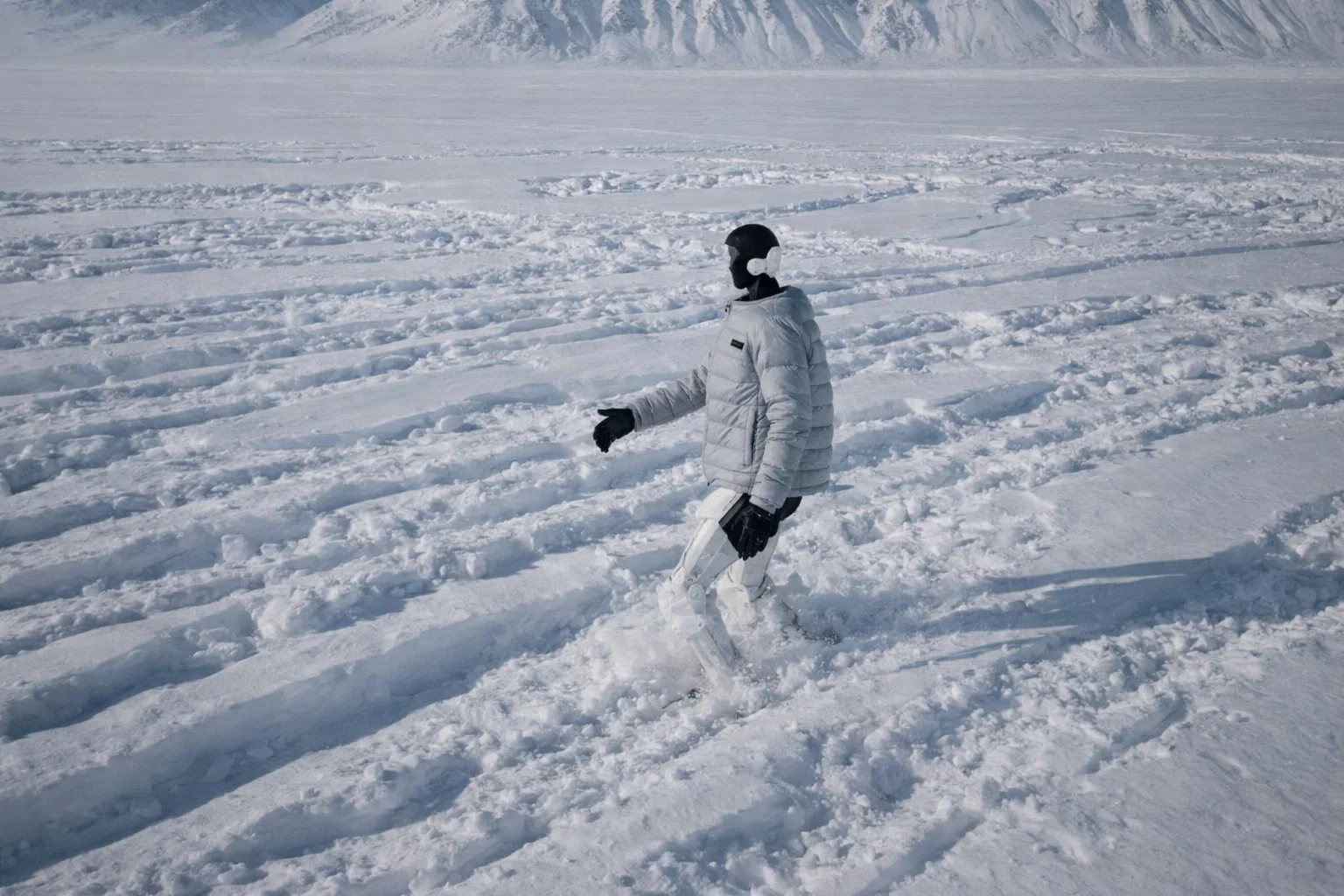
Unitree’s latest field test is less notable for spectacle than for what it suggests about the next phase of humanoid robotics. In Xinjiang’s Altay region, the company’s G1 humanoid completed a prolonged autonomous walk in temperatures as low as –47.4°C, covering more than 130,000 steps across an extreme snowfield. The demonstration is being presented as the first confirmed case of a humanoid robot sustaining autonomous walking in such severe cold, a claim that matters because it shifts attention away from choreographed indoor capability and toward environmental endurance.
Table of Contents
That change in emphasis is significant. Much of the public discussion around humanoid robots still revolves around dexterity, novelty, or their resemblance to human motion in controlled spaces. This trial points to a different benchmark: whether a general-purpose biped can continue operating when terrain is uneven, surfaces are icy, and temperature becomes a direct threat to joints, batteries, and control systems. The deeper message is that mobility alone is no longer enough; survivability is becoming part of the performance standard.
Engineering pragmatism mattered as much as autonomy
The G1 did not attempt the challenge in its standard factory form. Unitree adapted the machine for the conditions by adding an insulated orange jacket and improvised plastic coverings around its lower limbs, a practical effort to protect actuators, joints, and battery components from freezing stress. That detail is important because it underscores the nature of the achievement: this was not a polished consumer demonstration, but a test of whether a humanoid platform could be made resilient enough to function in punishing conditions.
As part of the exercise, the robot autonomously traced a Winter Olympics emblem across a snowfield measuring roughly 186 metres by 100 metres. According to the source material, it relied on China’s Beidou satellite navigation network for centimetre-level positioning, while onboard adaptive path-planning supported stable movement over icy, irregular ground. The combination of precise navigation and continuous locomotion in deep cold is what gives the demonstration its technical relevance, not simply the visual drama of a humanoid walking through snow.
The hardware remains compact, but the ambition is expanding
The G1 itself is relatively compact by humanoid standards, standing 127 centimetres tall and weighing about 35 kilograms. Depending on configuration, it uses between 23 and 43 joint motors, with maximum joint torque reaching 120 newton-metres. Its sensor suite includes 3D LiDAR, an Intel RealSense depth camera, and a microphone array with noise cancellation for voice interaction, while an eight-core processor handles joint control and motion.
Power comes from a 9,000 mAh quick-release battery, rated for up to two hours of operation and designed for rapid swapping. The robot runs on Unitree’s UnifoLM robotics model and supports reinforcement learning for motion control and task execution. In practical terms, that places the G1 in an interesting category: it is marketed as an entry-level humanoid, yet Unitree is using it to argue for capability far beyond a lab or showroom. What the company is really demonstrating is that affordability and ruggedization no longer need to belong to entirely separate conversations.
The industry is moving from performance demos to durability tests
The broader significance of the test lies in how it reflects a changing competitive landscape. As humanoid robotics matures, the question is no longer only what a machine can do in carefully managed conditions, but how reliably it can function in uncontrolled ones. Rival companies have already begun promoting weather resistance and minimum operating temperatures as selling points, suggesting that environmental tolerance is becoming a serious differentiator rather than a secondary specification.
Unitree’s snowfield trial pushes that logic further. Introduced in May 2024 with a starting price of about €12,509 in China, the G1 has been positioned as a relatively accessible platform. The company also reported more than 5,500 humanoid robot shipments in 2025, indicating that it is operating at meaningful scale. Taken together, those facts point to a broader industry direction: the race is shifting from proving that humanoids can move, to proving that they can keep moving when the environment stops cooperating.
Author:
Lucia Mihalkova
COO of Webiano Digital & Marketing Agency

Source: Unitree’s G1 becomes world’s first humanoid robot to walk in -53°F