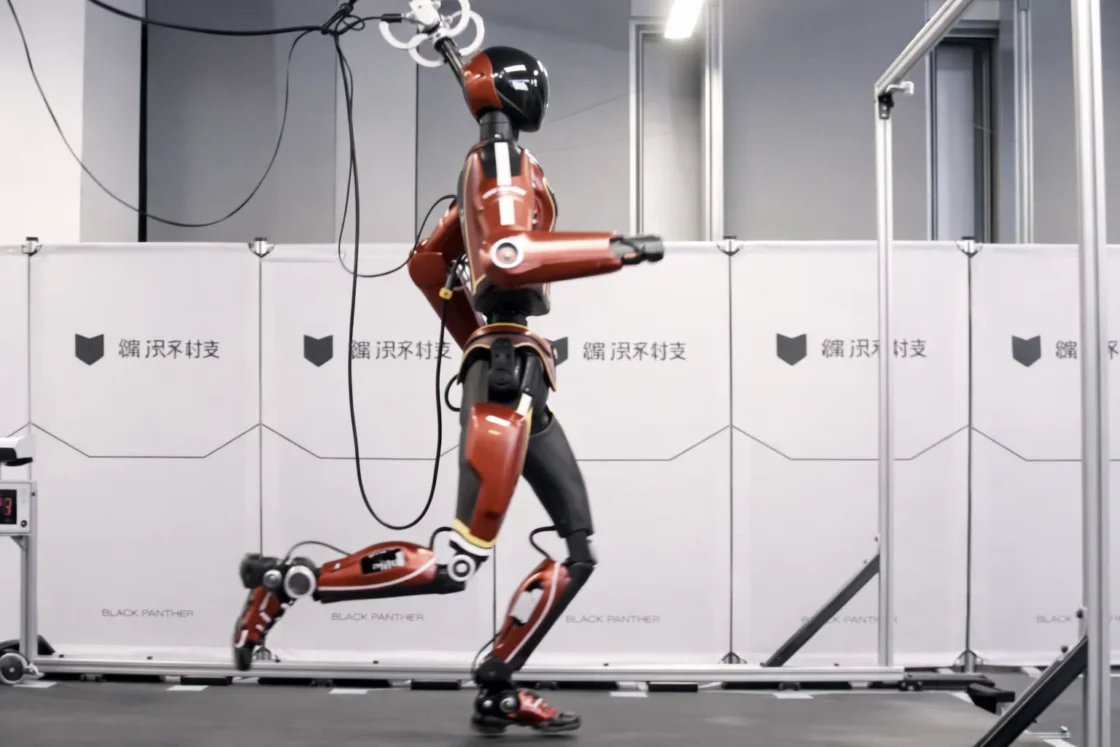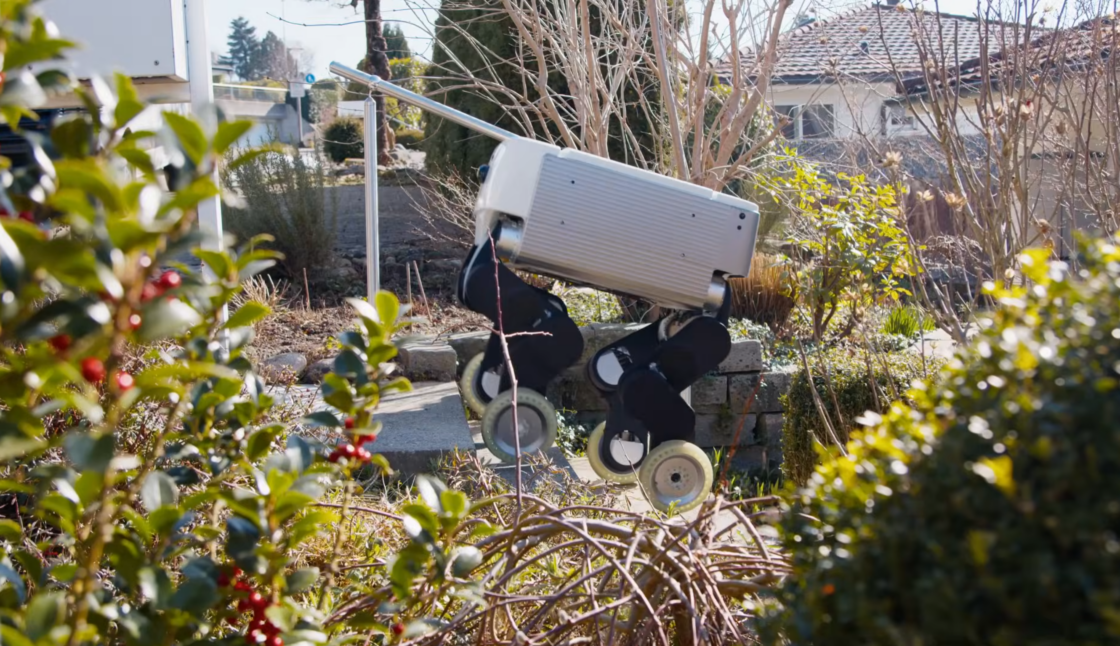
For most people, robots still belong to two separate worlds. There are the machines bolted into factory lines, and there are the glossy humanoids from demos that dance, sort objects, or fold laundry for a camera. The real disruption starts when those two worlds merge. If humanoid robots become reliable, affordable, and safe at scale, they will not simply add another gadget to the economy. They will push machine labor into the ordinary physical spaces that still depend on people: warehouses, hospitals, factories, hotels, shops, care facilities, back rooms, corridors, loading bays, and homes. That is why the comparison with the Industrial Revolution is not cheap hyperbole. The old revolution mechanized power. This one could mechanize adaptable physical work inside a world built for the human body.
Table of Contents
The core idea is almost embarrassingly simple. Humanoids matter less because they look like us than because buildings, tools, shelves, doors, stairs, carts, and workstations were designed around our shape. The International Federation of Robotics defines a humanoid robot as a robot capable of performing tasks in an environment designed for humans without needing that environment to be adapted. That is the hidden economic case for the entire category. Instead of rebuilding every site around a machine, companies can try to send the machine into the site they already have.
A human-shaped machine for a human-shaped world
This is where humanoids break from the older logic of automation. Traditional industrial robots are brilliant in fixed, repetitive, high-speed settings. They weld, assemble, place, and repeat with a level of precision a humanoid still cannot match. The IFR’s own position paper is clear on that point: industrial robots remain the backbone of precision manufacturing, and specialized systems usually outperform humanoids on speed, reliability, and repeatability. Humanoids become interesting elsewhere — in the messy middle where layouts shift, tasks change, and full redesign is too expensive or too slow.
The scale of the broader robotics economy already shows the appetite for automation. IFR says factories installed 542,000 industrial robots in 2024, more than double the level of a decade earlier, lifting the global operational stock to 4.664 million units. Professional service robots added almost 200,000 units in the same year, with staff shortages cited as a key driver. Humanoids are arriving on top of that base, not instead of it. They are the attempt to automate the parts that earlier robots could not reach economically.
The first wave of demand
| Setting | What makes humanoids attractive first |
|---|---|
| Logistics and warehouses | Mixed layouts, changing inventory, tote handling, internal transport, night shifts |
| Automotive and manufacturing | Line-side delivery, parts handling, ergonomically hard tasks, flexible coverage across stations |
| Healthcare and elder care | Aging populations, staffing pressure, transport and support work inside human-centered facilities |
| Retail, hospitality, and domestic support | Spaces built entirely for people, with variable objects and constant small tasks |
This first wave is not hard to picture because the customer logic is already visible. IFR’s humanoid materials point to logistics, manufacturing, healthcare, hospitality, retail, and domestic support. OECD and WHO data add the pressure behind that list: fewer working-age people in many advanced economies, more elderly people, and a steady rise in labor-intensive service demand.
Labor pressure is doing half the selling
The strongest argument for humanoid robots is not technological spectacle. It is demographics. OECD says the working-age population across member countries is projected to decline by 8% by 2060, with a drop of more than 30% in a quarter of OECD countries. The old-age dependency ratio in the OECD has already climbed from 19% in 1980 to 31% in 2023 and is projected to reach 52% by 2060. WHO says the global population aged 60 and older is set to rise from 1.1 billion in 2023 to 1.4 billion by 2030. Those numbers do not automatically guarantee humanoid adoption, but they explain why the sector has moved from science-fiction bait to boardroom topic.
That pressure changes the economics of awkward tasks. A warehouse may not need a humanoid because a human is cheaper today. It may need one because the human is no longer available on the shift, in the region, at the wage, or for the level of physical strain the work demands. The same logic is spreading into production, care, and hospitality. IFR’s service-robot data already ties adoption growth to staff shortages and the expansion of medical demand in aging societies. Humanoids are not the whole answer. They are one of the few answers aimed at physical work inside existing human infrastructure.
The first real deployments are already underway
This is no longer just a story about prototypes in empty labs. Commercial pilots are now happening inside real production systems. BMW says it has launched a pilot project with humanoid robots at its Leipzig plant after an earlier pilot in Spartanburg. It describes humanoids as a complement to existing automation, especially for monotonous, ergonomically demanding, or safety-critical tasks. BMW also says its earlier Spartanburg deployment with Figure supported production of more than 30,000 BMW X3 vehicles over ten months, running ten-hour shifts from Monday to Friday. Mercedes-Benz, meanwhile, says it is testing Apptronik’s Apollo for repetitive intralogistics work and initial quality checks, with the longer aim of more autonomous operation inside production. Agility says its humanoids are already deployed in manufacturing, distribution, and logistics, and has reported Digit moving more than 100,000 totes in commercial deployment.
The software story has shifted just as fast. A humanoid without a strong learning system is an expensive marionette. Figure’s Helix presented a vision-language-action model that links perception, language understanding, and learned control, first across the upper body and later, with Helix 02, across the full body for multi-minute autonomous loco-manipulation. NVIDIA has pushed the same frontier from the platform side with Isaac GR00T N1, which it describes as an open foundation model for generalized humanoid reasoning and skills, paired with synthetic-data and simulation tools. This is the deep reason the field suddenly feels closer. Humanoids are being pulled into the same scaling logic that transformed generative AI: more data, richer simulation, cheaper training, faster iteration, broader transfer.
Where the fantasy still breaks against physics
The bullish case is real. So are the limits. IFR’s own infographic is blunt: there is still no true mass production in humanoids, battery life remains a fundamental constraint, current battery cycles do not last a full working day, and the category still trails conventional industrial robots in speed, precision, reliability, and repeatability. Its longer position paper adds another uncomfortable truth: some humanoids have strong mobility, others handle cognitive tasks better, but none yet combine the full package of human capability. Dedicated-purpose machines are still closer to robust deployment.
That is not a minor engineering footnote. It is the whole battle. A recent review in Scientific Reports lists the hard problems plainly: perceptual robustness, adaptive locomotion, human-level dexterity, continual learning, and human-robot collaboration. NIST, from a safety and standards perspective, makes the institutional version of the same point. Robots and autonomous systems need measurement science that allows them to be applied confidently and safely in the real world. The gap between a viral demo and a machine a company will trust around people, inventory, compliance rules, and narrow margins is still wide.
That is also why the near future will look less glamorous than the hype. The winners will not be the robots that impress people on social media. They will be the systems that stay upright, work a full shift, recover from small errors, tolerate clutter, accept supervision, and justify their cost against simpler forms of automation. In many places, the better answer will still be a wheeled robot, a robotic arm, or a redesigned workflow. Humanoids earn their place only where flexibility beats specialization.
Work will be reorganized before it is erased
The first social effect of humanoids is unlikely to be a clean replacement of one job with one machine. Task bundles will split apart first. BMW explicitly frames humanoids as a complement to existing automation and as a way to relieve workers in monotonous or safety-critical roles. MIT Sloan reaches a similar conclusion from the AI side, arguing that AI is more likely to complement human workers than replace them outright and that capabilities such as empathy, judgment, creativity, presence, and hope remain stubbornly human. The physical economy will probably follow that pattern. The machine takes the repetitive lift, the late shift, the endless shuttle run, the line replenishment, the back-room transport. The person stays with supervision, exceptions, customer interaction, maintenance judgment, coordination, and accountability.
Still, “complement” should not be mistaken for “small change.” A technology can complement workers and still redraw the labor market. If a plant can cover physically draining tasks with a fleet of humanoids, its staffing model changes. Training changes. Scheduling changes. Wage pressure changes. The value of teleoperation, maintenance, safety engineering, workflow design, and robot fleet management rises with it. That conclusion is partly an inference from what BMW, Mercedes, and Agility are already testing, and partly from the demographic squeeze OECD is describing. Even without mass unemployment, the structure of work can move hard and fast.
A civilizational shift measured in autonomy
There is a reason investors and manufacturers are treating this category with unusual seriousness. Morgan Stanley’s research estimates a humanoid market that could exceed $5 trillion by 2050, with adoption likely to stay slow until the mid-2030s and then accelerate later. That forecast may prove too high. Most long-range forecasts are. What matters more is the direction of belief. Serious capital now assumes that general-purpose machine labor can become a category of its own.
The Industrial Revolution replaced muscle with power. Humanoid robots target something more elusive: the human body as the default general-purpose worker in physical space. That is the leftover layer older automation never fully solved. If humanoids become safe, cheap, durable, and competent enough, society will not experience them as a neat “robot industry” story. It will experience them as a rewrite of logistics, production, care, retail, maintenance, and everyday service work. The change will arrive unevenly, with failures, backlash, overpromising, and real productivity gains tangled together. But the destination is easy to see now. The moment a machine can move through our world as a dependable worker rather than a scripted device, the economy stops treating human-shaped labor as scarce by nature. That is a civilizational break.
Author:
Jan Bielik
CEO & Founder of Webiano Digital & Marketing Agency
This article is an original analysis supported by the sources cited below
World Robotics 2025 report – Industrial robots
IFR statistics on industrial robot installations, operational stock, and regional deployment trends in 2024.
https://ifr.org/ifr-press-releases/news/global-robot-demand-in-factories-doubles-over-10-years
World Robotics 2025 report – Service robots
IFR statistics on professional service robot sales and the role of staff shortages and aging populations in demand.
https://ifr.org/ifr-press-releases/news/service-robots-see-global-growth-boom
Humanoid robots infographic
IFR infographic defining humanoid robots, listing likely customer industries, and outlining current tradeoffs such as battery life, performance, safety, and lack of mass production.
https://ifr.org/downloads/press_docs/Humanoids_Position_Infograph_2025.pdf
Humanoid robots vision and reality
IFR position paper comparing humanoids with traditional industrial robots and discussing current regional approaches, battery constraints, and near-term limitations.
https://swira.se/wp-content/uploads/2025/08/Position_Paper_HUMANOID_ROBOTS_by_IFR_V01.pdf
OECD job markets remain resilient but population ageing will cause significant labour shortages and fiscal pressures
OECD data on shrinking working-age populations, rising dependency ratios, and the labor pressure shaping automation demand.
https://www.oecd.org/en/about/news/press-releases/2025/07/oecd-job-markets-remain-resilient-but-population-ageing-will-cause-significant-labour-shortages-and-fiscal-pressures.html
Population ageing
WHO overview of global aging trends and the rapid rise in the population aged 60 and older.
https://www.who.int/news-room/questions-and-answers/item/population-ageing
BMW Group to deploy humanoid robots in production in Germany for the first time
BMW announcement covering its Leipzig pilot, its earlier Spartanburg deployment, and the company’s view of humanoids as a complement to existing automation.
https://www.press.bmwgroup.com/global/article/detail/T0455864EN/bmw-group-to-deploy-humanoid-robots-in-production-in-germany-for-the-first-time
AI and humanoid robots
Mercedes-Benz overview of its Apptronik Apollo testing in production, including repetitive intralogistics tasks and initial quality checks.
https://group.mercedes-benz.com/company/production/procuction-network/mbdfc-humanoid-robots.html
Industrial humanoid automation
Agility Robotics company page stating that its humanoid robots are deployed in manufacturing, distribution, and logistics.
https://www.agilityrobotics.com
Digit moves over 100,000 totes in commercial deployment
Agility Robotics case update on throughput, commercial validation, and the economics of scaling a general-purpose humanoid in industry.
https://www.agilityrobotics.com/content/digit-moves-over-100k-totes
Helix a vision-language-action model for generalist humanoid control
Figure AI’s technical announcement describing a model that unifies perception, language, and control for dexterous humanoid manipulation.
https://www.figure.ai/news/helix
Introducing Helix 02 full-body autonomy
Figure AI’s follow-up announcement on multi-minute autonomous loco-manipulation and whole-body control.
https://www.figure.ai/news/helix-02
NVIDIA announces Isaac GR00T N1
NVIDIA announcement on an open humanoid robot foundation model and simulation tools aimed at accelerating development.
https://nvidianews.nvidia.com/news/nvidia-isaac-gr00t-n1-open-humanoid-robot-foundation-model-simulation-frameworks
Measurement science for robotics and autonomous systems program
NIST overview of the safety, confidence, and measurement requirements needed for real-world robotic deployment.
https://www.nist.gov/programs-projects/measurement-science-robotics-and-autonomous-systems-program
Opportunities challenges and roadmap for humanoid robots in construction
Peer-reviewed review article summarizing the technical and non-technical barriers to humanoid deployment, including locomotion, dexterity, continual learning, and collaboration.
https://www.nature.com/articles/s41598-025-30252-6
New MIT Sloan research suggests that AI is more likely to complement, not replace, human workers
MIT Sloan summary of research arguing that AI will often complement labor and leave several human capabilities central.
https://mitsloan.mit.edu/press/new-mit-sloan-research-suggests-ai-more-likely-to-complement-not-replace-human-workers
Humanoid robot market expected to reach $5 trillion by 2050
Morgan Stanley research note outlining a bullish long-term forecast for humanoid robot adoption and market size.
https://www.morganstanley.com/insights/articles/humanoid-robot-market-5-trillion-by-2050