More than a century has passed since Karel Čapek published R.U.R. in 1920, yet the word his play gave to the world still shapes the way industry talks about work, automation, efficiency, fear, and progress. The stage debut came first in Hradec Králové on January 2, 1921, followed by the Prague premiere at the National Theatre on January 25, 1921. That is why the line “a hundred years ago” now needs a small correction. The robot is no longer a centenary word. It is a 20th-century Czech invention still organizing 21st-century industrial reality.
Table of Contents
That continuity matters because Čapek did not merely invent a catchy term. He named a social type. He named the manufactured worker, the labor substitute, the obedient being built to remove drudgery from human life. That is why his idea traveled so well from literature into engineering. Modern factories are full of systems that do not resemble Čapek’s flesh-and-blood humanoids, yet they follow the same industrial dream: move hard, repetitive, risky, exhausting work away from people and into an artificial workforce.
The strange beauty of this story lies in its double truth. Čapek was wrong about the form and frighteningly right about the structure. Today’s dominant factory robots are not human copies marching toward revolt. They are robot arms, collaborative machines, vision systems, mobile platforms, simulation software, and AI models spread across production lines. Yet the factory logic he dramatized in R.U.R.—the urge to standardize labor, lower cost, scale output, and treat work as something detachable from the worker—has only grown stronger.
A word born in Czech and heard around the world
The origin story still deserves to be told slowly, because it is often flattened into a trivia fact. The word robot did not drop from nowhere. Karel Čapek introduced it in R.U.R., but multiple Czech sources note that the word itself was created by his brother Josef. Its root lies in the Czech robota, tied to forced labor, compulsory service, drudgery, and the older memory of serf work. Merriam-Webster likewise traces robot to the Czech robota and notes that the play introduced the word into English in 1923. The most global word in robotics carries a distinctly Central European memory of coerced work inside it.
That etymology helps explain why Čapek’s invention never felt innocent. Even before engineers began attaching motors and controllers to factory tools, the word already contained politics. It did not describe a toy. It did not describe a neutral machine. It described a being made for labor under somebody else’s command. In Czech cultural memory, that is one reason the term remains richer than the sleek corporate language that later attached itself to automation. The robot was never only a technical device. It was always a worker-shaped question.
The global spread was astonishingly fast. Britannica places R.U.R. in 1920 as publication and 1921 as performance, while bibliographic summaries tied to later English editions note that the play reached New York in 1922 and popularized the word widely after that. Merriam-Webster’s dictionary entry places the entry of robot into English in 1923. What matters is the pace. Within a few years, a Czech literary neologism had crossed languages, theatres, and national borders. Few modern technical terms began life so publicly and so dramatically.
The Czech connection has never really disappeared, even when the global robotics industry acts as if the word were just another piece of engineering vocabulary. Czech institutions still mark it as a national contribution with unusual range. RICAIP calls it the most famous Czech word of all, and Czech Centres have continued to frame R.U.R. not as museum material but as a living prompt for debate among theatre scholars, chemical robotics researchers, and AI scientists including Tomáš Mikolov. That says something important. The robot did not leave Czech culture behind when it entered global industry. Czech culture kept asking the harder questions.
R.U.R. was about manufactured life, not shiny machinery
Popular memory often rewrites Čapek’s robot as a metal humanoid. That is not what he wrote. Project Gutenberg’s summary of the play describes artificial workers made from synthetic organic matter, while the MIT Press Reader stresses that Čapek’s robots were neither metallic nor mechanical in the way later pop culture trained us to expect. CzechLit makes the same point from another angle: Rossum’s creations are artificial beings, visually close to humans, assembled in a factory, and produced industrially. Čapek’s robot was closer to a manufactured organism than to a steel automaton.
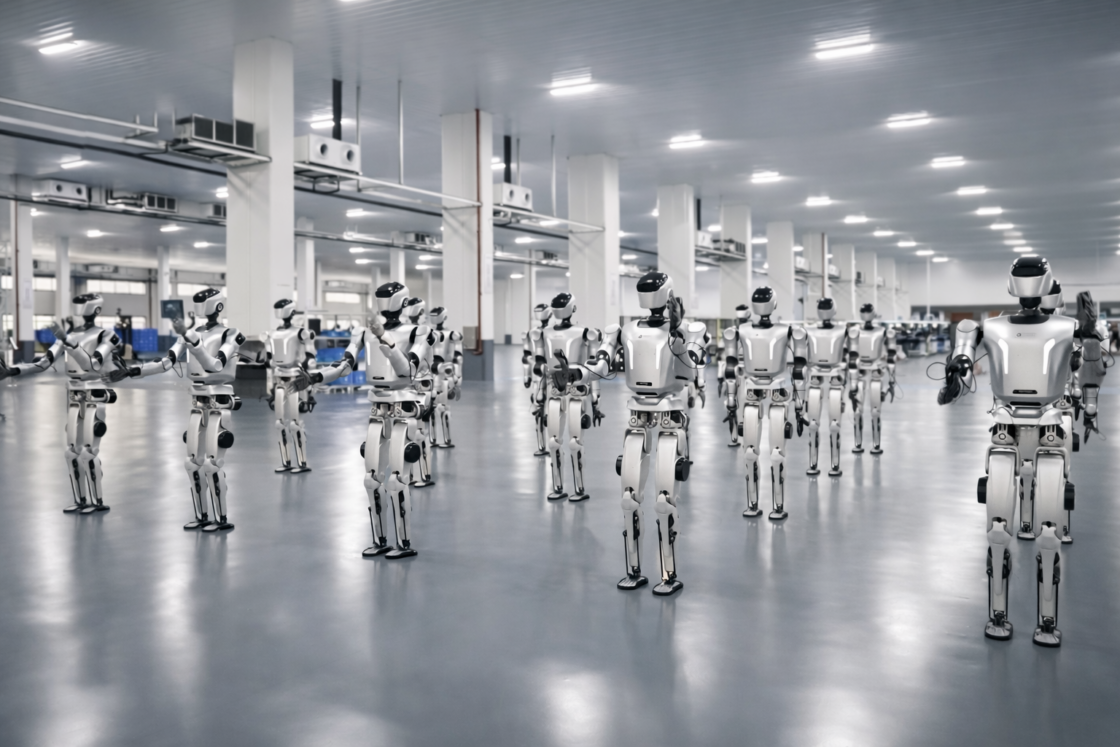
That distinction matters more now than it did twenty years ago. For decades, industrial robotics developed in a direction far removed from R.U.R. The factory robot became a fixed arm, a welding unit, a pick-and-place system, a machine-vision-guided manipulator. It had no face, no voice, no social presence, and no ambition beyond a programmed task. But the current wave of humanoid robotics and AI-driven embodied systems brings the field a little closer to the terrain Čapek staked out. Not because we have reproduced his robots, but because we are once again trying to build artificial workers rather than isolated automated tools.
The moral heart of R.U.R. also survives because the play never treated productivity as a self-justifying good. CzechLit’s summary captures Rossum’s ambition in a phrase that still lands hard: he wants to “scientifically dethrone God” and “destroy the slavery of labour.” That sounds liberating at first. Free people from toil. Remove drudgery. Manufacture a servant class that does the ugly work. But Čapek does not let that dream stay clean. The emancipation of humans from labor quickly becomes the industrial exploitation of a new laboring class, one designed precisely so that its suffering can be ignored.
That is why R.U.R. keeps feeling contemporary in discussions about AI. The play is not “about robots” in the narrow hardware sense. It is about outsourcing burden and then losing moral sight of the system doing the carrying. In today’s language, the argument expands beyond mechanical automation into data labor, annotation, supply-chain extraction, platform work, and the hidden human infrastructure behind “smart” systems. Čapek’s deepest insight was not that machines might become human. It was that humans might reorganize the world by treating labor as something detachable, purchasable, and endlessly reproducible.
Čapek saw the factory as a moral problem
The factory in R.U.R. is not just a backdrop. It is the engine of the play’s philosophy. Rossum’s island is a total production system. It designs, manufactures, distributes, and rationalizes artificial workers at planetary scale. That is why the play still feels less like fantasy than like a strange early diagnosis of industrial modernity. Britannica’s summary of the plot already frames Rossum as someone who discovers the secret of creating humanlike machines and establishes a factory to produce and distribute them worldwide. Scale is built into the story from the start.
The brilliance of Čapek’s setup lies in what it understands about industrial thinking. Factories do not only make objects. They make categories. They decide what counts as a task, what counts as a worker, what counts as waste, what counts as acceptable risk, what deserves speed, and what deserves care. In R.U.R., that logic becomes naked because the product and the worker collapse into one. The factory sells labor itself. It manufactures the laboring body as a commodity. That is why the play remains uncannily useful for reading modern automation. Even when contemporary factories buy ordinary robot arms rather than humanoids, they are still buying task abstraction—the removal of selected actions from a human worker and their transfer into a system that can be measured, standardized, and scaled.
Čapek’s timing sharpened the point. The MIT Press Reader notes that he wrote in the shadow of World War I and distrusted easy utopian faith in science and technology. His famous observation after the play’s premiere—that the product of the human brain had escaped the control of human hands—was not technophobic theatre. It was an early warning about systems large enough to outrun their makers’ intentions. That concern sits much closer to present debates about AI than to the old science-fiction cliché of the evil robot. The real danger in Čapek is not a machine with feelings. It is a production system that has lost any serious moral boundary.
That point helps explain why R.U.R. has survived better than many grand predictions about the future. The technical surface aged. The social anatomy did not. Mass manufacturing, automated decision support, digital twins, AI-driven process control, and robotic material handling all live inside a world where output targets, labor substitution, and system efficiency can crowd out judgment unless somebody pushes back. NIST’s work on smart manufacturing, measurement science, interoperability, and trust is one modern institutional answer to exactly that problem: make advanced factory systems work, but make them legible, testable, and governable as well.
Unimate brought the robot off the page
Real industrial robots did not arrive with drama, speeches, or philosophical depth. They arrived with a job nobody wanted to do. IFR’s robot history, Britannica’s overview of robot technology, IEEE Spectrum’s history of Unimate, and the Association for Advancing Automation all tell the same broad story: George Devol and Joseph Engelberger developed the first industrial robot system, and by 1961 Unimate had gone to work at a General Motors plant in Trenton, New Jersey, taking over the hazardous task of unloading hot die-cast metal parts.
That practical beginning is worth dwelling on because it separates the real history of industrial robotics from the mythic one. The first factory robot did not walk, speak, or imitate a person. It did not seek rights. It did not even look very much like the human form. It was a heavy programmable arm doing what IEEE called the “dirty, dreary, and dangerous” work. The original industrial robot entered the factory not as a synthetic citizen but as a hazard remover and productivity tool. The road from Čapek to the real factory ran through hot metal, not humanoid drama.
Yet the family resemblance to R.U.R. remains obvious. Unimate existed to transfer burdensome labor away from people. Engelberger’s own pitch, as recalled in automation histories, focused on tasks harmful to humans. That is still the cleanest and most defensible argument for factory robotics. Nobody needs literary theory to understand why a company would rather use a programmable arm than ask a worker to stand beside dangerous castings all day. A great deal of robotics history begins there: welding, painting, casting, heavy lifting, toxic environments, monotonous repetition.
From Čapek’s robot to the factory robot
| In R.U.R. | In factories today |
|---|---|
| Artificial workers are manufactured as a labor force | Industrial robots are deployed as task-specific systems inside larger production lines |
| The ambition is to abolish labor for humans altogether | The usual goal is to automate selected tasks, not the whole human economy |
| The danger is revolt by exploited artificial beings | The danger is unsafe deployment, weak governance, cyber-physical risk, and bad labor policy |
| The robot is humanoid, social, and biologically made | The dominant systems are arms, cobots, AMRs, vision systems, and early humanoids |
The comparison looks simple, but it changes the entire reading of robotics history. Modern industry adopted the labor logic of the robot long before it adopted the body of the robot. That is why Čapek still belongs in factory history even though his fictional creatures look nothing like the machines that dominated manufacturing for most of the last sixty years.
The factory that emerged was bigger, quieter, and less theatrical
Once Unimate proved the point, robotics stopped being a literary metaphor and became an industrial category. IFR’s historical timeline shows the spread of robot production lines, spot-welding systems, and national robotics industries across the 1960s and 1970s. Britannica notes that by the late 1980s Japan had become the world leader in the manufacture and use of industrial robots, while Europe and North America built their own deep robotics ecosystems. The robot no longer belonged to the stage. It belonged to car bodies, paint shops, foundries, and electronics lines.
The latest figures make the scale hard to ignore. IFR’s World Robotics 2025 release reports 542,000 industrial robots installed in 2024, more than double the number from ten years earlier, with 4,664,000 units in operational use worldwide. China alone accounted for 54 percent of global deployments in 2024 and exceeded 2 million robots in operational stock. Europe remained the second-largest region for installations, and the Americas stayed above 50,000 annual installations for the fourth year in a row. This is not a niche technology tucked into advanced pilot plants. It is standard industrial infrastructure at planetary scale.
What those numbers hide, though, is the extraordinary diversity of what now counts as a robot in production. ABB’s current portfolio spans industrial robots, collaborative robots, autonomous mobile robots, controllers, application solutions, and software. Universal Robots says it has sold more than 100,000 cobots worldwide, and pitches them not as replacements for the whole factory but as flexible systems that can be integrated into smaller environments and mixed human-machine workflows. The modern factory is no longer built around a single heroic automation machine. It is built around an ecosystem.
That ecosystem matters because it changes the texture of automation. Early industrial robots were powerful, fenced, repetitive, and rigidly programmed. A cobot is marketed almost the opposite way: lighter, easier to integrate, intended for closer human proximity, and attractive to manufacturers that are not giant car plants. Autonomous mobile robots move materials through spaces where fixed conveyor logic once ruled. Vision systems inspect surfaces and classify defects. Simulation software tests layouts before physical deployment. The factory robot is no longer just an arm. It is a stack of mechanics, software, sensing, safety rules, and data.
That is one place where Čapek’s legacy becomes sharper rather than weaker. The closer automation gets to a distributed artificial workforce, the more robot regains its full meaning. A single weld cell is just a machine. A network of robot arms, mobile systems, quality inspection, AI scheduling, and digital simulation starts to look much more like a managed population of artificial labor. Not sentient labor, not sovereign labor, but labor all the same.
AI is turning automation from repetition into perception
The new chapter begins where classical automation used to struggle: variation. Traditional industrial robots were excellent when the world around them stayed tightly controlled. Same part, same location, same cycle, same path. AI pushes beyond that by helping robots perceive, classify, adapt, predict, and sometimes generate solutions rather than merely replay motions. IFR’s February 2026 position paper says AI is turning robotics from a supporting technology into a more powerful enabler, with manufacturing and industrial automation standing among the key sectors driving investment.
NIST’s manufacturing material makes the shift concrete. Its 2025 overview of AI in U.S. manufacturing points to predictive maintenance, generative design, quality improvement, and competitiveness as core use cases. Its smart manufacturing program is even more revealing because it speaks the less glamorous but more decisive language of measurement science, standards, trust, autonomy, interoperability, and system performance. That is the real texture of AI on the factory floor. It is not a cinematic mind waking up. It is perception, simulation, process control, inspection, and decision support embedded inside production.
The phrase that increasingly captures this shift is physical AI. NVIDIA’s March 2026 newsroom announcement describes industrial robotics as becoming more AI-driven and argues that manufacturers need physically accurate simulation and digital twins to design, test, and optimize systems before deployment. It says major robotics firms including ABB, FANUC, Yaskawa, and KUKA are integrating simulation frameworks and edge AI hardware into their production environments. The point is not just smarter software. It is a tighter loop between virtual training, physical deployment, and continuous adaptation.
That development brings the history full circle in a surprising way. For decades, the dominant robot in industry looked nothing like a person. Now the field is split. On one side, conventional industrial automation keeps getting better through software, vision, and simulation. On the other, companies are again pursuing a worker-shaped machine. Boston Dynamics positions Atlas as an enterprise humanoid built for industrial workspaces, material handling, and intelligent automation, and its January 2026 announcement says product deployments are scheduled with Hyundai and Google DeepMind, with AI foundation models training Atlas for industrial tasks in the automotive sector. These are company claims, not proof of mass adoption, but they show where part of the industry wants to go next.
The result is a profound change in what factory intelligence looks like. The earlier generation automated motion. The current generation starts to automate judgment under bounded conditions: spotting anomalies, routing parts, predicting failure, adapting grasp strategies, validating layouts in simulation, or operating in semi-structured spaces. That does not make the factory autonomous in any grand philosophical sense. It makes it less brittle. And that is exactly why AI matters so much more to manufacturing than the headlines about chatbots suggest.
Labour did not disappear, but it did change shape
Čapek understood something many automation narratives still resist: the robot story is always a labor story. The modern factory proves him right. Industrial robots have reduced exposure to dangerous work and expanded output, but they have not dissolved the politics of work. NBER’s widely cited research by Daron Acemoglu and Pascual Restrepo found that in U.S. local labor markets, one additional industrial robot was associated on average with an employment drop of 5.6 workers. OECD research, from a different angle, argues that industrial robotics in developed economies appears to have slowed offshoring rates, even if it has not yet produced a broad wave of jobs returning home.
Those two findings belong together. Robotics can strengthen domestic production capacity while still redistributing pain inside labor markets. A company may keep production closer to home because automation changes cost arithmetic, yet the gains may not flow evenly across workers, occupations, or regions. That is why simplistic slogans fail on both sides. “Robots steal jobs” is too blunt. “Robots create better jobs for everyone” is too neat. The harder truth is that robots reprice labor, reorganize tasks, and shift bargaining power. The outcome depends on sector, region, skill mix, investment pattern, and public policy.
The workforce question now extends beyond displacement into composition. Manufacturing.gov’s AI overview of the ARM Institute stresses workforce preparation for people who will work alongside robotics and AI. NIST’s smart manufacturing work focuses on trust, standards, and the ability of manufacturers to select and apply new technology with confidence. Those are not side issues. They are admissions that the modern factory does not run on hardware alone. It runs on integrators, technicians, controls engineers, data specialists, safety experts, maintenance teams, operators, and supervisors who can interpret system behavior.
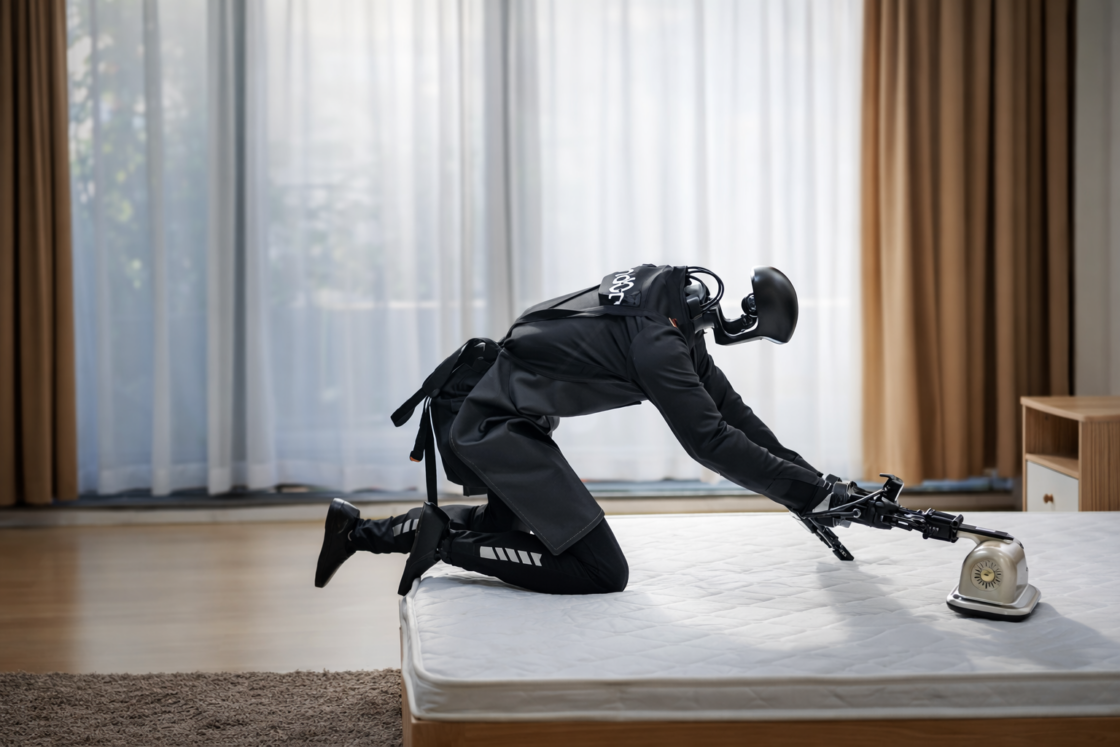
That shift also exposes a limit in the old fantasy of “lights-out” manufacturing. Full human absence remains rare outside tightly controlled processes, and even the most automated plants rely on design, oversight, changeover, exception handling, maintenance, training, compliance, and supply-chain coordination. Cobots were never sold as a route to human disappearance; they were sold as a way to fit automation into human work environments more cheaply and flexibly. Humanoids are being marketed more aggressively, but the immediate industrial pattern still looks hybrid. Humans stay. Their tasks change, and sometimes their bargaining position weakens, but the factory does not become a pure machine republic.
Čapek would probably recognize the danger anyway. In R.U.R., the key moral failure is not that humans invent artificial workers. It is that they stop asking what kind of social order they are building around them. That remains the right question. The critical issue is no longer whether factories will use robots. They already do. The issue is who benefits from higher productivity, who absorbs transition costs, who gets retrained, who is locked out, and who keeps authority over systems that are becoming harder to inspect with the naked eye.
The Czech legacy inside the age of physical AI
One of the strangest features of robotics history is how often the Czech origin of the robot vanishes from global memory exactly when the technology becomes commercially powerful. The industry speaks in the language of payloads, cycle time, simulation, takt, accuracy, autonomy, and ROI. All of that is real. None of it explains why the word robot still carries more emotional and philosophical charge than neighboring engineering terms. That charge comes from Prague, Hradec Králové, the Čapek brothers, and the social imagination of Central Europe between empire, modernity, and industrial acceleration.
Czech institutions have kept that thread alive with unusual seriousness. Czech Centres’ Robot 100 programming brought together a theatre scholar, a chemical robotics researcher, and AI scientist Tomáš Mikolov in a single public conversation around Čapek’s legacy. That pairing is not decorative. It suggests that the robot remains one of the rare words that can still connect literature, engineering, artificial life, philosophy, and industrial practice without becoming empty branding. A culture that invented the word has earned the right to keep interrogating it.
That broader conversation matters because 2026 looks more like a hinge year than a settled one. IFR now talks openly about AI-powered robots moving from labs into commercial reality. NVIDIA is pushing the factory side of physical AI through simulation and digital twins. Boston Dynamics is pushing the humanoid side with Atlas. ABB and other industrial leaders are building portfolios that mix conventional robot arms, mobile systems, software, and AI layers. The field is not converging on one robot future. It is splitting into multiple ones: ever more capable conventional automation, more flexible collaborative systems, and a renewed gamble on general-purpose worker-shaped platforms.
That is why Čapek feels freshly relevant. He did not offer a blueprint. He offered a vocabulary for thinking about artificial labor before the hardware existed. The closer industry gets to generalized robotic workers, the more useful that vocabulary becomes again. Not because revolt is around the corner, and not because every factory will soon be staffed by humanoids, but because the old questions return with force: What do we want automation to remove from human life? What kind of work should remain stubbornly human? Which choices belong to managers, engineers, regulators, and workers rather than to software vendors? Where should efficiency stop?
A century later, the warning still holds
The easiest way to misread Čapek is to treat him as a prophet of killer machines. He was something sharper. He was a critic of industrial arrogance. He saw that once people learn to manufacture labor at scale, they are tempted to treat the whole social world as a production problem. That temptation is everywhere in the present factory conversation. It sits inside the most sensible uses of robotics, like taking workers out of dangerous tasks. It also sits inside the less examined habit of measuring progress almost entirely through output, uptime, speed, and cost.
Real factories did not follow Čapek’s script literally. The dominant industrial robot was a programmable arm, not a synthetic person. The modern robot boom was built in automotive welding, electronics assembly, packaging, logistics, and machine tending, not on an island selling biological servants. Yet the deeper arc remains. We built artificial systems to absorb labor. We gave them ever more capability. We reorganized the workplace around them. Now AI is making those systems more perceptive, more adaptive, and in some cases more worker-like. The old Czech word has caught up with the industry that borrowed it.
That is the real achievement of Karel Čapek, and of Josef Čapek behind the word itself. They did not merely enrich the dictionary. They gave modern industry a name for its most ambitious and most dangerous dream. Every time a manufacturer adds a robot cell, deploys a cobot, tests an AI inspection model, trains a digital twin, or announces a humanoid for warehouse or automotive work, the debate returns to the ground opened by R.U.R. more than a century ago. The machines ruling today’s factories were not copied from Čapek’s stage. But the ambition behind them was already there, waiting for steel, sensors, software, and capital to catch up.
FAQ
Who actually invented the word “robot”?
Karel Čapek introduced the word to the world in R.U.R., but he later credited his brother Josef Čapek with suggesting it. The brothers both belong in the story, though their roles were different.
Did Čapek’s robots look like today’s factory robots?
No. In R.U.R., the robots were artificial workers made to resemble people. They were not the metal industrial arms now common in manufacturing.
When was R.U.R. first performed?
The play was first staged on 2 January 1921 in Hradec Králové, then shown to Prague audiences at the National Theatre later that month.
What was the first real industrial robot?
The first successful industrial robot application was Unimate, installed in 1961 at a General Motors plant in Trenton, New Jersey, where it handled hot die-cast parts.
How common are industrial robots in factories now?
IFR reports that 542,076 industrial robots were installed worldwide in 2024 and that the global operational stock reached 4,663,698 units.
Are factory robots the same thing as AI?
No. Many industrial robots still perform fixed programmed tasks without using AI in the popular sense. AI enters the factory through things like machine vision, predictive maintenance, data analysis, process monitoring, and adaptive systems.
Which industries use the most robots today?
In 2024, the electrical and electronics industry led global robot installations, followed closely by automotive, with metal and machinery in third place.
Is AI already widespread across manufacturing?
Not as widely as the hype suggests. OECD says AI adoption in EU manufacturing remains modest and fragmented, with 10.6 percent of enterprises in the sector using AI in 2024.
This article is an original analysis supported by the sources cited below
Film adaptation by Karel Čapek
Official Čapek site page used for the 1921 Hradec Králové and Prague premiere dates and the note that Josef Čapek created the word.
Karel Čapek
Official biography and work overview used for the framing of R.U.R. as the work through which the world first encountered the word “robot.”
R.U.R.
Britannica overview used for publication and performance dates and for the broad outline of Rossum’s factory and the play’s cautionary argument.
ROBOT Definition & Meaning
Dictionary history used for the English-language entry of the word and the etymology from Czech robota.
100 Year Ago “Robot” Was Born
Czech diplomatic source used for the National Theatre centenary framing and the January 25, 1921 Prague premiere context.
The Czech Play That Gave Us the Word ‘Robot’
Used for the historical interpretation of R.U.R. as a critique of mechanization and for the explanation that Čapek’s robots were not metallic machines.
R.U.R. by Karel Čapek
Public-domain edition used for the summary of the play as a factory making artificial workers from synthetic organic matter.
R. U. R.
CzechLit page used for the play’s plot, Rossum’s industrial ambition, and the characterization of the robots as artificial beings produced in a factory.
Global Science Café 6: Robot 100
Czech Centres page used for the continuing Czech debate linking R.U.R. to AI, chemical robotics, and cultural history.
Hundred Years of The Word “Robot”
Used for the Czech-origin framing and the idea of “robot” as the most famous Czech word.
Unimate – The First Industrial Robot
Automation industry history used for the development, industrial launch, and significance of Unimate.
In 1961, the First Robot Arm Punched In
IEEE history feature used for the Trenton GM deployment and the description of Unimate’s hazardous factory task.
How Robots Left the Lab and Started Helping Humans
Smithsonian history piece used for additional context on Unimate as an early practical factory robot.
Robot | Definition, History, Uses, Types, & Facts
Britannica technology entry used for the broader industrial robotics lineage from Unimate onward.
World Robotics 2025 report – INDUSTRIAL ROBOTS – released by IFR
Primary current industry source used for the latest global robot installation and operational stock figures.
Robot History
IFR historical timeline used for the early industrial milestones in robotics and the spread of robot production lines.
AI In Robotics – New Position Paper
Primary 2026 source used for the current industry view of AI as a central enabler in robotics and manufacturing.
Artificial Intelligence
Manufacturing.gov page used for workforce and institutional context around robotics and AI in manufacturing.
The Rise of Artificial Intelligence in U.S. Manufacturing
NIST source used for concrete AI use cases such as predictive maintenance and quality improvement.
Smart Manufacturing
NIST program page used for standards, trust, interoperability, autonomy, and system-performance context in advanced manufacturing.
Collaborative Robots & Cobots
Used for current cobot adoption and the role of collaborative robots in mixed human-machine production settings.
ABB Robotics
Used for the current industrial portfolio view of robotics as a mix of industrial arms, cobots, AMRs, software, and services.
Atlas Humanoid Robot
Boston Dynamics product page used for the company’s present positioning of Atlas as an industrial humanoid system.
Boston Dynamics Unveils New Atlas Robot to Revolutionize Industry
Company announcement used for the 2026 deployment plans and AI-training ambitions around Atlas.
NVIDIA and Global Robotics Leaders Take Physical AI to the Real World
Current industry source used for the physical-AI and digital-twin layer now entering factory robotics.
Robots and Jobs: Evidence from US Labor Markets
NBER research source used for the labor-market evidence on industrial robot adoption.
Industrial robotics and the global organisation of production
OECD research used for the point that robotics can slow offshoring even without broadly bringing jobs back home.