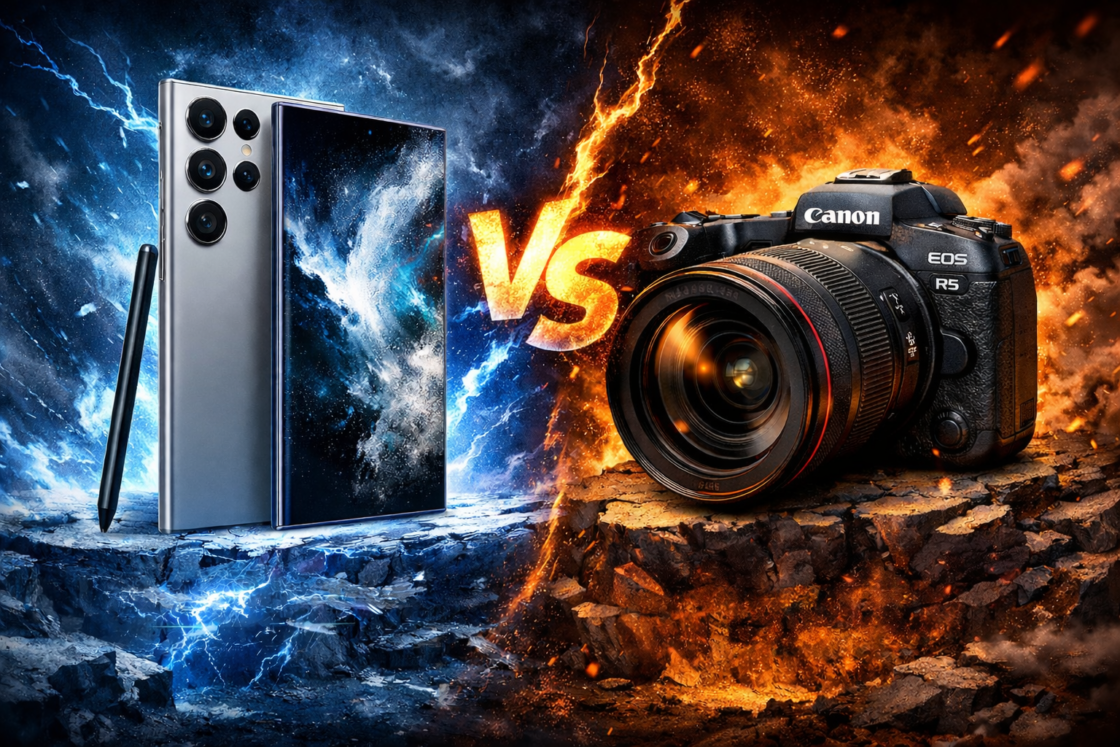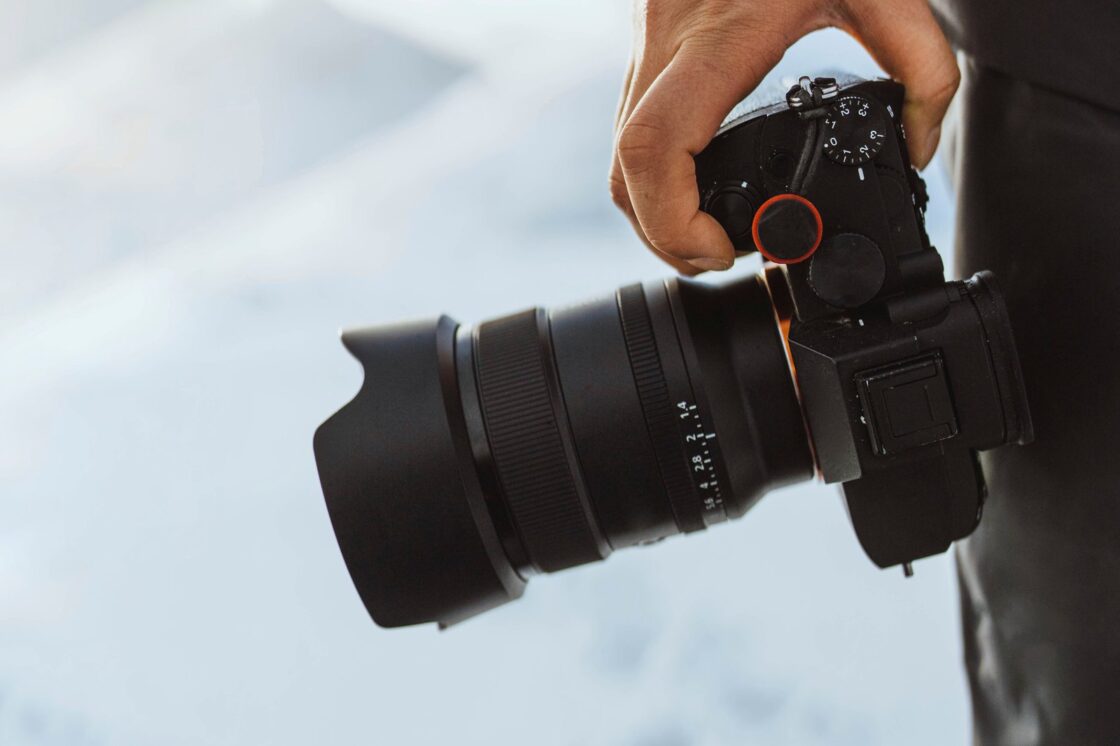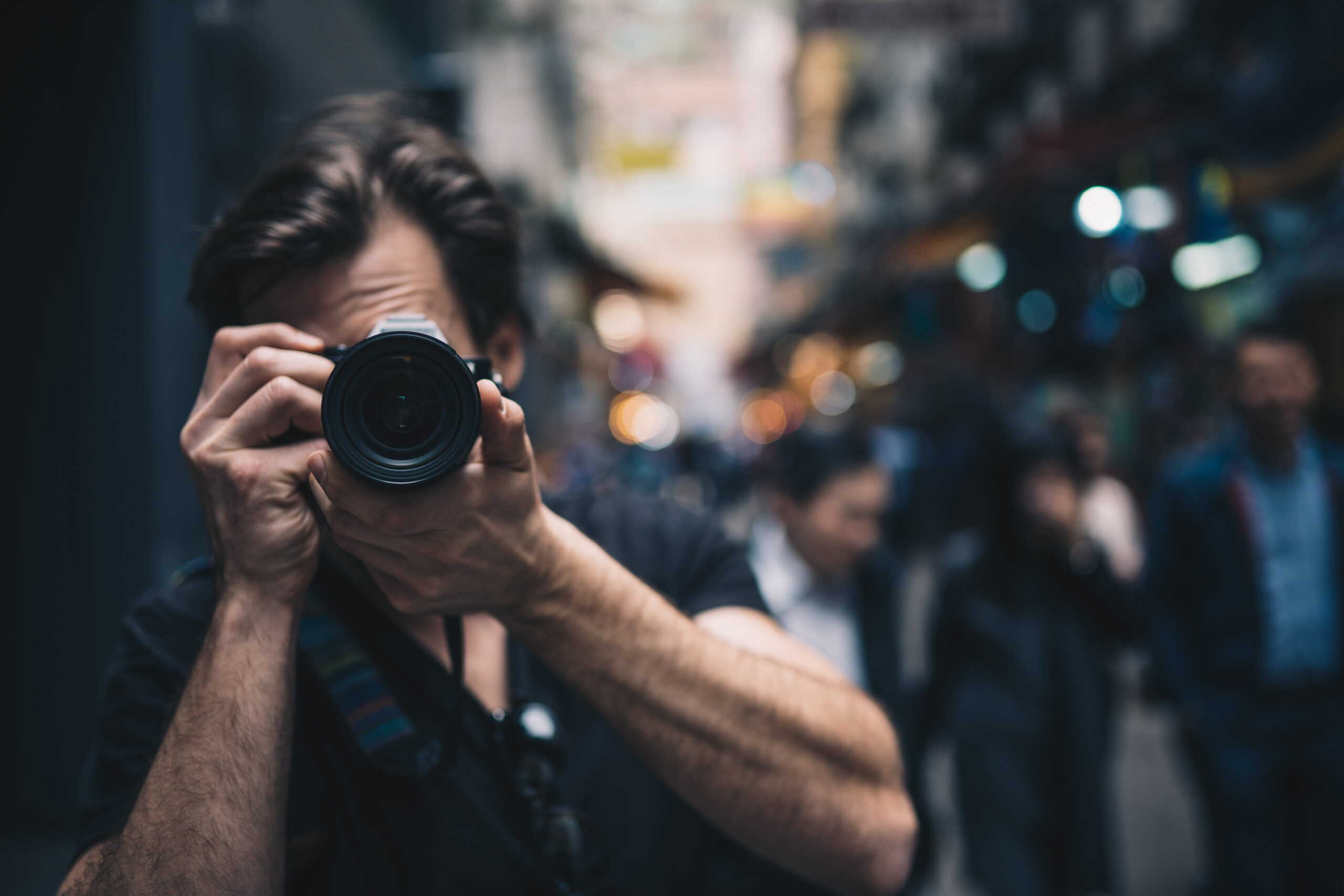
The phrase sounds blunt, almost rude. That is part of its value. It cuts through a habit that quietly weakens a huge amount of marketing, sales, and brand building. People wait. They wait for the new camera, the better office, the clean script, the full rebrand, the bigger budget, the professional crew, the confidence boost. They wait for content that looks “worthy” of publishing. While they wait, nothing goes live.
Table of Contents
That silence carries a cost. A business with no recent photos looks inactive. A product with no video feels abstract. A service with no visible proof asks for trust before it has earned any. Online, absence is not neutral. Absence reads as uncertainty. Competitors do not need to outclass you to win attention. They only need to show up.
The evidence behind that instinct is strong. Video is no longer a side tactic used by a small creative minority. Wyzowl’s 2026 data says 91% of businesses use video as a marketing tool, and 93% of video marketers say video is an important part of their overall strategy. HubSpot’s 2026 marketing statistics point in the same direction: short-form video is the most used content format among marketers and the one that delivers the highest ROI, while video-based formats occupy the top ROI positions overall.
That matters because the web is not a static brochure anymore. DataReportal’s 2025 global report says the world now has 5.24 billion active social media user identities, adult internet users spend 6 hours and 38 minutes online each day, and the typical internet user spends 2 hours and 21 minutes a day on social media. Another DataReportal section shows 38.3% of active social users use social platforms for work-related activities. Buyers, clients, candidates, and partners are already looking. The question is not whether your audience is online. The question is whether they can see enough of you to choose you.
Silence is expensive
A lot of people still think bad content is the real risk. Grainy footage. Average lighting. A stiff talking head. A product photo shot on a phone instead of in a studio. There are cases where poor execution does damage a brand. Sloppy claims, misleading visuals, and careless presentation can absolutely backfire. Still, most businesses are not losing because they published one slightly awkward video. They are losing because they published nothing for months.
That loss shows up in places people do not always count. Search results stay thin. Social feeds go cold. Product pages look incomplete. Sales teams have less proof to send. New visitors do not get a feel for the business. Existing customers do not get reminders that the business is active and competent. No single missing photo ruins a company. A pattern of visual absence slowly erodes memory and trust.
The market has already moved past the old debate about whether visual content is optional. Wyzowl’s data also shows 67% of marketers who are not yet using video say they plan to start, which says even the holdouts understand the direction of travel. HubSpot’s data makes the commercial case even sharper: marketers rank short-form video, long-form video, and live video as the top ROI-driving content formats. This is no longer about trend-chasing. It is about the basic economics of attention.
There is another reason silence costs more than people expect. Content does more than attract strangers. It reduces friction for people who are already interested. Someone thinking about booking your service may want to see the room, the staff, the process, the product in motion, the before-and-after, the tone of voice, the way you explain things. That is not vanity material. That is decision material. Google’s recent shopping research, based on work with shoppers across multiple countries, found that Search and YouTube helped participants sift through options, find more relevant information, and feel more confident about purchases. A separate Think with Google piece, citing BCG research on 10,000 U.S. shoppers, says video is deeply influential throughout the purchase journey, far beyond awareness alone.
Perfectionism sounds disciplined, but online it often behaves like fear dressed in standards. It protects the maker from embarrassment while doing nothing for the audience. Your audience is not asking for your creative ideal. They are usually asking for enough proof to move one step closer. A clear photo of the room. A short clip of the product being used. A founder answering one practical question on camera. A quick reel showing what the customer gets. That is often all it takes to turn vague interest into concrete confidence.
The internet rewards proof, not polish
Trust does not begin with design language or brand adjectives. Trust begins when people can compare what you say with what they can see. A strong slogan may get attention, but visible proof carries the heavier load. That is one reason user-generated content keeps outperforming polished brand content in so many contexts.
Bazaarvoice says 53% of shoppers feel more confident in purchase decisions because of user-generated content than because of professional photography, and 40% say it makes them more likely to buy from an ad. The same company notes that shoppers consistently respond to visuals that feel closer to lived experience than to art direction. Nielsen’s Trust in Advertising materials add the broader backdrop: recommendations from people they know are the most trusted channel at 89%. Put those two together and the pattern is easy to read. People trust signals that feel proximate, human, and unforced.
Academic research lands in the same place from a different angle. A widely cited ScienceDirect study on Instagram and YouTube bloggers found that credibility and parasocial interaction both affect purchase intention. Another study on influencer marketing and YouTube video advertising examined the role of parasocial relationships and concluded that those relationships help explain marketing effectiveness. You do not need to like the influencer economy to notice the lesson inside it: people respond when they feel they are dealing with a person rather than a polished façade.
This is where the topic phrase becomes more than a clever line. “The worst photo is no photo” is not praise for mediocrity. It is an argument about proof. A plain, honest image of your bakery, clinic, workshop, law office, gym, salon, warehouse, or product shelf often does more work than a blank square waiting for someday’s perfect shoot. It tells the viewer that the place exists, the people exist, the offer exists, and the business is active enough to show its face.
What no content costs compared with imperfect content
| Situation | No visual content | Imperfect but honest visual content |
|---|---|---|
| First impression | Feels empty, inactive, or vague | Feels real and current |
| Buyer confidence | Has to rely on claims alone | Gets proof, context, and texture |
| Search visibility | Fewer assets to index and surface | More entry points through images and video |
| Internal learning | No feedback loop | Clear signals on what people watch and respond to |
| Sales conversations | Extra explanation required | Content can answer objections before the call |
The point is not that every imperfect asset will perform well. The point is that a visible business can improve, while an invisible business cannot learn from anything. Evidence beats aspiration when the audience is deciding whom to trust.
The strongest brands understand this better than many smaller businesses do. They use polished campaigns, yes, but they also use creator content, platform-native edits, product demos, behind-the-scenes clips, customer reviews, and executive explainers. They know trust is cumulative. A studio film can help at the top of the funnel. A rough clip answering a practical question often closes the gap lower down. That mix is not inconsistency. It is realism.
Trust starts with something people can actually see
A business can talk about quality all day. A customer still wants to look around. That is true in local search, ecommerce, B2B, hospitality, healthcare, education, property, and personal branding. People want evidence that reduces uncertainty. Photos and video do that faster than text because they collapse distance. They show scale, condition, atmosphere, process, and care in a few seconds.
Google’s own Business Profile documentation is direct on this point. It tells businesses to add photos and videos of their storefront, products, and services because that helps complete the profile and make it more attractive to customers. It also notes that an exterior photo helps customers recognize the business when they visit. The same help page says photos should be in focus, well lit, and represent reality, while videos should be 720p or higher and up to 30 seconds long. Google is not asking every local business to become a film studio. It is asking them to be visible and accurate.
For product businesses, the same rule appears in a slightly different form. Google Merchant Center says the main product image appears in ads and free listings, and recommends images near or above 1500×1500 pixels for stronger performance in listing formats. That is not decoration. It is a distribution rule. The image is part of the product’s chance to earn a click. No image means no visual hook. Weak imagery means a weaker chance to compete.
The emotional side matters too. Buyers do not just inspect facts; they read cues. A service business with recent team photos, short walkthrough clips, and clear visuals of the work environment signals confidence. A founder who appears on video explaining a process signals accountability. A product shown in a human hand signals scale better than a paragraph ever will. A real customer video signals use, not just promise. Trust rises when the customer no longer has to imagine everything from scratch.
That is one reason creator and community-led commerce keeps growing. The YouTube shopping ecosystem report says creators become trusted sources because they offer expertise and solutions that match viewers’ needs. It also says 61% of 14- to 24-year-olds agree YouTube has helped them discover brands or products they did not know about. Another Think with Google piece says shoppers watched more than 35 billion hours of shopping-related video content on YouTube in the last year. People are not only tolerating visual proof. They are actively seeking it out as part of their buying process.
That does not mean every business needs a creator strategy or a daily posting schedule. It means every business should respect the same basic law: if people need to trust you, they need something to look at. A clean but ordinary set of photos is better than a fantasy standard that never gets published. A usable explainer video is better than a blank page with three bullets and a hope.
Search cannot rank what you never publish
People often treat content and SEO as separate conversations. That split is a mistake. Search can only discover, index, rank, and display assets that exist in a usable form. If you never publish the photo gallery, there is nothing to surface in image results. If you never place the video on a crawlable page with the right signals, there is less for search engines to understand and show. No asset, no opportunity.
Google Search Central says images can be optimized to appear in Google’s search results, and it is explicit about the mechanics. Google can find images in the src attribute of standard HTML image elements, but it does not index CSS images. It also recommends image sitemaps and clear implementation so search can discover the files. In plain language, a photo is not just visual decoration on a page. It is a searchable asset with technical requirements.
The same is true for video. Google’s video SEO documentation says videos can appear in the main search results, Video mode, Google Images, and Discover. It also tells site owners to help Google find videos, make them indexable, use stable URLs, and monitor performance in Search Console. The structured data documentation goes further, explaining that VideoObject markup can influence what Google shows in video results, including the description, thumbnail, upload date, and duration, and can make it easier for Google to find the video.
This is where the phrase “the worst video is no video” becomes a search statement as much as a creative one. A simple, useful product demo on a properly built page can earn discovery from search, image search, video search, and related surfaces. A blank page cannot. A rough founder explainer can capture long-tail demand around specific questions. A missing explainer leaves that demand for someone else.
There is a second-order effect as well. Visual assets make pages more complete. A page with clear product imagery, contextual photos, or a well-placed demo video often holds attention better because the visitor does not need to do all the interpretive work alone. Wyzowl’s 2026 data says 82% of video marketers report that video has helped keep visitors on their website longer, 85% say it helped generate leads, and 83% say it directly increased sales. Those are marketing outcomes, but they also hint at why richer pages tend to work better across the board.
Search visibility is not a prize you win after perfection. It is something you build through consistent, indexable, relevant publication. Every missing asset is a missing door. Every useful image and video is another way to be found.
Video closes the distance between curiosity and confidence
Photos prove that something exists. Video shows what it feels like. That difference matters because many purchase decisions are blocked by uncertainty, not by lack of awareness. People understand the category. They just do not know if your version is right for them.
Google’s shopping research captures that well. The company’s cross-market work on Search and YouTube found that shoppers use those platforms to move from discovery to decision and feel more confident as they compare and evaluate. A related Think with Google piece says video helps because it provides the information people need to research and validate purchases, while trusted creators accelerate decision-making. BCG’s analysis for Google adds the sharper line: video is influential across the journey, not just at the stage where a brand is trying to get noticed.
That is easy to see in ordinary buying behavior. A skincare buyer wants to see texture and application. A furniture buyer wants to see scale in a room. A software buyer wants to see the workflow, not just feature copy. A patient considering a clinic wants to see professionalism and environment. A homeowner hiring a contractor wants to see prior work in motion, not only before-and-after stills. In each case, video shortens the mental distance between claim and reality.
It also explains why short-form video keeps punching above its production weight. HubSpot says short-form video is the most popular content format among marketers and the one delivering the highest ROI. TikTok’s own creative guidance tells advertisers not to over-polish. It recommends 9:16 vertical, 720p or better, featuring people such as creators, employees, or customers, and using a DIY or not overly polished style so the content feels native to the platform. That guidance is revealing. Platforms built around constant attention do not automatically reward the glossiest asset. They reward content that feels legible, immediate, and human.
There is a structural reason for that. Video can answer several questions at once. Does this look real? Does it look easy? Does it fit my use case? Does this person know what they are talking about? Could I imagine myself buying, visiting, booking, or trying this? A written paragraph may answer one of those. A short clip can answer four or five in a few seconds.
That is why no-video pages feel weaker than they used to. Not because every audience suddenly demands cinema, but because so many buyers now expect a closer look before they commit. They want a demonstration, a walkthrough, a founder explanation, a customer perspective, a quick comparison, or at least one moving proof point. When that is absent, curiosity often stalls before confidence has a chance to form.
Imperfect visuals still teach you something
One of the strongest arguments for publishing sooner has nothing to do with reach. It has to do with learning. When you publish real images and videos, even imperfect ones, the market starts talking back. You see what people save, share, click, ignore, finish, rewatch, and ask about. Without that loop, you are stuck guessing.
This is where the perfectionist model breaks down. A team can spend months debating the ideal brand film or the perfect visual system without ever collecting live evidence about what customers actually care about. Then the polished launch arrives and lands on assumptions that were never tested. A simpler workflow is often smarter: publish clear assets early, watch the response, and improve with data rather than anxiety.
Wyzowl’s 2026 research hints at why this route is more accessible than many people assume. 59% of respondents create video in-house, and 69% of video marketers have created social media videos, making that the most common use case in the report. This is not a landscape where only high-budget production houses can participate. The market has already normalized internal teams, phones, quick edits, and iterative publishing.
Platform guidance points the same way. TikTok says advertisers do not need to be video experts to produce content that captures attention, and explicitly recommends a not-overly-polished style. Meta’s March 2026 announcement on Facebook creator protections says it wants a place where authentic voices can stand out, which is another way of saying original, human content is something the platform wants to reward, not bury.
There is a psychological benefit here too. Publishing ordinary but useful content lowers the emotional temperature around content creation. Once a business sees that a plain founder Q&A, a product close-up, or a quick behind-the-scenes clip can bring comments, saves, leads, or sales conversations, the mythology around “real production” starts to shrink. Standards stay important, but fear loses its monopoly. You stop treating every post like a campaign and start treating content like communication.
That shift is often the turning point. A silent business imagines content as a high-stakes performance. A visible business treats content as ongoing evidence. The second posture wins more often because it produces volume, signal, and habit. It learns in public.
The standard is clarity, not cinematic perfection
None of this is a defense of bad work. The point is not to flood the internet with careless images and rambling video. The point is to use the right standard. For most businesses, the right standard is clarity.
Clarity means the customer can see what matters. The photo is in focus. The lighting is good enough to show real color and texture. The frame makes sense. The subject is obvious. The video has a point. The speaker is audible. The first few seconds tell viewers what they are looking at. The clip answers one question or demonstrates one thing well. Clarity respects the audience without demanding perfection from the creator.
Official platform guidance is surprisingly aligned on this. Google Business Profile says photos should be well lit, in focus, and represent reality. Videos should be short and at least 720p. TikTok recommends 720p or better, a vertical format, and people in frame, while also saying a DIY, not-overly-polished style fits the platform. Google Merchant Center recommends larger main product images and makes clear that those images are the ones shown in ads and free listings. Across all of these systems, the demand is not “make it cinematic.” The demand is “make it usable, truthful, and easy to process.”
For a local business, that may mean ten honest photos before one elaborate shoot. Exterior. Interior. Team. Workspace. Product shelves. Service in action. A quick walkthrough clip. A short founder introduction. A customer viewpoint. A before-and-after. For ecommerce, it may mean clean stills, scale shots, texture shots, and short demos that show setup, use, movement, or results. For B2B, it may mean product UI clips, implementation explainers, founder commentary, and customer proof that makes the offer feel less abstract.
Professional production still has a place. A flagship brand film, a refined product shoot, or a carefully produced case study can lift perception and sharpen positioning. The mistake is treating those assets as the price of entry. They are not. They are accelerators layered on top of a living content system. Without the living system, even the best campaign has nowhere to land.
A better rule is simple: publish the clearest honest version you can make now, then improve the next version with what you learn. That standard protects quality and momentum at the same time.
AI lowers the barrier but it does not replace judgment
The newest twist in this conversation is AI. For some businesses, AI-assisted tools will remove the excuse that content creation is too slow, too expensive, or too technically demanding. Google’s Product Studio is a good example. Its documentation says merchants can use it to generate scenes, increase image resolution, remove backgrounds, and generate product videos. Google also says the tool can save time and resources, and that more images and video may improve listing performance and ROI. Another help page explains that Product Studio can turn product images into videos in a few clicks and tell a richer product story.
That is a real shift. A merchant who could not afford frequent seasonal shoots now has more ways to refresh assets. A lean team can produce more variations. A catalog that once looked thin can become more complete. The barrier to “good enough to publish” is dropping fast.
Still, AI does not solve the deeper problem if the deeper problem is avoidance. It can remove backgrounds. It cannot decide what the customer actually needs to see. It can animate stills. It cannot supply genuine customer experience. It can generate an attractive visual. It cannot create trust when the image feels disconnected from reality. Google’s own Product Studio documentation includes a reminder that AI outputs may sometimes be inaccurate, which is a useful warning. Speed helps. Judgment still governs.
That distinction matters because the topic phrase is grounded in human usefulness, not in visual abundance for its own sake. The worst photo is no photo because the audience learns nothing from absence. The worst video is no video because the audience cannot inspect, compare, or imagine. AI can help fill that gap faster, but it should not become a mask that replaces honest proof with synthetic polish.
Used well, AI becomes a support layer. It helps smaller businesses clear production hurdles. It speeds up iteration. It creates more tests. It stretches limited resources. Used badly, it becomes another form of procrastination: endless generation, endless revision, no publication. The same old problem, just with newer software.
The brands that win publish before they feel ready
There is a hard truth inside all of this. A lot of businesses are not actually missing content capability. They are missing publishing courage. They know enough to make something useful. They just do not want to be seen before it looks ideal.
That instinct is understandable. The internet can be judgmental. Brand standards exist for a reason. Quality matters. Yet the evidence points in one direction: visibility with honesty beats invisibility with potential. Video is already central to modern marketing. Shoppers use Search and YouTube to build confidence. Social platforms reward native, human content. Search systems can surface images and videos across multiple surfaces when those assets are published in usable ways. Buyers trust proof they can inspect.
The practical takeaway is not “post anything.” It is sharper than that. Publish the real thing. Publish the service in action. Publish the founder answering one real customer question. Publish the product from angles people care about. Publish the place as it actually looks. Publish the case study, the walkthrough, the comparison, the customer proof, the installation clip, the behind-the-scenes sequence, the short explanation. Make it clearer next month than it was this month. Then do it again.
You do not build trust by withholding evidence until it wins an internal design award. You build trust by letting people see enough of the truth to make a decision. That is the reason the phrase lasts. It is memorable because it is strict, but it is useful because it is accurate. A mediocre asset can be improved. A missing asset cannot help you at all.
So yes, the worst photo is no photo. The worst video is no video. Not because every published asset is automatically good, but because the market cannot respond to what it never gets a chance to see.
Author:
Jan Bielik
CEO & Founder of Webiano Digital & Marketing Agency
FAQ
Low-budget content does not automatically damage a brand. Misleading, careless, or confusing content does. Platform guidance from Google and TikTok points toward a simpler standard: be clear, accurate, in focus, well lit, and native to the platform rather than obsessively polished.
Photos usually come first because they are easier to produce and useful across profiles, websites, product listings, and sales materials. Video becomes powerful once a buyer needs demonstration, explanation, or reassurance. The strongest setup is usually both, starting with the easiest proof you can publish now.
Yes. Google Search Central says images and videos can appear across search surfaces, including search results, Google Images, Video mode, and Discover. It also gives specific technical guidance for image discovery, video indexing, and video structured data, which shows that visual assets are part of search visibility, not separate from it.
Because they feel closer to lived experience. Bazaarvoice reports that shoppers often feel more confident from user-generated content than from professional photography, and academic studies on influencer credibility show that trust and perceived closeness affect purchase intention.
A useful business video has a clear point, good enough sound, a stable image, and a quick path to the question it answers. TikTok’s official guidance asks for basics such as 9:16 orientation, 720p or better, a strong opening, and a style that feels human rather than over-produced. Google Business Profile asks for reality-based, 720p-or-higher videos.
It goes much deeper than awareness. Google’s shopping research and BCG-backed analysis say video influences the purchase journey throughout, helping shoppers research, compare, validate, and act with more confidence.
Usually no. Professional production is useful, but it works best on top of an active content system, not in place of one. Wyzowl’s research shows most businesses create video in-house, which reflects a market where useful, timely content beats long periods of silence.
AI can reduce production friction, especially for catalog imagery and simple video generation. Google’s Product Studio is designed to help merchants create and enhance product visuals faster, but it does not replace judgment about what should be shown, what is accurate, and what feels real to customers.
This article is an original analysis supported by the sources cited below
Video Marketing Statistics 2026 (12 Years of Data)
Wyzowl’s annual benchmark on video adoption, usage, ROI, and production habits across businesses.
2026 Marketing Statistics, Trends, & Data
HubSpot’s current marketing statistics page, used here for the relative ROI and adoption of short-form video and other formats.
Digital 2025: Global Overview Report
Global data on internet use, social media adoption, and time spent online.
Digital 2025: the state of social media in 2025
A focused DataReportal section used for social media motivations, work usage, and platform behavior.
How video impacts consumer purchase decisions
Think with Google analysis citing BCG research on video’s influence across the purchase journey.
How Search and YouTube make shopping easier
Google research on how Search and YouTube help shoppers compare options and build confidence.
Image SEO best practices
Google Search Central documentation on image discovery, indexing, and implementation.
Video SEO best practices
Google Search Central guidance on making video content discoverable and indexable in Search.
Video (VideoObject, Clip, BroadcastEvent) structured data
Google’s technical documentation on video structured data and video features in Search.
Manage your Business Profile photos & videos
Google Business Profile help documentation covering image quality, video requirements, and local visibility basics.
Image link [image_link]
Google Merchant Center help page explaining the role and technical requirements of main product images.
About Product Studio for Merchant Center
Google documentation on AI-assisted image and video creation for merchants.
About generating videos in Product Studio for Merchant Center
Google help page describing AI-generated product videos and richer product storytelling.
Creative best practices for performance ads
TikTok’s official guidance on platform-native, human-looking, performance-oriented video creative.
Report analyzes the power of the YouTube shopping ecosystem
YouTube’s research on creators, communities, content formats, and product discovery in shopping behavior.
New research shows video’s vital role in the shopping journey. Here’s how to keep up
Think with Google piece on video’s role in product research, confidence, and decision-making at scale.
From attention to action: Creator-led growth on YouTube
Think with Google analysis on creator trust, evergreen value, and creator marketing performance.
Why user-generated content marketing is so effective
Bazaarvoice’s analysis of shopper confidence, authenticity, and conversion effects tied to user-generated content.
Beyond martech: building trust with consumers and engaging where sentiment is high
Nielsen overview used for study context around trust in advertising and consumer sentiment.
Trust In Advertising Study
Nielsen one-sheet used for the finding that recommendations from known people are the most trusted channel.
Instagram and YouTube bloggers promote it, why should I buy? How credibility and parasocial interaction influence purchase intentions
Peer-reviewed research on credibility, parasocial interaction, and purchase intention in influencer content.
Impacts of influencer attributes on purchase intentions in social media influencer marketing: Mediating roles of characterizations
Peer-reviewed research examining YouTube-based influencer marketing, parasocial relationships, and purchase intention.
Rewarding Original Creators on Facebook
Meta’s announcement used here for its emphasis on original and authentic creator voices.