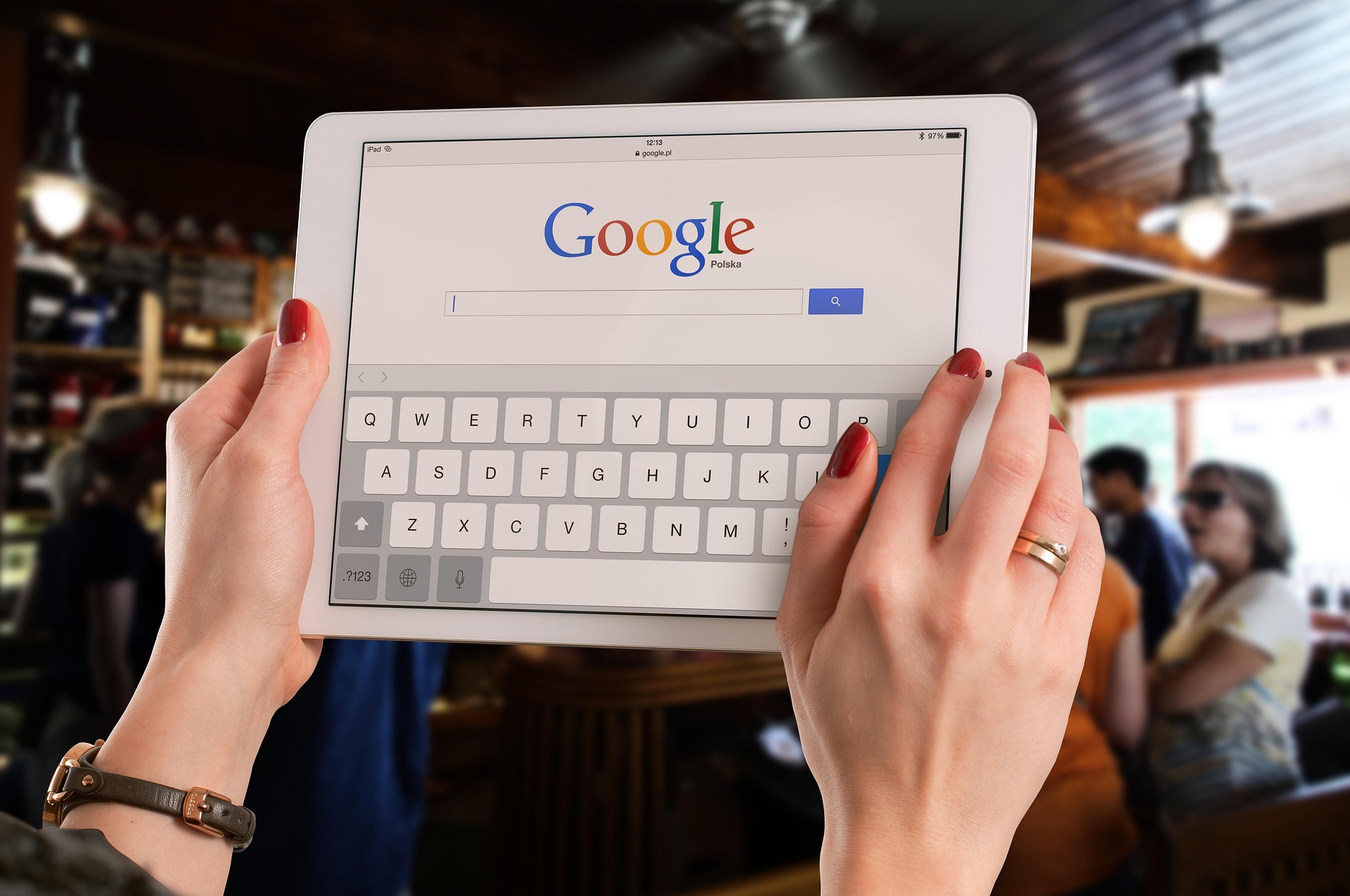
A world without Google is easy to romanticize and hard to picture honestly. The internet would still exist. Websites would still load. Phones would still turn on. Email would still arrive. But a huge amount of modern life would stop feeling automatic. That is the real role Google plays. It is not merely a search engine anymore. It is an invisible layer of defaults spread across search, browsers, maps, mobile operating systems, app distribution, video, advertising, and business discovery. Alphabet’s own investor materials group Search, Android, Chrome, Maps, Play and YouTube inside Google Services, and Alphabet said full-year revenue exceeded $403 billion in 2025.
Table of Contents
The most useful version of this thought experiment is not “What if Google had never been founded?” but “What if Google vanished from the world we have right now?” A no-Google internet from the start would have evolved along a different path. A post-Google internet in 2026 would feel more like an infrastructure shock. The network would survive, but many of the routines people treat as natural would suddenly look like what they really are: services, defaults, rankings, indexes, and data layers run by one company.
Search would stop feeling like oxygen
The first change would be obvious. Search would become a visible problem again. Statcounter’s February 2026 numbers put Google at just under 90% of worldwide search market share, and Google’s share of mobile search hosts was above 93%. Cloudflare Radar’s 2025 search reports also identified Google as the leading search engine. That scale matters because it means Google is not just one option among many. It is the default path by which people reach information.
Without Google, people would not stop looking for answers. They would scatter. Some would move to Bing. Some would rely more heavily on AI assistants. Some would search inside Amazon for products, TikTok for trends, Reddit for advice, and Apple’s ecosystem for device-level discovery. The result would not be a clean handoff from one leader to another. It would be a fragmentation of intent. The simple act of “looking something up” would become more inconsistent, more platform-specific, and in many cases worse.
That matters because Google’s greatest achievement was not merely relevance. It was habit formation at planetary scale. It trained people to expect one box, fast results, decent local answers, and a near-zero learning curve. Remove that, and the web feels immediately more manual. People would spend more time deciding where to search before they could even begin searching.
The web economy would have to rewire itself
A world without Google would hit businesses almost as hard as users. Countless companies do not merely advertise on Google. They organize their customer acquisition around it. Search ads capture demand at the moment people are trying to buy, compare, book, repair, or travel. Alphabet still describes Google Services as primarily advertising-driven, and its recent earnings continue to show strong growth in Search and YouTube. That is a reminder that Google is not just an information layer. It is a commercial one.
Publishers, merchants, travel sites, local services, software companies, and online stores would all face the same question at once: where does discoverability come from now? Some traffic would flow to rivals. Some would move to direct visits, newsletters, social platforms, marketplaces, and AI interfaces. But the transition would be chaotic, expensive, and unequal. Brands with strong loyalty would adapt faster. Smaller businesses that depended on Google Search and Google Ads would take the hardest hit.
This is also why antitrust authorities have treated Google as more than just a successful product. In August 2024, the U.S. Department of Justice highlighted a court decision holding that Google illegally maintained monopolies in general search services and general text search ads. In April 2025, the DOJ said another federal court held that Google violated antitrust law by monopolizing open-web digital advertising markets. Europe has likewise designated Alphabet as a gatekeeper across services including Google Search, Android, Chrome, Maps, YouTube and online advertising. Those moves reflect the same underlying fact: Google sits in the middle of the web’s commercial circulation.
Your phone would still work but the stack would wobble
People often imagine a Google-free world as a return to some simpler, browser-based internet. The reality is much messier because Google is embedded in the software stack people use every day. Statcounter’s February 2026 data shows Chrome with nearly 69% of global browser share and Android with more than 68% of global mobile operating system share. That means removing Google would not just change how people find information. It would destabilize the two most common ways they access the internet in the first place.
The nuance is important, though. Android is not identical to Google in the narrow technical sense, because the Android Open Source Project is publicly available and modifiable. Chromium is also an open-source browser project. So a no-Google world would not instantly turn millions of devices into bricks. Forks could survive. Vendors could keep shipping modified versions. Browser code would not vanish overnight.
But the user experience would still shudder. Defaults, syncing, app distribution, security updates, identity layers, browser releases, mapping hooks, and search placement are not abstract details. They are the glue. Open source can preserve code; it does not automatically preserve coordination. That is why a post-Google world would feel less like collapse and more like systemic wobble: the pieces remain, but the choreography breaks.
Local life would get harder before it got healthier
One of Google’s least appreciated achievements is how thoroughly it compressed local uncertainty. Where is the pharmacy. Is the café open. Which exit do I take. How long will the train connection last. Which repair shop is credible. For billions of people, these questions are mediated through Google Maps and the search-local layer around it.
Google Maps Platform has said its Places tools provide information, ratings, and reviews for over 200 million businesses and places, and Google has also described the map as a constantly updated system fed by users, local businesses, partners, Street View, and other data sources. That is why losing Google would not simply mean losing one app icon. It would mean losing a deeply maintained real-world index that merges geography, business identity, reviews, routing, and frequent updates.
Alternative maps would fill some of the gap, and in some regions they already perform well. But the short-term experience would feel rougher. Local discovery would become more fragmented. Routing would vary more by region. Business profiles would have to be rebuilt or reweighted elsewhere. Travelers would notice it immediately. So would delivery services, ride-hailing apps, field technicians, and small businesses that live or die on local visibility.
There is a deeper point here. Google did not just map roads. It mapped trust signals. Reviews, photos, hours, crowdedness, place categories, and ranking logic all turned physical life into searchable data. Remove that layer and the physical world becomes less legible online.
Culture would splinter because YouTube would go with it
A world without Google is also a world without YouTube in anything like its current form. That alone would reshape media, education, entertainment, music, podcasting, advertising, and the creator economy. Google said in February 2026 that YouTube’s annual revenue had surpassed $60 billion across ads and subscriptions. YouTube has also said there are more than 3 million channels in the YouTube Partner Program, that it paid out over $100 billion to creators, artists, and media companies over four years, and that podcast content on the platform draws more than 1 billion monthly active viewers.
That is not a side business. It is one of the central cultural distribution systems on earth. Without it, creators would not disappear, but their economics would fracture. Some would shift to TikTok, Instagram, Twitch, Patreon, Spotify, newsletters, or their own memberships. Others would lose the one platform that allowed free distribution, long-form video, search visibility, ad monetization, and global reach to coexist in one place. The internet would still have video, but it would lose its main public archive of explainers, tutorials, lectures, gameplay, commentary, livestreams, and niche obsession.
The cultural cost would be larger than people expect because YouTube is not only entertainment. It is memory. It is instruction. It is the repair manual, the lecture hall, the clip library, the music rabbit hole, and the second screen of modern life. A post-Google world would not be post-video. It would be post-centrality.
The biggest shift would be political and strategic
A lot of no-Google fantasies assume that removing one giant automatically creates a freer web. Sometimes it does. Often it just redistributes power. If Google disappeared tomorrow, the vacuum would not sit open for long. Microsoft would push harder in search and enterprise discovery. Apple would gain even more control over device-level pathways. Amazon would absorb more product intent. Meta and ByteDance would benefit from the migration of attention. AI answer engines would capture more research behavior. Europe’s DMA gatekeeper framework is useful here precisely because it reminds us that Google is one of several companies already treated as systemic intermediaries, alongside Apple, Amazon, Meta, Microsoft and ByteDance.
So the cleaner question is not whether the world would be better without Google. It is which concentrations of power we would trade for which others. Google’s disappearance could reduce one form of dependency while strengthening several others. The open web might gain breathing room in some places and lose it in others. Search could become more competitive while app ecosystems become even more tightly controlled. Information discovery might diversify while commercial visibility becomes more expensive.
Some things would improve
This thought experiment should not become accidental nostalgia for corporate dominance. There are real reasons many people would welcome a less Google-shaped world. A smaller Google footprint could mean less single-company influence over ranking, discovery, browser defaults, ad markets, and the flow of traffic to the open web. The fact that U.S. courts and European regulators have treated Google as a monopoly actor or gatekeeper across multiple services is itself evidence that concentration is not an abstract concern.
It could also force healthier habits. Businesses might diversify traffic sources. Publishers might invest more in direct readership. Users might learn to compare tools again instead of assuming one interface is the internet. Developers could gain more room to build around open alternatives. The web might become a little less optimized for one company’s ranking logic and a little more resilient by design.
But those gains would not arrive as a neat moral correction. They would come through disruption. People often discover they were dependent on infrastructure only after it is gone.
The internet would survive but it would feel less automatic
That is the simplest answer. Without Google, the world would still be connected, but it would feel more fragmented, slower to navigate, and less legible. Search would splinter. Local life would become fuzzier. Advertising and publishing would enter a period of forced rewiring. Phones and browsers would keep running, but with more friction and less coherence. Culture would lose its largest video commons. The web would remain alive, yet a huge amount of the convenience people mistake for the natural state of the internet would be exposed as Google-shaped design.
Google’s deepest success was never just scale. It was making mediation disappear. It made search feel like a reflex, maps feel like memory, video feel like public utility, and web navigation feel almost prearranged. A world without Google would remind us that none of that was inevitable. It was built. And once you see that clearly, the real question is no longer whether the world could live without Google. It is whether we want a digital life built so thoroughly around any single company ever again.
Author:
Jan Bielik
CEO & Founder of Webiano Digital & Marketing Agency
Sources
Alphabet Investor FAQs
Official Alphabet investor overview describing Google Services products and how Google Services generates revenue primarily from advertising.
https://abc.xyz/investor/faqs-and-general-information/
Alphabet Q4 2025 earnings release
Official Alphabet investor release with the company’s full-year 2025 revenue figures and segment reporting.
https://abc.xyz/investor/static/pdf/2025Q4_alphabet_earnings_release.pdf
Alphabet earnings Q4 2025 CEO remarks
Official Google post stating that Search revenue accelerated and YouTube annual revenue surpassed $60 billion across ads and subscriptions.
https://blog.google/company-news/inside-google/message-ceo/alphabet-earnings-q4-2025/
Search Engine Market Share Worldwide
Statcounter dataset used for worldwide search engine market share figures.
https://gs.statcounter.com/search-engine-market-share
Mobile Search Engine Host Market Share Worldwide
Statcounter dataset used for global mobile search host market share figures.
https://gs.statcounter.com/search-engine-host-market-share/mobile/worldwide
Browser Market Share Worldwide
Statcounter dataset used for worldwide browser market share figures, including Chrome.
https://gs.statcounter.com/browser-market-share
Mobile Operating System Market Share Worldwide
Statcounter dataset used for worldwide mobile operating system market share figures, including Android.
https://gs.statcounter.com/os-market-share/mobile/worldwide
AOSP overview
Official Android Open Source Project documentation explaining what AOSP is and how Android’s open-source base works.
https://source.android.com/docs/setup/about
The Chromium Projects
Official Chromium project site describing Chromium as an open-source browser project.
https://www.chromium.org/
How Google Maps Platform uses AI and community contributions to keep its points of interest up to date
Official Google Maps Platform source describing the scale of Google place data and how it is maintained.
https://mapsplatform.google.com/resources/blog/how-google-maps-platform-uses-aiml-and-community-contributions-keep-its-points-interest-date/
9 things to know about Google’s maps data
Official Google Maps Platform source explaining how Google Maps data is updated and enriched.
https://mapsplatform.google.com/resources/blog/9-things-know-about-googles-maps-data-beyond-map/
Celebrating 1 billion monthly podcast users on YouTube
Official YouTube source used for the scale of podcast viewing on the platform.
https://blog.youtube/news-and-events/1-billion-monthly-podcast-users/
New ways for creators to earn more with brand partnerships
Official YouTube source stating that YouTube paid out over $100 billion to creators, artists, and media companies over four years.
https://blog.youtube/news-and-events/earn-more-with-brand-partnerships/
Second chances on YouTube
Official YouTube source stating that more than 3 million channels are part of the YouTube Partner Program.
https://blog.youtube/inside-youtube/second-chances-on-youtube/
Justice Department statements on the U.S. District Court decision in U.S. v. Google
Official U.S. Department of Justice statement on the 2024 search monopoly ruling.
https://www.justice.gov/archives/opa/pr/justice-department-statements-us-district-court-district-columbias-decision-us-v-google
Department of Justice prevails in landmark antitrust case against Google
Official U.S. Department of Justice statement on the 2025 digital advertising monopoly ruling.
https://www.justice.gov/opa/pr/department-justice-prevails-landmark-antitrust-case-against-google
DMA designated gatekeepers
Official European Commission page listing gatekeepers designated under the Digital Markets Act.
https://digital-markets-act.ec.europa.eu/gatekeepers_en