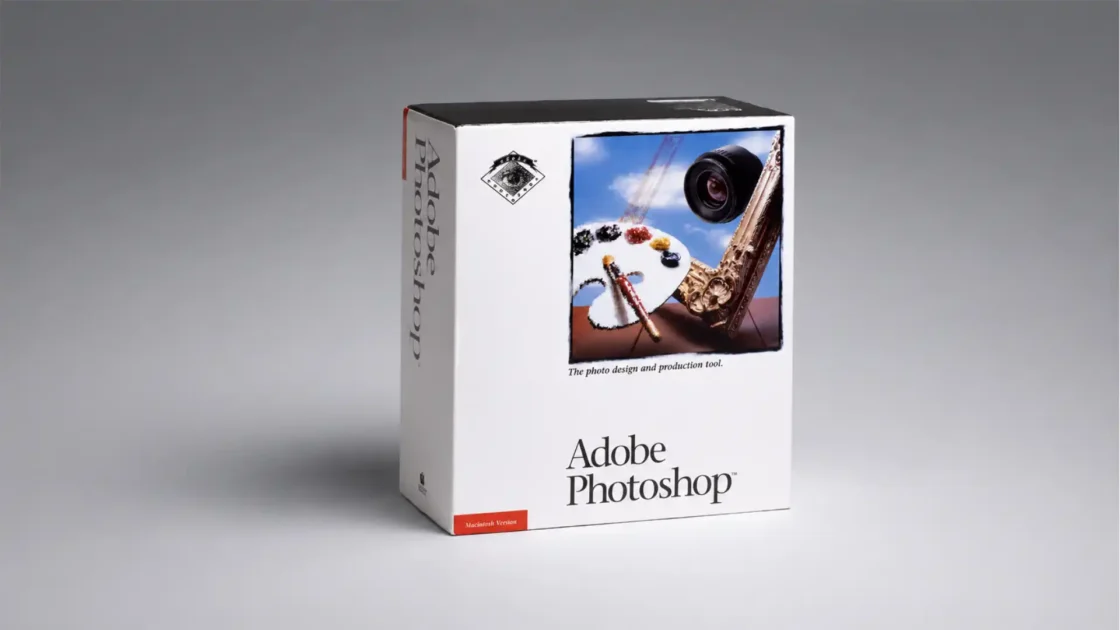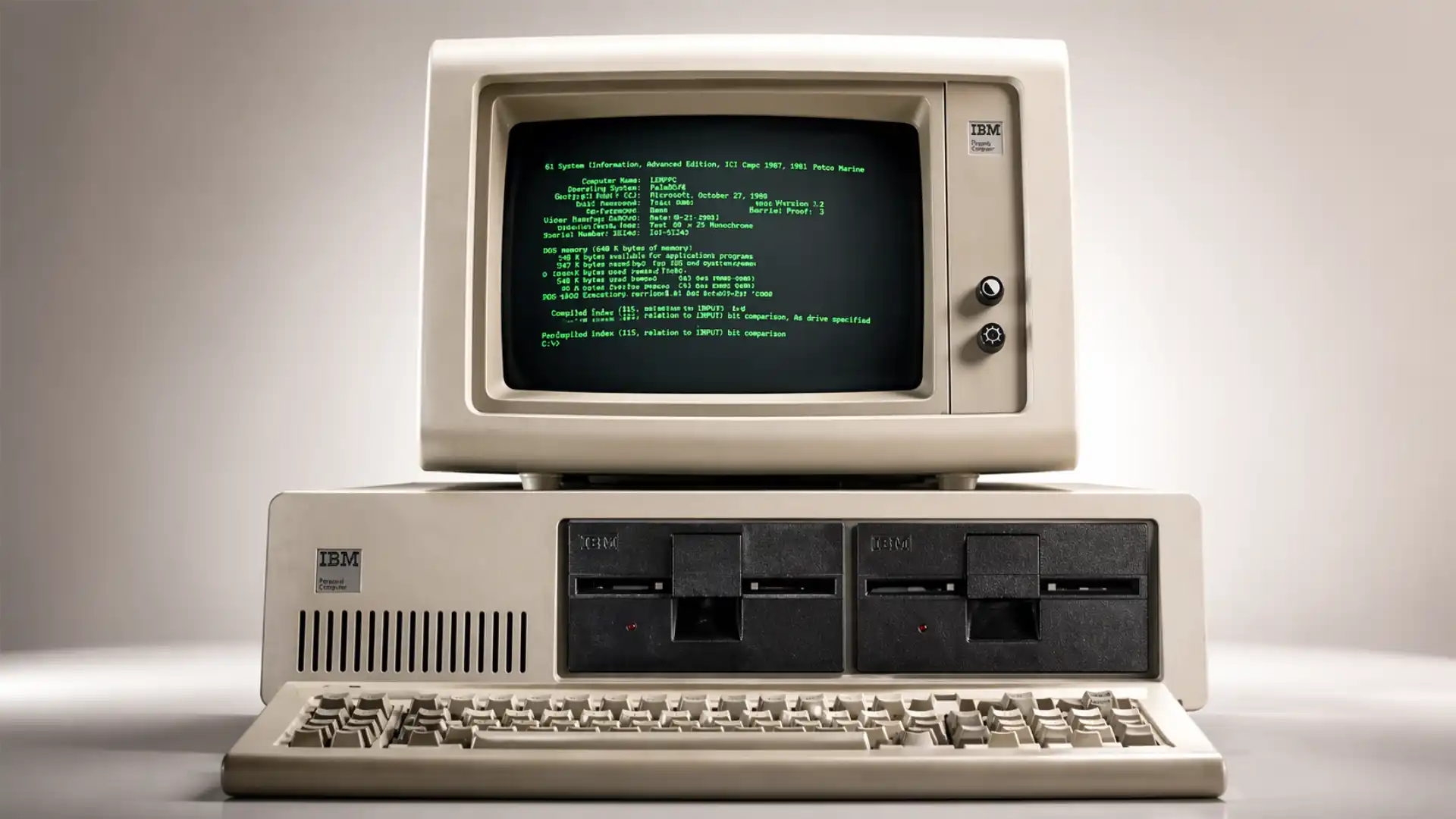
IBM did not invent the personal computer. It did something harder and, in business terms, more consequential. It made one version of personal computing look safe, purchasable, expandable, and worth standardizing around. That shift is why the IBM PC matters more than many earlier machines that arrived first. IBM’s 5150, launched on August 12, 1981, entered a market that already existed, but it gave that market a center of gravity.
Table of Contents
The original machine was modest by any later measure. It started with 16 KB of RAM, no hard drive, and a base price of $1,565. It used Intel’s 8088 processor, could be expanded through internal slots, and shipped into a market where software, peripherals, and trust still mattered more than raw performance. IBM wrapped all of that in a name that corporate buyers already understood, then documented enough of the system that outside developers could build around it.
That is why the IBM PC became a turning point in the digital age. It linked hardware, operating systems, business software, retail distribution, component supply chains, and third-party add-ons into one market logic. Modern personal computing still carries that logic: a common platform, a broad ecosystem, and a separation between the company that sells the machine, the company that supplies the chip, the company that supplies the operating system, and the many firms that build everything around them.
IBM arrived after the pioneers
By 1981, personal computing was not new. Apple, Tandy, Commodore, and a crowd of smaller firms had already proved there was demand for small computers outside the mainframe and minicomputer world. The problem was that the market still looked fragmented and slightly improvised. Plenty of machines were bought by hobbyists, enthusiasts, engineers, and early small-business users, yet there was no single architecture that large organizations could treat as the obvious long-term bet. Computer History Museum notes that IBM’s first personal computer arrived nearly a decade after other personal computers were already available.
IBM’s late arrival turned out to be an advantage. The company did not need to invent the category from scratch. It watched the early market, saw what was selling, saw where prices were heading, and recognized that the real opportunity sat in the gap between hobbyist culture and institutional buying. IBM’s own history describes William Lowe pitching a consumer and small-business machine to CEO Frank Cary in 1980, with a price target of about $1,500 and a brutally short timetable. Cary gave him a month for a prototype and roughly a year to get a product to market. That alone was a sharp break from IBM’s usual pace.
IBM’s name changed the emotional meaning of the product. A personal computer stopped looking like a clever side machine and started looking like an acceptable corporate purchase. CHM’s account puts it neatly: IBM “legitimized” the market. Britannica makes the same point from a different angle, stressing that the IBM PC was backed by IBM’s huge sales organization and quickly became the most popular personal computer in the world. Once procurement managers, IT staff, accountants, and software vendors all saw the same signal, the market stopped being a scattered experiment and started becoming an industry.
A skunkworks project inside a giant company
The IBM PC was born through an internal workaround. IBM did not build it by running the usual slow, highly controlled product-development system that had made the company dominant in earlier eras. It built the PC through a small, semi-detached team in Boca Raton under the code name Project Chess. IBM’s account says Don Estridge got permission to operate outside normal procedures because the schedule was too aggressive and the market was moving too fast. Frank Cary’s biography on IBM’s site says Lowe and his team launched the company’s first PC in little more than a year.
That speed mattered as much as the hardware. IBM had to decide that entering the PC market quickly was more valuable than preserving every old habit that had made IBM, IBM. The team reused parts of earlier IBM work, including elements derived from the System/23 Datamaster, and combined them with outside components and outside software. IBM’s own history says roughly half the system drew from existing IBM designs, while the processor came from Intel and the operating system came from Microsoft. That mix would have looked strange, even risky, inside classic IBM thinking.
The sales plan was just as unusual. IBM did not rely only on its traditional enterprise channels. It pushed the PC through retailers such as Sears and ComputerLand, as well as IBM Product Centers. That choice widened the audience fast. It also changed the cultural image of the machine. The PC was sold as something that could sit on a desk in a small office, in a back room, in a school, or at home without demanding a priesthood of specialists to justify its existence. IBM even leaned on a friendlier ad campaign built around Charlie Chaplin’s Little Tramp, a far cry from the severe image many people associated with the company.
The machine itself was modest and that mattered
Strip away the mythology and the original IBM PC looks almost humble. IBM’s 1981 product announcement describes a small system with keyboard, diskette drives, monochrome display, printer support, ROM BASIC, cassette attachment, and optional communications. The announcement and the Smithsonian’s object record show a system built around the Intel 8088, with five expansion slots and no built-in hard disk. IBM’s own later history notes the launch configuration at 16 KB of RAM and no disk drive, with higher practical cost once a monitor, drives, and printer were added.
The 8088 choice was crucial. Intel describes the chip as internally similar to the 8086 but fitted with an 8-bit external bus so it could work with lower-cost 8-bit peripheral components. That helped IBM hit price and schedule targets without surrendering the larger address space and programming advantages of the 16-bit family. The result was not the most elegant machine of its era. It was a machine that balanced cost, performance, and manufacturability well enough to become a reference point.
The original IBM PC was powerful less because of what it was on day one than because of what it was prepared to become. Five internal slots, room for more memory, optional floppy drives, communications adapters, display choices, and a published technical reference made it extensible. Buyers were not boxed into a sealed appliance. They were buying a system that could grow, and third parties were being invited to help it grow. That combination proved stronger than raw elegance.
The original IBM PC in one glance
| Element | What IBM shipped in 1981 | Why it mattered |
|---|---|---|
| Processor | Intel 8088 at 4.77 MHz | 16-bit internals with cheaper supporting hardware |
| Memory | 16 KB base, expandable up to 256 KB on the system unit | Cheap entry point with room to grow |
| Storage | Cassette support or one or two 5.25-inch 160 KB floppy drives | Floppy-based software distribution became normal |
| Expansion | Five system expansion slots | Add-on cards turned into a major industry |
| Firmware | ROM BASIC plus documented BIOS material | Developers had a clear target |
| Display options | Monochrome, color, or even TV connection with the right adapter | Flexible for office and home use |
The snapshot above draws from IBM’s original 1981 product announcement, the 5150 technical reference, Intel’s 8088 history, and the Smithsonian’s description of the machine.
Microsoft and Intel gained more than a contract
The IBM PC is often remembered as an IBM triumph. It was that, but it was also the deal that pushed Microsoft and Intel into positions they would hold for decades. IBM selected Intel’s 8088 for reasons of cost and timing. Intel’s own historical account says the chip’s ability to pair with cheaper 8-bit peripheral components made it attractive for value-priced systems, and its biggest fame came from powering the first IBM PC. That single design choice helped make the x86 line the center of mainstream desktop computing.
The operating system choice may have mattered even more. Computer History Museum’s account of early MS-DOS says IBM first explored CP/M-86 from Digital Research, failed to reach acceptable licensing terms, and then turned to Microsoft, which did not yet have a ready operating system of its own. Microsoft licensed and then bought 86-DOS from Seattle Computer Products, adapted it for the IBM PC, and delivered PC-DOS 1.0 in time for the August 1981 launch. CHM also notes that Microsoft realized the value of owning those rights because it could license DOS to other makers of IBM-PC clones.
That is the hinge. IBM won the machine sale, but Microsoft won the right to sit one layer lower in the stack. Once other manufacturers began shipping compatible hardware, Microsoft could sell them a familiar operating system. The GitHub archive of MS-DOS and Microsoft’s own open-source note on later DOS releases show how long that software lineage endured. DOS became the launching pad for a vast software ecosystem and, later, the practical foundation under early Windows. IBM had entered the market to define it. Microsoft and Intel ended up owning more of its long-term economics.
An architecture loose enough to spread
The phrase “open architecture” gets used loosely today, so it helps to be precise. IBM did not make the PC “open” in the modern sense of open-source software or unrestricted public-domain design. The BIOS was still IBM property, and clone makers who copied it too directly got sued. What IBM did do was publish an unusual amount of technical detail. Its own history says the company released a technical reference with circuit designs and source code to help software and peripheral developers. The 1981 technical reference confirms that this publication was meant for programmers, engineers, designers, and others who needed to understand how the machine was built and how it worked, including BIOS information and interface details.
That documentation changed the market. The technical reference lays out the system board, I/O channel, memory map, BIOS usage, interrupt vectors, and the structure of the machine in a way that made third-party development far easier. The original PC’s “I/O Channel” later became remembered as the starting point of ISA, and IBM’s Mark Dean page ties him and Dennis Moeller to the bus design that let printers, displays, and drives communicate with the PC. The practical message to outside companies was simple: this machine has interfaces, and you can build to them.
Academic work on the industry shows why that mattered beyond hobbyist tinkering. A MIT paper on the personal computing industry argues that the IBM PC’s modular, open system with standard interfaces allowed newcomers to specialize in components, peripherals, systems, and software while still fitting into the same broader market. Carliss Baldwin’s Harvard Business School paper makes the same broader point in platform language: the modular IBM PC pulled users, hardware makers, and software developers toward one standard, and that standard remained powerful long after IBM itself lost command of it.
The office became the real battleground
IBM advertised the PC with a public-friendly tone, but its deepest effect landed in offices. CHM says IBM introduced the PC to the general public with folksy advertising, yet its most profound impact came in the corporate world, where companies bought the machines in bulk and changed the role of computers in everyday office work. IBM’s own history supports that picture: by the end of 1982, new retailers were signing up constantly, machines were moving at an extraordinary rate, and software availability exploded.
The launch software tells the story. IBM says the unveiling featured VisiCalc and EasyWriter, which meant spreadsheets and word processing were front and center from day one. CHM’s software history frames VisiCalc as the first spreadsheet for personal computers and describes the software boom that followed as PC users multiplied and diversified. Britannica goes further and connects the IBM PC to Lotus 1-2-3, the spreadsheet that became one of the clearest reasons for businesses to standardize on the platform. People did not buy these machines because microprocessors were interesting. They bought them because payroll, forecasts, memos, and reports could move from clerks, typewriters, and centralized computing queues onto a desk.
Time’s 1982 “Machine of the Year” feature captured the mood of the moment more broadly: the computer was moving into everyday life. That cultural shift was bigger than IBM, but IBM accelerated it by making personal computing feel administratively normal. The office machine became a household idea, and the household machine became an office standard. That traffic ran both ways. A device that could talk to a TV, print letters, run a spreadsheet, connect to bigger systems, and accept new cards no longer looked like a toy. It looked like infrastructure.
Clones turned a product into a platform
The strongest proof of the IBM PC’s importance is that other companies hurried to copy it. Computer History Museum’s “Send in the Clones” section shows how fast that happened. Eagle shipped a clone within a year and ran into legal trouble for copying IBM’s BIOS. Columbia Data Products avoided that trap by recreating equivalent BIOS behavior in a clean-room process. Then came Compaq, whose Portable was marketed as the first 100 percent IBM PC-compatible computer and achieved record first-year sales for an American business.
This is where IBM’s published specifications met the legal limit. Hardware built from commodity parts was one thing. BIOS code was another. Clean-room reverse engineering became the bridge between those two facts. CHM’s account of Columbia and Compaq makes the point sharply: clone makers could not simply photocopy IBM firmware, but they could study behavior, recreate compatibility, and deliver machines that ran the same software. Once that became practical, “IBM-compatible” stopped being a brand compliment and became the central commercial category of the 1980s PC market.
A standard became more powerful the moment IBM lost the exclusive right to profit from it. Clone makers cut prices, increased competition, and spread the installed base. Software developers now had even more reason to target the IBM PC standard. Microsoft benefited because DOS could ride across this widening field of hardware. IBM benefited at first because it had defined the category, but the same openness that fueled growth also weakened its grip. The PC stopped being a single company’s machine and became a shared architecture.
IBM lost control of the standard it created
That loss of control came quickly. IBM’s own PS/2 history says that more than 750,000 machines were sold within two years of the 5150’s release, yet by 1986 IBM’s dominance in PCs had already withered as clones chipped away at market share. IBM’s broader PC history makes the same point in harsher numbers, describing a slide from roughly 80 percent of the PC market in 1982–1983 to about 20 percent a decade later. The company had launched the standard, but the standard no longer needed the company in the same way.
IBM tried to regain control by changing the rules. The PS/2 line was a technical reset and, in part, an attempt to pull the industry back toward an IBM-led architecture. Yet the compatible ecosystem was already too large and too profitable to abandon. Baldwin’s HBS paper argues that the market had tipped toward the modular IBM PC platform; by 1987 compatibles held more than 60 percent of the market, and in the early 1990s that rose above 90 percent. IBM could still sell computers, but it no longer had the power to unmake the world it had helped create.
There is a hard business lesson in that. Setting a standard and controlling a standard are not the same thing. IBM’s greatest PC success contained the seeds of its reduced authority. The machine spread because it was documented, modular, affordable, and easy for outside firms to serve. Those same virtues lowered switching costs and made room for competitors. IBM eventually sold its PC division to Lenovo in 2005. The platform lived on. The original sponsor stepped away.
The shape of personal computing after 1981
The IBM PC’s deepest legacy sits in structure, not nostalgia. The modern desktop and laptop market still looks like a descendant of the world the 5150 helped normalize: processor vendors, firmware standards, operating-system vendors, motherboard makers, peripheral makers, add-in card makers, software firms, distributors, resellers, and support specialists all working around shared assumptions. The MIT industry study ties that structure directly to the IBM PC’s modular design and standard interfaces, which let producers specialize without leaving the platform.
That does not mean every modern device is an IBM PC in disguise. Apple kept a separate line alive and influential. Smartphones took personal computing onto a different path. Tablets and tightly integrated systems showed that sealed products could be wildly successful. Even so, the IBM PC model shaped what people expected from a “computer” for decades: a machine with a general-purpose processor, a reusable operating-system base, standard software categories, interchangeable parts, and a broad third-party market. Britannica still describes the IBM PC’s microprocessor and operating system as the basis for industry standards, which is another way of saying the 5150 set the grammar for mainstream computing.
There is also a cultural legacy that matters. Before the IBM PC, personal computing often looked like a subculture. After it, computing became administrative routine. A desk with a keyboard, screen, printer, files, spreadsheet, and business software ceased to look exotic. That ordinariness is part of the digital age too. A technology changes society most deeply when it stops looking like technology and starts looking like furniture, workflow, policy, and habit. IBM helped push computing across that line.
The digital age got a common grammar
The cleanest way to understand the IBM PC is to stop asking whether it was first and ask why it lasted. Earlier machines mattered. Rival systems were often more elegant in one way or another. Some were cheaper, some were friendlier, some were technically cleverer. The IBM PC won a different contest. It became the machine that institutions could buy, developers could target, peripheral makers could support, clone makers could imitate, and users could learn once and carry forward. That is a stronger kind of victory than novelty.
Its success rested on a few decisions that looked practical at the time and historic only afterward: off-the-shelf parts, Intel’s 8088, Microsoft’s operating system, a documented architecture, retail distribution, and a willingness to let outsiders build a business around the machine. None of those choices guaranteed IBM permanent control. They did something larger. They made personal computing easier to scale.
That is how the IBM PC changed the digital age. It did not merely ship a box. It supplied a common grammar for hardware, software, work, and compatibility. Once millions of people, companies, and developers started speaking that grammar, the personal computer stopped being a niche device and became the default machine of modern life. IBM set that sentence in motion in 1981. The industry has been extending it ever since.
FAQ
No. Personal computers existed before IBM’s 1981 launch. The IBM PC mattered because it legitimized and standardized the market rather than inventing it from nothing.
It was the IBM 5150, launched on August 12, 1981, with an Intel 8088 processor, expandable memory, optional floppy drives, and room for internal expansion cards.
Because IBM’s brand reassured buyers, and the machine ran useful office software such as spreadsheets and word processing tools. That made it suitable for real office workloads, not just hobby use.
William Lowe pushed the project inside IBM, and Don Estridge led the fast-moving Boca Raton team that brought the machine to market.
Project Chess was the internal IBM code name for the team and effort that developed the PC outside many normal IBM procedures so it could be delivered quickly.
The 8088 gave IBM a 16-bit internal architecture while still allowing lower-cost 8-bit support hardware, which helped with price and speed to market.
IBM could not finalize a deal for CP/M-86, so Microsoft sourced and adapted 86-DOS into PC-DOS for the IBM PC.
PC-DOS was IBM’s branded version for its own machines. MS-DOS was Microsoft’s version for other manufacturers. That split became crucial once clone makers entered the market.
It meant IBM published enough technical detail about the machine’s design and interfaces to make third-party hardware and software development much easier. It did not mean every part of the system was legally open to copy.
IBM published extensive technical information, including BIOS-related material in the technical reference, but the BIOS remained proprietary enough that clone makers had to reverse-engineer compatibility carefully.
They turned the PC into a platform. Add-on cards let users expand graphics, storage, communications, printing, and other functions, which created a large peripheral market.
VisiCalc and EasyWriter were present at launch, and business software such as Lotus 1-2-3 soon helped make the IBM PC the obvious office machine.
Retail channels like Sears and ComputerLand gave IBM reach beyond its traditional enterprise sales model and helped the PC become a mass-market product.
They were machines built by other companies to run the same software and work with the same general hardware expectations as the IBM PC.
Successful clone makers used clean-room reverse engineering to recreate BIOS compatibility without directly copying IBM’s protected firmware code.
Compaq proved that a company outside IBM could sell a highly compatible machine at scale and turn compatibility itself into a market advantage.
No. IBM helped define the standard, but clone makers and software-platform economics weakened its market power quickly. IBM’s own history says that by 1986 its dominance in PCs had already eroded badly.
A great deal of the structure still does: standardized hardware expectations, a modular ecosystem, x86 lineage, the dominance of third-party software, and the idea of compatibility as a selling point.
Author:
Jan Bielik
CEO & Founder of Webiano Digital & Marketing Agency
This article is an original analysis supported by the sources cited below
The IBM PC
IBM’s own historical account of the 5150 launch, Project Chess, pricing, sales strategy, open architecture, and the machine’s long commercial legacy.
Mark Dean
IBM’s profile of engineer Mark Dean, including his role on the PC team and the bus architecture that became central to the platform.
Frank T. Cary
IBM’s history of the executive decision that accelerated the company’s move into personal computing.
The PS/2
IBM’s retrospective on the post-5150 attempt to regain control of the PC architecture and the company’s fading dominance by the mid-1980s.
The IBM PC
Computer History Museum’s summary of why IBM’s machine legitimized the PC market and encouraged clones.
Send in the Clones
Computer History Museum’s account of early clone makers, BIOS disputes, and clean-room reverse engineering.
1981 | Timeline of Computer History
Computer History Museum timeline entry on the original IBM PC, its hardware, and its business impact.
1983 | Timeline of Computer History
Computer History Museum timeline entry on the Compaq Portable and the rise of legal IBM compatibility.
Software: Putting PCs to Work
Computer History Museum’s overview of how spreadsheet and productivity software turned PCs into practical work machines.
Microsoft MS-DOS early source code
Computer History Museum’s detailed account of how Microsoft sourced, adapted, and shipped DOS for the IBM PC.
The 8088 Processor
Intel’s own historical explanation of the 8088 and why it suited lower-cost systems such as the original IBM PC.
IBM PC 5150 Microcomputer Processor
Smithsonian collection record with concise technical details on the original IBM PC hardware.
IBM PC
Britannica’s overview of the IBM PC line and its significance in establishing the mainstream personal computer market.
Personal computer (PC) | Definition, History, & Facts
Britannica’s broader history of personal computing, including the IBM PC’s role in creating the dominant industry standard.
MACHINE OF THE YEAR 1982: The Computer Moves In
Time’s landmark cultural snapshot of the moment when personal computing became a mainstream social fact.
MS-DOS v1.25, v2.0, v4.0 Source Code
Microsoft’s GitHub archive of early MS-DOS source code, useful for tracing the software lineage that grew out of the IBM PC era.
Open sourcing MS-DOS 4.0
Microsoft’s later historical note on DOS development and the long afterlife of IBM-Microsoft software work.
Product Announcement – The IBM Personal Computer
A preserved copy of IBM’s August 12, 1981 announcement detailing the original machine’s features, options, and positioning.
IBM 5150 Technical Reference 6025005 AUG81
The original technical reference manual that documented hardware design, BIOS information, and interface details for developers.
Globalization of Innovation: The Personal Computing Industry
A MIT study explaining how the IBM PC’s modular design shaped the structure of the global PC industry.
Bottlenecks, Modules and Dynamic Architectural Capabilities
Carliss Baldwin’s Harvard Business School paper, used here for its analysis of modularity, platform tipping, and the long power of the IBM-compatible standard.
| Citing this article? Brief excerpts are welcome. Please credit Webiano.digital, name the author where stated, and include a link to https://webiano.digital and to this original article. Full or substantial republication requires prior written permission. Read our Copyright and Content Use Policy. |
This article was prepared with the assistance of artificial intelligence tools. The content underwent expert human review, and Webiano Digital & Marketing Agency assumes editorial responsibility for its final version and publication.