The line is memorable because it sounds precise. “Video can increase search CTR by 41%” feels like the sort of statistic people can drop into a deck and move on. The trouble is that the public trail behind it is old, thin, and mostly circular. The version I could verify in public sources appears in a 2012 Social Media Today article and a 2013 iGo Sales & Marketing post, both pointing back to an AimClear-era claim about videos in universal search results outperforming plain-text results. What I did not find was a fresh, transparent, modern benchmark that shows a universal +41% click-through lift in today’s Google Search.
Table of Contents
That distinction matters a lot more in 2026 than it did in 2011. Search is now shaped by AI Overviews, rich results, thumbnails, key moments, shopping modules, device differences, and query intent. BrightEdge says AI Overviews now trigger on roughly 48% of tracked queries, and when they appear they average more than 1,200 pixels tall, which can push organic listings below the fold. Pew found that users who saw an AI summary clicked a traditional result in 8% of visits, compared with 15% when no AI summary appeared. In that environment, a single “video lifts CTR by X%” number stops being analysis and starts being folklore.
The 41% claim has history but not fresh proof
The 41% figure should be treated as a legacy claim, not as current data. That is the cleanest way to say it. The oldest public references I could confirm are secondary citations. Social Media Today wrote in August 2012 that an AimClear study showed videos in universal search results had a 41% higher click-through rate than plain-text results. A 2013 agency post repeated the same line and attributed it to AimClear’s Manny Rivas, calling it a March 2011 study. Those references are useful as a record of the claim’s circulation. They are not the same thing as a current benchmark with up-to-date methodology.
That may sound picky, but it is exactly the kind of detail that separates solid editorial work from recycled SEO talking points. A stat can live for years after the market that produced it disappears. In 2011, “universal search” still felt like a vivid novelty: an image here, a video result there, a search page that was still much closer to the classic ten-blue-links model. In 2026, Google’s own documentation makes plain that videos can surface in the main results, Video mode, Google Images, and Discover. Search pages are denser, more visual, and more conditional than the environment that produced the old claim.
The honest editorial move is not to pretend the old stat never existed. It clearly did, and it still gets quoted. The honest move is to place it where it belongs: as an early-era observation about video in search, not a number you should publish today as if it were current. If a client, editor, or marketing team wants a claim that survives scrutiny, “video can improve search CTR” is defensible. “Video improves search CTR by 41%” is not, at least not from current public evidence.
Modern Google Search no longer supports one CTR number
A single CTR benchmark is shaky even before video enters the picture. Backlinko’s 2025 CTR study found the average click-through rate for Google’s top organic result at 27.6%. Advanced Web Ranking’s 2025 quarterly reports show that CTR swings by device, industry, search intent, keyword length, and brand context. In Q1 2025, desktop position-one CTR ranged from 15.75% in Pets to 45.35% in Education across AWR’s industry data. By Q4 2025, AWR was also documenting year-over-year shifts, including declines for second-ranked sites on both mobile and desktop. That is already too much variation for one magic number to carry.
A Sistrix study on SERP feature CTRs makes the same point from another angle. Different search layouts produce different click curves. In that dataset, position-one CTR for a “purely organic” layout was 34.2%, while “Videos” showed 32.5%, and other SERP features produced their own patterns. That does not prove video is bad for CTR. It proves that layout context matters more than slogans. A video result is not just a “text result plus a play icon.” It sits inside a page architecture that changes user behavior.
Once AI Overviews enter the scene, the idea of a universal uplift becomes even harder to defend. BrightEdge says AI Overviews have grown from roughly 30% to 48% of tracked queries over a year. Seer Interactive found that for queries with AI Overviews, organic CTR fell sharply, and in its later update it described a 61% decrease in organic CTR for queries with AI Overviews. Pew’s user-behavior data lines up with the same directional shift. You are not measuring video against plain text inside a stable SERP anymore. You are measuring it inside a search page that keeps changing where attention goes.
What the evidence supports in 2026
| Common claim | What the current evidence supports |
|---|---|
| Video increases Google search CTR by 41% | Legacy claim from early 2010s secondary references, not a current universal benchmark |
| Video can still win more clicks | Yes, especially when Google can show richer video presentation and the page is properly indexed |
| Structured data guarantees a richer result | No, Google says markup makes a page eligible, not guaranteed |
| Video SEO still matters despite AI Overviews | Yes, but the upside now depends on query type, SERP layout, device, and whether AI intercepts the click |
The useful conclusion is not that old SEO wisdom is worthless. It is that you need a more exact question. Not “Does video raise CTR?” but “For which query class, on which device, on which surface, with which result treatment, and against which baseline?” That question matches the shape of modern search.
Video still changes click behavior in ways text cannot
What the old stat got right is the basic human part of the story. Video changes the visual and psychological weight of a result. Google’s own documentation says video previews can help users better understand what they will find, and key moments help them navigate video segments directly from search results. Vimeo’s case study shows what that looks like in practice: when key moments surface, the video result gets an expandable, scrollable time bar with labeled segments. That is not a minor cosmetic tweak. It turns one result into multiple entry points.
This matters because a click is rarely won by rank alone. People decide based on what they can infer from the search result in a second or two. A strong thumbnail, a visible duration, a useful upload date, a label that matches the task, and segmented timestamps can all make the result feel easier to trust. Google explicitly says that video structured data can influence information shown in video results, including the description, thumbnail URL, upload date, and duration. Title links are also “critical,” in Google’s words, because they are often the primary piece of information people use to decide which result to click.
That is why video should not be treated as a decorative add-on. Its best search role is not “there is a video somewhere on the page.” Its best role is that the search result becomes more legible, more concrete, and more immediately useful. A static text result asks the user to imagine what is behind the click. A good video result often answers that question upfront. The click lift, where it exists, starts there.
Richer search presentation is where the advantage starts
Google’s video documentation is unusually direct on this point. If you want richer video treatment, Google needs to understand the video, fetch the video bytes, and access the right metadata. That richer treatment may include video previews, key moments, and live badges. VideoObject markup can also influence the thumbnail, description, upload date, and duration that appear in results. Put simply, the visible advantage of video in search comes from presentation quality, not from the file format alone.
That is also why some “video SEO” advice disappoints in the wild. A team publishes a video, drops it into an article, and expects better CTR. Then nothing changes. Often that is not because video failed. It is because Google did not receive a clean enough signal to create a stronger result. The markup may be missing. The thumbnail may be weak. The main content might be ambiguous. The file may be blocked. The watch page might not clearly center the video. Google’s structured-data guidelines are blunt about this: markup can make a feature eligible, but it does not guarantee appearance, and the page still has to satisfy broader quality and relevance rules.
The click advantage of video is realest when the result looks visibly richer than the alternatives. That is why the question “Does video raise CTR?” is incomplete. The better question is “Did my page become eligible for a more compelling search appearance, and did Google actually show it?” Those are not the same thing. One is a site-side decision. The other is a SERP-side outcome. Good video search work lives in the gap between the two.
Google now gives video more than one doorway into search
One reason old CTR claims age badly is that video is no longer fighting for one slot. Google says videos can appear in the main search results, Video mode, Google Images, and Google Discover. That matters because each surface brings a different kind of intent. Main results often serve mixed intent. Video mode skews more deliberately visual. Discover behaves more like recommendation than classic search. Image-rich surfaces bring a different style of attention again. “Video CTR” is not one metric if the traffic is coming through several doors.
Google also recommends analyzing search types separately when diagnosing performance changes. In Search Console, the Performance report lets you filter by web, image, video, or news. That is a small but important clue about how Google itself thinks about measurement. If video were just a cosmetic variant of web search, there would be less reason to separate it this way. The split exists because result format and surface shape behavior differently.
This is one of the biggest practical updates marketers need in 2026. You do not need a grand theory of “video SEO” before you act. You need to know which doorway you are trying to improve. A watch page built for the main results needs one set of signals. A YouTube asset designed to capture instructional demand has another role. A publisher video that performs in Discover may tell a different story than a how-to clip that wins in Video mode. The right unit of analysis is the surface, not just the content type.
Technical mistakes still kill most video visibility
This is the dull part of video SEO, and it is often the part that decides whether the visible upside exists at all. Google says it must be able to fetch the actual video bytes to enable features like video previews and key moments. It also says the video file should live at a stable URL, and that you should provide the contentURL for a supported file type. If you block the video bytes, rotate URLs, or make the media inaccessible, Google cannot build the richer treatment you want.
The Vidio case study shows how technical details turn into traffic. Vidio was already using M3U8, but because that format can be harder for Googlebot to parse, the company introduced stable URLs, made them accessible to Googlebot, added VideoObject markup, and validated the setup in Search Console. Within a year, Vidio reported roughly 3x video impressions and close to 2x video clicks on Google Search. That is not a universal CTR uplift. It is a practical example of technical discoverability becoming real search demand.
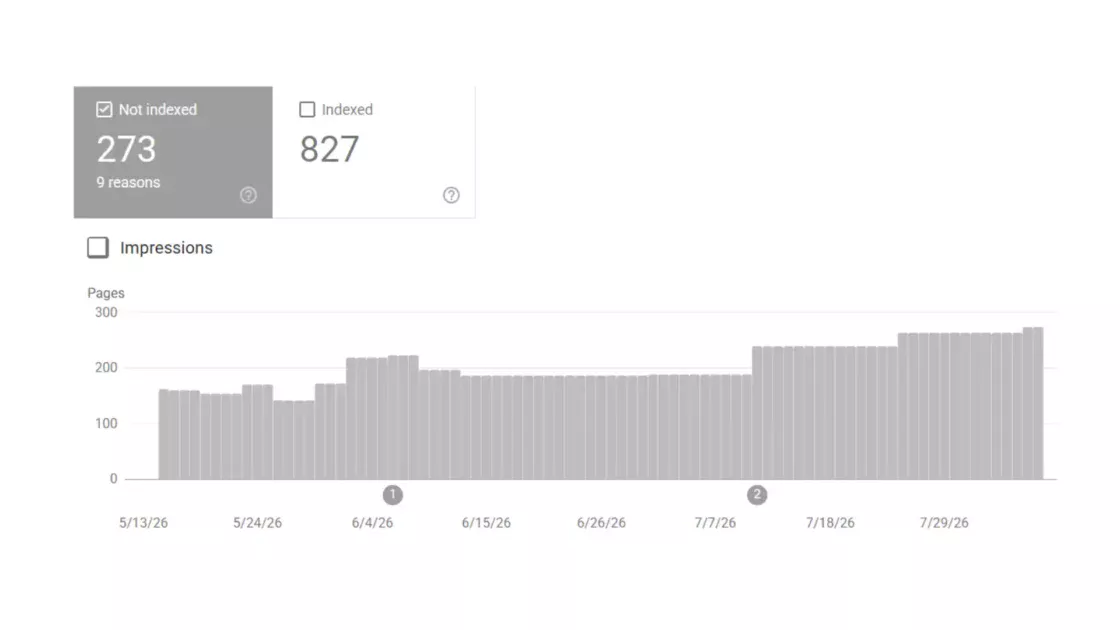
Google’s own Search Console documentation reinforces the same point. The Video indexing report shows how many indexed pages on your site contain a video that Google indexed, how many contain a video Google did not index, and why. If your “Video indexed + No video indexed” total is lower than expected, Google says it may be having trouble indexing the pages that contain videos. Before debating CTR theory, make sure Google is finding and indexing the video in the first place.
Structured data matters, but Google does not make promises
Plenty of bad advice begins with a half-truth. “Add schema and Google will show a rich result” is one of them. Google’s structured-data introduction says the right way to measure value is to run a before-and-after test on a few pages. Its general guidelines go further: structured data makes a feature eligible, but Google does not guarantee that the rich result will appear, even if the page is marked up correctly and passes the Rich Results Test. Search experience depends on variables like device, location, context, and the algorithm’s judgment of what suits the query.
That does not weaken the case for markup. It sharpens it. VideoObject, Clip, SeekToAction, and related properties help Google understand what the asset is, where it lives, and what can be shown. Google says video structured data can influence elements like the thumbnail URL, description, upload date, and duration. That is exactly the material users read when deciding where to click. The right way to think about markup is not as a shortcut. It is as a translation layer between your page and Google’s presentation systems.
Google’s quality rules also matter here. The structured data has to represent the visible page content. It should be complete, relevant, current, and original. Hidden, misleading, or mismatched markup can cost the page eligibility. That is one reason low-effort “video SEO at scale” can backfire. Search appearance gains are usually earned by pages whose metadata, page purpose, and media asset all tell the same story.
Search Console is where the real CTR story lives
The most useful sentence in Google’s structured-data documentation may be the least glamorous one: run a before-and-after test. That is the answer to the whole debate. If you want to know whether video raised your CTR, measure your pages before and after the change, not against a recycled industry myth. Google explicitly recommends this approach because page views vary for many reasons, and because site owners need a controlled way to compare pages with structured data against those without it.
Search Console gives you the pieces. The Performance report lets you filter by search type, including video. The Video indexing report tells you which pages have indexed videos and which do not. Rich result reports show whether Google is finding valid markup and what errors block eligibility. Google’s review-snippet documentation also points users back to the Performance report to check how often a page appears as a rich result, how often users click, and the average position. The pattern is consistent across Google’s own materials: implementation and measurement belong together.
This is also where nuance replaces generic CTR talk. A page may gain impressions and lose CTR. Another may lose impressions but gain clicks because it wins a better result treatment on higher-intent queries. A publisher may see stronger video performance in the main results but little gain in Video mode. A brand may find that self-hosted watch pages pick up a smaller number of much more valuable clicks. None of those outcomes fit neatly inside a universal +41% story. They are still wins if they improve the right business outcome.
Case studies show the upside when discoverability improves
If you want proof that video can materially improve search performance, Google’s own case studies are more useful than the old CTR myth. Weather.com saw the number of indexed video pages double after implementing video markup. Italiaonline reported an 841% increase in video clicks, a 353% increase in impressions, and an 85% drop in video indexing errors. ABP News said it achieved 30% traffic growth after applying video best practices across eight regional languages.
Vidio’s 2024 case study adds a newer example. After implementing VideoObject markup, stable URLs, and proper validation, the company reported roughly 3x video impressions and nearly 2x video clicks on Google Search. MX Player earlier reported 3x growth in traffic from Google and a 100% increase in video page views per user session from organic search traffic over six months after improving video discoverability with structured data and frequent video sitemap submission.
Those numbers are dramatic, but they do not mean “video always boosts CTR by a fixed percentage.” They point to a different truth: when Google can actually understand, index, and richly present your video pages, the upside can be substantial. That is a stronger and more useful claim because it maps to a mechanism. It explains why some sites see huge gains and others see almost none. The difference is rarely “they had a video.” The difference is that one site made the video genuinely discoverable in search, and the other merely embedded one on a page.
Key moments turn one result into several decision points
Key moments deserve their own section because they change the unit of choice inside a search result. Google describes key moments as a way for users to navigate video segments like chapters in a book. Vimeo’s case study shows the result: a video rich result with an expandable, scrollable time bar and labeled segments. That means a user is no longer deciding only “Do I click this result?” They are deciding “Do I click this exact part of this result?”
That is a serious advantage on task-based queries. A messy twelve-minute video with no chapters asks a lot of the searcher. A segmented result that exposes “pricing,” “setup,” “demo,” or “troubleshooting” in the search result itself feels much closer to the answer. Google says it will prioritize key moments you specify through structured data or, for YouTube-hosted videos, through the YouTube description. Vimeo implemented Clip markup for chapters and Seek markup for videos without chapters so Google could identify key moments automatically.
This is one of the clearest places where video can beat plain text for clicks without needing a neat uplift percentage. A segmented video result lowers uncertainty. It tells the searcher the answer is probably inside, and even where inside. If your topic is procedural, comparative, demonstrative, or diagnostic, key moments can make the result feel more usable than a text snippet that only hints at what is covered.
Hosting strategy changes who gets the click
A lot of teams treat “YouTube versus self-hosted” as a religious argument. It is better understood as a distribution decision. BrightEdge says YouTube dominates video citations inside AI Overviews, with minimal representation from other video platforms, and notes that this matters more as AI Overviews appear on a large share of searches. That makes YouTube hard to ignore if the goal is visibility across Google’s expanding answer surfaces.
Self-hosted or platform-hosted watch pages still matter for owned outcomes. Google’s video best-practices documentation says that when users click a video result, they land on your site to watch the video. That is valuable if your real goal is subscription, lead capture, product education, or conversion on the page. Vimeo’s case study shows another angle: platform-level video SEO work can let customers benefit from richer search features like key moments without needing to build everything themselves.
For most publishers and brands, the smartest strategy is not either-or. It is surface planning. Use YouTube where broad search visibility, AI citation probability, and demand capture matter. Use owned watch pages where the click itself is commercially valuable and where you can control the surrounding experience. The old 41% myth made video look like a simple traffic trick. Modern search makes it a routing problem: which surface do you want to win, and what should happen after the click?
AI Overviews have made every click harder to win
This is the biggest reason old CTR claims break under present-day scrutiny. SparkToro found that 59.7% of EU Google searches in 2024 ended without a click to the open web. Similarweb later said that by May 2025 nearly 69% of searches ended without a click, and that on SERPs involving AI Overviews the figure rose to nearly 80%. Pew’s browsing analysis found users clicked a traditional search result in 8% of visits when an AI summary appeared, compared with 15% when no AI summary appeared.
Seer’s work gives the marketer’s view of the same shift. In its September 2025 update, Seer said organic CTR for queries with AI Overviews had fallen from 1.41% to 0.64% in its tracked set. In a later summary, Seer described a 61% decrease in organic CTR for queries with AI Overviews, and even reported a 41% fall on queries without AI Overviews in that subset, suggesting a broader behavior change across search. BrightEdge adds another layer: only about 17% of AIO-cited sources also rank in the organic top 10. In other words, the old map of rank-to-click is being redrawn.
Video still matters inside this harsher environment, but it works differently than the old myth suggests. It is not simply “video beats text.” It is that video may help you become the asset Google chooses to present, cite, segment, preview, or surface visually before a user even reaches the conventional blue links. That can still create clicks. It can also create awareness without clicks. The strategy has to account for both outcomes now.
The strongest search use cases for video in 2026
Video is not equally useful across all query classes. It tends to have its clearest edge where the user benefits from seeing motion, sequence, or proof. BrightEdge says YouTube citations in AI Overviews skew toward how-to queries, visual demonstrations, examples, unboxings, and news. Google’s own video features line up with that logic: video previews, key moments, and live badges all make most sense on queries where the medium itself answers part of the question.
That means the strongest search roles for video usually sit in a handful of patterns. Product demonstrations work because searchers want to see the object in use. Fix-it content works because steps are easier to follow visually. Comparison content works because timing and side-by-side evidence matter. Live or rapidly changing subjects benefit from live badges and recency signals. Instructional media benefits from chapters and key moments because the user often wants one step, not the whole video. Video has the biggest click advantage when it reduces effort.
The weakest use cases are easy to spot too. If the question is fully answerable in two clean sentences, a video is less likely to win the click by itself. If the page buries the video under generic content, the result may not earn richer treatment. If the title and snippet are vague, the page may lose even with the video present. Search is full of pages that technically contain a video and still look like plain text results. That is not a failure of video as a medium. It is a failure of packaging and eligibility.
A clean testing framework beats recycled statistics
The better replacement for the 41% myth is a testing model simple enough to run and strong enough to trust. Start with a defined page set. Pick pages that already rank consistently and receive enough impressions to show movement. Add or improve the video asset. Implement the relevant structured data. Check that the video is indexed. Then compare impression share, CTR, clicks, and search appearance changes in Search Console across a meaningful time window. Google’s own documentation points site owners toward exactly this before-and-after method.
The second step is segmentation. Separate branded from non-branded queries. Separate desktop from mobile where possible. Separate web search from video search. Watch whether the page gained richer presentation, not just whether the page still contains a video. AWR’s studies show just how much device and intent change CTR. If you skip segmentation, you can easily misread a result. What looks like a weak video lift might actually be a strong lift on commercial desktop queries hidden inside a flat site-wide average.
The third step is honesty about the outcome. A page may gain discoverability, impressions, and watch-time quality without showing a dramatic CTR jump. Another page may gain CTR because the thumbnail and title improved, not because users wanted long-form video. Both findings are useful. What matters is that you can explain the change. That explanation is worth more than any inherited benchmark because it belongs to your own search environment, your own SERP mix, and your own audience.
The better claim to publish now
Video can still raise search CTR. The old 41% statistic is not the right way to say it anymore. That is the clean conclusion after reviewing the public evidence. The legacy number traces back to early secondary citations of an AimClear-era observation. Current search evidence paints a different picture: CTR varies sharply by rank, device, industry, intent, and result type; rich video presentation can make results more clickable; technical discoverability can create very large gains; and AI Overviews now suppress many clicks before users reach organic listings at all.
That leaves you with a better editorial sentence, and it is stronger because it is honest. Video improves your odds of winning attention in search when Google can understand the asset, richly present the result, and match the format to the user’s task. That is not as tidy as “41%,” but it is much closer to the truth. It also leads to better work: better watch pages, better titles, cleaner markup, stronger thumbnails, clearer segmentation, and better measurement.
If you need a publishable replacement for the old stat, use this: video does not come with a fixed CTR bonus in modern search, but it can materially improve discoverability and click appeal when it earns richer presentation. That line fits the evidence. It also respects the search landscape we actually have, not the one people remember from a decade ago.
FAQ
No. The public references that support it are old secondary citations to an AimClear-era study, not a current benchmark for modern Google Search.
I could verify it in a 2012 Social Media Today article and a 2013 iGo Sales & Marketing post, both citing AimClear rather than publishing a fresh modern dataset.
Yes. Google’s documentation and case studies show that better video indexing, markup, and presentation can improve discoverability, impressions, clicks, and traffic.
Video can make a result more informative before the click through thumbnails, duration, previews, key moments, and stronger metadata.
No. Google says markup makes a page eligible for richer presentation, but it does not guarantee that the feature will appear.
Yes. Google says videos can surface in the main search results, Video mode, Google Images, and Discover.
They are labeled segments inside a video result that let users jump to a specific part of the video. Google can infer them or use markup and YouTube timestamps supplied by the publisher.
Usually because Google cannot properly index the video, access the video bytes, or show a richer result from the metadata and page structure provided.
Blocked video files, unstable URLs, missing contentURL, inaccessible media, weak markup, and unresolved indexing errors are common reasons.
Use Search Console, compare before and after implementation, and separate performance by search type, page, and query class. Google explicitly recommends before-and-after testing for structured data work.
Yes. Google’s Performance report supports separate filters for web, image, video, and news results.
Yes. Pew, Seer, BrightEdge, and Similarweb all point in that direction, though they measure different datasets and methods.
SparkToro found 59.7% of EU Google searches were zero-click in 2024, and Similarweb later said nearly 69% of searches ended without a click by May 2025.
For broad visibility, YouTube is hard to ignore, especially since BrightEdge found it dominates video citations in AI Overviews. For owned conversion, self-hosted or platform-hosted watch pages still matter.
How-to topics, visual demonstrations, product examples, unboxings, and live or news-driven content tend to fit video best.
Google says title links are often the primary piece of information users rely on when deciding which result to click.
Yes. Google says snippets are created automatically, but it may use a meta description when it better describes the page, and strong descriptions can improve the quality of search traffic.
Use a claim grounded in today’s evidence: video can materially improve discoverability and click appeal in search when Google can index it and show a richer result, but there is no reliable current universal uplift figure.
Author:
Jan Bielik
CEO & Founder of Webiano Digital & Marketing Agency

This article is an original analysis supported by the sources cited below
10 Tips to optimise your video for search
An early public citation of the 41% claim, useful for tracing the history of the statistic.
Video search engine optimization: A ticket to the first page?
A 2013 secondary source that attributes the 41% claim to a March 2011 AimClear study and Manny Rivas.
Video SEO best practices
Google’s main documentation on video previews, key moments, live badges, fetching video files, and eligibility rules.
Video structured data
Google’s documentation on VideoObject and related markup, including where videos can appear across Google surfaces.
Video indexing report
Google Search Console documentation explaining how to diagnose indexed and non-indexed video pages.
Performance report overview and basic setup
Google’s guide to the Search Console Performance report, including search-type filtering for video results.
Rich result report overview
Google’s explanation of rich result reports and how valid markup becomes eligible for richer appearances.
Introduction to structured data markup in Google Search
Google’s guidance on structured data, including its recommendation to run before-and-after tests.
General structured data guidelines
Google’s rules on eligibility, quality, access, and the fact that valid markup still does not guarantee a rich result.
Influencing your title links in search results
Google’s documentation on title links and the signals used to generate them in search.
Control your snippets in search results
Google’s guide to snippets and meta descriptions, including what influences the descriptive text shown in results.
Google Search Essentials
Google’s baseline recommendations for helpful, people-first content and clear page signals.
How video SEO features helped three global content publishers reach their audiences more effectively
Google case studies covering Weather.com, Italiaonline, and ABP News, with concrete traffic and click gains.
How Vimeo improved Video SEO for their customers
Google’s case study on Vimeo’s implementation of VideoObject, Clip, and Seek markup for key moments.
How Vidio brought more locally relevant video-on-demand content to Indonesian users through Google Search
A current Google case study linking VideoObject markup and stable URLs to major gains in impressions and clicks.
MX Player boosted organic traffic 3x by maximizing video discoverability on Google
Google’s case study showing how structured data and video sitemaps improved organic traffic and engagement.
These are the CTRs for various types of Google search result
A Sistrix study showing how CTR shifts across different SERP feature layouts, including video results.
We analyzed 4 million Google search results. Here’s what we learned about organic CTR
A widely cited CTR study that helps frame modern baseline organic click curves.
How people use Google Search
Backlinko’s user-behavior research on modern SERP interaction patterns.
Google CTR stats – Changes report for Q1 2025
A quarterly CTR study showing how widely click behavior varies by industry, device, and intent.
Google CTR stats – Changes report for Q4 2025
A later AWR report tracking year-over-year CTR changes and continuing volatility across desktop and mobile.
2024 zero-click search study
SparkToro’s analysis of zero-click search behavior in the EU and US.
Do people click on links in Google AI summaries?
Pew Research Center’s behavioral study comparing link clicks on result pages with and without AI summaries.
AI Search Optimization Best Practices (2026)
Similarweb’s summary of post-AI Overviews zero-click behavior and the shift in click opportunity.
Answer Engine Optimization: The complete 2026 guide
A Similarweb guide that cites zero-click growth and Seer’s measured CTR losses on AI Overview SERPs.
AIO impact on Google CTR: September 2025 update
Seer’s data-backed study on how AI Overviews affected organic CTR in its tracked query set.
Search Engine Land shares AIO impact on CTR, cites latest Seer Interactive findings
Seer’s later summary of its CTR findings, including the reported 61% organic CTR decrease on AIO queries.
AI Overviews at the one-year mark
BrightEdge’s study of AI Overview presence, pixel height, and citation overlap with organic rankings.
YouTube’s growing impact on Google AI Overviews
BrightEdge’s analysis of YouTube’s dominance in video citations inside AI Overviews and what that means for hosting strategy.
| Citing this article? Brief excerpts are welcome. Please credit Webiano.digital, name the author where stated, and include a link to https://webiano.digital and to this original article. Full or substantial republication requires prior written permission. Read our Copyright and Content Use Policy. |
This article was prepared with the assistance of artificial intelligence tools. The content underwent expert human review, and Webiano Digital & Marketing Agency assumes editorial responsibility for its final version and publication.