The phrase m-commerce sounds smaller than the thing it describes. It suggests a side branch of e-commerce, a mobile variation on a bigger system. That is no longer true. Worldpay says smartphones accounted for 57% of global e-commerce spend in 2024, up from 19% a decade earlier. DataReportal puts the number of mobile phone users at 5.78 billion, with smartphones making up roughly 87% of handsets in use worldwide, while GSMA says 4.6 billion people were using mobile internet by the end of 2023. The phone is not the screen people use before the real purchase. For many shoppers, the phone is the purchase.
Table of Contents
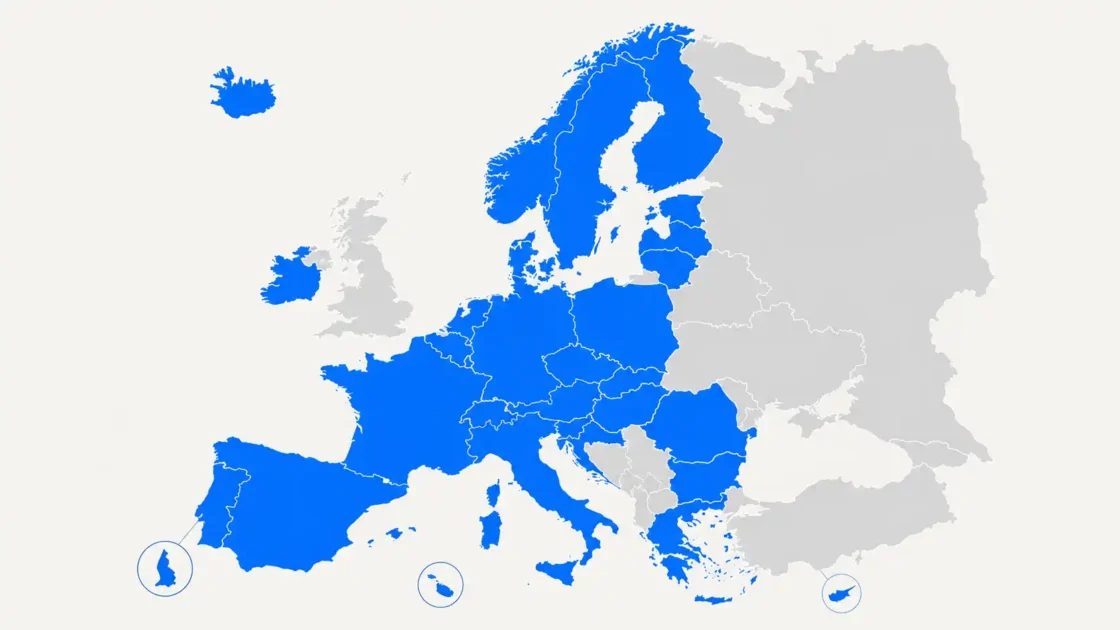
That change is visible in Europe as well. Eurostat says 78% of EU internet users bought online in 2025, and mobile devices were used to connect to the internet by almost 9 out of 10 individuals in the EU that year. Shopping through a website or an app has become routine enough that the boundary between “online shopping” and “mobile shopping” keeps fading. Yet the same Eurostat data also shows a problem that retailers often understate: 35.4% of online shoppers in the EU reported issues while buying through a website or app. Mobile commerce is mature. Mobile commerce is also still messy.
That tension is what makes m-commerce worth examining. It is already dominant as a behavior, but it is still unfinished as a system. The wins are obvious: speed, convenience, saved payment credentials, location awareness, and the fact that a store can travel with the customer all day. The weak points are just as clear: awkward forms, fragile trust, delivery friction, privacy concerns, and the strange way a tiny screen punishes every lazy decision a retailer makes.
This is where the subject gets more interesting than the usual “mobile is growing” headline. M-commerce is not only a channel shift. It is a redesign of retail around moments, motion, and compressed attention. People do not shop on phones the way they shop on desktops. They browse differently, compare differently, hesitate differently, and abandon differently. A desktop session often feels deliberate. A phone session is more exposed to interruption, distraction, weak signal, low patience, and the literal limits of thumbs, glare, and battery life.
Retailers that understand this do not treat mobile as a responsive version of their desktop site. They treat it as a different buying environment with its own psychology. That shift changes product discovery, checkout design, payments, fraud controls, loyalty, order tracking, and even the legal and technical plumbing behind the sale. It also changes what counts as a good customer experience. On mobile, a polished brand voice matters less than clarity, speed, and certainty. The shopper wants to know what the item is, what it costs, when it arrives, how to pay, and what happens if something goes wrong. Anything that slows those answers down starts to feel expensive.
The phone became the store
The old model of online shopping had a familiar rhythm. A person noticed a product somewhere, opened a laptop later, compared options across tabs, and checked out with a card. Mobile fit into that routine as a helper. It was where people read reviews in bed, looked at specs in a physical store, or sent links to friends. The final transaction still felt desktop-shaped.
That structure has cracked. The same device now handles discovery, evaluation, payment, tracking, and repeat purchase. Shoppers move from short video to search result, from message thread to marketplace, from map listing to merchant site, then from saved wallet credential to confirmation screen, all without switching context in the way people once did. Google’s retail guidance describes a non-linear shopping path where discovery can happen in Shorts, Search, Shopping, and other surfaces before a retailer closes the sale. That is not a niche pattern anymore. It is a normal one.
The phone also changes the timing of intent. Desktop shopping often sits inside scheduled attention. Phone shopping fills scraps of time: the queue, the tram, the sofa, the lunch break, the ten minutes before sleep. That does not make mobile shoppers unserious. It makes them less tolerant of wasted motion. On mobile, the retail experience competes with messages, maps, social feeds, work alerts, low battery, and real life happening around the user. A desktop page can survive a bit of friction. A phone experience often cannot.
That is one reason the global numbers moved so quickly. Worldpay’s reporting on payment behavior shows that the smartphone’s share of global e-commerce spend tripled over the last decade, while digital wallets reached 53% of global e-commerce spend in 2024. The growth is not just about more people owning smartphones. It is about the phone becoming a trusted commercial device rather than a browsing device. Trust is the real threshold. Once shoppers believe the device can handle identity, payment, receipts, and post-purchase follow-up with minimal pain, the center of gravity shifts.
Europe offers a useful view of this shift because adoption is broad but uneven. Eurostat’s 2025 data shows a strong rise in online buying across the EU over the last decade, yet the share of online buyers still differs widely by country. That matters because m-commerce depends on more than phones. It depends on card infrastructure, broadband quality, local payment habits, logistics reliability, merchant maturity, and consumer trust. A sleek checkout screen cannot compensate for weak delivery networks, low trust in sellers, or poor digital payment coverage.
The result is a retail world where “mobile-first” is no longer a slogan. It is the starting condition. That does not mean every category is equally mobile. Big-ticket B2B buying, some luxury purchases, and comparison-heavy technical products still perform differently across devices. Yet even there, mobile often starts the journey, supports research, and handles repeat orders or account activity later. The desktop keeps a role, but it no longer owns the narrative.
A better way to frame the change is this: m-commerce turned retail into an always-near activity. The store is no longer a place a customer visits. It is a layer that sits on top of daily life, ready to be activated when a need, desire, or reminder appears. That is powerful. It is also unforgiving. A retailer now has more chances to be present and fewer excuses for getting the basics wrong.
M-commerce is a behavior before it is a channel
Many companies still organize mobile commerce like a platform question. Should they build an app? Improve the mobile web? Push customers toward a marketplace? Add wallet buttons? Those are real decisions, but they come after something more basic. M-commerce begins as a pattern of behavior. People shop on phones because the device is already present when the shopping impulse appears.
That impulse is not always a clean search for a known item. It can start with a location, a message, a creator recommendation, a saved post, a reorder reminder, or a delivery need that suddenly feels urgent. Mobile shopping sits close to context. It knows where the user is, what time it is, which card is available, whether the store is nearby, and sometimes even what was left in a cart last week. That is why mobile commerce feels more immediate than desktop commerce. The gap between noticing and buying is shorter.
Google’s retail guidance captures part of this shift by describing consumer journeys that jump across surfaces rather than moving in a neat funnel. That matters because merchants often still design for a straight-line path: homepage, category, product page, cart, checkout. On phones, real buying paths are more erratic. A shopper may land on a product page from a search result without ever seeing the homepage. They may compare in a marketplace, then buy direct. They may save the item on a phone and finish later on the same phone, not on a desktop. Mobile collapses the old handoff points.
This also changes what “friction” means. On desktop, friction usually means too many fields, too many pages, or slow performance. On mobile, friction includes all of that, plus context switching. If a customer has to leave the product page to search for shipping rules, the sale is already in danger. If they need to copy a discount code from another app, the chance of distraction rises. If the site demands account creation, document upload, or card entry on a tiny keyboard, the purchase starts to feel like work.
The strongest mobile commerce experiences understand that shoppers are not always in a “shopping mode.” They are often in a micro-intent mode. They want the next answer, not the full tour. Does this fit? Is it in stock? Can it get here by Friday? Can I pay with the wallet I already trust? That makes product clarity unusually valuable on mobile. Rich photography matters. So do size guides, stock signals, delivery windows, local pickup options, and clear total pricing. Mobile buyers do not need less information. They need information arranged in a way that respects compressed attention.
The phone also blends online and offline commerce in a way desktop never did. A shopper standing in a physical shop may check prices, reviews, color availability, or delivery options on the same device they later use to pay. The mobile device sits at the border between store and web, between discovery and confirmation. That is why Worldpay’s newer reporting points not only to mobile’s share of e-commerce, but also to the spread of payment apps into physical point of sale, with one 2026 trend analysis projecting payment apps to account for 46% of global POS value by 2030. The same device is now expected to handle both remote and in-person purchase moments.
Once you look at m-commerce as behavior rather than channel, a lot of old debates lose force. App versus web is not a religion. Marketplace versus direct is not a moral choice. What matters is whether the merchant fits the rhythm of the customer’s real buying behavior. The businesses that win on mobile are often the ones that cut one step, remove one doubt, or answer one question earlier than everyone else.
Checkout shrank to a thumb-sized decision
Checkout is where mobile commerce becomes brutally honest. A brand can tell itself a beautiful story across ads, email, content, and product pages. The checkout reveals whether that story survives contact with the user’s patience.
Baymard’s checkout research keeps returning to the same point: abandonment is not a mysterious fact of online retail; it is often the result of preventable friction. Baymard says the global average cart abandonment rate sits at 70.19%, and its research argues that many large e-commerce sites could gain as much as a 35% increase in conversion rate through better checkout design. On mobile, those losses hurt more because every form field, keyboard switch, and tiny tap target feels bigger than it looks on a design mockup.
A mobile user is making a thumb-sized decision under imperfect conditions. The screen is small. The keyboard covers half of it. Interruptions are constant. If the user hits an error, the recovery path matters as much as the original error. A desktop site can hide a lot of complexity behind whitespace and screen real estate. A phone cannot. Bad decisions pile up quickly: forced account creation, hard-to-edit cart quantities, hidden delivery costs, weak autofill support, mysterious promo code fields, unclear return policies, and payment screens that ask the user to do what the operating system could have done for them in one tap.
Baymard’s research on phone number fields offers a useful example of how small details break trust. It notes that 14% of users will abandon checkout if a phone number is simply required without a clear explanation. That is not a technical failure. It is a communication failure. The field makes the shopper imagine spam, surprise calls, or unnecessary data collection. Mobile checkout is full of these moments. The shopper is not only deciding whether to buy the product. The shopper is also deciding whether the merchant deserves access to money, address, and identity.
Mobile checkout in one glance
| What helps the sale on mobile | What kills it on mobile |
|---|---|
| Saved wallet or autofill payment | Forced card entry on a tiny keyboard |
| Guest checkout or light account creation | Mandatory account creation before payment |
| Clear total cost and delivery date | Shipping surprises late in the flow |
| Short forms with obvious error recovery | Multi-step forms with vague validation |
The pattern is simple enough to state and hard enough to execute: mobile checkout works when the retailer removes avoidable labor. The user should not have to type information the device already knows, search for rules that should be visible, or guess what happens after payment. Baymard’s evidence on checkout friction, combined with Google Pay’s setup guidance and W3C’s payment standards work, all point in the same direction: the web and app stack now support faster, more structured payment flows. The bottleneck is often merchant execution, not missing technology.
The W3C’s Payment Request API was created for exactly this kind of flow. It lets a browser exchange payment and shipping information with the user agent during checkout, reducing the need for merchants to reinvent complex form logic from scratch. The related Web-based Payment Handler work extends the idea by allowing web applications to handle payment requests. In plain terms, the standards world has spent years trying to make web payments feel less like manually filling out paperwork and more like a native system interaction.
The hardest part is that mobile shoppers rarely complain in detail. They leave. A desktop user may tolerate one more field because they already opened the laptop, committed time, and maybe compared across tabs. A mobile user can abandon in seconds and tell themselves they will come back later. Often they do not. Mobile commerce does not merely reward convenience. It punishes hesitation that merchants create for no good reason.
Wallets changed the last ten seconds of the sale
The most dramatic change in m-commerce is not visual. It is infrastructural. Digital wallets removed the ugliest part of remote buying: manual payment entry. That sounds small until you remember how much commerce used to depend on typing a long card number, expiry date, billing address, and security code into a phone.
Worldpay says digital wallets accounted for 53% of global e-commerce spend in 2024, and its broader reporting shows how central phones have become to payment behavior. OECD material on competition in mobile payment services, citing Worldpay data, says mobile payments represented 66% of e-commerce transactions worldwide in 2024. Even if those figures vary by measure and market, the direction is unmistakable: the wallet moved from convenience feature to default expectation.
The reason wallets matter is not only speed. It is the combination of speed, security, and cognitive relief. Apple presents Apple Pay as a way to pay in stores, on websites, and in apps that is safe, secure, and private. Google’s developer documentation describes Google Pay as fast checkout that gives merchants access to payment methods saved to Google Accounts and returns a secure payment token for processing. From the user’s point of view, both systems reduce work. From the merchant’s point of view, they reduce form friction and move payment handling into more standardized, better-understood flows.
The security layer behind this shift matters. EMVCo explains payment tokenisation as replacing the primary account number with an alternative token that can be constrained to a merchant, device, or payment scenario. Mastercard describes tokenization in similar terms, as a stand-in number used instead of the real card number. That changes the risk profile of a transaction. The merchant is no longer relying on plain stored card data in the old way. The payment credential becomes more specific, less reusable for fraud, and easier to fit into modern wallet flows.
This is why the last ten seconds of checkout changed so much. The customer sees a wallet button, confirms with face, fingerprint, passcode, or device authentication, and the transaction moves forward with far less visible effort. That does not remove fraud, chargebacks, or compliance work. It does shift the emotional feel of paying. Payment used to be the clunkiest part of buying on a phone. Now, for many users, it is the smoothest.
The wallet also changes trust signals. A merchant can say “secure checkout” in a footer, but a wallet button anchored in a device ecosystem the user already trusts carries more weight than a line of marketing copy. Shoppers may not understand tokenization or payment rails in detail, but they understand that a biometric prompt from the operating system feels more legitimate than typing card details into an unfamiliar mobile form.
For merchants, that raises a strategic question. A wallet button is not a cosmetic add-on. It is a decision about meeting customers inside their preferred trust environment. If the merchant insists on a full manual checkout while competitors offer Apple Pay, Google Pay, or other wallet options, the merchant is asking users to do more work and trust more of the merchant’s stack. On mobile, that is usually a losing trade.
The app-versus-web fight is mostly over
For years, digital commerce teams argued about whether the future belonged to native apps or the mobile web. The debate produced heat, decks, and budget wars. It also produced a false choice. The more useful question is no longer which one wins. It is which part of the journey each one handles best.
Apps still have obvious strengths. They are strong at repeat purchase, loyalty, push-based re-engagement, stored preferences, logged-in continuity, and deeper integration with device features. If a brand has frequent users, strong retention, and a reason to earn home-screen presence, an app can pay off handsomely. But the mobile web still owns reach. It is where new demand appears. It is frictionless to access, linkable, searchable, and available without install decisions.
This is where Progressive Web Apps complicated the old story in a useful way. Web.dev defines a PWA as a web app that uses progressive enhancement to provide a more reliable, integrated, installable experience while keeping the reach of the web. Service workers make offline and resilient behavior possible. The web app manifest helps control how the experience behaves when installed. Put simply, the web borrowed some of the habits people liked in apps.
The Jumia case remains a good illustration of why that matters. Web.dev reported that with more than 65% of its web traffic on mobile browsers, Jumia looked to progressive web app technologies and push notifications to address abandoned carts and re-engage shoppers. The point is not that every retailer needs the same architecture. The point is that mobile commerce stopped rewarding ideological purity. A retailer can keep the web’s discoverability and still borrow app-like behaviors where they improve buying.
That leaves merchants with a more grounded decision framework. If the brand depends on frequent repeat buying, membership, subscriptions, or personalized account experiences, an app may deserve heavy investment. If growth depends on SEO, product discovery, campaign landing pages, and low-friction first visits, the mobile web will stay central. Many retailers need both. The mistake is thinking the decision is mainly technical. It is commercial. What is the purchase frequency? What is the customer acquisition mix? Does the brand have enough pull to justify an install? Can the web already do enough of the work?
The quiet truth is that users do not care much about this debate. They care whether buying feels fast, predictable, and trustworthy. A stunning app that is hard to discover, heavy to maintain, or rarely opened is not automatically superior. A fast, well-built mobile website with wallet support, sane forms, and strong post-purchase follow-up can outperform a mediocre app. The most successful merchants stopped asking which platform is fashionable and started asking where each platform earns its keep.
That shift also helps with resource discipline. A retailer does not need three half-good experiences. It needs one excellent path to purchase and one strong path to retention. For many businesses, that means a ruthless mobile web checkout and a more selective app strategy. For others, especially in grocery, food, transport, marketplaces, and high-frequency retail, the app remains the daily habit engine. The point is not to pick sides. The point is to align the stack with the customer’s real pattern of demand.
Speed, trust and clarity decide mobile revenue
Retail teams often talk about conversion as if it were a marketing problem. On mobile, conversion is usually a product problem first. A slow, unclear, or suspicious experience bleeds revenue before the customer even reaches the payment step.
Web.dev’s performance material has built a strong body of evidence around this. Its performance guidance points to concrete business outcomes from better Core Web Vitals and faster user experiences. Rakuten 24 increased revenue per visitor and conversion rate after investing in Core Web Vitals. Vodafone saw sales rise after improving Largest Contentful Paint. Redbus improved Interaction to Next Paint and increased sales. T-Mobile reported a 60% improvement in visit-to-order rate and a 20% reduction in user site issues after a data-driven web performance effort. Swappie reported a 42% increase in mobile revenue by focusing on Core Web Vitals. These are not vanity metrics. They are commercial ones.
Why does performance hit mobile so hard? Because the device already starts with constraints. Networks vary. Battery matters. CPU power varies across handsets. The user is exposed to more interruption. A delay on desktop feels like irritation. A delay on mobile often feels like uncertainty. Did the button work? Is the page broken? Did payment go through? Should I refresh? Those doubts create the worst kind of friction: friction that looks like risk.
Clarity matters just as much as speed. A fast site that hides shipping costs, delivery timing, return rules, or subscription conditions is still expensive in the only currency that counts on mobile: attention. Eurostat’s 2025 finding that more than a third of EU online shoppers faced issues through a website or app should be read as a warning, not a curiosity. Mobile commerce is mainstream enough now that users judge problems harshly. They do not treat poor experiences as normal internet chaos. They treat them as evidence that the merchant is careless.
Trust on mobile is built from very plain elements. The full price appears early. Delivery timing is specific. Stock status looks believable. Returns are visible before purchase. Payment methods are familiar. The site does not ask for strange permissions or too much personal data without explanation. Error messages say what went wrong and how to fix it. These are not glamorous features. They are what make a phone-based purchase feel low-risk.
That is why “brand experience” on mobile is often misunderstood. Brand does matter, but not mainly through cinematic storytelling or elaborate motion. On a phone, the most persuasive brand signal is competence. The experience feels under control. Pages load. Images look right. Sizes are easy to compare. Wallets appear where expected. Help is available without a scavenger hunt. The confirmation screen leaves no doubt that the order exists.
This also explains why mobile commerce leaders tend to simplify aggressively. They know that every extra widget, script, pop-up, banner, or third-party tracker competes with the sale. The engineering lesson and the retail lesson point in the same direction: fewer moving parts, faster response, stronger defaults, fewer chances for confusion.
Small screens punish bad retail design
A desktop site can survive mediocre design longer than a mobile site can. The small screen strips away that luxury. It exposes clutter, weak hierarchy, vague copy, and indecision all at once.
Baymard’s recent mobile UX work lays out common pitfalls that still appear across e-commerce sites: weak touch targets, fragile navigation, poor filtering, awkward forms, and interactions that feel fine in a staging environment but break under one-handed use. That gap between design intent and lived use is one of the oldest problems in m-commerce and one of the most persistent. Teams still build flows that look good in reviews and feel bad on trains, in sunlight, or with one thumb while carrying a bag.
Good mobile retail design starts with restraint. The page has one main job. The customer sees the product quickly. The price is unmissable. Variants are easy to switch. Size help appears before frustration sets in. Delivery info is nearby. The primary action is obvious. Secondary actions do not compete for attention. That sounds almost too simple to mention, yet many mobile product pages still crowd the screen with competing modules that belong lower down the journey.
Copy matters more on phones than some designers admit. Long paragraphs collapse into walls of text. Thin copy creates uncertainty. The right mobile copy is brief but specific. It answers the practical question the user is likely asking at that moment. The strongest product pages do not make the user decode the offer. They make the decision feel legible.
Forms are where design quality becomes measurable. Autofill, address lookup, sensible input types, visible progress, and forgiving validation all matter. So does the willingness to ask for less. Mobile retailers sometimes behave as if every piece of customer data is equally valuable. It is not. Extra fields cost money when they slow the sale or raise suspicion. A checkout should gather what is needed to complete the order and support service, not everything a CRM team might enjoy having later.
The emotional tone of mobile design matters as well. A phone is an intimate device. Shoppers notice when a merchant feels pushy, needy, or manipulative. Countdown timers, aggressive pop-ups, hard-to-close overlays, and guilt-based account prompts can feel especially abrasive on mobile because they physically occupy so much of the screen. Desktop users may resent them. Mobile users often just leave.
That is why the best mobile commerce design often looks almost understated. It is not trying to impress other designers. It is trying to reduce decision cost. The page is calm enough for the shopper to think clearly. That is a commercial advantage, not a minimalist preference. Small screens reward businesses that know the difference between information and noise.
Payments, fraud and privacy moved to the front
Once mobile commerce became the default route for many purchases, security stopped being a back-office topic. It became part of the customer experience.
That shift creates a difficult balancing act. Retailers need strong protection against fraud, account takeover, bot activity, and payment abuse. Shoppers want smooth checkout, minimal interruption, and a sense that the merchant is not collecting more personal data than necessary. On mobile, heavy-handed controls quickly feel hostile. Loose controls feel reckless. Good m-commerce sits in the narrow band where security is strong but mostly invisible.
NIST’s guidance on multifactor authentication for e-commerce makes the logic clear. Retailers can use risk-based MFA and open standards-based approaches to reduce the chance that customer accounts are used for fraudulent purchases. The word “risk-based” matters. Strong protection does not mean challenging every user every time. It means escalating checks when the signal justifies it. That is a better fit for mobile commerce, where universal friction can crush conversion.
PCI’s merchant guidance frames the baseline from the payment side. PCI DSS is the standard set of technical and operational requirements for protecting payment account data, and recent PCI communication has focused on new e-commerce security requirements and the practical complexity they create for merchants. A 2025 PCI SSC FAQ also clarified SAQ A eligibility criteria for e-commerce merchants using embedded payment forms. The direction is clear enough: the industry is tightening expectations around how remote payment data is handled, even for businesses that once assumed a third-party embed removed most of the risk.
Tokenization helps here because it reduces the exposure of raw card data. Wallets help because they move the user through known trust signals and device authentication. Yet privacy still matters beyond payment credentials. EU consumer guidance on data protection and online privacy reminds shoppers that personal data collected during online purchases is protected under EU rules and applies to both EU-based businesses and non-EU businesses offering goods or services in the EU. That has direct consequences for mobile commerce, where apps and mobile sites can gather location, identifiers, behavior, contact details, and payment-linked data in one continuous flow.
The commercial lesson is blunt. Privacy and payment security are no longer legal footnotes. They are part of whether a shopper feels safe enough to continue. A confusing consent flow, a request for data that seems unrelated to the purchase, or a payment page that looks slightly off-brand can all introduce doubt. On desktop, some users power through. On mobile, doubt is fatal more often because exit is effortless.
The strongest merchants treat trust like a product requirement. They explain why data is requested. They use well-known payment methods. They make identity checks feel proportionate. They give users confirmation and records that feel solid. And they remember that fraud prevention should not make honest customers feel like suspects.
Delivery, returns and service still make or break the promise
A clean mobile checkout can hide a painful truth: the sale is not the whole mobile commerce experience. It is only the moment where the promise becomes real. The customer still needs shipping certainty, order visibility, support, and a believable path to returns or changes.
That matters more on mobile because the phone stays with the customer after the transaction. It becomes the status screen for the order. Apple’s support material and Wallet features show how post-purchase behavior is moving onto the same device and, in some cases, into the wallet itself through order tracking. The broader direction is obvious even beyond Apple: commerce does not end at payment anymore. It continues through notifications, tracking, billing visibility, and self-service support on the same mobile device that initiated the sale.
This changes the standard shoppers apply to mobile retail. They do not judge the merchant only by whether the card went through. They judge the whole flow: confirmation speed, delivery updates, change options, refund clarity, and how quickly support can resolve a problem from a phone. If that post-purchase layer is weak, the retailer wastes part of the trust earned at checkout.
Returns are especially revealing. On mobile, many retailers make buying easy and fixing a problem hard. The result is a lopsided experience where the shiny front end hides a service bottleneck. That approach may boost short-term conversion and damage repeat business later. Mobile commerce is often praised for shortening the path to purchase. The better test is whether it also shortens the path to resolution when something goes wrong.
Service design matters here as much as interface design. A customer should be able to find the order, see the delivery state, contact support, and understand return steps without hunting through layers of account menus. One reason wallets and device ecosystems are becoming more relevant is that they promise a tighter commercial loop: pay, confirm, track, and reference the purchase from one trusted surface.
For merchants, the deeper lesson is simple. The mobile experience is judged as a whole even when teams manage it in fragments. Acquisition owns ads, product owns the app, engineering owns performance, payments owns checkout, logistics owns delivery, support owns complaints. The shopper experiences one brand. On a phone, fragmentation feels especially obvious because the user has less patience for being pushed between systems that do not seem aware of one another.
Retailers that understand this treat m-commerce as an end-to-end operating model, not a nicer checkout. They make order data visible quickly, keep support pathways short, and treat the confirmation screen as the start of retention, not the end of conversion. That is where mobile commerce becomes more than convenience. It becomes reliability.
Europe is building the next layer of mobile commerce
Europe is often discussed as if it were slightly slower or more fragmented than the United States or parts of Asia in consumer tech. That stereotype misses something meaningful. Europe is building structural pieces that could matter a lot for the next phase of m-commerce, especially around digital identity, payments, and regulatory trust.
The European Commission says the EU Digital Identity Wallet will let users access online and offline services, store and share digital documents, and create binding signatures, with Member States making wallets available to citizens, residents, and businesses by the end of 2026. Separate Commission material on EU Digital Identity Wallets describes them as a safe, reliable, and private way to identify oneself and handle digital documents across Europe. If this becomes widely used, it could reduce friction in identity-heavy transactions and change how onboarding, verification, proof of age, and document submission work on mobile devices.
The digital euro discussion sits nearby. The European Central Bank says a potential digital euro could be used online or offline, with a phone or a card, including on websites and in physical shops. In its 2026 FAQ material, the ECB says the first step for a user would be to set up a digital euro wallet through a bank, post office, or other payment service provider, and notes a potential issuance target around 2029, assuming the needed EU legislation is adopted in 2026. Whatever one thinks about central bank digital currency policy, the commercial implication is clear: Europe is thinking seriously about the future payment layer for both e-commerce and point of sale.
This matters because mobile commerce becomes more powerful when identity and payment become easier to verify without becoming more invasive for the user. Europe’s regulatory style has often been cast as a brake on digital business. Sometimes it is. Yet it can also function as market infrastructure. Clearer rules around data protection, strong customer rights, cross-border identity, and payment frameworks can make mobile transactions more legible for both buyers and merchants.
OECD work on digital economy trends and consumer protection in online and mobile payments adds another useful layer. It stresses both the need for reliable connectivity and the principle that consumers in electronic commerce should receive protection no weaker than in other forms of commerce. That principle matters on mobile because many of the risks feel amplified there: impulsive buying, app permissions, device-level tracking, and the blending of payment, communication, and personal identity on one object.
Europe’s contribution to m-commerce may not look as flashy as a super app boom or a viral social shopping format. It may look more administrative, more infrastructural, even more boring. Yet boring infrastructure often decides how scalable and trustworthy a market becomes. A mobile commerce environment with stronger identity rails, better cross-border payment logic, and firmer privacy expectations may frustrate some merchants in the short run and help the market mature in the long run.
That is worth watching closely because the next gains in m-commerce may come less from another glossy front-end idea and more from cleaner trust infrastructure under the surface.
The next shift will feel less visible than the last
The first era of m-commerce was easy to see. Screens got smaller. Sites became responsive. Apps multiplied. Wallet buttons appeared. The next shift may be harder to spot because it happens one layer below the interface.
Worldpay’s recent writing on agentic commerce points toward that future. It describes a world where AI-powered agents search, compare, and even complete purchases on behalf of consumers. Whether that model becomes mainstream quickly or slowly, the logic already affects retailers. If software starts mediating more shopping behavior, merchants will need product data, payment systems, trust signals, and identity controls that are legible not only to people but also to machines acting for people.
That does not mean the phone disappears. It means the phone may become the control surface for systems that do more of the work in the background. The user approves, monitors, reviews, and overrides. The discovery and execution may become more automated. That would make mobile commerce feel even more seamless while also raising hard questions about consent, liability, fraud, preference control, and brand visibility.
Worldpay’s broader trend work on payment apps moving into stores and on m-commerce’s share of e-commerce suggests that mobile already sits at the center of this next phase. If the phone is the dominant personal commercial device, it is the obvious place where identity, wallet, loyalty, order history, and automated intent begin to meet. Europe’s digital identity projects and digital euro work sit in the same vicinity. So do web payment standards, tokenization systems, and mobile-first authentication models.
The merchants best placed for that future are not necessarily the ones with the flashiest apps. They are the ones with the cleanest fundamentals: structured product data, fast pages, trustworthy payment flows, clear service policies, strong identity controls, and a mobile experience that does not waste attention. Those capabilities matter today. They matter even more if more of the buying journey becomes delegated, automated, or mediated by systems other than a customer manually browsing every page.
That leaves a final point that is easy to miss. M-commerce won because it made buying feel closer. The next chapter will test whether commerce can become more invisible without becoming less accountable. That is a harder problem than making a site responsive or adding a wallet button. It asks whether convenience, trust, privacy, and control can move forward together. The businesses that answer that well will not just sell more on phones. They will shape what buying from a phone feels like for everyone else.
The phone is no longer a smaller computer
It is tempting to end a discussion of m-commerce with another growth forecast. Those numbers matter, and the direction is already clear enough. Mobile commerce is not a trend waiting for validation. It is the default commercial setting for a huge share of consumer life.
The sharper conclusion is more practical. A phone is not a smaller desktop. It is a harsher test of retail competence. It exposes poor hierarchy, weak performance, timid payment design, overreaching data collection, fragmented service, and every moment where a merchant asks for labor it did not need to ask for. It also rewards clarity faster than any other channel. A better delivery message, one fewer field, a wallet button in the right place, a cleaner return path, a faster load, a more believable confirmation screen — all of these can matter more than another brand campaign.
That is why the phrase “nákupy z dlane” works so well. Shopping from the palm of your hand sounds intimate, fast, and almost effortless. The best m-commerce experiences do feel that way. But they only feel effortless because someone did the hard work of removing friction, building trust, and respecting the strange conditions of buying through a device people carry into every part of life.
The future of m-commerce will not be decided by who says “mobile-first” most often. It will be decided by who understands that the palm is now the storefront, the wallet, the receipt, and the service counter — and designs the whole business accordingly.
FAQ
M-commerce is the buying and selling of goods or services through mobile devices such as smartphones and tablets. In modern retail, that usually includes discovery, checkout, payment, order tracking, and customer service on the same device.
Yes, but not in the old narrow sense. M-commerce sits inside e-commerce, yet it behaves differently because phone-based shopping happens under tighter time, screen, and attention constraints. The device shape changes the whole journey, not just the screen size.
Worldpay says smartphones accounted for 57% of global e-commerce spend in 2024. That makes mobile commerce the leading device-based share of online shopping globally.
Because the phone is always near, holds saved payment methods, supports fast identity checks, and fits the fragmented way people discover and buy products during the day. It closes the distance between intent and transaction.
Not automatically. Apps are strong for repeat use, loyalty, and deeper device integration. Mobile websites are strong for reach, search visibility, and frictionless first visits. Many businesses need both, but the right mix depends on buying frequency and acquisition strategy.
They remove manual card entry, speed up checkout, and increase trust by using device-level authentication and tokenized payment flows. That is why they now hold a major share of e-commerce spend.
Baymard’s research shows that long forms, poor UX, forced account creation, and unclear communication still drive abandonment. On a phone, those issues feel even worse because of screen and keyboard constraints.
Yes. Web.dev documents multiple cases where better Core Web Vitals and faster mobile experiences improved sales, revenue per visitor, and visit-to-order rates.
It is a W3C web standard that lets merchants request payment and related information through the browser in a more structured way. It was designed to reduce checkout friction and support smoother payment flows on the web.
Tokenization replaces the real card number with a substitute value that is limited in where and how it can be used. That reduces the value of stolen payment data and supports safer wallet and remote payment flows.
Because many are still designed as compressed desktop forms. Mobile users need fewer fields, better autofill, clearer validation, and more obvious recovery from errors. Even a single unexplained required field can drive people away.
Fast performance, clear total pricing, known payment methods, visible delivery and return rules, predictable confirmation, and proportionate security checks all help. Trust on mobile is built through competence more than marketing claims.
Yes. Mobile commerce often combines payment, identity, location, and behavioral data on one device. If data collection feels excessive or unexplained, trust drops and conversion can follow. EU data protection rules are central to this environment.
PCI DSS defines baseline requirements for protecting payment account data. Even merchants relying on embedded payment forms or third-party providers still need to understand how security responsibilities apply to e-commerce and mobile flows.
Yes. PWAs can bring app-like behavior to the web, including installability and better resilience, while preserving the discoverability of websites. They are useful when merchants want app-style benefits without relying entirely on native app adoption.
The EU Digital Identity Wallet is intended to let users identify themselves, store and share documents, and sign digitally across Europe. For commerce, it could reduce friction in verification-heavy transactions and strengthen trust in mobile identity flows.
Potentially, yes. The ECB says a digital euro could be used online or offline, on a phone or card, including on websites and in shops. If launched, it could influence how mobile payments work across the euro area.
A strong candidate is agentic commerce, where AI systems help search, compare, and even complete purchases on behalf of users. If that grows, merchants will need clean product data, trustworthy payment systems, and stronger identity controls.
Author:
Jan Bielik
CEO & Founder of Webiano Digital & Marketing Agency

This article is an original analysis supported by the sources cited below
Digital 2025 Global Overview Report
Global digital adoption data used for mobile users, smartphone share, and the broader device context of commerce.
The State of Mobile Internet Connectivity Report 2024
GSMA’s global benchmark for mobile internet usage and the infrastructure base behind mobile commerce.
Worldpay’s Global Payments Report Tracks a Decade of Payments Transformation
Worldpay’s 2025 summary of smartphone share in e-commerce spend and digital wallet adoption.
Key trends and how Worldpay is responding
Used for current Worldpay framing of m-commerce share and broader payment direction.
GPR 2026 Trend 1 Payment apps are moving to stores
Provides Worldpay’s forecast on payment apps at physical point of sale.
E-commerce statistics for individuals
Eurostat’s main 2025 reference for online buying behavior across the EU.
Digital economy and society statistics households and individuals
Used for mobile internet access patterns in the EU and supporting device-use context.
More than a third of online shoppers face issues
Eurostat news release used for the share of EU online shoppers reporting problems through websites or apps.
Online shopping in the EU keeps growing
Supports EU growth context and country-level spread of online shopping.
Retail marketing insights, strategies, and AI
Google’s retail view of fragmented, non-linear shopping journeys across digital surfaces.
Checkout UX Best Practices 2025
Used for Baymard’s checkout abandonment and conversion improvement findings.
E-Commerce Cart & Checkout Usability Research
Baymard’s research base for checkout friction and abandonment analysis.
70 Cart & Checkout UX Articles
Used for Baymard’s finding on phone number fields causing abandonment when poorly explained.
Mobile UX Trends 2025
Supports discussion of recurring mobile e-commerce UX weaknesses.
Payment Request API
W3C specification used to explain standards-based reduction of checkout friction on the web.
Web-based Payment Handler API
W3C specification covering web applications that handle payment requests.
EMV Payment Tokenisation
EMVCo overview of payment tokenization and its role in remote and in-store payment security.
EMV Payment Tokenisation
Additional EMVCo educational material used for tokenization context and merchant relevance.
Apple Pay
Apple’s overview of Apple Pay as a payment method for stores, websites, and apps.
Apple Pay Support
Apple support material used for security, privacy, and order-tracking context.
Track orders and purchases in Apple Wallet
Used for the post-purchase section on mobile order tracking.
Wallet
Apple’s Wallet overview used for order tracking and wallet-centered post-purchase behavior.
Google Pay API
Google’s overview of Google Pay APIs and their role in fast, secure checkout.
Overview Google Pay API
Used for how Google Pay works on the web and token-based payment flow.
Setup Google Pay API
Supports the discussion of pre-filled payment and shipping data in Google Pay checkout.
Progressive Web Apps
Web.dev’s definition of PWAs and their role in bridging app and web behavior.
Service workers
Used for PWA capabilities tied to reliability and resilient mobile experiences.
Add a web app manifest
Supports the explanation of installability and app-like behavior on the web.
Jumia
Retail case study showing why a mobile-heavy business turned to PWA technologies and push.
Why does speed matter
Used for performance-to-revenue examples and the business effect of faster sites.
The business impact of Core Web Vitals
Web.dev case collection used for conversion and ranking effects linked to performance.
How Swappie increased mobile revenue by 42% by focusing on Core Web Vitals
Used for a concrete mobile revenue example tied to performance work.
T-Mobile’s data-driven approach to web performance led to a 20% reduction in user site issues and a 60% improvement in visit-to-order rate
Case study used to connect technical performance work with commercial results.
Multifactor Authentication for E-Commerce NIST SP 1800-17
NIST guidance used for risk-based MFA and fraud reduction in online retail.
Merchant Resources
PCI SSC merchant guidance used for PCI DSS context in mobile and online payments.
Payment Card Data Security Standard
PCI SSC standards overview used for the baseline framework protecting payment data.
FAQ clarifies new SAQ A eligibility criteria for e-commerce merchants
Used for recent PCI clarification affecting e-commerce merchants and embedded payment forms.
Data protection and online privacy
EU consumer guidance used for privacy rights in online purchases and data collection.
European Digital Identity
European Commission overview used for the role and rollout timing of the EU Digital Identity Wallet.
EU Digital Identity Wallet Home
Used for wallet-specific context around secure digital identification across Europe.
Digital euro
ECB overview used for digital euro scope and how it could work across online and offline payments.
FAQs on the digital euro
Used for timing, wallet setup, and payment-use context for the digital euro.
OECD Digital Economy Outlook 2024 Volume 2
OECD publication used for connectivity and digital-economy context behind mobile commerce.
Report on Consumer Protection in Online and Mobile Payments
Used for the consumer-trust dimension of online and mobile payments.
Online Payment Systems for E-commerce
OECD background on payment system development and barriers relevant to mobile commerce.
Competition in mobile payment services
Used for OECD-cited global mobile payment transaction shares in e-commerce and POS.
Preparing for an agent-led economy
Worldpay’s perspective on agentic commerce, trust, and payment readiness.
Mapping the emerging models of agentic commerce
Used for the future-facing section on AI-mediated buying behavior.
| Citing this article? Brief excerpts are welcome. Please credit Webiano.digital, name the author where stated, and include a link to https://webiano.digital and to this original article. Full or substantial republication requires prior written permission. Read our Copyright and Content Use Policy. |
This article was prepared with the assistance of artificial intelligence tools. The content underwent expert human review, and Webiano Digital & Marketing Agency assumes editorial responsibility for its final version and publication.