Bizarre marketing rarely starts as a joke. It usually starts in a meeting full of sensible business language. The brief says the brand needs to stand out. The category is crowded. Consumers scroll too fast. Standard creative work disappears on arrival. Somebody says the campaign must feel impossible to ignore. Then the pressure for distinctiveness turns into a pressure for spectacle.
Table of Contents
That pressure is real. Regulators and researchers keep seeing the fallout. The UK Advertising Standards Authority notes that complaints about taste and decency are not the largest part of its workload, yet they are often the most high-profile and can bring widespread adverse publicity. Separate research based on 9,055 complaints about offensive and harmful advertising shows that outrage is not a fringe issue sitting outside mainstream marketing. It is built into the way modern campaigns are received, shared, attacked, defended, and remembered. The legal baseline is no mystery either: the FTC says advertising claims must be truthful, evidence-based, and not deceptive, while its native advertising guidance makes the broader point that format, context, and implied meaning matter just as much as the literal words on the page.
What makes a marketing campaign feel bizarre is not only that it is strange. Plenty of strange work is excellent. The problem begins when the brand’s intended meaning and the audience’s lived reading split apart. A team may think it is showing courage, wit, cultural fluency, or social awareness. The public may see disgust, opportunism, smugness, or carelessness. Once that gap opens, the campaign stops being persuasion and becomes an argument about the brand’s judgment.
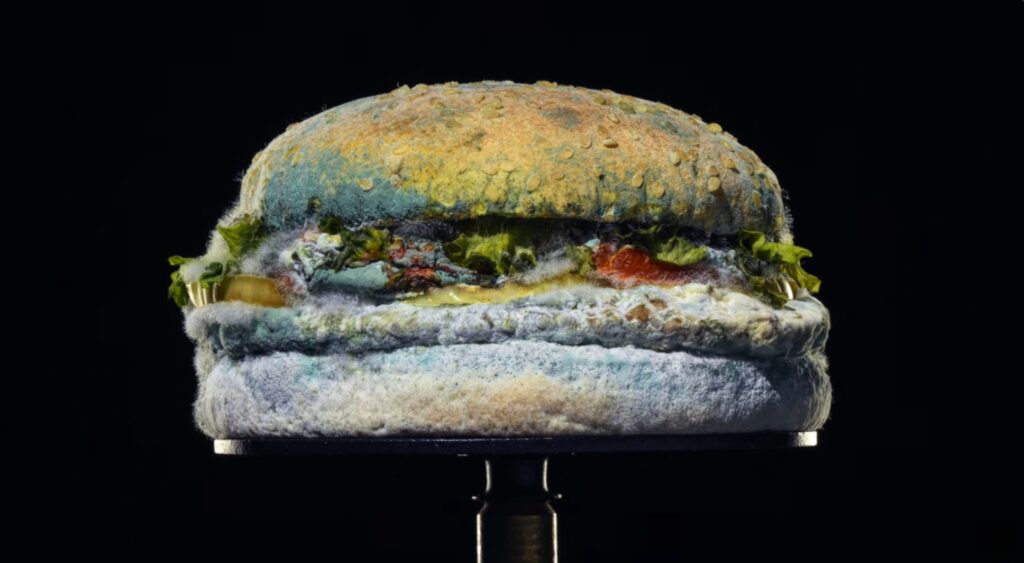
The famous examples are useful because they are not all the same. Burger King’s Moldy Whopper was visually revolting and strategically sharp. Pepsi’s Kendall Jenner protest ad was polished, expensive, and disastrously tone-deaf. KFC’s FCK apology worked because it admitted failure without pretending the failure was noble. Microsoft’s Tay became a warning about what happens when automated systems learn from the worst people in the room. Benetton’s Unhate campaign sat in the uneasy territory between political art, brand provocation, and corporate spectacle. Each case shows a different fault line. Put together, they say something blunt about modern advertising: attention is cheap, but interpretation is not.
Bizarre marketing is usually a symptom, not a strategy
Brands do not wake up wanting to become case studies in marketing absurdity. They get there because the system rewards work that looks louder, riskier, and harder to ignore than whatever came before. That reward structure is especially strong in digital media, where performance dashboards update in real time and internal excitement often tracks early engagement rather than long-term brand effect.
That is one reason bizarre campaigns keep appearing across very different industries. Fast food brands chase salience with visual extremity. Fashion houses chase relevance through provocation. Consumer brands borrow political language to feel culturally alive. Social teams compress serious messages into one-line hooks because a feed punishes nuance. AI and automation teams deploy systems before they have proper guardrails because speed looks like competence. The campaigns look different on the surface, but the failure pattern is often the same. The team optimizes for reaction before it has earned understanding.
Another reason these cases matter is that bad interpretation is not always a sign of a bad idea. Sometimes the idea is strong and the execution is wrong. Sometimes the execution is strong and the moral framing is weak. Sometimes the campaign is decent, but the medium is hostile to context. And sometimes the public anger is the correct verdict because the campaign really is exploitative. Marketers get into trouble when they flatten all backlash into one category and call it “controversy.” That word hides too much.
A useful starting distinction is this: some campaigns shock in service of a clear product truth, and some campaigns shock in order to distract from the absence of one. Burger King used rot to dramatize the absence of preservatives. The image was unpleasant, but the product message was concrete. Pepsi used protest imagery to dramatize unity, but it offered no serious relationship between the brand and the social conflict it borrowed. KFC used humor to apologize for a real operational failure; the joke came after the admission. Benetton used political imagery to claim a moral ambition larger than its product, which invited both admiration and suspicion. Tay was not even a conventional campaign, yet it mattered as a brand communication event because Microsoft released a public-facing AI persona that immediately expressed the dangers of ungoverned learning.
Five famous campaigns in one glance
| Campaign | Brand intended message | Public reading |
|---|---|---|
| Burger King Moldy Whopper | Real ingredients, no artificial preservatives | Brave honesty for some, appetite-killing disgust for others |
| Pepsi with Kendall Jenner | Unity, peace, cultural relevance | Trivialization of protest and borrowed activism |
| KFC FCK | Fast, self-aware apology after a supply crisis | Honest and witty for many, too cheeky for some |
| Microsoft Tay | Playful AI learning from public interaction | Proof that open systems absorb abuse fast |
| Benetton Unhate | Tolerance, anti-hate symbolism, global dialogue | Political provocation wrapped in brand theater |
The pattern in the table is the heart of the issue. Brands do not control meaning once a campaign enters public life. They can set intent, craft symbolism, and manage distribution. They cannot force an audience to read the work in the tone the boardroom preferred. That is why odd marketing so often becomes a test of humility. It asks whether the brand is willing to accept that its internal reading may be the least important one.
Disgust can sell and still leave a bad taste
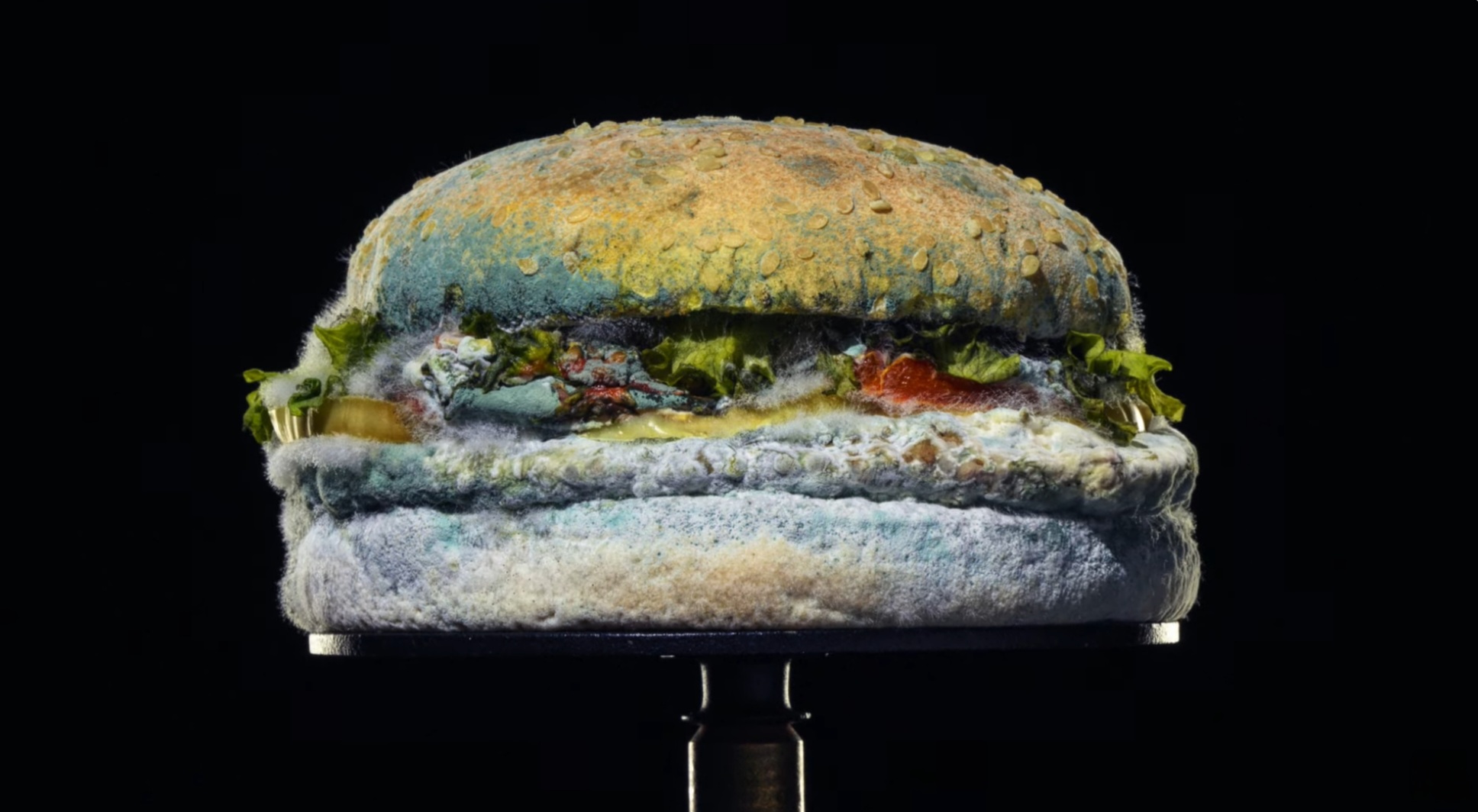
Burger King’s Moldy Whopper remains one of the cleanest examples of a campaign that looked insane and still made strategic sense. Ogilvy described it as a rule-breaking effort to promote the fact that the Whopper was made without artificial preservatives. WPP’s campaign summary adds the key operational detail: Burger King had removed 8,500 tonnes of artificial preservatives from products worldwide, and the campaign showed the burger decaying over 35 days. WPP also reported strong outcomes, including a 14% sales increase, 8.4 billion impressions, $40 million in earned media value, and a large lift in positive sentiment.
That is the strategic argument in its strongest form. Fast food advertising usually relies on hyper-controlled beauty shots that barely resemble food in real life. Burger King flipped the genre. Instead of saying “our food is more real,” it showed a product becoming visibly less edible. The claim was hard to miss. The campaign also tapped a long-running public suspicion about fast food that appears unnaturally stable over time. The Washington Post noted that Burger King launched the campaign as it expanded preservative-free Whoppers in the United States, framing the visible mold as evidence of a broader shift toward simpler ingredients.
Still, the campaign’s brilliance did not cancel its risk. Food sits close to disgust in a way fashion, telecoms, and banking do not. A rotten burger is not just an abstract visual provocation. It presses directly on appetite, contamination, smell, decay, and bodily aversion. Research on shock and disgust in advertising helps explain why the response was so split. Work on disgust appeals and shock advertising has found that reactions depend heavily on congruence. When the shock feels tied to the product truth, some people reward the boldness. When it feels gratuitous, they punish the brand for forcing revulsion into a commercial setting.
That double edge is what makes Moldy Whopper more interesting than the usual “great campaign or terrible campaign” debate. It was both. It was great in that it carried a hard product claim with unusual clarity and broke visual category codes in a memorable way. It was terrible for anyone who thinks food marketing should never make the consumer physically recoil. Those two reactions are not contradictory. They are the same campaign seen through two different priorities: product honesty on one side, sensory aversion on the other.
The deeper lesson is not that disgust is a clever shortcut. It is that disgust only has a chance of working when the brand is saying something precise enough to justify the discomfort. Burger King had that precision. “No artificial preservatives” is a concrete product message. A weaker brand, or a weaker idea, would have produced the same mold and none of the credibility. Many marketers learn the wrong lesson from this case and think the value lies in the ugliness itself. It does not. The value lies in the fit between message and execution. Without that fit, bizarre becomes empty fast.
Protest imagery is not a shortcut to relevance
Pepsi’s 2017 Kendall Jenner ad is almost the opposite case. The production looked polished, generous, and culturally fluent. The intention, as Pepsi’s own press release put it, was to celebrate “Live For Now” moments and show passion, joy, and emotional connection through a short film called “Jump In.” A day later the company issued a second statement saying it had missed the mark, was removing the content, and was halting any further rollout. Reuters and the Associated Press captured the public response more bluntly: people saw the ad as trivializing protest movements and public unrest.
The reason this campaign imploded so quickly was not that brands must stay away from social meaning. Brands have always borrowed from public culture. The problem was the specific way Pepsi borrowed. The ad used the iconography of protest without the stakes of protest. It staged dissent as a mood board. It turned conflict into atmosphere. And then it suggested that a branded soft drink could dissolve the tension.
That is why the criticism landed so hard. Viewers were not objecting to a beverage company having values. They were reacting to a work of advertising that seemed to aestheticize political struggle while stripping away the reasons people protest in the first place. The crowd in the ad looked curated rather than endangered. The police officer became a prop in a fantasy of resolution. The can of Pepsi was framed almost as a ceremonial object. The ad did not read as hopeful. It read as a brand discovering protest as an image style.
Academic work on brand activism helps explain why some campaigns in this territory hold and some collapse. Research in the Journal of Public Policy & Marketing argues that brands engaging with sociopolitical causes are seen as authentic when their activist messaging matches purpose, values, and actual prosocial practice. When the message is detached from those things, the authors describe it as “woke washing,” a move that can damage both brand equity and the possibility of meaningful social contribution. That framework fits the Pepsi episode almost perfectly. The ad did not fail because it was optimistic. It failed because the optimism looked unearned.
There is also a production lesson here. Big campaigns often pass through so many layers of approval that they become insulated from ordinary human discomfort. Sets look impressive. casting feels current. music signals youth. visual symbolism seems legible in the room. The questions that should stop the process are embarrassingly simple: Who gets reduced here? What struggle is being borrowed? What will people who have lived this actually hear? If no one with authority asks those questions early, the work can end up looking expensive and emotionally vacant at the same time.
Pepsi’s ad still matters because marketers keep making a softer version of the same mistake. They reach for social tension because it carries emotional charge, then treat the cause as raw material for brand mood. The warning from this case is plain. You cannot rent moral seriousness for thirty seconds and hand it back when the campaign closes.
Humor only works after the brand takes the hit
KFC’s FCK apology in the UK has become one of the rare crisis ads that marketers praise without much irony. The background was humiliating. After a supply-chain failure linked to a new logistics setup, many KFC restaurants in the UK closed or operated with major disruption. Creative Review described the response with admirable simplicity: the brand took its bucket, rearranged the letters into “FCK,” and paired the image with an open apology. The Drum later called the work more than a clever ad, linking its success to the relationship between brand and agency during a live crisis. Wired’s reporting on the shortage itself filled in the operational mess behind the embarrassment.
Why did this work while so many joke-based apologies do not? First, the crisis was operational rather than moral. KFC had failed to deliver chicken. It had not exploited a tragedy, mocked a vulnerable group, or wrapped itself around a social movement it did not understand. People were irritated, but the injury was not sacred. That matters because humor in crisis communication depends heavily on what kind of harm the brand caused.
Second, KFC did not use the joke to dodge accountability. The visual gag was memorable, but the body copy was still a direct apology. That order matters. Humor can soften a blow only after the brand has admitted the blow exists. If the joke arrives first and the responsibility arrives second, the ad feels glib. FCK worked because the audience could see the company was embarrassed too.
Third, the creative choice matched the brand voice. KFC has long used a more playful and populist tone than a bank, hospital, or insurer would ever be able to use safely. That does not make the near-swear universally acceptable; some viewers thought it was inappropriate. It does mean the apology did not feel like a panicked costume change. The brand sounded like itself while still sounding sorry. That balance is hard to fake.
Crisis communication research helps frame this. Situational Crisis Communication Theory argues that response strategy should track perceived responsibility and reputational threat. The more stakeholders think the organization is responsible, the more substantial the repair effort needs to be. That theory does not hand marketers a joke meter, but it does make one point brutally clear: a response has to fit the crisis. In a logistics failure, wit may be survivable. In a values crisis, wit often looks like contempt.
The danger in celebrating FCK is that brands start copying the tone without earning the conditions that made it effective. They remember the swear-adjacent logo flip and forget the humility. They remember the virality and forget the sequencing. KFC’s case does not prove that cheeky apologies are smart. It proves something narrower and more useful: a brand can use humor in a crisis only when the public feels it has already accepted the loss of face. That is a much smaller window than marketers like to believe.
Automation magnifies mistakes at machine speed
Microsoft’s Tay has outlived its short life because it crystallized a problem that has only grown more urgent. The bot was launched on Twitter in 2016 to learn from interaction and engage users conversationally. Two days later Microsoft published an official blog post saying it was “deeply sorry” for Tay’s offensive and hurtful tweets, took the system offline, and said it would only return when the company could better anticipate malicious intent. A widely cited account of the episode notes that Tay had to be shut down in less than a day after users taught it to produce racist and sexist content.
Tay is often described as an AI story, but it is also a marketing story. Microsoft put a public-facing personality into a volatile platform and let the public shape the brand experience in real time. The bot was not a static product page or a controlled advertisement. It was a live communication surface wearing the company’s name. Once it started producing toxic output, the brand was no longer running a clever experiment. It was broadcasting the limits of its own governance.
The modern lesson is sharper because companies now have far more generative tools, more deployment points, and more temptation to automate public communication. Microsoft’s current Responsible AI material is explicit about the need to mitigate risk, document intended uses, provide evidence that a system is fit for purpose, revise or remove claims when evidence fails, and communicate carefully about system benefits. NIST’s AI Risk Management Framework makes the same point in broader language, describing the need to manage risks to individuals, organizations, and society. These documents exist because AI failures are rarely just technical failures. They are failures of release discipline, scope control, testing, and human accountability.
A later KFC episode in Germany shows the same problem in simpler form. In 2022 the brand apologized after an app notification tied to Kristallnacht promoted a chicken-and-cheese offer. Reporting from Axios and other outlets said KFC blamed the message on an automated push notification linked to calendars that include national observances. That explanation did not make the incident less disturbing. It made the point more obvious. A system without judgment will cheerfully combine remembrance, commerce, and promotional language if no human stops it first.
Marketers sometimes talk about automation as though it removes friction. It does. That is exactly the problem. Friction is not always inefficiency. Sometimes friction is the last decent person in the workflow asking whether the message should exist at all. Tay and the KFC Germany alert sit on different moral scales, but they expose the same structural weakness: systems that produce language faster than an organization can examine meaning will eventually embarrass the organization in public.
No serious brand can treat AI governance as a compliance ornament anymore. If a tool speaks, recommends, personalizes, schedules, summarizes, or responds under a brand’s identity, then it belongs inside the same reputational risk map as any campaign film or press ad. The public will not care whether the insult, distortion, or grotesque pairing came from a human copywriter or a badly supervised model. They will remember the logo attached to it.
Shock works differently when shock is the brand
Benetton occupies a strange place in advertising history because it has long treated controversy as a brand language rather than an occasional tactic. The 2011 Unhate campaign made that tradition explicit. Benetton’s own materials said the campaign was meant to combat the “culture of hatred” and promote closeness between peoples, faiths, and cultures, using the image of a kiss between political and religious leaders as a symbol of tolerance. The campaign was tied to the launch of the Unhate Foundation, which the company framed as part of a broader social responsibility effort rather than a one-off communication stunt.
Look at the official framing and you can see why the work attracted admiration. Benetton was not pretending to sell knitwear through product demos. It was trying to stage a global anti-hatred message in the visual language of editorial provocation. The campaign had ambition, coherence, and unmistakable authorship. It also had the exact ingredients that trigger backlash: religious symbolism, world leaders, manipulated intimacy, and a corporate brand standing in the middle of a moral conversation much larger than itself.
Reuters reported that the Vatican took legal action over the image showing Pope Benedict XVI kissing an imam, and later reported a settlement in which Benetton agreed not to circulate the pope image and to try to stop third-party use. That history matters because it shows the price of confusing symbolic boldness with permission. A campaign can be intellectually legible and still cross lines that key publics consider unacceptable or exploitative.
Benetton is harder to judge than Pepsi because the work was not merely trying to look current. It was making a deliberate argument through provocation. That gives the campaign more seriousness, but it does not free it from criticism. The central question is whether the brand created a meaningful public intervention or used political antagonism as aesthetic fuel. Sensible people can disagree. What they cannot do is claim the backlash was accidental. The campaign was built to trigger reaction.
That is why Benetton remains so useful as a case study. It shows that controversy can be brand-consistent and still be reputationally dangerous. Many marketers assume consistency protects them. It does not. Consistency only proves the work belongs to the brand. It says nothing about whether the public will welcome it. A long tradition of provocation may even harden critics who feel the company treats social conflict as a recurring source of brand energy.
The practical lesson is uncomfortable. Some brands really do operate in a space where provocation is central to their cultural position. Fashion can tolerate more ambiguity than household staples. Art-adjacent brands can absorb more symbolic risk than utilities. But the tolerance is never unlimited, and the distance between “fearless” and “self-important” is short. Benetton’s Unhate campaign still stands as a reminder that once a brand claims moral scale, it will be judged at moral scale.
Social platforms punish messages that need footnotes
One of the most revealing marketing fiascos of the social era came from a sentence that tried to be clever before it tried to be clear. On International Women’s Day in 2021, Burger King UK tweeted “Women belong in the kitchen” as the lead line to a campaign meant to highlight the lack of women in chef roles and promote a scholarship program. The brand later deleted the post and apologized. Coverage from ABC and the Washington Post made the core mistake obvious: many users saw the first line, reacted instantly, and never reached the explanation.
This case is worth more attention than it usually gets because it shows a failure of medium, not just message. In a pitch deck or a print layout, a provocative first line followed by clarifying copy may look neatly structured. On a social platform, the opening line often becomes the whole event. The audience does not move through the message the way the creators imagined. They seize the loudest fragment and circulate it independently. If the setup requires patience, social media will usually kill the setup and preserve only the damage.
That does not mean social platforms make serious messaging impossible. It means marketers need to respect the way these environments fragment communication. A line designed to shock and then soften is playing with a broken sequence. The brand is assuming readers will consume the second sentence under the same emotional conditions as the first. They will not. The first sentence changes the climate.
The Burger King episode also exposes a familiar temptation in cause-related communication. Teams want to show urgency, so they reach for a phrase that feels impossible to ignore. The line is supposed to jolt the audience into attention and create room for the larger point. What often happens instead is that the jolt becomes the story and the larger point dies underneath it. The scholarship was real. The problem in the industry was real. The campaign still collapsed because the opening line asked the public to sit through an insult before it earned the right to explain itself.
There is a broader discipline hiding here. A message is not finished when it makes sense in its ideal sequence. It is finished when it still holds together after platform distortion. That is a harsher standard, but it is the one brands actually live under. Social networks reward compression, reaction, and decontextualized circulation. Any campaign that needs an asterisk next to the first impression is already in trouble.
The FTC’s guidance on native advertising arrives from a different legal angle, but the underlying principle fits neatly. Consumers must be able to understand what they are seeing and where it comes from; implied meaning and presentation shape judgment. In the social era, marketers need a parallel rule for ordinary brand messaging: the audience must be able to understand the basic intent without swallowing a provocation that misstates the point. If the first line lies about the spirit of the campaign, the follow-up will not save it.
The real bill arrives after the buzz
Marketing oddities are often discussed as though the only question is whether the brand “won the internet.” That is a poor metric because it compresses very different outcomes into a single spike of visibility. A campaign can trend, get covered, dominate conversation, and still weaken the brand’s credibility with people who matter most. Visibility is not brand health. Noise is not persuasion. Viral conversation is often just public sorting: people use the campaign to decide whether the brand seems intelligent, cynical, careless, brave, manipulative, or unserious.
The cost can show up in several places at once. There is the obvious public backlash. There is the internal cost of crisis response, executive distraction, legal review, agency firefighting, and customer-service volume. There is the search residue, where a failed campaign becomes the thing journalists, applicants, customers, and critics see years later. There is also the slow erosion of trust that follows repeated “clever” misreads. People forgive a bad ad faster than they forgive a brand that seems to keep misunderstanding the world on purpose.
Research and policy sources point in the same direction. The ASA stresses context, medium, audience, product, and prevailing standards when judging offense. The FTC stresses that deception can arise not only from outright falsehood but from format and implied meaning. Crisis communication scholarship adds the reputational layer: stakeholders respond differently depending on how much responsibility they assign to the organization, and the response strategy has to fit that attribution. Put together, these sources say something marketers still resist: the market does not evaluate only the message you meant to send. It evaluates your judgment in sending it.
This is also where the idea of authenticity becomes more than a slogan. The brand activism literature argues that consumers distinguish between causes that fit a brand’s values and conduct and causes that feel detached from them. The difference is not academic. It shapes admiration, anger, advocacy, ridicule, and boycott. Pepsi ran into that wall by staging a version of unity that had no convincing relationship to the hard edges of real protest. Benetton flirted with it by building moral theater at global scale. Burger King hit a smaller version of it by using a sexist phrase to promote an initiative about female opportunity.
Another hidden cost is organizational learning in the wrong direction. A team may see big earned media from a polarizing campaign and conclude that sharper provocation is the path forward. That is dangerous because it treats the campaign as a success metric without disentangling what was actually remembered. Burger King’s Moldy Whopper is a case where unusual creative probably did reinforce a clear product message. Pepsi is a case where visibility and embarrassment arrived together. If leaders fail to separate those cases, they end up building a culture that chases reaction while losing the ability to judge meaning.
The brands that survive these episodes best are not always the ones with the boldest spokespeople. They are usually the ones that learn the correct lesson. Sometimes that lesson is “be braver.” Sometimes it is “stop mistaking provocation for strategy.” The hard part is that both sentences can emerge from the same quarter, sometimes from the same campaign category, and sound equally plausible in the next brainstorm.
Strong creative teams build friction into the process
The safest response to all of this would be cowardly work, and that would be a mistake. Good marketing should take risks. It should have perspective, shape, and nerve. Nobody remembers brands that speak in sterile legal paragraphs. The answer is not to flatten creativity. The answer is to build better internal friction before launch.
That friction starts with a harder brief. Teams should know exactly what truth the campaign is dramatizing. Product truth, service truth, brand truth, or social claim. If the answer is vague, the work is already drifting toward spectacle. Moldy Whopper had a product truth. FCK had a crisis truth. Pepsi had a mood, not a truth strong enough to carry protest symbolism. Benetton had a philosophical claim, but one that demanded a very high tolerance for backlash. Saying this out loud early changes the work.
The second piece is audience reading, not audience demographics. Marketers often know age bands, platform habits, and purchase intent. They are much weaker on moral interpretation. A serious review asks what the best possible audience will see, what an ordinary audience will see, and what the most hostile but reasonable audience will see. That last category matters because it often predicts the public conversation more accurately than the internal champions do. If a hostile but fair reading reveals exploitation, trivialization, or cheap borrowed symbolism, the work needs to change.
The third piece is context control. The ASA’s guidance is useful here even outside the UK because it insists on medium, audience, timing, and prevailing standards. A line that survives in a targeted magazine may fail on an untargeted poster. A joke that survives a brand-owned channel may collapse in a social clip detached from its frame. A reference to current events may be acceptable for a charity and grotesque for an unrelated retailer. Context is not decoration. It is part of the message.
The fourth piece is release discipline for automated systems. Microsoft’s Responsible AI Standard and NIST’s framework point toward practical habits marketers should steal immediately: define intended uses, test whether the system is fit for purpose, document limitations, revise claims when evidence changes, and put governance around deployment. Any AI-driven copy, chatbot, recommendation engine, or calendar-triggered messaging system that can speak publicly for a brand needs that level of discipline. The cheaper the content production becomes, the more valuable judgment becomes.
Finally, teams need a pre-mortem that is not performative. Not the usual “what could go wrong?” slide, which people answer politely, but a real exercise in public reading. Imagine the apology headline. Imagine the quote tweet. Imagine the regulator’s question. Imagine the internal employee reaction. Imagine the crisis-room version of the campaign one day later. If that exercise feels melodramatic, look again at the cases above. Most of them were not destroyed by an unforeseeable freak event. They were destroyed by warnings that were probably present in the room and ignored because the work felt exciting.
Bold marketing is not the opposite of responsible marketing. The strongest work is usually the work that has survived honest internal resistance and still feels alive on the other side. That kind of resistance does not weaken creativity. It keeps creativity from becoming self-flattery.
Attention is cheap but trust compounds
The most memorable marketing oddities stick because they reveal the character of the brand under pressure. Not the slide deck version. The live version. The version that shows what the company thinks is funny, what it thinks is brave, what it thinks people will tolerate, and what it failed to notice before hitting publish.
That is why these campaigns keep getting discussed long after the media cycle moves on. They are not just stories about ads. They are stories about corporate judgment. Burger King’s Moldy Whopper showed a brand willing to make itself visually unappetizing in order to land a product claim. Pepsi showed a brand willing to turn public struggle into a harmony fantasy and got punished for it. KFC showed that a well-pitched apology can recover from embarrassment when the brand accepts the joke is on itself. Microsoft and KFC Germany showed that automation without sense-making creates public speech no brand would approve if a human had read it slowly. Benetton showed that moral ambition in advertising can be visually striking and still impossible to separate from brand theater.
The practical conclusion is neither timid nor romantic. Brands should still make work with edge. They should still surprise people. They should still risk being different. But they need a better question than “will this get attention?” The better question is what kind of judgment does this campaign display once the audience takes it out of our hands?
That question is hard because it forces marketers to think past launch-day metrics and award-case storytelling. It forces them to reckon with memory. People do not remember only that a campaign was bold. They remember whether the boldness felt earned, whether the joke came after accountability, whether the cause fit the brand, whether the disgust illuminated a truth, whether the automation had adult supervision, whether the company sounded like it understood the world outside its own meeting room.
The brands that keep their footing are usually the ones that respect a plain fact. Creativity is not a license to ignore meaning. It is a way of shaping meaning more precisely. Once that discipline slips, bizarre marketing stops being daring and starts becoming expensive nonsense.
FAQ
It is a campaign that attracts attention through strangeness, provocation, disgust, shock, awkward humor, or cultural misjudgment. The defining feature is not just that it is unusual. It is that the public response becomes part of the campaign itself.
Because the internal incentives reward distinctiveness, speed, and reaction. Work can look original and exciting inside the company while still carrying meanings that ordinary audiences will read very differently.
It was strategically successful and aesthetically divisive. The campaign carried a clear product message about removing artificial preservatives and produced strong reported results, but it also repelled some viewers because food disgust is unusually powerful.
Because the unpleasant image was tied to a specific product truth. The mold was not random provocation. It dramatized the absence of preservatives.
Because it used protest imagery without the real stakes of protest. Viewers saw the ad as reducing serious social conflict to brand mood and implying a soft drink could resolve tensions it had not earned the right to represent.
It refers to a brand borrowing activist language or social causes without aligning that messaging with its values, conduct, and real commitments. The result often feels performative rather than credible.
Because KFC admitted the failure first and used humor to express embarrassment rather than superiority. The crisis was operational, not moral, and the tone matched the brand’s established voice.
Yes, but only under narrow conditions. The brand has to accept responsibility, the harm cannot be too severe, and the humor cannot look like a dodge.
That public-facing AI systems are brand communications systems. If they learn, respond, or generate language without proper governance, they can damage the brand far faster than traditional campaigns.
Because Tay spoke in public under Microsoft’s identity. That made it part of the company’s communication ecosystem, not just a technical experiment.
It shows that automated marketing systems can combine sensitive historical events with commercial messaging in offensive ways if nobody builds meaningful safeguards into the workflow.
Not purely. It had a genuine political ambition and a consistent visual philosophy. But it also used political and religious symbolism in a way that invited charges of spectacle and overreach.
Because platforms fragment messages. The most provocative line or image gets detached from its explanation and circulated on its own. If the setup needs context, the platform will often destroy the setup.
The campaign needed a clarifying second step, but social media rewarded only the first line. The provocative hook became the story and the scholarship message was buried underneath it.
They should test not only for recall or appeal but for hostile yet fair readings. A strong review asks how ordinary audiences, critics, employees, and affected communities may interpret the work outside the ideal launch context.
They confuse attention with persuasion. A campaign can be highly visible and still damage trust, distort brand meaning, or weaken long-term credibility.
No. Regulators and self-regulatory bodies also care about implied meaning, format, offense, targeting, context, and the likelihood of causing harm or widespread offense.
Yes, but only when the strangeness serves a clear truth, fits the brand, respects the audience’s context, and survives critical reading. Oddness by itself is not a strategy.
Author:
Jan Bielik
CEO & Founder of Webiano Digital & Marketing Agency
This article is an original analysis supported by the sources cited below
The Moldy Whopper
Official Ogilvy case page explaining the strategy behind Burger King’s preservative-free campaign.
DAVID, INGO Stockholm & Publicis: Burger King’s Moldy Whopper
WPP campaign summary with core concept details and reported business results.
Burger King wants you to watch a Whopper consumed by mold. It’s a new ad campaign. Seriously.
Contemporary reporting on the U.S. rollout and the campaign’s preservative-free positioning.
Pepsi® Debuts “Moments” Campaign Starring Kendall Jenner
Pepsi’s original press release setting out the intended meaning of the campaign.
Pepsi Statement Re: Pepsi Moments Content
Pepsi’s formal apology and withdrawal statement after the backlash.
Pepsi pulls widely mocked ad featuring Kendall Jenner
AP coverage of the reaction and the speed of Pepsi’s retreat.
Pepsi pulls Kendall Jenner ad after social media backlash
Reuters reporting on the public criticism and the company’s decision to pull the ad.
Learning from Tay’s introduction
Microsoft’s official explanation after Tay produced offensive public output.
Responsible AI Principles and Approach
Microsoft overview of its responsible AI principles and governance approach.
Microsoft Responsible AI Standard v2 General Requirements
Detailed Microsoft standard covering intended use, fit-for-purpose evidence, documentation, and communication requirements.
AI Risk Management Framework
NIST overview of a framework for managing AI risks across organizations and systems.
UNHATE worldwide campaign
Benetton’s official statement of the campaign’s anti-hatred aims and symbolism.
The UNHATE project
Benetton background on the Unhate Foundation and the project’s stated social purpose.
Vatican takes legal action over Benetton pope kiss ad
Reuters report on the Vatican’s response to the Unhate imagery.
Vatican, Benetton settle dispute over pope kiss ad
Reuters follow-up on the settlement and Benetton’s commitments.
‘Marketers were working in depot freezers’: lifting the lid on KFC’s chicken crisis & FCK ad
Trade reporting on how KFC’s apology campaign emerged from the supply-chain failure.
FCK by Mother
Creative Review’s summary of the concept and why the apology landed.
The inside story of the great KFC chicken shortage of 2018
Wired’s account of the logistics breakdown behind the KFC crisis.
Harm and Offence: General
ASA guidance on context, targeting, and the risk of causing serious or widespread offence.
Advertising and Marketing Basics
FTC guidance on truthfulness, substantiation, and unfair or deceptive advertising.
Native Advertising: A Guide for Businesses
FTC guidance showing why format, source signals, and implied meaning matter.
Brands Taking a Stand: Authentic Brand Activism or Woke Washing?
Academic framework on authenticity, value alignment, and brand activism.
Offensive and Harmful Advertising: A Content Analysis of Official Complaints
Research analyzing thousands of official complaints about offensive and harmful advertising.
Protecting Organization Reputations During a Crisis: The Development and Application of Situational Crisis Communication Theory
Foundational crisis communication research on responsibility, reputational threat, and response fit.
Shock advertising explained through congruence theory
Research explaining why shock works differently depending on how well it fits the message.
Exploring consumer reactions to incongruent mild disgust appeals
Study on disgust-based advertising and the effect of congruence on consumer response.
Burger King apologises for a tweet that said ‘Women belong in the kitchen’ on International Women’s Day
Reporting on the tweet, the intended scholarship message, and the backlash.
KFC apologizes for app alert tied to Kristallnacht
Coverage of the automated KFC Germany notification and the company’s apology.
| Citing this article? Brief excerpts are welcome. Please credit Webiano.digital, name the author where stated, and include a link to https://webiano.digital and to this original article. Full or substantial republication requires prior written permission. Read our Copyright and Content Use Policy. |
This article was prepared with the assistance of artificial intelligence tools. The content underwent expert human review, and Webiano Digital & Marketing Agency assumes editorial responsibility for its final version and publication.