Google Discover is not a normal ranking system with the query box removed. Google describes it as a part of Search that shows people content related to their interests, based on Web and App Activity, and says content can appear there without any query at all. It also says older pages may surface when they are still useful and relevant to an individual user. That combination changes the whole job for publishers. You are not only trying to rank a page. You are trying to earn distribution inside a personalized feed that decides what to show before the user asks for anything.
Table of Contents
Google does publish guidance for Discover, but it does not publish a neat public formula. What it does publish is more useful than a fake recipe: eligibility rules, policy limits, image requirements, measurement guidance, and repeated clues that Discover reuses many of the same systems that power Search. Read together, those documents point to a layered model. A page must be crawlable and indexable. It must stay inside policy. It must fit an interest-driven feed. It must satisfy Google’s broader quality systems. Then it has to win distribution for a specific user, in a specific moment, with a specific preview.
Discover is a recommendation system, not a search results page
The easiest way to get Discover wrong is to treat it like classic SEO with brighter thumbnails. Search begins with explicit intent. Somebody types something, Google interprets the request, and the ranking systems return what looks most relevant. Discover starts from a different place. Google says it shows content related to a person’s interests, based on Web and App Activity. The product itself was introduced as a way to surface useful information and inspiration with “no query required.” That wording matters because it tells you where the system starts: not with the keyword, but with the user profile, recent behavior, and the likelihood that a topic will feel timely or welcome in a feed.
That also explains why Discover can send huge traffic to pages that would never dominate a competitive search term. A user does not need to search for “best hiking trail in the Tatras in April” for a hiking story to land in front of them. If Google has enough signals that this person follows outdoor content, reads seasonal travel pieces, watches mountain videos, or engages with similar topics, the page can be recommended anyway. Google explicitly says the feed may include a wide range of topics aligned with a person’s interests, and that older content may appear when it remains helpful and relevant. Freshness helps, but freshness alone is not the product. Personal fit is.
Discover has also become more overtly personalized as a product. In September 2025, Google announced new ways to follow publishers and creators directly in Discover and said the feed would begin showing more content types, including posts from X, Instagram, and YouTube Shorts. That is not just a product update. It is a clue about system design. Google is moving Discover further toward a mixed recommendation environment where articles compete alongside other formats for attention, and where direct follow signals can shape future distribution. A page is no longer compared only with pages. It is compared with the whole menu of things a user might want to see next.
Once you accept that, a lot of old Discover folklore stops making sense. There is no single “Discover keyword strategy.” There is no reliable publish-at-7:03-a.m. trick. There is no secret markup that unlocks access. What exists is a recommendation surface that borrows from Search quality systems, then applies personalization, feed fit, visual packaging, and policy filters before deciding what deserves a slot. That is a more demanding system than classic ranking, not a simpler one.
Eligibility comes before ranking
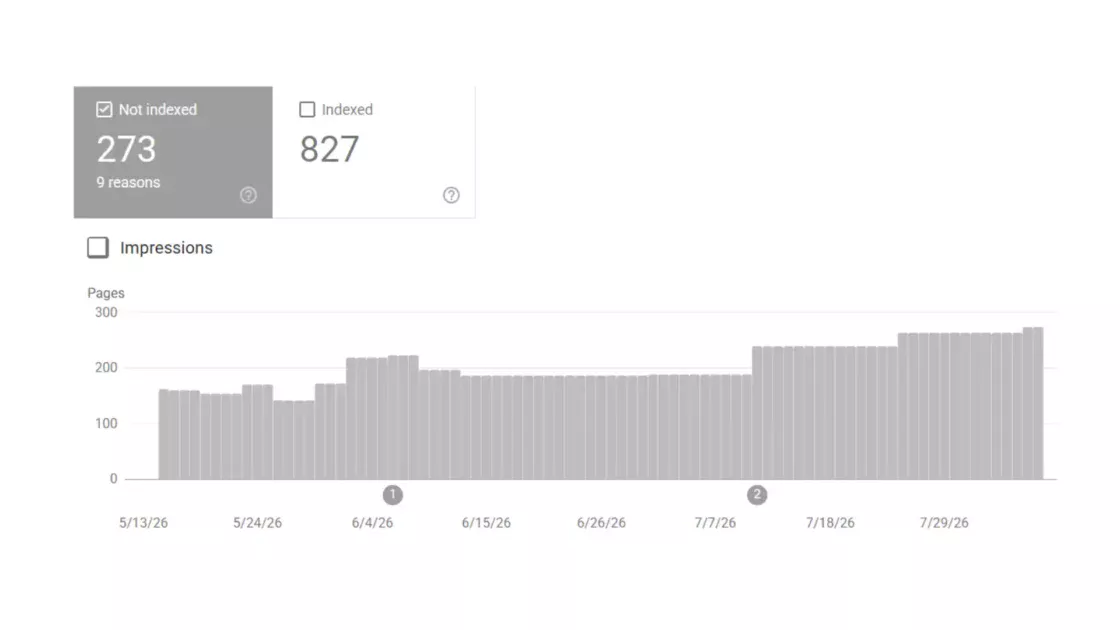
Google’s own documentation is unusually blunt about the first gate. Content is automatically eligible for Discover if it is indexed by Google and meets Discover content policies. No special tags or structured data are required. Google also adds an important warning in the same breath: eligibility is not a guarantee of appearing. That single paragraph wipes out two persistent myths at once. The first myth is that Discover requires a hidden technical switch. The second is that technical eligibility alone should create reach. It does neither. Eligibility is just admission to the pool. Distribution is still earned.
Indexing still matters because Discover cannot recommend what Google has not properly understood. Google’s explanation of how Search works remains the foundation here: pages are discovered, crawled, analyzed, and stored in the index before they can be served. Search Essentials sets the baseline technical requirements and best practices for being shown in Google Search at all. For news-heavy publishers, news sitemaps can help Google process fresh article URLs and metadata, but they are not a pass to Discover. They are a discovery and organization aid, not a distribution promise.
Policy compliance is stricter than many sites assume. Google’s Discover content policies say eligible content must follow Discover best practices and must not violate Google Search’s overall policies, spam policies, or feature-specific policies. The Discover help page also spells out areas that trigger trouble: misleading preview content, undisclosed sponsored material, and weak transparency. Google says news sources should provide clear dates and bylines, information about authors and publishers, information about the company behind the content, and contact details. Repeated or severe violations can remove content from Discover and can make a site ineligible for Discover surfaces such as “Articles for you” in Chrome.
That transparency language is more than housekeeping. It is a sign that Discover cares about source legibility. In a feed, users often decide fast and with limited context. A page that hides who wrote it, blurs editorial and sponsored content, or looks like a shell built to monetize curiosity is starting from a weaker position. Google’s spam policies also say policy circumvention can restrict or remove eligibility for certain search features, and Discover is named as an example. The system is not only asking whether a page exists. It is asking whether the source deserves broad recommendation.
What Google confirms and what it leaves unsaid
| Google confirms | Google does not confirm |
|---|---|
| Indexed, policy-compliant pages are automatically eligible for Discover. | Any fixed score, weighting formula, or guaranteed set of ranking factors for Discover reach. |
| No special tags or structured data are required to be eligible. | That adding schema by itself improves Discover distribution. |
| Discover uses many of the same signals and systems as Search. | That Search rankings map neatly to Discover visibility. |
| Traffic can fluctuate because interests change, content types change, and Search updates roll out. | Any stable traffic floor for publishers who follow best practices. |
The practical reading of Google’s documentation is straightforward. Discover has a hard eligibility layer, then a much softer distribution layer. Many sites spend their energy on the first part because it is easier to audit. The harder work starts after that.
Personalization does most of the heavy lifting
If standard search is a match between query and page, Discover is a match between person, moment, and page. Google says the feed is based on interests drawn from Web and App Activity. It also says traffic can change because users’ interests change. That is a plain description of a personalization engine. Pages are not shown because they are universally “best.” They are shown because Google thinks a specific user is unusually likely to care right now.
That changes how you should interpret wins and losses. A page that performs well in Discover is not simply proving its general authority. It may be proving that it matched a strong interest cluster at the right time with the right preview. A page that disappears after two days is not necessarily penalized. Google says Discover is less predictable than keyword-driven search, and gives several reasons: changing interests, shifts in the types of content shown in the feed, and broader Search updates. Publishers often read volatility as punishment because search traffic trained them to expect steadier patterns. Discover is built on a looser contract. It owes the user novelty and relevance, not the publisher consistency.
You can see the personalization layer becoming more explicit in Google’s newer product moves. The 2025 update lets users follow publishers and creators directly inside Discover and preview their content before following. Google also said Discover would show more social and video content from outside the classic article format. Those features give the system stronger preference signals and a broader inventory of content types to recommend. A publisher now competes not only on article quality, but on relationship strength with the audience and on whether its content still feels native inside a mixed-media feed.
One careful inference follows from all of this. Because Discover is user-first and interest-led, topic consistency matters more than isolated page optimization. Google does not publish that as a formula, but it fits the way recommendation systems work and it fits Google’s own language around interests, following, and changing preferences. A site that publishes deeply and coherently around a subject gives Google more reasons to connect it with future interest signals. A site that jumps from celebrity gossip to tax law to kitchen knives with no editorial center gives the system much less to work with. That inference is consistent with Google’s documentation, even if Google stops short of phrasing it that directly.
This is also why evergreen pages can reappear months later. Google says older content may show in Discover if it is still helpful and relevant to individuals based on their interests. A query-driven mindset struggles with that because it expects recency and rankings to dominate. Discover behaves more like a living recommendation loop. If a subject returns to the user’s orbit, the page can return as well. That gives strong explainers, seasonal guides, original analysis, and first-hand reference content a longer shelf life than many publishers assume.
Quality systems are the real algorithmic filter
Google’s most revealing sentence about Discover is buried in its guidance for site owners: Discover makes use of many of the same signals and systems used by Search to determine what is helpful, people-first content. That line should change how anyone thinks about the “Discover algorithm.” The feed is not a separate island with a separate philosophy. It is a different serving environment that still leans on Google’s larger quality stack. If your content struggles with trust, originality, usefulness, or page quality in Search, Discover is not likely to rescue it for long.
Google’s people-first content guidance fills in the rest. Google says its automated ranking systems are designed to prioritize helpful, reliable information created for people rather than content built to manipulate rankings. It also says those systems use a mix of factors that help identify content demonstrating experience, expertise, authoritativeness, and trustworthiness. E-E-A-T is not presented as a single ranking factor, and Google is careful about that. Still, it is the best public language Google offers for the kind of content its systems are trying to reward. Search raters are trained to evaluate those qualities, and Google says their feedback helps it test whether the systems are working, even though raters do not directly control rankings.
That matters even more on sensitive topics. Google says its systems give more weight to strong E-E-A-T signals for YMYL subjects such as health, finances, safety, and public welfare. Discover, by design, pushes content into a user’s field of view without the user explicitly asking for it. That puts even more pressure on Google to be careful with source quality in areas where bad information can do damage. A health site with thin attribution, no medical review, anonymous authors, and sensational preview language is not just weak editorially. It is badly matched to how Google says its systems evaluate useful and reliable information.
There is another useful clue in Google’s announcements. In February 2026, Google launched a Discover-specific core update for English-language users in the United States and said it was designed to improve Discover quality overall. Google’s general core update guidance says core updates are broad changes meant to improve how helpful and reliable results are across Search. Put together, those statements suggest that Discover can be adjusted through its own quality-focused updates while still inheriting the broader philosophy of Search ranking systems. The feed may feel chaotic from the outside, but it is not arbitrary. It is quality-tuned, then personalized.
A final, more cautious inference involves topic authority. Google has publicly described a topic authority system for Search and News in specialized areas such as health, politics, and finance. Google has not said this system is a named Discover signal. Still, because Discover uses many of the same Search systems, it is reasonable to think that source depth and subject-matter reputation can influence which newsy pages get wider recommendation on those topics. That is an inference, not a direct Google confirmation, but it fits both the published documentation and the observed direction of Google’s quality messaging.
Presentation affects clicks and distribution
Discover is a feed, and feeds are visual. Google’s recommendations make that plain. It tells publishers to avoid clickbait, avoid sensationalism, use headlines that capture the essence of the content, provide something timely or uniquely insightful, and include compelling, high-quality images that are relevant to the page. It also says large images are more likely to generate visits from Discover and provides specific guidance: at least 1200 pixels wide, high resolution, and a 16:9 aspect ratio. That is not decorative advice. Presentation is one of the few parts of Discover Google describes in unusually concrete terms.
The image rules are more specific than most publishers realize. Google recommends enabling large previews with max-image-preview:large or AMP, and says you can use schema.org markup or the og:image tag to influence which image is chosen as the thumbnail. It also warns against generic images such as logos and against text-heavy images. Google’s own case study on large images says the max-image-preview:large tag gives publishers more control over how images appear on surfaces such as Discover and supports a more compelling user experience. That does not prove a ranking boost in the narrow sense, but it does show Google believes preview size and quality materially affect user response.
Titles matter in the same way. Discover guidance says page titles and headlines should capture the essence of the content. Google’s general title-link documentation adds more texture: titles are often the primary piece of information users use to decide which result to click, Google can generate titles from multiple page signals, and vague, repetitive, or keyword-stuffed titles are weak inputs. The same principle applies in a feed card. A Discover headline has to do more than trigger curiosity. It has to explain the page quickly enough for the user to trust the click. Ambiguous drama, withheld context, and bait framing might inflate curiosity for a while, but Google explicitly warns against misleading or exaggerated preview content.
Snippets are less central in Discover than images and titles, but the general rule still carries across Google surfaces. Google says snippets are generated automatically from page content and may use the meta description when that gives a better summary. Good meta descriptions are not a Discover trick, yet they can help Google understand how the page should be previewed on properties where descriptive text matters. More broadly, title text, prominent on-page headings, metadata, and imagery all give Google raw material for packaging the page. If those inputs are messy, stale, or contradictory, the system has to guess.
The deeper point is easy to miss. Publishers often separate editorial quality from packaging quality. Discover does not. In a feed environment, the thumbnail, headline, source cues, and topical framing are part of the recommendation event. The algorithm is not only deciding whether your page is worthy. It is deciding whether the preview will feel relevant, safe, and interesting enough to earn a place in limited screen space. Weak packaging can waste strong reporting. Strong packaging cannot save weak reporting for very long.
Volatility is part of the product
Google does not ask publishers to think of Discover traffic as dependable. It says the opposite. The Discover documentation says traffic is less predictable or dependable than keyword-driven search traffic and should be treated as supplemental. Google then gives three reasons: user interests change, the mix of content types shown in the feed changes, and updates to Google Search can shift performance. That is not a warning label buried in fine print. It is the operating manual.
Many publishers still interpret Discover through a ranking lens, so they misread volatility. A page surges for forty-eight hours, then vanishes, and the immediate instinct is to hunt for a penalty, a crawl issue, or a hidden threshold. Sometimes there is a real problem. More often, the system has simply moved on because the interest curve moved, the user cohort saturated, or a quality update changed who gets surfaced. Google’s Search Status Dashboard now makes that picture more concrete. In February 2026, Google ran a Discover-specific update over 21 days and 17 hours for English-language users in the United States, explicitly describing it as a quality-focused Discover change. That is a reminder that volatility can be structural, not site-specific.
There is also product volatility beyond ranking. The Search Status Dashboard recorded an issue in June 2025 that affected serving for Google Lens, Discover, and Voice Search. That does not explain most traffic swings, but it reinforces a larger point: Discover is a living Google surface, not a fixed channel with stable mechanics. Product changes, serving issues, interface updates, new follow features, and new content formats can all change the environment around your pages.
For a publisher, the practical lesson is defensive. Build with Discover, but do not build on Discover alone. Google’s own guidance suggests treating it as additive to search traffic rather than as a base layer you can forecast like branded search demand. Editorially, that means you should learn from Discover wins without rebuilding the whole newsroom around the last spike. Commercially, it means a business model that depends on steady Discover reach is taking product risk whether it admits it or not. A volatile recommendation feed can be a brilliant amplifier and a terrible foundation.
Search Console shows a lot, but not everything
Google gives publishers useful Discover reporting, yet the data has edges that can mislead anyone expecting the same visibility they get from query-based Search reporting. The Discover Performance report is visible only after a property reaches a minimum number of impressions in Discover. Inside the report, individual rows also need a minimum impression threshold before they appear, even though lower-volume data is still folded into the site totals. So a site can have a headline total that is real while parts of the page-level table remain invisible. That matters when you try to audit winners and losers. Absence in the table is not always absence in the feed.
The metrics themselves are specific to feed behavior. An impression counts when the Discover item is scrolled into view. A click counts when the user clicks the item, not when they share it or interact in some other way. Search Console also says all Discover data is aggregated by page and assigned to the canonical URL. If duplicates exist, the canonical gets the credit and the duplicate URLs show zero. That is a common reason publishers misread performance after migrations, syndication setups, parameter variations, or conflicting canonicals. A technical cleanup can change where the data appears even if the user-facing traffic pattern has not changed much.
The report’s structure also tells you what Google thinks is knowable in Discover. You can group by page, country, appearance type, and day. You do not get the query-level lens that standard search reporting provides, because Discover is not driven by explicit queries in the first place. Search Console’s broader documentation says performance reports across Search, News, and Discover measure impressions, clicks, and CTR, but the Discover report is fundamentally page-centric. That nudges analysis away from “which keyword ranked” and toward “which pages, formats, countries, and editorial patterns earned distribution.”
Google’s developer docs add two more useful pieces. First, the Discover performance report includes traffic from Chrome and fully tracks Discover traffic across surfaces where users interact with Discover. Second, since 2021, Discover data is available through the Search Analytics API for sites with that traffic. That gives larger publishers a better way to archive, segment, and compare performance over time instead of living inside the Search Console interface. A newsroom that depends on Discover should be exporting this data regularly, because the pattern you care about is rarely yesterday’s spike. It is the cluster of repeatable signals across months: topic families, image treatments, source sections, countries, publishing cadence, and volatility after major updates.
Reporting also has one important psychological effect. Because Discover data arrives as impressions, clicks, and CTR without the familiar query story, it pushes publishers back toward editorial judgment. You cannot hide behind a keyword report. You have to look directly at the pages that won attention and ask harder questions. Was the source credible on this topic? Did the page offer something new? Was the image strong? Was the title clear without being cheap? Did the traffic come from a brief interest wave or from a durable subject area? Those are harder questions than “what was the ranking position,” but they are closer to how Discover actually works.
A Discover strategy that actually fits the system
A sensible Discover strategy starts with editorial identity, not feed tricks. Google keeps pointing publishers back to helpful, reliable, people-first content, transparency, and strong page experience. That means the core work is still recognizable: cover subjects you understand, make authorship clear, show your sourcing, label sponsorship honestly, keep pages fast and readable, and publish pieces that either meet a current interest well or bring something original to a subject people already care about. Discover is not rewarding a separate species of content. It is rewarding content that survives Google’s broader quality logic and still looks appealing in a feed.
For topical authority, breadth without coherence is weak. Google has publicly tied topic authority to Search and News in specialized topic areas, and its Discover docs say the feed uses many of the same Search systems. The safe takeaway is that sustained, credible coverage beats random reach-chasing. A finance publisher that publishes market analysis, explainer pieces, regulatory context, and clear bylines is giving Google a much stronger source profile than a general site that suddenly posts a thin personal-finance piece because the CPC looks attractive. The same logic holds in health, politics, science, and other sensitive areas.
On the packaging side, the priorities are concrete. Use large, relevant, non-generic images. Turn on max-image-preview:large. Make the headline say what the page actually delivers. Avoid morbid bait, false suspense, and preview language that promises a twist the article does not contain. Google’s Discover policy pages are unusually direct about misleading previews and disguised sponsorship because those tactics may win the click once, but they damage trust in the feed. In Discover, trust is a distribution issue, not a branding afterthought.
Automation deserves the same discipline. Google does not ban AI-generated content outright. It says automation, including AI, is allowed when used to create helpful content, but using automation with the primary purpose of manipulating rankings violates spam policies. That line matters for Discover because thin, scaled, pattern-made content may slip through indexing, yet it is badly aligned with the quality systems Discover borrows from Search. If your workflow uses AI for research help, structuring, transcription cleanup, or drafting support under strong human editing, that sits inside Google’s published guidance much more safely than mass-producing commodity pages built to catch fleeting feed demand.
There are also a few technical habits worth keeping simple. Make sure Google can crawl and index the page. Protect canonical consistency. Keep mobile rendering clean. Watch page experience and Core Web Vitals, not because they are magical Discover levers, but because Google says its core systems reward good page experience and Discover guidance explicitly recommends an overall great page experience. If you want to support the Follow feature where available, expose RSS or Atom correctly in the page head. For news publishers, keep news sitemaps fresh and accurate. None of that guarantees Discover reach. It removes needless friction from a system that already has enough moving parts.
The real opportunity inside Discover
The most useful way to think about the Google Discover algorithm is not as a list of ranking factors but as a chain of judgments. Can Google find and index the page. Is it safe and policy-compliant. Does the source look transparent and trustworthy. Does the page feel helpful enough under Google’s broader quality systems. Does it fit an interest-driven feed. Is there a user for it right now. Is the preview strong enough to deserve scarce attention. Discover happens when enough of those answers line up at once.
That is why Discover can feel both mysterious and logical. It is mysterious when you expect a simple rank order. It becomes logical when you read it as a recommendation product sitting on top of Search infrastructure. Google has told publishers almost everything needed to understand that shape, even if it has not published the exact weights. The feed is interest-led. Eligibility is broad. Quality filters are serious. Presentation matters. Traffic is unstable by design. Search systems and updates still matter. The rest is disciplined inference.
For publishers, that is good news and bad news. The bad news is that there is no durable shortcut. You cannot schema-markup your way into Discover, and you cannot headline-hack your way into lasting reach. The good news is that the winning play is not secret. It looks a lot like strong digital publishing done honestly: recognizable expertise, visible authorship, original reporting or analysis, clean previews, strong images, sane technical hygiene, and enough subject focus for Google to understand why your work belongs in front of a certain audience.
That is the clearest explanation available in 2026. Google Discover is less a hidden algorithm than a visible editorial philosophy expressed through software. It rewards pages that deserve recommendation, then decides which users should see them and when. Once you stop treating it like a keyword battlefield, the system starts to make sense.
FAQ
Google Discover is a personalized feed inside Google surfaces that shows users content related to their interests without requiring a search query. Google says it is based on interests and Web and App Activity, and that it can surface both recent and older content if that content remains relevant to the person seeing it.
Not exactly, but Google says Discover uses many of the same signals and systems as Search to determine what is helpful and people-first. A clean way to describe it is that Discover borrows Search quality systems, then adds feed-specific personalization and presentation decisions on top.
No. Google says indexed pages that meet Discover content policies are automatically eligible, and no special tags or structured data are required. For large image previews, Google recommends max-image-preview:large or AMP, but that is about presentation and preview control, not basic eligibility.
Google says Discover traffic is less predictable than keyword-driven search traffic. It can change because user interests shift, Google changes the mix of content shown in the feed, or Search and Discover updates roll out. That volatility is built into the product.
Google recommends high-quality images that are at least 1200 pixels wide, with more than 300,000 total pixels and a 16:9 aspect ratio. It also recommends enabling large previews with max-image-preview:large and avoiding generic or text-heavy images.
Yes. Google explicitly says older content may appear in Discover if it is helpful and relevant to people based on their interests. That is one reason evergreen explainers and seasonal guides can return after publication.
Google does not ban AI-generated content just because AI was involved. Its guidance says the problem is content created primarily to manipulate rankings. Using automation, including AI, to mass-produce low-value pages can violate spam policies, while helpful content produced with human oversight can still align with Google’s guidance.
Use the Discover Performance report in Search Console and, if needed, the Search Analytics API. Google says the report shows clicks, impressions, and CTR, includes Chrome traffic, and assigns metrics to canonical URLs. The report only appears once your property reaches a minimum impression threshold, and low-impression rows may be hidden even when their data is included in totals.
Author:
Jan Bielik
CEO & Founder of Webiano Digital & Marketing Agency
This article is an original analysis supported by the sources cited below
Get on Discover
Google’s main Discover documentation covering eligibility, images, feed fit, traffic volatility, and monitoring.
Performance report (Discover)
Search Console help page explaining Discover metrics, thresholds, canonical handling, and report limitations.
Search Console reporting for your site’s Discover performance data
Google’s announcement of the Discover report in Search Console, including support for both new and evergreen content analysis.
Search Analytics API now supports Discover, Google News, and Regex
Official documentation on API access for Discover and Google News performance data.
In-depth guide to how Google Search works
Google’s explanation of crawling, indexing, and serving, which underpins Discover eligibility.
Google Search Essentials
Baseline technical requirements, spam policies, and best practices for appearing in Google Search.
Creating helpful, reliable, people-first content
Google’s core guidance on useful content, E-E-A-T concepts, and people-first publishing.
General guidelines
The Search Quality Evaluator Guidelines used by raters to assess page quality and needs met.
Discover content policies
Google’s feature-specific policy page for Discover, including transparency and sponsorship guidance.
Content policies for Google Search
Google’s broader Search policy framework for removals, feature policies, and objectionable content controls.
Spam policies for Google web search
Official spam policy documentation, including manual actions and feature eligibility consequences.
Understanding page experience in Google Search results
Google’s current guidance on page experience, Core Web Vitals, and related ranking considerations.
Robots meta tag specifications
Reference documentation for max-image-preview and other controls relevant to Discover previews.
Large images in Google Search case study
Google case study showing how large-image controls affect presentation on surfaces such as Discover.
Catch up with the creators and publishers you care about on Discover
Google’s 2025 product update on following creators and publishers and expanding Discover content types.
February 2026 Discover update
Status Dashboard incident page for Google’s February 2026 Discover-specific ranking update.
Understanding news topic authority
Google’s explanation of topic authority in Search and News for specialized subject areas.
Google Search’s guidance about AI-generated content
Google’s policy explanation on automation, AI content, and spam intent.
AI features and your website
Current Google guidance showing how foundational SEO principles carry across newer Search features.
News sitemaps
Google’s documentation on news sitemaps and how publishers should maintain them.
Influencing your title links in search results
Google’s guidance on title quality, generation, and click-shaping presentation.
Control your snippets in search results
Google’s documentation on snippet generation and meta descriptions across Search properties.
| Citing this article? Brief excerpts are welcome. Please credit Webiano.digital, name the author where stated, and include a link to https://webiano.digital and to this original article. Full or substantial republication requires prior written permission. Read our Copyright and Content Use Policy. |
This article was prepared with the assistance of artificial intelligence tools. The content underwent expert human review, and Webiano Digital & Marketing Agency assumes editorial responsibility for its final version and publication.