A free daily game where the most boring, obvious answer wins. Its name is Krillion backwards, and so is its entire premise: rare answers sink, common ones fly.
Table of Contents
Most trivia games reward the answer nobody else thought of. Noillirk flips that completely: the goal is picking the single most common answer to a prompt, the one so obvious it barely feels like a guess. Asked for a fruit, “apple” might be exactly the right move. The game’s name gives the trick away if you read it backwards: Noillirk is Krillion spelled in reverse, its sibling game in the same daily-puzzle family, where the rule runs the opposite way and rare answers are rewarded instead.
A shared creature, an inverted rule
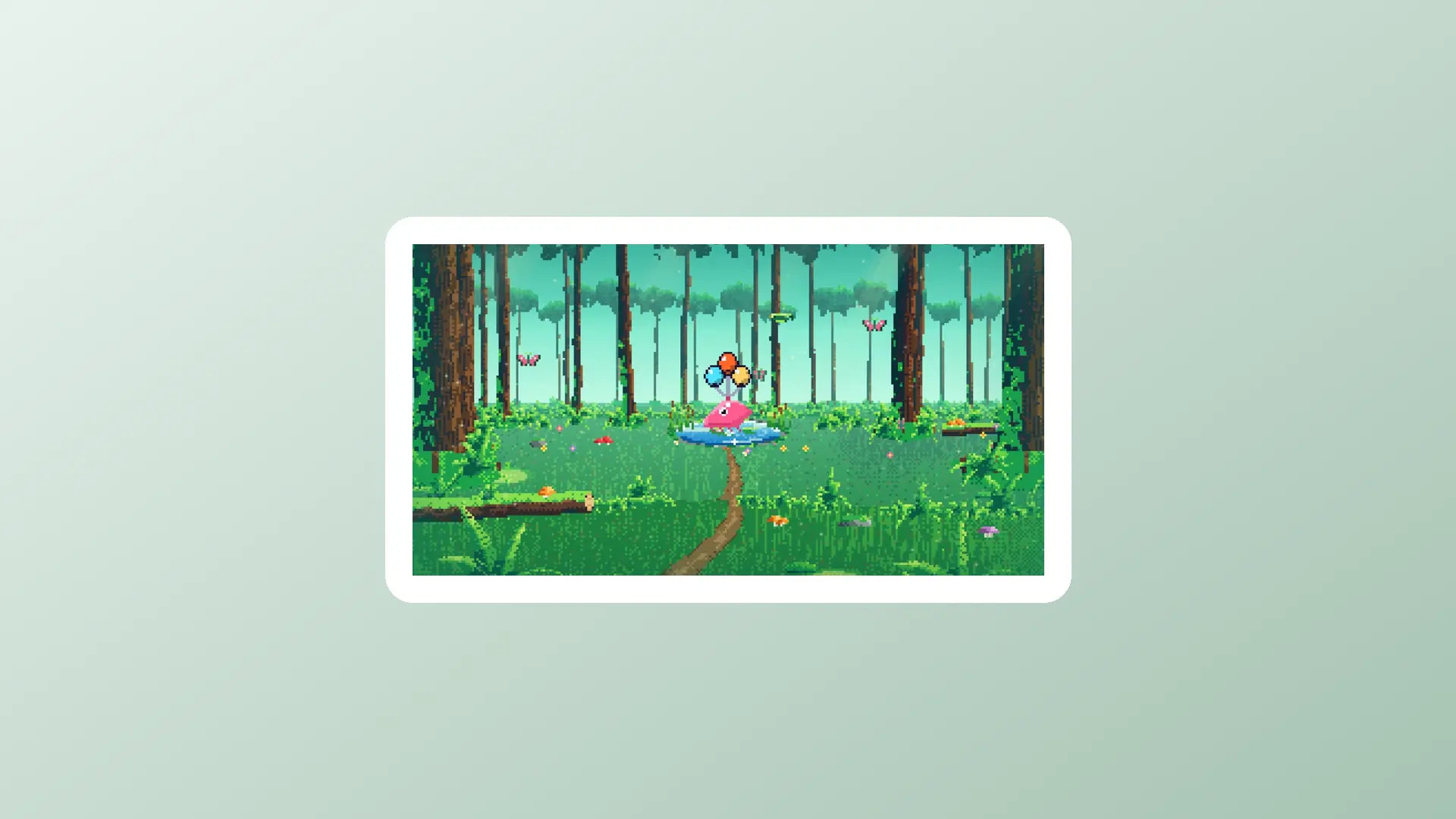
Both games are built around the same small animal making the same kind of journey, just in opposite directions. In Krillion, a krill dives, and the rarer your answer, the deeper and stranger the ocean gets as you descend. In Noillirk, that same krill rises instead, carried upward by a bunch of balloons, with every answer that matches the crowd lifting it a little higher. The climb runs from a pond on the forest floor, through the clouds, past the planets, to the galaxy’s last light, a scenic reward for guessing the thing everyone else would also guess.
That shared mechanic with a mirrored rule is a clever piece of game design on its own: build one animation engine, one scoring system, one sense of escalating distance, and get two genuinely different puzzles out of it just by flipping what counts as a good answer. It’s the kind of efficiency a small team needs if it wants to ship more than one daily game without doubling the engineering work behind it.
Part of a platform built around no limits
Noillirk is one entry in a small family of daily games rather than a standalone site, alongside Krillion, a music-recognition game, and a brand-logo color puzzle, released together under one banner with a specific, stated design choice: no daily caps and no sign-up requirement. Players can dive or climb alone, or join a live room of up to 40 people where every answer counts toward one shared leaderboard, with tokens earned per metre or per climb spent on cosmetic avatars everyone else in the room can see.
That’s a meaningfully different structure from the one-puzzle-a-day model most Wordle-style games settled on. A single daily attempt creates scarcity and a reason to return tomorrow. Unlimited play with live rooms instead bets that the social loop, seeing other people’s answers land in real time, is worth more than artificial rationing.
Whether that bet pays off long-term is an open question any new puzzle platform faces. Scarcity is a proven retention mechanic precisely because it’s cheap to build and hard to argue with. A live room of 40 strangers racing the same prompt is a harder thing to keep interesting night after night, because it depends on enough people showing up at the same time for the room to feel alive rather than empty.
The obvious answer is the harder one to find
It sounds like the easy version of the puzzle, naming the common thing instead of the clever one, but it actually demands something trickier from the player: a correct, almost uncomfortably accurate model of what a crowd of strangers is thinking, rather than a search through your own most interesting associations. Winning at Noillirk means being less yourself, not more, which is a strange thing to ask of a game and exactly why it works as a companion to Krillion rather than a repeat of it.
Author:
Jan Bielik
CEO & Founder of Webiano Digital & Marketing Agency
Sources
- Daily Games Introduces Free Live Multiplayer Puzzle Platform With No Daily Limits Or Sign-Up — MENAFN – platform structure, live rooms, token/avatar system, Noillirk’s balloon-and-krill mechanic
- Daily Games Introduces Free Live Multiplayer Puzzle Platform With No Daily Limits or Sign-Up — IT Business Net – Noillirk vs. Krillion rule comparison
- PlayDaily.org Explained: Founders, Games, Pricing and the Unlimited-Play Strategy — aiidelist.com – confirms Noillirk’s name as Krillion reversed, platform context
| Citing this article? Brief excerpts are welcome. Please credit Webiano.digital, name the author where stated, and include a link to https://webiano.digital and to this original article. Full or substantial republication requires prior written permission. Read our Copyright and Content Use Policy. |
This article was prepared with the assistance of artificial intelligence tools. The content underwent expert human review, and Webiano Digital & Marketing Agency assumes editorial responsibility for its final version and publication.