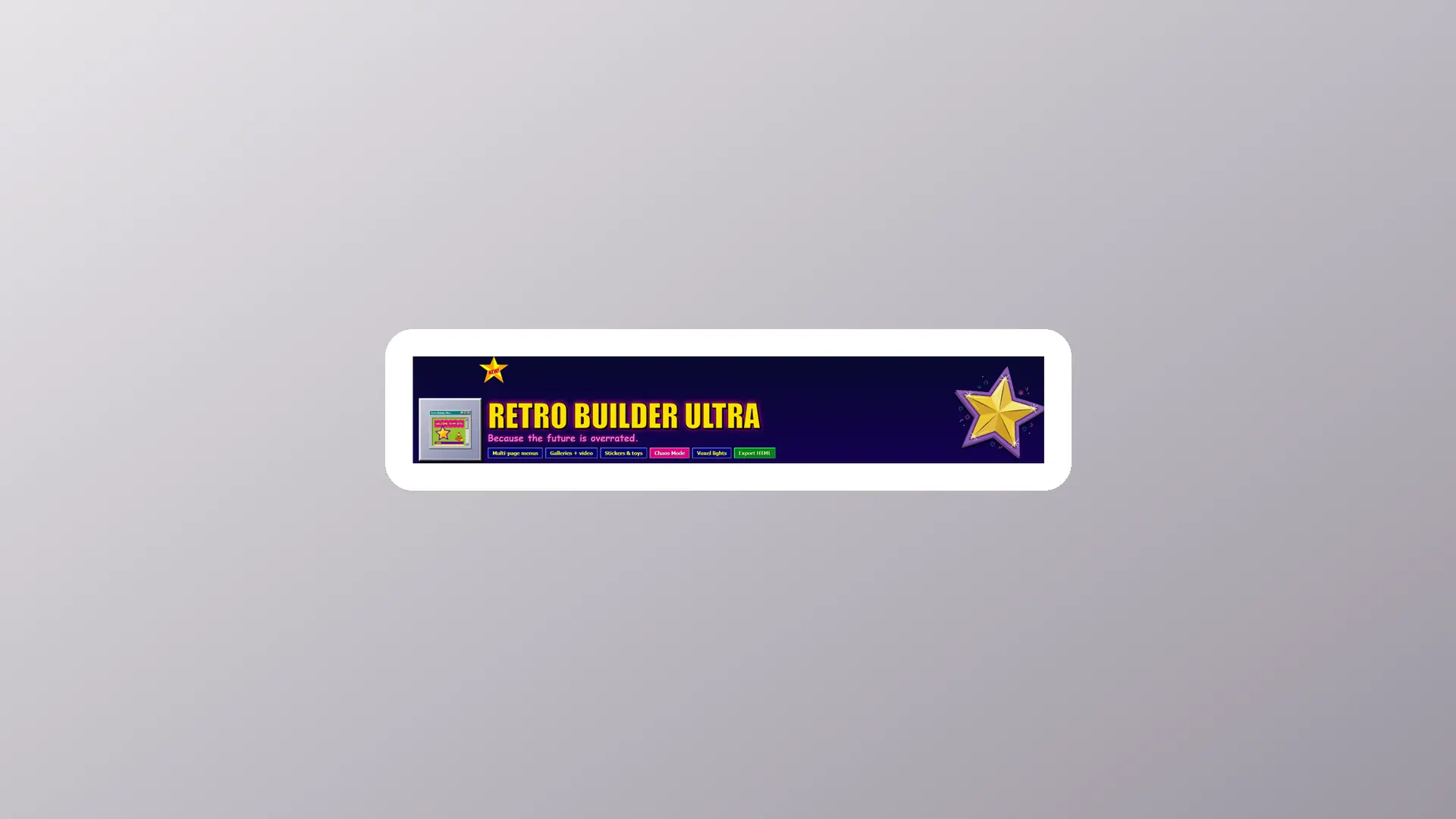
Retro Builder Ultra recreates the exact workflow of building a website in 1997, floating GIFs, MIDI soundtrack and all, as a single self-contained tool with no account, no cloud and no subscription.
Table of Contents
Before Wix, before Squarespace, before anyone said “no-code,” there was Microsoft FrontPage: a drag-and-drop editor that let an entire generation build ugly, glorious personal websites full of tiled backgrounds, autoplaying MIDI files and animated “under construction” GIFs. A developer who goes by Daniel, posting as doomed316, decided that era deserved a proper revival, and built Retro Builder Ultra to do it.
The pitch, in the maker’s own words on Product Hunt: “It’s the anti-Webflow.” No sign-up screen, no monthly fee, no cloud dashboard. You open an HTML file in your browser, drag elements onto a page, and export a single self-contained file you can host anywhere, exactly the way web design worked before anyone needed a server to do it.
Everything the 90s web actually looked like
The feature list reads like a checklist of what made a 1998 GeoCities page a 1998 GeoCities page: floating page elements that drift and bounce, looping MIDI background audio, tiled wallpaper backgrounds, and period-accurate widgets like visitor hit counters and blinking “under construction” banners. There’s an optional “Made with RetroBuilder Ultra” footer badge, the modern-day equivalent of the little animated buttons sites used to trade with each other to prove whose web ring they belonged to.
It isn’t just aesthetic set-dressing bolted onto a modern builder, either. Daniel’s own launch comment describes the actual grind of building it: he’d just managed to add raw HTML support for the title and body of the page, a small, fiddly feature that matters a lot if you’re trying to replicate genuine 90s markup quirks rather than fake them with a template.
A real editor, not a filter
That distinction matters. Plenty of tools will slap a Comic Sans font and a starfield GIF over a modern template and call it retro. Retro Builder Ultra works the other way round. You’re placing real elements, writing real titles and body text, floating them with real positioning controls, and the MIDI player is an actual audio element, not a decorative icon. It behaves like the software it’s imitating, bugs and all, rather than like a filter applied to something else.
Pay what feels right, or nothing at all
The tool is distributed through itch.io, the platform better known for indie games than web tools, where it’s listed as early access and still in active development. Pricing is pay-what-you-want with a suggested $5, and the listing is explicit that donations fund further work on it: more templates, more period-accurate widgets, the kind of ongoing maintenance a one-person side project needs to not quietly die. The target audience is named plainly too: people who miss making personal pages, portfolios and nostalgia sites without being routed through a hosted SaaS editor that owns the output.
That’s a smaller crowd than Webflow’s, obviously, but it’s a real one. GeoCities, Angelfire and Tripod between them hosted tens of millions of personal pages before any of them shut down, and a whole corner of today’s internet, from gifcities.org’s archive of old GeoCities GIFs to dozens of “build a retro website” tutorials, exists purely to let people recreate that specific, cluttered, sincere aesthetic on purpose. Retro Builder Ultra just skips the tutorial step and hands you the drag-and-drop editor those old sites never actually had, because in 1997 you were writing the HTML by hand or fighting FrontPage’s own bugs to get there.
Whether it ever grows past a passion project into something with a real user base is genuinely unclear from an early-access itch.io page with a suggested $5 price tag. What’s already there, though, works exactly as billed: open the file, start dragging GIFs onto a tiled background, and the MIDI starts playing before you’ve finished your first “Welcome to my page” banner.
Author:
Jan Bielik
CEO & Founder of Webiano Digital & Marketing Agency
Sources
- Retro Builder Ultra on itch.io – the tool itself, pricing and current development status
- Retro Builder Ultra on Product Hunt – maker Daniel’s launch post and comments
- So I made this Microsoft FrontPage clone, Product Hunt – the maker’s own description of the tool’s feature set and intended use cases
| Citing this article? Brief excerpts are welcome. Please credit Webiano.digital, name the author where stated, and include a link to https://webiano.digital and to this original article. Full or substantial republication requires prior written permission. Read our Copyright and Content Use Policy. |
This article was prepared with the assistance of artificial intelligence tools. The content underwent expert human review, and Webiano Digital & Marketing Agency assumes editorial responsibility for its final version and publication.