On July 20, 2026, every courthouse in the state of New York closes its doors to smart glasses. The prohibition, announced in a July 1 memo from the Office of Court Administration, applies to more than 1,240 state, county, city, town, and village courts operating under the New York State Unified Court System across the state’s 62 counties. No other American state has done anything this sweeping. Individual courthouses in Pennsylvania, Wisconsin, and Hawaii had already turned away camera-equipped eyewear, but New York is the first jurisdiction to cover every court in its system with a single blanket rule.
Table of Contents
The New York courthouse ban and what it actually covers
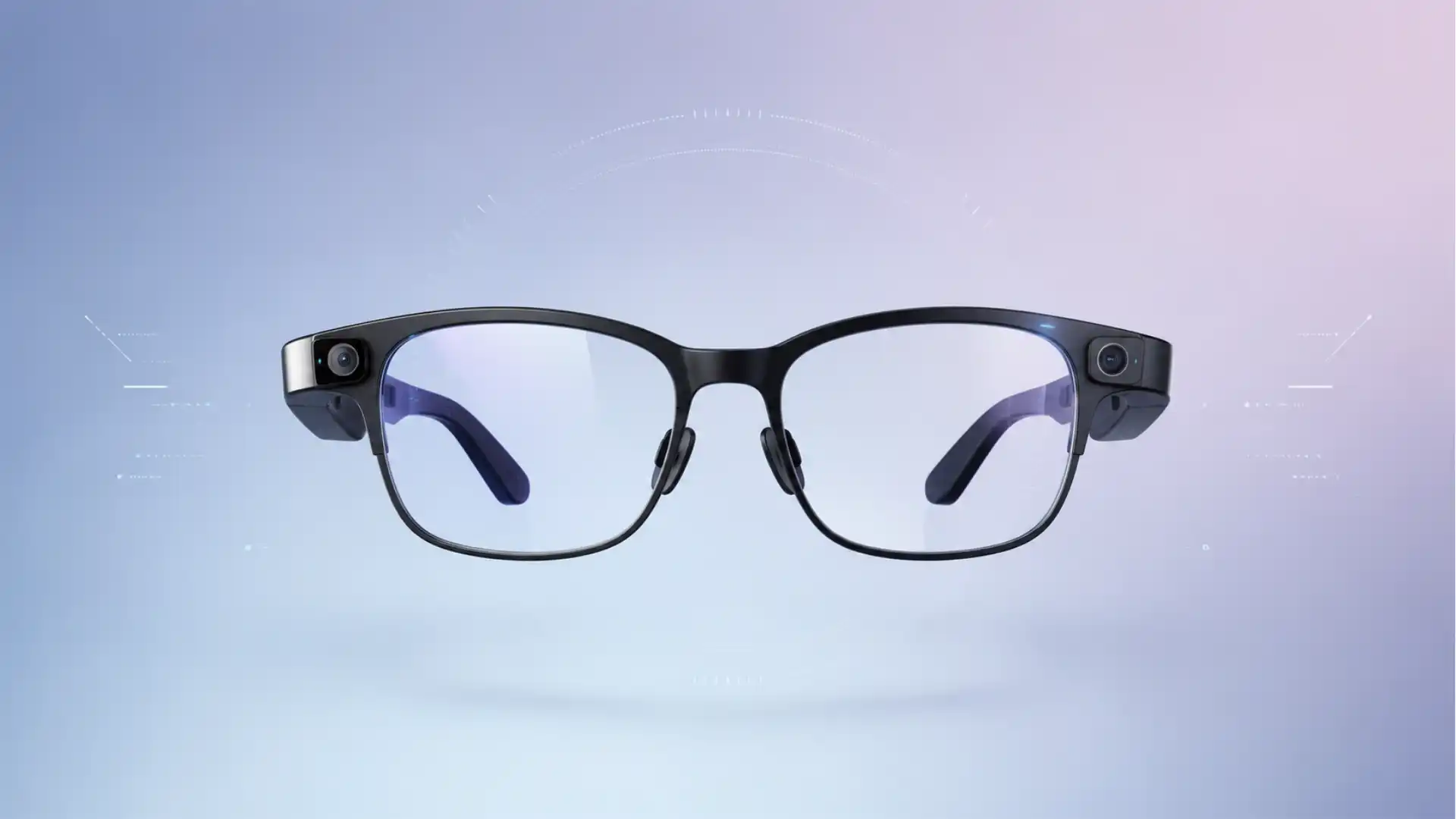
The scope of the ban deserves careful reading, because it goes further than the phrase “smart glasses” suggests. The prohibited category is any eyewear or headwear containing a camera, microphone, computer, or other technology that permits the user to record video or audio. That wording captures Ray-Ban Meta glasses, Oakley Meta models, the display-equipped Meta Ray-Ban Display, camera-equipped ski goggles, bodycam-style headbands, recording-capable helmets, and any future product that puts a sensor near a person’s eyes or ears. The rule is written around capability, not brand, which means it will not age out as new hardware arrives.
Prescription lenses offer no exemption. A person who has smart glasses fitted with corrective lenses must still surrender them at the door, and signage posted at courthouses — first spotted at the Honorable James C. Torney III Criminal Courthouse in Syracuse — advises visitors to bring an ordinary pair of glasses for use inside the building. That detail matters more than it might appear. One of the persistent selling points of the current generation of smart glasses is that they double as everyday prescription eyewear, worn from morning to night. The New York rule treats that convenience as irrelevant. If the frames can record, they stay outside.
The ban applies to everyone. Judges’ staff, court officers, clerks, attorneys, litigants, witnesses, jurors, journalists, family members, and casual visitors all fall under the same rule. The memo is explicit that Unified Court System employees are covered, and reporting by Syracuse.com, Bloomberg Law, and Engadget confirms that lawyers receive no professional carve-out. A defense attorney who has grown accustomed to wearing Ray-Ban Meta glasses as daily eyewear will hand them to a uniformed court officer at the entrance, the same as any member of the public.
The surrender mechanism is worth noting because it differs from how courts usually treat phones. Many courthouses allow phones inside but prohibit their use for recording; some require them to be checked. New York’s smart glasses rule skips the intermediate step entirely. The devices do not enter the building at all. Anyone arriving with them must leave them with uniformed personnel for safekeeping and collect them on the way out. The logic is straightforward: a phone in a pocket cannot record a courtroom without being visibly raised, while glasses on a face can record continuously with no gesture that anyone would notice. The only reliable control is physical exclusion.
The stated purpose, in the memo’s own words, is to ensure that individuals cannot surreptitiously record court proceedings in violation of the New York State Civil Rights Law and applicable court rules. New York has prohibited unauthorized recording in its courts for decades. Section 52 of the Civil Rights Law restricts televising and broadcasting of proceedings, and the court system’s internal rules forbid photography, filming, and audio recording anywhere in a courthouse, whether or not court is in session. The smart glasses ban creates no new prohibition on recording. It closes an enforcement gap that hardware created. The law already said no one may record; the glasses made the law practically unenforceable; the ban restores enforceability by removing the hardware.
That framing explains why the court system moved with such little apparent hesitation. Administrators did not need to win a policy argument about whether courtroom recording should be legal. That argument was settled long ago in New York. They only needed to conclude that a new category of consumer device had made an old rule impossible to police, and that conclusion was hard to resist after a widely reported incident in a Los Angeles courtroom in February 2026, examined in detail below, showed exactly how the problem plays out in practice.
The Office of Court Administration declined to answer press questions about what prompted the timing or how officers will detect the devices, leaving observers to piece the picture together from the memo, the signage, and the surrounding events. What is not in doubt is the reach: from the Court of Appeals in Albany to the smallest village justice court, one rule now applies everywhere in the state.
The memo behind the ban and its basis in New York law
The instrument that created the ban is administrative rather than legislative. No bill passed the New York State Assembly or Senate. The Office of Court Administration, the management arm of the Unified Court System, issued an internal memo dated July 1, 2026, and reviewed by multiple news organizations including Gizmodo and Bloomberg Law. Court administrators in New York hold broad authority over conduct inside court facilities, and they used it.
This route has consequences for anyone wondering whether similar bans will spread. An administrative rule requires no legislative coalition, no committee hearings, no floor votes, and no governor’s signature. A state court administrator who becomes convinced that smart glasses threaten the integrity of proceedings can act in weeks. That is one reason the New York model is so exportable: the barrier to imitation is a memo, not a statute.
The legal foundation the memo cites is the New York State Civil Rights Law together with existing court rules. Section 52 of the Civil Rights Law, first enacted in 1952 in the era of intrusive newsreel and television coverage, restricts audiovisual coverage of proceedings in which testimony is compelled. The Unified Court System’s rules go further, stating that taking photographs, films or videotapes, or audiotaping, broadcasting or telecasting in a courthouse, including any courtroom, office or hallway, at any time or on any occasion, whether or not the court is in session, is forbidden without authorization. The prohibition covers hallways and clerks’ offices, not just the well of the courtroom, and it applies around the clock.
Layered on top of those state-level rules are the interests the rules exist to protect. Witnesses in criminal cases sometimes testify at real personal risk, and covert recording could expose them to retaliation. Jurors are promised a degree of anonymity, and a recording that captures the jury box captures twelve identifiable faces that could be matched, followed, or harassed. Victims of violent and sexual crimes must describe their experiences in open court; a clip of that testimony circulating on social media is a second injury. Undercover officers, confidential informants, children, and litigants in sensitive family matters all appear in courthouses. The public nature of a proceeding — anyone may walk in and watch — has never meant that anyone may capture and redistribute it. Courts have long maintained exactly that distinction: open to observation, closed to recording.
Smart glasses attack the distinction at its weakest point, which is detection. A court officer can spot a raised phone from across a courtroom. A pair of Wayfarer-style frames on a spectator’s face gives the officer nothing to see. The recording indicator LED on Ray-Ban Meta glasses is small, easy to miss at a distance, and — as discussed later — a target for physical tampering despite Meta’s countermeasures. The Office of Court Administration evidently judged that asking officers to distinguish recording glasses from ordinary glasses, and recording states from idle states, at every door and in every courtroom, was an unwinnable assignment. The memo’s answer is categorical exclusion, which converts an impossible detection problem into a manageable screening problem.
There is a further legal texture worth understanding. New York is a one-party consent state for audio recording of conversations under its eavesdropping statute, meaning a participant in a conversation may generally record it. Courtrooms are the exception: the courthouse recording prohibition applies regardless of consent rules that govern the outside world. A visitor who could lawfully record a conversation on the sidewalk commits a violation the moment the same recording happens inside the building. The smart glasses ban therefore does not depend on the wearer’s intent or on whose voices are captured. The device’s presence is the violation, which is administratively far easier to enforce than any rule that turns on what the device was doing.
Administrative bans of this kind are also durable against the most likely challenges. A constitutional attack based on the First Amendment right to record public officials would run into decades of precedent holding that courts may restrict recording inside courthouses to protect the administration of justice. An accessibility challenge from a wearer who depends on smart glasses for vision assistance is a more serious question, and one the memo does not publicly address; disability accommodation is among the open issues examined near the end of this analysis.
The Zuckerberg courtroom moment that put smart glasses on trial
The single event most often cited in coverage of the New York ban happened 2,800 miles away, in a Los Angeles Superior Court courtroom in February 2026. Mark Zuckerberg, Meta’s chief executive, arrived to testify in a jury trial over allegations that Instagram was designed to be addictive to children. Members of the team escorting him into the building were wearing Ray-Ban Meta glasses — the product his own company builds with EssilorLuxottica.
Judge Carolyn Kuhl noticed. Recording devices of any kind were strictly forbidden in her courtroom, and she addressed the situation in unusually blunt terms. According to CNBC’s reporting from the courtroom, she warned that anyone who had recorded the proceedings with the glasses must delete the footage or face contempt of court, adding that the matter was very serious. Her particular concern, according to subsequent reporting, was the jury. A recording that captured jurors’ faces could expose them to identification and harassment in a case involving one of the most powerful companies in the world, in a trial where Meta was later found liable.
Whether any recording had actually occurred was never established publicly. In a sense, that is the point. Nobody in the courtroom could tell. The glasses look like ordinary Wayfarers. The capture LED is small. The people wearing them were not raising a device or pointing a lens; they were simply present, seated, watching, as any spectator would be. The judge had no practical way to verify compliance except to issue a warning and rely on the deterrent force of a contempt threat.
The episode traveled far beyond the Los Angeles legal press for an obvious reason: the optics were extraordinary. The chief executive of the company that dominates the smart glasses market walked into a courtroom, and the devices that arrived with his entourage immediately created a judicial incident. If Meta’s own team either could not or did not think to remove the glasses before entering a courtroom where their chief executive was testifying under oath, court administrators everywhere could reasonably conclude that ordinary members of the public would do no better. The devices had become so normalized as everyday eyewear that wearers stopped thinking of them as cameras at all.
That normalization is precisely what worries court officials. A person who intends to smuggle a recording device into a courtroom is a security problem, but a rare one. A person who wears a recording device onto their face every morning without any intent at all, the way they wear a watch, is a different kind of problem: common, innocent, and no less damaging if the footage happens to capture a protected witness or an anonymous juror. Intent-based rules fail when the technology makes violation effortless and unconscious. The Los Angeles incident demonstrated the failure in front of the national press, with the industry’s most famous executive at the center of the frame.
Within five months, New York had its statewide ban. Court administrators never publicly linked the two events, and the Office of Court Administration declined to answer questions about what prompted the memo. But the timeline, the reasoning in the memo, and the near-universal citation of the Kuhl warning in coverage of the New York rule tell a coherent story. February showed the problem was real and unmanageable through warnings. July delivered the categorical answer.
The incident also reframed the public conversation about who bears the burden of smart glasses in shared spaces. Earlier debates had focused on wearers’ rights and manufacturers’ safeguards. The Los Angeles courtroom flipped the perspective to the people in front of the lens: the juror who never consented to being filmed, the witness whose safety depends on not being identifiable, the litigant whose worst day should not become content. Once the question is framed from the bystander’s side, blanket exclusions in sensitive spaces stop looking extreme and start looking like the minimum workable protection.
Courts that acted before New York and the pattern they set
New York’s ban is the first to cover an entire state court system, but it is not the first courthouse restriction on smart glasses. Understanding the earlier, smaller bans clarifies what makes New York different and why the difference matters for prediction.
Philadelphia’s courts prohibited smart glasses from their facilities before New York acted, a restriction noted in Bloomberg Law’s coverage of the statewide ban. Individual courts in Wisconsin and Hawaii adopted similar rules. These were building-level or district-level decisions, made by local court administrators responding to the same enforcement anxiety that later moved Albany: the impossibility of policing a no-recording rule against a device that records without visible action.
The scattered early bans shared three features that the New York rule inherited and scaled up. First, they targeted capability rather than brand, prohibiting recording-capable eyewear generally rather than naming Meta products. Second, they applied at the building entrance rather than the courtroom door, recognizing that hallways, clerks’ offices, and waiting areas contain vulnerable people and sensitive conversations too. Third, they offered no exemption for prescription wearers, because an exemption would recreate the exact detection problem the ban exists to solve — officers cannot distinguish a prescription smart lens from a plano one any more than they can distinguish recording from idle.
The pattern resembles how institutions responded to earlier waves of recording technology. Camera phones prompted locker room bans and courthouse check-in requirements in the mid-2000s. Google Glass, the 2013 ancestor of the current generation, was banned from bars, cinemas, and casinos within months of its developer release, and the word glasshole entered the language to describe wearers who ignored social boundaries. The difference this time is scale and disguise. Google Glass looked like technology and sold in the tens of thousands; Ray-Ban Meta glasses look like Ray-Bans and sell in the millions. The social immune response that shamed Glass wearers out of restaurants cannot operate against a device that is visually indistinguishable from the most popular sunglasses design of the past half century.
Institutional bans have therefore replaced social enforcement, and courts moved first among public institutions for a structural reason: they are among the few public spaces where recording was already flatly illegal. A gym or a restaurant that bans smart glasses must first decide, as a matter of policy, that it opposes recording on its premises. A court skips that step. The policy already existed, often for a century in some form. Only the enforcement mechanism was missing. That is exactly the sequence New York followed, and it is the sequence available to every other state court system in America, most of which maintain comparable recording prohibitions and comparable administrative authority to exclude devices that defeat them.
Smart glasses as a product category and the technology inside them
The devices at the center of this fight deserve a precise description, because policy debates go wrong when participants imagine different hardware. Smart glasses, in the sense that New York has banned, are eyeglass-shaped wearables that carry a camera, microphones, speakers, a processor, and wireless connectivity, worn on the face like ordinary spectacles and usable as ordinary spectacles, with or without a display projected into the wearer’s field of view.
The market-defining product is the Ray-Ban Meta line, built by Meta in partnership with EssilorLuxottica, the French-Italian eyewear group that owns Ray-Ban, Oakley, and much of the world’s optical retail. The second-generation Ray-Ban Meta glasses, launched in 2023 and refreshed in September 2025, carry a 12-megapixel ultra-wide camera in the left temple, a five-microphone array, open-ear speakers, and Meta AI, a voice assistant that can answer questions about what the camera sees. The wearer triggers photo or video capture by voice command, by pressing a button on the temple, or through gesture controls on newer models. Footage syncs to a phone app and from there to anywhere.
Around that flagship, the category has diversified fast. Oakley Meta HSTN and Oakley Meta Vanguard target athletes at $499 to $799. The Meta Ray-Ban Display, launched at $800 in late 2025 and initially sold only in the United States, adds a waveguide display in the right lens and ships with a neural wristband that reads electrical signals in the forearm, letting the wearer control the interface with finger micro-gestures. Xiaomi, Alibaba, Rokid, TCL RayNeo, Inmo, and dozens of other manufacturers, mostly Chinese, shipped more than 50 AI-equipped glasses models in 2025 alone. Snap sells camera glasses under the Spectacles and Specs names. Amazon’s Echo Frames take the opposite approach, offering Alexa audio with no camera at all, and camera-free display glasses such as the Even Realities G2 have built a niche among buyers who want on-lens text without the privacy baggage.
The camera is the feature that creates the policy problem, but the microphones deserve equal attention and get less. A five-microphone array with beamforming can capture conversations at a distance with clarity that a phone in a pocket cannot match, and audio recording law in much of the world is stricter than photography law. Eleven American states require all parties’ consent to record a private conversation; the European Convention on Human Rights and national criminal codes across the EU protect the spoken word in private settings. A wearer who never touches the camera can still commit a crime with the microphones, and no LED indicates audio capture on most models.
The AI layer changes the stakes again. Earlier camera glasses recorded footage for the wearer to review later. Current models interpret the scene in real time. Meta AI can read a menu, identify a landmark, translate a sign, describe a room. The same computer-vision pipeline that makes the product useful makes it a sensor platform: everything the wearer looks at can, in principle, be analyzed, and on cloud-connected models the analysis happens on Meta’s servers, which means the imagery leaves the device. The distinction between a camera that records and an AI that perceives will define the next round of regulation, because a rule written around recording may not clearly cover a device that analyzes without storing.
Battery and form factor complete the picture. Current glasses run most of a day in mixed use, weigh close to ordinary sunglasses, and are visually indistinguishable from their non-smart siblings at conversational distance. The Wayfarer and HSTN frames are deliberately identical to the classic designs. That is the whole commercial strategy — technology that disappears into a fashion object — and it is simultaneously the whole regulatory problem. A device that disappears cannot be socially policed, and a device that cannot be socially policed invites institutional exclusion, which is the road that ends at a courthouse door in Syracuse with a sign asking visitors to bring their dumb glasses.
Sales numbers that turned a niche gadget into a policy problem
Regulators do not write statewide rules about products nobody owns. The New York ban exists because smart glasses crossed, in roughly eighteen months, from curiosity to mass-market category, and the numbers explain the timing of everything in this story.
EssilorLuxottica told investors in February 2025 that Ray-Ban Meta glasses had sold about 2 million units from their October 2023 launch through early 2025. One year later, in its Q4 2025 results, the company reported selling more than 7 million Meta smart glasses in 2025 alone across the Ray-Ban and Oakley brands — more than triple the cumulative total of the previous two years, bringing lifetime sales to roughly 9 million units. Omdia data puts Meta’s 2025 shipments at 7.4 million units, a 281 percent year-over-year increase, and Counterpoint Research measured Meta’s share of the global smart glasses market at 84 percent as of the first quarter of 2026. Within Meta’s own hardware business, smart glasses revenue of about $2.15 billion overtook Quest headset revenue of $660 million in 2025, the first time the glasses out-earned the company’s flagship VR line.
The trajectory matters as much as the level. EssilorLuxottica had planned to expand annual production capacity to 10 million units by the end of 2026; Bloomberg reported in early 2026 that the partners were discussing raising that target to 20 or 30 million. Xiaomi’s AI Glasses sold 10,000 units in twelve hours at launch in China. The Meta Ray-Ban Display sold out of nearly all US stores within two days of its October 2025 release despite an $800 price. Samsung has announced glasses for 2026 on the Android XR platform; Google is working with Warby Parker, Gentle Monster, and Kering Eyewear; Apple’s entry is persistently reported. IDC-tracked global shipments of AI and smart glasses reached 8.7 million units in 2025, and every forecast points steeply upward.
A compact way to see the shift
| Year | Meta smart glasses sold (approx.) | Category context |
|---|---|---|
| 2021–2022 | ~300,000 (Ray-Ban Stories) | First generation widely judged a flop |
| 2023–2024 | ~2 million cumulative | Gen 2 launch; category gains traction |
| 2025 | 7+ million in one year | ~84% market share; revenue passes Quest |
| 2026 (plan) | 10–30 million capacity targets | Samsung, Google, Apple entries expected |
The table compresses the commercial story behind the regulatory one: institutions began writing bans at almost exactly the moment the installed base made encounters with the devices routine rather than exceptional. A courthouse that saw one pair of camera glasses a month in 2024 could handle the problem with a word from an officer. A courthouse that sees dozens a day in 2026 cannot.
Population math makes the point concrete for New York specifically. With roughly 9 million pairs in circulation, most of them in the United States, and New York among the largest and wealthiest state markets, court officers can expect camera-equipped eyewear to walk toward their magnetometers constantly — worn by attorneys, jurors reporting for service, and citizens paying traffic fines, the overwhelming majority with no thought of recording anything. The ban’s design, with surrender at the door and collection on exit, assumes exactly this: a steady flow of innocent wearers who need a routine, not an interrogation.
The commercial forecast also explains why nobody involved treats the New York rule as a temporary measure. Every market signal says the installed base will multiply several times over by the end of the decade, that new entrants will push prices down, and that camera-equipped frames will become a default option at optical retailers — EssilorLuxottica owns LensCrafters and Sunglass Hut, so the distribution machine already exists. Rules written in 2026 are being written for a 2030 in which a double-digit percentage of eyeglass wearers in wealthy countries may have a camera on their face. The institutions moving now are moving early on purpose.
The capture LED debate and the limits of hardware safeguards
Meta’s principal answer to the bystander problem is a light. Ray-Ban Meta glasses carry a capture LED on the front of the frame that illuminates and blinks when the camera is taking photos or recording video. The company’s position is that the light gives people nearby fair notice, restoring the visibility that a raised phone provides naturally. The system also includes a tamper response: the glasses refuse to capture if the device detects that the LED is covered, and Meta announced in 2026 that a software update would disable the camera entirely if the system detects the LED has been physically tampered with or destroyed.
The safeguard is real, and it is worth crediting that Meta iterated on it under regulatory pressure. When the first-generation Ray-Ban Stories launched in September 2021, Ireland’s Data Protection Commission — Meta’s lead GDPR regulator — and Italy’s Garante both questioned whether the original small LED gave bystanders any realistic chance of noticing. The DPC said it had seen no field-testing evidence that the indicator worked and asked Meta either to prove it or to run a public information campaign. The 2023 second generation shipped with a larger, more visible blinking light, a change regulators had recommended.
The limits of the approach are equally real, and they come in three layers. The first is physics and attention. A small light on a stranger’s glasses, in daylight, at social distance, in a crowded room, competes with everything else in the visual field. No published field study has demonstrated that a majority of bystanders notice the LED in realistic conditions, which was precisely the DPC’s complaint in 2021 and remains unanswered at scale. A notice mechanism that most people do not perceive is not notice.
The second layer is tampering. A market of modders emerged offering LED removal or masking for a fee, and reporting on the New York ban noted that users could disable the light or have it removed. Meta’s tamper-detection update raises the cost of the simplest attacks — tape over the light — but hardware in the user’s physical possession can never fully police itself against a determined owner, a lesson the security industry learned decades ago with everything from game consoles to SIM locks. Third-party glasses from smaller manufacturers, meanwhile, ship with whatever indicator discipline their makers choose, which in many cases is none. The LED is a Meta policy, not a category standard.
The third layer is conceptual, and it is the one that decided the New York question. Even a perfectly functioning indicator only tells bystanders that recording is happening; it does not give them any power to prevent it. A witness in a courtroom who notices a blinking light in the gallery has already been filmed. The harm in sensitive spaces is not that recording happens without notice but that it happens at all, and no LED addresses that. This is why institutional rule-makers have converged on exclusion rather than indication: courts, cruise lines, and gyms are not asking whether bystanders can tell they are being recorded, they are deciding that in their spaces nobody gets recorded, and the only device state compatible with that decision is absent.
Meta’s own framing concedes the territorial logic. The company’s guidance tells wearers to respect venue rules and to power down in sensitive locations such as medical offices, locker rooms, and bathrooms. Once the manufacturer itself acknowledges that some spaces are incompatible with its product’s core sensor, the question of who defines those spaces, and how broadly, passes to the institutions that run them. New York’s answer for its courts was: all of them, entirely, at the door.
Recording rules inside courtrooms across the United States
The New York ban lands on top of a legal terrain that already treats courtroom recording as exceptional almost everywhere in the United States, and a brief map of that terrain shows why courts are the natural first movers on smart glasses.
In the federal system, cameras are broadly excluded from criminal proceedings. Federal Rule of Criminal Procedure 53 prohibits photographing and broadcasting judicial proceedings in criminal cases, a rule dating to 1946. The federal courts have run limited pilot programs for civil proceedings, and appellate arguments including Supreme Court sessions are audio-recorded and released, but the default in federal trial courts remains no cameras, and the Supreme Court has never permitted video of its arguments.
State systems vary widely, which is a point often missed. Many states allow cameras in courtrooms at the presiding judge’s discretion, subject to media application rules, restrictions on filming jurors and certain witnesses, and pooling arrangements. Court TV built an industry on state-court trials from Florida to California. The variable is authorization: recording happens when a judge permits it, under conditions the judge sets, by identified media whose equipment is visible and whose output is accountable. What no state permits is unauthorized, covert recording by spectators, and New York’s rules are among the strictest, prohibiting recording anywhere in a courthouse at any time without approval.
The interests behind these rules repay a moment’s attention because they explain the near-unanimity. Juror anonymity protects the jury system itself; jurors who fear identification and pressure decide cases differently or refuse to serve. Witness protection is often literal — cooperating witnesses in gang and organized-crime prosecutions have been killed after being identified. Victims of sexual violence testify under conditions designed to limit re-traumatization, and circulating footage defeats those conditions permanently. Children appear in family and criminal courts under confidentiality regimes. Undercover officers’ faces are operational secrets. Even mundane proceedings involve citizens at their most exposed: bankruptcies, evictions, protective orders, mental-health commitments. Courts concluded long before smart glasses existed that open justice means the public may attend and the press may report, not that anyone may capture and redistribute the images of everyone present.
Smart glasses stress every one of these protections simultaneously because they defeat the enforcement assumption that all the rules share: that recording is visible. Judge Kuhl’s warning in Los Angeles, Philadelphia’s building ban, the Wisconsin and Hawaii restrictions, and New York’s statewide rule are the same doctrine responding to the same failure at four different administrative scales. The doctrine did not change in 2026. The hardware did, and administrators adjusted the perimeter to match. Other states inherit both the doctrine and the failure, which is the strongest structural reason to expect the New York model to travel.
Enforcement at the courthouse door and the practical problems ahead
A rule is only as good as its checkpoint, and the New York ban hands court officers a detection task that is genuinely hard. The Office of Court Administration did not answer press questions about screening methods, so the practical picture must be assembled from what courthouse security already does and what the devices physically are.
Every New York courthouse of any size runs entrance screening with magnetometers and X-ray belts. Smart glasses contain metal, batteries, and circuit boards, so a pair passing through an X-ray machine in a tray is identifiable to a trained operator; the temples show dense electronics that ordinary acetate frames lack. The harder case is glasses worn on the face through the magnetometer, which is how most people carry their eyewear. Officers will need to visually inspect frames, and the tells are learnable but subtle: slightly thickened temples, a camera aperture at the corner, a charging contact, brand knowledge. Ray-Ban Meta and Oakley Meta account for the overwhelming majority of the installed base, and both follow recognizable design language, which helps. The dozens of Chinese models entering the market follow no common design language at all, which does not.
Signage carries much of the load, and deliberately so. The posted notices at courthouse doors convert the officer’s task from detection to compliance management: most wearers, informed that the devices are prohibited, will surrender them at the desk the way they surrender pocketknives. Court security has run exactly this model for decades with prohibited items generally. The safekeeping obligation is new operational work — storage, tagging, return, liability for an $300 to $800 device — and multiplied across 1,240 facilities it is a real administrative cost that the memo assigns without much visible infrastructure behind it. Expect early friction: lost-property disputes, queues at busy urban courthouses, and attorneys irritated at daily surrender of their prescription eyewear.
The evasion scenarios sort into two classes. Casual non-compliance — a wearer who forgets, or does not realize their frames qualify — is handled by signage, screening, and officer familiarity, and it will shrink as the ban becomes known. Determined covert recording is the harder class, and honesty requires saying that a categorical eyewear ban does not end it. A person committed to recording a proceeding can use a pen camera, a button camera, a modified phone, or hardware built for concealment; such devices have existed for decades and courthouse screening has always caught only some of them. The ban’s realistic goal is not to make covert recording impossible but to strip away its innocent camouflage. When camera glasses are banned, anyone wearing them past the checkpoint has committed a knowing violation, which changes the legal posture from accident to intent and gives officers unambiguous grounds to act. Rules do not have to be perfect to restore enforceability; they have to remove the gray zone, and this one does.
There is also a quieter enforcement resource: the courtroom itself. Judges retain contempt power, as Judge Kuhl demonstrated, and parties’ attorneys have every incentive to flag suspicious eyewear across the aisle. A statewide rule gives all of these actors a bright line where previously they had a judgment call. The Los Angeles incident required a judge to notice, assess an ambiguous situation, and improvise a warning. Under the New York rule the same situation is simple: the glasses should not be in the building, and their presence is itself the violation, whatever they were doing.
Other states likely to follow and the signals to watch
The user-facing question raised by New York’s move — will other jurisdictions do the same — can be answered with more confidence than most predictions about technology policy, because the mechanism is visible and the incentives are aligned.
Start with what already exists. Courts in Pennsylvania, Wisconsin, and Hawaii restricted smart glasses before New York, at building or district level. Every state maintains prohibitions on unauthorized courtroom recording. Every state court system has an administrative office with authority over conduct in its facilities. Every state’s judges read the same coverage of the Zuckerberg incident and the same memo language from New York. The New York model requires no legislation, costs little, offends no organized constituency, and solves a problem every court administrator recognizes. Policy that fits that description spreads. The National Center for State Courts and administrative judges’ conferences are exactly the channels through which one state’s security memo becomes a template for others, and the template is now public.
The realistic near-term map, based on the pattern of earlier restrictions and the structure of state court administration: large states with heavy media-trial exposure and existing strict recording rules — among them California, where the Kuhl warning happened, and states in the Northeast with unified court administration — are the natural next adopters, likely through administrative directives during 2026 and 2027. States with decentralized court governance will move courthouse by courthouse, producing a patchwork before uniformity. Federal courts, already the strictest on recording, can implement equivalent equipment rules through the Judicial Conference and individual district security policies without any public drama, and some federal courthouses already treat camera-equipped wearables as prohibited electronics under existing rules.
Outside the United States, the same logic runs through different institutions. In England and Wales, unauthorized courtroom recording is a criminal offense under the Contempt of Court Act 1981, and photography in court has been banned since 1925; smart glasses are already illegal to use in a UK courtroom, and explicit equipment bans at the door are an administrative formality whenever HM Courts and Tribunals Service decides the nuisance justifies it. Germany prohibits recording of court proceedings under its courts constitution act. France restricts courtroom imagery. Most civil-law systems never admitted cameras in the first place. The likeliest international pattern is not dramatic new bans but quiet screening updates, because the underlying prohibitions have existed for generations and only the checkpoint practice needs to change.
The signals worth watching to track the spread: administrative memos from state court offices, which surface in legal press rather than general news; procurement notices for courthouse screening equipment mentioning wearables; bar association guidance to attorneys about surrendering devices; and the first appellate case in which smart glasses footage, or the exclusion of a wearer, becomes a litigated issue. A disability-accommodation challenge from a wearer who uses camera glasses as assistive technology — Meta distributes them to blind veterans through a program launched in June 2026, and the Be My Eyes integration is genuinely used by visually impaired people — is the development most likely to force refinement of the categorical model, and it is close to inevitable somewhere among 1,240 courthouses.
Beyond courts, legislatures are beginning to touch adjacent territory. Illinois lawmakers are considering adding smart glasses to the list of devices prohibited for drivers under distracted-driving law. Senators Ron Wyden and Jeff Merkley formally questioned Meta in 2026 over reported plans to add facial recognition to the glasses. Neither is a courtroom rule, but both mark the same shift: smart glasses have moved from consumer-tech coverage to the regulatory docket, and products on the docket accumulate rules.
Bans beyond the courtroom, from cruise ships to gyms
Courts are the most formal actors in this story, but they are late arrivals to a wave of private-venue restrictions that began the moment the sales curve turned vertical, and the private wave reveals where social consensus about camera glasses actually sits.
The cruise industry moved early and specifically. MSC Cruises issued a partial ban in 2025, citing privacy concerns. Royal Caribbean followed in February 2026 with a rule that prohibits wearing camera-capable glasses in its casinos, spa service areas, restrooms, locker rooms, medical facilities, security screening locations, youth facilities, crew areas, during back-of-house tours, and anywhere there is a reasonable expectation of guest and crew privacy. The Royal Caribbean list is worth reading closely because it is, in effect, a privately drafted map of the spaces where contemporary Western society expects freedom from cameras: places of undress, places of medical vulnerability, places involving children, places of financial activity, and staff-only zones. A cruise ship is a floating town, and its operator has written the town’s camera ordinance.
Gyms produced the most visceral cases. PureGym in the UK restated its no-photography rules as smart glasses spread. Kingdom Gyms of Birmingham announced in December 2025 that recording glasses such as Meta smart glasses would no longer be permitted after member complaints. Forbes reported that gyms have already handled cases of members being filmed without consent through smart glasses, with the sharpest risk in locker rooms, yoga studios, and pools. The gym cases matter because they show harm arriving through ordinary use, not exotic misuse: a wearer films their own workout, and everyone behind them is in the frame in athletic wear, in a space they entered on the assumption that cameras stay in lockers.
Casinos ban the glasses for a second reason stacked on privacy: card counting and cheating assistance, since a camera plus real-time AI is a hand-analysis tool. Concert venues and comedy clubs, which spent the last decade developing phone-pouch systems to protect unreleased material and performers’ rights, treat camera glasses as a direct circumvention of those systems. Cinemas face the oldest version of the problem, camcorder piracy, in a new form factor. Bathhouses, spas, and swimming pools across multiple countries have posted prohibitions. Some hospitals restrict them in clinical areas because a visitor’s glasses can capture other patients, charts, and screens, implicating medical-privacy law without anyone intending it.
The social-media backlash that accompanied these bans is part of the regulatory story, because venue operators respond to their customers’ comfort. The devices acquired the nickname pervert glasses in viral posts, and wearers inherited glasshole from the Google Glass era. Influencer conduct fed the anger: Gizmodo’s coverage of the New York ban pointed to a San Diego creator with 1.8 million Instagram followers who uses the glasses to film unsuspecting women he approaches in public, footage published as content. Each viral incident hardens venue policies, and each venue policy normalizes the next one. The private sector has been running a distributed referendum on where camera glasses are acceptable, and the results are consistent: nowhere that involves bodies, children, money, medicine, or performance.
For the manufacturers, the venue wave is a controlled burn rather than an existential threat — Meta itself advises wearers to respect exactly these boundaries. The commercial bet is that glasses will be worn on streets, in transit, at tourist sites, and at home, and surrendered or pocketed at the gym door the way phones are pocketed today. Whether that equilibrium is stable depends on enforcement friction: a device that must be removed a dozen times a day loses its all-day-wearable value proposition, which is one reason the industry is quietly interested in camera-free display models as a parallel track.
Schools, hospitals, and exam halls as the next contested spaces
Three institutional categories sit just behind courts in the queue, each with its own legal machinery already in place and each likely to produce formal smart-glasses policies at scale within the next two years.
Schools are the clearest case. Educational institutions in the United States operate under FERPA, which protects student records, and under child-protection norms that make covert recording of minors radioactive. United Educators, a major insurer of schools and universities, published risk guidance urging institutions to prepare policies before the glasses are mainstream, flagging scenarios from a student filmed while changing to a professor accidentally capturing protected records, and recommending explicit prohibitions in restrooms, locker rooms, labs, and testing centers, signage in sensitive areas, and restrictions on network access for the devices. Many schools already treat smart glasses like phones or stricter, particularly during examinations. The exam-integrity problem is acute and unsolved: a camera plus a live AI assistant plus an in-lens display is a purpose-built cheating apparatus, and display models make detection genuinely difficult because the wearer needs no visible second device. Testing bodies that spent years fighting smartwatches now face eyewear, and the predictable endpoint is the courthouse model — categorical exclusion of smart eyewear from examination rooms, with plain glasses provided or required.
Hospitals combine the highest privacy stakes with the strongest counter-pressure. On one side, HIPAA in the United States and equivalent medical-confidentiality regimes elsewhere make any uncontrolled recording in clinical areas a compliance hazard; Forbes’ analysis noted that a nurse wearing recording glasses creates immediate HIPAA risk and a visitor in an ICU can capture patients and confidential conversations without malicious intent. On the other side, medicine is one of the most promising professional applications for the technology: hands-free documentation, remote consultation through the wearer’s view, surgical telepresence, and assistive use by clinicians with disabilities. The likely settlement is role-based rather than categorical — managed clinical deployments under institutional data agreements, alongside prohibition for visitors and general staff — which makes hospitals the test bed for a more granular policy model than courts needed.
Government buildings beyond courts follow the security logic rather than the privacy logic. Facilities that already ban phones or cameras — secure federal buildings, classified areas, some legislative chambers, border and immigration facilities — extend existing rules to wearables with no controversy at all. The US Air Force has publicly flagged privacy concerns around camera-equipped smart glasses. Police stations, jails, and prisons, which tightly control recording for security and evidentiary reasons, are already extending device rules. The pattern in all three categories repeats the courthouse sequence: institutions that long ago decided recording must be controlled discover that the control mechanism assumed visibility, and they patch the assumption at the door.
Employers, retailers, and the workplace policy scramble
Workplaces are where smart-glasses policy gets legally intricate, because employers cannot simply ban their way out. Two bodies of American law pull in opposite directions from the privacy instinct, and employment lawyers spent 2026 writing client alerts about the collision.
The first constraint is labor law. The National Labor Relations Act protects employees’ rights to engage in concerted activity, and the National Labor Relations Board has repeatedly held that overly broad workplace recording bans can be unlawful because recording is sometimes how workers document safety violations, harassment, or unfair practices. Ogletree Deakins’ guidance for retailers states the problem plainly: a blanket no-recording rule drafted without care can itself violate federal labor law. An employer’s smart-glasses policy therefore has to thread a needle — prohibiting recording in defined sensitive contexts while not sweeping so broadly that it chills protected activity.
The second constraint is disability law. Smart glasses are genuinely assistive for some users: visually impaired people use the camera-plus-AI combination to read text, identify objects, and interact with services such as Be My Eyes, and Meta launched a program in June 2026 providing free glasses to blind veterans. An employee who requests smart glasses as a workplace accommodation triggers the Americans with Disabilities Act’s interactive process, and a categorical refusal invites litigation. Employers may end up permitting camera-free or capability-restricted configurations as accommodations while prohibiting general use — exactly the kind of nuance that a courthouse, facing the same question from a visually impaired litigant, has not yet publicly worked through.
Between those constraints, the policy substance that privacy professionals recommend has converged quickly. The IAPP’s guidance for workplaces sets out the emerging standard: explicit prohibition of recording, photographing, or livestreaming in restrooms, locker rooms, lactation rooms, and any space with a heightened expectation of privacy; the same restriction for conference rooms during confidential meetings and any area where sensitive data appears on screens or whiteboards; signage in restricted areas to give notice and strengthen later enforcement; and attention to consent law, since many jurisdictions require notification or all-party consent for audio recording. Add data-handling questions — where footage goes, who can access it, how long it is retained, what happens when a departing employee’s personal Meta account holds months of incidentally captured workplace imagery — and the policy problem stops being about eyewear and becomes ordinary information governance with a new sensor attached.
Retail adds a customer-facing layer. Store employees wearing camera glasses record customers, whose consent nobody obtained, in jurisdictions with biometric-privacy statutes such as Illinois’ BIPA that carry per-violation damages. Customers wearing them record employees and other shoppers, and the store must decide whether and how to intervene. Trade-secret exposure runs in both directions: back-of-house areas, pricing systems, and loss-prevention practices are all visible to a worn camera. The Ogletree analysis notes what makes glasses different from the phones retailers have managed for fifteen years — phones are held in plain sight when recording, while glasses resemble ordinary eyewear, so every enforcement mechanism built for visible devices fails silently.
The workplace scramble matters to the broader story because employment policy is where most adults will actually encounter smart-glasses rules. Few people visit courthouses; nearly everyone goes to work. The clause now being added to employee handbooks — where the devices may be worn, when they must come off, what the company may inspect — will do more to set everyday social norms around face-worn cameras than any judicial memo, and the handbooks are being written right now, under legal constraints that guarantee the answers will be more layered than a simple ban.
Europe’s regulatory machinery and the GDPR collision
Everything described so far — venue rules, court memos, workplace policies — operates without new law. Europe is running the opposite experiment: applying one of the world’s most demanding existing privacy statutes to a product category that sits awkwardly inside it, and 2026 is the year the machinery visibly engaged.
The starting legal position is stricter than most wearers realize. Under the General Data Protection Regulation, video and audio that can identify a person is personal data, and processing it requires a legal basis. The GDPR contains a household exemption for purely personal or domestic activity, which is what keeps family photography legal, but the exemption is narrow: the Court of Justice of the EU held in the Ryneš case, concerning a home CCTV camera that filmed public pavement, that surveillance extending beyond the private sphere falls under data-protection law. A smart-glasses wearer continuously capturing strangers in public spaces, uploading footage to a platform, or feeding it to a cloud AI is not obviously inside the household exemption at all — and once outside it, the wearer is, in legal terms, a data controller with obligations of lawfulness, transparency, and data minimization that no consumer can realistically meet, plus a manufacturer processing the resulting data at platform scale.
France’s CNIL made the general applicability explicit in a public alert on May 11, 2026: smart glasses remain subject to general data-protection law because they collect and transmit information about identifiable individuals, and the processing falls within the GDPR and the French Data Protection Act. The CNIL’s alert went beyond doctrine to social evidence, citing a survey of more than 2,000 people showing that a large majority of the French public views smart glasses as a threat to privacy, with the mistrust rooted in the risk of pervasive surveillance normalizing the sense of being potentially filmed at any moment. French law adds teeth of its own: Article 9 of the Civil Code guarantees the right to privacy, and Article 226-1 of the Criminal Code criminalizes capturing or transmitting a person’s image or voice in a private place without consent.
At the European level, the institutions moved in parallel during 2026. The European Data Protection Board opened dedicated work on smart glasses, with a report on the social acceptability of the devices due in summer 2026 — an unusual framing that signals the regulators see the question as broader than compliance mechanics. Members of the European Parliament put formal questions to the Commission about whether it would take concrete action on Meta’s smart glasses and AI-training practices, and the Renew Europe group wrote to the Commission on June 4, 2026 asking what could be done at EU level about the technology. Justice Commissioner Michael McGrath’s answer — that GDPR enforcement lies with national data-protection authorities and courts — pushed the matter back to member states, which is procedurally correct and politically unsatisfying to the questioners, and it guarantees that the first binding European decisions will come from national regulators rather than Brussels.
The history behind the 2026 escalation stretches to the product’s origin. Ireland’s Data Protection Commission and Italy’s Garante challenged the adequacy of the recording indicator at the 2021 launch of Ray-Ban Stories, extracting the larger LED in the 2023 generation. Italy’s Garante issued formal inquiries to Meta about data-collection practices during the 2026 wave. The trajectory is a regulatory ratchet: each product generation arrives with more sensors and more AI, each triggers a new round of scrutiny, and each round establishes expectations the next generation must meet. What changed in 2026 was not the doctrine but the evidence — a scandal that gave regulators, litigators, and parliaments a concrete harm to point at, examined next.
The Kenya annotation scandal and its legal fallout
In early March 2026, the Swedish newspapers Svenska Dagbladet and Göteborgs-Posten published an investigation that converted European unease about smart glasses into a concrete, documented harm. Their reporting found that footage captured by Meta’s smart glasses had been reviewed by human contractors in Nairobi, Kenya, employed through the data-annotation firm Sama, as part of labeling work to improve Meta’s AI systems. The contractors described seeing deeply private material: recordings of people undressing, using the toilet, engaging in sexual activity, and handling sensitive financial documents including bank cards.
The mechanics deserve precision, because they explain why the story landed so hard. Wearers of camera glasses capture their own lives, and their own lives include their bathrooms, bedrooms, and bank statements. AI systems trained on visual data need humans to annotate that data. The pipeline that routes a wearer’s footage to a contractor’s screen on another continent is standard machine-learning practice, and it is exactly the practice that privacy notices describe in language nobody reads. The Swedish investigation collapsed the abstraction: real footage, real intimate moments, real strangers paid to watch them. Workers described the job as deeply uncomfortable given what they were seeing.
The legal response was immediate on two continents. On March 5, 2026, the UK’s Information Commissioner’s Office confirmed it was writing to Meta to formally request information about compliance with UK data-protection law, stating that devices processing personal data, including smart glasses, should put users in control and provide appropriate transparency, including where user data trains AI systems. The ICO’s step is a formal regulatory inquiry, not commentary; if it finds UK GDPR violations, fines can reach £17.5 million or four percent of global annual turnover, whichever is higher, and for Meta the percentage figure is the operative one.
The same day, the Clarkson Law Firm filed a consumer class action in the US District Court for the Northern District of California — case 3:26-cv-01897, Bartone and Canu v. Meta Platforms and Luxottica of America. The complaint’s core allegation is a marketing-representation gap: Meta sold the glasses as designed for privacy while routing recorded video to third-party contractors for human review and AI training. Clarkson’s managing partner told POLITICO that the products are essentially surveillance products marketed as privacy-centered, and said the firm was recruiting EU consumers and coordinating with European lawyers considering parallel actions. Clarkson has previously litigated against Apple, Google, and OpenAI, which signals the suit is a serious, funded effort rather than an opportunistic filing.
The scandal’s effect on the policy environment exceeded its direct legal stakes. MEP questions to the Commission, the Renew Europe letter, the CNIL alert, and the EDPB’s social-acceptability workstream all followed within weeks and all cited or echoed the Swedish reporting. The story shifted the burden of argument: before March 2026, skeptics of smart glasses had to hypothesize harms; after it, defenders had to explain a documented one. For institutions deciding whether to restrict the devices — including, plausibly, court administrators reading the same news cycle that carried the Zuckerberg courtroom warning weeks earlier — the annotation revelations removed the benefit of the doubt.
For wearers, the scandal clarified something the courtroom debate obscures. The New York ban addresses the risk that a wearer records others. The Kenya pipeline showed that the wearer is also exposed: the footage of your own bathroom, captured by your own glasses, can end up on a stranger’s annotation screen under data practices you nominally accepted. Privacy risk in this product category runs in both directions through the same lens, and any full accounting of the technology has to hold both directions at once.
The CNIL, the ICO, and national regulators taking positions
Because the European Commission routed the smart-glasses question back to member states, the operative regulatory map of Europe is national, and by mid-2026 the positions of the major authorities had become distinct enough to sketch individually.
France’s CNIL staked out the most publicly protective position with its May 11, 2026 alert. Beyond restating that the GDPR and French law apply, the CNIL grounded its intervention in measured public sentiment — the survey finding that a large majority of French respondents see the devices as a privacy threat — and framed the core danger as normalization: a proliferation of always-available cameras gradually teaching people to assume they may be filmed anywhere. That framing matters doctrinally, because normalization arguments support ex ante restrictions rather than case-by-case enforcement, and the CNIL has a history of converting alerts into enforcement guidance.
The UK’s ICO engaged through formal inquiry rather than public warning, writing to Meta after the Swedish revelations to demand an account of its UK GDPR compliance, with particular attention to transparency and user control over AI-training use of personal data. The ICO route is slower and quieter than the French one but carries direct enforcement consequences, and the UK’s post-Brexit regime mirrors EU standards closely enough that an adverse ICO finding would be persuasive across the Channel.
Italy’s Garante, historically among the most aggressive European authorities on emerging technology — it temporarily blocked ChatGPT in 2023 — issued formal inquiries to Meta about the glasses’ data-collection practices and had challenged the recording indicator as far back as 2021. Ireland’s Data Protection Commission holds a structurally decisive position as Meta’s lead supervisory authority under the GDPR’s one-stop-shop mechanism, since Meta’s European headquarters is in Dublin; its 2021 demand for evidence that the LED actually notifies bystanders remains the sharpest regulatory articulation of the core problem, and any pan-European enforcement against Meta’s glasses will likely run through it.
The European Data Protection Board sits above the national authorities as coordinator, and its choice to commission a report on the social acceptability of smart glasses, due summer 2026, is the single most consequential pending document in this space. EDPB guidance shapes how all EU authorities apply the GDPR; a finding that current-generation camera glasses cannot deliver adequate bystander transparency would arm every national regulator simultaneously and would land on manufacturers as a de facto design mandate.
Two features of the European posture distinguish it from the American one and will shape global outcomes. First, Europe regulates the manufacturer and the data pipeline, while American restrictions so far regulate the wearer and the venue; the European approach can change what the product is, not just where it goes. Second, European authorities are moving before facial recognition arrives on the devices, treating the current camera-and-AI configuration as already problematic, whereas much American commentary treats facial recognition as the future line. If the EDPB report lands hard, the practical result could be that glasses sold in Europe differ materially from glasses sold in America — louder indicators, restricted features, tighter data flows — creating the first major regional fork in a mainstream consumer wearable.
The EU AI Act, the battery rule, and the stalled European rollout
The clearest evidence that regulation is already reshaping the smart-glasses market is an absence: the Meta Ray-Ban Display, the company’s most advanced product, is not for sale in Europe. Bloomberg’s reporting in March 2026, corroborated across the technology press, attributed the stalled rollout to a stack of European rules that the product cannot yet clear, plus supply constraints that make clearing them a low priority.
The first obstacle is prosaic and physical. The EU Battery Regulation requires that portable batteries in consumer devices sold in the bloc be readily removable and replaceable by the end user, with the requirement biting from early 2027. The batteries in Meta’s glasses are sealed into the temples and are neither removable nor replaceable, a design choice driven by weight, waterproofing, and the brutal space constraints of an eyeglass form factor. Meta is seeking an exemption for itself and other wearables, with uncertain prospects. Removable-battery glasses are not impossible — the Inmo Go 3 and Alibaba’s Quark AI S1 swap batteries at the cost of bulk — but they are not what Meta builds, and redesigning around the rule means a heavier product or a European-specific variant.
The second obstacle is the EU AI Act, whose risk-based obligations reached general-purpose and embedded AI in stages through 2025 and 2026. The Display’s defining features — computer vision on the wearer’s surroundings, real-time subtitles and translation, a visual AI assistant — process biometric-adjacent data from people who never opted in, in real time, in public. Which features survive AI Act risk assessment, and under what transparency conditions, is unresolved, and Meta’s incentive to resolve it is weakened by the third factor: US demand alone exhausted supply for months after launch, with waitlists deep into 2026 and delayed launches even in the UK, France, Italy, and Canada. A company that cannot supply its home market gains little by fighting compliance battles for a market it cannot stock.
Layered on both is the GDPR scrutiny already described, with the Garante’s formal inquiries and reviews under way across the region. The combined effect is a natural experiment running in real time: the same product faces near-zero product-level regulation in the United States and a dense compliance stack in Europe, and the observable result so far is delayed availability, potential feature divergence, and pressure toward design changes — replaceable batteries, restricted AI features, stronger indicators — that the American market alone would never have demanded.
Interpretation of the experiment splits along predictable lines. Industry voices call it the ironic cost of consumer-friendly rules: Europeans are protected from a product they consequently cannot buy, and the innovation happens elsewhere. Privacy advocates read the same facts as market pressure working as designed: Europe’s market is large enough that manufacturers eventually adapt products to its standards, and features built for European compliance — the larger LED of 2023 is the proven example — ship worldwide because maintaining two hardware lines is expensive. Both readings are partially correct, and the balance between them will be set by whether Meta redesigns for the Battery Regulation or writes Europe off for this generation. Either way, the deeper point for the global regulatory question stands: Europe demonstrates that product-level rules can bind this category, which means the future of smart glasses will not be decided only at courthouse doors and gym entrances but also in the specifications the biggest regulated market forces onto the hardware itself.
Facial recognition as the line almost nobody wants crossed
Beneath every current restriction runs a shared anxiety about a capability the mainstream products do not yet ship: facial recognition that identifies strangers in real time. The current fight over recording is, in an important sense, the preliminary round. Identification is the main event, and 2026 produced clear evidence of how close it is and how broad the opposition is.
The technical gap is nearly closed. In 2024, two Harvard students demonstrated a system they called I-XRAY that paired Meta smart glasses with publicly available face-search services to identify strangers on the street and pull up their names, addresses, and family details in seconds — built as a warning, not a product. Clearview AI’s database of tens of billions of scraped face images already powers identification for police clients. The only missing piece is integration by a mainstream manufacturer, and in June 2026 Wired reported that Meta had quietly added what appeared to be facial-recognition algorithm code to the companion app for its glasses; the code was deleted, also quietly, the day after the investigation published. Meta’s reported internal plans to add face recognition drew a formal letter from Senators Ron Wyden and Jeff Merkley characterizing the move as a threat to personal privacy.
The organized opposition is unusually broad. In April 2026, the American Civil Liberties Union and 75 other organizations wrote an open letter to Mark Zuckerberg urging Meta to halt and publicly disavow plans to deploy facial recognition on its smart glasses, calling the technology a serious threat to privacy and civil liberties for everyone and especially for historically marginalized groups. The letter’s central sentence is worth quoting for how precisely it names the stakes: people should be able to move through their daily lives without fear that stalkers, scammers, abusers, federal agents, and activists across the political spectrum are silently and invisibly verifying their identities. The Electronic Frontier Foundation’s guidance on the glasses is equally direct, warning that adding face recognition to smart glasses would obliterate the privacy of everyone and urging users to make clear they do not want it.
The scenario the opponents describe requires no exotic assumptions. Glasses that identify faces turn every wearer into a walking identity checkpoint: the person at the bar who now knows your name and employer, the stranger on the train who has your address before your stop, the crowd at a protest in which any pair of Wayfarers may be logging attendees, the abuser who finds a victim who moved cities. Existing legal tools are thin. Illinois’ BIPA and a handful of state statutes restrict commercial faceprint collection, and more than 20 US cities have banned government use of facial recognition, but no federal law addresses private real-time identification, and enforcement against millions of distributed devices would be harder than against centralized systems.
The connection back to New York’s courthouses is direct. A courtroom recording is damaging partly because faces in it can be identified — jurors matched to names, witnesses located. Recording plus recognition is the compound threat the ban preempts. And the recognition question explains why the current wave of restrictions has met so little resistance: institutions are not only regulating what the devices do today but positioning against what a software update could make them do tomorrow. A ban on camera glasses is durable against feature creep in a way that a ban on recording is not, because it excludes the sensor rather than the function. Administrators who write capability-based rules in 2026 do not have to renegotiate them when the capability expands in 2027.
The philosophical question of whether privacy exists at all
The skeptical question hanging over this entire subject — does privacy even exist anymore — deserves a serious answer rather than a shrug, because both the cynical yes-it’s-dead position and the complacent nothing-has-changed position fail on the evidence.
Begin with what the skeptics get right. A resident of a wealthy country in 2026 is observed at a density no previous generation experienced. More than a billion CCTV cameras operate worldwide. A Londoner is recorded on camera hundreds of times a day; an American, by common estimates, more than fifty times. Phones log location continuously. Payment systems record every transaction. Platforms track browsing, purchases, contacts, and inferred interests. Data brokers assemble and sell profiles. Governments run lawful-intercept programs whose scale the Snowden disclosures documented in 2013. Against that background, the argument runs, objecting to a camera on someone’s glasses is straining at a gnat after swallowing a herd of camels.
The argument fails in three specific ways. First, it confuses erosion with extinction. Privacy in 2026 is diminished relative to 1990, and it remains enormously consequential where it persists: medical records, encrypted messages, the interior of homes, sealed court records, anonymous juries, confidential sources, therapy sessions, voting booths. People organize their lives around these zones. The demonstrated fury when they are breached — the reaction to the Kenya annotation revelations, to gym filming incidents, to leaked intimate images — is not the behavior of a society that has stopped valuing privacy. It is the behavior of one defending a contested resource.
Second, the death-of-privacy argument treats privacy as a binary when it functions as a set of gradients and contexts. The scholar Helen Nissenbaum’s framework of contextual integrity captures how people actually think: information flows carry norms tied to their context, and a violation occurs when information moves against those norms — when the gym changing room appears online, when courtroom testimony becomes social content, when footage shot for your own memories trains a corporation’s model via a contractor in Nairobi. Nobody who invokes contextual norms believes privacy is dead; they believe specific flows are wrong. The public, without reading Nissenbaum, agrees: the French survey behind the CNIL alert and the 75-organization ACLU letter both express context-specific objection, not generalized surrender.
Third, and most practically, the argument mistakes a trend for a verdict. Privacy’s boundaries have always been negotiated in response to technology, and the negotiation frequently moves in privacy’s favor. The Kodak camera of the 1880s prompted the foundational Warren and Brandeis article that created American privacy law. Wiretapping produced Katz and the warrant requirement. Google Glass was socially rejected. GDPR passed. More than 20 US cities banned government facial recognition. New York just banned camera glasses from 1,240 courts. Each of these is society redrawing a line after technology crossed one, which is what a living right looks like — not what a dead one looks like.
The honest synthesis: privacy exists as a legally protected, socially enforced, and unevenly distributed condition, under real pressure, whose future extent is being decided by exactly the fights this article describes. The New York ban is not nostalgia for a lost world. It is a move in the ongoing negotiation, and its rapid, low-friction adoption suggests the negotiating position of privacy in sensitive spaces remains strong. The skeptic’s question is best answered by inverting it: if privacy did not exist, nothing in this story would have happened — no memo, no lawsuits, no regulators, no nicknames like pervert glasses, no signs on courthouse doors. The volume of the fight is the proof of the stakes.
Reasonable expectation of privacy as a doctrine under strain
The legal concept that will bear most of the coming litigation weight is the reasonable expectation of privacy, and its history explains both why it is everywhere in this debate and why it is buckling.
The doctrine originates in Katz v. United States, the 1967 US Supreme Court case in which the FBI had tapped a public telephone booth without a warrant. The Court held the tap unconstitutional, famously reasoning that the Fourth Amendment protects people, not places: what a person knowingly exposes to the public is unprotected, but what one seeks to preserve as private, even in an area accessible to the public, may be constitutionally protected. Justice Harlan’s concurrence supplied the two-part test that took over the field — a person must exhibit an actual, subjective expectation of privacy, and that expectation must be one society is prepared to recognize as reasonable.
The test crossed the Atlantic and the world. The European Court of Human Rights connected it to Article 8 of the European Convention — the right to respect for private and family life — in Halford v UK in 1997 and Von Hannover v Germany in 2004, the latter establishing that even a public figure photographed in public settings retains privacy protection when the photographs serve no public-interest debate. The concept now appears across the GDPR’s interpretive materials and in Asian and African data-protection frameworks; it has become, as one recent scholarly treatment puts it, a cornerstone of global privacy discourse.
It is also, by scholarly consensus, a mess. Orin Kerr’s assessment — that no one seems to know what makes an expectation of privacy constitutionally reasonable four decades after Harlan wrote — is standard citation, and the American case law shows why: no protection for garbage at the curb, for activities visible through an open window, for phone numbers dialed (shared with the phone company), under the third-party doctrine that Justice Sotomayor questioned in Jones and the Court partially limited in Carpenter v. United States, which held that historical cell-site location data requires a warrant despite passing through a carrier. Each ruling redraws the line; none supplies a principle that predicts the next case.
Smart glasses attack the doctrine at its load-bearing joint: the word reasonable is partly circular. If expectations define protection, and ubiquitous cameras change expectations, then deploying enough cameras lowers everyone’s protection automatically — surveillance becomes self-legitimating. The Supreme Court glimpsed this trap in Kyllo v. United States, protecting homes against thermal imaging partly because the technology was not in general public use, and in Carpenter’s refusal to let digital-age data flows gut the Fourth Amendment mechanically. Camera glasses at mass scale run the self-legitimation loop in fast-forward: if ten million, then a hundred million people wear cameras, is any expectation of not being recorded in public still reasonable? A doctrine that answers no has been defeated by the products it was supposed to judge.
The plausible doctrinal responses are already visible in the materials courts will use. One is normative rather than empirical reasonableness — protection tracks what society should be able to expect, anchored, as Carpenter put it, in founding-era understandings rather than in whatever technology has normalized. Another is contextual: the venue-by-venue map that Royal Caribbean, the IAPP, and the New York courts have drawn in parallel — bathrooms, locker rooms, courtrooms, medical settings — is the expectation doctrine rebuilt bottom-up as a list of protected contexts rather than a single test. European law, less dependent on expectations because Article 8 and the GDPR protect data and dignity directly, is structurally better placed for the glasses era, which is one underappreciated reason the European response has been faster and broader than the American one.
Public surveillance cameras and the double standard question
The sharpest objection to the smart-glasses backlash points upward at the poles and ceilings: governments and businesses operate cameras by the hundreds of millions in the same public spaces where a camera on a citizen’s face draws bans and nicknames. If the state may film everyone constantly, the objection runs, prohibiting individuals from doing the same is hypocrisy. The objection deserves a full hearing, because it is half right, and the half that is wrong illuminates what the smart-glasses fight is actually about.
The scale of institutional surveillance is genuinely staggering. By the end of 2021, more than one billion surveillance cameras were estimated to be installed worldwide, per IHS Markit, up from roughly 350 million in 2016 and 770 million in 2019. China accounts for the largest share, with estimates above 200 million cameras and its most surveilled cities reaching 372 cameras per 1,000 residents. The United States leads per capita by some measures, with about 50 million CCTV cameras, roughly 15.3 per 100 people, and installations grew nearly 50 percent between 2015 and 2018 alone. London operates on the order of half a million to one million cameras depending on the count, with an average resident recorded roughly 300 times a day; Comparitech’s city research and heyData’s 21-city comparison both document the range, from Dubai’s density above 8,500 cameras per square kilometer to German-speaking cities’ deliberate restraint — Berlin, Hamburg, and Munich in single digits per 1,000 residents, a caution rooted in the country’s historical experience of state surveillance. Beyond fixed CCTV, police forces increasingly map or directly access private cameras, doorbell networks feed law enforcement request systems, license-plate readers track vehicle movements, and surveillance data reportedly makes up 60 percent of all data generated by smart cities.
So the premise stands: the watched world is real, and anyone objecting to smart glasses while ignoring the fixed-camera infrastructure is applying selective attention. The CCTV estate raises its own serious civil-liberties problems — chilling effects on assembly, discriminatory deployment, function creep from security to general monitoring, and the transformation that facial recognition works on any camera network it touches. Seventy-five percent of Europeans report concern about facial recognition in public places, and the fight over camera-equipped state power is at least as consequential as the fight over camera-equipped citizens.
The asymmetry argument fails, though, as a defense of unrestricted personal cameras, because the two surveillance modes differ in ways that matter to the people being watched — differences examined systematically in the next section. And it fails as a charge of hypocrisy against the specific institutions acting: New York’s courts do not permit CCTV recording of proceedings any more than they permit spectator recording; the courtroom is one of the few spaces where the state restricts its own cameras too. Courts that stream or record proceedings do so under authorization regimes with redaction and access controls, which is the opposite of covert capture.
A comparative snapshot of the two camera regimes
| Dimension | Fixed public CCTV | Personal smart glasses |
|---|---|---|
| Estimated global scale | 1+ billion cameras installed | ~9 million Meta units sold to date; tens of millions projected |
| Operator | Governments, businesses | Private individuals |
| Location | Fixed, often signposted | Mobile, wherever the wearer goes |
| Typical legal regime | Statutes, signage duties, retention rules, GDPR/data acts | Wearer largely unregulated; venue rules and general recording law |
| Visibility to the observed | Mounted, frequently marked | Designed to resemble ordinary eyewear |
| Accountability path | Identifiable operator, audit and disclosure duties | Diffuse; footage in personal accounts and cloud AI pipelines |
| Reach into private spaces | Generally excluded from bathrooms, homes | Goes wherever the wearer’s face goes |
The table’s last row carries the core of the answer. Fixed cameras, whatever their number, stop at the locker-room door and the bathroom threshold, and their operators are findable, suable, and regulable entities. A face-worn camera enters every space its wearer enters, is designed to be unnoticeable, and distributes accountability across millions of individuals and one platform’s terms of service. The double standard, examined closely, mostly dissolves into a difference in kind: society is not choosing between watching and not watching; it is deciding which watchers, under which duties, in which places. Objecting to unaccountable cameras in changing rooms while tolerating accountable cameras on lampposts is not hypocrisy. It is a coherent, if debatable, allocation — and the genuinely troubling reading of the CCTV numbers is not that they excuse personal surveillance but that they preview where personal surveillance goes without rules.
A billion cameras and the cities that watch the most
The geography of institutional surveillance is worth a section of its own, because the variation between cities and countries demolishes the idea that pervasive monitoring is an inevitable, uniform condition of modern life. Cities with comparable wealth and crime profiles have made radically different choices, and the choices track politics, history, and law rather than technology.
At one pole sit the Chinese metropolises. Comparitech’s recurring research on the world’s most surveilled cities has consistently placed Chinese cities at the top, with the densest exceeding 370 cameras per 1,000 residents, integrated with facial recognition, gait analysis, and the broader public-security apparatus. The deployment is explicit state policy, and its export — Chinese vendors supply camera networks and smart-city packages across Asia, Africa, and Latin America — makes the Chinese model a live global template rather than a local peculiarity.
Dubai leads on density per area, with more than 8,500 cameras per square kilometer across its compact, tightly governed territory, in a jurisdiction with limited statutory data protection applicable to state surveillance. London remains the standing rebuttal to the claim that dense CCTV is an authoritarian monopoly: around a million cameras by the broader counts, roughly 73 to 106 per 1,000 residents depending on methodology, assembled piecemeal by councils, transport authorities, and private owners since the IRA bombing campaigns of the 1990s, and operating today under UK GDPR, the Protection of Freedoms Act’s surveillance camera code, and ICO oversight. Paris expanded sharply after its terror attacks, reaching several hundred cameras per square kilometer, and used the 2024 Olympics to pilot algorithmic video analysis under a specially legislated, time-limited framework — an instructive case of a rights-jurisdiction trying to absorb new surveillance capability through explicit, sunset-clause law.
The German-speaking world anchors the restrained pole. Berlin, Hamburg, Munich, and Stuttgart operate in the range of five to ten public cameras per 1,000 residents; Vienna, with about 14,000 public units, and Zurich sit similarly low. The heyData comparison attributes the restraint directly to historical memory — the Gestapo and the Stasi taught German political culture what state visual monitoring becomes — and to constitutional doctrine: the German Federal Constitutional Court’s census judgment of 1983 established informational self-determination as a basic right, and German data-protection authorities police public-space video with a rigor unknown in the Anglosphere. The same technology, the same price curve, the same crime pressures, and a tenfold difference in deployment: the variable is law and memory, not capability.
The American pattern is distinctive in a different way: private density with public integration. The 50 million US cameras are mostly business and residential, but police departments increasingly map them, request footage through platform portals, or obtain live access — a privatized surveillance network assembled without any single decision to build one. Researchers using street-view imagery have measured deployment block by block and found cameras concentrated in ways that raise equity questions about who is watched most.
For the smart-glasses debate, the city data carries two lessons. First, surveillance density is chosen, jurisdiction by jurisdiction, which supports the expectation that smart-glasses rules will likewise diverge — Germany and France are plausible candidates for restrictive national approaches, the US for venue patchwork, and permissive jurisdictions for none at all. Second, every fixed-camera network was built under some claim of accountability, however thin, and the glasses install base is on track to rival national CCTV estates within years with no equivalent structure. Ten million wearers is a distributed camera network larger than most countries’ public CCTV — operated by no one, auditable by no one, and pointed wherever ten million faces point.
State cameras versus face cameras, an asymmetry that matters
Having granted the scale of institutional surveillance, the analytical work that remains is to specify precisely how a camera on a stranger’s face differs from a camera on a pole, because the differences — five of them, each independent — are what justify treating the two differently in law and policy without contradiction.
The first is spatial reach. Fixed cameras cover the spaces their operators control and are excluded, by law and norm, from the spaces of undress, medicine, and intimacy. A worn camera’s coverage is the wearer’s life, which includes exactly those spaces. Every venue ban catalogued earlier — locker rooms, spas, restrooms, medical areas — exists because the glasses go where CCTV never has. The billion fixed cameras and the millions of worn ones are not surveilling the same territory; the worn ones surveil the territory the fixed ones were forbidden.
The second is notice. Fixed cameras are mounted, generally visible, and in much of the world legally signposted; whatever their faults, they announce the possibility of observation. The glasses’ commercial identity is the opposite: frames indistinguishable from the most familiar sunglasses on earth, with an indicator light whose adequacy Meta’s own lead regulator formally questioned. A person can, in principle, modulate behavior under a marked camera. Nobody can modulate behavior for cameras designed to be unnoticeable.
The third is accountability. A CCTV operator is an identifiable entity with legal duties — retention limits, disclosure obligations, subject-access rights under the GDPR and its cousins, civil liability, and in the UK a statutory code. When footage leaks or is misused, there is someone to sue, fine, or vote out. Smart-glasses footage belongs to millions of individuals, syncs through one platform’s cloud, and — as the Kenya pipeline showed — flows onward under terms no bystander accepted. The bystander harmed by a fixed camera has a defendant; the bystander harmed by a stranger’s glasses usually has neither a name nor a remedy.
The fourth is intimacy of perspective. A ceiling camera captures a scene; a face camera captures an interaction, at conversational distance, from the eye line of someone the subject is trusting in that moment. The influencer filming women who believe they are having a private street conversation is exploiting exactly this: the camera rides inside the social exchange. Audio compounds it — CCTV is overwhelmingly silent, while the glasses carry beamforming microphone arrays into settings where conversation-recording law is strictest.
The fifth is aggregation trajectory. Fixed networks aggregate within an operator, which is dangerous but at least locatable. Worn cameras feed platform-scale AI, and the pending step — real-time facial recognition, the capability Meta’s app briefly contained code for — would convert the distributed network into something no CCTV estate has been: an identification layer over all of everyday life, operated by whoever is standing near you.
None of this acquits institutional surveillance; the previous sections’ numbers describe a real and under-governed problem, and jurisdictions that restrain personal cameras while expanding state ones deserve the hypocrisy charge in that direction. The point is narrower and load-bearing: the two camera regimes fail differently, threaten differently, and are governable differently, so a society that bans glasses from courtrooms while tolerating lobby CCTV is not contradicting itself. It is responding to the actual structure of the risks — which is what the New York memo, the Royal Caribbean list, and the CNIL alert, drafted by different institutions on different continents, all independently did.
The privacy paradox and the gap between words and behavior
Any honest account of this subject has to face the awkward behavioral evidence: the same public that produces large survey majorities against smart glasses is buying them by the million, and privacy scholars have a name for the pattern. The privacy paradox — the persistent gap between stated privacy preferences and observed privacy behavior — has been documented for two decades across cookies, loyalty cards, social platforms, and voice assistants, and camera glasses are its newest and sharpest instance. A large majority of the French public tells the CNIL the devices threaten privacy; EssilorLuxottica books record wearables revenue in the same year, in the same markets.
The paradox has competing explanations, and which one you accept determines what policy should do. The revealed-preference reading says behavior is the truth and surveys are cheap talk: people say they value privacy, then trade it for convenience at the first opportunity, so regulators enforcing stated preferences are protecting people from choices they demonstrably want to make. The structural reading says the market is not offering the choice the survey asks about: an individual cannot buy less surveillance, because the exposure is imposed by other people’s devices and other companies’ defaults; buying the glasses yourself is then not hypocrisy but adaptation — if the street is going to be recorded anyway, being the one with the camera at least puts you on the advantaged side. Behavioral economics adds the mechanics: privacy costs are deferred, probabilistic, and abstract, while the product’s benefits are immediate and concrete, a discounting structure under which stated long-term values reliably lose to point-of-sale desire.
The structural reading fits the smart-glasses evidence better, for a reason specific to this technology: the person whose privacy the glasses cost is mostly not the person who buys them. The purchaser gets the camera, the AI, and the convenience; the bystanders get the exposure. Classic paradox cases involve people trading their own data; here the trade is of third parties’ data, which is not a paradox at all but an externality — the standard economic situation in which individual choices are rational and their sum is a harm nobody chose. Externalities are precisely the cases markets cannot self-correct and rules exist to handle, which is why the venue bans, the CNIL alert, and the New York memo are not paternalism against buyers but protection of non-buyers.
The paradox framing also predicts the political trajectory. Diffuse, probabilistic harms generate weak politics; concrete, narrated harms generate strong ones. The Kenya footage, the gym incidents, the influencer clips, and the courtroom warning each converted abstract exposure into a story with a victim, and each was followed within weeks by institutional action. Expect the pattern to continue: adoption will keep climbing on the buyers’ side of the ledger, restrictions will keep accumulating on the bystanders’ side, and the two curves are not in contradiction. They are the two halves of the externality being priced.
Business impact across sectors, from law firms to venues
The New York ban and the wider restriction wave are already generating concrete business consequences well beyond Meta’s income statement, and the sector-by-sector view shows who pays, who profits, and who has to redraw operations.
Legal services absorb the most direct hit. Attorneys who adopted smart glasses as daily prescription eyewear now face surrender at every New York courthouse door, and prudent firms will simply prohibit them for court days; expect bar-association guidance and CLE materials on the point through 2026. The deeper professional exposure is evidentiary and ethical: a lawyer whose glasses captured a privileged corridor conversation has created discoverable material and a confidentiality problem in one gesture, so firm device policies — until now aimed at phones and laptops — are being rewritten around eyewear. Court-reporting and legal-media businesses, whose access depends on authorization regimes, are unaffected operationally but gain a small competitive moat: when covert capture is physically excluded, licensed capture is the only capture.
Eyewear retail and optics face a subtler adjustment. EssilorLuxottica’s own channels — LensCrafters, Sunglass Hut, Ray-Ban stores — are the distribution engine for the smart lines, and every institutional ban chips at the all-day-wear proposition that justifies fitting them with prescriptions. The countervailing opportunity is the second pair: New York’s signage literally instructs visitors to bring ordinary glasses, and a future in which camera glasses must be swapped out at courthouses, exam halls, clinics, and gyms is a future in which smart-glasses owners need conventional backups, which the same retailers sell. Camera-free smart models — audio-only frames such as Echo Frames, display-without-camera designs such as Even Realities’ G2 — get a genuine market tailwind from every capability-based ban, since they deliver much of the utility while passing beneath rules written around cameras.
Hospitality, fitness, and entertainment venues carry new operating costs: policy drafting, signage, staff training on recognition and de-escalation, storage systems for surrendered devices, and the customer-experience risk of confrontations at the door. Cruise lines wrote the template; gyms, casinos, festivals, and cinemas are adapting it. Insurers and risk consultancies — United Educators’ guidance is the visible example in education — have begun treating absent smart-glasses policies as an underwritable gap, which converts policy adoption from optional to priced.
Security and screening vendors get a new product category: detection of camera-equipped wearables at checkpoints, staff training curricula, storage and tagging systems for 1,240 courthouses at a stroke, and eventually RF-detection tools for spaces that ban devices outright. Employment law and privacy consulting likewise: the NLRA and ADA constraints described earlier guarantee that competent smart-glasses policies cannot be copied from a template, and the IAPP’s programming shows the compliance profession scaling up around exactly this work.
For Meta and the platform manufacturers, the venue wave is absorbable, but the aggregate trend line is strategically serious: courtrooms, then gyms, then schools, then clinics, each subtraction narrowing where all-day wear is actually all-day, while European product rules threaten the hardware design itself and the Clarkson litigation attacks the privacy marketing that anchors the brand. The rational corporate responses are all already visible — louder compliance features, disability programs that build constituencies, camera-free variants in development across the industry, and lobbying against the Battery Regulation. The companies that navigate to the durable position will be those that accept the venue map rather than fight it: a product that gracefully powers down where society has said no is sellable everywhere else, and everywhere else is still most of the world.
Practical guidance for wearers, venues, and bystanders
The rules are moving fast enough that practical, current guidance has value for each of the three roles a reader might occupy, and the guidance follows directly from the facts established above rather than from caution for its own sake.
For wearers, the operating principles are five. Know the categorical spaces: courthouses in New York and a growing list of jurisdictions, examination rooms, casinos, spas, locker rooms, medical facilities, and any venue with posted no-recording rules — carry a conventional pair for these, exactly as the courthouse signage advises. Treat audio as the sharper legal edge than video: eleven US states require all-party consent for conversation recording, European criminal codes protect the spoken word in private settings, and the microphones on your frames are running the same legal risk as a hidden recorder whether or not the camera is off. Assume your own footage is exposed: the Kenya pipeline established that captures can reach human reviewers and AI-training systems, so the bathroom-and-bank-card rule applies to yourself — do not wear the camera where you would not accept a stranger’s. Respond to venue questions by demonstrating rather than debating: staff asking about your glasses are enforcing a policy, and showing the model or removing them ends the interaction. And keep firmware current, since the compliance features — LED tamper response above all — are what venue tolerance of the category rests on.
For venues and institutions, the emerging professional standard is a written policy rather than improvisation, and its elements are consistent across the IAPP, insurer, and employment-law guidance: define the covered devices by capability, not brand; specify the prohibited zones — restrooms, changing areas, lactation rooms, confidential meetings, anywhere sensitive data is displayed; post signage, which both notifies and strengthens later enforcement; decide the mechanism, whether surrender, pocketing, or exclusion, and build the storage logistics before the first confrontation instead of after; train front-line staff on recognition cues and calm scripts; and, for employers, draft within the NLRA and ADA constraints — no blanket recording bans that sweep in protected activity, and a genuine interactive process for assistive-use requests. Institutions that already control phones have most of the machinery; the work is extending it to objects worn on faces.
For bystanders who suspect they are being recorded, the practical sequence is modest and it works: a direct, civil question — are those recording? — resolves most cases, because most wearers are not recording and many will show you; in a venue, involve staff rather than escalating personally, which is both safer and more likely to produce enforcement; in spaces with a heightened privacy expectation, you have the norms and usually the rules on your side, and in genuinely threatening situations — persistent following, filming of children, refusal to stop in a private setting — local recording and harassment law applies and authorities are the correct channel. The one unproductive path is assuming every pair of Wayfarers is a camera: the visual tells exist — thickened temples, a corner aperture, a charging contact — but certainty at a glance is rare, and the social fabric survives better on inquiry than on accusation.
Google Glass and the first rejection of the face-worn camera
The current fight has a dress rehearsal that repays study, because almost every dynamic of 2026 played out once before at smaller scale, and the differences between then and now explain why the outcome will be different too.
Google Glass reached developers as the $1,500 Explorer Edition in 2013: a titanium band with a prism display over the right eye, a forward camera, voice control, and an unmistakably technological appearance. Public reaction was swift and hostile. Bars in San Francisco banned it within months; cinemas, casinos, hospitals, and strip clubs followed; at least one wearer was physically confronted; and the coinage glasshole passed into general use as the label for wearers who filmed where filming was unwelcome. Congress sent Google privacy questions. Google published etiquette guidance begging Explorers not to be creepy. By January 2015 the consumer program was dead, surviving only as an enterprise product for warehouses and surgery before final discontinuation. The standard postmortem blamed price, battery, and dorkiness, but the deeper failure was social: the device marked its wearer as a walking camera, and society priced that marking at exclusion. Glass failed because everyone could see what it was.
The 2023-2026 generation succeeded by inverting exactly that property. Ray-Ban Meta glasses cost a fifth of Glass, look identical to the best-selling sunglasses frames of the twentieth century, and hide the technology completely at social distance. The invisibility that makes the product commercially viable is the same invisibility that makes the 2013 enforcement mechanism — spontaneous social sanction against visible wearers — inoperative. Nobody can shame what nobody can see. The response therefore migrated from the social layer to the institutional one: where Glass was policed by bartenders and glares, Ray-Ban Meta is policed by court memos, cruise-line item lists, and data-protection authorities, because those are the actors that can act on a category rather than on a sighting.
The rehearsal also calibrates predictions about manufacturer behavior. Google in 2014 responded to backlash with etiquette guidance and venue deference, then withdrew. Meta in 2026 responds with compliance engineering — the enlarged LED, tamper detection — plus constituency building through disability programs, plus scale: nine million units create facts on the ground that seventy thousand Explorers never did. Withdrawal is off the table; the negotiation between the category and society, which Glass ended by forfeit, will this time be played to a settlement. The 2013 episode established that societies will reject face cameras they can see. The 2026 episode is testing what they do about face cameras they cannot — and the early answer, from Syracuse to Paris, is that the rejection reappears wherever institutions can make it enforceable.
Journalism, accountability, and the strongest case against blanket bans
Fairness requires assembling the best case on the other side, because the restriction wave has real costs and its critics have arguments that deserve stating at full strength rather than as strawmen.
The accountability argument comes first. Citizen recording of public officials — police conduct above all — has become one of the most consequential civic tools of the century, and American appellate courts have repeatedly recognized a First Amendment right to record police in public. Hands-free, unobtrusive cameras are close to ideal for this function: a bystander with glasses can document an unfolding incident without the raised phone that draws orders to stop, and a protester can record without marking themselves. Every expansion of camera-glasses restrictions, the argument runs, disproportionately disarms the watchers of power while the state’s own cameras keep rolling. The objection has force, and it draws a line the New York rule happens to respect — courthouses are not where police accountability recording happens, and no current ban touches streets — but movement of the model into government buildings generally, or transit, would engage it directly.
The journalism argument extends it. Undercover reporting has exposed abattoir cruelty, care-home abuse, and corruption precisely by recording where recording was forbidden, under legal regimes that sometimes vindicate the reporting after the fact. Wearable cameras are a natural tool of that tradition, and categorical device bans make no exception for public-interest capture. The counterweight is that journalism’s covert-recording privileges have always been narrow, contested, and adjudicated case by case after publication — no jurisdiction ever granted journalists a general license to record in courtrooms, which is the space actually at issue.
The assistive-technology argument is the most sympathetic and the least answered. For blind and low-vision users, camera-plus-AI glasses are a functional breakthrough: text read aloud from any surface, obstacles and faces described, integration with services such as Be My Eyes connecting wearers to sighted volunteers through the camera view. Meta’s June 2026 program supplying free glasses to blind veterans built on genuine adoption in the disability community, and disability advocates publicly defended the technology against the backlash. A categorical courthouse ban takes this tool from a blind litigant at the door of the very institution that adjudicates rights, with no published accommodation pathway. Some workable middle exists — supervised use, capability-restricted modes, court-provided assistance — but New York’s memo does not articulate it, and the first ADA challenge will force the articulation.
The proportionality argument wraps the rest: covert recording devices have existed for a century, pen cameras cost twenty dollars, and a determined bad actor was never stopped by eyewear rules, so blanket bans burden millions of innocent wearers to inconvenience the rare malicious one. The earlier enforcement analysis answers this halfway — the bans strip camouflage and restore intent-based enforcement rather than promising prevention — but the residual point stands: the policy’s benefit is probabilistic while its burden is universal, and honest policymaking should own that trade rather than deny it.
None of these arguments, on inspection, defeats the courthouse ban specifically; courtrooms are the venue where each is weakest. Their combined force applies to the next rings out — streets, transit, government buildings at large — and they mark the boundary where the restriction wave will meet organized resistance rather than acquiescence. The settled zone is smaller than the contested zone, and the contested zone is where the next five years of litigation and legislation will happen.
The competitive race and what Samsung, Google, and Apple change
The regulatory story so far has one dominant defendant, because the market has one dominant vendor. That is ending, and the arrival of the platform giants changes the policy problem’s shape in ways worth mapping in advance.
The entrants are committed and public. Samsung has announced smart glasses for 2026 on the Android XR platform it built with Google; leaks describe deep Galaxy-ecosystem integration. Google, whose Glass scars apparently healed, is partnered with Warby Parker, Gentle Monster, and Kering Eyewear — the Gucci owner — for Gemini-powered glasses, repeating Meta’s fashion-first playbook with its own AI. Apple’s entry is persistently reported and strategically overdetermined: the company cannot cede the face to Meta after ceding the wrist to no one. Lenovo showed concepts at CES 2026. The Chinese field — Xiaomi, Alibaba, Rokid, TCL RayNeo, Inmo and dozens more — shipped over 50 models in 2025 and competes on price and features unavailable to reputation-constrained Western brands. Counterpoint’s 84 percent Meta share is a snapshot of the last pre-competitive quarter.
Competition multiplies the regulatory problem along three axes. Heterogeneity first: rules and screening practices tuned to two recognizable Meta design families face a future of hundreds of frame designs, and capability-based rule drafting — New York’s any eyewear containing a camera formulation — becomes the only durable approach, while officer-level recognition becomes progressively hopeless and detection shifts toward disclosure duties and technical means. Standards second: Meta’s LED-plus-tamper-detection package is voluntary corporate policy, not category regulation, and nothing binds a price-competing entrant to match it; the plausible fixes are the EDPB effectively mandating indicator standards for the EU market, or US venue liability pushing venues to demand certifiable compliance. Data-pipeline plurality third: bystander footage flowing to one company’s AI training was the Kenya scandal; the same footage flowing to five ecosystems across three jurisdictions, including Chinese vendors subject to Chinese data law, is the 2027 version, and it internationalizes the question in ways the current EU-versus-Meta frame does not capture.
Competition also, in one respect, helps. A market of many vendors is a market where camera-free differentiation becomes a strategy: audio-first frames, display-only models like the Even G2, and privacy-positioned entrants give consumers a way to buy the utility without the sensor, and give venues a category to allow while banning cameras. If a major entrant — Apple is the perennial speculation, given its privacy marketing — ships a flagship without an outward camera or with hardware-switched capture, the whole policy conversation gets an off-ramp that Meta’s camera-centric line does not offer. The next two years of product announcements are, in this sense, regulatory events: every design choice by the entrants either deepens the conflict New York just formalized or routes around it.
The central European legal position and what applies in Slovakia and its neighbors
Readers in central Europe encounter this story under a legal regime that differs from New York’s in structure but converges with it in result, and the regional specifics are worth setting out because they answer the will-it-happen-here question directly.
Courtroom recording in the region is already tightly controlled. Slovak law places audio and video capture in court under the presiding judge’s authority: audio recording by the public is generally permitted subject to the judge’s power to restrict it where it would disturb proceedings, while video recording and broadcasting require the court’s consent — a regime governed by the Courts Act and procedural codes. The Czech Republic runs a near-identical structure. Austria prohibits television, radio, film, and photographic recordings of court hearings outright under its courts statute, among the strictest positions in Europe. Germany’s Courts Constitution Act, section 169, bans audio and television recordings of hearings intended for publication, with narrow exceptions added in 2018 for judgments of the highest courts. Poland requires court permission for media recording. Hungary restricts capture to accredited media under conditions. In every one of these systems, a spectator’s smart glasses recording a hearing is already unlawful without permission; as in New York, the question is not whether covert courtroom capture is forbidden but how a courthouse enforces the prohibition against invisible hardware, and the administrative step of excluding the devices at security — screening already exists at courts across the region — requires no legislation anywhere in central Europe.
Outside the courtroom, the region’s general law is, if anything, stricter than the American baseline. The GDPR applies directly in Slovakia, Czechia, Austria, Poland, and Hungary, with the household exemption narrowed by the Ryneš judgment — itself a Czech case about a Czech camera. National civil codes protect personality rights: Slovak and Czech law require, as a general rule, a person’s consent for capturing and using their likeness and audio recordings, subject to statutory licenses for news reporting, art, science, and official purposes, and courts in both countries have a developed jurisprudence of likeness-protection claims that predates the GDPR by decades. Austria adds section 78 of its Copyright Act protecting images of persons against publication that harms legitimate interests, and Germany’s Kunsturhebergesetz has criminal teeth. A smart-glasses wearer filming identifiable strangers in Bratislava, Vienna, or Prague and publishing or cloud-processing the footage is operating inside a mesh of personality-rights and data-protection law that a New York wearer simply does not face.
Enforcement posture is the regional variable to watch. The Slovak data-protection office and its Czech counterpart have been quieter on smart glasses than the CNIL or the Garante, and no dedicated national guidance existed as of mid-2026; the EDPB’s pending report will effectively write the regional position, since smaller authorities typically adopt Board guidance wholesale. The practical forecast for the region: explicit courthouse device rules arriving administratively as the installed base grows, GDPR-grounded guidance following the EDPB report, and personality-rights litigation — the region’s traditional remedy — producing the first individual judgments against wearers who publish captured strangers. The legal materials are all in place; only the case volume is missing, and the sales curve is supplying it.
Primary statements on the record and who has said what
Because this subject accumulates paraphrase quickly, it is worth fixing the key primary positions in one place, as close to the original words as fair use allows, with dates.
The New York Office of Court Administration memo of July 1, 2026, states its purpose as ensuring that individuals cannot surreptitiously record court proceedings in violation of the New York State Civil Rights Law and applicable court rules, and directs that arriving wearers leave the devices with uniformed personnel for safekeeping. The Unified Court System’s standing rule, quoted across coverage, forbids photography, filming, audio recording, broadcasting, and telecasting anywhere in a courthouse at any time, in session or not.
Judge Carolyn Kuhl, presiding over the Los Angeles social-media addiction trial in February 2026, warned — per CNBC’s courtroom reporting — that anyone who had recorded with the Meta glasses must delete the material or face contempt, calling the matter very serious.
The UK Information Commissioner’s Office, March 5, 2026: devices processing personal data, including smart glasses, should put users in control and provide appropriate transparency, including where user data is used to train or develop AI systems, and service providers must clearly explain what data is collected and how it is used.
France’s CNIL, May 11, 2026 alert: smart glasses remain subject to general data-protection law, their processing falls within the GDPR and the French Data Protection Act, and survey evidence shows a large majority of the French public regards the devices as a privacy threat, with the deeper risk being the normalization of potentially being filmed at any moment.
European Justice Commissioner Michael McGrath, responding to MEP questions in 2026: GDPR enforcement lies with the national data protection authorities and courts — the sentence that routed the European response to member states.
The ACLU-led coalition of 76 organizations, April 2026, to Mark Zuckerberg: facial recognition on smart glasses is a serious threat to privacy and civil liberties, especially for historically marginalized groups, and people should be able to move through their daily lives without silent, invisible identity verification by stalkers, scammers, abusers, federal agents, and activists of any politics.
Clarkson Law Firm managing partner Ryan Clarkson, on filing the March 2026 class action, to POLITICO: the products are essentially surveillance products that were marketed as tech products centred on user privacy and user control, and those promises turned out to be false.
Meta’s public position, stated in its 2026 response to the backlash: the capture LED disables the camera when covered, a software update disables the camera on detected physical tampering with the LED, and wearers should respect venue rules and power down in privacy-sensitive locations. EssilorLuxottica’s investor framing, February 2026: success in wearables is helping to propel the AI-glasses revolution, with iconic brands as a powerful driver of demand.
Set side by side, the statements map the conflict with unusual clarity: the institutions speak the language of enforceability and consent, the companies the language of features and demand, and the litigation the language of the gap between the two. Every quoted position is compatible with every other except at one point — whether a face-worn camera can coexist with spaces society has closed to cameras — and that single point is what 1,240 courthouse doors just answered for one American state.
Pricing, availability, and who can actually buy these devices
Access conditions shape adoption geography, and adoption geography shapes where the policy fights happen first, so the commercial map deserves a plain statement.
The entry price of the category has collapsed to mass-market territory. Ray-Ban Meta glasses start at $299, with the June 2026 refresh of Meta’s AI-glasses line launching at the same $299 floor; Oakley Meta HSTN and Vanguard run $499 to $799 for the sport tier; and the display-equipped Meta Ray-Ban Display sits at $800 with its neural wristband included. Prescription lenses add optical-retail pricing on top. In China, Xiaomi’s AI Glasses launched near $275 and sold 10,000 units in twelve hours, and the domestic field competes prices downward from there. Three hundred dollars is sunglasses-plus money in wealthy markets — below flagship-phone territory by a factor of four — which is why the installed base could triple in a single year and why the devices show up on ordinary faces in courthouse lines rather than on early adopters at conferences.
Availability, by contrast, is sharply uneven, and regulation is one of the reasons. The full product line ships in the United States; the Display model launched US-only, sold out of nearly all stores within two days, ran waitlists deep into 2026, and saw its UK, France, Italy, and Canada launches delayed — a queue produced by supply constraints stacked on the European battery, AI, and privacy compliance work described earlier. Standard camera models sell across Europe, including central Europe, through EssilorLuxottica’s retail machine — Ray-Ban stores, Sunglass Hut, LensCrafters, and independent opticians — which is itself a strategic asset no competitor matches: the world’s largest eyewear maker can put smart frames on the same shelf and the same fitting bench as every ordinary pair it sells. Slovak and Czech buyers purchase through regional optical chains and electronics retailers at euro pricing broadly tracking the US list, with the display tier simply unavailable.
Access conditions include the account requirement, which gets less attention than it deserves. The glasses function through Meta’s companion app and a Meta account, which means the purchase price buys hardware while the capability rents against a terms-of-service relationship — the same structure that routed wearer footage into the annotation pipeline. Buyers in the EU acquire, with the device, a GDPR data relationship with Meta Platforms Ireland; buyers of Chinese models acquire the equivalent with vendors under Chinese data law. No one in any market can buy the camera without the platform, and that tying is why the data-rule fights matter to every purchaser regardless of how they personally use the device.
The pricing trajectory points one direction. Production-capacity plans of 20 to 30 million units imply scale economics pushing the entry tier toward $200, competition from Samsung, Google, and the Chinese field arrives across 2026 and 2027, and EssilorLuxottica’s stated evolution into a medtech and data group signals subsidized hardware economics of the kind that made phones ubiquitous. Every venue, court system, and regulator planning for this category should plan against that curve rather than today’s numbers: the policy problem at nine million units, already sufficient to close 1,240 courthouses, is a fraction of the problem at ninety million.
Scenarios for the next five years of wearable camera rules
Prediction in technology policy is usually a mug’s game, but this subject has enough visible machinery — pending reports, filed cases, announced products, and a proven diffusion template — that structured scenarios beat vague hedging. Three are worth pricing, with the developments that would confirm each.
The baseline scenario, and the most probable, is patchwork consolidation. The New York model spreads through American state court systems administratively over 2026-2028, federal courthouses formalize equivalent equipment rules, and the sensitive-space map — exams, clinics, changing areas, casinos, secure facilities — hardens through venue policy and insurer pressure rather than statute. Europe’s EDPB report lands in late 2026 and sets indicator, transparency, and data-flow expectations that Meta and the entrants engineer to, producing a modestly different European product without a sales ban. Facial recognition on consumer glasses stays officially unshipped in the West under coalition pressure and senatorial attention, while gray-market apps supply it to those determined to have it. Adoption keeps compounding — the 20-to-30-million-unit capacity plans get used — and daily life settles into the phone equilibrium: cameras everywhere, capture governed by a dense, mostly respected etiquette of place. Confirmation signals: two or more additional statewide court bans by mid-2027, an EDPB report with design-level recommendations, and no mainstream face-recognition launch.
The restrictive scenario requires a catalyst and has several candidates. A shipped or leaked facial-recognition capability, a Kenya-scale scandal involving children, or a violent incident traced to glasses-enabled stalking would move the response from venue rules to statute: plausible forms include an EU implementing framework treating bystander-facing capture as high-risk under the AI Act, member-state bans on camera glasses in defined public settings on the German restraint model, a US state statute — Illinois, with BIPA’s template and its distracted-driving bill already moving, is the obvious first mover — creating liability for covert wearable capture, and mandatory hardware standards for indicators. In this world the category bifurcates: camera models become a regulated niche with licensing friction, and the growth shifts to camera-free display and audio glasses. Confirmation signals: any national legislature taking up a wearable-camera bill, the Clarkson case surviving dismissal and certifying a class, or a major retailer chain banning the devices storewide.
The permissive scenario — normalization outrunning restriction — is the least likely but not dismissible. If adoption reaches phone-like ubiquity faster than harms accumulate into politics, expectations shift underneath the law exactly as the reasonable-expectation doctrine fears: venue rules relax under customer pressure the way early phone-camera bans quietly lapsed, courts remain restricted islands while everything else opens, and the surveillance externality gets absorbed as background condition, the way pervasive CCTV largely was. The scenario’s tell would be the dog that doesn’t bark: entrant launches from Samsung, Google, and Apple arriving without regulatory incident, venue bans plateauing in 2027, and the EDPB report landing softly. History argues against it — the Glass rejection, the 2026 restriction velocity, and the ACLU coalition’s breadth all show the immune response is already engaged — but path dependence is real, and eighteen months of quiet would change the odds.
Across all three, two constants hold. Courtrooms stay closed to the devices everywhere, in every scenario, because no actor on any side is arguing otherwise. And the decisive variable is not technology but narrative supply: each scenario is separated from the others mainly by how many concrete, attributable harm stories the next few years produce, which is why the annotation pipelines, the influencer clips, and the courthouse incidents matter more to the outcome than any specification sheet.
Smart glasses behind the wheel and the distracted-driving front
One regulatory front has nothing to do with recording at all, and it may produce the first American statutes naming the devices: road safety. Illinois lawmakers are considering adding smart glasses to the list of devices prohibited for drivers as part of the state’s distracted-driving efforts, a proposal reported alongside coverage of the New York courthouse ban, and the logic generalizes to every jurisdiction with a hands-free law.
The problem the traffic bills address is display, not camera. A driver wearing display-equipped glasses — the Meta Ray-Ban Display’s waveguide screen, or any of the AR models from XREAL, Rokid, and TCL RayNeo — has notifications, messages, and visual content floating in their field of view, which is functionally a phone screen mounted on the eyeball. Existing distracted-driving statutes were drafted around handheld devices, and their language — holding, operating, viewing a device — maps awkwardly onto eyewear that is worn rather than held and that mixes prohibited functions with an ordinary corrective one. A driver in prescription display glasses is simultaneously wearing legally required vision correction and a potentially banned screen, a combination no current statute anticipated.
The counter-case is genuine and manufacturers press it: heads-up navigation in the eyeline arguably beats glancing down at a phone mount, and audio-only glasses are hard to distinguish from the earpieces hands-free laws encourage. The plausible legislative settlement, visible in the Illinois debate, is function-based line drawing — navigation and calls tolerated, notifications and media prohibited, cameras irrelevant — which would make traffic law the first domain to regulate the devices by feature rather than by category. Enforcement inherits the now-familiar problem in a harder form: an officer at a traffic stop can no more distinguish an active display from idle frames than a court officer can, and the practical mechanism will be post-crash forensics — device logs establishing what was on screen at impact — feeding civil liability and insurance pricing more than roadside citations. Insurers, not police, are the likely enforcers of the driving rules, exactly as they became for phone use, and the first fatal crash with display-glasses logs in evidence will do more to shape this front than any bill.
The data economics behind the lens
The final structural fact needed to understand the restriction wave is why the camera is non-negotiable to the manufacturers, and the answer is that the camera is not a feature of the product; for the platform companies, it is close to being the product.
The hardware margins are ordinary and the AI ambition is not. Meta prices Ray-Ban frames from $299 against a bill of materials, distribution, and EssilorLuxottica’s share; the company’s smart-glasses revenue of roughly $2.15 billion in 2025 is real but rounds to nothing against its $160-billion-plus advertising business. The strategic value sits elsewhere, stated openly in the company’s framing of glasses as the ideal form factor for AI: a camera at eye level, worn all day, sees what the user sees, and a multimodal assistant trained on and responding to that stream is the interface the company believes succeeds the phone — where Meta has spent fifteen years paying rent to Apple and Google. Every capture, and every annotation of every capture, improves the models; the Kenya pipeline was not an aberration of this design but its logistics.
That economics explains the pattern of corporate behavior that pure hardware logic would not. It explains why camera-free variants come from challengers — Even Realities, Amazon — rather than from Meta, whose strategy the camera anchors. It explains the persistent gravitational pull toward facial recognition, attempted quietly in app code in June 2026 despite the political cost, because identity is the highest-value label a visual stream can carry. It explains why the company absorbs venue bans gracefully — lost wearing-hours in courthouses are trivial — while fighting product-level rules like the EU battery and AI requirements that touch the device itself. And it explains the depth of the trust problem the Clarkson complaint targets: a product whose maker’s business model improves with capture volume markets itself on privacy at a permanent, structural discount to credibility.
For the policy fight, the economics sets the long-run stakes plainly. Venue bans allocate space; data rules allocate power. A world that settles the courthouse question but leaves the training-pipeline question open has regulated the trickle and ignored the river, which is why the ICO inquiry, the EDPB report, and the California class action — the unglamorous, slow-moving pieces of this story — matter more than any door in Syracuse.
Open questions the New York ban cannot answer
A serious analysis ends by marking the boundary of what the evidence settles, and five questions sit squarely beyond it.
The first is accommodation. New York’s memo makes no published exception for assistive use, and somewhere among 1,240 courthouses a blind litigant who reads through their glasses will meet a uniformed officer holding out a tray. The collision between a categorical device ban and disability-access law is certain; its resolution — supervised use, court-supplied assistance, capability-locked modes — is not, and whatever New York improvises will become the national template, for better or worse.
The second is detection at scale. The ban’s integrity rests on screening that can reliably distinguish smart frames from ordinary ones as the device population diversifies beyond two recognizable Meta design families into hundreds of models. Whether courthouse security can hold that line with visual inspection, or whether it drifts toward technical detection, declarations, or acceptance of leakage, will determine if the rule stays a rule or becomes a sign.
The third is the boundary of the model. Courts were the easy case — pre-existing prohibition, single administrator, no organized opposition. The same administrative logic reaches legislative galleries, schools, transit systems, and government buildings generally, where the accountability and journalism arguments assembled earlier stop being academic. Each extension will be fought, and the terrain of the settled zone in 2030 is genuinely open.
The fourth is the wearer’s own exposure. The Clarkson litigation and the ICO inquiry will establish, over years, what manufacturers may do with the footage wearers generate — whether designed for privacy marketing survives human-review pipelines, whether AI training on captured bystanders is lawful anywhere under the GDPR, and what consent, if any, can launder a stranger’s living room into a training set. Those answers will shape the product more than any courthouse rule, because they govern the data business the hardware exists to feed.
The fifth is the one this article’s reader asked in its rawest form: whether the concept of privacy holds anywhere once cameras are ambient. The evidence assembled here supports a definite but modest answer. Privacy is not a fact about the world that technology can simply delete; it is a set of boundaries societies draw, defend, redraw, and sometimes surrender, and 2026’s record — a statewide ban executed by memo, regulators mobilized on two continents, a 76-organization coalition, class actions filed, surveys registering durable majorities — shows the drawing hand still moving. New York did not prove that privacy exists everywhere. It proved that privacy exists wherever an institution is willing to enforce it, and it published, in a two-page memo, exactly how little that takes. The billion cameras on the poles and the millions arriving on faces will test how many institutions, and how many societies, take the invitation. That test, not any single ban, is the story the next decade will tell.
Smart glasses bans and privacy, the questions readers ask most
All facilities of the New York State Unified Court System — more than 1,240 state, county, city, town, and village courts across 62 counties — effective July 20, 2026.
Any eyewear or headwear containing a camera, microphone, computer, or other technology that permits recording of video or audio, regardless of brand, including prescription models.
No. Wearers are advised to bring an ordinary pair of glasses; recording-capable prescription frames must be left with uniformed court officers at the entrance.
Yes. The rule applies to everyone entering a court facility — attorneys, court staff, jurors, witnesses, litigants, journalists, and visitors alike.
No. The ban came through a July 1, 2026 administrative memo from the Office of Court Administration, using existing authority over conduct in court facilities. No legislation was needed.
Recording was already forbidden. New York’s Civil Rights Law and court rules prohibit photography, filming, and audio recording anywhere in a courthouse. The ban excludes the hardware because the rule had become unenforceable against invisible cameras.
Yes. Courts in Philadelphia, Wisconsin, and Hawaii restricted them earlier at building or district level. New York is the first to cover an entire state court system.
Very likely. Every state prohibits unauthorized courtroom recording, every state court administrator can act by memo as New York did, and the enforcement problem is identical everywhere. Expect additional statewide rules through 2026 and 2027.
Using them to record proceedings is already unlawful across Europe — the UK’s Contempt of Court Act, Germany’s courts statute, Austria’s outright recording ban, and judge-permission regimes in Slovakia, Czechia, and Poland all cover it. Explicit device exclusions at courthouse security are an administrative step away wherever administrators choose to take it.
Two events above all: Judge Carolyn Kuhl’s February 2026 contempt warning after Meta staff wore Ray-Ban Meta glasses into Mark Zuckerberg’s Los Angeles trial testimony, and the March 2026 Swedish investigation revealing that intimate footage from Meta glasses had been reviewed by AI-training contractors in Kenya.
Royal Caribbean and MSC Cruises restrict them in casinos, spas, restrooms, locker rooms, medical and youth areas; gyms including UK chains have banned them; casinos, exam halls, some hospitals, and secure facilities restrict them; and Illinois is weighing a prohibition for drivers.
Only partly. The capture LED disables the camera when covered, and Meta added tamper detection in 2026, but regulators including Ireland’s DPC have questioned whether bystanders realistically notice it, modders remove it, and no light gives bystanders the power to prevent recording — which is why sensitive venues exclude the devices entirely.
More than 7 million Meta smart glasses sold in 2025 alone, roughly 9 million lifetime, with Meta holding about 84 percent of the global market in early 2026 and production plans of 20 to 30 million units annually.
In much of the US, video of public spaces is generally lawful while covert audio can violate consent laws in eleven all-party-consent states. In the EU, the GDPR, national personality-rights codes, and criminal provisions on private recordings apply, and France’s CNIL confirmed in May 2026 that smart-glasses capture falls under data-protection law.
Not officially in mainstream models. Wired reported Meta briefly added apparent facial-recognition code to its companion app in June 2026 before deleting it, US senators have formally objected to reported plans, and a 76-organization coalition led by the ACLU has demanded Meta disavow the feature.
Fixed cameras are stationary, usually marked, excluded from intimate spaces, and run by identifiable operators with legal duties. Face-worn cameras go wherever the wearer goes, are designed to look like ordinary eyewear, and spread accountability across millions of individuals and a platform’s cloud — different risks, so different rules.
Yes, as a defended and negotiated condition rather than a default. Protected zones — homes, medical settings, courts, changing rooms — remain legally and socially enforced, and 2026’s bans, regulatory inquiries, and lawsuits show the boundary-drawing process actively working, not surrendered.
Ask directly and civilly; most wearers are not recording. In a venue, involve staff rather than confronting. In privacy-sensitive spaces the rules typically support you, and in threatening situations recording and harassment laws apply.
They can restrict them, but US blanket recording bans risk violating federal labor law, and refusing assistive use can violate disability law. Best practice is a written policy prohibiting capture in defined sensitive areas with an accommodation process.
It will not stop a determined actor with concealed hardware, which has always existed. Its realistic function is removing innocent camouflage: once camera glasses are excluded, wearing them past screening is a knowing violation, restoring enforceability that invisible everyday cameras had destroyed.
Author:
Jan Bielik
CEO & Founder of Webiano Digital & Marketing Agency
This article is an original analysis supported by the sources cited below
New York is the first US state to ban smart glasses in all its courthouses Engadget’s report on the statewide ban, its July 20 effective date, the prescription-lens rule, and the surrender procedure at courthouse entrances.
Smart Glasses Banned in New York Courtrooms Statewide Gizmodo’s coverage of the July 1 Office of Court Administration memo, the earlier Pennsylvania, Hawaii, and Wisconsin restrictions, and the public backlash context.
New York Bans Smart Glasses From Courthouses Across the State Bloomberg Law’s account of the memo, the safekeeping requirement for all entrants including employees, and Judge Kuhl’s February 2026 contempt warning.
New York Will Ban Smart Glasses From All Courthouses Government Technology’s summary of the ban’s scope across more than 1,240 state and local courts and its application to staff and attorneys.
Smart glasses to be banned in New York courts Regional reporting detailing the memo’s device definition, the Civil Rights Law basis, and the Unified Court System’s 62-county structure.
New York bans smart glasses in some institutions Cybernews’ analysis connecting the ban to the ACLU-led coalition letter on facial recognition and the broader social backlash against the devices.
New York becomes the first state to ban smart glasses in courtrooms TechSpot’s report on courthouse signage, the prescription-glasses advisory, and Meta’s LED tamper-detection response.
5 Places Where Smart Glasses Like Meta Ray-Bans Should Never, Ever Be Worn SlashGear’s survey of venue restrictions including the Zuckerberg courtroom incident, Royal Caribbean’s prohibited-areas list, and UK gym bans.
Good Luck Banning Smart Glasses Gizmodo’s February 2026 analysis of the Royal Caribbean partial ban and the enforcement difficulty created by discreet face-worn cameras.
Smart Glasses And The Collision Of Privacy And Consent Forbes’ examination of documented gym filming incidents, HIPAA exposure in hospitals, and consent problems across schools and places of worship.
Smart Glasses and GDPR: Why Europe Is Cracking Down on Camera-Equipped Eyewear Detailed account of the EDPB workstream, the DPC and Garante indicator challenges since 2021, MEP questions, Commissioner McGrath’s response, and the Clarkson class action.
Smart Glasses – When Data Protection Clashes with Invisible Tracking Legal analysis of the CNIL’s May 11, 2026 alert, the applicable French Civil and Criminal Code provisions, and the survey evidence on public mistrust.
Meta Ray-Ban AI Smart Glasses Face UK Investigation and US Lawsuit Comprehensive summary of the Svenska Dagbladet and Göteborgs-Posten investigation, the Kenya annotation pipeline, the ICO’s formal inquiry, and the Bartone and Canu complaint.
Privacy Isn’t the Only Thing Plaguing Meta’s Smart Glasses in Europe Gizmodo’s report on the EU Battery Regulation obstacle, AI Act compliance questions, the stalled Ray-Ban Display rollout, and the Wyden-Merkley letter.
Think Twice Before Buying or Using Meta’s Ray-Bans The Electronic Frontier Foundation’s civil-liberties assessment, including its warning that facial recognition on smart glasses would obliterate bystander privacy.
Smart Glasses at Work: Legal Risks and Tips for Retailers Employment-law guidance on NLRA limits to recording bans, ADA accommodation duties, and the inconspicuousness problem that distinguishes glasses from phones.
Smart glasses at work: A policy problem hiding in plain sight The IAPP’s workplace policy framework covering prohibited zones, signage, consent law, and confidential-meeting protections.
Are You Prepared for “Smart” Glasses? United Educators’ risk guidance for schools and universities on FERPA exposure, exam integrity, locker-room scenarios, and institutional policy elements.
Meta & EssilorLuxottica Sold 7 Million Smart Glasses In 2025 UploadVR’s breakdown of the Q4 2025 results, lifetime sales near 9 million units, and reported plans to raise production capacity to 20-30 million.
Ray-Ban maker EssilorLuxottica says it more than tripled Meta AI glasses sales in 2025 CNBC’s earnings coverage confirming the 7-million-unit year and the companies’ decade-long partnership extension.
Meta leads smart glasses market with 84% share amid AI push Counterpoint and Omdia data on Meta’s 84 percent Q1 2026 share, 7.4 million 2025 shipments, and the 281 percent year-over-year increase.
XR & Smart Glasses Market Statistics Report Category-level shipment data, the $2.15 billion glasses-versus-Quest revenue comparison, and segment definitions across smart and AR glasses.
Surveillance Camera Statistics: Which City has the Most CCTV? Comparitech’s research on the one-billion-camera global estimate, Chinese city density, and police integration of private camera networks.
CCTV Worldwide – Between Safety and Civil Liberties The heyData 21-city comparison covering London, Dubai, Paris, and the deliberately restrained German-speaking cities.
Surveilling Surveillance: Estimating the Prevalence of Surveillance Cameras with Street View Data Peer-reviewed research documenting the US estimate of 50 million cameras, 15.3 per 100 people, and equity questions in deployment.
Katz and the Adoption of the Reasonable Expectation of Privacy Test Cornell’s Legal Information Institute annotation of Katz v. United States, Harlan’s two-part test, Kyllo, and Carpenter’s limits on the third-party doctrine.
Reasonable Expectations of Privacy: With Special Regard to European Privacy and Data Protection Law Scholarly treatment tracing the doctrine from Katz into Article 8 ECHR, the GDPR, and global frameworks, including its documented interpretive failures.
Katz v. United States – Wikipedia Background on the 1967 decision and Orin Kerr’s assessment of the reasonable-expectation test’s persistent opacity.
| Citing this article? Brief excerpts are welcome. Please credit Webiano.digital, name the author where stated, and include a link to https://webiano.digital and to this original article. Full or substantial republication requires prior written permission. Read our Copyright and Content Use Policy. |
This article was prepared with the assistance of artificial intelligence tools. The content underwent expert human review, and Webiano Digital & Marketing Agency assumes editorial responsibility for its final version and publication.