Most clients hear “one-person production” and picture a discount. That is often true for labor, but not automatically true for the whole job. A single operator can remove extra crew day rates, transport complexity, and some on-set overhead. What does not disappear is the production system itself: camera, lenses, media, audio, lights, support, storage, backup, editing hardware, review time, and delivery. Rebuilt around Central Europe VAT-included pricing, the basket in this article lands at €15,260 for the core capture-and-audio setup, €18,063.24 for the practical solo kit once lights, tripods, and SSDs are added, and €20,102.24 once the editing workstation is included.
Table of Contents
There is one methodological point worth stating clearly. This article uses locally verified VAT-included prices in Central Europe. Where a clean public local day-one or official listed price is easy to verify, I use that. Where public archival launch listings are thin for accessories, I use a locally verifiable VAT-included retail reference instead of pretending I found a perfect launch-day ticket for every reader, light, tripod, or SSD. That makes the basket slightly less romantic and much more honest.
The budget starts before the first frame
The first mistake in most pricing conversations is small but expensive. People compare a solo operator with a crew and assume the whole production got smaller just because the headcount did. That is not what happened. The payroll shrank. The workflow did not. Pre-production still has to happen. Shot choices still have to be made. Audio still needs to be monitored. Media still has to be offloaded safely. Edits still need structure, cleanup, exports, and revisions. Wipster’s budgeting guide keeps the shape of the problem simple: pre-production, production, and post-production all carry their own costs. Frame.io’s own product positioning makes the same point from the collaboration side: review, approval, and delivery are part of the workflow now, not a decorative extra.
That changes the meaning of the phrase “one person.” A solo operator is not replacing a production with nothing. A solo operator is compressing multiple roles into one calendar, one body, and one decision stream. The producer, shooter, basic sound person, lighting operator, data wrangler, editor, and delivery manager do not vanish. They get stacked on top of each other. That stack can be efficient on a tight brief. It can also become fragile very quickly once the client wants cleaner light, safer backup, faster turnaround, more versions, more coverage, or fewer compromises.
That is why “solo” and “cheap” are not the same word. A solo operator can absolutely be the smartest budget choice for a talking head, a straightforward office walkthrough, a short event recap, or social-first content with a narrow scope. Westream makes that case plainly: one videographer is often the right choice when the brief is clear, the time on site is limited, and the coverage does not demand multiple complex setups. The trap appears when clients keep the simple price in their head while expanding the brief into something that quietly asks for a bigger production.
The whole article lives inside that gap. The question is not “can one person be cheaper?” The answer to that is yes. The better question is what does a serious one-person production system actually cost before anyone has even billed a shoot day? Once you price the system honestly, the conversation gets harder for buyers, but much clearer for everyone else.
The gear basket this article actually counts
The basket here is built around the exact camera anchor you pointed to: Canon EOS R5 Mark II + RF 24-105mm f/4 L IS USM at €6,249 with VAT in a local official retail listing. That matters because it removes the first distortion that sneaks into many gear-cost articles. A lot of writers split the body and standard zoom because it makes the setup look more modular. In the real market, buyers often enter through the kit. In this case, the kit is the right anchor because it is clearly listed and it already reflects the standard lens that many solo operators would actually choose as their default workhorse.
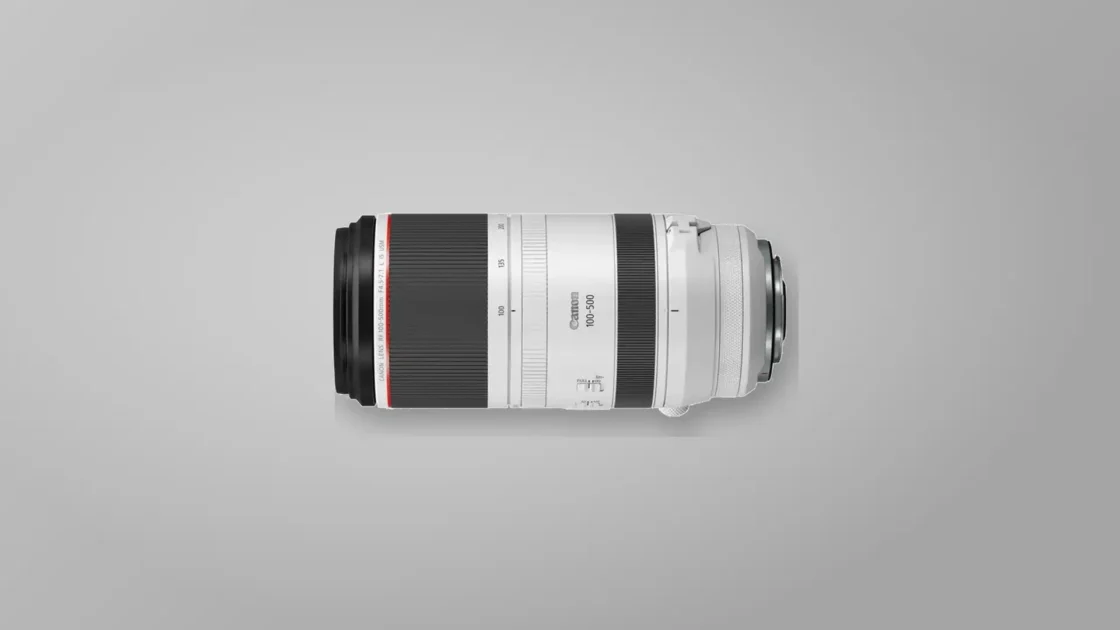
From there, the basket expands in the way a real solo kit expands. One standard zoom is not enough if the operator is expected to handle interiors, architecture, handheld walk-throughs, interviews, event cutaways, and compression-heavy portrait framing. That is why the article adds a wide zoom at €1,729 and a tele zoom at €1,919. The standard RF 24-105mm f/4L sits locally at €1,549 on its own, which also shows how much value the kit bundle is carrying inside that €6,249 headline. Put those three optics together around the R5 Mark II kit and the Canon capture package alone reaches €9,897 before cards, audio, phone, tablet, or a single light enter the frame.
The rest of the basket reflects the habits of someone shooting alone and trying not to get punished later. That means fast cards instead of bargain media, a dual-format reader instead of a cable mess, wireless audio plus a directional mic instead of “camera mic and hope,” a serious phone and tablet because modern solo work often spills into monitoring, preview, notes, quick secondary capture, and client handling, and a proper editing tower because hybrid video is easy to shoot badly and expensive to finish on weak hardware.
The core capture basket
| Item | Price with VAT | Qty | Subtotal |
|---|---|---|---|
| Canon EOS R5 Mark II + RF 24-105mm f/4 L IS USM | €6,249.00 | 1 | €6,249.00 |
| Canon RF 14-35mm f/4L IS USM | €1,729.00 | 1 | €1,729.00 |
| Canon RF 70-200mm f/4 L IS USM | €1,919.00 | 1 | €1,919.00 |
| Lexar CFexpress 4.0 Type B Pro Diamond 512GB | €725.00 | 2 | €1,450.00 |
| Lexar SDXC 2000x UHS-II V90 256GB | €319.00 | 2 | €638.00 |
| Delkin CFexpress Type B & SD UHS-II reader | €119.00 | 1 | €119.00 |
| Samsung Galaxy S23 Ultra 256GB | €1,399.00 | 1 | €1,399.00 |
| Samsung Galaxy Tab S9+ 512GB Wi-Fi | €1,239.00 | 1 | €1,239.00 |
| RØDE Wireless PRO | €269.00 | 1 | €269.00 |
| RØDE VideoMic NTG | €249.00 | 1 | €249.00 |
The table above is the working heart of the article. It puts the core capture-and-audio setup at €15,260 before lights, support, SSDs, or the editing tower are added. That is the point where the easy “one person should be cheap” argument starts losing traction. Even before the first light stand is unpacked, the operator is already carrying a five-figure system.
The Canon anchor changes the whole calculation
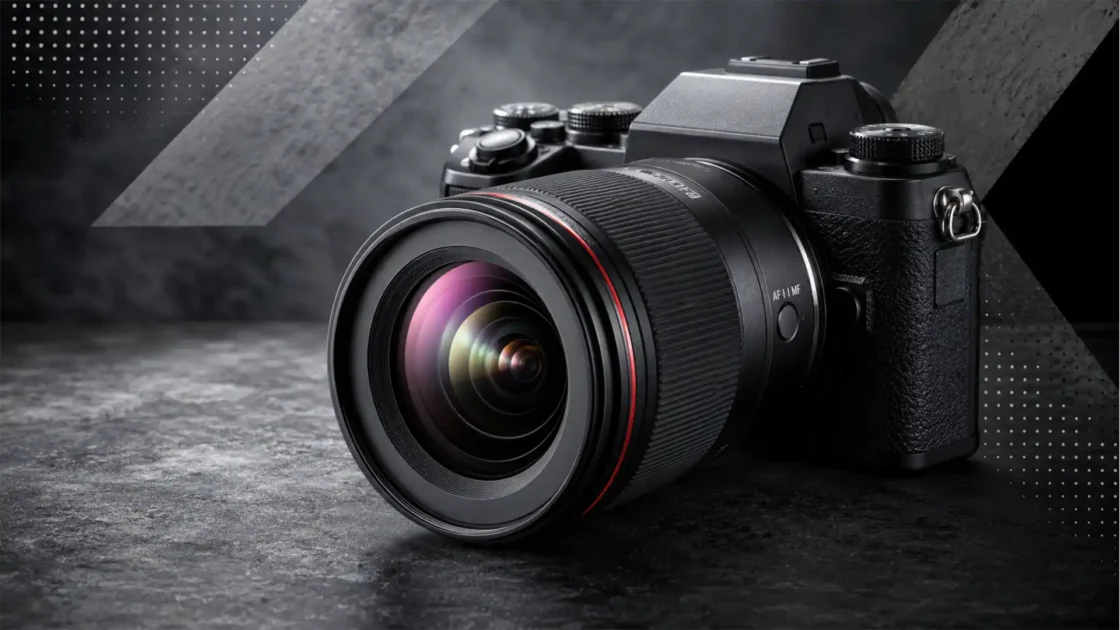
The Canon side of this basket deserves its own section because it is where the market usually stops thinking. People see the camera, hear the body price, and assume they understand the scale of the investment. They usually do not. The R5 Mark II body is listed locally at €4,899, while the kit with the RF 24-105mm f/4L is €6,249. The spread tells you something important immediately: even the “standard lens” part of the package is not a throwaway. It is already serious glass. Then the moment you add a wide zoom for rooms, architecture, cramped interiors, and establishing shots, plus a tele zoom for tighter portrait work and cleaner subject separation, the Canon part of the system stops looking like one camera and starts looking like a proper production package.
That is why the €9,897 optical-and-camera subtotal matters. It is not there to impress other gear people. It explains why solo pricing cannot be reduced to “you’re only one person.” A lot of solo videographers are not showing up with a minimal creator kit. They are showing up with a compact version of a professional production package. The labor line may be one human being. The capital line is another story.
The kit logic also changes how you should think about margins. A cheap solo quote can be built two different ways. It can be efficient because the brief is tight and the operator is experienced. Or it can be artificially low because the operator is eating depreciation, underpricing their lenses, and pretending the kit does not need to renew itself. Those are not the same thing. One is lean. The other is brittle. Clients usually discover the difference later, when the turnaround slips, the coverage feels thinner than expected, or the operator starts cutting corners in post to protect a quote that never had enough room in it.
There is also a practical point that often gets missed: the kit bundle is not just about saving money compared with buying body and standard zoom separately. It is about showing what the market treats as the normal entry point for serious hybrid work. A camera body by itself is not a working system. The kit is closer to the truth, because it already assumes the operator needs a dependable standard zoom from day one. That makes it the right starting line for any honest conversation about solo production cost.
Cards and media moved into the main budget
A lot of clients still talk about cards and storage as accessories, as if they belong in the same mental category as a camera strap or a spare cable. That framing is out of date. Canon’s own R5 Mark II documentation makes the workflow picture clear: the camera uses CFexpress Type B and SD, and for movie work Canon explicitly points users toward media with the performance to keep up, including CFexpress cards that support VPG400 or other cards with enough write speed for the recording mode. In plain language, the media is no longer a side purchase. The media is part of the camera.
That is why the card line here is so large. Two Lexar CFexpress 4.0 Type B Pro Diamond 512GB cards at €725 each plus two Lexar UHS-II V90 256GB SD cards at €319 each already push the media spend to €2,088. Add a dual-format reader at €119 and the media-and-ingest block reaches €2,207. That number is large enough to change the character of the entire budget. It also happens to be one of the least visible line items for clients, because nothing about a card is glamorous once the invoice lands.
There is a second reason this matters more for solo operators than for larger teams. A bigger shoot can spread risk across more bodies, more cameras, or a dedicated data workflow. A solo operator usually cannot. That makes card discipline, reader speed, and clean ingest habits more valuable, not less. When there is only one person carrying the job, weak media decisions stop being a nuisance and become a liability. If a card slows the day down, the solo operator feels it immediately. If ingest is messy, the same person who shot the job is now losing edit time fixing preventable handling problems.
The media block is where many “cheap” solo setups reveal what they really are. They are not cheaper because the operator discovered a better business model. They are cheaper because someone cut away the boring parts that protect the work: fewer cards, slower cards, weaker backup, sloppy file discipline, or a vague hope that the shoot will stay small enough for none of that to matter. That can hold together for a while. It is not a stable foundation for paid work that has to survive deadlines, revisions, and the occasional bad surprise.
Sound, light, and support keep the work usable
Camera conversations dominate gear culture because cameras are easy to admire. Paid work is much less romantic. A lot of the time, what separates usable from amateur footage is not the body at all. It is whether the sound is clean, whether the light is controlled, and whether the framing can stay steady without eating all of the operator’s attention. That is exactly why the article includes RØDE Wireless PRO at €269, RØDE VideoMic NTG at €249, two amaran 200x S lights at €439.73 each, and two Benro Aero 4 Pro-class supports at €473 each. The audio package is €518. The lights come to €879.46. The two tripods add €946.
None of those numbers is exotic. That is part of the point. This is not a fantasy cart built for bragging rights. It is a sober working basket for someone trying to shoot cleanly without a second pair of hands. Wireless audio lets a solo operator get the talent mic’d and keep moving. A directional mic gives them a second path when the scene changes or the lav plan stops making sense. Two lights are not overkill; they are the minimum needed to stop every interview from looking like available light happened to be nearby. Two supports let the operator stabilize the main setup and keep enough flexibility for secondary framing, static b-roll, or live switching between positions without rebuilding the whole scene every time.
This is also where the “one-person should cost less” story starts missing the practical point. Yes, one person can save money by replacing extra crew. No, one person does not magically remove the need for sound and lighting. If the client still expects clean interviews, crisp dialogue, flattering light, and stable compositions, the operator has to bring the tools that make those things repeatable. There is no honest shortcut around that. The cheaper route is not “ignore sound and light.” The cheaper route is “keep the brief small enough that one person can manage them without damage.”
A lot of solo operators know this instinctively. They do not think in departments while packing the car. They think in failure points. Bad audio is a failure point. Flat lighting is a failure point. A shaky long-lens shot is a failure point. Once you look at the kit that way, the so-called extras stop looking optional. They are just the price of reducing the number of things that can go wrong on a day when there is nobody else to catch them.
Storage and the edit station finish the hidden half of the bill
The work does not become cheaper after the shoot. It changes shape. Files need to move quickly, safely, and more than once. That is why the practical solo basket adds two Samsung T9 4TB SSDs at €488.89 each, bringing the working-and-local-backup storage block to €977.78. The lights and tripods make the shoot more controlled. The SSDs make the footage safer the minute the job leaves the card. If one drive is the working copy and the second is the immediate local backup, the operator has at least a basic layer of protection before longer-term archive decisions begin.
Cloud backup belongs in this conversation too, but I keep it outside the hard final total for one reason: public local VAT-inclusive checkout is less cleanly pinned down than the hardware basket. Backblaze lists $99 per year for Personal Backup, and its EU VAT help pages state that VAT applies for EU customers where required. That makes cloud part of the real operating cost, but it does not give the same clean locally priced, VAT-included hardware-style ticket that the rest of this basket has. For an article built around Central Europe retail figures, that is enough reason to discuss cloud as an operating layer without forcing a fake-local exact euro total into the final headline.
Then there is the edit tower. Your brief specified an HP Envy-class workstation with 32GB RAM and an 8GB NVIDIA GPU, which is exactly the sort of machine a solo hybrid shooter ends up needing once 4K-heavy timelines, proxies, exports, and revisions become regular rather than occasional. A local reference for HP Envy TE02-1001nc shows the expected profile: Intel Core i7-13700K, 32GB DDR5, 1TB SSD, NVIDIA GeForce RTX 4060 Ti 8GB, plus the card reader and I/O you would expect from a creator-friendly desktop. A local retail reference price puts that box at €2,039.
What the working system costs
| Layer | Total |
|---|---|
| Core capture-and-audio basket | €15,260.00 |
| Practical solo kit with lights, tripods, and SSDs | €18,063.24 |
| Practical solo kit plus editing workstation | €20,102.24 |
That last table is the figure most buyers never see and most operators cannot afford to ignore. A serious one-person system lands at just over €20,100 before insurance, software, cloud, cables, batteries, repairs, travel, or taxes on the work itself are added. Once that number is on the table, the daily quote for a skilled solo operator starts looking less mysterious and more mathematical.
A solo shoot can save money without becoming cheap
This is the part clients often get backwards. A solo operator can be the right choice and still be expensive in absolute terms. Those two things do not fight each other. Westream puts the distinction well: a single videographer works nicely for smaller projects, clearer briefs, limited time on site, and simpler coverage. Once the job asks for multi-angle work, more interviews, heavier lighting, or behind-the-scenes content on top of the main deliverable, the advantages of a larger team start showing very quickly.
That is why the sentence “one person is cheaper” needs a second clause attached to it. One person is cheaper if the brief is small enough to fit one person well. If the brief quietly assumes the flexibility, risk cover, and parallel attention of a wider crew, then the lower headcount stops being a simple efficiency gain and starts becoming a pressure point. The operator either narrows the ambition of the work or absorbs more stress, more compromise, and more unpaid problem-solving than the quote can comfortably carry.
You can see the difference most clearly in post. Wipster’s budgeting framework separates post-production for a reason. Bad or thin decisions on set do not disappear later. They become edit labor. Weak audio becomes cleanup time. Missing cutaways become timeline gymnastics. Flat interview light becomes color work fighting upstream. Messy media handling becomes ingest friction. Cheap production and efficient production look similar on the call sheet and very different on the timeline.
This is also why experienced solo operators can command rates that surprise buyers who only counted crew size. They are not billing for standing in a room with a camera. They are billing for compressing a production safely. The smaller the team, the more value sits inside judgment: where to simplify, what to protect, what to cut, what to capture first, and what cannot be fixed later. A weak solo operator and a strong one can own almost identical gear and still produce completely different value. The gap is not in the shopping cart. It is in the decisions.
The number that actually matters
If someone asks what video production costs, the instinct is to answer with a day rate. That answer is often too small to be useful. The more revealing question is what kind of system has to exist for that day rate to be possible. In this case the answer is blunt: about €15,260 for the core capture-and-audio basket, about €18,063.24 for the practical solo production kit, and about €20,102.24 once the edit workstation enters the picture. Even before you add cloud, software, insurance, and the ordinary wear of professional use, the operator is already carrying a capital burden that most clients never picture when they say “but it’s just one person.”
That is the deeper reason a solo producer may be cheaper and still not feel cheap. The saving comes from fewer people, not from a magically lighter workflow. The workflow is still there. It just sits inside one set of shoulders. Sometimes that compression is the smartest possible buy. A clean interview day, a focused brand piece, a well-scoped recap, or a social-first content package can be handled elegantly by one person. Sometimes the scope is pretending to be smaller than it is. In those cases, the low price at the start often comes back later as weaker coverage, slower turnaround, more revisions, or a result that never quite looks as ambitious as the brief sounded on paper.
The important distinction is not between solo and crew. It is between matched scope and mismatched scope. A matched scope lets one good operator move fast, stay lean, and give the client real value. A mismatched scope turns one person into a bottleneck while the brief keeps pretending a full production is hiding somewhere inside the same fee. That is the real pricing lesson here. The cheapest job is not the one with the fewest bodies on set. The cheapest job is the one whose expectations, gear, workflow, and crew size still belong to the same reality.
FAQ
The core capture-and-audio basket totals €15,260 using the Central Europe VAT-included references in the article.
That figure rises to €18,063.24.
The basket reaches €20,102.24 once the workstation is included.
Because the local market clearly lists the R5 Mark II + RF 24-105mm f/4 L IS USM kit at €6,249, and that is the cleaner real-world buying anchor for this setup.
The basket uses the R5 Mark II + RF 24-105mm f/4 L IS USM kit, then adds the RF 14-35mm f/4L IS USM and the RF 70-200mm f/4 L IS USM.
Because a serious solo workflow needs media rotation and a safer margin than one card per slot. Canon’s own manual also makes clear that demanding movie modes rely on properly performing CFexpress or fast SD media.
The two CFexpress cards, two SD cards, and reader total €2,207.
Because footage has to survive the handoff from set to edit. Once files leave the card, the operator needs fast working storage and immediate local backup, which is why the basket includes two 4TB SSDs.
Because they solve different audio problems. The wireless system covers talent and moving setups, while the shotgun mic gives a fast second option for on-camera or directional pickup.
Yes. In a solo workflow, a flagship phone often handles quick secondary angles, monitoring, previews, notes, messaging, and fast client-facing tasks alongside the main camera. The basket uses the Galaxy S23 Ultra at €1,399.
Because solo shoots often need a larger mobile screen for notes, scripts, previews, scheduling, reference images, or quick approval handling. The article uses the Galaxy Tab S9+ Wi-Fi 512GB at €1,239.
Because paid work is judged by control, not just by sensor performance. Clean skin tone, separation, consistency, and repeatability still depend on lighting.
Because solo work is easier to trust when framing is stable and repeatable. Support gear reduces wasted takes and lowers the number of things the operator has to fight at once.
Because capture and post are one chain. If the footage is heavy and the machine is weak, the job becomes slower and more expensive to finish. The HP Envy reference in this article matches the 32GB RAM and 8GB NVIDIA brief.
Because cloud is a real operating cost, but the public local VAT-inclusive checkout is not pinned down as cleanly as the hardware references. Backblaze lists $99/year and notes EU VAT treatment separately.
Yes. Westream’s guidance matches common industry practice: one videographer works well for simpler projects with tighter scope and fewer moving parts.
Once the brief wants multi-angle coverage, more interviews, heavier lighting, faster turnaround, or too many deliverables for one person to manage safely.
They count bodies instead of workflow. The crew gets smaller, but pre-production, production, post, review, and delivery still all have to happen.
Author:
Jan Bielik
CEO & Founder of Webiano Digital & Marketing Agency
This article is an original analysis supported by the sources cited below
Canon EOS R5 II + RF 24-105mm f/4 L IS USM
Central Europe retail listing used as the main VAT-included kit anchor for the article.
Canon – Letný cashback
Local Canon retail page used for the R5 Mark II body and RF 70-200mm f/4 L IS USM pricing references.
Zvážte to!
Local Canon promotion page used for VAT-included references on the RF 14-35mm f/4L IS USM and RF 24-105mm f/4L IS USM.
Lexar CFexpress 4.0 Typ B Pro Diamond 512GB
Local retailer page used for the 512GB CFexpress Type B pricing reference.
Lexar SDXC 2000x UHS-II V90 256GB
Local retailer page used for the 256GB UHS-II V90 SD card pricing reference.
Čítačky kariet
Local retailer category page used for the CFexpress Type B and SD UHS-II reader reference.
RØDE Wireless PRO
Local retailer page used for the wireless audio system price.
RØDE VideoMic NTG Hybrid Analog/USB Shotgun mikrofón
Local retailer page used for the directional microphone price.
Samsung v San Franciscu predstavil nové Galaxy S23 a ďalšie novinky
Local coverage used for the Galaxy S23 Ultra launch pricing in the regional market.
Séria Samsung Galaxy S23 Pre ktorý sa rozhodnúť?
Local market article used as a secondary pricing and product reference for the Galaxy S23 line.
Pri kúpe nových Samsungov môžete teraz ušetriť stovky eur
Local article used for the Galaxy Tab S9+ 512GB Wi-Fi price reference.
Samsung predstavil nový Galaxy Flip5, Fold5, pridal Tab S9 a aj Watch6
Secondary regional source used to confirm Galaxy Tab S9+ pricing context.
Amaran 200x S Bi-Color LED svetlo
Local retailer page used for the amaran 200x S light pricing.
Stabilizátory fotoaparátu a statívy Benro
Regional retailer index used for the Benro Aero 4 Pro-class tripod pricing reference.
Samsung Portable SSD T9 4TB čierny
Local retailer page used for the 4TB Samsung T9 SSD price reference.
HP Envy TE02-1001nc
Local HP-focused retailer page used for the workstation specifications in the article.
NVIDIA RTX A4500 20GB GDDR6 4DP
Local retail listing used as the price reference for the HP Envy desktop configuration cited in the basket.
The ultimate guide to budgeting video production projects
Used for the production-budget framework across pre-production, production, and post-production.
Pricing
Used for current Frame.io review and collaboration pricing references.
Review and approvals
Used for the role of review cycles and approval workflows in modern post-production.
Product manual EOS R5 Mark II Compatible cards
Canon documentation used for the camera’s media requirements and movie-recording card guidance.
Product manual EOS R5 Mark II Inserting and removing cards
Canon documentation used for the dual-slot CFexpress and SD card configuration.
Computer cloud backup pricing comparison
Used for the annual cloud-backup pricing reference.
VAT for EU Customers
Used for the VAT treatment note on EU backup purchases.
Taxes and Fees
Used to support the discussion of tax handling on backup services.
Do you need one videographer or a full production crew?
Used for the contrast between lean solo coverage and larger-crew production needs.
How to plan video coverage for your next event
Used for the practical boundary between simple one-person coverage and broader multi-angle event needs.
Professional videographer
Used for the idea of scaling crew size to the brief rather than forcing one fixed model onto every job.
| Citing this article? Brief excerpts are welcome. Please credit Webiano.digital, name the author where stated, and include a link to https://webiano.digital and to this original article. Full or substantial republication requires prior written permission. Read our Copyright and Content Use Policy. |
This article was prepared with the assistance of artificial intelligence tools. The content underwent expert human review, and Webiano Digital & Marketing Agency assumes editorial responsibility for its final version and publication.