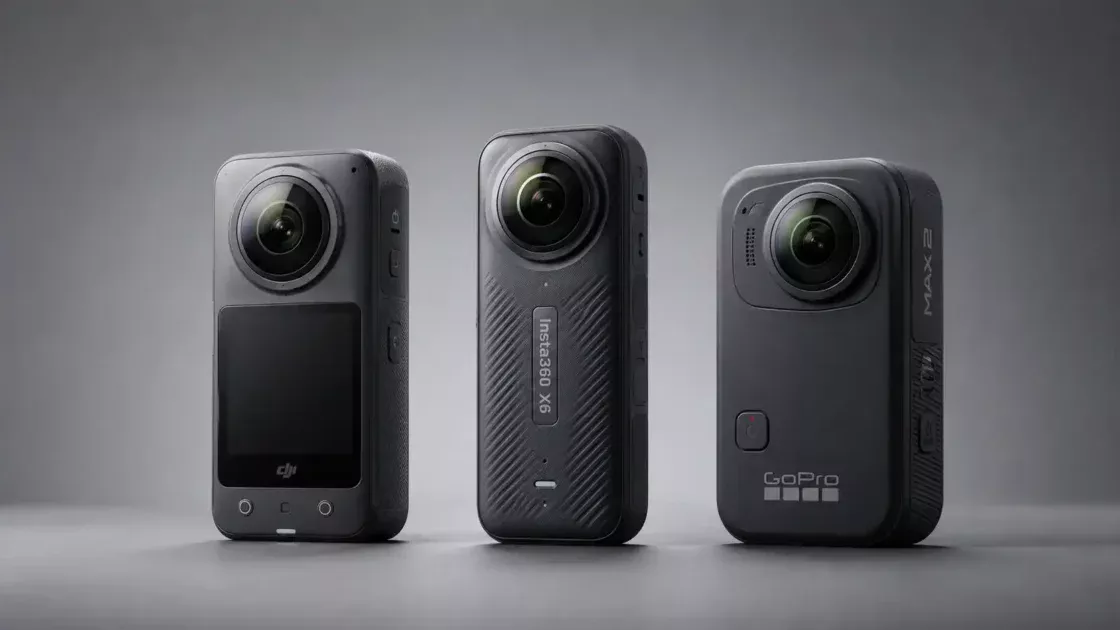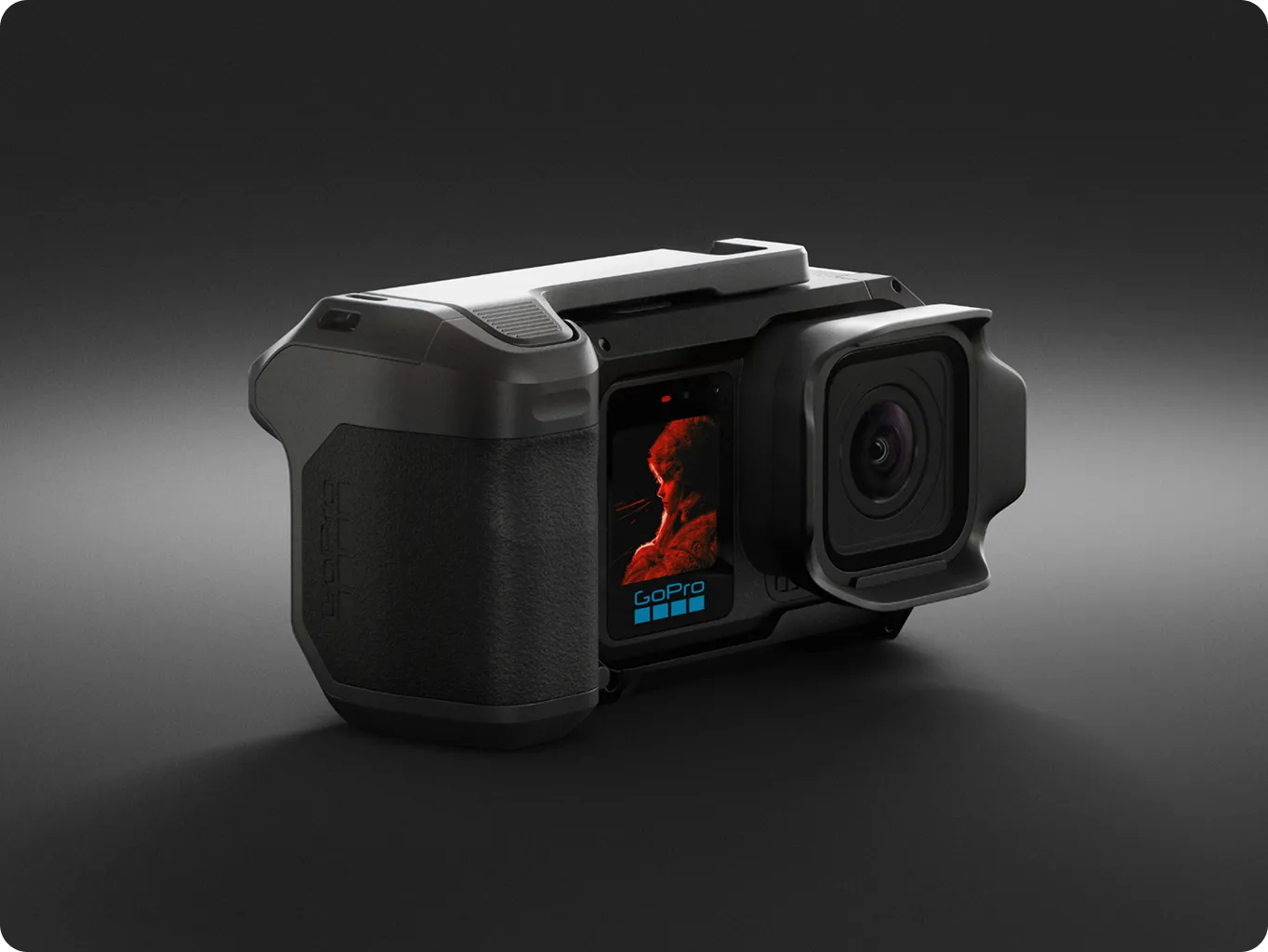
GoPro did not unveil another Hero. It unveiled a new argument for why the company should matter again. On April 14, 2026, it introduced the MISSION 1 series, a three-camera line built around a new 50MP 1-inch sensor and the GP3 processor, with the Pro models reaching 8K60 and the top model adding interchangeable Micro Four Thirds lenses. The launch had been telegraphed in March, when GoPro said its next GP3-powered cameras would debut at NAB and move toward larger sensors, higher-end workflows, and more professional use cases.
Table of Contents
That shift matters more than the headline spec sheet. GoPro is trying to step out of the narrow lane that boxed it in for years: rugged action cameras with great stabilization, strong brand recognition, and a ceiling on image quality that rivals were steadily eroding. MISSION 1 is a direct attempt to move the company into compact cinema, creator rigs, multi-camera shoots, vehicle mounts, dive work, documentary inserts, and specialty footage that usually sits somewhere between an action camera and a small mirrorless body. The base MISSION 1 and MISSION 1 Pro are set for preorders on May 21 and retail availability on May 28, while the MISSION 1 Pro ILS and the larger creator bundles are slated for Q3 2026. GoPro still has not announced pricing.
GoPro leaves the safe part of its business behind
For a long time, GoPro’s product story was easy to summarize. A new Hero would arrive with slightly better stabilization, slightly better battery life, another software refinement, perhaps a new lens mod, and a familiar promise: put it anywhere, survive anything, get a dramatic point of view. That formula built the company and made the brand shorthand for the category it created. It also became a trap. Once stabilization got good enough and 4K capture became standard, the difference between one generation and the next stopped feeling dramatic to anyone outside the enthusiast bubble.
GoPro’s own language around MISSION 1 signals that it knows this. The company is calling these “professional 8K and 4K Open Gate, compact cinema cameras” rather than simply premium action cams. In the official launch material, it leans hard on low-light performance, thermal stability, pro audio, timecode sync, GP-Log2, multi-camera work, and a new accessory stack built for creators and filmmakers rather than only athletes. That is a meaningful editorial change in the brand’s self-image. It is also a business move. A company that wants higher margins and a stronger story for investors usually does not stay trapped in a market segment where the feature checklist is already familiar.
The March preview before NAB made the direction even clearer. GoPro said its coming GP3 cameras would have larger sensors, more professional features, higher resolutions and frame rates, stronger low-light performance, and broader product ambitions. MISSION 1 is the concrete version of that teaser. It is not a side project or a niche one-off. It is a product family, and families only appear when a company believes the move has room to scale.
That does not guarantee success. GoPro is entering a tougher conversation now. If you say “cinema,” people stop grading you on action-camera forgiveness and start grading you on image character, latitude, rolling shutter, color, lens behavior, workflow, and reliability over long shoots. Those are harsher standards. They are also the standards GoPro has to chase if it wants to stop being viewed as a company that sells excellent specialty cameras and start being seen as a camera company with range.
The sensor jump is the real story
The headline spec is 8K, because 8K is easy to market. The deeper story is the sensor. GoPro says all MISSION 1 cameras use a new 50MP 1-inch sensor with native 1.6µm pixels and fused 3.2µm pixels in Quad Bayer mode, paired with processing that reaches up to 14 stops of dynamic range at the sensor. The company’s own explainer page says the sensor is designed to capture more light, reduce noise, and hold more detail in difficult low-light scenes. That is the part of the launch that changes the character of the footage.
This matters because mainstream action-camera rivals still live in the 1/1.3-inch world. DJI’s Osmo Action 5 Pro uses a 1/1.3-inch CMOS sensor, with up to 13.5 stops of dynamic range and support up to 4K/120 in 4:3. Insta360’s Ace Pro 2 also uses a 1/1.3-inch sensor, advertises 13.5 stops of dynamic range, and tops out at 8K30. GoPro’s move to a 1-inch sensor does not merely add resolution; it changes how the camera should behave in shadows, highlights, mixed light, indoor scenes, dusk, underwater work, and high-contrast footage that needs grading headroom later.
Sensor size is what separates “sharp action footage” from “footage that still holds together when the scene gets ugly.” A brighter noon bike run is easy. A dim backstage corridor, a dawn dive, a dashboard mount at night, or a street scene with neon and deep shadow are much harder. Those are the moments where aggressive noise reduction usually smears detail, tiny highlights blow out, and action cameras start to look like action cameras. GoPro is plainly targeting that pain point. Wired’s coverage of the launch framed low-light improvement as one of the biggest gains, and that tracks with everything GoPro has been saying since it introduced GP3 in March.
There is another reason the sensor matters. It makes the rest of the feature stack believable. 8K can feel empty on a small sensor if the image falls apart under scrutiny. Open Gate feels far more useful when the captured frame has enough detail and tonal depth to survive reframing. A 50MP stills mode becomes more than a marketing line when RAW output and manual controls are attached to it. MISSION 1 is not the first small camera to promise a lot. It is one of the few where the basic hardware change suggests the promise is not superficial.
GP3 gives GoPro room to grow again
The new GP3 processor is the second pillar of the launch, and it is probably the reason GoPro waited to make a move this aggressive. GoPro says GP3 is a 5-nanometer system-on-chip with more than double the pixel processing power of GP2, plus a dedicated AI neural processing unit, scene recognition, and subject-detection cores. The company is not presenting GP3 as a one-camera upgrade. It is presenting it as a platform that can scale across action cameras, 360 cameras, vlogging products, and compact cinema gear. MISSION 1 is its first serious proof.
That platform story helps explain the unusually dense feature list. GoPro says MISSION 1 can record at bitrates up to 240Mbps, capture HLG-HDR and 10-bit color with GP-Log2, support timecode sync for multi-camera work, and deliver 32-bit float audio from a four-mic array. It also adds Bluetooth 5.3 audio support, machine-learning-assisted capture modes, 50MP RAW stills, and burst photo speeds up to 60 photos per second. None of those items exists in isolation. They all point to a company trying to fix an old reputation: great placement camera, limited finishing camera.
Battery life and heat are just as important as image quality in this class. GoPro says the MISSION 1 series can record 5+ hours at 1080p30 and 3+ hours at 4K30 on a single Enduro 2 battery, with improved thermal behavior, fast charging, and backward compatibility with HERO13 Black batteries. The new battery is rated at 2150mAh in the accessory section of the launch page. That claim matters because long-take stability has always separated “useful professional tool” from “camera you love until it overheats.”
The comparison with HERO13 Black makes the gap obvious. HERO13 Black tops out at 5.3K60, supports new HB-Series lens mods, and GoPro says it gets more than 2.5 hours of continuous 1080p30 recording or over 1.5 hours at 4K30 and 5.3K30. That is solid for an action camera. MISSION 1 is pitched as something else: more resolution, more dynamic range, longer runtimes, heavier audio options, and a stronger workflow story. In other words, GoPro is trying to create space above Hero, not merely beside it.
Three cameras, three distinct jobs
GoPro made the smart decision not to launch MISSION 1 as a single halo product. The lineup has three bodies because the company wants three types of buyer. The base MISSION 1 is the entry point. It keeps the 50MP 1-inch sensor and GP3 processor, but caps capture at 8K30, 4K120, and 1080p240 in 16:9, plus 4K120 Open Gate. That already makes it a serious step up from conventional action-camera territory. It is the model for creators who want the new imaging pipeline without paying for the very highest frame rates.
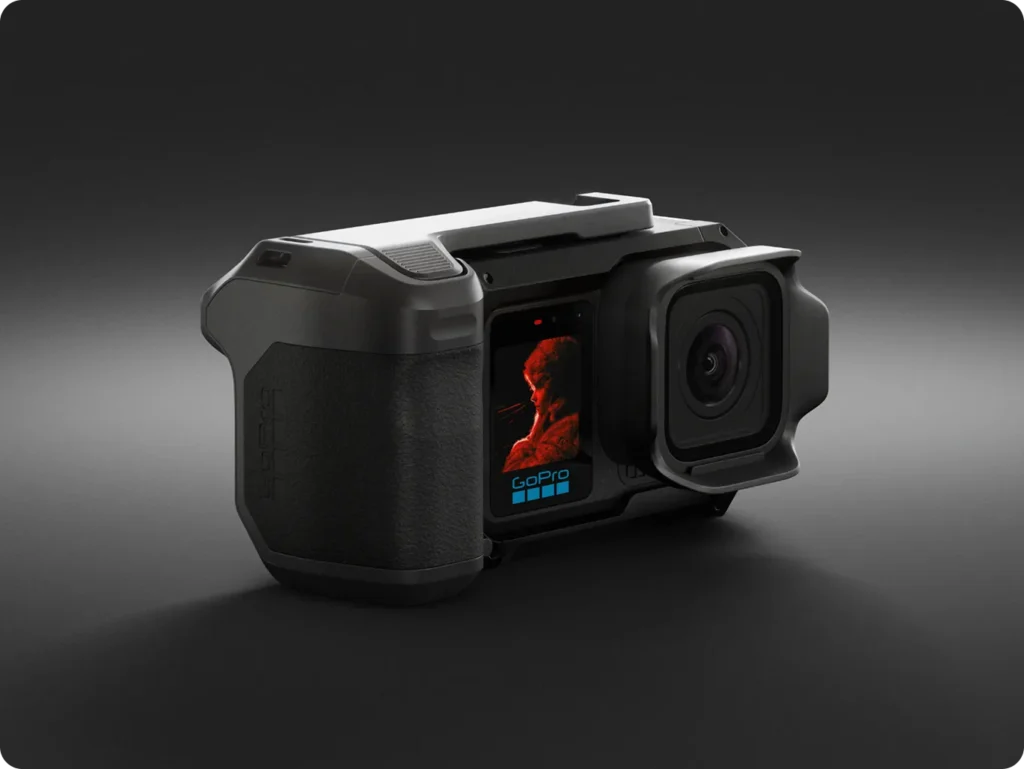
The MISSION 1 Pro is the flagship fixed-lens version. GoPro gives it 8K60, 4K240, 1080p960 burst capture, 8K30 and 4K120 Open Gate, 50MP RAW photos, and the full pro-feature set. GoPro’s own “learn more” page says both the base MISSION 1 and MISSION 1 Pro use a fixed 14mm GoPro lens, while other reporting describes the lens as roughly a 15mm-equivalent full-frame view. The exact phrasing matters less than the intent: this is a very wide native field built for the familiar GoPro perspective, only with far more image data behind it.
The camera that turns heads is the MISSION 1 Pro ILS. It keeps the Pro sensor and processor but swaps the fixed lens for a Micro Four Thirds mount. That single change rewrites the category. GoPro is no longer just offering a wider, sharper, more professional action camera. It is offering a body that can move across prime lenses, macros, telephotos, specialty glass, and adapted optics. It is the first time GoPro has put a real lens ecosystem at the center of a flagship camera story.
GoPro is also surrounding the cameras with editions and accessories that reveal who it wants to sell to. There is a Grip Edition, a Creator Edition, an Ultimate Creator Edition, a redesigned Media Mod, a Volta 2 battery grip, new ND filters, a protective housing, and a standalone Wireless Mic System that also works with HERO cameras, phones, and third-party DSLRs. This is not accessory sprawl for its own sake. It is GoPro building a workflow moat.
MISSION 1 lineup at a glance
| Model | Best fit | Key video ceiling | Lens approach | What separates it |
|---|---|---|---|---|
| MISSION 1 | Creators moving up from standard action cams | 8K30, 4K120, 1080p240, 4K120 Open Gate | Fixed 14mm GoPro lens | Lowest barrier into the new 1-inch / GP3 platform |
| MISSION 1 Pro | Buyers who want the full fixed-lens flagship | 8K60, 4K240, 1080p960 burst, 8K30 / 4K120 Open Gate | Fixed 14mm GoPro lens | Highest performance without entering lens-system territory |
| MISSION 1 Pro ILS | Filmmakers and specialty shooters | Pro-level MISSION 1 capture with interchangeable-lens flexibility | Micro Four Thirds mount | The first GoPro body built around a wider lens ecosystem |
The structure of the lineup is deliberate. MISSION 1 gets people into the platform, MISSION 1 Pro sells performance, and Pro ILS sells possibility. That is a cleaner product ladder than GoPro has offered in years.
The feature stack reads like a creator’s wish list
A lot of camera launches drown in specs that look good in retail copy and matter very little once the camera is on a tripod, helmet, car, or cage. MISSION 1 has a few items that stand out because they solve real production problems. Open Gate is one of them. GoPro says the Pro models support 8K30 and 4K120 Open Gate in 4:3, while the base model supports 4K120 Open Gate. Its product explainer page adds a sharp marketing point: 8K Open Gate captures a taller 4:3 frame and gives creators much more room for reframing and multi-format delivery. If you shoot once and need horizontal, vertical, and cropped social cuts from the same take, that matters more than a raw resolution brag.
The audio story is unusually strong for a GoPro. GoPro says the camera has four microphones, stereo capture with better wind handling, 32-bit float recording to reduce clipping, Bluetooth 5.3 audio, and a wireless mic system that records 24-bit/48kHz audio with dynamic noise reduction and a backup safety track. The redesigned Media Mod adds a multi-pattern built-in mic, three 3.5mm ports, a micro-HDMI output up to 4K60, and live monitoring options. Those are not “nice extras.” They are the kind of details that decide whether a small camera stays in a rig or gets replaced by something less annoying.
The rugged side of the GoPro identity has not disappeared. GoPro says MISSION 1 and MISSION 1 Pro are waterproof to 66 feet / 20 meters without a housing, while the protective housing extends them to 196 feet / 60 meters. It also says the rear OLED display is 14 percent larger than on previous flagship GoPros, the buttons are easier to use with gloves, and the native lens design reaches a 159-degree field of view. That keeps the product anchored in the environments where the brand still carries instant credibility: water, motorsports, action rigs, crash angles, and any situation where a fragile compact camera would be a bad idea.
A detail that deserves more attention is GoPro Labs compatibility. GoPro says MISSION 1 works with over 1,000 custom features, settings, and controls available through Labs. That matters to advanced users because GoPro’s best hidden value has often come from the weird edges: QR-code settings, specialized behavior, niche control schemes, and workflows that ordinary retail buyers never touch. MISSION 1 becomes more interesting if that tinkering culture survives the move upmarket.
The Pro ILS changes the conversation
The most consequential part of the launch is not 8K. It is not 50MP. It is not even GP3. It is the decision to put a Micro Four Thirds mount on a GoPro body. Micro Four Thirds is an open standard designed around compact interchangeable-lens cameras, and its official site emphasizes cross-brand compatibility and a large catalog of lenses from multiple manufacturers. That instantly gives GoPro access to a mature ecosystem without building its own lens universe from scratch.
That openness is the strategic masterstroke. Lens ecosystems take years and huge resources to build. GoPro does not have that kind of time. By choosing MFT, it inherits a menu of wide, standard, macro, telephoto, adapter-friendly, cine-oriented, and compact primes that already exist. The official lens finder lists manufacturers including OM Digital Solutions, Panasonic, Sigma, Tamron, Voigtländer, Kowa, and Laowa. A camera company trying to move upmarket could not ask for a faster way to look serious.
There is a catch, and it matters. The Verge reports that the Pro ILS setup carries a roughly 3x crop factor because the camera is using a 1-inch-type sensor behind a Micro Four Thirds mount. That changes the creative math. You gain lens choice, but you do not magically turn the camera into a wide-open shallow-depth-of-field mirrorless monster. Ultra-wide work becomes harder, while telephoto and macro applications become more compelling. In plain terms, a Pro ILS rig could be spectacular for mounted wildlife detail, motorsport inserts, crash-cam coverage, miniature work, or specialty angles where a tiny body with stabilized footage and interchangeable glass is more useful than a larger cinema camera.
GoPro also says the Pro ILS supports in-camera HyperSmooth stabilization with rectilinear prime focal length lenses, which is a clever compromise. It acknowledges that stabilization becomes far more complicated once you leave a fixed wide lens, yet still gives shooters a reason to trust the body in real production setups. The point is not that Pro ILS replaces a Panasonic, Sony, Canon, or Blackmagic body. The point is that it creates a new kind of tool: a tiny, weather-tolerant, lens-flexible body that can go where those cameras often should not.
That is why the Pro ILS matters more than many people will realize on first read. It does not just add a feature. It changes what a GoPro can be in a kit. A Hero has often been the fifth camera you bring because it fits somewhere the main cameras do not. The Pro ILS could become a camera you bring because it creates a shot the others cannot get as cheaply, as safely, or as quickly. That is a different class of usefulness.
The market MISSION 1 is trying to disrupt
The nearest comparison inside GoPro’s own lineup is HERO13 Black, and that comparison is brutal. HERO13 Black remains a strong action camera with 5.3K60, 4K120, Burst Slo-Mo up to 400fps at 720p, 10-bit HLG HDR, GPS overlays, HB-Series lens mods, and more than 2.5 hours of continuous 1080p30 recording on its newer Enduro battery. That is a lot for a flagship action cam. MISSION 1 makes it look conservative. GoPro is not trying to replace Hero; it is trying to make Hero look like the mainstream tier.
Against DJI, the contrast is even clearer. Osmo Action 5 Pro brings a 1/1.3-inch sensor, 13.5 stops of dynamic range, up to 4K/120 in 4:3, 1080p/240 slow motion, and up to 20 meters of waterproofing without a case. That is an excellent spec sheet for an action camera. MISSION 1 Pro is aimed above it, with a larger sensor class, higher maximum resolution, Open Gate positioned more aggressively, a more overt pro-audio and logging story, and a stronger attempt to pull filmmakers into the category rather than only action shooters.
Insta360 Ace Pro 2 sits somewhere between those worlds. It already pushed the conversation toward cinematic action cameras with a Leica-branded lens, 1/1.3-inch sensor, 13.5 stops of dynamic range, 8K30 video, 50MP photos, and a dual-chip design. If MISSION 1 did not exist, Ace Pro 2 would still look like one of the clearest signs that the category had moved past simple POV hardware. GoPro’s answer is to go bigger on sensor size, higher on top-end frame rate, and more explicit on professional workflow features. It is not following the Ace Pro 2. It is trying to outgrow it.
The caveat is price. GoPro has not announced it yet, and price will decide how disruptive the launch really is. If MISSION 1 Pro lands too close to small mirrorless bodies with proven color science and larger communities behind them, the pitch gets harder. If the Pro ILS body comes in high enough to feel experimental rather than practical, enthusiasm will narrow fast. MISSION 1 looks powerful on paper. Its value story is still incomplete.
The business pressure behind the move is impossible to ignore
It would be naive to read MISSION 1 as a pure creative leap. GoPro needed a leap. The company’s March 2026 results showed 2025 revenue of $652 million, down 19 percent year over year, camera sell-through of roughly 2 million units, down 20 percent, subscription and service revenue of $106 million, and a GAAP net loss of about $93 million for the year. Subscriber count ended Q4 at 2.36 million, down 7 percent year over year. Those are not the numbers of a business that can stay comfortably inside the old playbook.
A few weeks later, GoPro disclosed a restructuring plan in a Form 8-K. The filing says the company approved a plan expected to reduce headcount by roughly 145 employees, or about 23 percent of its first-quarter workforce of 631, with anticipated charges of $11.5 million to $15 million. That is not background noise. It is the financial backdrop to the MISSION 1 launch. A company trimming that deeply is not experimenting for fun. It is trying to open a more defensible lane.
This is why the MISSION 1 pitch feels so direct. GoPro is not selling nostalgia. It is not asking the market to celebrate another minor spec bump. It is trying to convince buyers, creators, retailers, and investors that it still knows how to define a category before somebody else does. Even the pre-launch messaging around NAB framed the coming cameras as one of the company’s most significant product unveilings ever. That language would have sounded inflated if the result were a small Hero refresh. With MISSION 1, it at least makes sense.
There is risk in that strategy. GoPro now has to execute in a space where the buyers are less forgiving and the review culture is harsher. A camera aimed at professional users does not get endless credit for ruggedness and brand warmth. It has to perform. The image needs to grade well. The audio needs to be trustworthy. The thermals need to hold. The accessory system has to feel coherent. Those are much more expensive expectations than “great vacation camera.”
MISSION 1 will not be for everyone
A lot of buyers should resist the temptation to treat MISSION 1 as the default next GoPro. For many people, it will not be. If you want the smallest familiar action-camera body, strong stabilization, quick edits, travel convenience, and a lower price ceiling, HERO13 Black may remain the better fit. If you want a straightforward competitor with mature accessories and you rarely need more than 4K120, DJI and Insta360 still look very strong. MISSION 1 is not the new mass-market GoPro. It is the expensive, ambitious branch of the tree.
The buyers who should watch MISSION 1 closely are the ones who routinely ask too much from small cameras: documentary shooters who need discreet secondary bodies, creators who cut both vertical and horizontal from the same material, motorsport teams, underwater shooters, travel filmmakers who hate carrying larger kits, wildlife or specialty shooters intrigued by the Pro ILS crop behavior, and production crews that need rugged insert cameras with better image integrity than old action cams could offer. Those are real use cases, and GoPro seems to have designed the system with them in mind.
A sensible buyer should still wait for three things. First, price. Second, independent tests for rolling shutter, noise, highlight handling, stabilization with third-party lenses, and GP-Log2 grading latitude. Third, size and ergonomics in real rigs. Early coverage says the new bodies are chunkier than a Hero, which is not surprising. The point of MISSION 1 is not absolute pocketability. The point is to see how far GoPro can stretch the form without losing the reasons people mount these cameras in the first place.
A launch that could redraw the brand
GoPro has spent years being admired and doubted in equal measure. Admired because nobody questions what the company did for POV imaging. Doubted because the category it built became crowded, incremental, and less able to carry big financial hopes on its own. MISSION 1 is the clearest sign yet that GoPro understands the old ceiling. It is trying to build a new one higher up.
Whether that bet works will depend on details still hidden from the market: price, real-world image quality, real-world thermal behavior, and how filmmakers respond to the Pro ILS. Yet the strategic part is already visible. GoPro no longer wants to be judged only as the company that makes the little camera you strap to things. With MISSION 1, it wants to be judged as the company that can take rugged miniaturization, modern computational imaging, pro-level workflows, and a real lens ecosystem and turn them into a new class of tool.
That is a much bigger claim than “our new action cam shoots 8K.” It is also a better one. If MISSION 1 delivers, GoPro will not have launched a shinier Hero. It will have launched the first GoPro in years that feels capable of changing the company’s future.
FAQ
It is a new three-camera line from GoPro built around a 50MP 1-inch sensor and the GP3 processor. The lineup includes MISSION 1, MISSION 1 Pro, and MISSION 1 Pro ILS, with the last model adding interchangeable Micro Four Thirds lenses.
GoPro announced the MISSION 1 series on April 14, 2026. The company had previewed a new GP3-powered camera generation ahead of NAB on March 25, 2026.
The biggest changes are the 1-inch sensor, GP3 processor, higher-end video modes, pro workflows such as GP-Log2 and timecode sync, stronger audio features, and in the Pro ILS model, an interchangeable-lens mount. HERO13 Black remains a flagship action camera, but MISSION 1 is positioned as a compact cinema and creator system.
Yes. The base MISSION 1 reaches 8K30, while MISSION 1 Pro and MISSION 1 Pro ILS go up to 8K60 in 16:9 and also support 8K30 Open Gate in 4:3.
GoPro says all MISSION 1 models use a new 50MP 1-inch sensor with native 1.6µm pixels and fused 3.2µm pixels. The company says the sensor can reach up to 14 stops of dynamic range.
Yes. GoPro says the Pro ILS uses a Micro Four Thirds mount and supports compatible MFT lenses and adapters. That makes it the first GoPro body built around a broader lens ecosystem.
It gives the camera access to an established open-standard lens ecosystem instead of forcing GoPro to build one from scratch. That opens the door to prime, macro, telephoto, and specialty optics from multiple manufacturers.
Not really. It looks more like a specialty tool that can do shots a larger camera cannot do as easily, especially in rugged or constrained spaces. Third-party coverage also notes that the MFT setup carries a heavy crop factor because the body uses a 1-inch-type sensor.
GoPro says the series supports up to 240Mbps bitrate, HLG-HDR, 10-bit color with GP-Log2, and timecode sync. Those are the features that make grading, multi-camera editing, and finishing much easier than on a typical consumer action cam.
Yes. GoPro says the camera uses four microphones, supports 32-bit float recording, and works with Bluetooth audio. The new Wireless Mic System records 24-bit/48kHz audio and includes a safety track mode.
GoPro says the MISSION 1 series can record for more than 5 hours at 1080p30 and more than 3 hours at 4K30 on a single charge, using the new Enduro 2 battery and the more efficient GP3 platform.
MISSION 1 and MISSION 1 Pro are rated by GoPro to 66 feet / 20 meters without a housing. With the protective housing, they can go down to 196 feet / 60 meters.
DJI’s camera uses a 1/1.3-inch sensor, supports up to 4K/120 in 4:3, and advertises up to 13.5 stops of dynamic range. MISSION 1 aims higher with a 1-inch sensor, 8K capture, Open Gate positioning, and a much stronger pro-workflow pitch.
Ace Pro 2 already offered a strong cinematic action-camera pitch with a 1/1.3-inch sensor, 13.5 stops of dynamic range, 8K30, and 50MP photos. GoPro’s answer is a larger sensor class, 8K60 on the Pro models, and a more expansive system approach that includes interchangeable lenses on the Pro ILS.
No sign suggests that. HERO13 Black still sits as GoPro’s flagship mainstream action camera, while MISSION 1 is clearly aimed higher and more narrowly at creators, filmmakers, and demanding specialty shooters.
According to launch coverage, MISSION 1 and MISSION 1 Pro preorders begin on May 21, 2026, with wider availability on May 28. The Pro ILS and larger creator bundles are expected in Q3 2026.
GoPro has not announced pricing yet. Multiple launch reports say pricing will be revealed closer to the shipping date.
Because the company needs a stronger growth story. GoPro reported 2025 revenue down 19 percent, camera sell-through down 20 percent, a GAAP net loss of about $93 million, and then disclosed a restructuring plan that includes cutting about 23 percent of its workforce. MISSION 1 is not a routine refresh; it is part of an attempt to move the brand into a higher-value category.
Author:
Jan Bielik
CEO & Founder of Webiano Digital & Marketing Agency
This article is an original analysis supported by the sources cited below
GoPro Announces New MISSION 1 Line of Professional 8K and 4K Open Gate, Compact Cinema Cameras for Filmmakers, Creators and Aspiring Enthusiasts
Official GoPro launch announcement covering the lineup, sensor, video modes, runtimes, audio features, and accessory ecosystem.
GoPro Mission 1 Pro Series | Cinema-Grade Cameras Unveiled
Official GoPro explainer page with product positioning, fixed-lens descriptions, and launch-page feature highlights.
GoPro Unveils GP3: Next-Gen AI Imaging Processor Delivering 2X Power and Breakthrough Low-Light Performance
Official GP3 processor announcement detailing architecture, AI functions, and performance goals.
GoPro to Unveil New Generation of Cameras at the April 2026 NAB Show
Investor-relations press release that previewed the larger-sensor GP3 camera strategy before the MISSION 1 debut.
GoPro Announces Fourth Quarter and 2025 Results
GoPro financial results used for revenue, unit sales, subscriber count, and annual loss context.
Form 8-K current report
SEC filing used for the restructuring plan, workforce reduction, and estimated charge figures.
HERO13 Black
Official GoPro HERO13 Black product page used for comparison on video modes, battery claims, and feature positioning.
Osmo Action 5 Pro – Specs
Official DJI specifications page used for sensor size, lens details, and max bitrate references.
Support for Osmo Action 5 Pro
Official DJI support page used for dynamic range, resolution limits, slow motion, and waterproofing details.
Insta360 Ace Pro 2: 8K Camera with Leica Lens
Official Insta360 product page used for sensor class, 8K30 capture, dynamic range, and product positioning.
Ace Series: Hardware Specifications
Official Insta360 support documentation used for hardware, dimensions, sensor size, and focal-length context.
Micro Four Thirds official website
Official system overview used to describe the MFT standard as an open, cross-brand interchangeable-lens ecosystem.
Find a Lens | Micro Four Thirds
Official MFT lens directory used to support the breadth of the compatible lens ecosystem.
GoPro goes bigger and pro-er with support for Micro Four Thirds lenses
Independent launch coverage used for timing, crop-factor discussion, and product-shape context.
GoPro’s New Mission 1 Cameras Have 8K Video and Interchangeable Lenses
Independent reporting used for launch timing, model rollout, low-light framing, and product overview.
GoPro Mission 1 Pro: 8Kp60 Video, 50MP Photos, 10-Bit Log, 5+ Hour Battery
Launch coverage that helped confirm the Pro model’s core recording claims and market framing.
GoPro MISSION 1 Series Announced: 1″ 50MP Sensor, 8K/60P, 4K Open Gate, and a First Interchangeable Lens Camera
Cinema-industry coverage used for perspective on the Pro ILS and the compact-cinema positioning.
GoPro Mission 1 series crams a one-inch sensor into the smallest 8K open gate cameras yet – including GoPro’s first-ever mirrorless camera!
Launch coverage used for broader photography-market context around the lineup.
GoPro Launches MISSION 1 Action Cinema Cameras With 8K and 50MP 1″ Sensor
Industry coverage used for launch timing, preorder timing, and the “action cinema” framing around the new series.
Action camera giant GoPro will cut 23 percent of its staff. GoPro announces restructuring plan ahead of a major camera launch
Reporting used to connect the MISSION 1 launch with GoPro’s wider business and restructuring pressure.
| Citing this article? Brief excerpts are welcome. Please credit Webiano.digital, name the author where stated, and include a link to https://webiano.digital and to this original article. Full or substantial republication requires prior written permission. Read our Copyright and Content Use Policy. |
This article was prepared with the assistance of artificial intelligence tools. The content underwent expert human review, and Webiano Digital & Marketing Agency assumes editorial responsibility for its final version and publication.