This comparison starts with a mismatch
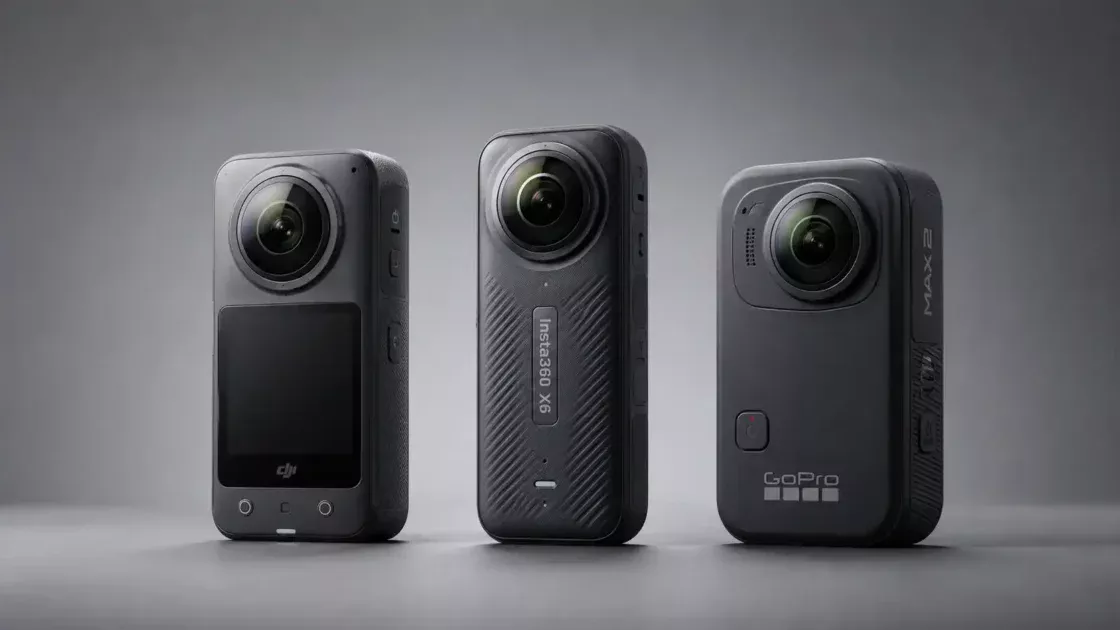
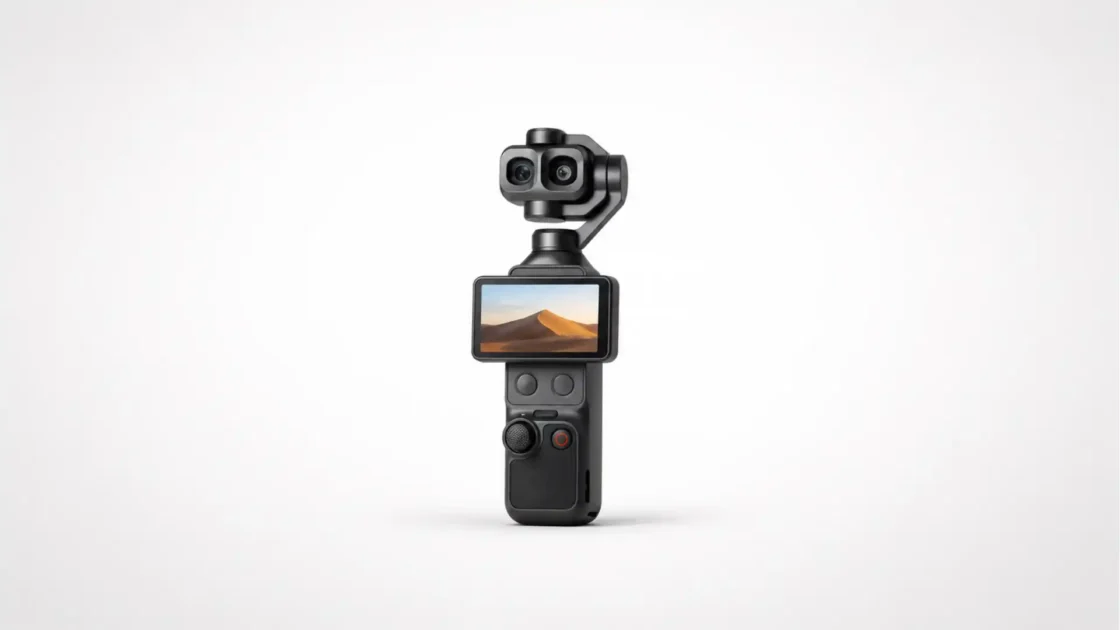
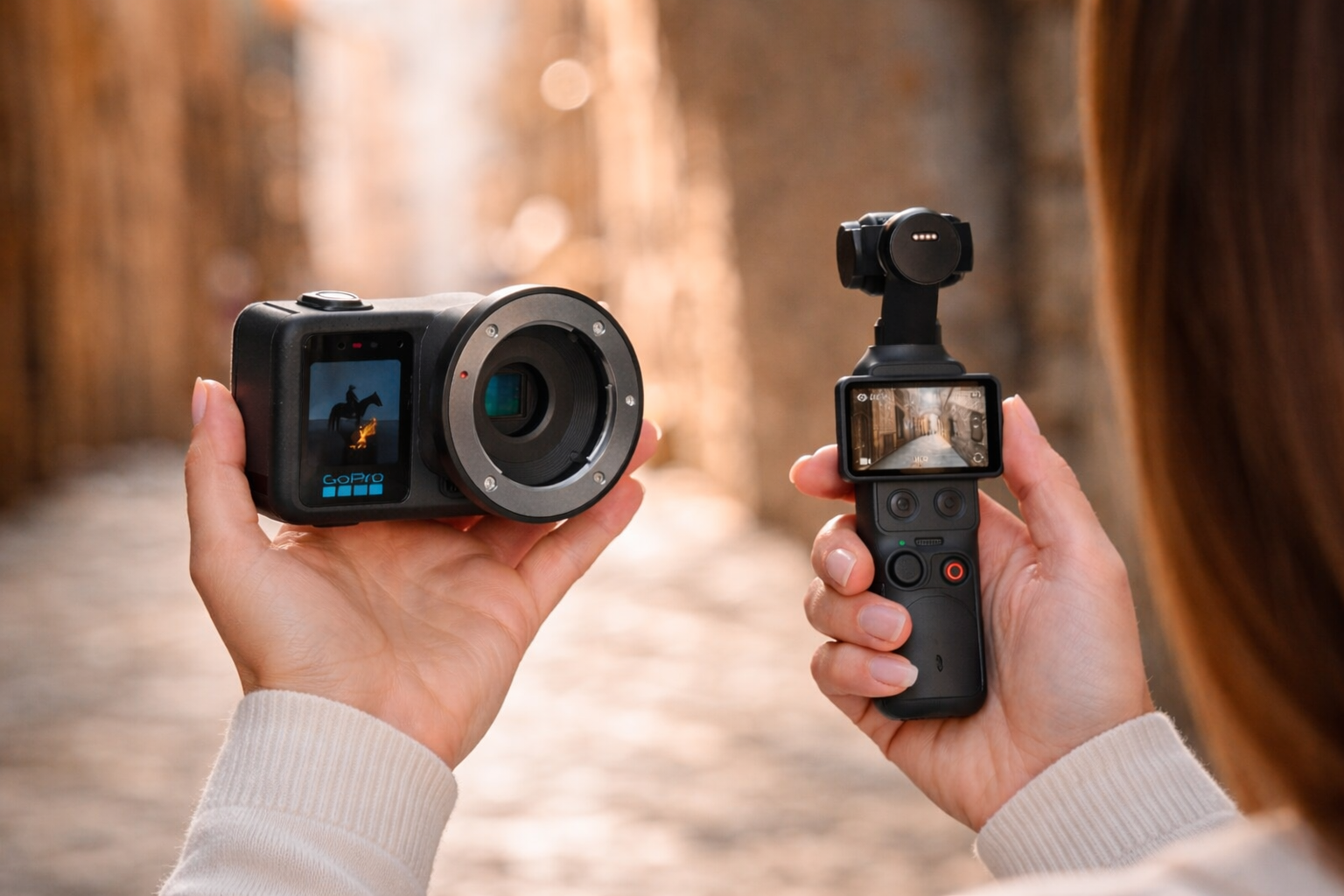
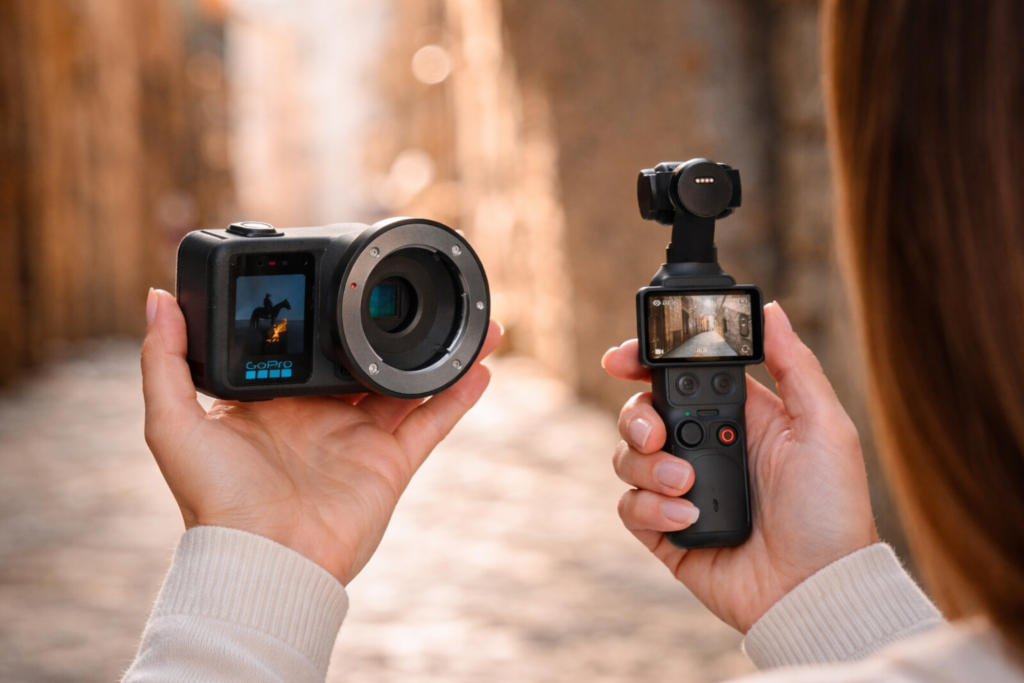
A lot of camera comparisons are clean. Same category, similar shape, similar buyer, then the details decide the winner. DJI Osmo Pocket 4 and GoPro Mission 1 are not that kind of comparison. They are both small cameras with 1-inch sensors, but they come from different traditions. The Pocket 4 is a pocket gimbal camera built around solo shooting, face tracking, walking footage, and low-friction everyday filming. The Mission 1 is GoPro’s newly announced compact cinema and action hybrid, built around ruggedness, wide-angle capture, higher raw spec ceilings, and work in places where a delicate gimbal head would be a liability.
Table of Contents
That difference matters more than the headline spec battle. If you buy by resolution alone, the Mission 1 looks like the easy winner. If you buy by the footage you actually need to get on a Tuesday, the Pocket 4 gets much more dangerous. DJI gives you a 3-axis mechanical gimbal, a rotating 2-inch screen, ActiveTrack 7.0, 107GB of built-in storage, four-channel audio support with DJI Mic transmitters, and a body that is built to be operated quickly with one hand. GoPro counters with 8K30 on the base Mission 1, 4K120 Open Gate, a 50MP 1-inch sensor, 14 stops of dynamic range, 240Mbps recording, 32-bit float audio, Bluetooth 5.3 audio, 20-meter waterproofing without a housing, and a 159-degree native field of view.
There is another wrinkle, and it is important on April 18, 2026. The Osmo Pocket 4 is already a launched product with store listings and early reviews. The Mission 1 is still in the announcement phase. GoPro said pricing would be revealed at NAB from April 19 to 22, 2026. Independent coverage from WIRED, The Verge, and Digital Camera World also noted that pricing was still missing at announcement time, which makes value judgment harder than usual. Early reporting says Mission 1 and Mission 1 Pro are expected to start preorders on May 21 and ship on May 28, but those dates are still part of launch coverage rather than settled long-term market history.
So the fairest way to handle this is simple. Treat the Pocket 4 as the proven option you can buy and judge now. Treat the Mission 1 as the more aggressive platform whose promise is already clear, but whose full value is still incomplete until pricing and broader testing land. That framing keeps the comparison honest and keeps you away from the usual trap of calling a paper launch the winner before real buyers even get one in hand.
The quick answer for most buyers
For most people who searched this comparison, DJI Osmo Pocket 4 is the better buy today. That is not because it has the bigger spec sheet. It does not. It is because it solves the more common problem better: filming yourself, filming family, filming travel, filming while walking, filming without a crew, and getting attractive footage with very little setup. Early reviews from T3, Amateur Photographer, Digital Camera World, GadgetMatch, and Engadget all circle the same point from slightly different angles: the Pocket 4 is smooth, easy, unusually polished for solo creation, and strong enough in image quality that it stops feeling like a compromise tool.
The Mission 1 is the more exciting camera for a different crowd. If your footage lives on handlebars, car rigs, dive trips, chest mounts, poles, cages, helmets, or rain-soaked travel days, the Pocket 4 is the wrong shape before you even hit record. DJI itself states the Pocket 4 is not waterproof. GoPro says the Mission 1 is waterproof to 66 feet or 20 meters without a housing, and can reach 60 meters with the optional protective housing. That single difference removes entire classes of worry. You can rig a GoPro to things you would hesitate to do with a Pocket camera even if the image were identical. It is not identical, but the physical confidence gap is the first thing that decides real-world use.
Quick decision table
| Choose DJI Osmo Pocket 4 | Choose GoPro Mission 1 |
|---|---|
| You film yourself while walking, talking, or traveling | You mount cameras to gear, vehicles, helmets, or poles |
| You care more about gimbal motion than raw resolution | You care more about ruggedness and wide-angle immersion |
| You want the easier camera for vlogging and family footage | You want the safer camera for water, weather, and impact |
| You want a shipping product with known store pricing | You are willing to wait for full pricing and broader testing |
| You like tighter framing, tracking, and a pocket-cinema feel | You like ultra-wide framing, Open Gate flexibility, and tougher hardware |
The table above is not based on marketing slogans. It follows directly from the official designs and from the first wave of hands-on coverage. Pocket 4 is the everyday storyteller. Mission 1 is the harder-use machine. That is the cleanest way to understand the split before the deeper details pile up.
There is still a group that should pause before buying either. If you already own an Osmo Pocket 3 and your work is going well, the upgrade case is not automatic. Amateur Photographer said DJI improved almost everything, but not so radically that every Pocket 3 owner should rush out and spend again. That feels right. Pocket 4 is better, but it is still recognizably part of the same family. On the GoPro side, people who usually buy a HERO for skiing or biking may also want to wait and see whether the Mission 1’s price and size make sense against the classic action-cam lineup. Both products can be excellent without being automatic purchases for their own existing users.
Sensor size looks similar, footage does not
The surprising part of this matchup is that both cameras now claim one of the biggest talking points that used to separate them. Each camera uses a 1-inch sensor. DJI says the Pocket 4 has an all-new 1-inch stacked CMOS sensor, 14 stops of dynamic range, and 10-bit D-Log. GoPro says the Mission 1 uses a 50MP 1-inch sensor with up to 14 stops of dynamic range, plus GP-Log2, HLG-HDR, and much higher bitrate options up to 240Mbps. On paper, that sounds close enough that buyers could think the image character will be close too. It will not.
Sensor size tells you about light-gathering potential. It does not tell you how the camera behaves in your hand, how the lens frames your subject, how the stabilization changes motion, or how much correction you need later. Pocket 4 is built to produce polished-looking footage fast. Mission 1 is built to preserve more headroom for rougher scenarios and heavier post-production. That is why DJI tops out at 180Mbps and GoPro pushes 240Mbps with timecode sync and pro-audio features. DJI is chasing a very refined creator workflow. GoPro is chasing a small-camera version of a more production-minded system.
The Mission 1 also owns the raw resolution advantage. The base model does 8K30, 4K120, 1080p240 in 16:9, and 4K120 Open Gate in 4:3. Pocket 4’s standard video tops out at 4K60 in landscape and 3K60 in vertical, while its 4K240 mode sits in slow motion only. If your workflow revolves around reframing, stabilizing, and delivering multiple aspect ratios from the same master file, the Mission 1’s Open Gate capture is a serious edge. If your delivery usually ends up on phones, short-form apps, family archives, or fast social edits, the difference shrinks fast. Many creators will feel the Pocket 4’s smoother camera movement more than they will feel the extra pixels from 8K. That is an inference from the two designs, not a lab score.
Early reviewer language around the Pocket 4 backs that up. Digital Camera World praised its improved dynamic range, low-light performance, and built-in storage. T3 highlighted the jump to 4K240, the stronger tracking, and the fact that it still feels like a pocketable mini cinema tool rather than a spec monster. Engadget went even further in its headline and framed it as the only vlogging camera many people would ever need. None of that means the Pocket 4 beats Mission 1 in a raw image lab. It means image quality only matters once the rest of the shooting experience stops getting in your way. DJI has spent years getting that friction down.
Stabilization is where the split gets real
If you remember only one thing from this article, remember this: a gimbal and an action camera do not solve movement the same way. Pocket 4 uses a 3-axis mechanical gimbal with wide motion ranges and a rotatable screen. Mission 1 leans on GoPro’s stabilized action-camera approach, designed for rough movement, mounted use, and scenes where a physically exposed gimbal would not survive or would become annoying. That does not make one method universally better. It does make them feel radically different.
The Pocket 4 look is more controlled, more deliberate, and usually more flattering for people. That is why the line has become so common in vlogging and lightweight travel shooting. Mechanical gimbal stabilization changes the character of footage, not just the amount of shake. You get those small floating corrections while walking, cleaner pans, and a calmer horizon. T3’s review describes the result as “smooth as butter,” and Amateur Photographer also singled out effective gimbal-based stabilization as one of the camera’s strongest traits. That is not marketing noise. It is the signature reason people put up with the odd wand-like form factor in the first place.
The Mission 1’s strength is that it stays useful once the scene gets stupid. Water. Mud. Bike mounts. Ski poles. Surf. Dive work. Fast cars. Helmet perspective. Sudden drops. A pocket gimbal does not like that life. GoPro’s press release also says the Mission 1 has 13 capture modes, including Dive Mode and Vlog Mode, with tuned stabilization and scene detection for specific environments. The camera is not trying to mimic a gimbal. It is trying to survive and still produce footage that is stable enough to keep. That sounds less romantic, but it is exactly why GoPro has a place even in 2026 when phones, gimbals, and tiny creator cameras are all stronger than they used to be.
There is also a practical detail people miss in store-page comparisons. Pocket 4 asks more of your awareness while shooting. You protect the gimbal head, you think about how it hangs in a bag, and you become more careful about sudden knocks. Mission 1 invites much less babying. The Shortcut’s hands-on piece stressed that even the Mission 1 Pro felt as sturdy as a traditional GoPro, with improved durability and waterproofing out of the box. That matters on long trips because the camera you worry about less often becomes the camera you use more.
So which stabilization is better? For walking commentary, travel diary footage, casual family clips, and cinematic B-roll, Pocket 4 wins. For anything mounted, wet, slammed around, or physically awkward, Mission 1 wins before the clip starts. Those two truths can sit together without contradiction.
Lens behavior shapes the whole shooting style
People love sensor charts and bitrate charts, yet lens behavior is often what decides whether a camera fits your life. Pocket 4 uses a 20mm equivalent f/2.0 lens. Reviewers repeatedly point out that it can feel tight for selfies and group shots. Amateur Photographer lists the fixed 20mm equivalent lens as a real limitation, and T3 said the 1x view can feel cramped for selfie shooting unless you switch to a wider setup or shoot horizontally. DJI softens that issue with 2x lossless zoom and up to 4x digital zoom in several modes, but the base feel of the camera is still much more “framed” than a GoPro-style ultra-wide shot.
That tighter lens is not a flaw by default. It is a big part of why Pocket footage often looks more intentional. Faces get a nicer perspective. Backgrounds sit differently. The image feels less like POV coverage and more like a tiny operator is walking beside you. DJI also built the Pocket 4 around stronger subject tracking, registered-subject priority, tap-to-switch behavior, and intelligent autofocus. The result is a camera that behaves almost like a cooperative little assistant for one-person shooting.
Mission 1 goes in the opposite direction. GoPro says the camera has a 159-degree native field of view and early coverage describes the fixed-lens versions as much wider by default than older Hero setups. That is a classic action-camera choice. You get more scene, more peripheral context, more mount-friendly composition, and more forgiveness when you do not have time to frame precisely. You also get the usual trade-off: people can look less flattering, rooms can feel stretched, and the perspective carries more of that “camera is inside the action” energy. Great for cycling. Less ideal for a polished piece-to-camera in a hotel lobby.
This is also where the Pocket 4 vs Mission 1 argument becomes less about better and worse, and more about aesthetic language. The Pocket 4 pushes you toward a tidier, calmer, more authored visual style. The Mission 1 pushes you toward a wider, more immersive, more physically present style. Neither camera is neutral. Each one quietly teaches you how to shoot. That is why so many people buy the wrong camera from the right spec sheet and only notice weeks later.
Audio, tracking, and one-person workflow
For solo creators, workflow beats image science more often than gear forums like to admit. Pocket 4 feels designed by people who understand what happens when one person has to be presenter, operator, focus puller, and editor all at once. DJI gives you ActiveTrack 7.0, intelligent focusing, gesture control, a 5D joystick, quick zoom switching, a custom button, and direct support for DJI Mic transmitters with four-channel recording. The camera also has three built-in microphones, and DJI says video software can process the four channels directly when transmitters are connected. That is a serious amount of convenience in a very small body.
That convenience shows up in the reviews. GadgetMatch called the Pocket 4 “a solo creator’s production crew,” which is dramatic wording, but the point lands. The reviewer’s lived use case was self-filming across travel and personal projects, and the camera slotted into that rhythm better than a mirrorless setup or a phone-only workflow. T3 also found the upgraded tracking and quick controls meaningful in daily use rather than just brochure material. This is the Pocket 4’s real moat. It makes one-person filming feel less like a workaround.
Mission 1 takes a more production-minded route. GoPro says the series records with four microphones, supports 32-bit float audio to reduce clipping risk, offers Bluetooth 5.3 audio, supports timecode sync, and works with a redesigned Media Mod plus the new GoPro Wireless Mic System. The Media Mod adds three 3.5mm ports, micro-HDMI up to 4K60, and live audio monitoring. That is much more ambitious than typical action-cam audio, and it clearly aims at creators who want a tiny body that can sit inside a more serious rig.
Still, better audio specs do not automatically equal better solo workflow. Pocket 4 has the cleaner “grab it and record yourself” path because the body, screen, tracking, and gimbal are all tuned around that job. Mission 1 has the stronger “expand into a rig” path because the ecosystem looks more modular and more comfortable with accessories, sync, and tougher environments. If you are mostly a one-person host talking to camera, DJI’s choices feel more relevant. If you shoot with multiple devices, external audio, cages, grips, or mixed delivery formats, GoPro’s direction starts to look more attractive.
Durability and weather decide the bad-day camera
A lot of camera buyers imagine the best-case shoot. Sunlight, nice city, clean hotel desk, flat battery fixed in time, no rain, no sea spray, no dropped bag. Bad gear decisions usually reveal themselves on the bad day, not the easy day. That is where Mission 1 has its sharpest edge.
DJI explicitly says the Pocket 4 is not waterproof. That is not a minor footnote. It changes the entire trust relationship. You can absolutely travel with it. You can absolutely use it in normal outdoor life. But you do not treat it like a camera that wants surf, storm, snow, cliff edges, or careless mounting. The gimbal head alone keeps you aware that the device is a precision tool. Great for many people. Not the right mood for everybody.
GoPro built the Mission 1 to remove that anxiety. The base Mission 1 and Mission 1 Pro are rated waterproof to 66 feet or 20 meters without a housing, and 196 feet or 60 meters with the protective housing. The body also carries the familiar GoPro logic of raised buttons, removable lens hood, rugged design, and general readiness for abusive use. The Verge and The Shortcut both leaned on this point in early coverage: even as GoPro pushes toward compact cinema territory, it is still refusing to stop being GoPro. That hybrid identity is the whole story of the Mission 1 line.
The durability gap affects more than safety. It affects creativity. Cameras that feel fragile make people choose fewer angles. Cameras that feel rugged invite experiments. A Mission 1 clipped to a moving subject, jammed into a weird corner of a vehicle, or lowered toward water is a normal use case. Pocket 4 can produce prettier motion on safer ground, but it is not the camera you want to forget about physically. That difference turns into a style difference long before it turns into a repair bill.
So if your footage is built around risk, weather, speed, or awkward mounting, Mission 1 is the clearer answer than any spec comparison can express. The body itself is the argument.
Battery, storage, and post-production friction
DJI made a very smart choice with the Pocket 4: it attacked friction, not just image quality. The camera has 107GB of built-in storage, can still take a microSD card up to 1TB, and supports transfer speeds up to 800MB/s. DJI also says it can record up to roughly 600 minutes of 1080p/24 footage or about 220 minutes of 4K/60 footage on the built-in storage at standard bitrate. Add fast charging to 80 percent in 18 minutes and full charge in about 32 minutes, and the camera starts to feel unusually forgiving in real travel use. Forget a card? Fine. Need a quick top-up before dinner? Fine. Want to dump clips fast? Fine.
The battery story is also strong for the Pocket 4. DJI rates operating time at 240 minutes under specific 1080p/24 test conditions, and both the official materials and early reviews emphasize the jump from the prior generation. T3 called the charging speed lightning-fast in use. That matters because cameras like this often live as “always bring it” devices. Long battery life makes them more likely to stay in that role. Pocket 4 feels designed for the person who hates being punished for leaving the bag a little too light.
Mission 1 looks strong here too, but in a different way. GoPro says the series can record for 5-plus hours at 1080p30 and 3-plus hours at 4K30 on the new Enduro 2 battery, with backward compatibility to HERO13 Black batteries. That is paired with much better thermal behavior than GoPro users are used to hearing about. The catch is that Mission 1 is also built for heavier files: higher bitrates, Open Gate, more demanding post choices, and more ambitious multicam work. Long endurance is great, but the footage is clearly asking for a more serious file-management mindset.
Pocket 4 also has the simpler codec story for many buyers. DJI records MP4 in HEVC at up to 180Mbps with D-Log available for grading. Mission 1 leans into GP-Log2, HLG-HDR, 240Mbps, and timecode sync. That is better for people who want the flexibility. It is also heavier on cards, storage, and edit workflow. There is no universal win here. Pocket 4 is lighter editorially. Mission 1 is deeper editorially. Which one feels better depends on whether post-production is the part you enjoy or the part you keep postponing.
Value is clear on one side and unresolved on the other
This section is short because the market has not finished talking yet. Pocket 4 has a real price today. Mission 1 still has a missing price tag as of April 18, 2026. DJI’s European store lists the Osmo Pocket 4 Standard Combo at €449 and the Creator Combo at €559. Amateur Photographer’s review also lists launch pricing across several European bundles, with some regional variation. You can debate whether that is cheap, but you cannot debate whether it is known.
GoPro, by contrast, launched the Mission 1 line with a lot of ambition and no official price in public materials yet. GoPro’s own announcement said pricing would be unveiled at the NAB show from April 19 to 22, 2026. WIRED, The Verge, and Digital Camera World all highlighted the same gap. That leaves buyers in an awkward place. The Mission 1 may end up being a great value if GoPro prices it aggressively. It may also land in a band where the Pocket 4 looks like the much safer purchase unless ruggedness is your first requirement. Right now, anyone speaking with certainty about Mission 1 value is guessing.
That uncertainty shifts the recommendation. If you need a camera now, want the least risk, and like the DJI use case, the Pocket 4 is easy to recommend because the value equation is already on the table. If you are specifically excited by GoPro’s wider lens, waterproofing, Open Gate, 32-bit float audio, or the broader Mission ecosystem, waiting a few days for price clarity makes sense. There is no prize for pretending those are the same buying situation.
The better camera depends on the work, not the spec sheet
By now the answer should feel less abstract. DJI Osmo Pocket 4 is the better camera for most ordinary creators and travelers. GoPro Mission 1 is the better camera for harder environments and more aggressive mounting. That is the simplest honest conclusion.
Pick the Pocket 4 if your camera usually comes out for city walks, family clips, travel narration, quick interviews, hotel-room setup, handheld B-roll, small-client social work, or any situation where one person wants attractive footage with minimal effort. Pocket 4 has the right mix of smooth motion, polished autofocus and tracking, fast charging, usable internal storage, and creator-friendly controls. It also already has the first wave of reviews backing up what the spec sheet suggests: DJI refined a camera category it already understood very well.
Pick the Mission 1 if your footage is physical. Water. boards. trails. helmets. vehicles. rain. dives. weird rigs. rough trips. It also deserves attention from creators who care about Open Gate capture, tougher hardware, 32-bit float audio, timecode sync, and stronger production flexibility in a very small body. The camera is not just GoPro trying to catch DJI. It is GoPro trying to stretch beyond the classic action-cam box without giving up the part that made GoPro useful in the first place. That makes the Mission 1 more interesting than a routine yearly refresh.
There is one last thing worth saying. Buyers often chase the camera with the higher ceiling. They should chase the camera with the lower friction. A camera that can do more is not always the camera that gets used more. For many people, the Pocket 4 will produce better real footage simply because it will leave the bag more often, frame people more gracefully, and ask for less babysitting. For another group, the Mission 1 will win because it can be trusted in places where the DJI should never have been brought in the first place.
That is why this comparison is good. It forces the right question. Not which camera is more impressive. Which camera still makes sense after the day stops being comfortable. On calm days, the Pocket 4 is brilliant. On rough days, the Mission 1 looks like the smarter companion.
FAQ
For most solo vlogging, yes. Pocket 4’s 3-axis gimbal, rotating screen, ActiveTrack 7.0, and tighter 20mm-equivalent lens make it better suited to talking-to-camera footage and smooth walking shots.
Yes. Mission 1 is built around rugged use, ultra-wide capture, and waterproofing to 20 meters without a housing, which fits action sports far better than the non-waterproof Pocket 4.
Yes. The base Mission 1 records up to 8K30, while the Mission 1 Pro goes higher.
No. Pocket 4 tops out at 4K60 for normal video and 4K240 in slow-motion mode.
Pocket 4 has the better stabilization for smooth handheld walking footage because it uses a mechanical gimbal. Mission 1 is the better stabilization platform for rough mounted use because its body is made for harsher environments.
No. DJI’s store FAQ explicitly says the Pocket 4 is not waterproof.
GoPro says Mission 1 is waterproof to 66 feet or 20 meters without a housing, and to 196 feet or 60 meters with the optional protective housing.
Both use 1-inch sensors and both claim up to 14 stops of dynamic range, so each should be much stronger than older small cameras. Pocket 4 already has early reviews praising its low-light improvement, while Mission 1’s low-light promise is strong on paper but still earlier in the release cycle.
Pocket 4 is easier. Its tracking, gesture controls, rotating screen, joystick, gimbal, and direct creator workflow are built around self-operated shooting.
Yes. The base Mission 1 supports 4K120 Open Gate, while the higher Mission 1 Pro models extend that further.
Mission 1 has the more advanced onboard audio spec, with four microphones, 32-bit float recording, Bluetooth 5.3 audio, and timecode sync. Pocket 4 is still strong for creators, especially when paired with DJI Mic transmitters for four-channel capture.
Yes. It has 107GB of built-in storage and also supports microSD cards up to 1TB.
As of April 18, 2026, no official public price had been published in GoPro’s announcement materials. GoPro said pricing would be revealed during NAB from April 19 to 22, 2026.
For normal city travel, Pocket 4 is usually the better fit because it is smoother, easier for self-filming, and less work to operate. For rough travel with water, weather, or action-heavy activity, Mission 1 makes more sense.
Yes. That is one of its strongest use cases because it combines polished motion, tracking, easy controls, and a small body that still produces high-end looking footage.
Not really. It still carries GoPro ruggedness and wide-angle DNA, but GoPro is positioning the Mission 1 line as compact cinema cameras with a much more ambitious spec set than the traditional Hero line.
Pocket 4’s 20mm-equivalent lens is more flattering than an ultra-wide action-cam look, though some reviewers still found it a little tight for group selfies. Mission 1’s very wide field of view is better when you need more scene in the frame.
Only if the new features fit your work. The upgrade is meaningful, but early reviews do not treat it as a must-buy for every Pocket 3 owner.
If I needed one camera today with the least uncertainty, I would buy the Pocket 4. It is already shipping, already priced, and already reviewed. I would wait on Mission 1 only if rugged use, waterproofing, or Open Gate capture were central to my work.
Author:
Jan Bielik
CEO & Founder of Webiano Digital & Marketing Agency
This article is an original analysis supported by the sources cited below
Osmo Pocket 4 – The World In My Pocket
DJI’s official product page outlining the Pocket 4’s sensor, stabilization, zoom, tracking, and core creator features.
Osmo Pocket 4 – Specs
DJI’s technical specification page covering dimensions, lens data, video modes, bitrate, battery, and connectivity.
DJI Delivers Next-Generation Imaging Capabilities with Osmo Pocket 4
DJI’s launch announcement with release date, feature framing, runtime claims, and supported mic ecosystem details.
Buy Osmo Pocket 4 – 1″ CMOS Pocket Gimbal Camera
DJI Store listing used for current combo pricing, built-in storage details, workflow claims, and waterproof FAQ.
GoPro Announces New MISSION 1 Line of Professional 8K and 4K Open Gate, Compact Cinema Cameras for Filmmakers, Creators and Aspiring Enthusiasts
GoPro’s official launch announcement for the Mission 1 line, including recording modes, waterproofing, audio, and ecosystem details.
GoPro Mission 1 Pro Series | Cinema-Grade Cameras Unveiled
GoPro’s official overview page describing the Mission 1 family’s positioning, sensor, Open Gate capture, and product segmentation.
GoPro goes bigger and pro-er with support for Micro Four Thirds lenses
Early launch coverage from The Verge, useful for base-model framing, launch timing, and GoPro’s shift into a more cinema-minded category.
GoPro’s New Mission 1 Cameras Have 8K Video and Interchangeable Lenses
WIRED’s first look at the Mission line, used for launch timing, battery context, and the broader significance of the new series.
GoPro Mission 1 Pro hands-on review: the 8K pocket cinema camera you can take anywhere
Hands-on impressions focused on body feel, ruggedness, and the “cinema camera that still behaves like a GoPro” angle.
GoPro MISSION 1 Series Announced: 1″ 50MP Sensor, 8K/60P, 4K Open Gate, and a First Interchangeable Lens Camera
CineD’s coverage helped frame Mission 1 as a meaningful move toward compact cinema rather than a routine action-cam refresh.
I saw the GoPro Mission 1 and this new action camera could make all point and shoots obsolete — here’s why
Tom’s Guide coverage used for context around the 1-inch sensor shift and why it matters outside pure action-camera use.
A key detail was left out of the GoPro Mission 1 launch – and the answer is likely coming in just a few days. What is the GoPro Mission 1 Pro price?
Digital Camera World’s reporting on the missing Mission 1 pricing, used to keep the value discussion grounded and current.
DJI Osmo Pocket 4 review: A mini cinema camera you can fit in your pocket
T3’s review provided useful real-world notes on stabilization feel, controls, framing, charging speed, and daily usability.
DJI Osmo Pocket 4 review – the best vlogging camera perfected?
Amateur Photographer’s review helped balance the Pocket 4 praise with practical criticism around the fixed 20mm-equivalent lens.
DJI Osmo Pocket 4 review: Can the best vlogging camera get better in an unexpected way?
Digital Camera World’s review was used for early verdict framing around image quality, low light, and built-in storage value.
DJI Osmo Pocket 4 review: A solo creator’s production crew
GadgetMatch supplied useful lived-use reporting from a solo-creator angle, which fits the Pocket 4’s strongest audience.
DJI’s new pocket camera is a sneaky upgrade in value
DPReview’s coverage helped frame the Pocket 4 as a refinement-led upgrade rather than a dramatic reinvention.
DJI Osmo Pocket 4 review: The only vlogging camera you’ll ever need
Engadget’s early verdict reflects the unusually strong consensus around the Pocket 4 as a low-friction creator camera.
Is the new DJI Osmo Pocket 4 the ultimate vlogging tool you need?
Amateur Photographer’s launch coverage added extra pricing and positioning context around the Pocket 4 release.
GoPro Mission 1 series crams a one-inch sensor into the smallest 8K open gate cameras yet – including GoPro’s first-ever mirrorless camera!
Digital Camera World’s broader launch summary was useful for release-timing context and the market significance of the Mission 1 line.
| Citing this article? Brief excerpts are welcome. Please credit Webiano.digital, name the author where stated, and include a link to https://webiano.digital and to this original article. Full or substantial republication requires prior written permission. Read our Copyright and Content Use Policy. |
This article was prepared with the assistance of artificial intelligence tools. The content underwent expert human review, and Webiano Digital & Marketing Agency assumes editorial responsibility for its final version and publication.