A BCG survey of 1,488 US workers links AI brain fry to more major errors, and a second BCG experiment shows that naming an AI agent weakens human review. Both findings hold up against the published record, but both rest on self-reports and staged reviews, and the claim about junior talent has the thinnest evidence. Leaders get more from fixing oversight than from adding tools.
Table of Contents
AI brain fry now has numbers behind it. Boston Consulting Group surveyed 1,488 full-time US workers at large companies and found that 14% of AI users reported a mental fog of slower decisions, trouble focusing and headaches, brought on by overseeing more AI output than one head can hold. Those workers also reported 39% more major errors than colleagues without the condition. The data are self-reported, and BCG advises companies on AI programs, so the figures describe a pattern worth acting on rather than a settled measure of harm.
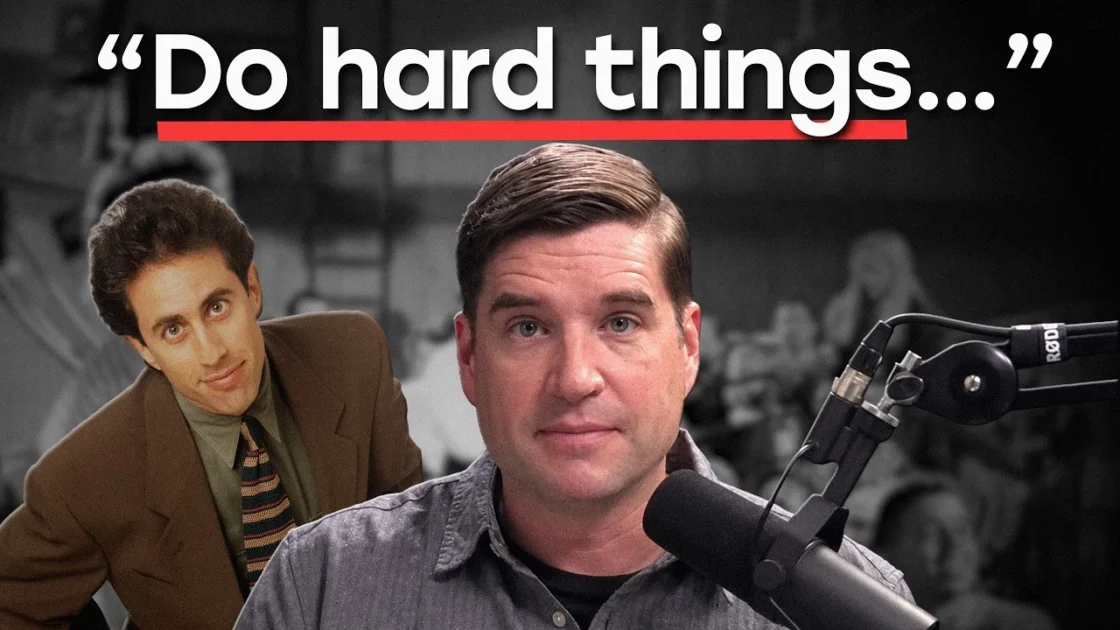
The best-known case for acting on it is a TED talk by BCG managing director Julie Bedard, recorded at TED@BCG on 17 August 2026 and posted on YouTube on 9 November 2026. Bedard argues that leaders must lead the redesign of work in three places: attention, accountability and apprenticeship. Set against what BCG, McKinsey, the New York Fed and Yale have published, the first two claims rest on measured experiments, while the third is the thinnest and the most contested.
Fourteen percent of AI users report brain fry
The study behind the talk appeared in Harvard Business Review on 5 March 2026, written by Bedard and five BCG colleagues. It defines brain fry as mental fatigue from using or overseeing AI tools beyond one’s cognitive capacity. The 14% average hides a wide spread: according to The Decoder’s account of the study, 26% of marketing respondents reported it, against 6% in legal departments.
Tool count matters too. Perceived productivity rises when a worker goes from one AI tool to two, peaks at three and falls again at four or more, the same ceiling that ordinary multitasking hits. That curve rests on how productive people felt, not on output measured by a third party. In the talk, Bedard adds an anecdote about a manager whose team produces ten times the output while her own job feels twenty times harder. It is one person’s remark, and the survey cannot say how typical it is. The talk also says affected workers are 39% more likely to intend to leave, but the published figures run from 25% to 34%, which Built In calls a 36% relative rise.
Oversight is what drains people, not tool use alone
The strongest predictor in the survey was oversight. Workers with high oversight demands spent 14% more mental effort, reported 12% more mental fatigue and 19% greater information overload than workers with low demands, The Decoder reports. Gabriella Rosen Kellerman, a co-author, told Built In that reviewing an agent’s work means first reconstructing its logic, and that the agent’s polish can make a reviewer doubt their own judgment.
The condition differs from burnout. According to Built In, brain fry is acute and cognitive, and Kellerman says it is usually gone after sleep, while burnout is emotional and builds over months. Using AI to replace repetitive work cut burnout scores by 15% in the study but did not lower mental fatigue, so the same tool can ease one problem and cause the other. The remedy the talk offers is manager time: fatigue scores were 15% lower for workers whose managers answered their questions about AI, and 5% higher where managers expected staff to work it out alone, Built In reports.
Naming an AI agent cut error-catching by 18%
The accountability claim comes from a second BCG study, published in Harvard Business Review in May 2026 and based on more than 1,200 managers. When identical error-filled documents were described as the work of an AI “employee” instead of an AI “tool”, managers found 18% fewer errors, personal accountability fell by 9 percentage points and the accountability assigned to the AI rose by 8, according to BCG’s summary of the paper. Charter reports that reviewers were also 44% more likely to forward the flawed work to colleagues, and that the effects were strongest at companies already treating agents as staff.
The talk compresses the same results differently. It says the 9-point drop applied to managers already familiar with agents on org charts, and that escalations rose by 44%. BCG’s published summary does not attach the familiarity condition to the 9-point figure, so that detail is the speaker’s gloss for now. The same survey, per Charter, found that 23% of organizations list agents on the org chart and 31% describe AI as a teammate or employee.
A human owner fixes what a name breaks
Bedard’s prescription is a named person for every agentic system, with clear decision rights, an escalation path and a career consequence when something goes wrong, plus training in how to review AI output before any agent gets a name. Okta’s chief people officer, Becks Port, argues the opposite on naming: a name eases fear of replacement and makes staff question the agent like a colleague, Charter reports. Bedard’s data point the other way. When the agent got a name or a seat on the chart, people did not use it more, they sent more content to managers for review, and they missed more errors themselves.
Port’s ownership model is the useful part. Engineering owns the technical guardrails, the travel team owns travel policy and escalation rules, and HR owns policy content. Charter’s author, Brian Elliott, also advises BCG, a link his piece discloses. His conclusion is to give the agent an owner, a scope and a documented job, and to keep any name dull and descriptive. This is an inference from the experiment, not a tested result: the study varied labels, not ownership structures, so none of the coverage reviewed shows that a named human owner restores review quality.
Junior work that taught judgment is the weakest claim
The third claim is that drafting, analysis and research, the first-cut work juniors used to do, is now partly done by AI. Bedard says juniors on stretch assignments produce good output but, without expert support, build “output without learning”. The talk gives no figure for this. McKinsey’s Quarterly article of 14 July 2026 supports the mechanism: workers who used generative AI for technical tasks they could not do themselves lost that capability once access ended, while physicians who had to reconcile their own reasoning with the model’s improved. A survey McKinsey cites found that a third of employers say AI has already cut the skill-building tasks juniors learn from.
The labor-market link is where the evidence thins. The New York Fed’s Liberty Street Economics reported on 1 June 2026 that unemployment among college graduates under 29 rose from 3.1% in 2017 to 2019 to 3.7% in 2022 to 2025, that the rise predates wide AI use, and that remote work can explain 64% of it, a back-of-envelope estimate. Yale’s Budget Lab, updating its tracker on 14 October 2026, found no connection between AI usage measures and changes in employment or unemployment. McKinsey itself calls the cause contested. The learning mechanism is plausible; the claim that AI is already hollowing out the junior pipeline is not shown by aggregate data.
Leaders versus laggards is a comparison, not a recipe
Bedard closes with three ratios for companies that get the most from AI: 12 times more likely to have engaged executives, four times more likely to schedule structured AI learning and two and a half times more likely to reshape workflows. The first and last match BCG’s September 2025 report on 1,250 firms, where nearly all of the top 5% say their top team is deeply engaged, against 8% of laggards. The learning figure differs: that report says six times, not four. The talk may draw on newer data that the coverage reviewed does not include.
Two cautions come from the report itself. The numbers are self-reported by executives, who may overstate, and BCG notes that company performance has many drivers besides AI. The comparison shows that engagement and results travel together, not that engagement produces them. Bedard is also a BCG managing director presenting her own firm’s research, and BCG sells AI transformation work. None of that makes the figures wrong, but no independent replication of the brain fry or org-chart studies turned up in the coverage reviewed.
A manager’s order of operations
The researchers’ own advice is concrete. BCG recommends capping how many AI agents one person oversees at once and decoupling productivity metrics from AI usage, The Decoder reports, and Built In notes that some tech firms already rank developers by tokens consumed, which rewards use for its own sake. A manager can start with three steps: count the tools and agents each person supervises, answer the team’s AI questions in the open, and assign a human owner with a plain, descriptive agent name before launch. For juniors, McKinsey’s attempt-first model has them do the task, compare it with the AI’s version and discuss the gap with a manager.
What would change this reading is simple to state. Kellerman says to watch for rising errors, irritability and a gap between hours worked and work produced, and warns that a team reporting brain fry has months, not years, to change how it works. The Decoder flags the open question: whether brain fry lasts or fades as workers adapt to the tools. A replication outside BCG, with error counts that someone other than the worker recorded, would settle more than any further survey.
Author:
Jan Bielik
CEO & Founder of Webiano Digital & Marketing Agency
This article is an original analysis supported by the sources cited below
AI Brain Fry Is Real. Here’s What Leaders Can Do | Julie Bedard | TED
The video page, giving the title, channel, 9 November 2026 upload date and the TED description of the talk, recorded at TED@BCG on 17 August 2026.
When Using AI Leads to “Brain Fry”
BCG’s summary of the 5 March 2026 Harvard Business Review article, naming its six authors and the 1,488-worker US sample.
Why You Shouldn’t Treat AI Agents Like Employees
BCG’s summary of the May 2026 study of more than 1,200 managers, with the 18% fewer errors and the 9 and 8 percentage-point accountability shifts.
The Widening AI Value Gap
BCG’s September 2025 report on 1,250 firms, the source of the executive engagement, learning and workflow multiples and of its own caveats on self-reported data.
Building expertise in the age of AI: Who trains the next generation?
McKinsey Quarterly’s 14 July 2026 article on entry-level work, the attempt-first learning model, and the contested causes of weak junior hiring.
Remote Work Leaves Younger Workers Sidelined
The New York Fed’s 1 June 2026 analysis giving the 3.1% to 3.7% youth unemployment rise and the estimate that remote work explains 64% of it.
Tracking the Impact of AI on the Labor Market
Yale Budget Lab’s tracker, updated 14 October 2026, finding no clear AI footprint in employment or unemployment data.
Study warns of “AI Brain Fry” as workers hit cognitive limits overseeing AI agents
Independent coverage with the oversight, tool-count, function-level and quit-intent figures, the researchers’ recommendations and the self-report caveat.
AI Brain Fry: Why Developers Feel Overloaded by AI Agents
Interviews with co-author Gabriella Rosen Kellerman on brain fry versus burnout, plus the manager-support and error figures.
Why you shouldn’t give AI agents a name
Charter’s report on the org-chart study, the 44% forwarding figure, Okta’s opposing view and the author’s disclosed BCG advisory role.
| Citing this article? Brief excerpts are welcome. Please credit Webiano.digital, name the author where stated, and include a link to https://webiano.digital and to this original article. Full or substantial republication requires prior written permission. Read our Copyright and Content Use Policy. |
This article was prepared with the assistance of artificial intelligence tools. The content underwent expert human review, and Webiano Digital & Marketing Agency assumes editorial responsibility for its final version and publication.