Jerry Seinfeld’s line that the right way is the hard way now circulates as AI career advice. The best-controlled studies split along skill: novice support agents gained 34% and experienced staff little, while veteran developers worked 19% slower. Seinfeld’s advice suits people who set their own standard and keep the upside of their work, which most employees do not.
The evidence on AI productivity splits along skill lines, and the split is larger than the average suggests. In a study of 5,179 customer-support agents, an AI assistant raised issues resolved per hour by 14% on average, with a 34% gain for novice and low-skilled workers and minimal impact on experienced, highly skilled ones. In a randomized trial released in July 2025, 16 experienced open-source developers took 19% longer on tasks when AI tools were allowed. Berkeley researchers reported in February 2026 that AI tools made employees work faster, take on more tasks and stay at work longer, often without being asked.
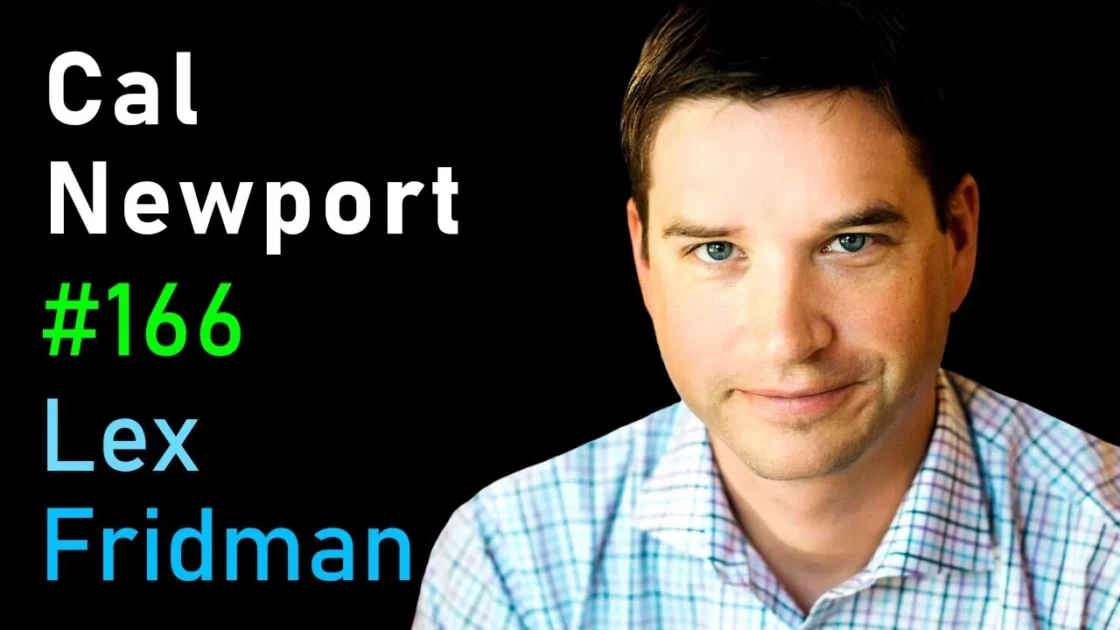
That evidence is the test for a 15-minute video Cal Newport published on 30 October 2026, in which he takes a Jerry Seinfeld line about doing work the hard way and applies it to AI agents. Newport’s warning, as summarised in the episode listing, is that agents will repeat what email did to office work. Part of it holds. Part of it depends on something Seinfeld had and most employees do not.
A 2017 McKinsey question resurfaces in an AI debate
Seinfeld said it in a 2017 Harvard Business Review interview. Fortune’s account has an interviewer asking whether he had ever wanted McKinsey’s help with his process; he asked who McKinsey was and, told it was a consulting firm, asked whether it was funny. His next line, “The right way is the hard way,” returned in the Acquired podcast’s Seinfeld episode, which ran 3 hours 50 minutes in October 2026 and is where Newport says he heard it.
The episode ties the attitude to a decision in December 1997, when General Electric chief Jack Welch offered $110 million for a tenth season, at $5 million for each of 22 episodes. Seinfeld declined, reasoning that leaving while audiences still wanted more would keep the show memorable.
Email stress is measured, email output is argued
Newport’s email case, per the video summary, is that email replaced fax and voicemail but also produced constant back-and-forth messaging that left workers stressed without clearly improving output. The stress half has experimental support. In a University of British Columbia study of 124 adults, people limited to checking email three times a day for a week reported lower daily stress than in a week of unrestricted checking, though most found the limit hard to keep.
The output half rests on Newport’s own synthesis. In a 2021 radio interview he described what he calls the “hyperactive hive mind,” argued that switching between tasks and inboxes exhausts people, and cited one study finding that workers check email every six minutes. That is a position assembled from several studies, not one trial. He also said he did not want to go back to fax machines or voicemail, so his target is a way of working, not the tool.
Berkeley researchers found AI added work
The AI half of Newport’s warning lines up with a February 2026 Harvard Business Review article by Aruna Ranganathan and Xingqi Maggie Ye of UC Berkeley’s Haas School of Business. Their summary says AI tools did not reduce work: employees worked at a faster pace, took on broader tasks and extended their hours, often without being asked.
The authors warn that this can become unsustainable, producing workload creep, cognitive fatigue, burnout and weaker decisions, and that an early surge can give way to lower-quality work and turnover. They recommend an “AI practice” of norms such as intentional pauses and sequenced work. This resembles the pattern Newport attributes to email, a tool that makes each task cheaper and so multiplies tasks. That comparison is an interpretation; the Berkeley summary does not mention email.
Skill level splits the productivity evidence
Whether AI helps depends on who is using it. The NBER paper by Erik Brynjolfsson, Danielle Li and Lindsey Raymond found a 14% average gain in issues resolved per hour, a 34% gain for novices and minimal impact on experienced, highly skilled workers. The authors suggest the tool spreads the practices of stronger workers to newer ones.
The METR trial points the same way from the other side. Sixteen experienced developers completed 246 tasks in repositories they regularly contributed to, each task randomly allowing or banning AI. Tasks with AI took 19% longer, although developers and outside experts had expected a speed-up of roughly 24%. METR’s authors caution that the result may be specific to the environment tested and leave open that future models will speed these developers up.
The two studies measure different jobs with different tools, so the pairing is a pattern to watch, not a law. One interpretation is that a worker with a settled standard has less to gain from suggestions and more to lose from reviewing them.
Seinfeld owned the upside of his hard way
Seinfeld’s method paid because he owned the asset. In Acquired’s account, an FCC rule from 1970 barred networks such as NBC from owning the shows they aired, so Seinfeld and Larry David could choose their studio and set terms. They are reported to have kept about 15% of the backend each. Acquired’s page puts the show’s value at over $7 billion against roughly $250 million of production cost. An employee who works the hard way collects a salary, not a share of that.
The hosts add a warning of their own. David Rosenthal relays Warren Littlefield’s point that letting a genius work unchecked pays only when you are dealing with a genius, and most people are not. The hard way also had a bill: Pod’s write-up reports that Larry David left after season seven, worn out from running every rewrite himself.
One number needs care. The summary of Newport’s video credits Acquired with an estimate of four to five billion dollars in revenue, while Acquired’s page says over $7 billion. Which definition each uses is not clear from the sources reviewed.
Sources that cannot settle the argument
The account of Newport’s video here rests on the episode listing, which summarises his argument. His exact wording and the weight he gives each point are unknown. Newport has made the email case since his 2021 book, so the video is advocacy consistent with a long-held position. The Acquired episode that supplied the Seinfeld story carried advertising from AI companies, including Sierra and Anthropic, according to its own transcript.
The evidence has limits too. The METR trial covers 16 developers using early-2025 tools. The NBER result comes from customer support, where an assistant suggests replies, a narrower job than an agent that carries out multi-step tasks. The Berkeley summary frames burnout and turnover as risks that can follow, not as long-run results. None of these studies tests agents running multi-step work, which is what Newport’s warning is about.
Experts should measure, novices should build standards
For an experienced employee, or a manager of experts, the evidence supports Seinfeld’s caution but not his certainty. Measure before adopting: the METR developers expected AI to speed them up by about 24% and took 19% longer, which suggests self-assessment is a poor guide. Berkeley’s call for deliberate norms on AI use is cheap to try.
Novices face a harder bargain. They gain most in the NBER study, and in a post by Ben Carlson, Bill Gates is quoted as worried about young people entering a workforce with fewer entry-level openings. Scott Anthony of Dartmouth’s Tuck School told Fortune he pushes students to do the hard work that builds the judgment to supervise AI, comparing shortcuts to bringing a forklift to the gym.
The judgment: Newport is right that AI tools can add work, and Seinfeld is right that standards come from effort, but the hard way is a strategy for people who define the standard. A trial of AI agents on experienced knowledge workers that measures output quality and hours together would change this reading, as would evidence that the Berkeley workload effect fades.
Author:
Jan Bielik
CEO & Founder of Webiano Digital & Marketing Agency
This article is an original analysis supported by the sources cited below
Seinfeld’s Genius Advice for Success in the AI Age
Cal Newport’s video of 30 October 2026, whose argument about email, AI agents and a Seinfeld line is the subject of this analysis.
Seinfeld | Acquired
The October 2026 episode page and transcript, source of the 15% backend ownership, the 1970 FCC rule, the over-$7-billion value and the Littlefield point.
Generative AI at Work
The NBER working paper reporting a 14% average gain, a 34% gain for novices and minimal impact on experienced workers across 5,179 support agents.
AI Doesn’t Reduce Work—It Intensifies It
The February 2026 Harvard Business Review summary of Berkeley research finding faster pace, broader tasks, longer hours and burnout risk among AI users.
Check less to reduce email stress
The University of British Columbia release on a 124-adult experiment in which limiting email checks to three a day lowered stress.
Surprise: Developers Using AI Take 19% Longer on Tasks
Independent report on the METR randomized trial of 16 developers and 246 tasks, including the authors’ caveats about tools and setting.
How ‘A World Without Email’ Could Increase Productivity, Happiness At Work
A 2021 public-radio interview in which Newport defines the hyperactive hive mind and says he does not want to return to fax or voicemail.
‘They’ll lose their humanity’: Dartmouth professor says he’s surprised just how scared his Gen Z students are of AI
Fortune’s account of the 2017 McKinsey exchange and of a Tuck professor’s argument for hard work when learning with AI.
The Business Economics Behind Seinfeld
A written digest of the Acquired episode covering the $110 million offer, the hard-way quote, Larry David’s departure and the lifetime-value estimate.
Seinfeld’s Genius Advice for Success in the AI Age
A third-party summary of the video’s argument, giving its date, length and main claims on email, AI agents and tool adoption.
Jerry Seinfeld’s Evergreen Career Advice
Ben Carlson’s August 2026 post quoting Bill Gates on entry-level openings and recounting Seinfeld’s work-ethic comments on a comedy podcast.
| Citing this article? Brief excerpts are welcome. Please credit Webiano.digital, name the author where stated, and include a link to https://webiano.digital and to this original article. Full or substantial republication requires prior written permission. Read our Copyright and Content Use Policy. |
This article was prepared with the assistance of artificial intelligence tools. The content underwent expert human review, and Webiano Digital & Marketing Agency assumes editorial responsibility for its final version and publication.