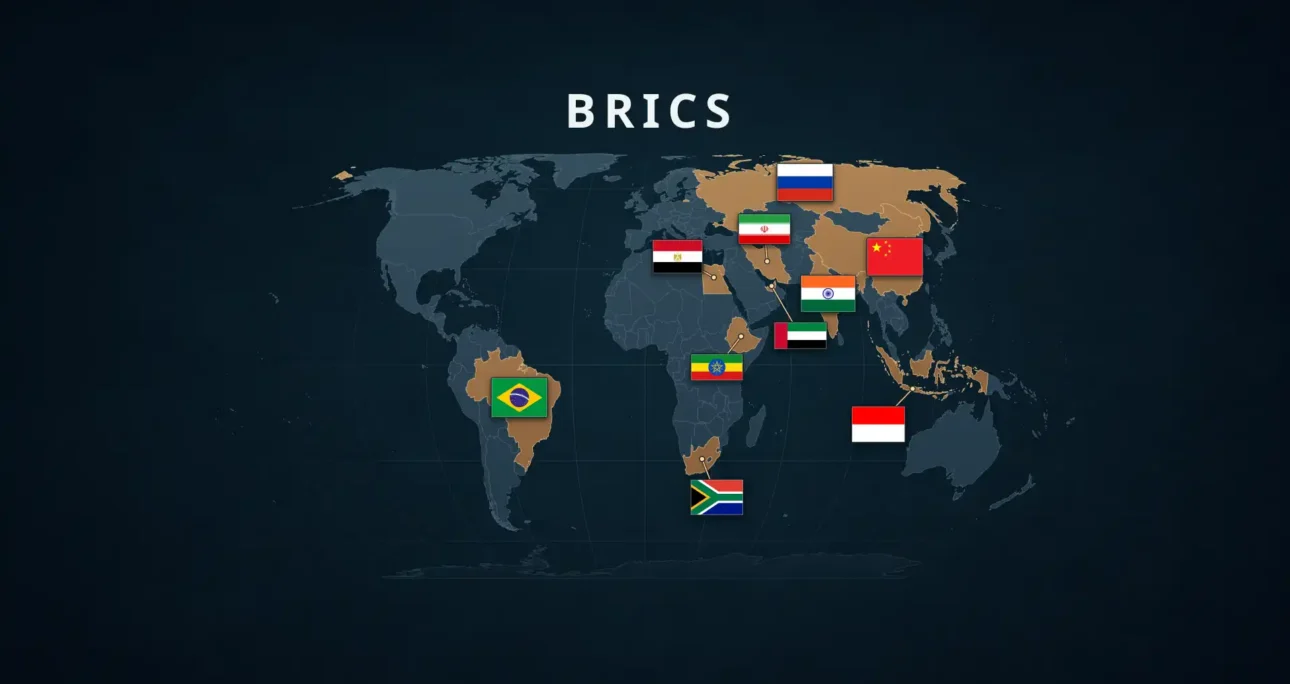
India placed six universities in QS’s 2026 computing top 100 and China nine, while Russia’s strongest programmers and Iran’s best engineers sit far lower in reputation tables. The gap shows what rankings measure: surveys of academics and employers, not the contest skill that won ICPC 2025 for St Petersburg. Talent exists across the bloc; war, sanctions and emigration decide how much of it stays.
Table of Contents
QS published its 2026 computer science table on 25 March 2026, and the BRICS pattern is blunt: India has six universities in the global top 100, up from two, and mainland China has nine, down from 12. Russia’s best entry, Lomonosov Moscow State University, sits at =93rd, and Iran’s Sharif University of Technology is placed 201-250 in the Times Higher Education computing table. Yet in September 2025 a team from St Petersburg State University, ranked 301-350 by QS in computing, won the ICPC World Finals by solving 11 of 12 problems. This analysis argues that ranking tables and the talent pipeline measure different things. Universities in Russia, Iran, India, China and Brazil do train programmers who compete at world level, but reputation surveys reward visibility, while war, sanctions and emigration decide where that talent ends up working.
India climbs to six QS computing places as China slips to nine
QS ranks about 850 universities in computer science and information systems, and 70% of the score comes from two surveys: academic reputation at 40% and employer reputation at 30%. In the 2026 edition IIT Bombay rose from =76th to 44th and IIT Delhi from =64th to 45th, while IIT Kanpur (65th), IIT Kharagpur (=67th) and IIT Madras (79th) entered the top 100 from outside it. QS reports that computing recorded more upward moves than any other subject, and that Southern Asia had the highest share of improving institutions across its subject tables, at 40%. The Vellore Institute of Technology also climbed to =86th, so the gain reaches beyond the IITs.
China moved the other way. Tsinghua stayed 11th and Peking fell from 14th to 16th, but Xi’an Jiaotong dropped from =78th to =180th, and Wuhan and Huazhong left the top 100 as well. Their citations-per-paper and H-index scores stayed above 86, so the falls came from reputation surveys rather than weaker research output. Mainland China still holds nine places against India’s six.
Russia’s computing rank hides a programming record
Russia’s best computing entry in QS’s table is Lomonosov Moscow State University at =93rd. Bauman Moscow State Technical University and the Higher School of Economics share the 201-250 band, ITMO and the Moscow Institute of Physics and Technology sit at 251-300, and St Petersburg State University at 301-350. THE’s computing table also puts Moscow State first among Russian entries, at 176-200, with Bauman at 101-125.
The contest record tells a different story. ITMO University is the only seven-time ICPC world champion, with titles in 2004, 2008, 2009, 2012, 2013, 2015 and 2017. In September 2025 in Baku, St Petersburg State University won its fifth title, solving 11 of 12 problems with one accepted two minutes before the end, and Saratov State University took bronze. Russia therefore holds the two most successful universities in ICPC history, yet none of its universities ranks in QS’s computing top 50.
The list also thins out quickly. XuanXiao finds 31 Russian institutions in at least one of four computing tables, but beyond the six names above and Peoples’ Friendship University (301-350), the next Russian entries in QS’s table sit in the 501-550 band. Saratov State, a 2025 bronze medallist, appears in none of those tables.
Iran’s Sharif ranks 201-250 and was bombed in April
Sharif University of Technology sits at 201-250 in THE’s 2026 computing table, in the same band as the UAE’s Khalifa University and well above ITMO (401-500) and the Higher School of Economics (601-800) in that table. In QS’s 2027 world table the University of Tehran is Iran’s best at 367th, Sharif is =390th and Amirkabir 483rd, and 11 Iranian universities are ranked, up from nine. Iran University of Science and Technology follows at 504th, Isfahan University of Technology at 620th and the University of Tabriz at 686th. QS’s 2026 subject table puts Sharif 252nd in engineering and technology.
Those placements predate the damage. The US and Israel attacked Iran on 28 February 2026, and a bomb hit Sharif on 6 April. Iran’s science minister says more than 30 institutions were struck. A Times Higher Education commentator reports that graduate students are locked out of laboratories, that internet blackouts have cut links to global scholarship, and that a Sharif institute under US sanctions over alleged drone links was among the destroyed buildings. His April piece described a ceasefire that had halted strikes “for now”.
Brazil and the Gulf supply the other computing centres
Brazil’s Universidade de São Paulo ranks 71st in QS computing, Unicamp 105th and the Federal University of Rio de Janeiro =185th. QS’s world release says Latin America’s downward trend continues, with the Universidad de Buenos Aires at 84th the region’s only top-100 university, so Brazil’s computing placements run against the regional trend. XuanXiao lists 29 Brazilian institutions in at least one of four computing tables, but after USP, Unicamp and the Federal University of Rio de Janeiro the next QS entry is the Federal University of Minas Gerais at 201-250. South Africa’s University of Cape Town is Africa’s top-ranked university, at 184th in QS’s 2027 world table.
The UAE shows a younger model. Khalifa University is 147th in QS’s 2027 world table. MBZUAI, whose president called it four years old in January 2024, ranked 18th globally in CSRankings in January 2024, with 25 faculty behind 104 publications in the counted areas, and says 86% of its alumni work in the UAE’s AI ecosystem. Egypt, Ethiopia and Indonesia are not covered by the tables reviewed here.
Reputation surveys decide most of a QS computing rank
The gap between rank and skill follows from the formula. Beyond the 70% survey weight, citations per paper and H-index carry 12.5% each and international research network 5%. QS publishes exact positions only for the top 200 and bands below that.
Moscow State’s THE profile shows the effect: 70.9 for teaching and 65.5 for industry against 24.6 for research quality. Science Tokyo’s academic reputation score rose 21.2 points in a year and lifted it from =136th to 18th, while Tsinghua’s held near 80. St Petersburg State’s 301-350 QS band says nothing about the algorithmic strength its team showed in Baku. A contest rewards solving 12 hard problems in one sitting; QS rewards how widely academics and employers know a university. A reputation rank measures visibility, while a contest result measures a skill, and the table below puts the two side by side.
Computing rank against ICPC results at five universities
| University | Country | QS computing 2026 | ICPC World Finals record |
|---|---|---|---|
| Tsinghua University | China | 11th | Gold medal in 2025 |
| Peking University | China | 16th | Silver medal in 2025 |
| ITMO University | Russia | 251-300 | Seven world titles, the last in 2017 |
| St Petersburg State University | Russia | 301-350 | World champion in 2025, fifth title |
| Saratov State University | Russia | Not listed | Bronze medal in 2025 |
The QS ranks come from QS’s 2026 subject table as compiled by XuanXiao, and the contest results from the ICPC Northern Eurasia site, the Baku organisers and ITMO. Saratov’s entry means it appears in none of the four computing tables XuanXiao compares for Russia.
China retains more elite AI talent as Russia and Iran count departures
Carnegie’s 2025 count of elite AI researchers, drawn from NeurIPS authors, shows China as the origin of 57% of top AI talent, up 11 points from 2022, with the US at 13%. Chinese-origin researchers who end up working in China rose from 57% to 69%, yet the US still gained a net 2,145 researchers while China lost 1,729. India’s share fell 2 points and no Indian institution reached Carnegie’s list of top institutions, even as QS lifted its IITs. Peking University ranks first among the top 30 institutions. The 2025 conference accepted 5,823 papers from 25,677 authors, and Carnegie analysed the 10,280 authors whose profiles showed a full career path from undergraduate degree to employer.
Russia and Iran report departures in different ways. In December 2022 Russia’s digital development minister said about 100,000 IT specialists were abroad and 80% of them still worked for Russian companies. In April 2024 his ministry said two-thirds of those who left in 2022 had returned and that IT staff had grown 13% to 857,000. Both statements are government claims, and they pull in opposite directions. In Iran, a former deputy science minister said in November 2025 that 12,000 university professors had left in a decade.
Limits of the evidence on where programmers come from
Every figure here is a proxy. QS computing ranks are 70% survey opinion, and below 200th they are bands, so a university at 301-350 cannot be compared with one at 351-400. An ICPC team has three students, and a single final can reflect one strong team rather than a whole department. The Carnegie study covers only the 40% of NeurIPS authors with complete career histories, and those profiles are self-reported.
The Iran evidence carries its own caution. The damage figures come from Iran’s science minister, and the commentary on dual-use research is an opinion piece by an Iranian philosopher. The ceasefire described in April may not describe today’s position, because the war’s status changes faster than rankings. Russian ministry figures on IT staff have no independent audit in the sources reviewed, and no Iran result from QS’s 2026 computing table was retrieved, so the Sharif placement relies on THE. Absence from a table also proves little: QS omits KAIST from its 2026 computing table while THE ranks it 32nd. Even the two main tables disagree: THE puts Moscow State at 176-200 in computing while QS puts it =93rd, more than 80 places apart.
Contest results give hiring managers a sharper filter than QS positions
A recruiter screening candidates from this bloc gets more signal from contest records and code than from QS positions. In 2025 the ICPC order was St Petersburg State first, Tsinghua and Beijing Jiaotong in the gold group, and QS’s computing order differs from that by hundreds of places. A hiring lead can ask for contest history, open-source contributions and a live problem-solving session, then use the ranking only as a tiebreaker. A university administrator can read the QS formula the same way: a department that wins contests but sits at 301-350 gains rank by earning the survey scores that carry 70% of the weight, not by winning another final.
Collaboration and recruitment involving Iranian or Russian institutions need their own compliance check. The THE commentary notes that one Sharif institute faces specific US sanctions, so an affiliation should be checked against sanctions lists before any joint project. A prospective student faces a different trade-off. XuanXiao’s reading guide advises weighting citations for research goals and employer reputation for job goals, and an applicant to an Iranian university must also weigh the closed laboratories and blackouts that the THE commentary describes.
Three developments will test this reading by 2027
Analysis, not forecast: India’s gain is the least secure number here. Science Tokyo rose 118 places in one QS edition mainly on reputation scores, and the same survey mechanics can reverse a rise. The next QS computing table will show whether IIT Bombay and IIT Delhi hold the 44th and 45th places.
Russia’s contest strength will convert to rank only if its universities raise research output that surveys can see, and the next ICPC World Finals will show whether St Petersburg’s 2025 title was a peak. For Iran, the deciding condition is whether laboratories reopen and graduates stay: if Sharif’s students return to equipped labs and emigration slows, its band could hold; if the ceasefire fails, emigration pressure adds to the 12,000-professor loss. A reader tracking the bloc should watch retention rather than rank. China’s 69% and the US’s 89% in Carnegie’s data are the benchmarks against which Russia’s claimed two-thirds return and Iran’s 12,000 lost professors can be read. The talent exists in all three systems, and the evidence says its location is easier to measure than its retention.
Author: Jan Bielik CEO & Founder of Webiano Digital & Marketing Agency
This article is an original analysis supported by the sources cited below
World’s Best Universities Revealed QS’s 18 June 2026 release for the World University Rankings 2027, source for IIT Delhi at 118th, Khalifa University at 147th, Universidad de Buenos Aires at 84th and the University of Cape Town at 184th.
QS Computer Science Ranking 2026: MIT First, Science Tokyo Up to 18th Analysis of the QS computing table published 25 March 2026, giving the indicator weights, India’s rise to six top-100 places, China’s fall to nine, the IIT and Tsinghua ranks, and the reputation-driven moves of Science Tokyo and Xi’an Jiaotong.
Computer Science university rankings: Russia Side-by-side QS, THE, ARWU and US News computing positions for 31 Russian institutions, used for Moscow State, Bauman, HSE, ITMO, MIPT, St Petersburg State and Saratov’s absence.
Computer Science university rankings: Brazil Four-table comparison of 29 Brazilian institutions, source for USP at 71st, Unicamp at 105th, UFRJ at =185th and UFMG at 201-250 in QS computing.
Times Higher Education Computer Science Rankings 2026 THE’s 2026 computing table, read at entries 201-250, source for Sharif and Khalifa at 201-250, Moscow State at 176-200 and its teaching, research-quality and industry scores.
11 Iranian universities in QS WUR 2027 ranking Tehran Times report on QS 2027 and QS’s 2026 subject tables, source for Tehran at 367th, Sharif at =390th, Amirkabir at 483rd, the rise from nine to 11 ranked universities and Sharif’s 252nd place in engineering and technology.
As Iran shows, dual-use research risks making campuses military targets Opinion piece by Iranian scholar Roohola Ramezani in Times Higher Education, source for the 6 April strike on Sharif, the science minister’s count of more than 30 hit institutions, the sanctioned Sharif institute, lab lockouts and blackouts.
Iran loses 12,000 professors in decade-long academic exodus Iran International report of 14 November 2025 quoting a former deputy science minister on 12,000 professors leaving Iran in ten years.
Who’s Ahead in the Global AI Talent Race? Carnegie China’s 23 September 2026 study of NeurIPS 2025 authors, source for China’s 57% origin share, the 69% retention rate, the US and China net flows, India’s falling share and the sample limits.
Northern Eurasia Regional Contests The ICPC Northern Eurasia organisers’ announcement that St Petersburg State University won the 2025 World Finals with 11 of 12 problems, its fifth title, and that Saratov State took bronze.
The International Collegiate Programming Contest World Finals has concluded Azerbaijan’s digital agency report on the Baku finals, listing the gold, silver and bronze medallists including Tokyo, Beijing Jiaotong, Tsinghua, Peking and Saratov.
History & Honors ITMO University’s statement that it is the only seven-time ICPC champion, with titles in 2004, 2008, 2009, 2012, 2013, 2015 and 2017.
Two thirds of IT specialists who left Russia in 2022 returned, IT personnel growing Interfax report of the Russian digital ministry’s April 2024 claim that two-thirds of 2022 leavers returned and that IT staff grew 13% to 857,000.
Moscow says around 100,000 IT specialists left Russia this year Al Arabiya report of the December 2022 statement by Russia’s digital minister that about 100,000 IT specialists were abroad and 80% still worked for Russian companies.
Mohamed bin Zayed University of Artificial Intelligence among top 20 computer science institutions in the world Aletihad report of January 2024 on MBZUAI’s 18th place in CSRankings, its 25 faculty and 104 publications, and the university’s claim that 86% of alumni work in the UAE AI ecosystem.
| Citing this article? Brief excerpts are welcome. Please credit Webiano.digital, name the author where stated, and include a link to https://webiano.digital and to this original article. Full or substantial republication requires prior written permission. Read our Copyright and Content Use Policy. |
This article was prepared with the assistance of artificial intelligence tools. The content underwent expert human review, and Webiano Digital & Marketing Agency assumes editorial responsibility for its final version and publication.