The original claim needs a cleanup, but the instinct behind it is sound. For still-image work on April 22, 2026, ChatGPT Images 2.0 is the stronger OpenAI product by a wide margin. It lives inside the main ChatGPT workflow, it is available on every ChatGPT plan, it handles editing as well as generation, and its new thinking layer pushes image creation closer to real production work than to one-shot prompt gambling.
Table of Contents
The part about Sora being “shut down” is only partly right. Sora 1 was removed in the United States on March 13, 2026. OpenAI also says the Sora web and app experiences will be discontinued on April 26, 2026, and the Sora API on September 24, 2026. OpenAI’s own help pages also say that once Sora 1 is removed, image generation inside Sora goes away and users should create images in ChatGPT instead. That single fact already tells you where OpenAI thinks the stronger still-image product now lives.
This article takes the user’s rough prompt seriously, but it does not accept the wording uncritically. Sora was never meant to be a still-image-first tool. It was built around video generation, motion, physics, scene extension, remixing, and later synchronized audio. ChatGPT Images 2.0 is an image product through and through, and OpenAI’s recent releases make that divide sharper, not smaller.
The premise needs one correction
A lot of people are collapsing three different stories into one sentence. Story one: Sora 1 is already gone in the US. Story two: the broader Sora product is on a discontinuation clock. Story three: ChatGPT Images 2.0 just arrived with a much clearer value proposition for ordinary users. When those get mashed together, you end up with a phrase like “shutdowned SORA.” The grammar is broken, yet the market signal inside it is real.
OpenAI’s documentation is unusually direct here. In the Sora 1 sunset FAQ, it says Sora 1 depended on older models and infrastructure, that users in the US can no longer switch back, and that image generation will no longer be available inside Sora once Sora 1 is removed. The same page tells users to continue creating images in ChatGPT. That is not a subtle clue. It is product triage written in plain language.
The discontinuation notice pushes the point further. The Sora web and app experiences end on April 26, 2026, and the API ends on September 24, 2026. Reuters reported that the shutdown came as OpenAI faced growing pressure to put more effort into enterprise and coding products, while CBS said OpenAI described the move as part of a focus shift as compute demand grows. Even if you strip away every rumor and keep only the official dates, the broad picture does not change: Sora is moving out of the center of OpenAI’s product story, while ChatGPT’s image stack is moving deeper into it.
That distinction matters because comparison pieces often fail by comparing abstract model potential instead of actual product reality. A product that is technically impressive but region-limited, category-limited, or headed for retirement does not beat a product people can open inside their daily workspace and use right now. ChatGPT Images 2.0 wins a lot of ground before anyone even checks the first generated pixel.
A product finally beat the demo feeling
ChatGPT Images 2.0 did not land as a flashy model drop with a vague promise attached. It arrived as a finished user-facing feature inside the place millions of people already work. OpenAI’s release notes say it is available on all ChatGPT plans, while thinking-enabled image generation is available on paid plans through Thinking and Pro models. The official system card describes a model with stronger world knowledge, denser text generation, improved instruction following, and a reasoning layer that can use tools before generating the final image.
That integration matters more than it sounds. People rarely start creative work by opening a separate image sandbox and living there all day. They write, revise, research, upload examples, ask for variants, check wording, fix proportions, then reshape the visual. ChatGPT’s advantage is not only model quality. It is workflow gravity. The image tool sits inside the same conversation where the idea was born, which makes the loop from brief to asset much shorter. OpenAI’s own help pages position the tool that way: create, edit, save, manage, and keep iterating from chat.
OpenAI had already been moving in this direction in late 2025. The December 2025 Images release promised more precise edits, faster generation, stronger instruction following, and better preservation of important details like lighting, composition, and likeness across edits. ChatGPT Images 2.0 builds on that path rather than changing direction. The result feels less like a toy getting smarter and more like a creative surface becoming usable for serious work.
That is one reason the comparison with Sora keeps breaking in ChatGPT’s favor. Sora often felt like a spectacular branch of research that was still negotiating what kind of consumer product it wanted to be. ChatGPT Images 2.0 feels like a product team finally winning an argument about where visual generation belongs. It belongs where people already think, write, brief, and revise.
Motion was always Sora’s real language
Anyone comparing Sora and ChatGPT Images 2.0 as if they were direct substitutes is flattening the story too much. OpenAI introduced Sora as a video generation model aimed at simulating the physical world in motion. The early research framing talked about world simulation and longer clips, while the public product later focused on up to 1080p, up to 20-second videos, scene remixing, and different aspect ratios. Sora 2 then added a bigger leap: more accurate physics, stronger realism, greater steerability, and synchronized dialogue and sound effects.
So the fairest version of the comparison has to say this plainly: Sora was trying to solve a harder media problem. A still image can hide a lot. Video exposes everything. Motion has to cohere from moment to moment. Camera movement must feel motivated. Object persistence matters. Physics mistakes get caught instantly. Add synchronized sound and dialogue and the bar gets higher again. That helps explain both Sora’s appeal and its fragility as a consumer product.
It also explains why the claim “ChatGPT Images 2.0 is much better than Sora” is true only inside a boundary. For still images, yes. For motion, no. ChatGPT Images 2.0 is better at image generation because it is focused on image generation, while Sora’s strongest technical achievements lived in video and audio. The trouble for Sora is that people do not judge products only by technical ambition. They judge them by how often they solve a real task faster than the alternatives.
OpenAI’s own product decisions underline the split. When Sora 1 image generation was retired, OpenAI did not say “wait for Sora to get better at images.” It told users to create images in ChatGPT instead. That is a clean product boundary. Sora’s language was motion. ChatGPT’s language became practical visual communication. Those are related fields, but they are no longer the same lane.
Everyday usefulness rewrote the ranking
A lot of “better than” debates in AI miss the plain fact that daily usefulness beats occasional amazement. Sora could generate clips that made people stop scrolling. ChatGPT Images 2.0 produces the sort of thing people actually need on a Tuesday afternoon: a product mockup, a cleaner hero image, a corrected menu board, a book cover draft, a comic page with readable text, an infographic, a storyboard frame, a style-consistent ad concept, or a revision of an uploaded photo that preserves the face and lighting.
That difference changes the emotional texture of the products. Sora encouraged you to ask, “What wild thing can this do?” ChatGPT Images 2.0 encourages you to ask, “Can you fix this and give me three tighter versions?” The second question belongs to real work. It is less cinematic. It is also far more valuable across design, marketing, publishing, product, ecommerce, education, and small business use. OpenAI’s API and academy materials lean heavily into those use cases, which tells you where the product team sees the demand.
Where the tools now diverge
| Use case | ChatGPT Images 2.0 | Sora / Sora 2 |
|---|---|---|
| Everyday still-image production | Strong fit for prompt-to-image, edits, dense text, infographics, posters, comics, mockups, and revisions inside chat | Sora 1 handled some image generation, but OpenAI has removed that path in the US and directs image creation to ChatGPT |
| Motion-first creative work | Can support storyboards and visual ideation, but it is still an image product | Built for video, motion, remixing, scene extension, and later synchronized audio and dialogue |
That table looks simple because the reality has become simple. Once OpenAI itself splits still images toward ChatGPT and motion toward Sora, the comparison stops being philosophical and starts being operational. You open one tool for image work and another for moving scenes. The catch is that one of those tools is now in the heart of ChatGPT while the other is on a discontinuation timeline.
Dense text changed the stakes
For years, the easiest way to embarrass an image model was to ask it for a poster, a menu, a magazine spread, a label set, or a comic page with real text in it. Text used to be the most public proof that the machine did not really understand what it was drawing. You got melted glyphs, almost-letters, nonsense punctuation, or words that collapsed when the layout got dense.
OpenAI’s March 2025 GPT-4o image generation release made text rendering and prompt fidelity central claims. The April 2026 ChatGPT Images 2.0 release pushed even harder: stronger dense text, multilingual support, finer detail, more reliable instruction following, and richer image complexity. Wired, The Verge, and TechCrunch all focused on the same thing in their coverage, which is telling. Journalists were not mainly fixated on prettier fantasy art. They were struck by the model’s ability to render readable language, user interface elements, sequential panels, and more structured visual artifacts.
That shift matters because text-heavy images are where commercial usefulness starts. A poster with one big title is nice. A poster with aligned hierarchy, accurate small print, brand-safe wording, and consistent iconography is a tool. A comic page with legible dialogue bubbles is not merely “art.” It is a publishing asset. An infographic that can survive scrutiny becomes usable in education, internal communications, and social content. ChatGPT Images 2.0 is stronger because it crosses that line more often.
Sora never owned this category. Even when Sora 1 included older image generation, that was not the product’s defining muscle. Motion was. Once OpenAI removed image generation from the Sora path and redirected users to ChatGPT, the text-rendering gap stopped being an academic benchmark and became a market decision. The still-image work most people care about now lives where readable text lives.
Thinking mode gave images a planning layer
The most important phrase in OpenAI’s new image stack is not realism. It is thinking. OpenAI’s release notes say images with thinking can plan and refine outputs before generating them. The ChatGPT Images 2.0 system card goes further, saying thinking mode adds reasoning and tool use, can integrate live web search data, and can generate multiple images from a single prompt after turning a basic instruction into a better-researched final image.
That sounds abstract until you compare it with the old rhythm of image prompting. Old rhythm: write one clever prompt, hope the model stumbles into coherence, then repair the damage with more prompting. New rhythm: give the system room to interpret, structure, and stage the request before it renders. The model stops acting like a slot machine and starts acting more like a junior creative partner with research access.
The difference shows up most clearly in composite tasks. Ask for a design trend poster using current concepts, or a product sheet built from uploaded references, or a multi-panel manga page with continuity, or a city scene with signage in a target language. Those are not simply “draw me a pretty thing” prompts. They are structured assignments with dependencies. Thinking mode helps because it can organize those dependencies first. OpenAI’s own examples for ChatGPT Images 2.0 highlight exactly that kind of work: trend infographics, multi-page comics, educational diagrams, product grids, and editorial layouts.
This is one place where ChatGPT Images 2.0 feels decisively more mature than the old image-model culture. The value is not only in visual polish. It is in pre-render reasoning. Sora had its own kind of internal complexity, especially around motion and scene coherence, but the consumer-facing pitch of ChatGPT Images 2.0 is clearer: give it a messy brief, some references, a task that mixes language and design, and let it think before it draws. That is a very hard habit to give up once users get it.
Live knowledge made the output less generic
One weakness of image generators has always been stale generality. Ask for something current and they produce something plausible but wrong. Ask for a real product, a fresh event, a current aesthetic trend, or an updated brand context, and the model usually drifts into decorative nonsense. OpenAI’s system card says ChatGPT Images 2.0 can integrate live web search data in thinking mode, and both The Verge and Wired reported that the new model can draw on current information and user files before creating the image.
That does not make it omniscient. TechCrunch noted that the model’s base knowledge still cuts off in December 2025, which can affect certain recent prompts. The important point is narrower. ChatGPT Images 2.0 has a route to current context that classic image models lacked. When the system can research before drawing, the output has a better shot at being grounded rather than generic.
For users, that changes the character of the request. You are no longer limited to static style prompts. You can ask for a graphic based on current information, combine text instructions with uploaded references, and expect the model to do more of the setup work. OpenAI’s official examples include a product grid built from search results, trend infographics, and educational diagrams that clearly depend on more than visual style transfer. That is a shift from image generation as decoration toward image generation as synthesis.
Sora never really offered that value in the same direct way for still-image use. Its pitch was immersion, motion, atmosphere, and cinematic generation. That can be thrilling. It is not the same thing as helping someone turn live information into a presentable visual asset inside the same workspace where the research happened. ChatGPT Images 2.0 feels stronger because it closes that loop.
Editing became the killer feature
A lot of AI image discussion still sounds stuck in the early prompt era, where generation from scratch was the headline act. The practical market moved on. People do not always want a fresh image. Often they want this exact image, but cleaner, more legible, more on-brand, more consistent, or adapted for a new use. That is editing, not raw generation. It is where ChatGPT Images has been improving steadily.
OpenAI’s December 2025 Images release emphasized precise edits that preserve lighting, composition, and appearance. The help pages for Images in ChatGPT now position the product as a place to create new images and edit existing ones, not as a separate novelty feature. The April 2026 stack builds on that foundation with stronger instruction following and a model that can handle dense text, layout, and composition better than before. That makes the editing loop far more trustworthy.
This is exactly where Sora’s strength becomes almost irrelevant for many users. You do not open a video-first system to correct the copy hierarchy on a poster, remove one object from a product scene, keep the same face while changing wardrobe styling, or restyle a single visual into three formats for web, print, and mobile. Those are image editing jobs. OpenAI’s own product map now treats them that way. Even the company’s academy materials talk about fast iteration, crops, art direction shifts, and production-ready assets in minutes.
When people say ChatGPT Images 2.0 feels “much better,” a lot of what they are actually reacting to is edit reliability. The model is not just making cooler images. It is better at leaving the right things alone. That sounds small until you have spent years fighting image models that destroy the face, move the hands, change the logo, flatten the lighting, or rewrite the whole composition because you asked for one tiny fix.
Consistency stopped being a lucky accident
Still-image generation gets much more useful the moment a model can keep identity, style, and layout stable across revisions. Without that, every new prompt is a partial restart. ChatGPT Images 2.0 leans hard into continuity: multi-panel comics, character sheets, poster series, product grids, and edits that preserve key details across inputs and outputs. The December 2025 release already stressed likeness consistency and detail preservation, and the 2026 system card and launch examples show OpenAI pushing this further.
That is not a vanity feature. It is the difference between a one-off novelty image and a usable visual system. Marketers need a family of assets, not a single lucky render. Product teams need variants. Publishers need panels that belong to the same story. Educators need a series of visuals that feel like one deck, not twenty unrelated hallucinations. Consistency is the bridge from image model to image workflow.
Sora had its own version of consistency problems, only harder. Video demands continuity across time, and Sora 2 was explicitly pitched as more controllable and physically accurate than prior systems. OpenAI’s release notes on Sora also highlighted features like extensions and styles intended to help users build longer scenes with coherent worlds and characters. That progress is real. The problem is that the consumer value of “stable still-image continuity” is easier to monetize, easier to distribute, and easier to use daily than “stable video continuity.”
So even where Sora was addressing a tougher version of the same problem, ChatGPT Images 2.0 ended up in the more commercially forgiving lane. People notice that quickly. A product that keeps a campaign look intact across six generated assets earns trust fast. A video tool that produces jaw-dropping clips but sits outside the daily workflow earns admiration first and habit later, if later comes at all.
Access decided more than people admit
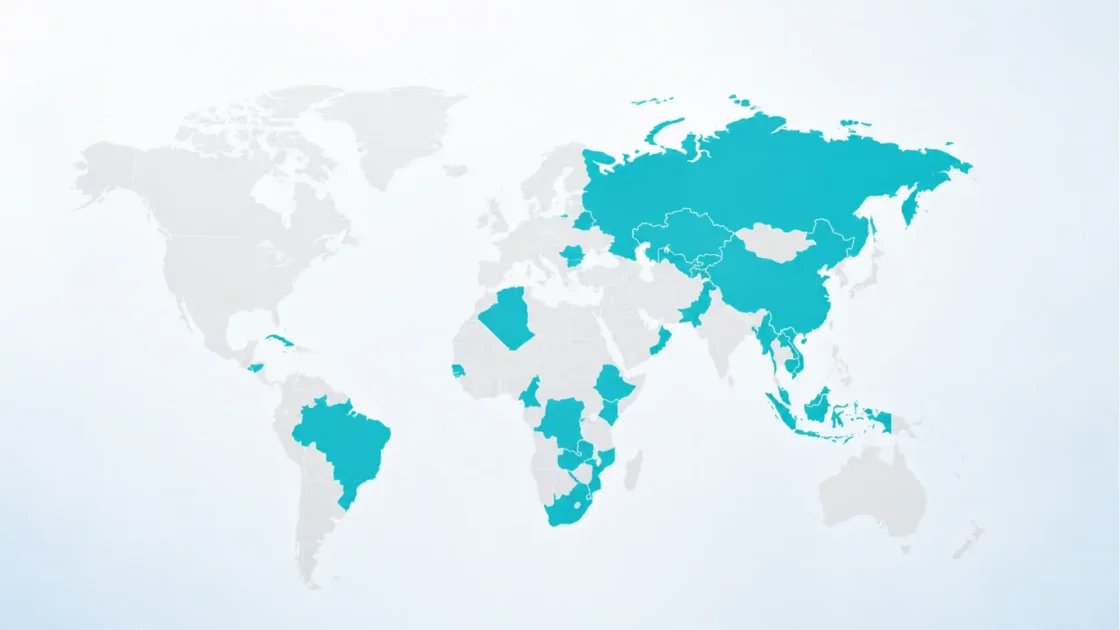
Model quality matters. Access matters just as much. OpenAI’s release notes say ChatGPT Images 2.0 is available on all ChatGPT plans. Sora access has been far more fragmented. The current Sora app and Sora 2 supported-country page lists a much narrower set of countries and regions, and that list does not include the EU or UK. By contrast, OpenAI’s Sora 1 support page says the older web experience had broader support, including the EU and UK, but that page also says it only applies to Sora 1, not the app or Sora 2.
That matters a lot for the real user experience. If you are in Europe, you may be fully inside the ChatGPT ecosystem while Sora 2 remains regionally constrained or already heading toward discontinuation. OpenAI’s own Sora app help page also documented a staggered rollout, with US and Canada at launch and later expansion, plus separate availability notes for Sora 2 Pro on the web. A product cannot dominate daily creative work if huge parts of the audience cannot reliably reach it.
ChatGPT Images 2.0 benefits from the opposite dynamic. It ships inside a product with established global habit, established billing, established identity, and established workflow. That is a colossal distribution advantage. The Verge and Wired both stressed the broad availability of the new model, while OpenAI’s own release notes removed any ambiguity. Reach is part of quality in product terms. The best tool locked behind regional friction and an uncertain roadmap often loses to the slightly less exotic tool that is already on the desk.
So yes, access decided part of this race before the race was visible. ChatGPT Images 2.0 feels stronger partly because more people can actually use it, more often, inside a product they were already paying for or already opening daily. That is not a side issue. It is one of the main reasons public perception shifted so quickly.
Sora’s product story never settled
Research demos can survive ambiguity. Consumer products usually cannot. Sora’s public arc moved from world-simulation research showcase to web product, then to social app language, then to Sora 2 with audio and stronger physics, then to sunset notices and discontinuation timelines. The technology story was ambitious. The product story kept changing shape.
You can see the instability inside OpenAI’s own documentation. Sora 1 sunset pages talk about older infrastructure and a move to a single updated experience. The app help pages discuss invite-only starts, regional expansion, characters, image-to-video restrictions with real people at launch, and separate access rules for Sora 2 Pro. Release notes describe rolling out extensions and styles. Then the discontinuation page lands. Each piece makes sense on its own. Put together, they tell a story of a product still trying to settle on a stable identity while the market was already demanding one.
ChatGPT Images 2.0 benefits from a much simpler story. It is an image tool inside ChatGPT. It generates and edits. It handles text better. It can think before it renders. It can use files and, in certain modes, web data. It is on all plans. That kind of clarity is rare in AI products, and it is powerful. Users do not need to decode where the product fits. They already know.
This is part of why Sora began to feel weaker even before every formal shutdown date arrived. Products often die in public perception before they die in infrastructure. Once users start feeling that a tool is peripheral, experimental, region-fragmented, or vulnerable to strategic deprioritization, trust thins out. ChatGPT Images 2.0 arrived at exactly the moment Sora most needed stable confidence. It got the opposite.
Safety and provenance moved to the center
The stronger a generative model gets, the more safety becomes part of product quality rather than a separate policy appendix. OpenAI’s ChatGPT Images 2.0 system card says the model is a major leap in realism, world knowledge, instruction following, and dense text generation, and it also says the company added safeguards because these capabilities increase the risk of convincing deepfakes and other harmful imagery. The system card describes upstream refusals, downstream blocking, safety classifiers for both text and images, and a safety-focused multimodal monitor over inputs and outputs.
Image provenance sits inside that same discussion. OpenAI says ChatGPT Images 2.0 continues its commitment to C2PA metadata and adds an imperceptible watermark plus internal tooling to help assess whether an image came from its products. The help article on C2PA in ChatGPT Images also says the metadata can be removed accidentally or intentionally, including by social platforms or screenshots. That honesty matters. OpenAI is not claiming provenance is solved. It is saying provenance is worth building even with obvious limits.
Sora’s safety story had similar ingredients, but with more obvious pressure points because video is harder. OpenAI’s Sora safety pages say videos carry visible and invisible provenance signals, include C2PA metadata, and in many cases carry visible watermarks. They also describe stricter controls around real-person likeness, consent-based characters, and extra restrictions for videos involving people or minors. These are sensible measures. They also remind you that video generation carries a heavier misuse burden than still-image generation.
That burden does not prove why Sora ended. It does help explain why ChatGPT Images 2.0 had a cleaner path to mainstream usefulness. Still images are already risky. Video with sound, motion, and identity control is riskier, more computationally expensive, and tougher to govern at scale. A product that sits in the safer, simpler part of the creative stack has a better shot at broad adoption. That is one more reason ChatGPT Images 2.0 looks stronger right now.
Creative work rewards control over spectacle
Creative professionals do not keep tools around because the demo reel looked magical. They keep tools around because the tool behaves. Control beats spectacle after the first week. That applies to composition control, brand preservation, detail retention, text accuracy, revision reliability, and the ability to move from source materials to variations without destroying the useful parts. OpenAI’s API launch for its newer image model leaned directly into that logic: custom guidelines, world knowledge, accurate text rendering, and applications across ecommerce, education, enterprise software, and creative tools.
That is also why the academic and work-oriented OpenAI materials matter more than they first appear to. The Academy page frames ChatGPT image creation as something that turns plain-language instructions into polished visuals, speeds iteration, and helps non-designers participate in visual work. The product help pages frame images as a managed feature inside ChatGPT, not a detached lab experiment. The company is selling reliability, not only wonder.
Sora inspired wonder. It still deserves credit for that. The public launch and later Sora 2 materials are full of cinematic possibility: widescreen, vertical, square, audio, dialogue, scene extension, style systems, characters, remixing. Those are big ideas. Yet creative teams under deadline often need the smaller win: the asset that fits the brief, survives feedback, and can be revised without starting from zero. ChatGPT Images 2.0 is closer to that mode of work.
This is where public sentiment often outruns benchmark talk. People say “much better” when a tool stops wasting their time. ChatGPT Images 2.0 feels better because it produces fewer dead-end branches. The improvement is aesthetic, yes. It is also procedural. You get from idea to usable result with less friction, less collapse, and less babysitting. That is the sort of progress users reward immediately.
Video economics punish half-formed consumer products
No official source says “Sora failed because video is too expensive and too hard,” and it would be sloppy to claim that as settled fact. Still, it is reasonable to infer that video generation carries harsher economics than still-image generation. Reuters reported that Sora’s cancellation came amid rising pressure around enterprise and coding priorities, while CBS quoted OpenAI pointing to focus and compute demand. Pair that with OpenAI’s own description of Sora as a product built around video, audio, motion control, and more physically accurate simulation, and the economic burden becomes easier to see.
Still images already demand serious infrastructure, yet they produce usable assets faster, require less user patience, and fit many more routine tasks. Video requires longer wait times, higher expectations, heavier moderation, more room for continuity errors, and a much narrower set of real everyday use cases. A dazzling video generator can still lose a product race if people only open it occasionally. An image tool embedded in ChatGPT can win by being good enough for many tasks many times a day.
This helps explain why the public mood can flip suddenly. A year earlier, Sora looked like the more futuristic branch of OpenAI’s creative stack. By April 2026, the more futuristic branch is the one on a sunset calendar, while the quieter branch is the one being rolled out across all ChatGPT plans with better text, better edits, thinking support, and deeper workflow integration. Products do not live on ambition alone. They live on repeatable demand.
Seen that way, ChatGPT Images 2.0 did not merely “beat” Sora at aesthetics. It landed in the economically friendlier lane at exactly the right moment and then improved enough to make that lane feel exciting. That combination is powerful. A practical product that suddenly becomes impressive is often tougher to beat than an impressive product trying to become practical.
The claim needs one boundary
A good editorial argument gets stronger when it admits its limits. The limit here is straightforward. ChatGPT Images 2.0 is not a replacement for Sora’s core motion strengths. If you need text-to-video, image-to-video, short cinematic sequences, synchronized sound, or motion-centric experimentation, Sora 2 was addressing a different and tougher class of problems. Its public materials and system card make that clear.
So the right claim is narrower and more accurate: for still images, editable assets, text-heavy visuals, and image work inside a daily conversational workflow, ChatGPT Images 2.0 is the better OpenAI product right now. That is where the tools diverged most sharply, and OpenAI’s own documentation confirms the split by removing image creation from Sora 1 and directing users to ChatGPT instead.
This boundary also makes the user’s original prompt more defensible. The phrase “much better” sounds too broad if you read it as a total verdict on all creative media generation. Read it as a verdict on the product most people should choose for image work, and it becomes a strong and supportable claim. ChatGPT Images 2.0 is easier to access, easier to use, easier to revise, and better aligned with the practical asset types people generate every day.
A narrower claim is often the sharper one. It prevents easy objections and keeps the focus where the product story actually moved. Sora’s most interesting ideas belonged to motion. The image crown inside OpenAI’s consumer ecosystem now belongs to ChatGPT.
OpenAI’s next lesson is hard to miss
The larger lesson here has less to do with art and more to do with product design. OpenAI built an astonishing amount of creative technology across images, video, and multimodal systems. Yet the product that now looks strongest is the one that sits closest to user intent, not the one that looked most futuristic in a demo. ChatGPT Images 2.0 works because it is embedded where people already think, brief, revise, and decide.
Sora remains historically important. It pushed public imagination, helped define the expectations around AI video, and showed how much harder motion is than still imagery. OpenAI’s technical materials on world simulation and Sora’s system design still matter because they point toward deeper ambitions in robotics, simulation, and multimodal reasoning. The end of Sora as a consumer product does not erase that contribution.
Still, consumer history is not written by ambition alone. It is written by the tool people open again tomorrow. As of April 22, 2026, ChatGPT Images 2.0 looks like the clearer winner for still-image creation because it turned capability into habit. Better text, better edits, stronger instruction following, broader availability, thinking support, and tight workflow integration added up to something Sora never quite became: a creative tool that feels central rather than adjacent.
That is why the rough prompt at the top contains a truth worth keeping. Clean up the grammar, tighten the claim, add the dates, and the final judgment is simple. ChatGPT Images 2.0 is much better than Sora for the kind of image work most people actually need, and OpenAI’s own product decisions now say the same thing.
Frequently asked questions
No. Sora 1 was removed in the United States on March 13, 2026. OpenAI says the Sora web and app experiences will be discontinued on April 26, 2026, and the Sora API on September 24, 2026.
OpenAI says that image generation will no longer be available inside Sora once Sora 1 is removed, and it directs users to create images in ChatGPT instead.
OpenAI’s release notes say ChatGPT Images 2.0 is available on all ChatGPT plans. The separate images with thinking feature is available on paid plans when using Thinking and Pro models.
OpenAI highlights stronger instruction following, denser text rendering, better world knowledge, more complex visual detail, and a thinking layer that can plan and refine outputs before rendering.
Because readable text inside images has been a long-standing weakness for image models. OpenAI made text rendering a central claim in its 2025 and 2026 releases, and outlets like Wired, The Verge, and TechCrunch singled it out as one of the biggest visible improvements.
It is OpenAI’s mode where the system can plan and refine image outputs before generating them. The system card says this can include reasoning, tool use, live web search integration, and multi-image generation from a single prompt.
It can do both. OpenAI’s help pages say ChatGPT Images lets users create new images and edit existing ones, and the December 2025 release emphasized more precise edits that preserve important details.
OpenAI’s system card says the thinking mode can integrate live web search data, and outside coverage from The Verge and Wired reported that the new model can use current information and files before generating visuals.
No. TechCrunch reported that the model’s base knowledge still cuts off in December 2025, so recent factual prompts may still depend on whether web-backed thinking is available and sufficient for the task.
Not really. OpenAI introduced Sora as a video generation model focused on motion and world simulation, and later product materials stressed video length, aspect ratios, remixing, physics, synchronized audio, and dialogue.
OpenAI described Sora 2 as better at physics, realism, controllability, synchronized dialogue, and sound effects than earlier systems. It also supported video-centric creation in the Sora app and on the web where available.
No. OpenAI’s current supported-countries page for the Sora app and Sora 2 lists a narrower set of countries and regions, which does not include the EU or UK. The broader EU/UK support applies to the older Sora 1 web experience, not to the Sora app or Sora 2.
Because a tool that is broadly available inside ChatGPT will feel stronger to more people than a region-limited tool on a discontinuation timeline. Product reach shapes user judgment almost as much as raw model quality.
Yes. OpenAI says ChatGPT image outputs continue to use C2PA metadata, and the ChatGPT Images 2.0 system card says OpenAI also uses an imperceptible watermark and internal tooling for provenance checks.
No. OpenAI’s help article says C2PA metadata can be removed, whether by screenshots, re-uploads, or platform processing. It helps provenance, but it is not a complete answer.
OpenAI’s own materials suggest video carries a heavier moderation burden. Sora safety pages discuss visible and invisible provenance, watermarks, consent-based characters, and tighter guardrails around real-person imagery. The ChatGPT Images 2.0 system card also describes serious safety measures, but video with motion and audio creates a broader misuse surface.
No. For still images, edits, posters, infographics, comics, and text-heavy visuals, ChatGPT Images 2.0 is the better OpenAI product right now. For short AI video and motion-centric creation, Sora was built for a different job.
Because it combined clear availability, better text, better edits, stronger instruction following, and workflow integration inside ChatGPT at the same moment Sora entered a discontinuation phase. That is the kind of product shift people notice fast.
Author:
Jan Bielik
CEO & Founder of Webiano Digital & Marketing Agency

This article is an original analysis supported by the sources cited below
Introducing ChatGPT Images 2.0
OpenAI’s launch post for ChatGPT Images 2.0, with examples showing dense text, multilingual output, comics, infographics, and editorial layouts.
ChatGPT — Release Notes
OpenAI Help Center release notes confirming plan availability for ChatGPT Images 2.0 and the rollout of images with thinking.
ChatGPT Images 2.0 System Card
OpenAI’s system card covering the model’s capabilities, thinking mode, safety stack, and provenance tooling.
Images in ChatGPT
Help documentation on creating, editing, saving, and managing images inside ChatGPT.
Creating images in ChatGPT
OpenAI Help Center guide describing how users generate images directly inside ChatGPT.
Introducing 4o Image Generation
OpenAI’s March 2025 release explaining advances in text rendering, prompt fidelity, and chat-context-aware image generation.
Introducing our latest image generation model in the API
OpenAI’s API announcement for its newer image model, with business and product use cases across design, marketing, education, and ecommerce.
The new ChatGPT Images is here
OpenAI’s December 2025 product release describing faster generation, more precise edits, and stronger instruction following.
C2PA in ChatGPT Images
OpenAI’s explanation of C2PA metadata, its limits, and how users can verify provenance.
Sora is here
OpenAI’s public launch post for Sora as a consumer video product with 1080p, short clips, and remix-style workflows.
Sora 2 is here
OpenAI’s release post describing Sora 2 as a stronger video and audio model with better realism, physics, and controllability.
Sora – Release Notes
OpenAI’s release notes documenting newer Sora features such as extensions and styles.
What to know about the Sora discontinuation
OpenAI Help Center notice with the April 26, 2026 web/app discontinuation date and September 24, 2026 API end date.
Sora 1 Sunset – FAQ
OpenAI’s FAQ confirming Sora 1’s removal in the US, the end of image generation inside Sora 1, and the shift toward ChatGPT for images.
Sora App and Sora 2 – Supported Countries
OpenAI’s current regional availability list for the Sora app and Sora 2.
Sora – Supported Countries
OpenAI’s support page clarifying that the broader country coverage applies to Sora 1 on the web, not the Sora app or Sora 2.
Getting started with the Sora app
OpenAI’s guide to Sora app onboarding, rollout geography, Sora 2 Pro access, audio generation, and restrictions around real-person inputs.
Launching Sora responsibly
OpenAI’s overview of Sora’s safety architecture, watermarking, C2PA metadata, and character-based likeness controls.
Creating with Sora safely
OpenAI’s newer safety page on Sora, with stronger detail on provenance and real-person image-to-video guardrails.
Sora System Card
OpenAI’s system documentation for the public Sora product and its video-generation design.
Video generation models as world simulators
OpenAI’s research framing for Sora as a model aimed at understanding and simulating the physical world in motion.
OpenAI’s updated image generator can now pull information from the web
The Verge’s report on ChatGPT Images 2.0, highlighting web-backed thinking, multiple consistent images, 2K support, and broader use cases.
OpenAI Beefs Up ChatGPT’s Image Generation Model
Wired’s coverage of ChatGPT Images 2.0 and its gains in text rendering, multilingual output, and research-aware visual generation.
ChatGPT’s new Images 2.0 model is surprisingly good at generating text
TechCrunch’s piece focusing on dense text rendering and the model’s remaining knowledge limits.
OpenAI set to discontinue Sora video platform and app, WSJ reports
Reuters reporting on Sora’s cancellation in the context of OpenAI’s broader pressure around enterprise, coding, and compute priorities.
OpenAI pulls the plug on its Sora AI video app
CBS News coverage quoting OpenAI on discontinuing Sora while the research team continues work on world simulation.
Creating images
OpenAI Academy guidance framing ChatGPT image creation as a fast, practical workflow for polished visuals at work.
Image generation
OpenAI Developers’ learning page on image generation, with links to model guides and related creative-production materials.
| Citing this article? Brief excerpts are welcome. Please credit Webiano.digital, name the author where stated, and include a link to https://webiano.digital and to this original article. Full or substantial republication requires prior written permission. Read our Copyright and Content Use Policy. |
This article was prepared with the assistance of artificial intelligence tools. The content underwent expert human review, and Webiano Digital & Marketing Agency assumes editorial responsibility for its final version and publication.