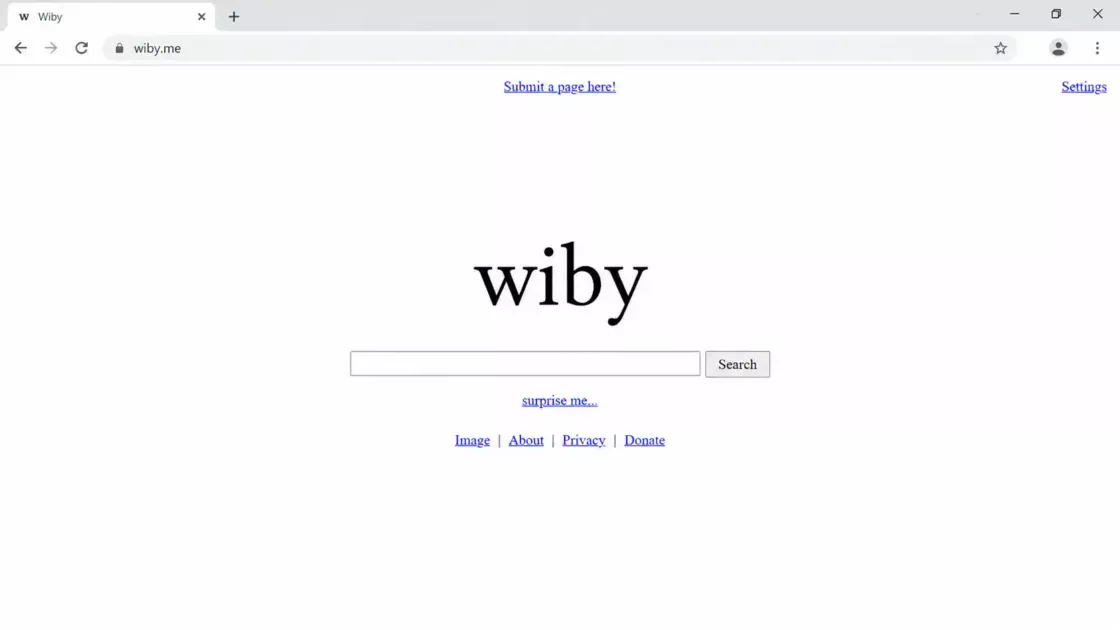
GeoGuessr starts with a premise so simple it almost sounds disposable: drop someone into a Street View panorama, make them guess where they are, award points for accuracy. That should have been a neat little browser toy. Instead, it became one of the web’s strangest success stories — part geography game, part pattern-recognition sport, part spectator entertainment, part accidental travel machine. GeoGuessr’s own materials now describe a product that lives across web, iOS, Android, and Steam, with more than 100 million players in 140-plus countries and a competitive scene large enough to sustain a world championship. That scale matters, but it is not the most interesting thing about the site. The interesting thing is how much tension it creates out of ordinary roads, signs, poles, dirt, trees, sky, and vibes.
Table of Contents
A geography game that behaves like a web native
What makes GeoGuessr worth opening is not just the game loop. It is the fact that the loop feels native to the internet in the best old sense: you click into it out of curiosity, then realize twenty minutes later that you have been staring at roundabouts in rural Slovenia and arguing with yourself about whether a road shoulder “feels” more like Uruguay or South Africa. The official description is still disarmingly plain. You are placed somewhere in the world, you look for clues, and you pin your guess on a world map. The closer you land, the more you score.
That simplicity hides a lot. On the official World map page, GeoGuessr already offers different ways to play the same location set: Moving, No Move, and NMPZ — shorthand for no move, pan, or zoom. That one design choice tells you a lot about the site. This is not just a geography quiz. It is a game about attention, restraint, and the strange gap between what your eyes notice and what your brain knows what to do with. The same place can feel leisurely in Moving mode, stressful in No Move, and almost absurd in NMPZ, where a single frame can decide everything.
The New Yorker once described the appeal of GeoGuessr as something like a mix of treasure hunt and crossword. That still feels right. It captures the way the site turns static information into deduction. You are not just “learning geography.” You are learning to read the world as a pile of tiny signals: road paint, utility poles, bollards, fonts, vegetation, shadows, car blur, mountain shape, curb style, driving side, signposts, building setbacks. It is knowledge, but it is also rhythm and instinct.
It makes ordinary infrastructure feel dramatic
A lot of websites promise discovery and then hand you a search box, a filter menu, or a feed. GeoGuessr does something cleaner. It throws you into uncertainty and lets the environment do the talking. That sounds small until you spend a few rounds inside it. Then you start noticing how strange our built world really is. One country’s guardrails look wrong in another country. One camera generation sits lower or higher. One patch of red dirt narrows the options. One church tower, one language fragment, one bus stop design, one battered Google car meta clue can collapse the whole map.
That is why GeoGuessr works as both a game and a spectator format. Watching someone good at it is half detective story, half magic trick. The old stars of the scene, like GeoWizard, made the game watchable because they explained the reasoning. The newer elite style, as described in The New Yorker, pushed the game toward technical mastery: memorizing camera generations, road furniture, plate systems, or odd visual tells left by Street View equipment. Then creators like Rainbolt helped push it into a broader internet culture, while GeoGuessr itself leaned into competition hard enough to build official championship events and talent lineups around it.
That shift matters because it says something useful about the modern web. GeoGuessr is a rare site that turns passive map imagery into an active skill. It takes one of the most familiar internet interfaces on earth and asks more of you than scrolling. You have to commit. You have to infer. You have to be wrong in public, sometimes spectacularly. That produces a different kind of engagement than the endless safe polish of most consumer sites.
The product has grown well beyond the original game
If you have not checked GeoGuessr in years, the current version is much more than the old “guess five locations” browser curiosity. The official site pushes three big use cases right on the homepage: explore solo, play with friends, and compete against others. The Terms page fills in the product shape behind that language: web and mobile apps, social features, profiles, messaging, leaderboards, replays, quizzes, and both a limited free tier and paid Pro plans. The Pro page adds another layer with private parties, custom maps and quizzes, unlimited play, public play-along games, map collaboration, and Steam access on higher plans.
That expansion could have made the product feel bloated. Instead, most of it makes sense because it grows from the same core urge: people do not just want to guess places, they want to compare how they guessed them. GeoGuessr is social in the right way. The act of explanation is part of the fun. Why did you pick Argentina? What made that look like Japan? Why did that “obviously” feel Baltic and turn out to be Chile? A good GeoGuessr round almost begs for commentary. The site seems to understand that.
The community layer is especially telling. GeoGuessr has an official community area that features third-party extensions and tools for co-op play, map filtering, map making, procedural location generation, stream integration, and even country-based radio widgets. That is a strong sign that the site is no longer just a single game. It has become a small ecosystem of behaviors, rituals, and side projects built around looking at the world more closely.
What stands out at a glance
| What you open GeoGuessr for | What it does unusually well | Where it can annoy you |
|---|---|---|
| Solo play | Instant hook, fast feedback, strong replay loop | Free play is limited |
| Playing with friends | Private parties and challenge links are easy to grasp | Best features sit behind Pro |
| Competitive play | Duels, leaderboards, events, championship culture | Skill gap can feel brutal |
| Creative use | Custom maps, quizzes, collaboration, extensions | Quality varies across maps and coverage |
| Geography curiosity | Makes you notice the physical world better | Can drift into niche meta memorization |
That mix is why the site feels bigger than a normal browser game. You can treat it as a casual time-killer, a teaching aid, a party tool, a streaming format, a solo obsession, or a serious competitive ladder. Few sites hold that many identities without falling apart. GeoGuessr mostly keeps them connected because each version still depends on the same elegant act: look, infer, place the pin.
The social layer is what keeps it alive
Daily rituals help a lot. GeoGuessr has a Daily Challenge with streaks, highscores, and a familiar “one more try tomorrow” pull. The public leaderboard turns a private guessing session into something communal. The championship pages take that impulse further by framing top-level play as a real spectator event, complete with schedules, participants, regions, and live progression toward the 2026 finals. Even if you never become competitive, the existence of that layer changes how the site feels. It gives ordinary rounds a sense of laddered seriousness.
The company’s own career page makes clear that GeoGuessr now sees itself as a live esport as well as a web and app product. That may sound ambitious for a geography game, but the logic is solid. Good GeoGuessr players are readable on camera because they narrate pattern recognition in real time. Spectators do not need deep prior knowledge to understand a brilliant call or a disastrous miss. The tension is visible. The clue is on the screen. The guess lands. The reveal hurts or it feels glorious. That is good internet theater.
There is also a softer reason the site endures. GeoGuessr restores some scale to the internet. A lot of online life now feels flattened into the same few platforms, the same recommendations, the same aesthetics, the same algorithmic grooves. GeoGuessr quietly fights that by reminding you how specific places still are. The world is not generic. Curbs are not generic. Rural bus shelters are not generic. Side roads in Botswana are not generic. You open the site and the planet becomes weirdly textured again.
The limits are real and part of the experience
GeoGuessr is not flawless, and some of its friction is structural. The Terms page is blunt about the biggest dependency: the service relies on Google Maps and Google Street View. That means the play experience inherits all the unevenness of real-world coverage. Some places are richly documented, some are sparse, some are absent, and some look outdated or visually strange because of the source imagery. The world inside GeoGuessr is huge, but it is not neutral and it is not complete.
There is another tradeoff. At its best, GeoGuessr rewards close observation. At its most obsessive, it can drift into memorizing camera quirks, coverage artifacts, and niche meta tells that feel more like database knowledge than geographical intuition. That does not ruin the game; it just changes the flavor. Some players love that technical edge. Others prefer the older, more vibe-driven style. GeoGuessr is broad enough to contain both, though the tension between them is part of the culture.
The business model will also matter to some readers. GeoGuessr officially offers a limited free version and paid Pro subscriptions, with many of the stronger social, creator, and unlimited-play features sitting inside the paid tiers. That is reasonable for a live service product with this many layers, but it does mean the full version is not the same as the nostalgic free browser toy many people remember.
Still, the site earns a lot of goodwill because the core idea remains sharp. It did not lose itself under feature creep. You can still feel the original trick working underneath all the product layers: the web gives you a fragment of the world, and your job is to make sense of it. That is a very internet pleasure, and GeoGuessr still delivers it better than almost anything else.
Quick FAQ for new players
It is a geography game that drops you into a Street View panorama and asks you to guess where you are on a world map. Your score rises the closer your pin lands to the actual location.
No. GeoGuessr officially offers a limited free version called GeoGuessr Free, alongside paid Pro plans with broader access and more features.
Yes. GeoGuessr says it is available on iOS and Android, and the same account works in the app as well.
Yes. GeoGuessr Steam Edition was released on Steam on May 8, 2025, and the Pro page also notes Steam access as part of higher plans.
Yes. Private parties, challenge links, and hosted sessions are built into the product, and GeoGuessr’s organizations page explains that Pro users can invite others to join games.
It is GeoGuessr’s recurring daily mode with highscores and streak-style progression, designed to keep players coming back for one shared round set each day.
Because high-level play mixes geographical knowledge, visual memory, and learned pattern recognition. Top players study things like road markings, poles, signage, vegetation, camera quirks, and regional infrastructure.
Not in a stiff classroom sense, but it does train attention. Play enough rounds and you start noticing how countries differ in design, language, terrain, transport cues, and built environment. GeoGuessr also points players toward Seterra, a quiz platform with hundreds of geography quizzes, which fits that broader learning angle.
Author:
Jan Bielik
CEO & Founder of Webiano Digital & Marketing Agency

This article is an original analysis supported by the sources cited below
GeoGuessr homepage
Official homepage covering the core game, mobile availability, FAQ, parties, competition, and current positioning.
GeoGuessr Terms of Service
Official terms page explaining how the game works, the free and paid versions, social features, and the Google Maps dependency.
GeoGuessr World map
Official map page showing the flagship World map, its scale, and the main play styles such as Moving, No Move, and NMPZ.
GeoGuessr Pro membership
Official pricing and features page covering subscriptions, unlimited play, private parties, creator tools, Steam access, and map collaboration.
GeoGuessr community extensions
Official community page highlighting the tool ecosystem around map making, co-op play, stream integration, and add-ons.
GeoGuessr career page
Official company page with current scale, mission, staff size, and the claim of 100 million players across 140-plus countries.
GeoGuessr World Championship 2026
Official competition page showing the current championship structure, dates, participants, and GeoGuessr’s esports push.
The Charming Bloke Who Dominates GeoGuessr
A strong cultural profile that captures how GeoGuessr became watchable, competitive, and strangely compelling far beyond geography nerd circles.
| Citing this article? Brief excerpts are welcome. Please credit Webiano.digital, name the author where stated, and include a link to https://webiano.digital and to this original article. Full or substantial republication requires prior written permission. Read our Copyright and Content Use Policy. |
This article was prepared with the assistance of artificial intelligence tools. The content underwent expert human review, and Webiano Digital & Marketing Agency assumes editorial responsibility for its final version and publication.