Nuance Labs says its Emma avatar answers when a person would, and the figure comes from the company’s own recordings. The firmer story sits in the fine print: English only, adults only, not offered in five regions, and no published scores for the three safety tests that a face built to nod, smile and disagree with you needs most.
Table of Contents
Most AI avatars still freeze while you talk, then answer after a lag. According to one startup’s chief executive, that happens because they are stitched together from separate models for speech to text, language, text to speech and facial animation. On 9 November 2026 a Seattle startup published a number aimed at that flaw. It says one avatar’s reply timing overlaps the original human speaker’s 89% of the time, against 35% for the closest rival, across 1,785 questions.
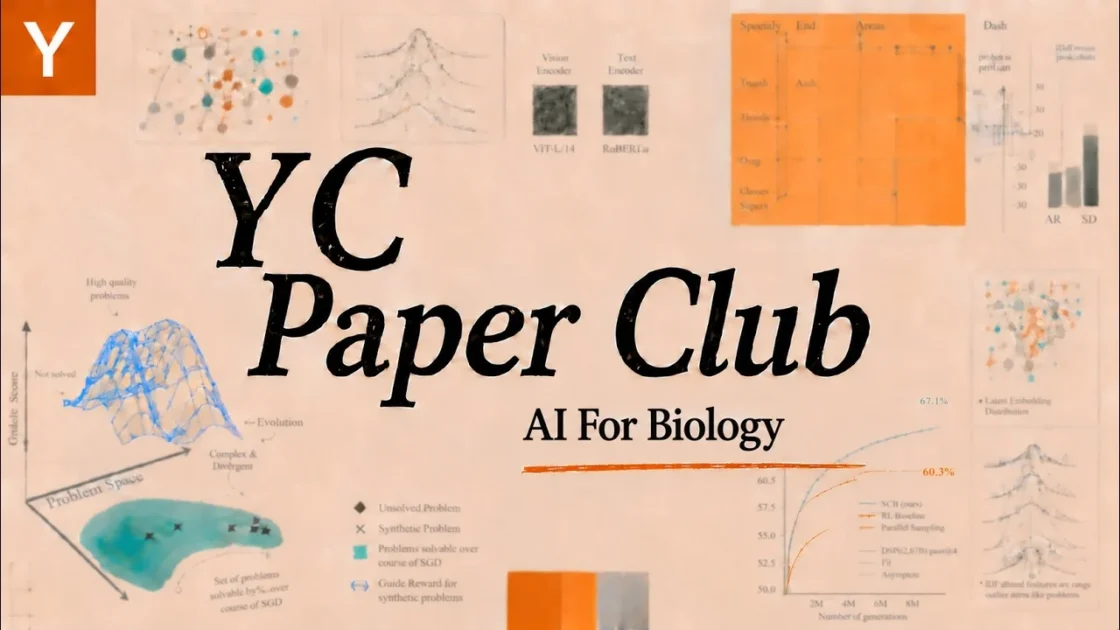
The avatar is Emma, the persona Nuance Labs presented in a YouTube video and a research post that day, and she is the best-known example so far of a claim that, by one outside analysis, nobody beyond the company has run. The video, the post and the product all come from Nuance Labs, so every figure below is the maker’s own unless another source is named. The test is specific and worth reading closely, yet the fenced-in launch around it says more about where face-to-face AI can operate today than the timing chart does.
Reply timing as the headline number
Nuance Labs launched Emma on 9 November 2026 on top of Nuplex 1.0, a model that listens and speaks at the same moment instead of taking turns. She answers on video with a face that reacts while the user is still talking. The company says no existing benchmark measures how natural a face-to-face exchange feels, so it built its own: 1,785 questions taken from its own recordings of real conversations. For each question it compared when a system began replying with when the human in the original recording answered.
On that measure Nuplex overlapped the human’s timing 89% of the time, and the next-closest system reached 35%. The post is open about the chart’s limits. GPT-Live and Gemini Live were reached through public APIs, so their timings include network delay that Nuplex’s do not. The company also writes that benchmarks for audiovisual full-duplex systems do not yet match what users experience, which is a polite way of saying its own chart is a proxy.
A test written and scored by the seller
Every input to the 89% comes from Nuance Labs: the question set, the metric, the comparison method and the choice of rivals. An analysis by the model gateway OrcaRouter notes that no outside party has repeated the test and that the field has no shared arena, so a lab can publish its own question set without being contradicted. The post’s text does not say which system scored 35%, and the coverage reviewed found no price list or model card.
The metric also measures less than it sounds. Overlap with a human’s reply time says Emma starts talking when a person would in those conversations. It says nothing about whether she answers well, and the post admits she can jump in mid-thought, wait a beat too long or miss a cue, with long pauses inside a sentence the hardest case. Good timing is a property of delivery, not of judgment, and a buyer paying for the second gets evidence only for the first.
One actress’s face and a long list of failures
Emma’s face and voice are licensed from a real actress who worked with the lab to record how she listens, reacts and speaks, according to Nuance Labs. The company cites a 2021 Nature Communications study to explain the choice: when professional actors portrayed emotions, their faces varied widely, and only fear, happiness and surprise were portrayed with moderate reliability and specificity. That supports building one specific character instead of an averaged face. But the study analysed 604 photographs, and its authors say later work should use moving images, so it cannot show that Emma’s mannerisms read as natural in motion.
The same post lists what still breaks. She is English only. Background voices, a television or a weak microphone degrade her turn-taking. With the camera on she misreads scenes, her lip sync and gaze sometimes slip, her expression can fall back to neutral, and she can make confident factual mistakes because a language model supplies her reasoning. The first people who tried her called the result amazing and a little unsettling, in the company’s words.
Nods and smiles carry weight with listeners
A face that nods and smiles while someone talks is doing persuasion work. A 2024 Scientific Reports study had 823 observers rate 159 people shown in AI-generated videos, with and without gazing, nodding and smiling, and found that the more expressive the face, the more favourably it was judged. The setting was a job interview, which differs from a sales call, yet the mechanism is the one Nuance sells.
Nuance says Emma has opinions and will disagree with users, because most assistants flatter them. It cites a 2023 paper showing that five AI assistants consistently gave sycophantic answers across four free-form tasks, and that responses matching a user’s views were more likely to be preferred. The post adds that Emma was tested against published benchmarks for sycophancy, manipulation and emotional reliance. It names none of them and gives no scores for any of the three. Until numbers appear, “tested” is a statement the reader cannot verify.
Five regions where it does not run
Emma and the beta API are offered in the United States except Colorado, Connecticut, Illinois and Texas, in the EU, in the UK and in Canada except Quebec. The post gives no reason. The list overlaps with places that regulate biometrics or automated decisions. A legal guide from Sonomos says Illinois requires written consent before collecting face geometry or voiceprints, Texas requires consent before capturing them for commercial purposes with enforcement left to its attorney general, and Colorado rewrote its AI law in May 2026 with most duties applying to decisions from 1 January 2027. That guide does not cover Quebec. Whether any of these rules drove the exclusions is an inference; Nuance has not said.
The product is also limited to adults, and the post keeps healthcare and anything involving under-18s, education included, out of the beta. In the EU, the Commission says the transparency duties of Article 50 of the AI Act have applied since 2 August 2026, so a persona sold there works under those rules from day one. Nuance’s design answers the disclosure question directly: Emma never claims to be human, prompts that pose a persona as a real person or company are refused, and video served through the API carries a visible watermark.
Fifty million dollars and a pitch that included classrooms
Nuance Labs announced a $50 million Series A on 14 September 2026, led by Lightspeed Venture Partners with Accel, South Park Commons, Nvidia and Define Ventures, according to SiliconANGLE. A later summary by HuggingNews puts total funding above $60 million. In the SiliconANGLE report, chief executive Fangchang Ma said a single model taking audio and video in and returning audio and video out removes the hand-offs that make other avatars freeze. He named sales, customer service, coaching, professional training and education as targets, and the company had no product then.
Two months later the beta fences off the very ground that pitch covered. Healthcare and under-18 work are closed, with education named inside that category, and the post says nothing either way about adult learners such as the language students Ma described. The gap between the September pitch and the November fences shows how much of the original market is reachable today, and the company invites enterprise enquiries from builders working toward higher standards.
Questions to settle before building on it
For a buyer, the verified part is narrow: a free demo that needs no account, an API in beta, one language and a clear list of refusals. The unverified part is wider. Ask for the timing test to be rerun on your own call recordings, because 89% on the lab’s conversations says little about your callers’ accents, headsets and background noise. Ask for the scores behind “tested”, and for a price, which the lab has not published. Check which of your users live in the excluded regions, since the product will not reach them. The beta also serves its own language model, so the reasoning layer is not yet yours to choose.
Four developments would change this reading: an outside group repeating the 1,785-question test with named rivals, published sycophancy and emotional reliance results, more languages, and a clear answer on education. Until then the defensible statement is the narrow one. A fast-reacting face exists, it is free to try, and its best number is its own.
Author:
Jan Bielik
CEO & Founder of Webiano Digital & Marketing Agency
This article is an original analysis supported by the sources cited below
Meet Emma, the First Nuance AI Persona
The upload of 9 November 2026 on Nuance Labs’ channel, whose description names Emma, the Nuplex model and the beta API.
Meet Emma, the First Nuplex Persona
The company’s own post with the 89% against 35% timing claim, the 1,785-question test, the safety limits, the failure list and the availability map.
Guidelines on transparency obligations for providers and deployers of AI systems
The Commission’s statement that the Article 50 transparency duties apply from 2 August 2026.
Professional actors demonstrate variability, not stereotypical expressions, when portraying emotional states in photographs
The peer-reviewed study Nuance cites, with its 604 photographs and its call for moving images in later research.
Towards Understanding Sycophancy in Language Models
The paper behind the claim that assistants flatter users, covering five assistants and four free-form tasks.
A deepfake-based study on facial expressiveness and social outcomes
The 2024 study in which 823 observers judged expressive AI-generated faces more favourably.
Nuance Labs bags $50M in funding to fix the awkwardness of AI avatars
Independent report on the 14 September 2026 Series A, the investors, the chief executive’s account of why avatars freeze and the intended markets.
Nuance Labs Debuts Emma AI Persona That Reacts in Real Time to User Speech
Launch-day summary giving total funding above $60 million and the three former Apple researchers behind the lab.
Nuplex 1.0 and Emma: Nuance Labs’ Full-Duplex Video Persona
Outside analysis noting that no one beyond the company has run the timing test and that no price list or model card was public.
US State AI Privacy Laws in 2026: The Landscape for AI Users
Legal guide on Illinois, Texas and Colorado rules for biometrics and automated decisions, used here to frame the excluded regions.
| Citing this article? Brief excerpts are welcome. Please credit Webiano.digital, name the author where stated, and include a link to https://webiano.digital and to this original article. Full or substantial republication requires prior written permission. Read our Copyright and Content Use Policy. |
This article was prepared with the assistance of artificial intelligence tools. The content underwent expert human review, and Webiano Digital & Marketing Agency assumes editorial responsibility for its final version and publication.