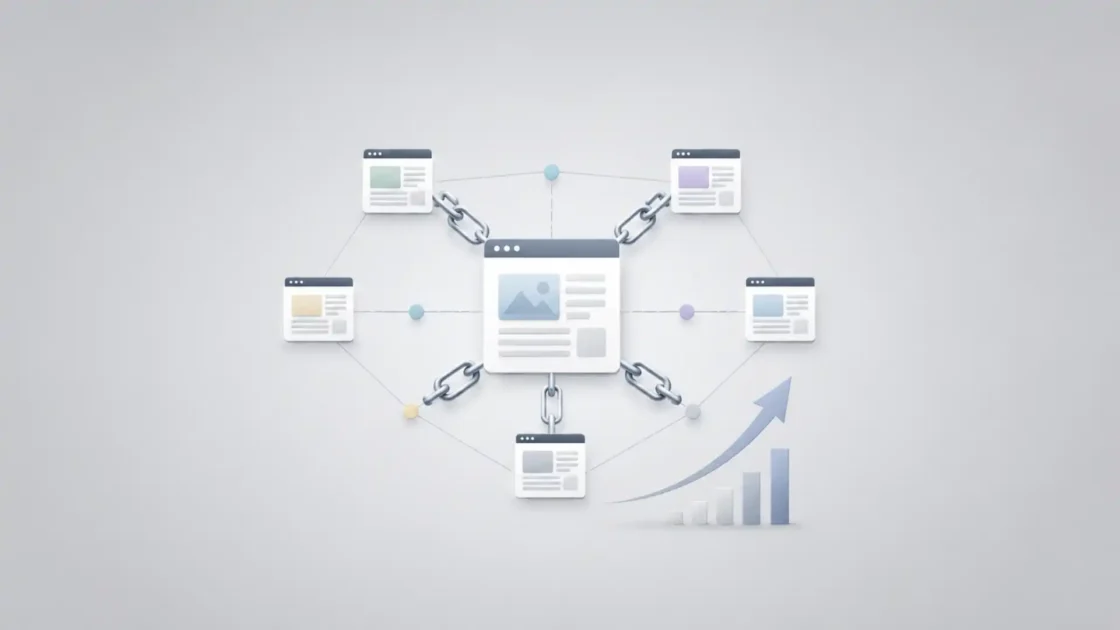
Duda’s new claim is the kind of statistic that invites an eye-roll on first contact. AI-crawled sites drive 320% more human traffic, 270% more form submissions, and 250% more click-to-call events than non-crawled sites. Those numbers sound built for a keynote slide. Still, once you get past the marketing gloss, the study points at something real and increasingly hard to ignore. A local business website is no longer judged only by where it ranks in a list of blue links. It is being judged by whether an AI system can read it, trust it, summarize it, and use it as support for an answer.
Table of Contents
That change matters because the typical small business is not fighting a national content war. It is fighting for visibility inside a narrow local radius where trust, proximity, and clarity decide who gets the call. The U.S. Small Business Administration says 99.9% of U.S. businesses are small, and the local search habit behind those businesses is strong: Google’s own research found that 76% of people who conduct a local search on their phones visit a store within a day, while SOCi says 80% of U.S. consumers search for local businesses weekly and 32% do so daily.
The interesting part of Duda’s study is not the implication that AI has become a magic traffic faucet. It has not. BrightEdge’s research still shows AI search as a fast-growing but small referral channel, accounting for less than 1% of referral traffic in the periods it studied. The stronger reading is narrower and more useful: sites that are legible to AI systems appear to be better prepared for the way search is changing, and that preparedness shows up not only in visits but in high-intent actions. Microsoft Clarity and Adobe have both reported versions of the same pattern, even if their verticals and methodologies differ.
That is why Duda’s release deserves more than a quick repost. It lands at the intersection of several shifts already underway: Google’s AI Overviews are now a standard part of search in many markets; local queries increasingly trigger AI summaries; searchers who get an answer before they click tend to arrive further down the decision path; and Google itself says the same old SEO fundamentals still matter for AI features. The web is moving from “Can you rank?” to “Can you be used in the answer?”
A headline worth taking seriously
The Duda release is short, and that brevity hides its most important idea. Duda analyzed more than 850,000 websites and 69 million AI crawler visits, then tied AI crawler activity to downstream business actions on those sites. It also isolated a handful of site traits that were associated with heavier crawler attention: blogs, local schema, Google Business Profile synchronization, dynamic pages, and total page count. On its face, that reads like a product-friendly validation of long-standing SEO advice. That is precisely why it matters. If AI discoverability is being won by the same sites that already maintain a solid local web presence, then the next phase of search may be less about brand-new tricks and more about brutal consistency.
There is also a useful tension inside the headline number. Duda is not claiming that AI referrals now dominate the web. It is claiming that websites crawled by AI perform far better than those that are not. Crawling and citation are not the same thing. A crawler visiting your site does not guarantee that an AI answer will mention you, quote you, or send you a click. Still, a page that cannot be crawled, parsed, or trusted is very unlikely to become a source in any answer engine. Being crawlable is table stakes. Being citable is the real prize. That is an inference, but it follows directly from how Google describes crawling, indexing, and AI features.
Duda’s public write-up also lands in a broader research trail. Microsoft Clarity reported that AI referrals convert at three times the rate of other channels in its study of publisher traffic. Adobe found that generative AI visitors to retail sites were more engaged, browsing more pages and bouncing less, and later reported stronger conversion performance during the 2025 holiday season. None of these studies are perfectly interchangeable. Different sectors behave differently. Local service businesses are not media sites, and plumbers are not retailers. Even so, the directional agreement is striking: AI-originating or AI-shaped traffic tends to carry stronger intent than ordinary, exploratory search traffic.
The local piece makes Duda’s release more interesting than another generic AEO story. Whitespark’s research found that AI Overviews appeared in 68% of local business-type queries. Google’s own product messaging frames AI Overviews as snapshots with links for deeper exploration, and Google says these features now run in more than 120 countries and territories and 11 languages. So the change is not theoretical and not confined to Silicon Valley demos. It is already part of the way local demand is shaped on the results page.
The local search result is no longer just a list of links
Local SEO used to revolve around a familiar surface: the map pack, the business profile, the homepage, the service page, the review profile, the directory mention. All of that still matters. Google’s local ranking guidance still centers on relevance, distance, and prominence, and it still tells businesses to keep their information complete, accurate, verified, and current. What has changed is not the need for those signals. What has changed is where they are consumed. The search result is now increasingly a synthesis layer.
Google’s documentation on AI features makes this plain. The company says AI Overviews and AI Mode surface relevant links quickly, use query fan-out across subtopics and data sources, and create new chances for more types of sites to appear. Google also says those features rely on the same foundation as normal search: pages must be indexed and eligible to appear in Google Search, and there are no extra technical requirements and no special AI schema needed to participate. That line is easy to miss. It matters because it cuts through a lot of fake novelty in the AEO conversation. You do not need a mysterious “LLM file.” You need a site that already makes sense on the web.
The click pattern is changing, though, and local businesses ignore that at their own risk. Pew Research found that users were less likely to click links when an AI summary appeared in Google search results. In its March 2025 dataset, users clicked a traditional search result in 8% of visits with an AI summary, versus 15% of visits without one. Users also ended their browsing session more often when a summary appeared. That is rough news for sites built on incidental traffic. It is not necessarily bad news for businesses that win the final recommendation. For a local roofer, dentist, mechanic, or law office, a smaller pool of visitors can still be better traffic if it arrives with more intent.
This is where Duda’s framing of “local AEO” has some bite. A local user is no longer limited to typing “plumber near me” and picking from the first three listings. They can ask for the best emergency plumber open now who handles old cast-iron pipes and takes weekend calls, or a hybrid mechanic nearby with strong reviews and transparent pricing, or a family lawyer near downtown who offers evening consultations. Google has already described AI Overviews as useful for more complex, multi-part questions, and Adobe’s survey work found substantial use of AI for recommendation-style tasks such as local food recommendations and travel planning. That same conversational behavior spills directly into local services.
The old local search model rewarded being present. The newer model rewards being present and interpretable. A business profile with stale hours, a vague services page, and no structured business data might still exist in Google’s ecosystem, but it is less likely to become the clean answer to a nuanced prompt. The businesses that get surfaced will usually be the ones that provide clear operating details, explicit service descriptions, proof of local relevance, and enough crawlable text for machines to build confidence around the entity.
What the Duda numbers do and do not prove
Duda’s traffic claim should be read with curiosity and restraint. It is a strong signal, not the final universal law of local search. The public release does not include a full methodology appendix, a breakdown by vertical, a definition of which AI crawlers were counted, or a public regression model that isolates each factor. Without that, nobody should treat the 320% figure as a guaranteed lift waiting to be unlocked by flipping five switches on a website.
Still, the study’s scale gives it weight. A dataset of 850,000 websites and 69 million crawler visits is not anecdotal. It captures a broad behavioral pattern across a major site-building platform. The key discipline here is not to confuse correlation with causation. The sites that attract more AI crawler activity may also be the sites with better content operations, more disciplined agencies, stronger business profiles, cleaner architecture, faster performance, and more active owners. In other words, AI crawler attention may be acting as a proxy for overall digital maturity. That does not weaken the finding much. For local businesses, digital maturity is exactly what decides discoverability.
There is another useful limit. Duda’s comparison is between AI-crawled and non-crawled sites, not between businesses that appeared in AI answers and businesses that did not. That distinction matters. Google explains that Search works in three stages: crawling, indexing, and serving results. A page can be discovered and crawled yet still fail to become part of the answer layer for a specific query. It may be too thin, too generic, too weakly linked, too poorly matched to intent, or simply outranked by clearer sources. Crawl access gets you onto the field. It does not win the game.
The broader market data adds perspective. Semrush projects that AI search visitors for digital marketing and SEO-related topics could surpass traditional search visitors by early 2028, but BrightEdge still shows organic search doing the heavy lifting today. That is why Duda’s study feels timely rather than late. The shift is large enough to matter, small enough to prepare for, and messy enough to punish businesses that wait for perfect clarity.
Better leads explain the conversion gap
The easiest way to misunderstand AI search is to think only about traffic volume. That misses the commercial point. A local business does not buy payroll with impressions. It buys payroll with booked jobs, qualified calls, messages, quote requests, and foot traffic. Duda’s most important numbers are not the 320% traffic lift. They are the 270% increase in form submissions and 250% increase in click-to-call events. That is where the study stops sounding like hype and starts sounding like sales behavior.
The reason is simple. AI-mediated search strips out some of the browsing noise that traditional search has always produced. TechRadar’s interview with Duda’s Oded Ouaknine put it well: AI search appears to remove part of the “window shopping” layer. By the time a user clicks through from an answer system, they often already understand the business category, the likely options, and the short list worth checking. Microsoft Clarity’s study points in the same direction, describing AI referrals as smaller in volume but far better at converting. Adobe’s retail data also found stronger engagement among AI-originated visitors.
For local businesses, that behavioral shift is even more valuable than it is for publishers. A user looking for a pediatric dentist, HVAC repair, personal injury attorney, or late-night locksmith is usually not seeking general education forever. They are moving toward action. If AI systems narrow the field before the click, the website visit becomes less of a cold visit and more of a verification step. The user arrives to confirm hours, inspect proof, compare details, and decide whether to call. That matches Google Business Profile’s own performance model, which tracks concrete interactions such as calls, website clicks, directions, bookings, and messages. Those are the outcomes that matter.
There is also a subtle advantage in local service categories where the user lacks vocabulary. A homeowner may not know the difference between sewer line repair and drain clearing. A patient may not know which specialist handles a symptom. A car owner may not know what kind of technician fits a hybrid battery issue. AI systems help translate messy intent into a cleaner shortlist. That makes the referred visit more qualified. It also raises the bar for the website itself. If the site cannot explain services in plain, specific language, the AI layer has less to work with, and the user has less reason to trust the business after arriving. Google’s guidance on AI features and people-first content lines up directly with that reality.
None of this makes volume irrelevant. Local businesses still need reach. It does change what a “good visit” looks like. A lower number of visits with a stronger ratio of calls and form submissions can beat a bigger traffic report full of bounce-heavy, low-intent visitors. That is why AI visibility should be discussed with lead quality in mind, not vanity traffic in mind.
The five site signals behind Duda’s findings
Duda says four site traits — blogs, local schema, Google Business Profile synchronization, and dynamic pages — were associated with crawling levels 400% above the median Duda site, and that each blog post correlated with a 7% increase in crawler visits, while each additional page correlated with a 4% increase. Those numbers are Duda’s, not Google’s. Even so, the list is revealing because it maps closely to how search engines discover, classify, and trust business information on the web.
The five Duda signals in plain English
| Signal | What it tells machines | Why it matters locally |
|---|---|---|
| Blog content | The site is active and has topical depth | Gives the business more ways to match nuanced local questions |
| Local schema | The business has structured identity data | Clarifies address, hours, type, reviews, and other business facts |
| GBP synchronization | Core details stay consistent across surfaces | Reduces conflicting signals between site, profile, and listings |
| Dynamic service or location pages | The site covers specific intents clearly | Creates crawlable pages for service-by-location demand |
| More total pages | The site exposes more entry points and context | Increases the chance of matching long-tail local searches |
That table looks almost boring, which is a compliment. Nothing on it is exotic. Blogs help because they create additional crawlable pages and topical coverage. Google’s documentation on helpful, reliable, people-first content still rewards material built for users, and its sitemap and crawling documentation makes clear that search systems find and revisit pages through links, sitemaps, and known URLs. Fresh, useful posts about services, neighborhoods, pricing questions, seasonal issues, and local customer concerns create more surfaces for discovery. Thin blog spam does the opposite.
Local schema is less about gaming AI than about reducing ambiguity. Google’s local business structured data documentation shows that markup can communicate business hours, departments, reviews, and related details, while Schema.org’s LocalBusiness vocabulary gives the shared language for describing an organization as a local entity. Google is also explicit that there is no special AI markup required for AI features. That is a useful correction to sloppy AEO advice. Structured data still matters, but it matters because it sharpens your entity and aligns visible content with machine-readable context.
Business Profile synchronization matters because Google builds local listings from many sources, including a business’s official website, third-party data, user contributions, and the business owner’s profile edits. Google’s local ranking guidance says businesses with complete and accurate info are more likely to show up in local results. So keeping hours, address, categories, phone number, and attributes aligned across the website and Google Business Profile is not housekeeping for its own sake. It is entity maintenance.
Dynamic pages deserve the most nuance. Duda is talking about data-driven pages for services or locations. That works when the pages are genuinely useful and specific. It fails when businesses mass-produce near-duplicate pages with a city name swapped in the headline. Google can crawl JavaScript-generated and dynamic content, but its documentation also warns that rendering, blocked resources, weak internal linking, or low-value URL sprawl can get in the way. Good dynamic pages expand clarity. Bad dynamic pages expand clutter.
AEO sits on top of old-fashioned SEO discipline
A lot of AEO talk sounds like a pitch for a fresh budget line. Google’s own documentation undercuts most of that salesmanship. The company says the best practices for SEO remain relevant for AI features, that pages shown in AI Overviews or AI Mode must already be indexed and eligible for Google Search, and that site owners do not need special machine-readable AI files or new schema types to be included. AEO is mostly SEO under tighter scrutiny.
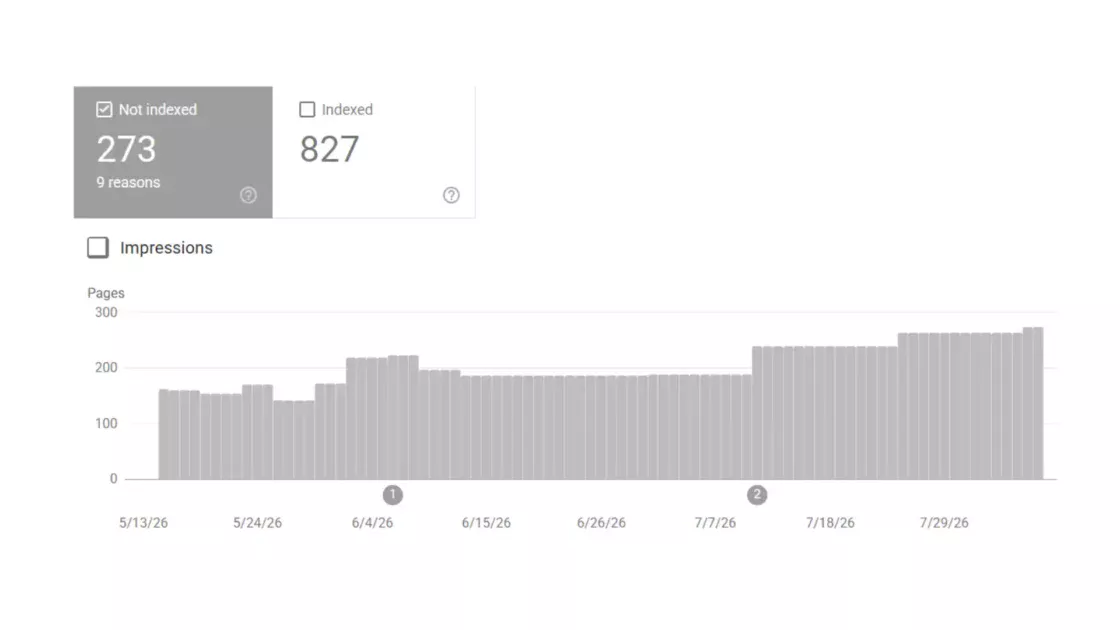
That is good news for small businesses because it narrows the field of what actually needs attention. Crawlability still matters. Google says most pages are discovered automatically, often by following links from known pages, and that links help Google find new pages to crawl. A sitemap helps Google crawl more efficiently and shows which pages you consider important. Search Console lets you submit sitemaps, inspect URLs, track impressions and clicks, and monitor index coverage. None of that is glamorous. All of it is foundational.
It also explains why Duda’s findings feel familiar. A blog post that is internally linked, present in the sitemap, readable in HTML, backed by clear service pages, and connected to a verified business profile is easier for machines to understand than a brochure site with six vague pages and a stale footer. Google’s AI guidance even spells out the practical items: allow crawling, make content easy to find through internal links, keep important content available in text form, make sure structured data matches visible text, and keep Business Profile information current. That is not a separate AEO checklist. It is the same house, inspected more harshly.
There is a caution here for technically heavy sites. Google can render JavaScript, but rendering is still part of the crawl process, and blocked files or weak implementations can hide content from search systems. Google’s crawl-budget guidance also notes that very large or frequently updated sites need to manage sprawl more carefully, though smaller sites usually do not need advanced crawl-budget work. The practical lesson for local businesses is straightforward: do not build a site that requires heroics just to expose your core business information.
This is why the phrase “AI-optimized website” can be misleading. It suggests a special class of site made for answer engines. Google itself says otherwise. The businesses best positioned for AI visibility are usually the ones with a clean local entity, readable service information, strong proof, accurate profile data, working internal architecture, and pages that exist for human reasons before they exist for machine reasons. That is old-fashioned web discipline. The difference is that AI surfaces expose the cost of sloppiness faster.
The site changes local businesses should make first
The first move is not publishing twenty AI-written blog posts. The first move is getting the business itself straight. Google’s own local ranking documentation says complete and accurate information helps local visibility. That includes address, phone number, business category, hours, and other practical details. The website, the Google Business Profile, and the broader listings footprint need to agree. A business with conflicting hours or mismatched phone numbers is asking both machines and humans to hesitate.
The second move is specificity. Most local business websites are still too vague. They say “quality service,” “trusted professionals,” or “serving the community,” then wonder why they are invisible for anything beyond branded searches. Service pages should explain exactly what the business does, where it does it, who it helps, how fast it responds, what edge cases it handles, and what a customer should expect before making contact. That kind of specificity helps users, and it also gives Google and other systems the text they need to match complex, multi-step queries. Google’s people-first content guidance is the right standard here.
The third move is to build supporting pages that reflect real intent, not fantasy keyword lists. Dynamic pages are useful when they map to real demand: service pages by location, neighborhood coverage pages, FAQ pages drawn from actual customer questions, insurance or financing pages, team bios, pricing guidance, and proof-rich case studies. Google says internal links help it find new pages, and sitemaps help it crawl efficiently. That makes architecture part of local AEO, not just content production.
The fourth move is measurement. Google Business Profile performance shows calls, website clicks, directions, views, searches, and other interactions. Search Console shows search queries, impressions, clicks, and indexing issues. A business that wants to know whether AI-shaped local demand is changing outcomes should watch call volume, form completions, branded search lift, and service-page impressions before it watches raw sessions. Duda’s own finding points in that direction: the commercial action matters more than the headline traffic lift.
The final move is trust material. Reviews, replies, third-party mentions, and topical proof are not decorative extras anymore. Google says prominence is influenced by reviews and links, and Google’s local listings documentation says local information can come from the official website, third parties, users, and profile owners. Whitespark’s recent work on unstructured citations goes even further, arguing that local mentions across the web help AI visibility. A local business that is never talked about outside its own site is harder for answer systems to treat as a credible recommendation.
Agencies and platforms now have a bigger job
Duda’s executives are right about one thing that gets overlooked in small-business search discussions: most small businesses do not have the time, appetite, or skill to manage this shift alone. Duda’s release says agencies and SaaS platforms have a responsibility to build the right tools and best practices now. That line is self-serving in the usual product-marketing way, but it is also fair. Local business owners are not going to spend their evenings debugging JSON-LD, checking render paths, and comparing crawl logs. Someone upstream has to make the sane option the default.
That changes what good agency work looks like. Selling “SEO blog packages” full of generic posts was already a weak offer. In an AI-shaped local web, it becomes even weaker. Agencies need to deliver entity clarity, page specificity, structured business data, profile accuracy, internal linking, and measurement that connects visibility to revenue actions. Google Business Profile management, service-page architecture, FAQ expansion, and review response systems are no longer side services. They sit close to the core. Google’s own documentation on Business Profile, Search Console, and AI features makes the scaffolding visible.
Platforms matter because they control the defaults. Google’s sitemap documentation notes that many CMSs generate sitemaps automatically. That sounds minor until you remember how many small-business sites depend on whatever the platform hands them. The same logic applies to schema generation, crawlable navigation, image handling, page speed, and the ease of creating structured service or location pages. Duda’s study is partly a platform story because platforms can either remove friction from these tasks or multiply it.
There is also a strategic change in reporting. A lot of local agency dashboards still lean too hard on rank tracking and raw traffic. Those metrics remain useful, but the rise of AI summaries and richer result layers weakens their old status as the whole story. Search Console traffic, Business Profile interactions, call events, form fills, and citation visibility need to sit together. Google says AI feature traffic is included in overall Search Console web reporting. That gives agencies a starting point, even if the measurement is still imperfect.
The gaps in the public methodology
A good editorial reading of the Duda study needs some friction. The public post is a release, not a peer-reviewed paper. It does not give a full breakdown of sample composition, vertical mix, the time window used for downstream human actions, or the exact definition of “AI-crawled” across platforms. It also does not show how much of the effect remains after controlling for business size, agency sophistication, preexisting content depth, or backlink profile. Those omissions matter because they leave room for selection bias and confounding variables.
That said, imperfect public methodology is common in market research, and the right response is not dismissal. It is triangulation. Duda’s pattern lines up with Microsoft Clarity on stronger conversion quality from AI referrals. It lines up with Adobe on higher engagement from AI-originating visitors and later higher conversion in some shopping periods. It lines up with Whitespark on the growing prevalence of AI Overviews in local queries. It lines up with Google’s own guidance that AI features use the same core search foundations and that businesses should keep profile data current and content accessible. The exact multiplier may move. The direction is already visible from several angles.
The bigger risk is that businesses hear “AI optimization” and go shopping for shortcuts. That usually leads to low-grade content automation, junk location pages, synthetic review schemes, or irrelevant schema sprayed across a site. Google’s documentation is not subtle here: create helpful, reliable, people-first content; make important content available in text; keep structured data consistent with visible text; and understand that crawling and indexing are never guaranteed. The boring work remains the valuable work.
A fair verdict on Duda’s release sounds like this: the headline is probably too neat, the public method is too thin, and the underlying argument is still mostly right. Local businesses that publish clearer information, maintain stronger entity consistency, and build fuller service coverage are better positioned for both classic local search and AI-mediated discovery. The claim deserves scrutiny. The direction deserves action.
The next local winner will be the clearest source
For years, local web strategy has been polluted by a strange belief that visibility is mostly about pleasing an algorithm. That was always too narrow. A good local presence won because it reduced uncertainty for buyers. It answered practical questions, matched the right intent, signaled trust, and made the next action easy. The new AI layer does not replace that logic. It amplifies it. The businesses that get recommended will usually be the businesses that are easiest to understand and easiest to trust.
Duda’s study matters because it captures that shift at the level small businesses actually care about: traffic that turns into actions. Not every vertical will see the same lift. Not every platform will measure it the same way. Not every AI crawler visit will turn into a citation or a customer. Still, the pattern is getting harder to deny. Search is becoming more interpretive, more answer-led, and more selective about which sources it surfaces for complex local intent.
The practical takeaway is not to abandon SEO for a fashionable new acronym. It is to tighten the basics until they are good enough to survive both human scrutiny and machine synthesis. Keep the business profile accurate. Publish service pages that say something real. Add clean local schema. Build pages for genuine local demand. Link the site properly. Keep the sitemap current. Watch calls, forms, clicks, and directions, not just sessions. Google’s own documentation keeps pointing back to those habits because those habits still decide whether a site can be found, indexed, trusted, and shown.
Small businesses do not need to become AI companies. They need to become clearer digital businesses. That is the part of Duda’s study worth keeping after the headline fades.
FAQ
Duda said AI-crawled sites generated 320% more human traffic, 270% more form submissions, and 250% more click-to-call events than non-crawled sites, based on analysis of more than 850,000 websites and 69 million AI crawler visits.
No. Duda’s comparison is about AI-crawled versus non-crawled sites, while BrightEdge says AI search is still a small share of referral traffic, even though it is growing quickly.
It is the work of making a local business easy for answer engines and AI search features to understand, trust, and cite when users ask detailed local questions. Google’s own guidance says the same SEO fundamentals still apply to AI features.
Not cleanly. A better way to see it is that local AEO sits on top of local SEO. The same foundations still matter: crawlability, structured information, accurate business data, helpful content, and prominence signals.
Whitespark found that AI Overviews appeared in 68% of local business-type queries in its research.
Because they tend to arrive later in the decision process. Duda reported much higher form and call activity on AI-crawled sites, and Microsoft Clarity found AI referrals converting at three times the rate of other channels in its study.
Duda highlighted blogs, local schema, Google Business Profile synchronization, dynamic pages, and total page count as the traits most associated with heavier AI crawling.
No. Google says there are no additional requirements and no special schema.org markup needed to appear in AI Overviews or AI Mode.
Because schema helps reduce ambiguity about your business. Google’s local business structured data docs show it can communicate hours, departments, reviews, and other business facts in a standardized way.
Very important. Google says complete and accurate Business Profile information helps local rankings, and local listings are built from sources including the business website, third-party data, users, and profile owners.
It means the core business facts on your website and your Google Business Profile match: name, address, phone, hours, category, services, and other key details. Consistency helps Google understand the business more confidently.
Yes, if they answer real customer questions and deepen service coverage. Duda found each blog post was associated with a 7% increase in crawler visits, and Google still prioritizes helpful, people-first content.
Not automatically. Duda found each additional page correlated with more crawler visits, but Google also makes clear that pages still need to be accessible, useful, and eligible for search. Thin page sprawl is not the goal.
They are data-driven pages such as service pages, city pages, or location pages created from structured information. They work best when each page is genuinely useful and distinct, not when they are near-duplicates.
Usually not in an advanced way. Google says crawl-budget tuning mainly matters for very large or frequently updated sites, and that smaller sites are usually fine with a current sitemap and regular index checks.
Watch calls, website clicks, directions, messages, bookings, form submissions, and service-page impressions. Google Business Profile and Search Console both provide important pieces of that picture.
Often, yes. Pew Research found users clicked standard search result links less often when an AI summary appeared, and they were more likely to end the session without clicking through.
No. Crawling is only one stage. Google describes search as crawling, indexing, and serving results, so a crawled page still has to be eligible, understood, and selected for a specific query.
Fix the entity basics first: accurate business details, a complete Google Business Profile, clear service pages, strong internal linking, and useful local content. Those are the same foundations Google says still matter for AI features.
Author:
Jan Bielik
CEO & Founder of Webiano Digital & Marketing Agency

This article is an original analysis supported by the sources cited below
Duda study finds AI-optimized websites drive 320% more traffic to local businesses
Duda’s original April 2026 release with the core claims on traffic, conversions, and the five site traits linked to higher AI crawler activity.
AI-crawled sites generate 320% more human traffic an interview with Duda’s Oded Ouaknine on the future of AEO
An interview that adds useful context from Duda’s CRO, especially on lead quality and the shift from local SEO to local AEO.
AI Traffic Converts at 3x the Rate of Other Channels
Microsoft Clarity’s research on higher conversion rates from AI referrals.
New Research AI Overviews for Local Business Searches
Whitespark’s research on how often AI Overviews appear for local business-type queries.
AI features and your website
Google’s documentation on how AI Overviews and AI Mode work from a site owner’s perspective.
Local business LocalBusiness structured data
Google’s guide to local business structured data and the business facts it can expose.
LocalBusiness
Schema.org’s official definition of the LocalBusiness type used across structured data implementations.
Edit your Business Profile
Google’s help documentation on updating business details such as address, hours, and contact information.
Tips to improve your local ranking on Google
Google’s explanation of the local ranking basics, including relevance, distance, and prominence.
How Google sources and uses information in local listings
Google’s explanation of how local listing data is assembled from websites, profiles, users, and third parties.
Understand your Business Profile performance and insights
Google’s overview of the metrics available inside Business Profile reporting, including calls, clicks, and directions.
Make Sure Consumers Can Find You in Their I-Want-to-Go Moments
Google’s local-search infographic that includes the widely cited stat on same-day store visits after phone-based local searches.
The Top 54 Local SEO Statistics, Updated 2024
SOCi’s collection of local search statistics, including weekly and daily local business search behavior.
Frequently Asked Questions About Small Business 2026
Official SBA data on the scale and economic role of small businesses in the United States.
We Studied the Impact of AI Search on SEO Traffic
Semrush’s projection that AI search visitors could surpass traditional search visitors in some topic areas by 2028.
Google AI Overviews
Google’s product page describing AI Overviews and current international availability.
Generative AI in Search Let Google do the searching for you
Google’s May 2024 announcement expanding AI Overviews and describing their role in complex search journeys.
In-depth guide to how Google Search works
Google’s explanation of crawling, indexing, and serving results.
Link best practices for Google
Google’s documentation on crawlable links and page discovery through internal linking.
Learn about sitemaps
Google’s overview of why sitemaps help crawlers discover and process important pages.
Build and submit a sitemap
Google’s practical documentation on creating and submitting sitemaps.
Creating helpful, reliable, people-first content
Google’s core guidance on content quality and user-first publishing.
Google Search Console
Google’s overview of Search Console features for tracking performance, indexing, and technical issues.
Understand JavaScript SEO basics
Google’s documentation on how JavaScript affects crawl and render behavior.
Crawl budget management
Google’s guide explaining when crawl-budget issues matter and when they usually do not.
AI Search Visits Surging in 2025 But Organic Search Remains the Cornerstone of Digital Growth
BrightEdge’s research on the rapid growth of AI search alongside the continuing importance of organic search.
Adobe Analytics Traffic to U.S. Retail Websites from Generative AI Sources Jumps 1,200 Percent
Adobe’s analysis of AI referral growth and on-site engagement patterns in retail and adjacent categories.
AI traffic surges across industries retail sees biggest gains
Adobe’s later cross-industry view of AI-driven traffic and conversion performance.
Google users are less likely to click on links when an AI summary appears in the results
Pew Research Center’s analysis of click behavior on Google results pages that include AI summaries.
Whitespark’s Guide to Unstructured Citations for AI Visibility
A useful guide connecting local mentions, citations, and AI-era prominence signals.
| Citing this article? Brief excerpts are welcome. Please credit Webiano.digital, name the author where stated, and include a link to https://webiano.digital and to this original article. Full or substantial republication requires prior written permission. Read our Copyright and Content Use Policy. |
This article was prepared with the assistance of artificial intelligence tools. The content underwent expert human review, and Webiano Digital & Marketing Agency assumes editorial responsibility for its final version and publication.