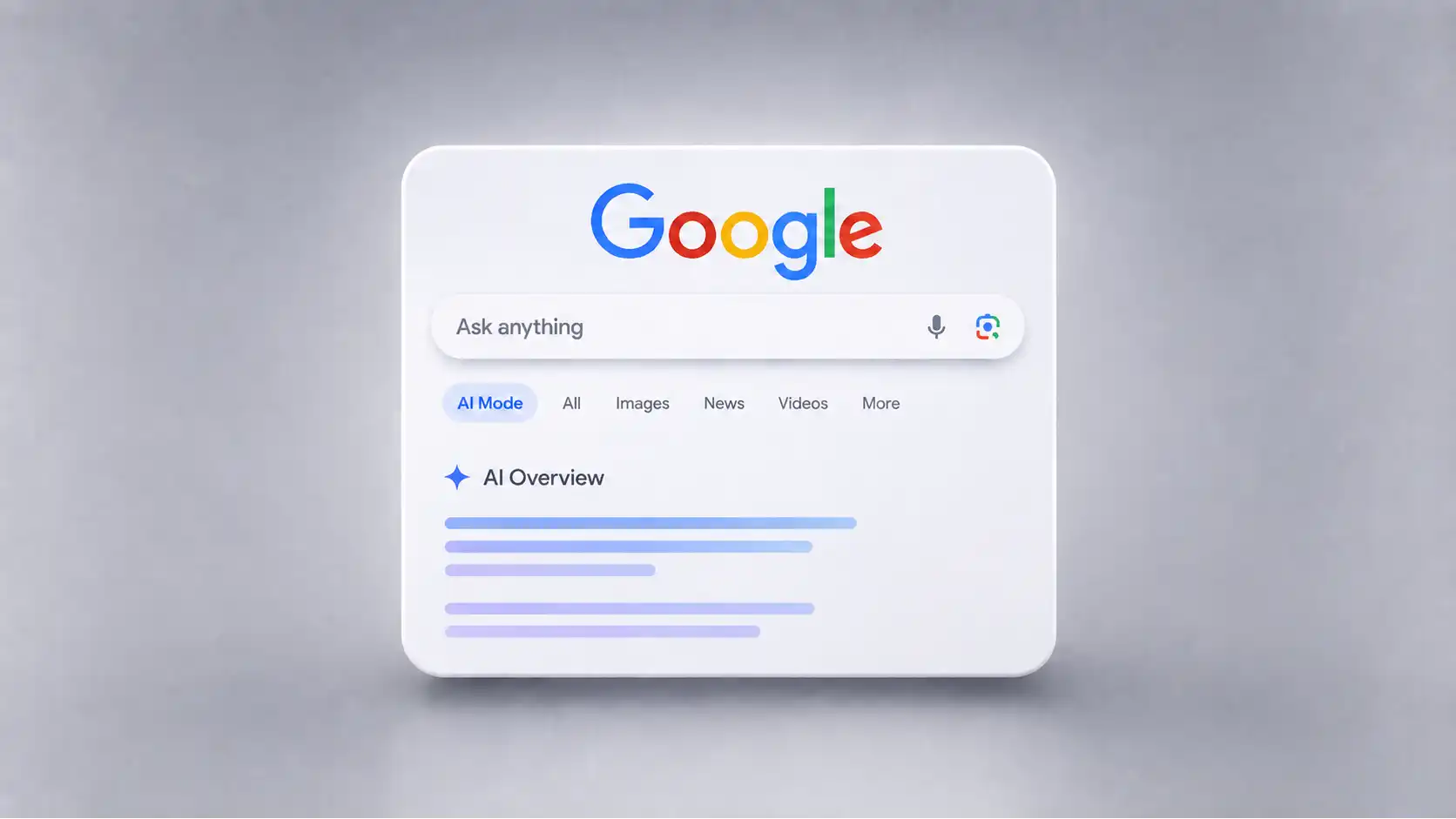
Google’s new search plan should be read as a media story, not only a technology story. On May 19, 2026, Google described a “new era for AI Search,” with a redesigned, AI-powered search box, Gemini 3.5 Flash as the default model in AI Mode, longer conversational queries, multimodal inputs, AI suggestions and agent-style functions built into the search flow. Google calls it the biggest upgrade to Search in more than 25 years. For publishers, the same change looks like a sharper version of an old threat: Google is moving from sending readers to the web toward answering readers with material drawn from the web.
Table of Contents
Google’s search box is no longer just a doorway
For most of the web era, Google Search worked as a powerful gatekeeper, but it still functioned as a doorway. A user typed a phrase. Google ranked pages. Publishers fought for visibility. The user clicked, or did not click. That system was never equal. Google controlled the front door, advertising economics, ranking incentives and much of the measurement culture around digital publishing. Still, the bargain was legible: if a publisher produced useful work and Google ranked it, the publisher had some chance to receive a visit, build an audience, sell advertising, convert a subscriber or prove its value to a reader.
The May 2026 search announcement pushes Google further away from that referral bargain. The “intelligent AI-powered Search box” does not merely interpret a keyword query. It invites the user to ask longer questions, attach material, receive AI suggestions and move into AI Mode, where the experience resembles a conversation rather than a ranked index. Google says AI Mode lets users ask follow-up questions and use text, voice or images to receive AI-powered responses. The product direction is plain: Google wants the query, the answer, the follow-up and the task to remain inside Google.
That shift matters because journalism does not live on abstract visibility. It lives on attention that can be measured, monetized and converted into trust. A link shown beneath an AI answer is not the same thing as a reader arriving at an article. A citation tucked into a panel is not the same thing as a relationship with a publication. A summarized paragraph is not the same thing as the original reporting process that produced the fact. Google may still “link out,” but the user’s path is being redesigned around fewer reasons to leave.
The company’s public language stresses convenience. The user can ask more complicated questions. The search box can accept images, files, videos and Chrome tabs. AI Mode can handle follow-ups. Agents can take action. In a consumer product sense, that is coherent. Search has long carried a burden: users often do not know how to phrase complex needs. AI reduces that friction. But the same friction was also part of the web’s economic oxygen. Every click, even an imperfect click, created a chance for a publication to earn attention. When the answer is generated before the visit, the economic event moves from the publisher’s page to Google’s interface.
A negative reading is not anti-technology. It is a reading of incentives. Google has a commercial reason to keep users inside its own surfaces for longer, especially as competitors such as ChatGPT, Perplexity, Copilot and Gemini reshape expectations around answer engines. Publishers have the opposite need: they need a reader to arrive, see the reporting in context, encounter the brand, perhaps subscribe and understand that the information came from someone who did the work. AI Search places those needs in direct conflict.
Google’s Search box once opened the web. The new version increasingly interprets, summarizes and mediates the web. That is a different civic role. It turns a discovery tool into an editorial layer, but without the obligations that editorial institutions carry: correction culture, named responsibility, source transparency, legal exposure, newsroom standards and a direct relationship with the audience.
The old search bargain was already damaged
The old bargain between Google and publishers was never romantic. It forced newsrooms into SEO discipline, headline testing, keyword mapping, structured data, page speed work, endless algorithm recovery and dependence on a private company’s opaque ranking system. The web did not become healthier because Google sent traffic. It became dependent. Publishers adjusted their hiring, content calendars, analytics dashboards and business models around the assumption that search referrals would remain a core acquisition channel.
That assumption is now breaking. Reuters Institute’s 2026 journalism, media and technology trends report found that publishers expected traffic from search engines to fall by 43 percent over the next three years. The same report noted that concerns were focused on Google’s AI Overviews, which were appearing at the top of about 10 percent of U.S. search results at the time of its publication, with rapid rollout elsewhere.
A 43 percent forecast is not a small planning variable. For many publishers, search is not a bonus channel; it is the top of the funnel. A reader who finds a consumer guide, local explainer, election fact-check, weather update or health article through Google may later become a newsletter subscriber, app user, donor or paid member. Remove enough of those first visits and the entire conversion ladder weakens.
The damage also lands unevenly. Large publishers can lean on brand awareness, apps, newsletters, podcasts, events, commerce, licensing and subscriptions. Small publishers often depend on search as their cheapest path to readers outside a narrow loyal base. Chartbeat data reported by Axios in March 2026 found that small publishers saw the steepest search referral losses, with sites in the 1,000 to 10,000 daily pageview range down 60 percent over two years, compared with 47 percent for medium publishers and 22 percent for large publishers.
That pattern is brutal for journalism because small outlets are often the places where original local reporting, niche expertise and independent criticism still survive. A national newsroom can absorb a bad Google month. A small trade publication, local watchdog or specialist site may not. It has fewer subscription experiments to run, less cash, fewer engineers, less data science, less legal muscle and less negotiating power. AI Search does not simply reduce traffic; it redistributes risk toward the publishers least able to absorb it.
Google has argued that its AI features still send billions of clicks to the web and that clicks from AI results can be “higher quality,” meaning users may spend more time on the destination site. That claim deserves to be heard, but it does not answer the central economic question. A smaller number of more engaged clicks may be useful for some commercial sites. For advertising-funded newsrooms, local outlets and public-interest publishers, volume still matters because reach, subscription funnels and ad inventory depend on it.
The old search bargain had an ugly trade-off: publishers surrendered some independence to search logic but received visits in return. The new bargain is worse. Google can extract, synthesize and display the value of the work while leaving the publisher with a thinner stream of visits and the instruction to adapt.
AI Overviews changed the route before AI Mode arrived
AI Mode is the more dramatic product, but AI Overviews already changed the route readers take through Google. AI Overviews generate an answer-like summary above organic results for many queries. Google presents them as a faster way to get a snapshot and links for deeper exploration. For publishers, the key issue is the position and completeness of the answer. When Google puts a synthesized response above the links, it changes the user’s job from “choose a source” to “accept or skim the answer.”
Pew Research Center examined U.S. users’ browsing behavior and found that people were less likely to click links when an AI summary appeared on the search results page. Pew also found that users clicked a cited source inside an AI summary in only a small share of visits. The exact mechanics vary by query and layout, but the direction is consistent with publisher fears: the more complete the answer appears on Google, the weaker the reason to visit the original page.
Ahrefs reached a harsher conclusion in its own analysis. Its February 2026 update said the presence of an AI Overview correlated with a 58 percent lower average click-through rate for the top-ranking page, after an earlier study found a 34.5 percent reduction. Correlation is not the same as causation, and any SEO dataset has limits. Still, the result matches the behavior that newsrooms have been describing from their analytics screens.
The threat is not that every AI Overview kills every click. The threat is that many routine informational queries become satisfied enough. A user asking “what does this tax change mean,” “who won the debate,” “how does this health policy work,” “what happened in this court case” or “best ways to protect privacy online” may read the AI answer, scan the citations and leave. A well-reported article becomes raw material for a short answer. The newsroom gets no visit, no reader relationship and no chance to show its reasoning.
AI Mode intensifies that pattern. AI Overviews still sit inside a recognizable search page. AI Mode turns the experience into a conversation where follow-up questions keep the user inside the same answer environment. A reader who once might have opened several tabs can now ask Google to compare, refine, explain, summarize and act. That is useful for the reader in the narrow sense. It is hostile to the economics of the sites that make the information ecosystem worth searching.
The irony is severe. Google’s answer quality depends on the existence of credible, updated, human-produced information. Journalism supplies a large portion of that information. Yet the answer interface reduces the visible need for journalism. If the pattern continues, Google will have built a machine that makes professionally gathered information look free, instant and detached from the institutions that produce it.
Google’s own framing leaves out the dependency problem
Google describes AI Search as a user benefit. The official May 2026 post says advanced model capabilities are coming to Search, with agents available through questions and a reimagined search box. Google’s I/O 2026 materials said AI Overviews had more than 2.5 billion monthly active users and AI Mode had surpassed 1 billion monthly active users within a year. Those numbers show that AI Search is no longer an experiment in a corner of the product. It is becoming the main distribution surface for information at global scale.
Scale changes the moral weight of the design. A small AI answer feature is a product test. A search interface used by billions is infrastructure. When Google places an AI answer above the open web, the company is not merely improving a product; it is deciding how attention, credit and revenue move across the information economy.
Google often says it continues to send billions of clicks to the web. That may be true in aggregate. But aggregate clicks can hide sharp losses in particular categories. A local news outlet does not pay salaries with “the web’s” total click count. A science publication does not survive because e-commerce sites still receive shopping traffic. A public health explainer does not benefit because some commercial queries keep converting. The relevant question is not whether Google sends any traffic; it is whether Google’s AI layer strips enough value from informational queries to damage the publishers that create them.
Google’s “higher quality clicks” argument also shifts the metric in a convenient way. If total click volume falls, Google can say the remaining clicks are more qualified. If publishers lose casual search readers, Google can call those lost visits “bounce clicks.” But many loyal readers begin as casual visitors. A bounce can be a failed match, but it can also be the first weak signal in a future relationship. News economics is not built only on perfect-intent visits. It is built on repeated exposure, habit formation and trust.
There is also a measurement asymmetry. Google can measure user behavior inside Search. Publishers can measure what arrives after the click. They cannot easily measure how often their work informed an AI answer without sending a reader. A publisher may influence millions of decisions through Google’s summaries while receiving only a thin trail of citations and negligible direct audience value. That creates a world where journalism’s social value rises while its measurable business value falls.
Google’s framing treats AI Search as a more useful interface for users. That is only half the story. The other half is dependency. Google’s answers need external facts, reporting, reviews, databases, images, forums, documentation and analysis. If the companies and people producing that material cannot sustain themselves, answer quality will decay. Search becomes a parasite on a shrinking host.
The click data points in one direction
The most damaging evidence for Google’s publisher story is not one number. It is the pattern across many measurements. Pew saw lower clicking behavior on AI summary pages. Ahrefs reported a 58 percent lower click-through rate for top-ranking pages when AI Overviews appeared. Chartbeat data showed steep search referral drops for publishers, especially smaller ones. Reuters Institute reported publisher expectations of a 43 percent search traffic decline over three years. Growtika’s tech media analysis found severe losses across major technology publications.
Each dataset has limits. Pew studied a panel of users. Ahrefs studied rankings and click-through correlations. Chartbeat reflects its publisher network. Growtika used Ahrefs-based traffic estimates for a technology-media sample. Reuters Institute surveyed media leaders and used industry data. None of these alone proves a single-cause story. Search traffic can fall because of algorithm changes, Reddit visibility, social platform shifts, changing user habits, subscription walls, weaker content, browser behavior, AI chatbots or news fatigue.
But a responsible analysis does not need a monocausal claim. The question is whether Google’s AI Search is a material contributor to a broader collapse in referral economics. The answer is yes. The mechanism is straightforward, the measured direction is consistent, and the business incentives align with the outcome. When answers move onto Google’s page, many users do not need to visit the page that supplied the answer.
Evidence signals from search, publisher and AI studies
| Signal | Reported finding | Business meaning for publishers |
|---|---|---|
| Pew user behavior | Users click less when AI summaries appear | The search page itself satisfies more intent |
| Ahrefs CTR update | AI Overviews correlated with 58% lower CTR for top-ranking pages | Ranking first no longer protects traffic |
| Reuters Institute forecast | Publishers expect search traffic to fall 43% in three years | Media leaders are planning for a structural drop |
| Chartbeat/Axios data | Small publishers lost 60% of search referral traffic over two years | The weakest publishers face the harshest pressure |
| Growtika tech-media sample | Some tech outlets lost more than 90% of Google traffic from U.S. search | Informational media may be heavily exposed |
This table compresses different types of evidence, not identical measurements. The point is the direction: AI-mediated search is weakening the old link-based path from query to publisher, and the harshest effects appear in informational content where a short synthetic answer can replace the visit.
The click issue also has a public-interest dimension. In a healthier information market, the user sees source competition. A search results page offers multiple headlines, publishers, snippets and angles. Even if ranking is imperfect, the user can compare. AI Overviews and AI Mode compress that diversity into a single generated response with selected citations. The user may not know which sources were ignored, which claims were contested, how the answer was composed or whether an omission matters.
The web’s old link list was messy, manipulable and often frustrating. But it preserved a visible plurality of sources. AI answers replace visible plurality with synthesized confidence. That may feel cleaner. It may also reduce the reader’s habit of checking who is speaking.
The 97 percent example is a warning, not a full explanation
The most dramatic traffic number in the current debate comes from the technology media sector. Growtika analyzed ten major tech publications and found a sharp fall in Google search traffic from early 2024 to early 2026, with Digital Trends reportedly dropping from 8.5 million monthly U.S. Google visits in March 2024 to 264,861 in January 2026, a 97 percent fall. Futurism cited that finding in its criticism of Google’s AI Search changes.
That number is powerful because it turns an abstract debate into a newsroom-level nightmare. A publication can cut costs, improve pages, build newsletters and push subscriptions. It cannot easily survive the disappearance of a core audience channel. If a large tech outlet can lose nearly all of a key slice of Google traffic, smaller publishers should assume they are exposed.
But the 97 percent example also needs precision. Growtika itself did not prove AI Overviews alone caused the decline. Futurism’s own summary notes multiple possible drivers: AI Overviews, Google’s algorithmic boost to Reddit and a broader shift toward AI chatbots. That distinction matters because a credible critique should not pretend every decline comes from one Google feature.
The negative case becomes stronger, not weaker, when framed this way. AI Overviews are not an isolated product flaw. They are part of a larger platform movement away from publisher referrals. Reddit-style answers, forum surfacing, AI summaries, chatbots, AI Mode and agentic search all push users away from the classic article visit. For technology news in particular, the shift is acute because many searches seek quick answers: specs, comparisons, fixes, product explanations, software issues, definitions, release dates and recommendations.
Tech media is the canary because its content often fits the AI summary format. A review can be summarized into a verdict. A tutorial can be compressed into steps. A product comparison can be turned into a table. A news analysis can be reduced to a few bullets. The more extractable the content, the easier it is for AI Search to consume its utility while leaving the publisher with little attention.
This is a bleak lesson for journalism. The work that is clear, structured and useful becomes highly attractive to AI systems. Yet those same qualities may make it easier for the system to satisfy the user without sending the visit. Publishers have spent years formatting content for search comprehension. Now that comprehension may become the mechanism of substitution.
Small publishers are being hit first
The Chartbeat/Axios data on small publishers should worry anyone who cares about the open web. It suggests the traffic crisis is not simply a story about large media brands adapting to a new interface. Smaller sites saw the steepest search referral losses: 60 percent over two years for publishers with 1,000 to 10,000 daily pageviews, compared with smaller declines for larger groups.
That pattern fits a familiar internet dynamic. Platform shifts punish the least diversified actors first. A large publisher may have direct traffic, an app, a paid audience, live events, syndication deals, newsletters, podcasts, YouTube channels and a commerce team. A local newsroom may have a homepage, social accounts, a newsletter and a small ad sales operation. A specialist blog may have one editor, freelance contributors and search traffic. The less diversified the business, the more a search decline becomes an existential event.
Small publishers also have less bargaining power. They cannot negotiate content licensing with Google at the scale of a major media group. They cannot easily sue. They cannot build custom data pipelines to monitor AI citations. They cannot pay for large editorial experiments when cash flow falls. They may not even know whether a traffic drop came from AI Overviews, a core algorithm update, a technical issue or changing user behavior.
The result is a silent thinning of the web. Sites do not always announce closure. They publish less often. They stop paying contributors. They replace reporting with cheaper aggregation. They cut copy editing. They remove beats that do not convert. They chase affiliate revenue. They rewrite press releases. They switch to sponsored posts. From the outside, the site still exists. Inside, the capacity to report has been hollowed out.
That matters because journalism’s public value often comes from coverage that is not immediately profitable. Local councils, school boards, courts, regulatory filings, environmental permits, hospital systems, procurement contracts, police conduct, labor disputes, zoning decisions and regional business failures rarely generate massive traffic. If search no longer delivers enough casual readers, these beats become even harder to fund.
AI Search may not directly target local reporting, but it contributes to the broader economic pressure. A local outlet may lose service journalism traffic, weather explainers, local guides, archives and practical evergreen pages. Those pages often subsidize less popular civic reporting. When AI answers absorb the easy informational traffic, they also weaken the cross-subsidy that helps pay for harder journalism.
Journalism’s fixed costs do not fall with traffic
The economics of reporting are stubborn. A court reporter still needs time to attend hearings. An investigative journalist still needs months to build sources, request documents, verify claims and withstand legal pressure. A foreign correspondent still needs travel, security, translation and editorial support. A local newsroom still needs editors who know the community. These costs do not fall just because Google sends fewer readers.
Digital advertising, by contrast, often falls quickly with traffic. Subscription conversion can also weaken when fewer new readers enter the funnel. Membership programs rely on trust and repeated exposure. Events need brand strength. Philanthropic support may help, but it rarely replaces broad market revenue. When referral traffic declines, the newsroom’s cost base remains human while its revenue base becomes thinner and more volatile.
Business Insider’s 2025 layoffs showed how this pressure is already hitting large digital publishers. Nieman Lab reported that CEO Barbara Peng announced cuts affecting 21 percent of staff as the company moved to reduce reliance on traffic-sensitive parts of the business, amid AI disruption and traffic declines outside its control.
Publishers will make their own mistakes, and many already have. Some produced thin SEO content for years. Some overloaded pages with ads. Some chased social traffic without building loyalty. Some let private equity weaken editorial capacity. Some treated readers as metrics rather than people. Google did not cause all of journalism’s problems.
But the AI Search shift attacks one of the few remaining scale channels for digital media. After Facebook pulled back from news and X/Twitter became less reliable for referrals, Google remained central. Reuters Institute’s 2025 Digital News Report described traditional news media struggling with declining engagement, low trust and stagnant digital subscriptions. The 2026 trends report then placed search traffic decline near the center of publisher anxiety.
The harsh reality is that journalism can be socially necessary and commercially fragile at the same time. AI Search worsens that contradiction. It makes factual work more accessible in fragments while making the institution behind the work less visible and less financially secure.
Zero-click search was the warning sign
Google’s movement toward answer-first search did not begin with generative AI. Featured snippets, knowledge panels, weather boxes, sports scores, lyrics, flight data, calculators, maps and direct answers all trained users to expect information without visiting the source. Publishers complained about zero-click search long before AI Overviews. The difference now is scope, flexibility and synthesis.
A weather box answers one narrow query. A calculator performs a function. A knowledge panel summarizes a known entity. AI Overviews and AI Mode can respond to far more open-ended questions. They can synthesize multiple sources, compare options, explain events, create lists, rewrite concepts and handle follow-ups. That turns zero-click search from a collection of special widgets into a general information interface.
The old zero-click model was damaging but bounded. AI makes substitution scalable. If Google can summarize nearly any informational topic, the threat reaches every publisher whose work can be converted into an answer. News explainers, service journalism, health guides, legal primers, financial education, travel advice, recipes, product comparisons, sports context, entertainment coverage and political background all become candidates.
The user may prefer that convenience. Many people do not want to visit five ad-heavy pages to answer a simple question. Publishers should be honest about that. The web is often unpleasant. Pop-ups, autoplay video, cookie banners, intrusive ads and thin articles trained users to welcome a cleaner answer layer. Google did not invent user frustration.
But Google profits from the cure to a disease it helped shape. Search incentives rewarded content farms, keyword repetition, endless pages and aggressive monetization. Publishers adapted to that ecosystem because search traffic demanded it. Now Google points to user frustration as justification for answers that reduce publisher visits. It is a circular story: the platform helped create the conditions that make the platform’s replacement layer attractive.
The better response would not be nostalgia for ten blue links. It would be a fair system that preserves user convenience while paying and crediting the sources whose work powers the answer. Without that, zero-click AI becomes extraction dressed as product progress.
Hallucination at Google scale is not a rounding error
AI Overviews also raise a truth problem. A recent analysis by Oumi, discussed by The Decoder, Search Engine Land and Futurism, found that Google AI Overviews were correct around 91 percent of the time after an upgrade, compared with 85 percent in an earlier model setup. Google disputed the methodology, and the evaluation details matter. Still, even a seemingly strong accuracy score leaves a frightening residue at Google scale.
If a system answers billions of queries, a single-digit error rate produces massive numbers of wrong or unsupported answers. The problem is not only hallucination in the spectacular sense: glue on pizza, fake policies, wrong dates or absurd medical advice. The more common danger is subtle: a missing caveat, outdated fact, invented causal connection, flattened dispute, misattributed claim or source that does not actually support the sentence.
A May 2026 arXiv paper measuring Google AI Overviews across 55,393 trending queries found that overall activation was 13.7 percent, rising to 64.7 percent for question-form queries. It also decomposed responses into 98,020 atomic claims and found that 11 percent were unsupported by the cited pages, with omission as the dominant failure mode. That is exactly the kind of error pattern that is hard for normal users to detect.
Accuracy is also topic-dependent. High-stakes domains need stronger safeguards because the cost of error is not evenly distributed. An incorrect entertainment fact is annoying. A flawed health, legal, financial, immigration or emergency answer can harm people. Research on baby care and pregnancy queries found inconsistency between AI Overviews and featured snippets in 33 percent of cases and weak medical safeguards. That should make regulators uncomfortable.
Journalism has its own error problems. Reporters make mistakes, publications correct too slowly, and headlines can distort. But journalism at least has named outlets, correction pages, editors, legal accountability and reputational stakes. AI Search blurs responsibility. If a generated answer misleads a user, the user may blame “Google,” a cited publisher, an invisible source or no one. The accountability chain becomes muddy.
At search scale, even a mostly accurate AI layer can become a large misinformation machine. Not because it is always wrong, but because it is wrong often enough, confident enough and visible enough.
Accuracy is not the same as accountability
Google can improve model accuracy and still leave publishers and users in a weaker position. Accuracy answers the question “Is the sentence true?” Accountability asks more: Who checked it? Who chose the framing? Which sources were excluded? Who corrects the answer? Who pays for the reporting? Who is liable when a wrong answer causes damage? Who benefits when the answer prevents a click?
AI systems often compress provenance. They produce fluent text that appears detached from labor. A user sees an answer, not the reporter who spent months obtaining records. A citation may appear, but it rarely conveys the reporting chain behind the fact. An AI answer can mention a source without communicating the degree of dependence on that source.
This matters for trust. Trust in journalism is not only trust in isolated facts. It is trust in process: editing, verification, corrections, standards, expertise, skepticism and institutional memory. AI Search breaks that process into fragments. It extracts claims and reassembles them in a new voice. The generated answer sounds authoritative because it is written in a polished, neutral tone. That tone can conceal uncertainty.
Research on “answer bubbles” found that AI-mediated search systems can reduce hedging while preserving confidence language, creating structurally different information realities across systems. That is a bad fit for journalism, where uncertainty, sourcing limits and contested interpretation often matter as much as the headline fact.
The danger grows in political and civic topics. AI systems may avoid some sensitive queries, but users will still ask about candidates, laws, protests, public health, wars, crime, courts and rights. A generated answer can flatten disputes or omit minority evidence. A link list at least makes disagreement visible. A single synthesized answer can hide disagreement behind a calm paragraph.
Accountability also requires incentives. If Google’s interface captures the attention and ads while publishers carry reporting costs, the answer system benefits from accountability structures it does not fund. That is not sustainable. A source ecosystem cannot survive on citation scraps while the platform monetizes the answer layer.
Source citations do not solve extraction
Google has worked to make links more visible in AI experiences, and regulators are now pushing for clearer attribution. That is better than invisible extraction. But attribution is not payment. A citation is not a visit. A hover card is not a subscription. A link in a panel is not an economic model.
The citation problem has two layers. The first is whether the AI answer cites sources at all, and whether those sources support the claims. The second is whether citation creates enough value for the source. Current evidence suggests both remain unresolved. The May 2026 AI Overviews measurement study found that nearly 30 percent of AI-cited domains did not appear in co-displayed first-page results, indicating a source selection process distinct from traditional ranking. It also found unsupported claims despite citations.
That complicates the SEO advice publishers receive. For years, the instruction was to rank well in Google. Now a publisher may need to rank, be cited in AI Overviews, be legible to model systems, preserve brand authority, avoid being replaced by the summary, measure invisible influence and decide whether to allow AI use. These goals can conflict. A page optimized for AI extraction may become easier to summarize without a click.
Citation can even launder the extraction. A user sees a publisher name and assumes the publisher has been compensated or meaningfully consulted. In most cases, that is not true. The publisher’s work may ground the answer while the publisher receives no direct revenue. Worse, the citation may send the user only when the user wants to challenge, verify or go deeper. The routine informational value has already been consumed.
Publishers are being told to treat AI citations as a new visibility layer. That advice may be practically necessary. It is not a fair replacement for traffic. Visibility without audience ownership is weak. Visibility without revenue is weaker. Visibility inside someone else’s generated answer is weakest of all because the platform controls presentation, measurement and user flow.
The deeper issue is consent. Web publishing historically allowed indexing through crawling norms. Indexing created snippets and links. AI answers create substitute text. The publisher may technically allow crawling while objecting to answer generation. Regulators are starting to recognize that those are not the same act.
AI Mode turns search into a closed conversation
AI Mode is more dangerous for publishers than AI Overviews because it changes the user’s rhythm. Search used to be episodic: query, results, click, back button, new query. AI Mode makes the interaction continuous: ask, answer, refine, compare, upload, follow up, ask again. Each follow-up that stays inside Google is a missed chance for a publisher visit.
Google’s support materials describe AI Mode as a place where users can ask questions with text, voice or images, receive AI-powered responses, ask follow-up questions and explore topics through information from web sources. That sounds like a research assistant. For many users, it will be. For publishers, it means Google is no longer only ranking documents. It is performing the first layer of reading and synthesis.
The reader’s mental model changes. Instead of thinking, “Which publication should I read?” the user thinks, “What does Google say?” Source choice becomes secondary. The answer voice becomes primary. Over time, that weakens brand memory. Readers may remember the answer but not the publication that produced the information.
Brand memory is not a vanity metric. It is the basis for subscriptions, donations, trust and direct traffic. A person pays for The Atlantic, The Guardian, The New York Times, Denník N, Sme, The Information, Wired or a local outlet because they perceive a distinct editorial product. AI answers blur those distinctions. They treat publications as interchangeable inputs, unless the interface deliberately elevates source identity.
AI Mode also threatens the “depth path.” A user reading an AI Overview may click a source for more detail. A user in AI Mode can ask the model for more detail instead. The same interface that gives the summary can provide a longer explanation, a comparison, a timeline or a bullet list. The deeper the AI conversation goes, the less likely a user is to leave for the full article.
This does not mean every reader will abandon original sources. Specialists, professionals, journalists, lawyers, researchers and engaged citizens will still click. But mass-market journalism cannot rely only on the most motivated readers. It needs casual readers too. AI Mode removes casual friction, and casual friction used to generate many visits.
Multimodal search expands the extraction surface
Google’s new search box is not limited to text. The company described support for multimodal inputs, including images, files, videos and Chrome tabs. That matters because the searchable object is no longer only a web page. A user can bring material into Google and ask the system to interpret it.
For users, this is powerful. Someone can upload a document, photograph a problem, compare products, summarize a PDF, ask about a chart or search across an open browser context. For publishers, it expands the zone where Google can mediate interpretation. A reader with a long investigative story open in a Chrome tab may ask Google to summarize it. A user with a paywalled excerpt, screenshot or copied paragraph may ask for an explanation. A newsroom’s work becomes something the assistant can process around the publisher’s own interface.
This raises practical questions that existing publisher controls may not answer. What happens when a user supplies a document rather than Google crawling it? What counts as fair use when the answer is generated for a single user? How are paywalls respected when users upload or expose content through browser contexts? How are images credited when AI answers describe or transform their content? Product announcements rarely resolve these edge cases.
Multimodal AI also changes the competitive field for service journalism. A recipe site, repair guide, medical explainer, financial document guide or product review publication may find that Google can interpret the user’s specific input and combine it with general web knowledge. That is more useful than a static article. But it further displaces the publisher from the user’s task.
The better the AI assistant becomes, the more it competes with the publisher’s reason to exist. A repair site once offered step-by-step help. AI Mode can inspect the image, ask follow-ups and generate personalized steps. A consumer site once compared laptops. AI Mode can parse a user’s needs, read specs and produce a recommendation. A legal explainer site once translated forms. AI Mode can summarize the uploaded document. Some of this may be good for users. It is economically devastating for many informational publishers.
The web is moving from pages to tasks. Publishers built pages. Google is building the task layer.
AI agents make referrals even less central
Google’s May 2026 Search direction includes agentic functions: systems that can monitor, retrieve and act on behalf of users. The more search becomes agentic, the less it resembles a traffic marketplace. A user may ask Google to research options, track changes, book something, compare providers or alert them when a condition is met. In that setting, the publisher becomes one input among many, not a destination.
Agentic search threatens publishers because it reduces the occasions when users browse. If an agent monitors a topic and reports back, the user may not visit the sites that produced the updates. If an agent compares sources and summarizes the best options, the user may not see the original reviews. If an agent books or buys, the informational publisher may be bypassed altogether.
This is part of a wider shift in the web economy. The old internet monetized attention through pages. The next internet may monetize delegation through agents. Platforms that own the agent layer can decide which sources are consulted, displayed, credited and paid. That is an enormous concentration of power.
Google has the infrastructure to dominate that layer: search index, Chrome, Android, Gmail, YouTube, Maps, Gemini, advertising, cloud and user accounts. A search agent that can see across those surfaces is not just a better search box. It is a private operating system for decisions. For journalism, the risk is that public information becomes background material for private assistance.
The more agentic the search process becomes, the more publisher strategy must shift from “rank and get clicked” to “be selected, cited and trusted by systems.” That sounds like generative engine optimization. But GEO does not solve the revenue problem. Being selected by an agent may create influence, but influence without compensation is not a business model.
There is also a democratic concern. Agents will not only retrieve facts. They will prioritize. They will decide which local news story matters, which review is reliable, which controversy is relevant, which political claim deserves context and which expert view is mainstream. Those are editorial decisions, even if Google avoids calling them that.
Personalization risks private realities
AI Search becomes more worrying when personalization enters the answer layer. Search personalization has existed for years, but AI answers can incorporate personal context in more persuasive ways. A list of links is one thing. A personalized, conversational answer is another. It can feel like advice from a trusted assistant.
Reports and analyses around AI Mode have raised concerns that personal data and user context could shape recommendations in ways that narrow information exposure. Even when personalization is useful, it risks creating a mirror. The answer may reflect the user’s existing preferences, location, emails, past behavior or inferred intent more than a shared public record.
For journalism, shared facts matter. Democratic societies need some common information spaces where people encounter the same verified reporting, not only personalized summaries. If two users ask about the same policy and receive different framings because of personal context, the public sphere fragments further. Search already shaped reality through ranking. AI Search can shape it through generated narrative.
The “answer bubbles” research is relevant here because it found that AI-mediated systems can create different information realities through source selection and language choices. A generated answer does not need to lie to distort. It can select different sources, omit different caveats and present a different balance of certainty.
News organizations have long worried about social media filter bubbles. AI Search may create a quieter version. There is no angry feed, no visible retweet chain, no viral post. Just a calm answer that feels objective. That calmness is part of the danger. A user may not sense that the answer has a viewpoint produced by source selection, system rules, ranking logic and personalization.
Journalism can still serve as a corrective, but only if readers reach it. If AI answers become the default layer between the public and the press, newsrooms will struggle to perform their checking role. They may publish corrections, investigations and context, while many users receive only the model’s digest.
Google’s market power turns product design into media policy
Google is not just another search company experimenting with AI. It is the dominant search gateway in many markets. Reuters reported on June 3, 2026, that the UK Competition and Markets Authority’s new rules followed concerns about Google’s dominance in search, with Google accounting for over 90 percent of UK search queries.
That market position turns interface design into media policy. If a small startup launches answer-first search, publishers can treat it as one channel among many. If Google rewires Search, the entire web feels it. A design change becomes a redistribution of audience, revenue and power.
This is why the “users like it” argument is incomplete. Users may like free answers. They may also like free journalism, free music, free video and free software. Markets still need rules for who gets paid when value is consumed. A user preference for convenience does not settle the question of whether the information supply chain remains viable.
Google’s dominance also weakens publisher consent. A site can block crawlers, use paywalls or restrict snippets. But if blocking AI Search reduces visibility in Google’s ecosystem, the choice becomes coercive. Publishers are asked to choose between being used and being invisible. That is not a normal negotiation.
Academic work on AI Overviews has noted that sites blocking Google’s AI crawler may become less likely to be retrieved by AI Overviews, even when the system has access to their content through other means. The practical message to publishers is grim: cooperate with the machine or risk exclusion from the answer layer.
Market power does not mean every Google product choice is malicious. It means Google’s choices carry public consequences beyond normal product competition. If Search becomes answer-first, the web becomes answer-supplier. That is a structural change, not a feature update.
The publisher opt-out trap
Regulators have started to focus on publisher controls. The UK CMA proposed measures in January 2026 that would give publishers more choice and transparency over how their content is used in Google’s AI Overviews, including the ability to opt out of content being used to power AI features or train AI models outside Google Search. On June 3, 2026, Reuters and The Guardian reported that Google must let UK publishers opt out of AI search features under new conduct rules, with traditional search visibility not supposed to be affected.
That sounds like progress, and in one sense it is. A separate control for AI use is better than forcing publishers to disappear from ordinary search. It recognizes that indexing and answer generation are different acts. It gives publishers a lever they did not have.
But opt-out remedies have a trap. If a publisher opts out, it may protect content from being used in AI answers but lose visibility in the fastest-growing part of Search. If it opts in, it may get citations but lose traffic because the answer satisfies the user. Neither option fixes the underlying imbalance. The publisher can choose between extraction and marginalization.
An Oxford Academic article on opt-out remedies argued that opt-outs may not fix the competition harm of AI Overviews because the harm lies in traffic hoarding and because opt-out mechanisms can produce unintended consequences. That critique matches the business reality publishers face.
A fair system would not ask publishers to solve platform extraction through settings. It would establish default rights, compensation rules, transparent measurement and enforceable limits on substitute use. A publisher should not have to trade discoverability for control. Nor should it have to accept uncompensated summarization to remain part of the information ecosystem.
Opt-out tools may be a first regulatory step. They are not a settlement.
Regulators are starting to see the platform bargain clearly
The UK’s intervention matters because it treats AI Search as a competition and bargaining problem, not only a copyright dispute. The CMA’s proposed package aimed to improve choice, transparency and attribution for publishers in relation to Google’s AI features. Reuters reported the June 2026 rules require Google to provide controls over whether sites appear in and are used by AI Mode and AI Overviews, without affecting traditional search results.
The European picture is also moving. The European Publishers Council filed a formal antitrust complaint against Google over AI Overviews and AI Mode, arguing that Google uses journalistic content without authorization, effective opt-outs or fair remuneration while displacing traffic and revenue. Reuters reported in July 2025 that independent publishers had filed an EU antitrust complaint over AI Overviews, asking for interim measures to prevent alleged irreparable harm.
The European Commission has also opened an investigation into Google’s use of online content for AI purposes, examining possible anticompetitive conduct around web publisher content and YouTube content. That investigation signals that regulators understand a key point: AI systems do not float above markets. They depend on inputs produced by others, and dominant platforms can use control over distribution to take those inputs on unfair terms.
Regulation will move slowly because the technology keeps changing. AI Overviews, AI Mode, agents, personal context and multimodal search do not fit neatly into old categories. Copyright, competition law, consumer protection, data protection and media policy all overlap. Google will argue that AI Search improves user experience and keeps the web accessible. Publishers will argue that it appropriates their work and destroys referral economics. Both claims can contain some truth, but the power imbalance is not equal.
The policy question is not whether AI should be banned from search. It is whether a dominant search platform should be allowed to build a substitute answer product from publisher content without meaningful payment, consent, measurement or accountability. Framed that way, the case for intervention is strong.
The United States has moved slower than the threat
In the United States, the legal and regulatory debate has been fragmented. The News/Media Alliance called on the FTC and DOJ in 2024 to investigate Google’s use of news content in AI Overviews, arguing that the product misappropriated publishers’ investments and starved them of traffic. The Department of Justice’s broader search monopoly case has focused heavily on distribution agreements and market power, with AI adding urgency to the remedies debate.
The U.S. has a strong tech industry bias toward fast product deployment and after-the-fact correction. That posture is risky for information markets because by the time damage is obvious, the institutions may already be gone. A closed local newsroom cannot be restored by a future dashboard. A lost beat cannot be recovered by improved citations. A generation of freelance specialists cannot pay rent with “higher quality clicks” that never arrive.
U.S. media also face a political climate where public support for journalism is polarized. That makes it easier for platform companies to frame publisher complaints as rent-seeking by unpopular media brands. Some outlets have indeed abused search incentives. Some produced low-value content. But the public should not confuse bad SEO content with the broader institution of reporting.
The U.S. needs a debate about AI Search that is not captured by either platform lobbying or publisher nostalgia. The core issue is infrastructure. Search is a distribution utility in practice, even if it remains a private product in law. When that utility begins producing substitute answers from the work it ranks, traditional antitrust categories strain under the weight of the change.
Europe and the UK are at least naming the issue. The U.S. risks letting the market decide through collapse.
The open web becomes unpaid infrastructure
The open web has always involved copying, indexing and quoting. Search engines crawl pages. Social networks preview links. Archives store snapshots. Researchers analyze corpora. These practices can support discovery, accountability and knowledge. AI Search changes the balance because it turns the web into an answer substrate.
A search snippet is a pointer. An AI answer is a substitute. A pointer invites the user to visit. A substitute reduces the need. The legal boundary between them will be argued for years, but the economic distinction is already visible in publisher data.
AI companies often describe web content as public data. That phrase hides the labor behind it. A public article is not ownerless. A court database may be public, but the reporter who knows which filing matters adds value. A government report may be public, but the journalist who reads it, verifies it and explains its consequences adds value. A product specification may be public, but the reviewer who tests the product adds value. AI systems absorb that value and flatten it into answer text.
The web is also not only news. It includes forums, blogs, recipes, documentation, academic pages, nonprofit guides, hobbyist archives, local history, product manuals and government material. AI Search depends on this messy variety. If publishers and creators lose incentives to maintain it, the answer layer becomes more dependent on stale, synthetic or corporate information.
This is where AI Search may harm Google itself. A 2026 arXiv paper using an ecosystem perspective argued that AI Overviews can divert traffic from content creators and may discourage high-quality content creation, creating long-term risks even for search engines. In plainer terms: a search engine that eats the web may eventually poison its own food supply.
The open web cannot function as free infrastructure forever. Either AI platforms pay and credit the sources they depend on, or the supply of independent information will shrink.
Newsrooms will retreat behind walls
One likely response is more paywalling. If Google Search no longer delivers enough monetizable traffic, publishers will push harder toward subscriptions, memberships, apps, newsletters and logged-in products. That may help some brands. It will also make the public web poorer.
The best-funded outlets can build direct relationships. They can invest in product design, exclusive journalism, podcasts, newsletters, events, games, cooking, sports verticals and professional communities. The New York Times is the model many publishers envy, but few can copy. It has scale, brand, capital and habit. Most newsrooms do not.
A retreat behind walls creates a two-tier information system. Affluent, educated and professionally motivated readers pay for strong sources. Casual readers rely on AI summaries, social posts, free aggregators and low-cost content. That is a civic problem. Public facts become less publicly accessible, while the most accessible layer is controlled by platforms.
Some publishers will license content to AI companies. Licensing can provide revenue, but it may favor large brands and leave smaller outlets out. It can also create dependency on platform deals. A newsroom that becomes a content supplier to AI systems may receive money while losing audience identity. That trade-off may be necessary for survival, but it is not a healthy endpoint.
Others will lean into newsletters, communities and events. That is sensible. Direct audience channels are safer than platform referrals. But direct channels work best after a publication has already built awareness. Search used to introduce new readers. If that discovery layer weakens, direct products may grow more slowly.
The web may split: premium brands behind subscriptions, platform summaries for the masses, and a shrinking middle of ad-supported independent publishing. That middle once made the internet rich. Losing it would be a cultural defeat.
Local journalism faces the worst version of the problem
Local journalism is exposed because it has weak margins, limited staff and uneven audience habits. It also produces information that AI systems can summarize without conveying the value of local presence. A city council vote, school budget fight, police misconduct case or zoning dispute can be reduced to a paragraph. But the paragraph does not show who attended the meeting, who filed records requests, who built sources or who will follow up next month.
Local outlets often rely on a mix of direct readers, social sharing, search, newsletters, local advertisers and community trust. Search traffic may come from evergreen local guides, public safety updates, explainers, weather-adjacent coverage, election information and archives. If AI answers absorb those queries, the outlet loses not only pageviews but entry points for residents who might later care about harder stories.
There is also a local accountability gap. National AI systems are not built to understand every town’s politics, history, relationships and power structures. They can summarize documents, but they cannot easily know which developer has donated to which council member, which school official has a history of misleading parents, or which local agency uses jargon to bury a policy change. Local journalism’s value is context and persistence.
AI Search may create the illusion that local information is covered because an answer appears. That illusion is dangerous. A generated answer about a local controversy may rely on one article, a government page or outdated material. The user receives a clean explanation, but the underlying reporting may be thin or absent. When local journalism collapses, AI does not replace it. It summarizes the absence.
This is the harshest version of the publisher problem. Large news brands may negotiate. Local outlets may vanish quietly. The public will not always notice until corruption, mismanagement or neglect has gone unreported for years.
SEO adaptation cannot replace lost economics
Search consultants are already advising publishers to adapt to AI Overviews, AI Mode and generative engine optimization. Some advice is useful: strengthen authority signals, publish clear answers, use structured data, build original reporting, improve author pages, keep content updated, diversify traffic, create cited assets and monitor AI visibility. Publishers should do these things.
But adaptation has limits. SEO has always been a game played on Google’s field. GEO is the same game with weaker measurement and fewer guarantees. A publisher can format content for AI citation and still lose the click. It can become the source of the answer and still fail to receive the reader. It can improve authority while the model chooses a different source.
Google’s Search Central documentation says AI features are part of Search and gives publishers guidance on content performance, but the guidance largely treats AI visibility as a continuation of existing search best practices. That is convenient for Google. It implies publishers do not need a new bargain; they just need better content and measurement.
The reality is harsher. A publisher can do everything right and still lose traffic because the interface satisfies intent before the click. This is not a content quality problem. It is a product design problem. No amount of schema markup solves the fact that Google’s answer sits above the link.
Adaptation also favors bigger players. Large publishers can build AI monitoring tools, entity strategies, citation tracking and internal search teams. Small publishers cannot. The AI Search era may therefore intensify concentration: large brands become the preferred sources; small outlets lose discoverability; users see fewer independent voices; AI systems learn from a narrower pool.
Publishers should adapt tactically, but they should not pretend tactics are justice. GEO may reduce losses for some. It will not restore the old referral economics.
Original reporting becomes more valuable and less visible
Google and publishers agree on one point: original reporting matters. Reuters Institute’s 2026 report found that publishers planned to focus more on original investigations, on-the-ground reporting, contextual analysis and human stories in response to AI disruption. That is the right editorial instinct. AI can summarize commodity information easily. It cannot attend a closed-door meeting, persuade a whistleblower, verify leaked documents or observe a community over time.
But original reporting has a visibility paradox. It is more valuable because AI cannot create it from nothing. It is less visible because AI can absorb and summarize it once published. The first outlet to break a story may get a burst of attention, but follow-up searches may produce AI summaries that flatten the scoop into a general fact. Aggregators and larger brands may then get cited. The original reporter’s advantage fades quickly.
This is already a problem in digital news. Original reporting often gets copied, summarized, linked weakly or rewritten by competitors. AI Search automates that pattern at scale. The machine may cite the original source, but it can also cite later summaries, institutional pages or other outlets. Users may never see who first did the work.
That weakens incentives. Investigative reporting is expensive and risky. If the reward is quickly absorbed by an answer system, publishers may publish fewer investigations or reserve them behind paywalls. Public-interest reporting becomes scarcer in the open web, which then makes AI answers less grounded.
Google could counter this by giving strong, visible preference to original reporting and by sending measurable traffic to it. The company has announced and tested features that surface original reporting, highly cited labels and preferred sources in different forms. Those are useful steps, but they do not solve the basic substitution problem unless they produce real audience and revenue.
A web where original reporting is mined but not rewarded will produce less original reporting. That is not speculation; it is basic incentive logic.
Google’s argument about better clicks deserves skepticism
Google’s public defense rests on several claims: AI Search makes users ask more questions, links remain part of the experience, AI results send traffic to a broader set of sites, and clicks from AI contexts can be higher quality. The company has said it continues to send billions of clicks to the web daily.
Some of that may be true. AI answers may encourage complex queries that users never would have searched before. Some users may click sources after receiving context. Some publishers may gain visibility if AI Overviews cite them despite lower traditional rankings. Some clicks may be more engaged because the user knows what they want.
The skepticism begins with missing denominators. How many clicks would publishers have received without the AI answer? Which categories lose the most? Which sources gain? Are gains concentrated among large brands, forums, Google-owned properties or institutional sources? How does AI citation affect subscription conversion? Does “higher quality” compensate for lower volume? Google has not provided enough public, granular data to settle those questions.
Independent research points to traffic suppression in many informational contexts. The May 2026 measurement study found that well over half of AI-cited pages carried display advertising, meaning publishers could lose revenue when AI Overviews suppress click-through while Google’s own sponsored ads remain on the page. That finding cuts to the heart of the business conflict.
Google’s position also asks publishers to trust the company that benefits from the interface. That is a weak foundation for a market. Platforms should not be the sole auditors of their own extraction. Regulators, researchers and publishers need access to reliable data about impressions, citations, clicks, query categories and downstream behavior.
The phrase “higher quality clicks” may be accurate for some visits. It is still a poor answer to a newsroom deciding whether to cut reporters because total audience has fallen.
AI answers weaken the reader’s source habit
The most subtle loss may be behavioral. Search taught readers to scan sources. They saw names, headlines, dates, snippets and rankings. Many users clicked without much thought, but they still encountered source identity. AI answers reduce that habit. The user reads the generated response first and treats sources as supporting material.
That matters because source literacy is a civic skill. Knowing whether a fact comes from a court document, a partisan blog, a wire service, a local newsroom, a government agency or a corporate press release changes how the reader should interpret it. A generated answer can blur those differences.
AI Overviews often cite sources, but citations are not the same as reading. Many users will not open them. Pew’s click data supports that concern. If only a small share of users click cited sources, most users consume the AI layer without seeing the original context.
The damage compounds over time. If readers stop forming habits around publication brands, publications lose cultural authority. If publications lose authority, subscriptions weaken. If subscriptions weaken, reporting budgets fall. If reporting budgets fall, AI answers have less credible material. The cycle is slow enough to be denied quarter by quarter and fast enough to wreck institutions within a few years.
A healthy information system should teach readers to ask, “Who says?” AI Search teaches them to ask, “What is the answer?” That shift may feel efficient. It is also a loss of skepticism.
The answer layer could become a misinformation amplifier
AI Search’s misinformation risk is not limited to wrong facts. It also involves framing, omission and misplaced certainty. A generated answer can be mostly true and still misleading because it leaves out the dispute, the timeline, the minority evidence or the source’s limits.
The “Rise of AI Search” study found rapid global expansion of AI Overviews and reported that AI search surfaces fewer long-tail information sources, lower response variety and more low-credibility and certain politically leaning sources compared with traditional search in its analysis. Even if future systems improve, the study points to a core issue: AI Search is not neutral retrieval. It is a set of hidden policy choices about exposure.
The generated answer also travels psychologically differently from a link. A link is an invitation. An answer is a conclusion. Users may accept it more readily, especially when it appears at the top of Google, a brand associated with factual search for decades. Google has earned user trust through search utility. AI answers borrow that trust before they have earned equivalent reliability.
For journalism, this creates a strange role. Newsrooms may become both the source material for AI answers and the watchdogs exposing AI failures. They will report on hallucinations, bias and traffic loss while their own work is summarized by the systems they critique. That is not a stable relationship.
Misinformation at AI Search scale also affects public corrections. If a publisher publishes a correction, will Google’s answer update quickly? If a court ruling changes, will the AI response reflect it? If a rumor is debunked, will the generated answer stop repeating the old version? Search indexes can update, but generative systems add another layer where outdated synthesis can persist.
The web has always had bad information. AI Search can make bad information look cleaner.
The economics of scraping and referral are out of balance
Publishers increasingly face a double burden: AI systems consume their content, while AI search and chat tools send little traffic back. TollBit and other firms have reported surges in AI bot activity while AI referrals remain small in many publisher datasets. Search Engine Land reported in 2025 that AI bot scraping had doubled from Q3 to Q4 2024 while click-through rates from AI search remained under 1 percent in the discussed report.
This is a terrible exchange. Human traffic falls. Bot traffic rises. Server costs, licensing disputes and content-protection work increase. Referral value does not keep pace. Publishers are asked to absorb the cost of being read by machines while losing the benefit of being read by people.
The crawling norms of the old web assumed mutual benefit. Search engines crawled pages and sent users. AI systems crawl pages to generate answers that may prevent visits. That breaks the implied bargain. It also turns content protection into a defensive industry: bot detection, licensing walls, paywall hardening, legal threats, robots.txt debates, crawler whitelists and private deals.
Some publishers will block AI crawlers. Others will allow selected partners. Others will lack the technical ability to manage the problem. The outcome may be a more closed web, where the richest platforms and publishers negotiate private access while independent creators are left with blunt tools.
A fair market would price machine consumption. If AI systems derive value from publisher content, they should pay in money, traffic, data or enforceable exposure. Mere crawling permission is not enough when the use is substitution.
A credible settlement would pay for use, not just cite
The central policy need is compensation tied to use. Not every citation requires payment, and not every snippet is a substitute. But when a dominant search engine uses publisher content to generate answer text that satisfies user intent, there should be a revenue mechanism. That mechanism could take several forms: licensing pools, statutory remuneration, bargaining codes, per-use payments, ad revenue sharing, mandatory traffic floors or collective negotiation rights.
None is perfect. Licensing favors large publishers. Statutory schemes can become bureaucratic. Bargaining codes can be gamed. Per-use payments require measurement. Revenue sharing invites disputes over attribution. Traffic floors may distort ranking. But imperfect mechanisms are better than pretending citation solves the problem.
Australia’s earlier news bargaining experience, Canada’s platform disputes and European neighboring rights debates all show that platform-publisher compensation is politically messy. AI Search will be messier because generated answers blend sources and may not rely on any single article. Still, complexity is not an excuse for free extraction.
Possible remedies and their limits
| Remedy | What it could fix | What it would not fix alone |
|---|---|---|
| Separate AI opt-out | Gives publishers control over answer use | May reduce AI visibility and citations |
| Mandatory attribution | Makes source identity clearer | Does not replace lost visits or revenue |
| Licensing payments | Funds some content production | May favor large publishers over small ones |
| Revenue sharing | Links platform gain to publisher value | Requires trusted measurement and auditing |
| Independent audits | Reveals traffic, citation and accuracy effects | Does not itself create compensation |
The practical answer will likely combine several tools. The weakest remedy is attribution without money; the strongest remedies create enforceable rights, independent data and payment for substitute use.
A credible settlement should also protect small publishers. Collective bargaining could help them negotiate as a group. Public-interest funds could support local and investigative reporting. Search data transparency could reveal which categories lose traffic. AI answer interfaces could highlight original reporting more strongly and provide direct subscription or donation paths.
Google will resist remedies that treat AI answers as substitution. It will argue that Search evolves, users benefit and publishers still receive links. Regulators should ask a simpler question: who pays for the next investigation when the last one was summarized without a visit?
Readers lose more than websites
It is tempting to frame this as a fight between Google and publishers. That is too narrow. Readers lose when the institutions that gather facts weaken. They may not feel the loss immediately because AI answers will remain convenient for a while. The interface may even improve. But beneath the surface, the reporting base can shrink.
Readers lose the ability to compare sources. They lose exposure to publication identity. They lose context around uncertainty. They lose the chance to see corrections, updates and editorial judgment. They lose the serendipity of reading beyond the immediate answer. They lose access to journalists who can be contacted, challenged or followed.
The AI answer is efficient because it removes mess. Journalism is valuable partly because it preserves mess: conflicting accounts, unresolved evidence, named sources, documents, timelines, dissent and accountability. A clean answer can be useful for simple facts. For public life, clean answers can be dangerous.
Readers also lose when newsrooms chase only what survives AI substitution. If service journalism becomes unprofitable, publications may cut it. If general explainers are absorbed by Google, publishers may put them behind paywalls or stop producing them. If local guides no longer bring search traffic, local outlets may drop them. The public web becomes thinner, and the AI layer becomes more dominant because fewer alternatives remain.
Convenience has a delayed cost. The user saves a click today. Tomorrow, there may be fewer reporters to click.
The search page is becoming an editorial product
Google has long insisted that Search organizes information rather than publishes it. AI answers weaken that distinction. When a system synthesizes sources into a written answer, chooses wording, omits details, orders claims and displays citations, it performs editorial functions. The fact that the process is algorithmic does not make it non-editorial.
This does not mean Google should be treated exactly like a newspaper. It does not assign reporters to beats in the same way. It does not have a traditional masthead for every answer. But AI Search occupies an editorial position in the information chain. It decides what users read first.
The editorial nature of AI Search creates obligations. Google should be transparent about answer generation, source selection, uncertainty, updates, corrections and economic effects. It should provide user controls that are understandable. It should give publishers meaningful data. It should separate ads from generated information clearly. It should not bury source identity.
The May 2026 AI Overviews measurement paper described AI Overviews as giving Google unprecedented editorial control over what users read and know. That phrase is strong, but it captures the stakes. A ranked list influences attention. A generated answer shapes knowledge more directly.
If Google wants to be an answer publisher, it should accept publisher-like scrutiny. If it wants to be a search intermediary, it should preserve the economic path to sources. It cannot fairly claim the authority of answers while avoiding the responsibilities attached to answer-making.
The Reddit factor shows Google’s trust problem
Futurism and Growtika both pointed to another factor in the traffic collapse: Google’s increased visibility for Reddit and other forum content. This matters because it shows Google’s search quality problem did not begin with AI Overviews. Many users have added “Reddit” to searches because they distrust SEO articles and want human experiences. Google then elevated forum content, sometimes at the expense of professional publishers.
The Reddit shift has a legitimate user rationale. Many search results became bloated, affiliate-driven and repetitive. Forums can contain useful firsthand knowledge. But forums also contain errors, anecdotes, manipulation, spam, outdated advice and hidden marketing. Professional journalism has flaws, but it usually has more accountable processes than anonymous comments.
Google’s answer-first AI layer may be partly an attempt to solve the same trust problem: users want direct, useful answers without wading through SEO clutter. Yet if the answer is built from a mix of publisher content, forums, institutional pages and commercial material, the user may lose the ability to judge quality.
The Reddit factor also exposes a contradiction. Google’s algorithms helped create SEO incentives that degraded web content. Then Google rewarded forums as an antidote. Now Google presents AI summaries as another antidote. At every stage, publishers must adapt to a platform-defined standard while Google retains the audience relationship.
For journalism, the lesson is painful. Producing better work is necessary but not sufficient. The platform may still decide that a forum thread, a generated summary or a Google-owned surface better matches user intent.
Search dependence was a strategic mistake, but not a moral failure
Publishers are not innocent victims of every platform shift. Many built businesses that were too dependent on search. They hired for traffic spikes, published commodity explainers, chased affiliate terms and treated Google as a predictable utility. That dependence was strategically risky.
But it was not irrational. Google was the dominant gateway to information. Ignoring search would have been malpractice. A publisher that refused SEO principles would have lost readers to competitors. Newsrooms adapted because the market required it.
Now the same adaptation is being used against them. Structured, clear, answer-friendly pages are easier for AI to summarize. Evergreen content that once attracted search readers is easiest to replace. High-ranking authority makes content more attractive as grounding material. The skills publishers developed to survive Google’s old system may make their work more extractable in Google’s new system.
This is why scolding publishers to “innovate” rings hollow. They have innovated repeatedly: digital subscriptions, podcasts, newsletters, live blogs, paywalls, membership, apps, events, commerce, video, data journalism, verticals, branded content and social distribution. Many of those moves helped, but none fully replaced the scale of search.
The platform economy keeps moving the goalposts. Publishers adapted to Facebook, then lost Facebook traffic. They adapted to Twitter, then lost reliability there. They adapted to Google snippets, then faced AI Overviews. They are now told to adapt to AI Mode. At some point, adaptation becomes a euphemism for accepting extraction.
The newsroom labor effect will be severe
Traffic loss becomes labor loss. When revenue falls, newsrooms cut staff, freeze hiring, reduce freelance budgets and close beats. The connection is not always immediate, and managers may cite many reasons: restructuring, audience strategy, macroeconomic pressure, advertising weakness, AI efficiency or subscription goals. But fewer visits and weaker funnels make the math worse.
Business Insider’s 21 percent staff cut is one visible example. The broader industry has seen repeated layoffs across digital media, newspapers and magazines. AI is not the sole cause, but it is becoming part of management’s rationale: fewer traffic-sensitive roles, more automation, more focus on direct audiences and less investment in broad commodity coverage.
The danger is not only fewer jobs. It is weaker institutional memory. Newsrooms lose editors who know how to avoid legal traps, reporters who understand complex beats, copy desks that catch errors, audience teams that know readers, photo editors, data journalists, fact-checkers and local correspondents. AI tools can assist with transcripts, summaries and research. They cannot replace the judgment created by years inside a beat.
There is a perverse loop. Platforms use AI to summarize journalism. Publishers lose traffic. Publishers cut staff. Publishers use AI to produce cheaper content. The web fills with more AI-assisted material. AI systems train or ground on a weaker web. Users receive more generic answers. Trust falls. The next round of cuts begins.
This is not a distant dystopia. It is a plausible business trajectory already visible in newsroom budgets.
AI inside newsrooms is not the same as AI over newsrooms
Many publishers are using AI internally for transcription, translation, tagging, headline testing, archive search, data analysis, personalization, moderation, image workflows and production assistance. Some uses are sensible. AI can reduce repetitive work and support reporters when managed carefully. Reuters Institute found that media leaders were planning to use AI while also worrying about distribution and access.
But AI inside a newsroom is different from AI over the newsroom. A tool used by editors under editorial standards can improve workflow. A platform answer layer built above the newsroom can capture the audience and revenue. Confusing these two forms of AI leads to bad debate.
Newsrooms should not reject every AI tool because Google’s AI Search threatens traffic. They should use technology where it supports reporting. But they should resist platform systems that turn their output into unpaid answer material. Internal AI can be governed by newsroom policy. Search AI is governed by Google’s incentives.
There is also a transparency issue. Research on AI use in American newspapers found AI-generated or partially AI-generated content in a share of articles and rare disclosure in a manual audit. That points to another risk: if newsrooms respond to economic pressure by quietly increasing AI-generated output, public trust may fall further.
The solution is not purity. It is boundaries. Use AI for labor-saving tasks that do not replace reporting judgment. Disclose meaningful AI use. Keep humans responsible. Fight platform extraction separately.
Google’s answer-first future favors brands that already have power
AI Search may not create a level field. It may favor already authoritative brands, institutional sources, Google-owned properties and pages that models can parse easily. Academic research comparing traditional Google Search, AI Overviews and Gemini found low overlap in retrieved sources and noted that generative search engines were more likely to retrieve Google-owned content in the studied setting.
That matters because the open web’s value comes from more than established institutions. Small sites, independent experts, local outlets and niche publications often break stories, preserve knowledge and challenge mainstream frames. If AI systems cite fewer long-tail sources, the answer layer becomes narrower.
Source diversity is not only a fairness issue for publishers. It affects knowledge quality. A specialized blog may know more about a technical bug than a general publication. A local outlet may know more about a zoning fight than a national newspaper. A community organization may know more about a local health issue than a government page. If AI Search prefers broad authority over situated knowledge, answers become smoother and less grounded.
Search already had concentration problems. The first page mattered too much. AI answers may worsen the winner-take-most dynamic. Instead of ten visible links, the user sees one synthesized answer and a few citations. Being left out becomes more damaging.
That makes publisher strategy harder. A small outlet cannot simply “be authoritative” in a generic sense. It may be authoritative to its community but invisible to model systems. Without deliberate design choices to preserve local and niche sources, AI Search will centralize attention further.
Advertising stays with Google while risk stays with publishers
The business conflict is sharpened by advertising. Google can display sponsored results and monetize Search sessions even when AI answers reduce publisher clicks. Publishers, by contrast, earn ad revenue mainly when users arrive. If AI Overviews and AI Mode satisfy more informational intent on Google’s page, advertising value can shift upward to the platform.
The May 2026 measurement study’s finding that many AI-cited pages carry display advertising is crucial. It means the cited publisher likely depends on visits for revenue, yet the AI answer may reduce the need for those visits while ads remain present in Google’s environment.
This is the extraction model in commercial form: publisher content supports a Google answer; the user stays with Google; Google monetizes the session; the publisher receives a citation and perhaps a small chance of a click. That may be legal under some current doctrines. It is economically corrosive.
Publishers have already struggled with ad tech complexity, declining CPMs, privacy changes, platform dominance and advertiser avoidance of news. AI Search adds another pressure by reducing inventory. If fewer pages are viewed, fewer ads are served. If fewer casual readers arrive, fewer users enter retargeting, subscription and membership funnels.
Google can say it is improving Search. Publishers can reply that Google is moving the monetizable surface from their pages to its own. Both statements describe the same product from opposite sides.
A fairer system would share revenue when AI answers use publisher material in contexts that reduce visits. Without that, the advertising market will reward the aggregator over the reporter.
A negative forecast is not the same as fatalism
The user’s requested angle is negative, and the evidence supports a grim view. Yet journalism is not doomed by technology alone. Some publishers will survive by building direct relationships, producing indispensable reporting, serving professional niches, strengthening communities, improving products and using AI carefully. Some may benefit from AI citations in narrow cases. Some users will still click sources because they distrust summaries.
But the industry should not confuse survival stories with system health. A few strong brands can thrive while the broader web declines. A few newsletters can succeed while local reporting collapses. A few licensing deals can fund large publishers while small outlets disappear. Google can point to billions of clicks while specific categories wither.
The worst outcome is a hollowed-out information economy where platforms provide easy answers, large brands sell premium access and the middle layer of independent public-interest publishing fades. That future would still contain news. It would contain less pluralism, less local accountability and fewer open sources.
The negative forecast is grounded in incentives. Google benefits from keeping users in AI Search. Users benefit from convenience. Publishers bear the cost of lost visits. Regulators move slowly. Newsrooms are financially weak. That combination rarely produces a fair market without intervention.
The question is not whether journalism adapts. It always adapts. The question is whether adaptation means building stronger public information systems or accepting a future where journalism becomes invisible infrastructure for AI products.
A survival strategy for publishers starts with direct trust
Publishers cannot wait for regulators. They need a survival strategy that assumes search referrals will keep weakening. The first priority is direct trust: email newsletters, apps, memberships, subscriptions, podcasts, events, SMS, WhatsApp channels, community forums and recognizable journalists. The goal is to make the reader remember the source, not only the fact.
Second, publishers need to focus on work AI cannot easily replace: investigations, original documents, local presence, expert analysis, proprietary data, human stories, field reporting, interviews, accountability coverage and deeply sourced beats. Commodity explainers may still be necessary, but they cannot be the economic core.
Third, publishers need AI visibility monitoring, but without surrendering the business to GEO fantasy. Track where the brand is cited. Track which content types lose clicks. Compare AI Overview pages with non-AI pages. Preserve original reporting signals. Build pages that answer clearly but also give readers reasons to click: documents, tools, databases, visuals, expert context, newsletters and follow-up reporting.
Fourth, publishers should collaborate. Small outlets need collective licensing, shared legal resources, joint data projects and bargaining coalitions. Large publishers should not negotiate only for themselves if the result leaves the rest of the web exposed. Industry-wide standards around AI crawling, attribution and compensation are necessary.
Fifth, publishers need to improve the reader experience. The public embraced answer layers partly because many websites became hostile. Fewer intrusive ads, faster pages, clearer authorship, better correction visibility, cleaner subscription offers and more respectful design are not luxuries. They are defenses.
None of this fully offsets Google’s power. But it reduces dependence. The publishers most likely to survive are those that make readers care who produced the information.
A public-interest strategy needs regulation and money
Publisher tactics cannot solve a structural market failure. Public policy must address the gap between AI use and publisher compensation. That means regulators should require separate AI controls, independent audits, clear data reporting, fair bargaining rights, revenue mechanisms and stronger treatment of original reporting.
Governments should also support public-interest journalism directly. Tax credits for local reporting, nonprofit newsroom funding, public media investment, legal support for investigative journalism and local news funds can help offset market collapse. This is not about protecting every media company from disruption. It is about protecting the production of verified public facts.
Public funding must be insulated from political control. That is difficult but not impossible. Many democracies fund public media, arts, science and education with guardrails. Journalism support can be designed around independence, transparency and pluralism.
A public-interest strategy also needs research access. Independent researchers should be able to study AI Search activation rates, citation patterns, click effects, source diversity, accuracy, corrections and personalization. Platforms should not control the only data needed to judge their social impact.
Regulators should reject the idea that AI Search is too new to govern. Waiting for perfect understanding favors the dominant platform. Rules can be iterative. Start with transparency, controls and audit rights. Move toward compensation and bargaining once use patterns are clearer. But do not wait until the publisher base has collapsed.
Google’s change is a test of the web’s moral economy
The web’s moral economy was always fragile. Creators published openly because they expected some mix of attention, reputation, traffic, money, influence or public value. Search engines indexed that work and sent users. Social networks distributed it and captured attention. The bargain was imperfect, but it produced a rich public web.
AI Search tests whether that moral economy can survive when the platform can answer from the work rather than merely point to it. If open publishing leads mainly to extraction, rational publishers will close. If closing reduces public access, users will rely more on platforms. If platforms rely on closed or licensed sources, information power concentrates. The cycle points toward a less open internet.
Google’s May 2026 Search redesign is therefore bigger than a product update. It is a signal that the most powerful gateway to the web wants to become the place where the web is digested. That may be convenient. It may be profitable. It may even be impressive. It is also dangerous for the institutions that make public knowledge possible.
A fair answer-first search system would make sources prominent, compensate substitute use, preserve user choice, allow real opt-outs, expose measurement data and treat original reporting as more than raw material. The current trajectory does not yet meet that standard.
The most likely future is fewer clicks, fewer reporters and cleaner answers
The likely near-term future is not total collapse. It is managed decline disguised as product improvement. Search answers will become cleaner. AI Mode will become more capable. Users will ask longer questions. Some tasks will be easier. Google will add better citations and controls. Regulators will claim partial wins. Publishers will adapt unevenly. Traffic will keep leaking.
The public may not notice the damage right away because the answer layer will appear to work. The loss will show up in fewer reporters at meetings, fewer investigations, fewer specialist beats, more paywalls, more AI-generated filler, fewer independent sites and weaker local accountability. By the time the answer quality begins to suffer, the reporting capacity that fed it may already be gone.
This is the central negative conclusion: Google’s AI Search does not need to destroy journalism directly. It only needs to remove enough visits, revenue and source identity to make journalism harder to fund. The rest follows through budgets.
Google can still choose a better path. It can build AI Search with real publisher economics, not just citations. It can share data. It can pay for substitute use. It can elevate original reporting. It can make AI controls meaningful. It can accept that the web is not free fuel.
But the current incentives point the other way. A company that controls the answer interface will be tempted to keep users there. Journalism will be told to adapt to the loss of the very attention that made adaptation possible.
Questions readers are asking about Google AI Search and journalism
Traditional search is not ending immediately, but Google is clearly moving Search toward an answer-first and AI-assisted model. The May 2026 announcement described a redesigned AI-powered search box, AI Mode, longer queries, multimodal inputs and agentic functions. Links still exist, but they are becoming secondary to generated answers in many informational journeys.
AI Overviews are Google’s AI-generated summaries that appear in search results for selected queries. They provide a snapshot of information with source links. The concern is that many users may read the summary and not click through to the original publishers.
AI Mode is a conversational AI search experience where users can ask questions, use images or voice, ask follow-ups and receive AI-powered responses. It makes Google Search feel more like a chatbot or research assistant than a classic list of links.
Publishers worry that AI Overviews answer users’ questions before they visit the original article. That can reduce traffic, advertising revenue, subscription opportunities and brand recognition.
Yes. Pew Research Center found that Google users were less likely to click links when an AI summary appeared. Ahrefs separately reported that AI Overviews correlated with a 58 percent lower click-through rate for top-ranking pages in its update.
Growtika’s analysis reported that Digital Trends lost 97 percent of U.S. Google search traffic from its March 2024 peak to January 2026. Futurism cited that finding. The analysis did not prove AI Overviews were the only cause, but it treated them as part of a broader shift affecting tech media.
No. Traffic declines also reflect algorithm changes, Reddit visibility, social media decline, changing user behavior, subscription walls, AI chatbots and publisher strategy. But Google’s AI answers are a material part of the new referral crisis because they satisfy more queries on Google’s own page.
Reuters Institute’s 2026 trends report found that publishers expected search traffic to fall by 43 percent over the next three years. The report connected those fears to AI Overviews and answer engines.
Small publishers have fewer direct audience channels, less cash, weaker brand recognition, less technical capacity and little bargaining power. Chartbeat data reported by Axios showed small publishers suffering steeper search referral declines than larger publishers.
Some analyses have found high headline accuracy rates, including around 91 percent in one Oumi-related analysis discussed by Search Engine Land and The Decoder. But at Google’s scale, even a small error rate can produce huge numbers of wrong or unsupported answers. Accuracy also does not solve accountability, sourcing or compensation.
Accuracy asks whether an answer is factually correct. Accountability asks who chose the sources, who checks the answer, who corrects mistakes, who is liable and who pays for the reporting behind the answer.
No. Citations help users identify sources, but they do not guarantee clicks, payment or proper context. A publisher can be cited and still lose the visit that would have funded its work.
An AI opt-out lets publishers block content from AI Overviews or AI Mode. The trap is that opting out may reduce visibility in AI Search, while opting in may allow Google to use the content in answers that reduce traffic.
The UK CMA has moved to require stronger publisher controls over Google’s AI Search features. European publishers have filed complaints, and the European Commission has investigated Google’s use of online content for AI purposes. The United States has moved more slowly and through broader antitrust and agency debates.
Yes, through licensing, revenue sharing, bargaining codes, collective negotiation or statutory remuneration. The hard part is measuring which sources contribute to generated answers and designing payments that do not only benefit the largest publishers.
Likely yes. If open search traffic falls, more publishers will push readers toward subscriptions, memberships, apps and newsletters. That may help some outlets survive but could make the open web poorer.
They can reduce some losses by improving authority, original reporting, structured content and AI visibility tracking. But SEO or GEO cannot fully replace lost traffic if Google’s interface answers the query before the click.
Original reporting, investigations, local presence, expert beat coverage, proprietary data, interviews and human stories are harder for AI to replace. Once published, however, even original reporting can be summarized by AI systems.
Readers lose source diversity, accountability, local reporting, public-interest investigations, context, correction culture and direct relationships with news organizations. They may gain convenience while the reporting base beneath that convenience shrinks.
A fair model would include clear source attribution, independent audits, separate AI controls, payment for substitute use, strong visibility for original reporting, transparent measurement and user interfaces that encourage source checking rather than passive answer consumption.
Author:
Jan Bielik
CEO & Founder of Webiano Digital & Marketing Agency
This article is an original analysis supported by the sources cited below
A new era for AI Search
Google’s May 19, 2026 announcement of the redesigned AI-powered Search box, AI Mode upgrades, Gemini 3.5 Flash integration and agentic Search direction.
I/O 2026: Welcome to the agentic Gemini era
Google’s I/O 2026 overview, including adoption claims for AI Overviews and AI Mode.
Get AI-powered responses with AI Mode in Google Search
Google’s support page explaining AI Mode, follow-up questions and text, voice and image inputs.
Google AI Overviews
Google’s product page describing AI Overviews as AI-generated snapshots with links for further exploration.
Generative AI in Search: Let Google do the searching for you
Google’s 2024 launch post for AI Overviews in the United States and its argument that AI results could connect users with web links.
AI in Search is driving more queries and higher quality clicks
Google’s 2025 defense of AI Search traffic effects and its claim that AI-related clicks can be higher quality.
AI Features and Your Website
Google Search Central guidance for site owners about AI features, visibility and measurement.
Top ways to ensure your content performs well in Google’s AI experiences on Search
Google Search Central guidance for publishers and site owners seeking visibility in AI Search experiences.
Google users are less likely to click on links when an AI summary appears in the results
Pew Research Center analysis of user behavior on Google results pages with AI summaries.
Update: AI Overviews Reduce Clicks by 58%
Ahrefs analysis reporting a lower average click-through rate for top-ranking pages when AI Overviews appear.
Journalism, media, and technology trends and predictions 2026
Reuters Institute report on publisher expectations, AI Overviews, search referral decline and newsroom strategy.
Digital News Report 2025
Reuters Institute report on news engagement, trust, subscriptions and the wider pressures facing digital journalism.
Tech publications lost 58% of Google traffic since 2024
Growtika analysis of search traffic losses across major technology publications, including the reported 97 percent drop for Digital Trends.
Google is making huge changes that are poised to destroy what’s left of journalism
Futurism article framing Google’s AI Search changes as a threat to the remaining economics of journalism.
Evidence grows that Google’s AI Overviews have eviscerated media traffic
Futurism article summarizing traffic collapse data and publisher concerns around AI Overviews.
Analysis finds that Google’s AI Overviews are providing misinformation at unprecedented scale
Futurism article discussing Oumi-related accuracy findings and the scale implications of AI Overview errors.
Measuring Google AI Overviews: Activation, Source Quality, Claim Fidelity, and Publisher Impact
Academic study measuring AI Overview activation, cited source behavior, unsupported claims and publisher revenue implications.
How Generative AI Disrupts Search: An Empirical Study of Google Search, Gemini, and AI Overviews
Academic study comparing traditional Google Search, AI Overviews and Gemini retrieval behavior across representative user queries.
Impact of AI Search Summaries on Website Traffic: Evidence from Google AI Overviews and Wikipedia
Academic paper estimating the traffic impact of Google AI Overviews on Wikipedia using a difference-in-differences design.
The Rise of AI Search: Implications for Information Markets and Human Judgement at Scale
Academic study on global AI Search exposure, source diversity, credibility and information-market effects.
Answer Bubbles: Information Exposure in AI-Mediated Search
Academic paper on source-selection bias, answer confidence and different information realities in AI-mediated search systems.
Auditing Google’s AI Overviews and Featured Snippets: A Case Study on Baby Care and Pregnancy
Academic audit of AI Overviews and Featured Snippets in sensitive baby care and pregnancy queries.
Exclusive: Small publishers hit hardest by search traffic declines
Axios report based on Chartbeat data showing steep search referral losses for small publishers.
Navigating the New Traffic Landscape
Chartbeat report page describing analysis of billions of pageviews across thousands of publisher sites.
CMA proposes package of measures to improve Google search services in UK
UK Competition and Markets Authority announcement proposing publisher controls around Google AI Overviews and AI training use.
Google must let UK publishers opt out of AI search under new rules
Reuters report on UK conduct rules requiring Google to give publishers more control over AI Search use.
UK media websites given power to block Google using their articles in AI search
Guardian report on UK publisher opt-out powers, CMA intervention and Google’s AI Search controls.
European Publishers Council files formal antitrust complaint against Google over AI Overviews and AI Mode
European Publishers Council statement arguing that Google uses publisher content without authorization, fair opt-outs or remuneration.
Commission opens investigation into possible anticompetitive conduct by Google in the use of online content for AI purposes
European Commission announcement of an investigation into Google’s use of online content for AI purposes.
News/Media Alliance calls on FTC, DOJ to investigate Google’s misappropriation of digital news publishing
News/Media Alliance statement urging U.S. regulators to investigate Google AI Overviews and their impact on news publishers.
Business Insider will lay off 21% of staff amid AI disruption and extreme traffic drops outside of our control
Nieman Lab report on Business Insider layoffs, AI disruption and declining traffic-sensitive revenue.
| Citing this article? Brief excerpts are welcome. Please credit Webiano.digital, name the author where stated, and include a link to https://webiano.digital and to this original article. Full or substantial republication requires prior written permission. Read our Copyright and Content Use Policy. |
This article was prepared with the assistance of artificial intelligence tools. The content underwent expert human review, and Webiano Digital & Marketing Agency assumes editorial responsibility for its final version and publication.