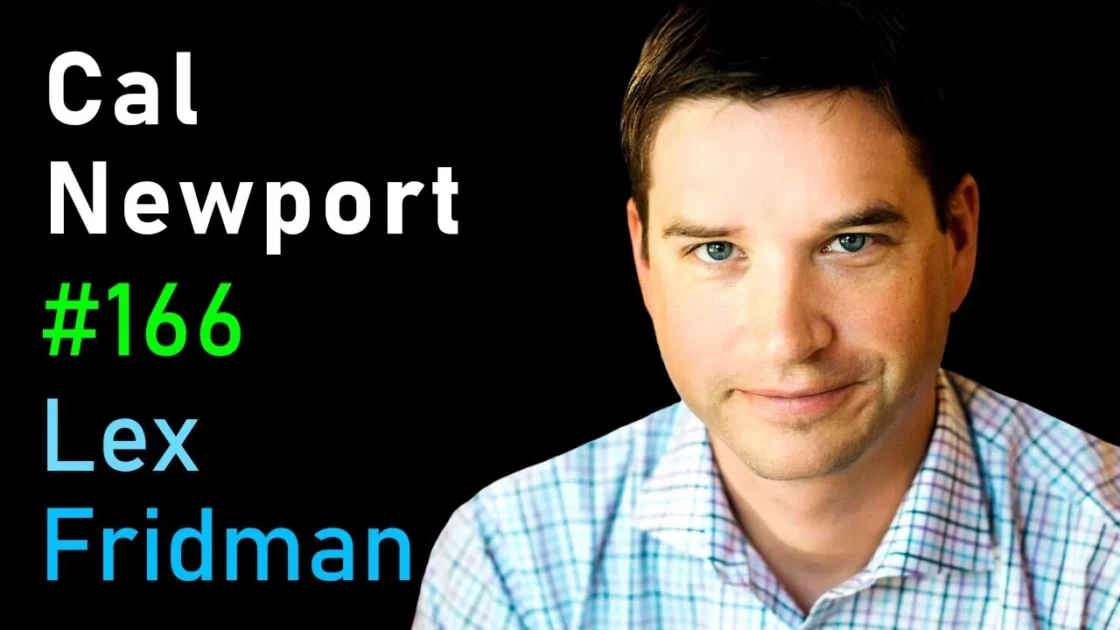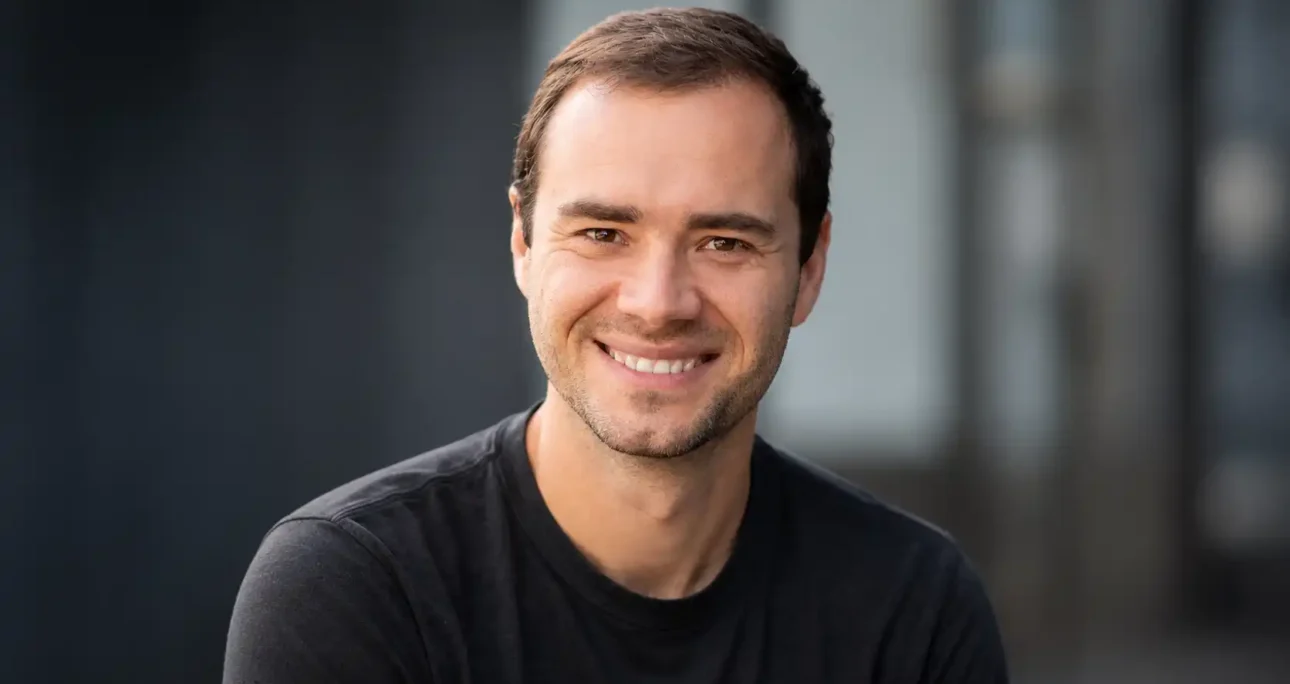
Andrej Karpathy joined Anthropic on 19 May 2026 and Czech business media called him a Slovak native the next day. The record supports a narrower story: he was born in Slovakia, left at 15 and earned three degrees in Canada and the US. For a country spending 0.98% of GDP on research, he is a diaspora asset to court, not proof that Slovak institutions produce frontier AI researchers.
Table of Contents
Andrej Karpathy, the researcher who coined the term “vibe coding” and joined Anthropic on 19 May 2026, is Slovak by birth and North American by training. In a 2014 interview he said he was born in Slovakia and that his family moved to Toronto when he was 15. Wikipedia names Bratislava as his birthplace, a 2016 MIT Technology Review profile places his early childhood in Košice, and his own website mentions Slovakia nowhere. His three degrees come from Toronto, British Columbia and Stanford, and the employers that built his reputation are OpenAI, Tesla and Anthropic. The Slovak claim is therefore accurate and narrow. Slovakia supplied the first 15 years, while Canada and California supplied the career. That distinction decides what Slovakia can learn from him.
Karpathy’s own account is brief and consistent
Asked for a 30-second biography in a 2014 Data Science Weekly interview, Karpathy said he was born in Slovakia and that his family moved to Toronto when he was 15. It is the only first-person statement of origin among the sources reviewed, and it names a country rather than a city. Wikipedia and the Czech business outlet CzechCrunch both name Bratislava, which makes the capital the reported birthplace without a first-person source. A 2016 MIT Technology Review profile adds one childhood detail: at five or six, in Košice, he begged his parents for a PC and became the first person in town to own one. His own words settle the country of birth, and they leave the city open. Writers who say “born in Bratislava” and writers who say “grew up in Košice” are both defensible, because the sources describe different moments of the same first 15 years.
Toronto, Vancouver and Stanford built the researcher
His website lists the sequence. He studied computer science and physics at the University of Toronto from 2005 to 2009, where he first met deep learning in Geoff Hinton’s class and reading groups. A master’s at the University of British Columbia followed from 2009 to 2011, and a PhD at Stanford from 2011 to 2015 under Fei-Fei Li. At Stanford he designed CS 231n, a deep learning course that grew from 150 students in 2015 to 750 in 2017. In the 2014 interview he said he began with plans to work on quantum computing and left it after finding the classes “too distant, too limiting”. None of the three institutions is Slovak, and the site’s biography lists no Slovak school, employer or award. The timeline places the decisive choices, the turn to neural networks and the teaching that built his audience, in Canada and California between 2005 and 2015.
Open code and top labs explain the rise
Each step gave him access that compounded. Hinton’s class at Toronto introduced the field, and Tesla’s own 2017 statement credits him with work on ImageNet during his Stanford PhD under Fei-Fei Li. His site lists internships at Google Brain in 2011, Google Research in 2013 and DeepMind in 2015. MIT Technology Review documents the recruitment route: OpenAI founder Greg Brockman noticed Karpathy after he posted the code of a neural network that generates text in any style, then used each new hire to attract him. In June 2017 Tesla announced him as Director of AI and Autopilot Vision, reporting directly to Elon Musk. Public code, a popular course and proximity to the top labs turned a PhD student into a founding OpenAI researcher. Nothing in that chain ran through Slovakia, which is why the Slovak label describes his origin and not his method.
Anthropic hired a method as well as a name
Karpathy announced the move on X on 19 May 2026, writing that the next few years at the frontier of large language models would be “especially formative”. Anthropic told TechCrunch he would start a team that uses Claude to accelerate pre-training research, meaning the large training runs that give Claude its core knowledge and one of the costliest phases of building a frontier model. He works under team lead Nick Joseph. The mandate follows his own experiment: in March 2026, Fortune reports, he left a coding agent running unsupervised for two days on a small language model, and after 700 experiments and 20 self-found improvements he said the same changes cut training time on a larger model by 11%. Anthropic is buying a method for automating research, not only a celebrity name. TechCrunch reads the hire as a sign that Anthropic expects AI-assisted research, rather than compute alone, to keep it competitive with OpenAI and Google. That is the outlet’s interpretation, and this review identified no public result from the new team.
Slovakia spends 0.98% of GDP on research
The country he left funds research well below the EU pattern. The Slovak analytical institute VAIA reported in December 2025 that Slovak R&D spending reached 0.98% of GDP in 2024, 22nd in the EU, or about €236 per resident. Companies performed research worth 0.6% of GDP, against an EU average of 1.5%, so Slovak business carries 40% of the average EU effort, by our calculation from VAIA’s figures. Public-sector R&D stood at 0.39% of GDP against 0.72% for the EU. Spending has held near 1% for three consecutive years, R&D personnel equal 1% of total employment against an EU average of 1.69%, and the strategic goal remains 2% of GDP. A Slovak-born researcher who wants frontier-scale work meets a domestic market that funds business research at 40% of the EU rate. This is our reading of the data. It describes today’s opportunity gap and cannot show why any individual left, since Karpathy’s family emigrated more than two decades before these figures were published.
Slovak institutions now court the diaspora
Slovak officials have treated Karpathy as an asset abroad before. On 21 September 2017, President Andrej Kiska met him at Tesla during a US working visit, and the presidential office quoted Kiska saying Slovakia must consider what it can do to bring people like him home. On the same trip, TASR reported, Kiska argued that Slovakia should close at least a third of its universities and fund only the best faculties. The diaspora effort has since become a funded programme. KInIT, the Kempelen Institute of Intelligent Technologies in Bratislava, ran slovaks.ai from January 2025 to June 2026 with EU NextGenerationEU recovery money. The project built a map of Slovak AI professionals at home and abroad across 17 categories and more than 200 topics, and it held events in Slovakia and abroad, including San Francisco in March 2026 and Prague in June 2026. The policy bet is that Slovak AI talent abroad can be networked even where it cannot be brought home. KInIT itself describes brain drain in information technology as a long-term problem that keeps Slovakia behind in innovation.
Claim, evidence and status in one view
| Claim | Best evidence | Status |
|---|---|---|
| Born in Slovakia | Karpathy’s 2014 interview | Confirmed in his own words |
| Born in Bratislava | Wikipedia, CzechCrunch | Reported, no first-person source |
| Childhood in Košice | MIT Technology Review, 2016 | Reported by one source |
| Left Slovakia at 15 | Karpathy’s 2014 interview | Confirmed in his own words |
| Degrees from Slovak institutions | Karpathy’s own website | None listed |
| Met President Kiska in 2017 | Presidential office, TASR | Documented |
Four of the six rows rest on his own words, his own website or official records, and only the birth city and the childhood town depend on secondary reporting. The one row that would support a stronger Slovak claim, a degree or employer in Slovakia, is empty.
The 2024 budget data cannot explain a 2001 departure
Three limits constrain the thesis. The first is timing. Karpathy turned 15 in October 2001, so his family left around 2001 or 2002, and spending figures from 2024 cannot explain a move made more than 20 years earlier. No source reviewed states why the family emigrated, so any link to research funding would be speculation. The second is that Slovak formation is undocumented, not disproven. CzechCrunch reports that his parents were engineers, and MIT Technology Review places his first computer in Košice, so the first 15 years may have shaped him in ways no source measures. The third is that labels vary. Wikipedia calls him Slovak-Canadian, and no source reviewed states his current citizenship, which means “Slovak” should be read as origin and not as nationality. The phrase “one of the most prominent” is supported, because TIME named him to its 2024 TIME100 AI list and Fortune calls him one of AI’s most influential voices, yet no ranking exists that could prove “most”. The narrow claim survives every test, while the broad claim that Slovakia produced a frontier AI researcher does not. A reader who wants the broad version needs a Slovak school, lab or employer in his record, and the sources reviewed show none.
Three decisions for editors, universities and employers
For Slovak editors, the safe formula is “Slovak-born researcher who studied in Canada and the US”, with the birthplace city attributed to its source instead of asserted. Headlines that call him a Slovak AI success credit Slovak institutions with work the record places elsewhere. For universities and institutes such as KInIT, the useful measure of a diaspora programme is collaboration, meaning joint projects, visiting posts and funded returns, because counting famous names adds no research capacity. For employers, VAIA reports that Slovak computer programming firms performed €178 million of R&D in 2024, next to €145 million in motor vehicle manufacturing, so software is where Slovak business research already concentrates. A firm in that group that cannot offer frontier-scale compute can still offer diaspora researchers specific problems and visiting roles, which is our analysis and not a documented practice. Bring diaspora talent in for projects first and for jobs second. In our judgment a project is cheaper to start than a hire and easier to evaluate, and it shows whether a relationship can support the second step.
The test is whether Slovak ties outlast the headlines
The evidence supports a forward judgment with conditions. Karpathy’s Anthropic role concerns automating pre-training research, and no source indicates that any of that work will sit in Slovakia, so the practical value of his origin is network value: introductions, talks and public teaching. His lectures are already online on YouTube, and he wrote that he plans to resume education work “in time”, although TechCrunch notes it is unclear whether he will continue Eureka Labs. Three developments would strengthen the Slovak case: a documented collaboration between him and a Slovak institution, a successor to slovaks.ai after its June 2026 end date, and Slovak R&D spending rising above 1% of GDP in the 2025 figures. A fourth year of stagnation near 1% would weaken the claim that diaspora networks alone can narrow the gap. Karpathy’s story will count for Slovakia only if Slovak institutions, not headlines, turn early talent into frontier work at home. Until one of those three developments appears in the record, the accurate sentence remains the narrow one: a Slovak-born researcher, trained abroad.
Author:
Jan Bielik
CEO & Founder of Webiano Digital & Marketing Agency
This article is an original analysis supported by the sources cited below
Next Generation Machine Learning – Training Deep Learning Models in a Browser: Andrej Karpathy Interview Karpathy’s own 2014 answer that he was born in Slovakia and that his family moved to Toronto when he was 15, plus his account of leaving quantum computing for machine learning.
Andrej Karpathy His own career timeline, which lists the Toronto, UBC and Stanford degrees, the OpenAI and Tesla roles, the CS 231n enrolment figures and the internships, and mentions Slovakia nowhere.
Andrej Karpathy The reference entry naming Bratislava as the birthplace, describing him as Slovak-Canadian and dating the Anthropic announcement to 19 May 2026.
Hot Commodity MIT Technology Review’s 2016 profile, the source for the childhood in Košice and for how Greg Brockman recruited Karpathy to OpenAI after he published neural network code.
Tesla hires deep learning expert Andrej Karpathy to lead Autopilot vision TechCrunch’s June 2017 report with Tesla’s statement on his title, his reporting line to Elon Musk and his ImageNet and Stanford background.
President Kiska discussed transport innovations in California The Slovak presidential office’s record of the Thursday meeting with Karpathy at Tesla and of Kiska’s remark about bringing such people back to Slovakia.
Kiska: Third of Universities Should Be Closed; Money Given Only to Best The TASR report of 22 September 2017 that independently dates the Karpathy meeting and carries Kiska’s remarks on research centres and university funding.
U of T CS alumni among Time magazine’s TIME100 Most Influential People in AI The University of Toronto computer science department’s confirmation that TIME placed Karpathy on its 2024 TIME100 AI list, with TIME’s description of his work.
OpenAI co-founder Andrej Karpathy joins Anthropic’s pre-training team The 19 May 2026 report with Karpathy’s X post, the team under Nick Joseph, Anthropic’s description of his mandate and the note that his Eureka Labs plans are unclear.
Andrej Karpathy, OpenAI founding member and inventor of ‘vibe coding,’ defects to Anthropic Fortune’s account of the vibe coding post, the March 2026 autoresearch experiment with its 700 experiments, 20 optimizations and 11% result, and its description of his influence.
Budoval ChatGPT, pracoval pro Muska. Slovák Karpathy teď jde do Anthropicu Forbes Česko’s 20 May 2026 report, which calls him a Slovak native and dates his 2017 move from OpenAI to Tesla at Musk’s invitation.
Přestup, který nikdo nečekal. Spoluzakladatel OpenAI se slovenskými kořeny jde do konkurenčního Anthropicu CzechCrunch’s 20 May 2026 report, used for the Bratislava birth, his engineer parents and the Czech framing of him as a Slovak native.
Výdavky na VaV stabilne na úrovni 1 % HDP, mení sa štruktúra v prospech podnikov The December 2025 VAIA analysis behind every Slovak R&D figure used here, including the 0.98% of GDP, the EU comparisons and the €178 million in computer programming.
slovaks.ai: Cultivating the AI community of Slovaks around the world KInIT’s project page with the January 2025 to June 2026 duration, NextGenerationEU funding, the map of Slovak AI professionals and the statement on IT brain drain.
Cover image: Andrej Karpathy – https://karpathy.ai/
| Citing this article? Brief excerpts are welcome. Please credit Webiano.digital, name the author where stated, and include a link to https://webiano.digital and to this original article. Full or substantial republication requires prior written permission. Read our Copyright and Content Use Policy. |
This article was prepared with the assistance of artificial intelligence tools. The content underwent expert human review, and Webiano Digital & Marketing Agency assumes editorial responsibility for its final version and publication.