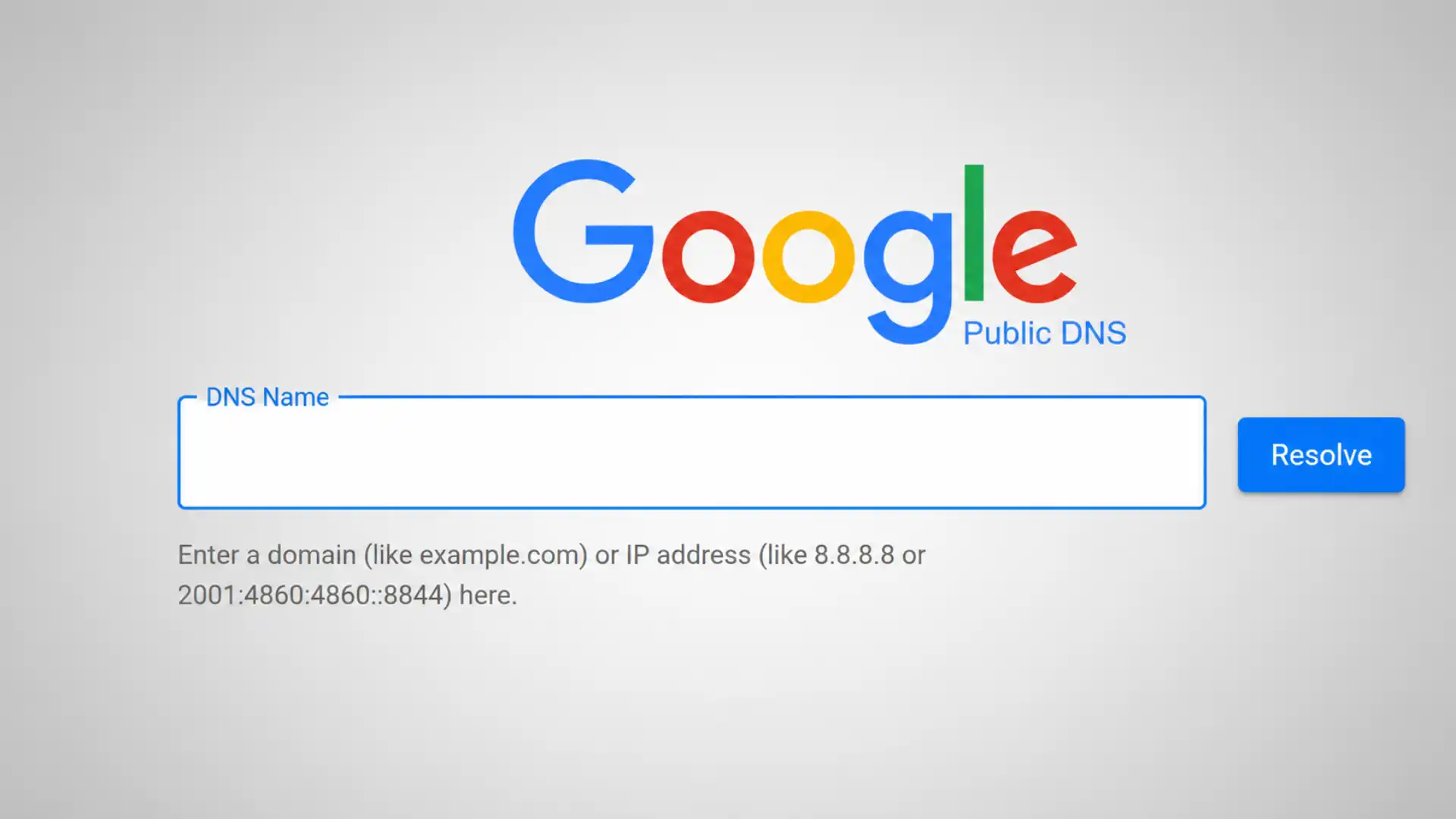
August 8 looks tailor-made for Google Public DNS because its best-known IPv4 address is 8.8.8.8. The historical record says otherwise: Google announced the resolver on December 3, 2009, and its famous numerical anniversary fell on August 12, 2018. The more interesting story is how an easy-to-remember address became shorthand for a global layer of internet infrastructure.
Table of Contents
No: August 8 is not the official birthday or documented annual “holiday” of 8.8.8.8. Google announced Google Public DNS on December 3, 2009, introducing 8.8.8.8 and 8.8.4.4 as public resolver addresses. The date 8/8 is an irresistible visual pun, but the service’s historical anniversary is tied to its December launch, not to the digits in the address.
There was, however, a much better Google-sanctioned joke. In August 2018, the company marked the moment when Google Public DNS was 8 years, 8 months, 8 days and 8 hours old. Contemporary coverage placed that instant at 00:30 UTC on August 12, 2018, calculated from the original announcement. That one-off “8.8.8.8 years” anniversary explains why the idea of a special day for 8.8.8.8 feels so plausible.
The distinction matters beyond trivia. 8.8.8.8 is not a single machine waiting at one fixed place, and Google Public DNS is not merely a catchy number. It is a globally distributed recursive DNS service. The address became memorable because humans can type it from memory; the infrastructure behind it became important because networks can route users toward nearby Google capacity. The joke is about the digits, but the achievement is architectural.
The birthday belongs to December, not August
Google’s own launch post is unusually clear about the date. On December 3, 2009, the company announced Google Public DNS as an experimental public DNS resolver intended to improve speed, security and the validity of DNS responses. The launch documentation presented the service as an alternative to the DNS resolver supplied by a user’s existing provider. That makes December 3 the defensible anniversary date if the question is when the public service began.
The confusion around August 8 comes from the address itself. In American-style month/day notation, August 8 becomes 8/8; remove punctuation and it visually echoes the first half of 8.8.8.8. But there is no evidence in the reviewed Google documentation of an annual 8/8 observance for the resolver. The documented playful milestone was different: Google celebrated the service reaching an age whose four components were all eight. Independent reports in August 2018 described the timestamp as eight years, eight months, eight days and eight hours after launch.
The launch date also clarifies a common category error: an IP address does not have a birthday independently of the service history being discussed. Addresses can be reassigned, announced through different routes or used by changing infrastructure. Here, the meaningful historical event is Google’s public introduction of the resolver service and its published endpoints. Treating the digits themselves as if they created an annual observance confuses a memorable identifier with the chronology of the system behind it.
That distinction is useful when internet folklore hardens into “facts.” A memorable numerical coincidence can spread faster than the underlying chronology. In this case, the chronology is easy to audit because the original announcement is still available and dated. 8/8 is a good unofficial geek joke; December 3 is the historical launch anniversary. The 2018 event belongs in a third category: a one-time engineered celebration of the address’s visual identity, not a recurring holiday.
Four eights became a piece of internet memory
The power of 8.8.8.8 starts with an interface problem: infrastructure is easier to use when people can remember the endpoint. Google’s current documentation still tells users to configure 8.8.8.8 and 8.8.4.4 for IPv4, while also publishing IPv6 resolver addresses. A network administrator troubleshooting a broken resolver can recall “four eights” without searching a manual, which gives the address a practical advantage that most IP numbers never acquire.
That human factor matters in emergencies and routine support. A resolver address is often entered when the very network service that would normally help a user search for instructions is malfunctioning. A short repeated pattern reduces transcription mistakes and makes verbal support easier. None of that proves lower latency or better privacy, but it gives a public resolver a distribution advantage: people can pass the endpoint to one another without first passing a link.
That memorability became branding without requiring a conventional product name at the moment of use. When someone says “try 8.8.8.8,” the number itself identifies both the endpoint and, for many technical users, the operator. Wired’s launch-day report even highlighted the unusual memorability of 8.8.8.8 and 8.8.4.4. The address functions almost like a logo that can be typed into a router.
Cloudflare later made the same numerical logic explicit with 1.1.1.1. Its 2018 launch post said the company chose April 1 in part because 1.1.1.1 contains four ones, making 4/1 an intentionally geeky launch date in US notation. The comparison is revealing. Cloudflare deliberately matched a calendar date to its address; Google did not launch 8.8.8.8 on August 8. Google instead retrofitted the number into the 2018 “8.8.8.8 years” celebration.
Memorable infrastructure lowers the human cost of configuration. That does not make the underlying service technically superior, but it makes the endpoint easier to communicate, support and remember. The address therefore sits at an unusual boundary between networking utility and cultural shorthand.
A resolver sits between users and the DNS hierarchy
Calling 8.8.8.8 a “DNS server” is understandable, but recursive resolver is the more precise description of its role. The DNS standards distinguish the domain name space, name servers and resolvers. Resolvers obtain information by querying name servers, using cached information when available and pursuing referrals when necessary. Google itself describes Public DNS as a free global DNS resolution service and explicitly distinguishes it from Google Cloud DNS, which is an authoritative DNS hosting product.
When a device needs the address associated with a domain name, it commonly asks a recursive resolver. If the answer is already cached and still valid, the resolver can return it quickly. The original DNS specification defines a time to live, or TTL, that controls how long a resource record may be cached before it should be discarded. Google’s 2009 launch post emphasized caching and prefetching as part of its performance strategy.
The recursive-versus-authoritative distinction also explains why a public resolver can affect the experience of many unrelated domains without owning any of them. The resolver asks the DNS hierarchy for answers and caches the results under protocol rules; the authoritative operators remain responsible for publishing the source records for their zones. Google Public DNS therefore sits in the request path, but it is not the registrar, hosting provider or authoritative operator for every name its users query.
That means 8.8.8.8 is not a giant directory containing a permanent copy of every name on the internet. It participates in a distributed system whose authoritative data lives across many independently operated zones. The resolver is an intermediary with memory, policy and network reach. Its usefulness depends on how efficiently it retrieves and caches answers, how reliably it validates data where applicable, and how close its serving infrastructure is to the user.
This is also why changing a device to 8.8.8.8 changes more than a numeric setting. It changes which recursive operator sees and handles the device’s DNS queries, subject to the transport and privacy choices involved.
One IP address does not mean one physical server
The intuitive picture of 8.8.8.8 is one computer with one address. Google’s architecture is different. Its FAQ says queries sent to Google Public DNS are routed to the nearest location advertising the anycast address, including 8.8.8.8 and 8.8.4.4, with the specific serving locations varying with network conditions and traffic load. The same visible IP address can therefore lead different users to different Google network locations.
That design also changes the meaning of an outage or latency complaint. Two users who both query 8.8.8.8 may traverse different networks and reach different Google serving sites, so one person’s experience cannot automatically be generalized to the whole service. Google’s own wording is careful: clients are routed to the nearest location advertising the anycast address, while the set of advertising locations changes with network conditions and load.
Anycast is the hidden mechanism that makes the address globally useful. Multiple locations advertise reachability to the same IP prefix through internet routing, and the routing system selects a path according to its normal policies and topology. From the user’s perspective, the destination remains 8.8.8.8. Operationally, the service can be delivered from distributed infrastructure rather than a single geographic endpoint. Google says its serving locations include nearly all of its core data centers and edge points of presence.
The distinction explains why “Where is 8.8.8.8?” is not answered well by a single city on a map. The address is stable while the responding location is context-dependent. It also explains why a public resolver can scale without asking users to memorize regional server addresses.
A second mechanism, EDNS Client Subnet, shows another consequence of centralized public resolution. Google documents ECS as a way for recursive resolvers to send partial client network information to authoritative servers so latency-sensitive services and content delivery networks can return geographically appropriate answers. That feature involves a trade-off between localization and information disclosure. A simple address at the device hides a surprisingly complex set of routing, caching and policy decisions behind it.
Security improved, but DNS security has distinct layers
Google launched Public DNS partly with security in mind. Its 2009 announcement discussed cache-poisoning risks and measures intended to make forged responses harder. Google’s current security documentation says Google Public DNS has fully supported DNSSEC since January 2013. DNSSEC itself is defined by the IETF as providing data-origin authentication and data-integrity protection for DNS data; it does not provide confidentiality.
The layered model prevents a frequent security misunderstanding. A resolver can validate a signed DNS answer yet still receive a client’s query over an unencrypted path; conversely, a client can use an encrypted channel to a resolver that then receives unsigned data from an authoritative zone. Security claims have to specify which link and which property are protected. Treating “secure DNS” as one indivisible feature conceals the difference between authenticity, integrity and confidentiality.
That separation is essential. DNSSEC helps a validating resolver determine whether signed DNS data is authentic and unmodified within the DNSSEC trust chain. It does not, by itself, hide the query from someone able to observe the network path between a client and resolver. Encrypted resolver transports address a different problem. RFC 7858 specifies DNS over TLS, which uses TLS to reduce opportunities for eavesdropping and on-path tampering. RFC 8484 does the same basic job for DNS over HTTPS, carrying DNS messages over HTTPS.
Google Public DNS supports both DoT and DoH in addition to traditional DNS over UDP or TCP. DNSSEC protects the authenticity of DNS data; encrypted transports protect the client-to-resolver channel. Neither should be described as a universal cloak over every part of name resolution.
The architecture therefore turns the catchy “four eights” into a security decision point. A user can choose Google as resolver operator, choose encrypted or unencrypted transport depending on device support and configuration, and rely on validation behavior implemented by the resolver. The number is easy; the security model is layered.
Privacy is the real price of choosing a public resolver
A recursive resolver necessarily occupies a sensitive position because it receives questions about the domain names clients are trying to resolve. Choosing 8.8.8.8 means choosing Google to perform that function instead of an ISP resolver, enterprise resolver or another public provider. Google’s current privacy documentation says Public DNS keeps temporary logs containing IP addresses and query details for 24 to 48 hours, while permanent logs use anonymized location information for aggregate analysis. It also says Public DNS personal data is not used for ad targeting.
The decision is therefore not “private DNS versus public DNS”; it is which resolver operator you trust, under which logging policy and transport. DNS over HTTPS or DNS over TLS can prevent ordinary on-path observers from reading the client-to-resolver exchange, but the resolver receiving the encrypted request still has to process the query. RFC 8484 explicitly frames DoH as protection against passive surveillance and active diversion on the wire, not as a way to make the resolver itself blind.
EDNS Client Subnet adds another wrinkle. Google documents ECS as a mechanism in which a resolver may send partial client network information to authoritative name servers to improve geographically tailored answers for services such as content delivery networks. That can improve localization, but it also demonstrates why DNS privacy cannot be reduced to whether the first hop is encrypted. Resolver behavior, protocol extensions and downstream disclosure all belong in the evaluation.
Competition among public resolvers makes those trade-offs visible. Cloudflare launched 1.1.1.1 in 2018 with privacy as a central selling point, making resolver privacy an explicit competitive differentiator. The existence of credible alternatives means 8.8.8.8 should not be treated as a default that ends the discussion.
For individuals, the practical question is often modest: does the chosen resolver offer the reliability, privacy policy, filtering behavior and encrypted transport support they want? For organizations, resolver choice can also intersect with monitoring, malware controls, internal names and compliance. Memorability is convenient, but governance should outrank convenience.
The famous address is not a universal troubleshooting cure
Typing 8.8.8.8 into DNS settings is a common diagnostic move because it can test whether a problem lies with the resolver currently configured. Google publishes detailed configuration instructions for major operating systems and routers. Yet replacing a resolver is not a proof that every internet problem is a DNS problem. A failed route, captive portal, firewall rule, local network outage, VPN policy or broken authoritative zone can produce symptoms that a resolver change will not fix.
Google’s own troubleshooting documentation advises users with persistent resolution problems to test reachability and DNS behavior rather than assuming the resolver is always the cause. 8.8.8.8 is a useful diagnostic endpoint, not a magic repair command. In managed environments, hard-coding an external resolver can also bypass local DNS policy or internal domain resolution, so an action that helps on a home network can be wrong inside a company.
A controlled test is more informative than a permanent reflex. Comparing the same lookup through the configured resolver and an alternative can help isolate where failure occurs, while reachability tests can show whether the resolver endpoint itself is accessible. Google’s troubleshooting guidance is built around that kind of diagnosis. The point is not that 8.8.8.8 should never be used for testing; it is that a successful test should narrow the fault domain rather than end the investigation.
The same caution applies to internet service providers. Google tells ISPs that Public DNS can be used as an emergency fallback, but warns that high query volumes can encounter rate limiting if sustained traffic per client IP exceeds documented thresholds. That is a reminder that public availability does not erase operational constraints.
The strongest reason 8.8.8.8 became a troubleshooting reflex is still its memorability. Anyone can dictate it over a phone call, write it on a whiteboard or enter it without copying a long string. That human advantage is real. The technical diagnosis still has to come afterward.
IPv6 proves the brand is bigger than the digits
If 8.8.8.8 were the service rather than the address, the transition to IPv6 would be awkward. In reality, Google Public DNS also publishes IPv6 resolver addresses, including 2001:4860:4860::8888 and 2001:4860:4860::8844. The familiar IPv4 number remains the cultural icon, but Google Public DNS is a service reachable through multiple protocol families and transports.
Google also operates Public DNS64 for IPv6-only networks that use NAT64. Its documentation explains that DNS64 can synthesize IPv6 AAAA answers for IPv4-only destinations so compatible IPv6-only clients can reach them through a NAT64 gateway. The service uses separate IPv6 resolver addresses and requires the network to have an appropriate NAT64 path. That is a much more technical role than the simple “internet phone book” metaphor suggests.
IPv6 also shows why memorability is relative to notation. The IPv6 forms preserve the repeated-eight motif in their endings, but they are still much less likely to be recalled and dictated casually than 8.8.8.8. Google can keep the brand value of the IPv4 endpoint while supporting newer networking requirements through other addresses. The operational system can diversify even when public recognition remains concentrated on a single four-octet string.
This matters for the anniversary question because it separates identity from implementation. The string 8.8.8.8 is the most famous handle, not the complete definition of the system. The service has accumulated DNSSEC validation, encrypted transports, IPv6 reachability, DNS64 support and globally distributed anycast delivery across its life.
A future internet could make the IPv4 address less operationally central while leaving it culturally recognizable, much as an old telephone number can outlive the technology around it. The four eights are durable branding attached to evolving infrastructure. Their fame tells us more about human memory and network operations than about the boundaries of the underlying service.
The best celebration is accuracy about what 8.8.8.8 represents
There is a charming answer and a precise one. The charming answer is that August 8 is an excellent unofficial day for network engineers to make an 8.8.8.8 joke. The precise answer is that Google Public DNS launched on December 3, 2009, and the documented numerical celebration occurred on August 12, 2018, when its age lined up as 8 years, 8 months, 8 days and 8 hours. No reviewed primary source establishes August 8 as an official recurring holiday for the address.
The date myth is therefore a useful test of technical storytelling. A good story notices the coincidence; a reliable story checks it against the primary record. Here the correction does not make the subject less interesting. It makes it better: Google’s actual 2018 celebration was more intricate than a simple 8/8 date, and the address’s continuing fame comes from real engineering and human-factors choices rather than a fabricated holiday.
The more durable lesson is why the joke keeps working. 8.8.8.8 compresses a complicated service into four identical digits. Behind them sit recursive resolution, caching, DNSSEC validation, encrypted transports, privacy policies, anycast routing and an evolving IPv4/IPv6 environment. It is difficult to imagine a better example of invisible infrastructure acquiring a public identity.
For communications teams and technology publishers, the editorial decision is straightforward: mark 8/8 as a playful hook if desired, but label it as such. Do not rewrite the launch date to fit the numerology. For network operators, the practical decision is equally clear: choose a resolver on architecture, policy, performance and security requirements, not on the elegance of its address.
The forward judgment is conditional but simple. As long as IPv4 remains widely used and Google keeps 8.8.8.8 as a public resolver endpoint, the number is likely to retain its folklore status. If the operational role of IPv4 eventually recedes, the address may survive mainly as a symbol. Either way, its real anniversary will still begin with the record of December 3, 2009—not with the calendar coincidence of August 8.
The questions behind the four eights
No reviewed Google source designates August 8 as an official recurring “8.8.8.8 day.” Google Public DNS was announced on December 3, 2009.
The defensible launch anniversary is December 3, the date Google announced the service in 2009.
Yes. In 2018 Google marked the moment the service reached eight years, eight months, eight days and eight hours old; contemporary reports place that at August 12, 2018, 00:30 UTC.
No. Google uses anycast, so queries to 8.8.8.8 can be routed to different Google serving locations depending on network conditions and routing.
Yes. Google documents 8.8.8.8 and 8.8.4.4 as the IPv4 addresses for Google Public DNS.
No. Google describes Public DNS as a resolver, while Cloud DNS is its authoritative DNS hosting service.
Not necessarily. Google supports traditional DNS as well as DNS over TLS and DNS over HTTPS; encryption depends on the transport and client configuration being used.
No. DNSSEC provides origin authentication and integrity for DNS data, not confidentiality. Encrypted transports such as DoH or DoT address confidentiality on the client-to-resolver path.
Yes. Google publishes IPv6 resolver addresses and also offers a separate DNS64 service for appropriate IPv6-only networks using NAT64.
Author:
Jan Bielik
CEO & Founder of Webiano Digital & Marketing Agency
This article is an original analysis supported by the sources cited below
Introducing Google Public DNS: A new DNS resolver from Google
Google’s original December 3, 2009 launch announcement establishes the service’s launch date, initial goals and early caching and security design.
Google’s current product documentation confirms the resolver’s purpose, IPv4 endpoints, encrypted transport support and distinction from authoritative Cloud DNS.
Get Started with Google Public DNS
Google’s configuration guide provides the current IPv4 and IPv6 resolver addresses and documents how users configure them.
Google’s FAQ explains the anycast architecture and how clients are routed among serving locations.
Google’s privacy documentation supplies the current descriptions of temporary and permanent logging and stated limits on advertising use.
Google’s security guide establishes support for DNS over HTTPS and DNS over TLS and explains their client-to-resolver security role.
Google’s DNS64 documentation explains its IPv6-only/NAT64 use case, resolver addresses and operational limitations.
Google’s ECS guidance explains how partial client-network information can be used to support geographically appropriate DNS responses.
RFC 1034: Domain names — concepts and facilities
The foundational DNS specification supports the distinctions among the domain name space, name servers and resolvers.
RFC 1035: Domain names — implementation and specification
The DNS implementation specification supports the article’s explanation of resource records and TTL-based caching.
RFC 4033: DNS Security Introduction and Requirements
The IETF standard defines DNSSEC’s data-origin authentication and integrity functions and explicitly distinguishes them from confidentiality.
RFC 7858: Specification for DNS over Transport Layer Security
The IETF standard establishes DNS over TLS as a mechanism for protecting DNS traffic from eavesdropping and on-path tampering.
RFC 8484: DNS Queries over HTTPS
The IETF standard establishes DNS over HTTPS and supports the article’s explanation of encrypted client-to-resolver transport.
Google’s Public DNS turns ‘8.8.8.8 years old’
Contemporary independent reporting records the August 12, 2018 numerical anniversary and its eight-years, eight-months, eight-days, eight-hours framing.
Google launches a public DNS service
Launch-day independent reporting confirms the December 2009 debut, the 8.8.8.8 and 8.8.4.4 addresses and early privacy scrutiny.
Google’s troubleshooting guide supports the diagnostic distinction between resolver failures, network reachability problems, stale data, hijacking and routing issues.
Google’s ISP guidance documents rate limits, emergency-fallback use and the lack of a service-level agreement for critical deployments.
Cloudflare’s launch post provides the comparison showing an operator explicitly matching a memorable resolver address to a calendar date.
| Citing this article? Brief excerpts are welcome. Please credit Webiano.digital, name the author where stated, and include a link to https://webiano.digital and to this original article. Full or substantial republication requires prior written permission. Read our Copyright and Content Use Policy. |
This article was prepared with the assistance of artificial intelligence tools. The content underwent expert human review, and Webiano Digital & Marketing Agency assumes editorial responsibility for its final version and publication.