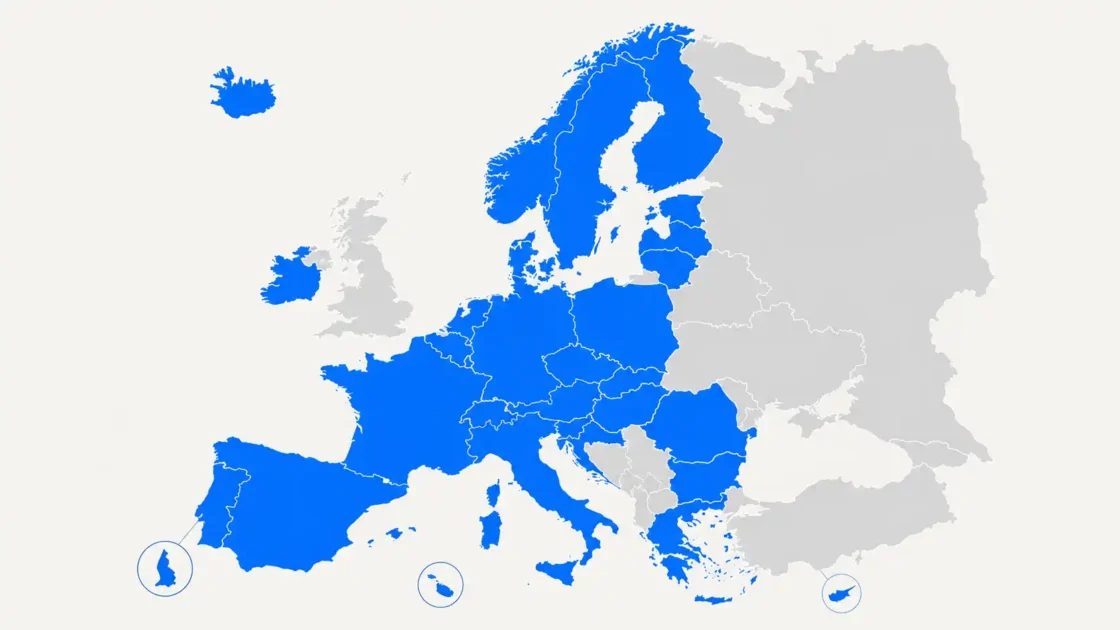
Country marketing did not create the 2025 tourism boom by itself. It worked where the promise of a country matched air access, price, accommodation supply, seasonality, safety, search visibility and a reason to book now. The strongest evidence is not a slogan. It is the movement of nights, arrivals, foreign shares, shoulder-season demand and visitor spending across countries that were already competing in a crowded travel market.
Table of Contents
Marketing moved from visibility to demand shaping in 2025
Country marketing used to be judged mainly by recognition. A destination wanted people to know its flag, landmarks, food, coastline, capital city or national story. In 2025, that test was too weak. Most major tourism countries were already visible. The harder task was to change which country a traveller chose, when they travelled, how long they stayed, how much they spent, and whether they moved beyond the obvious hotspots.
The tourism market in 2025 was not a blank map waiting to be filled by advertising. It was a market with high demand, rising prices, capacity stress, uneven recovery across source markets, crowded icons, climate pressure and sharper competition for attention. Eurostat recorded 3.09 billion nights spent in EU tourist accommodation in 2025, a record level and 2.2% above 2024. The same Eurostat release says the increase was mainly driven by international tourism, with foreign guests accounting for three quarters of the EU’s annual growth in nights.
That point matters because country marketing is more sensitive to international demand than to routine domestic demand. A resident may take a domestic trip because of school holidays, weather, family obligations, petrol prices or habit. A foreign traveller usually needs a stronger chain of persuasion: awareness, desire, trust, transport, budget, itinerary, booking confidence and social proof. Marketing sits inside that chain. It does not replace the chain.
The clearest 2025 lesson is that marketing affects tourism most when it changes a traveller’s mental shortlist before the booking moment. A country does not need every potential visitor to love it. It needs enough high-intent travellers in enough valuable source markets to place it above competing options at the point where time, money and logistics become real. In 2025, that meant marketing had to answer practical questions: Is this country worth the price? Is it easy to reach? Is it safe? Is the experience distinctive? Is there a reason to go this year rather than later? Is there an alternative to the crowded places everyone already knows?
The European Travel Commission’s 2025 reporting shows that travel to and within Europe remained strong, with year-to-date international arrivals and overnights up 3.2% and 3.1% respectively compared with 2024 in its Q4 assessment. The same year brought warnings about price pressure, operational costs and unbalanced tourism in hotspots. ETC’s Q2 report noted moderate arrivals growth, weaker affordability for budget-conscious travellers and protests against overcrowding in some destinations.
That combination explains the change in country marketing. The question was no longer only “How do we attract tourists?” It became “Which tourists should we attract, from which markets, in which months, to which regions, and under what social contract with residents?” This is where country marketing becomes strategic rather than decorative. A campaign can raise awareness, but a national tourism system must decide whether it wants peak-season volume, off-season stability, high-spend visitors, regional spread, repeat visits, event demand, business events, cultural travel, rail travel, nature travel or domestic resilience.
In 2025, the countries that looked strongest were not always the ones with the loudest branding. They were the ones where branding, product, transport and market fit reinforced each other. Marketing made demand more selective. It helped countries reposition old assets, give lesser-known regions a stronger reason to appear in searches, connect cultural stories to itineraries, persuade airlines and tour operators, and reduce reliance on one peak season.
The result is not a simple cause-and-effect story. A campaign launches, visits rise, and the campaign gets all the credit. That is the easy but often wrong version. Tourism demand moves through several layers. Marketing is one layer. The 2025 data shows that it matters, but it matters most when it is tied to bookable supply, clear segment targeting and measurable demand signals.
The 2025 tourism base was already at record scale
The first fact about 2025 is scale. The tourism sector was no longer discussing recovery as a future ambition. Global international tourist arrivals reached an estimated 1.52 billion in 2025, up 4% from 2024, according to UN Tourism’s World Tourism Barometer data page. WTTC reported that travel and tourism contributed US$11.6 trillion to global GDP in 2025, equal to 9.8% of the global economy, and supported 366 million jobs.
This scale changes how marketing works. When the market is depressed, marketing often tries to restore confidence. When the market is expanding, marketing tries to steer demand. It decides whether growth piles into the same places or moves into new seasons, regions and products. In 2025, the second task became more urgent.
Eurostat’s annual EU accommodation data gives a useful view because nights spent measure actual stays, not just border crossings. The EU reached 3.09 billion nights in tourist accommodation in 2025, and Q4 alone generated about 540 million nights. Eurostat also reported that the top three countries in Q4 2025 — Spain, Germany and Italy — accounted for nearly half of EU nights in that quarter, with France close behind.
The uploaded Eurostat monthly extract used for this article covers June to December 2025 for the relevant 2025 columns. In that seven-month period, the EU-27 recorded about 2.15 billion nights in tourist accommodation establishments. Those months are not the whole year, but they contain the high season, the early shoulder season and Q4. They are useful for seeing how marketing-sensitive demand behaves when competition is intense.
The split is revealing. From June to December 2025, the EU-27 recorded about 1.06 billion foreign nights and 1.09 billion domestic nights in the same accommodation categories. Foreign demand represented roughly 49.4% of the seven-month total. The foreign side was more volatile and more exposed to air access, source-market income, currency movement, geopolitical confidence and campaign visibility. Domestic demand was steadier but more tied to calendar, wages, weather and regional habits.
This is where country marketing becomes measurable. If a country’s marketing works only as general fame, the effect is hard to isolate. If it changes the mix of visitors, it becomes visible in more specific metrics: more foreign nights from target markets, stronger shoulder-season occupancy, higher regional dispersion, better conversion from campaign markets, longer stays, higher spend per visitor, or stronger resilience when competing destinations discount.
Marketing influence is therefore not best measured by total arrivals alone. A country may receive more visitors because flights were cheaper, a competitor had poor weather, a visa rule changed, a major event took place, or residents in nearby markets took more short breaks. A mature tourism marketer asks a narrower question: Did the campaign move demand in the direction the country wanted?
EU tourist accommodation nights in the 2025 months covered by the Eurostat extract
| Month in 2025 | Total EU-27 nights | Domestic nights | Foreign nights | Foreign share | Total YoY change |
|---|---|---|---|---|---|
| June | 339.4m | 164.5m | 174.9m | 51.5% | +7.25% |
| July | 460.2m | 229.6m | 230.7m | 50.1% | +1.80% |
| August | 501.2m | 265.3m | 235.9m | 47.1% | +1.26% |
| September | 308.7m | 143.5m | 165.2m | 53.5% | +2.21% |
| October | 234.8m | 114.1m | 120.6m | 51.4% | +3.00% |
| November | 145.8m | 83.4m | 62.4m | 42.8% | +0.60% |
| December | 159.3m | 86.9m | 72.4m | 45.4% | +5.27% |
These figures are calculated from the 2025 columns in the Eurostat monthly extract for nights spent at tourist accommodation establishments, using the total, domestic and foreign country-of-residence blocks. The table shows a simple but powerful pattern: foreign demand was strongest as a share in June, September and October, while domestic demand carried more weight in August, November and December.
Data limits matter before interpreting causality
Tourism marketing attracts confident claims. Campaigns produce beautiful films, media impressions, social reach, partner activations and trade events. Governments then face pressure to prove that public spending generated arrivals. The problem is that tourism is affected by more forces than marketing alone. A serious 2025 analysis must separate correlation, contribution and causation.
Correlation means a campaign and a rise in tourism happen at the same time. Contribution means marketing likely played a role because the pattern matches campaign markets, timing, channels and product availability. Causation means the campaign can be isolated from other forces with credible measurement. Tourism rarely gives clean causation at country level because people do not travel for one reason.
The 2025 data in this article should be read through that lens. Eurostat nights tell us where accommodation demand happened. ETC data tells us regional direction. WTTC places tourism inside the economy. National tourism board sources show how countries positioned themselves. None of these sources alone proves that a specific campaign caused a specific number of nights. They do allow a strong analysis of where marketing had room to matter.
A good country marketing metric in 2025 was not “likes” or “views.” It was a chain of evidence. The country defined a target market. The campaign reached that market. Search, intent, airline capacity, tour operator demand or booking traffic moved. Accommodation nights, arrivals or spend then moved in the right season and region. That chain can still be imperfect, but it is much stronger than claiming that a viral video equals tourism growth.
This matters because the largest destinations can look successful even when marketing is doing little. Spain, France, Italy and Germany have huge tourism bases. They benefit from habit, proximity, repeat travel, dense transport networks, famous assets and deep accommodation supply. A campaign can add value, but total volume may rise even without it. Smaller destinations face the opposite problem: a successful niche campaign can show a big percentage increase from a small base, but the absolute number of additional nights may remain modest.
The 2025 EU data shows both effects. Spain, Italy, France and Germany dominated total accommodation nights in the June-December period. Yet their marketing influence must be interpreted differently from that of Malta, Poland, Slovenia, Slovakia or Türkiye. For the giants, marketing often shapes quality, dispersion and seasonality. For smaller or rising destinations, marketing can still reshape awareness and first-time choice.
There is also a methodological issue with “country marketing” itself. A country brand is not only the work of a national tourism office. It is built by films, food exports, sport, politics, migration, airlines, influencers, diaspora, safety perception, news coverage, visa rules, climate stories, trade fairs, hotels, airports, events and user reviews. In 2025, a traveller might first notice a country through a streaming series, see it again on TikTok, compare flight prices on a metasearch engine, ask an AI travel assistant for a seven-day itinerary, and then book through an online travel agency. The national campaign is one part of that path.
That does not weaken the role of marketing. It makes it more complex. The strongest country marketers in 2025 did not treat advertising as a standalone act. They treated it as a way to align all the signals a traveller sees. A country brand works when the official story matches what travellers find when they search, compare, book and arrive.
The mechanism of country marketing in tourism demand
Country marketing affects tourism through five practical mechanisms: salience, positioning, reassurance, conversion and distribution. These are not abstract ideas. They are visible in the way 2025 demand moved across seasons and markets.
Salience means the country appears in the traveller’s mind when a trip is being considered. It is the first filter. A traveller may want a warm February break, a family beach trip, a hiking holiday, a city weekend, a food route, a rail itinerary or a film-location visit. A country that is absent from the mental shortlist loses before price and product are compared. Marketing creates salience by repeating a clear association: Portugal for Atlantic value and culture, Greece for islands and heritage, Britain for screen tourism, Spain for varied regions, Austria for Alpine seasons, Croatia for the Adriatic, Poland for value and city breaks.
Positioning gives the country a reason to be chosen over alternatives. It answers the question: Why this country for this trip? In 2025, positioning became sharper because travellers faced high prices and many options. A generic “beautiful country” message was weak. Nearly every destination can show beaches, mountains, food and old towns. A stronger message connected a country to a specific type of trip, a specific audience and a specific moment.
Reassurance lowers perceived risk. This is critical for long-haul and first-time visitors. Reassurance comes from safety, entry clarity, transport reliability, language confidence, payment convenience, cleanliness, health confidence, climate information and trust in accommodation standards. Country marketing often presents reassurance through tone rather than direct argument. A campaign that feels open, specific and easy to imagine can reduce hesitation.
Conversion turns interest into bookings. This is where many country campaigns fail. A traveller may feel inspired but cannot find affordable flights, bookable itineraries, available rooms or clear regional routes. VisitBritain’s 2025 “Starring GREAT Britain” campaign is notable because it explicitly linked inspiration to bookings through work with partners in key inbound markets. VisitBritain says the campaign used film and TV locations to inspire travel, supported advertising in valuable inbound markets and partner work to convert interest into bookings.
Distribution decides where the demand lands. A campaign can send visitors to the capital or spread them across regions. It can push peak summer or shoulder season. It can sell famous icons or develop lesser-known routes. In 2025, distribution became a core policy issue because tourism growth was uneven. The EU Tourism Platform described 2025 as a year when destinations promoted off-season travel and regional alternatives to reduce pressure on popular hotspots and spread benefits more evenly.
When these five mechanisms align, marketing affects real tourism outcomes. When one breaks, the effect weakens. A brilliant brand film cannot overcome poor flight access. Strong air routes cannot carry a vague promise. A low-cost destination can attract visitors but still fail to raise value if marketing does not guide spending into richer experiences. A famous capital can fill hotels while the rest of the country remains unseen.
The 2025 market rewarded countries that treated marketing as a system. That system had to begin before the campaign and continue after the click. It had to include airlines, airports, rail operators, hotels, regional tourism boards, cultural institutions, event organisers, creators, travel agents, online travel agencies and data teams. Country marketing in 2025 was less about saying “visit us” and more about building a route from desire to arrival.
Attention is not demand until it meets access and capacity
A tourism campaign can make a country famous and still fail to increase tourism. The missing link is access. Travellers do not book a country; they book a route, a date, a room, a price and a plan. In 2025, access was one of the strongest filters between marketing and actual nights spent.
Air access matters most for island, long-haul and peripheral destinations. A traveller might be curious about Cyprus, Malta, Iceland, Norway, Türkiye or New Zealand, but curiosity becomes tourism only when flight schedules, fares and entry rules make the trip practical. ETC’s Q2 2025 report linked Cyprus’s arrivals growth to strategic location, infrastructure investment and marketing that emphasised year-round appeal. That is a classic example of marketing working with supply conditions rather than against them.
Access is not only aviation. Rail, road and ferry links shape domestic and intra-European demand. Countries with dense rail links and cross-border road markets can convert short breaks faster than destinations requiring complex planning. This helps explain why countries in Central Europe can benefit from value messaging and regional mobility. It also explains why Germany’s large domestic base remains resilient even when foreign share is lower. In the Eurostat June-December 2025 data, Germany’s foreign share in tourist accommodation nights was below 19% among the top countries, while domestic nights dominated.
Capacity matters because marketing can create frustration if it sells more demand than the country can absorb. Accommodation constraints, labour shortages, airport congestion, short-term rental pressure and local opposition can all turn successful marketing into political risk. The EU Tourism Platform’s 2025 review noted persistent workforce pressure, with tourism SMEs reporting hiring difficulty and hospitality vacancies remaining a concern. Marketing cannot ignore that. A destination that invites more visitors without service capacity damages its own reputation.
The access-capacity link changes the meaning of return on marketing spend. A national tourism organisation may produce strong campaign engagement, but the final economic result depends on whether airlines have seats, hotels have rooms, restaurants have staff and regions have transport. If supply is tight, marketing may raise prices rather than nights. That can be good for revenue but bad for resident sentiment if the benefits are concentrated.
This is why mature tourism countries increasingly use marketing to redirect demand. They do not need to fill every August bed in famous places. They need to build demand for May, June, September, October, winter city breaks, inland routes, rail itineraries, food regions, cultural events and business meetings. Marketing is most useful when it changes the shape of demand, not when it merely adds pressure to places already full.
The 2025 monthly EU data supports this view. July and August accounted for a huge share of the June-December accommodation nights. August alone reached about 501 million EU nights in the extract. Yet September and October had higher foreign shares than August. That pattern suggests a strategic opportunity: international marketing can support shoulder months when foreign visitors are more flexible than domestic families tied to school holidays.
For tourism businesses, this is the practical point. A hotel, attraction or tour operator should not ask only whether a national campaign is “good.” It should ask whether the campaign is connected to the months, markets and products that match its own capacity. A rural hotel needs a different country brand effect from a capital-city museum. A coastal resort needs help beyond peak weeks. A conference venue needs business-event positioning. A food producer needs itinerary integration. The national brand becomes useful when it reaches these commercial details.
The foreign visitor signal was the cleanest marketing-sensitive metric
Foreign visitor nights are not a perfect measure of marketing success, but they are one of the cleaner signals. Foreign travellers are more likely to be influenced by country-level positioning because they are choosing between countries. Domestic travellers often choose between regions inside the same country, where national branding plays a smaller role.
Eurostat reported that EU growth in 2025 was mainly driven by international tourism. Foreign tourists accounted for about three quarters of the 66.4 million additional annual EU nights in 2025, with Italy, France and Spain contributing more than half of the increase in foreign nights. That pattern fits the marketing argument. International demand is where country image, market access and cross-border competition are most visible.
In the June-December 2025 Eurostat extract, foreign nights represented about 49.4% of EU accommodation nights. But the share varied sharply by country. Croatia and Greece were highly foreign-dependent in the selected months, while Germany and Poland relied heavily on domestic demand. Spain, Italy, Portugal and Austria sat between those models, with large foreign shares but also meaningful domestic bases.
A high foreign share signals strong international pull, but it also brings exposure. A country that depends on foreign nights is more vulnerable to aviation disruption, currency shifts, source-market recessions, geopolitical news and climate events. Its marketing must do more than generate desire. It must diversify markets, protect reputation, lengthen the season and manage pressure on residents.
Croatia is a good example of a high-pull tourism country. In the June-December 2025 extract, more than 90% of Croatia’s nights among the selected top destinations were foreign. That does not mean marketing alone caused the demand. Croatia benefits from coastline, proximity to European source markets, road access, cruise and ferry dynamics, and a powerful Adriatic image. But marketing still matters because the country must defend its position against Greece, Italy, Spain, Montenegro, Albania and Türkiye.
Germany shows the other side. Its foreign share in the same period was low among major destinations, but total nights were huge. For Germany, country marketing aimed at foreign visitors can add value, but domestic tourism and business travel remain central. The brand task is less about inventing Germany as a destination and more about clarifying specific reasons to travel: cities, culture, events, Christmas markets, nature regions, industrial heritage, wine regions, cycling and rail-connected itineraries.
Foreign share also helps reveal the difference between volume and vulnerability. Greece’s high foreign share brings international revenue, but it also concentrates exposure in seasonal, island and air-connected demand. France’s lower foreign share in the extract does not mean weak international appeal; it reflects a very large domestic base. France can use marketing to pull long-haul and European visitors while still leaning on domestic travel in many regions.
The strategic lesson is that country marketing must be built around the actual demand structure of the country, not around a generic tourism playbook. A country with high foreign share needs market diversification and shoulder-season targeting. A country with high domestic share needs internal regional marketing and reasons for residents to choose domestic trips over outbound alternatives. A country with both needs segmentation, not a single national slogan.
Domestic tourism showed marketing has a second job
Domestic tourism is often underestimated in country branding, but 2025 showed why it matters. Domestic nights gave many countries stability when foreign demand was more exposed to exchange rates, air fares and global uncertainty. Eurostat’s first-half 2025 news release reported that foreign visitors accounted for almost half of EU overnight stays in H1 2025, with domestic nights still representing the other half.
Domestic marketing works differently from international marketing. It does not need to explain what the country is. Residents know the country, but they may not know its regions, off-season experiences, new rail routes, rural stays, festivals, nature parks or city breaks. Domestic marketing must overcome habit. It tells people that the familiar country still contains unfamiliar choices.
In the June-December Eurostat extract, domestic nights slightly exceeded foreign nights across the EU. The domestic side was especially strong in August, November and December. That makes sense. August is shaped by school holidays and family routines. November and December are influenced by short breaks, events, Christmas markets, winter openings, family visits and domestic cultural travel.
For national tourism offices, this creates a second strategic role. Country marketing is not only about exports. It can keep residents spending at home. That matters when outbound travel competes for household budgets. A Slovak, German, Polish, French or Italian resident choosing a domestic mountain, spa, city or coastal break is still supporting local accommodation, restaurants and transport. Domestic marketing can also spread demand to less-known regions because residents may be more willing than long-haul visitors to try smaller destinations.
The difference between domestic and foreign demand also affects campaign tone. International marketing often sells distinctiveness. Domestic marketing often sells rediscovery. International travellers may need iconic hooks; residents may need fresh packaging, events, routes and convenience. In 2025, countries that treated domestic tourism as a serious market had more resilience.
Poland is a strong case in the data. In the June-December 2025 extract, Poland recorded about 70 million total nights, with roughly 81% domestic. It also showed a strong aggregated year-on-year rise across the selected 2025 months. That pattern suggests a country where internal demand is central and where value, improved city appeal, regional tourism and domestic mobility can matter as much as foreign branding.
Domestic tourism also affects the resident politics of marketing. When residents see only foreign crowds and rising rents, marketing looks extractive. When they see tourism supporting local jobs, regional culture, transport, restaurants and domestic leisure, the sector has a stronger social base. That does not solve crowding, but it changes the conversation.
The 2025 lesson is not that domestic marketing should replace international marketing. It is that a country brand is stronger when residents recognise themselves in it. If a tourism campaign tells a story that locals find false, shallow or damaging, it weakens trust. If it gives residents reasons to travel within their own country and pride in lesser-known places, it builds a broader foundation for tourism.
Seasonality became the real test of national positioning
Seasonality is where country marketing becomes practical. A country can be famous in August and weak in February. It can fill beaches and fail to fill cities. It can attract foreign visitors in summer but rely on residents in winter. The 2025 data makes seasonality hard to ignore.
In the Eurostat extract, July and August accounted for around 44.7% of EU-27 nights between June and December 2025. Eurostat’s annual article also says July and August 2025 recorded 962 million EU nights, almost as many as the six slowest months combined. That is a structural fact, not a marketing accident. School calendars, climate, paid leave, coastal demand and cultural habits concentrate travel.
The marketing question is whether a country can soften that concentration. It may not be able to change the peak season dramatically, but it can build enough demand in adjacent months to improve asset use. September and October are especially valuable. Weather remains attractive in many destinations, families with young children and older travellers have flexibility, prices can be lower, and resident pressure may be less severe.
The June-December 2025 data shows foreign shares above 50% in June, September and October at EU level. That is a strong signal for country marketing. International visitors can be more flexible on timing than domestic families. Campaigns aimed at older travellers, couples, culture seekers, food travellers, hikers, cyclists, remote workers, business-event visitors and long-haul visitors can shift demand into the shoulder season.
This is one reason the language of tourism marketing changed in 2025. Countries no longer wanted only to be “beautiful.” They wanted to be year-round, diverse, accessible, cultural, active, local, lower-pressure and better value. Spain’s WTM 2025 messaging, for example, emphasised seasonal and geographical diversification alongside economic, social and environmental sustainability.
The commercial logic is clear. A hotel that is 95% full in August gains little from another August campaign unless rates rise. A hotel that is 55% full in October gains much more from a targeted shoulder-season push. The same applies to restaurants, guides, attractions, transport and event venues. Marketing can improve tourism productivity by filling spare capacity rather than only chasing more peak volume.
Seasonality also affects labour. A short, intense season creates hiring stress, housing strain and service inconsistency. A longer season supports steadier employment and investment. In 2025, with labour shortages still present across parts of European tourism, extending demand across months was not only a marketing preference. It was an operating need.
The countries that understand seasonality use different hooks by month. June can sell early summer without peak crowds. September can sell warm weather with culture and food. October can sell cities, wine, walking and events. November can sell wellness, gastronomy and business events. December can sell winter markets and family travel. A country brand becomes more profitable when it gives each month a job.
High foreign-share destinations showed both brand power and exposure
A high foreign share usually means the country has succeeded in becoming desirable beyond its borders. It also means the country is more dependent on outside conditions. The June-December 2025 data makes this contrast visible.
Among the top destinations in the Eurostat extract, Croatia, Greece, Austria, Portugal, Spain, Türkiye and Italy had high foreign shares. Croatia and Greece stood out most. Croatia’s selected-month foreign share was above 90%, and Greece’s was above 85%. These countries have powerful international images, but they also face the pressure that comes from being heavily chosen by non-residents.
Country marketing in such places has two jobs. The first is to defend international demand against rivals. The second is to manage where that demand goes. If marketing simply adds more tourists to the same coastal hotspots at the same time of year, it may raise revenue but also raise congestion, housing pressure, resident frustration and infrastructure stress. If it moves demand inland, off-season or toward higher-value experiences, it can improve the balance.
Greece illustrates the exposure side. Bank of Greece provides detailed travel services statistics through its Border Survey, covering travel receipts, inbound travellers, overnight stays and expenditure by origin. Those indicators matter because Greece’s tourism story cannot be measured only by arrivals. Average stay, spend per journey, regional distribution and non-EU demand all change the value of growth.
Portugal also shows the need to look beyond volume. Turismo de Portugal reported that in 2025 the country recorded 82.1 million overnight stays, up 2.2%, with 57.0 million from foreigners, and tourism receipts of €29.1 billion, up 5.0%. The gap between overnight growth and revenue growth suggests that value can rise faster than nights, which is often the goal of more mature marketing.
High foreign-share countries need careful source-market choices. A country can reduce risk by building demand from several markets, not only one or two. It can also target visitors with different seasonal patterns. Northern Europeans may travel for winter sun, Americans may favour culture and high-spend city routes, regional neighbours may book short breaks, and long-haul travellers may combine multiple countries.
The marketing risk is overpromising simplicity. A country may advertise untouched nature while visitors experience crowding. It may advertise local authenticity while local residents feel displaced. It may advertise affordability while prices rise sharply. In 2025, such gaps became more visible because travellers shared experiences instantly and residents challenged tourism growth more openly.
High foreign share is therefore not a trophy by itself. It is a responsibility. The more a country depends on foreign demand, the more its marketing must protect the destination from its own success.
Large countries proved scale can hide weak marginal influence
The biggest tourism countries benefit from structural advantages. Spain, Italy, France and Germany were the largest country-level destinations in the June-December 2025 Eurostat extract. Their totals reflected deep supply, famous assets, transport networks, repeat markets and long-established travel habits.
Scale can make marketing appear stronger than it is. If a country already receives hundreds of millions of nights, total volume can rise even when marketing is average. Weather, school calendars, flight capacity, exchange rates, one major event or competitor weakness can move millions of nights. A tourism board must therefore judge its work by marginal influence: which segments changed, which months improved, which regions gained, which source markets responded, and whether spending rose faster than volume.
France is a useful example. Atout France estimated 102 million international arrivals in 2025 and cited €77.5 billion in international spending for the year. France’s brand is already one of the strongest in the world. Marketing does not need to explain France. It needs to keep France relevant, diversify beyond Paris, convert high-value markets, support rural and regional tourism, and defend the country against cheaper or less crowded alternatives.
Spain is similar but with different pressures. It is a tourism giant with mature infrastructure, deep European source markets and strong domestic political debate about the balance between growth and quality. Spain’s official tourism messaging in 2025 emphasised quality, higher-value and more conscious tourism rather than raw volume. Turespaña’s Spain Talks page says the 2025 work aimed to attract a “quality, high-value and conscientious tourist” who generates a positive impact.
Italy combines cultural magnetism, regional diversity and heavy concentration in famous cities and coastal areas. Marketing influence in Italy is not mainly about making people aware of Rome, Venice, Florence, Tuscany or the Amalfi Coast. It is about shaping routes, timing and spend. A country with such famous anchors needs marketing that introduces second cities, inland regions, rail itineraries, food routes, craft, nature and off-season culture.
Germany’s challenge is different. It has huge domestic accommodation demand and a lower foreign share among the top countries. Destatis monthly accommodation data shows German overnight stays across 2025, including 50.4 million in June, 56.6 million in July, 59.4 million in August and 45.7 million in October in the non-adjusted series. For Germany, country marketing can help international demand, but domestic and business travel remain major pillars.
The large-country lesson is that marketing success should be judged against the country’s strategic problem, not its headline size. France does not need the same marketing goal as Croatia. Germany does not need the same goal as Greece. Spain does not need the same goal as Malta. The better question is: what kind of demand is the country trying to change?
Top destinations by tourist accommodation nights in the 2025 months covered by the Eurostat extract
| Country | Total nights, June-Dec 2025 | Foreign share | Aggregated YoY change | Strategic reading |
|---|---|---|---|---|
| Spain | 347.5m | 63.4% | +2.2% | Mature giant balancing volume with value |
| Italy | 346.6m | 55.1% | +3.7% | Cultural pull with room for regional spread |
| France | 328.9m | 32.7% | +3.9% | Huge domestic base plus global prestige |
| Germany | 290.9m | 18.8% | +0.9% | Domestic strength, lower foreign dependence |
| Türkiye | 188.8m | 62.5% | +22.9% | Strong rebound and price-positioned appeal |
| Greece | 127.7m | 85.6% | +1.9% | High foreign exposure and seasonal pressure |
| Netherlands | 98.3m | 43.1% | +3.2% | Mixed domestic and foreign city-regional demand |
| Croatia | 83.3m | 91.5% | +2.4% | Powerful foreign pull, high concentration risk |
| Austria | 81.7m | 71.2% | +4.9% | Alpine-cultural model with seasonal breadth |
| Poland | 70.0m | 19.2% | +6.3% | Domestic-led growth and value appeal |
The aggregated year-on-year change is calculated from Eurostat’s 2025 monthly percentage-change fields for the same months, weighted through reconstructed prior-year monthly values. It is a selected-month indicator, not a full-year national result. The strategic reading is interpretive: the same growth number means different things depending on each country’s foreign share, scale and demand mix.
Smaller countries showed sharper signals but higher volatility
Smaller destinations can show faster visible change from marketing because their base is lower. A new route, a strong campaign in one source market, a film effect, a sports event, a visa change or a trade partnership can move the numbers more sharply. The 2025 data shows this in parts of Central and Eastern Europe, island destinations and fast-growing markets.
ETC’s Q3 2025 report noted that price competitiveness supported strong results in Poland and Hungary, while Norway and Iceland benefited from rising interest in Northern Europe. Its Q1 report also recorded strong early-2025 growth for Slovakia and Norway, with Central and Eastern Europe recovering strongly in several cases.
For smaller destinations, marketing often has a clearer repositioning role. A country may be known vaguely but not considered for a specific trip. Poland can be positioned for city breaks, value, food, culture and regional routes. Slovakia can be positioned for mountains, spas, castles and nature in a compact geography. Slovenia can be positioned for outdoor travel, green image and proximity to Italy, Austria and Croatia. Latvia can be positioned for Baltic city breaks and nature. Malta can be positioned for year-round Mediterranean short breaks and English-language convenience.
The advantage is focus. A smaller country does not need to persuade everyone. It can choose specific markets and trip types. It can make a sharper promise than a large country trying to cover everything. The risk is volatility. A small base can produce impressive percentage growth that is fragile. Airline capacity, weather, event calendars and a single source market can swing results.
Marketing for smaller destinations must therefore avoid the trap of copying bigger countries. It should not try to outspend Spain, France or Italy on generic beauty. It should use distinctiveness, route clarity and partner alignment. A smaller country wins when a traveller says: “That is exactly the trip I want, and I can book it easily.”
The 2025 data also suggests that value mattered. ETC repeatedly pointed to value-for-money demand and cost pressure. A smaller or less expensive destination can benefit when travellers trade down from higher-cost markets, but price alone is a weak long-term brand. If a country becomes known only as cheap, it risks attracting low-margin demand and limiting investment. Stronger marketing combines value with identity: good prices, but also culture, nature, food, safety, authenticity, rail access or wellness.
Smaller destinations also face a balance problem. Growth can arrive suddenly in a capital, an old town, a lake, a mountain village or a coastal strip. If marketing does not plan distribution, a country can create mini-overtourism even with modest national numbers. The country-level total may look manageable while one place feels overwhelmed.
That is why smaller-country marketing needs more geographic precision than big-country marketing. It should not merely say “visit our country.” It should build routes, circuits, seasons and thematic products that spread demand from the beginning.
2025’s record did not mean every campaign worked
A record tourism year can make weak marketing look good. When the whole market rises, many destinations gain. That does not mean every campaign was well designed. It means the tide was favourable. In 2025, the test was whether marketing produced better demand, not just whether demand increased.
A campaign should be judged against a defined goal. If the goal was more winter arrivals from Germany, the measurement should track winter German demand, not total annual tourism. If the goal was to spread visitors beyond a capital, the measurement should track regional nights, not national arrivals. If the goal was higher-value visitors, the measurement should track spend, length of stay and product mix. If the goal was resident support, it should track sentiment and pressure indicators.
VisitBritain’s “Starring GREAT Britain” campaign provides an unusually clear public claim. VisitBritain says the campaign generated £217 million in additional visitor spending in its first six months and £20 in additional visitor spending for every £1 invested. That kind of claim is powerful because it ties marketing to economic value, not only exposure. It still depends on the evaluation method, but it moves the conversation in the right direction.
Many campaigns do not reach that level of public accountability. They report impressions, reach, video views, earned media and influencer content. These metrics are not useless, but they are early-stage signals. A campaign that reaches millions of people in the wrong market, in the wrong season, with no bookable path, may produce little tourism value. A smaller campaign that reaches high-intent travellers through tour operators, airlines and search may perform better.
The 2025 tourism environment made weak metrics more dangerous. Demand was already strong in many places. Campaigns could claim success because arrivals rose, even when the rise came from macro demand. Strong evaluation had to ask counterfactual questions: What would have happened without the campaign? Did target markets outperform non-target markets? Did campaign regions outperform comparable regions? Did search and booking behaviour shift after media exposure? Did conversion happen during campaign windows?
This is where tourism marketing becomes closer to revenue management. A country should not buy attention in isolation. It should monitor search demand, flight capacity, booking pace, accommodation rates, cancellation patterns, spending, resident pressure and competitor pricing. IATA’s destination marketing analysis notes that tourism boards increasingly use data from supply and demand sides, including mobile data, flight data, booking channels, spend and movement patterns, to segment markets and build strategy.
The point is simple: a campaign is not successful because people saw it. It is successful when the right people changed travel behaviour in a way the destination can absorb and benefit from. In 2025, this standard became harder but more necessary.
Value replaced spectacle as the main visitor filter
The 2025 traveller was not only looking for inspiration. Many were looking for value. That does not always mean the cheapest trip. It means the traveller wanted to feel that the cost, time and effort were justified. In a market with higher accommodation rates, air fares, restaurant prices and household budget pressure, country marketing had to prove value more clearly.
ETC’s Q2 2025 report described elevated travel-related prices weighing on consumer willingness to spend, especially for budget-conscious tourists. IATA’s destination marketing analysis also cited value-for-money destinations and travel outside the traditional peak season as major 2025 draws.
Value can be economic, emotional or practical. Economic value is price for quality. Emotional value is the feeling that a trip will be memorable. Practical value is ease: direct flights, simple transport, clear itineraries, reliable information and low friction. A country brand that speaks only in dreamy images may lose to a competitor that explains the trip better.
This is why marketing in 2025 moved toward experiences. Travellers were not choosing only beaches, capitals or monuments. They were choosing reasons: food routes, film locations, wellness, hiking, rail journeys, festivals, family learning, sports events, local craft, nature, music, design, heritage, wine, winter markets and slow travel. A country that packages these reasons well can improve perceived value without discounting.
Value also changes by source market. A US traveller may find Europe expensive but still see value in cultural density and exchange-rate conditions. A German traveller may compare Mediterranean destinations by price, flight time and heat. A British traveller may weigh currency, airport convenience and media familiarity. A regional traveller may choose a neighbouring country for a short break if the total weekend cost feels right.
Country marketing must therefore show different value arguments in different markets. A single global slogan often lacks the precision needed for 2025. Tourism Australia’s “Come and say G’day” chapter used market-led creative with talent known to audiences in the US, UK, China, India and Japan, according to Tourism Australia. That is an example of localisation: the same national brand, but adapted to the emotional codes of each market.
The value shift also affects sustainability and resident pressure. If a destination markets cheap volume into crowded areas, it may increase low-yield pressure. If it markets higher-value, off-season, regional or longer-stay experiences, it can create more revenue per unit of pressure. That is the core economic argument for better country marketing.
The strongest 2025 country brands were not necessarily the most glamorous. They were the brands that made travellers feel: this trip is worth my money, fits my time, matches my values and will be easy enough to book.
Air access turned promotion into bookable demand
Country marketing needs routes. Without transport, desire remains passive. This is especially true for long-haul markets, islands and destinations competing for short breaks. In 2025, air access and marketing became more closely linked.
A national tourism office can influence air access in several ways. It can provide demand evidence to airlines. It can co-market new routes. It can show that a route has year-round potential. It can connect airlines with regional tourism products. It can use campaign data to support load factors. It can coordinate with airports and tour operators. This is not traditional advertising, but it is tourism marketing in a commercial form.
IATA’s analysis of destination marketing in 2025 describes how DMOs use flight data, consumer search, bookings and spend patterns to identify connectivity gaps and build better cases for airlines. This is one of the most concrete ways marketing affects tourism. It does not only persuade travellers; it persuades the distribution system that the demand is real.
Air access also shapes seasonality. A country can advertise October travel, but if flights are cut after September, the message fails. A destination that wants winter visitors needs winter capacity. This is why Mediterranean and island destinations increasingly talk about year-round appeal. The campaign message must be matched by route economics.
The same logic applies to rail. European countries promoting lower-impact travel need rail itineraries that are visible, bookable and understandable. A traveller may like the idea of a rail-based trip, but fragmented ticketing or unclear routes can reduce conversion. National marketing can help by packaging routes and working with rail partners.
Access also includes digital access. In 2025, travellers increasingly used search engines, maps, short-form video, online travel agencies and AI assistants to form itineraries. A country may have excellent products, but if they are not structured online, they are invisible. Tourism marketing now includes content architecture: destination pages, schema, booking links, product data, local business visibility, itinerary formats, multilingual search coverage and accurate information.
This is where GEO and semantic search matter. A country brand must be understandable not only to humans but also to answer engines. When a traveller asks, “best quiet coastal towns in Spain in October,” “family rail trip in Austria in summer,” “affordable European city breaks in 2025,” or “where to avoid crowds in Croatia,” the destination that has clear, source-backed, well-structured content has an advantage. Marketing affects tourism by being retrievable at the moment of intent.
Transport and digital visibility together decide whether demand becomes measurable. A campaign creates emotion. Search captures intent. Routes make the trip possible. Booking systems convert it. Accommodation records the night. Marketing that ignores access stops before the tourist exists.
Film, sport and culture changed the media surface of countries
Country brands are no longer shaped mainly by tourism advertisements. In 2025, films, streaming series, sport, music, food, creators and global events shaped country perception as much as official campaigns. Tourism boards that understood this used existing cultural attention instead of trying to create all attention from scratch.
VisitBritain’s “Starring GREAT Britain” campaign is the clearest example. It used film and TV tourism to turn screen familiarity into travel intent. VisitBritain says more than nine out of ten potential visitors to the UK were keen to visit a film or TV location during their trip, and the campaign launched in January 2025 with advertising across major inbound markets.
Screen tourism works because it shortens the imagination gap. A traveller already has emotional images of a place from film or television. The campaign does not need to explain why the place matters; it connects fiction to a real itinerary. This is powerful for regional tourism because filming locations are often outside the capital. A castle, village, coastline, university city or industrial street can become a travel motive.
Sport works in a similar way. Major events create urgency, media coverage and trip timing. Brand USA’s 2025 “America the Beautiful” campaign was framed around a decade of big events, including America250, the 2026 World Cup, Route 66 Centennial, the 2028 Summer Olympics and Paralympics and the 2034 Winter Olympic Games. That is not only a campaign idea. It is an event calendar turned into country positioning.
Culture is especially useful because it creates higher-value itineraries. Food, music, craft, design, literature, architecture and heritage can support longer stays and regional spread. A traveller who comes only for a famous landmark may stay briefly. A traveller who follows a food region, festival route or cultural trail may stay longer and spend across more businesses.
The risk is that cultural marketing can become shallow. Countries often package culture into clichés: a dish, a dance, a monument, a costume, a coastline. In 2025, travellers were more exposed to authentic local content through creators and user reviews. Official marketing that feels too polished can lose trust. The best country marketing used culture as a doorway into real itineraries, not as a decorative surface.
This has business impact. Hotels near filming locations can create packages. Local guides can develop themed tours. Restaurants can connect menus to regional stories. Rail operators can build routes around cultural clusters. Museums can align with national campaigns. Small businesses can join the country brand if the campaign gives them usable content, not only a logo.
Country marketing affects tourism most when it turns cultural attention into bookable geography. The screen, stadium, festival or food story must become a map, a route and a reason to stay.
Country marketing became more about portfolio design
A country is not one product. It is a portfolio of destinations, seasons, segments and reasons to travel. In 2025, successful marketing looked less like one slogan and more like portfolio management.
Portfolio design starts with segmentation. A country may target families, young adults, high-spend long-haul visitors, regional short-break travellers, business-event organisers, culture seekers, wellness travellers, hikers, cyclists, winter sports travellers, rail travellers, diaspora, students, seniors or digital nomads. Each segment has different timing, channels, price sensitivity and product needs.
The next layer is geography. A national tourism office must decide how to balance the capital, famous icons, secondary cities, rural areas, coastal zones, mountains, islands, wine regions, cultural routes and emerging places. If marketing always defaults to the known icons, it reinforces concentration. If it promotes only unknown areas without enough infrastructure, it creates disappointment. The portfolio must match readiness.
The third layer is season. A beach country may need spring culture, autumn food and winter wellness. A mountain country may need summer hiking and shoulder-season spa breaks. A city-break country may need event calendars and business travel. A rural country may need domestic short breaks and cross-border car markets. In 2025, season design became one of the clearest ways marketing could improve tourism economics.
The fourth layer is value. A country should not chase every traveller. Low-spend, high-pressure, peak-season demand may be less attractive than off-season, longer-stay or higher-spend demand. This does not mean tourism should be elitist. It means destinations must understand the cost of each visitor type: infrastructure, housing, waste, congestion, carbon, staffing and resident tolerance.
The fifth layer is distribution. The country must know which channels matter. Long-haul visitors may need airlines, tour operators, online travel agencies and destination content. Regional visitors may respond to rail, road, social media and weekend offers. Business events require convention bureaux and venue sales. Domestic visitors may respond to regional campaigns, events and public transport offers.
In 2025, marketing influence came from managing these layers together. A campaign for “the country” was less useful than a coordinated portfolio: autumn culture for Americans, winter sun for Northern Europeans, rail city breaks for neighbouring markets, inland food routes for repeat visitors, family nature trips for domestic travellers, and film-location itineraries for fans.
The portfolio approach also helps measure results. Each portfolio cell has a goal. For example: increase September foreign nights in inland regions; grow average spend from US visitors; improve winter occupancy in spa towns; reduce August concentration in coastal hotspots; increase domestic weekend trips in low-season months. These goals are measurable. A broad awareness slogan is not.
Country marketing in 2025 was strongest when it behaved like an investment portfolio: balancing growth, risk, yield, seasonality and social tolerance.
Spain showed mature destination marketing moving from volume to quality
Spain is one of the world’s great tourism machines. That success creates its own challenge. When a country already has huge demand, the next marketing task is not simply more visitors. It is better distribution, higher value, stronger resident acceptance and less dependence on overcrowded places.
The 2025 data shows Spain’s scale clearly. In the selected Eurostat June-December extract, Spain recorded about 347.5 million tourist accommodation nights, the largest total among countries in the table. Its foreign share was about 63.4%, which means international demand was central but not the whole story. Spain also had a large domestic base.
Spain’s official marketing language in 2025 reflected a mature-market problem. Turespaña’s Spain Talks page emphasised high-value, conscientious visitors and a positive impact. Spain’s WTM 2025 presence focused on seasonal and geographical diversification and on economic, social and environmental sustainability.
This shift is not cosmetic. Spain has well-known pressure points: Barcelona, the Balearic Islands, parts of the Canary Islands, the Costa del Sol, Madrid at peak events, and historic centres where short-term rentals and visitor pressure affect residents. Marketing that pushes volume into the same zones can intensify political tension. Marketing that builds demand for inland cities, northern Spain, gastronomy routes, rail-connected itineraries and shoulder-season travel can create more balanced value.
Spain also shows how country marketing can target quality without rejecting mass tourism. A country of Spain’s size will always have beach volume, city breaks and package holidays. The question is whether it can grow higher-value segments alongside them: culture, food, wine, nature, business events, sports, language learning, rural stays, luxury, wellness and long-haul travel.
The strategic risk is that “quality tourism” can become vague. It needs measurable meaning. Does quality mean higher spend per night? Longer stays? Lower pressure per euro? More regional spread? Better wages? More local procurement? Repeat visitors? Lower emissions per trip? Resident approval? In 2025, the strongest interpretation was not moral language but measurement.
For businesses, Spain’s example offers a practical lesson. National marketing can create a frame, but local businesses must translate it. A hotel in inland Spain can build packages around gastronomy and rail. A tour operator can sell regional circuits. A restaurant can join destination storytelling. A local authority can coordinate events outside peak months. The national brand gives permission, but the product must close the sale.
Spain’s 2025 marketing problem was not obscurity. It was steering a powerful brand toward demand that the country actually wants.
Britain used screen tourism to convert pop culture into visits
Britain’s 2025 country marketing leaned into screen tourism with unusual clarity. The “Starring GREAT Britain” campaign connected film and TV locations to inbound travel, using a cultural advantage that already existed in the minds of global audiences.
The campaign was not just a creative idea. VisitBritain linked it to markets, partner conversion and spending. The organisation says the campaign launched in January 2025, advertised in major inbound markets such as Australia, GCC countries, France, Germany and the USA, and worked with partners to convert interest into bookings. VisitBritain also estimates that inbound visits reached 43.6 million in 2025, with visitor spending of £33.4 billion.
Screen tourism has several advantages. It gives travellers a reason to go beyond London. It turns passive entertainment into active travel. It connects to fandom, nostalgia and social sharing. It supports itineraries that can include castles, villages, coasts, universities, estates, city neighbourhoods and studios. It also creates content that travel agents and regional partners can reuse.
Britain’s campaign shows how country marketing can work when it is anchored in a true national asset. The UK has a globally visible film and TV ecosystem. The campaign did not invent that. It organised it for tourism. This is often the strongest use of national marketing: take something real, recognisable and exportable, then make it bookable.
The challenge is conversion. A viewer who likes a film location may not know where it is, how to reach it, what else to do nearby, or whether the trip fits their budget. The campaign has to build the itinerary layer. VisitBritain’s public material suggests that partner conversion was part of the design, which is where marketing moves from image to demand.
Britain also faces a value problem. It is not a low-cost destination for many markets. Marketing must justify the trip by offering depth: culture, countryside, heritage, music, sport, literature, shopping, food, events and screen-linked routes. It must also manage regional spread, because London can absorb demand more easily than some smaller filming locations.
The screen-tourism model has wider lessons. Countries should not copy Britain by forcing film themes where they do not fit. They should identify their own attention assets. For some, it is gastronomy. For others, nature, design, sport, wellness, festivals, rail journeys, religious heritage, architecture or climate. The principle is not “use movies.” The principle is connect existing cultural attention to a travel product with clear routes and booking partners.
Australia showed the cost and logic of long-haul brand building
Long-haul countries face a harder marketing task. They must persuade travellers to spend more money, time and planning effort. Australia’s 2025 “Come and say G’day” activity shows why long-haul country marketing is expensive and why it needs emotional distinctiveness.
Tourism Australia described the next chapter of “Come and say G’day” as a global campaign supporting the Australian tourism industry, with market-led creative and well-known talent for audiences in the US, UK, China, India and Japan. The Australian government said the new campaign was a $130 million push to encourage international travellers to plan and book Australian holidays, with rollout across key markets before the end of 2025.
The logic is clear. Australia is far from many high-value markets. It cannot rely on spontaneous short breaks from Europe or North America. It needs to build desire early, remain memorable during long planning cycles, and reassure travellers that the trip is worth the flight. The marketing must sell emotional reward, not only attractions.
Long-haul brand building also depends on source-market recovery. China, India, Japan, the United States and the United Kingdom do not respond to the same message. A campaign must localise talent, media, language, booking windows and travel motivations. Australia’s campaign material explicitly recognises this market-led approach.
For long-haul destinations, campaign evaluation should look at intent, search, partner sales, aviation capacity, booking windows and high-value segments. Arrivals may lag campaign exposure because long-haul trips are planned months in advance. A 2025 campaign may shape 2026 travel. This creates pressure on public accountability, but it is realistic.
Australia also illustrates the relationship between national identity and tourism. The “G’day” platform uses friendliness, wildlife, landscapes and personality. It is not a generic list of places. It creates a human tone. Whether every execution works is a separate question, but the strategy recognises that long-haul travellers need a feeling strong enough to overcome distance.
The broader 2025 lesson is that long-haul country marketing must sell memory before itinerary. Once the traveller wants the emotional reward, the tourism system can add routes, regions and products. Without that emotional reason, distance wins.
The United States used big events to rebuild global interest
The United States entered 2025 with a different kind of marketing problem: immense global awareness but uneven inbound momentum and political noise that could affect travel sentiment. Brand USA’s “America the Beautiful” campaign responded by connecting national storytelling to a calendar of major events.
Brand USA announced the campaign at IPW 2025, presenting it as a platform to showcase the country and drive international inbound travel in 2025 and beyond. It also promoted the decade of major events, including America250, the 2026 World Cup, Route 66 Centennial, the 2028 Summer Olympics and Paralympics and the 2034 Winter Olympic Games.
This is a classic use of event-led country marketing. Major events create urgency and media coverage. They give travellers a reason to choose a specific time. They also allow a country to bundle destinations around routes and themes. The United States is too large to market as one simple product. Event calendars help organise attention.
Brand USA’s role is also structural. The organisation describes itself as the nation’s destination marketing organisation, focused on driving legitimate international inbound travel, strengthening the economy, boosting exports, creating jobs and unifying messaging across industry and government. That language reflects the economic role of country marketing. It is not only tourism promotion; it is export development.
The United States also shows the limits of marketing. Entry experience, visa processing, border perception, air fares, safety narratives, currency, politics and news coverage all influence inbound travel. A campaign can improve desire, but it cannot erase friction. In a large and politically visible country, the brand is shaped by far more than tourism messages.
The strategic opportunity is breadth. The US can market cities, national parks, music routes, food regions, road trips, sport, film, heritage, shopping, universities, beaches, winter destinations and major events. The risk is fragmentation. Without a clear organising idea, the country becomes too big to choose. “America the Beautiful” attempts to create an emotional umbrella under which many destinations can participate.
For other countries, the lesson is not to stage huge events at any cost. It is to use existing event calendars as marketing architecture. Anniversaries, festivals, sports seasons, exhibitions, cultural years, rail openings and regional celebrations can turn a vague destination into a timed reason to book.
Events matter because they convert “someday” into “this year.” In 2025 country marketing, that conversion was especially valuable.
Central and Eastern Europe gained from price and curiosity
Central and Eastern European destinations benefited in 2025 from a mix of value, improving confidence, better connectivity and curiosity. ETC reports pointed to strong performances for countries such as Poland, Hungary, Latvia and Slovakia at different points in the year.
The marketing opportunity for these countries is different from that of the Mediterranean giants. Many travellers already know Spain, Italy, France and Greece. They may not yet have a clear mental image of Poland beyond Kraków and Warsaw, Slovakia beyond the Tatras, Latvia beyond Riga, or Hungary beyond Budapest. Marketing can create a sharper reason to consider these destinations.
Value was a major advantage. When travellers faced higher prices across Europe, destinations perceived as better value had an opening. But the strongest marketing does not shout “cheap.” It frames value as smart choice: rich culture, good food, safe cities, nature access, fewer crowds, easy weekends, strong Christmas markets, wellness, castles, music, design and regional authenticity.
Poland’s data signal was strong in the Eurostat extract. It recorded about 70 million nights from June to December 2025, with a high domestic share and a selected-month year-on-year increase above 6%. That suggests both internal and external strength. Poland can grow through domestic tourism, regional European short breaks and value-oriented city tourism.
Slovakia’s opportunity is more niche but real. The country can be marketed around mountains, spas, castles, caves, cycling, winter sports, folk culture and compact cross-border itineraries with Austria, Czechia, Hungary and Poland. Slovakia’s brand problem is not a lack of assets; it is often a lack of international clarity. Country marketing can help by defining the trip types rather than relying on general awareness.
Central and Eastern Europe also has a resident-pressure advantage in some places, but that advantage is not unlimited. A small old town or mountain region can feel crowded even if national arrivals are modest. Marketing must spread demand early rather than waiting for pressure to become political.
The strategic reading for 2025 is that value destinations gained when they paired affordability with identity. Price opened the door. A clear country story decided whether travellers entered.
Marketing cannot fix friction at borders, prices or housing
Country marketing often gets blamed or praised for outcomes it cannot fully control. In 2025, several forms of friction shaped tourism demand: prices, housing pressure, labour shortages, border rules, airspace disruption, visa and entry processes, climate extremes and local protests. Marketing can respond to these issues, but it cannot erase them.
Price friction was visible across Europe. ETC warned that elevated travel-related prices were weighing on consumers, especially budget-conscious travellers. A tourism board can promote value, but it cannot fully control hotel rates, air fares or restaurant prices. If a destination becomes too expensive for its promise, marketing loses credibility.
Housing friction affects resident sentiment. In cities where short-term rentals and tourism growth raise housing pressure, marketing can become politically sensitive. A campaign that celebrates more visitors may be poorly received by residents who feel priced out. The right response is not silence; it is better targeting, regulation, regional spread and measurement of local impacts.
Border and visa friction matter for long-haul and non-EU visitors. Travellers compare destinations partly by ease. A country with strong appeal can still lose demand if entry feels uncertain or slow. Marketing can provide clear information and reassurance, but policy and operations decide the experience.
Climate friction became harder to ignore. Heatwaves, wildfires, floods, water stress and changing snow reliability affect travel decisions. Country marketing must be careful not to sell climate-vulnerable regions as if nothing has changed. It should guide travellers to safer seasons, cooler regions, responsible behaviour and diversified products. Overpromising perfect weather is no longer a reliable strategy.
Labour friction affects service quality. A campaign may attract visitors, but if hotels, restaurants and airports lack staff, the experience suffers. The EU Tourism Platform described workforce challenges as a persistent issue in 2025. Marketing must therefore be aligned with capacity planning.
The deeper point is that a country brand is not only what tourism boards say. It is what travellers experience and what residents tolerate. If the lived experience contradicts the campaign, the campaign becomes a liability.
Marketing can shape demand, but governance decides whether that demand becomes value or strain. In 2025, countries that understood this treated marketing as part of tourism management, not as a separate publicity function.
Tourism boards increasingly behaved like market intelligence units
The most advanced national tourism organisations in 2025 did not act only as advertising departments. They acted as market intelligence units. They gathered data, read demand signals, worked with commercial partners and adjusted campaigns by market and season.
This shift is visible in the way destination marketing organisations now use search, booking, mobile, aviation, spend and sentiment data. IATA’s analysis described DMOs using multiple data sources to understand markets, identify air connectivity gaps, segment visitors and measure performance through indicators such as occupancy, revenue, length of stay, spend and satisfaction.
This is a major change from old tourism marketing. A destination once bought media, attended trade fairs and printed brochures. Those activities still exist, but the real advantage now comes from interpretation. Which markets are searching but not booking? Which routes need airline support? Which regions have spare capacity? Which segments spend more? Which visitors are causing pressure? Which content appears in answer engines? Which months have weak conversion?
Market intelligence also helps countries avoid waste. A campaign should not chase a source market where flights are limited, currency pressure is high and conversion is weak unless there is a long-term strategic reason. It may be better to focus on markets with strong access and clear product fit.
This approach also helps businesses. If national tourism boards share insights with local operators, the private sector can align products, prices and content. A small hotel can prepare for a campaign market. A guide can build relevant tours. A restaurant can translate menus. A regional board can plan events. Marketing becomes a shared operating system.
AI search and itinerary tools make data quality even more valuable. If official tourism data is fragmented, outdated or thin, answer engines may rely on third-party summaries, user-generated content or competitor pages. Countries that structure their destination information well can influence the answers travellers receive.
This is where GEO strategy intersects with tourism. A country needs entity clarity: regions, attractions, routes, events, seasons, transport links, accommodation types, visitor rules, safety information, sustainability claims and booking paths. It needs factual content that machines can parse and humans can trust. In 2025, marketing visibility increasingly meant being present in AI-generated travel planning, not only in paid ads.
The strategic point is direct: the tourism board that understands demand faster than competitors can shape demand more cheaply and more accurately. Advertising still matters, but intelligence decides where the advertising should go.
The 2025 data argues for resident-sensitive marketing
Tourism growth without resident support is unstable. In 2025, this became more visible in Europe. ETC’s Q2 report noted demonstrations against overcrowding in several European hotspots, highlighting the need for balanced tourism strategies.
Resident-sensitive marketing does not mean anti-tourism. It means marketing that recognises limits. It avoids pushing demand into places already under stress. It promotes off-season and regional alternatives. It tells visitors how to behave. It supports local businesses rather than only global platforms. It tracks resident sentiment. It measures housing, waste, transport and public-space pressure.
This is a different mindset from traditional tourism promotion. The old model asked how to get more visitors. The resident-sensitive model asks how to get tourism that local people can live with. That does not always mean fewer visitors nationally. It may mean different visitors, different months, different places and different rules.
Country marketing can help by changing visitor expectations before arrival. A campaign can normalise public transport, respect for local rules, rural etiquette, water saving, appropriate dress at cultural sites, booking timed attractions, staying longer, visiting lesser-known regions and avoiding peak-hour pressure. These messages should not feel punitive. They should be part of the destination promise.
The resident angle also improves brand trust. Travellers increasingly notice whether a place feels welcoming or tense. A destination where residents resent visitors may still attract people in the short term, but the experience weakens. A country that manages tourism with visible care can turn responsibility into a brand advantage.
Spain’s 2025 emphasis on geographical and seasonal diversification is one example of this move. Portugal’s 2025 data also shows a mature market watching not only overnights but revenue, guests and source-market performance. These are the kinds of metrics that can support better balance if paired with local impact data.
Resident-sensitive marketing is especially relevant for small towns and natural areas. A campaign that sends thousands of visitors to a fragile place may be economically attractive for a few businesses but damaging for the community. National tourism offices need local feedback loops before scaling promotion.
The strongest country brand is not the one that attracts the most tourists at any cost. It is the one that keeps visitors, residents and businesses inside a workable bargain.
Measurement needs to move past arrivals
Arrivals remain useful, but they are not enough. A country can receive more visitors and still perform poorly if stays shorten, spend weakens, pressure rises, residents turn hostile, or benefits leak out of the local economy. In 2025, tourism measurement had to move toward value, distribution and resilience.
Nights spent are better than arrivals because they capture actual stay volume. Spend is better still when the policy goal is economic value. Spend per night, spend per visitor, length of stay, regional spread, seasonality and repeat visitation add more precision. For resident-sensitive policy, crowding, housing pressure, transport load, waste, water use and sentiment are needed.
WTTC’s 2025 global data shows why tourism is economically serious: US$11.6 trillion in GDP contribution and 366 million jobs. But national policy needs more granular measures. A country’s tourism economy can grow while some regions lose quality of life or some businesses struggle with labour costs.
Marketing should be evaluated across the funnel. Awareness and reach are top-funnel signals. Search lift, site traffic, itinerary engagement and partner clicks show intent. Airline bookings, tour operator sales and accommodation pace show conversion. Nights, spend and length of stay show realised demand. Resident sentiment and destination pressure show whether growth is acceptable.
This approach also protects tourism boards politically. Public budgets face scrutiny. If a tourism office can show that campaigns generated off-season nights, regional spend, higher-value visitors or airline routes, it can defend investment. If it can only show impressions, it becomes vulnerable.
VisitBritain’s published campaign return claim is a useful example of stronger accountability. Brand USA also publishes economic impact figures for its marketing activity, stating that FY2024 efforts generated 1.6 million incremental international visitors, nearly $6 billion in additional visitor spending and close to 80,000 supported jobs. The exact methods behind such claims should always be examined, but the direction is right: link marketing to economic outcomes.
For 2025 analysis, the best interpretation is that marketing should be measured by incremental, strategic, absorptive demand. Incremental means it would not have happened anyway. Strategic means it matches national goals. Absorptive means the destination can handle it without unacceptable strain.
Lessons for tourism businesses
Tourism businesses often see national marketing as something distant: a government campaign, a trade fair stand, a video, a slogan. In 2025, businesses that treated country marketing as a commercial signal had more to gain.
A hotel should ask which markets the country is targeting and whether its own content matches those visitors. If the national campaign targets US culture travellers, the hotel should make cultural access clear. If it targets German hikers, the hotel should show routes, storage, transport and weather information. If it targets domestic winter breaks, the offer should fit short-stay pricing and local events.
Attractions should align with national themes but remain specific. A museum should not simply repeat “discover culture.” It should show exhibitions, timed visits, family routes, accessibility, nearby restaurants and transport. A small town featured in a regional campaign should have updated maps, booking links and multilingual information. A restaurant can turn a country’s food positioning into bookable menus, classes or producer visits.
Tour operators should watch shoulder-season marketing closely. When a country pushes September or October, operators can build products before demand arrives. The same applies to film tourism, rail itineraries, wellness routes and event-led campaigns. National marketing creates attention; businesses must capture it.
Digital visibility is critical. If a business is not visible in search and AI planning tools, it may not benefit from country-level demand. A traveller inspired by a national campaign will search for details. The businesses that answer those searches win the conversion.
Businesses should also avoid overdependence on peak-season national demand. A coastal hotel that fills in August should use national and regional campaigns to build May, June, September and October. A city hotel should connect to events, culture and business travel. A rural business should collaborate with routes and clusters rather than marketing alone.
The main lesson is that country marketing creates the frame, but businesses create the transaction. A national campaign can bring attention to the door. The business must provide clarity, trust, availability and a reason to book.
Lessons for governments and destination marketing organisations
Governments should stop treating tourism marketing as a soft promotional expense. In 2025, it was part of export policy, regional development, transport strategy, cultural policy and resident management. WTTC’s economic data makes the sector too large to treat casually.
The first lesson is to define the desired demand. More tourists is not a strategy. Governments should specify the target: higher spend, longer stays, regional spread, off-season demand, lower pressure, domestic resilience, business events, long-haul growth, rail travel, rural tourism, youth travel, premium travel or family travel. Each target needs different marketing.
The second lesson is to connect marketing to access. Campaigns should be planned with airlines, airports, rail operators, ferry services, online travel agencies, tour operators and local transport. A campaign without bookable access wastes attention.
The third lesson is to invest in measurement. Tourism boards need dashboards that combine accommodation nights, arrivals, spend, routes, search demand, booking pace, sentiment, resident pressure, labour capacity and environmental indicators. The EU Tourism Platform’s 2025 review points to better indicators and dashboard use as part of the sector’s direction.
The fourth lesson is to share data with industry. Small businesses often lack market intelligence. A national tourism office can help them prepare for campaign markets, translate content, package products and improve conversion.
The fifth lesson is to protect residents. Marketing should be coordinated with local rules, housing policy, visitor management, infrastructure and environmental planning. If promotion outruns governance, the destination pays later.
The sixth lesson is to make the national brand truthful. A country should not market itself as untouched if it is crowded, affordable if it is expensive, relaxed if entry is stressful, or local if tourism revenue leaks away. Travellers and residents detect falsehood quickly.
Governments that apply these lessons treat marketing as a steering tool. Governments that do not risk funding beautiful campaigns that make the wrong problems bigger.
The practical answer for 2025
Country marketing influenced tourism in 2025 by shaping choice, timing, geography, value perception and confidence. It did not act alone. It worked through a system that included air access, accommodation capacity, pricing, search visibility, cultural attention, national reputation, local products and resident tolerance.
The best evidence from 2025 is not a single campaign result. It is the pattern of demand. EU tourism nights reached a record 3.09 billion, and international tourism was the main driver of growth. The global sector reached record economic scale. European travel continued to rise, but price pressure, crowding and workforce constraints shaped the market.
In that environment, marketing mattered most when it did four things.
First, it made a country mentally available for a specific trip. Not “visit us,” but “choose us for this reason, in this season, from this market.”
Second, it connected emotion to access. A film location, beach, mountain, food region or event had to become reachable, bookable and understandable.
Third, it moved demand into better patterns. Shoulder-season visits, regional spread, higher spending, longer stays and domestic rediscovery mattered more than raw peak volume.
Fourth, it measured outcomes beyond attention. Nights, spend, source-market performance, conversion, resident pressure and seasonality mattered more than impressions.
The 2025 data also shows that different countries needed different marketing. Spain needed quality and dispersion. Britain used screen tourism. Australia invested in long-haul emotional recall. The United States tied branding to major events. Portugal showed revenue growth above overnight growth. Germany relied on a huge domestic base. Croatia and Greece had powerful foreign pull but higher exposure. Poland showed the strength of domestic-led and value-sensitive growth.
The answer, then, is not that country marketing “increases tourism” in a simple way. The better answer is this: country marketing influences tourism when it changes the traveller’s decision before the booking and when the destination system is ready to absorb the demand it creates. In 2025, the strongest country marketing was not louder. It was more precise.
Questions travellers, marketers and policymakers asked about 2025 tourism marketing
Country marketing influenced tourism by shaping which destinations travellers considered, when they travelled, which regions they visited and how much confidence they had before booking. Its strongest effect appeared when campaigns were tied to transport, bookable products and clear market targeting.
No. Growth came from travel demand, air access, prices, income, events, accommodation supply, safety perception and many other forces. Marketing contributed when it shifted demand in measurable ways, but it was not the only cause.
Foreign visitor nights are one useful signal because international travellers are actively choosing between countries. Stronger measures include source-market growth, shoulder-season nights, spend per visitor, booking conversion and regional spread.
Nights spent show how long visitors actually stayed in accommodation. Arrivals can rise while stays shorten. Nights give a clearer view of accommodation demand, seasonality and economic pressure.
Eurostat reported a record 3.09 billion nights spent in EU tourist accommodation in 2025, up 2.2% from 2024. It also reported that international tourism drove most of the annual growth.
A high foreign share shows strong international pull but also greater exposure to source-market changes, air access, exchange rates and geopolitical confidence. A low foreign share can mean stronger domestic resilience.
In the June-December 2025 Eurostat extract used here, Spain, Italy, France and Germany recorded the largest tourist accommodation night totals among countries.
Domestic marketing encourages residents to rediscover regions, travel off-season, attend events and choose local trips over outbound alternatives. It can stabilise demand when foreign markets fluctuate.
July and August remained dominant tourism months. Marketing mattered because it could help shift demand into June, September, October and winter periods, improving capacity use and reducing peak pressure.
Country branding shapes the broad image of a nation. Destination marketing turns that image into specific trips, routes, seasons, products and bookings.
Yes. Britain’s “Starring GREAT Britain” campaign showed how film and TV locations could turn cultural attention into travel intent and regional itineraries.
Long-haul travellers face higher costs, longer flights and longer planning windows. Countries such as Australia need strong emotional branding and localised market campaigns to stay memorable before booking.
Travellers were more price-aware. Value did not only mean cheap travel; it meant a trip that justified its cost through experience, ease, quality and trust.
It can help if it promotes off-season travel, alternative regions, visitor behaviour and longer stays. It cannot solve overtourism without regulation, infrastructure, housing policy and local management.
Campaign demand becomes real only when travellers can reach the destination. Airline partnerships help convert marketing interest into seats, routes and bookings.
Travellers increasingly used search engines and AI tools to plan trips. Countries with clear, structured, trustworthy destination content had a better chance of appearing in travel answers and itineraries.
They should align offers, content and booking pages with the markets and themes targeted by the campaign. A national campaign creates attention, but businesses must convert that attention.
Governments should measure nights, spend, length of stay, regional spread, seasonality, foreign share, resident sentiment, labour capacity, environmental pressure and campaign conversion.
The main lesson is that marketing works best when it shapes demand rather than merely increasing volume. The winning strategy is better visitors, better timing, better distribution and better measurement.
Author:
Jan Bielik
CEO & Founder of Webiano Digital & Marketing Agency
This article is an original analysis supported by the sources cited below
Tourism statistics – nights spent at tourist accommodation establishments
Eurostat’s 2025 analysis of nights spent in EU tourist accommodation establishments, including annual, quarterly, domestic and international visitor breakdowns.
Nights spent at tourist accommodation establishments
Eurostat Data Browser page for the monthly tourism accommodation dataset used as the statistical base for the 2025 nights analysis.
EU tourism nights up by 2.3% in first half of 2025
Eurostat news release on first-half 2025 overnight stays, foreign visitor share and country-level tourism accommodation trends.
UN Tourism World Tourism Barometer
UN Tourism data page reporting global international tourist arrivals and 2025 travel demand trends.
European Tourism 2025 – Trends & Prospects Q4/2025
European Travel Commission report summarising 2025 European arrivals and overnight trends through the end of the year.
European Tourism 2025 – Trends & Prospects Q3/2025
European Travel Commission report covering summer 2025 trends, destination performance and value-driven travel patterns.
European Tourism 2025 – Trends & Prospects Q2/2025
European Travel Commission report covering pre-summer 2025 arrivals, price pressure, connectivity and crowding concerns.
European Tourism 2025 – Trends & Prospects Q1/2025
European Travel Commission report on early 2025 demand, value-for-money destinations and off-peak travel patterns.
Travel & Tourism Economic Impact Research
WTTC research page with 2025 global travel and tourism GDP, employment, domestic spending and international visitor spending figures.
Tourism in 2025 key trends, developments and EU policy highlights
EU Tourism Platform review of 2025 tourism trends, EU policy developments, digital tools, workforce issues and destination management themes.
Destination marketing where to focus attention in 2026
IATA analysis of how destination marketing organisations use data, connectivity, value positioning and market intelligence.
Inbound tourism forecast
VisitBritain page with 2025 inbound visits and visitor spending estimates for the United Kingdom.
Starring GREAT Britain campaign
VisitBritain campaign page describing its 2025 film and TV tourism campaign, target markets and reported visitor spending impact.
Come and say G’day campaign
Tourism Australia campaign page explaining the 2025 global campaign chapter and its market-led creative approach.
Travellers invited to come and say G’day
Australian government release announcing the 2025 campaign rollout and $130 million international tourism marketing push.
Brand USA announces bold agenda to drive international visitation at IPW 2025
Brand USA release on the 2025 America the Beautiful campaign, major event positioning and economic impact claims.
Brand USA
Brand USA’s official site describing its role as the United States destination marketing organisation.
Tourism Growth Roadmap
New Zealand government roadmap setting 2025 tourism investment priorities, international visitor objectives and export growth targets.
Data insights
Atout France page with 2025 estimates for international arrivals and international tourism spending in France.
Overview 2025
Turismo de Portugal overview of 2025 guests, overnight stays, foreign source markets and tourism receipts.
Tourism
Germany’s Federal Statistical Office monthly accommodation data table with 2025 overnight stay figures.
Travel services
Bank of Greece page explaining travel services statistics, including travel receipts, inbound travellers and overnight stays.
Spain Talks
Turespaña page describing Spain’s 2025 focus on higher-value, more conscientious tourism and international dialogue.
Spain at WTM 2025
Spanish Tourist Office page on Spain’s 2025 World Travel Market positioning around seasonal and geographical diversification.
| Citing this article? Brief excerpts are welcome. Please credit Webiano.digital, name the author where stated, and include a link to https://webiano.digital and to this original article. Full or substantial republication requires prior written permission. Read our Copyright and Content Use Policy. |
This article was prepared with the assistance of artificial intelligence tools. The content underwent expert human review, and Webiano Digital & Marketing Agency assumes editorial responsibility for its final version and publication.