People keep announcing the death of the marketing mix because they confuse an old framework with an outdated one. Those are not the same thing. The mix was never a forecast about one media era, one retail structure, or one kind of buyer. It was a manager’s tool for bringing order to the controllable parts of marketing. Harvard Business School’s review of marketing history traces the concept from Neil Borden’s “marketing mix” to McCarthy’s four Ps, and notes that the basic framework survived because it still describes the elements managers can control to influence buyers. The American Marketing Association still describes the four Ps as product, price, place, and promotion within a broader definition of marketing centered on creating, communicating, delivering, and exchanging value.
Table of Contents
That matters even more now because marketing got harder, not simpler. Channels multiplied. Buying journeys broke apart. Distribution moved across stores, apps, marketplaces, search, social feeds, and retail media. Measurement became tougher as cookies weakened and privacy constraints tightened. Google’s measurement guidance says even online-first brands are building marketing mix models to understand media effectiveness in a more complete way, while Nielsen’s 2025 annual report says only 32% of marketers measure traditional and digital spend holistically. That is not a sign that the mix lost relevance. It is a sign that coordination became the scarce skill.
The claim that the marketing mix is still current today is correct, but only if it is understood properly. It is not a classroom mnemonic, not a relic of mass advertising, and not a substitute for strategy. It is a structure for making the offer, the price logic, the route to market, and the communication system work together. Once you look at it that way, the modern version is not smaller than the old one. It is wider, more connected, and much more demanding.
A framework built to survive change
The strongest argument for the marketing mix is hidden in its origin. Borden’s original idea was not “here are four eternal truths.” It was closer to “here is a manageable way to think about the messy set of decisions that shape demand.” Harvard’s history of the field notes that Borden cataloged a dozen interrelated managerial decisions, and that McCarthy later grouped the tools into the now-famous four Ps. The same review makes a point that gets lost in shallow debates: later authors proposed changes, but the framework survived because it remained a useful description of what managers can act on.
That is why attacks on the mix often miss the target. Critics say modern marketing is about ecosystems, communities, journeys, algorithms, creators, loyalty loops, and service design. True. But none of that removes the need to decide what exactly is being offered, to whom, at what price logic, through which route, with what message and evidence. The vocabulary changed. The managerial problem did not. AMA’s definition of marketing still centers on creating, communicating, delivering, and exchanging value, which maps neatly onto the old managerial concern with offer, value capture, access, and persuasion.
The more interesting criticism says the mix is too seller-centric. There is truth there. A company can hide behind product launches, media spend, and pricing tactics while ignoring the human side of buying. That is exactly why later frameworks pushed harder toward the customer. AMA’s overview of modern marketing points to the four Cs as a more customer-facing formulation: customer, cost, convenience, and communication. That does not cancel the four Ps. It reminds marketers that the same business decision looks different from the buyer’s seat. Place becomes convenience. Price becomes cost in the broader sense. Promotion becomes communication. Product becomes the customer’s problem solved.
Seen from that angle, the mix is not old because it came from the twentieth century. It is current because every serious marketing plan still has to answer the same coordination question: are we building one coherent market proposition, or are we running disconnected tactics owned by different teams? Most marketing failure still comes from mismatch. The product says premium, the price says discount, the channel says generic, and the promotion says lifestyle fantasy. The mix remains current because it exposes those contradictions fast.
Relevance lives in coordination
A lot of digital marketing talk treats specialization as maturity. One team owns paid search. Another owns CRM. Another owns retail media. Another owns lifecycle, creators, merchandising, brand, product marketing, analytics, conversion rate work, and loyalty. The result often looks busy and advanced. It can also produce a fragmented business that speaks with six voices and sells through ten half-connected systems. The marketing mix still matters because it forces those specialist functions back into one room.
That point becomes clearer when you look at current writing from Philip Kotler. In a 2024 AMA essay, Kotler revisits the development of the mix, credits Borden and McCarthy, and says he now prefers a seven-component version that separates service from product and adds brand and incentives. The point is not that the old model was worthless. The point is that the mix evolves because markets evolve. Kotler also ties the modern view to STP and the four Cs, which is exactly the right reading: the mix is not a standalone formula but a decision system linked to market choice and customer value.
The Chartered Institute of Marketing makes the same case in a cleaner way. Its current 7Ps guide says the framework still helps plan and evaluate strategy and align it with customer expectations. An older CIM resource goes even further and states that the 7Ps model has endured and still fits a customer-first world. That is the real answer to the “is it still relevant?” question. The framework remains useful not because nothing changed, but because it absorbed change without losing its managerial backbone.
A compact view of the classic mix and the current one
| Element | Classic reading | Current reading |
|---|---|---|
| Product | A physical or digital offering | The whole value proposition, including service, experience, trust, support, and proof |
| Price | A number on a list or a shelf tag | A value architecture that includes tiers, bundles, incentives, trade-offs, margins, and willingness to pay |
| Place | Distribution and shelf presence | Availability across channels, devices, partners, marketplaces, search surfaces, and fulfillment systems |
| Promotion | Advertising and sales promotion | A coordinated system of paid, owned, earned, creator, lifecycle, and retail media communication |
The table looks simple, but it explains why the mix still works. The categories did not disappear. They widened. That widening is exactly what modern marketers have to manage. Kotler’s current account, CIM’s 7Ps framing, and AMA’s customer-facing four Cs all point in the same direction: keep the logic, update the interpretation.
Product became an experience system
The oldest mistake in marketing is treating product as the thing in the box. That was never fully true, and it is even less true now. A streaming service, a bank account, a SaaS subscription, a healthcare provider, a coffee chain, and a consumer electronics brand all sell something larger than a discrete object. They sell access, reliability, onboarding, interface quality, service recovery, trust, and the feeling that the buyer made a good choice. The product is the offer in use, not just the item at purchase.
Service-dominant logic pushed this point hard. Vargo and Lusch’s later synthesis describes marketing less as the movement of units of output and more as service-for-service exchange and value co-creation among actors. That language can sound academic, but the practical meaning is straightforward. Customers do not buy a drill because they collect drills. They buy holes, then finished shelves, then the relief of having the shelf up, then maybe the quiet satisfaction of having done it well. In modern markets, the offer is wrapped in use, support, context, and social proof.
That is one reason the extended mix endured. CIM’s 7Ps keep product in place but add people, process, and physical evidence because services expose the limits of a narrow product view. A hotel does not market a room alone. It markets booking ease, staff behavior, check-in flow, cleanliness, ambiance, responsiveness, and the clues that reassure the guest before and after purchase. The same logic now applies to digital businesses. An app’s “product” includes interface friction, response time, billing clarity, returns flow, community support, and visible signs of credibility.
Kotler’s current preference to separate service from product is useful here. It reflects a plain truth: product design and service delivery are no longer separable in many categories. A device with weak software support is a weak product. A subscription with strong features and confusing cancellation is a weak product. A premium brand with excellent engineering and poor onboarding is a weak product. Marketers who still think product lives upstream in some product team and promotion lives downstream in a marketing team are working with a broken map. The product decision now reaches deep into operations, design, and customer care.
That makes the marketing mix more relevant, not less. Product is the first place where the firm’s promises become testable. No amount of media spend fixes a clumsy offer for long. Strong marketing begins when the offer earns repeat choice, word of mouth, and tolerance for premium pricing. Weak marketing often starts with a promotion calendar built to compensate for product truth. The mix still matters because it reminds marketers that message cannot permanently outrun the offer.
Price turned into a value architecture
Price used to look simpler because it was printed in fewer places. That illusion is gone. Buyers compare in real time, switch devices, check reviews, watch for offers, and carry category memory from one channel to another. BCG’s pricing material makes the obvious point that often gets ignored: cost, value, competitor position, timing, willingness to pay, and context all move. Price elasticity exists because demand changes as price changes, and smart pricing depends on understanding that movement rather than guessing.
The practical consequence is that price is no longer one number. It is a structure. It includes list price, entry point, premium tier, bundles, financing, trial design, incentives, subscription cadence, loyalty rewards, seasonal offers, channel-specific differences, and the line between fair variation and brand-damaging inconsistency. McKinsey’s consumer work notes that companies are integrating loyalty and pricing, using tiers, and tailoring assortments by local and channel conditions. That is modern pricing in one sentence. Price became architecture, not arithmetic.
This is also where old debates about the marketing mix sound especially dated. Some critics say pricing belongs to finance, not marketing. That works only if you think the job ends at margin protection. In reality, price is one of the sharpest market signals a business sends. It tells buyers what kind of offer this is, who it is for, what trade-offs it carries, and how confident the brand is in the value it creates. Harvard Business Review’s long-standing argument about customer value still holds: the ability to define and measure what an offer is actually worth to a customer matters because buyers increasingly use purchasing to improve their own economics.
Brand enters here too. The LinkedIn B2B Institute report built on Binet and Field argues that brand building reduces price sensitivity and supports long-term growth, while Kantar warns that a marketing mix tilted too heavily toward short-term performance weakens baseline sales over time. Those findings matter because discounting has become the lazy answer to pressure in many categories. A brand that trains the market to wait for deals has not solved pricing. It has weakened it.
Technology changed the tempo of pricing, not its strategic importance. BCG’s 2024 work on retail pricing shows more retailers using AI-driven and dynamic pricing models. Fine. But the hard question remains human and strategic: what are we worth, to whom, under what conditions, and with what brand consequences? Software can improve the timing. It cannot answer the market meaning on its own. That is why price still belongs inside the mix rather than inside a narrow revenue-management box.
Place now means availability everywhere that matters
Of all the Ps, place is the one most often underestimated by people who think digital killed the old framework. They imagine place as warehouses, wholesalers, and shelf space. That was always too narrow. Place was really about how the offer becomes reachable and buyable. Digital commerce did not remove that question. It multiplied it.
Harvard Business Review’s study of 46,000 shoppers helped crystallize the point years ago: most shoppers were already using multiple channels during the buying journey. Harvard’s Working Knowledge later put it bluntly in B2B terms: prospects move online and offline across the journey, collecting information from reviews and other sources, and the old linear pipeline view no longer fits. Place is no longer just where the transaction happens. It is where the buyer discovers, evaluates, compares, confirms, orders, receives, returns, and asks for help.
That changes what “distribution” means. Search results are part of place. App-store visibility is part of place. Marketplace presence is part of place. Fast delivery windows are part of place. Buy-online-pick-up-in-store is part of place. Store staff who can complete an online-origin journey are part of place. A category page on Amazon, a retail end-cap, a branded shelf on a grocer’s site, and a shoppable social placement all sit somewhere on the modern place map. The buyer does not care which department owns them. The buyer experiences them as one route to access.
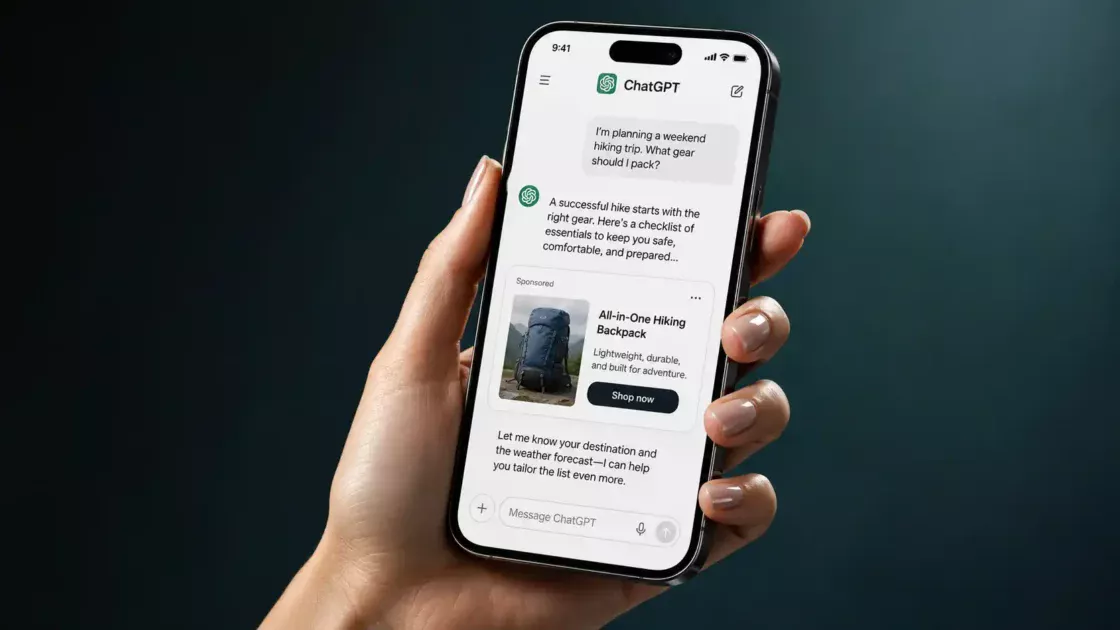
Retail media makes this even clearer because it blurs place and promotion. IAB Europe’s 2025 retail and commerce media guide says brands are using retailer first-party data to target, improve, and measure campaigns close to the point of purchase. McKinsey’s recent work on commerce media says these networks use first-party purchase and loyalty data across online and offline channels, and that advertisers see verified shopping behavior and the ability to connect store and digital journeys as a real differentiator. That is not just promotion dressed up as distribution. It is a good example of how the buyer’s route to market became media-bearing.
So yes, place is still relevant. It may be more relevant than before because bad availability wastes everything upstream. A smart offer at the right price with strong communications still loses if the buyer cannot find it, trust the channel, get it quickly, or move between touchpoints without friction. The modern market punishes unavailability more quickly than the old one did, because buyers have more substitutes and far less patience.
Promotion stopped being a campaign department
Promotion is the P most damaged by lazy digital thinking. Some teams reduce it to paid media buying. Others expand it so far that it becomes “everything visible.” Neither view helps. Promotion still means the set of actions by which the firm brings attention, meaning, memory, desire, and response to the market. The channels changed. The basic job did not. AMA’s distinction between marketing and advertising still matters here: advertising is a part of marketing, not the whole of it.
The modern promotional system now spans paid, owned, and earned media, plus CRM, creator collaborations, lifecycle messaging, retail media, content, community, and product-led communication. It also has to serve two clocks at once. One clock is short term: drive response, conversion, and demand capture. The other is long term: build memory, trust, salience, and pricing power. The LinkedIn B2B Institute report summarizes Binet and Field’s broad finding well: firms need both brand building and activation, because activation converts existing demand but brand building creates and sustains future demand. Kantar makes the same point from another angle, warning that a mix that consistently favors performance will weaken baseline sales.
That tension explains why promotion got more complicated. Marketers now operate inside platforms that reward immediate response, clean dashboards, and constant iteration. Those are useful. They are also seductive. Nielsen’s 2025 report says North American marketers are almost evenly split between revenue growth and brand awareness as priorities, yet only a minority measure traditional and digital media holistically. The managerial pressure is obvious: short-term proof is easier to report than long-term memory effects. The danger is equally obvious: what is easiest to count is not always what drives the business best.
Personalization added another layer. McKinsey’s research says 71% of consumers expect personalized interactions and 76% get frustrated when they do not receive them. Its 2025 work on the next frontier of personalization argues that marketers increasingly need tailored offers and content, better decisioning, cross-channel consistency, and closed-loop measurement. That does not replace promotion. It changes its craft. Promotion now has to be more relevant, more coordinated, and less wasteful. But the central question remains the same: what message, proof, and emotional meaning will move this buyer closer to choice?
The easiest way to say it is this: promotion used to be a department that launched campaigns. Now it is a communication system that must coordinate brand, demand capture, retention, and proof across the journey. That is a harder job than the old one, which is exactly why a coherent mix matters more than it used to.
The extra three Ps fixed the service problem
The classic four Ps were powerful, but they carried a product-era bias. Services exposed it quickly. You cannot fully market an airline, hospital, consulting firm, software platform, hotel, or delivery app with product, price, place, and promotion alone. You also have to account for people, process, and physical evidence. CIM’s current definition of the 7Ps names those added elements directly and says they help align marketing with customer expectations.
People matter because service brands are performed, not just declared. Staff behavior, tone, competence, empathy, and authority shape the offer itself. Process matters because customers experience the flow of service as part of value. Waiting, handoffs, onboarding, billing, cancellation, claims, returns, and complaint resolution are not back-office details from the customer’s point of view. They are the lived texture of the brand. Physical evidence matters because buyers look for signals that reduce uncertainty: store design, packaging, interface polish, reviews, case studies, uniforms, certificates, and the visible orderliness of the environment.
That is not just for service businesses in the traditional sense. Product companies are now service companies in disguise. A premium phone maker lives or dies on software support, store experience, financing, trade-in, and repair. A direct-to-consumer beauty brand lives or dies on delivery accuracy, packaging quality, easy returns, and credible proof. A SaaS company markets onboarding, uptime, community support, and contract clarity as much as features. The extra three Ps have spread far beyond hospitality and banking because the whole market moved toward service-heavy competition.
Kotler’s 2024 essay is useful again here because he separates service from product and adds brand and incentives to his preferred modern mix. Whether one agrees with his exact structure is less important than the direction of travel. The important point is that serious marketers keep revising the mix to reflect what buyers actually experience. That is not evidence against the framework. It is evidence that the framework is still alive enough to be adapted.
The firms that still dismiss these extra dimensions usually pay for it in hidden ways. They spend more on promotion to offset poor onboarding. They cut price to offset weak trust. They chase retention problems with loyalty schemes instead of fixing response times or billing confusion. The 7Ps remain useful because they make those trade-offs visible. They stop marketing from pretending that communications can stand above execution.
STP still gives the mix its aim
The mix answers “what levers do we control?” STP answers “for whom, against whom, and with what claim?” Without STP, the mix becomes generic motion. AMA’s framework overview defines STP plainly as segmentation, targeting, and positioning. It is one of the clearest links between strategy and execution in all of marketing because it forces firms to decide which buyers matter, what distinguishes them, and what place in the mind the offer should occupy.
This connection is older than most marketers realize. Harvard’s historical review traces the rise of segmentation back to Wendell Smith and then shows how the marketing mix and segmentation became part of the discipline’s practical toolkit. That history matters because it shows the mix was never meant to float free from market choice. Product, price, place, and promotion only become intelligent when they are designed around a selected market and a clear position.
At the same time, modern marketers should not turn STP into oversegmentation theater. The LinkedIn B2B Institute report, drawing on Ehrenberg-Bass and effectiveness work, argues that markets are often less segmented than marketers assume and that growth usually comes from reaching more category buyers, building mental availability, and combining brand with activation. Kantar’s warning about over-favoring performance fits the same pattern. The lesson is not “ignore targeting.” The lesson is “do not confuse narrowness with strategy.” A good target definition should sharpen relevance without shrinking the growth ceiling unnecessarily.
That is where many teams get stuck. They hear “customer centricity” and build campaigns for ever-smaller slices, then forget that brands also need reach, memory, and consistency. They hear “broad reach” and respond with generic work that lands nowhere. STP still matters because it keeps the mix aimed, but current marketing also demands breadth where the category calls for breadth. The better reading is not narrow versus broad. It is relevance plus availability plus memory. That is still a mix problem, just at a higher resolution.
Measurement put the mix back at the center
For a while, the marketing mix sounded old partly because digital reporting made everything look more granular and immediate. Clicks, impressions, attributed conversions, and real-time dashboards created the feeling that marketers had moved beyond broad, cross-channel thinking. Then the limits showed up. Too much measurement depended on user-level tracking. Too much reporting stayed inside platforms. Too much budget allocation confused reported performance with actual incremental business effect. That is one reason marketing mix modeling returned to the center of the conversation.
Google’s Meridian project is a strong signal. Google describes Meridian as an open-source MMM built to address modern measurement challenges and calls it privacy-durable. Its documentation defines MMM as a statistical analysis technique that measures the impact of marketing activities using aggregated data across channels without cookie or user-level data. Think with Google also notes that online pure players are now building MMM because cookie erosion and cross-channel complexity demand a fuller picture of effectiveness. In other words, marketers are rediscovering the need to evaluate the mix as a system rather than as a set of platform screenshots.
This is one of the clearest signs that the marketing mix is current. The market did not move past it. Measurement matured back toward it. When a company wants to know what mix of brand, performance, retail, search, social, owned channels, promotions, and distribution activity actually shaped revenue, it is asking a marketing mix question. Modern analytics did not bury the framework. It made its managerial logic easier to test.
Nielsen’s 2025 report sharpens the point. The company says it surveyed 1,400 marketers worldwide and reports that only 32% measure traditional and digital spend holistically. That gap is not just a measurement flaw. It is an organizational flaw. If teams cannot see the whole system, they will keep buying media and changing offers in partial ways. They will reward the channel that claims credit most aggressively. They will underinvest in the factors that work slowly and in combination. The mix becomes current again the moment the business tries to measure what actually happened across the whole market effort.
Where marketers still get the mix wrong
The framework survives, but bad usage survives with it. One common mistake is teaching the four Ps as a checklist detached from market choice. That produces bland strategy decks where every company claims the product is good, the pricing is competitive, the channels are broad, and the promotion is integrated. None of that means anything until the business defines the customer, the buying situation, the competitive alternatives, and the position it wants to own. STP and the mix belong together or not at all.
Another mistake is reducing the mix to promotion. This is the disease of the dashboard era. Teams talk about marketing and really mean advertising, or worse, paid digital acquisition alone. AMA’s explanation of the relationship between marketing and advertising is still the clean corrective: advertising is one component of marketing. The product promise, pricing logic, route to market, and customer experience shape results as much as media does. Many “marketing problems” are really offer problems, channel problems, or service problems wearing a media costume.
A third mistake is treating customer experience as something separate from the mix. That split makes no sense now. Product includes the experience of use. Price includes the experience of fairness. Place includes the experience of access. Promotion includes the experience of relevance and recognition. The extra Ps make this even plainer for services. A business that keeps CX in one box and marketing in another usually ends up with beautiful campaigns explaining a reality that operations cannot deliver.
The last mistake is assuming the mix must remain at four. It does not. It never had to. Kotler now speaks in seven components. CIM continues with 7Ps. AMA references the four Cs in a modern mix context. None of these variations invalidate the framework. They show that marketers keep updating the categories while preserving the core demand for coherence. A rigid version of the mix becomes stale. A living version stays useful.
The reason it remains current
The marketing mix is current today because buyers no longer move through clean, linear, single-channel journeys. They compare faster, switch more easily, expect relevance, notice inconsistency, and punish friction. McKinsey’s personalization work shows that consumers now expect more tailored interactions. Harvard’s omnichannel work shows that shopping behavior moved across channels years ago. IAB Europe and McKinsey’s commerce media work show that access, media, and data are blending close to the point of purchase. Nielsen’s reports show that marketers still struggle to measure the whole picture. All of that adds up to one conclusion: marketing now needs stronger coordination logic, not weaker.
That is why the best current reading of the marketing mix is not nostalgic. It is operational. Product asks whether the offer truly creates value in use. Price asks whether the value capture logic matches buyer economics and brand ambition. Place asks whether the offer is accessible in the moments that matter. Promotion asks whether the business is building memory, meaning, response, and loyalty with one coherent voice. The extended Ps ask whether the people, process, and proof support the promise. STP asks whether the whole thing is aimed properly. Measurement asks whether the system works in reality rather than in dashboards.
So yes, the marketing mix is still relevant today. The better way to say it is stronger than that. The marketing mix remains one of the few frameworks that still forces marketers to connect strategy, execution, experience, and measurement in a single view. That is not a relic. That is a survival skill.
FAQ
Yes. Digital marketing made the mix more complicated, not less important, because firms now have more channels, more data, and more chances to create contradictions between offer, price, access, and communication. Google’s current measurement guidance and MMM tools both point back toward system-level thinking.
No. It widened them. Product now includes service and experience, place now includes digital availability and fulfillment, price became more fluid, and promotion now spans many touchpoints and formats.
The 4Ps focus on product, price, place, and promotion. The 7Ps add people, process, and physical evidence, which are especially useful in service-heavy categories where delivery and proof shape the offer itself.
Usually not on their own. Service brands need to manage staff behavior, delivery flow, and trust signals, which is why the 7Ps remain widely used.
A weak offer can be exposed by promotion faster than ever. Strong promotion can accelerate adoption, but it cannot permanently cover poor product truth, poor service, or poor fit.
It includes the software, but also onboarding, support, reliability, billing clarity, interface quality, and the customer’s experience over time. That broader reading fits both service-dominant logic and the 7Ps view.
Because buyers compare more easily, switch more easily, and react quickly to unfair or confusing pricing. Modern pricing now involves elasticity, tiers, incentives, bundles, and channel differences, not just a single sticker price.
No. Discounting is one tool inside pricing. Pricing strategy covers willingness to pay, value signaling, margin structure, brand consequences, and the long-term effect of repeated incentives.
It means availability across the buyer’s real path: discovery, comparison, purchase, delivery, return, and support. That includes stores, sites, marketplaces, search, apps, and fulfillment systems.
Because buyers move across online and offline touchpoints, which turns access and consistency into core marketing problems. Omnichannel behavior makes place and promotion more tightly connected than before.
No. Advertising is only one part of promotion. Promotion now includes brand work, performance activity, CRM, creator work, content, lifecycle messaging, and other communication that shapes attention and response.
Yes. Kantar and the Binet and Field tradition both argue that a mix tilted too far toward short-term activation weakens long-term demand and baseline sales.
STP decides which market to serve and what position to claim. The marketing mix then turns that choice into an offer, a price logic, a route to market, and a communication system.
Yes. Tight targeting can improve relevance, but markets are often less segmented than marketers assume. Growth often still depends on broad enough reach to build penetration and mental availability.
Marketing mix modeling is a statistical method that uses aggregated data to estimate the impact of marketing activities across channels and guide budget decisions. Google’s Meridian documents describe it as privacy-safe because it does not depend on cookie or user-level data.
Because privacy changes, platform silos, and cross-channel complexity made narrow attribution less reliable as a full planning tool. Marketers need a broader view of what worked together.
Retail media sits at the border of place and promotion. It combines access to buyers near the point of purchase with targeted communication based on retailer or commerce data.
Not really. They are better read as a customer-facing reframing of similar managerial issues. The 4Ps and 4Cs are most useful when used together rather than treated as rivals.
Absolutely. Small firms often benefit even more because the mix helps them avoid scattered tactics and build one coherent offer with limited resources. The framework scales down well when used as a decision discipline rather than a theory lecture.
Author:
Jan Bielik
CEO & Founder of Webiano Digital & Marketing Agency

This article is an original analysis supported by the sources cited below
The Four Ps of Marketing
AMA overview of the classic four Ps and their continuing role in strategy.
What is Marketing? — The Definition of Marketing — AMA
The current AMA definition of marketing used to ground the article’s value-centered framing.
What Are Marketing Frameworks?
AMA explainer covering STP and other widely used strategic models.
Marketing vs. Advertising
AMA guide clarifying the difference between marketing, advertising, the four Cs, and modern channel use.
Milestones in Marketing
Harvard Business School review of foundational marketing ideas, including segmentation and the marketing mix.
Service-dominant logic 2025
Vargo and Lusch’s later synthesis of service-dominant logic and value co-creation.
The 7Ps of marketing
Current Chartered Institute of Marketing explanation of the extended marketing mix.
A brief summary of marketing and how it works
CIM PDF explaining why the 7Ps still fit a customer-first world.
A Study of 46,000 Shoppers Shows That Omnichannel Retailing Works
Harvard Business Review article on multi-channel shopper behavior.
Reaching Today’s Omnichannel Customer Takes a New Sales Strategy
Harvard Business School Working Knowledge interview on the non-linear buying journey.
What is personalization?
McKinsey explainer defining personalization in current marketing terms.
The next frontier of personalized marketing
McKinsey article on AI-driven personalization, targeted offers, and cross-channel consistency.
The value of getting personalization right—or wrong—is multiplying
McKinsey research on consumer expectations and the business impact of personalization.
Net Promoter Score (NPS) & System
Bain explanation of NPS and its link to growth and customer lifetime value.
Pricing Strategy and Pricing Decisions
BCG framework on price elasticity, willingness to pay, and pricing logic.
Overcoming Retail Complexity with AI-Powered Pricing
BCG article on AI-driven pricing and retail price management.
Business Marketing: Understand What Customers Value
Harvard Business Review article on defining value from the customer’s point of view.
Marketing measurement & MMM guide
Google measurement guide on the renewed role of MMM in cross-channel analysis.
Meridian
Google’s main page for Meridian, its open-source marketing mix model.
About Meridian
Google documentation defining MMM and explaining its privacy-safe measurement approach.
IAB-Europe-101-Guide-to-Retail-Commerce-Media-July-2025
IAB Europe guide on retail and commerce media, first-party data, and point-of-purchase measurement.
Evolution of commerce media networks in advertising
McKinsey article on commerce media and the use of transaction and loyalty data.
Commerce media: The ecosystem at an inflection point
McKinsey analysis of what advertisers value in commerce media audiences and measurement.
2025 Annual Marketing Report
Nielsen report page with current marketer priorities, budget pressure, and cross-media measurement gaps.
Where does performance marketing meet brand building?
Kantar article on the long-term cost of over-weighting performance marketing.
The 5 Principles Of Growth In B2B Marketing
B2B Institute report drawing on effectiveness research about brand, activation, reach, and growth.
Nine key consumer trends in 2024
McKinsey consumer report used for current pricing, loyalty, and assortment shifts.
The future of retail media
Nielsen analysis of current retail media growth and its expanding role in the ad market.
The Past, Present, and Future of Marketing [Philip Kotler’s Insights]
Kotler’s current reflection on the evolution of the marketing mix, STP, the 4Cs, and modern marketing practice.
| Citing this article? Brief excerpts are welcome. Please credit Webiano.digital, name the author where stated, and include a link to https://webiano.digital and to this original article. Full or substantial republication requires prior written permission. Read our Copyright and Content Use Policy. |
This article was prepared with the assistance of artificial intelligence tools. The content underwent expert human review, and Webiano Digital & Marketing Agency assumes editorial responsibility for its final version and publication.