Google Fi’s super network, launched on 10 November 2026, puts two 5G carriers behind one plan and moves a phone between them when the signal drops. The gate is hardware: Pixel 9 or newer, eSIM only, no manual choice and a second carrier Google will not name. It restores what Fi lost between 2020 and 2023, but as a Pixel perk.
Table of Contents
Google Fi began rolling out its super network on 10 November 2026. A phone on a Fi plan can now hold profiles for two 5G carriers on one eSIM and move between them when the first connection weakens. Google says every plan includes the feature at no extra charge. The gate is hardware: it runs only on Pixel 9 and newer phones with Fi active on an eSIM, and Google has declined to name the second carrier. The launch revives a capability Fi built in 2015 and lost in stages by 2023, yet it returns as a feature tied to Google’s own phones, not as a plan-wide upgrade. This analysis tests what Google has stated, what independent reporting adds and where the evidence stops.
Pixel 9 and an eSIM are the price of entry
Google’s announcement, written by Fi and Google Store vice president Mauria Finley, says the rollout covers Pixel 9 and newer phones. A footnote adds the second condition: Fi must be active on an eSIM, and any non-Fi SIM must be disabled. A physical Fi SIM card does not qualify. 9to5Google reports that availability is gradual, so some eligible phones will not switch on day one. Engadget and Android Headlines both say wider device support is expected in 2027, a timetable Google’s own pages do not state.
Domestic switching therefore reaches the Pixel 9, 10 and 11 families only. International switching is broader on paper: Google’s coverage page lists Pixel 7 and newer, but only on Unlimited Premium and Flexible. Wi-Fi Auto Connect+, the second half of the package, reaches further. Google’s help page requires a Pixel 5a or newer running Android 14 or higher, and the announcement says the feature is rolling out to Samsung phones on One UI 9 and to select Motorola models.
A Fi customer on a Galaxy phone gets, at most, the Wi-Fi half. The cellular headline belongs to Pixel owners.
Two exits left Fi with a single network by 2023
Project Fi launched on 22 April 2015 with Sprint and T-Mobile as cellular partners, plus verified Wi-Fi hotspots as a third path, and it worked at first only on the Nexus 6. Its founding claim was choosing whichever network was stronger. According to 9to5Google, US Cellular joined in June 2016, which made three networks. The count fell to two when T-Mobile completed its Sprint merger on 1 April 2020. In February 2023 a Google spokesperson confirmed T-Mobile as Fi’s only official network, with US Cellular kept as a free roaming option.
The 2023 change ended automatic selection between networks. 9to5Google wrote at the time that subscribers could still reach several networks while travelling, but not through switching aimed at the best connection. The new launch therefore revives a capability absent since February 2023, nearly four years, not one that Fi never had.
One eSIM, two profiles and a battery-aware switch
Google says the feature relies on Multiple Enabled Profiles, an Android capability that lets one eSIM chip host several carrier profiles at the same time. Moor Insights analyst Anshel Sag infers that the phone stays attached to both networks, which would explain a switch without a fresh registration. Google has not described the radio behaviour in that detail.
The rules for moving appear on Fi’s coverage page. The phone keeps scoring signal strength, availability, speeds, latency and battery state. It stays on the primary network while that connection is healthy and moves to the secondary only when the primary is weak or unreachable and the alternative is clearly better. With low battery or Battery Saver on, switching becomes more conservative.
Two details limit the headline. At launch there is no manual switching, per 9to5Google, and Sag reads Google’s wording as describing a data switch: his reading of Fi’s FAQ is that calls on the secondary network are routed over data. Priority also differs. 9to5Google reports that Fi data is never deprioritised on the primary network and carries the highest QCI priority on the backup, which keeps subscribers among the last to be slowed during congestion.
Pixel sales and Fi retention share one promotion
The launch offers show where Google expects the return. New subscribers who buy a Pixel 11 Pro get $500 off at purchase and $599 back over 24 monthly credits, plus a $10 monthly service credit for two years on Unlimited Premium, and that offer ends on 18 November. Pixel owners who are not on Fi get 50 percent off select unlimited plans for 12 months through 1 December. Both offers pair the network feature with Pixel hardware.
What follows is analysis, not a Google statement. Gating switching to Pixel 9 and newer gives owners of Google’s phones a reason to pick Fi, and it gives Fi a reason to point shoppers toward Pixel. Sag suggests the cutoff reflects the modem capabilities of those phones, so a technical and a commercial explanation can both hold.
The cost side is opaque. Fi owns no towers, and no public figure for what Google pays the second carrier turned up in the sources reviewed. A second wholesale partner presumably adds cost per customer, which makes a Pixel-linked retention story the logical way to pay for it.
Pixel owners on the road gain the most
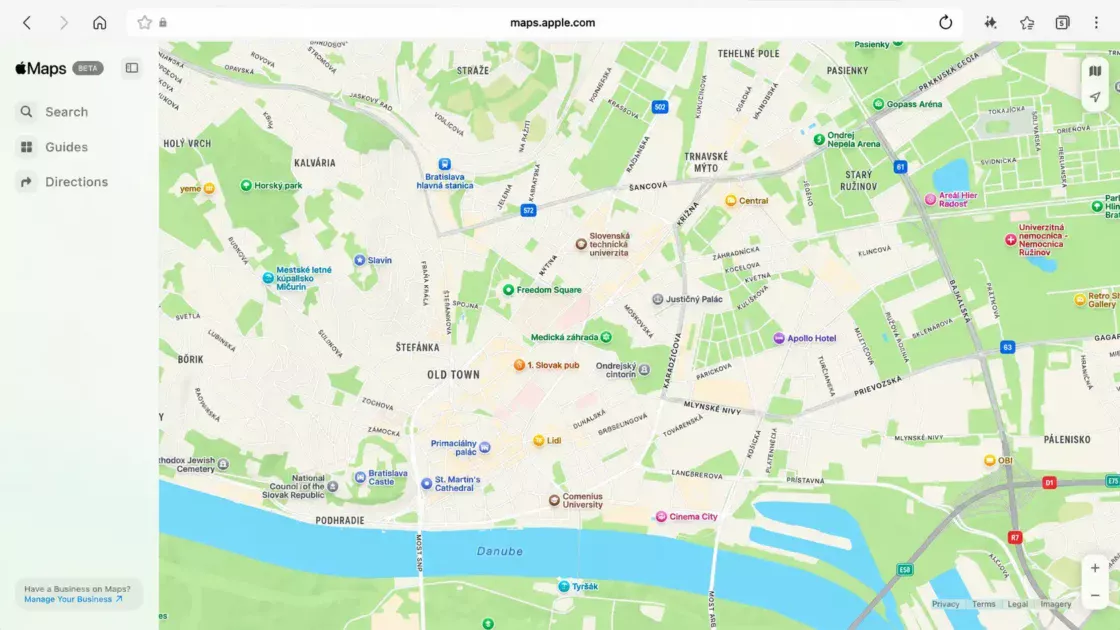
The clearest winners are Pixel 9 to 11 owners who live or travel where one carrier’s coverage ends. Moor Insights compared Fi’s published coverage map with the national carriers’ maps and concluded that the secondary footprint matches Verizon’s 5G Ultra Wideband layer near Milford, Utah. Google has not confirmed this, so it remains an analyst inference. Sag adds a friend’s 2.5 Gbps test, an anecdote that points to millimetre-wave service.
Travellers get a separate benefit. Google says network switching and Wi-Fi Auto Connect+ work abroad on Unlimited Premium and Flexible, with international high-speed data capped at 50 GB and 15 GB respectively. Sag cautions that international switching is not two networks connected at once, so it may be less smooth than the domestic version.
Domestic switching sits on every plan, while international switching follows only two tiers. The table shows the split.
Fi plan features by tier
| Plan | List price, 1 line | High-speed data | Domestic switching (Pixel 9+) | International switching (Pixel 7+) |
|---|---|---|---|---|
| Unlimited Premium | $65 a month | 100 GB | Yes | Yes |
| Unlimited Standard | $50 a month | 50 GB | Yes | No, Canada and Mexico data only |
| Unlimited Essentials | $35 a month | 30 GB | Yes | No |
| Flexible | $20 a month plus $10 per GB | Pay per GB | Yes | Yes |
Prices are list prices from Fi’s plans page, before taxes and fees. The cheapest tiers get the 5G benefit at home and none of it abroad. A promotion through 1 December halves Standard and Essentials for 12 months for new lines and customers who bring a phone.
Starlink Mobile and the big three set the clock
The timing coincides with a challenge to every US carrier. On 8 October SpaceX announced an agreement to acquire a nationwide low-band spectrum portfolio of up to 14 MHz of paired 800 MHz spectrum, pending FCC approval, as a step toward becoming a major US mobile carrier. TelecomTV reported that AT&T, Verizon and T-Mobile shares each fell about 6 percent in post-market trading. It also noted that AT&T’s chief executive had called the small-cell plan not viable.
For Fi the pressure is indirect. An MVNO sells coverage assembled from other companies’ networks, and Starlink Mobile proposes a network that combines satellites with ground sites. Sag expects Fi to trail Starlink Mobile in some rural areas because Fi’s satellite coverage is limited. A second terrestrial carrier is a defence against a rival Google cannot match on satellites. That reading is inference: Google is buying time with coverage it can license now.
The same logic cuts the other way. The super network depends on carriers that Starlink Mobile aims to compete with, so Fi’s advantage lasts only while those carriers keep supplying it. That is analysis too.
Claims that rest on Google’s own definitions
Google’s strongest sentence says that, unlike other major carriers, only Fi switches you between networks automatically in real time. A footnote defines a major carrier as a network operator or virtual operator with more than 1 million US customers as of March 2025. The claim holds by Google’s definition and was not tested independently in the sources reviewed. Speed and coverage superlatives rest on Ookla Speedtest Intelligence data for the first half of 2026 and RootMetrics’ first-half 2026 US report, and Google adds that results vary by device, location and signal.
The Wi-Fi advantage is defined as twice the reliability and 30 percent better latency than nearby Fi cellular networks. Help Net Security notes that Google has not said how it selects hotspots, and the connection joins without asking, so privacy depends on the encryption engaging every time.
Gaps remain. No public independent test of switching speed turned up, the second carrier is unconfirmed and Sag reports no word on added battery use. The Verizon inference rests on map overlap, not disclosure.
Checks before a Pixel owner commits to Fi
A Pixel 9, 10 or 11 owner already on Fi should confirm that the line runs on an eSIM with other SIMs disabled, then open the Fi app. 9to5Google says its Home tab gains a card showing whether the phone is on the primary or secondary network, with a switching history. That log is the cheapest test of whether the feature helps on your commute.
An owner still on a physical SIM faces a conversion first. A Pixel owner outside Fi should compare the 50 percent offer, which ends on 1 December and covers Standard and Essentials, with the 100 GB Premium tier, which carries international switching.
A customer on another phone gains nothing on cellular today. Fi’s coverage page says the primary network powers every plan on every device, and the secondary appears only for Pixel users on its map. Rural drivers should check that map along their route, because a secondary shade is the only public clue to where the second carrier helps.
Voice-first users should note that calls on the secondary network are, per Sag’s reading of Fi’s FAQ, routed over data.
The 2027 expansion decides whether this is a plan feature or a Pixel perk
The evidence supports a narrow judgment today: the super network improves Fi for a defined group of Pixel owners and leaves everyone else where they were. Whether it becomes the plan’s main selling point depends on three observable events. The first is device support. If Google extends switching beyond Pixel in 2027, as Engadget reports, Fi gains a feature competing resellers cannot copy quickly. If it stays Pixel-only, it reads best as an accessory to Google’s phones.
The second is disclosure. A named carrier on the coverage map, or independent switching tests from Ookla or RootMetrics, would turn a marketing claim into a measurable one. The third is the FCC outcome on SpaceX’s spectrum request, which sets how fast Starlink Mobile can add terrestrial coverage. This is a forecast, labelled as such. A quiet 2027 with no new devices, or tests showing the secondary network rarely carries traffic, would weaken it.
Author: Jan Bielik CEO & Founder of Webiano Digital & Marketing Agency
This article is an original analysis supported by the sources cited below
Google Fi Wireless for Phone Plans & Mobile Phone Deals Google Fi’s own plan page, which supplied list prices for each tier, plan data allowances, the 50 percent offer ending on 1 December and the Pixel 11 device promotions.
5G Network & Mobile Coverage | Google Fi Wireless Fi’s coverage and FAQ page, the source for the switching criteria, the battery-aware behaviour, the Pixel 9 and Pixel 7 eligibility rules and the statement that the primary network serves all devices.
Introducing Google Fi’s new super network Google’s 10 November 2026 announcement by Mauria Finley, which established the launch date, the eSIM condition, the Multiple Enabled Profiles definition, the major-carrier footnote and the launch offers.
Understand how Wi-Fi Auto Connect+ works Google’s help page for the Wi-Fi feature, which set out the Pixel 5a and Android 14 requirements, the encryption and the exemption from monthly data limits.
Google Fi brings back network switching with ‘secondary’ partner, expands W+ beyond Pixel 9to5Google’s launch report, which supplied the smart thresholds, the absence of manual switching, the data priority on each network, the Fi app status card and the gradual rollout.
Google Fi Revives Dual-Carrier 5G Switching with Its Super Network Analyst Anshel Sag’s 12 November note, the source for the Verizon inference, the calls-over-data reading of Google’s FAQ, the international switching comparison and the satellite-coverage caveat.
Google Fi announces super network automatic carrier switching for improved speed and reception Engadget’s launch coverage, which reported that wider availability arrives in 2027 and confirmed the Pixel 9 eSIM requirement, the Ask Fi agent and the Pixel 11 Pro offer.
Google Fi ‘super network’ aims to erase dead zones with the ability switch between two 5G cellular networks Tom’s Guide’s report, which confirmed T-Mobile as the primary host network and described the two-profile eSIM approach.
Google Fi Super Network Upgrades Pixel Phones with Dual 5G Switching Android Headlines’ launch report, which stated that expanded hardware support is due next year and that industry watchers suspect Verizon without Google’s confirmation.
Google Fi super network leans on encryption to keep hotspot traffic private Help Net Security’s analysis of the Wi-Fi feature, which noted that Google has not explained how hotspots are selected and that privacy depends on encryption engaging automatically.
Google Fi drops US Cellular as an official network, but service still accessible 9to5Google’s 2023 report, the source for the June 2016 US Cellular partnership, the 2020 drop to two networks and the February 2023 confirmation that T-Mobile was the only official network.
Google Project Fi taps Sprint, T-Mobile US, Wi-Fi RCR Wireless’s coverage of the 22 April 2015 launch, which documented the Sprint and T-Mobile partnership, the Wi-Fi component and the Nexus 6 restriction.
T-Mobile Completes Merger with Sprint to Create the New T-Mobile T-Mobile’s press release confirming that the Sprint merger closed on 1 April 2020.
Spectrum deal advances Starlink’s ‘major mobile carrier’ plan TelecomTV’s report on SpaceX’s 800 MHz spectrum agreement, the roughly 6 percent post-market share drops at AT&T, Verizon and T-Mobile and the executive reactions.
| Citing this article? Brief excerpts are welcome. Please credit Webiano.digital, name the author where stated, and include a link to https://webiano.digital and to this original article. Full or substantial republication requires prior written permission. Read our Copyright and Content Use Policy. |
This article was prepared with the assistance of artificial intelligence tools. The content underwent expert human review, and Webiano Digital & Marketing Agency assumes editorial responsibility for its final version and publication.