Google’s guidance now asks for visible first-hand proof and calls invented author profiles deception, so the advice in a new Semrush video is sound. Its examples carry less weight than its pitch: HouseFresh tested products itself and still lost most of its Google traffic, Gumloop’s visits are falling in Semrush’s own estimates, and the vendor owns the presenter’s businesses.
Table of Contents
Google now asks site owners to show that someone really used the product, visited the place or ran the test. Its guidance page, updated on October 5, 2026, lists first-hand expertise among the signs of people-first content, and an October 1 addition labels invented author profiles as deception. That is firm official support for first-hand content. It is not a ranking promise, and a review site that buys and tests its own products shows why: HouseFresh says it lost 91% of its Google traffic after the March 2024 core update.
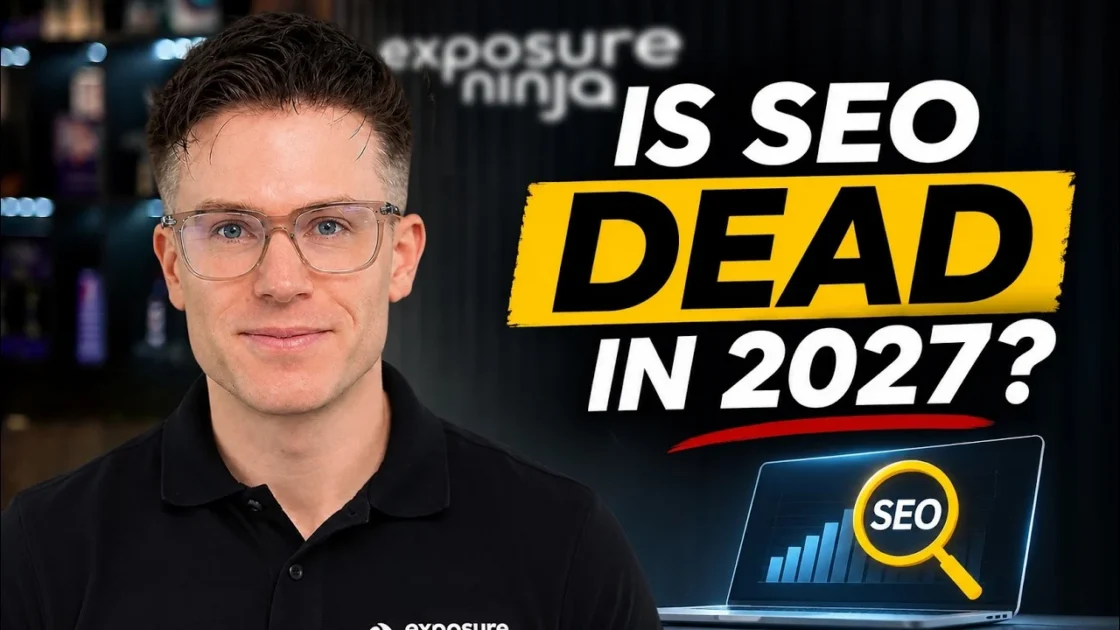
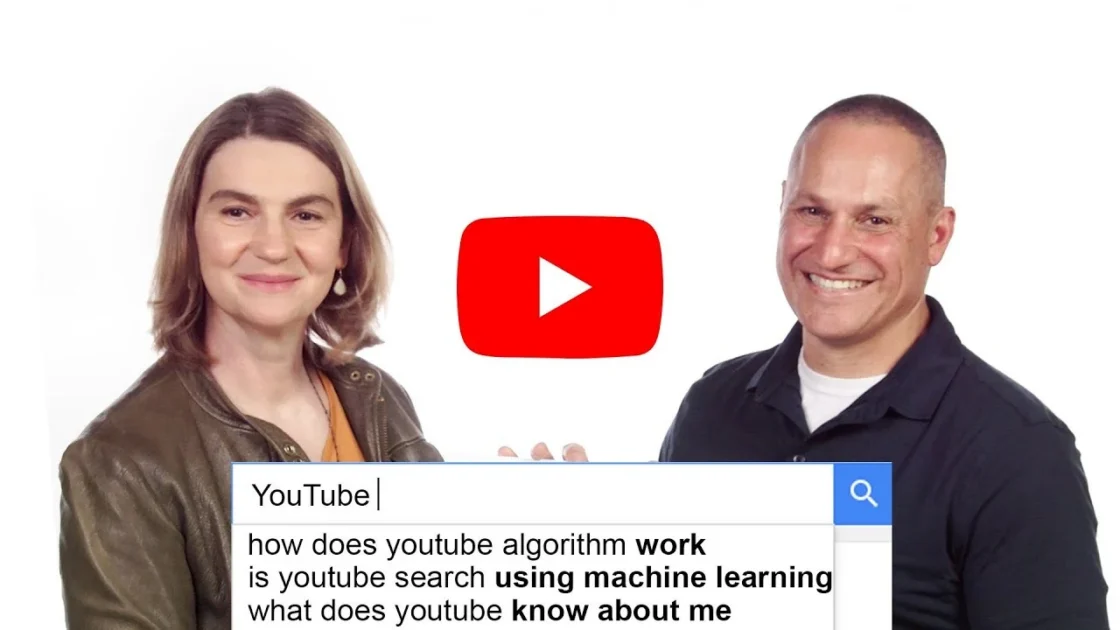
A video published on November 10, 2026 by Semrush’s YouTube channel builds on that idea. Its description says Brian Dean, who founded Backlinko and Exploding Topics, spent 47 hours studying sites growing fast in Google, among them Gumloop and HouseFresh, and found that their content is written from first-hand experience. The four steps it recommends are mostly sound. The evidence behind them is thinner, and the video also works as an advertisement.
A pitch from the company that bought the presenter’s businesses
The description lists four steps. Pair a clear structure with first-hand experience, which it calls the “meat and potatoes plus insight” approach. Hire subject-matter experts, with a plumber writing about unclogging a toilet as the example. Make expertise visible through screenshots, photos and tests. Add a real point of view without forced hot takes. It also links to a free seven-day trial of the Semrush Content Toolkit, which turns topic ideas into SEO-ready articles, so the video sells the kind of software it recommends.
The ownership trail is public. Dean announced on August 20, 2024 that Semrush had bought Exploding Topics, after it bought Backlinko in 2022. Then on April 28, 2026, Adobe completed its purchase of Semrush, which Adobe’s release describes as a brand visibility platform. None of this makes the advice wrong. It does mean the video is vendor marketing from a presenter whose two businesses the vendor owns, and its claims need checks from outside that circle.
Google’s own page asks for the same proof
Google’s guidance asks creators to show first-hand expertise, with the example of someone who has actually used a product or visited a place. For product reviews it says trust grows when readers can see how many products were tested, what the results were and how the tests ran, backed by evidence such as photographs. That is the video’s third step almost point for point.
Two limits sit in the same text. Google says E-E-A-T is not a ranking factor by itself, that trust matters most of its four parts, and that content does not need to show all of them. It adds that rater scores do not feed directly into its ranking algorithms. The description’s claim that the guidelines reward demonstrated experience is therefore a loose summary. Google’s page describes what its systems try to identify, and it gives no figure or guarantee for what first-hand proof earns a given page.
A real expert helps, an invented one is a liability
The video’s second step, putting subject-matter experts behind the content, matches a question on Google’s page about whether a piece is written or reviewed by someone who demonstrably knows the topic. The risk lies in how that expertise is shown. On October 1, 2026, according to Search Engine Journal, Google added a paragraph saying that fabricated creator profiles, such as AI-generated headshots, made-up names or false credentials, are a form of deception and “a signal of a low-quality page” for both readers and its automated systems.
Search Engine Journal points out that the paragraph does not say how Google would spot a fake profile, and that Google’s Search Liaison account said in January 2024 that bylines do not help pages rank. So a plumber’s name is a trust cue for readers, not a ranking lever, and a plumber who does not exist would be a liability. The working rule is simple: the named person must be real, hold the stated credentials and have seen the work.
HouseFresh tested first-hand and still lost 91%
HouseFresh is the video’s second example. Dean says that, unlike most air purifier review sites, it buys and tests what it reviews, and that it has tested over 100 purifiers, a figure the sources here do not confirm. He does not mention the traffic collapse. HouseFresh’s own post from May 2024 says its articles are updated from first-hand, in-depth testing of products it buys with its own money, and that daily visitors from Google fell from 4,000 to 200 after October 2023. It puts the loss at 91% and dates the sharp drop to March 9, 2024, during Google’s March core update. Its article for budget air purifier searches, ranked second since May 2023, ended up under sponsored posts, a 2016 Quora answer, big-media lists and 64 Google Shopping listings.
PPC Land gives a different picture: a 95% loss tied to the September 2023 helpful content update. HouseFresh’s own 4,000-to-200 figures work out to 95%, so its 91% presumably comes from another measure that the post does not explain. The dates differ too, which is a reason to treat both numbers as approximate.
Recovery came later and from elsewhere. PPC Land reported on October 11, 2025 that HouseFresh had passed its earlier peak. Managing editor Gisele Navarro credited “Hard work and a lot of luck” and named no single change. She also pointed to a YouTube channel, a collaboration with Linus Tech Tips that raised brand searches, and Google’s site reputation abuse policy. Moz research reported by PPC Land found that sites hit by the helpful content updates averaged a Brand Authority score of 37, against 50 to 52 for unaffected sites. The video’s narration leaves out that route. First-hand testing did not shield HouseFresh, and its comeback took about two years and a brand-building push.
Gumloop’s growth is hard to find in Semrush’s own estimates
Dean says Gumloop’s traffic in Semrush was “going to the moon”. Semrush’s public traffic page for gumloop.com, last updated on October 11, 2026, estimates 808,020 visits in September, down 11.6% from August, after about 914,000 in August and 1.12 million in July. It puts organic search traffic at 202,570 visits, down 10% on the month, and shows Direct as the largest source on desktop at 53.58%, ahead of google.com at 32.6%.
These are estimates, and the narration does not say which period the 47 hours covered or state any figures, so a longer rise could sit behind three weak months. Semrush’s breakdown also lists Bangladesh as Gumloop’s largest country at 30.7% of visits, 98% of them on desktop, which suggests wide error bars. Even so, the one example the video gives of Google growth is, in the data its own publisher offers, a site whose recent traffic is falling and comes mostly from outside Google search. That makes it an illustration of the idea, not proof of it.
Unedited AI articles fail and edited ones do not
The video’s title promises content that AI cannot copy, yet Dean’s own step two lets AI polish an expert’s draft. The test data draws the line in the same place. SE Ranking published 2,000 AI articles with no editing across 20 new domains in November 2024. Google indexed 70.95% of them within 36 days, then around the three-month mark the share of pages in the top 100 fell from 28% to 3%, and after 16 months there was no real recovery. The same company’s six edited, AI-assisted articles on its established blog drew about 555,000 impressions, and three of them rank in the top 10. SE Ranking sells an AI writing tool, and it says its own domain’s authority may have helped the blog results.
Google’s guidance draws a similar line. It treats large amounts of generative AI text produced without manual oversight as little to no effort, and it rates main content on effort, originality, talent or skill, and accuracy. The line in the data therefore runs between edited and unedited work, not between human and machine. Moccu, a Berlin agency, adds two cautions. It says Danny Sullivan introduced the idea of non-commodity content, meaning pages competitors cannot simply copy, at an April 2026 event in Toronto. It also cites two studies suggesting that AI search tools such as Perplexity and Copilot still cite weak or AI-written sites, with Google’s own AI features the exception.
The November core update gives no verdict yet
Google began its November 2026 core update on November 10, the day the video went up, and says the rollout may take up to two weeks, which would end on November 24. PPC Land notes that the dashboard entry names no type of content, and Google’s guidance says to wait a full week after the rollout ends before comparing data, so a reliable comparison starts on December 1 at the earliest. Rank trackers may mislead in the meantime: DemandSphere said in October that about 11% of its daily rank checks returned spurious results. After the March update, SE Ranking data showed 79.5% of top-three URLs changing position.
For a site owner or content lead, the sound parts of the video are cheap to apply and carry little risk. Show who wrote each page and how the testing was done, use real people with real credentials, and put photos, screenshots or results where a reader can check them. The risky part is treating any of it as a ranking promise. HouseFresh’s two-year recovery points toward building a brand that people search for by name. What would change this reading is Google saying what the November update rewards, or independent data showing first-hand pages gaining after it.
Author:
Jan Bielik
CEO & Founder of Webiano Digital & Marketing Agency
This article is an original analysis supported by the sources cited below
The Content Google Rewards in 2027 (That AI Can’t Copy)
The Semrush channel’s November 10, 2026 upload: its transcript gives the 47-hour claim, the four steps, the Backlinko anecdote and the examples, and its description adds the free-trial link.
Creating helpful, reliable, people-first content
Google’s guidance, updated October 5, 2026, covering first-hand expertise, E-E-A-T as a non-ranking factor, main content attributes, AI oversight and the fabricated author profile warning.
Adobe Completes Semrush Acquisition, Strengthening CX Enterprise with Enhanced Brand Visibility Capabilities
Adobe’s April 28, 2026 release confirming it completed the purchase of Semrush and describing Semrush as a brand visibility platform.
gumloop.com Website Traffic, Ranking, Analytics (September 2026)
Semrush’s own estimates for Gumloop, including 808.02K September visits, the monthly decline, the traffic source split and the country breakdown.
HouseFresh disappeared from Google Search results. Now what?
HouseFresh’s own account of its first-hand testing, the March 2024 drop from 4,000 to 200 daily Google visitors, its 91% figure and the query it lost.
Google Adds Fake Author Warning To Helpful Content Guidance
Search Engine Journal’s October 2, 2026 report on Google’s new paragraph about fabricated creator profiles, with the limits of what it says.
HouseFresh achieves notable traffic recovery after Google algorithm impacts
PPC Land’s October 11, 2025 report on HouseFresh passing its earlier traffic peak, Gisele Navarro’s explanation, the 95% figure and the Moz brand authority research.
Google’s core update shifts rankings for up to 2 weeks before Black Friday
PPC Land’s November 10, 2026 report on the November core update, its two-week window, Google’s one-week comparison rule, rank tracker reliability and March update data.
Semrush Buys Exploding Topics to Strengthen Market Research Capabilities
DesignRush’s report on Brian Dean’s August 20, 2024 announcement that Semrush acquired Exploding Topics, after it bought Backlinko in 2022.
How AI-generated content performs in search: Results from an experiment by SE Ranking
SE Ranking’s account of 2,000 unedited AI articles on 20 new domains, the drop from 28% to 3% in the top 100, and its edited blog articles.
Helpful content: What Google means by it and how to create quality content
Moccu’s explainer reporting Danny Sullivan’s non-commodity content idea from April 2026 and two studies on AI search tools citing weak or AI-written sites.
| Citing this article? Brief excerpts are welcome. Please credit Webiano.digital, name the author where stated, and include a link to https://webiano.digital and to this original article. Full or substantial republication requires prior written permission. Read our Copyright and Content Use Policy. |
This article was prepared with the assistance of artificial intelligence tools. The content underwent expert human review, and Webiano Digital & Marketing Agency assumes editorial responsibility for its final version and publication.