Nike says its comeback rests on a sport-led strategy, after a share price slide of 75% in five years. A former marketing chief’s 2022 podcast account of that same principle matches the record, but the stories he uses as proof were shaped by retailers, estimates and edits more than his telling admits.
Nike marketing strategy puts sport first after a 75% share price slide
Nike’s own results now test its marketing doctrine. In the quarter ended 31 August 2026, revenue fell 4% to $11.2 billion, and the company says its comeback runs through the Sport Offense, a strategy it credits for progress in priority sports. BBC reporting puts the share price down 75% over five years and notes that Nike was dropped from the S&P 100 index in September. The doctrine under test is an old one: serve the athlete, anchor everything in sport, and do not chase fashion.
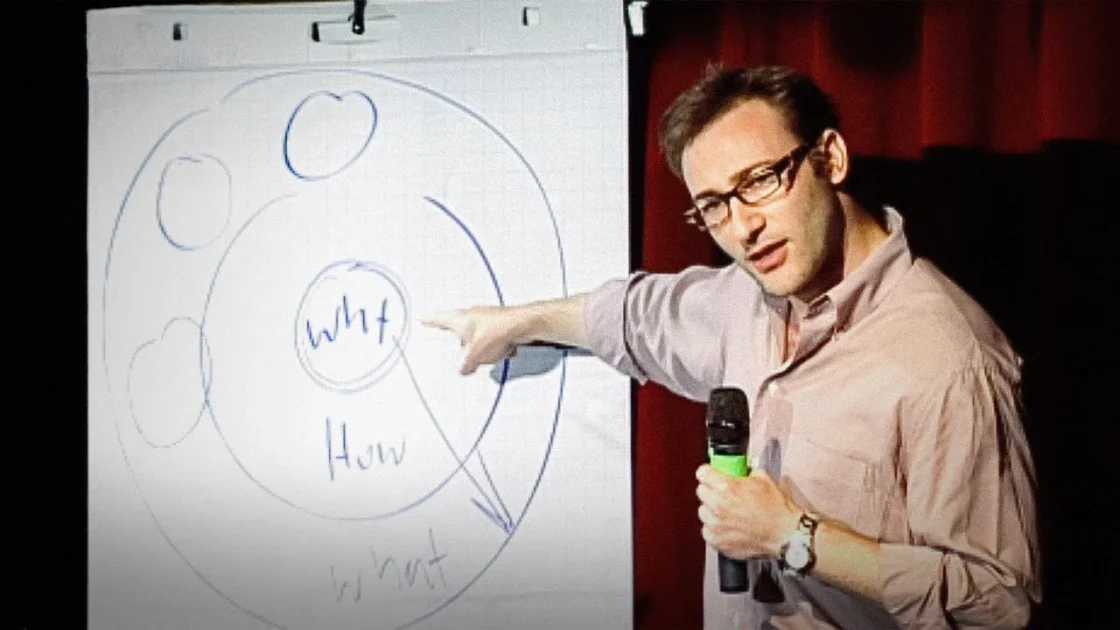
Greg Hoffman set out that doctrine on The Diary of a CEO on 9 June 2022. Hoffman joined Nike as a design intern in 1992 and retired in 2020 as chief marketing officer. The episode runs about 80 minutes and is built around his book Emotion by Design. This article tests the stories he uses as proof. The principle matches the record, but the anecdotes are tidier than the sources, and Nike’s recent slide shows the principle can be spent down.
A playbook built on authenticity and the athlete
Across the conversation Hoffman returns to one rule: authenticity is a brand’s cultural currency, and an audience leaves once it can no longer see the pursuit the brand started with. His shorthand is “Don’t chase cool because most likely you’re not gonna catch it.” He pairs it with a clear internal brand house of mission, vision and values, with teams that pass work along as quickly as FC Barcelona passes a ball, and with a portfolio view of risk in which four concepts are prototyped each quarter and only one is expected to survive. He names three traits for marketers: empathy, curiosity and courage. Authenticity as cultural currency is the claim everything else hangs on.
One relationship deserves a plain sentence. Hoffman says in the episode that he advises brands and startups and teaches branding at the University of Oregon’s graduate business school, and the episode is a conversation about his book, which the host praises on its cover. None of that makes the claims wrong. It does mean the stories are chosen to illustrate a method, not to audit it.
The Air Force 1 and the Baltimore retailers
Hoffman’s lead example of not chasing cool is the Air Force 1. He says Nike built it in 1982 to give basketball players an advantage, that Moses Malone won in it, and that its cultural life grew because the storytelling stayed rooted in the game. Footwear News confirms the launch year, the Malone link and that it was Nike’s first basketball shoe with Air technology. It also records what the retelling skips: Nike discontinued the shoe in 1984, and three Baltimore stores, Charley Rudo, Cinderella Shoes and Downtown Locker Room, persuaded the company to keep supplying them.
Nike’s own history page adds that the company agreed only if the stores bought 1,200 pairs in two colorways. They sold out, which started the Color of the Month program. A Nike designer on that page says it directly: “The people were the ones who asked us to bring it back.” The icon was rescued by retailers and later finished by the street, since Footwear News credits Harlem and wider New York street culture for the all-white Uptowns of the mid-1990s. Hoffman’s own principle, that audiences decide what becomes iconic, is borne out. His account leaves out that Nike had already pulled the shoe.
Three proof points with softer edges
Nike Air comes first. Hoffman says the technology came from a NASA engineer experimenting with astronaut helmets. The European Patent Office’s account of Frank Rudy says he was an aerospace engineer introduced to blow rubber moulding at NASA, who then used the process to make hollow soles sealed with gas, patented in 1979. That supports Hoffman’s point about borrowing ideas from outside sport. No source reviewed mentions helmets, so that detail stays unconfirmed.
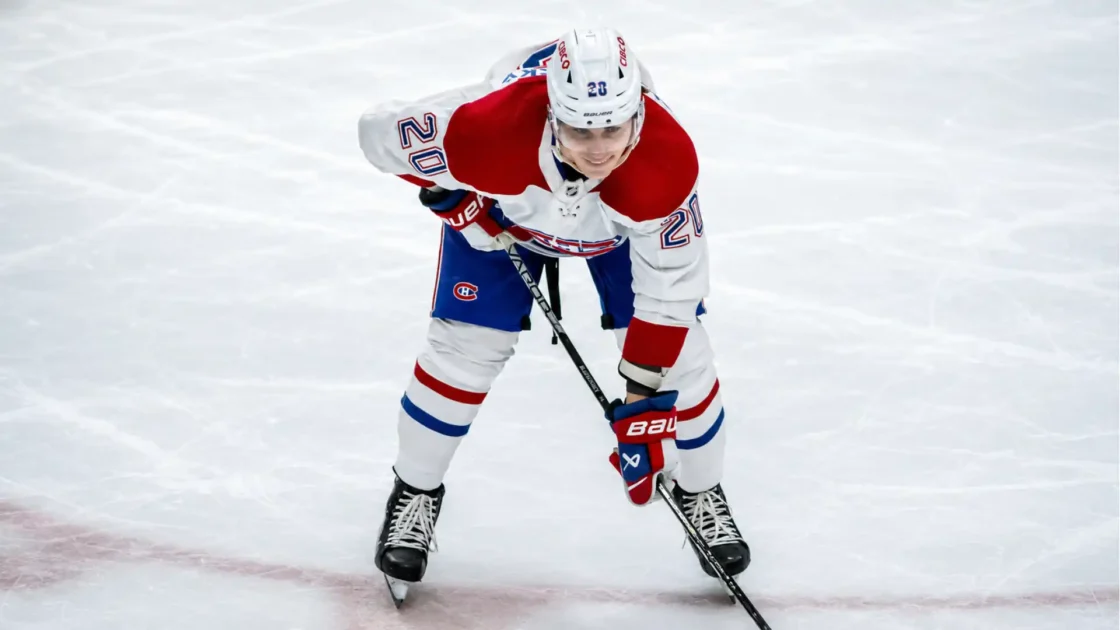
The 9,000 shots come next. Hoffman says the agency sat down with Michael Jordan and learned he had missed more than 9,000 shots. The Encyclopedia of Major Marketing Campaigns says Wieden & Kennedy copywriter Jamie Barrett wrote the 1997 script from his own knowledge of Jordan’s career, estimating misses from career points and shooting percentage, and assumed about two missed game-winners a season because no one recorded the figure. Jordan told a reporter the numbers sounded about right. The ad is real and the number is an estimate.
Then there is Ronaldinho. Hoffman leaves it to the audience to decide whether the crossbar clip was real. FourFourTwo reports it was the first YouTube video of any kind to reach a million views, and that a Nike spokesman admitted “The shots against the crossbar have been reworked and refined on the computer.” Hoffman’s statement that the film had no budget could not be checked.
Pepsi’s miss and a Dream Crazy week
Hoffman’s counter-example is a Pepsi spot in which, as he recalls, a Kardashian stands holding a can in a social justice scene. The Associated Press confirms the ad starred Kendall Jenner, who hands a police officer a can of Pepsi, and that Pepsi pulled it in April 2017, saying it had missed the mark. Critics said the scene evoked a photograph of the Black Lives Matter protester Ieshia Evans. His diagnosis, that a brand has to connect what it sells with what the world needs, fits the facts.
The strongest outside evidence for his rule is an ad the transcript does not mention: Nike’s September 2018 Dream Crazy spot with Colin Kaepernick, who had been under Nike contract since 2011. The research firm Edison Trends reported online sales up 31% in launch week, against a 17% rise a year earlier, and the ad won a 2019 Creative Arts Emmy. One week of online data does not prove a lasting gain, and the backlash at launch was immediate. The reading that a long athlete relationship carries a risky message better than a one-off celebrity cameo is an inference from the two cases.
Nike’s own results as the harder test
A doctrine about authenticity is tested hardest by the company that preaches it. The BBC quotes sports retail analyst Matt Powell listing strategic errors: cutting ties with retailers to sell mostly online, and making limited editions easier to buy, because “The more broadly available those shoes became, the fewer people were interested.” The BBC ties the online pivot to former chief executive John Donahoe, and Powell also criticizes spending research money on digital operations instead of product. Elliott Hill, a company veteran, took over two years ago. Kylian Mbappé ended a 20-year association with Nike in September to join the Swiss brand On.
Nike’s 1 October results mix progress with the old problems. Hill credits the Sport Offense for measurable progress in the performance business, yet Nike Direct revenue fell 8% to $4.1 billion, with digital down 13%, and Converse fell 28%. He also said more work remains in Sportswear, Jordan Brand and Greater China, and the BBC reports he called Jordan retros oversupplied. The lifestyle business is the part Nike says it must reposition. A Nike designer calls the Air Force 1 the start of Nike Sportswear, which makes it an awkward pillar for the doctrine. That link is my inference, not a statement in either source.
Separating the method from the stories
For a marketer the useful split is between the method and the stories. Parts of the method check out against the sources: the Air Force 1 lived because an audience Nike did not control demanded it, Dream Crazy sat on a long athlete relationship, and Pepsi’s ad failed because nothing tied it to the product. The stories used to teach it contain an omitted discontinuation, an unconfirmed helmet, an estimated statistic and a clip Nike admitted was reworked. Cite the lessons, not the numbers.
The second lesson concerns what the rule costs to keep. Authenticity is easy to describe and hard to fund, and Nike’s results show a sport-led brand can still lose ground when its sales model rewards something else. That is an interpretation of the BBC and Nike material, not a finding either states. Hill’s claim that the Sport Offense is lifting performance while Sportswear, Jordan and China need repair can be tested: Nike guided fiscal 2027 revenue down by a high single-digit percentage, so the signal to watch is whether performance growth begins to outweigh those declines. If it does, critics have less to point at. If it does not, the 2022 telling reads as a description of what Nike was.
Author:
Jan Bielik
CEO & Founder of Webiano Digital & Marketing Agency
This article is an original analysis supported by the sources cited below
The Marketing Genius Behind Nike: Greg Hoffman | E150
The June 2022 episode of The Diary of a CEO in which Hoffman describes Nike’s brand principles and the Air Force 1, Nike Air, Jordan and Ronaldinho stories this article checks.
The Marketing Genius Behind Nike: Greg Hoffman | E150 — The Diary Of A CEO — Rosetta
A caption-based transcript of the episode, used for the exact wording of Hoffman’s claims; the archive itself says the captions may contain minor errors.
Behind the Design: Air Force 1, Pt. II
Nike’s own account that three Baltimore retailers lobbied it to bring back the Air Force 1, the 1,200-pair condition, and a designer’s remark that the shoe began Nike Sportswear.
NIKE, Inc. Reports Fiscal 2027 First Quarter Results
Nike’s first-quarter release: revenue of $11.2 billion, down 4%, Nike Direct down 8%, Converse down 28%, Hill’s comments on the Sport Offense, and the outlook for fiscal 2027.
Marion Franklin Rudy
The European Patent Office’s profile of Frank Rudy, establishing his aerospace background, the NASA blow-moulding link, the 1979 patent and Air sales above $2 billion from 1986 to 1993.
Emotion by Design by Greg Hoffman (Paperback) – Penguin Books Australia
Publisher page for Emotion by Design, confirming Hoffman’s 1992 start at Nike, his 2020 retirement as chief marketing officer and the host’s endorsement printed on the book.
Nike Inc | Encyclopedia.com
Reference account of the 1997 Jordan spot, showing how the copywriter estimated the 9,000 shots and the missed game-winners, and recording the labor-practice criticism around Nike at the time.
Air Force 1 History & Timeline: Everything You Need to Know About the Air Force 1
Footwear News history of the Air Force 1: the 1982 launch, the launch-campaign players, the 1984 discontinuation, the Baltimore retailers and the New York street origins of the all-white version.
How YouTube changed football: the seismic shift of a global phenomenon
A FourFourTwo feature establishing that the Ronaldinho crossbar ad was the first YouTube video to reach a million views and that Nike said its crossbar shots were reworked on a computer.
Pepsi says it’s pulling widely mocked Kendall Jenner ad
AP report on Pepsi pulling its Kendall Jenner ad in April 2017, with the company’s apology and critics’ comparison to a Baton Rouge protest photograph.
Colin Kaepernick’s Nike commercial wins an Emmy Award
Report on the 2019 Emmy for Nike’s Dream Crazy ad, with Edison Trends data on a 31% rise in online sales and Kaepernick’s contract history with Nike.
What’s gone wrong at Nike? How the world’s sportswear giant lost its mojo – AOL
BBC reporting, syndicated by AOL, on Nike’s 75% five-year share price fall, the S&P 100 removal, analyst criticism of the online pivot, Mbappé’s exit and Hill’s comments on Jordan retros.
| Citing this article? Brief excerpts are welcome. Please credit Webiano.digital, name the author where stated, and include a link to https://webiano.digital and to this original article. Full or substantial republication requires prior written permission. Read our Copyright and Content Use Policy. |
This article was prepared with the assistance of artificial intelligence tools. The content underwent expert human review, and Webiano Digital & Marketing Agency assumes editorial responsibility for its final version and publication.