A widely shared 2022 interview on product positioning lays out a five-step method that starts with what buyers would do if your product did not exist. The method holds up against older theory and newer guidance. The sales evidence adds a limit: many B2B deals die from buyer fear rather than unclear positioning, and no positioning workshop reaches that problem.
Product positioning in B2B technology has settled on one opening move: before anyone writes a tagline, the team lists what a prospect would use instead, including spreadsheets, an existing vendor or doing nothing at all. That move is older than it looks and better supported than most marketing advice. Its reach is narrower than its fans suggest, because research on millions of recorded sales calls shows that a large share of lost deals fail for reasons a sharper position does not touch.
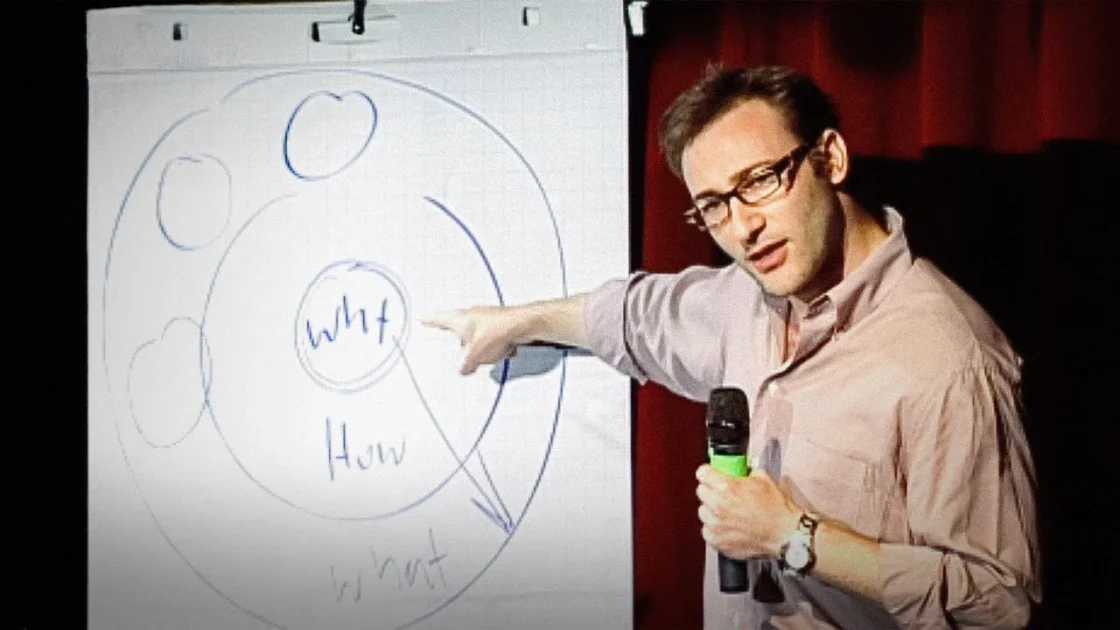
The best-known statement of the method is an interview the Lenny’s Podcast channel uploaded to YouTube on 22 January 2023, in which host Lenny Rachitsky talks with April Dunford, author of Obviously Awesome. The audio first appeared on 9 June 2022, so the YouTube version is a repost of a conversation recorded at least seven months earlier. The episode carried three sponsors, Amplitude, Flatfile and Productboard, and it doubles as a showcase for Dunford’s book and consulting practice. That does not make the advice wrong. It does mean the numbers in it deserve a check.
Five steps that begin with the buyer’s fallback
The episode description lists what Dunford covers: a definition of positioning, how to tell weak positioning from strong, five essential steps, the line between positioning, messaging and branding, and the difference between segmentation and personas. A published summary of the episode gives the order of the steps. Teams start with competitive alternatives, move to the capabilities only they have, translate those capabilities into value, name the customers who care most about that value, and choose a market category last.
The order is the argument. Picking the category first, in this view, leaves a team with nothing to judge it against. Starting with “why do customers love us?” invites wishful thinking. Starting with the alternatives a buyer actually weighs forces the conversation onto evidence from real deals.
The same summary describes the Help Scout case discussed in the episode: the alternatives were a shared inbox the customer had outgrown and conventional help desk software such as Zendesk, and the chosen frame was a customer service platform rather than a help desk. Dunford also insists that positioning is a team decision. Marketing, sales, product, customer success and the chief executive sit in the same room, because a position written by one department tends to be ignored by the others.
The 1972 idea inside the 2022 method
Nothing about starting from competitors is new. In their 1972 Advertising Age series, reprinted by Ries’ firm, Al Ries and Jack Trout argued that a company must build a position in the prospect’s mind that accounts for its competitors’ strengths and weaknesses, not only its own. Their first version appeared in Industrial Marketing in June 1969. Their famous examples, Avis as number two to Hertz and 7 Up as the Un-Cola, are products defined against something the buyer already knew.
Dunford’s contribution is procedural rather than conceptual. Ries and Trout described what a strong position looks like from the outside and warned that positioning takes place in the mind, not in the marketplace. They said little about how a 40-person software company should decide which mind, which rival and which claim. The interview turns that old insight into a meeting agenda with a fixed sequence and named participants.
That is a reasonable reading of why the method spread among startups. It gives a team a way to settle arguments, which advertising theory never tried to do. It also inherits the old theory’s blind spot: both versions assume the buyer is choosing between options, when often the buyer is struggling to choose at all.
Doing nothing is the toughest competitor
The status quo sits on every list of competitive alternatives in this method, and the sales data shows why. In an interview with CustomerThink, Matt Dixon described research for The JOLT Effect, co-written with Ted McKenna, that drew on about 2.5 million recorded sales conversations from several dozen companies. He said between 40 and 60% of deals end with the customer doing nothing.
The same research complicates the positioning story. Dixon said a preference for the status quo explains less than half of those no-decision losses. The larger share comes from buyers who believe the new product is better and the change worthwhile, yet freeze because they fear making a costly mistake. Sellers who respond by pushing harder on why to change make the customer more indecisive, by his account, with an 84% probability.
Here the method meets its limit. Positioning can make the case against spreadsheets and incumbents crisp. It cannot remove a buyer’s fear of being blamed for a failed rollout. Dixon reports that the average seller wins 26% of deals while top performers win close to 60%, mostly by recommending a clear option, limiting endless evaluation and taking risk off the table. That gap is a sales execution problem, and a company that blames its positioning for it will rewrite the wrong document.
Consumer data that says difference matters less
The strongest academic challenge to the whole enterprise comes from the Ehrenberg-Bass Institute. In a 2007 paper in the Australasian Marketing Journal, Jenni Romaniuk, Byron Sharp and Andrew Ehrenberg asked current buyers in 17 markets across Australia and the UK whether their brand was different or unique. On average, 11% said different, 10% said unique and 17% said either. Even among Apple computer users, 77% did not describe their brand as different or unique.
The authors concluded that buyers keep purchasing brands they do not see as different, and argued for distinctiveness over differentiation: colours, logos and other cues that make a brand easy to recognise rather than a reason to prefer it.
This is a real counterweight, though its reach into Dunford’s territory is limited. The categories studied were consumer markets such as beer, banking, fast food and cars, where purchase is quick and habitual. A complex B2B purchase usually involves a buying group, a formal shortlist and explicit comparison, the setting where a stated reason to choose one vendor over another carries more weight. That is an inference from the difference in buying context, not a finding of either study. A consumer brand team, though, has better evidence for consistent brand cues than for a hunt for unique value.
Numbers in the video that have moved since
Several figures in the 2023 upload are out of date. The episode description credits Dunford with positioning work for over 200 companies. A Business of Software talk page now cites over 300 technology companies, and her publisher, Page Two, gives the same figure for the second edition of Obviously Awesome, published on 12 February 2026. That edition describes a five-step positioning process and adds testing positioning through a structured sales narrative.
Lenny’s Newsletter returned to the topic on 10 March 2026 with a Dunford guest post on four advanced roadblocks, including the observation that cross-functional teams almost always disagree about who they compete with. That is consistent with the 2022 advice and sharpens it.
The newest pressure is AI. In a post dated 3 September 2026, Dunford relayed a founder’s worry that any positioning would go stale within weeks as model providers ship new releases. Her answer is to rerun the steps when capabilities change, because value themes usually change more slowly than features. A new capability that strengthens an existing value theme changes the details of the pitch; one that delivers new value means starting again.
Who should use the method, and where it stops
For a founder or product marketer at a B2B software company with a sales team, the five-step sequence is worth running, with one condition: the competitive alternatives should come from recent won and lost deals, not from the product roadmap or the loudest rival’s ad budget. Teams that skip the status quo on that list are positioning against the wrong opponent.
The method stops at the edge of the sales conversation. If most lost opportunities are marked no decision, the evidence points first to risk reduction: firm recommendations, smaller first commitments and fewer open-ended evaluations. A consumer brand with low involvement purchases should weigh the Ehrenberg-Bass findings before funding a search for unique value.
The weakest part of the case for structured positioning is its evidence base. Support comes from practitioner experience across hundreds of client projects, reported by the practitioner, not from a controlled comparison of companies that ran the process against companies that did not. An independent before-and-after study of win rates would settle more than another framework. Until one exists, the method earns its place as a disciplined way to argue about alternatives, not as proof that positioning decides most deals.
Author:
Jan Bielik
CEO & Founder of Webiano Digital & Marketing Agency
This article is an original analysis supported by the sources cited below
How to nail your product positioning | April Dunford (Obviously Awesome)
The Lenny’s Podcast upload from 22 January 2023, with the chapter list, the 200-company figure and the three named sponsors.
April Dunford on product positioning, segmentation, and optimizing your sales process
The original episode page, dated 9 June 2022, listing the questions covered and the five-step framing.
April Dunford on Product Positioning
A published summary of the episode giving the order of the five components and the Help Scout example.
Obviously Awesome | Page Two
The publisher’s page for the second edition, published 12 February 2026, with the five-step process and the 300-company figure.
Shifting Positioning When AI Capabilities are Rapidly Changing
Dunford’s 3 September 2026 post arguing that value themes change more slowly than AI features.
Listen: A guide to advanced B2B positioning
The 10 March 2026 Lenny’s Newsletter edition on four positioning roadblocks and team disagreement about competitors.
April Dunford: The Hard Parts of Positioning: Learnings from 11 years and 300 technology companies
An independent conference page confirming the updated client count and the focus on differentiated value.
Positioning pioneers
The Ries firm’s reprint of the 1972 Advertising Age series and the record of the June 1969 Industrial Marketing article.
The problem of customer indecision and how to get over it – Interview with Matt Dixon
Dixon’s account of the JOLT research: 2.5 million calls, 40 to 60% no-decision losses and the role of fear.
Evidence concerning the importance of perceived brand differentiation
Romaniuk, Sharp and Ehrenberg’s 2007 paper showing low perceived differentiation across 17 consumer markets.
| Citing this article? Brief excerpts are welcome. Please credit Webiano.digital, name the author where stated, and include a link to https://webiano.digital and to this original article. Full or substantial republication requires prior written permission. Read our Copyright and Content Use Policy. |
This article was prepared with the assistance of artificial intelligence tools. The content underwent expert human review, and Webiano Digital & Marketing Agency assumes editorial responsibility for its final version and publication.