Seth Godin’s 2003 TED talk made “be remarkable” the default advice for anyone who wants an idea to spread. Two decades of research back half of it. Novelty starts the conversation, but everyday cues, distribution and broad reach keep it going, and the talk’s founding story about sliced bread did not happen the way it is told.
Word-of-mouth marketing runs on a durable folk theory: make something unusual enough and people will carry it for you. The best field evidence says that holds for roughly the first three weeks. In an analysis of word-of-mouth campaigns for more than 300 products, Wharton researchers Jonah Berger and Eric Schwartz found that more interesting products got more talk at first but no more over the following months. What kept a product in conversation was whether everyday surroundings reminded people of it and whether others could see it in use.
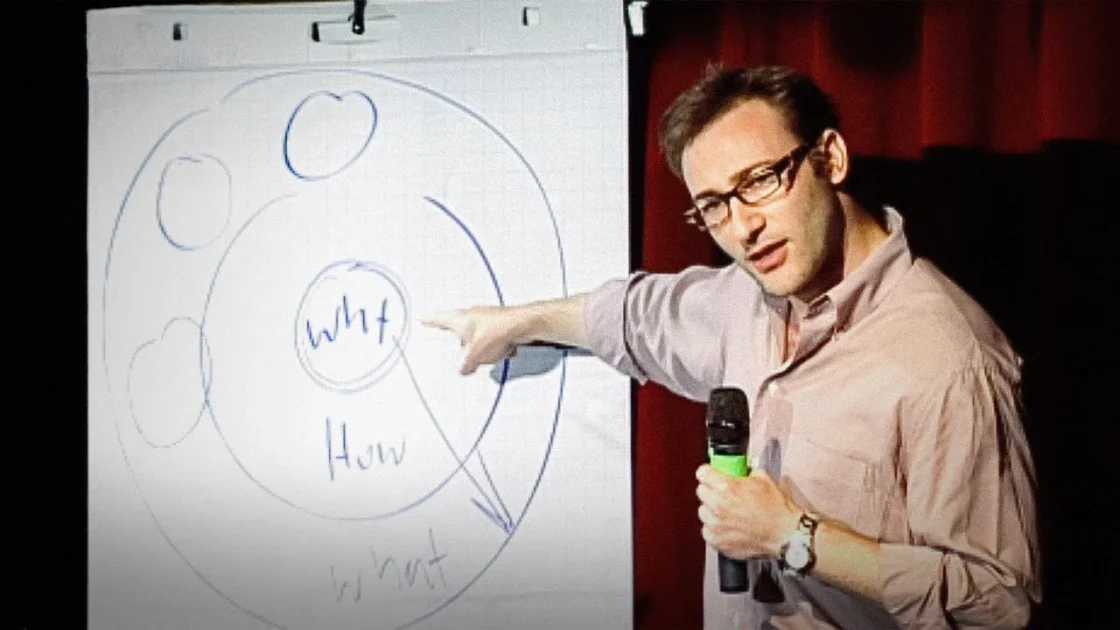
The most watched statement of the folk theory is a talk Seth Godin gave at TED2003, posted on TED’s YouTube channel in May 2007 as How to get your ideas to spread. TED.com counts more than 7.7 million plays. Godin argues that interruption advertising has stopped working, that ignoring the ordinary is the sensible response to too many choices, and that marketers should sell to obsessive fans who will tell their friends. Checked against the records behind his own examples, the diagnosis holds up better than the cure.
The remarkability argument behind the TED2003 talk
Godin’s target is what he calls the TV-industrial complex: buy ads, interrupt people, use the attention to win distribution, spend the profit on more ads. He tells the audience that this loop has been cancelled. His alternative is the purple cow. A brown cow by the road is invisible because you have seen thousands; a purple one gets noticed. Remarkable, in his reading, means worth making a remark about.
The strategy follows from that. Skip the average customer in the middle of the adoption curve, find the people already obsessed with a category, which he calls otaku, and make it easy for them to spread the word. He sums up the stakes in one line: “The riskiest thing you can do now is be safe.” His examples run from Silk soymilk and Frank Gehry’s museum in Bilbao to a proposed giant lava lamp in Soap Lake, Washington.
To his credit, Godin includes a failure of his own: a record label whose albums in a new high-end audio format were marketed to owners of $20,000 stereos, who turned out not to care about new music. That admission carries more weight than the talk lets it. Obsessive buyers spread an idea only when their obsession matches it, and finding that match is the hard part.
Sliced bread sold within a year, not after 15
The talk opens on sliced bread. Godin says it was invented in the 1910s, that for its first 15 years nobody bought it, and that it only took off once Wonder worked out how to spread the idea. The record says otherwise.
According to the Lemelson-MIT Program, Otto Rohwedder began work on a slicer around 1912, went through failed prototypes, and lost his blueprints in a factory fire in late 1917. Only by 1927 did he have a machine that sliced and wrapped the loaf to keep it fresh. The Chillicothe Baking Company in Missouri sold the first loaf on 7 July 1928 (HISTORY dates the first production run to 6 July). Customers liked it, and within a year Rohwedder could not keep up with bakeries’ orders. Wonder began selling sliced bread in 1930, and by 1933 American bakeries sold more sliced bread than unsliced.
So the 15 lost years were an engineering delay, not a marketing failure. Once the product existed, it spread fast in one small town on its own merits. HISTORY adds the reason: factory bread had become so soft that slicing it neatly at home was hard. Wonder’s contribution was national scale through its own equipment and reach, which is closer to the machinery Godin says is dead than to a purple cow.
Silk’s dairy-case move came with Dean Foods distribution
Godin’s Silk story is the strongest part of the talk, and the core of it checks out. Fortune Small Business reported in 2001 that White Wave founder Steve Demos repositioned soymilk rather than reinventing it: a less beany taste, the familiar gable-top milk carton, and a place in the dairy case next to cow’s milk. White Wave’s sales went from $6 million in 1993 to $29.6 million in 2000, with $81 million expected for 2001, close to the tripling Godin cited.
The same article shows what the talk leaves out. White Wave spent $10 million on an advertising campaign in 2000 and gave away more than 3 million half-pints in 5,000 stores. In August 1999 it signed a deal with Dean Foods, then the country’s second-largest dairy, which took a minority stake in exchange for help with distribution. Silk went from about 100 supermarkets to 25,000, roughly 80 percent of the country’s supermarkets, in two years. An FDA ruling in October 1999 that soy protein can lower cholesterol helped too.
Silk was remarkable on the shelf. It also rode a dairy giant’s distribution and a $10 million campaign to get onto that shelf, the very loop the talk declared cancelled.
Interesting products get talked about early, then fade
Berger and Schwartz’s 2011 study in the Journal of Marketing Research is the most direct test of the remarkability claim. Using data from the word-of-mouth agency BzzAgent covering campaigns between 2002 and 2009, they found that interest lifted conversation in roughly the first three weeks of a campaign and had no effect after that. Products one standard deviation above the mean on environmental cues got about 15 percent more conversation in total than products one standard deviation below.
A field experiment made the point causal. When BzzAgent participants received messages tying Boston Market to dinner, people who had not already linked the chain with that meal talked about it 20 percent more. A lab study found participants discussed whatever objects sat in the room with them, interesting or not.
The authors note one limit: their data are mostly face-to-face conversation, and online sharing may reward interesting content more. Read with that caveat, the finding reframes Godin’s hot sauce example. Nobody obsesses over mustard, but every barbecue reminds people of it.
Penetration data cuts against the fans-first playbook
The Ehrenberg-Bass Institute at the University of South Australia argues from decades of purchase data that brands differ a lot in how many buyers they have and very little in how loyal those buyers are. Smaller brands have fewer buyers who are also slightly less loyal, a pattern called double jeopardy. Brands grow by adding customers, and most new customers are light buyers. A plan built only on obsessive fans caps growth unless it reaches people who barely think about the category.
Duncan Watts and Peter Sheridan Dodds reached a related conclusion in 2007 with network simulations published in the Journal of Consumer Research. Under most conditions they tested, large cascades of influence were driven by a critical mass of easily influenced people rather than by a few influential ones. Both bodies of work have limits. The simulations are models, and much of the brand-growth evidence comes from one institute. They still sit awkwardly with a strategy that depends on finding the right enthusiasts.
Gehry’s museum paid off; Soap Lake’s lamp never lit
Godin’s architecture example survives scrutiny. Economist Beatriz Plaza found that the Guggenheim Museum Bilbao, opened in 1997 at a cost of about $200 million, paid for itself in nine years, adding some 740,000 hotel stays a year and 907 jobs. She also warned against copying it: the Royal Armouries Museum in Leeds expected 1.3 million visitors a year and drew fewer than 200,000.
Soap Lake is the cautionary companion. Artist Brent Blake pitched a giant lava lamp in 2002 with a $100,000 estimate. A 60-foot lamp would need glass 12 inches thick at the base. A 50-foot lamp donated by Target arrived in pieces, and repairs were quoted at $600,000. Smithsonian reported that eleven years after the pitch, the lamp was still unbuilt, though stories about the plan alone drew some visitors. Remarkable ideas spread; remarkable plans that cannot be delivered spread and then stall.
A working rule for small brands in 2026
Godin was right that average is invisible in a crowded category and that a timid product rarely earns a mention. He was wrong that the machinery of reach had been switched off, and his own best example ran on it. For a founder with a small budget, the evidence supports a sequence: use remarkability to earn the first conversation, then tie the product to an everyday occasion, make it visible in use, and put it where light buyers already shop.
A drop in buzz after the first month is the expected pattern, not a verdict on the product. The test worth watching is whether cues and distribution keep conversation going once the novelty has worn off. If new evidence showed that online sharing sustains interest-driven talk for months, the case for leading with remarkability would get stronger. The current record does not show that.
Author:
Jan Bielik
CEO & Founder of Webiano Digital & Marketing Agency
This article is an original analysis supported by the sources cited below
How to get your ideas to spread | Seth Godin
The TED YouTube upload of the talk, giving the channel, the May 2007 publication date, the 18:58 running time and TED’s description.
Seth Godin: How to get your ideas to spread | TED Talk
TED’s official page, dating the talk to TED2003 in February 2003 and reporting more than 7.7 million plays.
How to Get Your Ideas to Spread: Seth Godin (Transcript)
Full transcript used for the talk’s claims on sliced bread, Silk, otaku, Bilbao, Soap Lake and Godin’s own record-label failure.
Otto Rohwedder | Lemelson
MIT program profile establishing the 1917 fire, the first sale on 7 July 1928, fast early demand, Wonder’s 1930 entry and the 1933 crossover.
Who Invented Sliced Bread?
HISTORY account giving the 6 July 1928 production date, bakers’ early scepticism and why soft factory loaves needed slicing.
What Drives Immediate and Ongoing Word of Mouth?
Berger and Schwartz’s 2011 study showing interest drives early but not ongoing word of mouth, while cues and visibility drive both.
Marketing is fundamental for South Australian businesses
Ehrenberg-Bass Institute summary of double jeopardy and the finding that brands grow through more customers, mostly light buyers.
Social change relies more on the easily influenced than the highly influential
Release on Watts and Dodds’s 2007 simulations showing large cascades rest on easily influenced people rather than influentials.
Profile In Persistence
Fortune Small Business 2001 report on Silk’s dairy-case repositioning, sales figures, $10 million ad spend, sampling and the Dean Foods deal.
The Guggenheim Effect
Wilson Quarterly summary of Beatriz Plaza’s return-on-investment study of the Guggenheim Bilbao, including her caution on copying it.
This Town Has Spent 11 Years Planning a 60 Foot Lava Lamp
Smithsonian report on Soap Lake’s unbuilt lamp: the 2002 pitch, engineering limits, the broken Target donation and repair cost.
| Citing this article? Brief excerpts are welcome. Please credit Webiano.digital, name the author where stated, and include a link to https://webiano.digital and to this original article. Full or substantial republication requires prior written permission. Read our Copyright and Content Use Policy. |
This article was prepared with the assistance of artificial intelligence tools. The content underwent expert human review, and Webiano Digital & Marketing Agency assumes editorial responsibility for its final version and publication.