Rand Fishkin told marketers in December 2025 that ChatGPT barely registers against Google, at 0.26% of its search volume. His own firm had already raised that number before the video aired, and OpenAI has since put it at roughly a fifth. The ratio moved faster than the argument built on it.
Rand Fishkin spent fifty-one minutes with podcaster Sean Barber in December 2025 arguing that the buyer journey has become a pinball machine rather than a funnel, and that marketers chasing ChatGPT visibility are chasing a decimal point. His central comparison, that ChatGPT handles roughly 37.5 million search-like prompts a day against Google’s 14 billion, a 373-times gap worth about 0.26% market share, came from his own research firm, SparkToro, in a report published in March 2025. SparkToro had already revised that figure before Fishkin’s interview aired. By October 2025, the firm’s own data put ChatGPT at 66 million daily search-like prompts, narrowing the gap to roughly 210 times. Within a year of the video, OpenAI’s own head of consumer product described the gap as closer to five times.
Fishkin’s wider argument, that zero-click search has gutted referral traffic, that attribution models flatter Google and Facebook, and that Reddit will keep growing on demand for human answers, rests on research he has published and defended for years, and most of it holds up well against independent data. One prediction delivered with particular confidence in the video ran into trouble within eleven months, once Reddit’s own numbers arrived.
An interview built on the pinball metaphor, not a product pitch
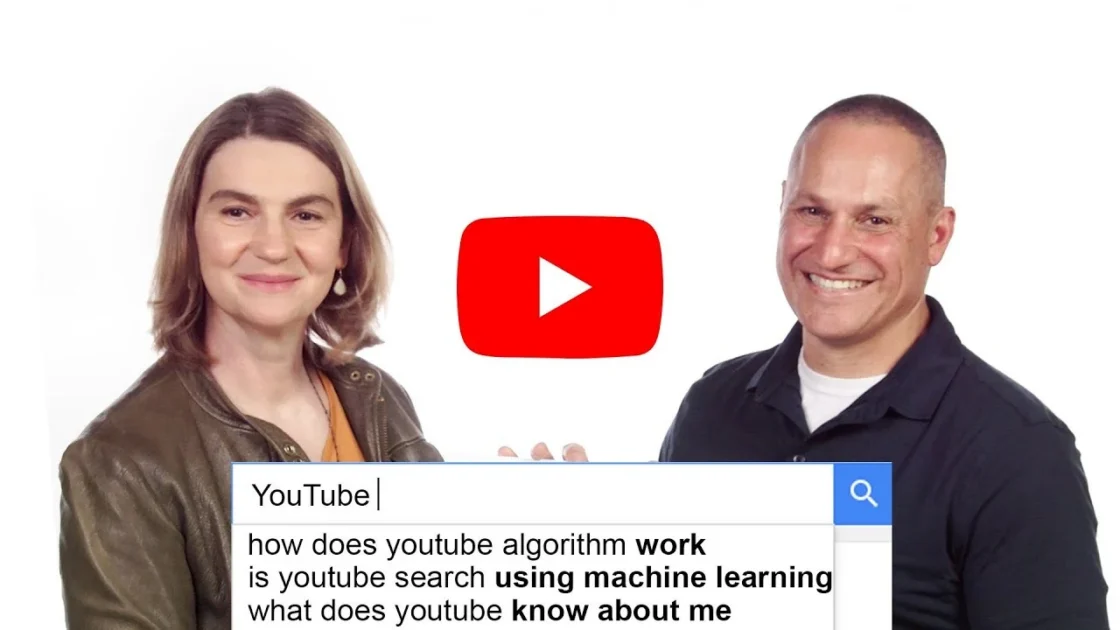
Sean Barber hosts the “Search With Sean” channel and had covered Fishkin’s work before inviting him on directly. The resulting video is a straight two-person conversation rather than a sponsored demo. Fishkin, CEO of audience-research firm SparkToro and co-founder of the brand-monitoring tool Alertmouse, walks through research his own company published. His central image is that the modern buyer journey behaves like a pinball machine, not a funnel, because discovery, research and purchase now happen at once across search, social, podcasts and conversation instead of in sequence. He illustrates it with an example reported in coverage of the same episode: someone shopping for a wedding suit might be swayed by a Reddit thread, a podcast mention, a Substack post or a friend’s comment, in no fixed order, which is why he argues brands can no longer build a presence on a single channel and expect to catch every buyer there.
The number that SparkToro had already revised
The 373x figure is the video’s most quotable claim, and it is also the one with the shortest shelf life. SparkToro’s March 2025 report, co-authored with Semrush’s Datos panel, calculated it from public statements: Google’s “more than 5 trillion searches” in 2024, OpenAI’s reported 1 billion ChatGPT messages a day, and a Semrush finding that only 30% of ChatGPT prompts resemble a traditional search. That post still carries SparkToro’s own notice today, added after a follow-up study: it says the figures “may be out of date.” The follow-up, published in October 2025, used a newer Harvard-and-OpenAI estimate that 21.3% of ChatGPT’s much larger prompt volume is search-like, putting ChatGPT at 66 million daily searches and Google’s lead at roughly 210 times.
The gap kept closing. In November 2026, OpenAI consumer-product lead Adam Fry told journalist Alex Kantrowitz that ChatGPT’s search-like query volume is now roughly one-fifth of Google’s, counting each question that triggers a web search as one search. That is a different counting method from SparkToro’s, which starts from total prompt volume rather than web-triggered queries, and Ahrefs’ separate referral-traffic tracker still put ChatGPT at 0.36% of tracked website visits in October 2026 against Google’s 24.74%. Query-volume comparisons and traffic-share comparisons answer different questions, which is itself part of the lesson. The same ratio moved from 373x to roughly five times in twenty months, across three credible measurements, which says less about ChatGPT’s growth curve than about how fast any single snapshot in this argument goes stale.
The zero-click argument that keeps being confirmed
Fishkin’s other headline number has held up far better. SparkToro’s own research, using Similarweb’s clickstream panel, found that 68.01% of US Google searches in the first four months of 2026 ended without a click to any site, up from 60.45% in 2024. The firm attributes most of that jump to AI Overviews, which it says cut organic click-through rates by close to 60% where they appear. Independent data lines up with the direction if not the exact figure: a Chartbeat analysis reported by Axios and summarized by The Blog Herald found that search referral traffic fell 60% for small publishers, 47% for medium publishers and 22% for large ones between 2024 and 2026, over roughly the window AI Overviews rolled out broadly. Other trackers using different panels put the zero-click rate lower, around 58% to 62%, a reminder that the exact figure depends heavily on which clickstream panel and device mix produced it. Every serious estimate still points the same direction.
An attribution argument Fishkin has made for years
The video’s skepticism about ad attribution is not a one-off provocation. Fishkin has argued in multiple interviews that roughly half of Google and Facebook’s reported revenue comes from sales that were going to happen anyway: branded searches and post-exposure purchases the platforms sit in front of and claim credit for. He points to HubSpot as a case study. Its organic search traffic fell roughly 80% as AI Overviews and zero-click features spread, while its revenue and share price kept climbing, because its audience had moved to finding and engaging with the brand on YouTube and LinkedIn rather than through a website visit. His recommendation, repeated across appearances, is that marketers measure lift, meaning what changes when spend pauses, instead of trusting platform dashboards that claim credit for demand they did not create.
The prediction that collided with Reddit’s own numbers
Fishkin told Barber that Reddit would keep growing because readers want human answers rather than AI-generated ones, a claim Google itself has echoed in describing Reddit’s value as an archive of authentic conversation. Ten months later, Reddit’s own earnings call told a messier story. Referrals fell by more than a million a week, CEO Steve Huffman said, on average through October 2026. He blamed Google’s AI Overviews directly, saying flatly that “the AI mode does not drive traffic, not for us and not to anybody.” Reddit’s US daily active unique visitors fell 2% that month, its first decline since going public, and the company responded by moving toward mandatory sign-ins rather than open browsing, the opposite of the openly discoverable platform the authenticity argument assumes. Reddit’s revenue kept growing fast regardless, so the business itself is not in trouble; the mechanism Fishkin described, people finding Reddit through search because it feels more human, is the exact channel Reddit says is breaking.
Building a 2027 plan around numbers that move this fast
Treat every ChatGPT-versus-Google ratio as a date-stamped snapshot rather than a constant, and check the publication date before it goes into a deck. This one moved by a factor of roughly 70 in under two years across three credible measurements. Keep the underlying behaviors, not the ratio, because they travel better: AI Overviews reduce clicks wherever they appear, branded search and direct visits matter more than click-through attribution suggests, and a platform’s own stated traffic mix beats a borrowed estimate from someone else’s panel. For a channel plan specifically, Fishkin’s own advice is to treat AI-tool visibility the way marketers treat Bing, worth a line item and not a strategy, while watching whether Reddit’s sign-in wall changes how discoverable its content stays to the search traffic that used to bring people there.
The judgment
Fishkin’s larger framework keeps getting confirmed by people other than Fishkin: zero-click search is accelerating, attribution models overstate platform influence, and the buyer journey really has stopped following a predictable sequence. Where the video overreaches is treating one comparative statistic as settled fact in a market that recalculates it every few months; the 373x figure was already a year old by December 2025 and has been superseded twice since by sources as credible as the one he cited. The open question is not whether ChatGPT will close the gap with Google, since several independent counts already show it has, but whether any single number can stay accurate long enough to anchor a marketing decision before the next report replaces it.
Author:
Jan Bielik
CEO & Founder of Webiano Digital & Marketing Agency
This article is an original analysis supported by the sources cited below
Rand Fishkin On The New Search Reality: AI, Zero-Click & The Pinball User Journey
The video itself (Search With Sean, 7 December 2025): channel, date, transcript excerpt, AI-generated summary and the pinball-journey framing this article checks.
Diggity Marketing News Roundup, January 2026
Independent description of the same episode, naming host Sean Barber and the wedding-suit example used to illustrate the pinball metaphor.
Google Search Had 22% Growth In Searches Year Over Year
Search Engine Roundtable’s coverage of SparkToro’s original March 2025 report containing the 373x and 0.26% figures Fishkin cites in the video.
In 2026, Less than One Third of Google Searches Still Send a Click
SparkToro’s Similarweb-based 2026 study putting US zero-click search at 68.01%, with methodology notes and the AI Overview click-through impact.
OpenAI puts ChatGPT’s search-like query volume at roughly one-fifth of Google’s
Coverage of OpenAI consumer-product lead Adam Fry’s November 2026 comment to Big Technology’s Alex Kantrowitz, with the counting-method caveats this article notes.
A 2026 study of search behavior found that 68 percent of Google searches now end without a single click, and small publishers lost 60 percent of their referral traffic in just two years
The Blog Herald’s breakdown of Chartbeat and Axios data showing search referral losses of 60% for small publishers against 22% for large ones.
SEO Statistics 2026 With AI, Zero-Click, and Organic Search Caveats
Independent methodology review showing other trackers put zero-click search at 58% to 62%, against SparkToro’s 68%, illustrating how panel choice changes the headline number.
Ignore AI Hype. Here’s Rand Fishkin’s Marketing Strategy for 2026
A separate November 2025 interview in which Fishkin calls the current climate an AI bubble and gives the HubSpot traffic-versus-revenue example used in this article.
What 1 Million ChatGPT Conversations Reveal about Users
Choice 360’s review of OpenAI’s own usage paper, used here to confirm the scale and non-search share of ChatGPT prompts that complicates search-volume comparisons.
Reddit Puts Logged-In Experience First as Google AI Hits Traffic
Reuters report, via The Star, on Reddit CEO Steve Huffman’s October 2026 earnings call blaming Google’s AI Overviews for falling search referrals, including his direct quote and Reddit’s shift toward mandatory sign-ins.
| Citing this article? Brief excerpts are welcome. Please credit Webiano.digital, name the author where stated, and include a link to https://webiano.digital and to this original article. Full or substantial republication requires prior written permission. Read our Copyright and Content Use Policy. |
This article was prepared with the assistance of artificial intelligence tools. The content underwent expert human review, and Webiano Digital & Marketing Agency assumes editorial responsibility for its final version and publication.