Google and Microsoft now expose first-party signals for generative search, while ChatGPT referrals can be identified in analytics. That makes the old claim that GEO cannot be measured too broad. The harder problem is proving causation: which optimisation produced the exposure, whether it persists across stochastic answers, and whether that visibility creates incremental commercial value.
Table of Contents
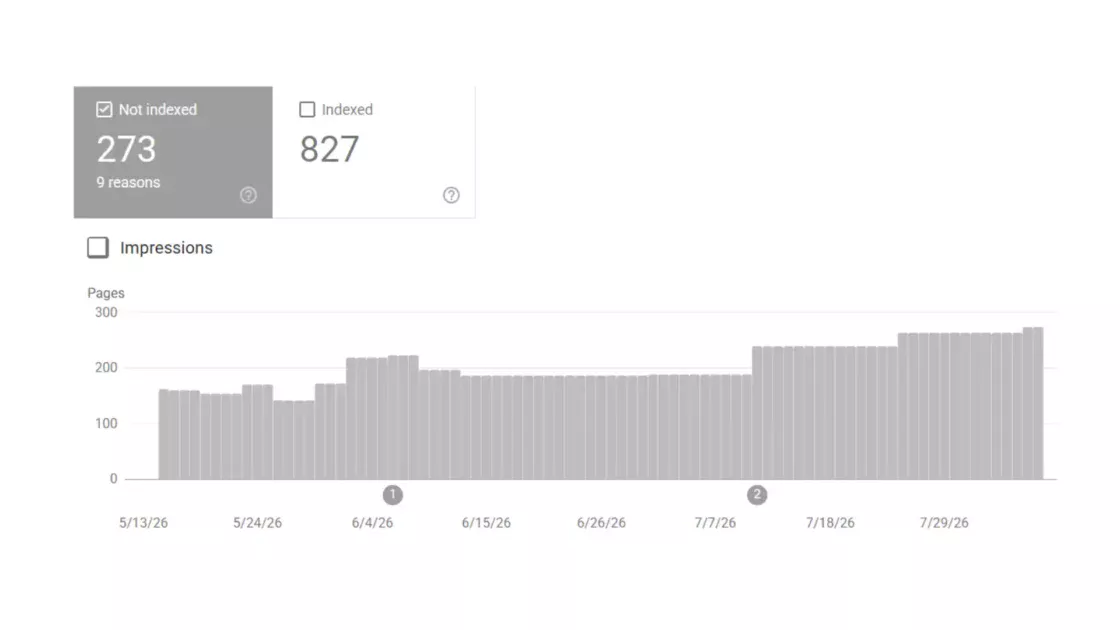
Google’s latest Search Console changes make the central claim about generative engine optimisation harder to state in absolute terms. On June 3, 2026, Google began rolling out a dedicated Generative AI performance report that exposes impressions, pages, countries, devices and time trends for appearances in AI features. Microsoft had already put citation counts, cited pages and grounding-query samples into Bing Webmaster Tools. GEO is measurable today, but not yet with the same end-to-end reliability, standardisation or causal clarity that mature SEO measurement can offer.
That distinction matters because “measurement” covers several different questions. A team may be able to observe that a URL was cited, detect referral traffic from ChatGPT, or see that Google recorded an AI-feature impression. It is much harder to prove that a specific content change caused the citation, that the gain will persist across prompts and model updates, or that the visibility produced incremental revenue. A July 2026 critical survey of 45 GEO studies describes the field as a stochastic, partially observable pipeline and reports no reviewed technique with a stable, longitudinal, cross-platform causal effect on organic discoverability or downstream behaviour. The real gap is not visibility versus invisibility; it is observability versus attribution.
GEO measurement has moved from screenshots to first-party signals
The practical consequence is that baselines created before these product changes need to be treated carefully. A 2025 GEO report built from sampled prompts is not methodologically identical to a 2026 report that includes first-party Google impressions or Bing citation counts. Teams should preserve the old series, but they should mark the measurement break instead of pretending the chart is continuous. A better instrument can make performance appear to change even when the underlying visibility did not. That is a reporting problem familiar from analytics migrations, now arriving in AI search measurement.
A year ago, many GEO programmes depended heavily on manual prompt checks, screenshots and third-party monitoring. That is no longer the whole picture. Google’s June 2026 Search Console rollout created a dedicated view for generative AI features in Search and Discover, showing how often a site’s URLs appeared, which pages appeared, the countries involved, device information for Search and time-series data. Google says the report is still rolling out to a subset of sites, so access is not yet universal. That is first-party visibility data, not an inferred rank tracker.
Microsoft’s Bing Webmaster Tools goes further in a different direction. Its AI Performance dashboard, introduced in public preview in February 2026, reports total citations, average cited pages, grounding-query phrases, page-level citation activity and visibility trends across Microsoft Copilot, AI-generated Bing summaries and selected partner integrations. Microsoft explicitly warns that citation counts do not indicate placement, ranking, authority or the role a page played in an answer. The metric is real, but its meaning is narrower than a traditional position metric.
These changes weaken the claim that GEO “cannot be measured.” It can. What remains true is that the available measurements are fragmented by platform and by stage of the user journey. Google exposes one slice, Bing another, and other answer engines expose still less. A credible GEO dashboard therefore has to distinguish observed platform data from synthetic monitoring instead of blending both into a single visibility score.
SEO still benefits from a cleaner measurement chain
The asymmetry also changes how quickly a team can diagnose failure. In SEO, a lost page can often be traced through indexing, query visibility, ranking, clicks and landing-page behaviour. In generative search, the disappearance of a citation may reflect retrieval changes, a different answer model, a changed prompt interpretation, a freshness decision or simple sampling variance. The same observed loss has more plausible causes. That increases the number of observations needed before an optimisation team should declare a win or a regression.
Traditional SEO is not perfectly deterministic. Rankings vary by location, device, query formulation, personalisation and algorithm updates, and Google itself warns that search positions are dynamic. Yet the SEO measurement chain is unusually mature: crawl and index status can be inspected; queries, impressions, clicks, click-through rate and average position can be analysed in Search Console; landing-page sessions and conversions can be followed in analytics; and revenue or leads can often be tied back to organic search with known attribution rules.
Generative interfaces break that chain into more pieces. A page can be discovered but not retrieved for a particular answer, retrieved but not cited, cited but barely visible, quoted without producing a click, or influential in an answer without receiving explicit attribution. The 2026 critical survey of GEO research treats discoverability, citation, absorption and economic outcomes as separate dimensions precisely because a single “rank” does not capture them. A citation is not the generative equivalent of ranking number three.
Google’s own documentation reinforces the overlap between the two disciplines. Its July 2026 guide says that AI Overviews and AI Mode are rooted in core Search ranking and quality systems and that, from Google Search’s perspective, work described as AEO or GEO remains SEO. It also says there are no special technical requirements, special schema or AI-only files required for inclusion. For Google, the measurement problem is increasingly an extension of SEO, not a separate universe.
The hidden variable is the answer-generation pipeline
This pipeline also weakens the usefulness of exact-prompt tracking. A user may ask one broad question, while the system decomposes it into several narrower searches; another user can express the same intent differently and trigger a different retrieval path. A monitoring tool that repeatedly submits one canonical prompt therefore measures a controlled probe, not the whole demand space. Prompt monitoring is closer to a laboratory panel than to a complete query log. Its value rises when the panel is stable, documented and intentionally sampled.
The reason GEO attribution is difficult lies in the mechanism. Google says AI Overviews and AI Mode can use “query fan-out”: the system generates multiple related searches across subtopics and data sources before composing a response. ChatGPT search similarly may rewrite a user’s question into one or more targeted queries and then issue additional searches. These intermediate retrieval steps mean the prompt a marketer tracks is not necessarily the query the system sends to its search layer.
That creates several opportunities for variance. A source must first be crawlable or otherwise discoverable, then eligible for retrieval, selected into a context window, used by the answering model and, depending on the product, surfaced as a citation or link. Different models or answer modes may use different retrieval techniques. Google states that AI Overviews and AI Mode can use different models and techniques, so their source sets can vary even within one company’s search ecosystem. The observable citation sits at the end of a multi-stage selection process.
The original GEO research formalised this problem before most first-party dashboards existed. Its authors argued that generative answers require visibility metrics beyond linear ranking because citations can appear with different prominence, positions and influence inside synthesized text. Their experiments reported visibility gains of up to 40% in defined settings, while also noting that techniques vary by domain and may need to adapt as engines change. Those findings show that content interventions can affect measured visibility under controlled conditions; they do not make every live-engine change attributable.
Platform incentives shape what publishers are allowed to see
There is another structural limit: providers can change definitions without giving publishers the raw event stream. Microsoft notes that its grounding-query data represents a sample of overall citation activity. Google’s generative report is a product-defined view of appearances in its own AI features. Those constraints do not make the data untrustworthy; they define its scope. First-party does not mean complete. A sound measurement policy records the platform definition and version alongside the metric so historical comparisons remain interpretable when products evolve.
Measurement is also a product-policy choice. Search engines historically had strong reasons to give publishers diagnostics because crawling, indexing and click-through traffic sustained the web ecosystem around search. Generative systems can answer a user while exposing fewer external interactions, so the provider has to decide which stages of the answer pipeline it will disclose. The dashboards now appearing reveal that companies are choosing different boundaries. There is no cross-platform equivalent of Search Console.
Google’s dedicated generative report currently emphasises impressions and the pages, countries, devices and dates associated with those impressions. Microsoft emphasises citations and grounding-query samples. OpenAI tells publishers that ChatGPT referral URLs include utm_source=chatgpt.com, making inbound traffic trackable in analytics, but that is a post-click signal rather than a full impression or citation ledger. Perplexity documents separate crawler identities for search discovery and user-triggered fetching, but its crawler documentation is not a publisher performance report.
The commercial implication is straightforward. Vendors that sell a unified “AI visibility” percentage are usually normalising unlike observations: first-party impressions from one platform, citations from another, sampled prompt runs from others, and perhaps referral sessions from analytics. That can be useful for trend monitoring, but a composite score is a model of visibility, not a native market-wide metric. Unless its sampling, prompt set, geography, frequency and weighting are disclosed, management should not treat it like organic sessions or Search Console clicks.
Four layers of GEO evidence should not be collapsed into one KPI
This layered model also makes experimentation more disciplined. A content change might first increase eligibility and citation frequency, then later produce more referral sessions, and only after that affect qualified leads. If only the final conversion metric is watched, useful upstream movement can be missed; if only citations are watched, commercial failure can be disguised as success. The layers form a funnel of evidence, not a ladder of guaranteed causation. Each stage needs its own threshold for action and its own uncertainty statement.
A useful measurement system starts by naming the layer being observed. The strongest evidence comes directly from the platform or from the website’s own logs and analytics; weaker evidence comes from repeated synthetic tests designed to approximate what users may see. The categories can coexist, but they answer different questions.
A practical evidence ladder
| Layer | Example evidence | What it can establish | What it cannot establish alone |
|---|---|---|---|
| Platform visibility | Google AI impressions, Bing citations | The platform recorded an appearance or citation | Incremental business value |
| Referral behaviour | ChatGPT-tagged sessions, landing-page analytics | A user clicked through | How many non-clicked exposures occurred |
| Synthetic monitoring | Repeated prompt tests across engines | Directional share of citations or mentions in a defined test set | Population-wide user exposure |
| Business outcomes | Leads, sales, assisted conversions | Commercial outcomes associated with observed visits or journeys | Causality from a specific GEO edit without a valid design |
Google’s new report strengthens the first layer. Bing’s dashboard strengthens citation observability. OpenAI’s referral tagging strengthens the second. None of those, by themselves, close the causal gap between an edit and revenue.
The operational mistake is to choose one number and call it “GEO performance.” A better scorecard keeps exposure, citation, traffic and commercial outcomes separate. That approach also prevents a common false negative: an answer engine may increase brand exposure while sending few clicks. Conversely, referral traffic can rise because the platform itself is growing, even if a brand’s citation share is unchanged.
Research on user behaviour explains why this separation matters. Pew Research Center analysed 68,879 Google searches from a panel of 900 U.S. adults and found that, in March 2025, users clicked a traditional result in 8% of visits with an AI summary versus 15% without one; clicks on links inside the AI summary occurred in 1% of visits with a summary. The study is specific to Google and to its observation period, but it shows why traffic alone can substantially undercount AI exposure.
Visibility can rise while traffic falls
For publishers and brands, that creates a valuation problem. A citation may still carry value through awareness, perceived authority or later branded search, yet those effects are harder to attribute than a referral session. The right response is not to assign an arbitrary monetary value to every mention. It is to look for corroborating changes in branded demand, direct traffic, assisted conversions or survey-based awareness while acknowledging alternative explanations. GEO visibility can be economically relevant before it is economically attributable.
The business tension in GEO is that a successful visibility outcome does not guarantee a successful traffic outcome. Generative answers are designed to satisfy more of the information need on the result surface itself. That makes citations valuable for authority and discovery, but it can also reduce the necessity of a click. More citation exposure and fewer website visits can occur at the same time.
Pew’s 2025 behaviour study provides independent evidence for this pattern on Google. AI-summary visits were associated with much lower clicking to traditional results, and only 1% of visits with an AI summary produced a click on a cited source. An updated Ahrefs analysis using 300,000 keywords and aggregated Search Console data reported that the presence of an AI Overview correlated with a 58% lower average click-through rate for the top-ranking page in December 2025 compared with its forecasted counterfactual. Ahrefs’ result is observational and methodology-dependent, so it should not be read as a universal causal rate; it does point in the same direction as Pew.
Infrastructure data adds another angle. Cloudflare introduced a crawl-to-referral ratio to compare how often AI or search systems request publisher HTML with how often those systems send referral traffic back. Cloudflare explicitly framed the metric as a way for site owners to assess the imbalance between machine consumption and human visits. Its 2025 year-in-review also reported that AI crawlers accounted for 20% of Verified Bot traffic on its network, compared with 40% for search-engine crawlers. These figures describe Cloudflare-observed traffic, not the entire web, but they reinforce a critical point: machine access is not a proxy for audience delivery.
The strongest GEO studies still stop short of SEO-grade causality
The distinction between controlled efficacy and field effectiveness is central. A technique can work when a source is already retrieved and still fail to improve its chance of being retrieved in the first place. It can also work for one topic or engine and disappear after a model update. That is why durable evidence needs repeated tests over time, competitive controls and multiple engines. A one-off citation lift is evidence of an event; it is not yet evidence of a durable optimisation rule.
There is empirical evidence that content presentation can affect generative visibility. The foundational GEO paper introduced benchmark metrics for generative engines and reported gains of up to 40% in source visibility across its experimental settings, including tests on a real-world generative engine. It also found that effects varied by domain and acknowledged that methods may need to adapt as systems evolve. Those are meaningful findings, but their scope is narrower than the marketing slogan “do X and your AI visibility rises 40%.”
The July 2026 critical survey is more cautionary. Reviewing 45 studies, it concludes that the foundational gains are conditional on settings where content is already present in a fixed context and do not establish durable organic discoverability or traffic effects. It also reports low source overlap, substantial run-to-run variability and fidelity gaps in commercial audits, and recommends repeated measurements, paraphrases, controls and human validation. Most importantly, it says no reviewed method demonstrated a stable, longitudinal, cross-platform causal effect on organic discoverability or downstream behaviour. That is the current evidentiary ceiling, not evidence that GEO has no effect.
This is where comparisons with SEO need precision. SEO also cannot promise causal certainty from an uncontrolled before-and-after change; algorithms, competitors and demand move simultaneously. The difference is that SEO teams generally have denser first-party telemetry and longer-established metrics. GEO adds stochastic answer generation and cross-platform opacity on top of the usual attribution problems.
Companies should measure GEO as a portfolio of experiments
A useful governance rule is to predefine what would count as success before editing content. For example, a team might require a sustained increase in first-party AI impressions or citations across several weeks, no material SEO deterioration, and evidence that referred visitors meet a quality threshold. That avoids moving the goalposts after noisy results arrive. GEO should be managed with test design, not with anecdote collection. The smaller the sample and the more volatile the engine, the stronger the need for repetition and controls.
For marketing teams, the practical response is not to abandon GEO measurement. It is to lower the precision of the claim while raising the quality of the experiment. Start with a defined set of commercially relevant topics rather than thousands of prompts. Record the engine, market, language, device or interface where relevant, and the exact prompt family. Run repeated observations and paraphrases instead of treating one answer as a ranking result. The 2026 survey’s recommended protocol points in the same direction.
Then separate leading indicators from business outcomes. First-party Google AI impressions and Bing citations are leading indicators of visibility. ChatGPT referral sessions are evidence of click-through behaviour. Search Console and analytics can show whether landing pages gain or lose organic traffic. CRM and commerce systems can capture leads, revenue or assisted conversions. Do not force all four into one index unless decision-makers understand the assumptions behind the weighting.
Content tests should also be designed around mechanisms that platforms actually document. Google’s July 2026 guidance says generative features rely on core Search systems and recommends crawlability, index eligibility, unique non-commodity content and conventional technical SEO rather than special AI markup or llms.txt files. Perplexity advises allowing its search crawler if a publisher wants content to be surfaced and linked in its search results. Those are testable technical conditions. They are more defensible than chasing an opaque third-party “AI score.”
Reliable GEO measurement will arrive unevenly, not all at once
The likely end state is therefore not a single universal GEO rank. It is a richer measurement stack in which platforms expose some first-party events, websites capture referral and conversion data, and independent tools estimate competitive visibility where native data is absent. That resembles the broader marketing analytics market more than classic rank tracking. The competitive advantage will come from knowing which signal answers which business question, not from finding a supposedly definitive score that erases the differences between engines.
The direction of travel is clear: GEO measurement is becoming more observable, but it is not converging on one standard metric. Google has moved from bundling AI-feature traffic into general Search reporting toward a dedicated generative visibility report. Microsoft now exposes citations and grounding-query samples. OpenAI makes ChatGPT referral traffic identifiable. These are material advances that would have made a blanket “GEO cannot be measured” statement defensible only a short time ago, but too strong in August 2026.
What is still missing is the combination SEO practitioners take for granted: broad first-party coverage, stable definitions, comparable metrics across engines, query-level transparency, click data tied directly to every AI exposure, and a validated way to attribute downstream value to a specific optimisation. The research literature also has not yet demonstrated durable, cross-platform causal effects from specific GEO techniques.
The most defensible forward judgment is conditional. If Google expands its report beyond the current subset of sites and adds richer metrics, if Microsoft expands AI Performance coverage and metrics, and if other answer engines expose publisher-level impression and citation data, the gap with SEO will narrow. But generative systems will still produce variable answers through multi-stage retrieval and synthesis. GEO can already be measured; what cannot yet be measured with SEO-like confidence is the full causal return on GEO optimisation.
Questions marketers are asking about GEO measurement
Yes, but only in parts. Google now provides first-party generative AI impression reporting for eligible Search Console properties, Bing reports citation activity, and ChatGPT referral visits can be identified in analytics. Those signals do not yet amount to a universal cross-platform attribution system.
Not yet if “reliable” means a stable, comparable chain from visibility through click and conversion. SEO still has denser first-party telemetry, while GEO adds variability from retrieval, synthesis and answer generation. Research published in July 2026 found no reviewed GEO technique with a stable, longitudinal, cross-platform causal effect on organic discoverability or downstream behaviour.
Google began rolling out a dedicated Generative AI performance report in June 2026. It shows impressions, appearing pages, countries, devices for Search and time trends, while Google says the rollout is being tested with a subset of website owners.
Yes. Bing’s AI Performance dashboard reports total citations, average cited pages, grounding-query samples, page-level citation activity and trends. Microsoft cautions that citation counts do not indicate ranking, authority or placement within an answer.
OpenAI says publishers that allow OAI-SearchBot can track referral traffic from ChatGPT in analytics because referral URLs include utm_source=chatgpt.com. That measures click-through visits, not total answer impressions or every instance in which a source influenced an answer.
No. A citation records that a source was referenced in an answer, while a traditional ranking describes position in an ordered search result set. Generative answers can use, cite and present sources with different prominence, so the original GEO research proposed multidimensional visibility metrics rather than a single rank.
They can be useful as directional monitoring if the methodology is transparent, but they should not be treated as native platform truth. Google explicitly warns that third-party tools do not have access to its internal ranking or AI systems.
No. Pew found that clicks on sources inside Google AI summaries occurred in only 1% of visits with an AI summary in its March 2025 study. That result is specific to Google and the study period, but it shows why exposure and referral traffic must be measured separately.
At minimum, keep platform visibility or citations, referral sessions, synthetic prompt monitoring and business outcomes as separate layers. Report the engine, market, prompt sample and measurement method, and avoid presenting one composite score as if it were directly observed across every AI platform. This is an analytical recommendation based on the measurement gaps documented by current platform tools and GEO research.
Author: Jan Bielik
CEO & Founder of Webiano Digital & Marketing Agency

This article is an original analysis supported by the sources cited below
Optimizing your website for generative AI features on Google Search
Google’s July 2026 guidance established that its generative features rely on core Search systems, defined GEO and AEO from Google’s perspective, documented recommended practices, rejected several purported AI-search hacks and pointed publishers to the new generative performance report.
Google’s technical documentation explained query fan-out, eligibility requirements, differences between AI Overviews and AI Mode, and how AI-feature activity relates to Search Console measurement.
Introducing Search Generative AI performance reports in Search Console
Google’s June 2026 announcement documented the new first-party report, including generative AI impressions, pages, countries, devices and time-series visibility data, as well as its staged rollout.
Introducing AI Performance in Bing Webmaster Tools Public Preview
Microsoft documented citation counts, cited pages, grounding-query samples, page-level citation activity and the limits of interpreting those metrics as rankings or authority.
OpenAI documented OAI-SearchBot controls and the utm_source=chatgpt.com parameter used to identify referral traffic from ChatGPT search results.
OpenAI explained that ChatGPT search can rewrite a user request into one or more targeted searches, supporting the article’s description of an intermediate retrieval layer.
Perplexity documented the separate roles of PerplexityBot and Perplexity-User, illustrating the distinction between search discovery crawling and user-triggered retrieval.
Google users are less likely to click on links when an AI summary appears in the results
Pew Research Center supplied observed click behaviour from 68,879 Google searches by a panel of 900 U.S. adults, including click rates for pages with and without AI summaries.
Update: AI Overviews Reduce Clicks by 58%
Ahrefs supplied a large observational keyword study comparing click-through rates associated with AI Overview presence and documented the study’s methodology and limitations.
The crawl before the fall… of referrals: understanding AI’s impact on content providers
Cloudflare defined its crawl-to-referral ratio and explained how it measures HTML requests from AI or search systems relative to human referral traffic.
The 2025 Cloudflare Radar Year in Review
Cloudflare provided network-level data on verified bot activity, including the relative shares attributed to search-engine and AI crawlers during 2025.
GEO: Generative Engine Optimization
The foundational GEO paper formalised generative visibility metrics, reported experimental visibility gains and documented limits including domain dependence and changing engine behaviour.
| Citing this article? Brief excerpts are welcome. Please credit Webiano.digital, name the author where stated, and include a link to https://webiano.digital and to this original article. Full or substantial republication requires prior written permission. Read our Copyright and Content Use Policy. |
This article was prepared with the assistance of artificial intelligence tools. The content underwent expert human review, and Webiano Digital & Marketing Agency assumes editorial responsibility for its final version and publication.