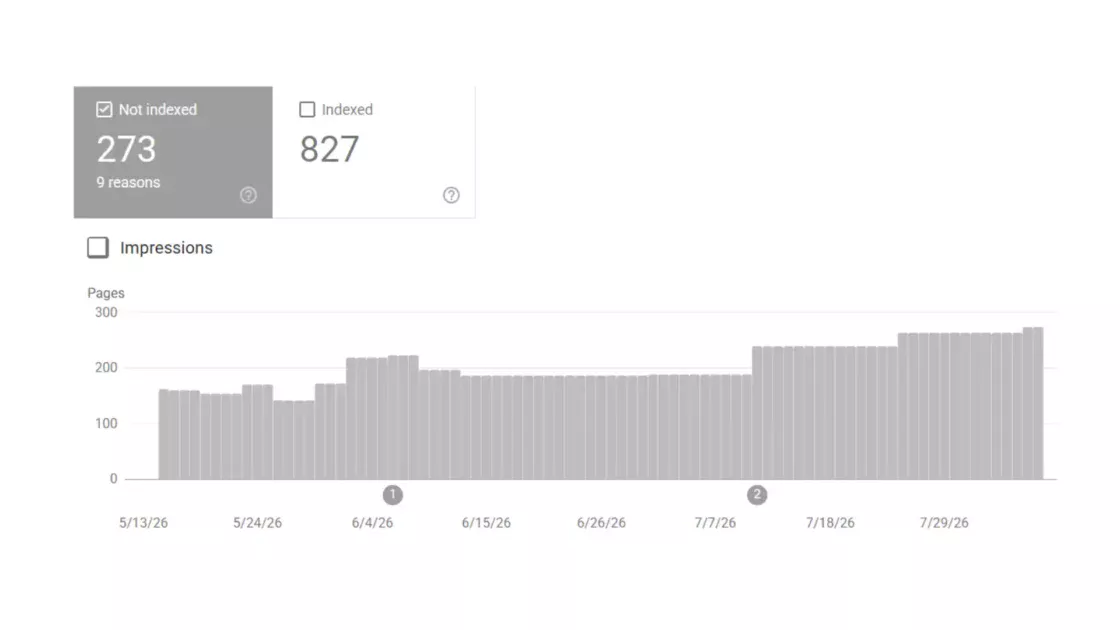
Generative search does not begin with prose style. It begins with crawlability and indexability. A system must discover a resource, understand its subject, retrieve a relevant passage, and decide that the passage is dependable enough to support an answer. Each stage can remove a brand from consideration. The first practical rule is to treat visibility as a chain of eligibility, relevance, and trust, not as a single ranking position. Teams that inspect only final answers miss the earlier failure that caused the absence.
Table of Contents
AI visibility begins with retrieval eligibility
Google states that its existing SEO requirements remain relevant to AI Overviews and AI Mode, with no separate inclusion mechanism. This official or empirical position matters because it narrows the field of credible action. It does not promise inclusion, and it does not turn one signal into a guarantee. It establishes a boundary: search crawlers and retrieval systems needs usable evidence, while publishers need to remove avoidable ambiguity. The work therefore starts with a documented baseline rather than assumptions drawn from a few impressive screenshots.
The mechanism is straightforward. Search crawlers and retrieval systems converts pages, passages, entities, links, feeds, and metadata into candidates for retrieval. The candidate must match the user’s question closely enough to survive ranking and synthesis. It must also carry enough context for the system to preserve the subject, date, unit, jurisdiction, and limitation. A citation-worthy passage is self-contained without being simplistic. It answers the immediate question and gives the model enough surrounding evidence to avoid inventing the missing pieces.
For implementation, teams should audit robots rules, noindex directives, canonical tags, status codes, and rendered HTML. This task belongs in a shared production process, not in an isolated content checklist. Engineering controls access and rendering. Editors control claims and structure. Subject experts control technical accuracy. Communications teams influence independent corroboration. Analysts connect citations with commercial outcomes. A page can fail because any one of these groups leaves a gap, so ownership must be explicit at the level of the URL, entity, and claim.
The common failure is that a useful page can remain absent when a bot cannot fetch or index it. The damage is often invisible in ordinary SEO reporting. A page may rank for a familiar keyword yet never appear in an answer generated from several related searches. A brand may be mentioned but attributed to the wrong entity. A crawler may reach the URL but receive incomplete rendered content. GEO audits must reproduce the retrieval conditions, including bot access, geography, language, logged-out behavior, and the exact wording of prompts.
Measurement should focus on eligible pages, successful bot requests, indexed canonical URLs. These indicators describe different stages and should not be collapsed into one opaque score. Citation frequency measures selection, not persuasion. Referral traffic measures clicks, not the value of no-click exposure. Sentiment measures framing, not factual accuracy. Conversion measures business effect, but it may undercount assisted journeys. A useful dashboard preserves these distinctions and allows a team to inspect the underlying answer, source, prompt, date, model, and market.
Content quality in this setting means more than grammatical polish. A strong resource identifies the question, states the answer, supplies the evidence, explains the mechanism, and marks the boundary of the claim. It distinguishes observed facts from interpretation. It names the applicable market and date. It links to primary material where readers can verify the assertion. Precision is a visibility signal because it reduces synthesis risk. Vague confidence may sound persuasive to a person, yet it gives a model little dependable material to quote.
The business case should be framed carefully. AI visibility can influence discovery before a user visits a site, but the value varies by category. A complex business purchase may benefit from repeated expert mentions across a long research journey. A commodity query may be satisfied inside the answer interface. Publishers can also lose visits when summaries substitute for source pages. The right objective is therefore not maximum mentions at any cost; it is accurate presence in prompts that affect awareness, evaluation, and action.
For this signal, the operational test is whether crawlability and indexability produces clearer retrieval, more accurate attribution, stronger evidence, and better decisions across the prompts that matter to the organization. The team should record the source page, answer wording, citation position, model, market, language, date, and resulting user action. That record turns crawlability and indexability from a vague ambition into a reviewable system with accountable owners and measurable consequences.
Entity clarity gives models a stable subject
Generative search does not begin with prose style. It begins with entity identity. A system must discover a resource, understand its subject, retrieve a relevant passage, and decide that the passage is dependable enough to support an answer. Each stage can remove a brand from consideration. The first practical rule is to treat visibility as a chain of eligibility, relevance, and trust, not as a single ranking position. Teams that inspect only final answers miss the earlier failure that caused the absence.
Google’s site-name guidance says automated naming uses homepage content and references elsewhere on the web. This official or empirical position matters because it narrows the field of credible action. It does not promise inclusion, and it does not turn one signal into a guarantee. It establishes a boundary: entity resolution and knowledge representations needs usable evidence, while publishers need to remove avoidable ambiguity. The work therefore starts with a documented baseline rather than assumptions drawn from a few impressive screenshots.
The mechanism is straightforward. Entity resolution and knowledge representations converts pages, passages, entities, links, feeds, and metadata into candidates for retrieval. The candidate must match the user’s question closely enough to survive ranking and synthesis. It must also carry enough context for the system to preserve the subject, date, unit, jurisdiction, and limitation. A citation-worthy passage is self-contained without being simplistic. It answers the immediate question and gives the model enough surrounding evidence to avoid inventing the missing pieces.
For implementation, teams should standardize the organization name, legal identity, founders, products, locations, and sameAs references. This task belongs in a shared production process, not in an isolated content checklist. Engineering controls access and rendering. Editors control claims and structure. Subject experts control technical accuracy. Communications teams influence independent corroboration. Analysts connect citations with commercial outcomes. A page can fail because any one of these groups leaves a gap, so ownership must be explicit at the level of the URL, entity, and claim.
The common failure is that models may merge similar brands or split one brand into several entities. The damage is often invisible in ordinary SEO reporting. A page may rank for a familiar keyword yet never appear in an answer generated from several related searches. A brand may be mentioned but attributed to the wrong entity. A crawler may reach the URL but receive incomplete rendered content. GEO audits must reproduce the retrieval conditions, including bot access, geography, language, logged-out behavior, and the exact wording of prompts.
Measurement should focus on correct brand attribution, entity-linked mentions, stable profile data. These indicators describe different stages and should not be collapsed into one opaque score. Citation frequency measures selection, not persuasion. Referral traffic measures clicks, not the value of no-click exposure. Sentiment measures framing, not factual accuracy. Conversion measures business effect, but it may undercount assisted journeys. A useful dashboard preserves these distinctions and allows a team to inspect the underlying answer, source, prompt, date, model, and market.
Content quality in this setting means more than grammatical polish. A strong resource identifies the question, states the answer, supplies the evidence, explains the mechanism, and marks the boundary of the claim. It distinguishes observed facts from interpretation. It names the applicable market and date. It links to primary material where readers can verify the assertion. Precision is a visibility signal because it reduces synthesis risk. Vague confidence may sound persuasive to a person, yet it gives a model little dependable material to quote.
The business case should be framed carefully. AI visibility can influence discovery before a user visits a site, but the value varies by category. A complex business purchase may benefit from repeated expert mentions across a long research journey. A commodity query may be satisfied inside the answer interface. Publishers can also lose visits when summaries substitute for source pages. The right objective is therefore not maximum mentions at any cost; it is accurate presence in prompts that affect awareness, evaluation, and action.
For this signal, the operational test is whether entity identity produces clearer retrieval, more accurate attribution, stronger evidence, and better decisions across the prompts that matter to the organization. The team should record the source page, answer wording, citation position, model, market, language, date, and resulting user action. That record turns entity identity from a vague ambition into a reviewable system with accountable owners and measurable consequences. Careful review keeps the signal connected to evidence user.
Topical authority depends on connected evidence
Generative search does not begin with prose style. It begins with topic coverage. A system must discover a resource, understand its subject, retrieve a relevant passage, and decide that the passage is dependable enough to support an answer. Each stage can remove a brand from consideration. The first practical rule is to treat visibility as a chain of eligibility, relevance, and trust, not as a single ranking position. Teams that inspect only final answers miss the earlier failure that caused the absence.
Google’s helpful-content guidance and ranking documentation emphasize useful, reliable content rather than isolated tricks. This official or empirical position matters because it narrows the field of credible action. It does not promise inclusion, and it does not turn one signal into a guarantee. It establishes a boundary: semantic retrieval and authority estimation needs usable evidence, while publishers need to remove avoidable ambiguity. The work therefore starts with a documented baseline rather than assumptions drawn from a few impressive screenshots.
The mechanism is straightforward. Semantic retrieval and authority estimation converts pages, passages, entities, links, feeds, and metadata into candidates for retrieval. The candidate must match the user’s question closely enough to survive ranking and synthesis. It must also carry enough context for the system to preserve the subject, date, unit, jurisdiction, and limitation. A citation-worthy passage is self-contained without being simplistic. It answers the immediate question and gives the model enough surrounding evidence to avoid inventing the missing pieces.
For implementation, teams should build connected clusters that answer definitions, mechanisms, comparisons, implementation questions, and edge cases. This task belongs in a shared production process, not in an isolated content checklist. Engineering controls access and rendering. Editors control claims and structure. Subject experts control technical accuracy. Communications teams influence independent corroboration. Analysts connect citations with commercial outcomes. A page can fail because any one of these groups leaves a gap, so ownership must be explicit at the level of the URL, entity, and claim.
The common failure is that isolated articles lack the surrounding evidence needed to establish durable expertise. The damage is often invisible in ordinary SEO reporting. A page may rank for a familiar keyword yet never appear in an answer generated from several related searches. A brand may be mentioned but attributed to the wrong entity. A crawler may reach the URL but receive incomplete rendered content. GEO audits must reproduce the retrieval conditions, including bot access, geography, language, logged-out behavior, and the exact wording of prompts.
Measurement should focus on coverage gaps, cited pages per topic, internal link depth. These indicators describe different stages and should not be collapsed into one opaque score. Citation frequency measures selection, not persuasion. Referral traffic measures clicks, not the value of no-click exposure. Sentiment measures framing, not factual accuracy. Conversion measures business effect, but it may undercount assisted journeys. A useful dashboard preserves these distinctions and allows a team to inspect the underlying answer, source, prompt, date, model, and market.
Content quality in this setting means more than grammatical polish. A strong resource identifies the question, states the answer, supplies the evidence, explains the mechanism, and marks the boundary of the claim. It distinguishes observed facts from interpretation. It names the applicable market and date. It links to primary material where readers can verify the assertion. Precision is a visibility signal because it reduces synthesis risk. Vague confidence may sound persuasive to a person, yet it gives a model little dependable material to quote.
The business case should be framed carefully. AI visibility can influence discovery before a user visits a site, but the value varies by category. A complex business purchase may benefit from repeated expert mentions across a long research journey. A commodity query may be satisfied inside the answer interface. Publishers can also lose visits when summaries substitute for source pages. The right objective is therefore not maximum mentions at any cost; it is accurate presence in prompts that affect awareness, evaluation, and action.
For this signal, the operational test is whether topic coverage produces clearer retrieval, more accurate attribution, stronger evidence, and better decisions across the prompts that matter to the organization. The team should record the source page, answer wording, citation position, model, market, language, date, and resulting user action. That record turns topic coverage from a vague ambition into a reviewable system with accountable owners and measurable consequences. Careful review keeps the signal connected to evidence user.
Answer completeness determines citation usefulness
Generative search does not begin with prose style. It begins with answer completeness. A system must discover a resource, understand its subject, retrieve a relevant passage, and decide that the passage is dependable enough to support an answer. Each stage can remove a brand from consideration. The first practical rule is to treat visibility as a chain of eligibility, relevance, and trust, not as a single ranking position. Teams that inspect only final answers miss the earlier failure that caused the absence.
Research on generative search has found that citation support can be incomplete even when answers appear fluent. This official or empirical position matters because it narrows the field of credible action. It does not promise inclusion, and it does not turn one signal into a guarantee. It establishes a boundary: passage retrieval and synthesis needs usable evidence, while publishers need to remove avoidable ambiguity. The work therefore starts with a documented baseline rather than assumptions drawn from a few impressive screenshots.
The mechanism is straightforward. Passage retrieval and synthesis converts pages, passages, entities, links, feeds, and metadata into candidates for retrieval. The candidate must match the user’s question closely enough to survive ranking and synthesis. It must also carry enough context for the system to preserve the subject, date, unit, jurisdiction, and limitation. A citation-worthy passage is self-contained without being simplistic. It answers the immediate question and gives the model enough surrounding evidence to avoid inventing the missing pieces.
For implementation, teams should place a direct answer near the relevant heading, then add evidence, limits, examples, and decision criteria. This task belongs in a shared production process, not in an isolated content checklist. Engineering controls access and rendering. Editors control claims and structure. Subject experts control technical accuracy. Communications teams influence independent corroboration. Analysts connect citations with commercial outcomes. A page can fail because any one of these groups leaves a gap, so ownership must be explicit at the level of the URL, entity, and claim.
The common failure is that thin answers may be easy to extract but too weak to trust. The damage is often invisible in ordinary SEO reporting. A page may rank for a familiar keyword yet never appear in an answer generated from several related searches. A brand may be mentioned but attributed to the wrong entity. A crawler may reach the URL but receive incomplete rendered content. GEO audits must reproduce the retrieval conditions, including bot access, geography, language, logged-out behavior, and the exact wording of prompts.
Measurement should focus on citation rate by question, answer coverage, unsupported-claim rate. These indicators describe different stages and should not be collapsed into one opaque score. Citation frequency measures selection, not persuasion. Referral traffic measures clicks, not the value of no-click exposure. Sentiment measures framing, not factual accuracy. Conversion measures business effect, but it may undercount assisted journeys. A useful dashboard preserves these distinctions and allows a team to inspect the underlying answer, source, prompt, date, model, and market.
Content quality in this setting means more than grammatical polish. A strong resource identifies the question, states the answer, supplies the evidence, explains the mechanism, and marks the boundary of the claim. It distinguishes observed facts from interpretation. It names the applicable market and date. It links to primary material where readers can verify the assertion. Precision is a visibility signal because it reduces synthesis risk. Vague confidence may sound persuasive to a person, yet it gives a model little dependable material to quote.
The business case should be framed carefully. AI visibility can influence discovery before a user visits a site, but the value varies by category. A complex business purchase may benefit from repeated expert mentions across a long research journey. A commodity query may be satisfied inside the answer interface. Publishers can also lose visits when summaries substitute for source pages. The right objective is therefore not maximum mentions at any cost; it is accurate presence in prompts that affect awareness, evaluation, and action.
For this signal, the operational test is whether answer completeness produces clearer retrieval, more accurate attribution, stronger evidence, and better decisions across the prompts that matter to the organization. The team should record the source page, answer wording, citation position, model, market, language, date, and resulting user action. That record turns answer completeness from a vague ambition into a reviewable system with accountable owners and measurable consequences. Careful review keeps the signal connected.
Original information creates a reason to cite
Generative search does not begin with prose style. It begins with information gain. A system must discover a resource, understand its subject, retrieve a relevant passage, and decide that the passage is dependable enough to support an answer. Each stage can remove a brand from consideration. The first practical rule is to treat visibility as a chain of eligibility, relevance, and trust, not as a single ranking position. Teams that inspect only final answers miss the earlier failure that caused the absence.
Google’s reviews guidance favors original research and insightful analysis, while its people-first guidance asks whether content adds substantial value. This official or empirical position matters because it narrows the field of credible action. It does not promise inclusion, and it does not turn one signal into a guarantee. It establishes a boundary: source selection and citation choice needs usable evidence, while publishers need to remove avoidable ambiguity. The work therefore starts with a documented baseline rather than assumptions drawn from a few impressive screenshots.
The mechanism is straightforward. Source selection and citation choice converts pages, passages, entities, links, feeds, and metadata into candidates for retrieval. The candidate must match the user’s question closely enough to survive ranking and synthesis. It must also carry enough context for the system to preserve the subject, date, unit, jurisdiction, and limitation. A citation-worthy passage is self-contained without being simplistic. It answers the immediate question and gives the model enough surrounding evidence to avoid inventing the missing pieces.
For implementation, teams should publish proprietary datasets, tests, benchmarks, expert observations, and transparent methodology. This task belongs in a shared production process, not in an isolated content checklist. Engineering controls access and rendering. Editors control claims and structure. Subject experts control technical accuracy. Communications teams influence independent corroboration. Analysts connect citations with commercial outcomes. A page can fail because any one of these groups leaves a gap, so ownership must be explicit at the level of the URL, entity, and claim.
The common failure is that rewritten consensus content gives systems little reason to choose the page. The damage is often invisible in ordinary SEO reporting. A page may rank for a familiar keyword yet never appear in an answer generated from several related searches. A brand may be mentioned but attributed to the wrong entity. A crawler may reach the URL but receive incomplete rendered content. GEO audits must reproduce the retrieval conditions, including bot access, geography, language, logged-out behavior, and the exact wording of prompts.
Measurement should focus on unique facts cited, dataset references, earned links, repeat citations. These indicators describe different stages and should not be collapsed into one opaque score. Citation frequency measures selection, not persuasion. Referral traffic measures clicks, not the value of no-click exposure. Sentiment measures framing, not factual accuracy. Conversion measures business effect, but it may undercount assisted journeys. A useful dashboard preserves these distinctions and allows a team to inspect the underlying answer, source, prompt, date, model, and market.
Content quality in this setting means more than grammatical polish. A strong resource identifies the question, states the answer, supplies the evidence, explains the mechanism, and marks the boundary of the claim. It distinguishes observed facts from interpretation. It names the applicable market and date. It links to primary material where readers can verify the assertion. Precision is a visibility signal because it reduces synthesis risk. Vague confidence may sound persuasive to a person, yet it gives a model little dependable material to quote.
The business case should be framed carefully. AI visibility can influence discovery before a user visits a site, but the value varies by category. A complex business purchase may benefit from repeated expert mentions across a long research journey. A commodity query may be satisfied inside the answer interface. Publishers can also lose visits when summaries substitute for source pages. The right objective is therefore not maximum mentions at any cost; it is accurate presence in prompts that affect awareness, evaluation, and action.
For this signal, the operational test is whether information gain produces clearer retrieval, more accurate attribution, stronger evidence, and better decisions across the prompts that matter to the organization. The team should record the source page, answer wording, citation position, model, market, language, date, and resulting user action. That record turns information gain from a vague ambition into a reviewable system with accountable owners and measurable consequences. Careful review keeps the signal connected to.
Source quality shapes model confidence
Generative search does not begin with prose style. It begins with source authority. A system must discover a resource, understand its subject, retrieve a relevant passage, and decide that the passage is dependable enough to support an answer. Each stage can remove a brand from consideration. The first practical rule is to treat visibility as a chain of eligibility, relevance, and trust, not as a single ranking position. Teams that inspect only final answers miss the earlier failure that caused the absence.
Google advises helpful and reliable content, and Bing says authoritative, structured, semantically clear content supports inclusion in AI answers. This official or empirical position matters because it narrows the field of credible action. It does not promise inclusion, and it does not turn one signal into a guarantee. It establishes a boundary: grounding and trust assessment needs usable evidence, while publishers need to remove avoidable ambiguity. The work therefore starts with a documented baseline rather than assumptions drawn from a few impressive screenshots.
The mechanism is straightforward. Grounding and trust assessment converts pages, passages, entities, links, feeds, and metadata into candidates for retrieval. The candidate must match the user’s question closely enough to survive ranking and synthesis. It must also carry enough context for the system to preserve the subject, date, unit, jurisdiction, and limitation. A citation-worthy passage is self-contained without being simplistic. It answers the immediate question and gives the model enough surrounding evidence to avoid inventing the missing pieces.
For implementation, teams should use primary sources, show evidence chains, correct errors, and keep claims within the source’s scope. This task belongs in a shared production process, not in an isolated content checklist. Engineering controls access and rendering. Editors control claims and structure. Subject experts control technical accuracy. Communications teams influence independent corroboration. Analysts connect citations with commercial outcomes. A page can fail because any one of these groups leaves a gap, so ownership must be explicit at the level of the URL, entity, and claim.
The common failure is that weak sourcing can spread a plausible but unsupported claim through many derivative pages. The damage is often invisible in ordinary SEO reporting. A page may rank for a familiar keyword yet never appear in an answer generated from several related searches. A brand may be mentioned but attributed to the wrong entity. A crawler may reach the URL but receive incomplete rendered content. GEO audits must reproduce the retrieval conditions, including bot access, geography, language, logged-out behavior, and the exact wording of prompts.
Measurement should focus on primary-source ratio, correction time, citation precision. These indicators describe different stages and should not be collapsed into one opaque score. Citation frequency measures selection, not persuasion. Referral traffic measures clicks, not the value of no-click exposure. Sentiment measures framing, not factual accuracy. Conversion measures business effect, but it may undercount assisted journeys. A useful dashboard preserves these distinctions and allows a team to inspect the underlying answer, source, prompt, date, model, and market.
Content quality in this setting means more than grammatical polish. A strong resource identifies the question, states the answer, supplies the evidence, explains the mechanism, and marks the boundary of the claim. It distinguishes observed facts from interpretation. It names the applicable market and date. It links to primary material where readers can verify the assertion. Precision is a visibility signal because it reduces synthesis risk. Vague confidence may sound persuasive to a person, yet it gives a model little dependable material to quote.
The business case should be framed carefully. AI visibility can influence discovery before a user visits a site, but the value varies by category. A complex business purchase may benefit from repeated expert mentions across a long research journey. A commodity query may be satisfied inside the answer interface. Publishers can also lose visits when summaries substitute for source pages. The right objective is therefore not maximum mentions at any cost; it is accurate presence in prompts that affect awareness, evaluation, and action.
For this signal, the operational test is whether source authority produces clearer retrieval, more accurate attribution, stronger evidence, and better decisions across the prompts that matter to the organization. The team should record the source page, answer wording, citation position, model, market, language, date, and resulting user action. That record turns source authority from a vague ambition into a reviewable system with accountable owners and measurable consequences. Careful review keeps the signal.
Passage structure improves extractability
Generative search does not begin with prose style. It begins with extractable passages. A system must discover a resource, understand its subject, retrieve a relevant passage, and decide that the passage is dependable enough to support an answer. Each stage can remove a brand from consideration. The first practical rule is to treat visibility as a chain of eligibility, relevance, and trust, not as a single ranking position. Teams that inspect only final answers miss the earlier failure that caused the absence.
Google says AI features may use query fan-out across subtopics, while standard search practices remain applicable. This official or empirical position matters because it narrows the field of credible action. It does not promise inclusion, and it does not turn one signal into a guarantee. It establishes a boundary: chunking and answer assembly needs usable evidence, while publishers need to remove avoidable ambiguity. The work therefore starts with a documented baseline rather than assumptions drawn from a few impressive screenshots.
The mechanism is straightforward. Chunking and answer assembly converts pages, passages, entities, links, feeds, and metadata into candidates for retrieval. The candidate must match the user’s question closely enough to survive ranking and synthesis. It must also carry enough context for the system to preserve the subject, date, unit, jurisdiction, and limitation. A citation-worthy passage is self-contained without being simplistic. It answers the immediate question and gives the model enough surrounding evidence to avoid inventing the missing pieces.
For implementation, teams should use descriptive headings, concise definitions, explicit subjects, and self-contained paragraphs. This task belongs in a shared production process, not in an isolated content checklist. Engineering controls access and rendering. Editors control claims and structure. Subject experts control technical accuracy. Communications teams influence independent corroboration. Analysts connect citations with commercial outcomes. A page can fail because any one of these groups leaves a gap, so ownership must be explicit at the level of the URL, entity, and claim.
The common failure is that a model may retrieve a fragment that loses its subject, date, qualifier, or unit. The damage is often invisible in ordinary SEO reporting. A page may rank for a familiar keyword yet never appear in an answer generated from several related searches. A brand may be mentioned but attributed to the wrong entity. A crawler may reach the URL but receive incomplete rendered content. GEO audits must reproduce the retrieval conditions, including bot access, geography, language, logged-out behavior, and the exact wording of prompts.
Measurement should focus on passage-level citations, snippet fidelity, answer reuse across prompts. These indicators describe different stages and should not be collapsed into one opaque score. Citation frequency measures selection, not persuasion. Referral traffic measures clicks, not the value of no-click exposure. Sentiment measures framing, not factual accuracy. Conversion measures business effect, but it may undercount assisted journeys. A useful dashboard preserves these distinctions and allows a team to inspect the underlying answer, source, prompt, date, model, and market.
Content quality in this setting means more than grammatical polish. A strong resource identifies the question, states the answer, supplies the evidence, explains the mechanism, and marks the boundary of the claim. It distinguishes observed facts from interpretation. It names the applicable market and date. It links to primary material where readers can verify the assertion. Precision is a visibility signal because it reduces synthesis risk. Vague confidence may sound persuasive to a person, yet it gives a model little dependable material to quote.
The business case should be framed carefully. AI visibility can influence discovery before a user visits a site, but the value varies by category. A complex business purchase may benefit from repeated expert mentions across a long research journey. A commodity query may be satisfied inside the answer interface. Publishers can also lose visits when summaries substitute for source pages. The right objective is therefore not maximum mentions at any cost; it is accurate presence in prompts that affect awareness, evaluation, and action.
For this signal, the operational test is whether extractable passages produces clearer retrieval, more accurate attribution, stronger evidence, and better decisions across the prompts that matter to the organization. The team should record the source page, answer wording, citation position, model, market, language, date, and resulting user action. That record turns extractable passages from a vague ambition into a reviewable system with accountable owners and measurable consequences. Careful review keeps the signal connected to evidence user intent technical.
Technical access controls the entire opportunity
Generative search does not begin with prose style. It begins with bot access. A system must discover a resource, understand its subject, retrieve a relevant passage, and decide that the passage is dependable enough to support an answer. Each stage can remove a brand from consideration. The first practical rule is to treat visibility as a chain of eligibility, relevance, and trust, not as a single ranking position. Teams that inspect only final answers miss the earlier failure that caused the absence.
OpenAI distinguishes OAI-SearchBot for search from GPTBot for training, and Perplexity documents separate crawler roles. This official or empirical position matters because it narrows the field of credible action. It does not promise inclusion, and it does not turn one signal into a guarantee. It establishes a boundary: crawling, rendering, and indexing needs usable evidence, while publishers need to remove avoidable ambiguity. The work therefore starts with a documented baseline rather than assumptions drawn from a few impressive screenshots.
The mechanism is straightforward. Crawling, rendering, and indexing converts pages, passages, entities, links, feeds, and metadata into candidates for retrieval. The candidate must match the user’s question closely enough to survive ranking and synthesis. It must also carry enough context for the system to preserve the subject, date, unit, jurisdiction, and limitation. A citation-worthy passage is self-contained without being simplistic. It answers the immediate question and gives the model enough surrounding evidence to avoid inventing the missing pieces.
For implementation, teams should verify robots.txt, WAF rules, CDN bot management, HTML responses, and crawler-specific permissions. This task belongs in a shared production process, not in an isolated content checklist. Engineering controls access and rendering. Editors control claims and structure. Subject experts control technical accuracy. Communications teams influence independent corroboration. Analysts connect citations with commercial outcomes. A page can fail because any one of these groups leaves a gap, so ownership must be explicit at the level of the URL, entity, and claim.
The common failure is that security tools can block legitimate retrieval while dashboards still show the site as healthy for ordinary users. The damage is often invisible in ordinary SEO reporting. A page may rank for a familiar keyword yet never appear in an answer generated from several related searches. A brand may be mentioned but attributed to the wrong entity. A crawler may reach the URL but receive incomplete rendered content. GEO audits must reproduce the retrieval conditions, including bot access, geography, language, logged-out behavior, and the exact wording of prompts.
Measurement should focus on crawler status codes, blocked requests, render parity, fetch latency. These indicators describe different stages and should not be collapsed into one opaque score. Citation frequency measures selection, not persuasion. Referral traffic measures clicks, not the value of no-click exposure. Sentiment measures framing, not factual accuracy. Conversion measures business effect, but it may undercount assisted journeys. A useful dashboard preserves these distinctions and allows a team to inspect the underlying answer, source, prompt, date, model, and market.
Content quality in this setting means more than grammatical polish. A strong resource identifies the question, states the answer, supplies the evidence, explains the mechanism, and marks the boundary of the claim. It distinguishes observed facts from interpretation. It names the applicable market and date. It links to primary material where readers can verify the assertion. Precision is a visibility signal because it reduces synthesis risk. Vague confidence may sound persuasive to a person, yet it gives a model little dependable material to quote.
The business case should be framed carefully. AI visibility can influence discovery before a user visits a site, but the value varies by category. A complex business purchase may benefit from repeated expert mentions across a long research journey. A commodity query may be satisfied inside the answer interface. Publishers can also lose visits when summaries substitute for source pages. The right objective is therefore not maximum mentions at any cost; it is accurate presence in prompts that affect awareness, evaluation, and action.
For this signal, the operational test is whether bot access produces clearer retrieval, more accurate attribution, stronger evidence, and better decisions across the prompts that matter to the organization. The team should record the source page, answer wording, citation position, model, market, language, date, and resulting user action. That record turns bot access from a vague ambition into a reviewable system with accountable owners and measurable consequences. Careful review keeps the signal.
Crawler roles that require separate policy decisions
| Crawler or control | Primary documented purpose | GEO decision |
|---|---|---|
| Googlebot | Google Search crawling and indexing | Keep important public pages accessible and renderable |
| OAI-SearchBot | Surfacing websites in ChatGPT search | Allow when ChatGPT search visibility is a business goal |
| GPTBot | Potential use in training foundation models | Decide separately from search visibility |
| ChatGPT-User | User-initiated page access | Evaluate against security and user-service requirements |
| PerplexityBot | Search indexing for Perplexity | Manage according to discovery and licensing policy |
| Perplexity-User | User-requested retrieval | Treat separately from large-scale crawling |
The table separates documented bot purposes so that security, licensing and visibility decisions are not collapsed into one blanket rule.
Freshness works only when updates are substantive
Generative search does not begin with prose style. It begins with content freshness. A system must discover a resource, understand its subject, retrieve a relevant passage, and decide that the passage is dependable enough to support an answer. Each stage can remove a brand from consideration. The first practical rule is to treat visibility as a chain of eligibility, relevance, and trust, not as a single ranking position. Teams that inspect only final answers miss the earlier failure that caused the absence.
Google recommends visible dates that agree with structured values and warns against misleading dates. This official or empirical position matters because it narrows the field of credible action. It does not promise inclusion, and it does not turn one signal into a guarantee. It establishes a boundary: time-sensitive retrieval and recency signals needs usable evidence, while publishers need to remove avoidable ambiguity. The work therefore starts with a documented baseline rather than assumptions drawn from a few impressive screenshots.
The mechanism is straightforward. Time-sensitive retrieval and recency signals converts pages, passages, entities, links, feeds, and metadata into candidates for retrieval. The candidate must match the user’s question closely enough to survive ranking and synthesis. It must also carry enough context for the system to preserve the subject, date, unit, jurisdiction, and limitation. A citation-worthy passage is self-contained without being simplistic. It answers the immediate question and gives the model enough surrounding evidence to avoid inventing the missing pieces.
For implementation, teams should display accurate publication and modification dates and update the underlying facts, not only the timestamp. This task belongs in a shared production process, not in an isolated content checklist. Engineering controls access and rendering. Editors control claims and structure. Subject experts control technical accuracy. Communications teams influence independent corroboration. Analysts connect citations with commercial outcomes. A page can fail because any one of these groups leaves a gap, so ownership must be explicit at the level of the URL, entity, and claim.
The common failure is that date manipulation erodes trust and may leave obsolete details prominent. The damage is often invisible in ordinary SEO reporting. A page may rank for a familiar keyword yet never appear in an answer generated from several related searches. A brand may be mentioned but attributed to the wrong entity. A crawler may reach the URL but receive incomplete rendered content. GEO audits must reproduce the retrieval conditions, including bot access, geography, language, logged-out behavior, and the exact wording of prompts.
Measurement should focus on age of cited facts, meaningful update rate, stale-page incidence. These indicators describe different stages and should not be collapsed into one opaque score. Citation frequency measures selection, not persuasion. Referral traffic measures clicks, not the value of no-click exposure. Sentiment measures framing, not factual accuracy. Conversion measures business effect, but it may undercount assisted journeys. A useful dashboard preserves these distinctions and allows a team to inspect the underlying answer, source, prompt, date, model, and market.
Content quality in this setting means more than grammatical polish. A strong resource identifies the question, states the answer, supplies the evidence, explains the mechanism, and marks the boundary of the claim. It distinguishes observed facts from interpretation. It names the applicable market and date. It links to primary material where readers can verify the assertion. Precision is a visibility signal because it reduces synthesis risk. Vague confidence may sound persuasive to a person, yet it gives a model little dependable material to quote.
The business case should be framed carefully. AI visibility can influence discovery before a user visits a site, but the value varies by category. A complex business purchase may benefit from repeated expert mentions across a long research journey. A commodity query may be satisfied inside the answer interface. Publishers can also lose visits when summaries substitute for source pages. The right objective is therefore not maximum mentions at any cost; it is accurate presence in prompts that affect awareness, evaluation, and action.
For this signal, the operational test is whether content freshness produces clearer retrieval, more accurate attribution, stronger evidence, and better decisions across the prompts that matter to the organization. The team should record the source page, answer wording, citation position, model, market, language, date, and resulting user action. That record turns content freshness from a vague ambition into a reviewable system with accountable owners and measurable consequences. Careful review keeps the signal connected to evidence user.
Authorship and provenance reduce ambiguity
Generative search does not begin with prose style. It begins with authorship. A system must discover a resource, understand its subject, retrieve a relevant passage, and decide that the passage is dependable enough to support an answer. Each stage can remove a brand from consideration. The first practical rule is to treat visibility as a chain of eligibility, relevance, and trust, not as a single ranking position. Teams that inspect only final answers miss the earlier failure that caused the absence.
Google’s Article structured-data guidance supports author and date information, while W3C PROV provides a model for provenance exchange. This official or empirical position matters because it narrows the field of credible action. It does not promise inclusion, and it does not turn one signal into a guarantee. It establishes a boundary: provenance and accountability needs usable evidence, while publishers need to remove avoidable ambiguity. The work therefore starts with a documented baseline rather than assumptions drawn from a few impressive screenshots.
The mechanism is straightforward. Provenance and accountability converts pages, passages, entities, links, feeds, and metadata into candidates for retrieval. The candidate must match the user’s question closely enough to survive ranking and synthesis. It must also carry enough context for the system to preserve the subject, date, unit, jurisdiction, and limitation. A citation-worthy passage is self-contained without being simplistic. It answers the immediate question and gives the model enough surrounding evidence to avoid inventing the missing pieces.
For implementation, teams should identify authors, credentials, editorial review, sources, and correction procedures. This task belongs in a shared production process, not in an isolated content checklist. Engineering controls access and rendering. Editors control claims and structure. Subject experts control technical accuracy. Communications teams influence independent corroboration. Analysts connect citations with commercial outcomes. A page can fail because any one of these groups leaves a gap, so ownership must be explicit at the level of the URL, entity, and claim.
The common failure is that anonymous or generic ownership makes expertise harder to assess and errors harder to resolve. The damage is often invisible in ordinary SEO reporting. A page may rank for a familiar keyword yet never appear in an answer generated from several related searches. A brand may be mentioned but attributed to the wrong entity. A crawler may reach the URL but receive incomplete rendered content. GEO audits must reproduce the retrieval conditions, including bot access, geography, language, logged-out behavior, and the exact wording of prompts.
Measurement should focus on author-attributed citations, profile consistency, correction history. These indicators describe different stages and should not be collapsed into one opaque score. Citation frequency measures selection, not persuasion. Referral traffic measures clicks, not the value of no-click exposure. Sentiment measures framing, not factual accuracy. Conversion measures business effect, but it may undercount assisted journeys. A useful dashboard preserves these distinctions and allows a team to inspect the underlying answer, source, prompt, date, model, and market.
Content quality in this setting means more than grammatical polish. A strong resource identifies the question, states the answer, supplies the evidence, explains the mechanism, and marks the boundary of the claim. It distinguishes observed facts from interpretation. It names the applicable market and date. It links to primary material where readers can verify the assertion. Precision is a visibility signal because it reduces synthesis risk. Vague confidence may sound persuasive to a person, yet it gives a model little dependable material to quote.
The business case should be framed carefully. AI visibility can influence discovery before a user visits a site, but the value varies by category. A complex business purchase may benefit from repeated expert mentions across a long research journey. A commodity query may be satisfied inside the answer interface. Publishers can also lose visits when summaries substitute for source pages. The right objective is therefore not maximum mentions at any cost; it is accurate presence in prompts that affect awareness, evaluation, and action.
For this signal, the operational test is whether authorship produces clearer retrieval, more accurate attribution, stronger evidence, and better decisions across the prompts that matter to the organization. The team should record the source page, answer wording, citation position, model, market, language, date, and resulting user action. That record turns authorship from a vague ambition into a reviewable system with accountable owners and measurable consequences. Careful review keeps the signal connected to evidence user intent technical access clear ownership measured.
Brand mentions build corroboration beyond owned media
Generative search does not begin with prose style. It begins with third-party corroboration. A system must discover a resource, understand its subject, retrieve a relevant passage, and decide that the passage is dependable enough to support an answer. Each stage can remove a brand from consideration. The first practical rule is to treat visibility as a chain of eligibility, relevance, and trust, not as a single ranking position. Teams that inspect only final answers miss the earlier failure that caused the absence.
Google explicitly advises against inauthentic mentions and says its AI features can reflect discussion across blogs, videos, and forums. This official or empirical position matters because it narrows the field of credible action. It does not promise inclusion, and it does not turn one signal into a guarantee. It establishes a boundary: web-wide retrieval and reputation needs usable evidence, while publishers need to remove avoidable ambiguity. The work therefore starts with a documented baseline rather than assumptions drawn from a few impressive screenshots.
The mechanism is straightforward. Web-wide retrieval and reputation converts pages, passages, entities, links, feeds, and metadata into candidates for retrieval. The candidate must match the user’s question closely enough to survive ranking and synthesis. It must also carry enough context for the system to preserve the subject, date, unit, jurisdiction, and limitation. A citation-worthy passage is self-contained without being simplistic. It answers the immediate question and gives the model enough surrounding evidence to avoid inventing the missing pieces.
For implementation, teams should earn accurate references in trade media, associations, research, customer communities, and expert commentary. This task belongs in a shared production process, not in an isolated content checklist. Engineering controls access and rendering. Editors control claims and structure. Subject experts control technical accuracy. Communications teams influence independent corroboration. Analysts connect citations with commercial outcomes. A page can fail because any one of these groups leaves a gap, so ownership must be explicit at the level of the URL, entity, and claim.
The common failure is that manufactured mentions can create noise without credible corroboration. The damage is often invisible in ordinary SEO reporting. A page may rank for a familiar keyword yet never appear in an answer generated from several related searches. A brand may be mentioned but attributed to the wrong entity. A crawler may reach the URL but receive incomplete rendered content. GEO audits must reproduce the retrieval conditions, including bot access, geography, language, logged-out behavior, and the exact wording of prompts.
Measurement should focus on independent mentions, cited domains, sentiment accuracy, entity co-occurrence. These indicators describe different stages and should not be collapsed into one opaque score. Citation frequency measures selection, not persuasion. Referral traffic measures clicks, not the value of no-click exposure. Sentiment measures framing, not factual accuracy. Conversion measures business effect, but it may undercount assisted journeys. A useful dashboard preserves these distinctions and allows a team to inspect the underlying answer, source, prompt, date, model, and market.
Content quality in this setting means more than grammatical polish. A strong resource identifies the question, states the answer, supplies the evidence, explains the mechanism, and marks the boundary of the claim. It distinguishes observed facts from interpretation. It names the applicable market and date. It links to primary material where readers can verify the assertion. Precision is a visibility signal because it reduces synthesis risk. Vague confidence may sound persuasive to a person, yet it gives a model little dependable material to quote.
The business case should be framed carefully. AI visibility can influence discovery before a user visits a site, but the value varies by category. A complex business purchase may benefit from repeated expert mentions across a long research journey. A commodity query may be satisfied inside the answer interface. Publishers can also lose visits when summaries substitute for source pages. The right objective is therefore not maximum mentions at any cost; it is accurate presence in prompts that affect awareness, evaluation, and action.
For this signal, the operational test is whether third-party corroboration produces clearer retrieval, more accurate attribution, stronger evidence, and better decisions across the prompts that matter to the organization. The team should record the source page, answer wording, citation position, model, market, language, date, and resulting user action. That record turns third-party corroboration from a vague ambition into a reviewable system with accountable owners and measurable consequences. Careful review keeps the signal connected to evidence user intent technical.
Knowledge graph consistency limits entity confusion
Generative search does not begin with prose style. It begins with entity consistency. A system must discover a resource, understand its subject, retrieve a relevant passage, and decide that the passage is dependable enough to support an answer. Each stage can remove a brand from consideration. The first practical rule is to treat visibility as a chain of eligibility, relevance, and trust, not as a single ranking position. Teams that inspect only final answers miss the earlier failure that caused the absence.
Google’s business-detail and organization-markup documentation describes ways to establish official identity and structured organization information. This official or empirical position matters because it narrows the field of credible action. It does not promise inclusion, and it does not turn one signal into a guarantee. It establishes a boundary: entity linking and graph reconciliation needs usable evidence, while publishers need to remove avoidable ambiguity. The work therefore starts with a documented baseline rather than assumptions drawn from a few impressive screenshots.
The mechanism is straightforward. Entity linking and graph reconciliation converts pages, passages, entities, links, feeds, and metadata into candidates for retrieval. The candidate must match the user’s question closely enough to survive ranking and synthesis. It must also carry enough context for the system to preserve the subject, date, unit, jurisdiction, and limitation. A citation-worthy passage is self-contained without being simplistic. It answers the immediate question and gives the model enough surrounding evidence to avoid inventing the missing pieces.
For implementation, teams should align names, descriptions, URLs, identifiers, addresses, leadership data, and product taxonomies across controlled profiles. This task belongs in a shared production process, not in an isolated content checklist. Engineering controls access and rendering. Editors control claims and structure. Subject experts control technical accuracy. Communications teams influence independent corroboration. Analysts connect citations with commercial outcomes. A page can fail because any one of these groups leaves a gap, so ownership must be explicit at the level of the URL, entity, and claim.
The common failure is that conflicting records produce attribution errors and weaken confidence. The damage is often invisible in ordinary SEO reporting. A page may rank for a familiar keyword yet never appear in an answer generated from several related searches. A brand may be mentioned but attributed to the wrong entity. A crawler may reach the URL but receive incomplete rendered content. GEO audits must reproduce the retrieval conditions, including bot access, geography, language, logged-out behavior, and the exact wording of prompts.
Measurement should focus on identifier consistency, duplicate entities, profile mismatch rate. These indicators describe different stages and should not be collapsed into one opaque score. Citation frequency measures selection, not persuasion. Referral traffic measures clicks, not the value of no-click exposure. Sentiment measures framing, not factual accuracy. Conversion measures business effect, but it may undercount assisted journeys. A useful dashboard preserves these distinctions and allows a team to inspect the underlying answer, source, prompt, date, model, and market.
Content quality in this setting means more than grammatical polish. A strong resource identifies the question, states the answer, supplies the evidence, explains the mechanism, and marks the boundary of the claim. It distinguishes observed facts from interpretation. It names the applicable market and date. It links to primary material where readers can verify the assertion. Precision is a visibility signal because it reduces synthesis risk. Vague confidence may sound persuasive to a person, yet it gives a model little dependable material to quote.
The business case should be framed carefully. AI visibility can influence discovery before a user visits a site, but the value varies by category. A complex business purchase may benefit from repeated expert mentions across a long research journey. A commodity query may be satisfied inside the answer interface. Publishers can also lose visits when summaries substitute for source pages. The right objective is therefore not maximum mentions at any cost; it is accurate presence in prompts that affect awareness, evaluation, and action.
For this signal, the operational test is whether entity consistency produces clearer retrieval, more accurate attribution, stronger evidence, and better decisions across the prompts that matter to the organization. The team should record the source page, answer wording, citation position, model, market, language, date, and resulting user action. That record turns entity consistency from a vague ambition into a reviewable system with accountable owners and measurable consequences. Careful review keeps the signal connected to evidence user intent technical access.
Structured data supports machine interpretation
Generative search does not begin with prose style. It begins with structured data. A system must discover a resource, understand its subject, retrieve a relevant passage, and decide that the passage is dependable enough to support an answer. Each stage can remove a brand from consideration. The first practical rule is to treat visibility as a chain of eligibility, relevance, and trust, not as a single ranking position. Teams that inspect only final answers miss the earlier failure that caused the absence.
Google describes structured data as a standardized format for classifying page content but says no special schema is required for generative AI search. This official or empirical position matters because it narrows the field of credible action. It does not promise inclusion, and it does not turn one signal into a guarantee. It establishes a boundary: explicit machine-readable semantics needs usable evidence, while publishers need to remove avoidable ambiguity. The work therefore starts with a documented baseline rather than assumptions drawn from a few impressive screenshots.
The mechanism is straightforward. Explicit machine-readable semantics converts pages, passages, entities, links, feeds, and metadata into candidates for retrieval. The candidate must match the user’s question closely enough to survive ranking and synthesis. It must also carry enough context for the system to preserve the subject, date, unit, jurisdiction, and limitation. A citation-worthy passage is self-contained without being simplistic. It answers the immediate question and gives the model enough surrounding evidence to avoid inventing the missing pieces.
For implementation, teams should implement valid schema that matches visible content and the page’s actual purpose. This task belongs in a shared production process, not in an isolated content checklist. Engineering controls access and rendering. Editors control claims and structure. Subject experts control technical accuracy. Communications teams influence independent corroboration. Analysts connect citations with commercial outcomes. A page can fail because any one of these groups leaves a gap, so ownership must be explicit at the level of the URL, entity, and claim.
The common failure is that unsupported or misleading markup can create policy risk and does not substitute for weak content. The damage is often invisible in ordinary SEO reporting. A page may rank for a familiar keyword yet never appear in an answer generated from several related searches. A brand may be mentioned but attributed to the wrong entity. A crawler may reach the URL but receive incomplete rendered content. GEO audits must reproduce the retrieval conditions, including bot access, geography, language, logged-out behavior, and the exact wording of prompts.
Measurement should focus on valid entities, markup-content parity, rich-result eligibility. These indicators describe different stages and should not be collapsed into one opaque score. Citation frequency measures selection, not persuasion. Referral traffic measures clicks, not the value of no-click exposure. Sentiment measures framing, not factual accuracy. Conversion measures business effect, but it may undercount assisted journeys. A useful dashboard preserves these distinctions and allows a team to inspect the underlying answer, source, prompt, date, model, and market.
Content quality in this setting means more than grammatical polish. A strong resource identifies the question, states the answer, supplies the evidence, explains the mechanism, and marks the boundary of the claim. It distinguishes observed facts from interpretation. It names the applicable market and date. It links to primary material where readers can verify the assertion. Precision is a visibility signal because it reduces synthesis risk. Vague confidence may sound persuasive to a person, yet it gives a model little dependable material to quote.
The business case should be framed carefully. AI visibility can influence discovery before a user visits a site, but the value varies by category. A complex business purchase may benefit from repeated expert mentions across a long research journey. A commodity query may be satisfied inside the answer interface. Publishers can also lose visits when summaries substitute for source pages. The right objective is therefore not maximum mentions at any cost; it is accurate presence in prompts that affect awareness, evaluation, and action.
For this signal, the operational test is whether structured data produces clearer retrieval, more accurate attribution, stronger evidence, and better decisions across the prompts that matter to the organization. The team should record the source page, answer wording, citation position, model, market, language, date, and resulting user action. That record turns structured data from a vague ambition into a reviewable system with accountable owners and measurable consequences. Careful review keeps the.
Internal linking distributes context and authority
Generative search does not begin with prose style. It begins with internal links. A system must discover a resource, understand its subject, retrieve a relevant passage, and decide that the passage is dependable enough to support an answer. Each stage can remove a brand from consideration. The first practical rule is to treat visibility as a chain of eligibility, relevance, and trust, not as a single ranking position. Teams that inspect only final answers miss the earlier failure that caused the absence.
Google Search Essentials recommends crawlable links and descriptive words in prominent locations, including link text. This official or empirical position matters because it narrows the field of credible action. It does not promise inclusion, and it does not turn one signal into a guarantee. It establishes a boundary: site architecture and contextual discovery needs usable evidence, while publishers need to remove avoidable ambiguity. The work therefore starts with a documented baseline rather than assumptions drawn from a few impressive screenshots.
The mechanism is straightforward. Site architecture and contextual discovery converts pages, passages, entities, links, feeds, and metadata into candidates for retrieval. The candidate must match the user’s question closely enough to survive ranking and synthesis. It must also carry enough context for the system to preserve the subject, date, unit, jurisdiction, and limitation. A citation-worthy passage is self-contained without being simplistic. It answers the immediate question and gives the model enough surrounding evidence to avoid inventing the missing pieces.
For implementation, teams should connect definitions, evidence, commercial pages, authors, datasets, and updates with descriptive anchor text. This task belongs in a shared production process, not in an isolated content checklist. Engineering controls access and rendering. Editors control claims and structure. Subject experts control technical accuracy. Communications teams influence independent corroboration. Analysts connect citations with commercial outcomes. A page can fail because any one of these groups leaves a gap, so ownership must be explicit at the level of the URL, entity, and claim.
The common failure is that orphaned pages and vague anchors reduce discovery and blur relationships. The damage is often invisible in ordinary SEO reporting. A page may rank for a familiar keyword yet never appear in an answer generated from several related searches. A brand may be mentioned but attributed to the wrong entity. A crawler may reach the URL but receive incomplete rendered content. GEO audits must reproduce the retrieval conditions, including bot access, geography, language, logged-out behavior, and the exact wording of prompts.
Measurement should focus on orphan count, crawl depth, contextual links, destination relevance. These indicators describe different stages and should not be collapsed into one opaque score. Citation frequency measures selection, not persuasion. Referral traffic measures clicks, not the value of no-click exposure. Sentiment measures framing, not factual accuracy. Conversion measures business effect, but it may undercount assisted journeys. A useful dashboard preserves these distinctions and allows a team to inspect the underlying answer, source, prompt, date, model, and market.
Content quality in this setting means more than grammatical polish. A strong resource identifies the question, states the answer, supplies the evidence, explains the mechanism, and marks the boundary of the claim. It distinguishes observed facts from interpretation. It names the applicable market and date. It links to primary material where readers can verify the assertion. Precision is a visibility signal because it reduces synthesis risk. Vague confidence may sound persuasive to a person, yet it gives a model little dependable material to quote.
The business case should be framed carefully. AI visibility can influence discovery before a user visits a site, but the value varies by category. A complex business purchase may benefit from repeated expert mentions across a long research journey. A commodity query may be satisfied inside the answer interface. Publishers can also lose visits when summaries substitute for source pages. The right objective is therefore not maximum mentions at any cost; it is accurate presence in prompts that affect awareness, evaluation, and action.
For this signal, the operational test is whether internal links produces clearer retrieval, more accurate attribution, stronger evidence, and better decisions across the prompts that matter to the organization. The team should record the source page, answer wording, citation position, model, market, language, date, and resulting user action. That record turns internal links from a vague ambition into a reviewable system with accountable owners and measurable consequences. Careful review keeps the signal connected to evidence user intent technical.
Query fan-out expands the real competitive field
Generative search does not begin with prose style. It begins with query fan-out. A system must discover a resource, understand its subject, retrieve a relevant passage, and decide that the passage is dependable enough to support an answer. Each stage can remove a brand from consideration. The first practical rule is to treat visibility as a chain of eligibility, relevance, and trust, not as a single ranking position. Teams that inspect only final answers miss the earlier failure that caused the absence.
Google says AI experiences can issue multiple related searches across subtopics and data sources before composing a response. This official or empirical position matters because it narrows the field of credible action. It does not promise inclusion, and it does not turn one signal into a guarantee. It establishes a boundary: multi-query retrieval and synthesis needs usable evidence, while publishers need to remove avoidable ambiguity. The work therefore starts with a documented baseline rather than assumptions drawn from a few impressive screenshots.
The mechanism is straightforward. Multi-query retrieval and synthesis converts pages, passages, entities, links, feeds, and metadata into candidates for retrieval. The candidate must match the user’s question closely enough to survive ranking and synthesis. It must also carry enough context for the system to preserve the subject, date, unit, jurisdiction, and limitation. A citation-worthy passage is self-contained without being simplistic. It answers the immediate question and gives the model enough surrounding evidence to avoid inventing the missing pieces.
For implementation, teams should map the subquestions, entities, comparisons, constraints, and follow-up prompts behind each commercial topic. This task belongs in a shared production process, not in an isolated content checklist. Engineering controls access and rendering. Editors control claims and structure. Subject experts control technical accuracy. Communications teams influence independent corroboration. Analysts connect citations with commercial outcomes. A page can fail because any one of these groups leaves a gap, so ownership must be explicit at the level of the URL, entity, and claim.
The common failure is that ranking for one head term does not guarantee presence across the generated answer’s supporting searches. The damage is often invisible in ordinary SEO reporting. A page may rank for a familiar keyword yet never appear in an answer generated from several related searches. A brand may be mentioned but attributed to the wrong entity. A crawler may reach the URL but receive incomplete rendered content. GEO audits must reproduce the retrieval conditions, including bot access, geography, language, logged-out behavior, and the exact wording of prompts.
Measurement should focus on prompt coverage, subquery citation share, entity visibility by intent. These indicators describe different stages and should not be collapsed into one opaque score. Citation frequency measures selection, not persuasion. Referral traffic measures clicks, not the value of no-click exposure. Sentiment measures framing, not factual accuracy. Conversion measures business effect, but it may undercount assisted journeys. A useful dashboard preserves these distinctions and allows a team to inspect the underlying answer, source, prompt, date, model, and market.
Content quality in this setting means more than grammatical polish. A strong resource identifies the question, states the answer, supplies the evidence, explains the mechanism, and marks the boundary of the claim. It distinguishes observed facts from interpretation. It names the applicable market and date. It links to primary material where readers can verify the assertion. Precision is a visibility signal because it reduces synthesis risk. Vague confidence may sound persuasive to a person, yet it gives a model little dependable material to quote.
The business case should be framed carefully. AI visibility can influence discovery before a user visits a site, but the value varies by category. A complex business purchase may benefit from repeated expert mentions across a long research journey. A commodity query may be satisfied inside the answer interface. Publishers can also lose visits when summaries substitute for source pages. The right objective is therefore not maximum mentions at any cost; it is accurate presence in prompts that affect awareness, evaluation, and action.
For this signal, the operational test is whether query fan-out produces clearer retrieval, more accurate attribution, stronger evidence, and better decisions across the prompts that matter to the organization. The team should record the source page, answer wording, citation position, model, market, language, date, and resulting user action. That record turns query fan-out from a vague ambition into a reviewable system with accountable owners and measurable consequences. Careful review keeps.
Multimodal assets create additional retrieval paths
Generative search does not begin with prose style. It begins with multimodal evidence. A system must discover a resource, understand its subject, retrieve a relevant passage, and decide that the passage is dependable enough to support an answer. Each stage can remove a brand from consideration. The first practical rule is to treat visibility as a chain of eligibility, relevance, and trust, not as a single ranking position. Teams that inspect only final answers miss the earlier failure that caused the absence.
Google publishes separate image guidance and notes that responsive, well-described images can participate in search surfaces. This official or empirical position matters because it narrows the field of credible action. It does not promise inclusion, and it does not turn one signal into a guarantee. It establishes a boundary: image, video, and document retrieval needs usable evidence, while publishers need to remove avoidable ambiguity. The work therefore starts with a documented baseline rather than assumptions drawn from a few impressive screenshots.
The mechanism is straightforward. Image, video, and document retrieval converts pages, passages, entities, links, feeds, and metadata into candidates for retrieval. The candidate must match the user’s question closely enough to survive ranking and synthesis. It must also carry enough context for the system to preserve the subject, date, unit, jurisdiction, and limitation. A citation-worthy passage is self-contained without being simplistic. It answers the immediate question and gives the model enough surrounding evidence to avoid inventing the missing pieces.
For implementation, teams should publish original diagrams, labeled charts, transcripts, alt text, captions, and surrounding explanations. This task belongs in a shared production process, not in an isolated content checklist. Engineering controls access and rendering. Editors control claims and structure. Subject experts control technical accuracy. Communications teams influence independent corroboration. Analysts connect citations with commercial outcomes. A page can fail because any one of these groups leaves a gap, so ownership must be explicit at the level of the URL, entity, and claim.
The common failure is that unlabeled visuals may carry evidence that retrieval systems cannot reliably interpret. The damage is often invisible in ordinary SEO reporting. A page may rank for a familiar keyword yet never appear in an answer generated from several related searches. A brand may be mentioned but attributed to the wrong entity. A crawler may reach the URL but receive incomplete rendered content. GEO audits must reproduce the retrieval conditions, including bot access, geography, language, logged-out behavior, and the exact wording of prompts.
Measurement should focus on image impressions, cited visual pages, transcript coverage, asset reuse. These indicators describe different stages and should not be collapsed into one opaque score. Citation frequency measures selection, not persuasion. Referral traffic measures clicks, not the value of no-click exposure. Sentiment measures framing, not factual accuracy. Conversion measures business effect, but it may undercount assisted journeys. A useful dashboard preserves these distinctions and allows a team to inspect the underlying answer, source, prompt, date, model, and market.
Content quality in this setting means more than grammatical polish. A strong resource identifies the question, states the answer, supplies the evidence, explains the mechanism, and marks the boundary of the claim. It distinguishes observed facts from interpretation. It names the applicable market and date. It links to primary material where readers can verify the assertion. Precision is a visibility signal because it reduces synthesis risk. Vague confidence may sound persuasive to a person, yet it gives a model little dependable material to quote.
The business case should be framed carefully. AI visibility can influence discovery before a user visits a site, but the value varies by category. A complex business purchase may benefit from repeated expert mentions across a long research journey. A commodity query may be satisfied inside the answer interface. Publishers can also lose visits when summaries substitute for source pages. The right objective is therefore not maximum mentions at any cost; it is accurate presence in prompts that affect awareness, evaluation, and action.
For this signal, the operational test is whether multimodal evidence produces clearer retrieval, more accurate attribution, stronger evidence, and better decisions across the prompts that matter to the organization. The team should record the source page, answer wording, citation position, model, market, language, date, and resulting user action. That record turns multimodal evidence from a vague ambition into a reviewable system with accountable owners and measurable consequences. Careful review keeps the signal connected to evidence user.
Local and product data require feed discipline
Generative search does not begin with prose style. It begins with merchant and local data. A system must discover a resource, understand its subject, retrieve a relevant passage, and decide that the passage is dependable enough to support an answer. Each stage can remove a brand from consideration. The first practical rule is to treat visibility as a chain of eligibility, relevance, and trust, not as a single ranking position. Teams that inspect only final answers miss the earlier failure that caused the absence.
Google’s AI optimization guidance points to Merchant Center and Business Profiles for product and local visibility. This official or empirical position matters because it narrows the field of credible action. It does not promise inclusion, and it does not turn one signal into a guarantee. It establishes a boundary: specialized feeds and business databases needs usable evidence, while publishers need to remove avoidable ambiguity. The work therefore starts with a documented baseline rather than assumptions drawn from a few impressive screenshots.
The mechanism is straightforward. Specialized feeds and business databases converts pages, passages, entities, links, feeds, and metadata into candidates for retrieval. The candidate must match the user’s question closely enough to survive ranking and synthesis. It must also carry enough context for the system to preserve the subject, date, unit, jurisdiction, and limitation. A citation-worthy passage is self-contained without being simplistic. It answers the immediate question and gives the model enough surrounding evidence to avoid inventing the missing pieces.
For implementation, teams should maintain Merchant Center, product structured data, Business Profiles, inventory, prices, opening hours, and location identifiers. This task belongs in a shared production process, not in an isolated content checklist. Engineering controls access and rendering. Editors control claims and structure. Subject experts control technical accuracy. Communications teams influence independent corroboration. Analysts connect citations with commercial outcomes. A page can fail because any one of these groups leaves a gap, so ownership must be explicit at the level of the URL, entity, and claim.
The common failure is that stale feeds can contradict landing pages and produce unreliable answers. The damage is often invisible in ordinary SEO reporting. A page may rank for a familiar keyword yet never appear in an answer generated from several related searches. A brand may be mentioned but attributed to the wrong entity. A crawler may reach the URL but receive incomplete rendered content. GEO audits must reproduce the retrieval conditions, including bot access, geography, language, logged-out behavior, and the exact wording of prompts.
Measurement should focus on feed errors, price parity, inventory freshness, local attribute accuracy. These indicators describe different stages and should not be collapsed into one opaque score. Citation frequency measures selection, not persuasion. Referral traffic measures clicks, not the value of no-click exposure. Sentiment measures framing, not factual accuracy. Conversion measures business effect, but it may undercount assisted journeys. A useful dashboard preserves these distinctions and allows a team to inspect the underlying answer, source, prompt, date, model, and market.
Content quality in this setting means more than grammatical polish. A strong resource identifies the question, states the answer, supplies the evidence, explains the mechanism, and marks the boundary of the claim. It distinguishes observed facts from interpretation. It names the applicable market and date. It links to primary material where readers can verify the assertion. Precision is a visibility signal because it reduces synthesis risk. Vague confidence may sound persuasive to a person, yet it gives a model little dependable material to quote.
The business case should be framed carefully. AI visibility can influence discovery before a user visits a site, but the value varies by category. A complex business purchase may benefit from repeated expert mentions across a long research journey. A commodity query may be satisfied inside the answer interface. Publishers can also lose visits when summaries substitute for source pages. The right objective is therefore not maximum mentions at any cost; it is accurate presence in prompts that affect awareness, evaluation, and action.
For this signal, the operational test is whether merchant and local data produces clearer retrieval, more accurate attribution, stronger evidence, and better decisions across the prompts that matter to the organization. The team should record the source page, answer wording, citation position, model, market, language, date, and resulting user action. That record turns merchant and local data from a vague ambition into a reviewable system with accountable owners and measurable consequences.
Consensus language must preserve uncertainty
Generative search does not begin with prose style. It begins with claim calibration. A system must discover a resource, understand its subject, retrieve a relevant passage, and decide that the passage is dependable enough to support an answer. Each stage can remove a brand from consideration. The first practical rule is to treat visibility as a chain of eligibility, relevance, and trust, not as a single ranking position. Teams that inspect only final answers miss the earlier failure that caused the absence.
Large-scale studies report unsupported claims and source-selection differences in AI-generated search results. This official or empirical position matters because it narrows the field of credible action. It does not promise inclusion, and it does not turn one signal into a guarantee. It establishes a boundary: uncertainty handling and source fidelity needs usable evidence, while publishers need to remove avoidable ambiguity. The work therefore starts with a documented baseline rather than assumptions drawn from a few impressive screenshots.
The mechanism is straightforward. Uncertainty handling and source fidelity converts pages, passages, entities, links, feeds, and metadata into candidates for retrieval. The candidate must match the user’s question closely enough to survive ranking and synthesis. It must also carry enough context for the system to preserve the subject, date, unit, jurisdiction, and limitation. A citation-worthy passage is self-contained without being simplistic. It answers the immediate question and gives the model enough surrounding evidence to avoid inventing the missing pieces.
For implementation, teams should state confidence, scope, dates, sample limits, and disagreements next to the relevant claim. This task belongs in a shared production process, not in an isolated content checklist. Engineering controls access and rendering. Editors control claims and structure. Subject experts control technical accuracy. Communications teams influence independent corroboration. Analysts connect citations with commercial outcomes. A page can fail because any one of these groups leaves a gap, so ownership must be explicit at the level of the URL, entity, and claim.
The common failure is that absolute language invites citation errors when evidence is conditional or contested. The damage is often invisible in ordinary SEO reporting. A page may rank for a familiar keyword yet never appear in an answer generated from several related searches. A brand may be mentioned but attributed to the wrong entity. A crawler may reach the URL but receive incomplete rendered content. GEO audits must reproduce the retrieval conditions, including bot access, geography, language, logged-out behavior, and the exact wording of prompts.
Measurement should focus on qualified-claim accuracy, correction rate, source-to-claim match. These indicators describe different stages and should not be collapsed into one opaque score. Citation frequency measures selection, not persuasion. Referral traffic measures clicks, not the value of no-click exposure. Sentiment measures framing, not factual accuracy. Conversion measures business effect, but it may undercount assisted journeys. A useful dashboard preserves these distinctions and allows a team to inspect the underlying answer, source, prompt, date, model, and market.
Content quality in this setting means more than grammatical polish. A strong resource identifies the question, states the answer, supplies the evidence, explains the mechanism, and marks the boundary of the claim. It distinguishes observed facts from interpretation. It names the applicable market and date. It links to primary material where readers can verify the assertion. Precision is a visibility signal because it reduces synthesis risk. Vague confidence may sound persuasive to a person, yet it gives a model little dependable material to quote.
The business case should be framed carefully. AI visibility can influence discovery before a user visits a site, but the value varies by category. A complex business purchase may benefit from repeated expert mentions across a long research journey. A commodity query may be satisfied inside the answer interface. Publishers can also lose visits when summaries substitute for source pages. The right objective is therefore not maximum mentions at any cost; it is accurate presence in prompts that affect awareness, evaluation, and action.
For this signal, the operational test is whether claim calibration produces clearer retrieval, more accurate attribution, stronger evidence, and better decisions across the prompts that matter to the organization. The team should record the source page, answer wording, citation position, model, market, language, date, and resulting user action. That record turns claim calibration from a vague ambition into a reviewable system with accountable owners and measurable consequences. Careful review keeps the signal connected to evidence user intent technical access clear ownership.
Measurement needs prompt-level evidence
Generative search does not begin with prose style. It begins with AI visibility measurement. A system must discover a resource, understand its subject, retrieve a relevant passage, and decide that the passage is dependable enough to support an answer. Each stage can remove a brand from consideration. The first practical rule is to treat visibility as a chain of eligibility, relevance, and trust, not as a single ranking position. Teams that inspect only final answers miss the earlier failure that caused the absence.
Bing’s AI Performance report exposes citations, cited pages, and grounding queries across supported Microsoft experiences. This official or empirical position matters because it narrows the field of credible action. It does not promise inclusion, and it does not turn one signal into a guarantee. It establishes a boundary: citation and mention analytics needs usable evidence, while publishers need to remove avoidable ambiguity. The work therefore starts with a documented baseline rather than assumptions drawn from a few impressive screenshots.
The mechanism is straightforward. Citation and mention analytics converts pages, passages, entities, links, feeds, and metadata into candidates for retrieval. The candidate must match the user’s question closely enough to survive ranking and synthesis. It must also carry enough context for the system to preserve the subject, date, unit, jurisdiction, and limitation. A citation-worthy passage is self-contained without being simplistic. It answers the immediate question and gives the model enough surrounding evidence to avoid inventing the missing pieces.
For implementation, teams should track prompts, answers, cited URLs, competitors, sentiment, volatility, referral traffic, and conversion outcomes. This task belongs in a shared production process, not in an isolated content checklist. Engineering controls access and rendering. Editors control claims and structure. Subject experts control technical accuracy. Communications teams influence independent corroboration. Analysts connect citations with commercial outcomes. A page can fail because any one of these groups leaves a gap, so ownership must be explicit at the level of the URL, entity, and claim.
The common failure is that a single visibility score can hide platform, geography, model, and prompt differences. The damage is often invisible in ordinary SEO reporting. A page may rank for a familiar keyword yet never appear in an answer generated from several related searches. A brand may be mentioned but attributed to the wrong entity. A crawler may reach the URL but receive incomplete rendered content. GEO audits must reproduce the retrieval conditions, including bot access, geography, language, logged-out behavior, and the exact wording of prompts.
Measurement should focus on share of cited answers, citation frequency, referred sessions, assisted conversions. These indicators describe different stages and should not be collapsed into one opaque score. Citation frequency measures selection, not persuasion. Referral traffic measures clicks, not the value of no-click exposure. Sentiment measures framing, not factual accuracy. Conversion measures business effect, but it may undercount assisted journeys. A useful dashboard preserves these distinctions and allows a team to inspect the underlying answer, source, prompt, date, model, and market.
Content quality in this setting means more than grammatical polish. A strong resource identifies the question, states the answer, supplies the evidence, explains the mechanism, and marks the boundary of the claim. It distinguishes observed facts from interpretation. It names the applicable market and date. It links to primary material where readers can verify the assertion. Precision is a visibility signal because it reduces synthesis risk. Vague confidence may sound persuasive to a person, yet it gives a model little dependable material to quote.
The business case should be framed carefully. AI visibility can influence discovery before a user visits a site, but the value varies by category. A complex business purchase may benefit from repeated expert mentions across a long research journey. A commodity query may be satisfied inside the answer interface. Publishers can also lose visits when summaries substitute for source pages. The right objective is therefore not maximum mentions at any cost; it is accurate presence in prompts that affect awareness, evaluation, and action.
For this signal, the operational test is whether AI visibility measurement produces clearer retrieval, more accurate attribution, stronger evidence, and better decisions across the prompts that matter to the organization. The team should record the source page, answer wording, citation position, model, market, language, date, and resulting user action. That record turns AI visibility measurement from a vague ambition into a reviewable system with accountable owners and measurable consequences. Careful review keeps the signal.
A measurement model for AI visibility
| Layer | Core question | Representative metric |
| Eligibility | Can the system fetch and use the page? | Successful crawler responses |
| Retrieval | Does the page appear for relevant prompts? | Citation share by prompt set |
| Representation | Is the brand described correctly? | Factual accuracy and sentiment |
| Engagement | Do users visit or continue researching? | Referred and assisted sessions |
| Business effect | Does visibility influence demand or revenue? | Qualified leads and assisted conversions |
| Governance | Can the result be reproduced and audited? | Stored prompts, answers, dates and sources |
The model prevents a single visibility score from hiding technical exclusion, inaccurate representation or weak commercial impact.
Conversion design starts after the citation
Generative search does not begin with prose style. It begins with post-citation conversion. A system must discover a resource, understand its subject, retrieve a relevant passage, and decide that the passage is dependable enough to support an answer. Each stage can remove a brand from consideration. The first practical rule is to treat visibility as a chain of eligibility, relevance, and trust, not as a single ranking position. Teams that inspect only final answers miss the earlier failure that caused the absence.
OpenAI says publishers that allow OAI-SearchBot can track referral traffic from ChatGPT in analytics platforms. This official or empirical position matters because it narrows the field of credible action. It does not promise inclusion, and it does not turn one signal into a guarantee. It establishes a boundary: user journeys from answer engines needs usable evidence, while publishers need to remove avoidable ambiguity. The work therefore starts with a documented baseline rather than assumptions drawn from a few impressive screenshots.
The mechanism is straightforward. User journeys from answer engines converts pages, passages, entities, links, feeds, and metadata into candidates for retrieval. The candidate must match the user’s question closely enough to survive ranking and synthesis. It must also carry enough context for the system to preserve the subject, date, unit, jurisdiction, and limitation. A citation-worthy passage is self-contained without being simplistic. It answers the immediate question and gives the model enough surrounding evidence to avoid inventing the missing pieces.
For implementation, teams should align cited pages with clear next steps, proof, navigation, and transaction paths. This task belongs in a shared production process, not in an isolated content checklist. Engineering controls access and rendering. Editors control claims and structure. Subject experts control technical accuracy. Communications teams influence independent corroboration. Analysts connect citations with commercial outcomes. A page can fail because any one of these groups leaves a gap, so ownership must be explicit at the level of the URL, entity, and claim.
The common failure is that visibility without a useful landing experience produces attention but little business value. The damage is often invisible in ordinary SEO reporting. A page may rank for a familiar keyword yet never appear in an answer generated from several related searches. A brand may be mentioned but attributed to the wrong entity. A crawler may reach the URL but receive incomplete rendered content. GEO audits must reproduce the retrieval conditions, including bot access, geography, language, logged-out behavior, and the exact wording of prompts.
Measurement should focus on engaged sessions, lead quality, assisted revenue, return visits. These indicators describe different stages and should not be collapsed into one opaque score. Citation frequency measures selection, not persuasion. Referral traffic measures clicks, not the value of no-click exposure. Sentiment measures framing, not factual accuracy. Conversion measures business effect, but it may undercount assisted journeys. A useful dashboard preserves these distinctions and allows a team to inspect the underlying answer, source, prompt, date, model, and market.
Content quality in this setting means more than grammatical polish. A strong resource identifies the question, states the answer, supplies the evidence, explains the mechanism, and marks the boundary of the claim. It distinguishes observed facts from interpretation. It names the applicable market and date. It links to primary material where readers can verify the assertion. Precision is a visibility signal because it reduces synthesis risk. Vague confidence may sound persuasive to a person, yet it gives a model little dependable material to quote.
The business case should be framed carefully. AI visibility can influence discovery before a user visits a site, but the value varies by category. A complex business purchase may benefit from repeated expert mentions across a long research journey. A commodity query may be satisfied inside the answer interface. Publishers can also lose visits when summaries substitute for source pages. The right objective is therefore not maximum mentions at any cost; it is accurate presence in prompts that affect awareness, evaluation, and action.
For this signal, the operational test is whether post-citation conversion produces clearer retrieval, more accurate attribution, stronger evidence, and better decisions across the prompts that matter to the organization. The team should record the source page, answer wording, citation position, model, market, language, date, and resulting user action. That record turns post-citation conversion from a vague ambition into a reviewable system with accountable owners and measurable consequences. Careful review keeps the signal connected to evidence user intent.
Reputation signals influence comparative answers
Generative search does not begin with prose style. It begins with reputation evidence. A system must discover a resource, understand its subject, retrieve a relevant passage, and decide that the passage is dependable enough to support an answer. Each stage can remove a brand from consideration. The first practical rule is to treat visibility as a chain of eligibility, relevance, and trust, not as a single ranking position. Teams that inspect only final answers miss the earlier failure that caused the absence.
Google says generative features may surface discussion about products and services across independent web sources. This official or empirical position matters because it narrows the field of credible action. It does not promise inclusion, and it does not turn one signal into a guarantee. It establishes a boundary: comparative and recommendation answers needs usable evidence, while publishers need to remove avoidable ambiguity. The work therefore starts with a documented baseline rather than assumptions drawn from a few impressive screenshots.
The mechanism is straightforward. Comparative and recommendation answers converts pages, passages, entities, links, feeds, and metadata into candidates for retrieval. The candidate must match the user’s question closely enough to survive ranking and synthesis. It must also carry enough context for the system to preserve the subject, date, unit, jurisdiction, and limitation. A citation-worthy passage is self-contained without being simplistic. It answers the immediate question and gives the model enough surrounding evidence to avoid inventing the missing pieces.
For implementation, teams should collect verifiable reviews, publish service evidence, resolve recurring complaints, and make policies easy to inspect. This task belongs in a shared production process, not in an isolated content checklist. Engineering controls access and rendering. Editors control claims and structure. Subject experts control technical accuracy. Communications teams influence independent corroboration. Analysts connect citations with commercial outcomes. A page can fail because any one of these groups leaves a gap, so ownership must be explicit at the level of the URL, entity, and claim.
The common failure is that a polished owned site cannot erase consistent external criticism. The damage is often invisible in ordinary SEO reporting. A page may rank for a familiar keyword yet never appear in an answer generated from several related searches. A brand may be mentioned but attributed to the wrong entity. A crawler may reach the URL but receive incomplete rendered content. GEO audits must reproduce the retrieval conditions, including bot access, geography, language, logged-out behavior, and the exact wording of prompts.
Measurement should focus on review themes, complaint resolution, comparative mentions, recommendation share. These indicators describe different stages and should not be collapsed into one opaque score. Citation frequency measures selection, not persuasion. Referral traffic measures clicks, not the value of no-click exposure. Sentiment measures framing, not factual accuracy. Conversion measures business effect, but it may undercount assisted journeys. A useful dashboard preserves these distinctions and allows a team to inspect the underlying answer, source, prompt, date, model, and market.
Content quality in this setting means more than grammatical polish. A strong resource identifies the question, states the answer, supplies the evidence, explains the mechanism, and marks the boundary of the claim. It distinguishes observed facts from interpretation. It names the applicable market and date. It links to primary material where readers can verify the assertion. Precision is a visibility signal because it reduces synthesis risk. Vague confidence may sound persuasive to a person, yet it gives a model little dependable material to quote.
The business case should be framed carefully. AI visibility can influence discovery before a user visits a site, but the value varies by category. A complex business purchase may benefit from repeated expert mentions across a long research journey. A commodity query may be satisfied inside the answer interface. Publishers can also lose visits when summaries substitute for source pages. The right objective is therefore not maximum mentions at any cost; it is accurate presence in prompts that affect awareness, evaluation, and action.
For this signal, the operational test is whether reputation evidence produces clearer retrieval, more accurate attribution, stronger evidence, and better decisions across the prompts that matter to the organization. The team should record the source page, answer wording, citation position, model, market, language, date, and resulting user action. That record turns reputation evidence from a vague ambition into a reviewable system with accountable owners and measurable consequences. Careful review keeps the signal connected to evidence user intent technical access.
First-party research compounds visibility
Generative search does not begin with prose style. It begins with first-party research. A system must discover a resource, understand its subject, retrieve a relevant passage, and decide that the passage is dependable enough to support an answer. Each stage can remove a brand from consideration. The first practical rule is to treat visibility as a chain of eligibility, relevance, and trust, not as a single ranking position. Teams that inspect only final answers miss the earlier failure that caused the absence.
Google’s guidance asks whether content provides original information, research, reporting, or analysis. This official or empirical position matters because it narrows the field of credible action. It does not promise inclusion, and it does not turn one signal into a guarantee. It establishes a boundary: unique datasets and expert evidence needs usable evidence, while publishers need to remove avoidable ambiguity. The work therefore starts with a documented baseline rather than assumptions drawn from a few impressive screenshots.
The mechanism is straightforward. Unique datasets and expert evidence converts pages, passages, entities, links, feeds, and metadata into candidates for retrieval. The candidate must match the user’s question closely enough to survive ranking and synthesis. It must also carry enough context for the system to preserve the subject, date, unit, jurisdiction, and limitation. A citation-worthy passage is self-contained without being simplistic. It answers the immediate question and gives the model enough surrounding evidence to avoid inventing the missing pieces.
For implementation, teams should run repeatable studies, publish methods, expose limitations, and release reusable tables or datasets. This task belongs in a shared production process, not in an isolated content checklist. Engineering controls access and rendering. Editors control claims and structure. Subject experts control technical accuracy. Communications teams influence independent corroboration. Analysts connect citations with commercial outcomes. A page can fail because any one of these groups leaves a gap, so ownership must be explicit at the level of the URL, entity, and claim.
The common failure is that opaque surveys and promotional benchmarks can weaken credibility. The damage is often invisible in ordinary SEO reporting. A page may rank for a familiar keyword yet never appear in an answer generated from several related searches. A brand may be mentioned but attributed to the wrong entity. A crawler may reach the URL but receive incomplete rendered content. GEO audits must reproduce the retrieval conditions, including bot access, geography, language, logged-out behavior, and the exact wording of prompts.
Measurement should focus on citations to original research, methodology views, dataset downloads, update cadence. These indicators describe different stages and should not be collapsed into one opaque score. Citation frequency measures selection, not persuasion. Referral traffic measures clicks, not the value of no-click exposure. Sentiment measures framing, not factual accuracy. Conversion measures business effect, but it may undercount assisted journeys. A useful dashboard preserves these distinctions and allows a team to inspect the underlying answer, source, prompt, date, model, and market.
Content quality in this setting means more than grammatical polish. A strong resource identifies the question, states the answer, supplies the evidence, explains the mechanism, and marks the boundary of the claim. It distinguishes observed facts from interpretation. It names the applicable market and date. It links to primary material where readers can verify the assertion. Precision is a visibility signal because it reduces synthesis risk. Vague confidence may sound persuasive to a person, yet it gives a model little dependable material to quote.
The business case should be framed carefully. AI visibility can influence discovery before a user visits a site, but the value varies by category. A complex business purchase may benefit from repeated expert mentions across a long research journey. A commodity query may be satisfied inside the answer interface. Publishers can also lose visits when summaries substitute for source pages. The right objective is therefore not maximum mentions at any cost; it is accurate presence in prompts that affect awareness, evaluation, and action.
For this signal, the operational test is whether first-party research produces clearer retrieval, more accurate attribution, stronger evidence, and better decisions across the prompts that matter to the organization. The team should record the source page, answer wording, citation position, model, market, language, date, and resulting user action. That record turns first-party research from a vague ambition into a reviewable system with accountable owners and measurable consequences. Careful review keeps the signal connected to evidence user intent technical access clear.
International GEO requires entity consistency
Generative search does not begin with prose style. It begins with international consistency. A system must discover a resource, understand its subject, retrieve a relevant passage, and decide that the passage is dependable enough to support an answer. Each stage can remove a brand from consideration. The first practical rule is to treat visibility as a chain of eligibility, relevance, and trust, not as a single ranking position. Teams that inspect only final answers miss the earlier failure that caused the absence.
Google’s general crawling and indexing systems rely on accessible, understandable pages, while AI source selection can differ across query formulations. This official or empirical position matters because it narrows the field of credible action. It does not promise inclusion, and it does not turn one signal into a guarantee. It establishes a boundary: multilingual retrieval and localization needs usable evidence, while publishers need to remove avoidable ambiguity. The work therefore starts with a documented baseline rather than assumptions drawn from a few impressive screenshots.
The mechanism is straightforward. Multilingual retrieval and localization converts pages, passages, entities, links, feeds, and metadata into candidates for retrieval. The candidate must match the user’s question closely enough to survive ranking and synthesis. It must also carry enough context for the system to preserve the subject, date, unit, jurisdiction, and limitation. A citation-worthy passage is self-contained without being simplistic. It answers the immediate question and gives the model enough surrounding evidence to avoid inventing the missing pieces.
For implementation, teams should use correct hreflang, localized facts, consistent entities, regional experts, and market-specific sources. This task belongs in a shared production process, not in an isolated content checklist. Engineering controls access and rendering. Editors control claims and structure. Subject experts control technical accuracy. Communications teams influence independent corroboration. Analysts connect citations with commercial outcomes. A page can fail because any one of these groups leaves a gap, so ownership must be explicit at the level of the URL, entity, and claim.
The common failure is that literal translation can preserve words while losing local intent, law, availability, and terminology. The damage is often invisible in ordinary SEO reporting. A page may rank for a familiar keyword yet never appear in an answer generated from several related searches. A brand may be mentioned but attributed to the wrong entity. A crawler may reach the URL but receive incomplete rendered content. GEO audits must reproduce the retrieval conditions, including bot access, geography, language, logged-out behavior, and the exact wording of prompts.
Measurement should focus on language-level citations, regional accuracy, entity consistency, localized conversion. These indicators describe different stages and should not be collapsed into one opaque score. Citation frequency measures selection, not persuasion. Referral traffic measures clicks, not the value of no-click exposure. Sentiment measures framing, not factual accuracy. Conversion measures business effect, but it may undercount assisted journeys. A useful dashboard preserves these distinctions and allows a team to inspect the underlying answer, source, prompt, date, model, and market.
Content quality in this setting means more than grammatical polish. A strong resource identifies the question, states the answer, supplies the evidence, explains the mechanism, and marks the boundary of the claim. It distinguishes observed facts from interpretation. It names the applicable market and date. It links to primary material where readers can verify the assertion. Precision is a visibility signal because it reduces synthesis risk. Vague confidence may sound persuasive to a person, yet it gives a model little dependable material to quote.
The business case should be framed carefully. AI visibility can influence discovery before a user visits a site, but the value varies by category. A complex business purchase may benefit from repeated expert mentions across a long research journey. A commodity query may be satisfied inside the answer interface. Publishers can also lose visits when summaries substitute for source pages. The right objective is therefore not maximum mentions at any cost; it is accurate presence in prompts that affect awareness, evaluation, and action.
For this signal, the operational test is whether international consistency produces clearer retrieval, more accurate attribution, stronger evidence, and better decisions across the prompts that matter to the organization. The team should record the source page, answer wording, citation position, model, market, language, date, and resulting user action. That record turns international consistency from a vague ambition into a reviewable system with accountable owners and measurable consequences. Careful review keeps the signal.
JavaScript rendering can hide critical meaning
Generative search does not begin with prose style. It begins with rendered content. A system must discover a resource, understand its subject, retrieve a relevant passage, and decide that the passage is dependable enough to support an answer. Each stage can remove a brand from consideration. The first practical rule is to treat visibility as a chain of eligibility, relevance, and trust, not as a single ranking position. Teams that inspect only final answers miss the earlier failure that caused the absence.
Google documents separate crawling and rendering stages for JavaScript pages. This official or empirical position matters because it narrows the field of credible action. It does not promise inclusion, and it does not turn one signal into a guarantee. It establishes a boundary: JavaScript execution and content availability needs usable evidence, while publishers need to remove avoidable ambiguity. The work therefore starts with a documented baseline rather than assumptions drawn from a few impressive screenshots.
The mechanism is straightforward. Javascript execution and content availability converts pages, passages, entities, links, feeds, and metadata into candidates for retrieval. The candidate must match the user’s question closely enough to survive ranking and synthesis. It must also carry enough context for the system to preserve the subject, date, unit, jurisdiction, and limitation. A citation-worthy passage is self-contained without being simplistic. It answers the immediate question and gives the model enough surrounding evidence to avoid inventing the missing pieces.
For implementation, teams should serve essential meaning in accessible HTML, test rendered output, and avoid interaction-gated evidence. This task belongs in a shared production process, not in an isolated content checklist. Engineering controls access and rendering. Editors control claims and structure. Subject experts control technical accuracy. Communications teams influence independent corroboration. Analysts connect citations with commercial outcomes. A page can fail because any one of these groups leaves a gap, so ownership must be explicit at the level of the URL, entity, and claim.
The common failure is that client-side failures may leave crawlers with shells, missing links, or delayed structured data. The damage is often invisible in ordinary SEO reporting. A page may rank for a familiar keyword yet never appear in an answer generated from several related searches. A brand may be mentioned but attributed to the wrong entity. A crawler may reach the URL but receive incomplete rendered content. GEO audits must reproduce the retrieval conditions, including bot access, geography, language, logged-out behavior, and the exact wording of prompts.
Measurement should focus on rendered-text parity, JavaScript errors, link discovery, bot fetch success. These indicators describe different stages and should not be collapsed into one opaque score. Citation frequency measures selection, not persuasion. Referral traffic measures clicks, not the value of no-click exposure. Sentiment measures framing, not factual accuracy. Conversion measures business effect, but it may undercount assisted journeys. A useful dashboard preserves these distinctions and allows a team to inspect the underlying answer, source, prompt, date, model, and market.
Content quality in this setting means more than grammatical polish. A strong resource identifies the question, states the answer, supplies the evidence, explains the mechanism, and marks the boundary of the claim. It distinguishes observed facts from interpretation. It names the applicable market and date. It links to primary material where readers can verify the assertion. Precision is a visibility signal because it reduces synthesis risk. Vague confidence may sound persuasive to a person, yet it gives a model little dependable material to quote.
The business case should be framed carefully. AI visibility can influence discovery before a user visits a site, but the value varies by category. A complex business purchase may benefit from repeated expert mentions across a long research journey. A commodity query may be satisfied inside the answer interface. Publishers can also lose visits when summaries substitute for source pages. The right objective is therefore not maximum mentions at any cost; it is accurate presence in prompts that affect awareness, evaluation, and action.
For this signal, the operational test is whether rendered content produces clearer retrieval, more accurate attribution, stronger evidence, and better decisions across the prompts that matter to the organization. The team should record the source page, answer wording, citation position, model, market, language, date, and resulting user action. That record turns rendered content from a vague ambition into a reviewable system with accountable owners and measurable consequences. Careful review keeps the signal connected to evidence user intent technical access.
Content governance prevents semantic decay
Generative search does not begin with prose style. It begins with content governance. A system must discover a resource, understand its subject, retrieve a relevant passage, and decide that the passage is dependable enough to support an answer. Each stage can remove a brand from consideration. The first practical rule is to treat visibility as a chain of eligibility, relevance, and trust, not as a single ranking position. Teams that inspect only final answers miss the earlier failure that caused the absence.
Google recommends accurate dates and reliable people-first content rather than cosmetic updates. This official or empirical position matters because it narrows the field of credible action. It does not promise inclusion, and it does not turn one signal into a guarantee. It establishes a boundary: editorial maintenance and semantic consistency needs usable evidence, while publishers need to remove avoidable ambiguity. The work therefore starts with a documented baseline rather than assumptions drawn from a few impressive screenshots.
The mechanism is straightforward. Editorial maintenance and semantic consistency converts pages, passages, entities, links, feeds, and metadata into candidates for retrieval. The candidate must match the user’s question closely enough to survive ranking and synthesis. It must also carry enough context for the system to preserve the subject, date, unit, jurisdiction, and limitation. A citation-worthy passage is self-contained without being simplistic. It answers the immediate question and gives the model enough surrounding evidence to avoid inventing the missing pieces.
For implementation, teams should assign owners, review dates, evidence standards, change logs, and retirement rules. This task belongs in a shared production process, not in an isolated content checklist. Engineering controls access and rendering. Editors control claims and structure. Subject experts control technical accuracy. Communications teams influence independent corroboration. Analysts connect citations with commercial outcomes. A page can fail because any one of these groups leaves a gap, so ownership must be explicit at the level of the URL, entity, and claim.
The common failure is that unmanaged pages accumulate contradictory claims, broken references, and obsolete offers. The damage is often invisible in ordinary SEO reporting. A page may rank for a familiar keyword yet never appear in an answer generated from several related searches. A brand may be mentioned but attributed to the wrong entity. A crawler may reach the URL but receive incomplete rendered content. GEO audits must reproduce the retrieval conditions, including bot access, geography, language, logged-out behavior, and the exact wording of prompts.
Measurement should focus on stale claims, owner coverage, review completion, contradiction rate. These indicators describe different stages and should not be collapsed into one opaque score. Citation frequency measures selection, not persuasion. Referral traffic measures clicks, not the value of no-click exposure. Sentiment measures framing, not factual accuracy. Conversion measures business effect, but it may undercount assisted journeys. A useful dashboard preserves these distinctions and allows a team to inspect the underlying answer, source, prompt, date, model, and market.
Content quality in this setting means more than grammatical polish. A strong resource identifies the question, states the answer, supplies the evidence, explains the mechanism, and marks the boundary of the claim. It distinguishes observed facts from interpretation. It names the applicable market and date. It links to primary material where readers can verify the assertion. Precision is a visibility signal because it reduces synthesis risk. Vague confidence may sound persuasive to a person, yet it gives a model little dependable material to quote.
The business case should be framed carefully. AI visibility can influence discovery before a user visits a site, but the value varies by category. A complex business purchase may benefit from repeated expert mentions across a long research journey. A commodity query may be satisfied inside the answer interface. Publishers can also lose visits when summaries substitute for source pages. The right objective is therefore not maximum mentions at any cost; it is accurate presence in prompts that affect awareness, evaluation, and action.
For this signal, the operational test is whether content governance produces clearer retrieval, more accurate attribution, stronger evidence, and better decisions across the prompts that matter to the organization. The team should record the source page, answer wording, citation position, model, market, language, date, and resulting user action. That record turns content governance from a vague ambition into a reviewable system with accountable owners and measurable consequences. Careful review keeps the signal connected to evidence user intent technical access clear ownership measured outcomes.
AI crawler policy requires deliberate trade-offs
Generative search does not begin with prose style. It begins with crawler governance. A system must discover a resource, understand its subject, retrieve a relevant passage, and decide that the passage is dependable enough to support an answer. Each stage can remove a brand from consideration. The first practical rule is to treat visibility as a chain of eligibility, relevance, and trust, not as a single ranking position. Teams that inspect only final answers miss the earlier failure that caused the absence.
OpenAI and Perplexity publish distinct crawler identities and purposes, enabling more granular policies. This official or empirical position matters because it narrows the field of credible action. It does not promise inclusion, and it does not turn one signal into a guarantee. It establishes a boundary: access policy and commercial control needs usable evidence, while publishers need to remove avoidable ambiguity. The work therefore starts with a documented baseline rather than assumptions drawn from a few impressive screenshots.
The mechanism is straightforward. Access policy and commercial control converts pages, passages, entities, links, feeds, and metadata into candidates for retrieval. The candidate must match the user’s question closely enough to survive ranking and synthesis. It must also carry enough context for the system to preserve the subject, date, unit, jurisdiction, and limitation. A citation-worthy passage is self-contained without being simplistic. It answers the immediate question and gives the model enough surrounding evidence to avoid inventing the missing pieces.
For implementation, teams should separate search indexing, user-triggered retrieval, model training, and security decisions by bot and purpose. This task belongs in a shared production process, not in an isolated content checklist. Engineering controls access and rendering. Editors control claims and structure. Subject experts control technical accuracy. Communications teams influence independent corroboration. Analysts connect citations with commercial outcomes. A page can fail because any one of these groups leaves a gap, so ownership must be explicit at the level of the URL, entity, and claim.
The common failure is that blanket blocking may protect content from one use while removing it from valuable search surfaces. The damage is often invisible in ordinary SEO reporting. A page may rank for a familiar keyword yet never appear in an answer generated from several related searches. A brand may be mentioned but attributed to the wrong entity. A crawler may reach the URL but receive incomplete rendered content. GEO audits must reproduce the retrieval conditions, including bot access, geography, language, logged-out behavior, and the exact wording of prompts.
Measurement should focus on allowed bot classes, referral impact, crawl cost, policy exceptions. These indicators describe different stages and should not be collapsed into one opaque score. Citation frequency measures selection, not persuasion. Referral traffic measures clicks, not the value of no-click exposure. Sentiment measures framing, not factual accuracy. Conversion measures business effect, but it may undercount assisted journeys. A useful dashboard preserves these distinctions and allows a team to inspect the underlying answer, source, prompt, date, model, and market.
Content quality in this setting means more than grammatical polish. A strong resource identifies the question, states the answer, supplies the evidence, explains the mechanism, and marks the boundary of the claim. It distinguishes observed facts from interpretation. It names the applicable market and date. It links to primary material where readers can verify the assertion. Precision is a visibility signal because it reduces synthesis risk. Vague confidence may sound persuasive to a person, yet it gives a model little dependable material to quote.
The business case should be framed carefully. AI visibility can influence discovery before a user visits a site, but the value varies by category. A complex business purchase may benefit from repeated expert mentions across a long research journey. A commodity query may be satisfied inside the answer interface. Publishers can also lose visits when summaries substitute for source pages. The right objective is therefore not maximum mentions at any cost; it is accurate presence in prompts that affect awareness, evaluation, and action.
For this signal, the operational test is whether crawler governance produces clearer retrieval, more accurate attribution, stronger evidence, and better decisions across the prompts that matter to the organization. The team should record the source page, answer wording, citation position, model, market, language, date, and resulting user action. That record turns crawler governance from a vague ambition into a reviewable system with accountable owners and measurable consequences. Careful review keeps the signal connected.
Distribution turns expertise into corroborated evidence
Generative search does not begin with prose style. It begins with expert distribution. A system must discover a resource, understand its subject, retrieve a relevant passage, and decide that the passage is dependable enough to support an answer. Each stage can remove a brand from consideration. The first practical rule is to treat visibility as a chain of eligibility, relevance, and trust, not as a single ranking position. Teams that inspect only final answers miss the earlier failure that caused the absence.
Bing’s guidance connects visibility with authoritative, fresh, structured content across its search and AI experiences. This official or empirical position matters because it narrows the field of credible action. It does not promise inclusion, and it does not turn one signal into a guarantee. It establishes a boundary: earned media and source diversification needs usable evidence, while publishers need to remove avoidable ambiguity. The work therefore starts with a documented baseline rather than assumptions drawn from a few impressive screenshots.
The mechanism is straightforward. Earned media and source diversification converts pages, passages, entities, links, feeds, and metadata into candidates for retrieval. The candidate must match the user’s question closely enough to survive ranking and synthesis. It must also carry enough context for the system to preserve the subject, date, unit, jurisdiction, and limitation. A citation-worthy passage is self-contained without being simplistic. It answers the immediate question and gives the model enough surrounding evidence to avoid inventing the missing pieces.
For implementation, teams should turn internal knowledge into contributed research, conference material, interviews, standards work, and partner documentation. This task belongs in a shared production process, not in an isolated content checklist. Engineering controls access and rendering. Editors control claims and structure. Subject experts control technical accuracy. Communications teams influence independent corroboration. Analysts connect citations with commercial outcomes. A page can fail because any one of these groups leaves a gap, so ownership must be explicit at the level of the URL, entity, and claim.
The common failure is that owned publication alone limits the number of independent contexts in which expertise can be retrieved. The damage is often invisible in ordinary SEO reporting. A page may rank for a familiar keyword yet never appear in an answer generated from several related searches. A brand may be mentioned but attributed to the wrong entity. A crawler may reach the URL but receive incomplete rendered content. GEO audits must reproduce the retrieval conditions, including bot access, geography, language, logged-out behavior, and the exact wording of prompts.
Measurement should focus on referring domains, expert quotations, co-citations, source diversity. These indicators describe different stages and should not be collapsed into one opaque score. Citation frequency measures selection, not persuasion. Referral traffic measures clicks, not the value of no-click exposure. Sentiment measures framing, not factual accuracy. Conversion measures business effect, but it may undercount assisted journeys. A useful dashboard preserves these distinctions and allows a team to inspect the underlying answer, source, prompt, date, model, and market.
Content quality in this setting means more than grammatical polish. A strong resource identifies the question, states the answer, supplies the evidence, explains the mechanism, and marks the boundary of the claim. It distinguishes observed facts from interpretation. It names the applicable market and date. It links to primary material where readers can verify the assertion. Precision is a visibility signal because it reduces synthesis risk. Vague confidence may sound persuasive to a person, yet it gives a model little dependable material to quote.
The business case should be framed carefully. AI visibility can influence discovery before a user visits a site, but the value varies by category. A complex business purchase may benefit from repeated expert mentions across a long research journey. A commodity query may be satisfied inside the answer interface. Publishers can also lose visits when summaries substitute for source pages. The right objective is therefore not maximum mentions at any cost; it is accurate presence in prompts that affect awareness, evaluation, and action.
For this signal, the operational test is whether expert distribution produces clearer retrieval, more accurate attribution, stronger evidence, and better decisions across the prompts that matter to the organization. The team should record the source page, answer wording, citation position, model, market, language, date, and resulting user action. That record turns expert distribution from a vague ambition into a reviewable system with accountable owners and measurable consequences. Careful review keeps the signal.
Testing must separate correlation from causation
Generative search does not begin with prose style. It begins with experimentation. A system must discover a resource, understand its subject, retrieve a relevant passage, and decide that the passage is dependable enough to support an answer. Each stage can remove a brand from consideration. The first practical rule is to treat visibility as a chain of eligibility, relevance, and trust, not as a single ranking position. Teams that inspect only final answers miss the earlier failure that caused the absence.
Research reports that AI Overviews can vary across repeated runs and small query edits. This official or empirical position matters because it narrows the field of credible action. It does not promise inclusion, and it does not turn one signal into a guarantee. It establishes a boundary: causal inference and visibility testing needs usable evidence, while publishers need to remove avoidable ambiguity. The work therefore starts with a documented baseline rather than assumptions drawn from a few impressive screenshots.
The mechanism is straightforward. Causal inference and visibility testing converts pages, passages, entities, links, feeds, and metadata into candidates for retrieval. The candidate must match the user’s question closely enough to survive ranking and synthesis. It must also carry enough context for the system to preserve the subject, date, unit, jurisdiction, and limitation. A citation-worthy passage is self-contained without being simplistic. It answers the immediate question and gives the model enough surrounding evidence to avoid inventing the missing pieces.
For implementation, teams should change one factor at a time, retain prompt panels, record model versions, and compare against controls. This task belongs in a shared production process, not in an isolated content checklist. Engineering controls access and rendering. Editors control claims and structure. Subject experts control technical accuracy. Communications teams influence independent corroboration. Analysts connect citations with commercial outcomes. A page can fail because any one of these groups leaves a gap, so ownership must be explicit at the level of the URL, entity, and claim.
The common failure is that AI answers vary across runs, making before-and-after screenshots unreliable evidence. The damage is often invisible in ordinary SEO reporting. A page may rank for a familiar keyword yet never appear in an answer generated from several related searches. A brand may be mentioned but attributed to the wrong entity. A crawler may reach the URL but receive incomplete rendered content. GEO audits must reproduce the retrieval conditions, including bot access, geography, language, logged-out behavior, and the exact wording of prompts.
Measurement should focus on test repeatability, confidence intervals, treatment lift, answer volatility. These indicators describe different stages and should not be collapsed into one opaque score. Citation frequency measures selection, not persuasion. Referral traffic measures clicks, not the value of no-click exposure. Sentiment measures framing, not factual accuracy. Conversion measures business effect, but it may undercount assisted journeys. A useful dashboard preserves these distinctions and allows a team to inspect the underlying answer, source, prompt, date, model, and market.
Content quality in this setting means more than grammatical polish. A strong resource identifies the question, states the answer, supplies the evidence, explains the mechanism, and marks the boundary of the claim. It distinguishes observed facts from interpretation. It names the applicable market and date. It links to primary material where readers can verify the assertion. Precision is a visibility signal because it reduces synthesis risk. Vague confidence may sound persuasive to a person, yet it gives a model little dependable material to quote.
The business case should be framed carefully. AI visibility can influence discovery before a user visits a site, but the value varies by category. A complex business purchase may benefit from repeated expert mentions across a long research journey. A commodity query may be satisfied inside the answer interface. Publishers can also lose visits when summaries substitute for source pages. The right objective is therefore not maximum mentions at any cost; it is accurate presence in prompts that affect awareness, evaluation, and action.
For this signal, the operational test is whether experimentation produces clearer retrieval, more accurate attribution, stronger evidence, and better decisions across the prompts that matter to the organization. The team should record the source page, answer wording, citation position, model, market, language, date, and resulting user action. That record turns experimentation from a vague ambition into a reviewable system with accountable owners and measurable consequences. Careful review keeps the signal connected to evidence user intent technical.
An operating model converts signals into results
Generative search does not begin with prose style. It begins with GEO operations. A system must discover a resource, understand its subject, retrieve a relevant passage, and decide that the passage is dependable enough to support an answer. Each stage can remove a brand from consideration. The first practical rule is to treat visibility as a chain of eligibility, relevance, and trust, not as a single ranking position. Teams that inspect only final answers miss the earlier failure that caused the absence.
Google frames GEO and AEO as extensions of search quality rather than a separate set of secret technical requirements. This official or empirical position matters because it narrows the field of credible action. It does not promise inclusion, and it does not turn one signal into a guarantee. It establishes a boundary: cross-functional execution and prioritization needs usable evidence, while publishers need to remove avoidable ambiguity. The work therefore starts with a documented baseline rather than assumptions drawn from a few impressive screenshots.
The mechanism is straightforward. Cross-functional execution and prioritization converts pages, passages, entities, links, feeds, and metadata into candidates for retrieval. The candidate must match the user’s question closely enough to survive ranking and synthesis. It must also carry enough context for the system to preserve the subject, date, unit, jurisdiction, and limitation. A citation-worthy passage is self-contained without being simplistic. It answers the immediate question and gives the model enough surrounding evidence to avoid inventing the missing pieces.
For implementation, teams should combine SEO, editorial, public relations, data, product, legal, analytics, and engineering in one backlog. This task belongs in a shared production process, not in an isolated content checklist. Engineering controls access and rendering. Editors control claims and structure. Subject experts control technical accuracy. Communications teams influence independent corroboration. Analysts connect citations with commercial outcomes. A page can fail because any one of these groups leaves a gap, so ownership must be explicit at the level of the URL, entity, and claim.
The common failure is that fragmented ownership creates fixes that conflict or never reach production. The damage is often invisible in ordinary SEO reporting. A page may rank for a familiar keyword yet never appear in an answer generated from several related searches. A brand may be mentioned but attributed to the wrong entity. A crawler may reach the URL but receive incomplete rendered content. GEO audits must reproduce the retrieval conditions, including bot access, geography, language, logged-out behavior, and the exact wording of prompts.
Measurement should focus on time to repair, citation growth, verified coverage, revenue contribution. These indicators describe different stages and should not be collapsed into one opaque score. Citation frequency measures selection, not persuasion. Referral traffic measures clicks, not the value of no-click exposure. Sentiment measures framing, not factual accuracy. Conversion measures business effect, but it may undercount assisted journeys. A useful dashboard preserves these distinctions and allows a team to inspect the underlying answer, source, prompt, date, model, and market.
Content quality in this setting means more than grammatical polish. A strong resource identifies the question, states the answer, supplies the evidence, explains the mechanism, and marks the boundary of the claim. It distinguishes observed facts from interpretation. It names the applicable market and date. It links to primary material where readers can verify the assertion. Precision is a visibility signal because it reduces synthesis risk. Vague confidence may sound persuasive to a person, yet it gives a model little dependable material to quote.
The business case should be framed carefully. AI visibility can influence discovery before a user visits a site, but the value varies by category. A complex business purchase may benefit from repeated expert mentions across a long research journey. A commodity query may be satisfied inside the answer interface. Publishers can also lose visits when summaries substitute for source pages. The right objective is therefore not maximum mentions at any cost; it is accurate presence in prompts that affect awareness, evaluation, and action.
For this signal, the operational test is whether GEO operations produces clearer retrieval, more accurate attribution, stronger evidence, and better decisions across the prompts that matter to the organization. The team should record the source page, answer wording, citation position, model, market, language, date, and resulting user action. That record turns GEO operations from a vague ambition into a reviewable system with accountable owners and measurable consequences. Careful review keeps the signal connected to.
Questions decision-makers ask about GEO and AI visibility
No. GEO extends SEO into retrieval, synthesis, citation and answer representation. Technical eligibility, useful content, authority and user experience remain foundational.
No. Google states that no special schema or AI-specific file is required for AI Overviews or AI Mode.
Google says it ignores llms.txt for Search, including generative features. Other services may adopt different practices.
Allow it when visibility in ChatGPT search supports the business goal and the organization accepts the access policy. Its role is separate from GPTBot.
No universal direct factor has been documented. Structured data helps machines interpret entities and can support search features when it matches visible content.
There is no single universal signal. Eligibility is the gate; evidence, relevance and trust determine whether eligible content becomes useful.
Links remain useful for discovery and authority, but AI systems also use passages, entities, feeds, databases and independent mentions.
Accurate independent mentions may support entity understanding and corroboration, although platforms do not publish a fixed weighting.
Only when the new material fills genuine topic gaps, adds evidence and avoids contradiction. Volume without information gain creates maintenance risk.
A concise definition is useful when users ask definitional questions, but forced blocks on every page create repetition and may not match intent.
Use a stable prompt panel on a regular cadence and retest important commercial prompts after major content, product or platform changes.
Model versions, retrieval results, personalization, geography, language and probabilistic generation can alter an answer. Repeated testing is mandatory.
Yes. Research has found traffic substitution in some settings, so citation growth must be assessed alongside referrals, assisted conversions and brand demand.
SEO, editorial, engineering, communications, data, product, legal and analytics need shared ownership, with one accountable program lead.
No. Expertise improves credibility when it is visible and supported, but the page must still be accessible, relevant and retrievable.
They are useful for monitoring defined prompt sets, not for measuring every possible answer. Compare methodology, markets, model coverage and raw evidence.
Write for people while making facts explicit, passages self-contained and sources verifiable. Machine clarity should not reduce human usefulness.
Paid campaigns may create awareness, but they do not guarantee organic citation. Any claim of guaranteed citation should be treated cautiously.
Verify crawler access, indexability, rendered content and canonical status before rewriting pages. A blocked or unusable resource cannot compete reliably.
Author:
Jan Bielik
CEO & Founder of Webiano Digital & Marketing Agency

This article is an original analysis supported by the sources cited below
AI features and your website
Google Search Central explains how AI Overviews and AI Mode use existing Search foundations and what site owners need for eligibility.
Google’s guide to optimizing for generative AI features
Google’s official guide addresses GEO and AEO claims, structured data, llms.txt, merchant data and established SEO practices.
Google Search Essentials
Google defines the technical requirements, spam policies and core practices needed for Search eligibility and performance.
Creating helpful, reliable, people-first content
Google describes content-quality questions, first-hand expertise, reliability and page experience.
A guide to Google Search ranking systems
Google summarizes notable ranking systems and the role of original, expert review content.
Introduction to structured data markup in Google Search
Google explains structured data as a standardized method for describing page meaning.
General structured data guidelines
Google states the accuracy, relevance and policy requirements for structured data.
Article structured data
Google documents Article markup, including author and publication information.
Influence your byline dates in Google Search
Google explains visible and structured publication dates and warns against misleading date signals.
Understanding Core Web Vitals and Google search results
Google describes real-world loading, interactivity and visual-stability metrics.
Understand JavaScript SEO basics
Google documents crawling, rendering and indexing considerations for JavaScript sites.
Robots meta tag specifications
Google explains page-level indexing and serving controls.
Bing Webmaster Guidelines
Microsoft describes eligibility for Bing search, Copilot citations and grounding results.
AI Performance in Bing Webmaster Tools
Microsoft documents citation, cited-page and grounding-query reporting for supported AI experiences.
Optimizing your content for inclusion in AI search answers
Microsoft discusses fresh, authoritative, structured and semantically clear content for Bing-powered AI answers.
Overview of OpenAI crawlers
OpenAI distinguishes OAI-SearchBot, GPTBot and user-initiated access.
Publishers and developers FAQ
OpenAI explains publisher controls and referral tracking for ChatGPT search.
Introducing ChatGPT search
OpenAI describes web search, source links and conversational discovery in ChatGPT.
Perplexity crawlers
Perplexity documents its crawler identities and the distinction between indexing and user-triggered retrieval.
IndexNow documentation
The IndexNow protocol documentation explains how sites notify participating engines about changed URLs.
PROV-O The PROV Ontology
The W3C standard provides a vocabulary for representing and exchanging provenance information.
Evaluating verifiability in generative search engines
The academic study evaluates citation completeness and citation correctness in generative search.
Measuring Google AI Overviews
The 2026 study measures activation, source quality, claim fidelity and publisher impact in Google AI Overviews.
How generative AI disrupts search
The 2026 study compares traditional Google results, AI Overviews and Gemini retrieval behavior.
Impact of AI search summaries on website traffic
The 2026 study estimates the traffic effect of Google AI Overviews on matched Wikipedia pages.
| Citing this article? Brief excerpts are welcome. Please credit Webiano.digital, name the author where stated, and include a link to https://webiano.digital and to this original article. Full or substantial republication requires prior written permission. Read our Copyright and Content Use Policy. |
This article was prepared with the assistance of artificial intelligence tools. The content underwent expert human review, and Webiano Digital & Marketing Agency assumes editorial responsibility for its final version and publication.