In a livestream the day after Google I/O 2025, iPullRank’s Mike King said AI Mode would become Google Search, clicks would not return and Search Console would stay blind. Eighteen months on, the diagnosis holds better than the forecast. Google did not flip the default at I/O 2026, King misremembered one history lesson, and his cloaking advice rests on a premise OpenAI’s own documentation contradicts.
Google’s head of Search wrote on 19 May 2026 that AI Mode had passed one billion monthly users a year after its debut. Exactly a year earlier, Mike King of iPullRank told a livestream audience that AI Mode would become the primary version of Google Search and that Google would probably announce the switch at the following I/O. The direction was right; the switch never came. Google upgraded the model inside AI Mode, rebuilt the search box and joined AI Overviews to AI Mode in one flow, but it kept the classic results page.
That gap between a correct diagnosis and a wrong timetable is the useful way to read the recap now. King and his colleague Garrett Sussman named the forces that shaped the next eighteen months: query fan-out, falling click-through, a Search Console unequipped for AI surfaces and an ad model that pays publishers poorly. Two of their tactical asides need correcting, and one of them could cost a site visibility it wants to keep.
A vendor’s recap, recorded the day after the keynote
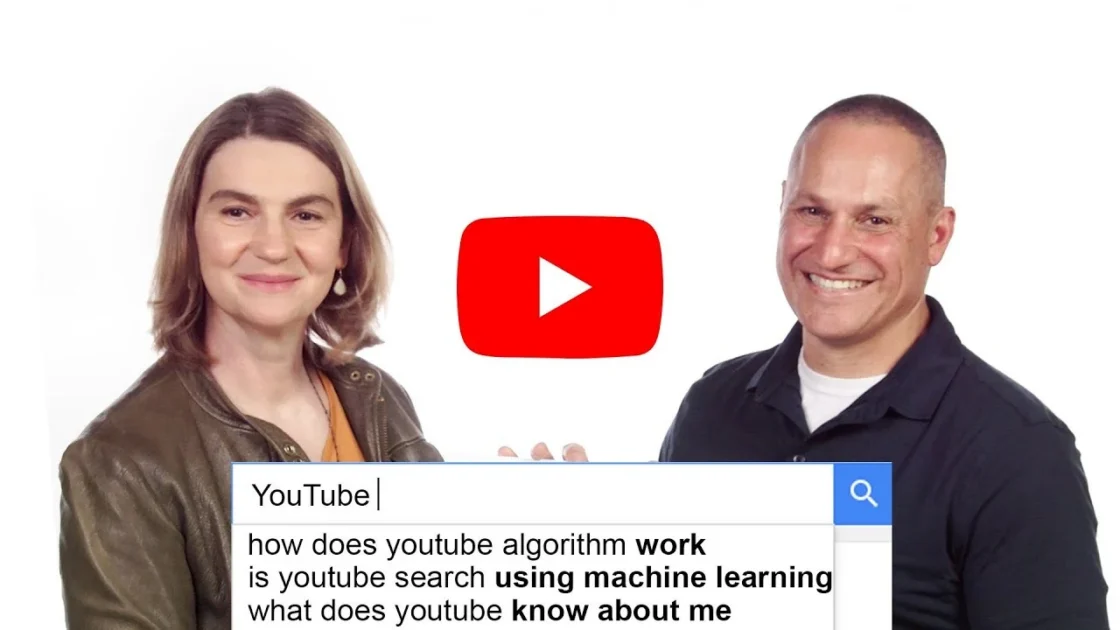
The livestream, published on 22 May 2025, pairs Mike King, billed on iPullRank’s page as its Chief Relevance Engineer, with Garrett Sussman, the agency’s Director of Marketing. King attended I/O in person and spoke with Google engineers on the first day. Two things about the source matter. iPullRank sells relevance engineering, generative engine optimization and AI search strategy, so the argument that classic SEO is no longer enough is also a pitch for its own services. The published transcript was lightly edited by ChatGPT and Gemini, according to the agency’s note above it, so exact wording deserves some caution.
The substance rests on five claims. AI Mode would supersede AI Overviews. Clicks were down for everyone and would not recover. Search Console was not built for AI surfaces. Search should be valued as a brand channel, measured by whether a brand appears for non-branded questions. And publishers who live on ad impressions had, in King’s view, no workable answer.
Query fan-out turned rank tracking into a sampling exercise
King’s most durable point was technical. He argued that both AI surfaces answer a question by running many hidden sub-queries and assembling passages from the pages that rank for them, so a page buried for the core keyword can still be cited because it ranks well for one sub-query. He added a detail he attributed to Liz Reid on a conference panel: fan-out is lighter in AI Overviews, where speed matters, and heavier in AI Mode. From there he concluded that rank tracking from a clean machine stops meaning much once personal context shapes the answer.
Google’s moves since then support that reading. The guidance Google published during I/O week amounted, in King’s summary on the stream, to making original content, using structured data and worrying less about traffic, advice he dismissed as more of the same. A year later Google expanded Personal Intelligence in AI Mode to nearly 200 countries and territories, letting users connect Gmail and Google Photos. That is the personalization King said would break the overlap between AI answers and the classic results page. The sterile ranking position his industry still reports describes almost nobody’s real results.
The default switch that I/O 2026 did not deliver
King predicted that roughly a year later, at the next I/O, Google would announce a full move to AI Mode. Google’s I/O post of 19 May 2026 announced something narrower: Gemini 3.5 Flash as the default model inside AI Mode, an AI-powered search box, and a single flow in which a follow-up question asked from an AI Overview continues in AI Mode. The same post says users will keep getting a range of results from Search, as before.
Several SEO blogs read “default model” as “default experience” and told clients that AI Mode had replaced the results page. It had not. When a Chrome experiment routed address-bar searches into AI Mode in June 2026, Google Search VP Rajan Patel said, according to the Keywords Everywhere tracker, “we do not plan to make AI mode the default behavior for Chrome search.” Google is folding AI Mode into Search rather than flipping a switch, which makes the shift harder to date and easier to underestimate.
Clicks, quality clicks and a measurement fight with no referee
King said sites had lost anywhere from 20 to 60 percent of their traffic, a range drawn from agency experience rather than a published study, and told viewers: “The traffic’s not coming back.” Independent data from that spring points the same way. Pew Research Center’s analysis of 900 US adults’ browsing in March 2025 found that people clicked a traditional result on 8 percent of visits to pages with an AI summary, against 15 percent without one, and clicked a link inside the summary on just 1 percent.
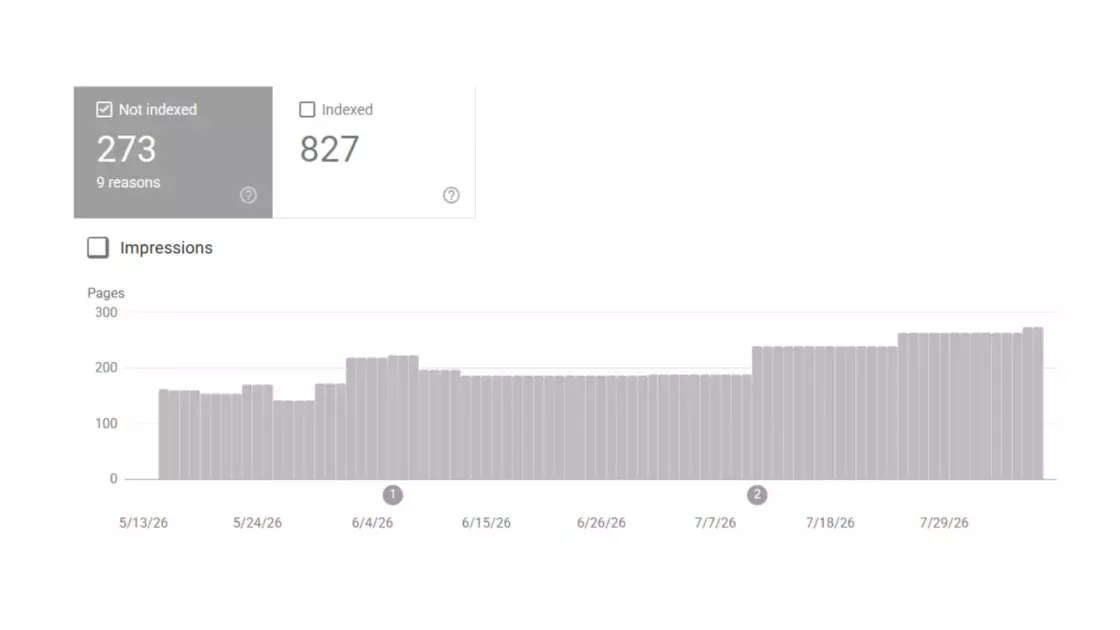
Google disputes the conclusion without matching the evidence. In August 2025 Reid wrote that organic click volume had been “relatively stable” year over year, a claim Search Engine Roundtable noted came with no figures, no chart and no Search Console data. Both sides are partly unverifiable, but only one of them holds the logs. Search Console folded AI Mode data into ordinary web totals in June 2025, and the Generative AI report Google introduced in June 2026 still counts impressions only, with no queries and no clicks. King’s complaint that Search Console was not ready for AI surfaces has aged better than anything else in the recap.
Publishers and advertisers now pay for the gap King described
King’s bleakest passage was about publishers and affiliates. Conversions could hold up on less traffic, he argued, but AdSense pays per impression, not for the quality of an impression, so a business that sells attention is left without an answer. Google’s own numbers now show the same tension from the other side. On the Q3 2026 earnings call, Chief Business Officer Philipp Schindler named lower monetization in AI Mode as one of three reasons search revenue growth slowed, after currency and retail and media spending, Search Engine Journal reported. AI Mode earns Google less per query than the results page it is absorbing, and Google has not said by how much.
Google’s response is more ad inventory. Ads in AI Mode expanded to ten more countries in October 2026, and existing Search, Shopping and Performance Max campaigns are eligible by default with no separate opt-out. Regulators moved on the publisher side. The UK Competition and Markets Authority ordered Google on 3 June 2026 to give publishers tools to keep their content out of AI features such as AI Overviews, with clear attribution links where it is used, and allowed nine months for compliance. An opt-out protects content; it does not restore the click income King said was disappearing.
Two details in the recap need correcting
King opened with a cautionary tale about I/O promises, recalling a 2017 announcement of a calling assistant he remembered as Duo that never came out. The product was Duplex, demonstrated at I/O 2018, and it did ship, slowly: 9to5Google reported in November 2018 that Duplex restaurant booking was rolling out to Pixel owners in select US cities. The irony is that Google now offers calls to businesses through AI Mode, according to its I/O 2026 post, so the demo King cited as vaporware became part of the product he was discussing.
The second correction matters more. King suggested that cloaking unique content from ChatGPT is fair game because OpenAI was requesting pages in real time rather than indexing them. OpenAI’s crawler documentation describes OAI-SearchBot as the crawler used to surface websites in ChatGPT search and says sites that opt out of it will not be shown in ChatGPT search answers. A site that hides its distinctive material from OpenAI may also be hiding it from the answers that would cite it. King’s remark that Google overlapped I/O and Marketing Live to steady its share price was offered as a hunch, and the recap gives no evidence for it.
Brand visibility is the line to budget for in 2027
For a marketing lead deciding where next year’s search budget goes, the recap’s strategic advice holds. Treat appearances in AI answers for non-branded questions the way display or outdoor advertising is valued, track whether the brand appears and in what tone, and keep conversion reporting for the mid-funnel and lower-funnel queries where people still click. Use Search Console’s impression-only AI report as a floor, not a picture of the whole channel. Skip the cloaking.
Two developments would change this reading. The first is Google publishing click data for AI surfaces; Google’s Gary Illyes said in early November 2026 that the team wants to share more data but has nothing to announce, according to the Keywords Everywhere tracker. The second is the CMA’s compliance reports, due every six months with supporting data and metrics, which could give the first regulator-checked view of how AI features move traffic. Until either arrives, the burden of proof sits with Google, and King’s eighteen-month-old skepticism remains the safer working assumption.
Author:
Jan Bielik
CEO & Founder of Webiano Digital & Marketing Agency
This article is an original analysis supported by the sources cited below
The Future of Search with iPullRank: A Recap Discussion of Google I/O 2025
The livestream by Mike King and Garrett Sussman whose predictions and claims this article tests.
The Future of Search with iPullRank: A Recap Discussion of Google I/O 2025 (transcript)
iPullRank’s own page for the video, with the full transcript, the speakers’ titles and the note that it was edited with ChatGPT and Gemini.
A new era for AI Search
Liz Reid’s I/O 2026 post establishing one billion monthly AI Mode users, Gemini 3.5 Flash as the default AI Mode model, the merged AI Overviews flow and agentic calling.
CMA secures fairer deal for publishers and improves Google search services in UK
The regulator’s notice of the June 2026 publisher opt-out requirement, its nine-month deadline and six-monthly compliance reporting.
Overview of OpenAI Crawlers
OpenAI’s documentation showing that OAI-SearchBot surfaces sites in ChatGPT search, which undercuts the premise of King’s cloaking advice.
Google users are less likely to click on links when an AI summary appears in the results
Pew’s browsing-data study giving the 8 percent versus 15 percent click rates and the 1 percent click rate on summary links.
Google: Clicks To Websites Relatively Stable With AI Overviews (Is It Flawed?)
Report on Liz Reid’s August 2025 claim of stable clicks and on the absence of figures or Search Console data behind it.
Google Says Lower AI Mode Monetization Weighed On Search Growth
Coverage of the Q3 2026 earnings call, Schindler’s monetization remark and the ten-country expansion of AI Mode ads.
Google AI Mode: Availability Tracker, Timeline and Features
Dated timeline confirming AI Mode is not the default, Rajan Patel’s Chrome denial, Search Console’s AI reporting limits and Gary Illyes’s data remark.
Google Duplex now available for Pixel owners in ‘select cities’
Evidence that Duplex was shown at I/O 2018 and began rolling out in November 2018, correcting King’s recollection.
| Citing this article? Brief excerpts are welcome. Please credit Webiano.digital, name the author where stated, and include a link to https://webiano.digital and to this original article. Full or substantial republication requires prior written permission. Read our Copyright and Content Use Policy. |
This article was prepared with the assistance of artificial intelligence tools. The content underwent expert human review, and Webiano Digital & Marketing Agency assumes editorial responsibility for its final version and publication.