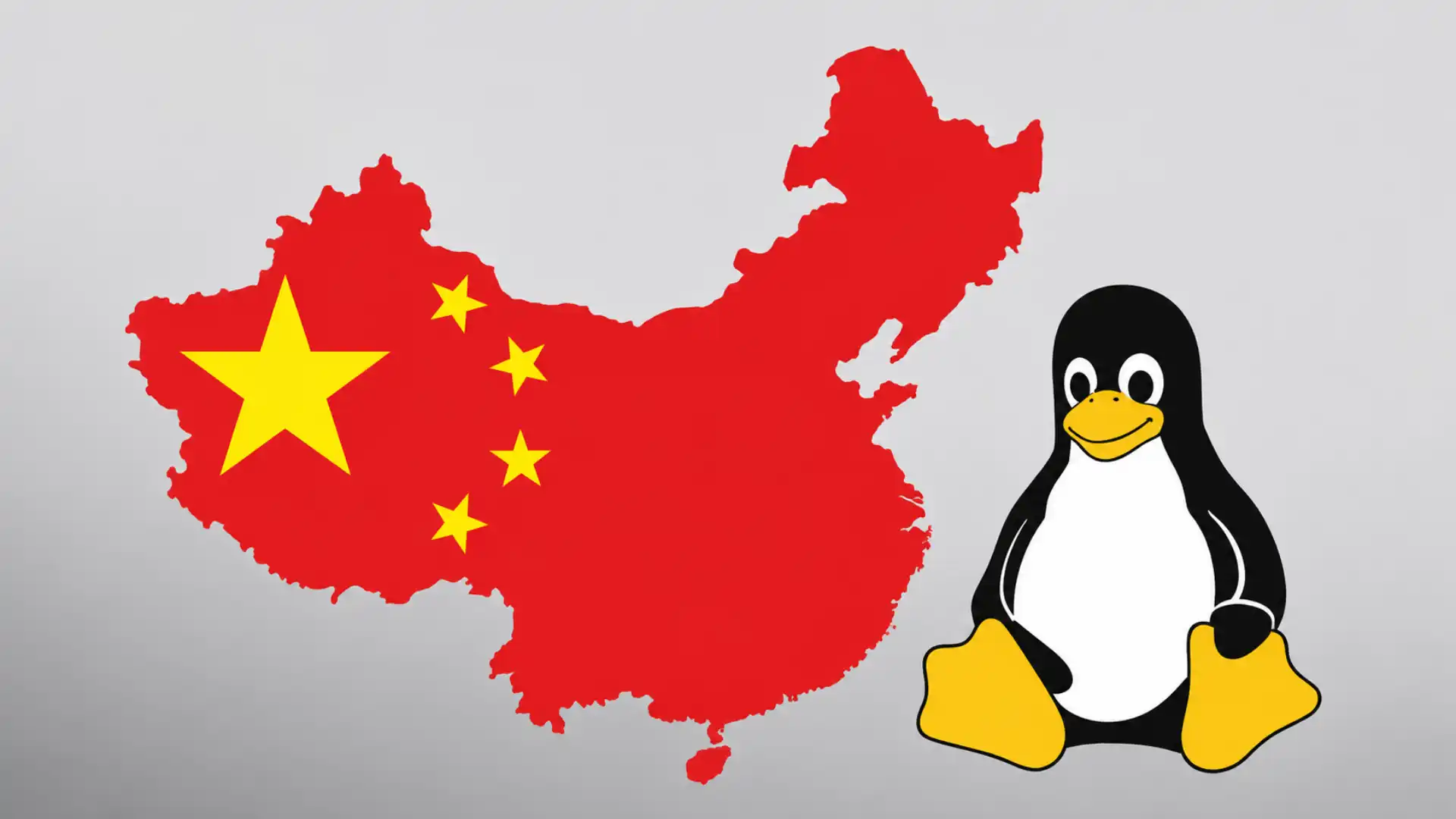
A reported instruction from China’s Ministry of State Security is accelerating the retirement of a customized Windows 10 edition used by some state-linked entities. The stronger signal sits beneath the order: procurement standards and certification have already shifted the default toward domestic operating systems, making the migration less a one-off security response than an institutional transfer of control over the government desktop.
Table of Contents
China’s latest move against Microsoft is narrower than a national Windows ban, but more consequential than a routine end-of-life decision. Bloomberg reported on August 18 that the Ministry of State Security had told some state-linked entities to uninstall Windows 10 China Government Edition, accelerating C&M Information Technologies’ planned February 2027 retirement by several months. The people cited by Bloomberg attributed the instruction to data-security concerns, but no vulnerability was disclosed. Microsoft said it was not aware of a security incident affecting the product and that the customized edition continued to receive regular security updates.
The important break is institutional. Windows 10 China Government Edition was created precisely to satisfy Beijing’s security demands: Microsoft and state-owned China Electronics Technology Group formed CMIT, and the edition gave government customers control over telemetry and updates, removed features such as OneDrive, and supported Chinese encryption algorithms. Yet official procurement rules now require many government buyers to specify operating systems that pass China’s “safe and reliable” evaluation, while recent central-government desktop awards repeatedly list domestic systems and often show the Windows government edition as unavailable. The strategic signal is that localization of a foreign platform is no longer equivalent to trusted control.
The order accelerates a retreat already under way
The new instruction matters first because it advances a retirement that was already planned. Bloomberg’s reporting says CMIT had intended to retire Windows 10 China Government Edition in February 2027 and that the Ministry of State Security’s instruction brought that timetable forward by several months. The reviewed reporting does not establish a new exact retirement date. Describing the deadline as a specific date later in 2026 would therefore go beyond the public evidence; the defensible claim is that the February 2027 timetable has been accelerated.
Scope is just as important as timing. The report refers to “some state-linked entities,” not every ministry, province, state-owned company or government workstation in China. Reuters had reported five days earlier that Windows 10 China Government Edition remained present, albeit under additional management requirements, in one of six government computer-system procurement guides it reviewed between December 2023 and May 2026. Reuters also noted that non-compliance with the “safe and reliable” framework did not itself amount to a ban, although it could trigger additional security checks and approvals. This is a targeted acceleration inside a broader policy squeeze, not evidence of a nationwide prohibition on Windows.
That distinction does not make the move trivial. A targeted instruction from a security ministry can change the operating assumptions of agencies even before every procurement document or local rule changes. The signal to technology administrators is that a product designed around Chinese government requirements can still lose its place if the trust standard shifts toward domestic ownership, domestic certification and domestic supply chains. That interpretation is reinforced by procurement outcomes rather than by the security allegation alone: central-government awards in January, March-April, May and June 2026 repeatedly presented Kylin, UnionTech UOS, Fangde or another system meeting the evaluation requirement as selectable options, while Windows was marked unavailable in many configurations.
A compromise built for Beijing has lost its strategic value
Windows 10 China Government Edition was not an ordinary retail copy of Windows with a translated interface. Microsoft announced it in May 2017 as a product developed by CMIT, its joint venture with China Electronics Technology Group, specifically for Chinese government and state-owned customers. Microsoft said the system was based on Windows 10 Enterprise, removed functions government employees did not need, allowed government management of telemetry and updates, and enabled the use of Chinese encryption algorithms. China Customs, Shanghai’s economic and information technology authority and Westone Information Technology were named as early pilot customers.
The architecture of that compromise explains why the current retreat is strategically revealing. Microsoft kept the Windows platform and application ecosystem; Beijing gained a localized governance layer around data collection, update management and cryptography. That was a practical answer to an earlier question: whether a foreign operating system could be modified enough to meet Chinese government requirements without abandoning the software ecosystem agencies already knew. Reuters reported that Satya Nadella personally negotiated the government edition with finance ministry officials and that the product was adopted by several agencies, but did not expand as Microsoft had hoped.
The procurement environment then moved underneath the product. Reuters reported that no foreign operating system, including Windows, has been regarded by the Chinese government as compliant with the “safe and reliable” policies, according to Microsoft. The Finance Ministry and Ministry of Industry and Information Technology’s 2023 operating-system procurement standard requires township-level and higher party and government organs, plus certain supporting public institutions, to include compliance with the safe-and-reliable evaluation in procurement requirements. A locally customized foreign operating system and a domestically evaluated operating system now occupy different policy positions.
That is the strategic reversal. Microsoft spent years reducing the features Beijing distrusted, but the emerging policy logic rewards control over the supplier and technology stack, not merely control over configuration. The value of the 2017 compromise is eroding because the trust boundary has moved. This is analysis based on the evolution from product-level customization to procurement rules tied to China’s own evaluation system; the public sources do not establish that every agency applies that logic identically.
Safe and reliable procurement changed the default
China’s shift toward domestic desktop software is visible in formal procurement rules, not only in political rhetoric. The December 2023 operating-system procurement standard says buyers should build their requirements around the official standard and, for township-level and higher party and government organs and specified supporting institutions, treat conformity with the “safe and reliable” evaluation as a substantive procurement requirement. The rule does not name Linux in the notice itself. Its practical importance comes from the products that have passed the associated evaluation.
The China Information Technology Security Evaluation Center’s May 2024 results listed three desktop operating systems at Level I: Fangde Desktop OS V5.0, UnionTech Desktop OS V20 and Galaxy Kylin Desktop OS V10 SP1. The announcement said the evaluation results were valid for three years from publication. In January 2026, the same center’s new results added UnionTech Desktop OS V25, based on Linux kernel 6.6, at Level I and HarmonyOS V1.0 at Level II. The approved desktop field is therefore broader than a two-vendor Kylin-versus-UOS story.
Central-government purchasing records show how that certification becomes an operational default. In January 2026, several awarded desktop configurations offered Kylin, UOS, Fangde or another operating system meeting the safe-and-reliable requirement at the same quoted hardware price, while the Windows 10 China Government Edition was shown with a slash, indicating no quoted option in those rows. One January configuration did still show a Windows government-edition price, so the evidence does not support saying Windows had already disappeared from all central procurement.
By March-April, May and June, the award notices reviewed here repeatedly showed the same pattern across multiple configurations: domestic evaluated choices were priced, and the Windows government edition was marked unavailable. Procurement is doing the heavy work of substitution before a blanket ban is necessary. Buyers following the government’s evaluation requirements encounter a purchasing menu already tilted toward domestic systems, which reduces the institutional cost of a later security-driven uninstall order.
Control now matters more than localization
The deeper mechanism is a change in what counts as acceptable control. In 2017, Microsoft could address government concerns by building a special edition through a Chinese joint venture and changing telemetry, update management, cloud features and cryptography. Today’s procurement architecture asks an additional question: whether the operating system itself sits inside a domestic evaluation and supply framework. Trust has moved from configuration toward provenance and institutional control.
The distinction is economically important because operating systems are platforms for other purchases. An agency that standardizes on Kylin, UOS or another evaluated system creates demand for compatible office suites, endpoint security, drivers, management tools, middleware and support. It also changes incentives for computer manufacturers bidding for government work. The 2026 central-government award notices show hardware suppliers pricing several approved domestic operating systems alongside the same desktop models, embedding substitution at procurement time.
Analysis: a government that can credibly move workloads away from Windows becomes less dependent on Microsoft’s product roadmap, licensing and assurance process. Local vendors, however, inherit responsibility for long support cycles and applications built around Windows conventions. Sovereignty transfers dependency; it does not abolish it. The dependency shifts toward domestic operating-system vendors, hardware makers, application developers and certification bodies.
That prevents a simplistic security claim. China’s policy may reduce exposure to a US-controlled desktop platform while creating new concentration and maintenance risks at home. Whether security improves depends on patch quality, software assurance, vulnerability response and administration. The reported directive discloses no technical vulnerability that would allow a direct security comparison among Windows, Kylin and UOS.
Kylin and UOS inherit demand, not a guaranteed victory
Kylin Software and Tongxin Software Technology, the developer behind UnionTech UOS, are credible beneficiaries because their desktop systems already appear in the government’s safe-and-reliable evaluation and in central procurement records. Galaxy Kylin Desktop OS V10 SP1 and UnionTech Desktop OS V20 were both listed at Level I in the 2024 evaluation, and UnionTech Desktop OS V25 received Level I in the January 2026 results. The procurement awards reviewed for 2026 repeatedly offered Kylin and UOS as operating-system choices. They enter this transition with certification and distribution already in place.
But “likely replacements” should not be turned into “mandated replacements.” Bloomberg’s report said Chinese companies including Kylin Software and Tongxin had introduced operating systems intended to replace Windows; it did not say the security ministry ordered agencies to choose either product. Official procurement material also lists Fangde and permits other operating systems that meet the safe-and-reliable evaluation. HarmonyOS appeared in the 2026 evaluation as another desktop option, though its role across the specific desktop procurements reviewed here is not established. The winning layer is the domestic certified ecosystem, not a single named Linux distribution.
The stock-market reaction needs similar precision. Bloomberg’s report, as carried by The Straits Times, said Hunan Kylinsec Technology and Archermind Technology rose by China’s 20% daily limit, while China National Software & Service gained 10%. Those are not simply the publicly traded shares of “Kylin Software and Tongxin Software.” Archermind’s own website describes Tongxin Software as a company in which Archermind holds an investment, while Hunan Kylinsec identifies itself as a separate listed operating-system and security company with stock code 688152. The rally was a sector bet on domestic substitution, not clean evidence that the two named replacement vendors themselves jumped by those percentages.
For investors and suppliers, that difference matters. Policy-driven demand can spread across operating systems, security software, hardware, integration and migration services rather than accruing to one vendor. The central-government award records themselves distribute business among multiple hardware suppliers and multiple qualified operating-system choices. A headline about two replacement distributions captures the visible brands; the procurement mechanism points to a wider domestic technology stack.
Switching kernels does not erase Windows-era dependencies
Replacing an operating system is easy to describe and hard to execute. A government desktop carries dependencies in identity controls, document formats, browsers, peripherals, endpoint security, administrative scripts and specialized applications. Procurement notices show hardware sold with Kylin, UOS or Fangde, but they do not establish that every legacy application used by an affected entity has a native replacement. The migration risk sits above the kernel, in applications and operations.
That risk helps explain why the customized Windows product existed. Microsoft’s 2017 design preserved the Windows 10 Enterprise base while changing telemetry, updates, cloud integration and encryption. Agencies could keep familiar Windows application behavior while meeting a different set of security requirements. Moving to a domestic operating system breaks that bargain: applications may need to be replaced, ported, virtualized or isolated.
Recent procurement results suggest the hardware layer is readying for domestic systems. The June central-government award showed several desktop configurations with Kylin, UOS, Fangde or another safe-and-reliable operating system available at the quoted price, while the Windows government edition was unavailable in those rows. Procurement readiness is not migration completion. The workflows that run on those machines still have to survive the change.
Analysis: administrators facing an accelerated timetable need application inventories, compatibility tests, data-migration plans, training, rollback procedures and support for systems that cannot move safely on the first attempt. Those are standard migration controls, not details disclosed by Beijing. Rushing them can create misconfiguration or unsupported workarounds. Security improves only if the replacement environment is operated at least as rigorously as the platform it replaces. No public evidence reviewed here supports a quantitative claim that Windows, Kylin or UOS has the lower vulnerability rate.
The directive’s limits matter as much as its symbolism
The strongest counterweight to a sweeping interpretation is the evidence on scope. Bloomberg described an instruction to some state-linked entities, not a law covering every Chinese government computer. Reuters found that government procurement rules could disadvantage Microsoft without legally banning it and that one of six procurement guides reviewed through May 2026 still included Windows 10 China Government Edition under additional management requirements. The policy direction is clear, but the endpoint is not uniform.
The security rationale is also incomplete in public. People familiar with the matter told Bloomberg that the acceleration stemmed from data-security concerns, but they did not describe the potential vulnerability. Microsoft said it knew of no security incident affecting the product and that regular security updates continued. That leaves a crucial evidentiary gap: outsiders cannot determine from the available reporting whether the order responds to a specific technical risk, a broader threat model about foreign control, or both. Data security is the reported justification; a disclosed technical exploit is not.
The product’s lifecycle can create confusion too. Microsoft ended standard support for mainstream Windows 10 on October 14, 2025, and says ordinary Windows 10 installations no longer receive routine security updates unless covered by an extended arrangement. Bloomberg’s report specifically quoted Microsoft saying the China Government Edition continued to receive regular security updates. Those statements are not contradictory if the customized product has a separate support arrangement, but they mean analysts should not use the global Windows 10 end-of-support date as proof that the Chinese edition was already unsupported.
Finally, Microsoft is not simply leaving China. Reuters reported on August 13 that at least 15 Microsoft branch offices and joint ventures in China had closed over the preceding five years and described a strategic retreat from parts of the market, while also reporting that Microsoft had no current plan to exit and was pursuing business serving Chinese companies expanding abroad. Government-desktop retreat and commercial-market exit are different claims. The Windows order strengthens the first; it does not establish the second.
Government IT leaders now have to manage the migration layer
For affected agencies, the immediate decision is not whether Beijing prefers domestic technology; procurement rules and recent awards already point in that direction. It is how to retire Windows without turning a sovereignty policy into an outage. The first management task is dependency discovery: identify affected endpoints, Windows-specific applications, peripherals lacking tested drivers and workflows that can move to supported domestic software.
The second task is to separate commodity desktops from exceptional systems. Standard office and browser work may be easier to move than specialized software tied to a driver, plug-in, cryptographic module or legacy database client. Analysis: an evidence-led migration would prioritize systems where an evaluated domestic stack is already supported and create controlled exceptions where compatibility is not proven. The public sources reviewed do not disclose the Ministry of State Security’s implementation playbook.
Procurement teams should also avoid treating “domestic OS” as a single technical specification. The 2024 evaluation included Fangde V5.0, UnionTech V20 and Galaxy Kylin V10 SP1 with different Linux kernel versions; the 2026 evaluation added UnionTech V25 on Linux 6.6 and HarmonyOS V1.0 on its HongMeng kernel. Compatibility has to be tested against the exact distribution, version, processor and application set, not a generic Linux label.
For vendors, the opportunity sits in migration quality. Operating-system suppliers need reliable updates and application compatibility; hardware makers need stable drivers; security vendors need tested controls; integrators need repeatable methods. The central-government records show several OS choices accompanying the same hardware, making interoperability and support a competitive variable.
Foreign vendors face a different decision. Reuters’ review suggests a foreign product can remain technically available yet face additional approvals outside the preferred evaluation framework. The commercial question is whether localization can overcome an institutional preference for domestically evaluated technology. For government desktops, the evidence increasingly says it cannot.
China’s desktop split will deepen if procurement keeps tightening
The most defensible forward judgment is conditional. China has built a procurement and evaluation system that already makes domestic operating systems the easier choice for many government buyers, and the reported security-ministry instruction accelerates the removal of a foreign platform that had been customized specifically to remain acceptable. If central procurement continues to price domestic evaluated systems as the default while Windows disappears from more configurations, the government desktop will become structurally domestic even without a single nationwide ban.
That does not guarantee a clean or uniform Linux victory. UnionTech and Kylin have strong policy positioning, but Fangde is also certified, HarmonyOS has entered the evaluation list, and local implementation can vary. The decisive constraint will be whether domestic platforms can absorb the application, hardware and support dependencies that accumulated around Windows. Procurement can force the default; successful migration requires the rest of the software stack to follow.
The evidence that would weaken this thesis would be a reversal in procurement: Windows returning broadly to central-government award configurations, foreign operating systems gaining safe-and-reliable status, or the reported uninstall instruction proving temporary and narrowly incident-specific. The evidence that would strengthen it would be broader official directives, more domestic-only procurement menus and a sustained shift of government applications toward certified local platforms. For now, the story is less about Windows reaching an early retirement date than about Beijing redefining what it is willing to trust. The customized Microsoft product met an earlier version of that test; the current institutional test increasingly favors technology Beijing can certify, procure and govern inside its own ecosystem.
Questions the Windows transition raises
No. The reporting reviewed here says the Ministry of State Security told some state-linked entities to uninstall Windows 10 China Government Edition. Reuters separately found that non-compliance with China’s preferred procurement framework can create extra scrutiny without amounting to a blanket ban.
Bloomberg’s reporting, carried by The Straits Times, identifies some state-linked entities but does not publish a complete list of agencies or organizations. The available evidence therefore does not support a precise nationwide count.
It is a customized Windows 10 Enterprise-based edition developed by CMIT, a joint venture involving Microsoft and state-owned China Electronics Technology Group. Microsoft said it removed features such as OneDrive, allowed government management of telemetry and updates, and supported Chinese encryption algorithms.
People familiar with the instruction told Bloomberg that data-security concerns drove the acceleration. They did not disclose the specific vulnerability or threat, and Microsoft said it was unaware of a security incident affecting the product.
CMIT had planned retirement for February 2027. The new instruction reportedly advances that schedule by several months, but the reviewed public reporting does not establish an exact replacement date.
They are strong candidates because certified versions appear in China’s safe-and-reliable evaluation and in 2026 central-government desktop procurement records. They are not the only options: Fangde also appears in procurement, and HarmonyOS appears in the 2026 evaluation results.
The evaluated Galaxy Kylin Desktop OS V10 SP1 and UnionTech Desktop OS versions listed by China’s evaluation center use Linux kernels. The 2026 results identify UnionTech Desktop OS V25 with Linux kernel 6.6.
That wording is misleading. The Bloomberg report named Hunan Kylinsec Technology and Archermind Technology as rising by the 20% daily limit and China National Software & Service as gaining 10%; Archermind describes Tongxin as an investee, while Hunan Kylinsec is a separate listed company.
No. Reuters reported on August 13, 2026 that Microsoft had reduced parts of its China footprint but had no current plan to exit the country. The government-desktop retreat is one part of a broader and more complicated China strategy.
Author:
Jan Bielik
CEO & Founder of Webiano Digital & Marketing Agency
This article is an original analysis supported by the sources cited below
China removes Microsoft Windows at state users ahead of plan
Bloomberg reporting carried by The Straits Times established the reported Ministry of State Security instruction, its limited scope, the accelerated February 2027 retirement plan, Microsoft’s response and the listed-software stock reaction.
Announcing Windows 10 China Government Edition and the new Surface Pro
Microsoft’s 2017 launch post documented CMIT’s role, the government edition’s Windows 10 Enterprise base, its telemetry and update controls, removal of OneDrive, support for Chinese encryption and the first pilot customers.
财政部 工业和信息化部关于印发《操作系统政府采购需求标准(2023年版)》的通知
China’s Finance Ministry and Ministry of Industry and Information Technology notice established the operating-system procurement standard and the requirement for specified government buyers to include safe-and-reliable evaluation conformity.
The China Information Technology Security Evaluation Center’s 2024 notice identified Fangde V5.0, UnionTech V20 and Galaxy Kylin V10 SP1 as Level I evaluated desktop operating systems and stated the three-year validity period.
The 2026 evaluation notice established UnionTech Desktop OS V25 on Linux kernel 6.6 at Level I and HarmonyOS V1.0 at Level II.
中央国家机关2026年台式计算机批量集中采购项目-1月中标公告
The January 2026 central-government desktop award showed Kylin, UOS, Fangde and other qualifying systems across configurations, with Windows unavailable in several rows and still priced in one configuration.
中央国家机关2026年台式计算机批量集中采购项目-3月及4月中标公告
The March-April 2026 award documented multiple desktop configurations in which domestic evaluated operating systems were priced while the Windows 10 China Government Edition was unavailable.
中央国家机关2026年台式计算机批量集中采购项目-5月中标公告
The May 2026 central-government award provided later procurement evidence of Kylin, UOS, Fangde and other qualifying operating systems being offered while the Windows government edition was unavailable in reviewed rows.
中央国家机关2026年台式计算机批量集中采购项目-6月中标公告
The June 2026 award supplied the most recent reviewed central-procurement evidence, again showing domestic operating-system choices across multiple configurations and Windows marked unavailable.
Microsoft retreats in China, but AI boom helps it keep a window open
Reuters’ August 13, 2026 investigation supplied context on Microsoft’s reduced China footprint, the history of the government edition, the safe-and-reliable framework, procurement-guide treatment of Windows and Microsoft’s lack of a current China exit plan.
Windows 10 support has ended on October 14, 2025
Microsoft Support established the global Windows 10 end-of-support date and what standard end of support means, allowing it to be distinguished from the separately supported China Government Edition reported in August 2026.
诚迈科技参股公司统信软件出席2023全球数字经济大会“新一代软件产业高质量发展论坛”
Archermind’s own corporate page established that Tongxin Software is an investee company, clarifying why Archermind’s share-price move should not be described as a direct Tongxin stock move.
Hunan Kylinsec’s official company profile identified it as a separately listed operating-system and security company with stock code 688152, clarifying the market-reaction reporting.
| Citing this article? Brief excerpts are welcome. Please credit Webiano.digital, name the author where stated, and include a link to https://webiano.digital and to this original article. Full or substantial republication requires prior written permission. Read our Copyright and Content Use Policy. |
This article was prepared with the assistance of artificial intelligence tools. The content underwent expert human review, and Webiano Digital & Marketing Agency assumes editorial responsibility for its final version and publication.