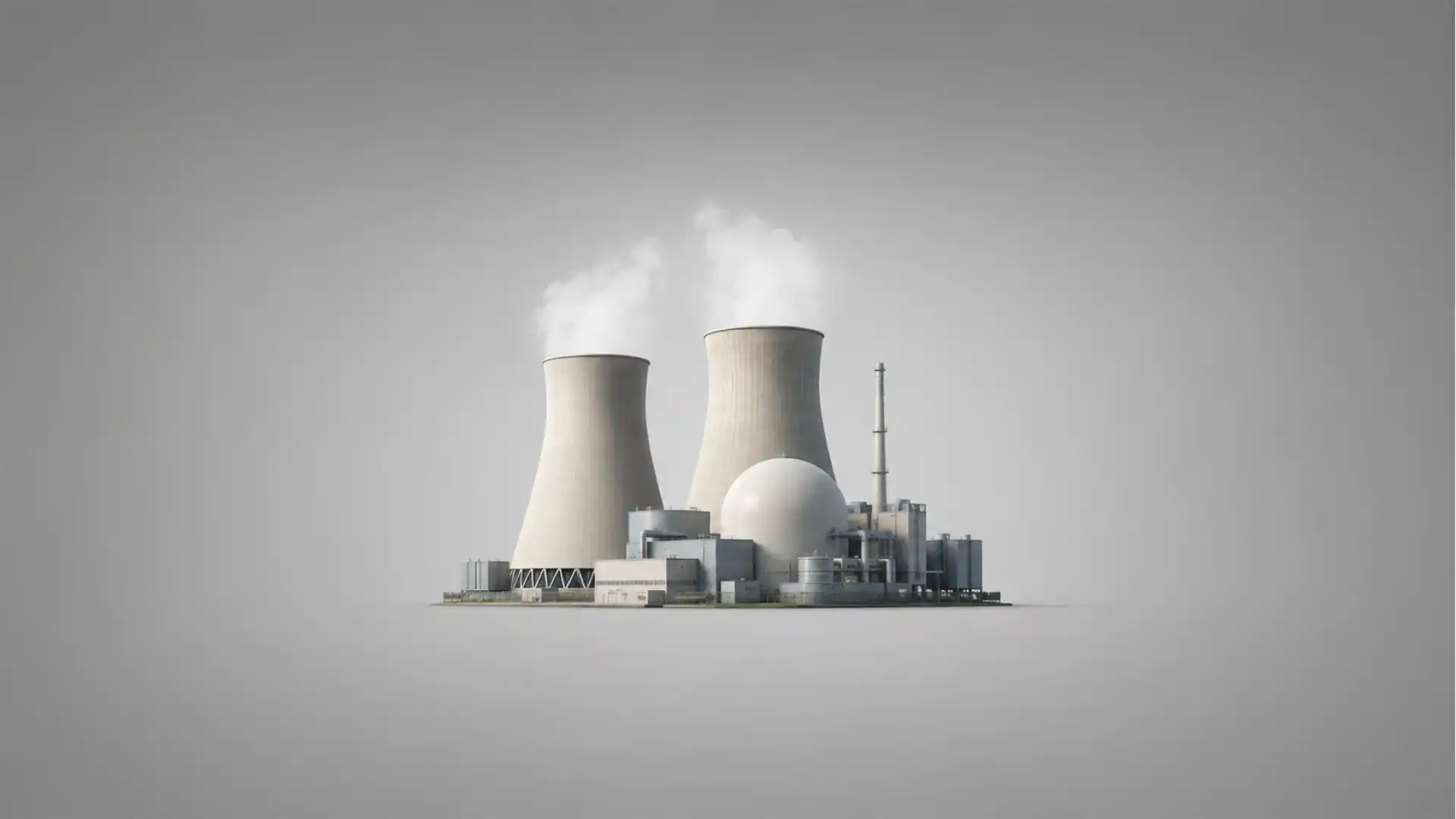
Digitalisation has cut forms, envelopes, file rooms, receipts and office printing. It has also built a second industrial system behind the screen: server halls, fibre routes, cooling plants, backup generators, chips, batteries, substations, transmission upgrades and electricity contracts large enough to affect national grids. The honest version of the story is not “paper bad, digital clean”. It is less paper in many places, more electricity in others, and a growing need to prove that digital systems replace material consumption rather than merely add another layer of it.
Table of Contents
The paperless promise has met the power bill
The idea of the paperless economy was easy to understand. Replace printed invoices with PDFs. Replace archived folders with cloud storage. Replace travel with video calls. Replace counter queues with apps. Replace posted letters with email and portals. The environmental story seemed obvious because paper is visible. It occupies desks, bins, warehouses and delivery vans. Digital information feels lighter because it arrives without a sheet in the hand.
That feeling now misleads policy, business and consumers. Digital services are not immaterial. They are remote material systems. Their physical footprint is just less visible to the person clicking, signing, searching, streaming, prompting or storing. A printed contract shows its paper. A cloud contract hides the server, storage array, power supply, network switch, cooling loop, semiconductor fab, grid connection and backup fuel.
The strongest current data shows the scale of the shift. The International Energy Agency says global data centre electricity consumption is set to more than double to about 945 terawatt-hours by 2030, slightly more than Japan’s electricity consumption today, with AI as the most important driver of the increase. The same IEA analysis says data centres will account for nearly half of electricity demand growth in the United States to 2030.
That does not mean every digital action is worse than paper. It means the old accounting is broken. A country can reduce office paper and still increase total environmental pressure if every process becomes cloud-connected, AI-processed, permanently stored, redundantly backed up and accessed across several devices. The real test is substitution. A digital process only delivers a cleaner outcome when it removes more physical demand than it creates elsewhere.
The hard part is measurement. Paper use is relatively easy to see. Electricity behind cloud infrastructure is harder because it is distributed across data centres, networks, corporate procurement contracts and local grids. Water is harder still because it can be consumed directly for cooling or indirectly through electricity generation. E-waste is delayed because servers, drives, phones, laptops and networking equipment turn into waste years after purchase. This lag creates a false sense of progress.
Digitalisation deserves credit where it replaces wasteful paper-based processes. It can reduce storage space, printing, transport, postal logistics and administrative friction. Hospitals, courts, banks, tax authorities and small firms all gain from reliable electronic records. Yet the same systems also create new forms of demand: duplicate records, endless retention, heavier websites, real-time analytics, automatic video, AI assistants, surveillance logs, dashboards, backups and compliance archives.
The public debate often treats the issue as a culture war between paper nostalgia and digital progress. That misses the industrial reality. The question is no longer whether digitalisation should happen. The question is whether it is being designed with an energy budget, a water budget, a hardware budget and a deletion policy. Without those limits, the paperless economy becomes an electricity-hungry economy with better public relations.
The cloud is a physical supply chain
The word “cloud” is useful for software sales and terrible for environmental literacy. It suggests distance, air and weightlessness. A more accurate term would be “someone else’s machines, buildings and power contracts”. Those machines sit in large facilities where servers run around the clock, storage devices preserve data, network equipment moves traffic and cooling systems keep heat from damaging electronics.
Every layer consumes resources. Chips require high-purity materials and energy-intensive manufacturing. Servers require steel, aluminium, plastics, circuit boards, rare gases, copper, cooling hardware and firmware support. Buildings require concrete, land, water access, grid interconnection, transformers, backup generation and fire-suppression systems. Networks require fibre, routers, mobile towers, undersea cables and edge equipment. User devices require batteries, displays and replacement cycles.
This is why digitalisation cannot be assessed only at the point of use. A document stored in the cloud may replace a paper file, but it also joins a system that is built for availability, speed and redundancy. Cloud platforms copy data across zones and regions so that services survive hardware failures, outages, storms and cyber incidents. That resilience is useful. It is also physical.
The IEA estimates that electricity generation needed to supply data centres grows from 460 TWh in 2024 to more than 1,000 TWh in 2030 in its base case, with renewables providing nearly half of the additional supply and natural gas and coal also contributing. That point matters because a data centre is not “green” just because it buys renewable electricity certificates. The carbon impact depends on location, timing, grid mix, procurement quality and whether new demand forces fossil plants to run more often.
The digital supply chain has also become concentrated. Hyperscale facilities cluster near cheap land, fibre routes, large customers, tax incentives and available power. Once a region becomes attractive, more projects follow. The local grid then faces a new kind of load: large, steady, commercially powerful and impatient. Unlike ordinary household demand, data centre demand can arrive in blocks of tens or hundreds of megawatts.
A 100 MW facility is not an office building. It is an industrial electricity consumer. A cluster of such sites can compete with factories, rail electrification, heat pumps, electric vehicle charging and new housing for grid capacity. In regions with constrained transmission, the question is no longer whether enough electricity exists somewhere in the country. It is whether enough firm power, wires and substation capacity exist at a specific node.
This is where the paper comparison becomes too small. Paper production is an industrial activity with forests, mills, water, heat and transport. Cloud computing is also an industrial activity, but society often files it under “services”. The category error protects digital infrastructure from the scrutiny normally applied to heavy electricity users.
Once digital infrastructure is seen as industrial infrastructure, the policy questions become clearer. Which regions should host it? Who pays for grid upgrades? What share of clean power is genuinely additional? What water sources are acceptable? Should waste heat be reused? Which workloads need instant processing, and which can wait for low-carbon hours? Which data should be deleted? Which AI uses are socially valuable enough to justify the resource demand?
These are not anti-technology questions. They are normal infrastructure questions. Digitalisation has reached the size where it must answer them.
Paper did not disappear, it changed role
The paperless office never fully arrived. Paper use changed shape. Graphic paper, office printing and newspapers have fallen in many markets, but packaging, hygiene paper and e-commerce-related cardboard have become larger parts of the paper economy. Less printing does not automatically mean less paper overall.
The pulp and paper sector still has a large industrial footprint. The IEA says pulp and paper was responsible for just under 2% of industrial emissions in 2022, and production is projected to rise to 2030 unless stronger action reduces emissions intensity. The Confederation of European Paper Industries reported that European pulp and paper industry emissions per tonne of paper and board fell to 0.24 tonnes of CO₂ per tonne produced in 2024, with total sector emissions down by half compared with 2005.
Those figures show two things at once. Paper is not clean by default, yet its environmental burden is mature enough to be measured in familiar terms: fibre sourcing, energy use, water, recycling, transport and emissions per tonne. Digital infrastructure is often less transparent to end users. The impact is split across energy systems, suppliers, device makers, cloud providers and software practices.
Paper also has a feature that digital systems often lack: a natural limit. A filing room fills up. A printer tray empties. A company notices postage costs. Digital storage has a weaker friction signal. Cheap storage encourages retention. Infinite inboxes encourage accumulation. Cheap analytics encourage logging. Cloud dashboards hide the material cost behind subscription pricing.
This matters for organisations that claim environmental credit from digital transformation. A bank may cut printed statements but increase app telemetry, customer profiling, cloud analytics and AI-powered marketing. A public authority may digitise forms but keep paper channels, call centres, duplicated databases and new cyber systems. A retailer may replace paper receipts but increase parcel packaging and real-time tracking data. The environmental result depends on the whole system.
The old paper-versus-digital debate also ignores lifetime. A printed document consumes resources at production, delivery and storage. A digital document consumes little at the moment of creation, but it may be stored, indexed, replicated, searched, backed up and migrated for decades. A single file is tiny. A billion forgotten files are infrastructure demand.
Digital documents are also more likely to multiply. A printed report has a physical print run. A digital report can sit in email attachments, shared drives, backups, content management systems, legal archives and personal downloads. Versioning adds more copies. AI search and enterprise assistants may index them again. Each copy is small, but digital systems win and lose at scale.
None of this argues for returning to paper bureaucracy. Paper-heavy administration is slow, expensive and often wasteful. The better conclusion is sharper: digitalisation must retire the old material process, not run beside it forever. When paper and digital coexist for years, the organisation pays both environmental bills.
Data centres have moved from background load to strategic load
For a long time, data centres were treated as a specialised corner of the electricity system. They mattered to cloud companies and telecom operators, but not to national demand forecasts. That era is ending. The load is now large enough to appear in energy security debates, local permitting fights, water planning, corporate climate reporting and geopolitical industrial policy.
The IEA’s 2030 projection is the headline, but local numbers are more revealing. Ireland’s Central Statistics Office reported that data centres used 22% of the country’s metered electricity in 2024, up from 5% in 2015, and that their metered consumption rose from 6,335 GWh in 2023 to 6,969 GWh in 2024. Ireland is not the whole world. It is a warning about what happens when digital infrastructure concentrates faster than grid capacity.
The United States shows the same pressure through regional peaks. The U.S. Energy Information Administration reported that commercial electricity sales in Virginia rose sharply from 2019 to 2025, driven largely by data centres, and that winter peak load in PJM’s Dominion zone for the 2025–26 season was 45% higher than in 2019–20. Northern Virginia is a global data centre hub, but the grid lesson travels. Clusters matter more than national averages.
The grid does not experience “global data centre demand”. It experiences connection requests, transformer shortages, queue delays, substation constraints, local congestion and peak load. A country can have enough annual generation and still lack capacity where the data centres want to connect. This is why public arguments about percentages can be misleading. Three percent of global electricity by 2030 sounds manageable. Twenty percent of a local grid is a different political problem.
Data centres are also unusual customers. They prefer high reliability, rapid connection, predictable prices and large blocks of power. They may support new clean generation through contracts, yet they also compete for the same clean electricity needed to decarbonise homes, industry and transport. If they bring new supply with them, the system may benefit. If they absorb scarce low-carbon power while fossil plants meet marginal demand, the climate case weakens.
A useful distinction is “average energy” versus “firm capacity”. A data centre may match its annual electricity use with renewable purchases, but the grid must still supply power at night, during low-wind periods, during heatwaves and during maintenance events. Backup diesel generators exist because uptime matters. Gas generation becomes attractive when grid queues are slow. The climate impact lives in these details.
Digitalisation has crossed a threshold. Data centres are no longer passive buildings in the background of the economy. They are active actors in power-system planning. Their location, design and operating flexibility now shape whether grids can absorb electrification without higher costs and higher emissions.
AI has changed the shape of demand
Cloud growth was already strong before generative AI. Video streaming, enterprise software, online retail, digital payments, mobile apps and remote work were enough to expand data centre capacity. AI changed the size, urgency and density of the build-out.
Training large models can require concentrated compute clusters. Inference — the daily use of AI tools — turns model deployment into a recurring load. The more AI is embedded into search, office software, coding tools, customer support, advertising, cybersecurity, design, health administration and public services, the more demand shifts from occasional training to constant serving.
The IEA states that AI is the most important driver of the projected growth in data centre electricity demand to 2030. The agency also reported in April 2026 that data centre electricity demand rose by 17% in 2025, while AI-focused data centres grew faster than global electricity demand of 3%. That gap explains the political shift. The issue is not only that data centres use electricity. It is that they are growing faster than many grids can plan, permit and build.
AI also changes power density. GPU clusters and specialised accelerators pack more electricity into each rack than older enterprise computing. Higher rack density changes cooling needs, building design, backup power, safety systems and water trade-offs. Air cooling may not be enough for the densest AI workloads, pushing operators toward liquid cooling. Liquid cooling may reduce some energy losses, but the environmental outcome depends on water source, heat rejection, climate and electricity mix.
A single AI prompt is not the right unit for the public debate. Some research and corporate reporting suggests that the energy for a typical text prompt can be small compared with many daily activities. That is useful context. It does not settle the system question. A small unit cost multiplied by billions of interactions, larger models, heavier multimodal outputs and automated agents becomes infrastructure demand.
The rebound risk is obvious. More efficient chips lower the cost of computation. Lower cost invites more computation. Faster models create new products. New products create new habits. Those habits create more demand. Digital history is full of this pattern: compression made streaming easier, so streaming grew; storage became cheaper, so organisations stored more; bandwidth improved, so websites became heavier.
AI may also create environmental benefits in other sectors. It can support grid forecasting, industrial controls, materials research, logistics planning, building management and climate science. The issue is not whether AI has useful applications. It does. The issue is whether the resource cost is treated as a constraint or ignored as someone else’s utility bill.
A mature AI policy would classify workloads. Medical imaging, grid control, scientific modelling and industrial safety do not belong in the same category as spam generation, low-grade content automation or unnecessary AI features in every app. When electricity and water become limiting inputs, societies need a stronger vocabulary than “AI innovation”. They need to ask which compute is worth building power plants for.
Electricity demand is rising faster than the old story allowed
For years, many advanced economies expected flat or slow electricity demand. Efficiency in lighting, appliances and industrial equipment helped offset growth. Energy planners could assume that new supply would mostly replace old fossil generation. Electrification of transport and heating already challenged that model. Data centres and AI add another source of demand at the same time.
The U.S. EIA now says server electricity use is a major factor in commercial building electricity demand. In its 2026 analysis, servers alone accounted for an estimated 7% of commercial-sector electricity consumption in 2025, and data centre server electricity use grows to 22%–33% of commercial building electricity use by 2050 across the EIA’s cases.
That is not a prediction that digital systems will overwhelm the entire grid. It is a signal that commercial demand is changing. Offices once used electricity mainly for lighting, HVAC, elevators and ordinary IT. The next commercial load profile includes server farms, AI clusters and cooling systems large enough to reshape regional demand curves.
The U.S. Department of Energy’s 2024 announcement of the Lawrence Berkeley National Laboratory data centre energy report said U.S. data centre load growth had tripled over the previous decade and could double or triple by 2028. The same report is now central to American debates over how quickly utilities must add generation, transmission and distribution capacity.
Europe faces a different but related tension. The EU wants more digital sovereignty, domestic AI capacity, cloud infrastructure, semiconductor resilience and electrified industry. It also wants lower emissions, lower fossil fuel dependence and affordable energy. Those goals are not impossible to reconcile, but the timetable matters. Data centre projects can be announced faster than grids can be reinforced.
Reuters reported on June 3, 2026, that the European Commission plans minimum energy performance standards for data centres, with EU capacity expected to rise from 12 GW in 2025 to 28 GW by 2030. The same report said data centres currently account for about 2.5% of EU electricity consumption and are expected to push that share higher.
The politics will become sharper as households see energy bills, local communities see substations, and governments see investment promises. Data centre developers will argue that they bring jobs, tax revenue and digital capacity. Critics will ask whether the jobs are small relative to the power demand, whether tax incentives are justified, and whether residents subsidise grid upgrades through tariffs.
Both sides can be partly right. Data centres can anchor digital economies and support cloud services that many firms need. They can also create local cost and resource pressure. The responsible answer is not blanket approval or blanket refusal. It is a permitting system that asks hard questions before connection, not after congestion.
Grid stress arrives locally before it appears globally
Global averages hide the most important part of the story. Data centre demand is spatial. It gathers in clusters. The reason is economic and technical: latency, fibre access, skilled operators, existing cloud regions, land availability, tax policy, customer concentration and power contracts. Once a hub forms, suppliers and developers reinforce it.
Ireland shows the national version. Northern Virginia shows the regional version. Frankfurt, London, Amsterdam, Paris and Dublin show the European market version. JLL reported that the FLAP-D markets — Frankfurt, London, Amsterdam, Paris and Dublin — grew from 1.8 GW of live capacity in 2019 to 3.6 GW by 2025, despite regulatory and grid constraints.
The problem is not only the quantity of electricity. It is the timing and location of grid investment. Transmission projects can take years. Substations require planning, land, equipment and permitting. Transformers face global supply constraints. New generation requires connection queues, environmental review and market design. Data centre customers often want speed that public infrastructure cannot match.
When grid capacity is scarce, several outcomes become possible. Utilities delay connections. Governments restrict projects. Developers move to second-tier markets. Companies promise to bring their own power. Some propose gas generation on or near site. Others sign renewable power purchase agreements. Some add batteries or explore nuclear deals. Each option has trade-offs.
The phrase “bring your own power” sounds clean until examined. If it means new renewable generation, storage and grid support that would not otherwise exist, it may help. If it means private gas generation because the grid queue is slow, it may lock in emissions. If it means claiming existing renewable output through contracts while the local system still needs fossil backup, the public benefit is weaker.
Grid stress also affects fairness. If a utility must reinforce networks for a few very large users, regulators must decide who pays. If costs are spread across all customers, households and small businesses may subsidise infrastructure for hyperscale firms. If costs fall entirely on developers, projects may slow or move. The choice is political, not purely technical.
This is why digitalisation needs energy governance. A data centre connection is not just a private business decision. It allocates scarce grid capacity. In a decarbonising economy, grid capacity is a public-interest resource because it determines how fast homes, transport, heating and industry can move away from fossil fuels.
The best projects will prove that they strengthen the system. They will add clean generation, use flexible workloads where possible, recover heat when practical, reduce water pressure, pay their grid costs and publish meaningful metrics. The worst projects will privatise profit while socialising grid stress.
Ireland shows the future first
Ireland is the clearest warning because the numbers are no longer abstract. Data centres consumed 22% of metered electricity in 2024, the same headline share as urban dwellings in the CSO release and far above the 5% share in 2015. A small open economy became a major European cloud hub, and the electricity system had to absorb a fast-growing industrial load.
Ireland’s experience matters far beyond Ireland. It shows how digital infrastructure can become a national planning issue before the public fully understands the trade-off. Cloud investment brought economic benefits, foreign direct investment and strategic relevance. It also raised questions about generation adequacy, emissions targets, regional concentration and who gets priority on the grid.
The Irish Commission for Regulation of Utilities published a new large energy users connection policy in December 2025, explicitly addressing data centre grid connections and the role of very large customers in power-system planning. This is the kind of governance more countries are likely to need. Once data centre demand becomes large enough, voluntary corporate sustainability reports are not enough. Regulators must decide connection rules.
Ireland also exposes the weakness of annual renewable matching. A company may buy enough renewable electricity over a year to cover consumption. The grid still must keep lights on during every hour. If demand rises faster than firm low-carbon supply, gas plants may remain necessary. This is why hourly matching, local additionality and demand flexibility have become more important than annual accounting.
There is also a social licence problem. Local communities may accept a data centre if it brings jobs, heat reuse, local revenue and grid support. They may reject it if they see a windowless building using huge electricity and water while offering few permanent jobs. Public trust depends on whether promised benefits are concrete and measurable.
For smaller EU countries, Ireland’s lesson is direct. Slovakia, the Czech Republic, Hungary, Poland and other Central European markets may not yet have Ireland’s data centre intensity, but they are being pulled into the same map by cloud demand, AI, fibre routes, industrial land and energy availability. Regions with nuclear, hydro, lower land prices or stronger grid nodes may attract more projects. That makes early rules valuable.
A country should not wait until data centres use a fifth of metered electricity before setting conditions. The connection policy should come before the bottleneck. The reporting system should come before public suspicion hardens. The heat reuse plan should come before the building is designed. The water assessment should come before drought arrives.
Ireland did not make a simple mistake. It became successful in one part of the digital economy faster than its infrastructure and climate governance could comfortably absorb. That is precisely why it is a useful case.
Europe is trying to regulate what it only recently started measuring
The EU has begun moving data centres out of the blind spot. The revised Energy Efficiency Directive introduced reporting obligations for data centres with power demand above 500 kW, and Commission Delegated Regulation (EU) 2024/1364 set the first phase of a common Union rating scheme. The European Commission says its database collects and publishes energy performance and water footprint information for large data centres.
This reporting shift is important because the first policy failure was invisibility. Without comparable data, governments cannot distinguish strong operators from weak ones. They cannot assess water use, heat reuse, PUE, renewable supply, server utilisation or capacity trends. They cannot know whether a data centre is using best available practice or simply using public infrastructure cheaply.
The EU’s next step is moving from reporting toward performance standards. Reuters reported in June 2026 that the Commission plans minimum energy performance standards and a sustainability label for data centres, with a needs assessment due by 2027. That timeline reveals the tension. The sector is growing now. The standards may arrive after many sites are already planned or built.
Policy will need to avoid two mistakes. The first is weak disclosure that produces data without consequences. The second is rigid regulation that ignores geography. A cold Nordic site, a water-stressed Mediterranean site, a nuclear-heavy grid, a coal-heavy grid and a dense urban district heating zone do not face the same constraints. A useful rating system must account for local power, water and heat conditions without giving every project an easy exemption.
Europe also faces a sovereignty dilemma. The EU wants less dependence on foreign cloud and AI infrastructure. That means building more capacity inside Europe. Yet more capacity increases electricity demand. A serious sovereignty policy must include the energy system as part of digital strategy. Servers without power are not sovereignty. AI factories without grid planning are press releases.
The EU’s reporting threshold of 500 kW is sensible because it captures facilities that are clearly beyond ordinary office IT. Yet reporting alone will not address rebound demand. Operators can improve PUE and still expand total consumption. A more complete policy must track absolute electricity demand, carbon intensity by hour, water stress, equipment lifetime, waste heat, backup fuel and grid impact.
The strongest European approach would link data centre growth to measurable public value: local clean power, paid grid reinforcement, heat reuse where feasible, water safeguards, circular hardware practices and transparent workload categories. Europe cannot claim digital sovereignty by outsourcing the environmental bill to electricity customers and river basins.
The United States is relearning load growth
The United States is the central arena for AI data centre growth because it combines hyperscale companies, venture capital, cheap land in many regions, large power markets and strong cloud demand. The country also has a fragmented grid, long interconnection queues and regional differences in power mix. AI has arrived just as the U.S. system is already managing electrification, manufacturing growth and old infrastructure.
The EIA’s Virginia analysis is telling because it ties data centres to measurable commercial demand and peak load. In the PJM Dominion zone, summer peak load in 2025 was 23% higher than in 2019, and winter peak load in 2025–26 was 45% higher than in 2019–20. This is not an environmental slogan. It is an operating challenge for a grid region.
The U.S. Department of Energy now frames data centre electricity demand as a major issue for clean energy resource planning. Its Office of Electricity noted in June 2026 that EPRI estimates data centres could grow to consume up to 9% of U.S. electricity generation annually. Even if forecasts vary, the range is large enough to change utility planning.
American policy faces a difficult balance. Blocking all data centres would weaken digital infrastructure and economic investment. Approving all of them without conditions could raise power costs, extend fossil generation, strain water systems and provoke local backlash. Some states are already discovering that tax incentives look different when the promised user is not a labour-intensive factory but a power-intensive server campus.
The U.S. also shows the limits of corporate climate targets. Big technology companies have been among the largest buyers of renewable electricity. That has helped scale wind and solar procurement. Yet annual matching cannot fully answer hourly grid impacts. A data centre running during a fossil-heavy evening peak does not become carbon-free because a solar farm generated enough electricity earlier in the year.
A better standard is emerging: clean power that is additional, local enough to matter, and matched more closely to consumption in time. That standard is harder and more expensive. It is also more honest. If AI companies want to build infrastructure at the scale of heavy industry, they should face heavy-industry questions.
There is a second American issue: water. Data centres in water-stressed regions face public resistance because cooling demand becomes visible during drought. Some designs use little water on site but more electricity. Others save electricity with evaporative cooling but consume water. The trade-off depends on the region, the grid and the season.
The U.S. debate is not really about whether AI is good or bad. It is about who decides the resource allocation. Utilities, regulators, governors, counties, cloud firms and local residents are now negotiating the physical footprint of the digital economy in real time.
Efficiency gains are real, but they do not cancel growth
The data centre industry has achieved genuine improvements. Modern hyperscale operators often run more tightly managed facilities than older enterprise server rooms. Virtualisation improved utilisation. Better airflow, containment, sensors, power management and cooling design reduced waste. Some new facilities achieve strong power usage effectiveness compared with older sites.
Power usage effectiveness, or PUE, measures total facility power divided by IT equipment power. A PUE of 1.5 means that for every unit of electricity used by servers and IT equipment, another 0.5 units are used by cooling, power distribution losses and other overhead. Uptime Institute’s 2025 survey showed the industry’s weighted average PUE hovering around 1.54, down from 2.50 in 2007 but only slightly improved from recent years.
That flattening matters. The easiest gains have already been captured in many facilities. Future improvements are harder, especially as AI raises rack density and cooling complexity. A new AI facility can be better engineered than an old server room and still use far more electricity in absolute terms.
Efficiency also creates rebound. When compute becomes cheaper per task, more tasks become economically attractive. Software developers add AI features. Firms analyse more data. Users generate more images, video and automated content. Search becomes more computationally intensive. Agents may perform chains of actions that humans never requested directly. Efficiency lowers the cost per unit. It does not guarantee lower total consumption.
This pattern is not unique to digital infrastructure. Cars became more fuel-saving, and people drove more. Lighting became cheaper, and buildings used more light. Storage became cheaper, and companies stored everything. The same economic logic applies to compute.
The policy conclusion is uncomfortable but necessary. Energy performance standards are needed, yet they are not enough. Data centres can meet excellent PUE standards while total power demand soars. A serious system must track both intensity and absolute demand. It must ask whether workloads are necessary, whether utilisation is high, whether older equipment is responsibly reused or recycled, and whether compute is scheduled in ways that reduce grid stress.
There is also software responsibility. Wasteful code, bloated websites, unnecessary scripts, auto-playing video, excessive logging and poorly designed AI workflows all create infrastructure demand. The data centre operator sees the load. The software team often does not. Procurement departments buy cloud services by cost and performance, not by grid impact.
A cleaner digital economy needs an energy feedback loop for developers and product managers. If teams could see the electricity and carbon effect of model choice, data retention, media formats and processing frequency, some waste would disappear. Not all. Enough to matter.
The industry’s best operators are not the issue alone. The bigger issue is a culture that treats computing as nearly free because the bill is abstract. Digital restraint is not anti-digital. It is the discipline that separates useful computation from careless computation.
Water is the second hidden bill
Electricity gets most attention because data centres are power-intensive, but water is becoming the more emotional local issue. Cooling systems need to remove heat. Some use air, some use evaporative cooling, some use liquid cooling, some use hybrid designs. Water may be consumed directly at the site or indirectly through power generation. Either way, the footprint can matter in a dry region.
United Nations University researchers warned in June 2026 that AI’s growth could sharply increase water, land and carbon footprints, framing AI infrastructure as a resource issue rather than just a software issue. Reuters reported that the same UN-linked analysis projected data centre water consumption rising toward 9.3 trillion litres by 2030, with CO₂ emissions reaching 399 million tonnes if current patterns continue.
Company reports show water is now part of the competition for trust. Google’s 2025 Environmental Report says the company replenished 4.5 billion gallons of water in 2024, raising replenishment from 18% of freshwater consumption in 2023 to 64%. AWS says it was 53% of the way toward water positive by the end of 2024 and reported a global PUE of 1.15 for AWS infrastructure. Meta says its water restoration projects returned more than 1.6 billion gallons to high and medium water-stress regions in 2024.
These commitments matter, but they are not the same as avoiding local pressure. Replenishment projects may occur in the same watershed or not, at the same time or not, with direct hydrological equivalence or not. Communities facing drought care about local aquifers, rivers, municipal systems and agricultural competition. A global water-positive claim does not automatically answer a local water question.
Cooling choices involve trade-offs. Air cooling may reduce on-site water use but consume more electricity in hot conditions. Evaporative cooling may reduce electricity use but consume water. Liquid cooling can handle dense AI racks, but its total footprint depends on design and heat rejection. Closed-loop systems can reduce withdrawals but may raise other requirements.
Water also connects back to electricity. Thermal power plants may withdraw or consume water. Hydropower depends on hydrology. A data centre that uses little water on site may still have a water footprint through the electricity it consumes. This is one reason carbon-only accounting is too narrow.
The public should be wary of both exaggeration and minimisation. Not every data centre drains a region. Some use reclaimed water, closed loops, dry cooling or locations with lower water stress. Some are designed well. The risk is that fast permitting and tax competition push facilities into places where water scarcity is already rising.
A responsible data centre proposal should answer five water questions before approval: source, volume, seasonality, drought plan and watershed benefit. A water claim is not credible unless it is local, measurable and stress-tested for dry years.
Renewable procurement does not settle the question
Large technology companies have helped create huge demand for renewable power purchase agreements. That has supported wind and solar development and changed corporate energy markets. The achievement is real. It is still not enough to settle the environmental question.
Amazon says 100% of the electricity it consumed in 2024 was matched with renewable energy sources for the second consecutive year. Microsoft reports large carbon-free renewable energy contracts and has expanded into nuclear energy through a power purchase agreement with the Crane Clean Energy Center. Google reported signing contracts for 8 GW of clean energy and bringing 2.5 GW online in 2024.
These numbers are substantial. The problem is the word “matched”. Annual matching can hide hourly mismatch. A data centre may consume electricity during hours when the local grid is fossil-heavy while its renewable contract produces at other times or in another region. The annual spreadsheet balances. The physical grid does not.
The stronger standard is hourly carbon-free energy. It asks whether consumption is matched with clean supply in each hour, or as close as practical. That standard pushes companies toward storage, geothermal, nuclear, hydro, demand shifting and better grid integration. It also exposes how hard constant clean power remains.
There is another issue: additionality. If a company claims clean power that already existed, the broader grid may not become cleaner. If its contract finances new generation that would not have been built, the claim is stronger. Location matters too. Clean power added in a distant grid may not relieve congestion or emissions near the data centre.
Renewable procurement can also create distributional tension. If hyperscale buyers secure the best clean power contracts, smaller firms and public authorities may face higher costs or limited supply. That does not mean corporate PPAs are bad. It means governments need market rules that expand total clean supply, not merely reassign it to the highest bidder.
Gas is the uncomfortable backstop. When grid capacity is delayed and AI demand is urgent, gas turbines become attractive because they are dispatchable and faster to build than transmission. Some projects may frame gas as temporary. Temporary infrastructure often lasts. If data centre growth keeps fossil plants online, the climate cost belongs in the digital ledger.
The best path combines several tools: new clean generation, storage, flexible workloads, grid upgrades, heat reuse, better siting and transparent reporting. A renewable certificate is a starting point, not a full environmental defence.
Heat reuse is attractive but hard in practice
Data centres turn electricity into heat. From an energy perspective, that heat is not a small side effect; it is the main physical output. OECD analysis notes that about 90% of electricity used by data centres is estimated to be lost as waste heat, pointing to district heating as a circular economy opportunity.
The appeal is obvious. If a data centre produces steady low-grade heat, nearby homes, offices, greenhouses or industrial users could use it. Northern Europe has examples of data centre heat feeding district heating systems. This can reduce fossil heating demand and improve the public value of the facility.
The difficulty is practical. Waste heat must be at the right temperature, near the right users, available when heat is needed, connected through pipes, and backed by a business model. Many data centres are built where land and power are available, not where heat networks exist. Many cities that need heat do not have spare grid capacity for large data centres. Heat demand is seasonal, while data centre heat is constant.
AI may improve the economics in some cases because higher-density liquid cooling can produce warmer output than conventional air-cooled systems. Warmer heat is easier to reuse. Yet the site still needs customers, infrastructure and regulation. A heat reuse promise without a signed heat offtake plan is weak.
Public authorities can improve outcomes by making heat planning part of permitting. A data centre near a district heating network should not waste heat by default. A city planning new heat networks should map potential data centre heat sources. Industrial parks could co-locate compute with heat users. Universities, hospitals and public buildings may offer steady demand.
Heat reuse should not become a fig leaf for bad siting. A project that strains the grid, consumes scarce water and offers vague future heat use is not solved by mentioning district heating. The heat must be captured at useful temperature, delivered to real users and reduce fossil heat elsewhere.
The larger lesson is that data centres need integration. A standalone facility built only around cheap land and fast fibre may miss opportunities to support the energy system. A well-integrated facility can provide heat, flexibility, grid services and local investment. The difference is design before construction. Retrofitting public value later is harder and often weaker.
The device and chip footprint belongs in the same ledger
Data centres are only one part of the digital footprint. Devices and chips carry their own burden through mining, processing, manufacturing, transport, use and disposal. A paperless process often assumes the user already owns a device. At society scale, digital participation requires phones, laptops, routers, screens, sensors, payment terminals and network equipment.
UNCTAD’s Digital Economy Report 2024 warns that digital technology and infrastructure depend heavily on raw materials, while device production, disposal, energy needs and water needs are taking a growing toll on the planet. The same UNCTAD launch material estimated ICT-sector greenhouse gas emissions in 2020 at 1.5% to 3.2% of global emissions, depending on methodology.
E-waste is the clearest failure. The Global E-waste Monitor 2024 reported a record 62 million tonnes of e-waste in 2022, up 82% from 2010 and on track to reach 82 million tonnes by 2030. Only 22.3% was documented as formally collected and recycled in an environmentally sound way.
This matters for data centres because server turnover can be fast. AI hardware cycles are especially intense. GPUs and accelerators become strategically important and commercially obsolete quickly. Firms chasing performance may replace equipment before its physical life is exhausted. The environmental cost then moves from electricity into embodied carbon and waste.
Consumer devices add another layer. Digital public services often shift printing and office work from institutions to households. A tax authority may reduce paper forms, but citizens need devices, connectivity and digital skills. A school may reduce textbooks but require tablets or laptops. A bank may close branches and push app use. The environmental and social burden moves outward.
Repairability, software support and device lifetime should therefore be part of digital policy. A phone used for seven years has a different footprint than a phone replaced every two. A laptop kept useful through software support avoids new manufacturing. A server refurbished for lower-intensity workloads delays waste. Circularity is not a slogan here; it is a material demand reduction strategy.
The same applies to procurement. Public authorities and large firms should ask cloud and device suppliers about embodied emissions, hardware lifetime, recycling, repair, supplier energy and mineral sourcing. They should also avoid software choices that force premature hardware replacement.
The digital economy often sells speed. Environmental accounting rewards durability. The tension is real. A cleaner digital system must slow some hardware cycles even while improving software capability.
Paper has an environmental cost, but its boundaries are clearer
It would be dishonest to romanticise paper. Paper production uses wood fibre or recovered fibre, heat, electricity, water, chemicals and transport. Poor forestry practices can damage ecosystems. Paper mills are industrial sites. Printing, shipping and archiving add more cost. A paper-heavy bureaucracy can waste labour and materials.
The advantage of paper, from an accounting perspective, is that its footprint is comparatively legible. Tonnes of production, fibre sources, recycling rates, mill energy, emissions per tonne and transport can be measured. The paper industry has long been visible to regulators because it has factories, emissions permits and waste streams.
Digital systems are harder because the boundary keeps moving. Is the footprint of a digital invoice just the data transfer? The cloud storage? The accounting platform? The user’s phone? The network? The AI fraud detection system? The backup archive? The compliance database? The data centre construction? The semiconductor supply chain? Different boundaries produce different answers.
This is why simplistic comparisons are dangerous. “One email equals X grams of CO₂” or “one paper page equals Y grams” may be useful for awareness, but they rarely answer organisational strategy. The right comparison is process-level: paper invoice process versus digital invoice process, including storage duration, devices, networks, software, staff time, printing avoided, postage avoided and data retention.
The cleanest digital wins come where physical activity disappears. Electronic tax filing can remove printing, mailing, scanning and manual processing. Digital tickets can reduce paper and distribution. Online banking can reduce branch visits and statements. Remote meetings can replace travel. These gains are real when the old system is retired.
The weaker wins come where digital is additive. A company stops printing brochures but increases personalised video advertising. A school replaces paper worksheets with devices replaced every three years. A public office scans documents but keeps paper originals indefinitely. A retailer sends digital receipts and printed receipts unless customers opt out. These changes look modern but may not reduce total burden.
Data centre demand signals that matter
| Signal | Current evidence | Meaning for digitalisation |
|---|---|---|
| Global data centre electricity demand | About 945 TWh projected by 2030 | Digital services are now a power-system issue |
| Ireland’s metered electricity share | 22% used by data centres in 2024 | Local concentration can outrun national planning |
| Average industry PUE | About 1.54 in Uptime’s 2025 survey | Facility gains are real but flattening |
| Global e-waste | 62 million tonnes in 2022 | Hardware turnover belongs in the digital footprint |
| EU reporting threshold | Data centres above 500 kW | Regulators are starting to measure the sector |
The table compresses the central pattern: the visible reduction in paper is being matched by less visible growth in electricity, hardware and infrastructure. The right response is not to reject digital tools, but to judge them by full-system outcomes instead of the absence of paper on a desk.
The business case for digitalisation needs a power line
Companies usually justify digitalisation through speed, cost, compliance, customer experience and data access. Environmental claims often come later as a reputational benefit. That order should change. For any serious digital transformation, energy and hardware questions belong in the business case from the start.
A company moving from paper workflows to cloud platforms should ask whether it will close file rooms, stop printing, remove postal steps, reduce office space or cut travel. If the answer is yes, the digital shift may deliver real resource savings. If the company keeps the old process and adds digital analytics, the result is modernised duplication.
Cloud cost management already exists as “FinOps”. Energy-aware digital management should sit beside it. Teams track wasted compute because it costs money. They should also track wasted compute because it consumes electricity, accelerates hardware demand and adds emissions where grids are not clean. The same dashboards can expose idle resources, over-retention, duplicate storage and unnecessary processing.
Data retention is one of the easiest overlooked areas. Many firms keep data because storage is cheap, legal teams are cautious and nobody owns deletion. Yet retained data requires storage, backup, security, migration and search. It also increases cyber risk. A disciplined deletion policy can cut cost, reduce risk and lower infrastructure demand.
AI procurement raises sharper questions. Before adding AI to a product or workflow, a company should ask: Does this replace labour-intensive or resource-intensive work, or does it create a novelty feature? Will it reduce calls, errors, waste or travel? Which model size is sufficient? Can processing happen on-device? Can batch tasks run during low-carbon hours? Can outputs be cached? How long must prompts and logs be retained?
These are ordinary operational questions, not ideology. A smaller model that performs the task well may be better than a larger model used for branding. A cached answer may be better than repeated inference. A structured database query may be better than asking a language model. A human decision may be better than an automated workflow that creates more review burden.
The business risk is also changing. Energy prices, grid constraints, data centre capacity shortages and regulatory reporting can affect cloud costs. Firms that treat cloud as infinite may face higher bills and less flexibility. Firms that design lean systems may gain cost resilience.
Digital maturity will increasingly mean resource maturity. The best companies will not ask only whether a process is digital. They will ask whether it is lighter, shorter, cleaner, cheaper to run and easier to delete.
Public services cannot count only forms avoided
Governments have strong reasons to digitise. Digital public services can reduce queues, speed payments, improve records, detect fraud, support transparency and cut administrative cost. Citizens should not have to print documents, visit offices and submit the same data repeatedly. A well-designed digital state is a public good.
The risk is that public digitalisation becomes another layer. Citizens submit forms online, then print confirmations. Agencies scan paper and keep originals. Databases do not communicate, so people re-enter information. Call centres grow because digital portals are confusing. Cybersecurity requirements add new systems. AI pilots multiply without retiring old processes.
For government, the environmental test should be stricter than for private firms because public services operate at national scale. A tax form, identity system, health record or school platform can affect millions of people. Small design choices become large infrastructure demand.
Digital public services should publish process-level savings where possible: paper avoided, postal trips avoided, office visits avoided, storage space reduced, legacy systems retired, data deleted, cloud energy reporting and device impacts. This does not require perfect accounting. It requires honesty about whether digitalisation removes old burdens.
Accessibility also matters. If a service is digital-only, citizens need devices, connectivity and skills. If the state requires digital access, it indirectly relies on the environmental footprint of household devices and telecom networks. Keeping some assisted channels may be socially necessary, but duplication should be designed deliberately rather than left as permanent administrative drift.
Public procurement can shape the market. Governments can require cloud providers to report energy and water data, use low-carbon electricity, offer deletion tools, support interoperability, avoid lock-in and extend hardware life. They can require software vendors to support older devices and reduce bloat. They can prefer open standards that prevent repeated migrations and duplicated systems.
AI in public services needs special caution. A model that reduces fraud, speeds medical triage or improves energy planning may justify compute. A chatbot that answers poorly and pushes citizens back to call centres may add cost without benefit. Public AI should face a compute value test: measurable service improvement per unit of resource demand.
The state should also avoid symbolic digitalisation. Removing paper from a front office while building opaque, power-hungry back-office systems is not enough. A digital public service is greener only when the whole service becomes simpler.
AI changes the ethics of digital consumption
The earlier internet felt like a communication system. AI feels like a production system. It generates text, images, code, video, analysis, recommendations, decisions and automated actions. That shift changes the ethics of consumption because users are no longer only retrieving information; they are requesting computation.
Most individual uses remain small. The problem is culture at scale. If every email draft, search query, spreadsheet task, customer contact, school assignment, marketing variant and internal memo is routed through large AI models, the aggregate load rises. If agents begin performing multi-step tasks autonomously, the number of machine actions may exceed the number of human decisions.
This does not mean users should feel guilty about every prompt. Guilt is a weak policy tool. Better defaults matter more. Software should route tasks to the smallest adequate model. Systems should cache repeated answers. Interfaces should avoid pushing AI where a simpler tool works. Organisations should set rules for high-volume use. Developers should expose resource metrics.
There is also a content pollution problem. AI makes it cheap to produce low-value text, images and video. That content then requires storage, moderation, indexing, ranking and sometimes more AI to filter it. A large share of future compute may be spent managing the consequences of cheap synthetic output. That is a waste loop.
The ethical question is not whether AI should exist. It is whether society accepts unlimited low-value compute as normal while grids, water systems and climate targets are under pressure. Not every digital convenience deserves industrial-scale infrastructure. Some do. Many do not.
Education is a good example. AI tutors, accessibility tools and research support may offer real value. Automated essay mills, spammy content generation and surveillance-heavy classroom systems may not. Health care is another. AI that reduces diagnostic delays or administrative waste may justify resource use. AI that adds documentation burden or vendor lock-in may not.
The same distinction applies to marketing. Personalisation and analytics already consume vast compute. Generative AI can multiply variants, tests and targeting. The social value is often thin. If the digital economy uses scarce clean electricity to produce more persuasive ads, public scepticism will grow.
A better norm is compute proportionality. Use powerful models for powerful reasons. Use simple tools for simple tasks. Delete what has no value. Measure high-volume systems. Make environmental cost visible to product teams. This is not moral panic. It is basic resource discipline.
Corporate reporting is improving, but not enough
Large cloud and technology firms now publish more environmental data than they did a decade ago. They report renewable contracts, water replenishment, emissions, PUE, waste, supplier goals and sometimes data centre design improvements. This is progress. It still leaves gaps that matter to public decision-making.
The main gap is comparability. Companies define metrics differently. Some report global averages that hide local stress. Some report annual renewable matching rather than hourly emissions. Some disclose water replenishment without enough watershed detail. Some publish corporate emissions but not service-level or workload-level energy data. Customers cannot easily compare the footprint of one cloud workload against another.
A second gap is absolute growth. A company can reduce emissions intensity while total electricity demand rises. It can improve cooling while building more facilities. It can buy renewable power while increasing pressure on local grids. Reporting needs to show both efficiency and scale.
A third gap is embodied impact. Data centre construction, chips, servers and networking equipment carry emissions before a facility opens. AI hardware has high manufacturing complexity. If equipment cycles shorten, embodied emissions and waste become more important. Corporate reports often say less about this than about operational electricity.
A fourth gap is third-party verification. Public trust depends on independent data. Self-reported progress is useful but insufficient when the sector is competing for public resources. Regulators should require standard metrics, public databases and audit rights for large facilities.
The EU’s reporting database is a step in this direction. It should eventually support comparison by facility type, location, power source, water stress, heat reuse and utilisation. Customers should be able to ask cloud providers for workload-level estimates. Governments should be able to assess cumulative regional demand.
Corporate reporting also needs to avoid comforting language. “Water positive”, “carbon neutral” and “renewable matched” can hide complex accounting. Better reporting uses plain units: megawatt-hours consumed by hour and region, litres withdrawn and consumed by watershed, tonnes of embodied emissions, equipment lifetime, backup fuel burned, waste heat reused, grid fees paid.
Transparency is not a punishment for data centres. It is the price of social licence for infrastructure that now competes with other public priorities.
Location is becoming a sustainability decision
A data centre’s footprint depends heavily on where it sits. Location determines grid mix, climate, cooling demand, water stress, heat reuse potential, transmission constraints, land use, disaster risk and community impact. A facility with the same servers can have different environmental outcomes in different regions.
Cold climates can reduce cooling energy, but they are not automatically best. The region must have grid capacity, low-carbon electricity and suitable network links. Water-rich regions may have lower water stress, but local ecosystems still matter. Regions with clean electricity may be far from users, raising latency issues for some workloads. Regions with cheap land may lack transmission.
Siting also affects resilience. Heatwaves, drought, floods, storms and wildfire smoke can threaten data centre operation. Climate adaptation is now part of digital infrastructure planning. A facility built for past weather may face higher cooling loads and water limits in future decades.
The AI boom complicates siting because some workloads need proximity and others do not. Latency-sensitive services may need regional or edge facilities. Training and batch processing can be more flexible. If training jobs can move to locations or hours with cleaner electricity, emissions can fall. If inference must happen near users, local capacity matters more.
This suggests a two-tier strategy. Latency-sensitive services should be lean and distributed where necessary. Flexible workloads should move toward low-carbon, low-water, grid-friendly locations and times. Cloud platforms already route traffic for performance and cost. They can route more work for carbon and water too.
Policy can support this by making grid and environmental signals visible. Electricity prices should reflect congestion and carbon more accurately. Water stress should appear in permitting. Heat reuse zones should be mapped. Regional development agencies should stop treating every data centre as automatically desirable and start asking which type of compute fits the local system.
For Central Europe, this is a strategic issue. The region may attract more data centre investment as Western hubs face constraints. Countries with nuclear generation, industrial land and improving fibre routes may look attractive. The opportunity is real. So is the risk of becoming a spillover zone for power-hungry infrastructure without strong local benefit.
The best location is not the cheapest site. It is the site where power, water, heat, grid capacity and public value align.
Demand management may matter as much as supply
Most debate focuses on building more supply: renewables, nuclear, gas, batteries, transmission and substations. Supply matters. Demand management is just as important because not all digital workloads need electricity at the same moment.
Data centres run many types of workloads. Some are real-time: payment authorisation, emergency systems, live video, search, gaming, industrial controls. Some are flexible: training, backups, software builds, analytics, indexing, rendering, batch AI processing, data migration. Flexible workloads can move across time or location if systems are designed for it.
This flexibility could support grids. If a data centre reduces or shifts non-urgent load during peak hours, it can lower stress. If it increases flexible processing when wind or solar output is abundant, it can absorb clean electricity that might otherwise be curtailed. If it provides fast demand response, it can help balance the system.
The technical tools exist. Workload scheduling, geographic load balancing, batteries, thermal storage, power capping and model routing can all reduce pressure. The barrier is often commercial. Cloud customers expect speed. Data centre operators sell reliability. Software teams rarely label workloads by urgency. Electricity markets may not reward flexibility enough.
AI training is a prime candidate for flexibility. Not every training job must run at maximum speed in the most constrained grid region. Some can wait. Some can move. Some can be paused. Inference is harder because users expect instant answers, but even inference can be improved through caching, smaller models and routing.
Demand management also applies inside organisations. Keep fewer duplicate datasets. Compress media. Archive cold data intelligently. Delete logs. Reduce polling frequency. Avoid unnecessary AI calls. Use simpler models. These actions sound modest, but they scale across large systems.
A mature cloud contract may eventually include energy classes: instant, standard, low-carbon flexible, archival and deletion-guaranteed. Customers could choose cost, latency and footprint. Public agencies could require low-carbon flexible classes for non-urgent workloads. Enterprises could set policies for AI use by task value.
The grid value of flexibility will grow as renewables expand. A digital economy that can shift some compute to clean hours is easier to decarbonise than one that demands maximum power at all times. The cleanest megawatt-hour is often the one not demanded during a stressed hour.
Smaller digital choices are not the whole answer
Consumer advice often focuses on deleting emails, turning off video, keeping devices longer and avoiding unnecessary streaming. Some of that advice is useful, especially device lifetime. Yet focusing only on individual behaviour can shrink a structural problem into household guilt.
The largest decisions are made by cloud firms, AI developers, utilities, regulators, property developers, public procurement teams and corporate IT departments. They choose facility sites, grid contracts, model sizes, retention rules, software defaults, device support periods and cooling systems. A person deleting a few emails cannot offset a poorly planned hyperscale cluster.
Still, end-user choices are not meaningless. Device lifetime is important because manufacturing has a material footprint. Refusing needless upgrades helps. Turning off auto-play, limiting high-resolution streaming where unnecessary, avoiding low-value AI generation and deleting large unused files can reduce demand. More important, users can demand better defaults from platforms and public services.
Businesses have more leverage than individuals. A mid-sized company can set retention limits, reduce duplicate storage, choose cloud regions with lower carbon intensity, demand supplier reporting, keep laptops longer and prevent AI sprawl. A large enterprise can influence vendors directly. A government can influence whole markets through procurement.
The strongest consumer role may be political, not behavioural. Residents can ask data centre projects about water, grid costs, heat reuse and local benefits. Voters can push regulators to require transparency. Customers can pressure cloud providers for workload-level environmental data. Employees can ask their firms why every product feature needs AI.
This balance matters because the digital sector often prefers individualised responsibility. It is easier to tell users to clean inboxes than to discuss data retention, advertising compute, model escalation or grid subsidies. The real answer includes both, but the heavy levers are institutional.
Personal digital hygiene is good. Infrastructure governance is decisive.
The real test for digitalisation is substitution, not addition
A digital tool should be judged by what it replaces. If it replaces printing, delivery, travel, manual rework, excess inventory, wasted energy or unnecessary buildings, the environmental case may be strong. If it adds tracking, advertising, storage, AI processing and device churn without removing older burdens, the case weakens.
This substitution test is simple and powerful. It asks a direct question: after the digital system is deployed, what disappears? If nothing disappears, the project is not a green transition. It is an added layer.
Many digital projects fail this test because organisations avoid the hard part. They digitise the front end but leave legacy systems untouched. They add portals but keep paper forms. They introduce dashboards but keep manual reports. They deploy AI but keep the same review steps. They store everything because deletion requires governance.
Substitution requires management discipline. Old processes must be retired. Paper channels must be reduced where legally and socially possible. Legacy applications must be shut down. Data must be consolidated and deleted. Staff workflows must be redesigned. Metrics must track avoided physical activity, not just digital adoption.
The same test applies to AI. A call-centre AI system that resolves real queries and reduces repeat contacts may save time and resources. A chatbot that frustrates users and escalates calls adds compute and irritation. An AI coding assistant that reduces rework may have value. A tool that generates bloated software and more cloud demand may not. An AI energy forecasting system may support decarbonisation. An AI ad generator may mostly create more noise.
The substitution test should be built into ESG reporting and digital strategy. Instead of claiming “we digitised 80% of forms”, a public authority should say how many pages, trips, storage rooms, staff hours, legacy servers and postal deliveries were removed. Instead of saying “we adopted AI”, a company should say what workload was reduced and what compute was added.
Paper and cloud environmental boundaries
| Question | Paper-based process | Digital process |
|---|---|---|
| Main visible input | Fibre, ink, printing, transport | Electricity, devices, networks, servers |
| Main hidden burden | Forestry impacts, mill energy, water | Grid mix, cooling, chips, e-waste |
| Natural limit | Physical storage and printing cost | Weak limits unless deletion is enforced |
| Best environmental case | Recycled fibre and avoided waste | True substitution and lean retention |
| Main failure mode | Wasteful printing and shipping | Additive systems and permanent storage |
The comparison shows why “paper versus digital” is too crude. Paper has a visible material footprint. Digital has a distributed infrastructure footprint. The better question is which process removes more total demand over its lifetime.
A practical standard for honest digital transformation
An honest digital transformation can be tested through a short standard. It does not require perfect science. It requires discipline.
First, define the old process. Count printing, transport, storage, energy, staff time and error rates. Without a baseline, digital savings are marketing.
Second, define the digital system boundary. Include cloud hosting, user devices where relevant, networks, data retention, AI processing, cybersecurity, backups and hardware replacement.
Third, retire the old process. Running paper and digital in parallel may be necessary during transition, but it should have a planned end date.
Fourth, classify data. Keep what has legal, operational or public value. Delete what does not. Archive cold data in lower-impact storage. Do not turn every log into permanent infrastructure demand.
Fifth, classify compute. Use powerful AI for tasks that justify it. Use smaller models, rules or ordinary software where they work. Run flexible jobs during cleaner or less congested hours.
Sixth, choose location with power and water in mind. Cloud regions are not all equal. A cheap region can be expensive for the climate if its grid is dirty or constrained.
Seventh, ask suppliers for facility-level metrics where possible: electricity, water, PUE, carbon intensity, renewable matching method, backup fuel, embodied emissions and hardware lifecycle.
Eighth, report absolute demand, not only intensity. A falling emission rate per transaction can hide rising total emissions if transaction volume explodes.
Ninth, include users. Good design reduces repeated attempts, downloads, printing, support calls and device strain. Bad design creates hidden waste.
Tenth, revisit the system. Digital processes drift. Storage grows. AI features multiply. Dashboards proliferate. A yearly cleanup should be normal.
This standard is not anti-growth. It is better management. It protects digital budgets, energy systems and public credibility. A digital project that cannot identify what it replaces should not claim environmental benefit.
Digital sovereignty now depends on energy sovereignty
Europe’s push for digital sovereignty has become more urgent as AI, cloud infrastructure, chips and data governance move into geopolitical competition. Countries want domestic cloud capacity, secure public-sector hosting, local AI models, critical infrastructure protection and less dependence on foreign platforms. Those goals are legitimate.
The missing piece is energy. A sovereign cloud that depends on strained grids, imported gas or opaque power contracts is only partly sovereign. A domestic AI strategy without clean electricity, transmission, cooling and hardware policy is incomplete. Digital capacity and energy capacity are now joined.
This creates hard choices. Should a country allocate scarce grid capacity to AI data centres, battery factories, heat pumps, rail, steel electrification or housing? Which projects produce the greatest public value? How should foreign-owned cloud infrastructure be treated when it consumes local electricity? Should data centres be required to bring new clean power? Should public AI workloads receive priority over advertising compute?
These questions sound uncomfortable because digital policy has often been framed as immaterial. Once the infrastructure is visible, it enters the same planning space as industry. The electricity system cannot serve every ambition at once without investment and sequencing.
For Slovakia and neighbouring countries, this creates opportunity and risk. A country with relatively low-carbon electricity can attract digital infrastructure. It can also lose public patience if projects appear to consume capacity without enough jobs, heat reuse or local benefit. The right strategy is selective. Welcome data centres that fit the grid, add clean power, use water responsibly and serve strategic needs. Reject or delay projects that merely arbitrage cheap land and public infrastructure.
Digital sovereignty should include data governance, cybersecurity, cloud procurement, AI capability, energy planning and circular hardware. Treating these as separate ministries and separate strategies will produce conflict later.
The future cloud region is not only a technology asset. It is an energy-policy commitment.
The climate claim must survive marginal electricity analysis
Corporate climate reports often use market-based accounting. They buy renewable electricity, certificates or contracts and claim reduced emissions. This method has value, but it can obscure marginal effects. The marginal question asks what generation increases when a new data centre demands power at a specific hour and place.
If the marginal generator is gas or coal, the near-term emissions effect can be high even if the company has annual renewable contracts. If new clean generation is built and delivered into the same grid at the right time, the effect is lower. If the data centre shifts flexible load away from fossil-heavy hours, lower still.
Marginal analysis is harder because it requires grid data, time stamps and location. It is also closer to physical reality. A public regulator deciding whether to approve a large connection should care about marginal generation, not only annual corporate claims.
This matters for AI because demand can grow quickly. If AI data centre projects arrive faster than clean firm supply and transmission, fossil generation may fill the gap. That could slow emissions cuts in other sectors. A country may electrify cars and heat pumps while new data centre load absorbs clean power, leaving fossil plants to serve residual demand.
The cleanest data centre is therefore not only the one with a low PUE. It is the one that causes low marginal emissions, pays for needed infrastructure and avoids stressed hours where possible. This is a more demanding standard, but it matches the problem.
There is a practical business implication. Cloud customers with climate targets should not ask only for annual renewable matching. They should ask for location-based and time-based emissions data. They should use cloud regions and workload schedules that reduce marginal impact. They should push vendors to publish hourly carbon signals.
AI developers should also disclose training and inference footprints for major systems. The public does not need every trade secret. It does need credible information on energy, emissions, water and hardware. Without it, the debate will be filled by speculation and distrust.
The climate test is physical, not contractual. Contracts matter only when they change the power system.
Data deletion is climate policy in disguise
Deletion rarely appears in climate strategy, but it should. The digital economy has a hoarding problem. Logs, backups, images, video, documents, telemetry, user profiles and compliance copies accumulate because deletion is risky, boring and poorly rewarded. Storage is cheap enough that organisations postpone decisions.
Yet storage is not nothing. Data must sit on drives, be replicated, protected, cooled, scanned, backed up and migrated. Sensitive data adds security work. Old data creates legal and cyber exposure. AI makes the problem worse because archived data becomes training material, search material or compliance burden.
Good deletion policy reduces infrastructure demand and risk. It also forces organisations to understand their data. Many firms cannot delete confidently because they do not know what they hold. That is a governance failure, not a technology issue.
Regulators can help by clarifying retention requirements. Over-retention often grows from fear. If organisations know what must be kept and what should be deleted, they can act. Privacy law already supports data minimisation. Environmental policy should recognise the same principle.
Cloud providers can help by making deletion easier, cheaper and auditable. Customers should be able to set lifecycle rules, verify deletion, move cold data to lower-impact storage and avoid duplicate backups. Software vendors should design systems that do not keep every event forever.
AI systems need special retention rules. Prompts, outputs, embeddings and user data can multiply quietly. Vector databases and retrieval systems may preserve information in new forms. Deleting the original document may not delete derived representations unless the system is designed for it. That creates privacy and environmental issues at once.
A lean digital organisation treats data like inventory. It has value, cost, risk and expiry. Keeping everything forever is not intelligence. It is avoidance.
Deleting useless data is one of the few climate actions that also improves security, privacy and cost.
The paperless office failed because it ignored human behaviour
The paperless office was predicted because technology made it possible. It failed in part because behaviour did not follow the prediction. People printed digital documents for review. Managers demanded signatures. Legal teams required copies. Customers wanted receipts. Staff duplicated processes for safety. Offices bought more printers because printing became easier.
Digitalisation faces the same behavioural trap. Making a process digital does not guarantee less consumption. It may increase activity because the process becomes easier. Digital photos replaced film limits and created billions of stored images. Email replaced letters and created message overload. Streaming replaced discs and created constant high-bandwidth viewing. AI may replace some tasks and create many more.
Human behaviour matters because convenience expands demand. If generating a 40-page report takes minutes, more reports appear. If creating 100 ad variants is cheap, campaigns expand. If storing every meeting recording is automatic, archives balloon. If AI summaries are default, every document may be processed again.
This is not a reason to reject convenience. It is a reason to design limits. Defaults decide behaviour. Auto-delete after a sensible period. Do not record meetings by default. Do not auto-generate transcripts unless needed. Do not create AI summaries for trivial content. Do not keep every sensor reading at full resolution forever. Do not print by default either.
The best digital systems reduce cognitive and material load. The worst ones increase both. Anyone who has used a badly designed government portal, a bloated enterprise platform or a spam-filled inbox understands that digital tools can create work while claiming to save it.
Paper at least made excess visible. Digital excess is quieter. It lives in storage bills, data centre loads, employee fatigue and security risks. The environmental problem is tied to an attention problem.
Digital sobriety is not austerity. It is the design of systems that do less wasteful work.
Two kinds of digital growth need different treatment
Not all digital growth is equal. Some growth replaces dirtier activity. Some growth creates new demand with little social value. Policy should separate the two.
The first category is substitution growth. Examples include digital grid management that reduces energy waste, remote monitoring that prevents equipment failure, telemedicine that avoids travel where clinically appropriate, logistics systems that reduce empty kilometres, building controls that cut heating and cooling waste, and electronic public services that retire paper processes. These uses may increase data centre demand while reducing larger burdens elsewhere.
The second category is additive growth. Examples include low-quality content generation, excessive tracking, speculative data hoarding, AI features added for marketing, auto-playing high-resolution media, duplicated cloud systems, and advertising infrastructure that expands consumption. These uses may create resource demand without clear public benefit.
The line is not always clean. Streaming entertainment has cultural value. Advertising supports media. AI writing tools can assist accessibility. Data analytics can reduce waste or manipulate attention. The point is not to create a moral hierarchy from a desk. The point is to stop treating all compute as equally valuable because it is profitable.
Regulators already make such distinctions in other sectors. Electricity for a hospital and electricity for a luxury heated driveway are both electricity, but society may view them differently during scarcity. Water for households and water for ornamental lawns are not treated identically in drought. Compute may need similar judgement when infrastructure constraints become binding.
Market prices alone may not handle this well because large firms can pay. Public value can diverge from private willingness to pay. If AI advertising can outbid public research for clean power, the market outcome may be profitable but socially poor.
This is where public procurement, disclosure, tariffs and connection rules can steer outcomes without banning broad categories of technology. Projects that bring grid support, low-carbon power, heat reuse and strategic value should move faster. Projects that create high local burden and low public benefit should face tougher conditions.
Digital growth needs a quality filter. More compute is not automatically progress.
Media narratives need to stop treating the cloud as magic
Public language shapes policy. When journalists, executives and politicians describe cloud services as virtual, weightless or frictionless, they make bad infrastructure decisions easier. When they describe data centres as power plants in reverse — facilities that turn electricity into computation and heat — the trade-offs become clearer.
The media also needs to avoid lazy comparisons. Saying data centres will use “as much electricity as a country” can be useful if the comparison is accurate and contextual. It can also become noise. Better reporting asks where demand occurs, what grid supplies it, what is being replaced, who pays for upgrades, what water source is used and what public value is created.
The same applies to paper. “Going paperless” is not a climate plan. It is a process change. The climate plan begins when old systems are retired and digital systems are kept lean. A company should not receive reputational credit for removing paper while expanding wasteful digital demand.
Technology companies have their own language problem. Words such as “AI factory” may be more honest than “cloud”, because they reveal industrial scale. Yet even “factory” can imply jobs and output that local communities may not see. A data centre may involve huge capital investment but relatively few permanent roles compared with its electricity demand.
Good reporting should scrutinise job claims, tax incentives, grid payments, water use, backup generation, land use and contract terms. It should ask whether public agencies have modelled cumulative impacts. It should compare promised community benefits with actual obligations.
The public does not need anti-tech alarmism. It needs physical clarity. Digital infrastructure is real infrastructure. It should be reported with the same seriousness as roads, ports, factories, mines and power plants.
The regulatory fight will be about who pays
The next phase of data centre policy will be less about whether the facilities are useful and more about cost allocation. Who pays for substations, transmission upgrades, reserve capacity, water infrastructure, road access and emergency planning? Who bears the risk if demand forecasts are wrong? Who pays if projects are approved but clean generation is delayed?
Utilities may want large users because they increase sales. They may also worry about peak demand, reliability and investment risk. Regulators must protect ordinary customers from unfair cost shifts. Developers want speed and certainty. Communities want benefits and safeguards. Governments want investment and climate compliance.
Cost allocation is especially sensitive because data centre owners are often among the richest companies in the world. Public tolerance for subsidies falls when residents think household bills are rising to support AI infrastructure. Even where that claim is exaggerated, the perception can damage trust.
A fair framework should require large users to pay connection costs that they cause, contribute to broader grid reinforcements where they benefit, and provide flexibility or local generation where feasible. It should avoid letting firms reserve capacity speculatively without firm commitments. It should include penalties or queue reforms for projects that block capacity and then do not build.
Water costs need similar treatment. If a data centre requires new water infrastructure, the developer should pay. If it uses reclaimed water, supports watershed restoration or funds leakage reduction, those benefits should be contractual and measurable. If water stress rises, curtailment rules should be clear.
Backup generation should be disclosed. Diesel generators are often permitted for emergency use, but testing and outage operation still matter. Gas-fired on-site generation should face climate scrutiny. If a project claims low-carbon operation while depending on fossil backup, the conditions should be public.
The regulatory goal is not to make data centres impossible. It is to make them honest. Large digital infrastructure should internalise the grid and water costs it creates.
Strong digital systems will be smaller than wasteful ones
A strange idea has taken hold in technology culture: the best system is the one with the most features, most data, most automation and most scale. Environmental pressure will reward a different design philosophy. Strong systems will be smaller where small is enough.
A smaller model can be better if it answers the task accurately with less compute. A smaller dataset can be better if it contains relevant, lawful, clean information. A smaller website can be better if it loads faster and uses less bandwidth. A shorter retention period can be better if it reduces risk. A simpler workflow can be better if it avoids AI calls entirely.
This is not technological regression. It is engineering. Good engineers match the tool to the task. Bad systems use maximum machinery for minimum problems.
The same idea applies to data centres. The best facility is not always the largest. It is the facility that fits its grid, water context and workload. Some regions may need small edge sites. Others can host large training campuses if they have clean power and transmission. Some workloads should be centralised. Others should run locally. The architecture should follow resource logic, not only platform convenience.
Lean digital design also improves user experience. Heavy websites frustrate users. Bloated apps drain batteries and force device upgrades. Endless dashboards confuse managers. AI features that do not work create more support contacts. Reducing waste can improve service quality.
The obstacle is incentives. Product teams are rewarded for launches, not deletions. Cloud teams are rewarded for reliability, not necessarily lower absolute use. AI teams are rewarded for benchmark gains, not energy proportionality. Marketing teams are rewarded for content volume, not restraint. Governance must change incentives.
The next competitive advantage may be credibility. Customers, regulators and investors will ask which digital providers can grow without reckless power demand. Firms that can prove lean architecture, low-carbon operation, responsible water use and circular hardware will stand out.
The cleanest digital product is often the one that does the job with fewer machines behind it.
A better public vocabulary for the paperless economy
The phrase “paperless” describes what disappears from the user’s hand. It says nothing about what appears elsewhere. A better vocabulary would describe the full exchange.
Instead of “paperless billing”, say “digital billing with retired print and postal workflows”. Instead of “cloud migration”, say “relocation of computing to shared data centres with measured energy and retention controls”. Instead of “AI transformation”, say “new compute-intensive automation with stated workload value and resource budget”. These phrases are less glamorous. They are more honest.
Language should also separate dematerialisation from rematerialisation. Dematerialisation happens when physical goods or movements are genuinely removed. Rematerialisation happens when digital systems create new demand for devices, servers, power and networks. Most real projects contain both. The question is the net result.
A public vocabulary should include four terms:
Substitution means a digital process replaces a physical process.
Addition means a digital process creates new consumption.
Displacement means impact moves to another location or sector.
Retention means data remains and continues to impose cost.
These terms help cut through vague claims. A company that stops printing but keeps all paper archives has partial substitution. A platform that adds AI summaries to every message creates addition. A bank that closes branches shifts some burden to users’ devices and connectivity. A government that keeps data forever creates retention.
The public also needs to understand “load”. A data centre is not just a building. It is load on a grid. Load has size, timing, flexibility and location. A project’s load profile may matter more than its square metres.
Once this vocabulary enters normal debate, green claims become easier to challenge and improve. The goal is not to make digitalisation look bad. The goal is to stop letting it look cleaner than it is.
The hard truth behind “less paper, more data centres”
The user’s blunt sentence — less paper, more data centres with brutal electricity consumption — captures a real tension. It is not the whole story, but it is a necessary correction to the lazy version of digital progress.
Digitalisation has delivered real benefits. It has reduced many paper flows, accelerated services, enabled remote work, improved access to information and helped manage complex systems. It can support decarbonisation when used well. No serious analysis should deny that.
At the same time, the digital economy has become a material and electrical system at global scale. Data centre electricity demand is moving toward country-sized comparisons. Local grids are feeling pressure. Water is becoming a siting constraint. E-waste is rising faster than formal recycling. AI is increasing demand for dense compute. Corporate renewable claims are improving but still incomplete. Regulation is catching up late.
The reality is not “digital bad”. The reality is digital has entered the age of physical accountability. It must prove its environmental value the same way other infrastructure must prove it: with data, limits, public benefit and cost responsibility.
The paperless economy can still be a better economy, but only if it becomes a leaner economy. That means retiring old processes, reducing storage, extending hardware life, designing lighter software, siting data centres intelligently, matching clean power by time and place, protecting water, reusing heat where practical and asking whether each new layer of compute is worth its resource demand.
The future should not be a return to paper bureaucracy. It should be a digital economy that has grown up. A mature digital system does not hide behind the cloud. It knows where its electricity comes from, where its heat goes, where its water comes from, when its data should die and which forms of computation deserve to exist at scale.
That is the honest path between two bad stories: paper nostalgia and digital fantasy.
Questions readers are asking about paperless digitalisation and data centres
Yes, many workflows use far less paper than before, especially billing, banking, ticketing, tax filing, internal documents and customer communication. The environmental gain depends on whether the old print, storage and postal processes are actually retired.
No. A digital document can be cleaner when it replaces printing, shipping and physical storage. It can be worse than expected if it is duplicated, stored forever, repeatedly processed, backed up across regions and accessed through short-lived devices.
They run servers, storage, networking equipment, cooling systems, power distribution hardware and security systems all day. AI data centres add dense GPU or accelerator clusters that require large, steady power supplies.
AI is now one of the main drivers. Cloud services, streaming, enterprise software and digital payments were already growing, but AI has increased demand for dense computing, faster build-outs and more high-power facilities.
It is a projection for global data centre electricity consumption around 2030 in the IEA’s base case. It is slightly more than Japan’s current annual electricity use, which shows that data centres have become a major energy planning issue.
It helps, but it does not settle the issue. Annual renewable matching can differ from hourly physical grid use. The strongest claims require new clean power, local relevance, time-based matching, grid support and transparent reporting.
Ireland is a clear case because data centres used 22% of metered electricity in 2024. It shows what can happen when digital infrastructure grows quickly in a relatively small power system.
It could happen in specific regions if large data centre clusters grow faster than grid capacity. Slovakia and neighbouring countries may attract more projects as Western European hubs face constraints, so early rules matter.
They create construction jobs, specialist operational roles and indirect economic activity, but permanent employment can be modest relative to electricity demand. Job claims should be assessed against power use, grid cost and local benefit.
PUE means power usage effectiveness. It compares total facility electricity use with the electricity used by IT equipment. Lower is better, but a low PUE does not guarantee low total electricity use if the facility is very large.
Servers produce heat. Cooling systems remove that heat, and some designs consume water directly. Electricity generation can also have a water footprint, so even low-water cooling may still create indirect pressure.
They can reduce water withdrawals, especially for AI facilities using liquid cooling. They are not a universal answer because their full impact depends on electricity use, heat rejection, climate, design and local conditions.
Yes. Deleting useless data reduces storage, backup, security and migration needs. It also cuts cyber risk and privacy exposure. Large organisations can save money and infrastructure demand through disciplined retention policies.
Duplication. Many organisations add digital systems without retiring paper, legacy software or old workflows. That means they carry both the physical and digital burden.
Yes. AI can support grid forecasting, energy management, logistics, materials research, building controls and climate science. The issue is whether high-value uses are separated from low-value compute waste.
They should ask for electricity use, carbon intensity by region and time, renewable matching method, water data, PUE, heat reuse, hardware lifecycle, deletion tools and workload-level reporting where available.
Governments should require transparent energy and water reporting, fair grid cost contributions, clean power plans, water stress assessments, heat reuse evaluation, backup fuel disclosure and public benefit commitments.
For some low-volume, long-life, rarely accessed uses, paper can be reasonable. For high-volume administration, searchable records and services that replace travel or postage, digital often wins. The answer depends on the full process.
Ask what disappears. If paper, travel, storage rooms, legacy systems or wasteful steps disappear, digitalisation may reduce impact. If nothing disappears and more compute is added, the green claim is weak.
Author:
Jan Bielik
CEO & Founder of Webiano Digital & Marketing Agency
This article is an original analysis supported by the sources cited below
Executive summary of Energy and AI
International Energy Agency summary of projected data centre electricity demand, AI’s role in growth, and regional demand pressures.
Energy demand from AI
IEA analysis of data centre electricity demand growth, AI workloads and the projected 2030 demand trajectory.
Energy supply for AI
IEA assessment of how electricity generation sources may meet rising data centre demand through 2030 and beyond.
DOE releases new report evaluating increase in electricity demand from data centers
U.S. Department of Energy announcement of the Lawrence Berkeley National Laboratory report on U.S. data centre energy use.
2024 United States Data Center Energy Usage Report
Lawrence Berkeley National Laboratory report estimating U.S. data centre electricity use and demand scenarios to 2028.
Data center server energy use grows across the United States
U.S. Energy Information Administration analysis of server electricity use in commercial buildings and long-term demand cases.
Commercial electricity sales have soared in Virginia, driven by data centers
EIA analysis of Virginia commercial electricity sales and peak load growth linked to data centre concentration.
Energy performance of data centres
European Commission page on the EU data centre reporting database, energy performance indicators and water footprint reporting.
Commission Delegated Regulation (EU) 2024/1364
Official EU regulation establishing the first phase of a common Union rating scheme for data centres.
EU plans energy standards for data centres amid concerns over soaring power use
Reuters report on the European Commission’s 2026 plans for minimum data centre energy performance standards.
Data Centres Metered Electricity Consumption 2024
Ireland Central Statistics Office release showing data centre electricity consumption and share of metered electricity in 2024.
The CRU publishes its decision on new electricity connection policy for data centres
Irish Commission for Regulation of Utilities announcement on updated grid connection policy for data centres and large energy users.
Digital Economy Report 2024
UN Trade and Development report on the environmental footprint of digitalisation, including raw materials, water, energy and waste.
The Global E-waste Monitor 2024
ITU and UNITAR report on global electronic waste generation, formal recycling rates and 2030 projections.
Digital technologies and the environment
OECD Digital Economy Outlook chapter on ICT emissions, data centre waste heat and environmental impacts across the digital lifecycle.
Uptime Institute Global Data Center Survey Results 2025
Uptime Institute survey covering data centre power constraints, PUE trends, AI pressures and operating challenges.
Google 2025 Environmental Report
Google sustainability report with data on data centre emissions, clean energy procurement and water replenishment progress.
Amazon 2024 Sustainability Report
Amazon sustainability report covering renewable electricity matching, emissions, AWS infrastructure and environmental programmes.
AWS data centers and sustainability
AWS page describing data centre PUE, water-positive goals and operational sustainability measures.
Meta 2025 Sustainability Report
Meta sustainability report with information on water restoration projects, data centre operations and environmental goals.
Cepi press release on 2024 pulp and paper sector data
Confederation of European Paper Industries release on 2024 paper sector emissions intensity and decarbonisation trends.
Pulp and paper
IEA sector page on pulp and paper emissions, energy use and the need to reduce production emissions intensity.
Pulp and paper forest product statistics
FAO resource page for global pulp and paper production capacity statistics and recovered paper data.
EMEA year end data centre report 2025
JLL market report on European data centre capacity growth, FLAP-D hubs and grid-related development constraints.
The environmental cost of artificial intelligence
United Nations University Institute for Water, Environment and Health report collection on AI’s carbon, water and land footprints.
| Citing this article? Brief excerpts are welcome. Please credit Webiano.digital, name the author where stated, and include a link to https://webiano.digital and to this original article. Full or substantial republication requires prior written permission. Read our Copyright and Content Use Policy. |
This article was prepared with the assistance of artificial intelligence tools. The content underwent expert human review, and Webiano Digital & Marketing Agency assumes editorial responsibility for its final version and publication.