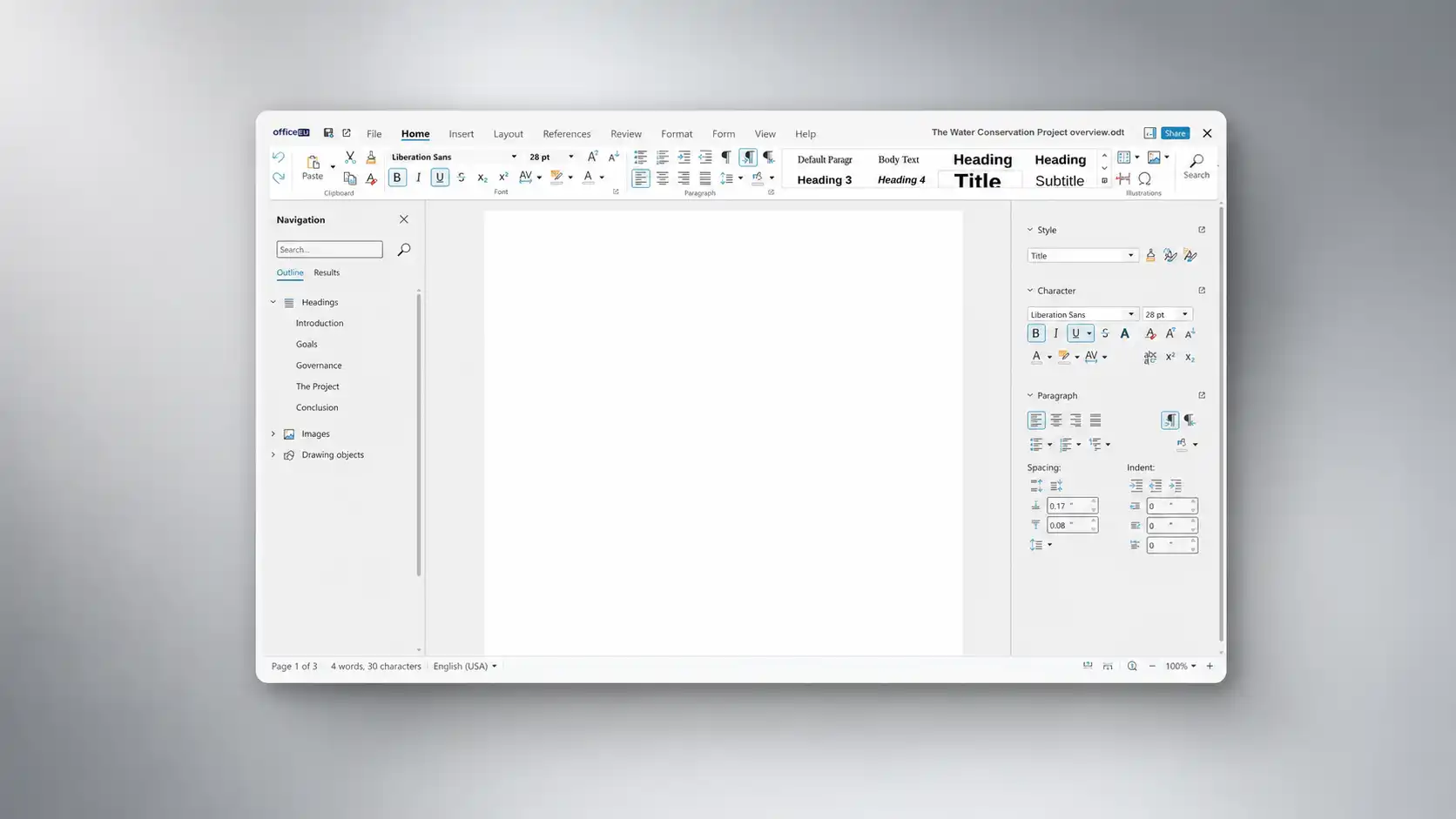
Euro-Office enters the European software market with a strong political story, a timely launch window and a buyer base that is already uncomfortable with dependence on US productivity platforms. Its hardest test is still ordinary and brutal: the price must make sense for SMEs, NGOs and governments before sovereignty becomes a purchasing reason. A European office suite that costs too much, requires too much migration work or leaves support unclear will be admired, tested and postponed.
Table of Contents
Price is the first adoption gate
Euro-Office has a real chance because it speaks to a frustration that has moved from policy documents into IT budgets. European organisations want more control over data, contracts, infrastructure and software supply chains. Public administrations want less exposure to foreign jurisdiction. SMEs want lower recurring costs. NGOs want tools that do not punish small teams with enterprise pricing. The promise is clear enough: a European, open-source office engine for documents, spreadsheets and presentations, built for collaborative work and integration into other European platforms.
The problem is just as clear. The buyer does not pay for sovereignty as an abstract value. The buyer pays for seats, storage, support, migration, training, integrations, downtime risk and future maintenance. That is where Euro-Office will either move from political signal to working market product, or stall as another well-intentioned European software initiative that never reaches broad use.
Nextcloud’s official launch materials say Euro-Office was introduced by a coalition including IONOS, Nextcloud, Eurostack, XWiki, OpenProject, Soverin, Abilian, BTactic, Open-Xchange and Office.eu, with the first release planned for June 9, 2026. The same materials position it as a way for businesses, public authorities and other organisations to become independent of Microsoft Office or Google Docs for collaborative document work.
That framing matters, but price will decide adoption. A 10-person NGO does not evaluate an office suite like a ministry. A 40-person accounting firm does not have the procurement staff of a regional government. A municipality may care about digital sovereignty, but it also has to defend a procurement decision in front of auditors, elected officials and employees who expect Word and Excel documents to open without drama.
For Euro-Office, the strongest route to success is not to imitate Microsoft 365 feature by feature. That would be expensive, slow and probably unnecessary. The stronger route is to become the credible lower-cost office layer inside European collaboration bundles, with enough compatibility to keep day-to-day work moving and enough professional support to remove fear. That requires a disciplined price, not only open-source code.
The phrase “acceptable price” should not be treated as a vague request for discounts. It means different things for each buyer group. For SMEs, acceptable often means a monthly bill below familiar Microsoft or Google alternatives, with low admin effort. For NGOs, it means predictable nonprofit pricing that does not collapse when grant funding changes. For governments, it means transparent total cost over several years, clear data residency, support guarantees and procurement terms that survive legal review.
Euro-Office arrives at a moment when buyers are already rechecking office-suite costs. Microsoft’s own 2026 commercial pricing update says some Microsoft 365 and Office 365 enterprise suite prices with Teams will rise on July 1, 2026, including Microsoft 365 E3 from $36 to $39 and Microsoft 365 E5 from $57 to $60 per user per month. That creates a negotiation opening. It does not create an automatic win.
Euro-Office will not be chosen because Europe wants an alternative. It will be chosen when buyers can prove that the alternative is cheaper enough, safe enough and easy enough to run.
Euro-Office arrives at the right political moment
The timing is unusually good. European digital sovereignty is no longer a slogan kept inside Brussels panels. It has become a purchasing question for municipalities, universities, public agencies, healthcare organisations, schools, civil-society groups and companies that handle sensitive data. The question is no longer only “Which product works?” It is now also “Which jurisdiction controls the product, the data, the contract and the future price?”
Euro-Office sits directly inside that debate. The official announcement describes it as a sovereign replacement for Microsoft Office with a familiar interface and strong compatibility, backed by a European open-source community. The project’s own GitHub profile says Euro-Office aims to provide an open, transparent and sovereign solution for collaborative document editing.
That language matches a wider shift in European policy. The European Commission’s Open Source Strategy places open source at the centre of technological sovereignty and frames European open alternatives as part of reducing dependence on non-EU proprietary solutions in critical domains. The Interoperable Europe Act, which entered into force on April 11, 2024, also pushes public-sector interoperability across EU institutions and member-state administrations.
Euro-Office therefore has a policy tailwind. It also has a business tailwind because the office suite is one of the most visible forms of lock-in. Documents, spreadsheets, presentations, templates, macros, shared drives, permissions and calendars sit at the centre of daily work. Switching away from a dominant productivity ecosystem is not like changing a note-taking app. It touches employees, suppliers, clients, regulators, auditors and citizens.
The political moment gives Euro-Office permission to be evaluated seriously. That is no small thing. Many open-source office projects have been dismissed by buyers before they were tested, not because the code was useless, but because the organisation did not want to be seen as taking a risk. Euro-Office benefits from a mood in which choosing a European alternative can look responsible rather than eccentric.
Yet the same political moment raises expectations. A sovereign European office suite will be judged against its own claims. If it says it is ready for public authorities, then public authorities will ask for security documentation, accessibility, compliance statements, update policies, data-processing terms, incident response, long-term support and integration paths. If it says it is open source, buyers will ask about governance, maintainers, trademarks, forks, contribution rights and software supply chain integrity.
The gap between political demand and practical readiness is where many European digital projects weaken. They receive attention because the story fits the moment, then face the dull work of commercial packaging. Euro-Office needs that dull work to be done well. A credible pricing page, nonprofit programme, public-sector framework, partner directory, migration checklist and service-level model may matter more for adoption than another speech about sovereignty.
The right political moment gives Euro-Office a door. Price and delivery decide whether buyers walk through it.
The product is not a standalone Office clone
A common misunderstanding will hurt Euro-Office if it is not corrected early. The project is not simply a new desktop office suite that users download as a direct one-for-one Microsoft Office replacement. The Euro-Office GitHub profile states that it is “not designed for stand-alone use” but developed as a web-based component integrated into another product that handles documents, such as file sharing, wikis or project management tools.
That distinction affects pricing. If Euro-Office is a document-editing engine inside Nextcloud, XWiki, OpenProject, Office.eu or another platform, then the buyer is not only buying Euro-Office. The buyer is buying a collaboration stack. The bill may include hosting, identity integration, storage, backup, email, calendar, video calls, project management, file sharing, support and migration.
This model could be a strength. SMEs and NGOs often do not want to assemble software from pieces. They want one bundle that works. A European provider could package storage, office editing and collaboration into a clear monthly price. Office.eu, for example, markets itself as a 100% European cloud-based office suite with email, documents, calendar and cloud storage running on European infrastructure. That bundle logic is likely closer to what small organisations need than a raw document server.
The model could also become a weakness. If every partner packages Euro-Office differently, buyers may struggle to understand what the product costs and what is included. One provider may sell it as part of managed Nextcloud. Another may integrate it into a wiki. Another may expose it through project management. A government buyer may ask which party is responsible when a spreadsheet fails, a PDF editor breaks, a document corrupts or a macro does not run.
A component can succeed commercially only when the market understands the finished offer. Euro-Office therefore needs clear packaging from partners: “Here is the SME plan. Here is the NGO plan. Here is the public-sector plan. Here is what it includes. Here is what it does not include. Here is the support path. Here is the exit path.”
The integrated model also changes how buyers compare it with Microsoft and Google. Microsoft 365 and Google Workspace are not only office editors. They are identity, storage, email, calendar, device management, security tooling, compliance controls and collaboration features. Euro-Office alone should not be priced against the full Microsoft 365 or Google Workspace suite unless the bundle around it offers comparable operational scope.
That matters for honest marketing. A buyer might save money on office editing but spend more on admin time if the bundle is incomplete. Another buyer might pay a similar seat price but gain control over hosting and data residency. A third buyer might choose Euro-Office only for departments with sensitive data while keeping Microsoft 365 elsewhere. These are all credible adoption paths, but each needs a different commercial story.
A strong Euro-Office offer would explain the product in layers. The editing engine is open-source and European-governed. The collaboration platform is supplied by a partner. The hosting model is cloud, managed private cloud or self-hosted. The support contract is priced by seats or instance. The migration service is separate or included. The buyer can leave with data in open formats.
Without that clarity, Euro-Office risks being compared unfairly and purchased slowly. The market does not buy architectural diagrams. It buys clear responsibility.
The market opening is real but narrow
Europe has enough dissatisfied buyers to give Euro-Office a meaningful opening. SMEs dislike rising subscription costs. NGOs dislike unpredictable licensing. Governments dislike jurisdictional uncertainty. Schools and universities dislike dependence on ecosystems that shape long-term document habits. Regulated industries dislike placing core work documents inside platforms whose commercial direction they do not control.
The scale of the SME market alone is large. The European Commission’s Annual Report on European SMEs 2024/2025 says SMEs represent 99.8% of all enterprises in the European business economy. Eurostat reported that in 2022 the EU had 32.3 million enterprises employing 160 million people, with micro and small enterprises accounting for 99% of enterprises and 48% of employment.
That sounds like a huge target market, but most SMEs are not software idealists. They buy what their accountant, IT partner, industry peers or public clients already use. They do not want a “migration project” unless the current bill hurts or the current product blocks a real requirement. Their tolerance for disruption is low. A bakery, legal office, architecture studio, charity, medical practice or repair company does not have spare staff for testing file compatibility across hundreds of document templates.
The narrowness of the opportunity comes from switching friction. Office suites are sticky because documents travel outside the organisation. A municipality may create a document in an open format, but suppliers may send DOCX files. An NGO may prefer a European tool, but donors may require Microsoft templates. A small engineering firm may want lower prices, but its clients may send spreadsheets with formulas, formatting and comments that must survive editing.
Euro-Office’s first opportunity is therefore not mass replacement. It is targeted replacement where pain is high and workflows are simpler. Candidate groups include European public bodies with sovereignty mandates, NGOs handling sensitive data, SMEs that already use Nextcloud or managed European hosting, schools that want open standards, local governments with simple document workflows and organisations that do not rely heavily on advanced Excel macros.
The second opportunity is defensive bargaining. Even buyers that do not switch may use Euro-Office to pressure incumbent vendors on price and data terms. That would not produce direct seat revenue for Euro-Office providers, but it would make the product politically visible. A credible alternative changes negotiations. An alternative that exists only on slides does not.
The third opportunity is hybrid deployment. A buyer may keep Microsoft 365 for finance, management and complex spreadsheets, while using Euro-Office for public document drafting, internal collaboration, open-data publishing, grant documentation or citizen-facing files. That is not a failure. It is often the path by which infrastructure software enters conservative organisations.
Euro-Office does not need to replace every Microsoft seat to succeed. It needs enough paid deployments to prove that a European office layer can be maintained, supported and trusted at scale.
SMEs will judge the bill before the flag
SMEs are likely to be the toughest honest judges of Euro-Office pricing. They have fewer procurement rituals than governments and less ideological cover than public institutions. They ask simple questions. What does it cost per person? Does it work with documents my clients send? Who fixes it when it breaks? How much time will migration take? Does my IT provider understand it? Can I cancel without losing my files?
For most SMEs, a price that looks attractive on paper is not enough. The real comparison is against the total cost of staying with Microsoft 365 or Google Workspace. Microsoft’s Irish business pricing page lists Microsoft 365 Business Basic at €5.20 per user per month, Business Standard at €10.83 and Business Premium at €19.06, before VAT and with annual billing. Google’s business-edition documentation lists Business Starter at $7 per user per month on an annual or fixed-term plan, Business Standard at $14 and Business Plus at $22, with flexible monthly pricing higher.
Those prices create a harsh benchmark. Euro-Office does not have to beat every bundle on every feature, but for SMEs it must explain why the monthly bill is lower, safer or better controlled. If a managed European bundle costs more than Microsoft 365 Business Standard while offering fewer familiar tools, many SMEs will stay where they are. If it costs materially less and includes migration support, some will test it.
The phrase “materially less” matters. A saving of €1 per user per month is rarely enough to justify migration. A saving of €4 to €8 per user per month across a 25-person company starts to look real, especially if the company already pays separately for storage, email hosting or file sharing. A saving of €10 per user per month against higher-tier plans may trigger serious review. The exact threshold changes by country and sector, but the psychology is stable: the smaller the organisation, the more the switching price must be visible.
SMEs also dislike surprise charges. A low seat price followed by paid support tickets, expensive storage add-ons, migration fees, backup extras and unclear maintenance costs will feel like the same subscription trap under a European flag. Euro-Office partners should avoid that mistake. The best SME offer would be boring: one price, clear storage, included updates, fair support limits, clean export, no forced AI bundle, no hidden compliance upsell.
The small-business channel is another constraint. Many SMEs do not buy productivity software directly from vendors. They buy through local IT firms, accountants, hosting providers or managed service providers. Euro-Office must be easy for those partners to sell and support. That means predictable margin, documentation, training, admin tools, billing APIs and support escalation. Without the channel, Euro-Office will reach enthusiasts and policy-minded buyers, not the ordinary SMEs that define the market.
SMEs will also punish incompatibility fast. A small firm cannot tell a client, “Please resend the file because our sovereign suite handled your tracked changes badly.” The product must be tested against the messy reality of invoices, legal templates, public procurement forms, multilingual documents, embedded images, comments, tables, formulas and exports to PDF. Compatibility failures become cost. Cost kills the pricing argument.
For SMEs, Euro-Office’s selling point is not Europe alone. It is Europe plus a lower bill plus less vendor dependence plus enough compatibility that staff do not revolt.
Price bands that decide whether Euro-Office is a substitute or a statement
| Buyer group | Price signal that feels credible | Main reason | Failure point |
|---|---|---|---|
| Micro SMEs | Below mainstream business-suite entry pricing | Small teams compare monthly cash cost first | Migration work costs more than savings |
| Larger SMEs | Clear saving against standard productivity bundles | Seat count makes subscription cost visible | Missing admin, security or device controls |
| NGOs | Discounted nonprofit plan with grant-friendly billing | Budgets change by project and donor cycle | Annual lock-in without support clarity |
| Municipalities | Multi-year total-cost model with local support | Procurement needs defensible figures | Unclear responsibility across vendors |
| National agencies | Framework pricing with service levels and audit rights | Risk, compliance and scale dominate | Legal or interoperability uncertainty |
The table shows why one public price is unlikely to fit the whole market. Euro-Office needs buyer-specific packaging without making pricing opaque. The challenge is to keep the entry price simple while giving public bodies and regulated organisations the contract depth they require.
NGOs need predictability more than symbolism
NGOs are a natural audience for Euro-Office, but not because they are automatically anti-Microsoft or anti-Google. Many civil-society groups use whatever donors, volunteers and staff already understand. They operate under time pressure, with part-time administrators, volunteer boards, grant deadlines, rotating staff and mixed technical skill. A new office suite must reduce pressure, not add another project.
The strongest NGO argument for Euro-Office is control. Civil-society organisations may work with vulnerable people, legal cases, public-interest investigations, medical information, children’s data, migration records or politically sensitive material. A European-governed stack, hosted in Europe, with open-source code and clear data-processing terms, will be attractive when trust and jurisdiction matter. But trust does not pay invoices. NGOs need a pricing structure that fits grant accounting.
A nonprofit price should not simply copy business pricing with a small discount. NGOs need predictable billing by project year, not only by calendar year. They need the ability to add temporary users for campaigns, field teams or partner coalitions. They need low-cost guest collaboration with external lawyers, volunteers and donors. They need documents to remain accessible after grants end. They need export rights that are simple enough for non-technical staff.
The NGO buyer worries less about the ideological beauty of open source than about waking up to a bill it cannot fund. A grant may pay for software during a 12-month project, then disappear. A charity may have 12 permanent staff and 80 volunteers who need occasional access. A humanitarian group may need secure collaboration across borders but cannot justify enterprise pricing. Euro-Office partners should design nonprofit plans around these patterns.
Support also matters in NGOs because technical staff are often scarce. A small NGO may have no IT employee at all. A medium NGO may have one overworked operations manager handling devices, accounts, donors, payroll, websites, security and compliance. A low-cost open-source tool becomes expensive if staff must solve integration problems themselves. The product must include human support or a partner who speaks plain language.
Euro-Office also needs to respect NGO collaboration patterns. NGOs work with external partners constantly: funders, lawyers, public authorities, journalists, auditors, translators, local offices, volunteers and beneficiaries. If external sharing is clumsy, adoption suffers. If document permissions are hard to understand, sensitive files may leak. If guest access is expensive, teams will return to email attachments or consumer cloud drives.
There is also a reputational angle. Some NGOs would welcome a European office suite because it aligns with values of transparency, autonomy and public-interest technology. But values-based adoption is fragile. If the product performs poorly, staff will treat it as ideological burden. If it performs well and costs less, it becomes a natural part of operations.
For NGOs, Euro-Office should be sold as a low-risk, grant-compatible working environment, not only as a sovereignty statement. The pricing model should make room for donated seats, small-team plans, campaign users, partner guest access and migration support. Without that, the sector may praise the project publicly and keep using the incumbents privately.
Governments buy risk reduction in public
Government buyers care about price, but they do not buy like SMEs. A ministry, municipality or public agency must justify software through procurement law, budget committees, audit trails, security reviews, data-protection assessments, accessibility requirements and political accountability. For governments, Euro-Office’s price must be lower or better controlled, but it must also make risk easier to explain.
The public-sector argument begins with sovereignty. Public administrations hold citizen data, policy documents, legal records, procurement files, internal communications and security-sensitive material. The European Data Protection Supervisor’s 2024 decision on the European Commission’s use of Microsoft 365 focused on purpose limitation, international transfers and unauthorised disclosure risks under Regulation (EU) 2018/1725. In July 2025, the EDPS said the European Commission had brought its use of Microsoft 365 into compliance after additional measures.
That sequence is relevant. It shows that Microsoft 365 can be made compliant in a high-profile EU institutional setting, but also that reaching that state required scrutiny, negotiated measures and supervisory pressure. Euro-Office can use this moment carefully. It should not claim that US platforms are automatically unlawful. It should say something more precise: European public buyers want office software whose compliance, jurisdiction and auditability are easier to defend from the start.
Government buyers also value continuity. They need assurance that Euro-Office will not disappear after one funding cycle, one corporate dispute or one wave of launch attention. Public bodies cannot base document infrastructure on a project whose governance is unclear. They need maintenance commitments, security patch processes, long-term support branches, escrow-like continuity options, documented APIs and a path to switch providers if one vendor fails.
The price model for governments must be built around multi-year total cost. A public agency will compare not only seat prices, but also training, integration, migration, storage, identity, support, archiving, accessibility testing, records management, data protection, incident response and exit costs. A low per-user price with high professional-service fees may lose. A higher per-user price with predictable five-year cost may win.
Public-sector procurement also needs competition. If Euro-Office is marketed as sovereign but supplied through only one practical vendor, procurement officers may worry about a new lock-in. The coalition structure helps here if many European providers can host, support and integrate the same office engine. That creates a more contestable market. The buyer can switch suppliers while keeping the same file formats and software base.
Municipalities are especially promising. They have sovereignty concerns, but their workflows may be less complex than central ministries. They often face budget pressure, public scrutiny and pressure to support local or European digital ecosystems. A well-priced Euro-Office bundle with local-language support could appeal to cities, regions and municipal associations. A fragmented, technically demanding offer will not.
Governments will not buy Euro-Office merely to make a political point. They will buy it if the product lowers legal, budgetary and strategic dependency risk in a way that procurement teams can write into contracts.
Microsoft’s price movement changes the negotiation
Microsoft remains the reference point because it owns the default mental model of office work in many organisations. Word, Excel, PowerPoint, Outlook, Teams, OneDrive, SharePoint, Intune, Defender and Entra form a business environment, not only a software subscription. Any Euro-Office pricing argument must respect that reality.
Current Microsoft 365 business pricing in Ireland lists Business Basic at €5.20, Business Standard at €10.83 and Business Premium at €19.06 per user per month, before VAT and with annual billing. Enterprise pricing pages list Microsoft 365 E3 and E5 at higher levels, and Microsoft’s 2026 pricing update says enterprise suites with Teams will see price changes from July 1, 2026.
That gives Euro-Office a practical hook. The story is not “Microsoft is bad.” The story is “Microsoft’s bundle is becoming broader, more AI-centred and more expensive, while many organisations need a smaller, controlled, European office layer.” This is a stronger argument because it does not rely on resentment. It relies on fit.
Many SMEs do not need the full Microsoft 365 stack. They need email, file storage, document editing, calendar, contacts and security basics. Some need desktop Office compatibility. Some need Teams because clients use it. Some need advanced Excel. But many pay for bundled functions because the buying path is simple. Euro-Office partners need to match that simplicity at the level where small organisations actually live.
The Microsoft price movement may also make public buyers revisit contracts. If a government already has a major enterprise agreement, switching is not quick. Yet renewals create review points. A credible Euro-Office option could be tested before renewal, deployed in limited departments or included in a multi-vendor strategy. Even a partial deployment gives procurement teams leverage.
The risk for Euro-Office is overclaiming. Microsoft’s products are deeply embedded, mature and supported by a huge partner network. Microsoft’s security, compliance, identity and admin tools are major reasons enterprises stay. Euro-Office should not present itself as a full Microsoft 365 replacement on day one unless the surrounding platform truly supplies equivalent functions. That would invite disappointment.
The better strategy is to attack the right slice. Euro-Office should position itself as the European document-collaboration layer for organisations that want open-source governance, data control and lower subscription exposure. It can then grow outward through partner bundles, not by pretending that every Microsoft workload moves immediately.
Price must reflect that slice. If Euro-Office is sold inside a bundle that costs near Microsoft 365 Business Premium, buyers will compare it with the full Microsoft security and device-management package. If it is sold below Business Standard with clear European hosting and support, the comparison becomes easier. If public-sector framework pricing reduces five-year total cost while improving jurisdictional control, governments will listen.
The July 2026 Microsoft pricing changes give Euro-Office a news window. The project should use it to publish clear pricing before buyers renew contracts. Waiting too long would waste the moment. A market opening is perishable when procurement calendars move faster than product packaging.
Google Workspace keeps the benchmark honest
Google Workspace sets a different benchmark. It is browser-first, collaborative by default and popular among smaller teams, startups, schools, associations and organisations that value simple administration. It does not carry the same desktop-office legacy as Microsoft, which makes it a more relevant comparison for a web-based Euro-Office deployment.
Google’s business-edition documentation lists Business Starter, Business Standard and Business Plus with per-user pricing and storage differences, including 30 GB pooled storage per user for Starter and 2 TB for Standard. This matters because buyers compare the full working environment, not only the editor. A Euro-Office bundle that lacks email, calendar, storage and communication tools cannot be priced as if it replaces Google Workspace.
Google also sets an expectation for ease. A small team can sign up, add users and begin working quickly. Euro-Office must not make sovereignty feel administratively heavy. If setup requires specialist Linux knowledge, reverse proxy tuning, manual integration and unclear support channels, only technical adopters will proceed. Managed providers can solve this, but the price must include that convenience.
Google Workspace also demonstrates how browser-based collaboration wins hearts. Real-time editing, comments, sharing links, version history and low-friction external collaboration matter more to many teams than advanced desktop features. Euro-Office’s browser-first nature is therefore not a disadvantage by itself. It is a disadvantage only if performance, sharing, permissions or document fidelity lag.
There is a strategic difference. Google’s ecosystem is deeply tied to Google identity, Gmail, Drive, Meet and the broader advertising-era company behind it. Euro-Office’s opportunity is to serve buyers who want browser collaboration without handing the whole work environment to a US platform. That is a real category. It includes schools, NGOs, privacy-sensitive companies, public bodies and European SMEs already looking for local hosting.
But the Google benchmark is unforgiving on usability. A sovereign suite that requires more clicks for basic sharing will struggle. A European suite that makes guests create awkward accounts will frustrate partners. A document editor that feels slow in the browser will lose daily trust. Buyers do not care that a feature is politically aligned if employees avoid it.
Google Workspace proves that many organisations are willing to work in the browser. Euro-Office must prove that a European browser-based office suite can feel normal, fast and affordable.
Open source shifts costs rather than removing them
Open source is central to Euro-Office’s identity, but it should not be sold as if it eliminates cost. Code availability lowers certain risks. It allows audit, forking, community contribution and supplier diversity. It reduces dependence on a single proprietary roadmap. It may lower licensing fees. It does not remove the cost of hosting, support, security work, documentation, training, migration, testing, user management or compliance.
This distinction is decisive for pricing. A buyer may assume “open source” means cheap or free. A provider may then be tempted to hide costs in services. That creates mistrust. Euro-Office should take the opposite path: be open about what is free and what costs money. The code may be free to inspect and run. Professional hosting, support, updates, warranties, service levels and migration are paid work.
The European Commission’s open-source policy framing supports the strategic value of open alternatives, but real adoption depends on maintenance. Public-sector open-source researchers have also shown that adoption in public organisations needs institutional support, governance and capability, not only code access.
For SMEs and NGOs, open source matters when it changes practical risk. Can the organisation leave the provider? Can another local IT firm take over? Can data be exported in open formats? Can security researchers inspect the code? Can a public buyer fund improvements that return to the project? Can the product avoid sudden licensing changes? These are buyer-facing benefits. They should be tied directly to pricing and contracts.
The danger is underfunding. An open-source office suite that targets governments and businesses needs paid maintainers. It needs compatibility testing, accessibility reviews, security patching, build infrastructure, documentation, localisation, packaging and support. If the price is too low to fund this work, the project may gain users and lose quality. That would be worse than charging honestly.
The right price is not the lowest possible price. It is the lowest price that still funds reliability, security and support. For SMEs and NGOs, this may mean a low managed plan with limited support. For governments, it may mean higher-priced support contracts that fund maintenance and give public buyers stronger guarantees. For large institutions, it may mean contribution agreements or funded development for features such as ODF fidelity, accessibility, records management or offline editing.
Open source also allows differentiated public funding. Governments can pay for improvements that benefit everyone rather than buying closed customisation. That is politically attractive if handled well. But it requires governance, roadmap discipline and procurement structures that allow public money to support shared code. Euro-Office’s coalition must make that easy.
A mature pricing strategy would therefore separate three layers: free community code, affordable managed plans and paid institutional support. Mixing them into one vague “sovereign suite” would confuse the market. Buyers need to know which layer they are buying.
Migration is the hidden price every buyer counts
The visible monthly subscription is only part of the bill. Migration is the cost that often decides whether a switch happens. It includes file conversion, template testing, user training, email and calendar migration if the bundle includes them, identity setup, permissions, mobile access, external sharing, archival rules, security policies and staff time.
A €4 per-user monthly saving across 50 staff saves €2,400 per year. That sounds useful until migration consumes 120 hours of staff and consultant time. A €10 per-user saving across 500 staff saves €60,000 per year. That can fund a real project if the migration path is disciplined. For a government with 20,000 seats, even a small monthly saving is material, but the risk of disruption is also larger.
Euro-Office must therefore sell migration honestly. “Easy switch” language will not survive contact with real document stores. Buyers have old DOCX files, complex XLSX workbooks, PowerPoint templates, scanned PDFs, document management integrations, mail-merge processes, macros, embedded charts, comments, tracked changes, digital signatures and retention rules. Each has to be tested.
The best adoption path is phased. Start with new documents and low-risk teams. Test file fidelity against common templates. Train internal champions. Define which files stay in Microsoft format, which move to ODF, which are exported to PDF and which remain in legacy systems. Build a support desk script for common problems. Expand only when the failure rate is known.
Migration support should be priced as a product, not treated as an afterthought. SMEs need fixed-price migration packages. NGOs need low-cost onboarding and templates. Governments need assessment, pilot, rollout and training phases with measurable acceptance criteria. Local IT partners need checklists and tools.
Euro-Office also needs a “no-regret pilot” model. Many buyers will not commit to a full switch in 2026. They will test. A pilot should have a clear price, clear scope and clear success metrics: number of users, document types, workflows, compatibility issues, support response, performance, user satisfaction and total cost. If a pilot is too complex to buy, buyers will delay.
Migration also involves culture. Employees often resist office-suite changes because document tools are muscle memory. A spreadsheet user may know exactly where a formatting button sits. A public servant may rely on tracked changes with external legal counsel. A teacher may reuse old worksheets. The product has to feel familiar enough to reduce resentment. Nextcloud’s announcement stresses an intuitive interface and strong compatibility, which addresses this point at the positioning level. The market will judge it in daily work.
Euro-Office’s price must make room for these human costs. A low license price with no migration plan will fail quietly. A slightly higher price with guided migration may win. The buyer compares the cost of switching with the pain of staying. Euro-Office has to lower the first number and make the second visible.
Compatibility decides whether savings survive contact with work
Office compatibility is not one feature. It is the daily survival test. Documents move through clients, regulators, suppliers, donors, citizens, courts, schools, auditors and board members. If formatting breaks, trust breaks. If formulas change, risk rises. If tracked changes behave strangely, legal work slows. If presentations shift, staff blame the new tool even when the file was messy to begin with.
Euro-Office’s own materials and reporting emphasize support for common formats such as DOCX, XLSX, PPTX, ODT, ODS and ODP, with collaborative editing of documents, spreadsheets and presentations. That is the right baseline. But support is not the same as perfect fidelity. Buyers will ask about edge cases.
The most sensitive area is spreadsheets. Many organisations use spreadsheets as shadow databases, planning tools, finance models, inventory systems, procurement trackers and grant reporting sheets. They contain formulas, pivot tables, references, charts, macros, conditional formatting, protected cells and data validation. If Euro-Office handles ordinary spreadsheets well but struggles with advanced Excel files, the product may still succeed in many teams. It just needs to be honest about where Microsoft Excel remains required.
Documents are less technical but politically sensitive. Public bodies have legal templates. NGOs have donor-report templates. SMEs have proposals, contracts and invoices. Broken numbering, table layout or footnotes can be more than cosmetic. It can create embarrassing errors. Euro-Office needs a public compatibility test suite and a way for buyers to report file issues without exposing confidential documents.
Presentations matter for adoption psychology. A slide deck that opens badly makes the software look unprofessional fast. Yet many teams could tolerate partial presentation limitations if the core document and spreadsheet workflows work. Pricing should reflect this: if Euro-Office is strongest for collaborative drafting and ordinary documents, sell it first there.
Compatibility should be framed as a managed risk, not a magical guarantee. Microsoft Office itself sometimes handles documents differently across versions, platforms and web apps. Google Docs also has limits with complex Office files. The practical question is whether Euro-Office is good enough for the workflows a buyer wants to move.
A credible Euro-Office partner should offer compatibility assessment before migration. Upload sample files. Test rendering, editing, export and round-trip behaviour. Classify files into low, medium and high risk. Keep high-risk workflows on incumbent software until alternatives are proven. Use ODF for new internal files where open standards matter. Use PDF for final external exchange when editing is not required.
This approach turns compatibility into a sales tool. Instead of promising perfection, Euro-Office providers can show evidence. Buyers trust evidence more than slogans. A public library of anonymised compatibility tests, sector templates and known limitations would help SMEs and NGOs decide without expensive consulting.
Compatibility also affects price tolerance. Buyers will pay less for a product that requires workarounds. They will pay more for a product that prevents lock-in while keeping files usable. Every compatibility failure is a hidden surcharge on the monthly price.
ODF support matters beyond ideology
OpenDocument Format is not only a preference of open-source communities. It is a long-term document-control issue. ODF gives organisations a way to store text documents, spreadsheets and presentations in a standard that is not controlled by a single office-suite vendor. OASIS describes OpenDocument as a specification for office applications covering text documents, spreadsheets, charts, drawings and presentations. ISO announced approval of the OpenDocument Format as an ISO/IEC International Standard in 2006.
Euro-Office’s roadmap mentions work toward full ODF support, alongside security, performance, build improvements, automated testing and future desktop and mobile apps. That is strategically sound. If Euro-Office only becomes a Microsoft-format-compatible editor, it reduces short-term switching friction but does not fully solve lock-in. If it supports ODF well, it gives public bodies, NGOs and SMEs a document strategy beyond one vendor’s ecosystem.
The business value of ODF is strongest in archives, public administration, education and civil society. Public records should remain readable for decades. NGOs may need to preserve project documents after funding ends. Schools should not train students only into one proprietary document habit. SMEs may want to avoid file dependence that follows them through every software renewal.
ODF support also interacts with procurement. Public buyers can include open-format requirements in tenders. That makes competition fairer. Instead of asking for compatibility with one vendor’s implementation, tenders can require standards support, export fidelity and documented interoperability. Euro-Office should make this easy by publishing compliance details and test results.
There is a practical trap. Users often say they support open formats until they need to collaborate with someone who sends a DOCX file. Euro-Office must handle both worlds. The short-term bridge is Microsoft-format compatibility. The long-term escape route is ODF. Pricing and migration should encourage both without forcing abrupt change.
A government might adopt a policy: internal drafts use ODT unless external collaboration requires DOCX; final public files use PDF/A; spreadsheets with complex Excel dependencies remain in Excel until replaced; new forms and templates are created in ODF. A NGO might use ODT for internal governance documents and DOCX for donor templates. An SME might use whatever format clients require but archive final files in PDF.
ODF is not a reason to ignore Microsoft compatibility. It is a reason to stop making Microsoft compatibility the only measure of document health. Euro-Office needs to explain this without sounding doctrinaire. Buyers care about control, not format theory.
Sovereignty must be contract language
Digital sovereignty becomes real only when it appears in contracts, service levels and technical architecture. A buyer cannot procure “sovereignty” as a feeling. It must ask who owns the provider, where data is stored, which law applies, who can access metadata, what subprocessors exist, whether support staff are in the EU, how encryption is handled, how logs are stored, how updates are signed and what happens if the provider is acquired.
Euro-Office has a strong narrative because it is backed by European organisations and built around open-source governance. But public buyers and regulated SMEs will ask for proof. A provider selling Euro-Office should be ready with data-processing agreements, data residency commitments, security documentation, audit rights, incident-notification terms and clear subprocessors.
The EDPS Microsoft 365 case shows why this matters. The 2024 EDPS decision focused on compliance issues around purpose limitation, international transfers and unauthorised disclosures in the Commission’s Microsoft 365 use. The 2025 closure after remedial measures shows that compliance work can resolve specific issues, but also that major cloud suites require careful contractual and technical controls.
Euro-Office should not turn that into crude anti-American marketing. European buyers are sophisticated enough to know that compliance depends on implementation. A European label alone does not guarantee good security, privacy or governance. A badly configured European-hosted open-source system can be less safe than a mature hyperscaler deployment. The advantage lies in controllability, auditability and jurisdictional fit, not automatic virtue.
The sovereignty premium must be earned through verifiable terms. If Euro-Office costs the same as incumbent suites, it must offer stronger control. If it costs less, it must still meet baseline security and legal requirements. If it is sold to governments, it must be procurement-ready.
For SMEs and NGOs, sovereignty language should be simpler. Tell them where their documents are stored. Tell them who can access support data. Tell them how to export everything. Tell them what happens if they cancel. Tell them whether AI features process documents. Tell them whether external guests create data in the same jurisdiction. These details matter more than abstract principles.
For governments, sovereignty should be modular. Some administrations may require EU-only hosting. Others may require national hosting. Some may require open-source code and self-hosting. Some may require managed services from a certified provider. Euro-Office’s integrated model allows this flexibility, but the market needs standard offers.
A credible Euro-Office contract should include an exit clause that is actually usable. The buyer should be able to export files, metadata and user data in documented formats. The provider should publish migration-out procedures. That turns open source into a buyer protection, not only a development model.
Procurement needs bundles, not slogans
Procurement teams buy defined objects. A tender cannot simply ask for “a sovereign office suite” without inviting confusion. It needs specifications: document editing, spreadsheet editing, presentation editing, PDF handling, file formats, collaboration, identity integration, storage, mobile access, accessibility, support hours, uptime, data location, security certifications, migration services and training.
Euro-Office’s success in government therefore depends on procurement packaging. The coalition should make it easy for public buyers to write fair tenders that allow multiple Euro-Office providers to compete. That means reference architectures, sample tender language, conformance checklists, service-level templates and total-cost calculators.
The Interoperable Europe Act gives this packaging a policy backdrop by promoting cross-border public-sector interoperability and cooperation among EU bodies and member-state public administrations. Euro-Office can align with that by making interoperability measurable: supported formats, APIs, export functions, federation options and portability.
Governments also need framework contracts. A small municipality may not have the capacity to run a deep technical procurement for office software. Regional or national framework agreements could make adoption easier by prequalifying providers. This is where Euro-Office’s coalition could work with public-sector associations, procurement bodies and open-source competence centres.
The procurement offer should be boring, complete and auditable. Launch energy will not carry a tender through legal review. Procurement teams need evidence, not excitement.
SMEs need bundles too, just with less paperwork. A 20-person business should be able to choose a “European office and file sharing” plan with a published price, included support and migration checklist. NGOs should be able to choose a nonprofit plan. Governments should see public-sector support levels. The same product can serve all three, but the purchasing surface must differ.
This is where Euro-Office partners may compete and cooperate at the same time. They can share the open-source code and interoperability base, while competing on hosting, support, sector expertise, national language service, compliance and price. That is healthy if the buyer can switch providers. It is confusing if every provider uses different product names, feature claims and contract assumptions.
A strong market category needs a common vocabulary. What is Euro-Office Core? What is a managed Euro-Office instance? What does “compatible” mean? Which release is supported? Which security fixes are backported? Which integrations are certified? Which providers contribute upstream? Which providers only resell?
Clear answers will reduce buyer friction. Unclear answers will increase consulting cost, which makes the price less acceptable.
Support is the product for non-technical buyers
For technical users, the product is code. For most SMEs, NGOs and governments, the product is support. They do not care that a repository exists if nobody answers when documents fail before a board meeting, a grant deadline or a council vote. The support model will shape Euro-Office’s market reputation as much as the code.
Support has several levels. The first is basic user help: password resets, sharing, editing, file recovery, version history and guest access. The second is admin support: user provisioning, storage limits, identity integration, backups, logging and policy settings. The third is compatibility support: broken layouts, formulas, exports, templates and round-trip issues. The fourth is security support: patches, incidents, vulnerabilities and audit evidence.
Each buyer segment values these differently. SMEs need fast practical answers. NGOs need patient support for non-technical users and volunteers. Governments need documented incident processes and escalation. Large public bodies need named account teams and service levels. The pricing model should reflect this instead of hiding support behind vague “community” channels.
Euro-Office’s roadmap and GitHub materials show development activity and future plans, including making the build easier, automated testing, production readiness, ODF support, desktop apps and mobile apps. That is useful, but buyers will ask who supports the production release. The answer cannot be “the community” for paying organisations.
A professional open-source product needs professional support without pretending community labour is a service contract. Community support is useful for testers, developers and self-hosters. Paid support is required for organisations that run payroll, public services, legal work or donor operations through the product.
The local support layer may be Euro-Office’s best advantage over US incumbents. A Slovak SME, a Dutch NGO, a German municipality or a French school may prefer a provider that understands local language, procurement habits, data-protection practice and sector workflows. European hosting firms and managed service providers can turn Euro-Office into a practical product.
Support also shapes trust during migration. Users will forgive small issues if help is visible and competent. They will abandon the tool if every problem becomes a forum thread. An affordable support package may be the difference between “we tried it and failed” and “we had a few issues, but they were solved.”
The price must include enough support to avoid early failure. A cheap plan with no real support may damage the brand. A plan with clear response limits and self-service materials may work. For NGOs and SMEs, the first 90 days after migration are the danger zone. Euro-Office partners should price onboarding support into the package.
The OnlyOffice dispute is a business risk until it is settled
Euro-Office’s early story includes a legal and reputational complication: its relationship with OnlyOffice code. OnlyOffice publicly accused the Euro-Office initiative of material license violations and demanded compliance with branding, logo and attribution conditions. Nextcloud later published its own legal and open-source reasoning, saying Euro-Office reviewed the terms, found contradictions and believes it is compliant with AGPLv3.
For open-source communities, this dispute may be a licensing argument. For buyers, it is a risk flag. Public procurement teams will ask whether the software is legally safe to deploy. SMEs may not follow the details, but enterprise and government buyers will. NGOs with legal sensitivity may ask whether the project could face injunctions, rebranding, delays or support disruption.
The facts should be handled carefully. OnlyOffice has made allegations. Euro-Office/Nextcloud disputes them. Public reporting has covered both the accusation and the response. A buyer does not need to decide the legal theory personally. It needs assurance that the vendor will indemnify, support and maintain the product if the dispute escalates.
Until the dispute is fully resolved or commercially neutralised, Euro-Office providers need clear legal-risk answers. Those answers should include license documentation, attribution policy, legal review, warranties where available and contingency plans. Government buyers will not accept “we think it is fine” as enough.
The dispute also affects pricing. If buyers perceive legal risk, they will demand a discount or delay deployment. If providers offer strong assurances, the risk becomes manageable. For public-sector deals, legal certainty may matter more than seat price. A €3 cheaper product that creates procurement uncertainty may lose to a more expensive product with cleaner paperwork.
The coalition should also avoid allowing the dispute to define the project. The best way to reduce the risk is not public argument. It is clean governance, transparent attribution, documented compliance and steady releases. Buyers will judge the project by maturity, not by social-media debates.
There is a broader lesson. Open source is not only a license; it is trust infrastructure. Forking is legal under many open-source licenses, but commercial adoption still depends on how the fork handles credit, governance, trademarks, code provenance and contributor rights. Euro-Office wants to be a sovereign alternative. Sovereignty requires stronger legal hygiene, not weaker.
The legal question does not kill Euro-Office’s chance. Many successful open-source projects have emerged from forks and disputes. But the issue must be contained. No government wants its office-suite migration to become a test case in someone else’s licensing fight.
The coalition structure is both asset and vulnerability
Euro-Office’s coalition is one of its main strengths. It gives the project credibility beyond a single vendor. Nextcloud brings collaboration and file-sharing reach. IONOS brings European cloud and commercial scale. XWiki brings knowledge-management use cases. OpenProject brings project workflows. Open-Xchange and Office.eu point toward broader communication and workspace bundles. The official release materials list many organisations in the initiative and say several partners are contributing development resources.
Coalitions solve one problem and create another. They show that the project is not isolated. They also raise governance questions. Who decides the roadmap? Who controls release timing? Who handles security incidents? Who resolves disagreements? Which partner’s commercial interests shape priorities? What happens if one major member leaves?
Nextcloud’s roadmap post says Euro-Office introduced contribution documentation, a governance section and a current decision model based on “who codes, decides” with consensus in case of disagreement. That may work for early development. Public-sector adoption will demand more formal structure as stakes rise.
Open-source governance does not need to look corporate, but it must be legible. Buyers should know how decisions are made, how maintainers are selected, how security patches are handled, how release branches are supported and how vendors coordinate. If the coalition wants governments and large SMEs to commit, governance has to be more than goodwill.
The asset side is strong. A multi-provider ecosystem reduces lock-in. If one provider prices too high, another may offer a better plan. If one hosting model is unsuitable, another can support self-hosting or national data centres. If one integration is weak, another can target a different use case. This is exactly where open source can beat closed suites in market structure.
The vulnerability is fragmentation. If Nextcloud’s Euro-Office experience differs from XWiki’s, Office.eu’s and IONOS’s in ways buyers cannot understand, the brand may become blurry. If support responsibilities differ too much, users may blame Euro-Office for partner-specific problems. If release versions drift, compatibility and security messaging become harder.
Euro-Office needs shared technical standards and shared market language while allowing providers to compete. That balance is difficult but necessary. The open-source base should be common. Certification should show which providers meet defined support, security and compatibility expectations. Pricing can vary, but the buyer should not have to decode the ecosystem from scratch.
The coalition also needs to show paid maintenance capacity. A launch backed by major names is not the same as a funded long-term engineering team. Nextcloud has said IONOS and Nextcloud started hiring a dedicated development team and that positions have been filled. That is a good signal. The market will look for more: number of maintainers, security process, release cadence and contribution from each commercial actor.
Public money needs public code, but public buyers need service levels
The case for public money supporting open-source office infrastructure is strong. If European governments spend millions on productivity software, some of that money could fund shared code that remains available to administrations, schools, SMEs and civil society. This aligns with the public-code argument: software financed by public institutions should, where possible, produce reusable public benefit.
Yet public buyers are not software foundations. They are service organisations. They need tools that work now. A municipality cannot tell citizens that document services are down because upstream governance is being discussed. A ministry cannot tell auditors that a missing feature will arrive when volunteers have time. Public money may support public code, but public operations require service levels.
This is why Euro-Office needs two stories at once. The first is an ecosystem story: open-source code, shared development, European control, supplier diversity, open standards. The second is a service story: uptime, support, patches, training, migration, responsibility. One without the other will not move public procurement.
The Interoperable Europe Act strengthens the case for reusable, interoperable public-sector digital tools. Public-sector open-source research also points to the need for institutional capability such as Open Source Program Offices to support adoption and collaboration. Euro-Office could benefit from this if governments treat it not as a one-time purchase but as part of public digital infrastructure.
But government funding should avoid capture. If public bodies fund Euro-Office improvements, those improvements should return upstream where possible, under open terms. If custom work is locked inside one vendor branch, the sovereignty argument weakens. Procurement contracts should distinguish between public-code contributions and private service delivery.
The best public-sector model is not “free software with no accountability.” It is paid services around shared code with clear public benefit. That model can support local companies, reduce dependence on one foreign suite and build European technical capacity. It can also fail if public buyers underpay for maintenance or demand unrealistic customisation.
Service levels must be priced honestly. A national administration requiring 24/7 incident response, security hardening, accessibility certification and long-term support should pay more than a small NGO. That is not unfair. It funds the reliability that public use requires. The political problem arises only if the same publicly funded code becomes inaccessible to smaller users through high service prices.
Euro-Office can solve this with tiered access: free code, low-cost managed plans, nonprofit pricing, public-sector support contracts and funded feature development. The shared code remains open; the service depth differs. That is a defensible model.
Euro-Office must win the local IT partner channel
The route to SMEs and NGOs runs through local trust. Many small organisations do not read software roadmaps. They ask their IT person, hosting provider, accountant, web agency or managed service provider. If those partners say Euro-Office is risky or hard to support, adoption will slow. If they say it saves money and they can manage it, adoption becomes realistic.
The partner channel needs more than enthusiasm. It needs margins, training, documentation, migration tools, admin dashboards, billing support, support escalation, marketing materials and clarity on liability. Local IT firms will not sell a product that creates support tickets without revenue. They will also avoid products with unclear legal or compatibility risks.
A Euro-Office partner programme could become decisive. Providers could certify local partners to deploy managed instances, migrate documents, train users and offer first-line support. Larger vendors could handle second-line issues and security updates. The open-source project could provide test suites, reference configurations and documentation. This would make Euro-Office reachable to ordinary SMEs.
The channel also helps with national and language differences. A Slovak NGO, a Spanish municipality, a Polish SME and a Finnish school may all need the same office engine, but they do not buy the same way. Local partners understand invoices, VAT, public grants, procurement habits, labour costs, support expectations and language. A central website cannot replace that.
The SME market is not won by a GitHub repository. It is won by the person who sets up the accounts, migrates the files and answers the phone.
The channel will also discipline pricing. If Euro-Office’s official packages leave no room for partner margin, partners will not sell it. If the price is too high after partner margin, SMEs will not buy it. The project needs wholesale or partner pricing that allows local support without making the final bill uncompetitive.
Microsoft and Google have huge partner ecosystems. Euro-Office does not need to match them immediately, but it needs a focused European network in countries where sovereignty concerns and cost pressure are strongest. Municipal associations, nonprofit umbrella groups, chambers of commerce and open-source communities can act as early distribution channels.
A good partner programme should include sector playbooks: “Euro-Office for small municipalities,” “Euro-Office for NGOs,” “Euro-Office for accounting firms,” “Euro-Office for schools,” “Euro-Office for associations.” Each playbook should list common workflows, migration risks, sample pricing, template tests and support expectations. That turns a broad product into a practical offer.
The local channel also reduces fear. Buyers may distrust a new European suite if it feels remote. They may trust it if a known local provider backs it with a contract. Trust is regional, not only technical.
Security and compliance cannot be optional extras
Euro-Office will be judged in a security environment very different from the early days of office suites. Documents are attack surfaces. Collaboration tools handle links, attachments, permissions, macros, embedded content, PDFs, identities, tokens and external sharing. A vulnerability in a document server can affect many organisations at once.
Security therefore cannot sit behind enterprise pricing only. SMEs and NGOs are frequent targets precisely because they lack strong security teams. Governments face higher-risk adversaries. A product positioned as a sovereign alternative must not appear weaker on security than the incumbent suites it challenges.
The official Euro-Office roadmap mentions security and performance work, build improvements, automated testing, removal of unneeded dependencies and production readiness. Those are the right topics. The next step is market evidence: vulnerability disclosure policy, signed releases, dependency tracking, security advisories, patch timelines, hardening guides and audit results.
Compliance also matters beyond GDPR. Buyers may ask about NIS2 exposure, public-sector accessibility rules, eIDAS-related signatures, records retention, data classification, backup, logging and audit trails. Euro-Office does not need to solve every requirement alone, especially when integrated into platforms like Nextcloud or other systems. But the combined offer must explain who covers which obligation.
Security bundled as an expensive add-on would weaken the SME and NGO case. Baseline protections should be included in all managed plans: secure defaults, timely updates, encrypted transport, access controls, backups, account protection guidance and clear external-sharing controls. Advanced audits and dedicated incident response can cost more, but basic safety should not.
For governments, security documentation is part of procurement. A public buyer may require ISO certifications from the hosting provider, national cloud certifications, penetration-test summaries, data-flow diagrams and subprocessors. Euro-Office providers should prepare these materials early. A missing compliance document can delay a tender longer than a missing feature.
The security story also connects to open source. Code transparency allows scrutiny, but it also invites responsibility. If vulnerabilities are found, the response must be fast and professional. Open issue trackers are useful, but security reports require private handling until patched. The project needs a mature process before large deployments expose it to serious attackers.
Euro-Office can turn security into a competitive point if it proves three things: the code is inspectable, the supply chain is controlled and the hosted service is professionally run in Europe. That is a stronger claim than “open source is secure.” It is also more credible.
Desktop and mobile gaps shape early adoption
The initial Euro-Office story is web-based, with future desktop and mobile apps on the roadmap. Nextcloud’s momentum post says planned work includes releasing desktop apps for Windows, Mac and Linux and mobile apps for Android and iOS. This matters because buyer expectations differ sharply by role.
Many users can live in the browser. Google Workspace proved that years ago. Knowledge workers who draft documents, comment, collaborate and share links may not need a desktop office app. NGOs and public teams already working in web tools may adapt quickly. But some users still require desktop workflows: offline access, complex spreadsheets, local file handling, keyboard-heavy editing, printing workflows, mail merge, specialised templates and performance with large files.
Euro-Office should not hide this. Early adoption will be strongest where browser editing is enough. It will be weaker where desktop parity is expected. That is not a flaw if the product is priced and sold honestly. A web office suite can capture many workflows without replacing every desktop use.
Mobile access is similar. Many staff only review documents on phones. Others need to comment, approve, sign or share. Field NGOs, local officials, healthcare teams and small-business owners often use mobile devices outside desks. If mobile apps arrive later, early buyers need to know what works in mobile browsers and what does not.
The absence of full desktop and mobile maturity should shape the first target markets, not derail the project. Sell first to teams whose work is collaborative, web-based and document-light. Avoid promising immediate replacement for finance teams with complex Excel use, legal teams with heavy tracked-change workflows or field teams that depend on mobile editing.
Desktop and mobile plans also affect price. A web-only launch should not be priced like a full cross-platform suite unless the surrounding bundle delivers enough value elsewhere. Once desktop and mobile apps mature, providers may justify higher tiers. Until then, the entry price must respect the product’s stage.
There is a possible advantage. By starting as an integrated web editor, Euro-Office can avoid some complexity of desktop distribution and focus on collaboration, hosting and control. Many public-sector workflows now happen in web portals, document-management systems and shared drives. The office editor inside those environments may matter more than a standalone app.
Still, Microsoft Office desktop apps remain deeply trusted in many workplaces. Euro-Office should assume coexistence. A sensible deployment may keep Microsoft Office desktop apps for a limited set of power users while moving general collaborative drafting to Euro-Office. That reduces license count gradually rather than forcing a dramatic break.
AI features should not set the first price
The productivity market is being pulled toward AI bundles, but Euro-Office should resist making AI the centre of its first pricing story. SMEs, NGOs and governments have many unresolved AI questions: data exposure, model providers, legal basis, confidentiality, hallucination, copyright, staff training and cost. A sovereign office suite that begins by charging for AI may confuse its clearest advantage.
Microsoft’s 2026 pricing update and broader Microsoft 365 direction show how AI is becoming part of productivity-suite packaging. That creates a contrast Euro-Office can use. Some organisations do not want every office product to become an AI upsell. They want stable editing, collaboration, storage, control and predictable pricing.
AI should be modular. Let buyers choose whether to connect AI features, which model to use, where processing occurs and whether document content is used. Nextcloud’s roadmap notes integration flexibility, including allowing a different AI back end. That is the right direction. For sovereignty-minded buyers, AI choice matters as much as office-suite choice.
Euro-Office’s first promise should be affordable document control, not AI novelty. SMEs want lower bills and fewer surprises. NGOs want sensitive documents protected. Governments want jurisdiction and auditability. AI may become useful later, but it should not inflate the base price.
There is also a trust issue. If Euro-Office markets itself as a privacy and sovereignty alternative, it must be careful with AI defaults. No buyer should wonder whether documents are being processed by external models without explicit consent. AI settings should be off by default or clearly controlled, with transparent data flows. Paid AI tiers should be separate and documented.
This creates a pricing advantage. While incumbents bundle more AI into higher tiers, Euro-Office can offer a simpler plan: office editing, collaboration and storage without forced AI cost. For organisations that want AI, it can offer controlled add-ons. For those that do not, the price remains lower.
The danger is appearing behind the market. Some buyers will ask for document summarisation, drafting assistance, translation and meeting notes. Euro-Office partners can meet that demand through optional modules. But chasing AI parity with Microsoft and Google would be expensive and strategically distracting. The first battle is trust and cost.
A sober AI policy would make Euro-Office more attractive to public bodies and NGOs. It would say: your documents remain yours; AI is optional; local or European back ends can be used; administrators control access; logs and processing are documented; base pricing does not assume AI adoption. That is a stronger fit for the target market than another AI-first productivity pitch.
A credible pricing model would look different by buyer
Euro-Office should not use one generic price for every buyer. The value, risk and support needs differ too much. The challenge is to tailor without becoming opaque. Buyers hate hidden enterprise pricing when they are small. Public bodies hate consumer-style pricing when they need legal depth.
A sensible model would start with a low entry tier for SMEs and micro-organisations. It should include managed hosting through a European provider, a defined amount of storage, office editing, file sharing, basic email or calendar only if the bundle includes them, backups, updates and basic support. The price should sit clearly below mainstream Microsoft and Google standard plans if the bundle is narrower. If the bundle includes full email, storage and collaboration, it can sit closer to those benchmarks but must offer stronger European control.
NGOs need a separate nonprofit plan. It should include discounted seats, flexible guest access, grant-friendly billing and migration support. The plan should avoid punishing volunteer-heavy organisations. A charity should not pay full monthly price for every occasional volunteer who needs to comment on a document twice a year.
Governments need framework and support pricing, not only seat pricing. A municipality might buy a managed package similar to an SME plan but with public-sector terms. A national agency may need private deployment, dedicated support, security reviews and long-term maintenance. Those prices will be higher, but they can still be acceptable if total cost is predictable and sovereignty value is contractual.
Education should be treated separately too. Schools and universities shape document habits. Low-cost or subsidised education plans could produce long-term adoption. But education buyers need classroom management, student accounts, accessibility, mobile access and integration with learning platforms. A cheap office editor alone may not be enough.
The base rule should be transparent: publish prices for small organisations, publish frameworks for public bodies and explain exactly what support level changes. Do not force a 15-person NGO into “contact sales.” Do not force a ministry into a self-service checkout.
Pricing should also distinguish self-hosted and managed. Self-hosted software may be free or low-cost, but support should cost money. Managed hosting should be per user or per organisation. Large deployments may be priced by instance plus support level. This allows technical organisations to run Euro-Office themselves while giving non-technical buyers a ready service.
The product should avoid per-feature nickel-and-diming. If every useful function becomes an add-on, the buyer will compare it unfavourably with bundled incumbents. Instead, tiers should be based on support, storage, security depth, compliance documentation and deployment model.
The most dangerous price is the “almost Microsoft” price without Microsoft-level ecosystem maturity. The strongest price is one that makes the choice obvious for the right segment: lower monthly cost, European control, enough features and clear support.
Adoption test before a buyer signs a Euro-Office contract
| Test | Pass condition | Failure signal | Decision impact |
|---|---|---|---|
| File fidelity | Common templates round-trip without material errors | Broken layouts, formulas or tracked changes | Limit rollout or delay |
| Support clarity | Named support path and response times | Forum-only answers for paid use | Reject for production |
| Total cost | Five-year cost includes migration and training | Cheap seats but unknown services | Reprice the project |
| Legal comfort | License, attribution and data terms are documented | Unresolved legal answers | Escalate to legal review |
| Exit path | Export and provider-switch process is written | Data portability is vague | Treat as new lock-in |
This test turns the Euro-Office decision from a values debate into a working procurement check. A buyer does not need perfection; it needs known limits, priced support and a credible way to leave.
Euro-Office’s chance is strongest as a second suite
The most realistic early success path may be second-suite adoption. Instead of replacing Microsoft 365 or Google Workspace across an entire organisation, Euro-Office can enter as a parallel tool for specific workflows. This is less dramatic and more credible.
Second-suite use cases include public drafting, internal policy documents, collaborative notes, project documentation, grant documents, municipal templates, non-sensitive spreadsheets, educational work, open-data preparation and documents intended for ODF or PDF publication. These workflows do not require every advanced incumbent feature. They do require control, collaboration and affordability.
A second-suite strategy lowers risk. Users can test Euro-Office without losing access to familiar tools. IT teams can learn administration. Procurement teams can gather evidence. Compatibility issues can be mapped. If the product works, license reduction follows. If it fails in certain workflows, the organisation learns without a full migration disaster.
This strategy also fits public-sector caution. A ministry may not replace Microsoft overnight, but it might use Euro-Office for a new internal collaboration platform. A city may pilot it in noncritical departments. A school network may use it for student drafting. A NGO may use it for board documents while keeping donor-required templates in Microsoft format.
Second-suite adoption should not be treated as defeat. It is the bridge from curiosity to trust. Many enterprise products enter through partial use and grow. Euro-Office can do the same if pricing encourages pilots and gradual expansion.
The pricing implication is clear. Euro-Office should offer pilot-friendly plans that do not require full organisational commitment. A 25-seat pilot for three months, with migration support and compatibility testing, may convert better than a large annual contract. Public bodies could use paid pilots under procurement thresholds where allowed. SMEs could test with a small team. NGOs could trial a project group.
The second-suite path also protects against inflated claims. It allows the product to prove what it does well. It creates case studies with measured results: lower cost for a department, successful ODF workflow, improved data control, reduced external sharing risk, local support satisfaction. These case studies are more persuasive than broad claims about replacing Microsoft.
Over time, the second suite can become the primary suite for some organisations. But the market should be allowed to move gradually. Forced migrations create backlash. Voluntary expansion after successful use creates trust.
Euro-Office’s biggest early wins may therefore look modest: a municipality running collaborative documents in Nextcloud Hub, a NGO using a European workspace for sensitive projects, a SME replacing Google Docs for internal work, a school piloting ODF-first documents. Those wins matter. They build the installed base that funds improvement.
Success will be measured by renewals, not launch attention
The June 2026 launch gives Euro-Office visibility. The real test arrives later, when pilots become renewals or cancellations. Launch attention measures curiosity. Renewals measure whether the product saved money, reduced risk and survived daily work.
Euro-Office should define success with hard metrics: active paid deployments, seats under support, renewal rates, number of public-sector pilots converted, average support resolution time, compatibility bug closure, security patch speed, partner count, upstream contributions, ODF test results and migration completion rates. These measures will matter more than headlines.
The project should also publish a public maturity path. Buyers do not expect a young project to be perfect. They do expect honesty. A roadmap that says which features are production-ready, which are experimental and which are planned will build trust. Nextcloud’s posts already discuss roadmap areas such as security, performance, ODF support and desktop/mobile plans. The next step is buyer-facing maturity labels.
The market forgives limits faster than it forgives surprise. If desktop apps are not ready, say so. If complex spreadsheets are risky, document it. If a provider’s bundle includes email and another does not, show the difference. If legal questions remain contested, explain the assurance model. Buyers can handle constraints when they are clear.
Renewals will also test price discipline. A low launch price followed by sharp increases would damage trust. A European sovereignty product should not copy the pricing patterns that made buyers seek alternatives. Predictable increases, long-term support options and transparent plan changes are part of the value proposition.
The coalition should be careful with “free” messaging. Free trials are useful. Free community editions are useful. But long-term production use requires funded support. The price should be fair, not magical. Buyers who understand this are less likely to expect unpaid labour and more likely to support the ecosystem.
Euro-Office’s chance is real because three forces meet: European sovereignty demand, open-source policy support and buyer frustration with subscription lock-in. Its risk is also real because office suites are hard, compatibility is unforgiving and migration costs are hidden. The deciding factor is not whether Europe wants an alternative. It does. The deciding factor is whether Euro-Office partners can sell a product that ordinary organisations can afford and defend.
If Euro-Office is priced for SMEs, NGOs and governments with clear support, migration and legal terms, it can become a serious European office layer. If it is priced like a premium symbolic project, it will remain a talking point.
Questions buyers will ask before trusting Euro-Office
As of June 4, 2026, the official materials focus on the June 9 release, integrations, roadmap and sovereignty positioning rather than a single public Euro-Office price list. Pricing will likely depend on the provider, hosting model, support level and surrounding bundle.
It is aimed at businesses, public authorities and organisations that want a European, open-source document-collaboration layer. SMEs, NGOs, schools, municipalities and sovereignty-focused public bodies are the most natural early buyers.
Not by itself. Euro-Office is an office editing component for documents, spreadsheets and presentations, built to integrate into platforms such as file sharing, wikis or project management systems. A full Microsoft 365 replacement requires email, storage, identity, calendar, security, communication and support around it.
It may replace some daily workflows, especially browser-based collaborative editing. Complex Excel spreadsheets, macros, advanced templates and desktop-heavy workflows should be tested before migration.
Because sovereignty alone rarely wins budget approval. SMEs, NGOs and governments need a monthly cost and total migration cost that can be defended against Microsoft 365 and Google Workspace.
A credible SME offer should usually sit below comparable mainstream business-suite pricing unless it includes a broader bundle with hosting, storage, support and migration. The price must be low enough to justify switching work and training.
NGOs should ask about nonprofit pricing, volunteer access, grant-friendly billing, data location, guest collaboration, support, export rights and whether sensitive documents are processed by optional AI services.
Governments should ask about legal assurance, license compliance, data residency, security documentation, service levels, accessibility, procurement frameworks, long-term support, audit rights and exit procedures.
The project presents itself as open source and is based on an AGPL codebase derived from OnlyOffice. Buyers should still review license documentation, attribution policy and vendor assurances before production deployment.
It creates a risk that buyers should review. OnlyOffice has alleged license violations, while Euro-Office/Nextcloud says it believes the project is AGPL-compliant. Public bodies and larger organisations should ask vendors for legal assurances.
Euro-Office materials and reporting describe support for common Microsoft and open formats such as DOCX, XLSX, PPTX, ODT, ODS and ODP. Buyers should still test real files before migration.
ODF matters because it gives organisations a standardised document format not controlled by a single office-suite vendor. It is especially relevant for archives, public administration, education and long-term document access.
Yes, early adoption is likely strongest where browser-based collaboration is already normal. Teams that require offline desktop workflows or advanced spreadsheet features should test carefully.
The project roadmap includes desktop apps for Windows, Mac and Linux and mobile apps for Android and iOS, but early buyers should confirm what is production-ready at the time of purchase.
It could, but only if the total cost of licensing, hosting, support, migration, training, security and maintenance is lower or better controlled than the incumbent suite. Seat price alone is not enough.
It could if the managed bundle is priced below current alternatives and does not require heavy migration work. SMEs should compare three-year cost, not only monthly seat price.
Not at first. Its strongest early case is affordable European document control. AI should be optional, transparent and priced separately, especially for sensitive public-sector and NGO use.
Start with a limited pilot using real templates and workflows. Test file fidelity, user training, support response, external sharing, export and total cost before wider rollout.
Teams that depend on advanced Excel macros, complex legal document workflows, specialised Office add-ins or heavy offline desktop use should avoid a rushed migration and test carefully.
Renewals, paid deployments, public-sector pilots that expand, partner growth, compatibility improvements, security maturity and transparent pricing will matter more than launch attention.
Author:
Jan Bielik
CEO & Founder of Webiano Digital & Marketing Agency
This article is an original analysis supported by the sources cited below
Industry initiative launches Euro-Office as true sovereign office suite
Nextcloud’s March 2026 announcement of Euro-Office, including the coalition behind the project and the sovereignty positioning.
Sovereign office suite Euro-Office to release June 9
Official release note stating that Euro-Office will be available from June 9, 2026 and integrated into partner solutions.
Euro-Office general availability set for June 9
Nextcloud update confirming the first stable production-ready release timeline for Euro-Office.
Euro-Office building momentum
Roadmap update covering security, performance, ODF support, governance, contribution process and future desktop and mobile apps.
Euro-Office license compliance and what open source means
Nextcloud’s explanation of its license review and position on AGPLv3 compliance after the OnlyOffice dispute.
Euro-Office GitHub organisation
Official GitHub presence for the Euro-Office project and repositories.
Euro-Office profile README
Project profile explaining the Euro-Office concept, contributor base, AGPL codebase and relationship to integrated document platforms.
Euro-Office DocumentServer repository
Repository documentation showing testing and integration instructions for Euro-Office DocumentServer.
ONLYOFFICE flags license violations in Euro-Office project
OnlyOffice’s March 2026 public statement alleging license violations by the Euro-Office initiative.
Open letter to the Euro-Office team
OnlyOffice’s April 2026 follow-up letter on licensing, attribution and open-source principles.
Microsoft 365 business plans and pricing
Official Microsoft business pricing page used to compare SME-facing subscription benchmarks in Europe.
Microsoft 365 pricing and packaging updates
Official Microsoft licensing update describing July 2026 enterprise suite pricing changes.
Microsoft 365 enterprise plans and pricing
Official Microsoft enterprise pricing page used for E3 and E5 comparison context.
Google Workspace pricing
Official Google Workspace pricing page for business-suite comparison and storage context.
Google Workspace business editions
Google Workspace documentation listing Business Starter, Business Standard and Business Plus pricing and storage details.
Annual Report on European SMEs 2024/2025
European Commission Joint Research Centre publication documenting the scale and role of SMEs in the European business economy.
SME Performance Review
European Commission page describing the annual SME report and its purpose in monitoring SME performance.
Micro and small businesses make up 99% of enterprises in the EU
Eurostat release with figures on EU enterprises, employment and the dominance of micro and small enterprises.
EDPS decision on the European Commission’s use of Microsoft 365
European Data Protection Supervisor investigation decision on the European Commission’s use of Microsoft 365.
European Commission brings use of Microsoft 365 into compliance
EDPS 2025 press release stating that the European Commission brought Microsoft 365 use into compliance with EU institutions’ data-protection rules.
EU Open Source Strategy
European Commission policy page placing open source within Europe’s technological sovereignty and digital ecosystem strategy.
Interoperable Europe Act
European Commission page explaining the Interoperable Europe Act and its public-sector interoperability goals.
Regulation EU 2024/903
Official EUR-Lex text of the Interoperable Europe Act establishing measures for public-sector interoperability across the Union.
Open Document Format for Office Applications Version 1.2
OASIS standard page for OpenDocument Format, covering document, spreadsheet, presentation and related office formats.
ISO and IEC approve OpenDocument OASIS standard
ISO announcement confirming approval of OpenDocument Format as an ISO/IEC International Standard.
OpenDocument Format family
Library of Congress format description for ODF, including preservation and document-exchange context.
Office EU
Office.eu product page describing a European-owned office suite with documents, email, calendar and cloud storage.
Everything you need to know about Euro-Office
ITPro report summarising Euro-Office launch timing, features, integrations, file-format support and licensing controversy.
Euro-Office OnlyOffice accuses of license violations
Heise report on OnlyOffice’s license-violation allegations and the dispute surrounding Euro-Office.
| Citing this article? Brief excerpts are welcome. Please credit Webiano.digital, name the author where stated, and include a link to https://webiano.digital and to this original article. Full or substantial republication requires prior written permission. Read our Copyright and Content Use Policy. |
This article was prepared with the assistance of artificial intelligence tools. The content underwent expert human review, and Webiano Digital & Marketing Agency assumes editorial responsibility for its final version and publication.