Google Pomelli is no longer just another prompt box for making social posts. Google is built around a sharper idea: a small business website already contains the raw material for a marketing system. Pomelli scans that public presence, extracts the brand’s colors, fonts, voice, imagery and product context, then turns those signals into campaigns, photoshoots, brand books and websites. Google introduced Pomelli as a Google Labs and Google DeepMind experiment in October 2025, expanded it to Europe in April 2026, and added agentic brand-building features in May 2026.
Table of Contents
Google is turning the website into the brief
The central idea behind Pomelli is simple enough for a local shop owner to understand, but large enough to matter for the marketing software market. A business does not begin with an empty prompt. It begins with a website, a logo, a color palette, a set of product images, a few lines of copy, maybe a Google Business Profile and years of visual habits that nobody has formally documented. Pomelli treats those existing signals as the brief.
Google described Pomelli as an AI experiment from Google Labs, built with Google DeepMind, for small-to-medium-sized businesses that need on-brand social media campaigns. Its first step is not campaign generation. Its first step is brand understanding. The user enters a website, and Pomelli analyzes it to build what Google calls a “Business DNA” profile. That profile includes tone of voice, custom fonts, images and the color palette. Only after that does Pomelli suggest campaign ideas and generate editable assets for social media, websites and ads.
That order matters. A lot of generative marketing tools treat brand consistency as a wrapper added after the output. Pomelli treats it as the starting material. The brand colors are not decoration at the end of the workflow. They are part of the machine-readable identity that steers the rest of the creative work.
For small businesses, this is a real shift. The weakest part of everyday marketing is rarely the lack of a single caption or image. The harder problem is keeping dozens of assets visually and verbally aligned when the owner is also doing sales, customer service, logistics, hiring and bookkeeping. A café can ask for a post about a new seasonal drink. A yoga studio can ask for a promo for a new class. A jewelry maker can create a product shoot from a plain image. The stronger question is whether each asset still feels like the business after AI has touched it.
Pomelli’s answer is to make the brand layer persistent. The website becomes the source of brand memory, and the generated campaign becomes one expression of that memory rather than a one-off AI guess.
The color story is bigger than aesthetics
The phrase “analyzes colors” sounds like a design detail. In Pomelli’s case, it points to a larger product strategy. Color is one of the fastest cues people use to identify a brand, but it is also one of the easiest things to break when marketing is created quickly. A slightly wrong green on a menu graphic, a washed-out accent color in a product image, or an overused background shade in a paid ad may not destroy trust by itself. Repetition of those small mismatches does damage.
Research on color in marketing has found that color affects consumer perceptions of brand personality, purchase intent, likability and familiarity. Labrecque and Milne’s paper, “Exciting red and competent blue,” examined color through several studies and mapped hue, saturation and value to brand personality dimensions. The lesson for Pomelli is not that one color always means one emotion. The stronger lesson is that color carries meaning only when it is tied to category, context, culture, contrast and repetition.
A machine does not “understand” a brand color in the way a designer does. It reads patterns. It detects dominant hues, text colors, backgrounds, logo colors, product image tones and recurring visual combinations. It can infer that a site relies on muted beige and black, bright orange and white, pastel green and cream, or a high-contrast blue-and-yellow system. Those observations can then guide generated layouts, image backgrounds, type treatments and call-to-action treatments.
Pomelli’s color analysis becomes more useful when paired with other brand signals. A black-and-gold palette means something different for a luxury watch retailer, a craft beer brand and a funeral service. A bright red accent may signal urgency in a sale banner, appetite in food packaging, energy in fitness branding or warning in a safety context. Color is never enough alone. It becomes marketing intelligence when it is connected with language, imagery, product category and audience expectation.
That is why Pomelli’s Business DNA is not only a palette. Google’s help documentation says Business DNA includes brand fonts, colors, values, images, catalog and assets. It also says Pomelli can analyze a site, use Google Business Profile data if the user opts in, and then ask the user to review the generated profile for accuracy.
The review step is not a small disclaimer. It is the part that keeps brand extraction from becoming brand fiction. A business may have an outdated website, an old logo in the footer, inconsistent product photos, seasonal landing pages or third-party widgets that use colors unrelated to the brand. Pomelli can read what is visible, but a human still needs to decide what is true.
Pomelli’s Business DNA turns brand identity into operating data
A brand book used to be a PDF that sat in a shared drive. It defined colors, typefaces, logo spacing, tone, image rules and maybe a few example layouts. In smaller companies, that document often never existed. The owner knew the brand by instinct, a freelance designer knew a few rules, and everyone else copied what worked last time.
Pomelli changes that pattern by turning brand identity into something the product can reuse. Google’s support page describes Business DNA as “a snapshot of your brand’s identity” used to generate tailored ideas. It includes fonts, colors, values and images, along with the catalog and assets.
That language points to a practical change. Brand identity becomes operating data inside the creative tool. The tool does not need the business to manually assemble a brand kit before every campaign. It creates a structured identity layer, then uses that layer as the basis for campaigns, photoshoots and websites.
This is why Pomelli is more strategically interesting than a basic image generator. It is closer to a brand-aware production system. The owner does not simply ask for “an Instagram post about summer coffee.” Pomelli can look at the brand’s existing palette, imagery, voice and catalog, then generate outputs that are at least anchored in the business’s existing presence.
The same logic applies to product catalogs. Google’s help page says Pomelli Catalog lets businesses add products or services, import from a URL, create items from scratch, upload product images, sync images from a URL, and then create campaigns or photoshoots from catalog items.
For a small retailer, that collapses several steps. A product URL becomes campaign context. A product image becomes photoshoot context. A brand palette becomes layout context. A tone profile becomes copy context. The value is not only speed. It is the reduction of mismatched choices across repeated assets.
The May 2026 agent update changed the scope
Pomelli’s October 2025 launch was about campaign creation. The February 2026 update added Photoshoot. The April 2026 update expanded access in Europe. The May 2026 update changed the direction of the product by adding agentic capabilities.
Google said the Pomelli Agent helps users build Business DNA or brand identity from existing materials or from scratch. A business can upload product documents and photos, or chat with the agent to build the identity. Once Business DNA is defined, Pomelli can generate brand books and websites.
That matters because it removes the assumption that a business already has a strong website. Early Pomelli made the website the entry point. The agent update creates another entry point: a founder with product photos, notes and a rough sense of the brand can ask the agent to help assemble the identity before generating assets.
Google’s I/O 2026 collection described Pomelli as introducing AI agents that help design a brand book and launch a website. That sounds like a modest product line extension, but it moves Pomelli from “campaign maker” toward “brand formation tool.”
The difference is practical. A campaign maker works after the business knows who it is. A brand formation tool is active earlier, when a new business is choosing colors, voice, photography style, campaign direction and web presence. Pomelli is moving upstream from production into brand definition.
That raises the stakes. When AI generates a caption, a weak result can be edited. When AI defines a brand identity, the result may influence every asset that follows. The more Pomelli becomes an agent for brand books and websites, the more important the review stage becomes.
The workflow now spans campaigns, photoshoots and websites
Pomelli’s workflow can be read as three layers.
The first layer is identity. The tool builds or refines Business DNA from a website, Google Business Profile data if opted in, uploaded files, product documents, photos and direct user prompts. Google’s help page says site analysis can take up to eight minutes and asks users to review the generated Business DNA for accuracy.
The second layer is assets. Pomelli can generate campaigns, images with text, product photos, animated vertical creatives and other marketing materials. Google’s campaign documentation says each campaign includes marketing assets that can be refined. Users can change images, headers, descriptions, calls to action, typography and layout, and can download the results for posting.
The third layer is distribution support. Pomelli can share images and videos with connected apps such as Google Ads, although Google’s documentation states that sharing Pomelli assets with Google Ads does not launch ad campaigns. Campaign launch still happens directly inside Google Ads.
That last detail is worth keeping. Pomelli prepares marketing assets. It does not replace campaign management, media buying, performance measurement or compliance review. It can give a small business a usable set of creative materials. It does not decide budget, audience targeting, bidding strategy, landing page testing or attribution.
Pomelli feature path at a glance
| Pomelli layer | User input | AI output | Human check needed |
|---|---|---|---|
| Business DNA | Website, files, photos, prompts, optional Google Business Profile data | Colors, fonts, values, images, tone and brand identity | Confirm whether the extracted identity is current and accurate |
| Campaigns | Product, prompt, catalog item or product URL | Campaign brief and editable creative assets | Check claims, visuals, call to action, offer details and platform fit |
| Photoshoot | Product image and template or prompt | Studio-style or lifestyle product imagery | Check product accuracy, proportions, materials and brand fit |
| Brand books | Defined Business DNA | Brand guide with custom images, fonts and colors | Check whether the guide should govern future work |
| Websites | Business DNA and prompt edits | Generated website versions that can be previewed and published | Check legal text, contact details, SEO, accessibility and conversion path |
This workflow shows Pomelli’s real ambition. The tool is not only producing posts; it is building a reusable chain from identity to creative output to web presence. That chain is useful only if the business treats AI output as a draft that needs approval, not as a finished authority.
Photoshoot makes product imagery part of the same brand system
In February 2026, Google added Photoshoot to Pomelli. The feature turns simple product photos into studio-style or lifestyle imagery. Google said Photoshoot uses business context from Business DNA and Nano Banana image generation to turn product images into professional-grade studio shots.
This is the visual side of the same Business DNA strategy. A product photo is not only an object. It is an object inside a brand world. A handmade candle may need warm shadows, soft neutrals and a calm surface. A sports drink may need brighter contrast and motion. A premium skincare bottle may need restraint, negative space and controlled highlights. A children’s toy may need color, friendliness and visible scale.
Photoshoot gives Pomelli a way to apply brand identity to product imagery, not only to text and layout. Google says users can pick a product, choose a template such as studio or lifestyle, generate images, refine them and add them to Business DNA for later use.
The business benefit is clear. Many small businesses have good products but weak photography. They rely on phone images, inconsistent backgrounds, poor lighting and uneven crops. Those limitations hurt perceived quality. Pomelli lowers the friction of producing more polished visuals.
The risk is just as clear. AI product imagery can become misleading if it changes shape, material, scale, color, texture, packaging, serving size or use context. A necklace cannot appear heavier than it is. A cake cannot show ingredients it does not contain. A cosmetic product cannot imply results that are not substantiated. A furniture item cannot appear larger, stronger or more premium than the real product.
Photoshoot is strongest when it improves presentation without altering the product truth. That boundary sounds obvious, but it is exactly where AI marketing tools create compliance and trust problems.
Websites make Pomelli more than a content generator
The May 2026 update added website generation and management to Pomelli. Google’s support page says users can create, customize and publish websites with Pomelli, and that a user must first build Business DNA before generating a website. The site can be edited with prompts, regenerated, previewed, published, shared and unpublished.
That pushes Pomelli into a crowded space occupied by website builders, landing page tools, design suites and AI site generators. Google’s advantage is not that it can generate a page. Many tools can do that. Its advantage is the combination of brand extraction, Google ecosystem context, product catalog inputs, generated creatives and connected ad workflows.
For a microbusiness, a website is often the weak link between creative output and conversion. A good social post sends users to a page that may be slow, outdated, visually inconsistent or missing current product information. Pomelli’s website feature suggests a future where the campaign, product images and landing page are generated from the same identity layer.
That is both powerful and risky. A generated website still needs a human content review. It needs correct opening hours, contact details, legal disclosures, shipping terms, privacy policy links, refund policy, accessibility checks, structured product information, local SEO basics and clear conversion paths. A website is not only a visual asset. It is a public business interface.
Pomelli can reduce the blank-page problem. It cannot remove the responsibility of publishing accurate business information.
European availability makes the English-only limit more visible
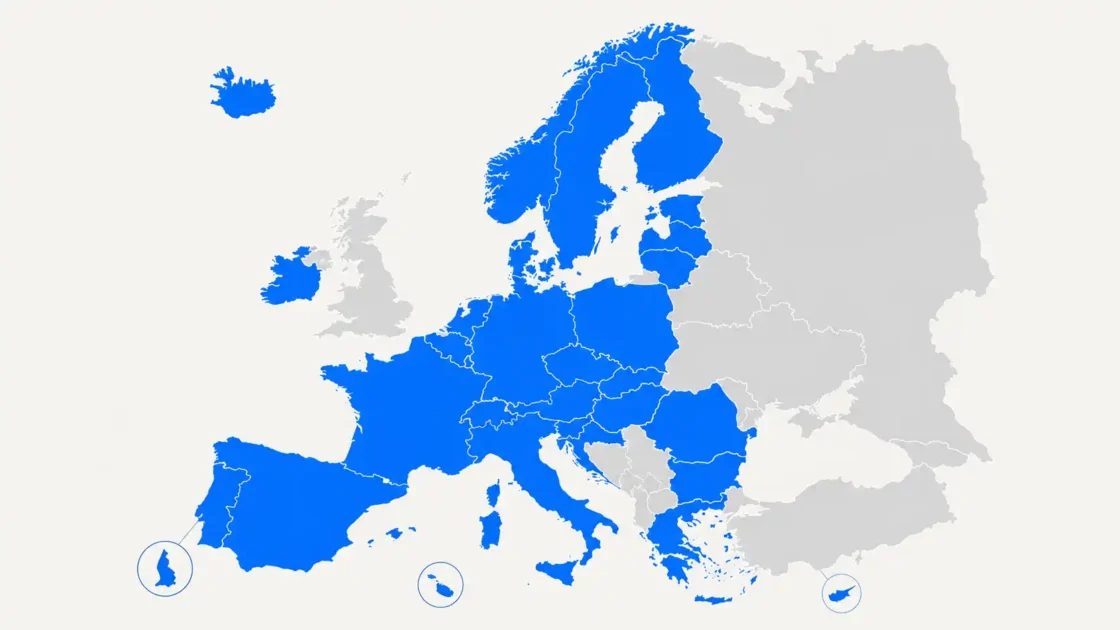
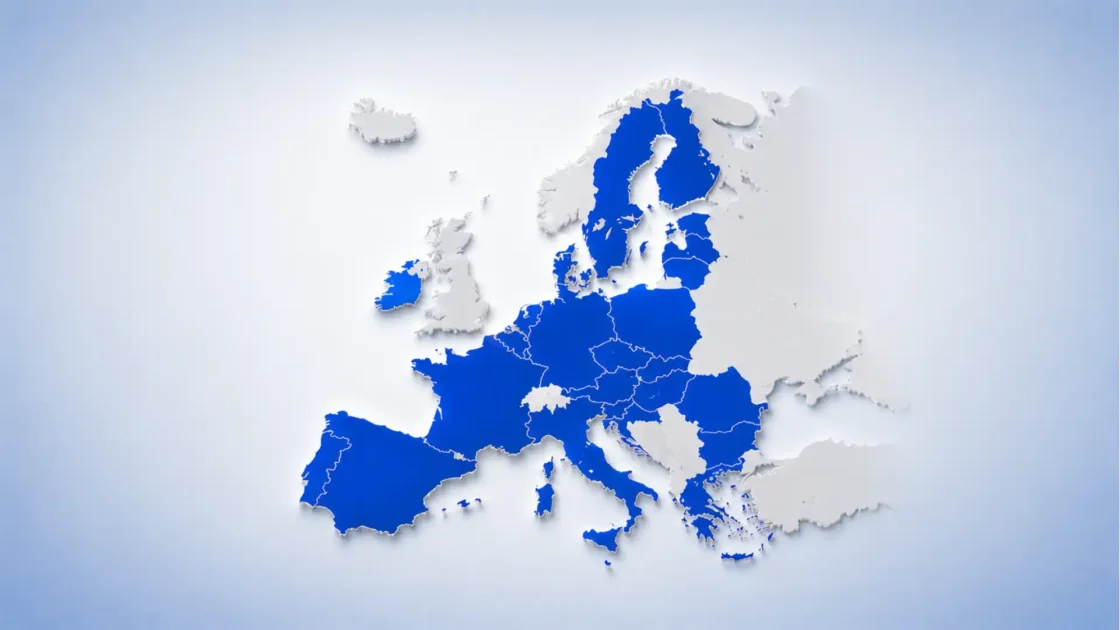
Google brought Pomelli to Europe in April 2026. The company said it was rolling out Pomelli in English across the EU, Iceland, Liechtenstein, Norway, Switzerland and the UK. The same post described Pomelli’s three-step flow: analyze the business identity, ideate campaign concepts and create assets for social media, web and ads.
Google’s support page now lists Pomelli as available to users aged 18 and over in many countries and territories, with English as the supported language. The country list includes Slovakia, the Czech Republic, Austria, Germany, Poland, Hungary, the United Kingdom, the United States and many others. It also says feature availability may differ by country and certain image types may not be supported.
For the Slovak and wider European market, that creates a split reality. Pomelli may be accessible, but English-only support means many local businesses will still need to adapt outputs for Slovak, Czech, Hungarian, German, Polish or other languages. A tool can read visual identity across languages more easily than it can master brand voice in each local market.
That matters for local marketing. A Bratislava bakery, Košice fitness studio or Žilina furniture maker may have a brand that is visually clear but linguistically local. English campaign drafts may be useful for structure, but they will need translation, tone editing and cultural adjustment before publishing.
The European rollout also places Pomelli inside a stricter regulatory environment. The EU AI Act creates a risk-based framework for AI, and the European Commission has been working on guidance around transparency obligations for interactive and generative AI systems. For small businesses, the practical point is not to panic over legal complexity. It is to keep records, review AI-generated material, avoid misleading synthetic imagery and disclose AI involvement where law, platform policy or consumer context requires it.
The tool fits Google’s wider AI strategy for small businesses
Pomelli sits inside Google Labs, which Google describes as a home for AI experiments. The Labs page lists Pomelli as an AI-powered marketing tool for building on-brand content faster.
The product also fits Google’s broader small business story. Google has long sold tools for discovery, advertising, maps, search visibility, analytics, reviews, listings and e-commerce traffic. Pomelli extends that chain into creative production. It gives Google a way to influence the content a business creates before that content enters Search, YouTube, Google Ads, social media or a website.
For Google, the strategic value is obvious. Small businesses often struggle with ad creative. Weak creative hurts campaign performance, reduces spend confidence and creates churn. If Google can make small business creative look more polished and brand-consistent, it strengthens the upstream layer that feeds advertising and web discovery.
That does not mean Pomelli is only an ads funnel. Google’s documentation says generated creatives can be downloaded and used across social platforms including Instagram, TikTok, Facebook, YouTube and LinkedIn. But the Google Ads connection matters. Pomelli can share assets to Google Ads, while the actual ad campaign still launches inside Google Ads.
The product line looks like a bridge between creation and activation. A small business creates an on-brand asset in Pomelli, exports it to social platforms, uses it on a generated website, or sends it into Google Ads. Creative production becomes less isolated from the places where marketing is measured and bought.
Small businesses are the natural target
Pomelli is designed for small and medium-sized businesses, and that choice is not accidental. Large companies already have brand guidelines, designers, agencies, asset libraries, content calendars, DAM systems, approval workflows and media teams. They may still use AI, but they have people and processes around it. Smaller businesses often have neither.
Eurostat reported that micro and small businesses made up 99% of EU enterprises in 2022, employing up to 49 people each. OECD work on SME digitalisation has found that smaller firms still lag in digital transformation because of low awareness, limited internal resources, skills gaps and financial constraints.
That is the gap Pomelli is trying to fill. It does not ask a business to hire a creative director before producing a campaign. It asks for the assets the business already has: a website, product photos, files, product URLs, a Google Business Profile and plain-language prompts.
AI adoption among SMEs is rising, but the pattern is uneven. OECD’s 2026 work on SMEs and AI describes rapid growth in adoption, with many firms using off-the-shelf products and some experimenting with AI agents. Pomelli is an off-the-shelf tool with agentic features, which makes it a good example of the next stage of SME AI adoption: not custom AI infrastructure, but guided products that hide much of the technical complexity.
The best use case is a business that already has some brand truth but not enough production capacity. A restaurant with a recognizable palette. A boutique with product photos but no design team. A service firm with a credible site but weak social output. A craft producer with seasonal launches. A local gym with classes to promote every week. These businesses do not need a speculative AI strategy. They need consistent, usable marketing by Friday.
Brand consistency is the hidden labor Pomelli tries to absorb
Brand consistency is often treated as a soft issue. It is not. It affects recognition, trust, speed of production and the ability to build memory over time. A small business can lose consistency because different people create flyers, posts, landing pages and product images at different times using different tools.
Research on brand consistency in web content has treated brand personality as something expressed through content, and one study collected roughly 300,000 web pages from about 650 companies to model and detect inconsistencies in brand communication. The scale of that work explains the everyday problem. Once a company creates many pages, posts and assets, consistency becomes a computational problem as much as a creative one.
Pomelli’s Business DNA is a consumer product expression of that idea. It does not just remember a logo file. It tries to encode a working version of the brand: colors, fonts, values, images, product context and voice. Once encoded, the brand can be reused across campaigns, photoshoots and websites.
The hidden value is not that Pomelli makes one asset. It is that Pomelli remembers enough of the brand to make the next asset less random.
This is where AI marketing tools become more useful than one-off generators. A one-off generator gives a business a post. A brand-aware generator gives the business a repeatable style. Repetition is where brands are built.
Color extraction needs human correction
Pomelli’s ability to read colors from a website will attract attention because it sounds automatic. A user enters a URL, waits, and sees a brand profile. But color extraction is only as good as the source material and the model’s interpretation.
A website may contain multiple competing color systems. The logo may use one palette. The theme may use another. A booking widget may inject a third. Product images may dominate the page with colors unrelated to the brand. Seasonal banners may introduce temporary colors. A legacy blog template may still use an old accent shade. A poor contrast ratio may be part of the existing site but should not become a future rule.
That is why the review step matters. Google’s help page tells users to review the generated Business DNA for accuracy after Pomelli analyzes a site. The user should not treat the profile as a diagnosis from an authority. It is a machine-generated reading of available signals.
A good review should ask practical questions. Are these colors the current brand colors or just common image colors? Does the accent shade have enough contrast for readable buttons? Is the background color a design choice or a template default? Does the palette work across social, ads, print and web? Is the brand ready to keep using these colors for the next year?
Material Design’s color guidance is useful here because it treats color as a system of roles, relationships and accessible choices, not as a list of attractive swatches. Material Design 3 describes color roles as the connective tissue between interface elements and where each color belongs. Material’s color overview also frames color schemes as structured design systems rather than isolated choices.
For business owners, the practical rule is direct: let Pomelli find the palette, but make a human decide which colors deserve to become rules.
The best outputs will come from clean inputs
AI marketing systems reward businesses that keep their own digital house in order. Pomelli can scan a site, but it cannot magically fix years of inconsistent branding before it generates the first profile. The stronger the input, the stronger the output.
A business that wants better Pomelli results should clean up its website before using the tool. That means current logo, correct product photos, consistent type choices, current offers, accurate opening hours, clear descriptions, stable brand colors, real customer-facing language and pages that are not cluttered with old promotions. The aim is not perfection. The aim is to avoid feeding the tool contradictions.
The same applies to product inputs. A product URL should have a clear title, description, price context if relevant, images that show the real item and no misleading claims. A product photo should show the item clearly before Photoshoot is asked to restyle it. A campaign prompt should include the audience, offer, channel, date, constraints and required call to action.
Pomelli Agent can build Business DNA from scratch using uploads and chat, but the user still needs to provide truthful materials. A founder’s notes, supplier documents, product photos and simple brand preferences may be enough for a first version, but a weak prompt such as “make my brand premium” will not produce a reliable identity. “Premium” means different things in skincare, insurance, coffee, fashion, software and interior design.
AI cannot infer business truth that the business has not supplied. It can infer patterns. It can propose structure. It can speed up draft production. It still needs grounded inputs.
Campaign generation now has more product context
Google’s campaign documentation shows how Pomelli is becoming more product-aware. To generate a campaign, the user must have Business DNA, select Campaigns, choose a product, generate, review the campaign brief and confirm. Each campaign produces creative assets that can be edited. Users can change the image, header, description, call to action, typography and visual elements, and can fix layout issues.
The same page says users can add images and product URLs as campaign ingredients. That is a useful phrase because it explains the workflow better than “prompting.” A campaign is built from ingredients: brand profile, product data, images, prompt, audience, channel and offer.
Product context reduces generic output. Without it, an AI tool may produce a campaign that looks good but says nothing specific. With it, the campaign can point to a particular service, class, menu item, product line or seasonal offer.
For small businesses, the winning pattern is likely to be specific and narrow. “Create a campaign for our new necklaces from this product URL, aimed at gift buyers before Mother’s Day, using a warm tone and our existing beige-and-gold identity” will usually beat “make a jewelry ad.” Pomelli’s Business DNA provides the brand layer, but the user must still provide the commercial intent.
The campaign brief remains a business decision. Pomelli can draft it; the owner has to own it.
The Google Ads connection is useful but limited
Pomelli’s connection to Google Ads will draw attention because Google’s advertising business gives the tool a natural path into paid media. The documentation says Pomelli can share images and videos to connected apps such as Google Ads. It also says sharing images and videos with Google Ads does not launch ad campaigns; the campaign must be launched directly from Google Ads.
That boundary protects users from a dangerous misunderstanding. Creative asset generation and ad campaign launch are different tasks. A generated image is not a media plan. A headline is not a targeting strategy. A nice creative does not answer budget, bidding, keyword match types, Performance Max configuration, conversion tracking, audience exclusions or landing page quality.
Still, the connection matters. Many small businesses fail at paid ads because they have poor creative or no fresh creative. Pomelli gives them more assets to test. It may reduce the friction of getting images into the ad environment. It may also make small advertisers more comfortable with Google’s paid ecosystem because the creative production step feels less intimidating.
The risk is overconfidence. A polished AI asset can still contain a weak offer, vague claim, low differentiation, bad landing page match or poor compliance. Good creative improves the chance of a campaign working; it does not guarantee the economics.
Pomelli is not a replacement for strategy
Pomelli can create campaigns, but it cannot decide whether a campaign should exist. It can produce a brand book, but it cannot determine whether the positioning is right. It can generate a website, but it cannot decide whether the business model is strong.
That is the line business owners need to keep clear. A tool that produces attractive output can make weak thinking look finished. That is dangerous in marketing because finished-looking assets often get published without enough scrutiny.
A marketing strategy still needs a real offer, audience definition, category understanding, competitive contrast, pricing logic, channel choice, proof, timing and measurement. A campaign for a local accounting service should not look or sound like a campaign for a fashion drop. A boutique hotel should not use the same tone as a discount retailer. A dental clinic cannot use the same claim style as a café.
Pomelli can speed up draft creation inside a defined strategy. It cannot supply the business judgment that makes the strategy worth executing. The owner or marketer still needs to answer: Who is this for? Why now? What is the offer? What proof supports the claim? What happens after the click? What would make this campaign a success?
AI production without strategy creates volume. Strategy decides whether the volume has value.
Creative control remains central
Google’s documentation repeatedly leaves room for editing. Campaign briefs can be reviewed and edited. Creative assets can be changed. Websites can be regenerated, edited and unpublished. Business DNA can be reviewed for accuracy.
That is the right product posture. Generative tools make probabilistic outputs. They produce plausible assets, not guaranteed truth. A business should treat Pomelli as a draft engine and a production assistant, not as an autonomous marketing manager.
Creative control should happen at several points. First, review the Business DNA. Second, review the campaign concept before assets are generated. Third, review the generated images and copy. Fourth, check platform-specific requirements. Fifth, check legal and factual claims. Sixth, monitor performance after publication.
This kind of control does not make the tool less useful. It makes the tool safer and more commercially useful. The goal is not to stop AI from producing drafts. The goal is to stop drafts from bypassing the business’s standards.
Small teams may need a simple approval checklist. Does the asset match our current offer? Does it use the right colors and logo? Is the product accurate? Are the claims true? Is the call to action clear? Is the image acceptable for the platform? Does it respect copyright and privacy? Does someone accountable approve publication?
Copyright and safety are not side issues
Google’s Pomelli help page says the product respects copyright laws, tells users not to share copyrighted content without necessary rights, and says repeated infringement can result in account termination. It also says Pomelli is subject to Google’s Terms of Service and the Generative AI Prohibited Use Policy.
This matters because AI marketing workflows often blur the source of materials. A small business may upload a competitor’s product image as style reference, use a celebrity photo, include a song lyric, paste stock photos it has not licensed, or ask for imagery that imitates another brand too closely. A tool may generate something that looks original while still being commercially risky.
The safest approach is to use owned materials: original product photos, owned brand assets, licensed fonts, licensed stock where allowed, approved logos and claims that the business can substantiate. AI should not become a shortcut around rights clearance.
Google’s broader Generative AI Prohibited Use Policy says users must engage with generative AI in a responsible, legal and safe manner. For marketers, that translates into a plain operational rule: do not use AI to fake evidence, impersonate people, create deceptive before-and-after images, fabricate reviews, misrepresent product performance or hide material information.
The legal risk usually begins where the creative output becomes a consumer claim.
Regulators will judge the ad, not the tool
Businesses sometimes assume that if a platform generated the creative, responsibility shifts to the platform. Advertising regulators rarely see it that way. The advertiser is responsible for what it publishes.
The UK Advertising Standards Authority has said the CAP and BCAP Codes do not contain AI-specific rules, but the existing rules apply regardless of how content is generated, edited or targeted. The U.S. Federal Trade Commission has also acted against deceptive AI claims and schemes through Operation AI Comply.
For Pomelli users, the practical implication is direct. If an AI-generated ad exaggerates a product, the business cannot defend itself by saying Pomelli made it. If an AI image misrepresents the product size, ingredients, result, accommodation, availability or price, the business owns the publication decision.
European businesses also need to watch AI transparency rules as they develop. The AI Act is now the EU’s horizontal AI framework, and the European Commission has been consulting on transparency guidance for interactive and generative AI systems. AI-generated marketing assets may not always require visible disclosure, but the obligation can depend on content type, context, medium, local law and whether consumers could be misled.
The best operating posture is conservative. Keep source files. Record prompts for sensitive campaigns. Save final approvals. Avoid synthetic depictions that change product truth. Disclose where needed. Do not publish claims without evidence.
AI-made marketing needs measurement, not admiration
Pomelli can make marketing look more professional, but better-looking creative is not the same as better-performing marketing. Small businesses should measure Pomelli outputs against business results.
The most useful metrics depend on the channel. For organic social, look at reach, saves, comments, profile visits, direct messages and click-throughs. For paid ads, track cost per conversion, conversion rate, return on ad spend, creative fatigue, landing page performance and search lift where relevant. For email or website banners, track clicks, product views, purchases, booking starts and completed bookings.
The more interesting comparison is not AI versus no AI. It is AI-assisted brand-consistent production versus the business’s previous manual process. Did Pomelli reduce time to publish? Did it increase the number of usable variations? Did it keep the brand more consistent? Did it improve the speed of seasonal campaigns? Did it reduce design costs without hurting quality? Did it reveal gaps in the existing brand identity?
A business should also track rejection rate. If Pomelli generates 30 assets and only two are publishable, the workflow may not be working. The issue may be poor Business DNA, weak prompts, messy source images or a mismatch between the tool’s current capabilities and the business’s category.
The strongest test is not whether an owner likes the image. It is whether the asset performs without damaging trust.
Agencies will not disappear, but their role will change
Every AI marketing tool invites the same prediction: agencies will be replaced. That is too blunt. Pomelli will likely replace some low-end production tasks, especially basic social graphics, first-draft campaign ideas, simple product image treatments and quick website mockups. It will not replace every function agencies serve.
Agencies still matter for positioning, research, creative direction, media strategy, conversion testing, brand architecture, complex launches, regulated categories, market entry, localization, analytics and multi-channel orchestration. They also matter when a brand’s identity is weak or confused. Pomelli can generate a brand book, but a brand book is only as good as the strategic choices inside it.
The agency role may move toward oversight and systems. Instead of designing every asset from scratch, an agency may build a stronger Business DNA, set prompt standards, define approval workflows, audit AI outputs, create test plans and focus human design time on higher-stakes work. For small businesses, this could create a middle tier: less dependence on agencies for every post, more selective use of experts for direction and review.
For freelancers, Pomelli is both a threat and a tool. A designer who only sells basic templated posts may face pressure. A designer who can turn Pomelli output into a stronger system, fix brand inconsistencies, create better source assets and guide owners through creative decisions may gain speed.
AI lowers the price of drafts. It raises the premium on judgment.
Canva, Adobe and Google are fighting over the same workbench
Pomelli does not exist in a vacuum. Canva, Adobe, Meta, Shopify, Wix, Squarespace, Mailchimp, HubSpot and many other tools are building AI features into marketing workflows. The common battleground is the same: small businesses need to create more content with fewer resources.
Google’s difference is its ecosystem. It has Search, YouTube, Google Ads, Business Profile, Merchant Center, Workspace, Maps and Android. Pomelli can sit near the discovery and advertising systems that already shape small business visibility.
Canva has a strong position in design creation and templates. Adobe has deep creative tooling and professional trust. Website builders own publishing. CRM and email tools own customer journeys. Social platforms own distribution. Google’s opportunity is to connect brand-aware creation with the places where businesses are found and where ads are bought.
Pomelli’s challenge is quality and trust. Business owners will not keep using the tool just because it is from Google. They will keep using it if the Business DNA feels accurate, the outputs look usable, the copy does not sound generic, the product images remain truthful, the website feature works cleanly and the export path saves time.
The market is not short of AI creative tools. It is short of AI creative tools that remember the brand, respect the product and fit the workflow.
The biggest risk is brand sameness
AI marketing tools promise consistency. Too much machine-guided consistency can become sameness. If many businesses in the same category use similar prompts, similar templates and similar AI aesthetics, their marketing may begin to converge.
That risk is already visible across AI-generated images: polished lighting, symmetrical compositions, safe backgrounds, overly clean surfaces and generic emotional tone. For small businesses, this can be especially harmful because local distinctiveness is often their strongest advantage. A real bakery counter, a quirky owner voice, a specific neighborhood, a handmade imperfection or a local phrase may sell better than a polished synthetic scene.
Pomelli’s Business DNA may reduce that risk if it truly anchors outputs in the business’s own materials. The more it uses real images, real colors, real product details, real tone and real location context, the less generic the result should be. But the user still needs to preserve specificity.
A campaign should not erase the odd things customers remember. A brand book should not smooth every edge. A Photoshoot should not make every product look like it came from the same premium stock library. A generated website should not flatten a local business into a template.
The best AI marketing keeps the business recognizable. The worst AI marketing makes every business look equally polished and equally forgettable.
Localization will decide usefulness outside English-first markets
Pomelli’s English-only support is a clear limitation for Europe. Visual identity can travel across borders, but marketing voice rarely travels untouched. Local language, humor, idiom, formality, legal phrasing and seasonal references all affect performance.
A Slovak small business may use Pomelli to draft campaign structure, generate images and create English-language brand materials, but Slovak copy will need human rewriting. Direct translation may not preserve tone. A phrase that sounds friendly in English may feel stiff in Slovak. A call to action that works in the U.S. may feel too aggressive in Central Europe. Product categories also carry local expectations.
Localization is not only language. Color meanings vary by culture and category. Seasonal campaigns depend on local holidays. Trust signals differ. Payment and delivery expectations differ. Ad claims are regulated differently. Even image style can feel foreign if the generated lifestyle setting does not match the market.
This creates an opening for local marketers. Pomelli can make the base material. Local experts can adapt it into the market’s language and expectations. That combination may be stronger than either side alone.
For a Slovak company, the practical workflow would be: build Business DNA in Pomelli, check colors and visuals, create campaign drafts in English, translate and rewrite copy locally, check claims and legal details, adapt visuals if they feel culturally generic, then publish through the right local channels.
Accessibility should be part of the brand review
When Pomelli extracts a color palette, the business should check more than beauty. It should check readability. Brand colors that look attractive in a logo may fail when used as text on a background, button labels, form fields or small mobile graphics.
Material Design’s color system is useful because it frames color as a set of roles and relationships. Color is not only the primary shade; it includes surfaces, text, outlines, containers, error states and contrast.
Pomelli-generated assets should be checked for contrast, legibility and mobile viewing. A cream background with pale beige text may match a premium aesthetic but fail readability. White text on yellow may be unreadable. Small type over a busy product image may look fine in preview and fail on a phone.
This is especially relevant for generated websites. A website built from Business DNA needs accessible color contrast, readable type sizes, clear focus states, alt text, understandable navigation and forms that work on mobile. AI-generated design should not excuse poor usability.
A brand color is only useful in marketing if people can read the message attached to it.
AI color perception has technical limits
Color looks simple to people because we experience it instantly. For machine vision, color is a technical problem shaped by lighting, compression, camera sensors, color spaces, background contrast, shadows, filters and display differences.
Research on machine visual recognition has shown that color discrimination can strongly affect model performance, and that visual recognition systems may be susceptible to color-related bias under some conditions. That research is not about Pomelli specifically, but it offers a caution: AI systems do not perceive color in a neutral human-like way.
For Pomelli users, the lesson is practical. If product photos have bad lighting, heavy filters or inconsistent backgrounds, the tool may infer the wrong visual mood. If a website uses images with strong seasonal colors, the model may over-weight them. If brand colors are embedded in images rather than CSS or clear design elements, extraction may be less reliable.
The best defense is controlled source material. Use clear logo files. Use clean product images. Keep the website’s current brand colors consistent. Remove outdated promotional banners before scanning if they no longer represent the brand. Review every generated palette before using it as a rule.
The machine can read patterns. The business has to decide which patterns matter.
Pomelli may push small businesses toward brand discipline
One underrated effect of Pomelli is behavioral. A small business that has never written down its brand identity may be forced to look at it. Seeing a generated Business DNA profile can reveal inconsistency: too many colors, unclear tone, old photos, mixed fonts, weak product descriptions, vague values and mismatched imagery.
That diagnosis may be more useful than the first campaign output. A business owner might discover that the AI cannot create consistent assets because the brand itself is inconsistent. The fix may be to simplify the palette, update the logo, replace product photos, rewrite the homepage and define a clearer tone.
In that sense, Pomelli may push small businesses toward brand discipline. It gives them a reason to clean up the materials that AI reads. The better the brand system, the better the generated assets.
This is a healthy pattern if owners understand it. AI should not hide messy identity under polished output. It should expose the mess early enough to fix it.
The business case depends on time saved and quality kept
Pomelli is currently described in Google’s help documentation as available at no charge, with users able to create several hundred image and video generations, while the page says it will reflect future updates to caps. It also calls Pomelli an early experiment that will improve based on feedback.
Free access makes adoption easier, but the deeper business case is not price. It is time saved while keeping enough quality. If a business spends five hours each week creating basic posts, product images and website banners, Pomelli may reduce that workload. If it creates more usable variations for campaigns, the business can test more ideas. If it improves consistency, the brand may look more credible.
The cost appears later in review time, correction time, localization time and the risk of publishing something wrong. A tool that creates assets quickly but requires heavy cleanup may not save much. A tool that creates decent first drafts from strong Business DNA may save a lot.
The best way to evaluate Pomelli is to run it against a real campaign cycle. Pick one offer. Build Business DNA. Generate campaign ideas. Create assets. Edit them. Publish two or three variants. Track performance. Record time spent. Compare against the manual process. Then decide whether Pomelli belongs in the workflow.
The tool should be judged by usable output per hour, not by the number of assets it can generate.
Trust will depend on provenance and disclosure habits
As AI-generated marketing spreads, consumers will see more synthetic product scenes, AI-assisted captions, generated backgrounds and machine-made websites. Some will not care. Some will care only if the asset misleads them. Regulators and platforms will care more in specific contexts, especially where synthetic media changes a person, product, claim or event.
Google has broader work around responsible generative AI, including policy restrictions and safety resources. Google’s AI Principles frame its AI approach around innovation, responsible development and deployment. The question for businesses is more concrete: what will they tell customers when AI is used?
There is no universal rule that every AI-assisted social graphic needs a disclosure in every market. But businesses should build disclosure habits for cases where AI materially changes the impression. If a product photo is synthetic, say so where needed. If a testimonial is not real, do not use it. If an image shows a product in an unrealistic setting, do not present it as evidence. If an offer is generated, check it before publishing.
The best protection is not a legalistic footnote after the fact. It is truthful creative practice before publication.
Human brand taste becomes more valuable
AI can read a palette, generate a layout, write a caption and create a product scene. It cannot reliably know whether the output has taste. Taste is the ability to judge fit, restraint, timing, audience and category conventions. It is not the same as style.
A Pomelli output may match the brand colors and still feel wrong. It may use the right font but the wrong mood. It may create a polished product image that does not fit the price point. It may write copy that sounds confident but not like the owner. It may generate a website that looks modern but misses what local customers need.
Human brand taste catches those problems. It asks whether the asset feels credible for the business. It notices when the AI has made a small café sound like a venture-backed app. It notices when a discount retailer looks too luxurious or a premium brand looks too loud. It knows when a local phrase matters more than a clean English slogan.
Pomelli makes taste more visible because it produces more options to judge. The owner’s job shifts from making every asset to selecting, correcting and rejecting more decisively.
The likely next step is tighter integration with commerce and search
Google has not announced every future path for Pomelli, and businesses should avoid assuming unreleased features. The direction, though, is visible. Pomelli already connects identity, catalog, campaigns, photoshoots, websites and Google Ads asset sharing. That naturally points toward deeper commerce and discovery workflows.
A future version could make product feeds cleaner, generate landing pages for specific offers, adapt creative to campaign goals, suggest variants for YouTube Shorts or Demand Gen, connect more tightly with Merchant Center, or use performance feedback to guide creative iteration. Those are logical extensions, not confirmed promises.
The strategic question is whether Pomelli becomes a stand-alone lab experiment or grows into the creative layer of Google’s small business stack. If it becomes the latter, it could influence how millions of small businesses produce visual identity, product imagery and campaign assets.
That would be a major position. The company that helps a business define its brand colors, generate its website and create its ad assets may sit very close to the business’s public identity.
Practical workflow for a small business using Pomelli
A disciplined Pomelli workflow should start before opening the tool.
First, clean the website. Remove outdated banners, fix logo placement, update product pages, check opening hours and make sure current colors are visible. Second, gather owned assets: logo, product photos, service descriptions, brand notes, approved claims and any existing style guide. Third, build Business DNA and review it. Fix colors, fonts, tone and values before generating campaigns.
Fourth, create a product or service catalog. Add specific product URLs and images where possible. Fifth, generate a campaign with a clear prompt. Include the audience, offer, platform, date, product, tone and must-use details. Sixth, review the campaign brief before confirming. Seventh, edit the generated assets. Check product truth, claims, readability, brand fit and platform size.
Eighth, create Photoshoot images only where synthetic presentation is appropriate. Do not alter product truth. Ninth, export or share assets. If sending to Google Ads, remember that sharing assets does not launch campaigns. Tenth, measure performance and feed learning back into future prompts.
That workflow is slower than clicking “generate.” It is faster than rebuilding marketing from nothing each week. Pomelli’s best role is not instant publishing. Its best role is structured acceleration.
Suggested review checklist for Pomelli assets
| Review area | Question to answer before publishing |
|---|---|
| Brand fit | Do the colors, fonts, voice and image style match the approved Business DNA? |
| Product truth | Does the image show the real product, service, size, material, ingredients or result accurately? |
| Claim safety | Can every claim, price, discount, deadline and performance statement be proven? |
| Readability | Is the text readable on mobile, with enough contrast and no crowded layout? |
| Local market fit | Does the language, tone, holiday reference and cultural cue fit the target market? |
| Platform fit | Does the asset match the size, format, policy and audience expectation of the channel? |
| Rights | Are all uploaded images, logos, fonts, references and source materials owned or licensed? |
| Measurement | Is there a clear goal, link, tracking setup or conversion action? |
A checklist like this keeps AI output from moving too quickly into public channels. The point is not to slow down good work; it is to catch the few errors that can make fast work expensive.
The news is not only that Google made another AI tool
The headline version of Pomelli is easy: Google has an AI marketing tool that reads a business website and creates on-brand marketing. That is accurate, but incomplete.
The deeper news is that Google is turning brand identity into an input layer for generative marketing. Colors, fonts, tone, imagery, product URLs and business data become the context that shapes campaigns, product photos, brand books and websites. Pomelli is not only making content. It is trying to make AI remember what a business is supposed to look and sound like.
That is exactly the problem small businesses face. They do not only need more posts. They need consistency without a large team. They need better product imagery without a studio. They need websites and campaigns that do not feel disconnected. They need tools that respect their existing identity rather than flattening it into generic AI style.
Pomelli will not solve every marketing problem. It will make wrong choices. It will need review. Its English-only state limits local use in many markets. It does not replace strategy, compliance, localization or measurement. But it points toward a real product direction: AI marketing tools are moving from prompt-based creation to identity-based creation.
For small businesses, that means the website, product catalog and brand colors are no longer passive materials. They are becoming machine-readable instructions for future marketing.
Questions readers are asking about Google Pomelli
Google Pomelli is an AI marketing tool from Google Labs, built with Google DeepMind, that creates on-brand campaigns and marketing assets for small and medium-sized businesses. It analyzes a business website or other materials, builds a Business DNA profile and uses that profile to generate content.
Yes. Google says Pomelli’s Business DNA includes a brand’s color palette, fonts, images and tone of voice. Google’s help page also describes Business DNA as including brand fonts, colors, values, images, catalog and assets.
Business DNA is Pomelli’s working profile of a brand. It contains visual and verbal identity signals such as colors, fonts, values, images and tone. Pomelli uses it to generate campaigns, photoshoots, websites and brand books.
Pomelli originally centered on entering a website URL, but the Pomelli Agent can also build Business DNA from scratch using uploaded files, product documents, photos and chat. A website still gives the tool strong source material.
Yes. Pomelli can generate campaign ideas, campaign briefs and editable creative assets. Users can refine images, headers, descriptions, calls to action, typography and layout before downloading or sharing assets.
Yes. The Photoshoot feature turns simple product photos into studio-style or lifestyle product images using Business DNA and Google’s image generation technology. Users still need to check that the generated image accurately represents the real product.
Yes. Google’s help documentation says users can create, customize, preview, publish, share and unpublish websites in Pomelli after building Business DNA.
Yes. Google’s May 2026 update added brand books as one of the new features after Business DNA is defined. The brand book can include custom images, fonts and colors.
Yes. Google announced in April 2026 that Pomelli was rolling out in English across the EU, Iceland, Liechtenstein, Norway, Switzerland and the UK. Google’s support page lists many supported countries, including Slovakia.
Google’s support page lists English as the supported language. A Slovak business may still use Pomelli for visual identity and draft creation, but Slovak copy needs human translation and rewriting.
Google’s help page says Pomelli can currently be used at no charge and that users can create several hundred image and video generations. Google says the help center will reflect future updates to caps.
No. Pomelli can share images and videos with Google Ads, but Google’s documentation says that sharing assets does not launch ad campaigns. Campaign launch must happen inside Google Ads.
Pomelli fits small businesses that need regular marketing assets but lack a full creative team. It is especially useful for businesses with a clear website, product photos, a recognizable visual identity and repeat campaign needs.
Regulated businesses, health and beauty brands, financial services, legal services, children’s products, food brands and any company making performance claims should review AI-generated material carefully before publishing.
Pomelli may reduce demand for basic production work, but it does not replace strategy, creative direction, market judgment, localization, compliance review or advanced design craft. It makes first drafts cheaper and judgment more valuable.
The main risks are inaccurate product imagery, misleading claims, generic AI style, poor localization, weak color contrast, copyright issues and over-reliance on machine-generated brand identity.
A business should check brand fit, product accuracy, claims, prices, dates, legal disclosures, readability, platform format, rights to source materials and whether the output fits the local market.
Google’s help page says Pomelli may use Google Business Profile data to build Business DNA and a website if the user opts in. Future changes to the Google Business Profile do not automatically update the Pomelli website.
Pomelli is built around Business DNA. Instead of generating isolated images or captions from a prompt alone, it uses a brand profile based on colors, fonts, voice, imagery and product context.
Pomelli makes the business website and brand colors part of the creative prompt. Used well, it can speed up marketing production while keeping assets closer to the brand. Used carelessly, it can publish polished but inaccurate content.
Author:
Jan Bielik
CEO & Founder of Webiano Digital & Marketing Agency

This article is an original analysis supported by the sources cited below
Create on-brand marketing content for your business with Pomelli
Google’s original October 2025 announcement of Pomelli as a Google Labs and Google DeepMind AI marketing experiment for small-to-medium-sized businesses.
Create studio-quality marketing assets with Photoshoot in Pomelli
Google’s February 2026 update introducing Photoshoot for generating studio-style and lifestyle product imagery inside Pomelli.
Google brings Pomelli in English to small businesses in Europe
Google’s April 2026 announcement covering the European rollout of Pomelli in English.
Pomelli adds new ways to build brand content and design websites
Google’s May 2026 update introducing Pomelli Agent, brand books and website generation.
Google I/O 2026 news and announcements
Google’s I/O 2026 collection that includes the Pomelli update on AI agents, brand books and websites.
Google Labs
Google’s official Labs page listing Pomelli among current AI experiments.
Pomelli by Google Labs
The official Pomelli entry point from Google Labs.
Get started with Pomelli
Google Labs Help page describing Pomelli access, supported use, pricing status, safety measures, copyright handling and terms.
Where you can use Pomelli
Google Labs Help page listing supported language, countries and feature restrictions for Pomelli.
Build your Business DNA and Catalog in Pomelli
Google Labs Help page explaining Business DNA, website analysis, Pomelli Agent, catalog inputs and product context.
Create Campaigns in Pomelli
Google Labs Help page explaining campaign generation, editable creative assets, animation and campaign ingredients.
Create and manage websites in Pomelli
Google Labs Help page explaining website creation, prompt editing, preview, publishing, sharing and version management.
Share assets to connected apps
Google Labs Help page explaining how Pomelli assets can be shared to connected apps such as Google Ads.
Google AI Principles
Google’s public statement of its AI approach, including responsible development and deployment.
Generative AI Prohibited Use Policy
Google policy covering responsible, legal and safe use of generative AI services.
Regulation (EU) 2024/1689
Official EUR-Lex text of the European Union Artificial Intelligence Act.
AI Act regulatory framework
European Commission page explaining the EU AI Act as a framework for trustworthy AI.
Consultation on transparency obligations under the AI Act
European Commission consultation page for draft guidance on transparency obligations for interactive and generative AI systems.
FTC announces crackdown on deceptive AI claims and schemes
Federal Trade Commission announcement on enforcement against deceptive AI-related claims and conduct.
Disclosure of AI in advertising
Advertising Standards Authority guidance explaining that existing advertising rules apply regardless of AI involvement.
Digitalisation of SMEs
OECD page explaining SME digitalisation opportunities and barriers.
Empowering SMEs in the age of AI
OECD 2026 report on SME AI adoption, off-the-shelf tools and AI agents.
Micro and small businesses make up 99 percent of enterprises in the EU
Eurostat article on the role of micro and small enterprises in the European economy.
Exciting red and competent blue
Journal of the Academy of Marketing Science article examining the role of color in marketing and brand perception.
Material Design 3 color overview
Google Material Design guidance on color systems and structured use of color in digital products.
Material Design 3 color roles
Google Material Design guidance explaining color roles and relationships in interface design.
Material Color Utilities
Open-source Material color utilities supporting algorithmic generation of color schemes.
An integrated approach for improving brand consistency of web content
Research paper on modeling, analyzing and recommending changes to improve brand consistency in web content.
ColorSense
Research paper studying color vision and color-related effects in machine visual recognition.
| Citing this article? Brief excerpts are welcome. Please credit Webiano.digital, name the author where stated, and include a link to https://webiano.digital and to this original article. Full or substantial republication requires prior written permission. Read our Copyright and Content Use Policy. |
This article was prepared with the assistance of artificial intelligence tools. The content underwent expert human review, and Webiano Digital & Marketing Agency assumes editorial responsibility for its final version and publication.