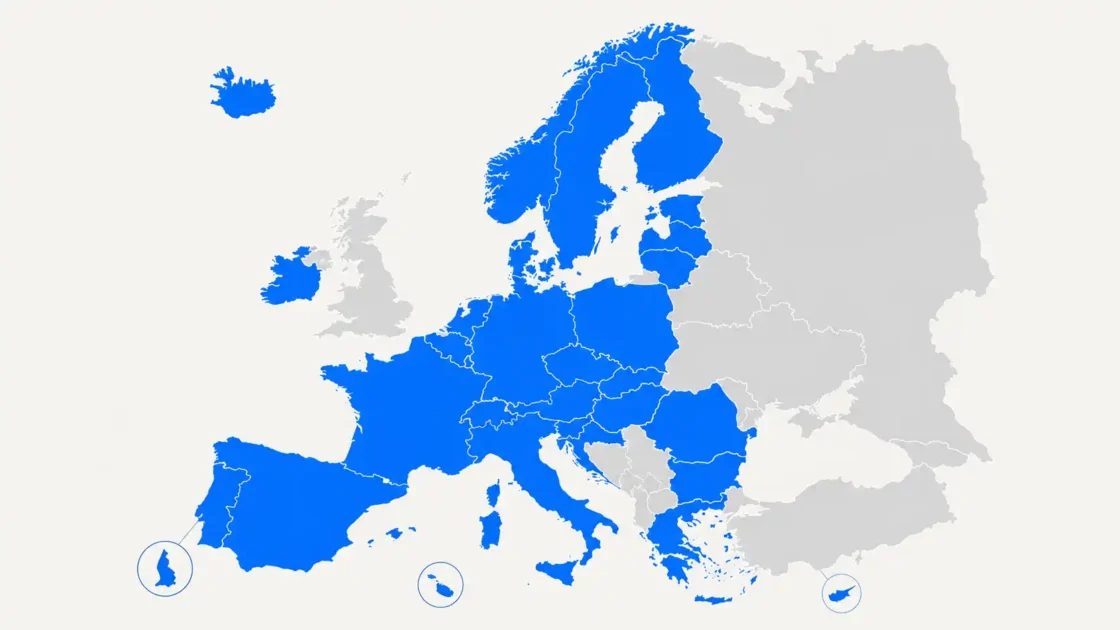
Georgia is usually the strongest value base for a genuinely mobile solo freelancer. The United Arab Emirates is usually the strongest relocation choice for a profitable agency owner or software founder who can move management and personal residence for real. Singapore is the stronger option for a product company with an Asian growth plan. Switzerland remains the premium non-EU European base for firms that sell trust, specialist expertise and high-margin technology rather than cheap hours.
Table of Contents
That is the direct answer. It is also only the beginning.
The question is not whether freelancers, IT companies, marketing agencies, advertising firms and software businesses can leave EU states. Many already operate across borders. The harder question is whether relocation produces a lawful, commercially useful and personally sustainable result after tax residence, contracts, VAT, data protection, banking, visas, staff, customer trust and family life are counted properly.
A founder who opens a Dubai company but continues to direct it from Bratislava has not necessarily moved the business. A Slovak developer who becomes a Georgian tax resident, works from Tbilisi, invoices foreign clients directly and keeps a low-cost structure may have changed the economics dramatically. A SaaS company that relocates its headquarters to Singapore but retains EU data hosting and an EU contracting entity may gain Asian market access without losing European customers. These are three different moves with three different risk profiles.
The place with the lowest headline tax is rarely the place with the best total business outcome. The most attractive jurisdiction is the one that matches the company’s real source of value: founder expertise, global sales, enterprise trust, access to Asian markets, low-cost delivery talent, intellectual property, capital or a high-value customer network.
This article is not tax, legal or immigration advice. It is a strategic map for founders who need to decide whether a non-EU move is worth the disruption. The practical conclusion is that a genuine move can make sense, but only where the business model, personal residence and operating structure tell the same story.
The case for leaving Europe is real but incomplete
European founders often describe the same frustration in different words. They do not always object to one particular tax or one particular regulation. They object to the accumulated cost of running a small company inside a system designed around multiple national administrations, layered reporting requirements, expensive labour, formal customer procurement and increasingly sophisticated compliance expectations.
A small agency may begin with three people and a handful of clients. Within a few years it can be handling VAT, payroll, client data, supplier agreements, consent-management systems, employment obligations, advertising-account access, cyber-security questionnaires, professional indemnity insurance, accounting workflows and cross-border invoicing. A software business that wins enterprise clients may face data-processing agreements, penetration-test requests, incident-response commitments, service-level agreements, vendor questionnaires, audit rights and complicated intellectual-property clauses. Every requirement may have a rational purpose. Together, they reduce the time a founder can spend selling, shipping and improving the product.
The EU’s scale remains a major counterweight. The European Commission describes the single market as a home market of roughly 450 million people and 26 million businesses. That is a commercial advantage that no founder should dismiss casually. A Slovak, Czech, Austrian or German company can sell to a large nearby market with familiar legal concepts, strong payment habits, shared product standards and relatively straightforward travel. Leaving the EU does not remove the importance of those customers.
A move outside the EU should be treated as a redesign of the operating base, not a rejection of the customer market. Many successful structures retain EU-facing functions while relocating the founder, group headquarters, international sales management, retained-profit base or non-EU delivery operations.
Europe also contains wide internal variation. Tax rates, payroll burdens, digital administration, labour markets and local business culture differ sharply between member states. A founder may be dissatisfied with a specific domestic environment while still benefiting from EU market access, EU client trust and an EU legal entity. The useful comparison is not “EU versus non-EU” in the abstract. It is between the present business model and the alternative model that would exist after relocation.
A business that earns most revenue from German, Austrian and Czech clients may be better served by an improved EU group structure, a Swiss headquarters or a Serbian delivery centre than by a complete move to the Gulf. A founder with global customers, no material local workforce and high personal income may have a far stronger case for the UAE. A software company that wants to sell in Southeast Asia has a reason to pay for Singapore that a Central European branding agency may not.
The migration thesis becomes credible when it is based on actual business geography. Where are customers? Where are staff? Where is product value created? Where does the founder live? Where does management happen? Where is data stored? Those questions matter more than a social-media post about a low tax rate.
Compliance has become a visible operating cost
The complaint about compliance is not merely emotional. The administrative load on smaller firms is visible because more obligations are now digital, document-heavy and connected to customer procurement. A company can no longer rely on a simple invoice, an email agreement and a local accountant if it wants to serve larger companies across several countries.
The EU’s VAT in the Digital Age package is a clear example of this direction. The package was adopted in March 2025 and its measures are scheduled to phase in over several years, including changes affecting VAT reporting, platform obligations and registration arrangements. Its policy goal is modernisation and fraud prevention. For a founder, the operational consequence is that invoicing and tax data increasingly need to be structured, timely and system-ready.
Data protection creates a similar effect. A marketing agency handling audiences, lead databases, customer lists, analytics information and advertising-platform access is not merely a creative supplier. It is often a data processor or controller with contractual and security responsibilities. A SaaS company that stores user logs, support tickets, employee information, product telemetry and payment data has a more complex risk profile than a traditional consultancy. A business may use excellent cloud services and still need to explain exactly who can access data, where it sits and what happens after an incident.
Large clients have also become compliance multipliers. They ask suppliers to complete security forms, prove insurance, show data-processing arrangements, list subcontractors, confirm sanctions policies, document business continuity and accept their own contract templates. A ten-person agency may have to deal with expectations once limited to large outsourcing firms. The founder then becomes the default legal, finance, privacy and procurement officer.
This is one reason why the appeal of a non-EU jurisdiction can be rational even when tax is not the only issue. A more workable residence route, lower payroll cost, faster company administration, simpler owner taxation or a better international banking environment can give a lean firm room to operate. But relocation does not eliminate European customer requirements. It simply changes where the company carries the most of its operating burden.
A serious founder should separate two kinds of compliance. The first is unavoidable because it follows the customer market: GDPR, EU VAT on relevant sales, contractual obligations, consumer rules and procurement standards. The second is domestic: local payroll, corporate filings, social contributions, personal tax, licences, residency and day-to-day administration. Moving outside the EU can reduce the second category. It rarely removes the first.
The difference is decisive. A digital company does not become unregulated because its registered address moves. It becomes internationally regulated. That can be a good trade where the company has the systems and margins to manage it.
Incorporation is not the same as departure
The most expensive mistake in cross-border business is confusing a company certificate with a relocation. A company can be incorporated in one country, managed in another, staffed in a third, sell into a fourth and remain taxable or regulated in several places. The certificate proves that an entity exists. It does not prove where the business really lives.
Tax authorities, banks and sophisticated customers tend to examine factual control. Where does the founder make strategic decisions? Where are contracts negotiated and approved? Where do directors work? Where does the company maintain records? Where are senior staff located? Who controls bank accounts? Where are the people who generate commercial value? A virtual office, nominee director or annual board minute may be insufficient if all real decisions occur elsewhere.
The OECD’s 2025 update to its Model Tax Convention is especially relevant to remote work. It clarifies the circumstances in which an individual’s home may be treated as a place of business for permanent-establishment purposes. The OECD stresses that the analysis depends on facts and circumstances rather than labels.
That does not mean every remote employee or founder automatically creates a taxable permanent establishment. It means cross-border working arrangements cannot be dismissed as harmless by default. A company with a Dubai licence and a founder who spends most working days in Slovakia, directs staff from Slovakia, signs client contracts from Slovakia and maintains a home office there may create a strong factual link to Slovakia. A software company with a senior engineering leader in Germany may need to assess whether that role creates local tax exposure. An agency with a sales director in Austria may face a different analysis again.
The strongest relocation structure is the one that would make sense to a neutral observer who knew nothing about tax rates. A UAE company managed by a UAE-resident founder, with a UAE bank account, UAE-based decision-making, a suitable licence, local records and a clear commercial purpose is coherent. A Georgian freelancer who lives and works in Georgia, has local tax status and serves foreign clients is coherent. A Swiss headquarters for a high-margin B2B software firm with senior leadership in Zurich or Zug is coherent.
A paper arrangement can still create cost even if it is never challenged. Banks may reject the account. Payment processors may request extra documentation. Customers may hesitate to contract. Investors may ask for restructuring before funding. The company may spend more on advisers than it saves in tax.
Relocation should therefore begin with a personal and operational decision. First choose where the founder will truly live and work. Then design the company around that reality. Doing it in the reverse order is how many founders end up with an expensive foreign entity that solves little.
Tax residence follows people, control and evidence
Corporate tax and personal tax are often discussed as if they were one question. They are not. A company may be legally incorporated in a low-tax jurisdiction while its owner remains personally taxable elsewhere. A founder may relocate personally but leave a company with substantial taxable activity in the original country. The final outcome depends on several layers: individual residence, corporate residence, permanent establishment, salary, dividends, social insurance, withholding tax, treaty rules, exit taxation and the location of assets and employees.
The OECD’s corporate-tax work repeatedly warns that statutory corporate tax rates alone do not capture the full tax burden. Tax bases, incentives, deductions, withholding taxes and company-level rules can all materially change the result. A founder who needs to withdraw nearly all profit each year faces a different equation from a founder who retains earnings to hire staff or develop a product. A consultant with little overhead has a different equation from an agency with payroll, subcontractors and paid-media spend.
The personal-residence question is often more important for a solo operator than the company question. If a founder keeps a permanent home, family life, social and economic ties, working routine and majority of physical presence in an EU state, a foreign company may not move the founder’s tax centre. The analysis varies by country and treaty, but the general lesson is stable: the more of life that remains in the old country, the harder it is to claim a clean departure.
Corporate residence also turns on actual management. A company can be incorporated in the UAE but have its “effective management” argued to be elsewhere if key decisions are routinely made abroad. A founder should keep records that match the intended structure: board minutes, contracts, local professional advisers, local address, bank access, evidence of travel and residence, calendar records and local operational decisions. Documentation cannot replace substance, but weak documentation makes a real move harder to prove.
EU anti-avoidance rules add another reason not to treat relocation as a casual exercise. The European Commission describes the Anti-Tax Avoidance Directive as including controlled-foreign-company rules and exit-tax rules intended to prevent tax being avoided by relocating assets or profits without a proper tax charge. A company transferring intellectual property, business assets, retained earnings or functions may need a valuation and jurisdiction-specific tax review before any transfer.
The correct order is not register, invoice and hope. It is map residence, model extraction, identify tax triggers, then move. A founder who does that work early can still benefit from a non-EU jurisdiction. A founder who skips it may create an arrangement that is more complex and riskier than the original EU business.
The customer market stays European even after the move
A company can leave the EU and still be deeply dependent on the EU. That sounds obvious, but it is regularly ignored in relocation marketing. An agency serving DACH clients does not become less dependent on German procurement habits because it is registered in Dubai. A SaaS company with French and Dutch users does not stop needing EU data and consumer-law compliance because the founder moved to Georgia. A B2B consultancy may be able to invoice more simply from abroad, but it still needs customers willing to accept the foreign supplier.
The European single market remains commercially powerful because it combines customers, businesses, payment systems, shared standards and a large dense economy. The Commission’s own current figures—450 million people and 26 million businesses—explain why founders should preserve access even when they are frustrated with domestic conditions.
The practical distinction is between having an EU base and having EU market access. A company may no longer need its ultimate parent or founder to be in the EU. It may still need an EU subsidiary, branch, representative, employee base or data-hosting arrangement. This is especially true when clients are larger enterprises, regulated industries, public-sector bodies or multinational groups.
For agencies, the client contract matters more than abstract tax theory. Many client agreements identify the legal supplier, governing law, insurance requirements, data roles, subcontractors and payment terms. Changing the supplier from a Slovak s.r.o. to a UAE free-zone company can trigger procurement review, contract assignment, data-transfer clauses or new security approvals. A client may accept the change easily. Another may refuse. The agency should not assume a uniform response.
For software companies, customer trust can be structured. A non-EU parent can own the global business while an EU entity contracts with European enterprise customers. EU data can remain in EEA cloud regions. Support may be delivered from several locations under documented access controls. Intellectual property can stay with the group entity that makes commercial sense, subject to tax and transfer-pricing advice.
The business should move in layers. Founder residence can change first. New non-sensitive international contracts can move next. Existing EU enterprise agreements can remain in the old entity until renewal. Data-heavy or regulated contracts can stay with an EU company longer. A gradual model preserves revenue while the new jurisdiction proves itself.
A founder who treats Europe as a market rather than a prison is more likely to build a profitable cross-border structure. The goal is not to burn the old bridge. It is to decide which side of the bridge should hold management, ownership, talent, customer contracts and personal life.
GDPR follows the service, not the company address
Digital firms often discover too late that data architecture is part of the commercial model. A marketing agency may think it sells strategy and creative work. In practice, it may process customer lists, web analytics, CRM exports, lead forms, advertising-account data, pixels, recordings and campaign reporting. A SaaS company may process user profiles, behavioural data, technical logs, support communications, payment information and employee data. A company that operates outside the EU may still be firmly within GDPR scope.
The European Commission states that GDPR applies not only to organisations established in the EU but also to companies established outside the EU when they offer goods or services to people in the EU or monitor their behaviour. That territorial reach matters directly to marketing, analytics, e-commerce, subscription software and online platforms.
Data transfers outside the EEA add another layer. The Commission notes that the GDPR’s protection continues to apply when data is transferred to a third country and identifies adequacy decisions, standard contractual clauses and binding corporate rules as recognised transfer mechanisms. A move to a country without an adequacy decision does not make EU business impossible. It makes the contractual, technical and governance work more important.
For a UAE, Georgian or Mauritian business, the cleanest commercial answer is often not to move customer data with the founder. The headquarters can relocate while European data remains in EU cloud regions. The company can maintain EU-hosted services, use standard contractual clauses where required, restrict access to sensitive systems, maintain a clear data-processing agreement and appoint an EU representative where the legal analysis calls for one.
This is not only a legal safeguard. It is a sales advantage. Enterprise procurement teams may be comfortable with a UAE or Singapore parent if the data-hosting and access model is credible. They may be uncomfortable with a vague promise that “everything is compliant.” Buyers want a clear answer: where data is stored, who can access it, what subprocessors are used, what happens after an incident and which law governs the relationship.
Switzerland and the United Kingdom have an easier starting point in some customer conversations because the European Commission currently recognises them as adequate jurisdictions for data protection. That does not remove the need for contracts, security and governance. It does reduce one element of transfer friction.
Data architecture is now part of market positioning. A software company that chooses its hosting, access controls and contracting structure carefully can sell from a non-EU headquarters without making customers feel they are taking unnecessary risk.
VAT does not disappear with an overseas company
VAT is the area where founders most often learn that customer location still matters. A company may relocate outside the EU, but if it sells relevant services or digital products to EU consumers, EU VAT obligations can continue. The precise treatment depends on the service, customer status, place-of-supply rules, local registrations and use of systems such as the One Stop Shop.
The European Commission’s OSS framework allows businesses to declare and pay VAT on relevant cross-border consumer supplies through a single electronic portal rather than registering separately in every member state. The Commission’s guidance includes both Union and non-Union arrangements, which is itself a reminder that non-EU suppliers can still have EU VAT obligations.
A B2B software consultancy usually has a different path from a B2C subscription business. In many B2B cases, reverse-charge mechanisms and customer VAT status can simplify treatment, though each transaction still needs correct analysis. A business selling online subscriptions, digital templates, consumer courses, app access or other electronic services to individuals needs more careful VAT planning. The customer’s location can determine where VAT is due.
Leaving the EU may reduce a founder’s domestic tax and social-security burden while leaving customer-side VAT responsibility intact. That is not a contradiction. It is the normal consequence of serving a large regulated market from abroad.
Agencies have further complications. Paid-media budgets may pass through agency accounts. Platform invoices may be raised in one country while the customer sits in another. A retainer may include strategy, software access, media buying and subcontracted production. The agency must distinguish its own revenue from client funds, document who is the principal in the transaction, and make sure invoices, VAT treatment and contract terms are aligned.
The move toward digital VAT reporting makes good records even more valuable. A company that can reconcile contracts, invoices, payments, customer status and tax treatment will find international expansion manageable. A company that relies on informal arrangements will find relocation painful.
The practical lesson is direct: the foreign company should be built around a tax process before it begins billing at scale. That means accountant selection, invoice design, payment reconciliation, OSS assessment, customer classification and clear treatment of cross-border services. A low-tax jurisdiction does not compensate for an unreliable tax process.
The total cost is bigger than the tax rate
The relocation decision should be modelled as a total-cost and total-opportunity question. A founder who compares only corporate tax rates is leaving out the items that often decide the result: rent, healthcare, schooling, flights, visa renewals, professional fees, payroll, office cost, payment processing, currency conversion, insurance, local transport, employee hiring, time-zone overlap and lost sales time during the move.
A high-margin solo consultant may care mostly about personal residence, owner taxation, quality of life and proximity to clients. A family may care most about schools, healthcare, community and spouse work rights. A software company may care about engineering talent, investor confidence, data centres, employment law and regional sales. An agency may care about customer travel, local creative networks and the ability to recruit account managers who speak the client’s language.
The World Bank’s Business Ready framework is helpful because it looks beyond formal regulation. It examines regulatory frameworks, public services directed at firms and the efficiency with which those systems work in practice. This is closer to the real founder experience than a single tax rate. A country can have attractive tax but poor banking, weak service delivery, shallow talent or uncertain administration. Another can have higher tax but stronger public systems, legal credibility and greater customer value.
The founder should calculate the move against the current business, not against an imaginary zero-cost company. A Dubai relocation may save substantial tax for a profitable owner but increase family cost. Georgia may reduce living cost dramatically but offer less depth for scaling a 30-person team. Singapore may cost more but unlock regional revenue. Switzerland may raise payroll but support premium pricing. Serbia may be excellent for delivery but not for the founder’s personal tax plan.
A useful model asks five questions:
- What is the lawful effective tax on retained profit and money extracted by the founder?
- What will the household and business spend each year to live and operate there?
- What revenue becomes easier to win because of the new location?
- What revenue becomes harder to retain because customers dislike the new structure?
- What risk is introduced by politics, currency, banking, distance, talent and family disruption?
The answers should be shown in scenarios, not slogans. A company that saves €100,000 in tax but loses a €250,000 customer through contract or data friction has not improved. A founder who saves less tax but doubles high-value international revenue may have made the better move.
The shortlist begins with business model fit
The strongest non-EU options are not interchangeable. Each works for a particular combination of founder profile, customer geography, margin, staff model and personal lifestyle. The table below is not a tax calculator. It is a first commercial screen.
The non-EU shortlist for European digital businesses
| Destination | Strongest fit | Core tax and operating signal | Commercial advantage | Main caution |
|---|---|---|---|---|
| United Arab Emirates | Profitable global agency owners, consultants and SaaS founders | Low corporate-tax environment and no personal income tax | International connectivity, residency routes, global business culture | Requires real substance and can be expensive for families |
| Georgia | Freelancers and small personal-service businesses | Qualifying small-business structure and low cost of living | Lean operations with European time-zone overlap | Country risk and limited scale infrastructure |
| Singapore | Product companies building in Asia | 17% corporate income tax and mature business systems | Asian market access, capital and strong institutional depth | High cost and selective founder immigration |
| Switzerland | Premium B2B software, cyber, fintech and specialist advisory | Tax varies by canton and municipality | High-trust European base, finance and customer credibility | High payroll, housing and professional-service cost |
| Serbia | Nearshore software delivery and agency production teams | 15% corporate income tax | Technical talent close to EU customers | Better as an operating base than a paper headquarters |
| Hong Kong | China-linked and Asia-focused companies | Two-tiered profits-tax structure | Finance, regional business networks and market access | Specialist fit and high living cost |
| Mauritius | Africa–Asia advisory, holding and specialist technology niches | Standard corporate tax with conditional partial exemptions | English-speaking legal and business environment | Distance from Europe and narrower talent market |
| United Kingdom | UK client access, media, finance and talent | 19% small-profits rate and 25% main rate | Deep commercial market and English-law credibility | Not a low-tax relocation and immigration is selective |
The UAE and Georgia are the two strongest direct answers for tax-sensitive owner operators, but for different reasons. Georgia is compelling when the business is essentially one person’s expertise. The UAE becomes more compelling as profit, international mobility and global client reach increase. Singapore and Switzerland win when the company’s value comes from market position rather than minimising cost. Serbia wins when a company needs a nearby delivery engine rather than a founder-tax solution. Official tax and immigration rules underpin the core descriptions in the table, but each result depends on ownership, revenue, residence and actual activity.
The UAE is the strongest global owner base
For profitable founder-led agencies, software companies, consultancies and digital-service businesses with international revenue, the United Arab Emirates is usually the most commercially persuasive relocation choice. The appeal is broader than tax. Dubai and Abu Dhabi offer international aviation, English-language business practice, deep expatriate networks, modern real-estate and service infrastructure, regional headquarters of global companies and strong access to Europe, the Gulf, Africa and South Asia.
The UAE corporate-tax framework is no longer the old “zero tax” stereotype. The Federal Tax Authority states that taxable income up to AED 375,000 is taxed at 0%, while the portion above that amount is taxed at 9%. The UAE government states that individuals are not subject to personal income tax, although business and indirect-tax rules remain relevant.
For an owner with substantial taxable profit, the combination can remain attractive. A company that earns €400,000 or €1 million in annual profit and can genuinely relocate management may obtain a very different after-tax result than the same company would produce in a high-tax EU state. That does not mean every business should move. It means the move can be financially material once the company has enough margin to cover UAE operating and household costs.
The ideal UAE candidate is not a low-revenue freelancer chasing a tax myth. It is an owner who has international clients, stable profit, strong margins, a willingness to relocate personally, and a business model that benefits from global connectivity. A SaaS founder serving multiple regions, a high-value performance-marketing agency, a B2B consulting firm, a digital product company or a specialist adviser may fit this profile.
The UAE also has a powerful networking effect. In many European markets, a founder can build a company through long-standing local relationships. Dubai has a different commercial rhythm: fast introductions, international communities, regional headquarters, founder events and a dense concentration of service providers. That can be a source of opportunity, but it also requires active presence. A founder who arrives, remains isolated and continues serving only old European clients may gain less than expected.
The risks are equally real. Housing can be expensive. Private education can dominate a family budget. Health insurance, licensing, visas, accounting and annual renewals add fixed costs. The climate and culture do not suit everyone. Regional geopolitical risk should be considered, not ignored. The UAE wins when the business is already strong enough to use the country as a real base, not when the founder needs a cheap place to experiment.
UAE free zones are not automatic zero-tax zones
Free zones are among the most heavily marketed parts of the UAE business ecosystem. They can be useful. They can simplify licensing, provide office options and offer structures that suit international trading, professional services, technology and holding activities. They are not a universal zero-tax switch.
The Federal Tax Authority’s free-zone guidance makes the distinction clear. A qualifying free-zone person may receive a 0% corporate-tax rate on qualifying income, but income that does not meet the applicable conditions can be subject to the standard 9% rate. The regime also includes substance and compliance requirements.
For a digital agency, the relevant questions are practical. What exactly is the company licensed to do? Does the licence describe the activity accurately? Are clients inside or outside the UAE? Is the company handling local sales, media buying, consultancy, software licensing, management services or intellectual property? Does the business need a mainland presence? Does it have the records and operational substance to support its tax treatment? Can it open a bank account that matches the company’s stated activity?
A software firm faces similar questions. Subscription revenue, implementation work, support services, licensing fees and local contracting can have different implications. A free-zone company may be suitable, but the founder should not assume a standard package offered by a formation agent is automatically the best answer.
The UAE’s Small Business Relief may also be relevant to smaller resident businesses. The Federal Tax Authority says a UAE resident person may elect for relief where revenue does not exceed AED 3 million in the current and previous tax periods, subject to conditions and exclusions. It is useful, but it is not a reason to avoid proper planning or to assume a free-zone business is eligible.
Residence is separate from incorporation. The UAE’s Green visa framework covers eligible categories including freelancers, self-employed people, investors and business partners, with a renewable five-year residence route and no sponsor requirement for the qualifying categories. The exact path depends on current eligibility, documentation and emirate-level procedures.
A UAE structure becomes strong when licence, residence, tax position, banking, office, contracts and actual management all line up. It becomes weak when the founder buys a cheap licence, keeps life and decision-making in Europe, and treats the UAE company as an invoice generator.
Georgia is exceptional for lean solo businesses
Georgia has earned its reputation among freelancers and independent digital professionals because it can offer an unusually favourable combination of low living costs, manageable time-zone overlap with Europe, simple operating structures and a special tax regime for qualifying individual entrepreneurs. It is not the best base for every company. For the right individual, it can be hard to beat.
The Georgian Revenue Service provides a small-business status framework for individual entrepreneurs. The regime is commonly associated with a 1% tax on qualifying turnover up to the relevant threshold, with a different rate after that threshold is exceeded. The exact rules, activity limitations, VAT treatment and current thresholds must be checked against the Tax Code and current official administration before any founder relies on the shorthand “Georgia is 1% tax.”
That warning matters because turnover tax and profit tax are different. A developer or designer with low expenses may find a low turnover tax extremely attractive. An agency with major advertising spend, outsourced production, payroll, media budgets or low margins may not. Tax on gross revenue can become expensive when costs consume most of the income.
Georgia’s sweet spot is personal expertise sold internationally. Think software developers, product designers, SEO specialists, consultants, paid-media professionals, analysts, writers, strategists, independent marketers and boutique technical advisers. These professionals often have low direct costs, foreign clients, portable work and little need for a large local corporate structure. They may benefit from a lower personal cost base and a tax system that is easier to understand than many European alternatives.
Tbilisi is also operationally convenient for Europe. The time difference is manageable for DACH, Central Europe and the UK. Flights are not as abundant as from major EU hubs, but client travel remains possible. The city has international residents, coworking, service providers and a growing remote-work community. A solo founder can build a workable routine without carrying the fixed costs of Dubai, Singapore or Zurich.
Georgia becomes less attractive as the business becomes more institutional. A 25-person agency may need a deeper management market, more predictable enterprise procurement, stronger banking options, larger talent pools and more mature legal infrastructure. A venture-backed SaaS company may need investors, specialist lawyers, executive talent and regional sales support that Georgia cannot supply at the same depth as Singapore, Switzerland or the UAE.
Georgia is not the universal best country outside the EU. It is the best-value answer for a specific kind of founder: mobile, self-funded, low-overhead and genuinely willing to live there.
Georgia’s advantage comes with a risk premium
The case for Georgia should be made honestly. It offers value, not institutional equivalence with Switzerland, Singapore or the core EU. Political uncertainty, geopolitical proximity to Russia, currency exposure, changing policy conditions and uneven administrative depth create risk that a founder must price into the business model.
This does not make Georgia unsuitable. It changes the way a company should operate there.
A solo freelancer can remain flexible. The business can hold customer relationships abroad, use internationally reputable cloud infrastructure, keep operational reserves diversified, avoid excessive fixed local commitments and maintain the ability to relocate again if conditions deteriorate. The founder can treat Georgia as a residence and operating base rather than as a place where every asset and every customer relationship must be concentrated.
A larger company needs more formal safeguards. It should consider a second banking relationship, clear disaster-recovery procedures, EU or US cloud hosting, customer contracts that do not depend on a single local infrastructure point, insurance, and a plan for relocating key staff if necessary. The company should also avoid making political stability assumptions based only on recent experience.
The commercial perception issue is manageable but real. Some EU clients will view Georgia as a capable technology and service location. Others will ask more questions about data, sanctions screening, legal recourse and business continuity. A professional agency or software company should answer before being asked: use EU-hosted data where relevant, document subcontractors, provide clear governing-law terms, hold appropriate insurance and maintain transparent ownership.
Georgia is strongest for businesses that can move quickly and carry little physical baggage. The more staff, regulated data, public-sector clients and institutional capital a company has, the more it should consider a hybrid structure instead of making Georgia the sole legal and operating centre.
The country can also be an excellent first step rather than a permanent final destination. A founder may use it to lower personal operating cost, build international revenue, sharpen the business model and later choose the UAE, Switzerland or Singapore once the company needs a higher-capacity headquarters. That is often a more realistic path than trying to build a global corporation from day one.
Singapore is an Asian headquarters, not a tax shortcut
Singapore is one of the strongest places in the world to run an Asian technology or commercial headquarters. It is also one of the clearest examples of why a founder should not choose a country only for tax. The corporate income-tax rate is a flat 17% of chargeable income for local and foreign companies. That is competitive by advanced-economy standards, but it is not the reason a European founder should move there.
Singapore’s real value lies in regional business infrastructure. It offers a sophisticated financial system, strong legal and administrative institutions, a dense investor and professional-services community, broad air connectivity, English-language commercial practice and proximity to Southeast Asian markets. For a SaaS company selling into Singapore, Indonesia, Malaysia, Thailand, Vietnam, the Philippines or wider Asia, it can be a serious control centre rather than a symbolic foreign company.
The country’s company-formation system is efficient, but incorporation is only the beginning. Singapore’s Economic Development Board notes that company setup involves business registration, regulatory compliance, financing, property and recruitment considerations. A company may be incorporated quickly, yet still need a credible local business plan, employment structure, tax process and work-pass pathway for the founder.
Singapore fits product companies better than conventional agencies. A technology business with a product, intellectual property, regional customers and a hiring or partnership plan can justify the cost. A small European marketing agency with no Asian revenue is likely to find Singapore expensive and strategically unnecessary.
The founder-residence route is selective. The EntrePass is intended for eligible foreign entrepreneurs whose businesses are venture-backed or possess innovative technologies. The Ministry of Manpower requires, among other things, a Singapore private limited company, at least 30% ownership by the applicant and evidence connected to venture backing or innovative technology. A general freelance business or ordinary agency should not assume that the route is available.
Singapore’s GST regime also needs to be considered. The Inland Revenue Authority states that registration is required when taxable turnover exceeds S$1 million under the relevant retrospective or prospective test. This is not excessive by global standards, but it reinforces the broader point: Singapore is a serious jurisdiction for serious operating companies.
The correct reason to choose Singapore is access to Asian customers, capital, talent and partnerships. If those are not part of the business plan, a lower-cost jurisdiction is likely to produce a better outcome.
Singapore rewards proof of market intent
A European founder should approach Singapore with evidence rather than enthusiasm. The strongest candidates arrive with at least one of the following: existing Asian customers, signed distribution or integration partners, regional investor interest, a product that fits Southeast Asian demand, a credible hiring plan, sector-specific networks or a leadership team that can operate in the region.
Software companies are especially well suited where the product solves problems shared across Asian markets: payments, cybersecurity, logistics, enterprise workflow, customer engagement, data infrastructure, AI tools, compliance technology, tourism technology, fintech, health technology or industry-specific software. A Singapore entity can centralise regional contracts, local hiring, channel partnerships and investor engagement.
A traditional service agency can also work in Singapore, but the case must be stronger. A performance agency serving e-commerce brands in Southeast Asia, a B2B demand-generation firm working with regional technology companies or a creative studio with global clients may justify the move. A generalist agency that plans to sell “European quality” without local market understanding is unlikely to thrive. The local market is sophisticated, competitive and relationship-driven.
Singapore’s cost profile forces discipline. Housing, office space, salaries, legal services and daily life are not cheap. A founder who relocates without sufficient revenue may spend most energy on maintaining the base rather than building the business. The country makes more sense after product-market fit or after a funding round than at the earliest freelance stage.
Singapore should be seen as an accelerator of an existing Asian strategy, not a substitute for one. It can make a company more credible in the region, but it cannot create demand where none exists. A founder who wants the image of an Asian headquarters without Asian customers will end up with a costly address.
The same principle applies to personal life. Singapore is safe, efficient and internationally connected, but it is dense, expensive and geographically distant from Europe. For a founder with European clients, the time-zone difference may make sales and customer support difficult. For a company with Asian customers, the same difference becomes an advantage.
The best Singapore move is therefore not the most aggressive tax move. It is the one that turns the company’s geography into a commercial advantage.
Switzerland is the premium non-EU European choice
Switzerland is outside the EU but deeply integrated into European business life through geography, trade, finance, professional networks and the movement of people. It is rarely the cheapest option. It is often the strongest non-EU European choice for a company whose revenue depends on trust, specialist expertise, capital access, high-value buyers or proximity to sophisticated industries.
The Swiss tax system is decentralised. Federal, cantonal and municipal taxes all matter, and the final burden varies by location. The Swiss Federal Tax Administration states that tax rates, deductions and multipliers differ by canton, municipality and year. This makes broad claims about “Swiss tax” less useful than a location-specific model for Zurich, Zug, Basel, Lausanne, Geneva or another canton.
For EU and EFTA citizens, Switzerland is more accessible than many distant non-EU destinations. Swiss immigration authorities state that conditions for EU/EFTA nationals depend on the reason for stay under the free-movement framework. That matters for founders from Slovakia, the Czech Republic, Poland, Austria, Germany and other EU states who want a non-EU base without a radical time-zone shift.
Switzerland’s value is commercial, not merely fiscal. A cybersecurity company selling to banks, a B2B SaaS business serving life sciences, a fintech supplier, a specialist technology consultancy or a premium agency with multinational customers may benefit from Swiss credibility. Buyers may associate a Swiss base with legal reliability, financial stability, careful governance and access to specialist talent. In some sectors, that perception can support higher prices and more serious customer conversations.
The cost is substantial. Salaries, office space, housing, insurance and professional advisers can be expensive. A low-margin outsourcing firm can quickly lose any tax advantage in payroll and living costs. A founder should not choose Switzerland to sell cheap development hours into Central Europe. The country works better for businesses with high gross margins, complex expertise, intellectual property and clients that value quality over lowest price.
Switzerland also has a practical data advantage. It is currently covered by an EU adequacy decision, meaning EU personal-data transfers to Switzerland can be treated more like transfers within the EU framework than transfers to a country without adequacy. That does not remove normal GDPR obligations, but it can reduce customer friction.
Switzerland is the right answer when the location itself helps the company earn more. If the founder only wants to pay less tax, other jurisdictions may be more rational. If the founder wants a high-trust European base with real institutional depth, Switzerland belongs at the top of the shortlist.
Serbia is a nearby delivery engine
Serbia is often more valuable as a place to build and operate than as a place to escape personal tax. Its location, time zone, technical talent, cultural proximity to EU customers and lower cost structure make it a credible nearshore base for software development, data work, design production, QA, customer support and agency operations.
The Serbian corporate-income-tax rate is 15%, according to the country’s official corporate-income-tax law. That is attractive, but it should not be presented as the sole reason to establish a business there. The more compelling reason is operational: a company can build a technical and delivery team close to DACH, Central Europe, the Nordics and other European client markets.
A software company may retain sales, intellectual property and investor relations in an EU, Swiss or UAE parent while employing engineers through a Serbian subsidiary. An agency may keep client directors and strategic leads near customers while using a Serbian team for design, analytics, paid-media operations, web development, content production and reporting. This can preserve client trust and EU-facing contractual arrangements while improving delivery economics.
The Development Agency of Serbia presents its mandate as supporting direct investment, exports and competitiveness. For a foreign founder, that does not remove the need for local legal, employment and tax advice. It does show that Serbia is oriented toward operating companies, not only passive holding structures.
Serbia’s strongest role is as a functional base for people and delivery. A company with real Serbian staff, local management and defined intercompany services has a coherent business story. A founder who remains in the EU and uses a Serbian company only as a tax label has a much weaker one.
There are limits. Serbia is not in the EU, so businesses still need to manage cross-border contracts, VAT, data and customer expectations. It may be less attractive for founders who want a large international capital market, a global headquarters image or a low-tax personal-residence outcome. It is also not a substitute for the UAE if the founder’s clients are spread across several continents.
For a European software or agency business that needs to improve its cost base without sacrificing time-zone overlap, Serbia may be the most practical answer on the list. It is a better answer to “where should we build the work?” than to “where should the owner hide from the old tax system?”
Hong Kong is a specialist Asia and China play
Hong Kong remains relevant for a narrow but important group of companies: businesses with genuine Greater China, Asian finance, regional trade or high-level professional-services needs. It is not a generic relocation destination for a European freelancer. It is a specialist jurisdiction whose value depends on a specific commercial corridor.
The Inland Revenue Department’s current profits-tax framework includes two-tiered rates for corporations: 8.25% on the first HK$2 million of assessable profits and 16.5% on the amount above that. Those rates are competitive, but the bigger attraction is access to a dense financial and professional ecosystem, English-language business practice, Asia-facing networks and proximity to mainland China.
Hong Kong’s entrepreneur immigration route is also structured around genuine commercial activity. The Immigration Department states that persons admitted for investment as entrepreneurs are normally granted an initial stay of 36 months, and its guidebook calls for business-plan and financial-forecast material from applicants establishing a business. This should discourage the idea that a simple incorporation is enough.
A software company with China-facing customers, a consulting business handling regional expansion, a financial technology provider, a trading platform or a professional-services firm working with Asian investors may gain real value from Hong Kong. A branding agency serving only Slovak, German and Austrian clients will likely gain little beyond a foreign address.
The city is also expensive and demanding. The cost of housing, staff and professional services means a founder needs a credible revenue path. The political and regulatory relationship with mainland China requires careful monitoring and may affect the risk tolerance of some customers, investors and employees. These factors do not disqualify Hong Kong. They make it a jurisdiction for informed, committed regional operators.
Hong Kong is powerful where the company needs Asia and China. It is weak where the company merely wants lower tax than Europe. The distinction is fundamental.
Mauritius is useful only for a defined corridor
Mauritius appears in many international-business comparisons because of its English-speaking legal environment, long history as an international financial-services centre, position between Africa and Asia, residence programmes and corporate-tax framework. It can work. It is not a default answer for a European agency or software studio.
The Mauritius Revenue Authority describes a corporate-tax regime that includes conditional partial exemptions of 80% or 95% for certain categories of income and activities, subject to stated conditions. These rules should not be confused with an all-purpose low-tax rate for ordinary service income. Substance and activity type matter.
The Economic Development Board provides work-and-live pathways for foreign investors and professionals, including occupation and residence permit options. For certain founders, especially those with African, Indian Ocean, Indian or Asia-linked activity, this can be commercially useful.
Mauritius makes the strongest case for specialist advisory, investment-related technology, fintech, holding structures with real regional substance, cross-border professional services, and companies that already have relationships in Africa or South Asia. It can also suit founders who value lifestyle and are willing to build a business around the geography.
The weak point is distance from Europe. Flights are long. Time zones may complicate client work. The domestic talent pool is narrower than Singapore, Dubai or major European cities. A Central European performance agency serving German e-commerce brands may find the location commercially disconnected. A company should not move to Mauritius merely because an adviser describes it as internationally tax-efficient.
Mauritius is a jurisdiction for a real Africa–Asia business thesis. Without that thesis, Georgia, the UAE, Serbia, Switzerland or Singapore will usually offer a cleaner connection to the company’s actual customers.
The United Kingdom is a market move, not a tax move
The United Kingdom is outside the EU, but it is not a straightforward low-tax alternative for European founders. Its value comes from market access: London clients, media, technology, finance, venture capital, creative industries, professional services and English-language commercial reach.
The UK’s corporate-tax structure is clear. The small-profits rate is 19% for eligible companies with profits of £50,000 or less, while the main rate is 25% for profits above £250,000, with marginal relief in between. This may be perfectly acceptable for a company gaining revenue and credibility in the UK. It is not a reason to leave a lower-tax EU jurisdiction simply to reduce tax.
The immigration route for founders is selective. The Innovator Founder visa requires an endorsed business idea that is innovative, viable and scalable, along with other eligibility requirements. A conventional marketing agency owner should not assume that company formation provides a personal route to British residence.
The UK remains attractive for agencies that need London’s brand ecosystem, media relationships, enterprise buyers and international creative reputation. It can work for SaaS companies that want British investors, financial-services clients, cybersecurity buyers or specialist hires. It is also attractive for professional-services firms that value English law, established advisory markets and global client recognition.
The drawbacks are clear. The move can introduce new VAT, employment, immigration and compliance questions. For a founder whose clients remain mostly in continental Europe, the UK may create more friction than Switzerland or the UAE. The country is usually best understood as a strategic sales and talent market, not as a lifestyle-tax arbitrage choice.
A company should move to the UK because it wants to build a British business. It should not move there because it imagines that being outside the EU automatically makes the business simpler.
The countries that usually disappoint founders
Several destinations are frequently promoted in relocation content because their company formation is inexpensive, taxes look low or remote work is easy. That does not mean they are bad countries. It means they often fail the business-model test for European agencies and software firms.
A cheap jurisdiction may have weak banking. A low-tax country may not have an immigration path that fits the founder. A place with low living costs may be far from clients and incompatible with family life. A country may be excellent for an online freelancer but difficult for a company with employees, data obligations and enterprise customers. The founder should be wary of any adviser who recommends the same country to a solo designer, a 50-person SaaS firm and a venture-backed fintech startup.
The most common bad move is the “mailbox headquarters.” The company is incorporated abroad, but the founder remains in the old country, staff remain in the old country, customers remain in the old country, management remains in the old country and data remains in the old country. Only the invoice header changes. That arrangement often creates tax risk without adding commercial value.
Another weak move is the “lifestyle-first jurisdiction” with no operating rationale. A founder may love a destination personally but discover that time zones make sales difficult, banking is unreliable, customers distrust the legal structure or talented staff cannot be hired. Personal preference matters, but it should not be confused with a business case.
A third weak move is the “headline-tax trap.” A company compares a 0%, 1% or 9% rate with a higher EU rate and ignores the cost of extraction, VAT, withholding taxes, social contributions, exit taxes, transfer pricing, local advisers, family life, flights and lost customer confidence.
The best destination is not the country that looks cheapest in a spreadsheet. It is the country where the founder can live lawfully, manage credibly, collect money reliably, retain customers, recruit the right people and sleep without constant structural anxiety.
Client contracts need to survive the move
A relocation plan should not begin with incorporation. It should begin with a contract audit. The company needs to know who its legal supplier is for every major client, what law governs the relationship, whether the contract can be assigned, whether customer consent is required, whether insurance is tied to the existing entity, and whether data-processing arrangements name a particular company or location.
Agencies should review account ownership. Who owns Google Ads, Meta, LinkedIn, analytics, CRM and email-marketing accounts? Is the agency a processor, a controller or both? Are subcontractors permitted? Does the client require data to remain in the EEA? Does a new foreign entity need fresh access approvals? Can media spending be billed through the new company, or should the old entity continue until the client agrees?
Software companies need to review licence ownership, service-level agreements, uptime commitments, audit rights, data-residency promises, incident-notification obligations, security certifications, code escrow, open-source obligations and IP warranties. A customer may be comfortable with an overseas parent but insist on an EU contracting entity. Another may allow the contract to move but require a revised data-processing agreement.
A contract migration should follow customer renewal cycles where possible. Existing agreements can remain in the EU entity while new international contracts are signed by the new headquarters. Over time, the group can move contracts where commercial conditions support it. A sudden legal-entity switch may create unnecessary procurement friction.
This is especially important for companies whose customers are larger than they are. A 20-person agency cannot force a multinational client to accept a new UAE entity overnight. It needs to make the transition easy: familiar invoicing, clear insurance, transparent ownership, a sensible governing law, data safeguards and a named account lead.
The commercial goal is continuity. The customer should experience the relocation as a more capable supplier structure, not as a risk event. If the move creates doubt about delivery, data or accountability, the company has moved the wrong function too early.
Banking and payments decide whether the structure is real
A foreign company is only useful when it can receive money, pay people, exchange currencies, access payment processing, satisfy bank compliance and explain its activity clearly. Too many relocation plans are built around incorporation prices while ignoring the first question a bank will ask: what does the company actually do, where do its clients come from, where do its directors live, and why is it based here?
Banks increasingly operate in a transparency environment shaped by automatic exchange of financial-account information. The OECD’s Common Reporting Standard provides a framework for financial institutions to collect account information and for jurisdictions to exchange it with other tax authorities. The era of using foreign banking to make income invisible is not a serious business strategy.
A legitimate founder should want a clean banking story. The company should have contracts, invoices, evidence of services, a real business address, source-of-funds documentation, ownership records, tax registrations, expected transaction patterns and a clear explanation of cross-border activity. The founder should be able to explain why the company is registered in the selected jurisdiction and why clients pay it from Europe, the Gulf, Asia or elsewhere.
Payment processors add another practical filter. A SaaS company may rely on Stripe, Adyen, PayPal, bank card acquiring or local alternatives. Availability varies by jurisdiction and entity type. An agency may need multicurrency accounts, local payment rails, expense cards and supplier payments. A founder should test the actual payment stack before committing to a move.
The first 90 days should include a full payment-chain test. Can the foreign entity invoice existing clients? Can those clients pay without procurement or bank friction? Can the company receive card payments? Can it pay freelancers in their countries? Can it reconcile payments into accounting software? Can it meet VAT and tax filing requirements? Can it obtain indemnity, cyber or professional liability insurance?
If the answer is no, the company is not ready to move. A low tax rate cannot compensate for unreliable cash collection.
Employees and contractors create local exposure
The more people a company has, the more carefully it must structure relocation. A founder can move personally with relative simplicity. An agency with account managers in three EU countries, a software firm with engineers in Slovakia and Poland, or a product company with remote sales staff faces payroll, labour-law, social-security, withholding-tax and permanent-establishment questions in each relevant place.
Calling people “contractors” is not a magic solution. Authorities often look at the factual relationship: control, exclusivity, integration into the company, equipment, working time, managerial oversight and economic dependence. A person who works full time for one company under close direction may create employment risk regardless of the contract label.
Remote work adds a separate tax dimension. The OECD’s updated commentary addresses the circumstances in which an individual’s home can be considered a place of business of the enterprise. A home office does not automatically create a permanent establishment, but companies should not assume it never matters. Senior staff who negotiate contracts, manage key functions or routinely work from a country may create stronger exposure than junior staff performing auxiliary tasks.
The right structure often separates headquarters from delivery. A UAE parent may own global strategy and international sales while an EU subsidiary employs European staff. A Swiss parent may hold IP and senior management while a Serbian subsidiary provides software development. A Singapore entity may manage Asian sales while European engineering remains in an EU company. Each relationship requires real agreements, arm’s-length pricing, documented roles and local employment compliance.
The company should also consider where senior executives sit. A foreign parent with all board members and product leadership in the EU may have a weak management-residence story. Conversely, a founder who truly relocates but keeps European teams through a local company may have a more defensible structure.
This is where professional advice becomes unavoidable. Moving people, management functions and IP across borders can create tax consequences before a single new invoice is issued. The cost of designing the structure properly is usually lower than the cost of correcting it after an audit, a customer dispute or an investor due-diligence process.
Group structures should follow real functions
There is no single ideal structure, but there are recurring patterns that work when they match the business.
A freelancer usually needs the simplest model: personal relocation and a local business registration or company that matches the individual’s actual work. Building a complex holding structure around a single consultant often creates administrative cost without commercial benefit.
An agency with EU staff and EU customers may need a two-entity model. The non-EU company can become the founder’s headquarters, international-sales vehicle or group parent. The EU entity can remain an employer, customer-facing contractor, data-processing platform or local delivery company. The companies should have proper intercompany agreements covering management services, IP, delivery work, cost sharing and invoicing.
A product company may need more than two entities. One company may own IP, another may employ developers, another may hold EU enterprise contracts, and a regional company may manage Asian sales. That structure can be reasonable, but only if the personnel, decision-making and profit allocation reflect real functions. An IP company with no people controlling or developing the IP is a common weak point in tax and investor scrutiny.
Structures that fit the operating reality
| Business model | Strongest non-EU base | Practical structure | Move that usually fails |
| Solo developer, consultant or strategist | Georgia | Local individual-entrepreneur model where eligible | Foreign company while founder remains EU-resident |
| High-margin international consultant | UAE | UAE company and genuine UAE founder residence | UAE licence used only for invoices from Europe |
| EU-facing agency with 5–20 people | UAE or Switzerland | Non-EU headquarters plus EU employer or client-contracting entity | Moving all EU contracts abroad overnight |
| SaaS entering Southeast Asia | Singapore | Singapore regional HQ with genuine sales and partner activity | Singapore entity with no Asian business |
| Premium B2B technology supplier | Switzerland | Swiss management or IP hub with EU operating companies | Switzerland for low-margin outsourcing |
| Nearshore development studio | Serbia | Serbian delivery company with EU, Swiss or UAE sales parent | Serbian paper parent with no actual team |
| China-linked software or advisory firm | Hong Kong | Hong Kong operating base with local business plan and market activity | Hong Kong company with only European customers |
The more valuable the company becomes, the less likely a one-company answer will be enough. A founder who wants to build a durable cross-border group should accept that legal entities are tools for separating risk, people, customers, IP and markets. They are not trophies.
A 180-day relocation sequence reduces risk
A business migration should be staged. The founder needs time to test the country, secure lawful residence, establish banking, understand costs, protect customer relationships and build evidence of genuine management. A sudden move often creates unnecessary tax and operational damage.
The first phase is personal reality. The founder should spend meaningful time in the target country, not merely visit for incorporation. Housing, schools, healthcare, work routines, client travel, family adjustment and time-zone overlap should be tested. The founder should identify the appropriate residence path, engage a local accountant and lawyer, and begin building a local daily life that supports the intended tax position.
The second phase is company setup. The company should be incorporated only after the founder knows what role it will play. It may be a headquarters, a parent, a customer-contracting entity, an employer, an IP owner or a regional sales office. The founder should set up accounting, banking, insurance, licence arrangements, payment processing and operational records. New contracts can be signed by the new entity where commercially appropriate, but old contracts do not need to move immediately.
The third phase is structural migration. This is where contracts, staff, IP, retained earnings, management functions and intercompany agreements are reviewed. The company should not transfer intellectual property or move employment arrangements without country-specific tax and legal advice. Exit-tax rules, transfer pricing, employee rights and customer permissions may be triggered.
The goal is to make each month of the move more coherent than the previous one. The founder should increasingly live in the new country, manage from the new country, maintain records there, make decisions there and build local ties there. The old jurisdiction should increasingly become a customer, employee or subsidiary location rather than the true centre of the business.
A staged migration also protects against personal error. The founder may discover that the destination does not fit family life, customer relationships, health or energy. The business may learn that clients need an EU entity for longer than expected. A reversible plan makes that manageable.
The most dangerous relocation is the one that is psychologically permanent but legally and commercially unfinished. The best relocation is designed so that it can be paused, adjusted or reversed without destroying the business.
The direct ranking for freelancers and firms
The answer changes by business type, but the hierarchy is clear.
For a solo freelancer or very small service business, Georgia is usually the strongest non-EU choice. It suits a developer, designer, strategist, marketer, consultant or technical adviser who can genuinely live there, keep costs low and serve foreign clients directly. Its appeal falls as payroll, subcontractor cost, client procurement and organisational complexity rise.
For a profitable agency, consultancy or founder-led software company with international revenue, the UAE is usually the strongest overall option. It combines a favourable owner-tax environment, global connectivity, business infrastructure, banking possibilities and residence pathways. It demands real relocation, real management and enough profit to carry the lifestyle and operating cost.
For a product company entering Asia, Singapore is the strongest strategic choice. It is not cheap, but it offers market access, legal quality, capital, talent and regional credibility. It is worth the price only where Asia is a real revenue and operating plan.
For premium European B2B technology and high-trust services, Switzerland is the strongest non-EU European base. It is valuable when legal stability, data comfort, client confidence and access to high-end sectors create revenue. It is not a low-cost answer.
For nearshore development and production, Serbia is one of the most practical choices. It works best as an operating centre with real staff, often inside a wider group structure.
Hong Kong is for China and Asia. Mauritius is for a narrower Africa–Asia or financial-services corridor. The United Kingdom is for building a UK market position. None of those is the default answer to a European founder’s tax frustration.
The deepest point is simple: the destination is not the strategy. A freelancer may need a cheaper personal base. An agency may need a hybrid customer-and-delivery structure. A software company may need an Asian headquarters or a Swiss trust signal. A founder who chooses a country after mapping the business will be far more successful than a founder who chooses a country first and tries to force the business to follow.
Questions founders ask before moving abroad
Georgia is often the most attractive value choice for a developer with foreign clients, low expenses and a genuine plan to live there. The small-business status and personal tax position must be checked against current official rules before registration.
The UAE is usually the strongest choice for a profitable agency owner with international clients. Agencies with major EU contracts often need to retain an EU entity for staff, contracts, data or procurement.
No. UAE corporate tax applies. The official rate structure includes 0% on taxable income up to AED 375,000 and 9% above that amount.
No. The 0% rate applies to qualifying income for qualifying free-zone persons under specific conditions. Other income may be taxed at 9%.
A foreign company alone does not determine personal tax residence or where a business is effectively managed. The actual facts of residence, work and management matter.
Often not automatically. A turnover-based regime can be less attractive where payroll, subcontractors, paid media or other costs are high. It is strongest for low-overhead personal-service work.
Yes, it can. GDPR may apply where a non-EU company offers goods or services to people in the EU or monitors their behaviour.
Not in every case, but transfers outside the EEA need an appropriate legal basis and safeguards. Many companies keep EU data hosting even when the headquarters moves.
No. Singapore is a high-quality Asian business base with a 17% corporate income-tax rate. It is most useful when the company has genuine Asian market plans.
Not automatically. EntrePass is targeted at eligible founders whose companies are venture-backed or possess innovative technologies.
Usually only for high-margin specialists serving premium clients. It can be a strong base for trust and access to high-value sectors, but it is expensive.
Yes, especially as a nearshore development and delivery base for European clients. It is less useful as a paper tax relocation for a founder who remains in an EU country.
Yes, where the company has a real Greater China or Asian business reason to be there. It is not a generic low-cost move for European service firms.
No. It should be treated as a market, talent and capital destination. The main corporation-tax rate is 25%, with a 19% small-profits rate for qualifying companies.
Yes, but EU VAT obligations may still apply. The non-Union OSS exists to support VAT compliance for relevant cross-border consumer supplies.
Not always. It becomes useful when the company employs EU staff, serves enterprise customers, processes sensitive EU data or needs an EU contracting entity.
No. Automatic exchange of financial-account information makes secrecy-based arrangements increasingly unrealistic and dangerous.
Ownership history, employee-created IP, customer licences, valuation, exit taxation, transfer pricing, investor rights and future management of the IP should be reviewed first.
Map where the founder lives, where management happens, where employees work, where contracts sit, where data is hosted and where customers are located. Choose the country only after that map is complete.
For a qualifying solo freelancer, Georgia is usually the best-value answer. For a profitable and globally mobile agency or software founder, the UAE is usually the strongest overall answer.
Author:
Jan Bielik
CEO & Founder of Webiano Digital & Marketing Agency
This article is an original analysis supported by the sources cited below
European Commission single market overview
Official figures and context on the EU single market’s consumers, businesses and economic scale.
European Commission VAT in the Digital Age
Official explanation of the EU VAT digitalisation reforms and implementation framework.
European Commission adoption of the VAT in the Digital Age package
Official March 2025 adoption notice and implementation dates for the VAT package.
European Commission VAT One Stop Shop guidance
Commission resources on Union and non-Union OSS mechanisms for cross-border VAT compliance.
European Commission GDPR territorial scope
Official explanation of when GDPR applies to organisations outside the EU.
European Commission rules for data transfers outside the EU
Official overview of safeguards applying to personal-data transfers to third countries.
European Commission standard contractual clauses
Official explanation of standard contractual clauses for international data transfers.
European Commission adequacy decisions
Current European Commission information on third countries recognised as providing adequate data protection.
European Commission Anti-Tax Avoidance Directive
Official summary of EU exit-tax, controlled-foreign-company and anti-abuse rules.
OECD Corporate Tax Statistics 2025
OECD analysis explaining why headline corporate-tax rates alone do not determine the effective tax outcome.
OECD 2025 update to the Model Tax Convention
OECD treaty guidance covering modern cross-border questions, including remote work and home-office permanent-establishment issues.
OECD guidance on remote work and taxable presence
OECD explanation of how the 2025 Model Tax Convention update affects remote-work analysis.
OECD Common Reporting Standard
International standard for automatic exchange of financial-account information.
World Bank Business Ready 2025
World Bank framework assessing regulations, service delivery and operational efficiency for firms.
UAE Federal Tax Authority corporate tax information
Official overview of UAE corporate-tax rules and Small Business Relief conditions.
UAE Federal Tax Authority free-zone corporate tax bulletin
Official guidance on qualifying free-zone persons, qualifying income and the 0% rate framework.
UAE Federal Tax Authority VAT registration guidance
Official UAE VAT registration thresholds and obligations.
UAE Green visa information
Official UAE government information on residence pathways for freelancers, self-employed people, investors and business partners.
Georgia Revenue Service preferential tax treatment
Official information on Georgia’s special tax statuses, including small-business status.
Georgia Revenue Service
Official tax-administration portal for current Georgian tax notices, guidance and services.
Singapore corporate income-tax rates
Official Inland Revenue Authority of Singapore corporate-tax rate information.
Singapore GST registration
Official Singapore GST registration tests and thresholds.
Singapore EntrePass
Official Ministry of Manpower information on the entrepreneur work-pass route.
Singapore EntrePass eligibility
Official eligibility standards for foreign founders of venture-backed or technology-based businesses.
Singapore Economic Development Board business setup guide
Government investment-agency guidance on setting up and operating a Singapore company.
Swiss tax rates and multipliers
Swiss Federal Tax Administration information on cantonal and municipal variation in tax burdens.
Swiss residence rules for EU and EFTA citizens
Official Swiss guidance on residence and work rules for EU and EFTA nationals.
Serbia Corporate Income Tax Law
Official English translation of Serbia’s corporate-income-tax law.
Hong Kong profits tax
Official Hong Kong Inland Revenue Department explanation of two-tiered profits-tax rates.
Hong Kong investment as entrepreneurs
Official entrepreneur immigration route and initial-stay information.
Mauritius corporate taxation
Official information on Mauritian corporate tax and conditional partial exemptions.
Economic Development Board Mauritius work and live
Official residence and work pathway information for international founders and investors.
United Kingdom corporation-tax rates
Official UK corporation-tax rates, thresholds and marginal-relief information.
United Kingdom Innovator Founder visa
Official founder-visa requirements, endorsement conditions and renewal framework.
| Citing this article? Brief excerpts are welcome. Please credit Webiano.digital, name the author where stated, and include a link to https://webiano.digital and to this original article. Full or substantial republication requires prior written permission. Read our Copyright and Content Use Policy. |
This article was prepared with the assistance of artificial intelligence tools. The content underwent expert human review, and Webiano Digital & Marketing Agency assumes editorial responsibility for its final version and publication.