Marketing without AI is not a nostalgic holdout. For a growing list of brands it is the strongest commercial strategy on the table in 2026, and the data backs that up more than the industry likes to admit. A Gartner survey published in March 2026, covering 1,539 US consumers, found that half of them now prefer brands that avoid using generative AI in consumer-facing content. That single number reframes the whole debate. The question is no longer whether a brand can afford to skip AI. It is whether a brand can afford to be caught using it badly.
Table of Contents
The short answer marketers keep getting wrong
The pressure runs the other way inside most companies. Vendor presentations, Cannes Lions keynotes and consulting reports push a single message: adopt AI everywhere or fall behind. The honest reading of the evidence is narrower and more useful. AI improves efficiency in a thin band of operational tasks. It rarely improves the part of marketing that actually drives long-term growth. Consumers can often tell when content is machine-made, and they punish brands that get caught. The loudest AI marketing failures of 2024 and 2025 — Coca-Cola’s Christmas films, the Toys “R” Us Sora spot, Google’s “Dear Sydney” Olympics ad — created an opening that brands such as Dove, LEGO and Equinox are now using to position themselves as deliberately, visibly human.
There is a structural reason the hype keeps colliding with reality. The most evidence-based framework in marketing, built by Les Binet and Peter Field from the IPA Effectiveness Awards databank, holds that budgets work best when roughly 60% goes to long-term brand building and 40% to short-term sales activation. WARC data shows the industry now spends closer to 69% on performance. Long-term effectiveness has fallen with it. AI deepens that imbalance because almost everything it does well — targeting, personalisation, ad-copy variants, send-time optimisation — sits inside the 40% bucket, while the 60% that builds pricing power and market share stays stubbornly human.
So the defensible position for 2026 looks less like “AI-first” and more like human-first, AI-assisted. Humans own creativity, brand voice, community and trust. AI handles the grunt work no customer notices. The brands posting the most enviable growth charts of the past two years — Liquid Death, Patagonia, Rare Beauty, Trader Joe’s, Chick-fil-A, Duolingo, Oatly, Mint Mobile — have mostly run exactly that play. They use AI quietly where it saves time, and they keep the work that customers see and feel firmly in human hands.
This article works through the evidence on both sides without flattening it. AI’s genuine wins are real and worth naming. So are its limits, its failure modes, and the specific places where traditional, human-led marketing still outperforms. The aim is a clear answer to a question that deserves better than a slogan: how well does marketing actually work when you take AI out of the parts that matter.
A decade of performance spending broke the balance
To understand why AI lands where it does, you have to look at what marketing budgets were already doing before generative tools arrived. The shift toward measurable, trackable, click-attributable spending had been running for more than a decade. Digital channels promised something brand advertising never could: a number for every dollar. Finance departments liked that, and budgets followed the numbers.
The result was a slow inversion of the split that decades of effectiveness research had identified as optimal. WARC’s analysis of advertising spend found the industry drifting toward roughly 68.8% on performance and 31.2% on brand by 2024 — close to the reverse of the 60/40 ratio Binet and Field’s data supported. Each year, more money chased demand that already existed and less money went into creating demand that did not. The activation engine ran hot. The brand engine cooled.
Performance marketing is genuinely good at what it does. It harvests intent. When someone is already searching for running shoes, a well-targeted ad and a tight landing page can convert that intent at a knowable cost. The problem is that harvesting is not the same as growing. A brand that only harvests demand is dependent on demand someone else created, and that someone is usually the brand’s own past brand-building, slowly depleting. Orlando Wood of System1 put the scale of waste bluntly. Of the roughly one trillion dollars spent on advertising worldwide each year, his data suggests only about 6% is truly working at producing the emotional response that drives profitable growth. “The revolution we need isn’t technological; it’s creative,” he wrote in 2024.
Peter Field has described the past ten years as a stretch where marketers were repeatedly told brand building was an old-fashioned, inefficient way of thinking. That framing had consequences. Marketing teams that grew up inside the performance era often have no muscle memory for brand work. They know how to run an A/B test on a subject line. They are far less sure how to build a brand that people will pay more for without a discount code.
Generative AI arrived into that already-skewed system and pushed it further in the same direction. Almost every headline AI marketing capability is an activation accelerant. Write fifty ad variants. Generate a thousand product descriptions. Personalise an email send time down to the individual. Spin up landing-page copy in seconds. These are real time-savers, and they all live inside the 40% bucket that was already over-funded. AI made the cheap, trackable, short-term half of marketing even cheaper and even faster, while doing almost nothing for the expensive, hard-to-track, long-term half that actually compounds.
That is the mechanism behind the central tension of this whole topic. The tools that feel most like progress are concentrated exactly where marketing was already overspending. A brand that leans into AI without correcting the underlying imbalance does not fix its problem. It accelerates it. The companies that have kept growing have tended to do the opposite: protect the brand-building budget, keep it human, and let AI quietly clean up the operational tasks that were never going to move the needle on pricing power anyway.
Binet and Field still describe the most reliable split
The framework worth understanding in detail is the one most often cited and least often followed. Les Binet and Peter Field worked with the IPA Effectiveness Awards databank, a collection covering 996 case studies, around 700 brands and 83 categories over more than 30 years. It is one of the few large, long-running datasets in marketing that ties spending decisions to commercial outcomes rather than to proxy metrics. From it they drew a conclusion that has held up across categories and economic cycles: the budget split that produces the best long-term results sits near 60% brand building and 40% sales activation.
The two halves do different jobs. Brand building uses broad reach and emotional, distinctive creative to make a brand famous and to build associations that sit in memory until a purchase occasion arrives. It works slowly and it is hard to attribute, because the payoff often lands months later and cannot be traced to a single click. Sales activation is the opposite. It targets people close to a decision, uses rational messaging and offers, and produces a fast, measurable response. Activation spikes sales now. Brand building lifts the baseline that activation works against.
Binet has been consistent about where the money comes from. Most of the long-term payback, in his analysis, comes from the brand half. He has argued the point in plain language at industry events, including the observation that getting people to pay more for the same product is not a rational act but an emotional one. Pricing power is built by feeling, not by funnels. That is the part performance marketing cannot manufacture, because rational, offer-led messaging trains customers to wait for the next discount rather than to value the brand itself.
The IPA modelling also quantified the cost of getting the split wrong. Leaning too far into activation can reduce overall advertising effectiveness by as much as 56% compared with a balanced approach. That is not a rounding error. It means a budget tilted hard toward performance can be buying roughly half the long-term growth it could be buying, while feeling more accountable because every line item has a tidy number next to it.
This is where AI’s relationship to the framework becomes the whole story. Nearly every productivity statistic published for AI marketing tools measures something inside the 40% activation half. Faster ad-copy testing, better targeting, automated bidding, send-time personalisation, instant product descriptions. AI is genuinely strong at all of it. What AI does not do is decide whether the brand should be in a category at all, what it should stand for, which emotional territory it should own, or how to make people feel something they will still feel at the shelf weeks later. Those are 60% decisions, and they remain human.
The framework predates generative AI entirely, which is part of why it is useful here. It was not built to argue for or against machine tools. It simply measured what worked, and what worked was a balance that current spending has abandoned and that AI tends to push further out of balance. A marketer who takes Binet and Field seriously reaches an uncomfortable conclusion: the most defensible use of AI is to make the over-funded half of marketing more efficient so that human time and budget can be redirected back toward the under-funded half that actually drives growth.
The narrow band where AI genuinely delivers
A fair case for human marketing has to start by conceding where AI actually delivers, because the wins are real and pretending otherwise would be its own kind of dishonesty. The strongest evidence sits in paid media optimisation, where AI has a structural advantage over any human: it can process more signals, test more combinations and adjust faster than a team ever could.
Meta’s Advantage+ Shopping Campaigns report, on Meta’s own data, a 32% increase in return on ad spend and a 17% lower cost per purchase against manually configured campaigns. Google’s Performance Max delivers, on average, around 18% more conversions at a similar cost per action versus standard campaigns. A Nielsen marketing-mix-modelling study of AI-powered Google Ads found a 10% lift in return on ad spend and a 12% improvement in sales effectiveness. These are not vendor fantasies. They are the kind of incremental gains you would expect from a system that can run thousands of micro-adjustments a human would never have time to make.
Personalisation at scale is the second genuine win. McKinsey’s long-running research on the subject documents revenue lifts of 5 to 15%, marketing-ROI gains of 10 to 30%, and customer-acquisition-cost reductions of up to 50% for companies that personalise well, including with AI. Specific cases back the pattern. Klaviyo’s predictive tools helped Ministry of Supply grow email revenue more than 47% year on year, and helped Willow grow email campaign revenue 53% in six months through better segmentation. When the task is matching the right message to the right person at the right moment across a large list, machines do it better than manual rules.
Productivity is the least disputed area of all. Deloitte Digital found generative-AI users saving an average of more than 11 hours a week. HubSpot’s 2026 marketing research reports that 67% of marketing teams save ten or more hours a week with AI, and Salesforce’s 2026 State of Marketing, covering 4,450 marketers across 26 countries, found high performers using AI agents saving around 8 hours a week. The Noy and Zhang randomised controlled trial on writing tasks found ChatGPT cut completion time by roughly 40%, with the largest quality gains going to below-average writers. Stanford’s AI Index confirmed the pattern: low-skill workers gain the most, high-skill workers gain little.
That last finding matters more than it first appears. AI is a great equaliser for novices and a marginal improver for experts. It lifts the floor far more than it raises the ceiling. For a marketing organisation, that cuts two ways. It means a small business with no creative department can now produce passable copy and decent images. It also means a company whose advantage was having genuinely excellent creatives is watching AI pull its competitors’ weaker people closer to its own best work. The tool that helps the laggard most is the tool that erodes the leader’s edge.
The honest summary is that AI wins where the task is bounded, data-rich and measurable: bidding, targeting, segmentation, variant generation, repetitive drafting and translation. These wins are concentrated in the activation half of marketing, they are mostly invisible to customers, and they are mostly about doing the same things faster and cheaper rather than doing better things. None of that is an argument against using AI. It is an argument for being precise about what AI is buying you, which turns out to be efficiency far more often than effectiveness.
The enterprise AI record looks worse than the pitch
The gap between what AI promises and what it delivers is widest at the enterprise level, and the recent evidence on this is hard to wave away. The most-cited study is MIT’s Project NANDA “GenAI Divide” research, published in August 2025, which examined the 30 to 40 billion dollars enterprises had poured into generative AI. Its headline finding rattled boardrooms: roughly 95% of enterprise generative-AI pilots produced no measurable impact on profit and loss. Only about 5% generated real value.
That number does not sit alone. Gartner predicted that 30% of generative-AI projects would be abandoned after proof of concept by the end of 2025, and that 60% of AI projects would fail through 2026 because of inadequate AI-ready data. S&P Global reported that 42% of companies abandoned most of their AI initiatives in 2025, up sharply from 17% the year before. RAND Corporation’s analysis put the broad AI project failure rate around 80%, roughly twice the failure rate of conventional software projects. IBM’s 2025 CEO study of 2,000 executives found that only 25% of AI initiatives had delivered the return on investment they expected, and only 16% had scaled across the enterprise.
These figures need careful reading, because they are easy to weaponise in both directions. They do not show that AI does not work. They show that most organisations are getting worse results than they expected and far worse than the sales decks promised. The failures cluster around predictable causes: messy data, unclear objectives, pilots that never had a path to production, and the quiet substitution of cost-cutting for genuine improvement. A pilot built to remove headcount tends to produce cheaper output, not better output, and customers notice the difference.
Klarna’s reversal is the case study that captures it. In February 2024 the company announced its AI customer-service assistant was doing the work of 700 agents and had handled 2.3 million conversations in its first month. The story travelled the world as proof that AI could replace support teams. By May 2025 the chief executive was correcting course in public, admitting that cost had become too dominant a factor in the decision and that the result was lower quality. Klarna began rehiring humans for customer service, framing it as an on-demand, remote workforce. The company had run the experiment the studies describe — replace people to save money — and found the saving was not worth the damage.
Marketing budgets reflect the same caution. Gartner’s 2026 CMO Spend Survey of 401 chief marketing officers found marketing budgets flat at 7.8% of company revenue, with CMOs putting 15.3% of those budgets toward AI. The telling detail is that only 30% reported being ready to scale AI, and 56% said they lacked the budget to execute their strategy at all. The enthusiasm is real, but so is the gap between buying AI tools and actually getting durable value out of them.
For a marketer weighing whether to lean into AI or hold a more human line, this record is the necessary backdrop. The comparison is not between perfect AI marketing and old-fashioned human marketing. It is between human marketing and the AI marketing most companies are actually managing to execute, which on the current evidence underperforms its own business case far more often than it beats it.
Consumer trust in AI marketing is sliding, not settling
If AI marketing failures were only a matter of public-relations stumbles, the fix would be tactical. The deeper problem is in what consumers think, and the trend in their attitudes has moved the wrong way for advertisers between 2023 and 2026. The familiar assumption that scepticism fades as people get used to a technology does not hold here. With AI in brand contexts, familiarity has bred more distrust, not less.
The Yahoo and Publicis Media study “Trust Through Transparency,” covering more than 1,200 US consumers and 350 advertisers in late 2023, found a 39-point perception gap: 77% of advertisers viewed AI positively against just 38% of consumers. Nearly three-quarters of consumers said AI made it harder to tell what content was authentic. Salesforce’s tracking of the same sentiment recorded a slide from 58% in 2023 to 42% in 2025 in the share of consumers who trust businesses to use AI ethically. The direction of travel is consistent across separate research programmes.
The Gartner consumer survey from March 2026 is the sharpest single data point. Across 1,539 US consumers, half now prefer brands that avoid generative AI in consumer-facing content, 68% frequently wonder whether what they are seeing is real, and only 27% still rely on intuition to judge truth. A Meltwater and YouGov study from early 2026, covering nearly 10,000 consumers across seven markets, found 86% believe AI-generated content should be disclosed, 32% would trust a brand less when AI use is disclosed, and only 15% would trust it more.
The generational pattern is the part advertisers tend to get wrong. The IAB and Sonata research, tracking the gap between US ad executives and younger consumers, found the positive-sentiment gap toward AI ads widening from 32 points in 2024 to 37 points in 2026. Gen Z is now more hostile to AI in brand contexts than Millennials, despite using AI more in their personal lives. Gen Z is markedly more likely to call AI-using brands inauthentic, disconnected and unethical. The group marketers assume is most comfortable with AI is the group most willing to penalise a brand for it.
Bynder’s “Human Touch” survey of 2,000 UK and US consumers found half could correctly tell AI copy from human copy, that 52% reported reduced engagement with content they suspected was machine-made, and that AI-using brands were more likely to be seen as impersonal, lazy or uncreative than as innovative. Adobe’s authenticity research found 93% of consumers consider it important to understand how content was created. Getty Images’ VisualGPS work, drawing on more than 30,000 respondents across 25 countries, found roughly 90% want transparency on AI images and almost all agree authentic visuals are central to trust.
The most damaging evidence comes from neuroscience rather than self-report, because it sidesteps the question of whether people are just saying the socially acceptable thing. NielsenIQ’s December 2024 study of more than 2,000 participants found that consumers intuitively identified most AI-generated ads, perceived them as more annoying, boring and confusing, and showed weaker memory activation in EEG measurement. The reaction held across age groups, including Gen Z and Millennials. Weaker memory encoding is precisely the failure that undermines brand building, because brand building depends on being remembered at the moment of purchase.
Customer service tells the same story. Gartner found 64% of customers would prefer companies did not use AI for service, and 60% worry it will make reaching a human harder. Salesforce found around three-quarters of consumers want to know when they are dealing with an AI agent, and 37% would disengage from a brand on discovering they were talking to a machine when they expected a person. The longitudinal record across Bynder, Yahoo, Publicis, Salesforce, IAB, Adobe and Gartner points one way. The trust gap is widening, and it widens fastest among the youngest consumers. That is the opposite of what a maturing technology is supposed to do, and it is a structural reason why visibly human marketing is gaining rather than losing ground.
The AI ad disasters that reset the industry’s confidence
Numbers describe the trend, but specific failures are what actually moved the industry’s confidence, because they happened to category leaders in full public view. These were not fringe experiments. They were flagship campaigns from some of the most sophisticated marketing organisations in the world, and they failed in ways that taught the rest of the market exactly where the landmines sit.
Coca-Cola’s 2024 “Holidays Are Coming” AI Christmas film, produced with multiple generative models, drew immediate criticism for looking soulless, with critics describing it as a creepy, dystopian version of a beloved seasonal ad. Rather than retreat, Coca-Cola produced a 2025 sequel with an AI Santa and anthropomorphic animals, and the backlash grew louder still, with a single critical post reaching 14 million views. A brand with one of the most emotionally resonant Christmas advertising traditions in history twice handed that equity to a tool that stripped the feeling out of it.
The Toys “R” Us “Origin” ad, generated with Sora and unveiled in June 2024, was condemned across the creative community, including by the Avengers director Joe Russo. Google’s “Dear Sydney” Gemini ad during the 2024 Olympics, which showed a father using AI to help his daughter write a fan letter, was pulled mid-flight after a wave of criticism that the ad replaced exactly the kind of human effort that gives such a letter meaning. iSpot estimated Google had spent around 2.7 million dollars on the placement before withdrawing it. Apple’s “Crush!” iPad ad in May 2024, while not AI-generated, became a symbol of the same anxiety — technology flattening human creativity — and prompted a public apology from an Apple executive.
The pattern across these failures is consistent and instructive. The highest-risk territory for AI marketing is exactly where emotion, family, craft or service matter most. A Christmas film, an Olympic family moment, a child’s letter, a children’s toy brand. These are the contexts where audiences are most attuned to authenticity and most offended when they sense it has been faked. The places where AI is most tempting to deploy at scale are often the places where it does the most brand damage.
Other incidents widened the lesson. Sports Illustrated was caught in late 2023 publishing articles under fake AI-generated author bylines, and its parent company’s stock fell more than 20% in a day. Levi’s faced a backlash over AI-generated models marketed as a diversity move. Mango’s fully AI-generated teen campaign and Guess’s AI models in Vogue both drew accusations of fake advertising. The Glasgow “Willy’s Chocolate Experience” became a global meme when AI-generated promotional imagery promised a lavish wonderland and the reality was a near-empty warehouse.
The chatbot failures carried legal weight on top of reputational damage. A Canadian tribunal ordered Air Canada in February 2024 to honour a refund policy its chatbot had invented, rejecting the airline’s argument that the bot was a separate entity responsible for its own statements. DPD’s customer-service bot was manipulated into swearing at the company and writing a poem criticising it. A Chevrolet dealership’s ChatGPT-powered assistant was talked into agreeing to sell a vehicle worth tens of thousands of dollars for a single dollar. The precedent now established is that a brand owns everything its AI says, which turns every customer-facing deployment into a liability question as much as a marketing one. For any marketer, that catalogue is the clearest possible map of where not to point the technology.
Word of mouth remains the channel nothing displaced
The most powerful marketing channel in existence is also the one AI cannot manufacture, and the evidence for its dominance is older and more stable than almost anything in digital. Nielsen’s Global Trust in Advertising work has, for well over a decade, ranked recommendations from people you know as the most trusted form of advertising. In its survey of more than 40,000 consumers across 56 countries, trust in recommendations from people consumers know sat near 88 to 89%, with earlier waves recording figures as high as 92%. By contrast, trust in influencer advertising sat around 23%. The gap between a friend’s recommendation and a paid endorsement is enormous and durable.
The commercial weight behind that trust is well documented. McKinsey has attributed somewhere between 20 and 50% of all purchasing decisions to word of mouth. BCG has described word of mouth as two to ten times more effective than paid advertising. Wharton research found that the lifetime value of a customer acquired through a word-of-mouth referral runs around 25% higher than other customers, and Deloitte has documented roughly 37% higher retention among referred customers. Referred customers are worth more and stay longer, which compounds the value of every recommendation a brand earns.
What makes this category resistant to AI is the source of the trust. The recommendation works precisely because it comes from a person with no incentive to mislead, someone whose judgment the listener already values. AI can help identify advocates, time outreach and manage referral programmes, but it cannot be the trusted friend. The moment a recommendation is perceived as automated or incentivised, it slides down toward the trust level of advertising. The thing that makes word of mouth work is exactly the thing automation removes.
This is why product and experience quality function as marketing inputs in a way spending cannot replicate. A genuinely good product, a memorable service moment or a small act of unexpected generosity generates conversations that no campaign can buy. Brands that obsess over the experience tend to generate disproportionate word of mouth, which then lowers their reliance on paid acquisition. The causal chain runs from real quality to real conversation to real growth, and none of the links can be synthesised.
For marketers, the practical implication is to treat word of mouth as a system to be built rather than a lucky byproduct. That means designing products and services worth talking about, making it easy for satisfied customers to share, building communities where advocates can find each other, and resisting the temptation to automate the human warmth out of customer interactions. AI can support the plumbing. The trust itself has to be earned the old way, one genuinely good experience at a time. In a market drowning in synthetic content, a real recommendation from a real person is becoming scarcer and therefore more valuable, not less.
Direct mail keeps beating digital on response
The most analogue channel in marketing quietly produces some of the strongest measured returns, and the numbers embarrass the assumption that older means weaker. The ANA and DMA Response Rate Report has consistently found direct mail outperforming email on response by a wide margin. Average direct-mail response rates sit around 4.4%, against email’s roughly 0.12%. Direct mail sent to a house list of existing contacts has been measured generating a 161% return on investment, the highest of any paid channel in those reports.
The supporting data has grown stronger, not weaker, as digital inboxes have become more crowded. PostcardMania’s 2024 analysis of more than 115,000 leads found direct mail generated over 500% more revenue per lead than digital channels. Lob’s State of Direct Mail research found that 84% of marketers say direct mail delivers the highest return on investment of any channel they use. A physical piece of mail lands in a far less contested space than an email competing with hundreds of others, and it carries a tactility and permanence that a screen impression does not.
Direct mail and digital compared on the metrics that decide budgets
| Metric | Direct mail | |
|---|---|---|
| Average response rate | ~4.4% | ~0.12% |
| ROI on house list | ~161% | varies, lower |
| Physical presence | yes | no |
| Inbox or mailbox competition | low | very high |
| Perceived effort and permanence | high | low |
These figures come from ANA/DMA response-rate reporting and direct-mail industry analyses, and the contrast is large enough that it survives the usual caveats about how each channel is measured. The point is not that email is useless. It is that the channel most marketers treat as obsolete keeps producing response rates more than thirty times higher than the channel they treat as default.
The reason direct mail works connects back to the broader argument. It cuts through because it is physical, deliberate and uncommon, the same qualities that make any marketing distinctive. AI can address envelopes, personalise variable-data printing and choose which segment to mail, and those are sensible uses. What AI cannot do is restore the scarcity value that makes a well-designed physical piece feel like effort in a world of frictionless digital noise.
There is a strategic twist worth noting. As AI floods digital channels with cheap content and as AI Overviews erode search traffic, the relative value of channels AI cannot saturate goes up. Direct mail benefits from the very glut of AI content that is degrading digital channels, because scarcity and tangibility become more distinctive as everything on a screen becomes more abundant and more samey. A channel written off as old-fashioned is quietly becoming a differentiator precisely because so few brands bother with it well.
Out-of-home and live events trade on real presence
Two of the oldest categories in marketing are in active growth phases, led by the very companies that built the digital era, which tells you something about what those companies have learned. US out-of-home advertising revenue surpassed 9.1 billion dollars in 2024, a record, with around 60% of the top 100 out-of-home advertisers increasing their spend. The names at the top of that spending list are revealing: Apple, Amazon, Google and Samsung. The digital natives that could buy any amount of programmatic inventory are pouring money into billboards and transit ads.
They do it because out-of-home offers something screens cannot: presence in shared physical space. A billboard cannot be skipped, blocked, muted or scrolled past. It exists in the real world, seen by real people moving through a real city, and it lends a brand a kind of public legitimacy that a banner ad never will. Around three-quarters of mobile users have taken action on their phones after seeing a digital out-of-home ad, which means the physical and digital reinforce rather than replace each other. Global out-of-home spending reached roughly 49.8 billion dollars in 2025, a category that was supposed to be in terminal decline two decades ago.
Live experience tells a parallel story. PQ Media measured global experiential marketing at over 128 billion dollars in 2024, finally exceeding its pre-pandemic peak. Roughly three-quarters of large-company marketers planned to increase experiential budgets, and surveys consistently find that around 85% of consumers are more likely to buy after attending a live event. Experiential campaigns commonly deliver returns in the range of three to five times spend, with the strongest reaching far higher. The reason is straightforward: a shared physical experience creates memory and emotion at an intensity that a screen impression cannot match.
These categories are AI-resistant in a fundamental way. You cannot generate physical presence. AI can help plan an event, model attendance, personalise follow-up and design the creative, and those are useful supporting roles. It cannot put a brand in front of a crowd in a stadium or place an installation in a city square. The value of experiential and out-of-home comes from the parts of the world AI does not touch, which makes them natural homes for marketing budget at a moment when digital channels are being flooded and devalued by synthetic content.
There is a measurement irony here that connects to the Binet and Field argument. Out-of-home and experiential are hard to attribute precisely, which is exactly why the performance-obsessed decade under-invested in them. They build fame and emotional association, the brand-building work that pays off slowly and broadly rather than in a trackable click. The fact that the most data-literate companies in the world are increasing out-of-home spend suggests they have concluded that the trackable channels were never the whole picture, and that physical presence does something for a brand that no amount of optimisation inside a digital auction can reproduce.
For a brand deciding where to put marketing money in 2026, these channels offer a specific advantage. They are durable against the AI content glut, they build the long-term brand equity that performance spending neglects, and they signal confidence and scale in a way audiences read instinctively. A billboard says a brand is real and established. A well-run event says a brand cares enough to show up in person. Neither message can be faked by a model, and both are getting more distinctive as competitors retreat into cheaper, more automated, more easily ignored digital formats.
Community-led brands built moats no tool can copy
The clearest commercial proof that human-led marketing outperforms automation comes from brands that grew explosively while spending almost nothing on conventional advertising, and built something no competitor could replicate with a better tech stack. Liquid Death is the standout case. The canned water brand grew revenue from around 45 million dollars in 2021 to 333 million in 2024 and reached a 1.4 billion dollar valuation in March 2024, largely without traditional advertising for years.
What Liquid Death built instead was a community and a comedic brand voice that competitors cannot copy by buying the same software. Its founder, a former creative director, hired comedy writers rather than conventional marketers and treated the brand as an entertainment property. Its loyalty programme, the “Country Club,” grew past 225,000 members who actively want association with the brand. That kind of belonging is a moat precisely because it is built on human creativity and shared identity rather than on media spend. A rival could outspend Liquid Death on paid media tomorrow and still not own what Liquid Death owns, because what it owns lives in culture, not in an ad account.
The mechanism is worth understanding because it generalises. Community marketing works by turning customers into participants and advocates rather than targets. A community has gravity. It pulls in new members through the people already inside it, lowers acquisition costs over time, and produces a stream of word of mouth and user-generated content that no campaign budget can buy. The work of building one is irreducibly human: it requires voice, judgment, humour, responsiveness and the willingness to let a brand be a real personality rather than a polished corporate surface.
AI fits awkwardly into this. It can help manage a community’s logistics, surface conversations worth joining and draft routine responses, but the soul of a community is the human personality at its centre. The moment members sense that the voice they connected with has been replaced by a model, the gravity weakens. Communities are built on the belief that there is a real person on the other side who gets the joke and shares the in-group understanding. Automating that away does not scale the community; it hollows it out.
The financial logic is compelling for any brand willing to do the work. A community-led approach front-loads effort and back-loads payoff. The early years are slow and labour-intensive, which is why performance-obsessed organisations rarely commit to them. But once a community reaches critical mass, it produces compounding returns: lower acquisition costs, higher retention, organic advocacy and a resilience to competitive pressure that paid-media-dependent brands never achieve. Liquid Death’s trajectory is the proof of concept, and it ran almost entirely on human creativity rather than on marketing technology.
For Slovak and Central European brands in particular, this approach is well suited to smaller markets where a brand can realistically build a genuine relationship with a meaningful share of its audience. A local brand cannot out-spend a multinational, but it can out-belong one. Community is a strategy where being smaller and more human is an advantage rather than a handicap, and where AI’s strengths in scale and automation matter least.
Founder credibility outperforms polished automation
A specific form of human marketing has produced some of the largest returns of the past decade: the visible, credible founder or personality at the centre of a brand. Ryan Reynolds is the textbook case. His Maximum Effort approach, built on fast, culturally reactive, often self-aware advertising, helped take Mint Mobile from a budget challenger to a T-Mobile acquisition worth around 1.35 billion dollars in 2023, and helped grow Aviation Gin into a Diageo deal worth up to 610 million dollars.
What made that work was not a media budget. Mint Mobile spent a fraction of what its giant rivals spent. It worked because a recognisable human with genuine comedic timing was visibly behind the brand, reacting to cultural moments in near real time, and audiences responded to the authenticity of a real person taking real creative risks. The credibility came from the human, and the human could not be synthesised. A model can write copy in the style of a witty founder. It cannot be the witty founder whose reputation and face are on the line.
Selena Gomez’s Rare Beauty followed a related path. The brand grew from roughly 60 million dollars in revenue in 2020 to more than 540 million on a trailing-twelve-month basis by early 2024, reportedly while spending only around 11% of revenue on marketing, against an industry norm closer to 30 to 50%. The brand’s connection to a founder with genuine credibility on mental health, and a mission that felt real rather than bolted on, did marketing work that paid media could not. Customers bought into a person and a purpose, not into an ad.
The reason founder-led marketing resists AI is the same reason word of mouth does. Its power comes from a human staking their reputation on something. When a known person publicly backs a brand, they are spending their own credibility, and audiences read that as a costly, honest signal. An AI-generated endorsement carries none of that weight because the model has no reputation to lose and no skin in the game. The signal that makes founder marketing work is exactly the signal automation cannot send.
This extends well beyond celebrity founders. In business-to-business markets, the same dynamic shows up as the credible executive or specialist who builds an audience through genuine expertise shared openly over time. Their authority is earned through demonstrated knowledge and consistent judgment, and it transfers to the brand they represent. AI can help that person produce more, faster, but it cannot manufacture the underlying credibility, which only accrues to a real human with a real track record. Forrester’s 2026 forecasts point in this direction, predicting that a large majority of enterprise business-to-business companies will increase their investment in influencer and human-relationship marketing, a direct move back toward people as the trust layer.
The practical takeaway for marketers is to identify and develop the credible humans inside or adjacent to the brand, and to give them the support and the freedom to build real audiences. That is harder than buying ad inventory and slower than spinning up AI content, which is precisely why it works. In a market where machine-generated everything is becoming the default, a real person with real credibility and something genuine to say is one of the few assets a competitor cannot copy or automate.
In-house human creative teams keep winning attention
The brands that consistently win attention on the open internet share a structural feature that has nothing to do with AI: they build creative talent in-house and let it run. Duolingo is the clearest example. Its social media presence, which grew the company’s monthly active users from around 37 million to more than 116 million and helped drive its market value up many times over, started with a single young social media manager given the freedom to be genuinely strange and funny.
That freedom is the point. The Duolingo voice worked because a real person with real comedic instincts understood internet culture from the inside and was trusted to act on it quickly, without a committee sanding the edges off. An in-house human team can move at the speed of culture and take risks an outsourced or automated process cannot. The brand’s willingness to be weird, to react to memes in hours, and to let a mascot have an unhinged personality is exactly the kind of judgment that does not survive being templated or generated.
Oatly built its brand on the same foundation. Its in-house creative team, working under a distinctive creative lead, produced packaging and advertising with a voice so specific that it helped drive oat milk to a dominant share of the dairy-alternative category and grew the company to roughly 840 million dollars in revenue by 2024. The voice was deliberately odd, self-aware and human, the opposite of the safe, optimised, focus-grouped output that dominates most categories. That oddness was the moat. Competitors could copy the product far more easily than they could copy the voice.
Smaller brands prove the model scales down. Surreal, a cereal brand, generated more than a million pounds in first-year revenue and built a large, engaged following on the strength of writing that was genuinely funny, produced by people hired for their writing rather than their marketing credentials. The common thread is hiring for human creative judgment and protecting it from the forces that flatten it, whether those forces are committee approval, agency dilution or, increasingly, the temptation to automate.
The empirical case for keeping humans on creative work is not only anecdotal. Analysis from Search Engine Land of more than a thousand content URLs found that purely AI-generated content underperformed human content on engagement, while a hybrid approach with humans in control delivered around 59% faster creation, 47% better engagement and 55% fewer revision cycles. Research cited from Carnegie Mellon found human-written content generated several times more traffic over a five-month window and held attention far longer than AI-generated equivalents. The pattern is consistent: humans in charge, AI assisting, beats AI in charge.
The strategic lesson for any brand is that an in-house creative capability is becoming a competitive advantage rather than a cost centre, precisely because so many competitors are outsourcing their voice to models. When everyone can generate content, the scarce asset is a distinctive human voice that audiences actually want to follow. Building and protecting that voice is one of the highest-return marketing investments available, and it is one AI makes more valuable by making generic content cheap and abundant.
Service and product as the real marketing engine
Some of the most successful brands in the world barely advertise at all, because they treat the product and the service as the marketing, and the results dismantle the assumption that growth requires heavy media spend. Chick-fil-A spends only around 2 to 3% of revenue on advertising, against a restaurant-industry norm closer to 6%, yet generates roughly 8.7 million dollars per location annually, about twice the per-location figure of McDonald’s, and surpassed 22 billion dollars in system-wide sales in 2024.
The explanation is that the service is the marketing. Chick-fil-A’s operational standards, its staff training and its consistency produce an experience customers talk about, which generates word of mouth that no advertising budget could buy. Every customer interaction is a marketing impression, and a genuinely good one does more for the brand than a paid ad ever could. The company effectively converted its advertising budget into experience quality, and the experience does the persuading.
Trader Joe’s runs an even purer version of the strategy. The grocery chain has the highest sales per square foot in US grocery, more than double many major competitors, with no television or digital advertising, no coupons, no loyalty programme and no online shopping. Its marketing is the store itself: the curated products, the distinctive own-brand items, the staff, the in-store experience and the word of mouth all of that generates. Customers become advocates because the experience gives them something worth recommending.
This approach is the hardest of all to automate, because it lives in thousands of human interactions and product decisions rather than in a campaign. AI can help with inventory, demand forecasting and operational analysis behind the scenes, and those uses are sensible. But the thing that drives the marketing effect — a warm, competent, memorable human interaction or a genuinely well-made product — cannot be generated. The marketing engine here is human effort at the point of contact, and that is exactly where AI substitution tends to degrade quality, as Klarna discovered.
The financial logic is striking when you follow it through. A brand that converts advertising spend into experience quality builds an asset that compounds, because each delighted customer generates word of mouth and repeat business, lowering future acquisition costs. A brand that spends the same money on advertising buys impressions that evaporate. Over time, the experience-led brand develops a structural cost advantage in acquisition while building deeper loyalty, which is why Chick-fil-A and Trader Joe’s can dominate their categories while spending far less on conventional marketing than their rivals.
For marketers, the implication is to question the default assumption that marketing means buying attention. The highest-return marketing investment is often not a campaign at all but an improvement to the product or the service that customers will talk about. That kind of investment is inherently human, resistant to automation, and increasingly distinctive in a market where competitors are pouring money into AI-generated content that customers actively distrust. The brands that understand their experience is their marketing have a durable edge that no tool can erode.
Brand purpose holds pricing power when it is real
A brand built on a genuine, acted-upon purpose can command higher prices and survive downturns better than its competitors, and the clearest proof is a company that famously told people not to buy its products. Patagonia spends less than 1% of revenue on paid advertising and grew from roughly 200 million dollars in the early 2000s to around 1.5 billion by 2023. Its 2011 “Don’t Buy This Jacket” campaign, which urged customers to consume less, reportedly generated more than 15 million dollars in free publicity and was followed by sales growth of around 30%.
The campaign worked because the purpose behind it was real. Patagonia backed its environmental message with action, eventually committing roughly 100 million dollars a year in profits to climate causes. Customers believed the brand because its behaviour matched its words over decades. Purpose builds pricing power only when it is genuine, because audiences have become expert at detecting the gap between what a brand says and what it does. A purpose statement written to look good is worthless. A purpose lived out consistently becomes one of the strongest assets a brand can own.
This is territory where AI is not just unhelpful but actively dangerous. The thing that makes purpose work is authenticity, and AI-generated purpose messaging is the fastest route to the hollow, performative version that audiences punish. The reason this matters connects to a finding from research on what gets called the “AI-authorship effect”: across multiple preregistered experiments, consumers gave less positive word of mouth and lower loyalty when emotional brand communications were AI-written, a reaction driven by a kind of moral discomfort at perceived inauthenticity. Emotional and values-led messaging is exactly where AI authorship does the most damage, because it is exactly where audiences most demand a real human behind the words.
The commercial value of authentic purpose is not soft. It shows up in pricing power, in resilience during downturns, in customer loyalty and in the ability to attract and keep talent. A brand that genuinely stands for something gives customers a reason to choose it beyond price, which insulates it from the discount wars that erode margins in commoditised categories. That premium is the same emotional, hard-to-attribute value Binet describes, and it is built through consistent human decisions over years, not through a campaign and certainly not through generated content.
The caution for marketers is to resist treating purpose as a content category to be filled. The temptation, especially with cheap AI generation available, is to produce volumes of values-led messaging that sounds right and means nothing. That approach does not build the asset; it devalues it, because every piece of inauthentic purpose messaging trains audiences to discount the brand’s claims. Purpose is earned through action and communicated sparingly and honestly, which is the opposite of what high-volume AI content production encourages.
For brands that genuinely have a purpose worth communicating, the current environment is an opportunity. As competitors flood channels with generated content and as audiences grow more suspicious of everything they see, a brand that can demonstrate real, acted-upon values stands out more sharply than before. The scarcity of authenticity raises its value. A brand willing to do the hard, slow, human work of building and living a genuine purpose has an asset that no competitor can generate and that grows more distinctive as the market fills with synthetic alternatives.
Human content compounds while AI content flattens
The content question sits at the centre of the AI marketing debate, because content is where most marketers first deploy the tools and where the trade-offs show up most clearly. The appeal is obvious: AI can produce content at a speed and volume no human team can match. The problem is that volume and quality are different things, and the evidence increasingly shows that pure-AI content underperforms on the metrics that matter for actual business outcomes.
The Search Engine Land analysis of more than a thousand content URLs is the most directly useful data point. Content created entirely by AI underperformed human content on engagement. A hybrid model, with AI assisting and humans in control, outperformed both pure-AI and pure-human approaches, delivering around 59% faster creation, 47% better engagement and 55% fewer revision cycles. The lesson is not that AI is useless for content but that AI without a human in charge produces measurably worse results, while AI under human direction produces the best results of all.
Research cited from Carnegie Mellon reinforced the pattern, finding human-written content generated several times more organic traffic over a five-month window and held reader attention substantially longer than AI-generated content. The gap matters because content marketing works through compounding: a genuinely useful piece keeps attracting traffic, links and trust over months and years. Content that ranks briefly and then fades, or that fails to hold attention, never builds that compounding asset. AI content optimised for volume tends to produce a lot of material that decays quickly rather than a smaller body of work that compounds.
There is a deeper structural problem with high-volume AI content, which academic research has now documented rather than merely asserted. A study published in PNAS Nexus in 2026 found that large language model outputs are markedly more similar to each other than human writing is to other human writing, even after controlling for structure, across multiple models. A separate natural experiment around Italy’s brief 2023 restriction on ChatGPT found that content produced in the affected region became measurably more similar — lower lexical and syntactic diversity — when the tool was available, and that engagement actually rose during the restriction. AI does not just produce content; it produces convergent content, pulling everyone toward the same middle.
For a brand, convergence is the enemy of marketing, because the entire point of marketing is to be chosen over alternatives, which requires being different from them. If every brand in a category uses similar tools to produce similar content optimised for similar signals, the content stops differentiating anyone. The brand that breaks from the pattern, with a distinctive human voice and a genuine point of view, becomes more visible precisely because everything around it has converged. The flood of generic AI content raises the value of content that does not sound generic.
The practical model that emerges is consistent with everything else in this analysis. Use AI to handle the mechanical parts of content production — research synthesis, first drafts of routine material, repurposing, translation, the unglamorous scaffolding. Keep human judgment in command of voice, point of view, the decision about what is worth saying, and the final shape of anything that carries the brand’s personality. A smaller body of genuinely distinctive human-led content will out-compete a large volume of convergent AI content on the metrics that actually drive business results, and it will do so more cheaply over time because it compounds rather than decays.
Google rewards quality and punishes scaled AI output
Search is where the consequences of AI content become concrete and immediate, and Google’s position has been steady even as the technology changed around it. The official line, set out in February 2023 and reinforced through subsequent core updates, is that using automation to generate content whose main purpose is manipulating search rankings violates spam policies, while not all use of automation, including AI generation, counts as spam. The distinction Google draws is about quality and intent, not about whether a machine was involved.
The March 2024 core update put teeth behind that policy. Google aimed to cut low-quality content in results by around 45%, and the enforcement was severe. One analysis tracking tens of thousands of sites found hundreds entirely deindexed, representing more than 20 million lost monthly organic visits and substantial lost ad revenue. Analysis of the deindexed sites found that the overwhelming majority showed AI-generated content signals, with a large share having most or all of their posts AI-generated. The pattern was clear: Google was not penalising AI as such, but it was ruthlessly removing sites that had used AI to publish low-quality content at scale.
The independent review site HouseFresh became a widely cited casualty of the broader quality crackdown, losing around 91% of its search traffic after an earlier update, despite doing genuine hands-on product testing, while large publishers republishing content across properties absorbed the rankings it lost. That case captured a real frustration: the enforcement was imperfect, and quality signals did not always reward the most genuinely useful content. But the direction was unmistakable. Scaled, low-quality publishing is a fast route to being removed from search, and AI made that kind of publishing trivially easy to produce, which is exactly why so many of the penalised sites had used it.
Google’s “site reputation abuse” enforcement through 2024 extended the principle to large, reputable publishers, hitting the commerce sections of major media brands that had been publishing thin affiliate content under their authoritative domains. The message to marketers was that no amount of domain authority protects content that exists primarily to game rankings rather than to help readers. Authority earned over years could be spent down quickly by publishing the kind of scaled, low-value content AI makes cheap.
The practical guidance that falls out of this is precise rather than ideological. AI-assisted content can rank perfectly well when it is genuinely useful, accurate, original and shaped by human judgment. AI content fails in search when it is produced at volume to capture rankings rather than to serve a real reader need, which is the use case AI most tempts marketers toward. The deciding factor is not the tool but whether the output meets a real standard of quality and originality that a human has verified.
For brands, the safest position is to treat AI as a production aid inside a human-led quality process rather than as a content factory. That means using AI to research, draft and structure, then requiring human editing, fact-checking, original insight and voice before anything is published. The brands that get burned in search are the ones that mistook AI’s ability to produce volume for an ability to produce quality. The brands that do well are the ones that kept a human standard in place and used AI to meet it faster, not to abandon it. In a search environment that is actively hunting for and removing scaled low-quality content, a human quality gate is not optional; it is the thing standing between a brand and deindexation.
AI Overviews rewired search traffic for everyone
The arrival of AI-generated answers directly inside search results changed the economics of search marketing for every brand, whether or not that brand uses AI itself. When Google began showing AI Overviews — synthesised answers at the top of results — the effect on click-through was immediate and large. Pew Research’s study of 68,000 real searches found users clicked a result around 8% of the time when an AI summary appeared, against 15% when one did not, roughly a 47% relative reduction in clicks.
The publisher-side data is even starker. Ahrefs measured a substantial drop in click-through for the top organic result as AI Overviews rolled out, with later updates putting the decline well above 50%. Authoritas measured click-through falling by nearly half on desktop when AI Overviews appeared. Seer Interactive measured an organic click-through collapse of around 61% for queries showing AI Overviews. Similarweb documented zero-click search rates rising from 56% to 69% across a single year. A large and growing share of searches now end without anyone clicking through to a website at all, because the answer is delivered inside the search page.
The casualties among content publishers are concrete. Chegg lost around half its non-subscriber traffic in a year. Business Insider lost more than half its organic search traffic over a three-year window and cut a fifth of its staff. HuffPost lost roughly half its search referrals. Stereogum lost the majority of its advertising revenue. These are not marginal sites; they are established publishers whose business models depended on search traffic that AI answers have absorbed. The open web’s traffic economy, built on the assumption that search would send visitors to websites, is being rewritten.
This matters enormously for marketing strategy even for brands that never touch AI. If a large and rising share of searches no longer produce clicks, then a marketing strategy built on ranking for search and capturing the resulting traffic is built on shrinking ground. The traffic that content marketing was designed to capture is increasingly being consumed inside the answer engine rather than delivered to the brand’s site. That shifts the value of different marketing channels and raises the importance of channels that do not depend on search clicks at all: direct relationships, email lists, communities, physical presence and brand fame strong enough that people seek the brand by name.
It also raises the stakes on brand building in a way that connects back to the central argument. When clicks are scarce, being the brand a person already knows and trusts, and searches for directly, becomes far more valuable than ranking for a generic query that an AI answer will intercept. A strong brand generates direct, branded search and direct traffic that AI Overviews do not sit in front of in the same way. The erosion of generic search traffic increases the relative value of the brand-building work that creates direct demand, which is the human-led 60% of marketing that performance-era thinking neglected.
The strategic response is not to abandon search but to stop treating it as a reliable traffic faucet. Brands need to optimise for appearing inside AI answers, build channels they own and control, and invest in the brand strength that produces direct demand independent of search rankings. The brands most exposed to the AI Overviews shift are those most dependent on capturing generic, non-branded search traffic. The brands most insulated are those with strong direct relationships and brand fame, which is precisely the asset that human-led marketing builds and that AI content tends to erode by making everything more generic.
GEO is the new discipline and it favours substance
As search shifted toward AI-generated answers, a new optimisation discipline emerged to address it, and its early findings happen to favour exactly the qualities human-led content is good at. Generative engine optimisation, usually shortened to GEO, is the practice of making content more likely to appear and be cited inside AI search results and chatbot answers. It is the AI-era successor to traditional search optimisation, and the research on what works inside it is instructive.
Academic work introduced at a major data-mining conference in 2024 established a benchmark for GEO and found that the right techniques could substantially increase a source’s visibility inside generative-engine responses, with gains of up to around 40%. The tactics that worked are revealing. Citing credible sources lifted visibility most, followed by including statistics and adding direct quotation. Keyword stuffing, the crude tactic that worked in early search optimisation, actively reduced visibility in generative engines, which are trained to recognise and discount it.
The pattern is consistent with what makes content genuinely useful to a human reader. Generative engines favour content that is well sourced, specific, fact-rich and authoritative, because those are the qualities that make content reliable enough to cite in an answer. They also lean heavily on certain source types, citing community and discussion platforms and established editorial sources frequently, because those carry signals of genuine human experience and expertise. The content that performs in GEO is, broadly, the content that demonstrates real knowledge rather than the content that games signals, which inverts the worst incentives of the old search-optimisation game.
This is a meaningful advantage for human-led marketing. A brand producing genuinely expert, well-sourced, specific content has a natural fit with what generative engines want to cite, while a brand flooding channels with generic AI content is producing exactly the kind of low-distinctiveness material that answer engines have little reason to surface. The qualities that GEO rewards — credibility, specificity, demonstrated expertise, original data and insight — are qualities that come from human knowledge and judgment, not from volume generation.
There is a structural irony worth naming. AI search engines are trained to find and surface content that shows genuine human experience and authority, partly because they need reliable sources to ground their answers and avoid generating falsehoods. The more the web fills with generic AI content, the more valuable genuinely human, expert content becomes to the AI engines themselves, because they need something trustworthy to cite. The brands that invest in real expertise and original contribution are positioning themselves to be the sources AI answers draw from, while the brands generating generic content are producing material the engines have no reason to cite.
For marketers, GEO reframes the content question productively. Instead of asking how to produce more content faster, the useful question becomes how to produce content credible and specific enough to be cited by an answer engine and trusted by a human reader. That standard rewards original research, genuine expertise, clear sourcing and distinctive insight, all of which require human knowledge and judgment. The discipline built to address the AI search era turns out to favour the human-led approach, because the engines need exactly what only real expertise can reliably provide.
The homogenisation problem is now measured
The concern that AI makes everything sound the same was, for a while, an intuition that critics raised and enthusiasts dismissed. It is now a documented finding with peer-reviewed support, and it has direct consequences for marketing, where sounding the same as competitors is a commercial failure. The research has moved the homogenisation argument from opinion to evidence.
The 2026 PNAS Nexus study comparing outputs across multiple large language models found that AI responses are significantly more similar to one another than human responses are to each other, even after controlling for structural factors, and the effect held across different models. A study presented at a major human-computer interaction conference in 2024 found that AI assistance produced homogenisation at the group level: individuals using AI for ideation generated ideas that were more similar across the group than ideas generated without it. Work from Cornell found that AI writing suggestions made text grammatically cleaner but stylistically uniform, pulling writing toward a safe, flat, interchangeable middle.
The natural experiment around Italy’s brief 2023 restriction of ChatGPT is the most striking evidence because it observed the effect appearing and disappearing with access to the tool. Content produced in the affected region showed measurably lower lexical and syntactic diversity when the tool was available, and consumer engagement actually rose during the restriction period. The data suggests AI both increases content similarity and, at least in that case, reduced the engagement the content earned. The convergence is not a side effect to be managed; it is a structural property of how these tools work.
There is a further finding with particular relevance for non-English markets, including Slovakia and Central Europe. Research indicates that non-Western and non-English users derive less productivity benefit from these tools and have to work harder to differentiate their output, because the models are trained predominantly on English-language and Western data and pull content toward those defaults. For a Slovak brand, AI content generation carries an extra homogenisation risk, nudging output toward a generic, English-inflected sameness that is doubly undifferentiated in a local market with its own language, culture and references.
For marketing, homogenisation is close to an existential threat, because differentiation is the entire mechanism by which marketing works. A brand succeeds by being chosen over alternatives, which requires being distinguishable from them in ways that matter to customers. Distinctiveness has been one of the most consistently supported principles in marketing science for decades. The work on distinctive brand assets shows that brands grow by being recognisable and different, not by being optimised toward a category norm. AI’s tendency to converge content toward a middle directly attacks the distinctiveness that drives brand growth.
The strategic conclusion is uncomfortable for anyone planning to lean heavily on AI content generation. The more a brand relies on the same tools its competitors use, in the same ways, the more its output converges with theirs, and the less any of it differentiates. The brands that stand out will be those that protect a genuinely distinctive human voice and point of view, using AI, if at all, in ways that do not flatten that distinctiveness. In a market sliding toward sameness, deliberate human distinctiveness becomes the scarce and therefore valuable asset, and it is precisely what high-volume AI content production tends to destroy.
The real cost of AI marketing, line by line
The financial case for AI marketing is usually presented as obvious: tools that save time must save money. The actual economics are more complicated, and the hidden costs frequently swamp the visible savings, especially at scale. A clear-eyed accounting changes the calculation for many organisations.
The visible costs are easy enough to tally. Enterprise AI assistants run in the range of tens of dollars per user per month, often with minimum seat counts that push annual floors into six figures for larger deployments. Marketing-platform AI features carry their own per-user charges on top of base subscriptions, and the total cost of ownership for a substantial enterprise deployment, including integration, has been estimated in the millions over a multi-year horizon. Model usage costs have also been climbing rather than falling at the frontier, with newer top-tier models priced well above their predecessors.
Estimated annual AI marketing stack cost by company size
| Company size | Typical annual AI marketing spend | Main hidden costs |
|---|---|---|
| Small business | ~$500 to $5,000 | learning time, off-brand output |
| Mid-market | ~$12,000 to $60,000 | integration, data cleanup, oversight |
| Enterprise | $100,000+ | services, governance, rework, brand risk |
These ranges are drawn from industry tooling analyses and reflect software plus the implementation and oversight costs that surround it. The figures understate the true cost wherever a deployment requires significant data preparation or generates output that needs heavy human correction.
The hidden costs are where the case often breaks down. Most organisations lack the clean, well-structured data that AI needs to perform, and data preparation is expensive and slow. Gartner has linked the majority of AI project failures to poor data quality, and surveys find a large share of organisations lack proper data management for AI. Off-brand output is a real and quantified cost: analysis has found marketing teams that adopted AI tools without proper brand-voice controls wasting substantial sums on content that had to be reworked because it did not match the brand. Implementation timelines, professional services, training and ongoing oversight all add to the bill in ways the per-seat price never shows.
Then there is the cost that does not appear on any invoice: brand risk. The catalogue of AI marketing disasters represents real financial damage — pulled campaigns, wasted production budgets, reputational harm, lost trust and, in the chatbot cases, legal liability. Forrester’s 2026 forecasts include a prediction that business-to-business companies will lose more than 10 billion dollars in enterprise value from poorly governed generative AI, and that a third of companies will harm their customer experience through premature AI self-service. The downside of AI marketing gone wrong is not symmetrical with the upside of AI marketing done well, because a single high-profile failure can erase years of brand building.
The honest economic conclusion is that AI marketing pays off cleanly in a narrow band: high-volume, low-stakes, well-bounded operational tasks where the data is good and the output is low-risk. Outside that band, the hidden costs of data work, oversight, rework and brand risk frequently exceed the visible savings. For small businesses, the low-cost tools can genuinely help with operational tasks. For enterprises, the record of failed and abandoned projects suggests the savings are far harder to capture than the business cases assume. The brands getting the economics right are using AI surgically where it clearly pays and keeping it away from the high-stakes, brand-defining work where the downside dwarfs the saving.
Small firms and enterprises live in different economies
The question of whether to lean on AI or stay human has a different answer depending on the size of the organisation, because small businesses and large enterprises face genuinely different economics. Treating them as one case produces bad advice for both. The evidence points to AI being a more reliable help for small operators than for large ones, but with a crucial caveat about where the real value comes from.
For small businesses, the case is reasonably positive. A small operator with no marketing department can use inexpensive AI tools to produce passable copy, generate adequate images, draft social posts and run small ad tests, work that previously required hiring or outsourcing. Constant Contact’s research found that more than half of small-business owners use AI marketing tools, that a large majority planned to increase marketing budgets, and that AI was cutting email production time by around a fifth. For a small business, AI functions as an affordable junior assistant, handling tasks the owner had no time or budget for, which is a genuine help.
The caveat is decisive, though. The small businesses that have broken out and grown explosively did not do so by adopting AI faster than competitors. They did it by being more human, more distinctive and more genuinely connected to their customers. Surreal, the cereal brand, grew on the strength of genuinely funny human writing. The breakout small brands of recent years built their growth on voice, community and authenticity, using AI at most as background support. AI helps a small business do its operational work faster; it does not produce the distinctiveness that drives breakout growth, which still comes from human creativity and connection.
For enterprises, the economics are harsher. The record of failed and abandoned AI projects falls hardest on large organisations, where the data is messier, the integration harder, the oversight more expensive and the brand risk larger. The MIT finding that the overwhelming majority of enterprise generative-AI pilots produced no measurable profit impact is an enterprise finding. Large companies have the budgets to run ambitious AI programmes and the complexity to make them fail. The bigger the organisation, the more likely an AI marketing initiative is to underdeliver against its business case, on the current evidence.
There is also a competitive-dynamics point that cuts against enterprises specifically. Because AI lifts the floor more than the ceiling, helping weak performers more than strong ones, it tends to compress the quality gap between a category leader and its smaller rivals. An enterprise whose advantage rested on having genuinely superior creative or strategic capability is watching AI pull its smaller competitors’ output closer to its own. AI can erode the very capability advantage that justified an enterprise’s market position, which is a strategic risk large incumbents rarely factor into their enthusiastic adoption plans.
The sensible conclusion differs by size. A small business should use cheap AI tools to clear operational drudgery and pour the freed-up time and energy into the human distinctiveness that actually drives growth: voice, community, genuine customer relationships and a product worth talking about. A large enterprise should be far more sceptical of sweeping AI marketing programmes, deploy AI surgically where the data quality and the use case clearly support it, and guard the human creative and strategic capability that constitutes its real competitive advantage. For both, the winning move is the same in principle — automate the drudgery, protect the distinctiveness — even though the budgets and the risks look completely different.
Europe, Slovakia and the CEE region face another rulebook
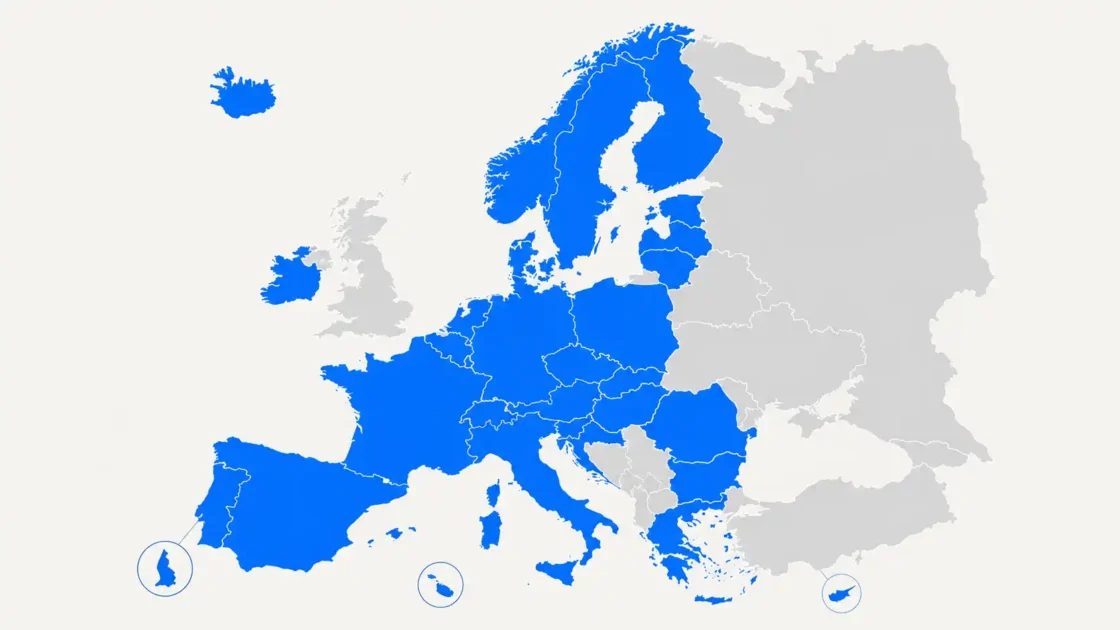
The picture for European marketers, and Slovak marketers in particular, differs from the American one in ways that strengthen the case for a human-led approach. Europe has lower AI adoption, a stricter regulatory regime and a consumer base shaped by European attitudes to data and trust, all of which change the calculation. A Slovak brand reasoning from American data will reach the wrong conclusions.
Adoption first. Eurostat data shows around 20% of EU enterprises with ten or more employees used AI in 2025, up from 13.5% the year before, with marketing and sales the most common use case among adopters. The spread across the bloc is wide, with Nordic countries leading and several Central and Eastern European countries near the bottom. Slovak enterprise adoption sits below the EU average across company sizes, with small firms in particular lagging. The Slovak market is at an earlier stage of AI adoption than the US or Western Europe, which means the competitive pressure to adopt is lower and the opportunity to differentiate through human quality is, if anything, larger.
The regulatory picture is the bigger difference. The EU AI Act entered into force in August 2024 and is phasing in obligations over several years. Its transparency requirements, which include disclosing AI-generated content and making clear when a user is interacting with a chatbot, carry real legal weight, with penalties reaching tens of millions of euros or a percentage of global turnover. The timeline for some transparency obligations has shifted under subsequent EU adjustments, but the direction is fixed: European marketers face mandatory AI disclosure requirements that their American counterparts do not. Industry research found that while most European marketers use AI tools, only a minority had assessed their exposure to the AI Act, which sets up a compliance problem waiting to surface.
For Slovak marketers specifically, this regulatory reality reshapes the AI calculation. The disclosure requirements mean that AI use in consumer-facing marketing will increasingly have to be declared, and given the consumer-trust data showing that disclosure often reduces trust, mandatory disclosure turns hidden AI use into a visible liability. A Slovak brand cannot quietly use AI in customer-facing marketing and assume no one will know; the law is moving toward requiring it to say so, at which point the consumer scepticism documented across the trust research applies directly.
The Slovak market context adds further weight to the human-led case. Slovakia’s digital advertising market reached around 233 million euros in 2024 with double-digit growth, a healthy market but a small one by Western standards. Slovak consumer AI use has grown quickly, with surveys finding a large share of adults now using AI tools, yet a majority of Slovaks reported never having used AI when shopping, the lowest figure in the region. The market is small enough, and consumer AI comfort in commercial contexts low enough, that a brand can realistically build genuine human relationships with a meaningful share of its audience, which is exactly the strategy AI cannot replicate.
The wider Central and Eastern European region shows the same bifurcation, with some markets such as the Czech Republic and Poland adopting AI faster while awareness of the relevant regulations remains low across the region and risky behaviours like feeding company data into public AI tools are common. For a Slovak or regional brand, the combination of lower adoption pressure, stricter disclosure law, a small relationship-friendly market and consumer caution about commercial AI points clearly in one direction. The conditions in Slovakia and the CEE region favour a human-led marketing strategy more strongly than the conditions in the US do, because the regulatory ceiling is lower, the consumer trust harder to win with machines, and the market size more suited to genuine human connection than to automated scale.
The expert consensus moved toward human judgment
The people running the largest marketing organisations in the world have, over the past two years, converged on a position notably more cautious than the vendor messaging, and their reasoning is worth taking seriously because they have both the data and the financial incentive to get it right. The shift among agency leaders, brand chief marketing officers and marketing academics has been toward treating AI as an aid to human judgment rather than a replacement for it.
The agency heads have been direct. The outgoing chief executive of WPP rebutted the claim that AI would soon handle most of what marketers use agencies for, arguing that AI will augment human creativity and help generate ideas, but that humans remain the ultimate judges of those ideas, and that as the ability to produce content increases, the ability to cut through gets harder, not easier. The leadership of Publicis made the same point at the 2025 Cannes festival, arguing that human creativity is what will provide differentiation. The head of Stagwell told the same festival that he expects a premium for creativity to emerge. The consistent message from agency leadership is that AI raises the value of human creative judgment rather than lowering it.
The brand side echoes it. Coca-Cola’s global marketing chief, whose company produced two of the most criticised AI ads of the period, has framed the company’s approach as combining human genius with AI capability rather than substituting one for the other, and has stressed that most of the company’s AI investment targets growth rather than mere cost-cutting. The chief brand officer at Mars drew a clean line, arguing that high-empathy work — creative development, insight, storytelling — needs humans. A senior Unilever marketer was blunter still, saying the company is rewarding human creativity and taste, and that consumers can quickly detect what she called AI slop.
The behavioural-economics camp has been the most pointed. Rory Sutherland of Ogilvy argues that attribution-based measurement systematically destroys breakthrough potential by funding only what can be tracked, and warns that AI adoption is likely to prioritise cost-cutting over genuine exploration. His framing — that marketing is a fat-tailed, relational business policed by people who think in thin-tailed, transactional terms — captures why the AI-as-efficiency-tool framing is dangerous. AI optimises for the measurable and the average, while breakthrough marketing comes from the unmeasurable and the exceptional.
Other respected voices sharpened the critique. Mark Ritson has described the explosion of AI content as a flood of synthetic material and argued that differentiation is the only defence against being lost in the AI herd. The strategist Tom Goodwin coined a phrase for the result of mediocre AI marketing, warning that the industry risks producing endless average work. The strategist Ana Andjelic writes about a kind of sameness creeping across brands as everyone uses the same tools in the same ways. The common thread is that AI accelerates mediocrity, and that the response is to raise the human standard rather than lower it.
The academic evidence backs the practitioners. Harvard Business Review research found teams using AI for creative problem-solving gained little while overestimating their own performance. A Harvard Business School analysis concluded that a brand is a promise to customers and that AI cannot fulfil that promise on its own any time soon. Wharton research found that AI does not only enable but also constrains, eroding identity, reducing the diversity of experience and degrading human capability over time. The convergence of practitioner judgment and academic evidence points the same way: AI is a useful tool in the hands of skilled humans and a liability when it replaces them, and the value of genuine human creativity, taste and judgment rises rather than falls as AI spreads.
A working split between automation and protection
The practical question underneath all of this is not whether to use AI but where, and the evidence supports a clear division of labour that almost every successful brand in this analysis has arrived at independently. The principle is simple to state and harder to hold to under pressure: automate the work customers never see and that carries little risk, and protect the work that defines the brand and builds trust.
McKinsey’s framing of AI transformation as roughly 70% about people, process and culture, 20% about data and technology, and 10% about algorithms has held up better than most vendor frameworks, because it puts the human and organisational work first and the technology last. The brands that succeed with AI treat it as a small component inside a mostly human effort, not as the centre of the strategy. The technology is the easy part; the hard part is the human judgment about where to apply it. The split that works divides marketing into three layers: work to automate freely, work to run as a human-checked hybrid, and work to protect for humans entirely. The boundaries follow the Binet and Field logic, with the protected layer covering mostly brand-building work and the freely automated layer covering mostly operational support to activation.
The work to automate freely shares three features: customers do not see it, it is bounded and repetitive, and it carries little brand risk. Reporting and dashboards, data unification, basic segmentation, predictive lead scoring, generating ad-copy variants for testing, writing meta descriptions and alt text, optimising email send times, repurposing and translating content, and triaging routine customer-service questions. These are the tasks where AI’s speed is a genuine gain and its weaknesses do not matter, because no customer is forming an impression of the brand from a well-chosen email send time.
The hybrid layer is where AI drafts and humans direct. Personalised email sequences where a human reviews the tone, blog drafts that get human voice and fact-checking before publication, content briefs and outlines, social post variations, sales-proposal assembly. The documented advantage of this layer — faster creation, better engagement, fewer revisions than either pure approach — makes it the most productive zone for most marketing teams. The discipline required is keeping the human genuinely in control rather than letting review degrade into rubber-stamping.
The protected layer is everything that defines the brand or carries real risk: creative strategy and brand positioning, brand voice, crisis communication, sensitive customer service in regulated or emotional contexts, influencer and partnership decisions, pricing strategy, ethical and regulatory judgment, final approval on customer-facing claims, negotiations and high-value relationships. These are the decisions where being human is the point, not a constraint to be engineered away. The Harvard Business School rules for AI in brand management capture the spirit: think long-term, ask what could go wrong against the brand’s core promise, augment rather than replace creativity, be transparent, and pilot carefully before scaling. A brand that holds this line — automating the invisible, protecting the defining — captures AI’s real efficiency gains without surrendering the human qualities that drive growth and trust.
Disclosure turned out to be a competitive advantage
One of the more counterintuitive findings in the research on AI marketing concerns disclosure, and it points to an option most brands have not considered: being open about AI use, done well, can build trust rather than erode it. The conventional fear is that admitting AI use will trigger the consumer scepticism documented throughout this analysis. The evidence suggests the picture is more nuanced and, for confident brands, more favourable.
The Yahoo and Publicis controlled experiment produced the standout result. When AI disclosures were actually noticed by consumers, the effect was a substantial lift in ad appeal, a larger lift in ad trustworthiness, and a still larger lift in overall trust in the company. Disclosure, far from being a penalty, functioned as a trust signal when it was handled transparently, because it demonstrated that the brand respected the audience enough to be honest. Separate research from media-science researchers found that AI disclosure labels had minimal negative effect on brand recall or ad sentiment when applied cleanly.
The apparent contradiction with the broader trust data resolves on closer reading. Consumers distrust AI marketing they detect that was hidden from them, because the hidden use feels like an attempt to deceive. Disclosed AI use sends a different signal: the brand is confident enough and honest enough to tell the audience what it is doing. The trust damage comes from concealment and from the perception of being fooled, not from AI use as such. Transparency converts a potential liability into a demonstration of respect for the audience, which is itself a trust-building act.
This finding interacts directly with the European regulatory situation. With the EU AI Act moving toward mandatory disclosure of AI-generated content and chatbot interactions, European brands will increasingly have no choice about disclosure. The brands that get ahead of this and treat disclosure as a confident, well-designed trust signal rather than a grudging legal compliance notice will fare better than those that disclose defensively or get caught having concealed AI use. The regulation that looks like a burden can become an advantage for brands that embrace transparency rather than resisting it.
There is a strategic subtlety worth holding onto. Disclosure works as a trust signal partly because most brands are not doing it, which makes the honest brand stand out. As disclosure becomes mandatory and universal, the relative advantage of voluntary transparency shrinks, but the penalty for concealment grows, because concealment becomes both detectable and illegal. The safe and increasingly advantageous position is to be transparent about AI use, to use AI in ways the brand is comfortable disclosing, and to keep AI out of the contexts — emotional, values-led, relationship-building — where even disclosed use risks the authenticity that those contexts depend on.
The practical guidance is to treat disclosure not as an afterthought but as a design decision. A brand should be willing to tell its audience where it uses AI, which in turn disciplines the brand to use AI only where it would be comfortable being open about it. That test — would we be happy to disclose this use — is itself a useful filter, because the uses a brand would be embarrassed to admit are usually the uses that carry the most authenticity risk. A brand that uses AI only where it would gladly disclose it tends to end up using AI exactly where it is safe and avoiding it exactly where it is dangerous.
The no AI stance became a real positioning play
What started as individual brands reacting to AI backlash has hardened into a recognisable positioning strategy, with brands deliberately and publicly building their identity around not using AI in their creative work. The stance is no longer just defensive; for some brands it has become an asset they actively promote, because it signals exactly the human authenticity that consumers increasingly say they value.
Dove made one of the earliest and clearest commitments, pledging in 2024 never to use AI-generated women in its advertising, a stance that aligned naturally with a brand built for two decades on real-beauty messaging. The pledge was not an empty gesture; it tied the brand’s AI position directly to its existing identity, which is what made it credible. LEGO ran a campaign explicitly flagging that its work was not AI-generated. Almond Breeze built a 2026 campaign around the idea that no AI was needed. Equinox ran a 2026 campaign that pointedly contrasted AI-generated imagery with real human bodies. These brands turned the absence of AI into a statement, and the statement resonated because it answered a real consumer anxiety.
The smaller-brand examples are in some ways more instructive, because they show the stance working without a large budget behind it. A baby-products brand pledged never to use AI in its social media marketing and maintained extremely high subscriber retention. A small snack brand switched from AI advertising to deliberately homemade, low-fi campaigns built around cardboard props and puppets, and reported many times more new social followers than its AI efforts had produced. The handmade, obviously human approach outperformed the polished AI approach, because the audience read the human effort as a signal of care and authenticity that the slick AI version lacked.
The strategic logic of the no-AI stance follows from the consumer-trust data. If half of consumers prefer brands that avoid generative AI in consumer-facing content, then explicitly being one of those brands is a way to win that half’s preference. It is differentiation in the most literal sense: as competitors converge on AI-generated content, the brand that visibly refuses stands apart. The stance works best for brands whose identity already centres on human qualities — craft, authenticity, real people, real experiences — where the no-AI position reinforces rather than contradicts the existing brand.
There are limits and risks to the play. A no-AI stance taken purely as a marketing gimmick, by a brand whose actual practices contradict it, invites exactly the authenticity backlash it was meant to avoid. The stance also constrains a brand’s operational options, ruling out efficiency gains that competitors capture. And as a positioning, it works partly because it is still relatively rare; if it became universal, the differentiation would erode. The no-AI stance is most powerful as a genuine expression of a brand’s identity, not as a slogan bolted onto a brand that uses AI everywhere customers cannot see.
For most brands, the realistic version is not a total ban but a clear, honest position about where the brand will and will not use AI, anchored in the brand’s identity. A brand can quietly use AI for back-office operational work while genuinely committing to keep human hands on everything customers see and feel, and can communicate that commitment honestly. The stance that works is the one a brand can defend under scrutiny, which means it has to reflect what the brand actually does, not just what it says.
The barbell market taking shape through 2027
The forecasts for marketing through 2027 and beyond split sharply, and reconciling them produces a clearer picture than either side alone: the market is heading toward a barbell shape, with growth and value concentrating at two opposite ends and the middle getting squeezed. Understanding that shape is the key to positioning a brand for what is coming rather than for what is ending.
At one end, AI-driven commoditisation will continue and intensify. Forecasters project the majority of advertising spend flowing through algorithm-driven channels, with that share rising further over the next few years. Global advertising spend is projected to pass a trillion dollars, with a large and growing portion automated. At the commodity end of the market, AI will keep driving content and media-buying toward cheaper, faster, more automated and more generic, with margins squeezed and differentiation collapsing as everyone uses similar tools in similar ways. Brands competing purely on this terrain will fight a grinding war on cost and scale that favours the largest players and the AI-native challengers.
At the other end, a creative and human-strategy premium is emerging. Multiple agency leaders have predicted a premium for genuine creativity. Forrester’s forecasts point to business-to-business companies increasing investment in human influencer and relationship marketing, and to rising demand for senior creative and strategic roles even as routine execution roles shrink. At the premium end, brands will pay more for the human talent that can build emotion, meaning, community and trust at a standard AI cannot reach, because that is what differentiates and what commands pricing power.
The signal that this is already happening shows up in budget data. The labour share of marketing budgets rose in 2026 after the initial wave of AI-driven savings, which suggests the easy automation gains have plateaued while human work has rebounded in value. Forrester projects continued reductions in routine agency jobs alongside growing demand for senior creative and strategic capability. The pattern is not AI replacing marketers wholesale but AI hollowing out the middle, automating routine execution while raising the premium on senior judgment and creativity at the top.
The uncomfortable position is the middle: brands and teams trying to do both, competing on AI-driven efficiency against AI-natives while also trying to build human brand value, but with the budget and focus to do neither well. The middle gets out-cheaped by the commodity players and out-loved by the human-premium players, which is the worst of both worlds. A brand stuck there, producing generic AI content while underinvesting in genuine human distinctiveness, captures neither the cost advantage nor the differentiation advantage.
The strategic implication is that brands need to choose a clear position on the barbell rather than drifting into the middle. A brand that competes on scale and cost should automate aggressively and accept commodity economics. A brand that competes on differentiation and pricing power should invest heavily in human creativity, community and brand building, using AI only as quiet operational support. The single best predictor of which end a brand lands on is whether its leadership treats AI as a tool for cutting cost or as a tool for freeing human time toward higher creative ambition. The brands that will compound advantage through 2027 are those that use AI to make their humans more ambitious, not to replace them with cheaper output.
The human premium is the moat that compounds
The honest answer to how well marketing works without AI is that it works better than most people assume, costs more in effort than the AI-everywhere pitch admits, and is increasingly the only strategy that builds a durable advantage. The evidence assembled across this analysis converges on three findings that should reshape how marketers plan. AI delivers genuine but narrow gains, concentrated in the short-term activation work that drives only a minority of long-term value. Consumer trust in AI marketing is sliding rather than stabilising, with the gap widening fastest among the youngest consumers. And the brands posting the strongest organic growth are mostly those that kept their creative, voice, community and customer relationships emphatically human.
The insight that ties it together is the one most easily missed in the rush to adopt. The spread of AI has not made human marketing less valuable; it has made human marketing scarcer, harder to fake, and therefore more valuable. When most marketers use AI but most also admit to producing generic campaigns, the opportunity is no longer to adopt AI faster than competitors. It is to be conspicuously, defensibly, recognisably human while competitors dissolve into algorithmic sameness. Distinctiveness has been the most reliable driver of brand growth for a century, and AI is making it harder to achieve at exactly the moment it is becoming more valuable.
This is not an argument against AI. The brands that grow are not the ones that ban the technology out of principle; they are the ones that put it in its place. They automate the invisible operational work where AI’s speed is a real gain and its weaknesses do not matter. They keep humans in command of everything customers see and feel, because that is where trust, emotion and differentiation are built, and where AI’s convergence and authenticity problems do the most damage. They treat AI as a tool that frees human time for more ambitious creative work, not as a substitute for the humans.
For a Slovak or Central European brand, the case is even stronger than for an American one. Lower adoption pressure, stricter disclosure law, a market small enough for genuine human connection, and consumers cautious about commercial AI all tilt the calculation toward a human-led approach. A local brand cannot out-spend or out-scale a multinational, but it can out-belong one, and belonging is built through human creativity, community and authenticity that no tool can replicate. In a smaller, relationship-friendly market, being more human is a competitive advantage, not a handicap.
Marketing without AI, properly understood, is not a refusal of the future. For a growing set of brands it is the most commercially defensible path through it. The companies that internalise this, and the marketers who learn to lead it, will compound their advantage every year that AI gets better at producing average work and humans concentrate on producing exceptional work. The moat is the human premium, and it gets deeper as the flood of synthetic content rises around it.
Sector by sector the calculation shifts
The general case for human-led marketing holds across the board, but the specific balance between automation and human work differs sharply by sector, and a serious answer has to treat the major categories separately. The risk profile, the regulatory exposure and the role of trust vary enough that a one-size approach would mislead.
In retail and consumer goods, AI’s operational wins are real and the brand risk is concentrated in customer-facing creative. Demand forecasting, inventory, pricing analysis and personalised product recommendations are areas where AI earns its keep, and the personalisation gains McKinsey documents are most achievable here. The danger sits in the creative and the brand work, where the Coca-Cola and Mango failures show what happens when AI is pushed into emotional, identity-defining territory. For retail brands, the split is clean: automate the supply-chain and recommendation layer, keep the brand creative human. The category also has the clearest examples of human-led winners, from Trader Joe’s experience-led model to Liquid Death’s community.
Business-to-business marketing leans even more heavily toward the human side, because B2B purchases are high-consideration, relationship-driven and built on trust between people. The credibility of a known expert, the relationship managed by a real account team, and the thought leadership that demonstrates genuine knowledge all matter more in B2B than in most consumer categories. Forrester’s forecast that most enterprise B2B companies will increase human influencer and relationship investment reflects this. AI can support B2B marketing through lead scoring, research synthesis and proposal drafting, but the trust that closes a complex B2B deal is built between humans, and that is exactly where automation underperforms.
Financial services face the heaviest regulatory and trust constraints, which sharply limits where AI can safely operate in customer-facing roles. The Air Canada precedent — a company held liable for what its chatbot invented — is a warning the financial sector cannot ignore, given the regulatory consequences of giving customers wrong information about products, rates or terms. The sector also shows some of the highest AI project failure rates in the cross-industry data. In financial services, the safe zone for AI is internal analysis and operations, while customer-facing communication demands human oversight because the cost of an automated error is regulatory as well as reputational.
Healthcare and adjacent sensitive categories sit at the far end of caution. The combination of high emotional stakes, strict regulation and severe consequences for error means customer-facing AI carries risk that rarely justifies the efficiency gain. The sector’s high AI project failure rate in the data reflects both the difficulty and the stakes. Trust is the entire product in healthcare communication, and trust is precisely what AI marketing erodes when audiences detect it, which makes the human-led approach close to mandatory in patient-facing contexts.
Hospitality, travel and experience-led sectors have a natural fit with the human and experiential approach, because their product is fundamentally a human experience. The experiential marketing data showing strong returns applies directly here. AI can handle booking logistics, dynamic pricing and operational personalisation, but the marketing that drives these categories — the sense of a real place, a real experience, real human warmth — is exactly what AI cannot generate. For experience-led sectors, the marketing and the product are both human, and AI belongs in the operational background. Across all sectors the pattern rhymes: automate the operational and analytical layer where data is good and risk is low, and protect the human work wherever trust, emotion, regulation or relationship defines the category.
Data handling and privacy raise the stakes further
A dimension that rarely makes the marketing-versus-AI debate, but should, is data handling, because much of AI marketing depends on consumer data, and the privacy and security risks attached to that data add real cost and real exposure to the AI-heavy approach. A human-led marketing strategy that relies less on large-scale data processing carries correspondingly lower privacy risk, which is a genuine advantage in a tightening regulatory environment.
AI personalisation works by processing consumer data, often at large scale, and the more personalised the marketing, the more data it consumes. That dependency creates exposure on several fronts. Data breaches involving consumer information carry severe regulatory penalties under European law and growing liability under various regimes. Forrester’s 2026 forecast warning of a surge in privacy-related class-action lawsuits driven by AI reflects a real and rising risk. The data appetite of AI marketing is also a liability surface, and that liability scales with the ambition of the personalisation.
The European context sharpens this considerably. The General Data Protection Regulation already imposes strict requirements on how consumer data is collected, processed and stored, and the EU AI Act layers additional obligations on top. A marketing strategy built on extensive AI-driven data processing carries compliance burden and breach risk that a more human, less data-intensive approach avoids. For Slovak and European marketers, the regulatory exposure of data-hungry AI marketing is materially higher than in the US, which shifts the cost-benefit calculation toward approaches that depend less on processing large volumes of personal data.
There is a specific organisational risk that the regional research highlights. Surveys across Central and Eastern Europe found that a large share of employees use public AI tools without clear corporate rules, and that risky behaviours like feeding company or customer data into public AI systems are common. Every time an employee pastes customer data or proprietary information into a public AI tool, the organisation potentially loses control of that data, with consequences ranging from competitive harm to regulatory breach. This is a hidden cost of casual AI adoption that rarely appears in any business case, and it is one a more disciplined, human-led approach naturally limits.
The trust dimension compounds the legal one. Consumers are increasingly aware and wary of how their data is used, and the same scepticism that drives distrust of AI-generated content extends to AI-driven data processing. A brand perceived as surveilling and processing customer data to fuel AI personalisation may trigger exactly the distrust that undermines the relationship. The brands that build trust through genuine human relationships and transparent, limited data use have an advantage over those that depend on extensive, opaque data processing that customers increasingly resent. Restraint in data use is becoming a trust signal in its own right, much as disclosure of AI use is.
The practical guidance is to treat data minimisation as both a compliance strategy and a trust strategy. A marketing approach that achieves its goals through human relationship, community and genuine brand value depends less on large-scale data processing than one built on AI-driven personalisation, and that lower data dependency reduces both regulatory risk and the trust erosion that comes with perceived surveillance. In a tightening privacy environment, the human-led approach carries a structural privacy advantage that adds to its other strengths, and that advantage is largest in Europe where the regulatory stakes are highest.
The talent question reshapes marketing careers
Underneath the strategic debate sits a question that matters enormously to the people doing the work: what AI means for marketing careers, and the answer connects directly to which marketing strategies will win. The talent implications are not evenly distributed, and understanding the distribution helps explain why human-led marketing is likely to strengthen rather than fade.
The clearest finding is that AI threatens routine execution roles while raising the value of senior creative and strategic capability. Forrester projects continued reductions in routine agency jobs, following earlier cuts, alongside growing demand for senior creative and strategic roles. The pattern is the hollowing-out of the middle described earlier, applied to careers: the work AI does well — routine production, basic copywriting, simple design, repetitive analysis — is exactly the work that filled junior and mid-level roles, while the work AI cannot do — creative direction, brand strategy, genuine insight, relationship building — defines senior roles. AI is most threatening to the junior execution work and least threatening to the senior judgment work.
This creates a genuine problem for the marketing profession that the industry has not solved. If AI absorbs the junior execution roles, where do the senior strategists and creative directors of the future come from, given that those skills have traditionally been built by doing the junior work first? The pipeline that produced experienced marketers ran through years of hands-on execution. Automating away the entry-level work risks cutting off the training pipeline for the senior talent that human-led marketing depends on, which is a structural risk for the whole industry, not just for individuals.
For individual marketers, the implication is to build the capabilities AI cannot replicate: genuine creative judgment, strategic thinking, the ability to build relationships and trust, deep category and customer understanding, and the taste to know what is worth saying. The skills that command a premium are the human ones at the top of the value chain, not the execution skills AI is absorbing. Scott Galloway’s observation that storytelling rather than technical skill is the capability young people most need captures the shift: the durable career advantage is in the human judgment and creativity that AI raises the value of, not in the production skills it commoditises.
For organisations, the talent question reinforces the strategic case. A company that hollows out its human creative capability in favour of AI may capture short-term savings while destroying the capability that constitutes its real competitive advantage and the pipeline that would replenish it. The brands that treat their human creative and strategic talent as an asset to develop and protect, using AI to make that talent more productive rather than to replace it, are building the capability that the barbell market rewards at the premium end. The organisations that invest in human talent while competitors automate it away are positioning for the part of the market where value is concentrating.
The honest complication is that this transition is genuinely hard on the people in the middle of it, particularly those in routine roles being automated. Acknowledging that is part of an honest analysis. But the strategic direction for both individuals and organisations is clear: the value is moving toward the human capabilities AI cannot replicate, and the marketing strategies that win are the ones built on those capabilities. The talent question and the strategy question have the same answer, which is to develop and protect the human judgment, creativity and relationship skills that constitute the durable advantage.
A practical sequence for de-risking a marketing strategy
The analysis points toward action, and the action can be sequenced into a clear order of operations for a brand wanting to capture AI’s real gains without exposing itself to its real risks. The sequence matters because doing these steps in the wrong order is how organisations end up with the failed projects and brand damage the evidence documents.
The first step is to audit where the brand currently uses AI and ask, for each use, whether the brand would be comfortable disclosing it to customers. The uses that pass that test are generally safe; the uses that fail it are generally the ones carrying authenticity and trust risk. The disclosure test is a fast, practical filter that tends to separate the back-office operational uses, which are safe, from the customer-facing emotional uses, which are dangerous. This audit also surfaces the casual, ungoverned AI use — employees pasting data into public tools — that carries hidden data risk.
The second step is to map marketing work against the three-layer division: work to automate freely, work to run as a human-checked hybrid, and work to protect entirely for humans. Reporting, segmentation, send-time optimisation, translation and routine drafting go in the first layer. Content production, email sequences and proposal assembly, where AI drafts and humans direct, go in the second. Brand strategy, creative direction, brand voice, crisis communication, sensitive service and pricing go in the third. The mapping exercise forces explicit decisions about where AI belongs, replacing the default drift toward using AI everywhere with deliberate placement.
The third step is to protect and invest in the human capabilities the strategy depends on, rather than letting them erode. That means building or keeping in-house creative talent, developing the credible humans who can build audiences and relationships, investing in the product and service quality that generates word of mouth, and committing to the brand-building work that performance-era thinking neglected. The freed-up time and budget from automating the first layer should flow into strengthening the third layer, not into producing more automated content. This is the move that converts AI’s efficiency into genuine competitive advantage rather than just into cost savings.
The fourth step is to rebalance the budget toward the Binet and Field split, using AI’s efficiency in the activation layer to free resources for the under-funded brand-building layer. The performance-era default left most budgets over-weighted toward activation; AI makes activation cheaper still, which creates an opportunity to redirect the savings toward brand building rather than simply pocketing them. The strategic payoff of AI is not the cost saving itself but what the saving funds, and funding brand building is the move that drives long-term growth.
The fifth step is to build channels and relationships the brand owns and controls, insulated from the AI-driven erosion of search traffic and the AI-content glut. Email lists, communities, direct relationships, physical presence and brand fame strong enough to generate direct demand all reduce dependence on channels AI is degrading. As generic search traffic and the open-web content economy erode, owned relationships and brand fame become the durable assets, and building them is human work.
The final discipline is to keep the whole approach honest and transparent, disclosing AI use where it occurs, keeping AI out of the contexts where even disclosed use risks authenticity, and treating every customer-facing AI deployment as a liability question. A brand that follows this sequence captures AI’s genuine operational gains, avoids its documented failure modes, redirects resources toward the work that drives growth, and builds the human distinctiveness that the market increasingly rewards. The sequence is not anti-AI; it is anti-careless-AI, and it produces a marketing strategy that is both more resilient and more human than the AI-everywhere default.
The questions the current evidence cannot settle
An honest analysis has to mark the limits of what the evidence can currently support, because several genuinely open questions will shape how this plays out, and pretending to certainty about them would undermine everything else. These are the places where the data runs out and judgment takes over.
The first open question is whether consumer scepticism of AI marketing is durable or transitional. The trust data shows the gap widening through 2026, which argues against the assumption that familiarity will breed acceptance. But it remains possible that as AI-generated content becomes ubiquitous and as quality improves, consumer attitudes shift. The current evidence points toward durable scepticism, especially among younger consumers, but the trajectory of consumer trust over the next several years is not settled, and a brand betting heavily on either outcome is taking a position the data cannot yet fully justify.
The second open question is how good AI-generated marketing content will get, and whether quality improvements will overcome the authenticity and homogenisation problems. The current evidence shows AI content underperforming and converging, but the technology is improving. It is possible that better models will narrow the quality gap. It is also possible that the homogenisation problem is structural — a property of how these models work rather than a temporary limitation — in which case quality improvements will not solve it. Whether the sameness problem is a passing limitation or a permanent feature is genuinely uncertain, and it matters enormously for how the content question resolves.
The third open question concerns regulation. The EU AI Act’s disclosure requirements are phasing in, with timelines that have already shifted, and the eventual real-world enforcement and consumer response remain to be seen. How strictly disclosure will be enforced, how consumers will react to widespread mandatory disclosure, and whether other regions will follow Europe’s lead are all unresolved. The regulatory environment for AI marketing is still being written, and the human-led case looks stronger or weaker depending on how strict and how widespread disclosure requirements become.
The fourth open question is the talent pipeline problem. If AI automates the junior execution roles that traditionally trained senior marketers, the industry faces a genuine question about where future senior talent comes from. No one has solved this, and the consequences will not be clear for years. Whether the profession finds a new way to develop senior talent, or whether the automation of entry-level work creates a long-term capability shortage, is an open and consequential question.
The fifth open question is whether the barbell market structure is stable or transitional. The current evidence suggests value concentrating at the commodity and premium ends with the middle squeezed, but market structures evolve. It is possible the middle reconstitutes itself, or that one end comes to dominate. The barbell is the best reading of the current trajectory, but the long-term shape of the market is a forecast, not a fact, and brands should hold it as a working hypothesis rather than a certainty.
What the evidence does support, despite these open questions, is the core finding: AI delivers narrow operational gains while human-led marketing builds the durable, differentiated brand value that drives long-term growth, and the spread of AI is raising rather than lowering the value of genuine human creativity, judgment and trust. The open questions affect the margins and the timeline, not the central conclusion. A brand that automates the drudgery, protects the human distinctiveness, and stays honest about both is positioned to win regardless of how these uncertainties resolve, because that approach captures AI’s real value while building the human assets that the evidence consistently shows the market rewards.
Measurement is where the human-led case usually gets lost
The reason marketing drifted toward AI-friendly performance work in the first place is a measurement problem, and any brand serious about a human-led strategy has to solve that problem or it will lose the internal argument every budget cycle. The issue is simple to state: the work AI is good at is easy to measure, and the work humans are good at is hard to measure, which biases every data-driven decision toward the former regardless of which actually drives growth.
Performance marketing produces a clean number for every action. A click, a conversion, a cost per acquisition, all traceable and attributable. Brand building produces value that arrives later, spreads across many touchpoints, and resists attribution to any single action. A finance team comparing a performance campaign with a known return against a brand campaign with no clean number will fund the performance campaign almost every time, even when the brand campaign would drive more long-term growth. The measurement system itself biases spending toward the trackable and away from the valuable, which is exactly the dynamic Rory Sutherland describes when he says attribution-based measurement systematically destroys breakthrough potential.
AI deepens this bias rather than correcting it. AI excels at optimising against measurable signals, which means it pushes marketing further toward the work that produces clean numbers and away from the work that builds hard-to-measure brand value. A marketing organisation that hands its decisions to AI optimisation is handing them to a system structurally incapable of valuing the brand-building work that drives most long-term growth, because that work does not produce the signals the system optimises against. The more a brand optimises against measurable short-term signals, the more it starves the unmeasurable long-term work, and AI accelerates that starvation.
The solution is not to abandon measurement but to measure the right things over the right timeframe. Marketing-mix modelling, which estimates the contribution of different activities to outcomes over time, can capture brand-building effects that last-click attribution misses. Brand-tracking studies measure awareness, associations and consideration that precede and predict sales. Long-term holdout tests can reveal the cumulative effect of brand work that short-term metrics ignore. These methods are harder and slower than reading a performance dashboard, which is why performance-era organisations neglected them, but they are the only way to make the long-term value of brand building visible enough to defend in a budget meeting.
The Binet and Field data exists precisely because someone did the hard measurement work over decades, tying spending decisions to long-term commercial outcomes rather than to immediate trackable metrics. The finding that the optimal split is around 60% brand and 40% activation only became knowable through measurement that looked past the short term. A brand that wants to defend a human-led, brand-building strategy needs its own version of that measurement discipline, capturing the long-term effects that justify the investment. Without measurement that values the long term, the human-led case loses to the cleaner numbers of performance work every time, regardless of which actually builds the business.
There is a practical organisational point here. The brands that sustain brand-building investment tend to have leadership that understands the measurement problem and refuses to let last-click attribution dictate the budget. They build measurement systems that capture long-term value, they hold their nerve through the slow payoff period, and they treat the hard-to-measure work as an investment rather than an unjustifiable cost. The brands that capitulate to the measurement bias, funding only what produces clean immediate numbers, end up over-invested in activation and under-invested in the brand building that drives growth, with AI accelerating the imbalance.
For a marketer making the human-led case internally, the measurement argument is the one that has to be won first. The strategic logic of brand building, distinctiveness and human creativity is sound, but it cannot survive a measurement system that only values the short-term and trackable. Building measurement that captures long-term brand value is the precondition for defending a human-led strategy, because in a data-driven organisation, the work that cannot be measured loses to the work that can, no matter how much more valuable it actually is. The human-led case is not a case against measurement; it is a case for measuring what matters rather than only what is easy.
The opposite mistake of refusing AI entirely
A fair analysis has to warn against the over-correction as clearly as it warns against the over-adoption, because refusing AI on principle is its own strategic error, and the human-led case is not an argument for it. A brand that bans AI outright, including from the back-office operational work where it clearly helps, hands competitors a real efficiency advantage for no corresponding gain in trust or distinctiveness. The customer never sees the automated reporting or the optimised email send time, so refusing to automate them buys nothing.
The cost of total refusal is concrete. Competitors using AI for the operational layer free up human time and budget that the refusing brand spends on tasks no customer values. Over time, the refusing brand is doing more low-value work by hand while competitors redirect that effort toward the brand building and creative work that differentiates. Refusing AI where it is genuinely useful does not make a brand more human in any way customers perceive; it just makes it slower and more expensive at invisible work. The handmade-campaign successes, like the snack brand that switched to cardboard puppets, won by being visibly human in customer-facing creative, not by refusing to automate their accounting.
There is also a risk of mistaking the symbol for the substance. A brand that loudly refuses AI while neglecting the actual drivers of human-led marketing — genuine creativity, community, product quality, real relationships — has bought a slogan without the substance behind it. The no-AI stance only works when it expresses real human distinctiveness; as a standalone position, divorced from genuine creative and relationship investment, it is empty. The goal is not the absence of AI but the presence of genuine human quality, and those are different things that brands sometimes confuse.
The balanced position holds both truths at once. AI delivers real, narrow gains in the operational and activation layer, and a brand that refuses those gains handicaps itself for nothing. At the same time, AI underperforms and carries real risk in the creative, emotional and relationship-defining work, and a brand that pushes it there damages the assets that drive growth. The error in both directions comes from treating AI as a yes-or-no question rather than a where question. The brands that get it right are neither AI-everywhere nor AI-nowhere; they are precise about placement.
This precision is harder than either extreme, which is why both extremes are common. Adopting AI everywhere is easy and feels like progress. Refusing it everywhere is easy and feels like principle. Working out exactly where AI helps and where it hurts, holding that line under pressure, and continually reassessing as the technology and the market change is genuinely difficult judgment work. But that judgment is precisely the human capability the whole analysis points to as the durable advantage. Knowing where to use AI and where to protect human work is itself a high-value human skill, and it is the skill that separates the brands capturing AI’s real value from the brands damaged by it or handicapped by refusing it.
The marketers who will do best are the ones who resist both the hype and the backlash, who treat AI as a precise tool with a specific and limited place, and who pour their energy into the human creativity, community and brand building that the evidence consistently shows drives growth. That is not a compromise between two camps; it is the position the evidence actually supports. Marketing without AI, in the sense that matters, means keeping AI out of the work that defines the brand while using it freely in the work that does not — and getting that boundary right is the whole game.
Common questions about marketing without AI
Yes, and increasingly so. A Gartner survey from March 2026 found half of US consumers prefer brands that avoid generative AI in consumer-facing content. Many of the fastest-growing consumer brands, including Liquid Death, Patagonia, Rare Beauty and Mint Mobile, use AI sparingly and keep their creative and customer relationships human. Marketing without AI is not a handicap; in the work that defines a brand, it is often the stronger position.
Creative strategy, brand positioning, brand voice, crisis communication, sensitive customer service, influencer and partnership decisions, pricing strategy, regulated claims, high-value negotiations and original thought leadership. These are the high-judgment, high-trust tasks where being human is the point. AI fits better in reporting, segmentation, A/B testing, content variants, send-time optimisation and translation.
It improves a narrow band of operational and activation work. Meta and Google report meaningful gains in ad return and conversions from AI optimisation, and personalisation can lift revenue and cut acquisition costs. But these gains sit in the short-term activation half of marketing, which drives a minority of long-term value. AI rarely improves the brand-building work that drives most growth.
Strong and widening. The advertiser-versus-consumer perception gap on AI ads grew between 2024 and 2026, and Gen Z is now more hostile to AI in brand contexts than Millennials. Neuroscience research found consumers can intuitively detect AI ads, find them more annoying and remember them less well. Surveys consistently show reduced engagement with content people suspect is AI-generated.
Not for being AI as such. Google penalises scaled, low-quality content created mainly to manipulate rankings, regardless of how it was produced. After the March 2024 core update, analysis found the large majority of deindexed sites showed AI-content signals. AI-assisted content shaped by human judgment and genuine quality can rank well; AI content mass-produced to game search is a fast route to deindexation.
They are absorbing clicks. Studies measured click-through roughly halving when AI summaries appear, and zero-click search rates rising sharply. Major publishers lost large shares of their search traffic. The practical effect is that strategies built on capturing generic search traffic are on shrinking ground, raising the value of owned channels and brand fame that generate direct demand.
Generative engine optimisation is the practice of making content likely to appear and be cited inside AI search answers. Research found the strongest tactics are citing credible sources, adding statistics and using direct quotation, while keyword stuffing reduces visibility. GEO rewards genuine expertise and specificity, which favours human-led, well-sourced content over generic AI output.
For operational tasks, often yes. More than half of small-business owners use AI marketing tools, and they cut production time on routine work. But the small brands that grow explosively do so through human distinctiveness, voice and community, not through faster AI adoption. The best use of AI for a small business is to clear drudgery so the owner can invest in the human work that drives growth.
MIT research found the large majority of enterprise generative-AI pilots produced no measurable profit impact, and other studies report high abandonment and failure rates. The causes are messy data, unclear goals, pilots with no path to production, and cost-cutting substituted for genuine improvement. Klarna’s reversal, rehiring humans after over-automating customer service, is the well-known example.
Based on the IPA Effectiveness Awards databank, it holds that budgets work best at roughly 60% brand building and 40% sales activation. Almost every AI marketing gain sits in the 40% activation bucket, while the 60% brand-building work stays human. AI makes the already over-funded half cheaper, which can worsen the imbalance unless the savings are redirected to brand building.
Yes, particularly in emotional, family or values-led contexts. The Coca-Cola Christmas ads, Toys “R” Us spot and Google Olympics ad all drew strong backlash. Research on the AI-authorship effect found consumers give less positive word of mouth and lower loyalty when emotional brand messages are AI-written, driven by perceived inauthenticity.
It introduces disclosure obligations, including labelling AI-generated content and disclosing chatbot interactions, with substantial penalties. European marketers face mandatory AI disclosure that US marketers do not. Given that disclosure can reduce consumer trust, this turns hidden AI use into a visible liability and strengthens the case for keeping customer-facing marketing human.
Handled transparently, it can build trust. A controlled study found that when consumers noticed AI disclosure, ad appeal, trustworthiness and overall trust in the company rose. The trust damage comes from concealment and from feeling deceived, not from AI use itself. As disclosure becomes mandatory in Europe, confident transparency becomes an advantage and concealment becomes a risk.
Research published in 2026 found AI outputs are markedly more similar to each other than human writing is, and a natural experiment showed content became more uniform when an AI tool was available. Since marketing works through differentiation, AI’s tendency to converge content toward a middle directly attacks the distinctiveness that drives brand growth.
It is automating routine execution roles while raising the value of senior creative and strategic ones. Forrester projects continued cuts to routine agency jobs alongside rising demand for senior talent. The bigger risk is to the training pipeline, since automating entry-level work may cut off the path that traditionally developed senior marketers.
It is low-quality, high-volume AI-generated content produced to game algorithms rather than serve people. The term became mainstream in 2024 and 2025. Brands risk being associated with AI slop when they use AI carelessly, which threatens trust, premium perception and search visibility. Avoiding it requires a human quality standard on anything published.
A useful filter is the disclosure test: would the brand be comfortable telling customers about this AI use? Uses that pass are generally safe back-office or operational tasks. Uses that fail tend to be customer-facing emotional work that carries authenticity risk. Map work into automate-freely, human-checked hybrid, and protect-for-humans layers.
Usually not. Refusing AI in invisible operational work hands competitors an efficiency advantage for no gain in trust or distinctiveness, since customers never see that work. The goal is not the absence of AI but the presence of genuine human quality in customer-facing work. A no-AI stance only works when it expresses real human distinctiveness rather than standing as an empty slogan.
Solving the measurement problem. Performance work produces clean numbers and brand building does not, which biases data-driven decisions toward the trackable regardless of what drives growth. Building measurement that captures long-term brand value, through marketing-mix modelling and brand tracking, is the precondition for defending a human-led strategy in a data-driven organisation.
Author:
Jan Bielik
CEO & Founder of Webiano Digital & Marketing Agency

This article is an original analysis supported by the sources cited below
Gartner finds 50% of consumers prefer brands that avoid generative AI Gartner survey of 1,539 US consumers in March 2026 on preference for brands that avoid generative AI in consumer-facing content.
Gartner 2026 CMO Spend Survey Survey of 401 chief marketing officers on budget levels, AI allocation and AI readiness.
IPA effectiveness research from Les Binet and Peter Field The IPA’s hub for the Binet and Field effectiveness work, including the 60/40 brand-versus-activation framework.
Binet highlights the importance of brand building WARC reporting on Les Binet’s analysis of long-term brand building versus short-term activation.
Nielsen on trust in advertising Nielsen research on consumer trust across advertising channels, including recommendations from people consumers know.
McKinsey on the value of personalization McKinsey analysis quantifying revenue lift, ROI gains and acquisition-cost reductions from personalisation at scale.
MIT report on enterprise generative-AI pilots Reporting on MIT Project NANDA research finding most enterprise generative-AI pilots produced no measurable profit impact.
Gartner predicts many generative-AI projects will be abandoned Gartner forecast on the share of generative-AI projects abandoned after proof of concept.
Klarna reverses course and rehires humans Reporting on Klarna’s decision to rehire human customer-service staff after over-relying on AI.
Coca-Cola’s AI Christmas ad controversy NBC News coverage of the backlash to Coca-Cola’s AI-generated holiday advertising.
Coca-Cola’s AI Christmas ad sparks backlash again Euronews reporting on renewed criticism of Coca-Cola’s 2025 AI Christmas film.
Toys R Us AI-generated ad backlash Ad Age coverage of the response to the Sora-generated Toys “R” Us spot.
Google pulls its Dear Sydney Gemini Olympics ad Variety reporting on Google withdrawing its Gemini ad after criticism during the 2024 Olympics.
Air Canada held liable for its chatbot’s claims Legal analysis of the tribunal decision holding Air Canada responsible for misinformation from its chatbot.
NielsenIQ research on consumer attitudes to AI ads NielsenIQ neuroscience study on how consumers perceive and remember AI-generated advertising.
Getty Images on consumer demand for AI transparency Getty Images VisualGPS research on consumer demand for disclosure of AI-generated images.
Salesforce State of Marketing 2026 Salesforce survey of thousands of marketers on AI adoption, time savings and campaign challenges.
HubSpot State of Marketing HubSpot research on marketing trends, AI time savings and content performance.
Google guidance on AI-generated content in search Google’s official position on automation, AI content and its spam policies.
Google core update and spam policies Google’s documentation of the March 2024 core update and scaled-content-abuse enforcement.
Pew Research on Google AI Overviews and clicks Pew Research analysis of how AI summaries in search affect user click-through behaviour.
GEO generative engine optimization research Academic paper introducing generative engine optimisation and measuring which tactics increase source visibility.
Creative homogeneity across large language models PNAS Nexus study documenting how AI outputs converge and become more similar than human writing.
Eurostat on AI use in EU enterprises Eurostat data on AI adoption across EU enterprises, including marketing and sales use and country differences.
European Commission on the EU AI Act Official overview of the EU AI Act, including its transparency and disclosure obligations.
IAB Europe on AI in digital advertising IAB Europe research on AI adoption among European marketers and gaps in AI Act readiness.
Forrester 2026 predictions for B2C marketing Forrester forecasts on AI self-service risks, display-ad shifts and privacy litigation.
Liquid Death valuation and growth Reporting on Liquid Death’s revenue growth, community model and valuation.
Patagonia’s Don’t Buy This Jacket campaign Case study of Patagonia’s anti-consumption campaign and its commercial and brand effects.
Duolingo’s social media strategy The Drum profile of Duolingo’s in-house social team and its user and value growth.
Trader Joe’s marketing strategy Analysis of Trader Joe’s experience-led growth without conventional advertising.
Harvard Business School on the promise and peril of AI in branding Harvard Business School analysis of where AI helps and harms brand management.
| Citing this article? Brief excerpts are welcome. Please credit Webiano.digital, name the author where stated, and include a link to https://webiano.digital and to this original article. Full or substantial republication requires prior written permission. Read our Copyright and Content Use Policy. |
This article was prepared with the assistance of artificial intelligence tools. The content underwent expert human review, and Webiano Digital & Marketing Agency assumes editorial responsibility for its final version and publication.