Sakana AI’s Fugu arrived in general availability on June 22, 2026 with a proposition that cuts against the usual race to train ever larger standalone models. Fugu is not presented as a single all-knowing model built from one giant training run. It is a language-model-based coordinator that selects, prompts, checks and combines work from a pool of other AI models behind one OpenAI-compatible API. Sakana calls that arrangement “a multi-agent system, delivered as one model.” The product matters because it tries to turn an awkward engineering project—making several frontier models work together—into a purchasable model endpoint.
Table of Contents
The announcement deserves more scrutiny than a typical benchmark release. Fugu’s public scorecard is strong, and its central claim is bolder still: a learned coordinator can produce results beyond any one worker model without training a new frontier foundation model from scratch. Yet the product also concentrates risk in a new place. A customer may gain access to several model capabilities through one interface, while losing visibility into which model handled a particular request, where the data travelled, which intermediate outputs shaped the answer, and whether a future system update changed the route.
Fugu is therefore a test of a larger industry argument. The next phase of AI may be less about identifying the single best model and more about constructing the best system around many models: a system that knows when to ask for a plan, when to delegate coding, when to request a verification pass, when to stop, and when the cost of further work outweighs the likely improvement.
A product category hiding inside a model name
Calling Fugu a model is accurate, but incomplete. A conventional foundation model receives a prompt and generates an answer through one trained neural network. It may call tools, search documents, or use a prewritten agent loop wrapped around it, but the commercial unit is still usually the model itself. Fugu changes the centre of gravity. Its own language model sits above a pool of worker models and produces a sequence of delegation decisions. It decides which worker should act, what role that worker should play, what prior material to pass along, whether more work is needed, and how the final answer should be produced.
That architecture means Fugu belongs to three categories at once:
- a model router, because it chooses among model providers and model instances;
- an agent orchestrator, because it creates multi-step chains of work rather than one-shot completions;
- a managed abstraction layer, because customers interact with a single endpoint rather than the underlying provider stack.
The distinction has commercial weight. Plenty of companies can build a workflow that sends one request to a coding model, another to a research model, and a third to a verifier. What is hard is building the decision system that decides, on a request-by-request basis, whether those calls are justified. A fixed workflow is predictable but brittle. A learned workflow promises adaptation, but it becomes more difficult to test, explain and govern.
Sakana’s product page says Fugu learns to assemble and coordinate agents rather than relying on domain experts to prescribe roles and workflows. That sentence is easy to skim past, yet it is the most consequential part of the product. A hand-designed orchestration system has an accountable design: “first retrieve, then draft, then validate.” A learned orchestration system may find a route that no engineer explicitly wrote down. That may produce better answers. It may also make failure analysis far more difficult after an incident.
The company’s choice of name is also a useful metaphor. Fugu, the Japanese pufferfish, is known globally for precision and danger in equal measure. Safe preparation demands expertise because a mistake has consequences. Sakana AI’s Fugu does not have that literal risk profile, but the analogy fits the product’s logic. It claims that combining powerful components can yield a higher-order result, while making careful control more necessary rather than less necessary.
The June release and the claims that came with it
Sakana AI announced Fugu publicly in beta on April 24, 2026, describing it as its flagship international commercial product. The company said at that time that a small language model could learn to call other LLMs and even call itself during training, creating a form of test-time scaling. The June 22 release moved Fugu from early access toward a commercial offering with a dedicated product site, API documentation, pricing, subscription plans and two product variants: Fugu and Fugu Ultra.
The release claims should be separated into three layers.
First, the product claim: Fugu offers a single interface to a coordinated pool of specialised models. A developer can use an OpenAI-compatible API rather than build direct integrations with every underlying provider. The basic Fugu tier is positioned as a faster daily model. Fugu Ultra is positioned for harder, slower and more expensive multi-step work.
Second, the capability claim: Sakana says the orchestrator can dynamically construct agent teams and collaboration patterns that outperform a single model on complex coding, scientific and reasoning tasks. The company’s technical report says Fugu itself is trained to understand a user query and devise “agentic scaffolds” that use an LLM team.
Third, the market claim: Sakana frames the product as a way to reach frontier-level performance without single-vendor dependence. That is partly a technical statement and partly a geopolitical and procurement statement. It speaks to buyers who worry about price changes, API limits, model withdrawals, contractual restrictions, data residency, export controls and the strategic cost of tying a workflow to one foreign provider.
The third claim is the easiest to overstate. Fugu may reduce dependence on one model provider, but it does not remove dependence. It shifts dependency toward the orchestrator operator, its model-pool agreements, its routing policy, its data-processing terms, its security controls and its ability to keep pace with the underlying model market. A buyer moves from “Which foundation model do we trust?” to “Which coordination layer do we trust to choose and govern the models for us?”
That does not make the move irrational. It makes the trade-off explicit.
Sakana AI’s route from evolutionary research to orchestration
Fugu did not appear from a company with no prior thesis. Sakana AI was founded in Tokyo in 2023 by David Ha, Llion Jones and Ren Ito. Jones was an author of the 2017 transformer paper “Attention Is All You Need,” while Ha had worked at Google Brain and Stability AI. Sakana became known early for research that borrowed concepts from natural evolution, including model merging and iterative selection of model combinations. Reuters reported in 2024 that the company had released Japanese-language models built using an evolutionary-inspired model-merging method.
That history explains why Fugu is more than a sudden pivot toward agents. Sakana’s research has repeatedly pursued a question that differs from the standard “train the largest model” agenda: can intelligence be assembled by combining and selecting useful capabilities rather than by concentrating all capability in one monolith?
Its evolutionary model-merging work explored the parameter level. Instead of training one new system entirely from scratch, the company used evolutionary search to identify combinations of model components and weights that performed well on selected tasks. Sakana later described the method as a way to automate parts of model development and noted that it had influenced work in open-source tools and follow-on research.
Fugu changes the level of combination. It does not merge the weights of closed and open frontier models, which would often be impossible. It merges their use at inference time. One model thinks through a plan. Another implements. Another checks. A smaller coordinator chooses a sequence. The system composes models through conversation and task allocation rather than through shared parameters.
That shift addresses a real constraint. The best proprietary models are usually unavailable for weight merging, fine-tuning or internal inspection. Their APIs are accessible, but their training weights are not. The economic fact of modern AI is that many of the strongest systems are black-box services. Test-time coordination is a way to build a system above that closed ecosystem without needing permission to alter the underlying models.
Fugu’s bet is that the value of the next AI layer may come from decision-making between models, not merely capability inside one model.
The architecture in plain technical terms
A practical way to think about Fugu is as a controller in a distributed AI system. A user sends a request. The controller reads the request and the current transcript. It then selects an action, such as asking a worker model to explore a solution, asking another to execute a concrete task, asking a verifier to inspect a proposed answer, or asking a fresh instance of the coordinator to manage a subproblem. The replies become part of the working context. The cycle continues until the system decides that the task is complete or hits a budget.
The details are proprietary in the commercial product, but Sakana’s associated research gives a clear view of the intellectual direction. Its TRINITY paper describes a compact coordinator that selects a worker and assigns one of three roles at each turn: Thinker, Worker or Verifier. The Thinker develops a strategy or decomposition; the Worker executes a concrete step; the Verifier tests the current solution for soundness, completeness and edge cases. The original query and accumulated transcript are passed through the sequence.
A simple illustration makes the idea clearer. Consider a request to repair a failing software library:
- A planning agent reads the issue, identifies likely files and proposes hypotheses.
- A coding agent inspects the repository and writes a patch.
- A testing agent runs the relevant test suite and reads the failures.
- A verifier judges whether the patch matches the issue and whether the tests cover the stated behaviour.
- The coordinator decides whether a new coding pass is warranted or whether the answer is ready.
A fixed multi-agent workflow can perform that sequence. Fugu’s stated difference is that it does not have to use the same sequence for every task. A short factual question may need no delegation. A mathematics problem may involve a solver and a verifier. A scientific coding task may receive more time from a technical worker and a separate reviewer. A difficult request may cause the system to delegate recursively.
The promise is straightforward: use model diversity as a form of specialisation. A model that is unusually good at code may not be the best at written synthesis. A model that produces fluent explanations may not be the best at adversarial checking. A system that knows how to combine them may beat each one in isolation.
The problem is equally straightforward: the customer has to trust the coordinator’s judgment. A poor router can turn good models into an expensive, confused committee. It can over-delegate trivial tasks, allow an early error to contaminate later steps, select a worker with an unsuitable safety policy, or mistake agreement among correlated models for independent verification.
Learned orchestration is different from a prompt chain
The phrase “multi-agent system” has become so common that it can obscure meaningful differences. Many agent systems are little more than prompt chains with job titles attached: one model is told to be a researcher, another is told to be a critic, a third is told to be an editor. The roles may look sophisticated, but the underlying sequence often remains fixed. The developer chooses the order, the number of steps and the conditions for termination.
Sakana’s approach is trying to make the coordination policy itself learned. The Conductor research paper describes a 7-billion-parameter conductor trained with reinforcement learning to discover communication topologies and focused prompts for model pools. It says the conductor can select itself as a worker, producing recursive structures and a kind of dynamic test-time scaling.
TRINITY takes another route. Rather than training a large natural-language manager for every decision, it uses the hidden-state representations of a compact language model and a very small coordination head. The paper describes a roughly 0.6-billion-parameter coordinator backbone with a lightweight head and fewer than 20,000 learnable parameters for the coordination mechanism. It uses an evolutionary strategy—separable covariance matrix adaptation evolution strategy, or sep-CMA-ES—to search for useful routing and role policies under strict evaluation budgets.
These approaches differ in training mechanics but share a core insight: the orchestration policy should be an object of learning, not merely a bundle of human-written rules.
There are at least four reasons that can matter.
A learned coordinator may detect patterns that human workflow designers miss. It may learn, for example, that a code model’s first answer is useful as a draft but its second pass is less useful than a verifier from another provider. It may discover that one model is best used for high-level decomposition but not for final phrasing. It may decide that an additional step is worth the cost only on tasks containing particular signals.
A learned coordinator may also adapt more cleanly when the model pool changes. A hand-built workflow typically assumes fixed strengths. New models require manual tuning, new prompts and new routing rules. Sakana says it expects to spend roughly two weeks training and evaluating an updated Fugu model after a new publicly available frontier model enters the pool. That makes the coordinator a living product rather than a static wrapper.
Yet learning does not repeal operational reality. A model pool can change in ways that invalidate learned assumptions. A provider may alter a system prompt, safety filter, latency pattern, price, context window or tool policy without an obvious announcement. The coordinator may then be routing based on an outdated map of comparative strengths. The difficulty is not only learning a good policy. It is monitoring whether that policy remains good.
Coordination at inference time and model mixing at training time
Fugu sits at the boundary between two ways of pursuing collective intelligence.
The first method is training-time composition. Model merging, mixture-of-experts architectures, ensembling and distillation alter the model itself. They combine parameters, route tokens inside one network, or compress a group of models into another model. These methods can yield lower inference cost and tighter system control. They also require access to model weights, compatible architectures, large training resources or all three.
The second method is inference-time composition. Separate models remain separate. The system coordinates them through API calls or local invocations. This avoids the need to alter model weights and allows the use of closed commercial models. It also means the final system inherits all the operational complexity of calling many models: latency, outages, changing terms, privacy conditions, uncertain costs and incomplete visibility.
Fugu belongs firmly to the second category. Its advantage is not that it replaces foundation models. It depends on them. Its value depends on its ability to extract more useful work from a group than a user could obtain from one direct prompt.
That creates an important distinction for enterprise buyers. A company considering a self-hosted mixture-of-experts model is buying control over a model artifact. A company considering Fugu is buying access to an evolving decision service. The first asks, “Can we operate and secure the model?” The second asks, “Can we verify and govern the coordinator’s choices?”
The answers lead to different procurement tests.
A self-hosted model requires hardware capacity, model weights, deployment controls, network segmentation and update management. A coordinator service requires contract review, data-flow mapping, provider-subprocessor analysis, audit rights, logging capabilities, output retention rules, service-level commitments and mechanisms to freeze or compare versions.
The technical novelty is not separable from the governance model. The more invisible the route, the more visible the controls around it need to become.
Recursive delegation and the economics of test-time scaling
The phrase “test-time scaling” describes a broad family of techniques that trade more inference-time computation for better answers. Instead of generating one response, a system generates several candidates, reasons longer, searches over approaches, calls tools, checks its own work or delegates subtasks. The idea is increasingly central to frontier AI because training a larger model is expensive and slow, while spending more compute on selected hard tasks can sometimes yield a better return.
Fugu’s recursive aspect fits that pattern. Sakana says the system can call instances of itself as part of the agent pool. In theory, this allows an orchestration problem to be decomposed recursively. A top-level Fugu process might decide that a research task needs a sub-team. A lower-level Fugu instance could manage that sub-team.
The attraction is obvious. Complex work often has structure. A patent investigation may split into legal-status checking, prior-art comparison, technical explanation and citation validation. A paper reproduction task may split into reading methodology, building an implementation, locating data, debugging code and comparing outputs. A capable coordinator could allocate those branches without requiring a human operator to create every prompt sequence.
The cost is that recursive systems can consume compute faster than users expect. Each layer creates more prompts, more context, more model calls and more opportunities for loops. A system needs stopping rules. It needs budget limits. It needs a way to judge whether an extra worker call will produce a material gain rather than a slightly different wording of the same answer.
The best agent systems are not those that always think the longest. They are those that spend effort where effort changes the answer.
That requires a utility function. In rough terms, the coordinator must estimate:Expected gain from another step−cost of another step−risk added by another step
The expected gain may be higher for a hard coding bug than for an email draft. The cost includes tokens, time and provider fees. The risk includes data exposure, compounding errors and the possibility that a new agent introduces an unsupported claim.
Sakana’s commercial design acknowledges the trade-off. Fugu is positioned around speed and daily work; Fugu Ultra is positioned around answer quality on difficult tasks and coordinates a deeper pool of agents. That is a sensible product division. It recognises that the right amount of reasoning is not constant.
The single API is the product’s most practical idea
The glamour of Fugu lies in the orchestration research. The most commercially useful idea may be much less glamorous: one API.
A developer using several foundation-model providers usually manages separate authentication systems, model names, quotas, prompt quirks, rate limits, billing systems, safety responses and version changes. A company can build an internal gateway to hide that complexity, but doing it well requires ongoing work. It must maintain routing rules, watch outages, evaluate new models, enforce data policies, log use, control costs and provide a stable interface to product teams.
Fugu offers to take over a portion of that gateway function. Its documentation says the service is OpenAI-compatible and that existing clients or coding harnesses can be pointed at the Fugu endpoint. It also provides an installation route for Codex CLI usage.
Compatibility matters because developers rarely want to rewrite an application every time a model changes. The technical moat of a coordinator is weakened if adoption requires a complex migration. A familiar API reduces that friction. It allows a team to test Fugu inside an existing workflow with fewer changes to application code.
But API compatibility does not mean semantic compatibility. The same prompt sent to a direct foundation model and to Fugu may behave differently in important ways:
- the apparent model response may include the result of many hidden worker calls;
- latency may vary more sharply because the system chooses different routes;
- token accounting may not map cleanly to visible output;
- safety behaviour may reflect multiple providers and the coordinator’s own policies;
- reproducibility may be lower unless the service exposes strong versioning and trace controls.
A team adopting Fugu should treat it as a new execution environment, not merely a new model name. The interface may be familiar. The system behaviour is not.
Fugu and Fugu Ultra make a clear product split
Sakana’s two-tier design has a simple logic. Fugu is the everyday route. It balances quality and latency and is intended for coding, code review, responsive services and interactive work. Fugu Ultra is designed to coordinate a deeper expert pool for difficult problems where answer quality matters more than immediate response time. Sakana cites early uses such as Kaggle competitions, paper reproduction, cybersecurity analysis, literature review and patent investigation.
The split is not merely a pricing ladder. It is a statement about task classification.
For routine work, multi-agent orchestration can be overkill. An ordinary code completion, classification task, rewrite or short extraction may not benefit from a long chain of model calls. The extra time can irritate users, and the extra cost may exceed the value of the improvement. A quick response from one strong model may be the right answer.
For ambiguous or high-consequence work, a different trade-off applies. A user may prefer a deeper system that explores alternatives and verifies claims before answering. A research team trying to reproduce a paper may accept a longer wait in exchange for a documented plan, a code implementation and error checks. A security team may value extra analysis, provided the system stays inside scope and does not perform destructive actions.
The distinction is familiar in human organisations. A receptionist, an analyst and a forensic investigator do not work at the same speed or cost. They also do not use the same process. Fugu’s commercial aim is to make that distinction operational inside one API family.
Still, “Ultra” should not be confused with certainty. A deeper system may generate a more polished error. More agents can strengthen a solution, but they can also share the same mistaken assumption, reproduce the same public misinformation, or converge on an answer because the coordinator’s prompts nudge them toward it. A multi-agent system is not independent review unless its design creates genuine independence.
That is a central test for Fugu: does it produce diverse reasoning paths and hard verification, or does it create a fluent internal consensus?
The benchmark results need to be read with care
Sakana’s public benchmark table places Fugu and Fugu Ultra against three named frontier baselines across coding, reasoning, scientific and agentic tasks. The reported numbers are impressive. Fugu Ultra scores 73.7 on SWE-Bench Pro, 82.1 on TerminalBench 2.1, 93.2 on LiveCodeBench, 90.8 on LiveCodeBench Pro, 50.0 on Humanity’s Last Exam, 86.6 on CharXiv Reasoning and 95.5 on GPQA-Diamond, according to Sakana’s product page.
The table should be read as company-published evidence of a serious result, not as final independent proof of a stable ranking. Sakana itself notes that some baseline results are provider-reported and that a specific scaffold is used for SWE-Bench Pro. The benchmark table also compares a system made of multiple models and orchestration against individual model baselines. That may be the intended comparison, but it is not the same thing as comparing equal systems under identical budgets and tool setups.
Reported Fugu benchmark results and what they test
| Benchmark | Reported Fugu | Reported Fugu Ultra | What the result is meant to probe |
|---|---|---|---|
| SWE-Bench Pro | 59.0 | 73.7 | Long-horizon software engineering work |
| TerminalBench 2.1 | 80.2 | 82.1 | Realistic command-line tasks |
| LiveCodeBench | 92.9 | 93.2 | Fresh coding, repair and execution tasks |
| Humanity’s Last Exam | 47.2 | 50.0 | Difficult cross-domain academic questions |
| GPQA-Diamond | 95.5 | 95.5 | Graduate-level science reasoning |
| CharXiv Reasoning | 85.1 | 86.6 | Reasoning over scientific charts |
Sakana’s own table is a useful signal because it reveals where the company believes orchestration adds value: multi-step software tasks, tool use, code generation, hard science questions and visual reasoning. It does not establish that every production task will see a comparable gain, nor that scores will remain stable as the pool changes.
A second point matters even more. A benchmark score describes performance within a particular evaluation design. It does not measure business readiness in full. It does not tell a buyer whether the system will obey internal access rules, keep secrets out of prompts, produce an audit trail, avoid copyright problems, maintain acceptable latency, survive a provider outage or explain an error to an affected customer.
Benchmarks are necessary. They are not a deployment certificate.
Coding benchmarks reward systems, not just models
Fugu’s strongest public story is software engineering. That makes sense because coding has properties that favour agent orchestration. A coding task can be decomposed. It often has tests. A system can inspect files, run commands, compare outputs, revise code and validate the result. The task has an external reality that is more machine-checkable than an open-ended essay.
SWE-Bench Pro is a tougher successor-style benchmark built around long-horizon engineering tasks. Its paper describes 1,865 problems from 41 maintained repositories, including business applications, B2B services and developer tools. It argues that the tasks are closer to professional software work because they can require substantial multi-file changes and may take a human engineer hours or days.
Terminal-Bench focuses on another important part of real technical work: operating in command-line environments. The Terminal-Bench 2.0 paper describes 89 curated tasks with unique environments, human-written solutions and comprehensive verification tests. The authors reported that frontier systems scored below 65 percent in their evaluation, a reminder that passing a difficult terminal task is much harder than producing a plausible explanation of the task.
LiveCodeBench tries to reduce benchmark contamination by continuously collecting new programming problems from LeetCode, AtCoder and Codeforces. It also looks beyond code generation to self-repair, execution and test-output prediction.
These benchmarks fit Fugu’s design because they reward iterative work. A single model may write a good patch, but an orchestrated system may do better if it knows to ask for a plan, then inspect tests, then write a patch, then call a reviewer. The gain is not magic. It comes from using more attempts, more specialised behaviours and more feedback.
The business implication is direct. Software teams should not ask whether Fugu “beats” a coding model in the abstract. They should ask whether it improves the specific bottleneck they have: bug triage, regression repair, test generation, documentation alignment, pull-request review, migration planning or incident analysis.
A system that scores well on a repository benchmark may still struggle with a company codebase that contains private conventions, unclear ownership, undocumented infrastructure and access restrictions. The closer an evaluation is to the buyer’s actual environment, the more useful it becomes.
Scientific and reasoning benchmarks reveal a different ambition
Fugu’s benchmark list goes beyond programming. It includes GPQA-Diamond, Humanity’s Last Exam, SciCode and CharXiv Reasoning. The selection suggests that Sakana is not positioning Fugu only as a coding agent. It is positioning it as a general system for difficult knowledge work where decomposition, checking and specialist allocation matter.
GPQA is a difficult science-question benchmark covering biology, physics and chemistry. The original paper says it contains 448 expert-written questions and reports that skilled non-expert validators achieved only 34 percent accuracy despite spending more than 30 minutes with web access.
Humanity’s Last Exam was built as a harder cross-domain academic test because many popular benchmarks had begun to saturate. Its initial paper describes a multimodal collection of difficult questions across mathematics, humanities and natural sciences, designed to be difficult to answer through quick internet retrieval.
SciCode tests research coding rather than generic programming. Its creators worked with scientists across 16 subfields and decomposed 80 hard research problems into 338 subproblems involving knowledge recall, reasoning and code synthesis. The paper reported that the strongest tested model at the time solved only a small share of tasks in the most realistic setting.
CharXiv tests chart understanding using scientific figures from arXiv papers. The benchmark separates basic chart reading from reasoning that requires connecting several visual elements. Its creators found a large gap between model performance and human performance, especially on reasoning questions.
These are not interchangeable evaluations. A system that excels at GPQA may still fail at a real laboratory workflow. A model that answers a hard scientific multiple-choice question may not write correct research code. A system that reasons about charts may not identify a flawed study design. Sakana’s broad set of results is useful because it shows an attempt to test across task types. The practical interpretation must remain narrow: benchmark competence is evidence about specific task families, not a blanket credential for scientific authority.
For researchers and regulated industries, Fugu should be treated as a structured assistant whose work needs domain review, not as an autonomous source of truth.
The system-versus-model comparison is both fair and incomplete
Critics may say it is unfair to compare an orchestrated team against a single model. Supporters may answer that customers buy outcomes, not philosophical purity. Both positions have merit.
It is fair to compare systems if the user’s question is practical: “Which product completes this task best within a chosen budget?” Modern AI products are rarely bare models. They use tool calling, retrieval, system prompts, planning loops, safety layers, memory and other forms of scaffolding. A capable system is the real unit of competition.
It is incomplete if the comparison hides unequal resources. A multi-agent system may make several calls to expensive worker models, while a baseline gets one pass. The orchestrator may receive a longer wall-clock time budget. It may have access to different tools, different prompts or a more favourable evaluation scaffold. A higher score may be entirely real while still being difficult to translate into a fair price-performance comparison.
The correct question is not “Is a system allowed to use more than one model?” Of course it is. The correct question is:
How much compute, time, tool access and model diversity were used to produce the score, and does that resource profile match the buyer’s intended use?
For a slow research task, a six-minute answer from a system that runs several specialised models may be excellent. For a customer-support chat, it may be unusable. For high-volume document classification, the economics may be wrong even if the quality is better. For a security review, more deliberation may be desirable, but the logs and controls must be strong enough to show what happened.
Sakana’s product page gives an important clue on the commercial model. It says Fugu can use a configured pool and does not stack model fees when multiple agents are active; the customer is charged a single rate based on the highest-tier model involved in the active pool. That is a deliberately simple pricing story, but it should not be confused with a direct measure of the company’s own inference cost.
The user needs to measure actual workload economics. A product can have simple pricing while still producing variable latency and uneven throughput. The job of an enterprise evaluation is to convert benchmark excitement into operational numbers: cost per resolved issue, cost per accepted pull request, time saved per analyst, false-positive rate, false-negative rate and escalation burden.
Latency is not a side issue for an orchestrator
A multi-agent system lives under a basic physical constraint: every additional step takes time. A worker model has to receive context, generate an answer, return it to the coordinator, and perhaps wait for another worker. Network delays, queue times and provider rate limits can become as important as model-generation speed.
Fugu acknowledges this through its product split. The standard Fugu model is presented as balancing latency and performance. Fugu Ultra is presented as prioritising answer quality on hard tasks at the cost of response time.
That language should guide adoption. A product team should segment tasks by time tolerance before it tests Fugu.
A useful internal grouping might look like this:
- Sub-second or near-real-time work: autocomplete, interactive form help, customer-chat suggestions, live translation. Fugu may be unsuitable unless its route is reliably shallow.
- Seconds-level work: code review comments, product copy review, research summaries, support-agent assistance. Standard Fugu may be relevant if quality gains justify the delay.
- Minutes-level work: repository debugging, technical due diligence, document analysis, literature mapping, incident investigations. Fugu Ultra’s deeper orchestration makes more sense here.
- Hours-level work: paper reproduction, security assessments, complex migration plans, supervised research projects. The question becomes less about chat latency and more about checkpointing, human review and auditability.
A company should not assume that a single endpoint automatically fits all four classes. The appeal of a universal model interface is strong, but good system design still requires routing at the application layer. A user should not have to wait for a research-grade process when they asked for a sentence rewrite.
There is also a subtler latency issue: variability. A user can tolerate a known 12-second process more easily than a process that sometimes returns in two seconds and sometimes takes two minutes with no indication of why. Orchestrators need progress signals, timeout policies and fallback behaviour. A production system should decide what happens when one underlying provider stalls. Does Fugu wait? Retry? Substitute another worker? Return a partial answer? Escalate to the user?
Those rules matter as much as raw benchmark scores.
Pricing tells a story about intended customers
Sakana offers both subscription and token-based plans. Its public product page lists Standard at $20 per month, Pro at $100 per month with ten times the Standard usage allowance, and Max at $200 per month with thirty times the Standard allowance. It also lists token pricing for Fugu Ultra: $5 per million input tokens, $30 per million output tokens and $0.50 per million cached input tokens, with higher rates for contexts above 272,000 tokens.
The pricing has two strategic purposes.
The subscription tiers lower the barrier for developers and individual knowledge workers. A researcher, programmer or analyst can experiment without first designing a detailed token budget. That matters for a new product category where the user may not know how much hidden work an orchestrator will perform.
The token plan speaks to production use. Sakana says pay-as-you-go traffic receives higher priority than monthly-plan tokens and frames it for heavier workloads. That signals a familiar cloud-service division: subscriptions for exploration and personal use, metered capacity for systems that need more predictable service treatment.
The non-stacking fee model is more unusual. Sakana says that even when multiple agents are active, Fugu customers pay a single rate based on the highest-tier model in the configured pool. That removes one fear associated with multi-agent systems: an invisible pile of charges from every hidden call.
The commercial simplicity is attractive. The operational question remains: does the bill correlate with value? A company may not mind paying a high rate for a difficult patch that saves an engineer a day. It will mind paying the same rate for a trivial task that a direct model handled well last week.
The right evaluation is not price per token alone. It is price per successfully completed business task. That means measuring outcomes after human review, not merely token consumption.
The hidden route is Fugu’s clearest governance weakness
Sakana states that it does not expose the specific underlying models chosen for each query or the way they were coordinated. It describes that routing information as proprietary. The product page also says that Fugu allows users to opt specific providers or models out of the standard pool, while Fugu Ultra uses a fixed full pool.
This is the product’s sharpest tension.
The hidden route protects Sakana’s intellectual property. A routing policy is likely to be one of the company’s most valuable assets. If every request exposed a detailed plan and model sequence, competitors could learn from it, and customers could attempt to replicate it. Keeping the route private also reduces the chance that users manipulate the system by targeting known worker weaknesses.
But a hidden route limits auditability. An enterprise buyer may need to know:
- whether a request involving personal data reached a particular provider;
- whether a sensitive query stayed inside an approved provider list;
- whether a high-stakes answer was created by one model or a multi-step process;
- whether an output was verified or merely generated;
- whether a future incident can be reconstructed from logs;
- whether the model pool changed between two materially different decisions.
A generic statement that “Fugu used an approved pool” may be enough for low-risk work. It is unlikely to be enough for regulated work. The user may need at least policy-level controls, provenance records and immutable audit logs, even if Sakana never reveals the full proprietary strategy.
A mature orchestration product should eventually support a middle ground between total opacity and full route disclosure. Possible controls include:
- an auditable statement of which provider regions and providers were eligible;
- a request-level confirmation that only approved providers were used;
- a route class rather than a route blueprint, such as “single worker,” “multi-worker with verifier,” or “tool-assisted review”;
- model-pool version identifiers;
- retention rules for intermediate artefacts;
- a control plane that lets a customer prohibit classes of delegation;
- evidence that a final answer passed a defined validation step.
The buyer does not need the company’s secret recipe. The buyer does need enough evidence to govern the meal.
Privacy becomes a graph problem, not a vendor problem
A conventional model integration asks a relatively simple question: which provider receives the prompt and output? An orchestrator turns that into a graph. The prompt may be sent to a coordinator, then to one or more worker models, then perhaps to a verifier, a tool service or a recursive coordinator instance. Intermediate outputs may contain the same sensitive data as the original request, plus new inferences drawn from it.
That means the privacy analysis must trace:
- the original user input;
- every worker call that can receive the input or a derivative;
- every cached context;
- every log produced by the coordinator;
- every training-use or improvement-use setting;
- every support or debugging access path;
- every geographic location and subprocessor involved.
Sakana says usage data can be used to improve Fugu’s performance and that users can opt out through the console. That is useful, but a company should not treat a general opt-out as a complete data-governance programme.
The practical questions are more detailed. Does opt-out apply to raw prompts, intermediate agent messages and derived traces? Is it immediate or applied to future data only? Are telemetry and security logs separated from training use? What is the retention period? Can an organisation create separate keys for different data classes? Can it restrict Fugu to a configured pool with contractual data protections? What legal mechanism governs cross-border transfers?
An orchestrator can improve privacy in one way: it can allow a customer to remove providers from the pool. Sakana documents that capability for Fugu through its custom model-pool settings.
It can also worsen privacy in another way: a customer who does not configure the pool may send a prompt to more potential processors than they expected. The single endpoint makes complexity disappear from the developer experience. It must not make complexity disappear from the compliance review.
The EU and EEA restriction is more than a footnote
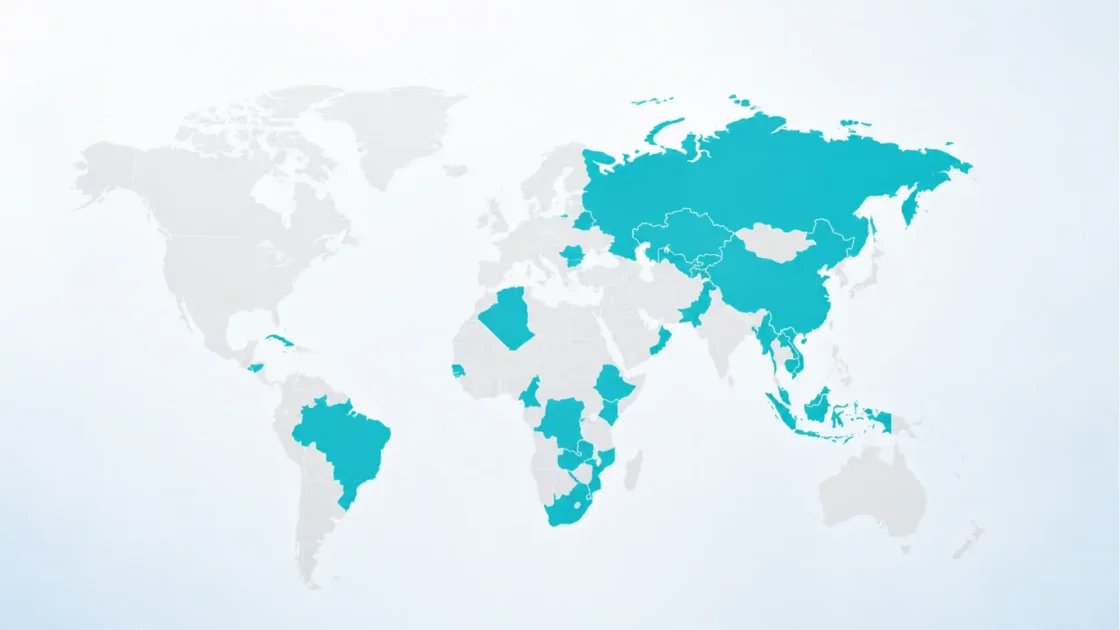
Sakana’s Fugu product page says the service is not currently available in the European Union or European Economic Area while the company works toward GDPR and EU-specific regulatory compliance. It repeats in its FAQ that it does not provide services to users in EU or EEA member states, though availability elsewhere may also depend on network conditions or local rules.
That decision is notable because the product is explicitly marketed as international. It shows that Sakana sees governance work as unfinished, not as a legal checkbox already solved by a global API. The restriction may frustrate potential users, but it is more credible than pretending that complex cross-border data and AI rules do not exist.
The EU AI Act is relevant even where a product is not yet available. Regulation (EU) 2024/1689 establishes harmonised AI rules across the European Union, including obligations that can reach general-purpose AI models and systems depending on their role, deployment and capability.
Fugu creates difficult role questions. Is Sakana a provider of a general-purpose AI system, an intermediary, a deployer of other providers’ models, or some combination? How do documentation and transparency duties work when the final output comes from a hidden multi-model route? How are systemic risks evaluated if the system’s capability derives from a changing pool rather than one fixed foundation model? Which operator is responsible when a downstream worker changes its behaviour?
Those are not questions that a product page can settle. They are questions for contracts, regulators, standards bodies and technical controls.
Sakana’s stance also affects European buyers indirectly. A multinational company may want a global AI workflow. If Fugu is unavailable in the EU/EEA, that company needs geographic routing that prevents accidental use by European staff or personal-data processing tied to Europe. A single API can simplify development, but only if regional controls are explicit and enforceable.
Japan gives Fugu a distinct strategic context
Fugu is a Japanese product in a market often described through American and Chinese companies. That is not merely a branding detail. Japan has strong research institutions, major industrial users of AI, a sophisticated robotics and manufacturing base, and long-standing concerns about demographic pressure, labour shortages and productivity. Yet it has not produced a globally dominant general-purpose model provider on the scale of the largest United States or Chinese firms.
Sakana AI’s stated mission is to build frontier AI in Japan. Its corporate materials place the company in Tokyo and position it around research, commercial products and work with enterprises and public-sector organisations.
Fugu offers a route that may fit Japan’s comparative position. Training a top-tier frontier model from scratch demands extraordinary capital, chips, data access and infrastructure. Building a high-quality coordinator does not eliminate those requirements across the ecosystem, but it can require less direct ownership of the biggest training runs. A company can create value by learning to assemble the global model supply rather than attempting to beat every global provider at its own training-scale game.
That is not a shortcut to independence. Fugu still relies on underlying models. But it can be a form of strategic capability. Japan may not need to own every model weight to create a strong domestic AI layer. It may instead build expertise in agent coordination, domain integration, reliability evaluation, industrial deployment, Japanese-language workflows and governance.
Japan’s government guidance is also relevant. The Ministry of Internal Affairs and Communications and the Ministry of Economy, Trade and Industry published AI Guidelines for Business, with a Version 1.1 provisional English translation dated April 2025. The document frames AI governance around developers, providers and business users, rather than placing responsibility only on model creators.
That multi-actor view suits orchestration. Fugu is not just a model developer’s product. It sits between developers, providers, users and underlying model companies. A governance framework that recognises shared responsibility is more useful than one that assumes AI is a single vendor’s artifact.
“No single-vendor dependency” needs a more exact definition
Sakana’s central commercial phrase—frontier performance without single-vendor dependency—is appealing, but it needs careful parsing.
A company using one direct foundation model can become dependent on that provider’s price, uptime, policy, regional availability, safety behaviour and model roadmap. If the provider changes the model, limits access or raises prices, the company’s product can be disrupted.
Fugu may reduce that direct concentration. The coordinator can potentially use several models and adjust the pool when one becomes unavailable or less competitive. It may create resilience against a single upstream outage. It may let a customer exclude a provider for data or policy reasons.
But the dependency does not vanish. It changes form:
- coordination dependency: the customer depends on Sakana’s routing quality and service availability;
- pool dependency: the customer depends on the models Sakana can lawfully and commercially include;
- contract dependency: the customer depends on Sakana’s agreements and subprocessor structure;
- version dependency: the customer depends on Sakana’s update cycle and evaluation choices;
- observability dependency: the customer depends on what route information Sakana chooses to expose;
- pricing dependency: the customer depends on Fugu’s pricing model even when the underlying work changes.
A better description would be reduced single-model dependence with increased orchestration dependence.
That may still be a major improvement. A company that has been trapped by one provider can benefit from a layer that creates alternatives. The buyer should simply avoid confusing a more diversified supply chain with full autonomy.
The same principle applies to national technology policy. A country may seek AI sovereignty, but an orchestrator that depends on foreign models and foreign cloud infrastructure is not sovereign in the narrow sense. It may nevertheless be strategically useful because it increases bargaining power, local expertise and the ability to substitute components.
Export-control language is commercially powerful and technically sensitive
Sakana’s launch post connects Fugu Ultra’s claims with “frontier capability without the risk of export controls.” The company also says the compared non-public frontier models are not in Fugu’s agent pool.
This framing speaks to a real anxiety. AI capability is increasingly shaped by geopolitics. Access to advanced chips, cloud capacity, model APIs and technical services can be constrained by national rules, commercial policies or regional availability. Companies outside the most favoured markets can find that a leading model is unavailable, restricted, rate-limited or unsuitable for regulatory reasons.
Fugu’s answer is to use models that are publicly accessible and coordinate them well enough to obtain strong results. The proposition is not “we have eliminated all geopolitical constraints.” It is “we can produce a capable system without relying on a specific restricted model.”
That is a more plausible statement, and it is still consequential. If a coordinator can bring together public models in a way that closes part of the gap with less accessible models, it gives customers another path. It also changes the strategic value of open and commercially available models. A model does not need to be the absolute leader by itself to be useful inside a superior system.
The caveat is obvious but crucial. Public availability can change. A model may be accessible in one region and not another. A provider may impose new use restrictions. API terms may change. A government rule may affect hosting, hardware, services or downstream usage. An orchestration layer has to respond to those changes continuously.
Fugu’s geopolitical appeal rests on operational agility, not immunity from geopolitical risk.
The benchmark suite does not solve the independence problem
Sakana’s scores are company-published, and the technical report is a preprint rather than a peer-reviewed production audit. That is not a dismissal. It is normal for fast-moving AI products to publish technical reports before third-party replication catches up. It does mean that the strongest claims should be treated as hypotheses worthy of testing.
Independent evaluation should ask at least five questions.
First, does Fugu beat the best direct model under equal cost and time limits? A system that uses ten times the compute may still be worth using, but the buyer needs to know the trade.
Second, does it generalise across domains not included in its training and benchmark tuning? Agent orchestrators can overfit to benchmark formats or known task structures.
Third, does performance hold when the underlying pool changes? A coordinator trained around one set of models may lose quality when providers update models or alter their behaviour.
Fourth, do the system’s verification stages catch subtle factual errors, or do they mainly improve formatting and confidence? A verifier is valuable only when it has a meaningful chance of disagreeing for the right reasons.
Fifth, does it maintain security and data-policy constraints under adversarial prompts? Multi-agent systems can widen the attack surface because each worker sees different contexts and instructions.
The right posture is neither blind enthusiasm nor reflexive cynicism. Fugu is a credible technical direction supported by relevant research. Its commercial claims need the same treatment that any serious AI product deserves: controlled pilots, repeatable evaluations, adverse-case testing and clear stop conditions.
A compact scorecard for evaluating Fugu in production
Operational questions that matter more than a headline benchmark
| Area | Question to test | Evidence a buyer should request |
|---|---|---|
| Quality | Does Fugu beat the chosen direct-model baseline on our work? | Blind human review and task-level success rates |
| Cost | What is the cost per accepted outcome? | Request-level usage and finance reporting |
| Latency | What are median and tail completion times? | Measured logs by workload type |
| Privacy | Which approved processors can receive content? | Provider-pool controls and data-flow documentation |
| Audit | Can we reconstruct a material decision? | Immutable request IDs, pool versions and route-class logs |
| Reliability | What happens during an upstream outage? | Tested fallback and incident procedures |
A single consolidated table is not a complete due-diligence process, but it captures the shift Fugu creates. The question is no longer merely “Which model writes the best answer?” It is “Which system produces a better outcome under our constraints, and can we prove what it did?”
Security must account for the whole agent graph
Every additional agent, tool and intermediate prompt creates a new potential entry point for attack. An ordinary prompt-injection attack tries to persuade a model to ignore instructions, reveal hidden context or misuse a tool. In a multi-agent system, the attack can travel through intermediate outputs. A malicious document may influence a research worker, whose summary then appears trustworthy to a planner. A code repository may contain instructions disguised as comments. A worker may be induced to request credentials or run unsafe commands.
Sakana’s product page includes a security-assessment example in which Fugu reportedly carried out reconnaissance, XSS and SQL injection checks, authentication review and reporting while staying within a specified scope and avoiding destructive operations. That is a promising product behaviour, but an example is not a security guarantee.
The security design of a system like Fugu should include more than model safeguards. It should include:
- scope binding: workers should receive clear technical boundaries that cannot be erased by a retrieved document;
- least privilege: no worker should receive credentials or tools beyond the minimum needed for its assigned subtask;
- content tainting: untrusted retrieved text should be labelled as untrusted when passed into later agent contexts;
- action approvals: irreversible or external actions should require explicit policy checks or human confirmation;
- tool isolation: code execution, network access and data access should occur in segmented environments;
- output verification: a final answer should not claim an action occurred unless a trusted execution log confirms it;
- red-team testing: prompt injection and data-exfiltration scenarios should be tested against the entire orchestration graph.
NIST’s AI Risk Management Framework describes risk management as a process for organisations that design, develop, deploy or use AI. Its companion profile for generative AI calls attention to risks that are specific to generative systems, including issues that occur across the AI lifecycle.
Fugu is exactly the kind of product that needs a lifecycle view. Its risk does not reside in one model response. It resides in the interaction among coordinator policy, worker behaviour, tool permissions, data handling and user intent.
Verification needs independence, not just another model call
The word “verifier” sounds reassuring. It should not be accepted at face value.
A verifier provides meaningful assurance only when it can identify errors that the first worker is likely to make. If the same model family generates and checks the answer using almost identical instructions and context, the verifier may merely repeat the original mistake with greater confidence. If the verifier is given only the draft and not the source evidence, it may judge style rather than truth. If the coordinator rewards quick agreement, it may stop before a hard contradiction is found.
Better verification strategies include:
- using a different model family for certain checks;
- giving the verifier access to primary sources rather than only another agent’s summary;
- separating fact extraction from interpretation;
- asking the verifier to search for disconfirming evidence;
- testing outputs against executable constraints where possible;
- requiring citations or traceable evidence for high-stakes factual claims;
- allowing the verifier to reject the task as underspecified.
This is where orchestration can be genuinely better than a single model. A well-designed system can force constructive disagreement. A planner may propose an approach. A worker may implement it. A verifier may look for failure cases. A final synthesiser may decide that evidence is insufficient.
But the orchestration policy must value disagreement. If it treats a quick coherent narrative as success, it will turn multiple models into a highly articulate echo chamber.
The challenge is especially strong for research and legal work. A plausible answer with several internal voices can feel more authoritative than a direct model response. That psychological effect raises the bar for evidence presentation. Fugu’s users should not only see a polished conclusion; they should see source boundaries, uncertainty, unresolved contradictions and the limits of what was checked.
Data controls should shape the model pool before the request arrives
Sakana’s custom model-pool capability is among the most important practical features of Fugu. The documentation says a user can create or edit an API key with a custom provider pool and leave only approved providers active.
That control should be treated as a security boundary, not a convenience setting.
A mature deployment might use separate API keys or gateways for:
- public, non-sensitive content where a broad pool is allowed;
- internal engineering content where only selected contracted providers are allowed;
- personal data where strict regional and retention controls apply;
- regulated information where Fugu is not allowed at all;
- experimental work where new providers can be tested without reaching production data.
The key principle is simple: data classification must occur before orchestration. It is too late to decide that a particular provider should not see a prompt after the coordinator has already selected it.
This also means that application teams need a policy layer above Fugu. The application should decide whether a task is eligible for Fugu, which key to use, what maximum context may be sent and whether a human approval is required. Fugu can decide how to coordinate within an authorised pool. It should not become the sole arbiter of data policy.
A company should test the controls with real adversarial cases. Does an excluded provider remain excluded after an API-key update? Does a fallback route ever violate the approved pool? Do internal traces contain content that the main request policy would have blocked? Can an administrator prove which configuration was active at a particular time?
Without that discipline, “one API” can become “one unexamined path for everything.”
The legal responsibilities multiply with every layer
AI governance is often described as a dispute between model creators and model users. Orchestration makes that framing too simple. A Fugu deployment can involve:
- the organisation that developed the coordinator;
- the providers of worker models;
- cloud and infrastructure providers;
- tool providers;
- the customer that deploys Fugu;
- the employees who use it;
- downstream customers affected by outputs;
- data subjects whose information may enter the system.
Japan’s AI Guidelines for Business are useful here because they recognise distinct roles for developers, providers and business users. The guidelines are not a substitute for binding law or sector-specific duties, but they reflect a practical truth: responsible AI requires responsibility to travel through the chain.
For Fugu, contracts should clarify at least:
- what data categories can be processed;
- which underlying providers may receive content;
- where data can be processed;
- what training or service-improvement use is permitted;
- how incidents are reported;
- how long logs and intermediate artefacts are retained;
- what support personnel can access;
- whether customers receive audit evidence;
- what happens when an upstream provider changes a material term;
- which party owns the duty to notify affected users or regulators after a breach.
The hardest questions will arise around causation. Suppose Fugu routes a request to a worker that produces a harmful output, and the final answer carries that output forward. Was the problem caused by the worker’s model, the coordinator’s choice, the customer’s prompt, the user’s misuse, the tool policy or a combination? Legal responsibility may not follow technical causation neatly. That is why traceability matters even when the route is commercially sensitive.
Fugu changes the procurement checklist for AI
Buying a direct model API is already a complex decision. Buying an orchestration layer adds a new set of diligence questions.
A buyer should begin with the use case, not the headline. “We want Fugu” is not a use case. “We want to reduce time spent on reproducible code-repair tickets while keeping source code inside an approved provider pool” is a use case. The latter can be evaluated.
The initial pilot should include direct baselines. Test Fugu against the strongest single model already approved for the task, using the same source materials, same tools, same human-review standard and a defined cost and time budget. Do not compare Fugu against a weak baseline chosen to make the product look good.
The pilot should include failures, not merely success cases. Feed it ambiguous specifications, conflicting documents, stale code, malicious repository content, missing data, unsupported user requests and cases where the correct answer is “I cannot verify this.” A coordinator system should be rewarded for restraint as well as completion.
The pilot should also use version control. Record Fugu model version, API settings, allowed provider pool, prompt templates, application code and output review results. If quality changes later, the team needs to know whether the cause was Fugu, an underlying worker, a prompt modification or a data change.
The goal is not to prove that Fugu is universally superior. The goal is to establish where it is economically and operationally superior for a specific organisation.
Software engineering may be Fugu’s most immediate market
The clearest early market is developer work. Software tasks often have artefacts that support agent loops: repository files, issue descriptions, test suites, build logs, linters, runtime errors and version-control history. A system can learn a great deal from feedback that is more objective than a human preference score.
Fugu’s documentation explicitly positions the standard model for coding and code review, including use with Codex-style tooling.
The best initial use cases are likely to be bounded ones:
- diagnosis of failing tests;
- patch proposals for clearly described bugs;
- pull-request review with organisation-specific checklists;
- migration planning for libraries or APIs;
- test-case generation;
- explanation of unfamiliar code paths;
- incident timeline summarisation;
- documentation updates tied to code changes.
Bounded tasks have two advantages. First, success can often be measured. A patch either passes tests, reduces defects, receives reviewer approval or does not. Second, permissions can be limited. The system can propose changes without being allowed to merge code, access production systems or alter infrastructure.
The danger is moving too quickly from proposal to action. A model that can write a patch and run tests may look ready to deploy. Production software is full of hidden requirements: backward compatibility, performance, security, operational runbooks, contractual commitments, data migrations and human ownership. A high benchmark score on code repair does not mean the system understands the company’s risk appetite.
The correct deployment pattern is supervised autonomy. Let Fugu do more of the investigation, drafting and testing. Keep humans responsible for approval, escalation and changes with broad impact. Measure whether the humans are actually saving time rather than merely reviewing more output.
Research workflows may gain more from coordination than chat does
Fugu Ultra’s suggested use cases—paper reproduction, literature investigation, patent research and scientific work—are telling because these tasks are not simple queries. They involve evidence gathering, interpretation, code, judgement and iterative checking. A single chat answer rarely completes them well.
A research workflow could use orchestration to divide labour:
- one worker identifies candidate sources;
- another extracts methods and datasets;
- another checks whether cited claims appear in the primary text;
- another writes code to reproduce a result;
- another compares outputs with reported figures;
- a verifier compiles discrepancies and open questions.
This structure could reduce the time spent on clerical and exploratory work. It could also make research errors easier to detect if the system records what each worker did.
But research is where polished AI errors can be especially dangerous. The system may invent a citation, confuse two methods with similar names, reproduce a result through data leakage, claim a paper supports a stronger conclusion than it does, or mistake correlation for a validated mechanism. A multi-agent system can amplify the problem if later workers treat earlier summaries as ground truth.
SciCode exists partly because scientific coding tasks expose weaknesses that ordinary code benchmarks do not. It asks models to solve real research problems across science domains where the work involves domain knowledge, reasoning and implementation.
A Fugu-style system may improve performance through role separation, but it does not replace scientific controls. The results still need source inspection, reproduction by independent researchers, error analysis and domain judgement. The proper role is not “AI scientist in place of a scientist.” It is a research workbench that can perform and document parts of the research process under supervision.
Finance, law and medicine require a stricter threshold
The more consequential the decision, the less suitable it is to treat Fugu as a black-box productivity tool.
In finance, an orchestrator may be useful for document review, reconciliation support, policy search, customer-service drafting and code analysis. It should not be allowed to make trading decisions, credit decisions or suitability assessments without rigorous controls, testing and human accountability.
In law, it may assist with document comparison, issue spotting, contract clause extraction, citation collection and first-draft research. It should not be trusted to state legal conclusions without attorney review, especially where underlying models and intermediate sources are not fully visible.
In medicine, it may help with administrative summaries, research triage, coding support and patient-information drafts. It should not be placed in a position where it creates diagnostic or treatment decisions without validation, clinical oversight and a clear regulatory basis.
The reasons are not merely ethical. They are technical. These domains require traceability, data control, explainability proportionate to risk, and a way to challenge an output. Fugu’s hidden route conflicts with those needs unless the commercial product develops stronger governance features.
The OECD AI Principles, updated in 2024, emphasise trustworthy AI that respects human rights and democratic values, including principles around transparency, accountability, safety and security.
A system that dynamically selects hidden workers is not necessarily incompatible with those principles. It does raise the evidentiary burden. The operator must be able to show that it has appropriate controls, not merely assert that the hidden process is intelligent.
A model pool is not automatically a market of ideas
One seductive idea behind orchestration is that several models will compensate for each other’s weaknesses. That is sometimes true. It is not automatic.
Models trained on overlapping internet data, tuned with similar preference methods and exposed to the same popular explanations may share blind spots. They may all repeat a common misconception. They may all fail on a niche domain. They may all follow the same misleading instruction embedded in a retrieved document. A committee of correlated models is not the same as independent expertise.
True diversity requires more than different brand names. It can include:
- different model architectures and training sources;
- different retrieval systems;
- different prompting strategies;
- tools that test claims against external evidence;
- deterministic validators such as compilers, unit tests or structured rules;
- human reviewers with domain knowledge;
- deliberate adversarial roles that are rewarded for finding errors.
Fugu’s research direction suggests that it can learn non-obvious collaboration patterns. That is promising precisely because a good system should not always ask several models the same question in the same way. It should assign roles that create useful contrast.
The proof will lie in error analysis. A serious technical report should eventually show not only average scores but also how Fugu fails: which errors are corrected by verification, which errors survive, when it over-delegates, when it under-delegates, when workers disagree and how the coordinator resolves disagreement.
Average accuracy is useful. Failure structure is more useful for real deployment.
Model updates turn the coordinator into a continuous-learning service
Sakana says it expects to spend roughly two weeks training and evaluating updated Fugu models after a new publicly released frontier model becomes available.
This is a strategic advantage and a governance challenge.
It is an advantage because Fugu does not have to wait for a new foundation-model training run to improve. A new worker model can change the system’s capability profile. An improved code model, a better long-context model or a more capable visual model can become part of the pool. The coordinator can be retrained to use it efficiently.
It is a challenge because every update can change system behaviour. A customer may receive different outputs for the same prompt not because Fugu changed its visible name, but because the model pool or routing policy changed underneath. That matters for reproducibility, regulated workflows and quality assurance.
A mature coordination service should therefore offer:
- explicit version identifiers for the coordinator;
- documented model-pool changes;
- deprecation schedules;
- release notes that describe material behaviour changes;
- a stable pinned version for production use where feasible;
- evaluation reports against prior versions;
- rollback capability;
- alerts when a customer’s configured pool no longer supports an expected route.
The current AI industry often treats model updates as a normal product improvement. In an orchestrated system, updates are closer to changing a staff roster, workflow manual and decision policy simultaneously. The effect may be positive. It still needs change control.
The company’s research pedigree is a strength, not a substitute for evidence
Sakana AI has a credible research identity. Its founders and research record matter. The company’s work on model merging, TRINITY and the Conductor connects directly to Fugu’s core claim that collective intelligence can be learned.
Research pedigree is valuable for two reasons. It suggests that the product emerged from a technical programme rather than a superficial marketing layer. It also gives outsiders a way to examine some of the underlying ideas in papers, rather than relying exclusively on product copy.
But pedigree is not proof that a commercial system is safe, stable or broadly superior. Academic research often studies controlled pools, limited benchmarks and simplified environments. Production systems face outages, adversarial users, shifting providers, privacy demands, customer data and unpredictable workloads.
The strongest interpretation is measured: Sakana has supplied a plausible technical foundation for Fugu. It now needs to show that the commercial system preserves those gains under real conditions.
That will require more independent testing, more transparency around evaluation setup and more practical governance features. It will also require customers to resist the temptation to treat a clever architecture as a finished answer to operational risk.
The business model could pressure the whole model market
Fugu’s importance may extend beyond Sakana’s own revenue. If orchestration systems become widely adopted, they could alter the economics of foundation-model providers.
Today, many providers compete to become the default model in an application. That creates strong lock-in. Once a developer has selected a model, tuned prompts, built evaluation suites and integrated its API, switching costs can become high.
An effective orchestrator changes that relationship. The application could interact mainly with the coordination layer. The coordinator could decide which underlying model receives each task. Providers would compete to be included in pools and to become the preferred worker for certain task types. A model might not need to be the universal leader. It might need to be unusually good, cheap, fast or reliable for a slice of the workload.
This could reward specialisation. A provider with the best code-repair model, the best long-context reader, the best visual reasoner or the best low-cost extraction model may gain value even if it is not the best general chatbot.
It could also create a new bottleneck. The coordinator may become the party that determines which providers receive traffic. That gives it negotiating power, and it may create a new form of platform dependency. Fugu’s “one model to command them all” framing hints at that possibility.
For customers, the ideal market outcome would be a competitive layer of interoperable coordinators, transparent pool policies and easy portability. For coordinator companies, the ideal business outcome may be the opposite: a proprietary routing policy that becomes deeply embedded in customer workflows.
The industry will have to decide whether orchestration becomes an open control plane or a new closed platform.
Open models may become more useful inside orchestration systems
A common criticism of open models is that they may lag behind the strongest proprietary models on certain frontier benchmarks. Fugu’s logic suggests a different way to view them. An open model does not need to beat every proprietary system alone to be strategically useful. It may be the preferred worker for privacy-sensitive tasks, local deployment, cost control, language-specific processing, structured extraction or domain fine-tuning.
Sakana says it plans to expand Fugu’s pool with more expert agents, including open models and Sakana’s own models.
That matters for buyers who want a hybrid architecture. A company could route highly sensitive data to approved local or open models, use external proprietary workers only for eligible tasks and let a coordinator decide within those boundaries. That would create a different kind of AI stack: not fully open, not fully closed, but policy-aware and plural.
The hard part is maintaining quality. A coordinator trained on a broad pool may lose capability when constrained to a smaller approved subset. Sakana’s Fugu product allows provider opt-outs, but Fugu Ultra’s pool is fixed.
That distinction matters. A buyer who needs strict data control may have to accept lower performance or use standard Fugu rather than Ultra. This is not a product flaw. It is the reality of AI systems: more constraints reduce the available search space.
The product should make that trade visible. Customers need to know not only that they can opt out of providers, but what quality, latency and feature changes the restriction is likely to cause.
A Japanese orchestrator does not need to win every global benchmark to matter
The global AI conversation often treats leadership as a league table of model scores. That framing misses a practical point. Countries and companies can create durable value by solving the integration problem around models.
Japan has a large base of enterprises where AI deployment depends on reliability, language support, documentation, security, industrial expertise and service relationships. A Tokyo-based company that understands Japanese business practices and can provide a route into multi-model AI may be commercially important even if it never owns the largest training cluster in the world.
Sakana’s position is also symbolically useful. It shows that frontier AI activity is not confined to the familiar United States-China axis. The company’s research lineage, commercial launch and focus on collective intelligence make it a notable attempt to build a distinct Japanese AI strategy.
That strategy will be judged by adoption, not symbolism. Fugu must prove that it can deliver repeatable results, support enterprise requirements, maintain trust and compete with internal orchestration systems built by large cloud providers and AI labs. It also needs a clear answer to a simple customer question: why should we put Sakana’s coordination layer between our application and the foundation models we already use?
The answer cannot merely be “because it is clever.” It must be “because it gives you measurably better outcomes, lower operational burden and acceptable governance.”
The strongest use cases have structure, feedback and room for review
A useful rule of thumb emerges from Fugu’s design. The best tasks for learned orchestration are likely to have three properties.
Structure: The task can be decomposed into parts, roles or stages. Coding, research review, document investigation and technical diagnosis fit this pattern better than a short conversational request.
Feedback: The system can check its progress through tests, source retrieval, validators, calculations, rules or human review. A patch can be tested. A citation can be inspected. A calculation can be rerun. A broad opinion question has less external feedback.
Review room: The user has enough time and process space to inspect the result. A supervised investigation can benefit from a deeper route. A real-time emergency decision usually cannot.
Tasks without those properties may still benefit from Fugu, but the argument is weaker. An ordinary customer-service reply may not require a team of models. A confidential executive conversation may be unsuitable because the data path is too complex. A high-stakes decision may be unsuitable because the route is too opaque.
This is a useful corrective to universal-model marketing. Fugu may be excellent at certain hard tasks precisely because it is not the right tool for every task.
The limits of the “collective intelligence” metaphor
“Collective intelligence” is an attractive phrase, but it can mislead. Human collectives have different incentives, experiences, accountability and access to reality. Models are not people. They do not possess independent understanding simply because they produce separate text outputs.
A group of models can produce better results for technical reasons: diversity of learned representations, prompt variation, specialised skills, iterative feedback and tool use. It can also produce worse results: redundant work, correlated errors, excessive verbosity, failure to converge, hidden cost and false confidence.
The phrase is most useful when treated as an engineering hypothesis. A collective system is better when the composition creates measurable gains that are not available from its parts alone. That requires evidence, not metaphor.
Sakana’s technical report provides such a hypothesis: adaptive scaffolds can use an LLM team to achieve results beyond individual agents on selected hard tasks.
The proof, over time, will need to be broader. It should include stability across provider updates, controlled comparisons at equal resource budgets, security testing, cost analysis, real-world user studies and independent replication. Collective intelligence is not a product feature that can be assumed. It is a property that must be demonstrated repeatedly.
The most likely near-term outcome is augmentation, not replacement
The practical future for Fugu is not an office where one API replaces engineering teams, researchers or analysts. It is a workplace where people use a deeper AI system for selected parts of difficult work.
An engineer may ask Fugu to investigate a bug, propose a patch, run tests and explain the trade-offs. The engineer still approves the change.
A researcher may ask Fugu Ultra to map a literature field, extract methods, build a reproduction plan and identify conflicts. The researcher still reads the primary sources, checks the methodology and decides what claims are defensible.
A security analyst may use it to structure an assessment, enumerate checks and write a report. The analyst still defines scope, verifies findings and controls actions.
That is less dramatic than replacement rhetoric. It is also closer to how serious organisations adopt new technical systems. They begin with bounded tasks, measure the result, preserve accountability and expand only when evidence supports expansion.
Fugu’s real test is whether it makes expert workers materially better without making their work harder to supervise.
Sakana has put the right problem in view
The AI industry has spent years concentrating attention on model size, benchmark scores and training runs. Those things still matter. Fugu puts another problem in view: the world now contains several strong models with different strengths, constraints and commercial terms. The system that chooses among them may become as important as the models themselves.
Sakana AI’s product is not a final answer to that problem. It carries unresolved questions about independent evaluation, routing opacity, privacy, security, governance and long-term dependency. The EU/EEA restriction is a reminder that commercial readiness varies by jurisdiction. The company’s benchmark claims need external testing. The hidden-route design needs stronger enterprise evidence.
Yet the central idea is difficult to dismiss. A mature AI stack will not consist of one giant model doing everything. It will contain specialised models, tools, policy engines, retrieval systems, validators, memory, interfaces and human reviewers. Someone—or some system—has to coordinate them.
Fugu is Sakana’s attempt to make that coordinator the product.
The company has taken a serious research programme in evolutionary search and learned agent orchestration and turned it into a commercial interface. That is a meaningful shift for Japan’s AI sector and for buyers who do not want their entire AI strategy tied to one model vendor. It also creates a new class of responsibility. The more intelligence is hidden in the coordination layer, the more rigorously that layer must be tested, audited and governed.
The reporting standard used here keeps company claims separate from independently established evidence.
Questions readers are likely to ask about Sakana Fugu
Sakana Fugu is a multi-agent AI orchestration product from Tokyo-based Sakana AI. It uses a language-model-based coordinator to select and combine work from a pool of AI models through one API.
It is presented as one model interface, but its output can be produced through coordination among several underlying models and agent roles.
Sakana AI opened early beta applications on April 24, 2026 and announced its commercial Fugu release on June 22, 2026.
Fugu is designed to balance quality and latency for everyday work. Fugu Ultra uses a deeper expert pool for difficult multi-step work where answer quality is prioritised over speed.
Fugu’s main proposition is orchestration rather than replacing every underlying foundation model with one newly trained giant model. It coordinates a pool of existing powerful models.
It means the system can delegate parts of a task to selected worker models, assign roles such as planning, execution or verification, and combine the work into a final output.
Sakana says Fugu can call instances of itself within an agent pool, allowing a difficult task to be managed through recursive coordination.
No. Sakana says that specific model selection and coe proprietary and are not exposed by design.
For standard Fugu, Sakana documents a custom model-pool option that allows customers to opt out of specific providers. Fugu Ultra uses a fixed pool.
Sakana says Fugu is not currently available in the EU or EEA while it works toward GDPR and EU-specific regulatory compliance.
A direct model API usually sends a prompt to one chosen model. Fugu adds a learned coordination layer that can decide whether and how to involve several worker models.
Sakana reports strong benchmark results for Fugu and Fugu Ultra. Those results should be viewed as company-published evidence until they are independently replicated under clearly comparable budgets and tool settings.
Its public materials include SWE-Bench Pro, TerminalBench, LiveCodeBench, GPQA-Diamond, Humanity’s Last Exam, CharXiv Reasoning, SciCode and other evaluations.
Coding is one of Fugu’s clearest intended uses because software tasks can be decomposed, tested and reviewed. Sakana also documents use with Codex-style developer tooling.
It should be used only inside tightly defined scopes, least-privilege environments and human-reviewed procedures. Multi-agent systems add potential attack paths and should be tested for prompt injection, unsafe tool use and data leakage.
Sakana lists subscription plans from $20 to $200 per month and token-based pricing for Fugu Ultra. The current published Fugu Ultra rate is $5 per million input tokens and $30 per million output tokens below the stated long-context threshold.
Sakana says Fugu does not stack fees for active agents in its token plan. It charges one rate based on the top-tier model in the configured pool, though customers should still measure end-to-end task cost.
Sakana AI is based in Tokyo and was founded in 2023 by David Ha, Llion Jones and Ren Ito. Its work positions Japan as a source of frontier AI research and commercial products.
The most important risks are hidden routing, complex data flows, uneven latency, changing underlying models, correlated errors among agents and insufficient audit evidence in high-stakes deployments.
It should test task-level quality against direct-model baselines, cost per accepted result, latency distribution, approved provider pools, data retention, audit trails, versioning, fallback behaviour and security under adversarial inputs.
Author:
Jan Bielik
CEO & Founder of Webiano Digital & Marketing Agency

This article is an original analysis supported by the sources cited below
Sakana Fugu release announcement
Sakana AI’s June 22, 2026 launch post describing Fugu and Fugu Ultra as a multi-agent orchestration product delivered through one model API.
Sakana Fugu product page
Primary product documentation covering architecture claims, availability, API access, pricing, benchmark reporting and model-pool controls.
Sakana Fugu Technical Report
Technical preprint describing the Fugu model family, its agentic scaffolds, training methods and evaluation claims.
Sakana Fugu beta announcement
Sakana AI’s April 2026 introduction to the early beta and the company’s explanation of recursive model calling.
Sakana Fugu getting started documentation
Developer documentation on custom provider pools and use with OpenAI-compatible tooling.
Sakana AI corporate information
Company background covering its Tokyo base, founders and research areas.
Reuters report on Sakana AI’s early model work
Independent reporting on Sakana AI’s founders, 2024 Japanese-language model release and evolutionary model-merging work.
Evolutionary model merge
Sakana AI’s description of its evolutionary approach to combining model capabilities.
TRINITY An evolved LLM coordinator
Research paper on a compact coordinator that assigns thinker, worker and verifier roles across a model pool.
Learning to orchestrate agents in natural language with the Conductor
Research paper on reinforcement-learning-based orchestration and recursive coordination strategies.
SWE-Bench Pro
Paper describing an enterprise-oriented benchmark for long-horizon software engineering tasks.
Terminal-Bench
Paper describing a benchmark for difficult, realistic command-line tasks in terminal environments.
LiveCodeBench
Paper introducing a continuously refreshed benchmark for code generation, repair, execution and test-output prediction.
GPQA
Paper describing expert-written graduate-level science questions intended to be difficult even with internet access.
Humanity’s Last Exam
Paper introducing a difficult multimodal benchmark across academic domains.
CharXiv
Research on evaluating chart understanding and reasoning over scientific figures.
SciCode
Scientist-curated benchmark for research coding across scientific disciplines.
NIST AI Risk Management Framework
United States National Institute of Standards and Technology framework for managing AI risks across the lifecycle.
NIST Generative AI Profile
Companion resource applying AI risk-management concepts to generative AI systems.
OECD AI Principles
International principles for trustworthy AI, updated in 2024.
Japan AI Guidelines for Business Ver1.1
Japanese government guidance for AI developers, providers and business users.
Japan AI Guidelines for Business resource page
Ministry of Economy, Trade and Industry page hosting the Japanese business AI governance materials.
EU Artificial Intelligence Act
Official text of Regulation (EU) 2024/1689 establishing harmonised rules on artificial intelligence.
| Citing this article? Brief excerpts are welcome. Please credit Webiano.digital, name the author where stated, and include a link to https://webiano.digital and to this original article. Full or substantial republication requires prior written permission. Read our Copyright and Content Use Policy. |
This article was prepared with the assistance of artificial intelligence tools. The content underwent expert human review, and Webiano Digital & Marketing Agency assumes editorial responsibility for its final version and publication.