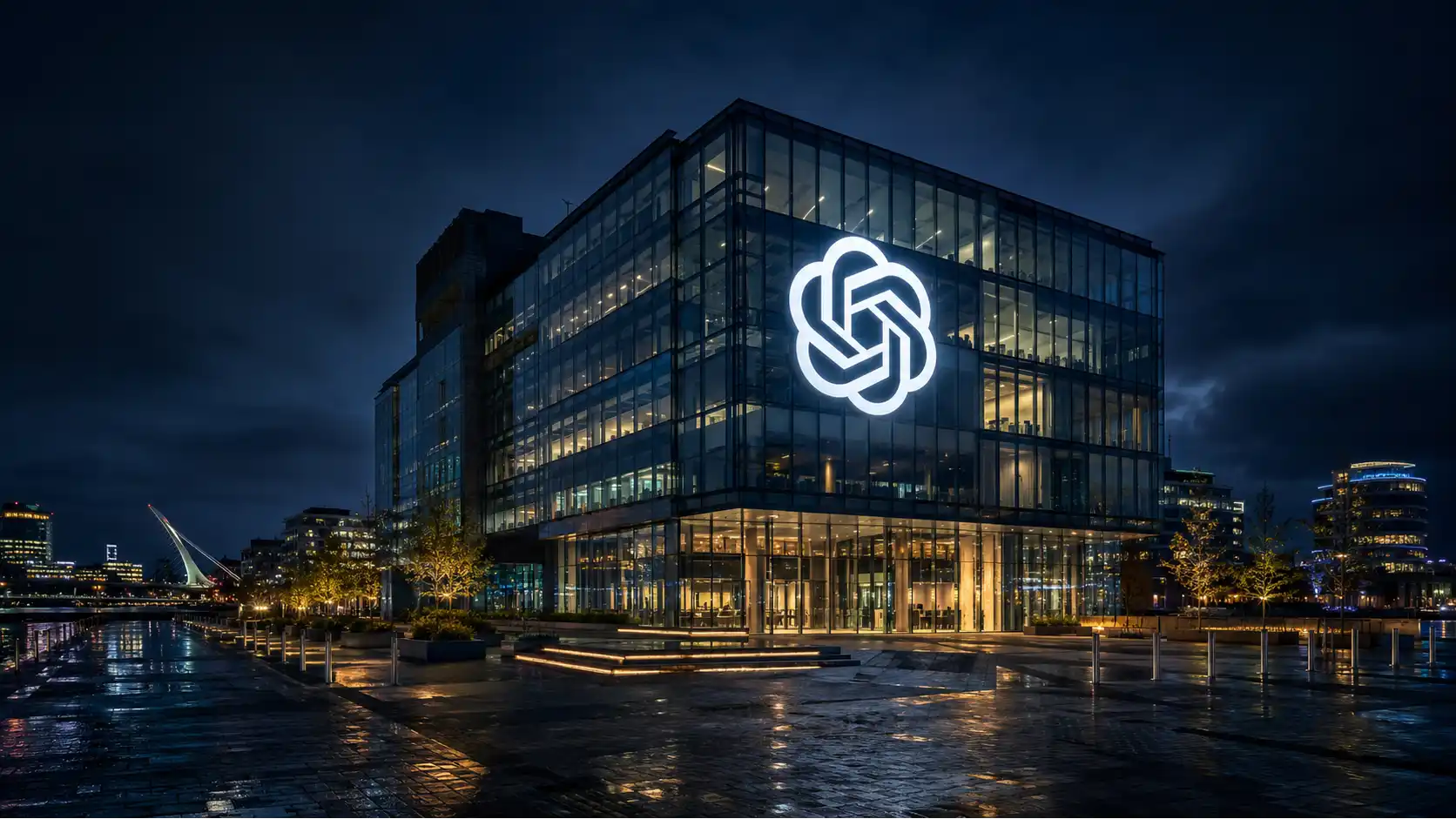
OpenAI confirmed on Monday, July 27, 2026, that it will expand its European headquarters in Dublin from just over 100 employees to 350 within two years. The company is leasing 8,000 square metres, roughly 88,000 square feet, of office space in Dublin’s docklands and plans to hire around 250 additional staff, primarily in engineering and support functions. Reuters reported the news from Dublin the same morning, and it was quickly picked up by the Irish Times, the Irish Examiner, and financial wires across Europe.
Table of Contents
The announcement and its core numbers
The scale of the jump is what makes this more than a routine hiring update. OpenAI is not adding a modest layer of staff to an existing office. It is more than tripling its Dublin headcount, moving from a team that opened its doors in 2023 to a workforce large enough to run sales, engineering, legal, privacy, finance, and user operations functions simultaneously, in one city, under one roof. That is the operational signature of a genuine regional headquarters, not a satellite office.
The new roles will be split across go-to-market work (the commercial and sales side of the business), engineering, user operations, human resources, finance, privacy, legal, and corporate or secretarial functions. This breadth matters. A company hiring only sales staff is chasing revenue. A company hiring across legal, privacy, and corporate governance at the same time is building the infrastructure to operate as a regulated entity inside a jurisdiction with its own supervisory authority, its own courts, and its own political relationships with Brussels. OpenAI is doing both at once.
Emma Redmond, who heads OpenAI’s European Union privacy function and serves as head of OpenAI Ireland, framed the expansion as a long-term commitment rather than an opportunistic hire. “We continue to invest and grow in Ireland as we meet increasing demand across the region,” she said, adding that the new headquarters reflects the company’s intent to help businesses, developers, and communities benefit from its technology. That framing is standard corporate language, but the underlying facts back it up: this is OpenAI’s second major Dublin announcement in roughly three years, and each one has been larger than the last.
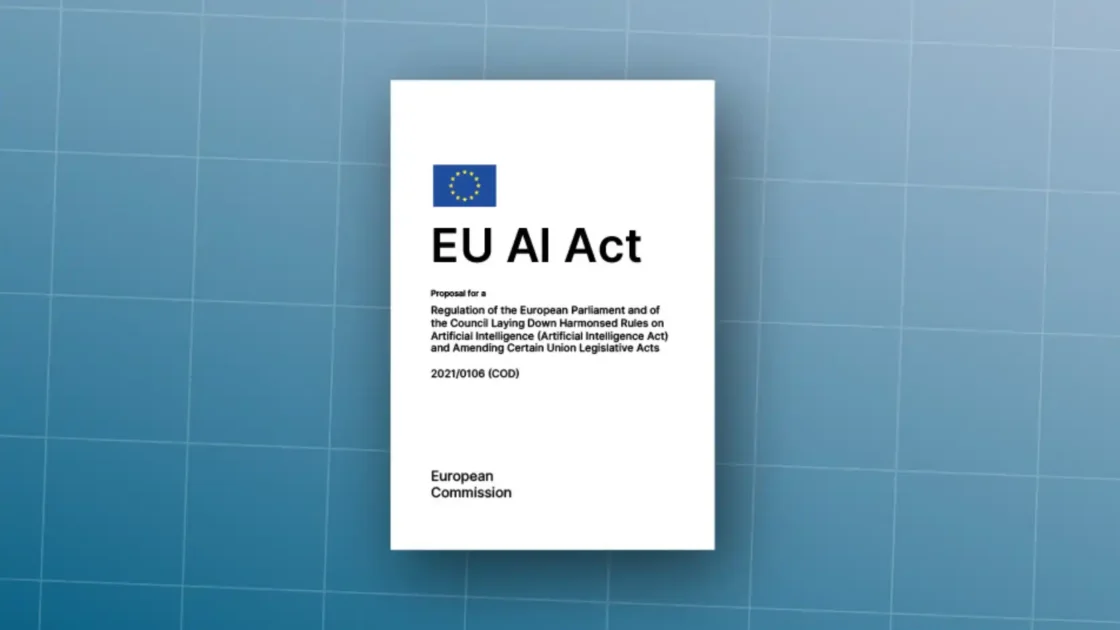
The timing lands two months to the day before the European Union’s AI Act moves into its most consequential enforcement phase. On August 2, 2026, the bulk of the Act’s remaining obligations become fully enforceable, including transparency duties for general-purpose AI models and the broader risk-management framework that applies to systems like ChatGPT. OpenAI’s decision to build out legal, privacy, and compliance capacity in the exact city that hosts its lead EU data protection regulator did not happen by accident. It happened because Dublin is where the regulatory conversation for the entire European market now takes place.
IDA Ireland, the state agency responsible for attracting foreign direct investment, was quick to celebrate the news. Chief executive Michael Lohan said Ireland’s “deep pool of multidisciplinary tech talent, strong research ecosystem and AI-native expertise” made the country a natural base for OpenAI’s continued European scaling. Taoiseach Micheál Martin’s government has spent much of 2026 positioning Ireland as the AI capital of the European Union, a claim that gets a little more credible with every announcement like this one.
What follows is a detailed look at what OpenAI is actually building in Dublin, why the city keeps winning these announcements over rival European capitals, what the regulatory backdrop means for a company of OpenAI’s size, and how this expansion fits into a wider, sometimes contradictory picture of AI companies growing in Ireland while older tech employers cut jobs in the same city.
The new headquarters building and its lease terms
The physical anchor of this expansion is a specific building: the Tropical Fruit Warehouse, an office development on Sir John Rogerson’s Quay in Dublin’s south docklands. The scheme totals around 88,000 square feet, or roughly 8,175 square metres, and is owned and developed by Iput Real Estate, one of Ireland’s largest commercial property companies. OpenAI will take the entire footprint on a long-term lease and plans to relocate its Irish operations there in late 2026.
The choice of building is worth pausing on, because it was not originally built with OpenAI in mind. The scheme’s name is a nod to the docklands’ industrial past, when the area handled shipping and warehousing rather than software and machine learning, but its recent history is pure tech-sector churn. Before OpenAI entered the picture, the space had been earmarked for TikTok, which signed a long-term lease for the building’s full footprint as part of an earlier expansion plan. TikTok pulled back from that commitment in late 2024, leaving prime docklands office space unclaimed just as demand from AI companies was accelerating. OpenAI’s decision to step into that vacated lease is a small but telling detail: one company’s retreat from Dublin created the opening for another company’s advance.
Sir John Rogerson’s Quay sits inside the area known locally as Silicon Docks, a stretch of Dublin’s south inner city that has functioned as the European beachhead for American technology companies for nearly two decades. The location gives OpenAI immediate proximity to Google’s Dublin campus, Meta’s European headquarters, and a dense cluster of legal, financial, and professional-services firms that specialise in servicing multinational tech tenants. For a company trying to stand up legal, privacy, and finance functions quickly, being embedded in that ecosystem is not incidental. It is one of the reasons the ecosystem exists in the first place.
Eight thousand square metres is a substantial commitment by any standard, but it is also a number that tells its own story about intent. Office space of that scale is not leased to accommodate a support desk. It is leased to accommodate the kind of company that expects to keep growing well past its initial headcount target. Property analysts who track the Dublin commercial market have noted that AI companies are now among the most active tenants in the city, a reversal from the pandemic-era pattern in which large tech occupiers were shedding space rather than adding it.
The relocation timeline, land in late 2026, gives OpenAI roughly a year and a half from the announcement to have staff working from the new site while the current, smaller office continues to operate. That overlap period is typical for expansions of this size: companies rarely wait for a new headquarters to be fully built out before beginning to hire against the target headcount. Recruitment for the 250 new roles is expected to run in parallel with the fit-out of the new space, meaning the practical effects of this announcement, job postings, interviews, onboarding, will be visible in the Dublin labour market well before the physical move takes place.
It is also worth noting what this lease is not. It is not a data centre commitment, and it is not tied to any of OpenAI’s compute infrastructure investments, which are handled through entirely separate agreements with cloud partners. The Dublin lease is purely an office-space and headcount commitment. The compute that actually powers ChatGPT and OpenAI’s other products for European users runs through data centre capacity contracted separately, much of it via Microsoft’s Azure cloud. Dublin, in this expansion, is a headquarters for people, not a home for servers.
From TikTok’s abandoned lease to OpenAI’s new home
The story of the Tropical Fruit Warehouse is really two stories stacked on top of each other, and understanding both makes OpenAI’s move easier to read correctly. The first story is TikTok’s. In the period following its rapid Dublin growth, when the company was building out trust-and-safety, content moderation, and data-protection functions to satisfy EU regulators, TikTok signed a long-term commitment for the entire Iput scheme on Sir John Rogerson’s Quay. At the time, the deal was read as another marker of Dublin’s dominance as a European tech hub, a Chinese-owned platform doubling down on Irish office space to demonstrate regulatory good faith to Brussels.
That plan did not survive contact with 2025’s cost discipline. TikTok pulled back from the lease commitment in late 2024, and by 2025 the company was in a very different mode: shedding roughly 300 Dublin jobs, about 10 percent of its local workforce, as part of a global restructuring that shifted resources away from labour-intensive trust-and-safety work and toward automated, AI-driven content moderation. A second, roughly equivalent round of proposed cuts followed in mid-2026. The building TikTok once wanted to fill with human moderators sat available, at least in part, because AI systems were increasingly doing the moderation work TikTok’s Dublin staff used to do.
The second story is OpenAI’s, and it runs in the opposite direction. Where TikTok’s Dublin retreat was driven by AI reducing the need for certain categories of human labour, OpenAI’s Dublin advance is driven by AI increasing the need for a different category of human labour: the engineers, account managers, lawyers, and privacy specialists required to build, sell, and govern the AI systems themselves. The same technological shift that shrank one company’s Dublin footprint expanded another’s, in the same building, within roughly two years.
This is not a coincidence worth over-reading as some grand symbolic handover. Commercial real estate in a market as tight as Dublin’s docklands gets recycled quickly, and Iput would have marketed the vacated space to any qualified tenant regardless of sector. But the sequence is a useful illustration of a broader pattern playing out across Dublin’s tech economy: the AI transition is not simply adding jobs or simply subtracting them. It is redistributing them, often within the same physical footprint, from roles that AI can now perform to roles required to build, deploy, and regulate AI itself.
For OpenAI specifically, taking on a building associated with a competitor’s retreat carries a secondary advantage: speed. Fitting out a large commercial office from a cold shell typically takes longer than adapting a space that was already being prepared for a technology tenant with broadly similar requirements, floor loading for server rooms and dense workstation layouts, reliable network infrastructure, and flexible meeting-room configurations for a mix of engineering and commercial staff. Whatever fit-out work TikTok had commissioned before its withdrawal likely shortened OpenAI’s own path to occupancy, even if the final design will carry OpenAI’s own branding and layout preferences rather than its predecessor’s.
OpenAI’s presence in Ireland since 2023
OpenAI’s Dublin office is only three years old, which makes the scale of this expansion easier to appreciate. The company established its Irish operation in 2023, at a moment when ChatGPT had already become a global consumer phenomenon but OpenAI’s corporate infrastructure outside the United States remained thin. The original Dublin office opened at modest scale, staffed with a small team focused primarily on operational and support functions rather than full regional leadership.
A pivotal shift came in February 2024, when OpenAI restructured its European legal and data-handling arrangements so that OpenAI Ireland Limited became the controller responsible for processing the personal data of users across the European Economic Area and Switzerland. That single legal change did more to define Dublin’s role in OpenAI’s global structure than any hiring announcement before or since. It meant that, going forward, complaints, investigations, and regulatory oversight concerning OpenAI’s handling of European user data would run through the Irish Data Protection Commission rather than through a patchwork of national regulators, each acting independently. Dublin stopped being just a support office at that point and became OpenAI’s legal centre of gravity for the entire European market.
Through 2024 and into 2025, Dublin’s headcount grew steadily but without the kind of headline-grabbing jump this latest announcement represents. The office absorbed user-operations staff, a modest engineering presence, and the beginnings of a dedicated privacy and legal function under Emma Redmond’s leadership. By the time of this expansion announcement, OpenAI’s Dublin team stood at just over 100 people, small by the standards of Google, Meta, or Microsoft’s much larger and much older Irish operations, but already large enough to function as a genuine regional hub rather than a token EU presence.
What changed between that steady early growth and the tripling announced in July 2026 is, in large part, the scale of OpenAI’s business itself. The company’s global revenue has grown from roughly 2 billion dollars in annualised terms at the end of 2023 to more than 25 billion dollars by early 2026, and enterprise revenue, the segment most directly tied to the kind of sales, account management, and technical support work Dublin’s new hires will perform, has grown from a marginal share of the business to more than 40 percent of it. A hundred-person Dublin office was proportionate to OpenAI’s 2023 footprint in Europe. It was never going to be proportionate to a company generating tens of billions of dollars a year with enterprise customers spread across every EU member state.
The three-year arc from a small operational office to a 350-person regional headquarters also mirrors, in compressed form, the path that older tech multinationals took over much longer periods. Google, Microsoft, and Meta each spent the better part of a decade scaling their Dublin operations from modest beachheads into full-fledged European headquarters employing thousands. OpenAI has covered a comparable strategic distance, from token presence to full regional hub, in roughly a third of the time, a pace that reflects both the speed of the AI industry’s growth and the degree to which Dublin’s institutional infrastructure, from IDA Ireland’s investment-attraction machinery to the established GDPR one-stop-shop mechanism, was already primed to receive exactly this kind of company.
What the 250 new roles will actually do
OpenAI’s own description of the expansion breaks the new hiring into eight functional areas: go-to-market, engineering, user operations, human resources, finance, privacy, legal, and corporate or secretarial work. That list is worth reading closely, because it describes the anatomy of a company transitioning from a product-led start-up mindset to a full multinational operating structure, all inside one office.
Go-to-market hiring covers the commercial engine: account executives, solutions engineers, partner managers, and the customer-success staff who work directly with the enterprises signing contracts for ChatGPT Enterprise, the API, and OpenAI’s growing suite of business tools. This is the most directly revenue-linked category of the new roles, and it is also the category most exposed to how quickly European enterprise demand for generative AI tools continues to grow. If that demand plateaus, go-to-market is the function most likely to see hiring plans revised.
Engineering, described by OpenAI as one of the two primary hiring priorities alongside support, is a broader category than it might first appear. Some of this hiring will support Europe-specific product requirements, features, safeguards, and integrations that respond to EU regulatory demands that don’t apply, or apply differently, in the United States. Some will support infrastructure and reliability work for the growing volume of European traffic hitting OpenAI’s systems. And some will simply reflect a broader trend across the AI industry: as models get more capable, the surrounding engineering work needed to productise them safely and reliably grows rather than shrinks.
User operations is the function most directly tied to scale. With more than 800 million weekly active users globally and a rapidly growing base of European enterprise customers, OpenAI needs staff who can handle account issues, platform abuse reports, billing disputes, and the day-to-day friction that comes with running services at that volume. This is typically the largest single category of headcount in a regional hub of this kind, and it is likely to be true here as well.
The remaining categories, human resources, finance, privacy, legal, and corporate or secretarial functions, are less visible from the outside but arguably more consequential for what Dublin represents strategically. A company does not build out a full legal, privacy, and corporate-secretarial function in a single city unless it intends that city to carry real decision-making authority, not merely execute instructions handed down from headquarters in San Francisco. Privacy hiring specifically ties directly to OpenAI Ireland Limited’s role as the GDPR controller for European users, a role that carries ongoing obligations around data subject requests, breach notifications, and engagement with the Irish Data Protection Commission that only grow as the user base grows.
Corporate and secretarial roles, often overlooked in coverage of expansions like this, are the unglamorous machinery of running a registered Irish company: board minute-keeping, statutory filings, compliance with Irish company law, and the administrative backbone that keeps OpenAI Ireland Limited in good standing as a legal entity. Their presence on the hiring list is a small but firm signal that Dublin is being built to function as a real corporate seat, not just a large branch office.
Engineering hiring and the shape of the Dublin build-out
Engineering headcount in a regional office like Dublin’s rarely means the same thing as engineering headcount at a company’s primary research campus. OpenAI’s core model-training and research work remains concentrated in the United States, where the bulk of its compute infrastructure, senior research staff, and frontier-model development is based. Dublin’s engineering hires are far more likely to sit closer to the product, platform, and applied-engineering side of the business: the systems that connect models to customer-facing products, the infrastructure that serves European traffic with acceptable latency, and the tooling that lets enterprise customers integrate OpenAI’s models into their own systems.
This distinction matters for how the expansion should be read. It is not evidence that OpenAI is relocating frontier AI research to Ireland, and nothing in the company’s public statements suggests that. It is evidence that OpenAI needs a substantial applied-engineering presence physically close to its European customers, European data-residency requirements, and European regulators, a need that has grown sharply as enterprise adoption of generative AI has accelerated across the region.
European enterprises adopting AI tools frequently have requirements that differ genuinely from a typical American customer: data must sometimes stay within the EU or EEA, integrations must satisfy sector-specific regulation, in finance, healthcare, and the public sector especially, and technical documentation must satisfy transparency obligations under the EU AI Act that don’t have a direct American equivalent. Engineers based in Dublin, working alongside the legal and privacy staff also being hired there, are better positioned to build and maintain features that satisfy those requirements than engineers working exclusively from California.
There is also a practical talent-market logic behind concentrating engineering hiring in Dublin rather than spreading it across smaller offices in multiple EU capitals. Ireland’s tech labour market, despite the talent shortages discussed later in this article, still offers a critical mass of software engineers with experience at Google, Meta, Microsoft, Stripe, and a dense cluster of well-funded Irish and international start-ups. Recruiting fifty or a hundred engineers in a single city with that kind of existing talent pool is considerably easier than recruiting the same number spread across, say, Berlin, Amsterdam, and Warsaw simultaneously.
Salary competition for that talent is intense, and OpenAI is entering a market where Anthropic, Google, Meta, and Microsoft are all actively bidding for the same relatively small pool of experienced AI and platform engineers. Anthropic’s own Dublin expansion, announced in March 2026, reportedly offered salaries as high as 355,000 euros for senior roles, a figure that sets a visible benchmark OpenAI’s Dublin recruiters will need to match or beat to compete for comparable candidates. This pattern, more than any single announcement, is likely to be the most immediate effect of OpenAI’s expansion on the ground in Dublin: upward pressure on already-higher tech salaries in a city where competition for senior engineering talent was already fierce before this announcement.
The engineering build-out will also need to accommodate the practical realities of European data protection law in ways that go beyond simple compliance box-ticking. Engineers working on features that process EU user data need to understand not just GDPR’s headline principles but the specific guidance the Irish Data Protection Commission has issued on AI training data, retention periods, and user rights, guidance that has evolved substantially since 2023 and continues to shift as EU regulators gain more experience with generative AI specifically.
Sales, support and go-to-market roles in the new hub
If engineering hiring reflects OpenAI’s product and compliance needs, the go-to-market and support side of the Dublin expansion reflects something simpler: revenue. OpenAI’s enterprise business has grown from a marginal share of overall revenue to more than 40 percent within roughly two years, and Europe represents one of the fastest-growing regional segments within that enterprise base. Selling and supporting that business at scale requires a workforce physically present in the region, capable of speaking directly with European finance directors, IT procurement teams, and compliance officers in their own time zones, and often in their own languages.
Account executives and solutions engineers based in Dublin will typically cover multiple European markets rather than a single country, a common structure for regional hubs of this kind. Ireland’s position inside the EU single market but outside continental Europe’s working-hour overlap complications makes it a workable base for covering both western European markets during standard business hours and, with some flexibility, extending coverage toward central and eastern Europe as needed.
Customer support and user operations, distinct from the go-to-market sales function, will likely make up the largest single block of the new hires by headcount even if they receive less attention in press coverage than engineering roles. Support work of this kind, handling billing questions, account access issues, platform misuse reports, and the everyday friction of running consumer and enterprise products at a scale of hundreds of millions of users, is inherently labour-intensive and does not automate away as quickly as some other categories of tech-sector work, even at a company whose entire product is built on automation.
There is a specific irony worth noting here. OpenAI, a company whose core product increasingly automates tasks once done by humans, is itself hiring several hundred humans to do support and operations work that AI systems have not yet been trusted to handle end-to-end, at least not without genuine human oversight. Automated support tools exist and are improving quickly, but complex account disputes, nuanced content-policy judgment calls, and enterprise relationship management still require human staff, and OpenAI’s Dublin hiring plan reflects that reality rather than contradicting it.
The go-to-market function will also carry increasing weight as OpenAI’s enterprise sales motion in Europe matures from an early-adopter phase, largely digital-native companies and technically sophisticated early customers, toward a broader base that includes traditional large enterprises in banking, insurance, manufacturing, and the public sector. Selling into those more conservative, more heavily regulated industries typically requires longer sales cycles, more detailed technical and compliance documentation, and closer engagement with legal and procurement teams, all of which point toward a need for exactly the kind of combined sales-plus-legal-plus-privacy staffing model OpenAI appears to be building in Dublin.
Legal, privacy and compliance functions moving to Dublin
Of all the functional categories in OpenAI’s hiring plan, legal and privacy carry the most direct connection to why Dublin, specifically, rather than any other European capital, was the obvious choice for this expansion. OpenAI Ireland Limited has served as the data controller for European Economic Area and Swiss users since February 2024, a role that makes the Irish Data Protection Commission the company’s lead supervisory authority under the GDPR’s one-stop-shop mechanism. That legal architecture only functions properly if the Irish entity has genuine substance: real decision-making authority over data processing, real staff capable of engaging with the regulator, and real accountability that cannot be waved away as a formality controlled entirely from the United States.
Building out legal and privacy headcount in Dublin is, in effect, OpenAI reinforcing the substance behind that legal structure. Regulators and privacy advocates have previously questioned whether Dublin-based “main establishment” status for companies like Meta, Google, and now OpenAI reflects genuine local decision-making power or is simply a jurisdictional convenience that lets a company benefit from a single lead regulator rather than facing potentially stricter scrutiny from multiple national authorities simultaneously. Adding privacy and legal staff who work day-to-day out of the Dublin office, rather than simply routing paperwork through Ireland while decisions are made elsewhere, is one of the more concrete ways a company can answer that criticism.
The compliance workload facing OpenAI’s Dublin legal team is set to grow substantially over the next two years regardless of this specific hiring announcement. The EU AI Act’s remaining major obligations become enforceable from August 2, 2026, just over a week after this expansion was announced, bringing new transparency, documentation, and risk-management requirements for providers of general-purpose AI models. Ongoing GDPR obligations, data subject access requests, breach notification duties, and continued engagement with the DPC’s evolving guidance on AI training data, add a second, parallel stream of regulatory work that shows no sign of slowing down.
Legal hiring will also need to cover more mundane but no less important ground: employment law compliance as headcount triples, commercial contract work supporting the growing enterprise sales pipeline, intellectual property matters connected to OpenAI’s products and training data, and the corporate governance work required to keep OpenAI Ireland Limited properly constituted as its role and headcount both expand. Each of these areas requires specialised legal expertise, and building that expertise locally, rather than relying on outside counsel for every matter, is both faster and cheaper at OpenAI’s current scale.
Privacy staff specifically will need to manage the tension between OpenAI’s global product development, much of which happens in the United States, and the specific rights EU users hold under GDPR that go beyond what US privacy law requires: rights to access, rectify, and in some circumstances delete personal data, rights around automated decision-making, and increasingly, rights and expectations that are being actively shaped by ongoing regulatory guidance on how large language models handle personal data encountered during training and use. Ireland’s DPC has been engaging with major AI companies, including Google, Meta, and OpenAI, on exactly these questions since 2024, and that engagement is expected to intensify rather than ease as the AI Act’s obligations layer on top of existing GDPR requirements.
Why Ireland became Europe’s AI headquarters address
OpenAI’s decision to expand rather than relocate is, in one sense, the least surprising part of this entire story. Dublin has spent nearly two decades accumulating the specific combination of advantages that make it the default answer to the question “where should an American tech company put its European headquarters,” and the AI industry has simply inherited that default rather than questioning it.
The most commonly cited factor is Ireland’s corporate tax regime, and it is a real factor, though not the only one. But tax alone does not explain why AI companies specifically keep choosing Dublin over other low-tax jurisdictions within the EU. What Dublin offers that few competitors can match is the combination of a low corporate tax rate with an English-speaking, well-educated workforce, membership in both the EU single market and, historically, close commercial ties to the United States, and, critically for AI companies specifically, an established regulatory relationship through the Data Protection Commission that companies like Google, Meta, Apple, and TikTok have already tested and normalised over the preceding fifteen years.
That regulatory familiarity cuts both ways for a company like OpenAI. On one hand, choosing Dublin means stepping into a well-understood legal framework, the GDPR one-stop-shop mechanism, with a regulator that has extensive institutional experience handling exactly this category of company. On the other hand, it also means stepping into a regulator whose track record with big tech has drawn sustained criticism from privacy advocates and other EU member states, who have at times argued the DPC moves too slowly and too leniently given the scale of the companies it oversees. OpenAI inherits both the convenience and the controversy that come with that arrangement.
Ireland’s government has actively cultivated this position rather than simply benefiting from it passively. The country’s Digital and AI Strategy 2030 explicitly targets AI companies as priority investment targets, and Ireland’s decision to host an International AI Summit as part of its 2026 presidency of the Council of the European Union, opening what the government has branded European AI Innovation Month, is a deliberate attempt to cement Dublin’s position as the AI industry’s European home before rival capitals, Paris, Berlin, or Amsterdam among them, can make a stronger competing case.
The competitive stakes for Ireland are real, and not purely symbolic. Foreign multinationals, concentrated heavily in technology and pharmaceuticals, already employ around 11 percent of the Irish workforce, an unusually high concentration by European standards that leaves the country’s economy materially exposed to decisions made in Silicon Valley boardrooms. Every AI company that chooses Dublin over a rival capital reinforces that concentration; every one that chooses somewhere else, or that later scales back its Irish operations, as TikTok and Meta both have in parts of their business over the past two years, is a reminder of how much of Ireland’s tech-sector prosperity depends on decisions made thousands of kilometres away.
Dublin’s Silicon Docks and its tenant history
The nickname Silicon Docks, applied to the cluster of office developments along Dublin’s south quays and Grand Canal Dock area, has been in use for well over a decade, and its tenant list reads like a directory of the modern internet’s largest companies. Google’s Dublin campus anchors the area, having grown from a modest EMEA support office in the early 2000s into one of the company’s largest sites outside the United States. Meta, still widely known by its old name in much local commentary, occupies substantial space nearby, having designated Dublin as its European headquarters and content-moderation hub for years. Microsoft, TikTok, LinkedIn, and Twitter’s successor company X have all held substantial Dublin footprints at various points, alongside a dense layer of smaller fintech, SaaS, and professional-services firms that have grown up around the larger anchors.
This concentration produces a kind of infrastructure that is difficult for any single company to replicate independently: a deep bench of specialist commercial lawyers experienced in exactly the kind of GDPR and corporate-structuring questions large tech tenants face; recruitment agencies and headhunters attuned to the specific skill sets AI and platform engineering roles require; commercial landlords like Iput experienced in fitting out large floorplates to the exacting technical specifications tech tenants demand; and a local government apparatus, from IDA Ireland’s investment team to the Department of Enterprise, well practised in negotiating with, and publicly celebrating, exactly this category of investor.
Silicon Docks has not been immune to the broader tech-sector volatility of the past several years, however. The area has absorbed considerable layoffs alongside its expansions: Meta’s global restructuring has repeatedly touched its Irish operations, TikTok has proposed two separate rounds of roughly 300 job cuts within about eighteen months of each other, and other large occupiers, Salesforce and Indeed among them, have trimmed Irish headcount as part of broader global cost discipline. The area’s office vacancy rate has fluctuated accordingly, creating exactly the kind of intermittent availability that allowed OpenAI to step into a building TikTok had originally committed to and then abandoned.
For OpenAI, locating in Silicon Docks rather than elsewhere in Dublin, the city’s financial district, or one of the newer commercial developments further from the city centre, is as much a statement of intent as a practical choice. It places the company physically among the peers and rivals it is competing with for talent, for enterprise customers, and for regulatory attention, rather than at arm’s length from them. Anthropic’s own Dublin office, similarly, sits in a central location rather than a peripheral business park, a choice that reflects the same logic: for AI companies competing intensely for the same relatively small pool of specialised talent, proximity to that talent pool’s existing employers matters more than marginal savings on rent in a less central location.
The area’s continued evolution, from an internet-era hub built around search, social media, and e-commerce companies toward an AI-era hub increasingly defined by OpenAI, Anthropic, and the AI-focused arms of the older incumbents, illustrates a broader pattern in how technology clusters persist even as the specific technology driving them changes. The office parks, the talent networks, and the regulatory relationships built up over the social-media and cloud-computing era did not need to be rebuilt from scratch for the AI era. They simply needed a new generation of tenants, and Dublin found them.
Ireland’s corporate tax regime and its role in the decision
No serious account of why American technology companies cluster in Dublin can avoid discussing tax policy, and it would be dishonest to pretend Ireland’s corporate tax regime plays no role in decisions like OpenAI’s. Ireland has maintained a 12.5 percent headline corporate tax rate for trading income for decades, among the lowest in the developed world, and has built an entire economic development strategy around using that rate, combined with a network of double-taxation treaties and an EU single-market membership, to attract foreign direct investment from multinational companies, particularly in technology and pharmaceuticals.
That system has evolved under sustained international pressure. The OECD’s global minimum tax framework, agreed in 2021 and phased in over subsequent years, established a 15 percent minimum workable rate for large multinational groups, a change Ireland itself signed onto despite the short-term hit to its competitive tax positioning. The practical effect has been to narrow, though not eliminate, the tax advantage Ireland offers relative to other EU jurisdictions for the largest companies, those with global revenues above the minimum-tax threshold. OpenAI, given its scale and revenue growth, likely falls within scope of these rules for at least some portion of its international structure, meaning the pure tax arbitrage advantage of a Dublin base is smaller today than it was for the generation of tech companies, Google, Apple, Meta, that established their Irish operations in the 2000s and early 2010s.
What Ireland has increasingly leaned on instead, as the pure tax advantage narrows, is the surrounding package: the English-speaking workforce, the EU regulatory relationship, the deep talent and professional-services ecosystem, and, for AI companies specifically, straightforward first-mover advantage in having already built the institutional muscle memory for hosting exactly this category of tenant. Foreign multinationals continue to cite Ireland’s highly educated workforce as a primary factor in location decisions, alongside, though somewhat less prominently than in the past, the tax regime itself.
For OpenAI, a company still years away from sustained profitability and burning tens of billions of dollars annually as it scales infrastructure and headcount, the immediate tax benefits of an Irish structure are less consequential than they would be for an already-profitable company optimising its functional tax rate on substantial earnings. The more relevant calculation for OpenAI at this stage is talent access, regulatory relationship-building, and market proximity, with tax efficiency functioning as a longer-term consideration that becomes more sizable once, and if, the company’s European operations become durably profitable.
This does not mean tax considerations are irrelevant to OpenAI’s structuring decisions. Multinational companies routinely establish intellectual property holding structures, transfer pricing arrangements, and intercompany service agreements that route through low-tax jurisdictions regardless of where day-to-day operational staff are physically located, and Ireland remains an attractive jurisdiction for exactly that kind of structuring even under the OECD minimum-tax framework. But the headline story of this particular announcement, 250 new jobs across engineering, sales, legal, and support functions, is fundamentally an operational and commercial decision rather than a tax-driven one, even if tax considerations run quietly underneath it.
The GDPR one-stop-shop mechanism explained
Understanding why OpenAI’s Dublin expansion matters for the whole of Europe, not just for Ireland, requires understanding a specific piece of EU legal architecture: the GDPR’s one-stop-shop mechanism. Under the General Data Protection Regulation, a company that processes personal data across multiple EU member states would, absent this mechanism, potentially face separate investigations, separate enforcement actions, and separate fines from the data protection authority of every single member state where it has users or operations. For a company operating across all 27 EU countries, that could mean juggling dozens of parallel regulatory relationships simultaneously.
The one-stop-shop mechanism solves this by allowing a company to designate a “main establishment,” typically the EU location where the company makes its most notable decisions about data processing, and have that location’s national data protection authority act as the company’s lead supervisory authority for cross-border processing activities across the entire Union. Other national authorities retain some powers, particularly for urgent, localised concerns, but the lead authority coordinates the overall regulatory relationship and takes primary responsibility for cross-border investigations and enforcement decisions.
This is precisely why so many large tech companies have chosen Ireland as their EU base, independent of tax considerations entirely. Google, Meta, Apple, TikTok, and now OpenAI have all designated the Irish Data Protection Commission as their lead supervisory authority, a choice available to any company that establishes genuine decision-making capacity for its EU data processing operations in Ireland. Once that designation is in place, complaints from users anywhere in the EU regarding that company’s data processing must generally be routed through, or coordinated with, the DPC, rather than being investigated independently by, say, the French or German data protection authorities.
The mechanism has attracted sustained criticism since shortly after GDPR came into force in 2018. Critics, including some other national data protection authorities and privacy advocacy groups, have argued that concentrating lead-authority status for so many of the world’s largest tech companies in a single, relatively small national regulator creates both a resourcing bottleneck, the DPC must build and maintain expertise across an enormous range of complex, fast-moving technology issues, and a structural risk that a single regulator’s institutional culture, historically seen by critics as more measured and less aggressive than some continental counterparts, ends up shaping enforcement outcomes for the entire European Union’s population.
For OpenAI, formalising its main-establishment status in Ireland in February 2024 was a deliberate, proactive legal move rather than something imposed on the company externally. It followed a period, in 2023, when OpenAI faced parallel, uncoordinated regulatory scrutiny from multiple European data protection authorities simultaneously, including a temporary suspension of ChatGPT in Italy and separate inquiries opened by regulators in France, Germany, Spain, and Poland. Establishing OpenAI Ireland Limited as the GDPR controller for EEA and Swiss users consolidated that fragmented scrutiny under a single lead authority, a move that mirrored exactly the path Google, Meta, and other large platforms had taken years earlier for the same structural reasons.
OpenAI Ireland Limited and the Data Protection Commission
OpenAI Ireland Limited is registered with its office at the Liffey Trust Centre on Sheriff Street Upper in Dublin 1, and under the company’s European privacy policy, it functions as the controller responsible for the personal data of users in the European Economic Area and Switzerland. That legal status carries specific obligations: OpenAI Ireland must respond to data subject access requests, coordinate breach notifications, maintain records of processing activities, and serve as the primary point of contact for the Data Protection Commission on matters concerning ChatGPT, the API, and OpenAI’s other European-facing products.
The DPC’s relationship with OpenAI has already produced substantive regulatory activity in the roughly two years since the main-establishment designation took effect. Following the transfer of case files related to a 2023 ChatGPT data breach and other GDPR concerns, the DPC assumed responsibility for matters previously being investigated independently by other national authorities. Italy’s data protection authority, the Garante, had already imposed a 15 million euro fine on OpenAI in late 2024 following its own investigation into breaches that occurred before the Irish main-establishment designation took effect, a decision OpenAI said it would appeal. Because the Irish designation only covers processing activity from February 2024 onward, historical matters like the Italian fine remained subject to the jurisdictions where the underlying conduct originally occurred, even as the DPC took over as lead authority for anything happening after that date.
This creates a useful, if slightly technical, distinction for understanding OpenAI’s regulatory exposure going forward. Matters arising from conduct before February 2024 remain scattered across the various national authorities that investigated them at the time. Matters arising from conduct after that date route through the Irish DPC as lead authority, with other national regulators retaining a coordinating and, in urgent cases, an independent enforcement role, but generally deferring primary responsibility to Dublin.
Building out a dedicated legal and privacy team physically located in Dublin gives OpenAI a more direct, faster channel for engaging with the DPC on the kind of routine and not-so-routine matters that arise as its European user base and enterprise customer base both continue to grow. Regulatory relationships of this kind benefit substantially from continuity and direct working familiarity between company staff and regulator staff, something considerably easier to build when the relevant OpenAI personnel are based in the same city as the DPC’s own offices rather than coordinating remotely from California.
The DPC itself has faced its own scrutiny over how well it can oversee companies of this scale and complexity. Ireland’s data protection commissioner, Helen Dixon, has previously cautioned against rushing into bans or aggressive enforcement actions against generative AI providers, arguing that hastily constructed prohibitions “really aren’t going to stand up” to legal challenge, a position that some privacy advocates read as appropriately cautious and others read as symptomatic of a regulator reluctant to challenge the large multinational companies that are also central to Ireland’s own economic strategy. Whatever view one takes of that debate, OpenAI’s decision to deepen its Dublin presence, including its legal and privacy functions specifically, reinforces rather than resolves the underlying tension between Ireland’s role as a regulator and its role as a host economy dependent on the goodwill of the companies it regulates.
Past GDPR investigations and the Italian Garante fine
OpenAI’s regulatory history in Europe did not begin smoothly, and understanding that history helps explain why the company invested so heavily, so early, in establishing a formal Irish presence. In April 2023, Italy’s data protection authority, the Garante, took the unusual step of temporarily suspending ChatGPT’s availability in the country, citing concerns about the lawful basis for processing user data, the accuracy of information the chatbot generated about individuals, and the absence of adequate age-verification mechanisms to protect minors. The suspension was lifted after roughly a month, once OpenAI made a series of changes to its privacy disclosures, added an option for European users to object to having their data used for model training, and introduced age-verification measures.
That episode triggered a broader wave of scrutiny across the European Union. The European Data Protection Board, the umbrella body coordinating national data protection authorities, established a dedicated ChatGPT task force in 2023 to work toward a harmonised European approach to regulating generative AI under existing data protection law, rather than allowing each member state to pursue independent, potentially inconsistent investigations. France, Germany, Spain, Poland, and Ireland itself all opened separate inquiries into aspects of OpenAI’s data handling during this period.
The Garante’s investigation into the conduct that triggered the original 2023 suspension continued even after OpenAI’s main-establishment designation shifted lead-authority responsibility to Ireland for future matters. In a decision dated November 2, 2024, and published alongside a formal announcement in December 2024, the Garante concluded that OpenAI had breached multiple provisions of the GDPR concerning transparency, lawful basis for processing, and breach notification obligations connected to a March 2023 data breach, in the end imposing a 15 million euro fine. OpenAI said it would appeal the decision. Because the underlying conduct predated the February 2024 shift to Irish main-establishment status, the Garante retained jurisdiction to conclude its investigation and issue the fine despite Ireland’s subsequent designation as lead authority for the company’s ongoing operations.
The distinction matters because it illustrates something important about how the one-stop-shop mechanism actually functions in practice: it is not retroactive. A company cannot resolve historical regulatory exposure simply by establishing an Irish entity after the fact; investigations already underway in other jurisdictions at the time of the shift generally continue in those jurisdictions to their conclusion. What the Irish designation does change is exposure going forward, meaning the practical benefit of Ireland’s one-stop-shop status accrues over time, growing more major with each year that passes without a fresh wave of independent, uncoordinated national investigations.
For OpenAI, the two-plus years since the Irish designation took effect appear to have produced a comparatively quieter regulatory period than the tumultuous 2023 stretch, at least in terms of formal enforcement actions specifically targeting OpenAI’s core data-processing practices. That relative calm should not be read as regulatory disengagement, however. The EDPB’s broader work on how AI models should lawfully be trained on personal data, culminating in a formal Article 64 opinion in late 2024, continues to shape expectations for all large language model providers, OpenAI included, and the DPC has continued parallel engagement with Google, Meta, and X over their own AI training practices, engagement that inevitably informs how the regulator approaches OpenAI as well.
The EU AI Act deadline arriving in August 2026
The single most important piece of regulatory context for understanding the timing of OpenAI’s Dublin expansion is the EU AI Act’s implementation calendar, and specifically the deadline falling almost immediately after this announcement. The Act entered into force in August 2024 and applies on a phased timeline rather than all at once. Provisions banning certain prohibited AI practices and establishing baseline AI literacy obligations took effect in February 2025. Governance rules and obligations specifically targeting providers of general-purpose AI models, the category that includes OpenAI’s GPT models directly, became applicable in August 2025.
The next major milestone, and the one immediately relevant to this expansion, arrives on August 2, 2026: the date when the bulk of the Act’s remaining obligations become fully applicable, and, critically, the date from which EU authorities gain full enforcement powers, including the ability to issue large fines, request detailed information, and in serious cases order corrective action or market restrictions. Until that date, general-purpose AI model providers have been operating under obligations that are legally applicable but not yet backed by the AI Office’s full enforcement toolkit. After it, that changes.
This is not a minor administrative milestone. The AI Act’s enforcement architecture designates the European Commission’s AI Office as the body responsible for overseeing and enforcing obligations specifically applicable to general-purpose AI model providers, while national competent authorities, in most member states still being established or finalised as of mid-2026, handle enforcement for other categories of AI systems. For a company like OpenAI, whose core product is squarely a general-purpose AI model under the Act’s definitions, the AI Office relationship is the one that matters most, and unlike the GDPR’s one-stop-shop mechanism, AI Act enforcement of GPAI obligations is centralised at the EU level rather than routed through a single member state’s national regulator.
There has been some recent uncertainty around exactly how smoothly this transition will proceed. In November 2025, the European Commission proposed a Digital Omnibus package that would adjust the timeline for high-risk AI system obligations specifically, linking their application date to the availability of supporting technical standards and guidance rather than triggering automatically on August 2, 2026 regardless of readiness. That proposal remains under consideration by the European Parliament and Council as of mid-2026, meaning some uncertainty persists about exactly which obligations will be enforceable, and against which categories of AI system, on the nominal deadline date. The obligations specifically targeting general-purpose AI model providers, the category directly relevant to OpenAI, are not among the provisions under discussion for delay, meaning that portion of the timeline remains on track regardless of how the broader high-risk system debate resolves.
For a company preparing to more than triple its Dublin headcount specifically in legal, privacy, and engineering functions, landing this announcement roughly a week before the AI Act’s enforcement powers activate looks less like coincidence than like preparation. Building compliance capacity ahead of a known regulatory deadline, rather than scrambling to build it afterward once enforcement actions begin, is standard practice for any company operating at OpenAI’s scale and level of regulatory exposure.
What the AI Act means for a general-purpose AI provider
The EU AI Act’s obligations for general-purpose AI model providers, set out primarily in Chapter V of the regulation, are distinct from the Act’s better-known high-risk system rules, and understanding the difference matters for grasping what OpenAI’s Dublin legal and privacy hires will actually spend their time doing. A general-purpose AI model, under the Act’s definition, is one trained on large amounts of data using self-supervision at scale, displaying real generality, and capable of competently performing many distinct tasks. GPT-4, GPT-5, Claude, Gemini, and Llama are all explicitly cited by EU guidance as falling within this category.
All providers of general-purpose AI models, regardless of whether their specific model is deemed to carry “systemic risk,” face baseline obligations: maintaining and keeping up to date detailed technical documentation describing the model’s training process, architecture, and evaluation results; providing downstream developers, companies that build products on top of the base model, with sufficient information and documentation to understand the model’s capabilities and limitations; establishing a policy to comply with EU copyright law, an area of particular sensitivity given ongoing disputes over the use of copyrighted material in AI training data; and publishing a sufficiently detailed public summary of the content used to train the model.
Models designated as carrying “systemic risk,” a category determined primarily by the amount of computing power used in training, face a second, more demanding layer of obligations: conducting model evaluations specifically designed to identify and assess systemic risks, documenting and reporting serious incidents to the AI Office, ensuring adequate cybersecurity protections for the model and its supporting infrastructure, and undertaking adversarial testing, sometimes called red-teaming, to probe for dangerous capabilities or failure modes before and after deployment. Given the scale of OpenAI’s leading models, it is highly likely that at least some of the company’s model releases meet the systemic-risk threshold, placing OpenAI squarely within the Act’s most demanding compliance tier.
None of this compliance work happens automatically or passively. Each of these obligations, technical documentation, training-data summaries, incident reporting, adversarial testing protocols, requires dedicated staff time to produce, review, and maintain, staff who need to understand both the underlying AI systems in technical depth and the specific legal requirements the documentation must satisfy. This is precisely the kind of work that benefits from close, in-person coordination between engineering staff who understand how the models actually work and legal or compliance staff who understand what EU regulators expect to see, a coordination need that maps directly onto the combined engineering-plus-legal-plus-privacy hiring pattern in OpenAI’s Dublin expansion.
The Commission published a voluntary Code of Practice for general-purpose AI model providers in August 2025, offering companies a structured way to demonstrate compliance with the Act’s transparency and risk-management obligations, though signing the Code remains optional rather than mandatory. Whether OpenAI, Anthropic, Google, and Meta eventually choose to formally adopt the Code, or instead demonstrate compliance through their own bespoke documentation and governance processes, is likely to be one of the more closely watched regulatory decisions across the AI industry over the coming months, and it is exactly the kind of decision that requires the sort of dedicated legal and policy expertise OpenAI’s Dublin expansion is explicitly designed to build.
OpenAI’s restructuring into a public benefit corporation
OpenAI’s Dublin expansion is happening against the backdrop of a much larger corporate shift that reshaped the company’s ownership and governance structure less than a year before this announcement. In late October 2025, OpenAI completed a long-anticipated recapitalisation, converting its for-profit operating arm from a capped-profit structure, one that limited investor returns to a fixed multiple of their original investment, into OpenAI Group PBC, a Delaware public benefit corporation with no such cap.
Under this new structure, the original nonprofit entity, rebranded as the OpenAI Foundation, retained a substantial equity stake, reported at approximately 26 percent, and continues to exercise a degree of governance control over the for-profit PBC, reflecting OpenAI’s founding mission-driven origins even as the operating company itself now functions much more like a conventional, if unusually structured, technology corporation. Microsoft holds a stake reported at roughly 27 percent following the restructuring, alongside its existing multi-year commercial agreement covering both Azure cloud services and revenue-sharing arrangements. The remaining ownership, roughly 47 percent, sits with employees and other institutional investors, including participants in the roughly 185 billion dollars in cumulative primary funding OpenAI has raised across its history.
This restructuring matters for the Dublin expansion in a fairly direct way: converting to a public benefit corporation removed the profit cap that previously constrained investor returns, a change that appears to have opened up a wave of subsequent, very large funding rounds, including a 122 billion dollar primary round closed in March 2026 that pushed OpenAI’s valuation toward 852 billion dollars, among the highest private-company valuations in history. Access to capital at that scale gives OpenAI the financial latitude to make office-space and headcount commitments of the size announced in Dublin without the same immediate revenue-justification pressure a more capital-constrained company would face.
The restructuring has not proceeded without controversy or legal challenge. Elon Musk, an early OpenAI co-founder who departed the organisation years before its consumer breakthrough with ChatGPT, pursued litigation challenging aspects of the nonprofit-to-PBC conversion, arguing it betrayed the organisation’s founding charitable mission. In May 2026, a jury found that Musk’s legal challenge had been filed beyond the applicable statute of limitations, a ruling that removed one of the more marked legal obstacles standing between OpenAI and a potential future public listing, though it did not resolve every question raised about the restructuring’s fidelity to the company’s original mission.
OpenAI has also faced continued scrutiny from state attorneys general in the United States, focused on aspects of the restructuring, the company’s data practices, and child-safety concerns, scrutiny that intensified following OpenAI’s confidential filing of registration paperwork with the US Securities and Exchange Commission in mid-2026, widely read as preparation for an eventual initial public offering. None of this US-focused governance and legal activity directly touches the Dublin expansion, but it forms the broader corporate context in which the expansion is happening: a company simultaneously scaling its global operations, raising unprecedented amounts of capital, defending its new corporate structure in court, and preparing for the possibility of public markets scrutiny, all while also building out the specific regional infrastructure, in Dublin and elsewhere, needed to operate compliantly in its most heavily regulated major market.
Revenue growth and the scale behind the European build-out
Understanding whether a 250-person Dublin hiring commitment is proportionate, modest, or aggressive requires understanding the scale of the company making it. OpenAI’s revenue trajectory over the past three years has been extraordinary even by the standards of a technology industry accustomed to rapid growth stories. The company generated roughly 2 billion dollars in annualised revenue at the end of 2023, growing to around 6 billion dollars by the end of 2024, then accelerating further to surpass 20 billion dollars in annualised terms by the end of 2025, according to figures the company’s chief financial officer confirmed publicly in early 2026. By February 2026, independent analysis put OpenAI’s annualised revenue at approximately 25 billion dollars, with the first quarter of 2026 alone contributing 5.7 billion dollars, putting the company on a trajectory toward roughly 30 billion dollars for the full year.
This growth has not been evenly distributed across OpenAI’s customer base. Enterprise revenue, the segment most directly relevant to the go-to-market and support hiring central to the Dublin expansion, has grown from a marginal share of overall revenue to more than 40 percent, and multiple analysts tracking the company’s business expect enterprise revenue to reach parity with consumer subscription revenue by the end of 2026. That shift, from a company primarily selling ChatGPT subscriptions to individual consumers toward one increasingly selling enterprise contracts, API access, and custom deployments to large organisations, is precisely the shift that demands the kind of regionally embedded sales, support, and compliance staff OpenAI is now hiring in Dublin.
The company’s growth has come at a substantial and, by conventional standards, alarming financial cost. OpenAI’s gross margin sits at roughly 33 percent, constrained heavily by the cost of the computing infrastructure needed to run inference, the process of actually generating responses for users, which reached 8.4 billion dollars in 2025 and is projected to climb to 14.1 billion dollars in 2026. Combined with continued investment in research, infrastructure build-out, and now global headcount expansion, OpenAI’s projected cash burn has risen to approximately 27 billion dollars for 2026, with some projections putting the 2027 figure as high as 63 billion dollars.
These numbers matter for reading the Dublin announcement correctly. A 250-person hiring commitment, while substantial in absolute terms, represents a relatively small incremental cost against a company already burning tens of billions of dollars annually to fund infrastructure and research at a much larger scale. The Dublin expansion is not a stretch investment for a cash-constrained company; it is a comparatively modest allocation, in financial terms, from a company that has access to more capital than almost any private company in history, following its March 2026 funding round and its ongoing preparations for a possible public listing.
The tension in OpenAI’s financial position, extraordinary revenue growth paired with even larger losses, is unlikely to resolve cleanly before the Dublin office reaches its planned 350-person headcount in 2028. Whether that tension eventually forces a slowdown in regional expansion plans, or whether OpenAI’s continued access to capital markets allows it to keep scaling regional infrastructure regardless of near-term profitability, is one of the more consequential open questions hanging over this announcement and the broader AI industry’s expansion into Europe.
Microsoft’s stake and the commercial architecture behind OpenAI
Microsoft’s relationship with OpenAI forms an unavoidable part of the backdrop to any discussion of OpenAI’s global expansion plans, Dublin included. Microsoft’s investment in OpenAI, which began years before ChatGPT’s public launch and deepened substantially afterward, has evolved through several distinct phases, culminating in the restructured arrangement that accompanied OpenAI’s October 2025 conversion to a public benefit corporation. Under the current arrangement, Microsoft holds a stake reported at approximately 27 percent of OpenAI Group PBC, a position estimated to be worth somewhere in the region of 135 billion dollars, alongside a commercial agreement that includes OpenAI’s contracted purchase of roughly 250 billion dollars in incremental Azure cloud services.
This relationship has direct relevance to Dublin, because Microsoft itself has maintained a substantial European headquarters presence in Ireland for decades, and much of the cloud infrastructure that actually serves OpenAI’s European users, including the compute capacity behind ChatGPT and the API for EU customers, runs through Microsoft’s Azure data centre network, which includes substantial capacity within the European Union specifically to satisfy data-residency expectations and requirements. OpenAI’s Dublin office expansion, focused on people rather than infrastructure, sits alongside this existing Microsoft-provided compute layer rather than duplicating or replacing it.
The exclusivity terms that once defined OpenAI’s relationship with Microsoft, under which Microsoft functioned as OpenAI’s primary, and for a period exclusive, cloud infrastructure provider, have loosened over time as OpenAI has pursued a more diversified infrastructure strategy involving multiple cloud and chip partners. This diversification has been driven partly by the sheer scale of computing capacity OpenAI now requires, which few, if any, single providers can fully satisfy, and partly by OpenAI’s own strategic interest in reducing dependence on any single infrastructure partner as its business has grown large enough to negotiate more favourable terms with a broader set of suppliers.
None of this infrastructure diversification changes the fundamental commercial logic connecting Microsoft’s continued large equity stake to OpenAI’s ability to fund expansions like Dublin’s. Microsoft’s investment, and the broader capital OpenAI has raised from SoftBank, Thrive Capital, Abu Dhabi’s MGX, and other investors across its various funding rounds, collectively provides the balance-sheet strength that makes a 250-person hiring commitment in a single European city a comparatively low-risk decision rather than a stretch commitment requiring careful justification against thin operating margins.
For European regulators and competition authorities, the depth of the Microsoft-OpenAI relationship has drawn its own scrutiny, separate from and parallel to the AI Act and GDPR concerns discussed elsewhere in this article. Antitrust regulators in both the United States and the European Union have examined aspects of the partnership, questioning whether Microsoft’s investment and infrastructure relationship with OpenAI constitutes a de facto acquisition of competitive significance that merits closer merger-control-style scrutiny, even though no formal acquisition has taken place. That regulatory thread remains active as of mid-2026 and adds one more layer of complexity to the broader web of European regulatory relationships OpenAI’s expanding Dublin legal team will need to help the company work through.
Enterprise demand across Europe and OpenAI’s customer base
The commercial justification OpenAI has offered for its Dublin expansion, meeting increasing demand across the region, is not a generic corporate platitude in this instance; it reflects a genuine and well-documented surge in European enterprise adoption of generative AI tools over the past two years. Research from Trinity College Dublin, cited in coverage of Anthropic’s parallel Dublin expansion earlier in 2026, found that enterprise AI adoption had nearly doubled within a single year, a pace of adoption that would strain the customer-facing capacity of any AI provider trying to serve that demand primarily from outside the region.
OpenAI’s own disclosures point to enterprise revenue climbing from a marginal share of the business to more than 40 percent of total revenue, with parity against consumer revenue expected by the end of 2026. Within Europe specifically, the company has stated it has more than one million ChatGPT users in Ireland alone, a figure disclosed in connection with the Dublin expansion announcement, and enterprise customers spread across financial services, professional services, manufacturing, and public-sector organisations throughout the broader EU market.
Competing directly for this enterprise demand, Anthropic has reported even more dramatic regional growth figures: EMEA run-rate revenue up elevenfold year-on-year, driven by enterprise, digital-native, and start-up customers building on Claude, with Irish customers including fintech company Wayflyer, drone-delivery firm Manna, and workflow-automation company Tines cited by name in Anthropic’s own announcements. Google’s Gemini and Microsoft’s Copilot products, both backed by enormous existing European enterprise sales infrastructure inherited from their parent companies’ long-established cloud and productivity businesses, represent further formidable competition for the same enterprise budgets OpenAI and Anthropic are both chasing.
The intensity of this competition helps explain why OpenAI’s Dublin hiring plan places such heavy emphasis on go-to-market and support roles rather than research staff. Winning and retaining large enterprise customers in a market this competitive requires sustained, high-touch account management, technical support for complex integrations, and dedicated compliance and legal resources capable of working through each customer’s specific regulatory environment, whether that customer is a bank subject to strict financial-services regulation, a hospital system subject to health-data rules, or a government agency subject to public-procurement requirements. None of that customer-facing work can be adequately delivered from a small remote team; it requires the kind of substantial, locally embedded headcount OpenAI is now committing to build.
The scale of enterprise demand across Europe also explains why Ireland, despite its relatively small domestic market of roughly five million people, functions as an working base for serving a much larger continental customer base. OpenAI’s Dublin-based go-to-market staff are not primarily selling to Irish customers; they are using Dublin as a base from which to serve enterprise customers across the entire European Union and, in many cases, the broader EMEA region encompassing the Middle East and Africa as well, a common structure for the regional headquarters function Dublin has played for American technology companies for decades.
Anthropic’s parallel Dublin expansion and the competitive picture
OpenAI’s July 2026 Dublin announcement did not happen in a competitive vacuum, and understanding it fully requires setting it alongside the almost identical move made by its closest rival roughly four months earlier. In March 2026, Anthropic, the company behind the Claude family of AI models, announced its own major Dublin expansion: increasing its office footprint sixfold to 21,000 square feet in a new central Dublin location and creating 200 additional roles across engineering, sales, finance, legal, compliance, and operations, bringing its Irish headcount to close to 300.
The parallels between the two announcements are striking. Both companies cited surging enterprise demand across Europe as the primary driver. Both are hiring across an almost identical mix of functions, engineering, sales, finance, legal, and compliance, reflecting the same underlying reality: serving European enterprise customers at scale requires the same combination of technical, commercial, and regulatory capacity regardless of which AI lab is doing the serving. Both moves were welcomed publicly by Taoiseach Micheál Martin and by IDA Ireland, and both were explicitly tied by government officials to Ireland’s broader positioning strategy around its 2026 presidency of the Council of the European Union and its planned International AI Summit.
Anthropic’s growth figures accompanying its announcement were, if anything, even more dramatic than OpenAI’s: EMEA run-rate revenue up elevenfold year-on-year, a global run-rate revenue of 14 billion dollars growing more than tenfold annually for three consecutive years, and Claude Code, Anthropic’s coding-focused product, surpassing 2.5 billion dollars in run-rate revenue on its own. Anthropic has also disclosed more than 300,000 enterprise customers globally, with eight of the ten largest US companies by revenue, the Fortune 10, among its customer base, and salaries for senior Dublin roles reported as high as 355,000 euros, a figure that sets a demanding benchmark for OpenAI’s own Dublin recruitment.
The two companies are, in effect, engaged in a direct hiring race in the same city, for overlapping categories of talent, within the same roughly twelve-month window. Bloomberg reported in mid-2026 that both OpenAI and Anthropic were independently seeking additional Dublin office space around the same period, well before either company’s formal expansion announcement, suggesting the competitive pressure between the two companies extends beyond product development and into direct competition for physical space and skilled staff in a single, relatively constrained urban labour market.
This shift has real consequences for Dublin’s broader tech ecosystem beyond the two AI labs themselves. Salaries for AI-adjacent engineering, sales, and compliance roles across the city are likely to rise as OpenAI and Anthropic compete directly for the same pool of candidates, a push-and-pull that benefits workers with the relevant skills but adds cost pressure for other Dublin-based tech employers, including smaller start-ups and the Irish subsidiaries of companies without OpenAI’s or Anthropic’s access to venture and growth-stage capital. It also raises a longer-term strategic question for Ireland’s policymakers: whether hosting two of the world’s most prominent, fastest-growing, and most heavily scrutinised AI companies in direct competition within the same small city creates resilience, through diversification across multiple major employers, or concentration risk, if both companies’ fortunes turn out to be more correlated with each other, and with the broader AI investment cycle, than with Ireland’s economy specifically.
Google, Meta, Microsoft and TikTok’s European headquarters in Dublin
OpenAI and Anthropic’s Dublin expansions are the newest chapter in a much older story about how Dublin came to host the European headquarters of nearly every major American technology company, and the older incumbents’ experience offers a useful preview of both the opportunities and the risks OpenAI is now stepping into. Google established its Dublin operation in the early 2000s, initially as a modest support and sales office, and has grown it over more than two decades into one of the company’s largest sites outside the United States, encompassing engineering, sales, legal, policy, and content-moderation functions spread across a large campus in the docklands area.
Meta, still frequently referred to locally by its earlier corporate name, designated Dublin as its European headquarters years ago and built out a substantial operation there covering advertising sales, content moderation and trust-and-safety work, legal and privacy functions tied to its own GDPR main-establishment status, and engineering roles supporting its various platforms. Meta’s Irish operation has also been among the most volatile over the past two years, having absorbed multiple rounds of layoffs as the company has redirected spending toward its own AI infrastructure investments, including a reduction affecting around 20 percent of its Irish workforce disclosed in 2026, a proportion notably higher than the roughly 10 percent global average for Meta’s broader restructuring efforts that year.
Microsoft’s Irish operations predate even Google’s, tracing back to the 1980s when the company established a European manufacturing and later software-localisation presence in Ireland, well before Dublin’s overhaul into a hub specifically associated with internet-era tech giants. Microsoft’s continued substantial Dublin presence, alongside its deep commercial and equity relationship with OpenAI itself, adds another layer of interconnection to the web of companies now operating in close physical proximity within Silicon Docks and the surrounding areas.
TikTok’s Dublin story, discussed earlier in connection with the Tropical Fruit Warehouse building itself, has been considerably more turbulent than its older peers’. Having designated Dublin as a European hub for trust-and-safety and content-moderation operations specifically, partly to demonstrate regulatory good faith around EU data protection and content-moderation obligations, TikTok’s Irish workforce grew to roughly 3,000 people at its peak before two successive rounds of proposed cuts, roughly 300 roles each, brought that headcount down substantially, with the company explicitly framing the reductions as a shift toward AI-driven, rather than human-driven, content moderation.
The common thread across all four companies’ Dublin histories is that headquarters status in the city has never been permanent or one-directional. Each of these companies has, at various points, both expanded and contracted its Irish operations in response to shifting business priorities, competitive pressures, and, increasingly, the same AI-driven restructuring that is simultaneously fuelling OpenAI’s own growth. OpenAI’s decision to build its European headquarters in this specific city, among these specific corporate neighbours, means inheriting not just Dublin’s advantages but also its demonstrated pattern of volatility, a pattern OpenAI itself may eventually experience firsthand if its own business trajectory ever requires the kind of contraction its predecessors and current neighbours have each gone through.
Job cuts at Meta and TikTok against AI hiring
Perhaps the most striking context surrounding OpenAI’s Dublin expansion is how directly it contrasts with the layoff wave that has simultaneously been reshaping Dublin’s older tech employers. Bloomberg’s July 2026 reporting on the phenomenon captured the contradiction through the story of a single worker: a translator who had spent nearly three decades converting Japanese and French material into English before automation eroded that work, who then found new employment in 2024 on a data-annotation team at an outsourcing firm supporting Meta’s content-moderation operations, only to lose that second job roughly two years later as AI systems increasingly took over the annotation and moderation work itself.
That individual story reflects a much broader pattern documented across Dublin’s tech sector through 2025 and 2026. Meta disclosed plans in May 2026 to cut approximately 8,000 roles globally as part of a redirection of spending toward artificial intelligence infrastructure, with its Irish operations absorbing cuts disproportionate to the global average, roughly 20 percent of the local workforce compared with roughly 10 percent globally. TikTok, separately, informed the Irish government in March 2025 of plans to cut roughly 300 Dublin jobs, about 10 percent of its local staff, as part of a restructuring shifting resources away from human content-moderation roles and toward AI-driven systems, a restructuring the company explicitly compared to earlier, similarly AI-driven cuts to its Malaysian content-moderation workforce in 2024. A second, comparably sized round of proposed cuts followed in mid-2026, layered on top of, rather than replacing, the earlier reduction.
Oracle and other established tech employers in Dublin have signalled their own headcount reductions during the same period, part of a broader pattern that employment tracker TrueUp has documented across the global technology industry: 423 separate rounds of layoffs affecting more than 158,000 workers globally through the first seven months of 2026 alone, even as companies simultaneously expand spending on AI infrastructure and, in the case of AI-native companies specifically, on AI-focused headcount.
Dublin’s particular exposure to this pattern stems directly from the concentration of foreign tech employers the city has spent decades cultivating. The same density of American and Chinese tech multinationals that makes Dublin an obvious location for OpenAI’s new headquarters also means the city absorbs a disproportionate share of the layoffs when those same companies, or their competitors, restructure around AI. A commentator following the pattern described it starkly: the same tax and talent advantages that filled Dublin’s office towers over two decades now leave the city unusually sensitive to the swings that come when those companies reorganise, whether that reorganisation means growth, as with OpenAI and Anthropic, or contraction, as with Meta and TikTok.
The net employment effect of this simultaneous growth-and-contraction pattern across Dublin’s tech sector remains genuinely uncertain, and the jobs being cut and the jobs being created are rarely interchangeable for the specific workers involved. A content moderator or translation-and-annotation worker displaced by automation at Meta or TikTok is unlikely to be immediately qualified for the software engineering, enterprise sales, or corporate legal roles OpenAI and Anthropic are hiring for in the same city. The AI transition reshaping Dublin’s tech economy is not simply redistributing a fixed number of jobs; it is systematically favouring workers with technical, legal, and commercial skills over workers whose labour is increasingly substitutable by the AI systems these same companies are building.
Ireland’s engineering and tech talent shortage
OpenAI’s plan to hire roughly 250 additional staff in Dublin, a substantial share in engineering roles specifically, arrives at a moment when Ireland’s own domestic talent pipeline is already showing considerable strain. Engineers Ireland, the professional body representing the sector, has warned that the country faces a shortfall of more than 22,300 engineers and engineering technicians over the coming decade, driven by a combination of retirement-related replacement demand, roughly 27,500 positions expected to open as existing engineers retire or leave the workforce, and genuinely new demand tied to major national infrastructure projects, including a government commitment to build 300,000 homes by 2030 and substantial transport projects in cities including Cork and Dublin.
The supply side of this equation looks structurally constrained. Only around 4,500 students graduate annually from engineering, manufacturing, and construction degree programmes at the relevant academic levels, a figure that has grown only modestly even as demand across multiple sectors, traditional engineering disciplines, construction, and, increasingly, software and AI-adjacent technical roles, has expanded substantially. Ireland has also historically struggled with gender imbalance in engineering specifically, with women representing only around 15 percent of the employed engineering workforce despite making up roughly 25 percent of graduates, a gap that limits how much untapped domestic talent the sector can realistically draw on in the near term.
It is important to be precise about what kind of “engineer” is actually in short supply, because the term covers substantially different skill sets depending on context. The Engineers Ireland shortage figures cited above refer primarily to traditional engineering disciplines: civil, mechanical, electrical, and structural engineering tied to infrastructure and construction projects. OpenAI’s Dublin hiring, by contrast, is overwhelmingly focused on software engineering and related technical roles, a labour market with its own separate patterns, better supplied by Ireland’s substantial computer science graduate pipeline and its dense population of experienced software engineers who have worked at Google, Meta, Microsoft, Stripe, and the country’s thriving fintech and start-up sector, but facing its own acute competition specifically for the senior, AI-specialised talent that companies like OpenAI and Anthropic are both trying to hire simultaneously.
Broader labour-market surveys conducted by staffing firms operating in Ireland have consistently identified skilled-talent shortages as a persistent challenge across the technology sector as a whole, not limited to any single discipline. The rapid growth of Dublin’s tech sector, driven by successive waves of multinational corporate investment stretching back over two decades, has consistently outpaced the domestic education system’s capacity to produce enough graduates to fill the resulting demand, a gap Ireland has historically closed through immigration, drawing skilled workers from across the EU and, via employment permit schemes, from outside it as well.
For OpenAI specifically, competing for Dublin’s limited pool of senior AI and software engineering talent means competing not only against Anthropic’s aggressive, similarly timed hiring push, but against Google, Meta, and Microsoft’s much larger, longer-established Irish engineering operations, all of which have their own internal AI initiatives now drawing on the same talent pool. This competitive pressure is likely to manifest most visibly in continued salary inflation for senior technical roles, an extended time-to-hire for specialised positions, and, quite possibly, growing reliance on relocating engineers from outside Ireland, whether from elsewhere in the EU or from further afield, to fill roles the domestic labour market cannot supply quickly enough on its own.
Housing, wages and the cost of scaling in Dublin
Every major expansion of foreign tech employment in Dublin eventually runs into the same practical constraint: a chronically undersupplied housing market that has struggled for well over a decade to keep pace with the city’s population and employment growth. Dublin’s rental and property prices rank among the highest in the European Union relative to average incomes, a tension that predates the current AI-driven expansion wave by many years but that is likely to be reinforced, rather than relieved, by the addition of hundreds of well-compensated new tech roles arriving in the city within a compressed two-year window.
The specific salary figures associated with AI-sector hiring in Dublin illustrate the scale of the pressure. Anthropic’s reported willingness to pay as much as 355,000 euros for senior Dublin roles sets a benchmark that ripples well beyond Anthropic’s own hiring, putting upward pressure on compensation across the entire local technology labour market as other employers, OpenAI included, adjust their own offers to remain competitive. Wages at this level place successful hires comfortably among Dublin’s highest earners, but they also intensify competition for a genuinely limited stock of housing in the areas most convenient to Silicon Docks and the surrounding central Dublin office clusters.
This pattern creates a somewhat uncomfortable tension for Ireland’s broader economic strategy. The same government machinery, IDA Ireland prominently among it, that actively courts and celebrates announcements like OpenAI’s Dublin expansion has, in parallel, faced sustained domestic political pressure over housing affordability and availability, pressure that predates and is largely independent of the AI sector specifically but that each new wave of well-paid tech hiring inevitably intensifies. Attracting more high-paying tech jobs to a city that already struggles to house its existing workforce affordably does not resolve that tension; it adds a further layer of demand onto an already strained housing supply.
For OpenAI’s new hires specifically, many of whom are likely to be recruited internationally rather than drawn purely from Ireland’s existing labour pool, given the scale and specificity of the skills required, housing availability and cost will function as a practical, non-trivial constraint on how quickly the company can actually fill its 250 new positions, independent of how quickly it can identify and make offers to qualified candidates. Companies expanding rapidly in Dublin have increasingly had to factor relocation support, housing assistance, and extended search timelines into their hiring plans as a direct consequence of the city’s housing constraints, considerations that apply as much to OpenAI’s expansion as to any other large employer scaling quickly in the same market.
The broader economic irony is not lost on observers of Dublin’s tech sector: a city whose prosperity depends heavily on hosting the world’s most useful and fastest-growing technology companies faces genuine strain in providing adequate, affordable housing for the very workforce those companies need to hire, a strain that shows no sign of easing even as individual companies like OpenAI continue to expand their local headcount commitments.
OpenAI’s Dublin headcount growth, 2023 to 2028
| Period | Approximate headcount | Milestone |
|---|---|---|
| 2023 | Small initial team | Dublin office opens |
| Early 2024 | Growing steadily | OpenAI Ireland Limited becomes GDPR controller for EEA and Swiss users |
| July 2026 | Just over 100 | Expansion to 350 announced; Tropical Fruit Warehouse lease signed |
| Late 2026 | Transitional | Relocation to new docklands headquarters begins |
| 2028 target | 350 | 250 new roles filled across engineering, sales, legal, privacy and support |
The table above compresses OpenAI’s Irish trajectory into a single view: a three-year path from a token office to a full regional headquarters, with the heaviest hiring concentrated in the two years following this announcement. It also underscores how recent most of this growth is. Unlike Google or Microsoft, whose Dublin operations were built up gradually across two decades, OpenAI is compressing a comparable strategic transition into roughly a third of the time, a pace that reflects both the speed of the underlying AI market and the degree to which Dublin’s institutional infrastructure was already in place to receive a company at this stage of growth.
Business impact on financial services
Financial services represents one of the sectors where OpenAI’s Dublin expansion, particularly its legal, privacy, and compliance hiring, has the most immediate practical relevance, and Ireland’s own position as a sizable European financial-services hub adds a local dimension to that relevance. Banks, insurers, and asset managers across the EU face some of the most demanding regulatory environments for any new technology adoption, layering AI Act obligations on top of existing sector-specific rules covering data protection, operational resilience, and increasingly, dedicated AI-in-finance guidance being developed by European banking and securities regulators.
For a financial institution considering adopting ChatGPT Enterprise or the OpenAI API for tasks like customer service automation, internal research and analysis support, or code generation for software development teams, the presence of a substantial, locally based OpenAI legal and privacy team in Dublin offers a more direct path to the kind of due-diligence documentation, data-processing agreements, and compliance assurances that financial-services procurement and compliance teams typically require before approving a new AI vendor. Large banks in particular tend to have exacting vendor-risk-assessment processes, and a vendor able to provide detailed answers quickly, backed by staff physically present in a European time zone and familiar with European regulatory expectations, has a real practical advantage over one relying entirely on remote support from the United States.
Data residency and data sovereignty concerns loom particularly large for financial-services adoption of generative AI specifically. Many EU financial regulators expect, and in some cases require, that customer data used in AI systems remain within the European Economic Area, or at minimum that firms maintain clear documentation of exactly where and how such data is processed. OpenAI’s continued build-out of EU-based infrastructure and staff, even though the underlying compute still runs substantially through Microsoft’s Azure network, strengthens the company’s ability to make credible representations about data handling to financial-sector customers whose own regulators demand exactly that kind of assurance.
The competitive shift in financial-services AI adoption also matters here. Anthropic has specifically cited financial technology company Wayflyer among its named Irish enterprise customers, and both OpenAI and Anthropic are competing for a broader set of financial-services contracts across the EU, contracts that typically involve long sales cycles, extensive security and compliance review, and, once won, durable, high-value ongoing relationships. A Dublin-based team capable of managing the specific mix of GDPR, AI Act, and sector-specific financial regulation that governs this vertical gives whichever AI provider builds it most in practice a durable competitive edge in one of the most lucrative and most cautious enterprise verticals in Europe.
Irish and broader European fintech companies, a sector where Ireland itself has built a genuinely notable indigenous industry alongside its role hosting multinational headquarters, represent a further dimension of this opportunity. Smaller, more agile fintech firms have often moved faster than traditional banks to adopt generative AI tools for tasks ranging from customer support to fraud detection to software development, and OpenAI’s expanded Dublin presence positions the company to serve this segment of the market directly, with sales and support staff physically closer to a customer base concentrated considerably within Ireland and the broader EU market.
Business impact on healthcare and life sciences
Healthcare and life sciences present a distinctly different adoption pattern for OpenAI’s technology than financial services, shaped heavily by the sensitivity of health data under GDPR and by sector-specific regulation that, in most EU member states, adds additional layers of scrutiny beyond general data protection law. Ireland itself hosts a substantial pharmaceutical and life-sciences manufacturing base, alongside a growing health-technology start-up sector, giving OpenAI’s Dublin expansion a degree of direct local relevance beyond its role as a pan-European sales base.
Health data is classified as a special category of personal data under GDPR, subject to stricter processing conditions than ordinary personal data, and any AI system processing such data, whether for clinical decision support, administrative automation, or research purposes, faces a correspondingly higher compliance bar. This is an area where the EU AI Act’s high-risk system classification is especially likely to apply, since AI systems used in medical contexts, particularly anything touching diagnosis, treatment recommendations, or triage, are explicitly identified in the Act’s framework as carrying inflated risk requiring more rigorous conformity assessment before deployment.
For OpenAI, healthcare represents both a major commercial opportunity and one of the more legally complex verticals to serve properly. Hospitals, health insurers, and pharmaceutical companies across Europe are actively exploring generative AI applications, ranging from administrative tasks like clinical documentation and correspondence drafting, generally lower-risk applications under the AI Act’s framework, to more sensitive applications like assisting with diagnostic reasoning or treatment planning, which typically require far more extensive validation, regulatory clearance, and ongoing monitoring before responsible deployment.
Ireland’s own life-sciences sector, built around a concentration of pharmaceutical manufacturing facilities operated by major multinational drug companies, offers a distinctive local use case as well: accelerating drug discovery and development processes, an application area where AI companies including OpenAI have highlighted partnerships and research collaborations globally, even though the most advanced applications in this space typically involve specialised scientific AI models rather than general-purpose chatbot products. OpenAI’s expanded Dublin presence, with dedicated legal and privacy staff capable of working through the specific regulatory requirements applicable to health-adjacent AI deployment, positions the company to pursue this vertical more credibly than it could relying purely on remote support from outside the EU.
The practical caution required in this sector cannot be overstated. Any AI provider serving healthcare customers in Europe needs to be able to demonstrate, with real documentation rather than marketing claims, exactly how its systems handle special-category health data, what safeguards exist against inappropriate reliance on AI-generated clinical suggestions, and how the company’s practices align with both GDPR’s heightened protections for health data and the AI Act’s high-risk system requirements. Building that capability requires precisely the combination of technically literate legal and privacy staff that OpenAI’s Dublin hiring plan is designed to assemble.
Business impact on retail and e-commerce
Retail and e-commerce, an industry that has adopted generative AI tools with fewer regulatory obstacles than financial services or healthcare, represents a comparatively straightforward growth vertical for OpenAI’s expanded European sales and support operation. European retailers, from large omnichannel chains to digitally native e-commerce companies, have moved quickly to adopt AI tools for customer service chatbots, product description generation, personalised marketing content, and internal operations tasks like demand forecasting and inventory management support.
The regulatory environment governing this vertical, while still subject to GDPR’s general data protection requirements and the AI Act’s transparency obligations for AI systems interacting directly with consumers, carries substantially less specialised sector regulation than financial services or healthcare, allowing faster adoption cycles and shorter sales processes. This makes retail and e-commerce a vertical where OpenAI’s expanded go-to-market capacity, rather than its legal and compliance capacity specifically, is likely to matter most for winning and retaining customers.
European consumer protection law does add specific considerations for AI-driven customer-facing tools in retail contexts, particularly around transparency requirements ensuring consumers understand when they are interacting with an AI system rather than a human representative, a requirement the AI Act formalises explicitly for generative AI chatbots used in commercial contexts. OpenAI’s Dublin-based product and engineering staff working on European-specific features are likely to be involved in ensuring the company’s retail-facing products satisfy these disclosure requirements consistently across the bloc’s member states, even where national implementation details vary somewhat from country to country.
Ireland’s own retail and e-commerce sector, while smaller than those of larger EU economies like Germany or France, includes a substantive cluster of indigenous digital commerce companies alongside the European operations of major international retailers, giving OpenAI’s Dublin team direct proximity to at least a portion of the customer base it aims to serve in this vertical. More markedly, Dublin’s role as a pan-European sales base means the retail and e-commerce customers OpenAI’s expanded team will primarily serve are spread across the entire EU market, drawing on Ireland’s traditional strength as a regional headquarters location rather than reflecting any particular concentration of retail activity within Ireland itself.
Competitive pressure in this vertical comes not only from Anthropic but from a broader set of AI providers, including Google’s Gemini, which benefits from deep existing integration with Google’s advertising and analytics products already widely used across the retail sector, and a growing number of specialised AI vendors building retail-specific tools on top of foundation models from OpenAI, Anthropic, and others. OpenAI’s expanded Dublin sales team will need to compete not just for direct enterprise contracts with large retailers but for the attention of the growing ecosystem of retail-technology vendors building products on top of OpenAI’s API, a channel that has become an increasingly important source of indirect revenue for foundation model providers as more specialised applications get built on top of general-purpose models.
Business impact on the public sector
Public-sector adoption of generative AI across the European Union presents a fundamentally different set of considerations from private-sector adoption, shaped heavily by public procurement rules, heightened public accountability expectations, and, in many member states, specific government policy frameworks governing how public bodies may use AI systems in service delivery. Ireland’s own government has been notably proactive in this area, with its Digital and AI Strategy 2030 explicitly framing AI adoption as a national priority spanning both the private sector, through investment attraction, and the public sector, through direct government use of AI tools in service delivery.
Public bodies across the EU face additional layers of scrutiny beyond the AI Act’s general requirements when considering AI adoption for citizen-facing services or internal decision-making processes. Many uses of AI in public administration, particularly anything touching benefits eligibility determinations, law enforcement, or immigration decisions, fall within the AI Act’s high-risk system category, triggering the most demanding tier of compliance obligations, including mandatory conformity assessments, human oversight requirements, and registration in an EU-wide database of high-risk AI systems before deployment.
OpenAI’s expanded Dublin legal and compliance team is directly relevant to managing this terrain, both for OpenAI’s own potential direct contracts with public bodies and for supporting the broader ecosystem of technology vendors and system integrators who build public-sector AI applications on top of OpenAI’s models. Government procurement processes typically require extensive documentation of a vendor’s data-handling practices, security certifications, and, increasingly, AI-specific transparency and risk-management documentation of exactly the kind the AI Act now mandates, documentation that benefits substantially from being produced and maintained by staff with direct, ongoing familiarity with EU regulatory expectations rather than assembled reactively for each individual procurement bid.
Ireland’s own government use of AI tools, alongside its broader strategy of positioning the country as a hub for AI policy development, given its 2026 presidency of the Council of the European Union and its hosting of an International AI Summit, creates an unusually direct relationship between OpenAI’s commercial presence in Dublin and the Irish government’s own policy priorities. This proximity carries both opportunities and risks: opportunities in the form of closer working relationships between OpenAI’s local team and Irish policymakers shaping both national AI adoption and, to some degree, EU-level AI governance discussions; risks in the form of potential criticism that a company with such substantial local economic significance may enjoy disproportionate access to, or influence over, exactly the policymakers responsible for regulating it.
Across the broader EU, public-sector AI adoption remains at an earlier stage than private-sector adoption in most member states, constrained by budget cycles, procurement timelines, and generally more cautious institutional risk tolerance than the private sector typically exhibits. OpenAI’s Dublin expansion positions the company to pursue this slower-moving but potentially very large market opportunity methodically over the coming years, with dedicated legal and compliance capacity that private-sector-focused competitors without an equivalent European regulatory build-out may struggle to match.
Business impact on media and publishing
Media and publishing occupy a uniquely fraught position in the relationship between AI companies like OpenAI and the broader European economy, combining genuine commercial opportunity, publishers increasingly licensing content to AI companies or building AI-assisted editorial tools, with some of the sharpest ongoing legal and policy disputes anywhere in the AI industry, centred on copyright, content licensing, and the compensation of original content creators whose work has been used, often without explicit consent, to train large language models.
The EU AI Act’s requirement that general-purpose AI model providers establish a policy for complying with EU copyright law, and publish a sufficiently detailed summary of training data content, directly addresses this tension, though implementation questions remain contested. European publishers, news organisations, and creative-industry trade bodies have pushed for stronger transparency and compensation mechanisms than the Act’s baseline requirements currently mandate, arguing that concrete compliance requires far more granular disclosure than a general summary of training data categories.
OpenAI has pursued a mixed strategy on this front globally, entering licensing agreements with some major publishers while facing ongoing legal disputes with others who argue their content was used without permission or adequate compensation. The company’s expanded Dublin legal team is likely to play a role in managing precisely this tension within the European context specifically, where copyright law, while harmonised to a degree across the EU through directives like the Copyright in the Digital Single Market Directive, still varies in important respects between member states, adding complexity that a Brussels- or Dublin-based legal team, closer to both the relevant law and the affected publishers, is better positioned to manage than a purely US-based legal function would be.
For European media and publishing companies themselves, OpenAI’s tools present both a competitive threat and a potential productivity tool. News organisations have explored AI-assisted tools for tasks ranging from transcription and translation to first-draft generation for routine reporting, while simultaneously facing genuine anxiety about generative AI’s role in reducing traffic to original publisher websites, as AI-generated summaries and direct answers increasingly satisfy user queries that might once have driven a click through to a news article or reference source.
This tension is likely to remain a defining feature of OpenAI’s European media relationships regardless of how large its Dublin office grows. No amount of local legal and compliance capacity resolves the underlying structural conflict between an AI company whose product is built substantially on ingesting and synthesising published content, and a media industry whose business model depends on being compensated, or at minimum credited and linked, for producing that same content. OpenAI’s Dublin expansion gives the company more capacity to negotiate, litigate, and comply with the EU-specific dimensions of this conflict, but it does not, on its own, resolve the underlying commercial and ethical disagreement between AI developers and content creators that continues to play out across courts, legislatures, and licensing negotiations throughout Europe and beyond.
Impact on individual developers and small businesses
Much of the coverage of OpenAI’s Dublin expansion has focused, reasonably, on large enterprise customers, regulatory relationships, and competitive forces with Anthropic and the older tech incumbents. But a substantial share of OpenAI’s European user base, and an important segment of the customers its expanded Dublin support and user-operations staff will serve, consists of individual developers, freelancers, and small businesses using ChatGPT subscriptions or the API for far more modest applications than the enterprise contracts discussed elsewhere in this article.
Individual developers across Europe building applications on top of OpenAI’s API represent a distinctive constituency with distinctive support needs: API documentation questions, billing and usage-tier issues, technical troubleshooting for integration problems, and, increasingly, questions about how the EU AI Act’s transparency and documentation requirements apply to smaller companies building products on top of a general-purpose AI model rather than developing one from scratch. Downstream developers integrating OpenAI’s models into their own products are entitled, under the AI Act’s framework, to receive sufficient information from OpenAI to understand the model’s capabilities and limitations, information that a well-staffed Dublin support and developer-relations function is better positioned to provide consistently than a purely US-based team operating on a different time zone.
Small businesses across the EU, from local retailers to professional-services firms, have increasingly adopted ChatGPT and similar tools for everyday tasks: drafting customer communications, generating marketing content, summarising documents, and automating routine administrative work. This segment of OpenAI’s user base generally requires lighter-touch support than large enterprise customers, but at the scale of OpenAI’s European user numbers, more than one million ChatGPT users in Ireland alone, according to figures disclosed alongside the Dublin expansion announcement, cumulative support demand from this segment is far from trivial.
For freelance developers and small technology companies building AI-powered products specifically, OpenAI’s European infrastructure and support expansion carries a further, somewhat less visible benefit: greater confidence that the underlying platform they are building on is investing seriously in EU-specific compliance, reducing the risk that regulatory action against OpenAI itself could disrupt downstream products built on the company’s API. A downstream developer relying on OpenAI’s models has a direct commercial interest in OpenAI maintaining a stable, well-resourced European regulatory relationship, since regulatory disruption at the platform level would cascade down to every product built on top of it.
This segment of OpenAI’s European business also illustrates a broader push-and-pull worth noting: the same Dublin expansion driven primarily by large enterprise demand and regulatory necessity also, as something of a byproduct, improves the quality of support and platform stability available to much smaller users who have far less individual commercial weight but who collectively represent a tangible share of OpenAI’s European user base and a genuine constituency whose interests the company’s expanded local presence, intentionally or not, ends up serving.
Dublin’s major AI company office footprints, mid-2026
| Company | Reported office size | Reported or planned headcount | Local status |
|---|---|---|---|
| OpenAI | 88,000 sq ft (Tropical Fruit Warehouse) | 100 growing to 350 | New EU headquarters, relocating late 2026 |
| Anthropic | 21,000 sq ft (central Dublin) | Close to 300 by 2027 | Sixfold office expansion announced March 2026 |
| Large multi-building campus | Thousands | Long-established EMEA headquarters | |
| Meta | Substantial docklands presence | Reduced after 2026 cuts | European headquarters, absorbing layoffs |
| TikTok | Reduced from planned Tropical Fruit Warehouse footprint | Roughly 2,700 after cuts | European trust-and-safety hub, restructuring |
This snapshot captures a city in the middle of two simultaneous, opposite movements: the newest AI-native companies expanding rapidly, and several of the older platform companies that helped build Dublin’s tech reputation absorbing some of the heaviest job losses in the sector. Both movements are, to a large degree, driven by the same underlying force, the growing capability and adoption of AI systems, applied in opposite directions depending on whether a company’s business model depends on building those systems or on the kind of human labour those systems increasingly replace.
Risks and limits of a Dublin-centred European strategy
Concentrating a large share of European headcount, legal capacity, and regulatory relationship-building in a single city, however well-suited that city is to the task, carries genuine strategic risk for OpenAI, and understanding those risks helps balance the largely positive framing that has characterised most coverage of the expansion so far. The most immediate risk is talent-market saturation: with OpenAI and Anthropic both hiring aggressively for overlapping categories of engineering, legal, and compliance talent within the same roughly twelve-month window, and Google, Meta, and Microsoft all continuing to compete for similar skills locally, Dublin’s labour market may simply not be able to supply candidates at the pace either AI company’s hiring targets require, particularly for the most senior and specialised roles.
A second risk concerns regulatory concentration. Relying on the Irish Data Protection Commission as lead GDPR authority, and on Ireland more broadly as the jurisdiction through which OpenAI engages with the AI Act’s enforcement apparatus, means OpenAI’s European regulatory fate is disproportionately tied to the institutional capacity, staffing, and enforcement philosophy of Irish regulators specifically. If the DPC, already stretched thin overseeing Google, Meta, Apple, TikTok, and now OpenAI and Anthropic simultaneously, proves unable to scale its own oversight capacity at the pace the AI industry is scaling its own European operations, OpenAI could face either inadequate regulatory clarity, leaving compliance obligations more ambiguous than they should be, or, alternatively, sudden and severe enforcement action if accumulated regulatory concerns eventually surface all at once rather than being addressed incrementally.
Political risk represents a third, less frequently discussed dimension. Ireland’s tax and regulatory arrangements with multinational technology companies have periodically drawn criticism from other EU member states and from the European Commission itself, criticism that has occasionally translated into policy pressure, such as the OECD global minimum tax framework, aimed at narrowing exactly the kind of jurisdictional advantages that made Ireland attractive to companies like OpenAI in the first place. A future shift in EU-level tax or regulatory policy specifically targeting the concentration of tech-company headquarters in low-tax member states could materially alter the calculus that currently favours Dublin, though no such change appears imminent as of mid-2026.
Concentration risk also cuts the other way, toward Ireland itself. As discussed earlier in this article, Dublin’s tech sector has demonstrated, through Meta’s and TikTok’s recent layoffs, that large foreign employers can contract as readily as they expand, often for reasons entirely unrelated to Ireland’s own economic conditions or policy choices. OpenAI’s substantial new commitment to Dublin, an 88,000-square-foot lease and a tripled headcount target, represents exactly the kind of investment that, while celebrated today, could become a source of local economic disruption if OpenAI’s own business trajectory, currently defined by extraordinary growth but also extraordinary cash burn, were to turn less favourable in the years ahead.
Finally, there is a subtler risk tied to regulatory capture concerns, the possibility, raised by critics of the one-stop-shop mechanism generally, that a regulator whose host economy depends sharply on the goodwill of the companies it oversees may face structural pressure, whether explicit or simply cultural, toward more lenient enforcement than an entirely independent regulator might apply. This is not a claim that the Irish DPC has acted improperly; it is an observation about the structural tension inherent in Ireland’s economic development model, one that predates OpenAI’s arrival and that OpenAI’s expansion, by adding yet another major AI company to the DPC’s oversight portfolio, arguably intensifies rather than resolves.
IDA Ireland, government reaction and industrial policy
The Irish state’s response to OpenAI’s Dublin expansion has been uniformly enthusiastic, and understanding why requires understanding the specific institutional machinery Ireland has built over decades to attract, retain, and publicly celebrate exactly this category of foreign investment. IDA Ireland, the state agency responsible for industrial development and foreign direct investment, has served as the primary government interlocutor for OpenAI’s expansion, with chief executive Michael Lohan personally welcoming the announcement and framing it in terms of Ireland’s “deep pool of multidisciplinary tech talent” and “AI-native expertise.”
This kind of government celebration of individual corporate hiring announcements is a long-established feature of Ireland’s economic development playbook, one that predates the AI industry by decades and that has previously been applied, with similar enthusiasm, to expansions by Google, Meta, Microsoft, and virtually every other major multinational technology or pharmaceutical investment in the country’s history. The consistency of this response reflects genuine, structural economic dependence rather than mere political theatre. Foreign multinationals, concentrated heavily in technology and pharmaceuticals, employ roughly 11 percent of the Irish workforce, a remarkably high concentration that gives the Irish government substantial, ongoing incentive to publicly and enthusiastically support continued investment from precisely this category of company.
Taoiseach Micheál Martin’s government has layered a more specific policy narrative onto this general enthusiasm for foreign investment: positioning Ireland, through its 2026 presidency of the Council of the European Union, as a genuine leader in shaping EU-level AI policy rather than simply hosting AI companies passively. The government’s plan to host an International AI Summit, explicitly framed as opening a broader European AI Innovation Month in partnership with the European Commission, and its Digital and AI Strategy 2030, which sets explicit targets for growing Ireland’s digital economy and AI adoption, together represent a deliberate attempt to position Dublin not merely as a convenient headquarters location but as an active participant in defining how the EU’s AI Act and related policy frameworks actually get implemented in practice.
This positioning has not gone entirely without domestic criticism. Some commentary, including from politically conservative Irish outlets, has raised concerns about Ireland’s growing entanglement in what has been characterised as a broader geopolitical and cultural contest over AI development, particularly given tensions between the Trump administration’s stated preferences regarding AI regulation and the EU’s more precautionary regulatory approach embodied in the AI Act. Critics in this vein have suggested that Ireland’s enthusiastic hosting of major American AI companies, while economically beneficial in the near term, exposes the country to political risk if broader US-EU tensions over AI policy intensify, risk that Irish policymakers have generally downplayed in favour of emphasising the direct economic benefits of continued investment.
The practical reality underlying both the enthusiasm and the criticism is that Ireland’s economic model gives it limited room to respond to expansions like OpenAI’s with anything other than active encouragement. Having built an economic development strategy substantially around attracting exactly this category of foreign investment, and having benefited enormously from that strategy over multiple decades, Irish policymakers face strong structural incentives to continue courting AI companies specifically, regardless of the geopolitical complexities or housing-market and talent-shortage pressures that continued expansion also generates.
Strategic outlook for 2027 and beyond
Projecting forward from OpenAI’s current announcement, several distinct trajectories seem plausible over the two-to-three-year horizon relevant to the company’s stated 350-person headcount target. The most straightforward scenario is simple execution: OpenAI successfully hires against its plan, relocates to the Tropical Fruit Warehouse in late 2026 as scheduled, and Dublin settles into a role functionally similar to Google’s or Meta’s long-established Irish operations, a substantial, stable regional headquarters handling sales, engineering, legal, and support functions for the broader European market.
A second, more ambitious scenario involves continued growth well beyond the current 350-person target. Given OpenAI’s revenue trajectory, enterprise adoption pattern, and the sheer scale of European regulatory obligations the company faces under the AI Act specifically, it is entirely plausible that Dublin’s headcount continues climbing past 2028, following a pattern similar to Google’s or Meta’s much larger eventual Irish headcounts, both of which grew substantially beyond their own initial expansion announcements over subsequent years. If European enterprise demand for generative AI tools continues its current growth trajectory, and if OpenAI continues gaining market share against Anthropic, Google’s Gemini, and Microsoft’s Copilot, a Dublin office considerably larger than 350 people by the early 2030s would not be a surprising outcome.
A third, more cautionary scenario deserves equally serious consideration given OpenAI’s financial profile. The company’s current cash burn trajectory, projected at roughly 27 billion dollars for 2026 and potentially 63 billion dollars for 2027, is unsustainable indefinitely without either a dramatic improvement in gross margins, continued access to enormous amounts of external capital, or both. Should OpenAI’s access to capital markets tighten, whether due to a broader cooling in AI-sector investor enthusiasm, disappointing results from an eventual public listing, or intensified competitive pressure eroding its market position, expansion plans across all of OpenAI’s global offices, Dublin included, could face reconsideration or delay, following a pattern the AI industry has already seen play out at smaller AI companies whose funding proved less durable than initially assumed.
The regulatory dimension adds a further layer of uncertainty to any strategic projection. The EU AI Act’s enforcement regime, activating in earnest from August 2026, remains largely untested against a company of OpenAI’s specific scale and product profile. How the AI Office chooses to exercise its enforcement powers over the coming eighteen to twenty-four months, whether through a cooperative, guidance-driven approach or through more aggressive early enforcement actions intended to establish clear precedent, will materially shape how much additional legal and compliance capacity OpenAI in time needs in Dublin, potentially pushing the company’s regulatory headcount needs well beyond current projections if enforcement proves more demanding than anticipated.
Ireland’s own trajectory as a host economy for AI companies specifically also remains an open strategic question. If Ireland succeeds in its ambition to position itself as a genuine centre of EU AI policy influence, rather than simply a convenient tax and talent location, the country’s advantages for companies like OpenAI could deepen further, attracting not just operational headcount but genuine policy and standards-setting influence. If that ambition fails to materialise, or if political tensions over Ireland’s role in AI governance intensify as some domestic critics have warned, Dublin’s advantages relative to competing European locations, Paris, Berlin, and Amsterdam among the most frequently mentioned alternatives, could narrow over time, though no rival city currently offers anything close to Dublin’s combination of established regulatory relationships, talent density, and institutional experience hosting exactly this category of company.
Open questions the announcement leaves unanswered
Several important questions about OpenAI’s Dublin expansion remain genuinely unresolved based on information available at the time of this announcement, and it is worth being explicit about the limits of what the company has disclosed rather than filling those gaps with speculation. OpenAI has not published a detailed breakdown of exactly how the 250 new roles will be split numerically across its eight stated functional categories, meaning the precise ratio of engineers to sales staff to legal and compliance personnel remains unknown, information that would genuinely sharpen any analysis of how the company is prioritising commercial growth versus regulatory readiness.
The company has also not disclosed specific compensation bands for the new Dublin roles, unlike Anthropic, whose reported salary figures of up to 355,000 euros for senior positions have already become a public reference point in coverage of the AI industry’s Dublin hiring competition. Without comparable figures from OpenAI, it remains unclear whether the company intends to match, exceed, or undercut Anthropic’s compensation benchmarks, a detail that will likely only become visible gradually as job postings and, eventually, employee compensation disclosures emerge over the coming months.
Perhaps the most consequential open question concerns how OpenAI’s Dublin legal and compliance team will engage with the EU AI Act’s enforcement regime once it becomes fully active in August 2026, given that no company of OpenAI’s specific scale and product profile has yet been tested against the Act’s systemic-risk obligations in a live enforcement context. Whether OpenAI signs the Commission’s voluntary Code of Practice for general-purpose AI model providers, and how the AI Office chooses to exercise its enforcement discretion in its first months of full authority, are both genuinely uncertain, and the answers will shape not only OpenAI’s own European compliance posture but broader industry expectations for how seriously the AI Act’s obligations will actually be enforced against major providers.
The relationship between this Dublin expansion and OpenAI’s broader path toward a potential public listing also remains an open thread. With the company’s confidential SEC filing reportedly submitted in mid-2026 and a public prospectus potentially arriving in the second half of the year, it is not yet clear how, or whether, OpenAI’s European headquarters commitments, the Dublin lease, the headcount targets, the ongoing regulatory engagement, will feature in the risk disclosures and business descriptions an eventual S-1 filing would need to include, disclosures that could offer far more granular detail about OpenAI’s European strategy than the company has chosen to share in this announcement alone.
Finally, the longer-term question of whether Dublin’s current growth phase for AI companies specifically will prove durable, following the pattern of Google’s, Microsoft’s, and Meta’s multi-decade Irish presences, or whether it will instead follow the more volatile pattern already visible in TikTok’s and Meta’s own recent Irish job cuts, cannot be answered definitively from where things stand in mid-2026. OpenAI’s own financial trajectory, defined simultaneously by extraordinary revenue growth and even larger annual losses, adds a further layer of uncertainty specific to this company that does not apply equally to its more financially conservative, already profitable Big Tech neighbours in Silicon Docks. The honest answer, based on everything currently public, is that OpenAI’s Dublin headquarters represents a serious, well-funded, strategically coherent commitment today, while its ultimate durability depends on financial and regulatory variables that remain genuinely unresolved.
Pricing, availability and access conditions for OpenAI’s products in Europe
OpenAI’s Dublin expansion is fundamentally about people and compliance capacity rather than product pricing, but the commercial terms under which European customers actually access OpenAI’s products form an important part of the picture the expansion is meant to support. ChatGPT remains available across the EU in its familiar tiers: a free version with usage limits, a Plus subscription aimed at individual power users, a Team tier for small organisations, and an Enterprise tier built around the security, administrative controls, and data-handling guarantees that larger organisations typically require before adopting any AI vendor at scale. Pricing for these consumer and small-business tiers has generally tracked OpenAI’s global rates, adjusted for local currency and, in some markets, VAT, rather than following a Europe-specific pricing structure.
Enterprise and API pricing operates differently, typically negotiated on a customer-by-customer basis for large organisations, reflecting usage volume, specific feature requirements, and the scope of data-processing and security commitments involved. This negotiated pricing model is precisely where OpenAI’s expanded Dublin sales and legal staff become operationally real, since enterprise contracts of this kind routinely require detailed data-processing addenda, security certifications, and increasingly, AI Act-specific documentation before a European customer’s own procurement and legal teams will approve a deal. A larger, locally based team capable of producing and negotiating this documentation quickly shortens sales cycles that might otherwise stretch for months while European customers wait on responses routed through US-based teams working different hours and less familiar with EU-specific requirements.
Access conditions for OpenAI’s products in Europe have also been shaped directly by the regulatory history discussed earlier in this article. Age-verification measures, introduced following the 2023 Italian suspension, remain part of how OpenAI operates across the EU generally, alongside options for EU users to object to having their conversational data used for model training, a right OpenAI extended specifically in response to European regulatory pressure and that remains more prominent in OpenAI’s EU-facing product settings than in some other global markets.
Data residency has become an increasingly common point of negotiation for larger European enterprise customers specifically, some of whom seek contractual assurances, or in certain sectors, regulatory-driven requirements, that their data remain within the EU or EEA throughout processing rather than being transferred to US-based infrastructure. OpenAI has expanded its EU-based infrastructure options over time, partly through its cloud partnership with Microsoft, which maintains substantial EU-based Azure data centre capacity, to accommodate exactly this category of customer demand, though the precise architecture of any given enterprise customer’s data flows depends heavily on the specific contract and technical configuration negotiated.
For smaller businesses and individual developers, access conditions remain considerably simpler: standard terms of service, the EU-specific privacy policy overseen by OpenAI Ireland Limited as GDPR controller, and self-service sign-up through the same interface used globally, without the extensive negotiation larger enterprise deals require. OpenAI’s expanded Dublin support staff are likely to handle the bulk of day-to-day questions from this segment of users, while the company’s growing legal and enterprise sales functions handle the more complex negotiated agreements increasingly central to its overall European revenue growth.
Practical guidance for European businesses evaluating OpenAI as a vendor
For European organisations weighing whether and how to adopt OpenAI’s products in light of this expansion, several practical considerations follow directly from the details covered throughout this article. The first is straightforward due diligence: any organisation considering ChatGPT Enterprise or the OpenAI API should request OpenAI Ireland Limited’s current data-processing addendum and confirm exactly how the company’s GDPR controller status and Irish DPC lead-authority arrangement apply to the organisation’s specific use case, since data-processing terms and applicable safeguards can vary depending on whether data crosses into non-EEA jurisdictions during processing.
Organisations operating in regulated sectors, financial services, healthcare, and public administration prominent among them, should specifically evaluate whether their intended AI use case falls within the EU AI Act’s high-risk system category, a classification that triggers substantially more demanding compliance obligations than baseline transparency requirements. This assessment should happen before procurement decisions are finalised, not after, since retrofitting compliance documentation and risk-management processes onto an already-deployed AI system tends to be considerably more disruptive and costly than building compliance into the adoption process from the outset.
Businesses should also treat OpenAI’s expanded Dublin presence as a practical resource rather than simply a marketing signal. A larger, locally based legal, privacy, and sales team generally means faster, more substantive responses to vendor-risk-assessment questionnaires, security reviews, and contract negotiations than a purely US-routed support relationship would provide, a genuine operational advantage for European customers working through what can otherwise be a slow, frustrating procurement process with a US-headquartered technology vendor.
Organisations should also weigh vendor concentration risk explicitly as part of any AI adoption strategy, given how tightly OpenAI’s, Anthropic’s, Google’s, and Microsoft’s European fortunes are now intertwined through overlapping infrastructure dependencies, talent competition, and regulatory relationships concentrated in the same city. Diversifying AI vendor relationships, or at minimum understanding the practical switching costs involved should a primary vendor’s terms, pricing, or regulatory standing change materially, remains sound practice regardless of how well-resourced any single vendor’s European operations currently appear.
Finally, businesses evaluating AI vendors specifically because of their EU regulatory posture, rather than purely on product capability or price, should recognise that regulatory readiness is not a fixed, verified state but an ongoing process that will continue evolving well past the AI Act’s August 2026 enforcement milestone. The most useful signal from OpenAI’s Dublin expansion is not that the company has achieved full EU AI Act compliance today, but that it is investing seriously, at real financial cost, in the ongoing legal and operational capacity required to pursue that compliance over time, a distinction worth keeping in mind for any organisation making procurement decisions based partly on a vendor’s regulatory seriousness rather than treating compliance as a simple, static checkbox to be verified once and then forgotten.
How Dublin’s docklands became a technology district
The physical setting of OpenAI’s new headquarters, Sir John Rogerson’s Quay in Dublin’s south docklands, carries its own history worth understanding, since it explains why a former industrial shipping district became the specific patch of the city where the world’s most worthwhile AI companies now choose to locate. The docklands area functioned for much of the twentieth century as working port infrastructure, handling shipping, warehousing, and light industry along the River Liffey’s southern bank, including the kind of fruit and produce warehousing the Tropical Fruit Warehouse building’s name still commemorates.
Dublin’s docklands began its reinvention in the 1990s and accelerated sharply through the 2000s, driven by a combination of targeted urban regeneration policy, the Dublin Docklands Development Authority was established specifically to oversee this transition, and the arrival of the first wave of American technology companies seeking European footholds during the dot-com era and its aftermath. Google’s decision to establish a marked Dublin presence in the early 2000s is widely credited as a turning point, demonstrating that the area’s mix of available industrial-era buildings, proximity to the city centre, and Ireland’s broader tax and regulatory advantages could support a genuinely large-scale technology operation rather than a token satellite office.
The nickname Silicon Docks emerged organically from this shift, drawing an explicit if slightly aspirational comparison to California’s Silicon Valley, and the name stuck as successive waves of technology tenants, Facebook in 2009, later becoming Meta’s European base, followed by Twitter, LinkedIn, Airbnb, and a dense layer of financial technology and professional-services firms, filled the area’s converted warehouses and purpose-built office developments through the 2010s. By the time OpenAI and Anthropic arrived in the 2020s, the area had already completed a full generational cycle: from industrial port, to technology hub, to a district now hosting the companies building the AI systems that are themselves reshaping the nature of white-collar work across every industry.
This layered history matters for understanding OpenAI’s specific building choice. The Tropical Fruit Warehouse scheme represents exactly the kind of adaptive reuse that has defined docklands redevelopment throughout its overhaul: former industrial infrastructure repurposed for modern commercial use, developed by an experienced Irish commercial landlord, Iput Real Estate, that has profited from precisely this pattern of redevelopment across multiple building cycles and multiple waves of technology tenants. OpenAI’s arrival does not represent a new chapter in Dublin’s urban development so much as the latest iteration of a pattern the docklands area has now repeated across nearly three decades and at least three distinct waves of technology-sector tenants.
Questions readers keep asking about OpenAI’s Dublin headquarters
OpenAI’s Dublin headquarters will grow from just over 100 employees to 350 within roughly two years, following the hiring of around 250 additional staff across engineering, sales, legal, privacy, finance, human resources, and support functions.
OpenAI is leasing 8,000 square metres, about 88,000 square feet, at the Tropical Fruit Warehouse development on Sir John Rogerson’s Quay in Dublin’s south docklands, an area known locally as Silicon Docks. The company plans to relocate there in late 2026.
OpenAI established its original Dublin office in 2023, initially at modest scale, before formally designating OpenAI Ireland Limited as its GDPR controller for European Economic Area and Swiss users in February 2024.
Dublin offers a combination of an English-speaking, well-educated workforce, EU single-market membership, an established corporate tax regime, and, critically for a company like OpenAI, an established relationship with the Irish Data Protection Commission through the GDPR’s one-stop-shop mechanism, the same combination that previously drew Google, Meta, Microsoft, Apple, and TikTok to the city.
It is a provision under the General Data Protection Regulation allowing a company to designate a single “main establishment” EU country, and have that country’s data protection authority act as its lead supervisory authority for cross-border processing activities across the whole European Union, rather than facing separate, uncoordinated investigations from every member state.
Yes. Since February 2024, the Irish DPC has served as OpenAI’s lead supervisory authority under GDPR for processing activity involving European Economic Area and Swiss users, following OpenAI Ireland Limited’s designation as the relevant data controller.
Yes. Italy’s data protection authority, the Garante, imposed a 15 million euro fine on OpenAI in a decision dated November 2024 and announced in December 2024, related to conduct predating OpenAI’s Irish main-establishment designation, including a March 2023 data breach. OpenAI said it would appeal.
OpenAI’s models fall within the EU AI Act’s general-purpose AI model category, subjecting the company to obligations including technical documentation, training-data summaries, copyright compliance policies, and, for models meeting the systemic-risk threshold, additional risk assessment, incident reporting, and cybersecurity obligations.
The bulk of the Act’s remaining provisions, including full enforcement powers over general-purpose AI model obligations, become applicable and enforceable from August 2, 2026, roughly a week after OpenAI’s Dublin expansion was announced.
Yes. Anthropic announced its own major Dublin expansion in March 2026, increasing its office space sixfold to 21,000 square feet and adding 200 roles, bringing its Irish headcount toward roughly 300 by 2027.
The Tropical Fruit Warehouse scheme was originally intended for an expansion of TikTok’s Irish operations. TikTok withdrew from that lease commitment in late 2024 before undertaking its own rounds of Dublin job cuts.
Meta and TikTok’s recent Dublin layoffs are tied substantially to their own internal shift toward AI-driven content moderation and operations, reducing demand for certain categories of human labour, while OpenAI and Anthropic’s expansions reflect growing demand for the engineering, sales, and compliance staff needed to build and sell AI systems themselves.
The stated categories are go-to-market (sales and commercial roles), engineering, user operations, human resources, finance, privacy, legal, and corporate or secretarial functions.
No. OpenAI’s core frontier model research and training remain concentrated in the United States. Dublin’s engineering roles are expected to focus on applied product engineering, platform infrastructure serving European users, and technical work supporting EU-specific compliance requirements.
OpenAI’s valuation reached approximately 852 billion dollars following a 122 billion dollar funding round in March 2026, giving the company substantial financial capacity to fund large-scale office and headcount commitments like the Dublin expansion without near-term profitability pressure.
Following an October 2025 restructuring, OpenAI’s operating business became OpenAI Group PBC, a Delaware public benefit corporation, controlled by the OpenAI Foundation, the renamed nonprofit entity that retains substantial equity and governance influence.
Microsoft holds an equity stake of approximately 27 percent in OpenAI Group PBC, alongside a commercial agreement covering Azure cloud infrastructure that includes OpenAI’s contracted purchase of roughly 250 billion dollars in incremental Azure services.
OpenAI Ireland Limited serves as the GDPR controller for EEA and Swiss user data, but the underlying compute infrastructure runs substantially through Microsoft’s Azure cloud network, which includes EU-based data centre capacity used to help satisfy data-residency expectations.
OpenAI has not published specific salary figures for the new Dublin roles. Anthropic, by comparison, has reported salaries of up to 355,000 euros for senior Dublin positions, a figure widely referenced as a benchmark for AI-sector compensation in the city.
Businesses should request OpenAI Ireland Limited’s current data-processing documentation, assess whether their intended use case falls under the EU AI Act’s high-risk system category, and evaluate vendor concentration risk given how closely major AI providers’ European operations are now concentrated in the same city and regulatory relationships.
Author:
Jan Bielik
CEO & Founder of Webiano Digital & Marketing Agency
This article is an original analysis supported by the sources cited below
OpenAI to triple workforce at Dublin European headquarters to 350 Reuters report confirming OpenAI’s plan to expand its Dublin headcount to 350 and lease 8,000 square metres of office space in Silicon Docks.
ChatGPT maker OpenAI selects Dublin docklands offices for new EU hub Irish Times coverage detailing the Tropical Fruit Warehouse lease, the building’s earlier association with TikTok, and IDA Ireland’s reaction.
OpenAI announces new European headquarters will be based in Ireland, creating 250 jobs Irish Examiner report with comments from OpenAI Ireland head Emma Redmond and details on the split of new roles across business functions.
OpenAI bags 88,000 sq ft Dublin HQ as AI giants’ European office race heats up Analysis connecting OpenAI’s lease to Anthropic’s parallel Dublin expansion and the building’s development history under Iput Real Estate.
OpenAI to expand Dublin workforce threefold as European operations grow Wire report noting the context of Meta and TikTok job cuts in Ireland alongside OpenAI’s expansion.
Ireland facing shortfall of over 20,000 engineers in next decade Irish Examiner report on Engineers Ireland’s warning about the country’s projected engineering talent shortfall through the 2030s.
Anthropic Announces Major Dublin Expansion Coverage of Anthropic’s March 2026 Dublin expansion, including revenue growth figures and government reaction.
Anthropic announces 200 new jobs in Ireland to meet strong enterprise demand in Europe IDA Ireland press release detailing Anthropic’s Dublin office expansion, EMEA revenue growth, and named Irish customers.
Anthropic to create 200 jobs in Dublin by 2027 Irish Times report including reported salary figures for Anthropic’s Dublin roles and the Taoiseach’s reaction.
Anthropic’s Dublin Expansion Lands Ireland in AI Culture War Analysis of the political dimensions of Ireland’s AI-sector expansion and the upcoming EU AI Act enforcement deadline.
OpenAI and Anthropic looking for more office space in Dublin to expand in Europe Report on both companies independently seeking additional Dublin office space ahead of their respective formal expansion announcements.
The EU AI Act: 6 Steps to Take Before 2 August 2026 Legal analysis outlining the AI Act’s phased implementation timeline and the obligations becoming enforceable in August 2026.
Navigating the AI Act European Commission page detailing the AI Act’s application timeline, governance structure, and the Digital Omnibus proposal.
AI Act Official European Commission overview of the AI Act’s provisions, phased application dates, and transparency obligations.
Generally Speaking: Does Your Company Have EU AI Act Compliance Obligations as a General-Purpose AI Model Provider? Legal advisory explaining general-purpose AI model obligations under the AI Act and the enforcement timeline for GPAI providers.
Europe privacy policy OpenAI’s official EU privacy policy confirming OpenAI Ireland Limited’s role as data controller and its designation of the Irish DPC as lead supervisory authority.
The EDPB Opinion on training AI models using personal data and recent Garante fine Legal analysis of the Italian Garante’s 15 million euro fine against OpenAI and the transfer of regulatory oversight to the Irish DPC.
Generative AI and GDPR Enforcement in Europe: A Lot of Noise, One Fine, Zero Survivors Analysis of how OpenAI’s 2024 shift to Irish main-establishment status affected the trajectory of prior European GDPR investigations.
OpenAI revenue, valuation & funding Independent financial analysis of OpenAI’s revenue growth, enterprise revenue share, gross margin, and projected cash burn through 2026 and 2027.
OpenAI IPO: $850B Valuation, $25B Revenue Analysis of OpenAI’s 2025 recapitalisation into a public benefit corporation, its funding history, and its Microsoft relationship.
OpenAI Statistics 2026: Users, Revenue & Valuation Compiled statistics on OpenAI’s user base, revenue, and corporate structure, including the Musk litigation outcome and IPO preparations.
Meta, TikTok Jobs Cuts in Ireland Augur Further AI Disruption Bloomberg reporting on the wave of AI-driven layoffs affecting Meta and TikTok’s Irish operations in 2026.
TikTok eyes 300 redundancies in Dublin Irish Times report on TikTok’s proposed 2026 Dublin job cuts and prior Meta layoffs affecting 20 percent of its Irish workforce.
TikTok weighs about 300 more job cuts at its Dublin hub Analysis situating TikTok’s 2026 Dublin cuts within the broader pattern of tech-sector layoffs and Dublin’s exposure to multinational restructuring.
Around 300 jobs under threat at TikTok’s Irish operation RTE report on TikTok’s proposed Dublin restructuring and union engagement through the Communications Workers’ Union.
| Citing this article? Brief excerpts are welcome. Please credit Webiano.digital, name the author where stated, and include a link to https://webiano.digital and to this original article. Full or substantial republication requires prior written permission. Read our Copyright and Content Use Policy. |
This article was prepared with the assistance of artificial intelligence tools. The content underwent expert human review, and Webiano Digital & Marketing Agency assumes editorial responsibility for its final version and publication.